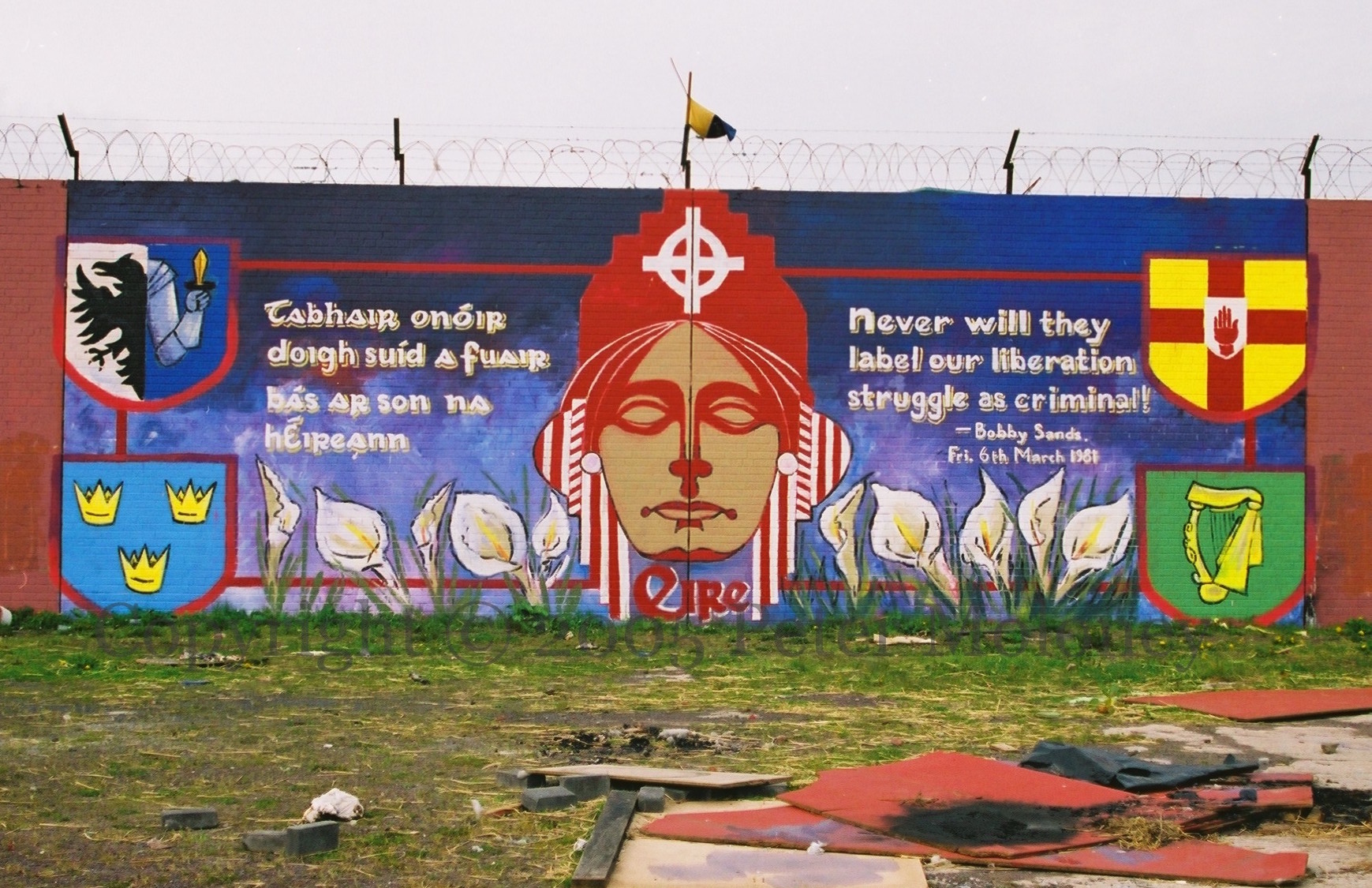
“Tabhaır onóır doıgh suíd a fuaır bás ar son na hÉıreann” [corrupted Irish with the general meaning “Honor … who died for Ireland”]. “Never will they label our liberation struggle as criminal! – Bobby Sands Fri. 6th March 1981”. Another Éıre mural was previously further down the wall on Mountpottinger Road, Belfast.
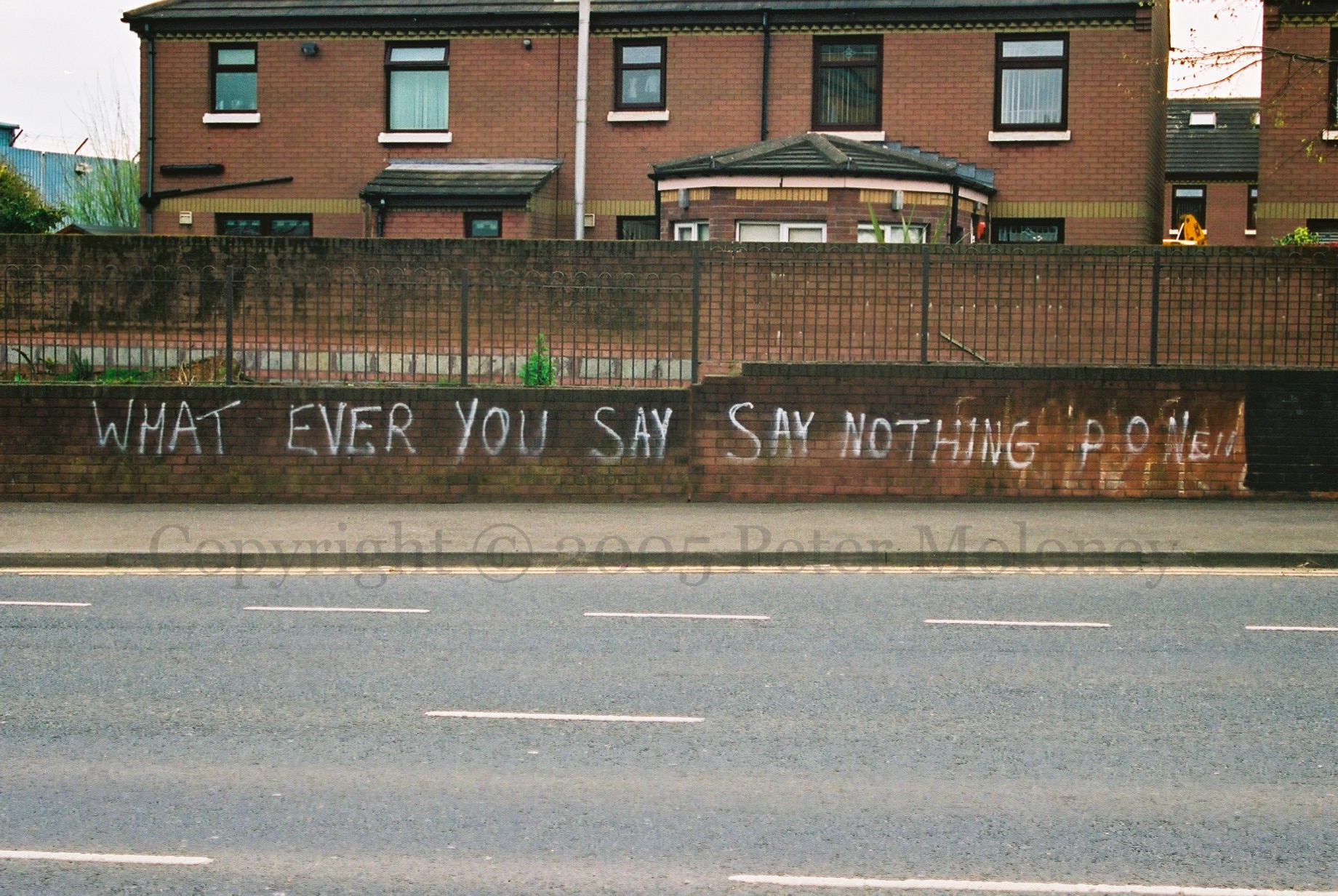
“Whatever You Say, Say Nothing” is the name of a 1975 Seamus Heaney poem from the collection North, and of a 1981 Colum Sands song. “P O’Neill” was the name used by the IRA on its public statements.
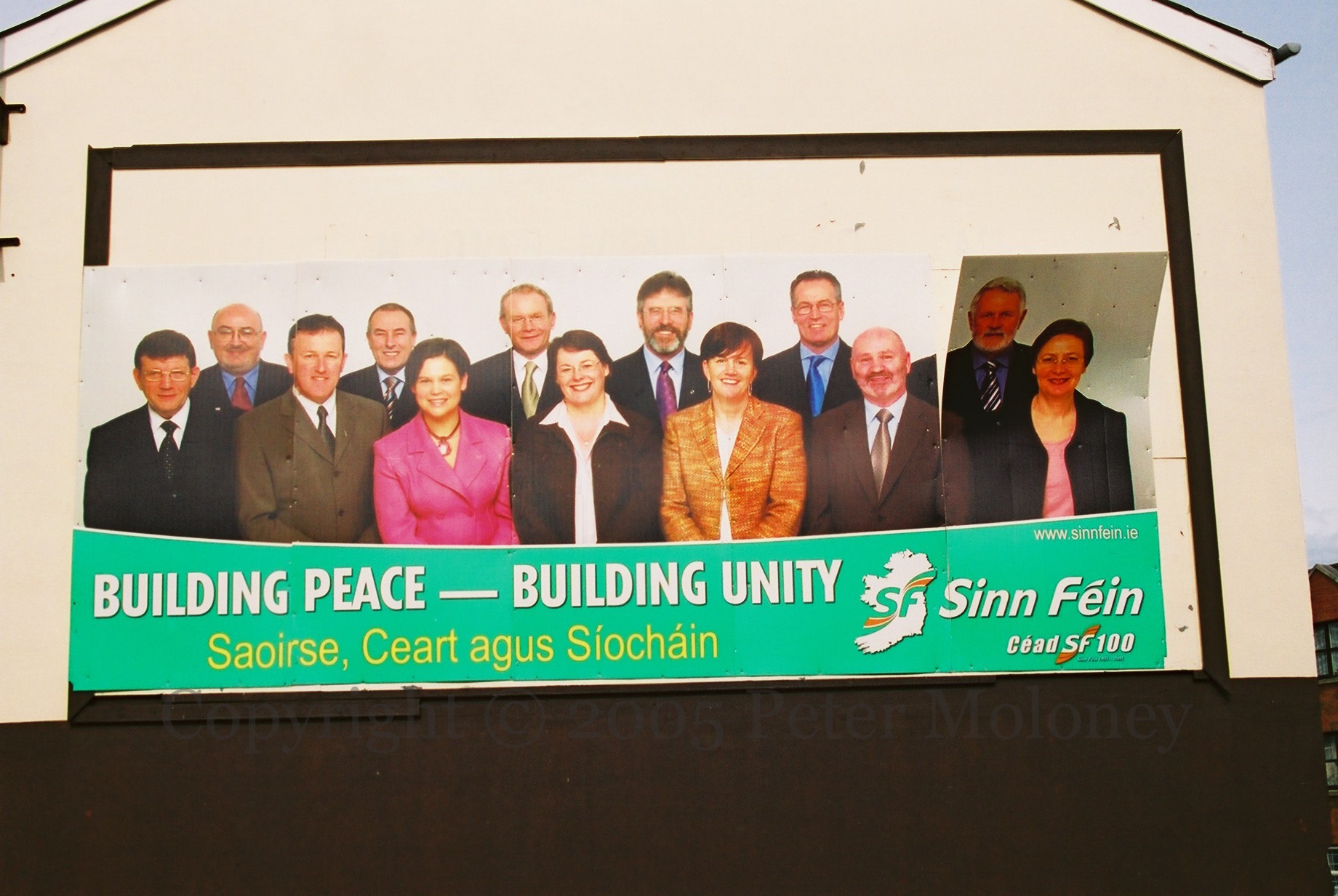
“Saoırse, ceart, agus síocháın” (“Freedom, justice, and peace”). Sınn Féın electoral board on Falls Road/Linden Street. 2005 was the 100th anniversary of the founding of the party.
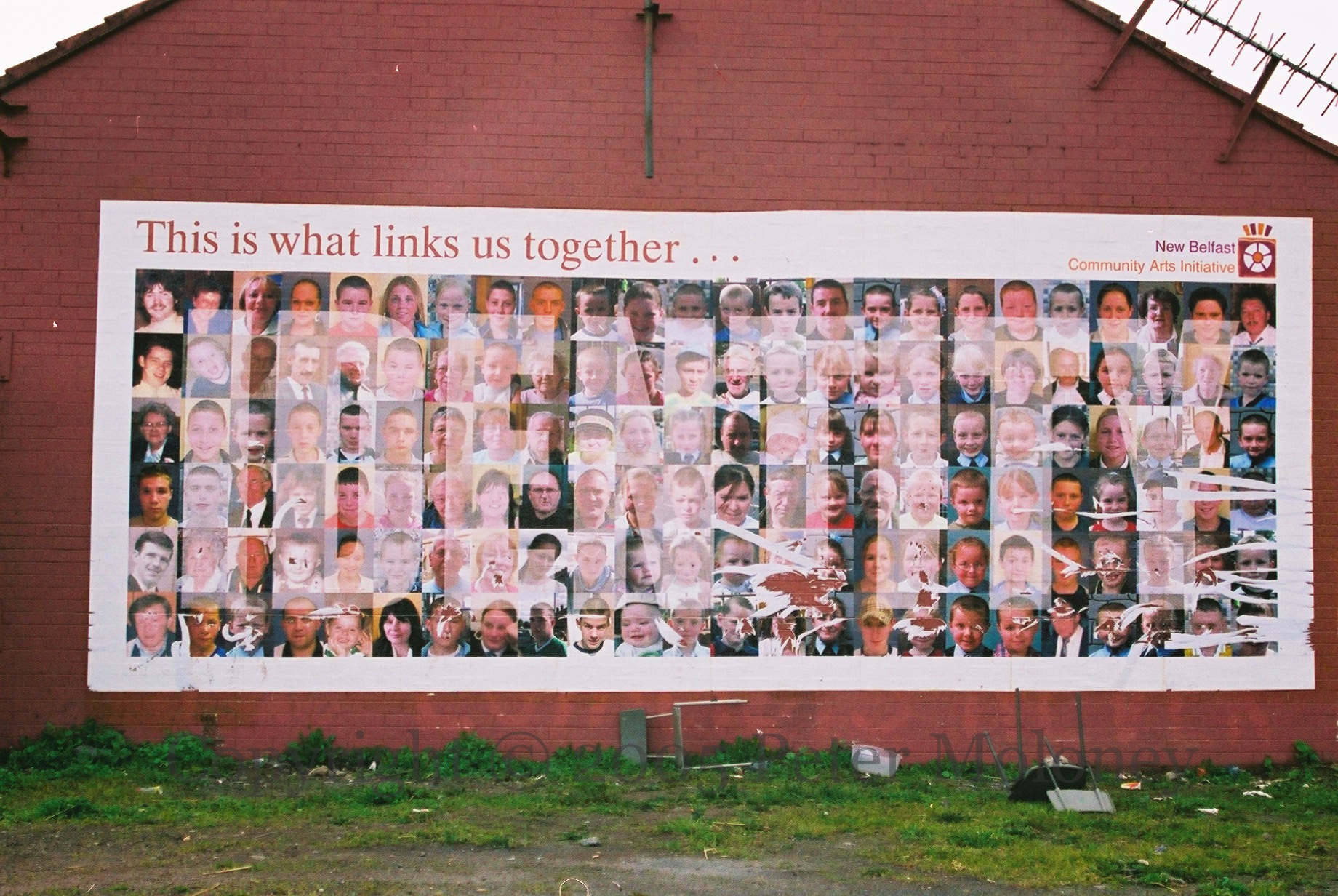
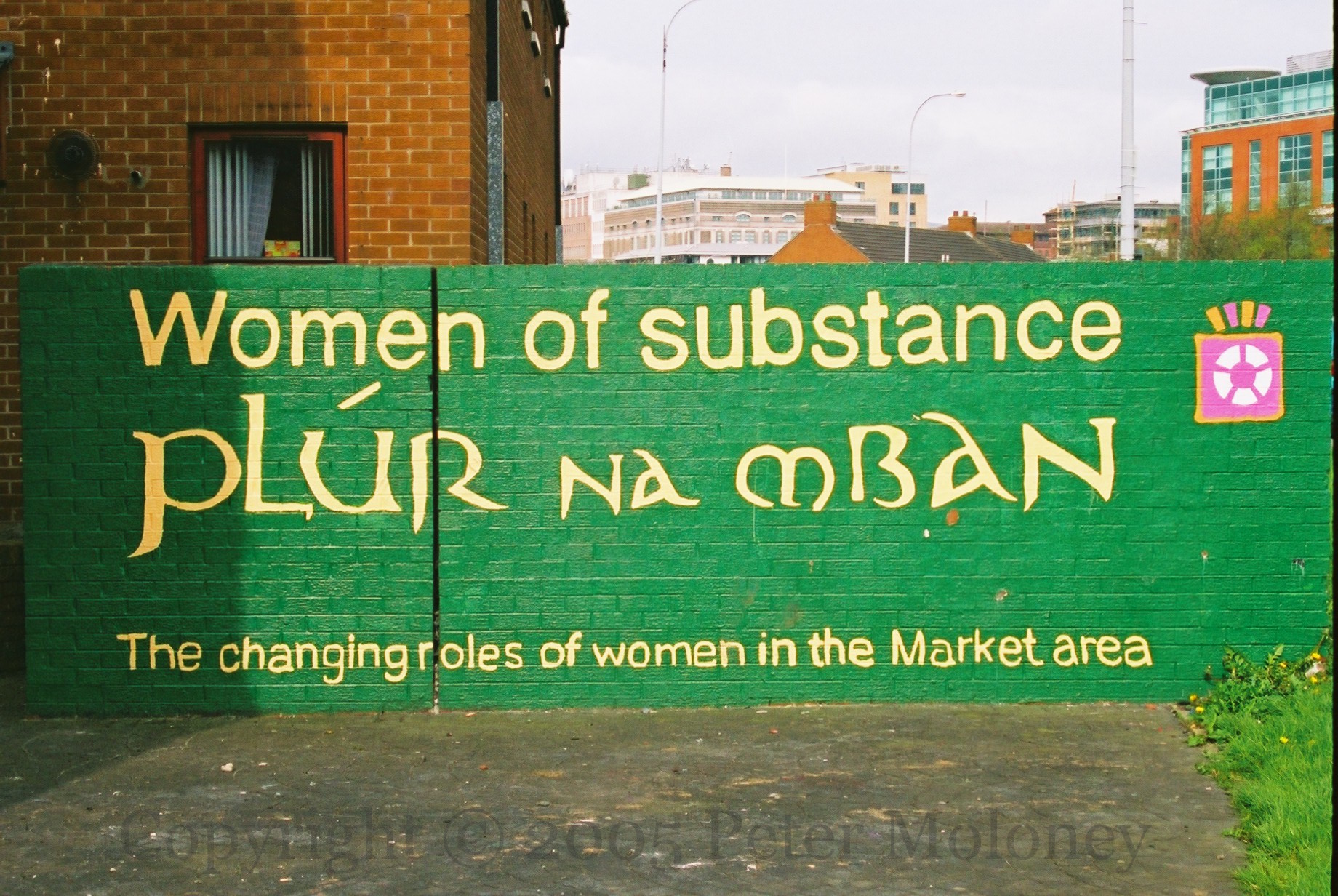
“Women of substance – plúr na mban. The changing role of women the in Market area.” A century of women’s work, from cooking, child-care, and hand-wringing the washing in 1904 to using computers, reading books, and graduating from university in 2004. The pink symbol in the corner is the emblem of the New Belfast Community Arts Initiative.
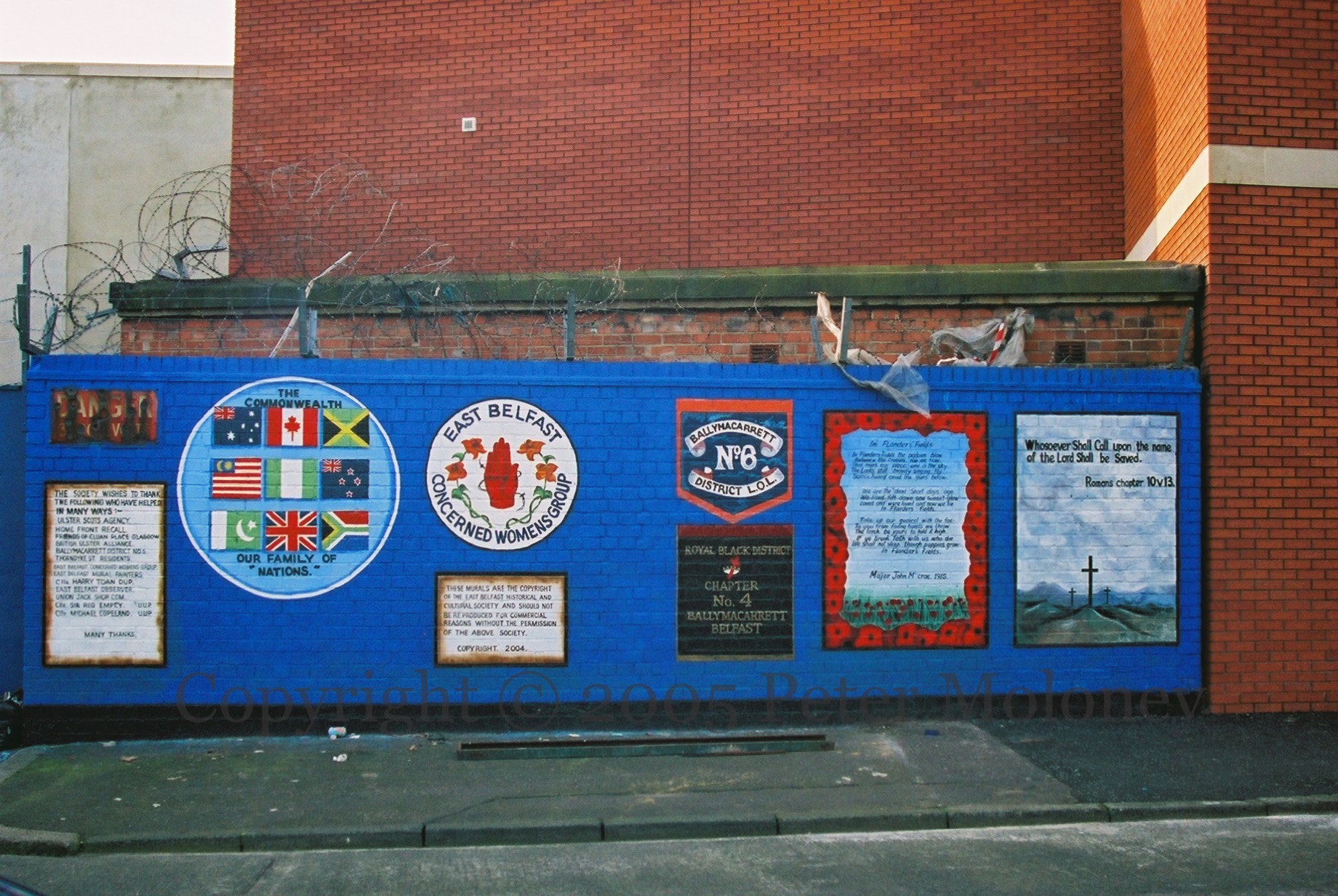
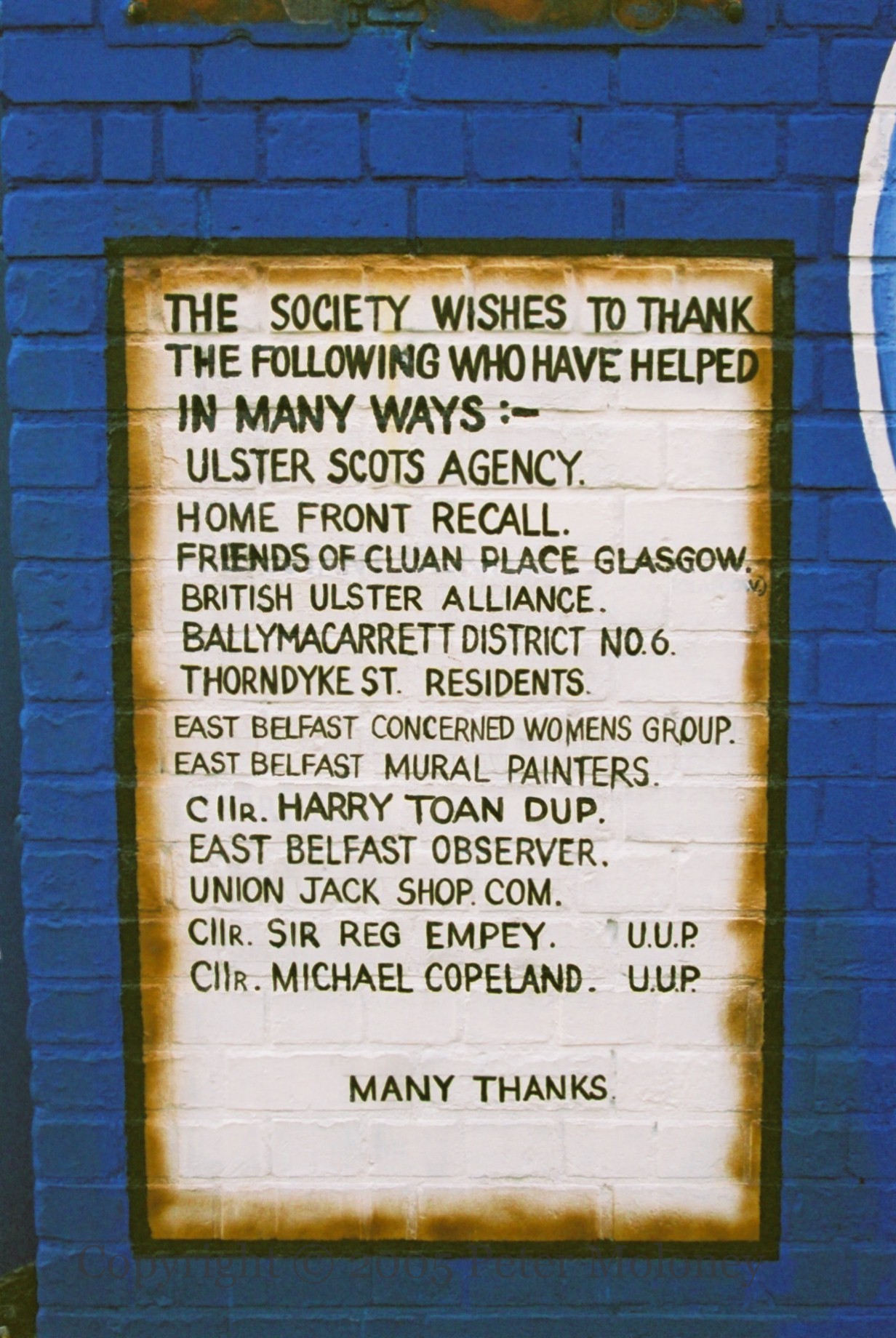
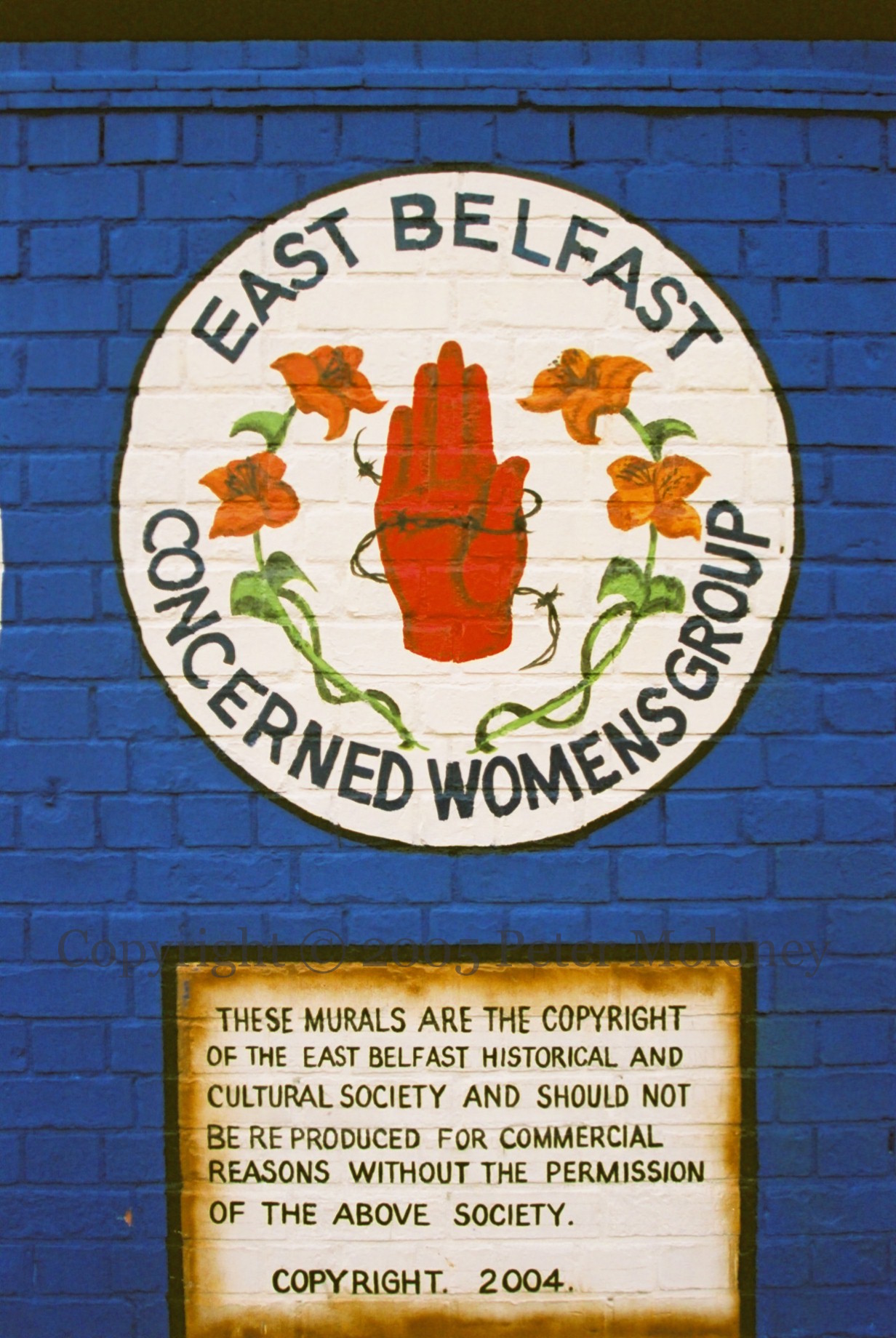
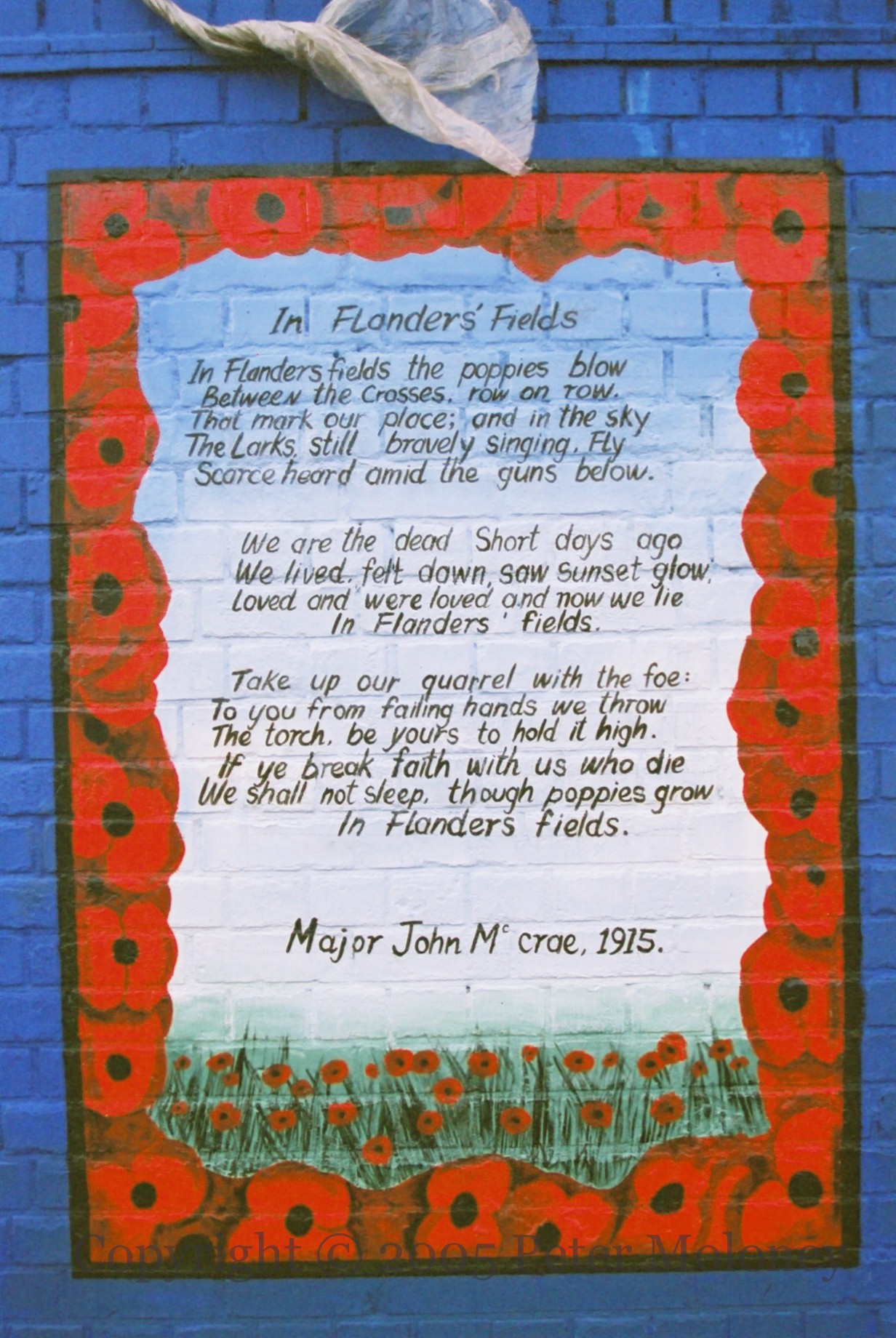
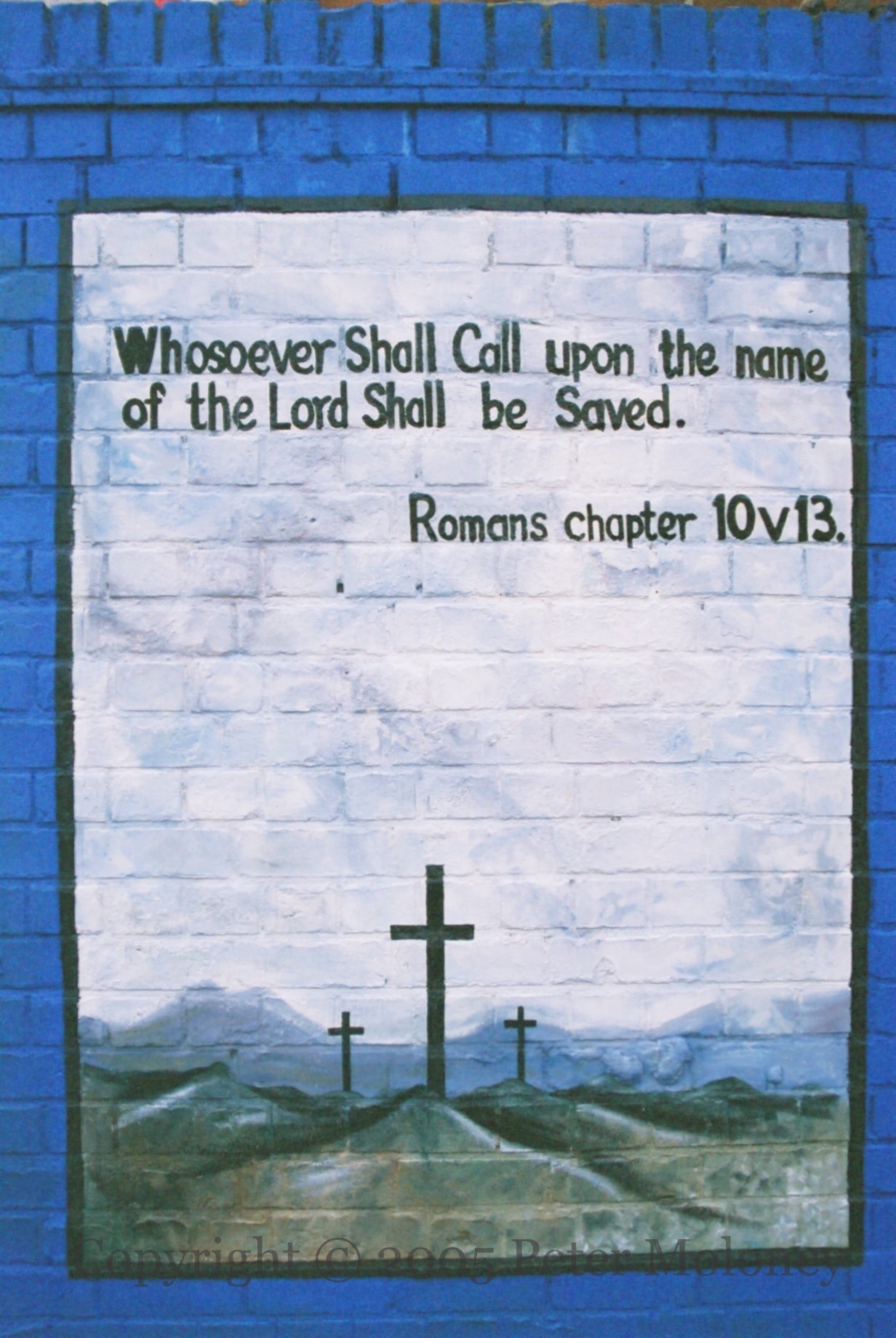
This entry features the final (side) wall to the right of the series of murals in Thorndyke Street. (For a list of entries for each panel, see East Belfast Historical And Cultural Society.) The various small panels thank a number of agencies, leading with the Ulster Scots Agency, and claim a copyright over the murals – which is something unusual with public art. There is also a verse from Romans (10v13) and Canadian physician John McCrae’s (1872-1918) poem In Flanders’ Fields:
“In Flanders fields the poppies blow/Between the crosses, row on row/That mark our place; and in the sky/The larks, still bravely singing, fly/Scarce heard amid the guns below.
We are the Dead. Short days ago/We lived, felt dawn, saw sunset glow,/Loved and were loved, and now we lie/In Flanders fields.
Take up our quarrel with the foe:/To you from failing hands we throw/The torch; be yours to hold it high./If ye break faith with us who die/We shall not sleep/Though poppies grow/In Flanders fields.”
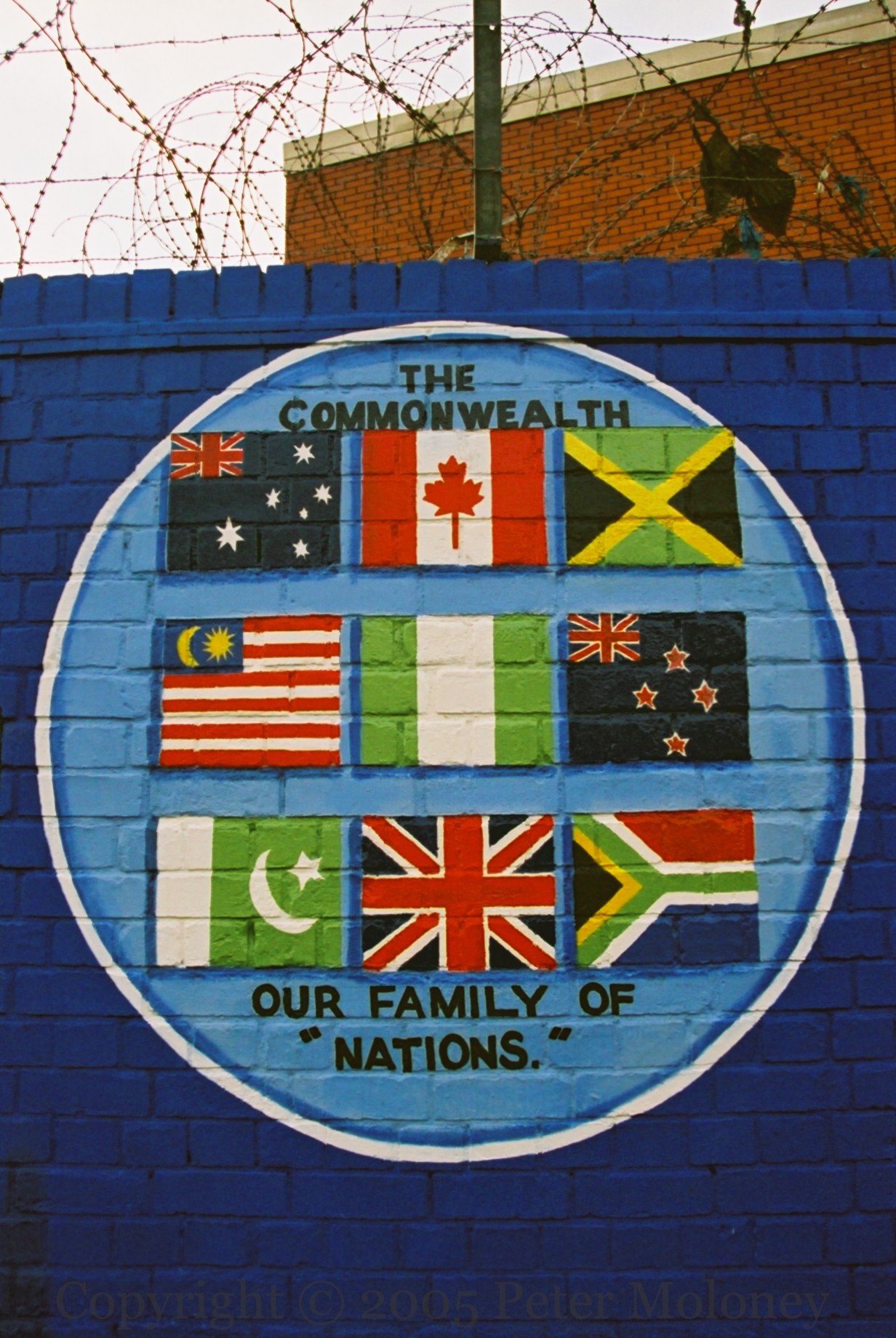
With the emblems of Ballymacarrett LOL N0.6, Ballymacarrett Royal Black No. 4, the East Belfast Concerned Womens Group, and a grid of Commonwealth countries’ flags.
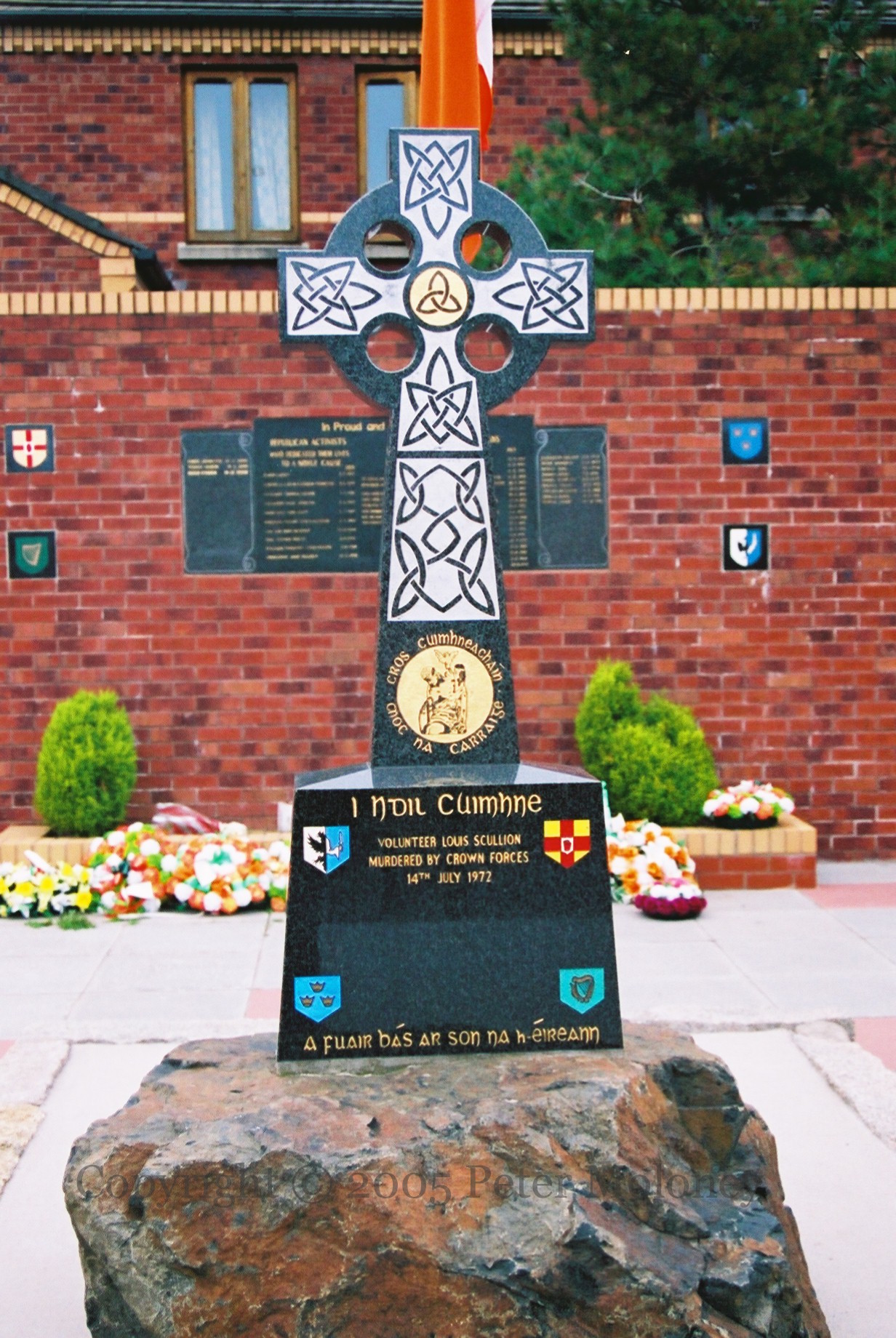
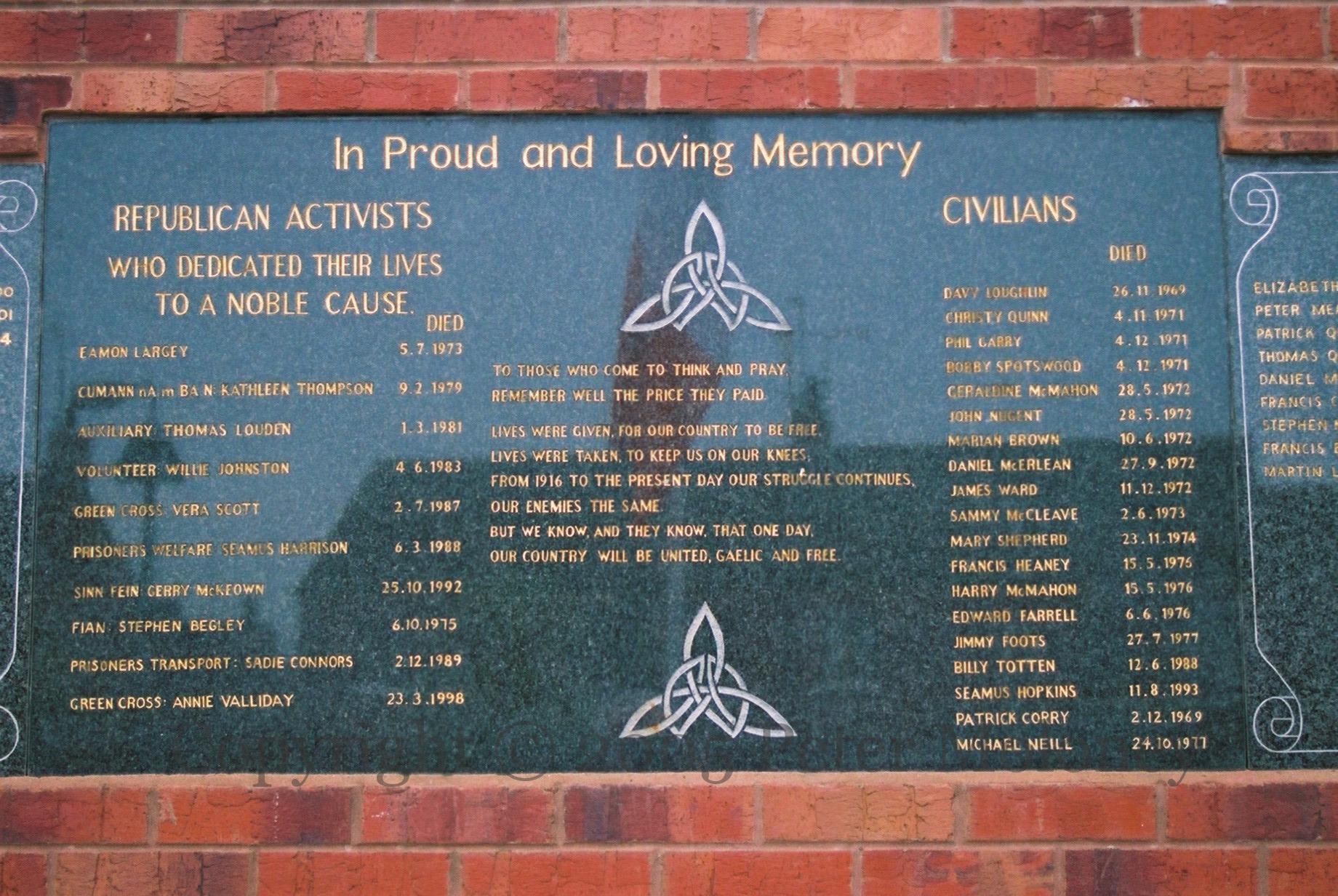
“In proud and loving memory [of] republican activists who dedicated their lives to a noble cause”. “To those who come to think and pray remember well the price they paid. Lives were given, for our country to be free, lives were taken, to keep us on our knees. From 1916 to the present day our struggle continues, our enemies the same. But we know, and they know, that one day our country will be united, Gaelic, and free.” The cross in the foreground is dedicated to Louis Scullion, an IRA volunteer from Unity Flats who was shot by the British Army in July 1972.
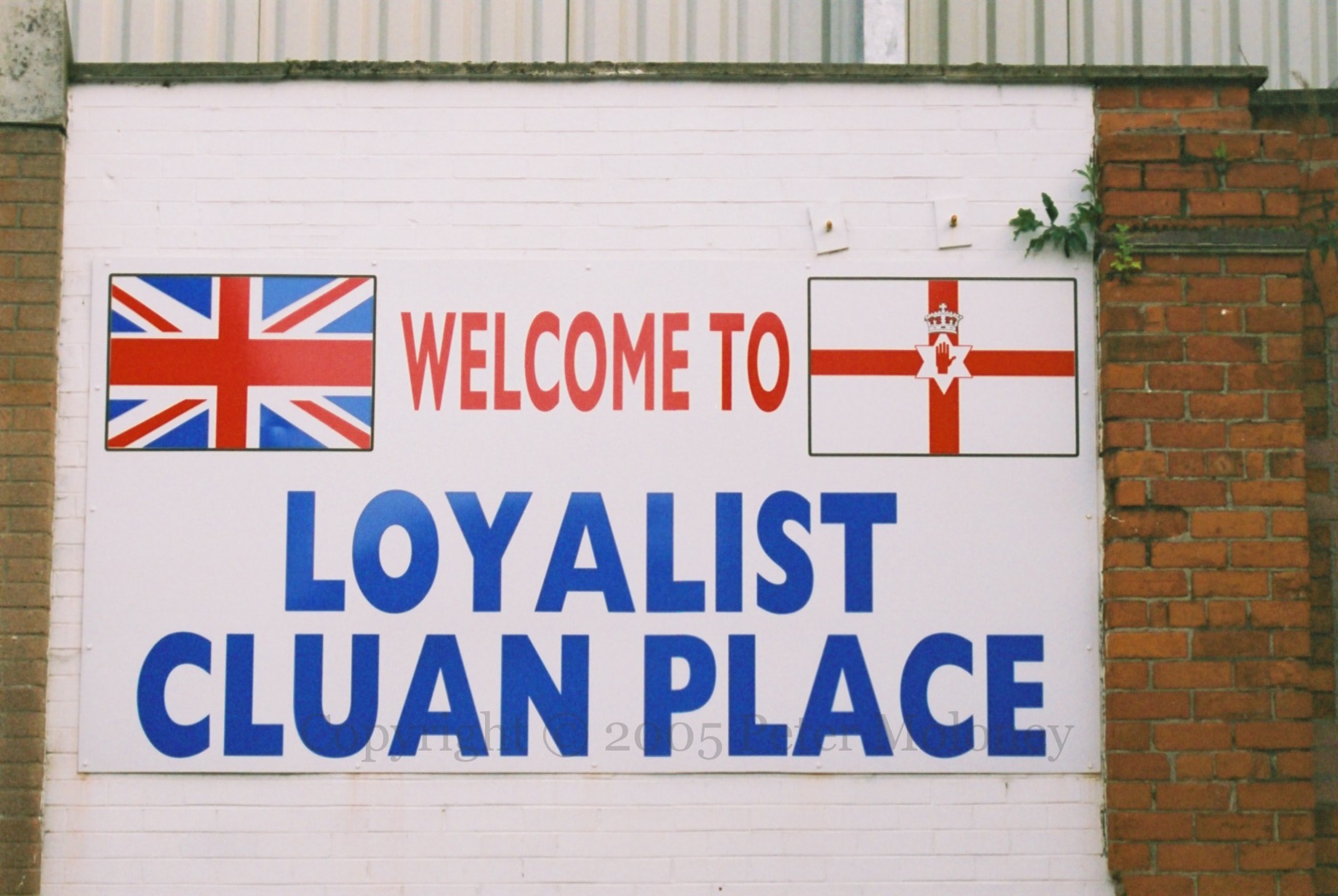
Cluan Place is a single street of 25 houses in east Belfast, hemmed in by the shops on the Albertbridge Road and by a “peace” line separating it from the (nationalist) Short Strand. Tensions between the two areas were particularly high in the early 2000s – see this Guardian article from 2002.
Bouquets of tricoloured flowers are placed on the Free Ireland mural at the corner of Beechmount Avenue and Falls Road, Belfast. A hand clasping an Easter lily is manacled by bonds “Made in Britain”. The mural is now in its fifteenth year. For the plaque, see the original 1990 post.
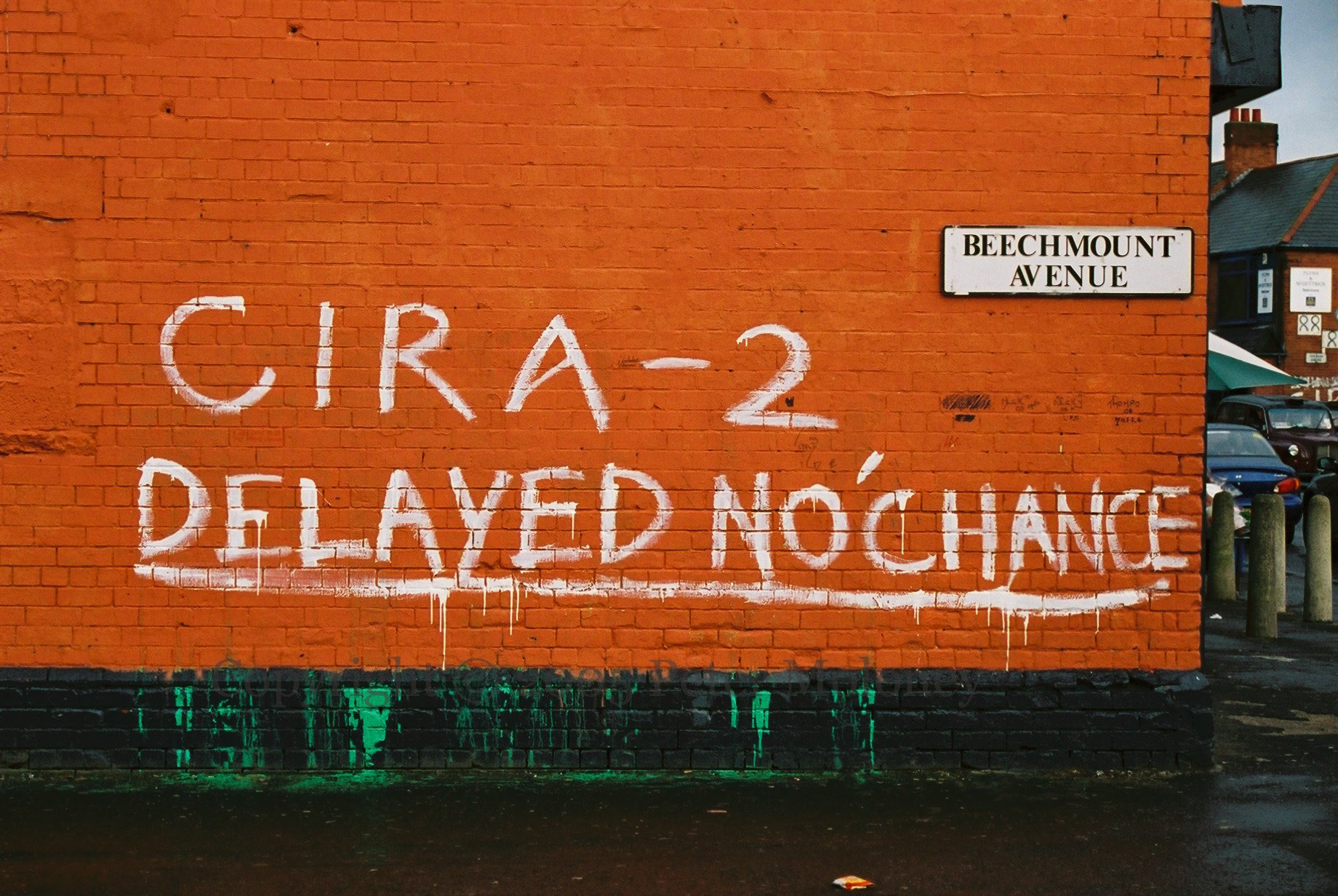
The Continuity IRA (CIRA) broke from the Provisionals back in 1986 over the issue of abstentionism in Dáıl Éıreann, but did not begin military attacks until the ceasefire in 1994. This somewhat cryptic graffiti in Beechmount Avenue, Belfast, insists that recent events such as a split in the organisation and decommissioning by the Provisionals will change the CIRA’s status. “CIRA – 2. Delayed No Chance”



 Peter Moloney Collection