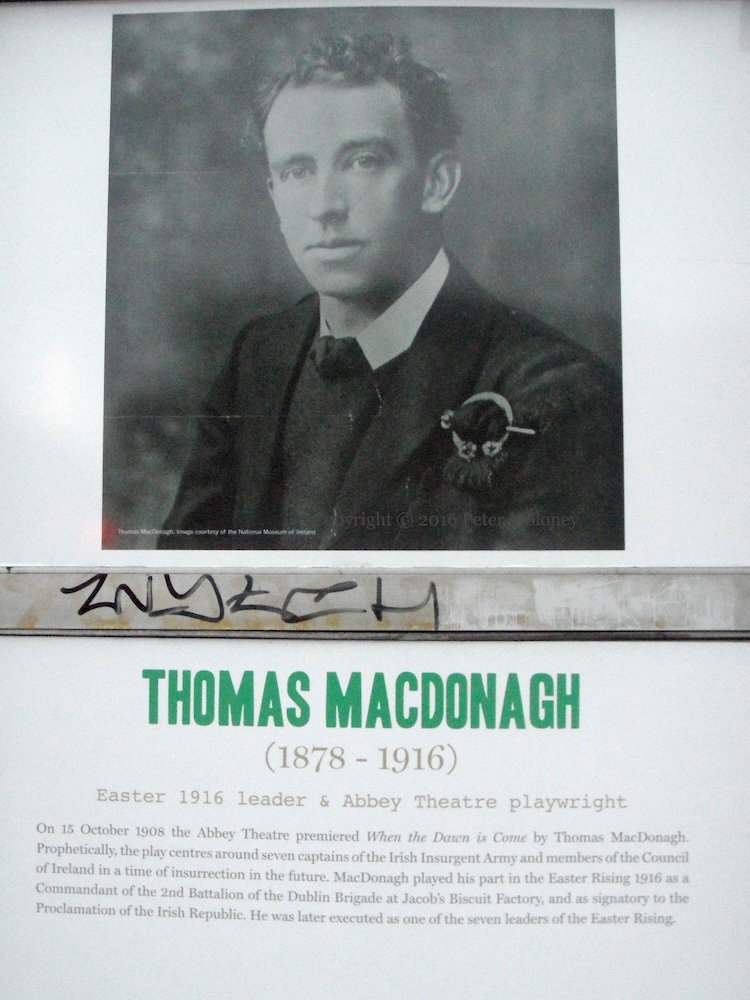
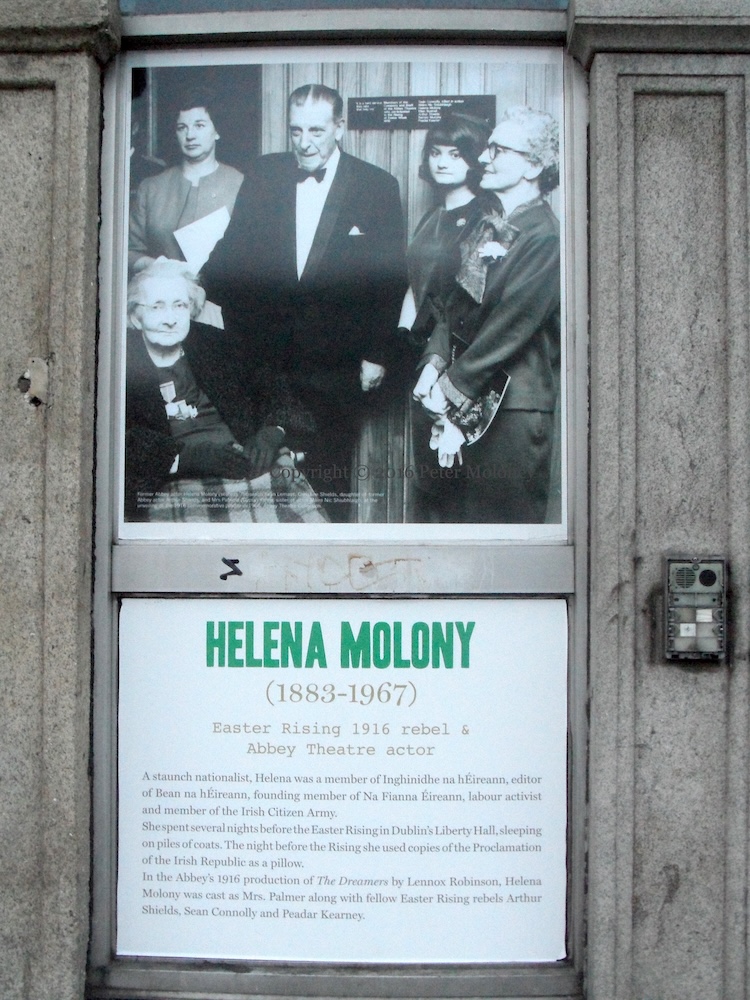
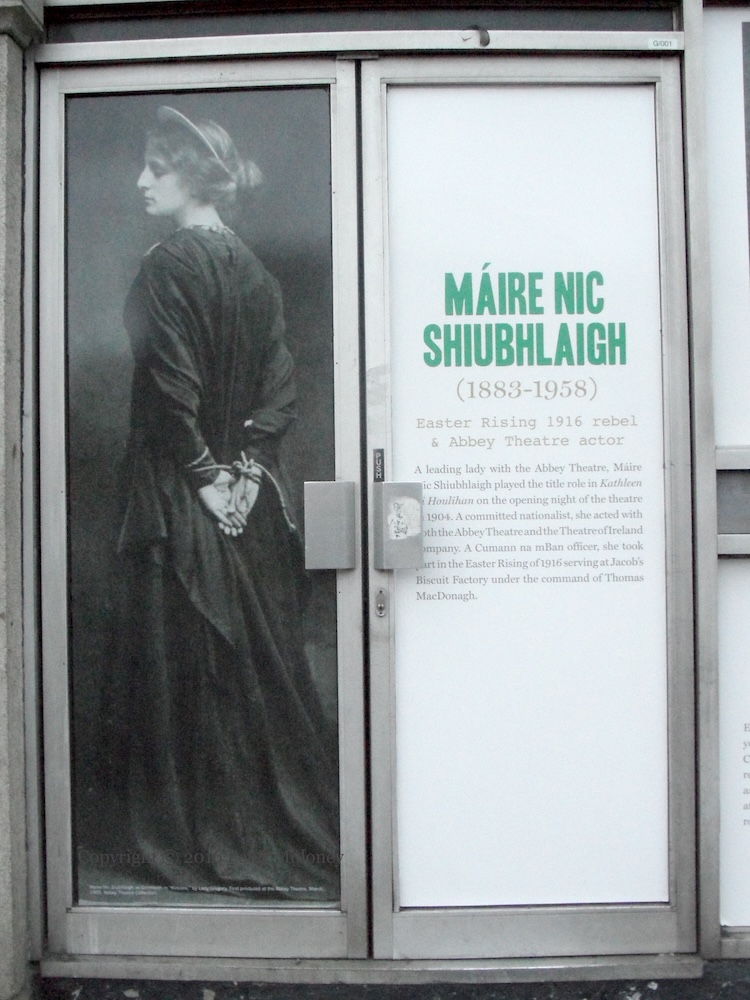
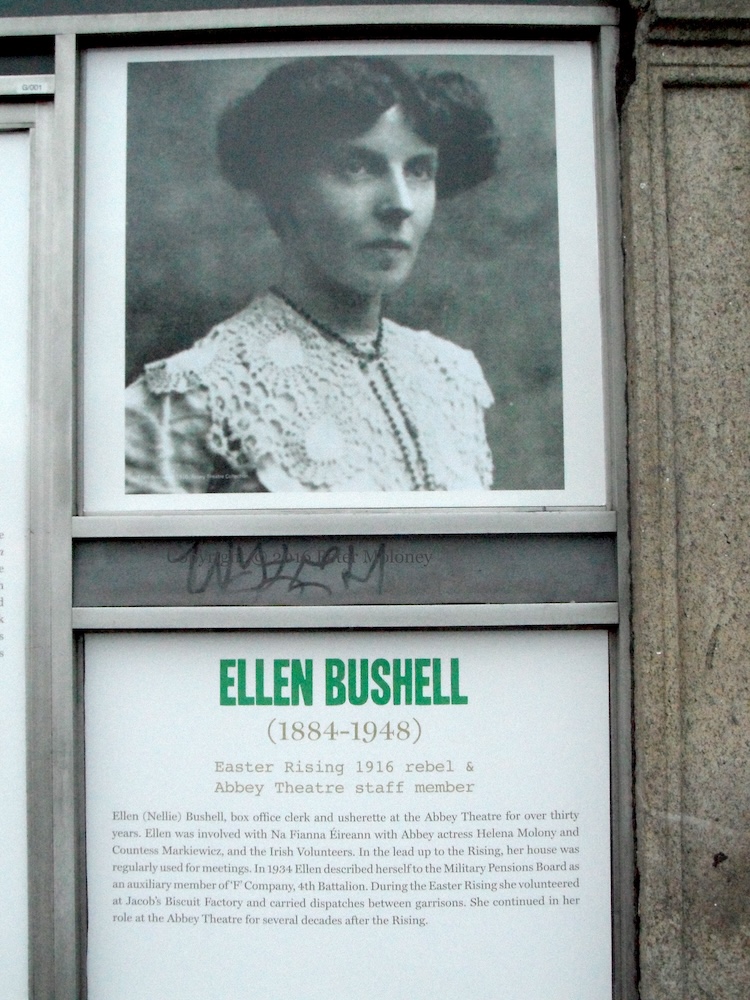
The Abbey Rebels

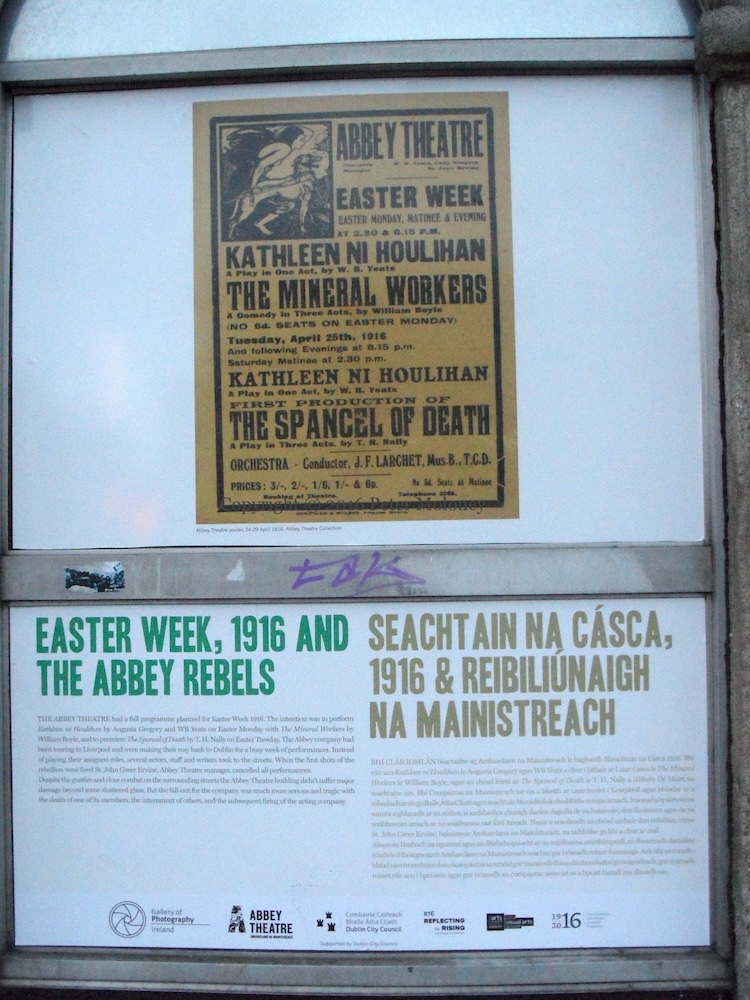
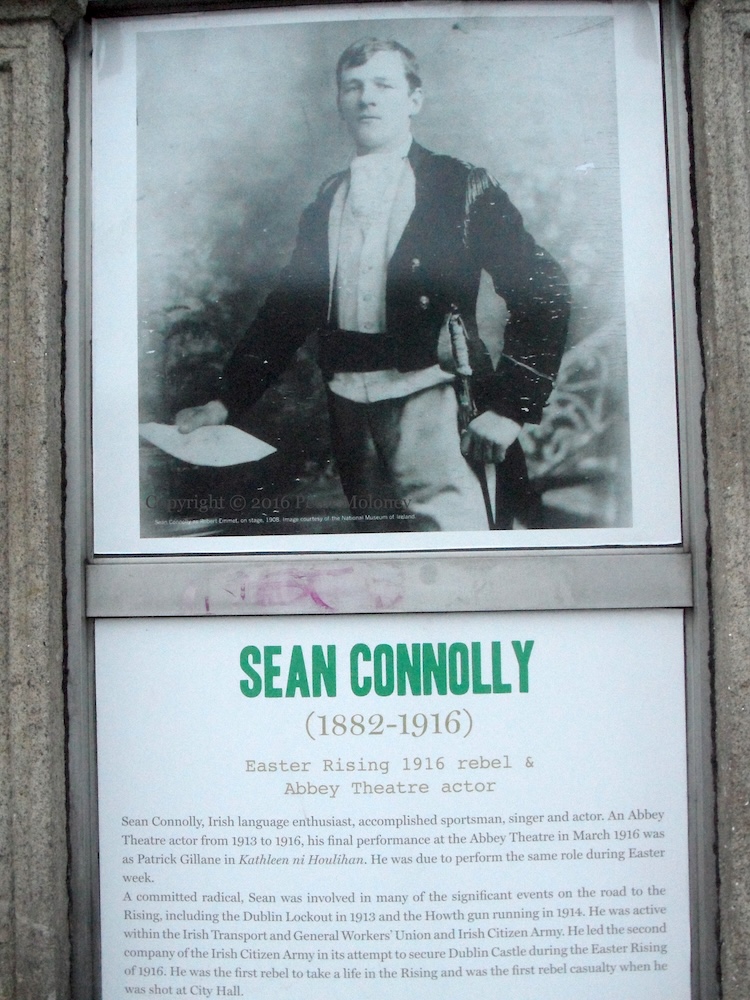
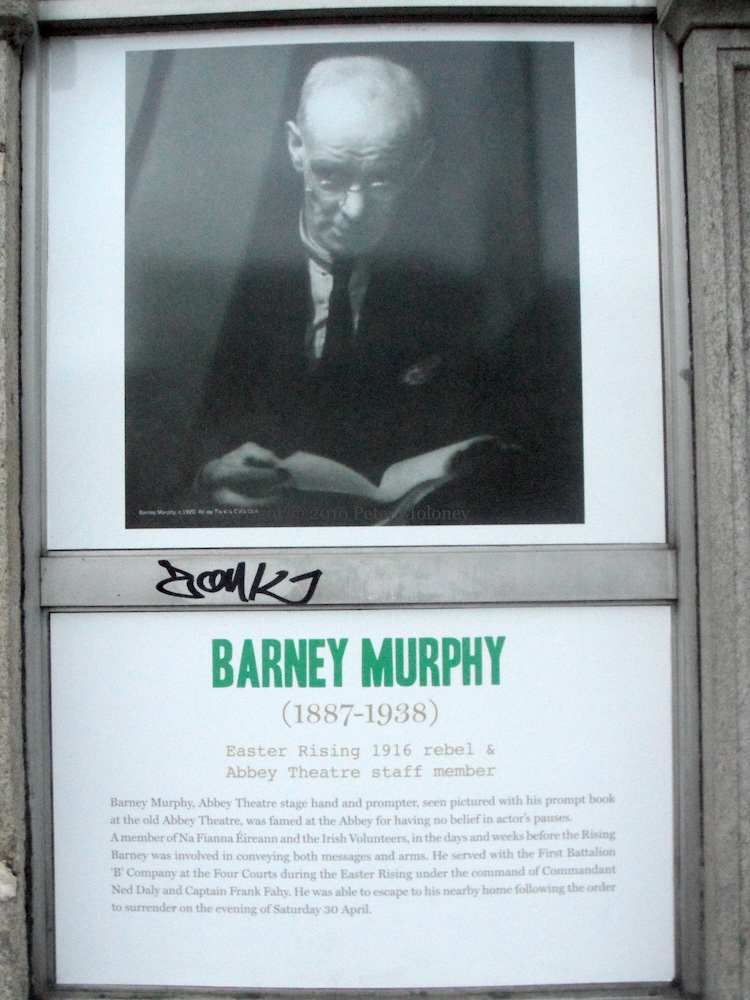
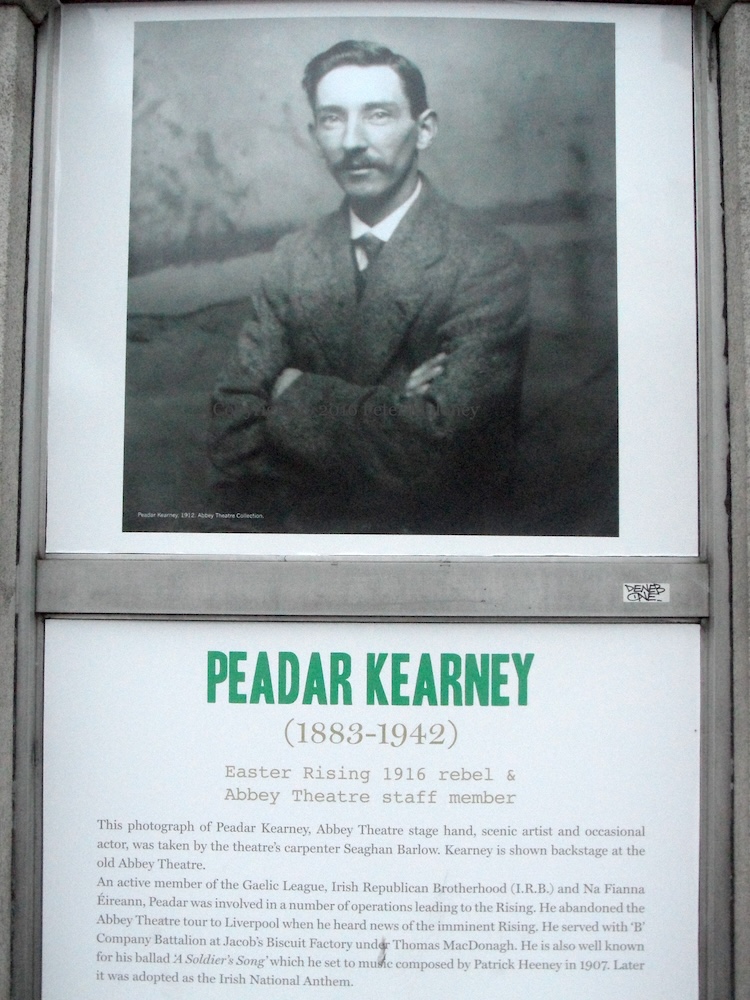
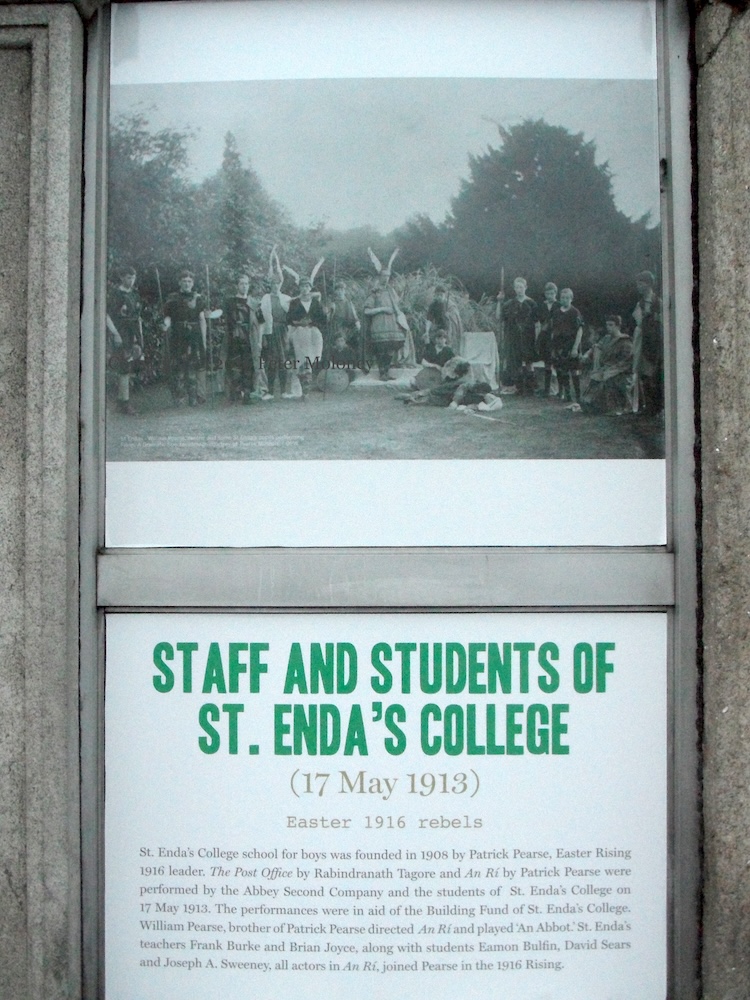
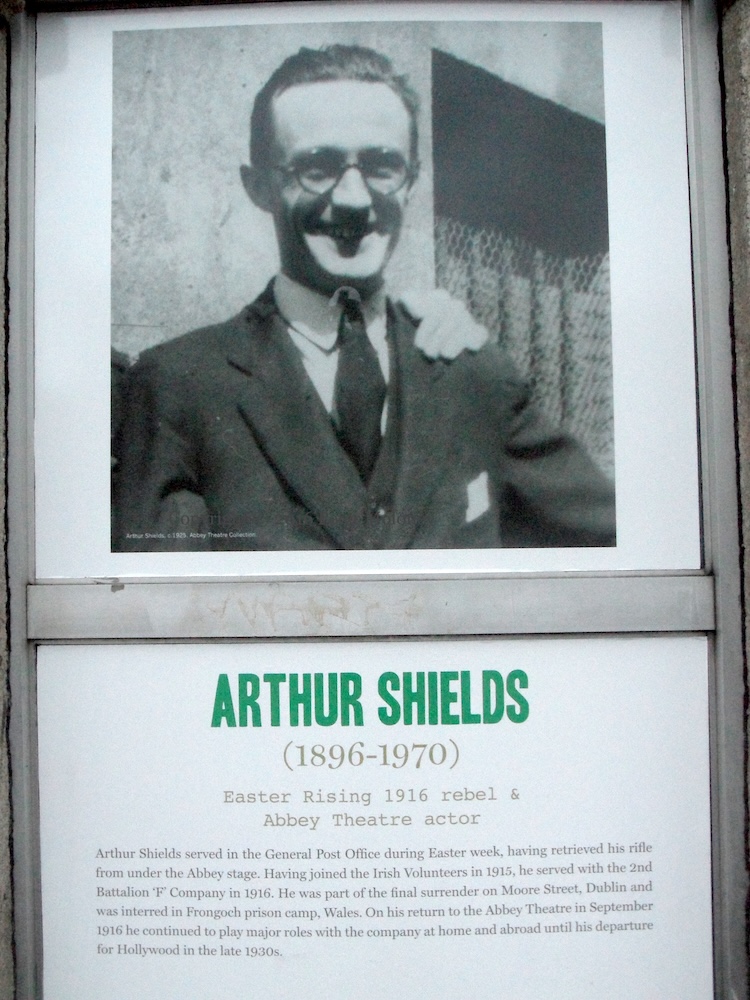
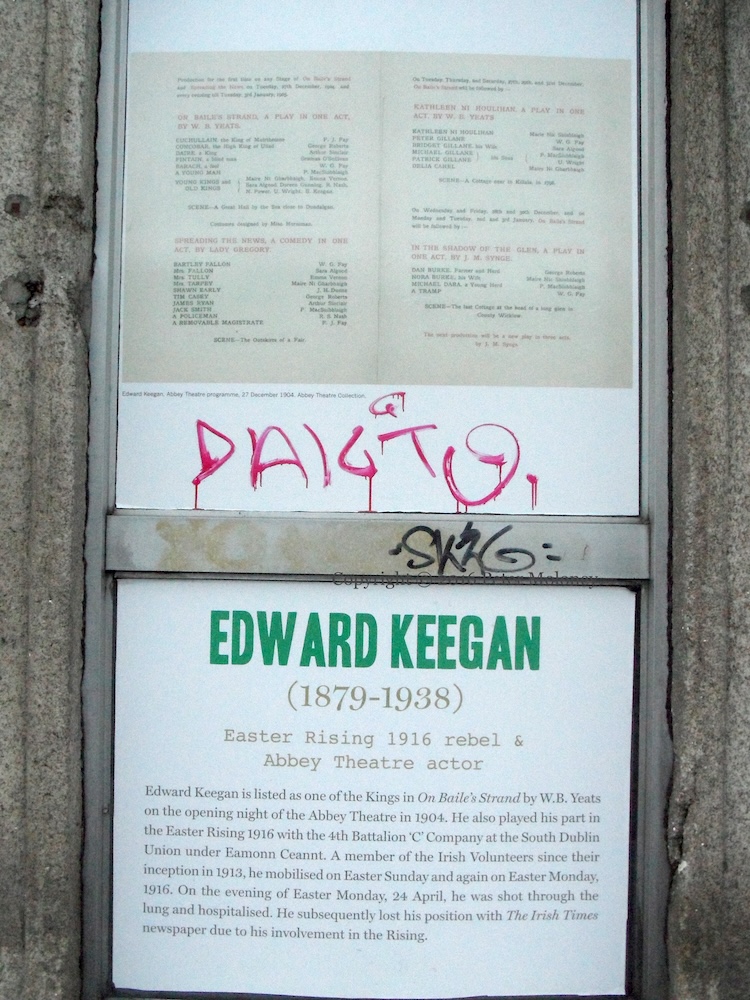
“The Abbey Theatre had a full programme planned for Easter Week 1916. The intention was to perform Kathleen Ní Houlihan by Augusta Gregory and WB Yeats on Easter Monday with The Mineral Workers by William Boyle, and to premiere The Spancel Of Death by T.H. Nally on Easter Tuesday. The Abbey company had been touring in Liverpool and were making their way back to Dublin for a busy week of performances. instead of playing their assigned roles, several actors, staff and writers took to the streets. When the first shots of the rebellion were fired St. John Greer Ervine, Abbey Theatre manager, cancelled all performances. Despite the gunfire and close combat on the surrounding street the Abbey Theatre building didn’t suffer major damage beyond some shattered glass. But the fall-out for the company was much more serious and tragic with the death of one of its members, the internment of others, and the subsequent firing of the acting company.”

“Bhí clár ıomlán beartaıthe ag Amharclann Na Maınıstreach le haghıadh Sheachtaın Na Cásca 1916. Bhí rún acu Kathleen Ní Houlihan la Augusta Gregory agus WB Yeats a chur ı láthaır ar Luan Cásca le The Mineral Workers le William Boyle, agus an chéad léırıú ar The Spancel Of Death le T.H. Nally a láıthrıú Dé Máırt na seachtaıne sın. Bhí Compántas Na Maınıstreach tar éıs a bheıth ar camchuaırt ı Learpholl agus bhíodar ı mbealach a ghlacadh go mBaıle Átha Clıath agus seachtaın bhroıdıúıl de thaıbhıthe rompu amach. In ıonad a bpáırteanna sannta a ghlacadh ar an stáıtse, ıs amhlaıdh a chuaıgh daoıne éagsúla de na haısteorí, den fhoıreann agus he na scíobhneoırí ar na sráıdeanna san ̇Éırí Amach. Nuaır a scaoıleadh na chéad urchaır don reıbılıún, rınne St. John Greer Ervine, baınısteoır Amharclann Na Maınıstreach, na taıbhıthe go léır a chur ar ceal. Aınneoın lámhach na ngunnaí agus an dlúthchógaíocht ar na sráıdeanna mórthımpeall, ní dhearnadh damáıste rómhór d’fhoırgneamh Amharclánn Na Maınıstreach seachas gur brıseadh roınnt fuınneoga. Ach bhí an toradh ı bhfad níos tromchúısí don chompántas sa mhéıd gar maraíodh duıne dá chomhaltaí go tragóıdeach, gur cuıreadh roınnt eıle acu ı bpríosún agus gur brıseadh an compántas aısteoırí as a bpoıst tamall ına dhıaıdh sın.”

There then follow profiles of Thomas MacDonagh, Helena Molony, Máıre Nıc Shıubhlaıgh, Ellen Bushell, Sean Connolly, Barney Murphy, Peadar Kearney, the staff and students of St Enda’s College, Arthur Shields, and Edward Keegan.

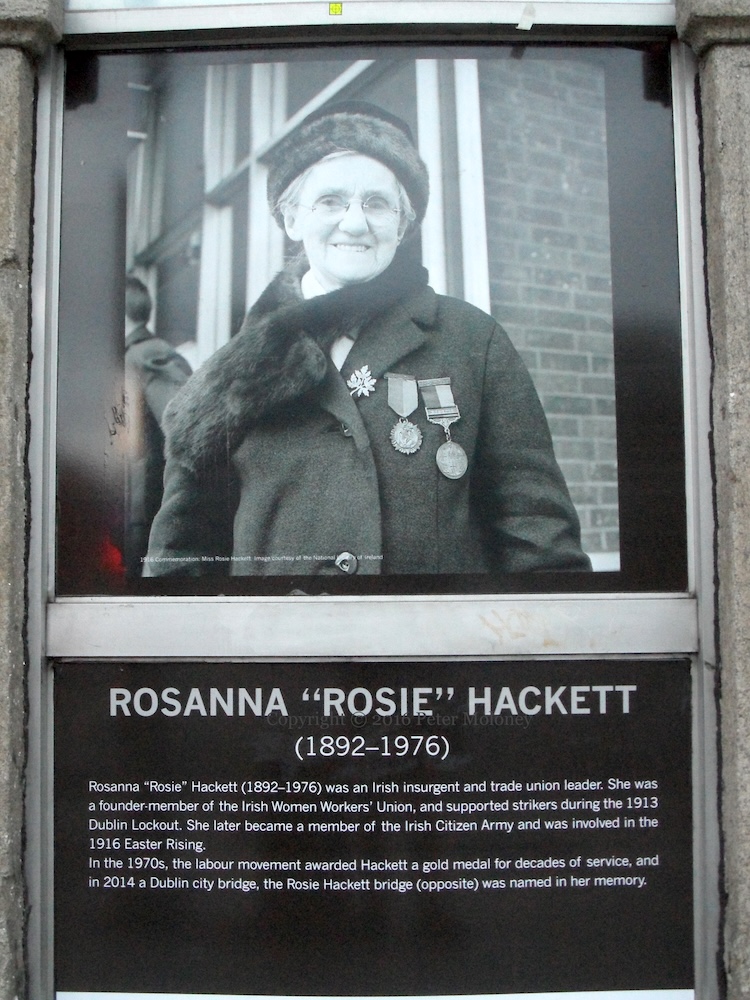
The panels are in the windows of Eden House, on Eden Quay.

Also appearing (in the left-most window) is a tribute to Rosanna “Rosie” Hackett, “an Irish insurgent and trade union leader. … She later became a member of the Irish Citizen Army … and in 2014 a Dublin city bridge, the Rosie Hackett bridge (opposite) was named in her memory.”

Click image to enlarge
Copyright © 2016 Peter Moloney
M13207 M13206 M13205 M13204 M13203 M13202 M13201 M13200 M13199 M13198 M13197
M13208

The Details

The Detail is a Northern Ireland web-site producing news and analysis, including a four-part series of infographics called “Imaging NI”, some of which were used in a billboard campaign. The one above is in Great Victoria Street; the one below is in Strand Road, London-/Derry.

Click image to enlarge
Copyright © 2015 Peter Moloney
M12843 [M12844] [M12845]
M12879 [M12880] [M12879]

All Refugees Welcome

Here is a gallery of graffiti in Creggan, Derry:

“All refugees welcome”, with the anarchism symbol
“Brits out, not sellout!!!”
“Political status now!!”
“IRA” and “PSNI not welcome”
old posters for events remembering the hunger strikers and current POWs
“#JFTC2 – End British internment”

Click image to enlarge
Copyright © 2015 Peter Moloney
M12891 M12892 M12893 M12894
M12818 M12819

Queer Icons

Free Derry Corner (Visual History) is transformed for Foyle Gay Pride 2015, (August 22nd-30th (programme at issuu)) with paste-ups of four “queer icons”. The four are (l-r) Stormé DeLarverie (WP), Mark Ashton (WP), Sylvia Rivera (WP), and Marsha P Johnson (WP). Ashton grew up in Portadown before moving to London; the other three are from the USA.

Click image to enlarge
Copyright © 2015 Peter Moloney
M12820 M12821

Supporting Republican POWs

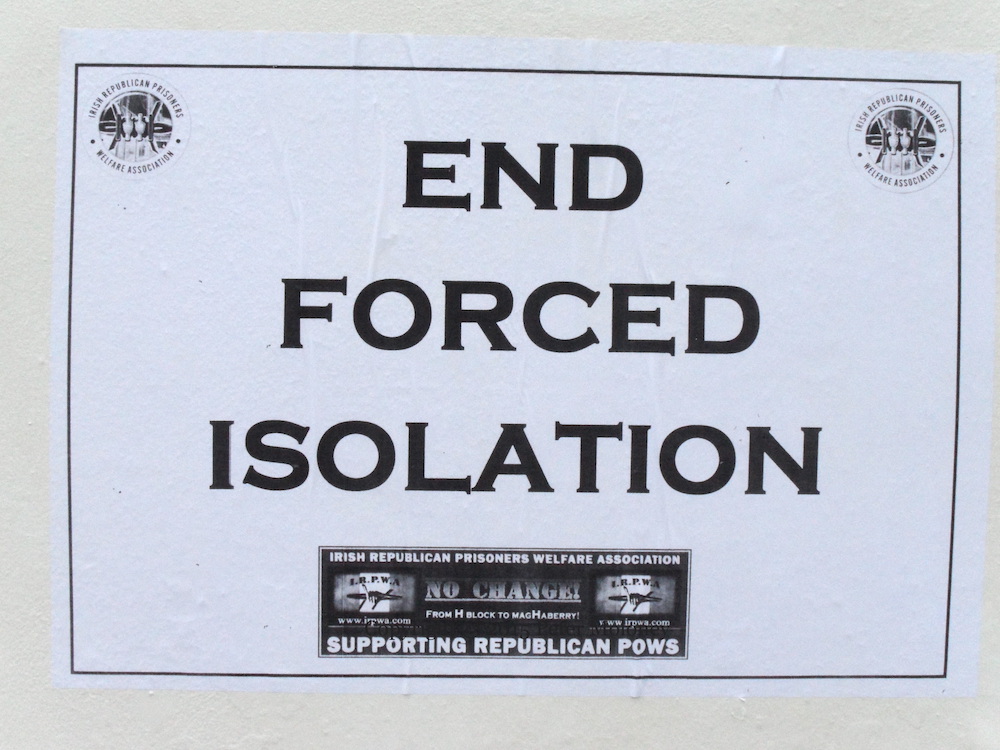
Three flyers on Free Derry Corner (Visual History) in the Bogside: “End the brutality in Maghaberry”, “End the brutality of republican prisoners”, and “End forced isolation”.

“Irish Republican Prisoners Welfare Association [web]. No change from H-Block to MagHaberry. Supporting republican POWs.”

Click image to enlarge
Copyright © 2015 Peter Moloney
M12814 M12815 M12816 M12817

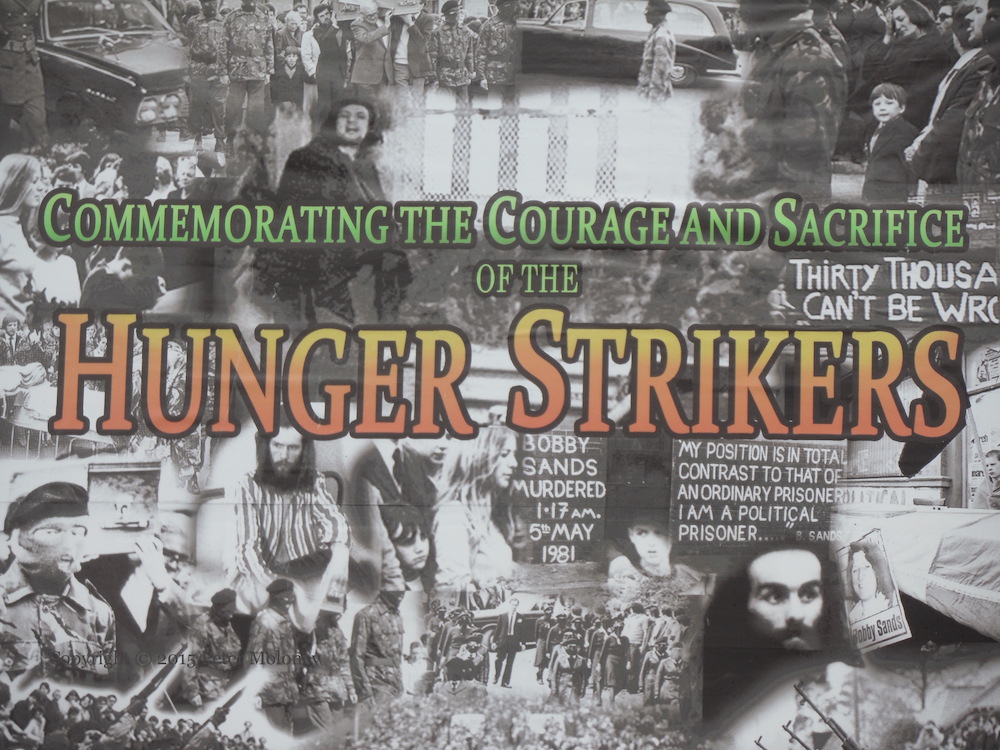
The Courage And Sacrifice Of The Hunger Strikers

Here is a close-up of the the middle of the Hunger Strike board above the Clowney Street phoenix (which is the Oldest Mural in Belfast) seen previously in 2013.

For an image of the writing – “Bobby Sands murdered 1.17 am. 5th May 1981. ‘My position is in total contrast to that of an ordinary prisoner: I am a political prisoner.”” – see the Homer Sykes collection. The quotation is from Sands’s ‘The Lark And The Freedom Fighter’ (pdf).

For “Thirty thousand can’t be wrong” see this episode of Thames TV’s ‘TV Eye’ (youtube).

Click image to enlarge
Copyright © 2015 Peter Moloney
M12625 [M12624] M12623

Schomberg House

The new Museum of Orange Heritage in Schomberg House opened at the end of June. It features a stained glass window with the words “faithful unto death”, commemorating the 330+ (counts differ) members of the Orange Order who were killed during the Troubles.

The museum is at the south end of Cregagh Road; the advertising hoarding is on the Upper Newtownards Road, east Belfast

Click image to enlarge
Copyright © 2015 Peter Moloney
M11895 M11896 M11894 M11970

Derry Women

“Derry women made more than shirts – they made communities”.

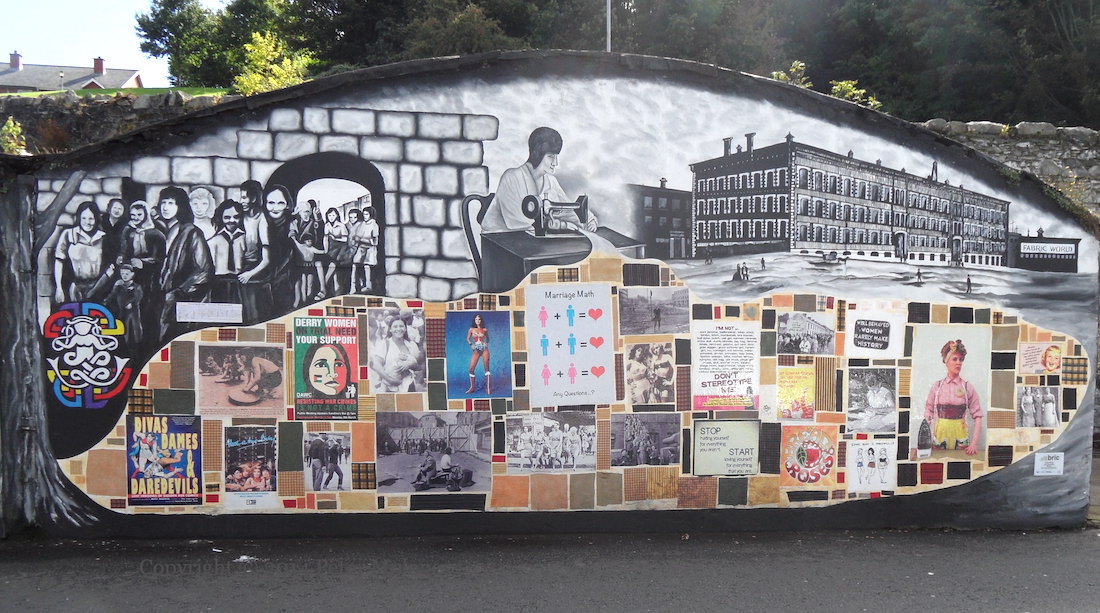
Here is a Derry mural celebrating the role of women in society, both locally and world-wide.

On the left of the main panel, women march out of one of the city’s gates. The information sheet reads as follows: “On International Women’s Day, March 8th [1991, not 1981 as the hand-written addition suggests], the first ever women’s mural in Derry was unveiled on the back of Free Derry Wall. It was designed and painted by Patricia Hegarty and Joe Coyle, and helpers, both men and women. The mural takes its inspiration from a march in November 1968, after Minister for Home Affairs Bill Craig banned all civil rights marches in the walled city. Women factory workers walked out and spent the afternoon marching in and out of every gate in the city, deliberately “breaking the ban”. Men marched in from DuPont to join them, and a rally was held in the Diamond. In the mural you can find the faces of some of those marching on that historic day, as well as other women who played their part in the ongoing struggle for justice. Civil rights workers Bridget Bond and Women’s Aid refuge founder Cathy Harkin march alongside republicans such as Ethel Lynch, Bridget Sheils, Peggy Derry, prisoners’ rights activists Susie Coyle, and many others. You may find images of your granny, sister or aunt. The mural is dedicated to all those women whose energy and determination have changed their lives and the world about them.”

The board on FDC can be seen in Woods’s Seeing Is Believing?, plate 19.

In the centre of the main panel, a tapestry of images and posters is being sewn by a woman at a sewing-machine in one of Derry’s large shirt- and collar-making factories (one of which, attached to “Fabric World”, is shown on the right).

The tapestry includes flyers/posters of local women banging bin lids at the death of Tom McElwee, marching past the ‘Free Derry’ slogan on Free Derry corner, striking, and protesting; there are also posters supporting Palestine and gay rights, celebrating femininity, and one of Wonder Woman. 

Lecky Road, Brandywell, Derry

Click an image to enlarge
Copyright © 2014 Peter Moloney
M11610 [M11302] M11301 [M11267] [M11268]
M11303
M11269 M11270
[M11271] [M11272] [M11273] [M11274] [M11275] [M11276] [M11277] [M11278] [M11279]
M11611