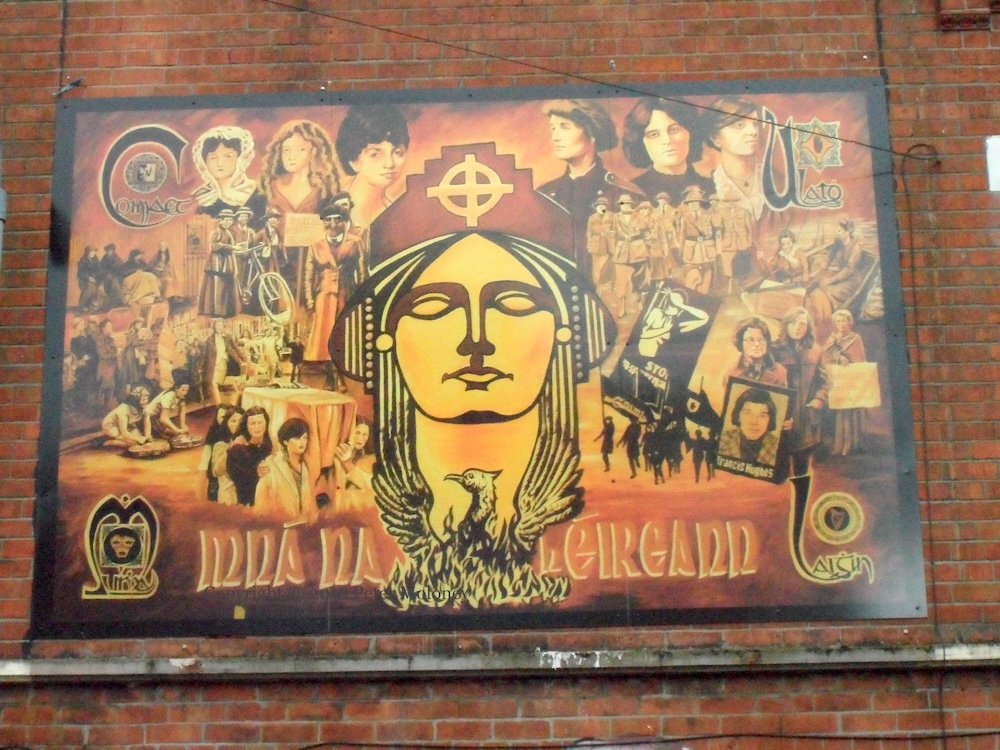
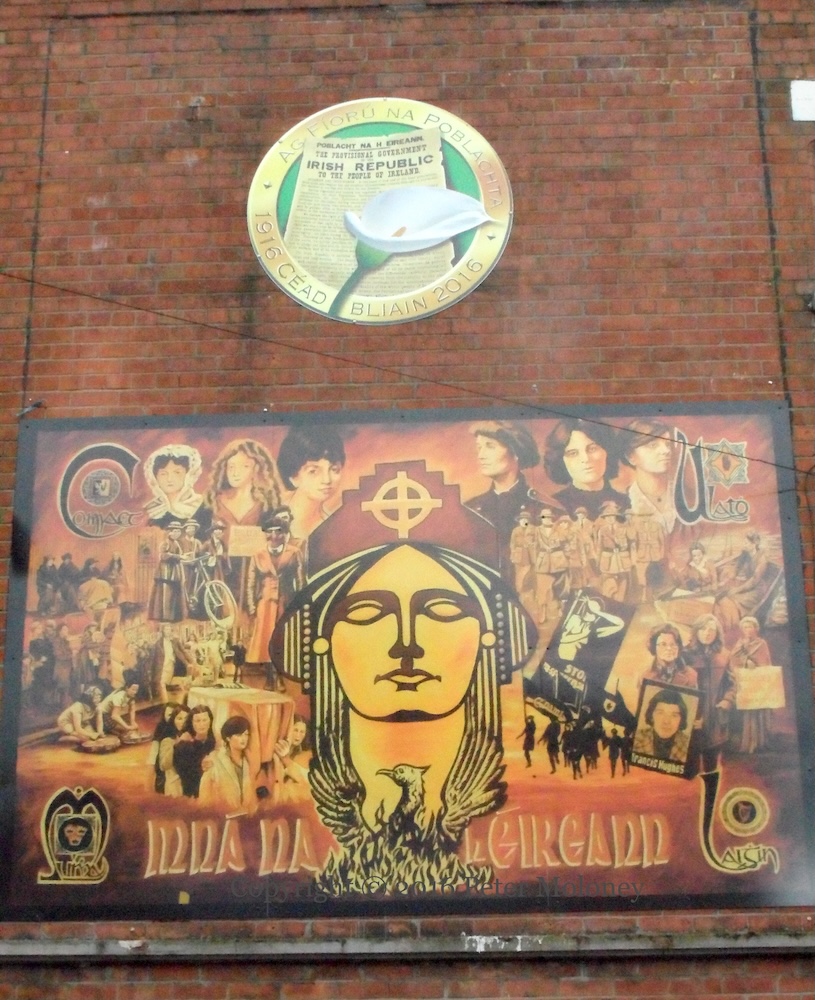
Érıu/Éıre of the Tuatha Dé Danann, queen of Ireland, (as depicted by Richard J King) is at the centre of various representations of republican women.
Along the top are Ann Devlin, Betsy Gray, Mary Ann McCracken, Countess Markievicz, Nora Connolly?, and Winifred Carney. Suffragettes, the modern IRA, and Cumman Na mBan are depicted, as are Máıre Drumm at the Falls Curfew, Tom McElwee’s sisters carrying his coffin, and Molly Childers and Mary Spring Rice running guns on the Asgard. There is also an unusual ‘four provinces’ in the corners.
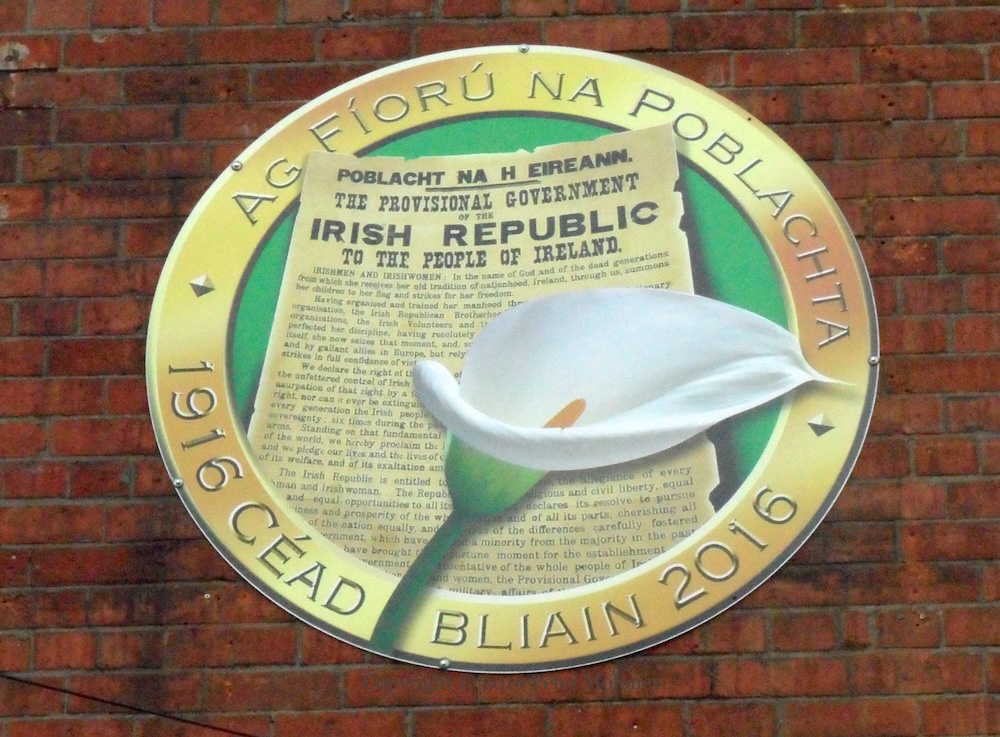
The wide shot (below) shows a 1916 centenary (“céad blıaın”) board: “Ag fíorú na poblachta”.
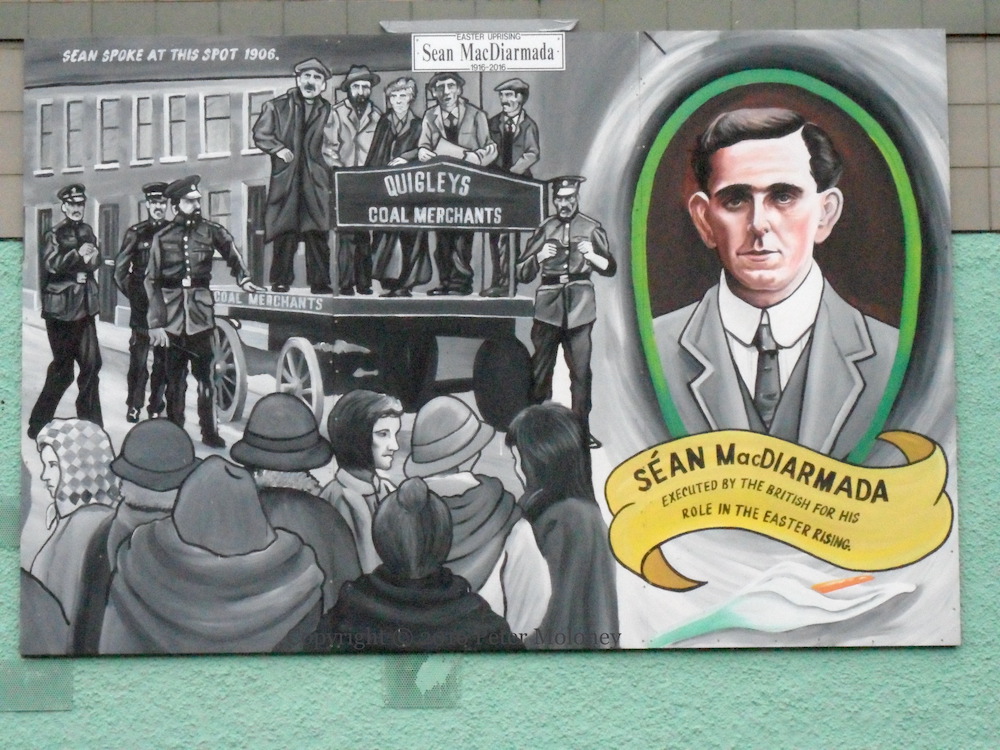
Seán Mac Dıarmada was born in Leitrim, left for Glasgow at age 15, and after two years returned to Belfast in 1905 and – according to the new mural above – spoke from the back of a coal lorry in Clonard Street, outside the Clonard branch of the Ancient Order Of Hibernians. Mac Dıarmada was for a short time an AOH member, before moving on to the Irish Republican Brotherhood and Irish Volunteers, which led to his participation in the 1916 Easter Rising and execution on May 12th of that year.
The title of today’s post is historian F.X. Martin’s assessment of Mac Dıarmada, quoted in a pamphlet on Mac Dıarmada from the National Library Of Ireland. The NLI made many letters from and to Mac Dıarmada available in 2016. (See also this Irish Times write-up).
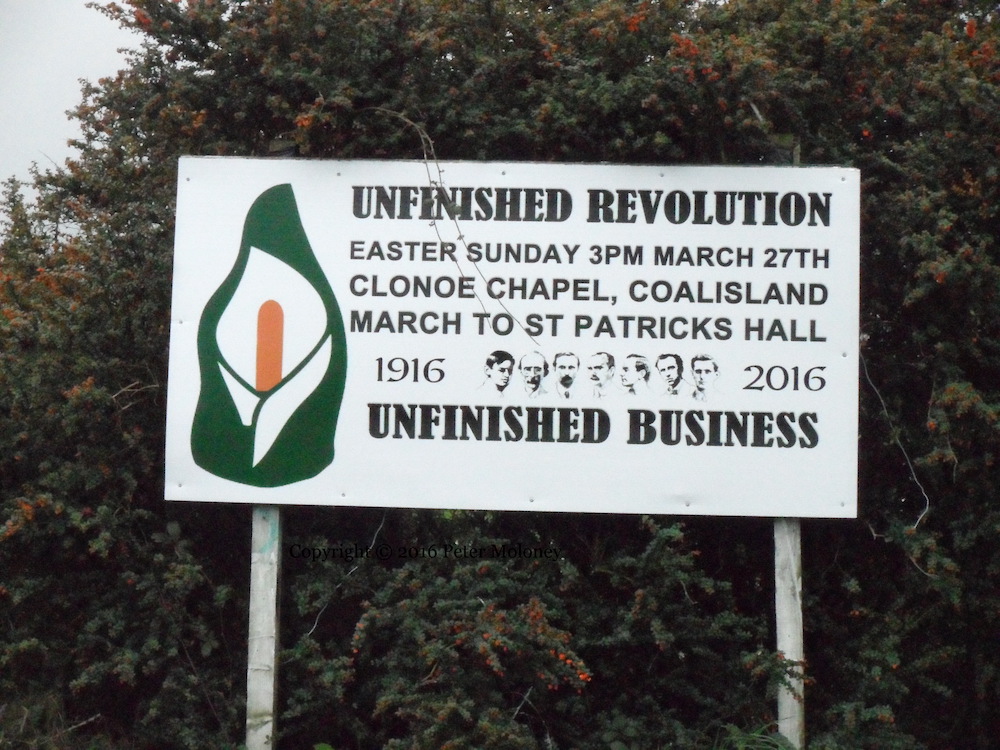
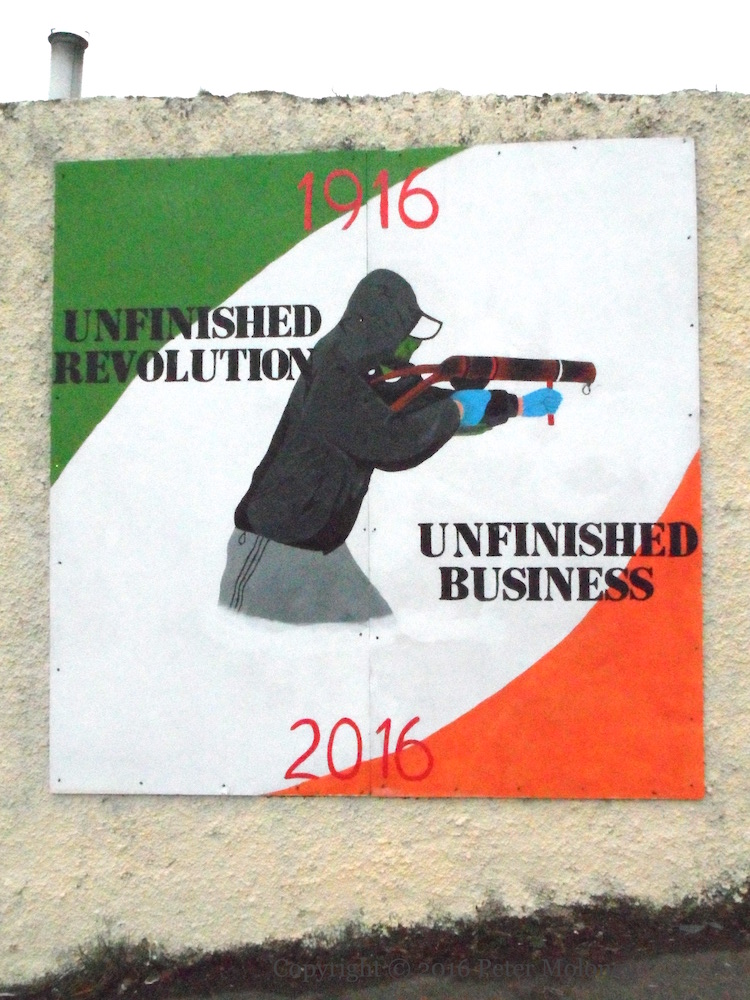
There are currently three uses of the “Unfinished revolution, unfinished business” slogan in Derry.
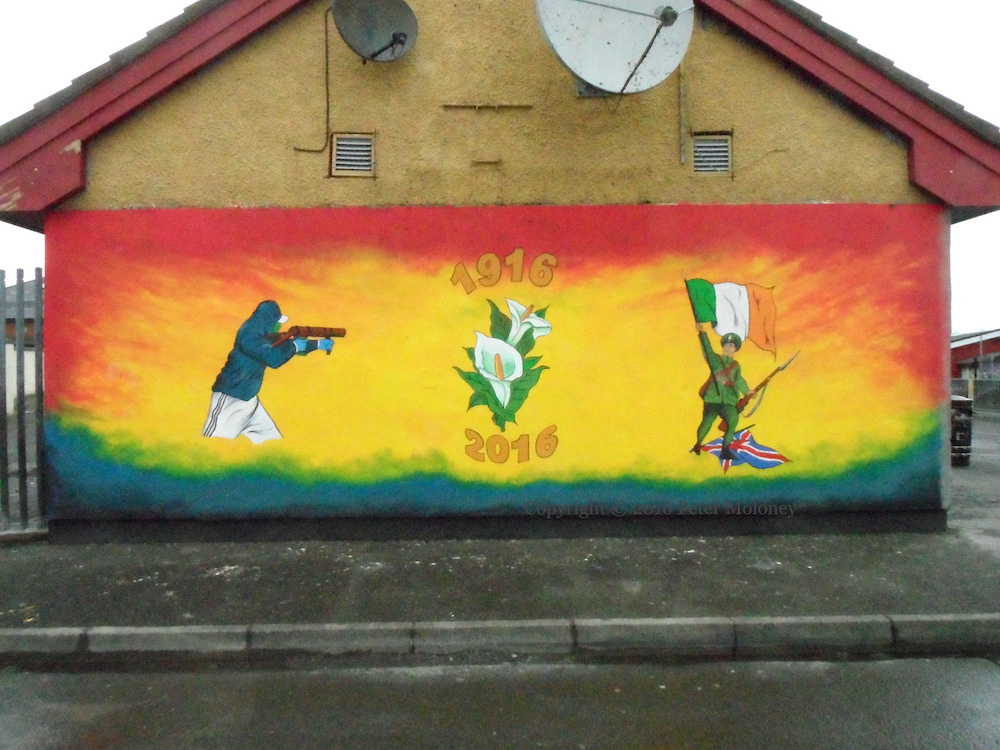
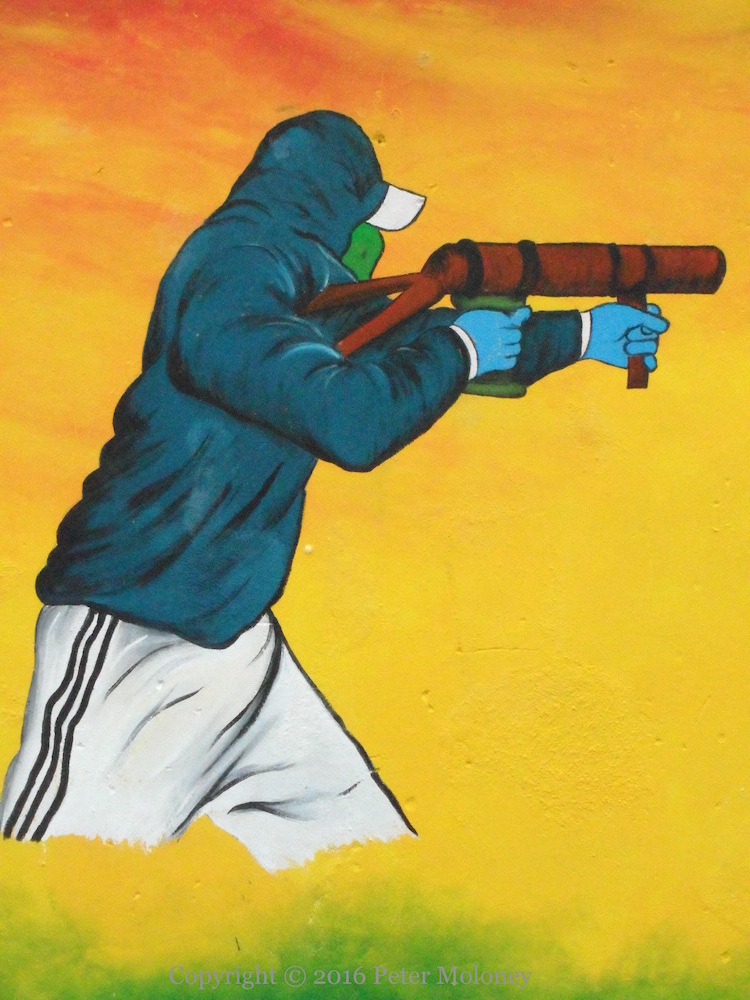
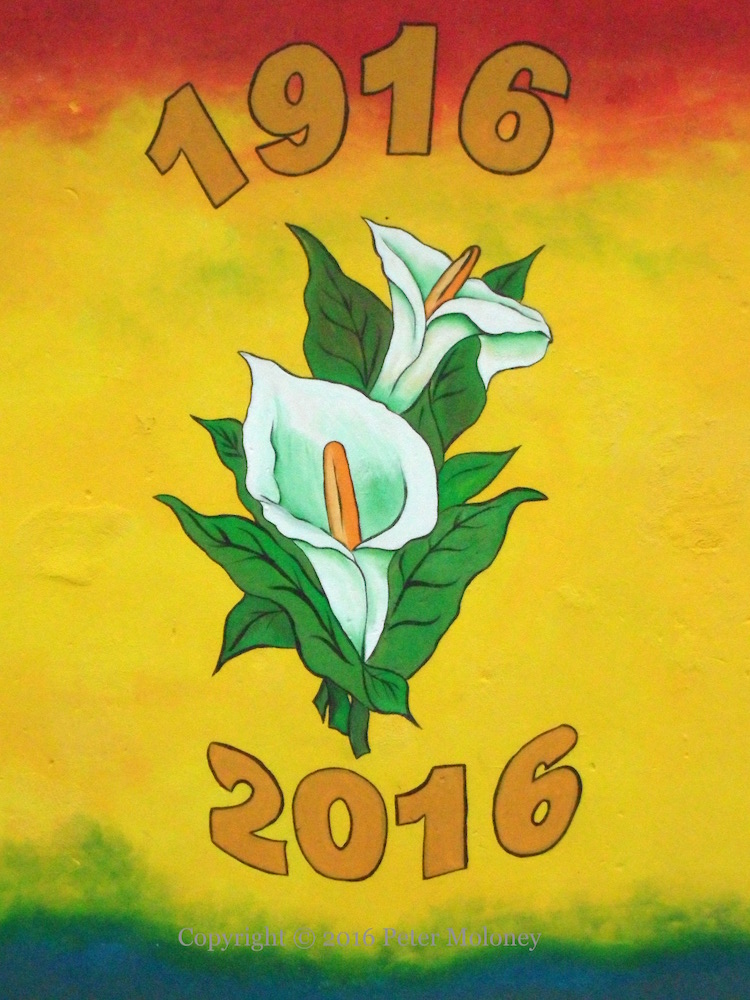
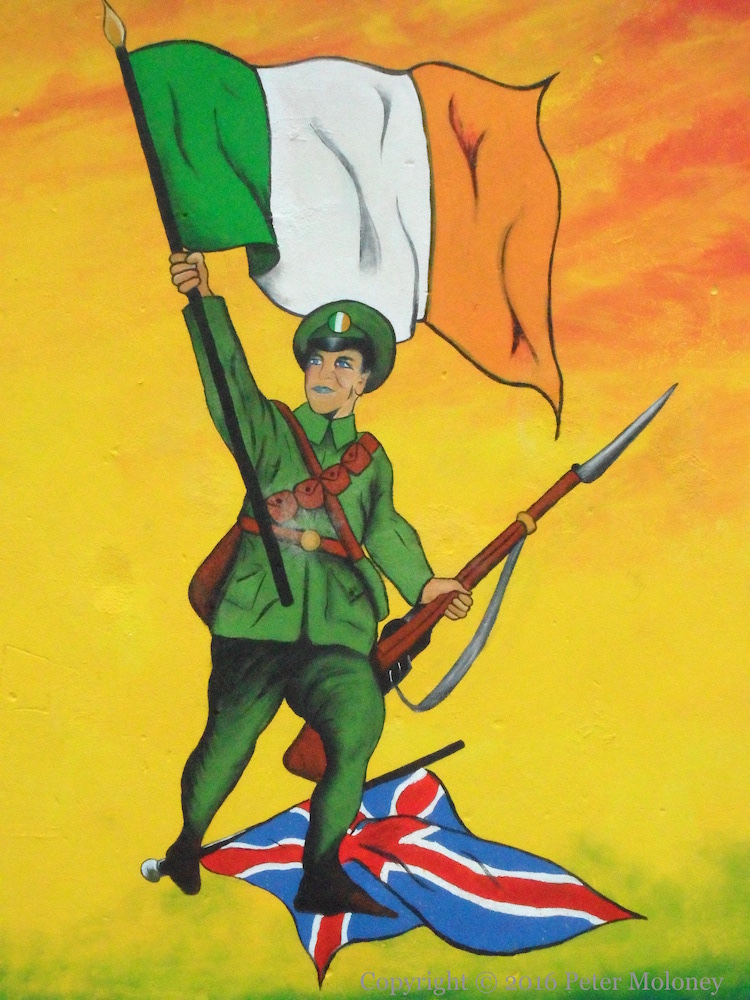
First, a new mural is currently in progress in Creggan. On the right, a soldier raises the Irish Tricolour while trampling on Britain’s Union Flag and the “unfinished revolution” of 1916’s Easter Rising (reproducing a postcard of the era). The modern-day figure on the left is wielding a home-made rocket-launcher used in a 2014 attack on police. It also appears in the board immediately above, and in 2015’s Resistance in Ardoyne, north Belfast.
(The finished piece can be seen in the Seosamh Mac Coılle collection, with verbiage above and below reading, “Unfinished revolution, unfinished business” and “Resistance!”)
Central Drive, Eastway, and Westland Street, Derry.
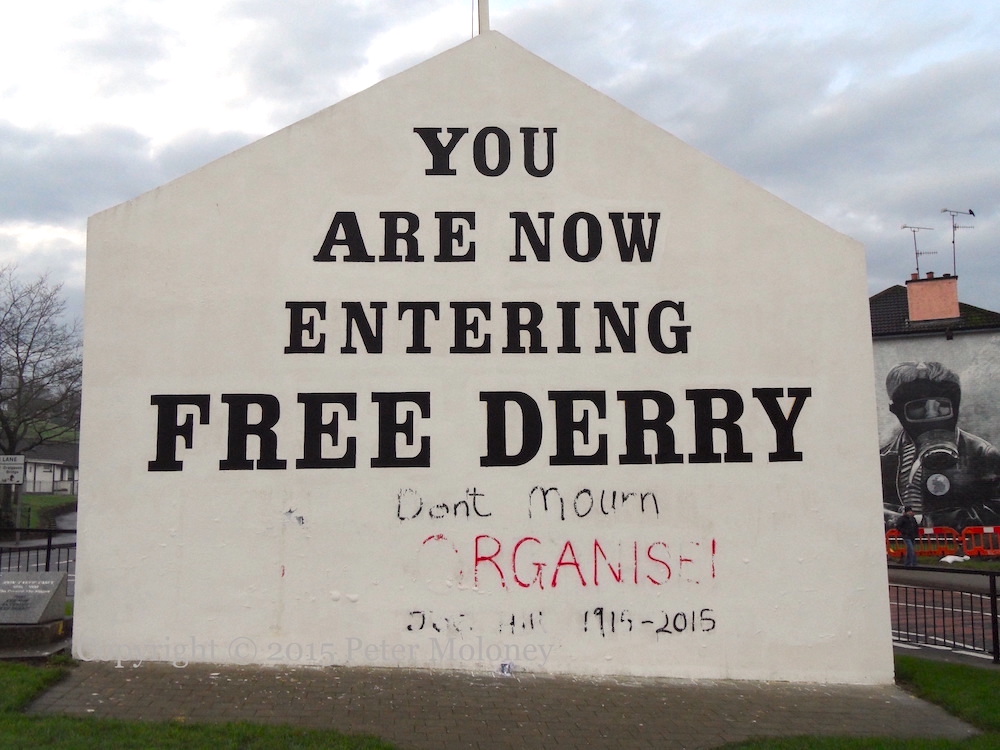
Joe Hill was executed by firing squad on November 19th, 1915, at the age of 36, convicted of shooting a father and son in Utah. Before his death, he sent a telegram to Big Bill Haywood, founder-member of the IWW, saying “Don’t waste any time mourning. Organize!” (WP) The centenary of his death was marked by graffiti on Free Derry Corner.
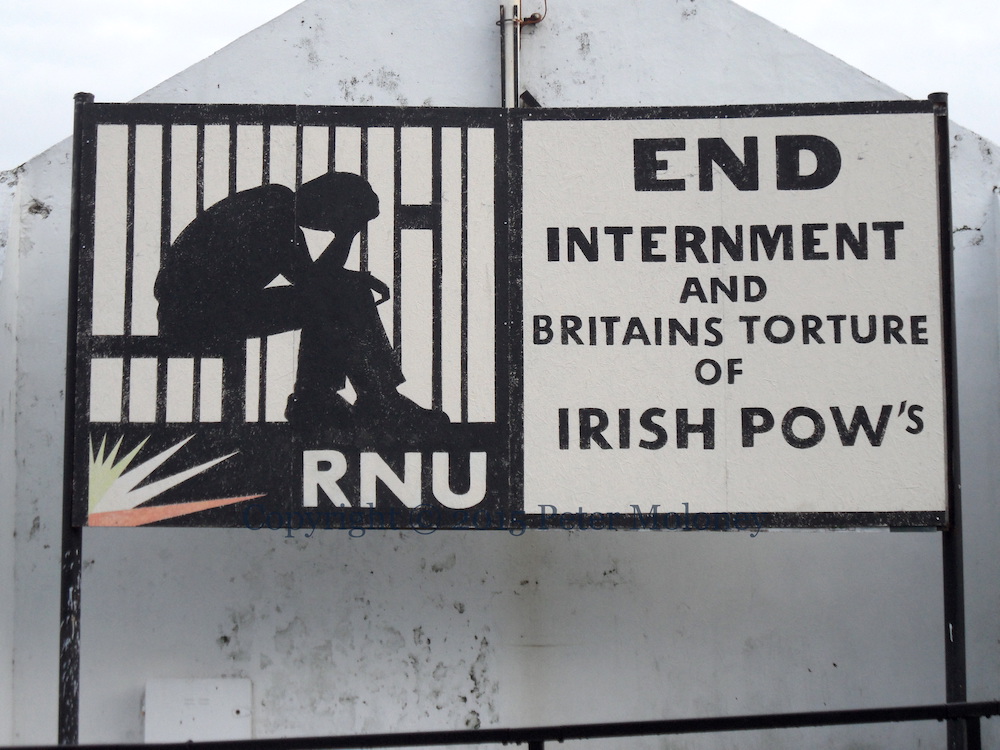
On the back of the wall is an RNU (Fb) board showing a prisoner behind bars, a victim of internment: “End internment and Britain’s torture of Irish POWs”.
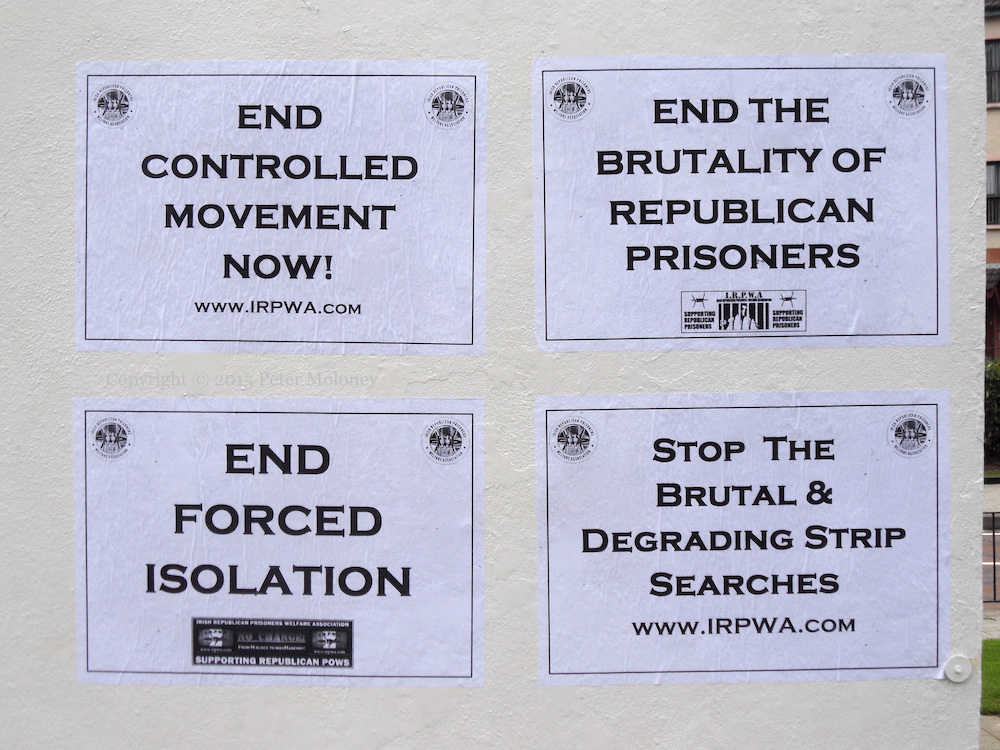
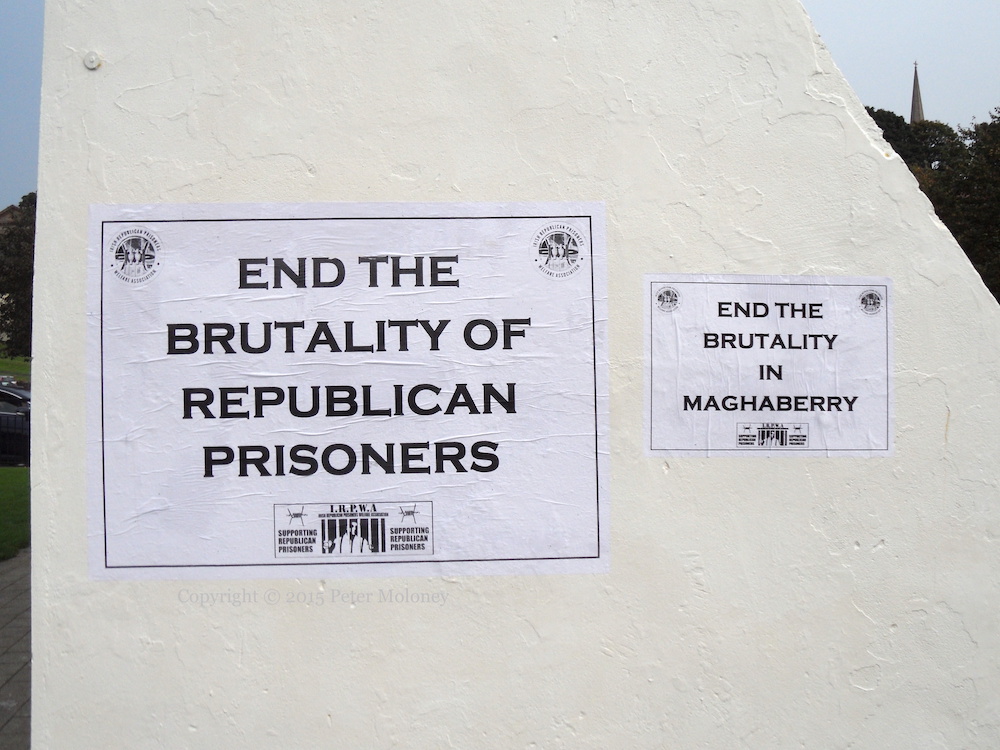
On the buttresses are IRPWA flyers: “End controlled movement now!”, “End forced isolation”, “End the brutality of republican prisoners”, “Stop the brutal & degrading strip searches”, “End the brutality in Maghaberry”, “www.irpwa.com‘.
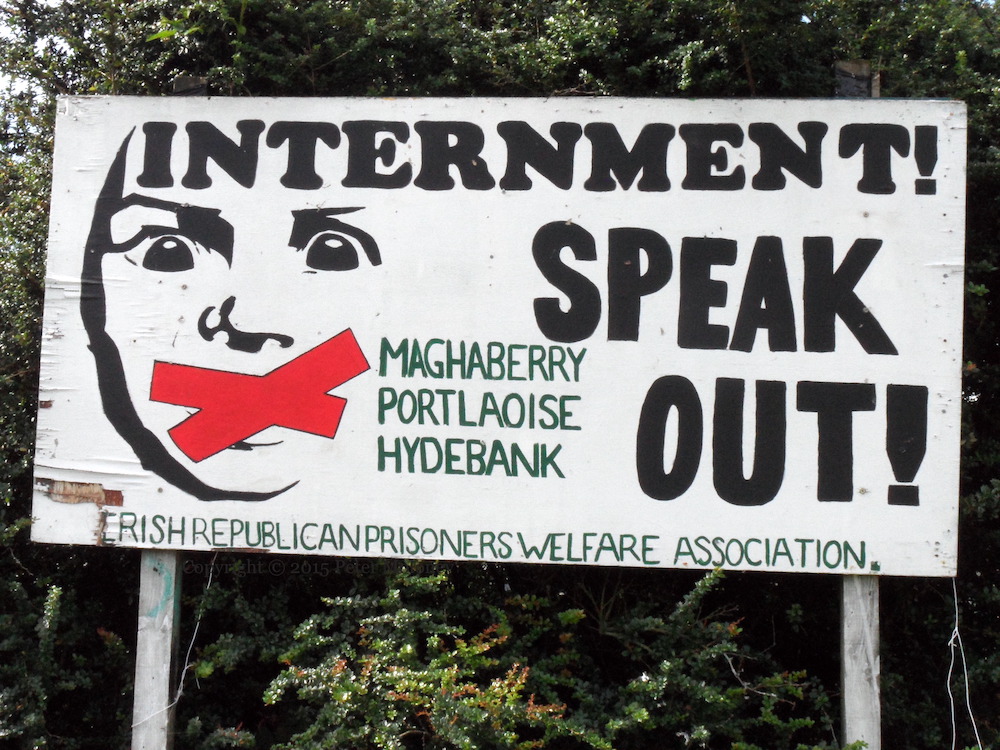
“Internment! Speak out! Maghaberry, Portlaoise, Hydebank. Irish Republican Prisoners Welfare Association [web]”. This painted board is on the roundabout at the top of Eastway, Derry
Patrick Pearse urges Bogside passers-by to “Sign the petition” for “One Ireland, One Vote” (Pensive Quill) from the 1916societies.com [1916societies.ie]
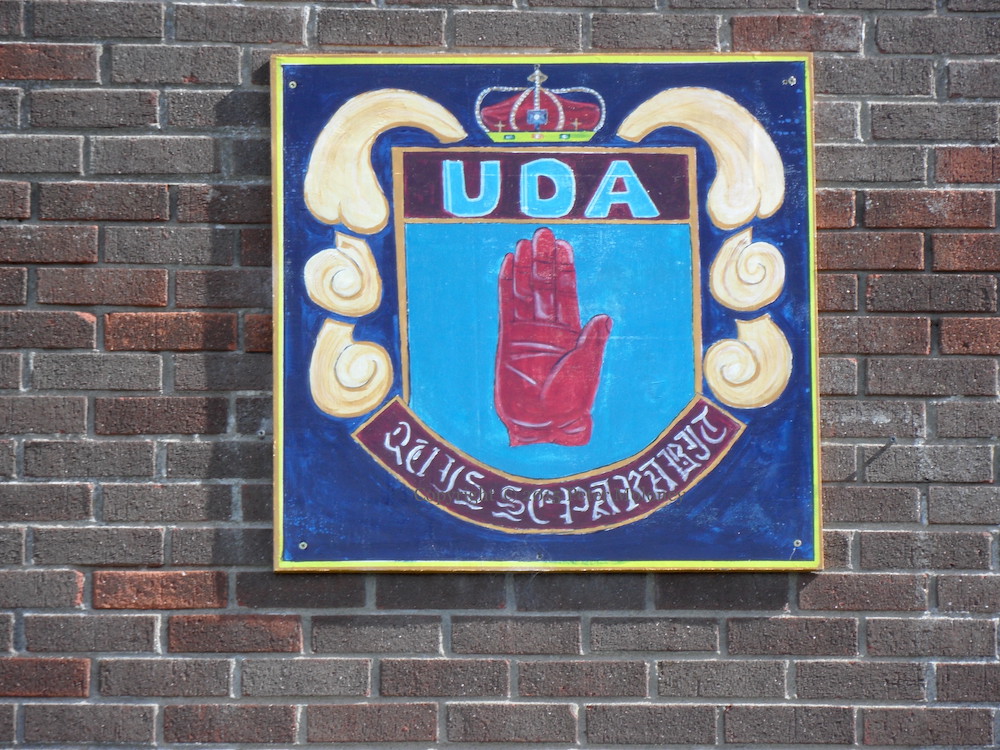
This small board is (probably) a successor to the two boards seen in 2005’s UFF/UYM both of which had disappeared by 2014 (or perhaps a temporary replacement for the UWC mural before the anti-drugs board).
This pair of boards is outside the Ulster Rangers Supporters Club (Fb) on the Shankill Road.
Above: The painting features a tram going under an Orange arch between the public baths on one side an Spin-A-Disc records on the other, surrounded by notable figures from the Shankill area. (Many thanks to Johnny Dougan of Shankill Area Social History (Fb) for the information below.)
Front, from left to right: Manchester United and Northern Ireland Soccer player Norman Whiteside (WP) and behind him boxer Davy Larmour and community worker Saidie Patterson (see WRDA), boxer Sammy (Cisco) Cosgrove, Senator Charlie McCullough (WP), Tommy Henderson, boxer Jimmy Warnock (original photograph here), Hugh Smyth (see previously Third Class Citizens), artist William Conor (see previously Conor’s Corner, Jack Henning (running), musician Belter Bell, writer Albert Haslett (Northern Visions interview).
Atop the tram: on the left is Jackie Redpath of the Save the Shankill Campaign (note other members of the group with placard on right; Northern Visions has a documentary about the Save The Shankill campaign) and Jack Higgins holding his book The Eagle Has Landed (WP). Up there too is Miss Sands, the music teacher in the Girls Model School, and historian Bobby Foster (Northern Visions interview). On the stairs are May Blood MBE and above her D.I. Nixon.
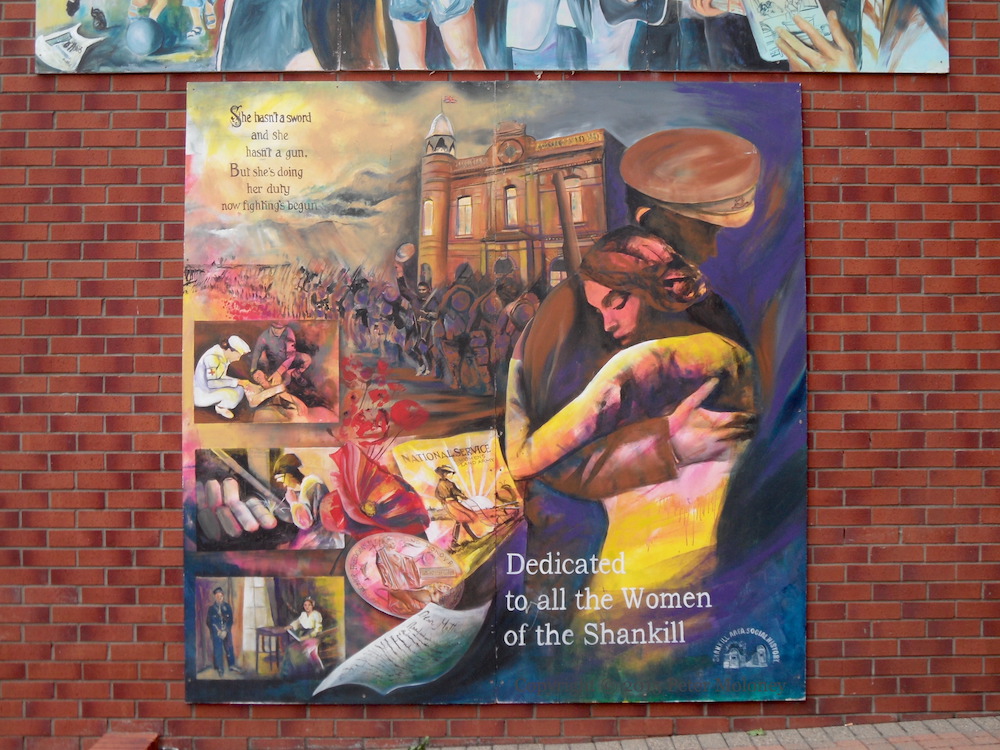
Below is a board highlighting the roles played by women during WWI as nurses and welders and in the Land Army. “She hasn’t a sword and she hasn’t a gun. But she’s doing her duty now fighting’s begun.”
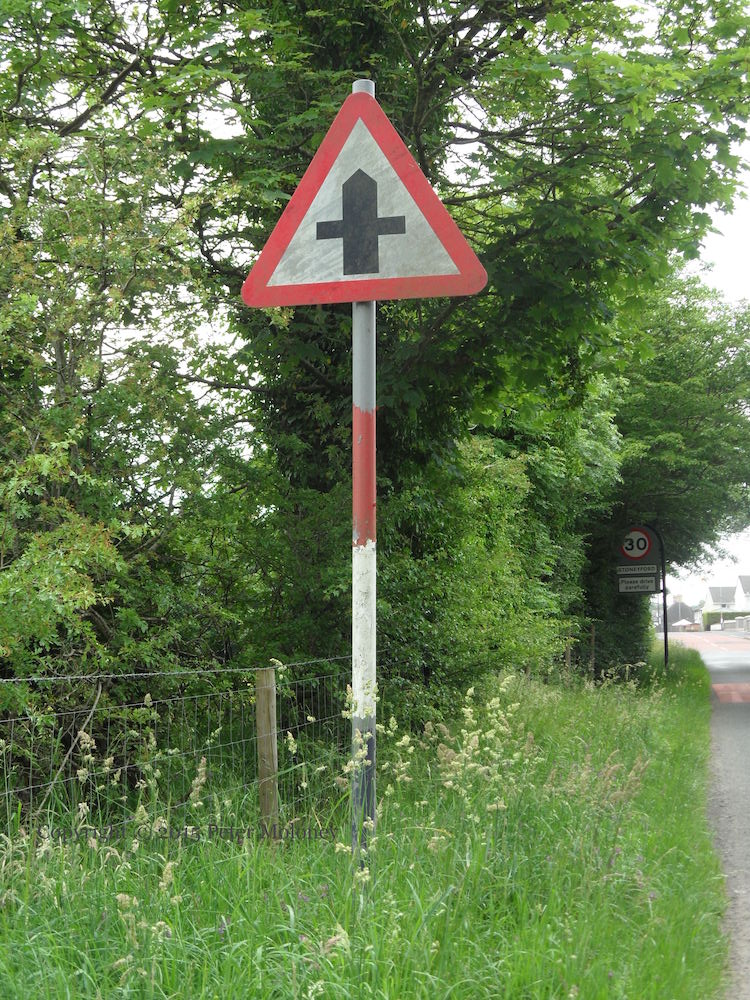
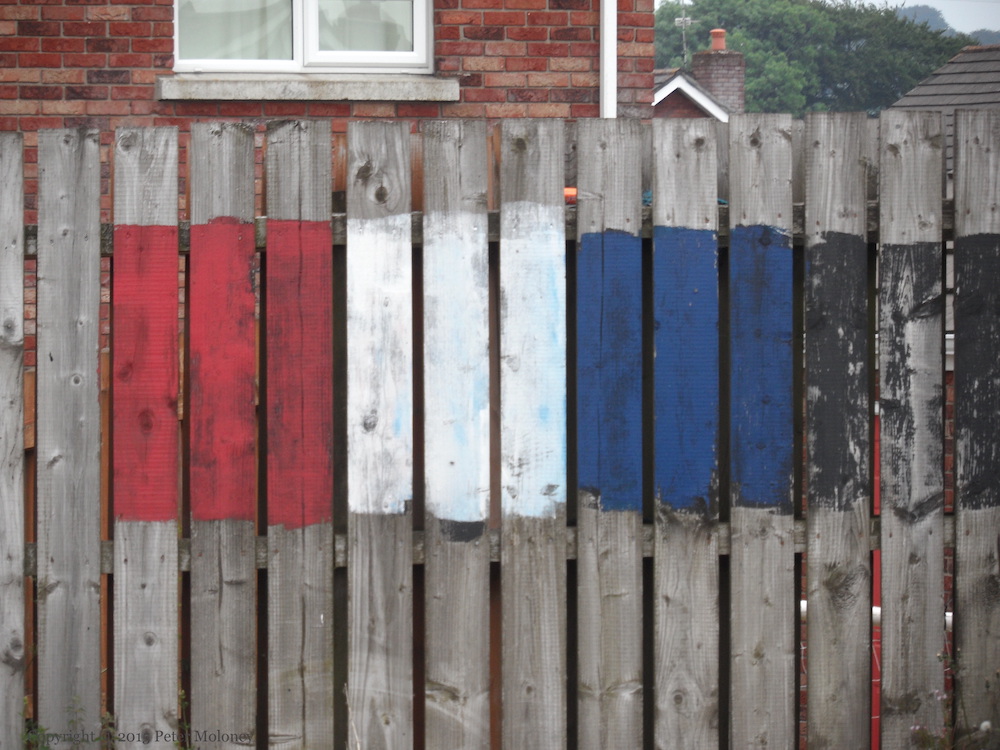
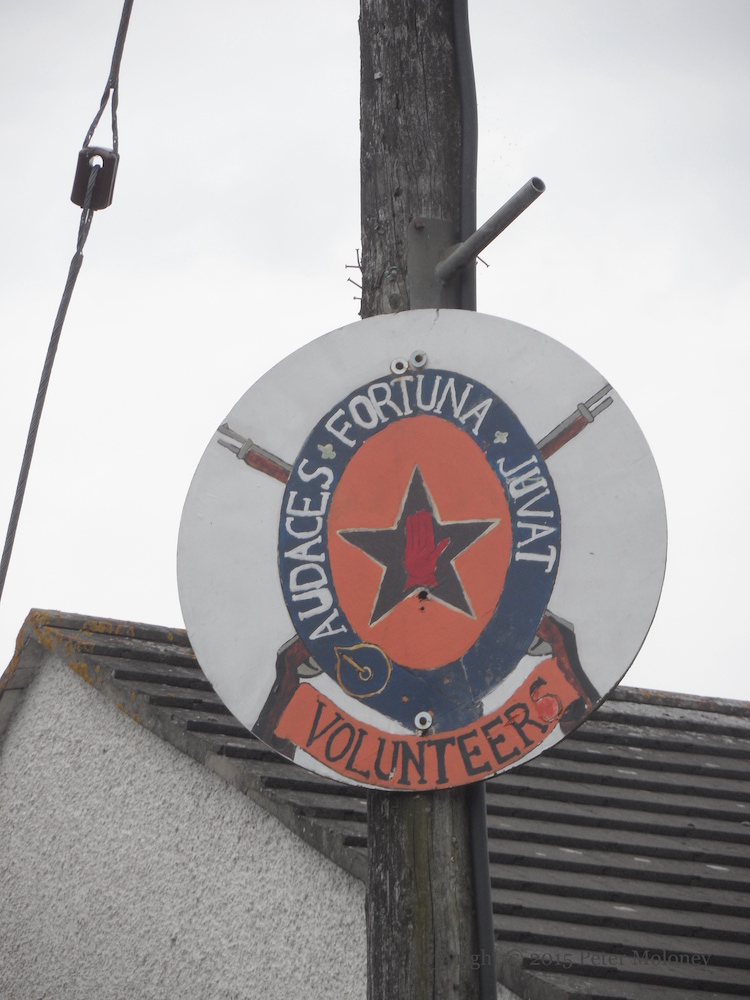
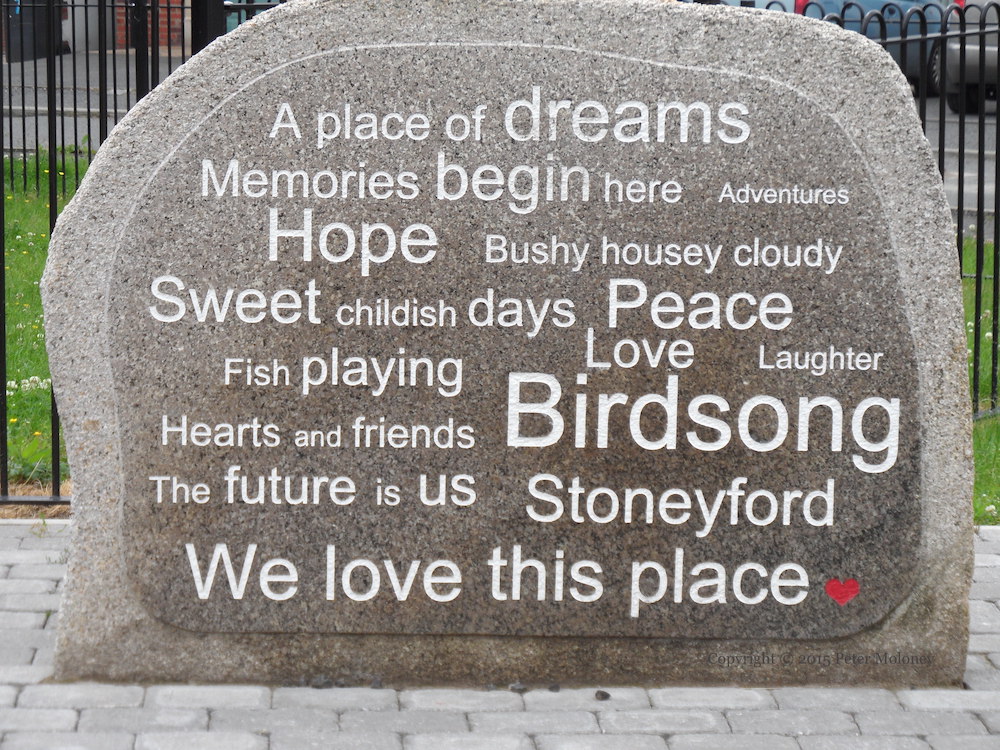
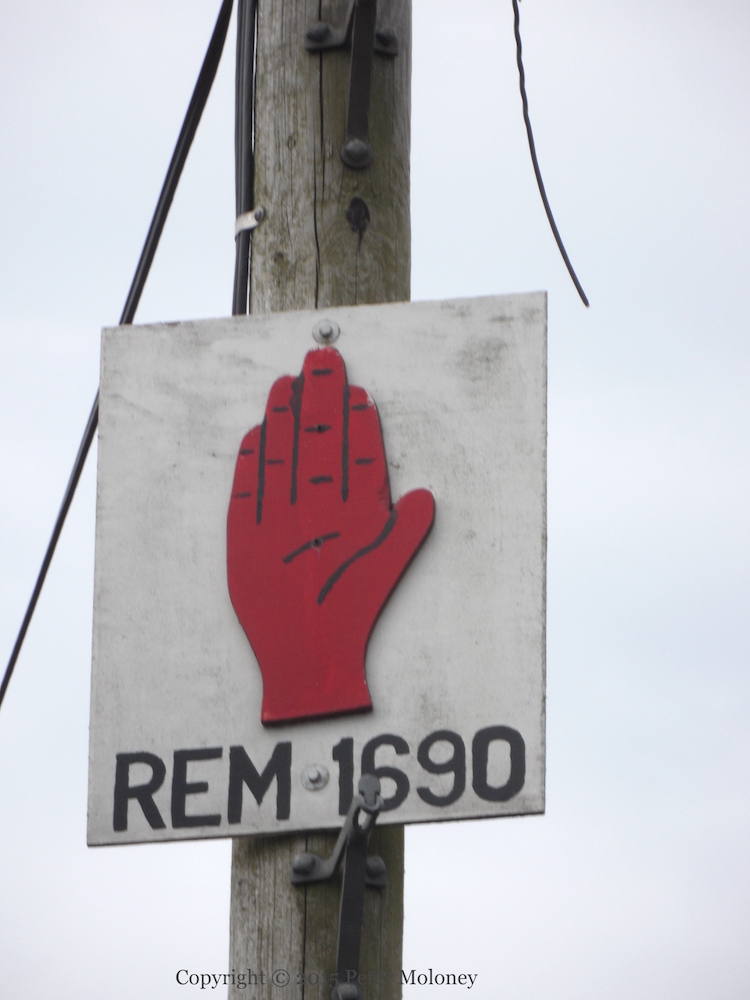
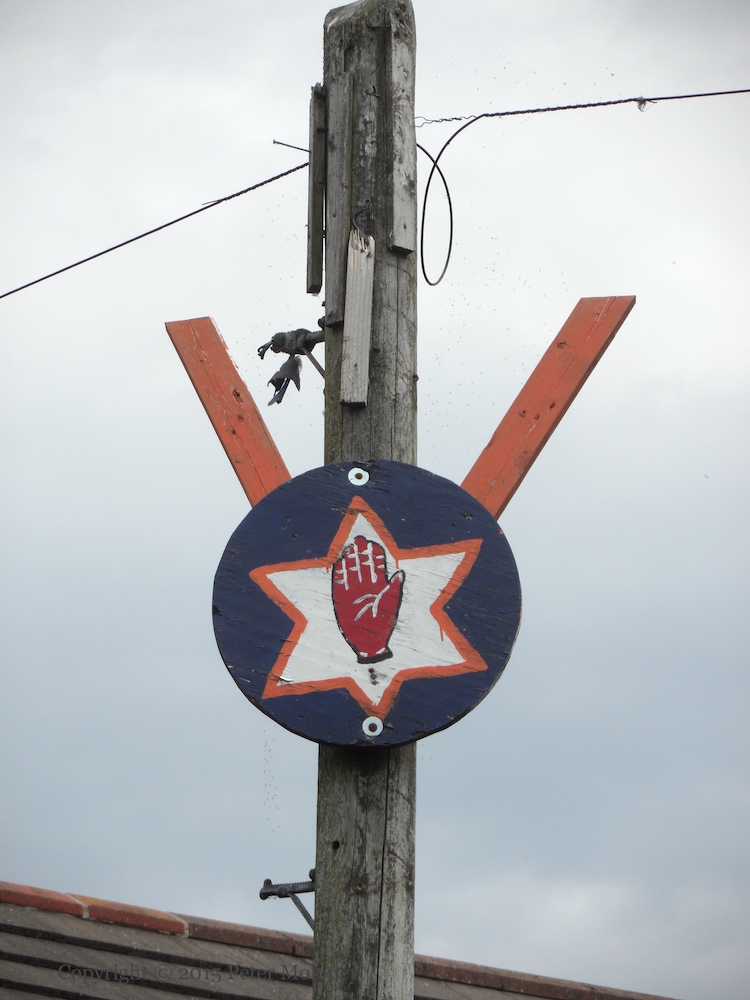
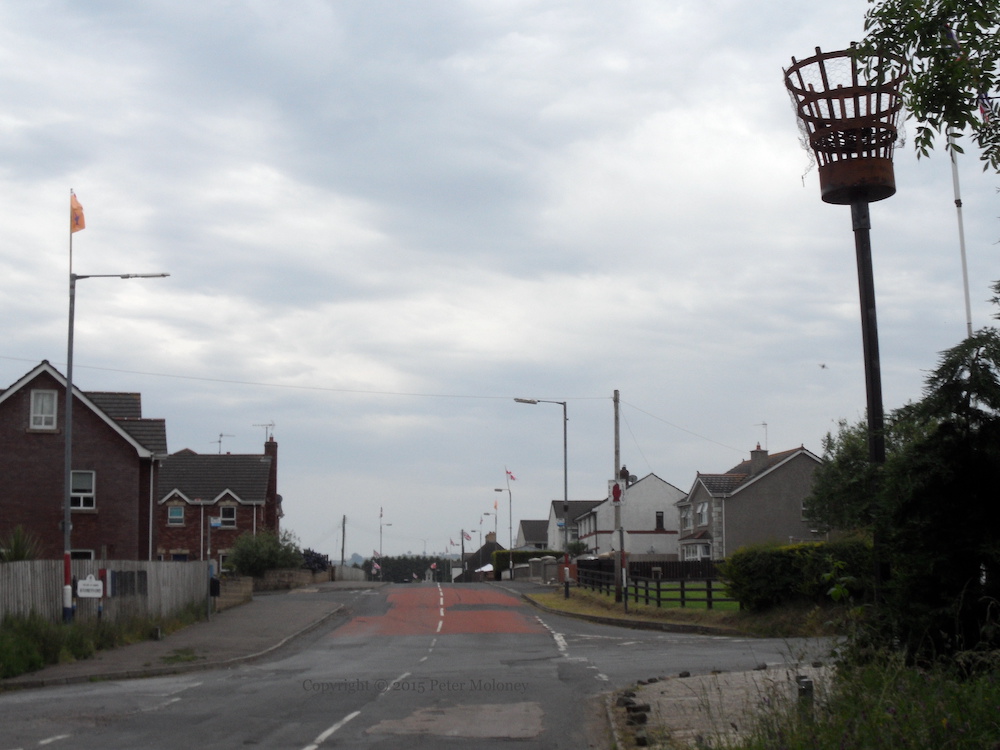
Here is a gallery of images from the village of Stoneyford, ten miles north of Lisburn. The view in the final image is from the cross-roads at north end of the village, with the brazier next to the WWI memorial visible on the right, and the nameplate on the fence on the left. The Orange Hall is in the middle of the village. The village was a centre for the small anti-Agreement organisation the “Orange Volunteers” (WP).
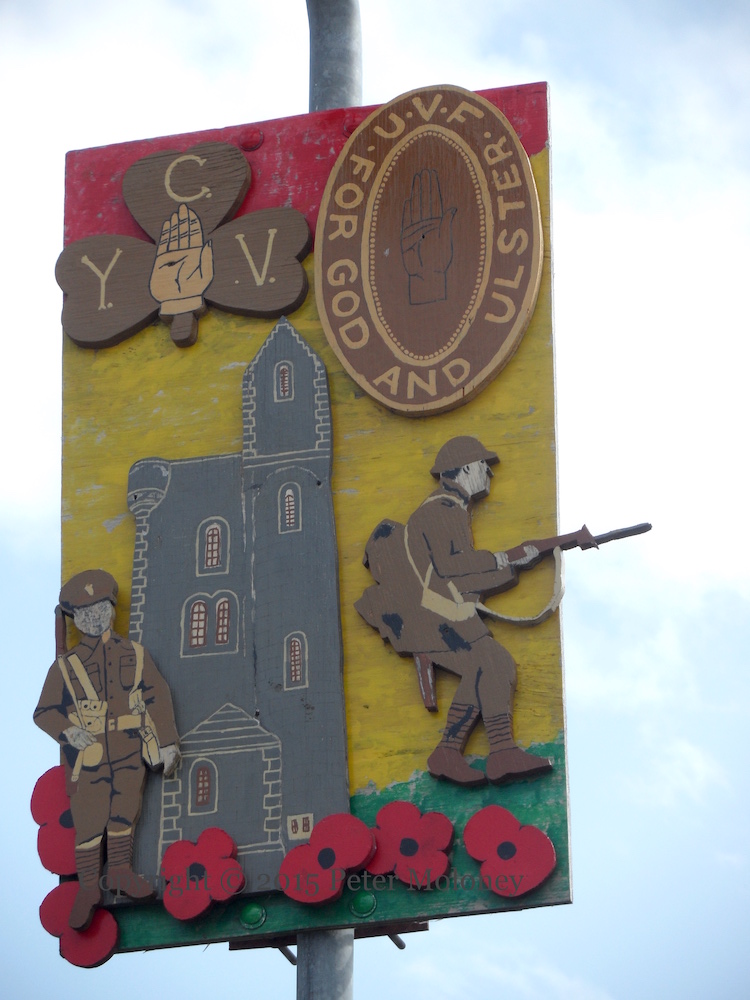
This pair of boards in Irvine Crescent, Enniskillen, is notable for their construction out of pieces of board that have been cut/carved before being layered onto a background board.
They both present the Ulster Volunteers/YCV of 1912 and WWI – in the first, two soldiers are placed alongside the Ulster Tower at Thiepval, France.