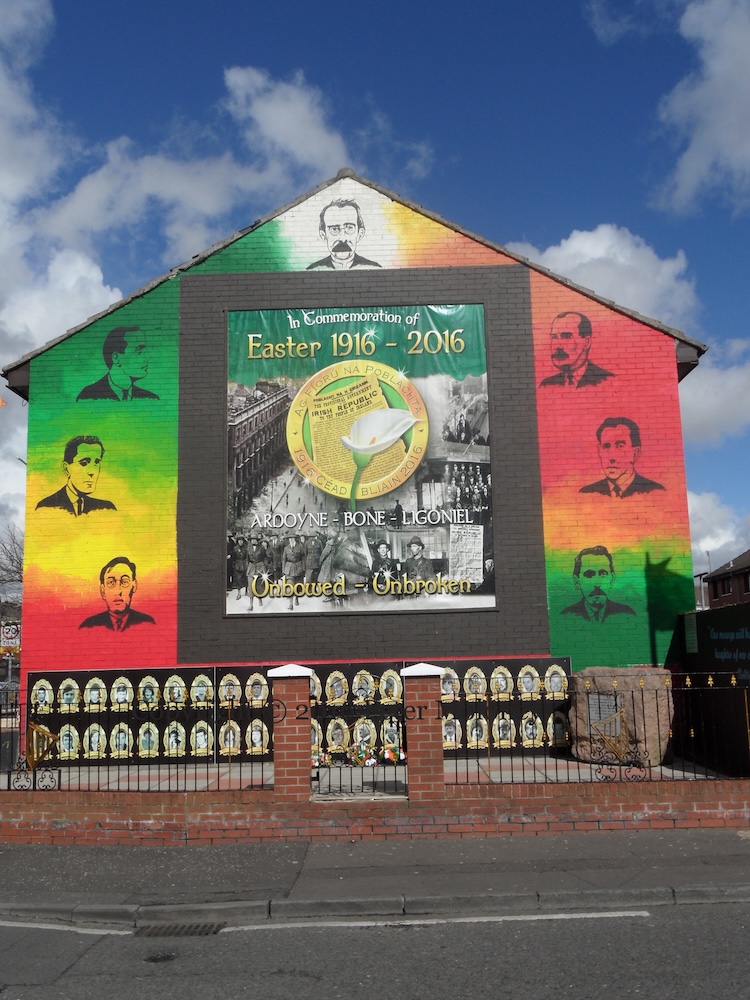
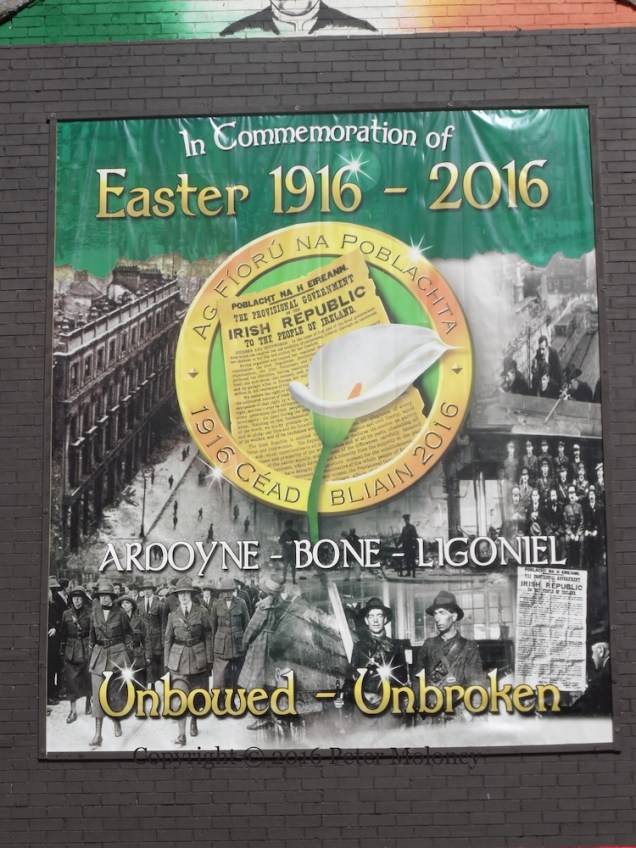
“In commemoration of Easter 1916 – 2016. Ardoyne – Bone – Ligoniel. Unbowed – unbroken.”
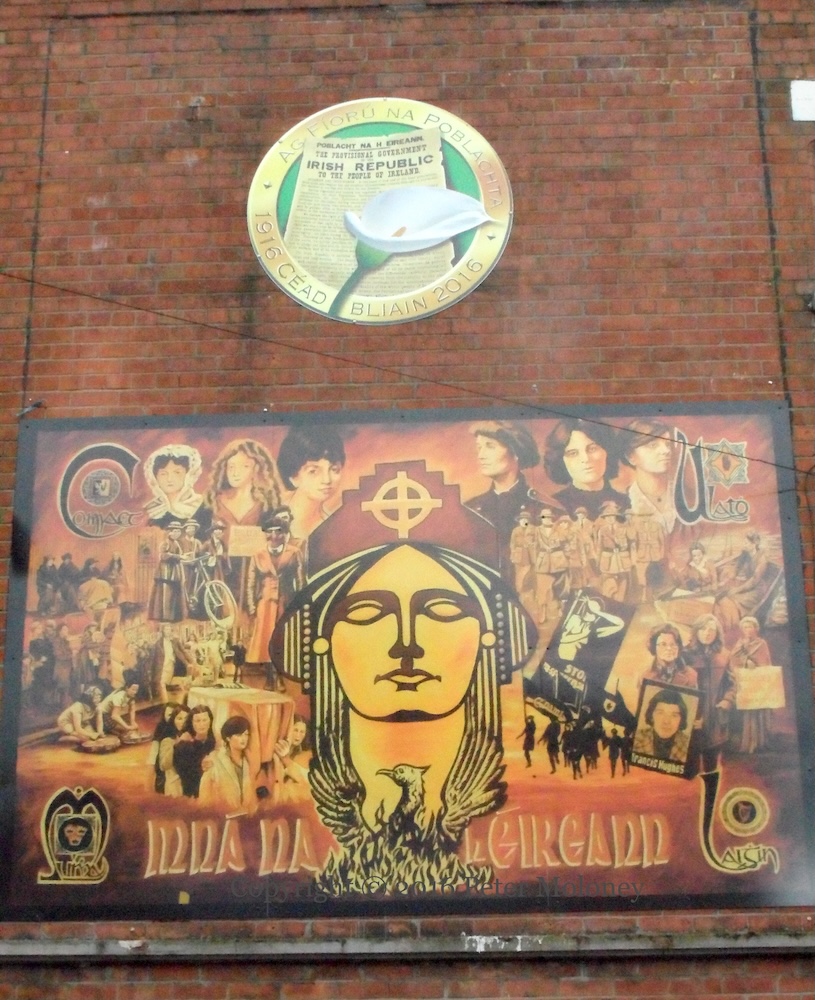
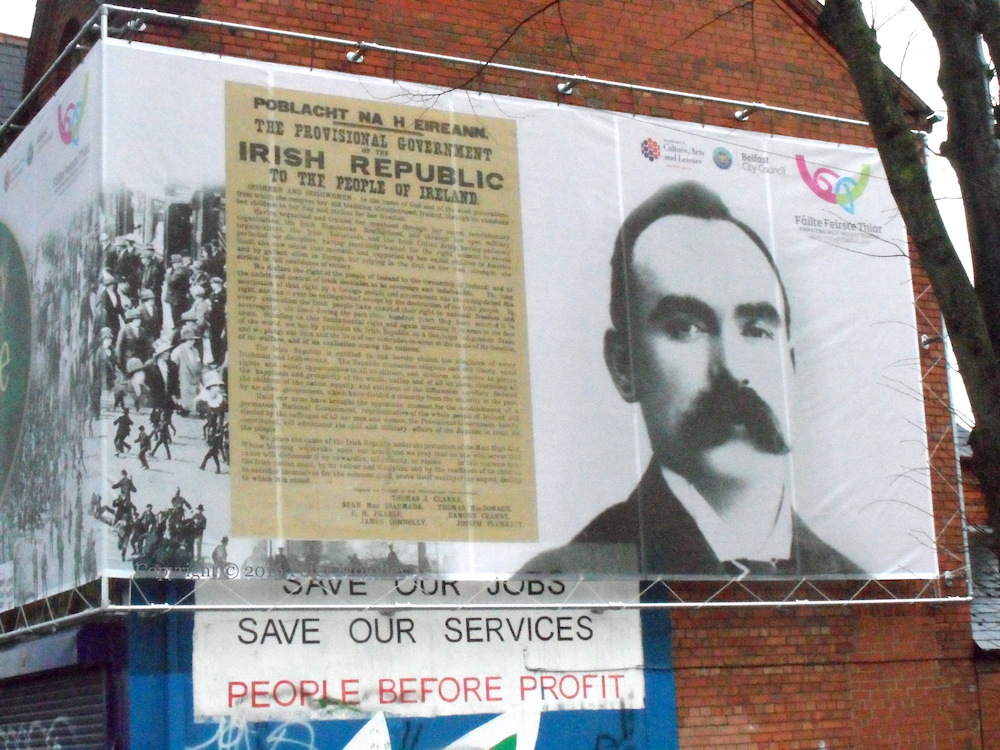
Tom Clarke is at the head of his fellow signatories as he looks down over a printed tarp reproducing photographs of events surrounding the Easter Rising of 1916, including soldiers from the Irish Citizen Army on a rooftop (see the original in this Spectator article) and members of Cumann Na mBan on parade. For the photo of the building in the top left, see this Irish Times article.
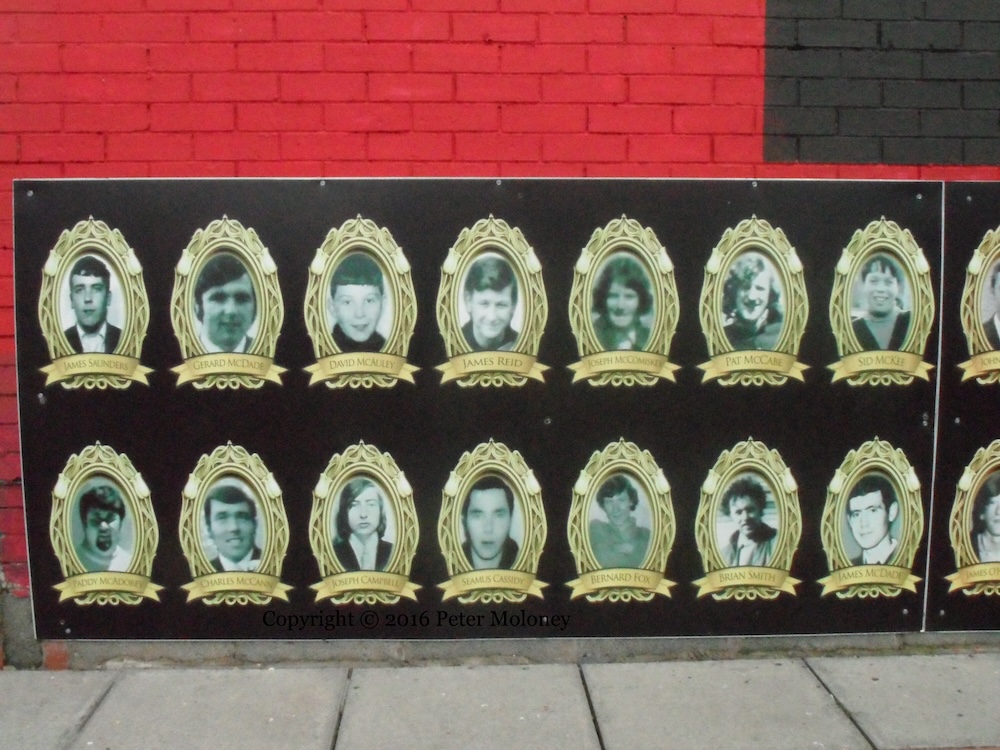
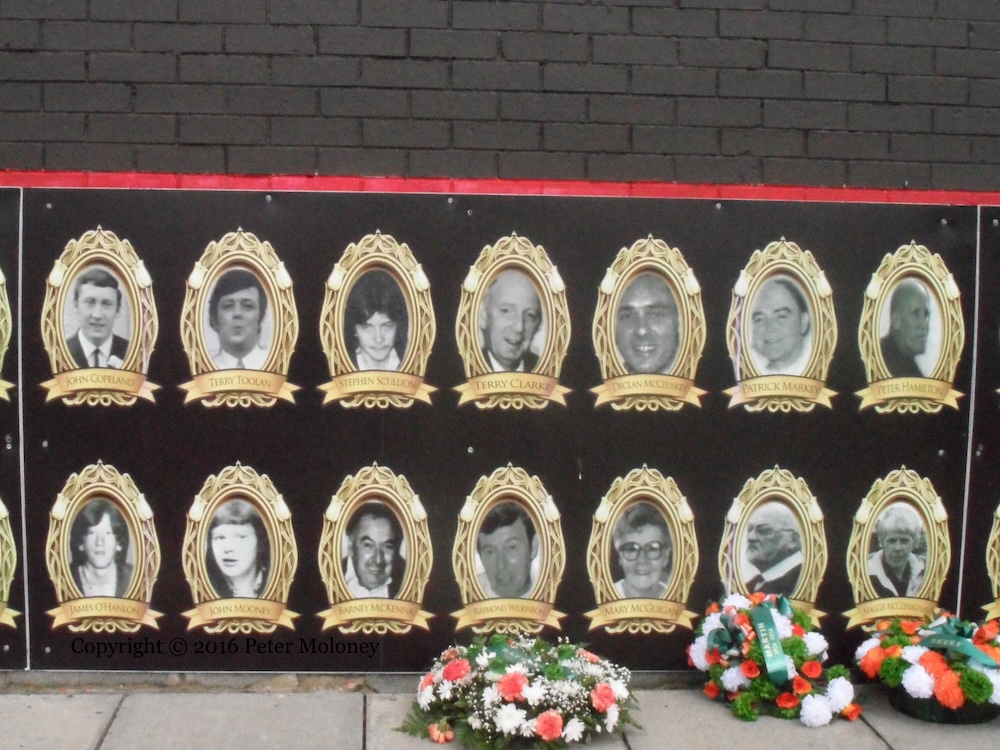
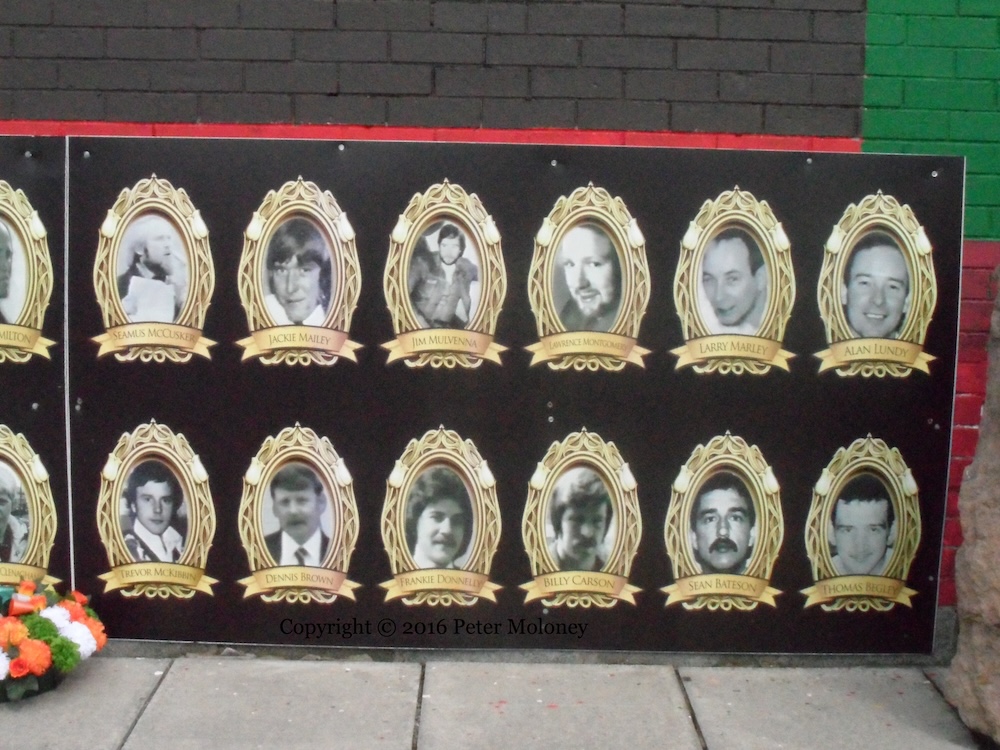
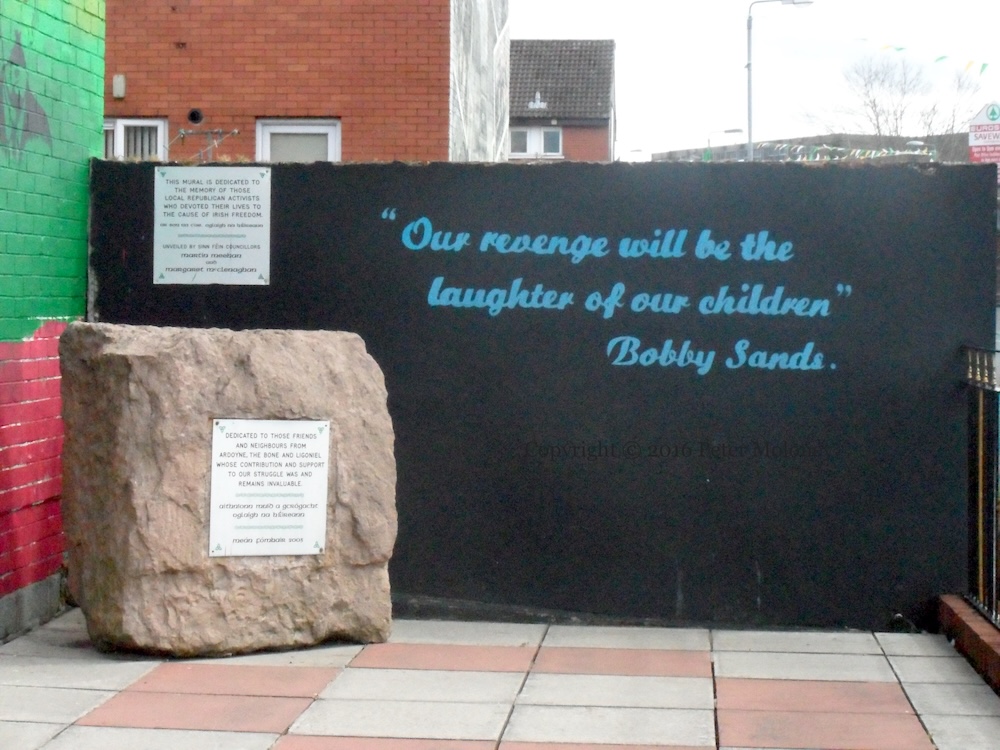
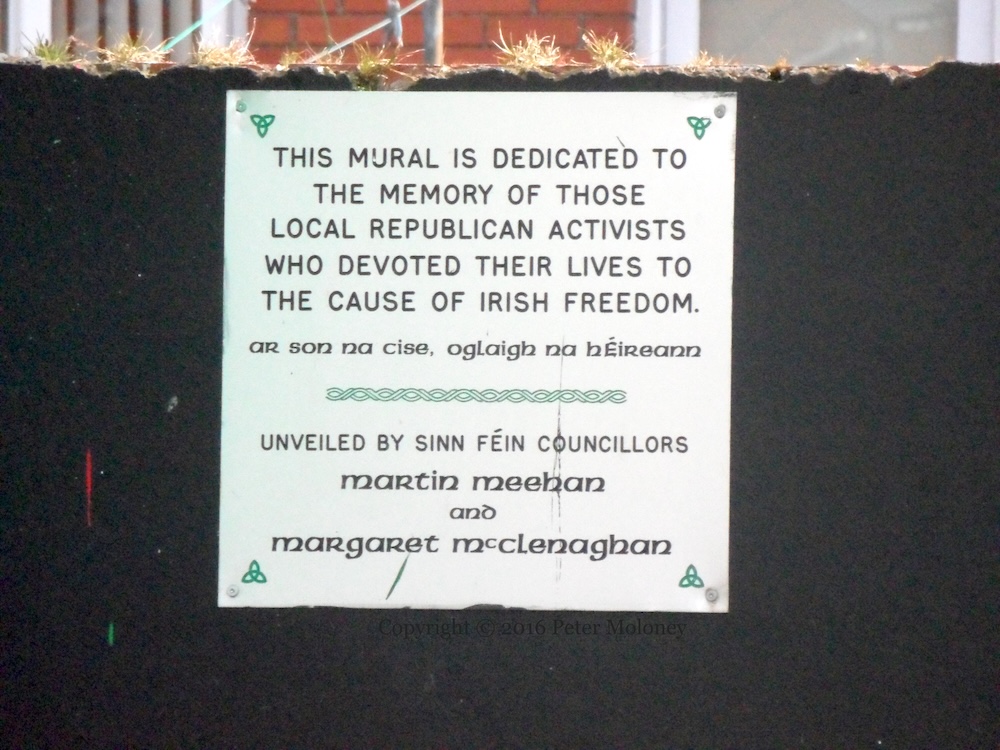
The previous Ardoyne – Bone – Ligoniel mural fell down almost as soon as it was completed, leaving only the boards with portraits of locals killed during the troubles. The stone and plaque (in the final images) go back to the mural before that.
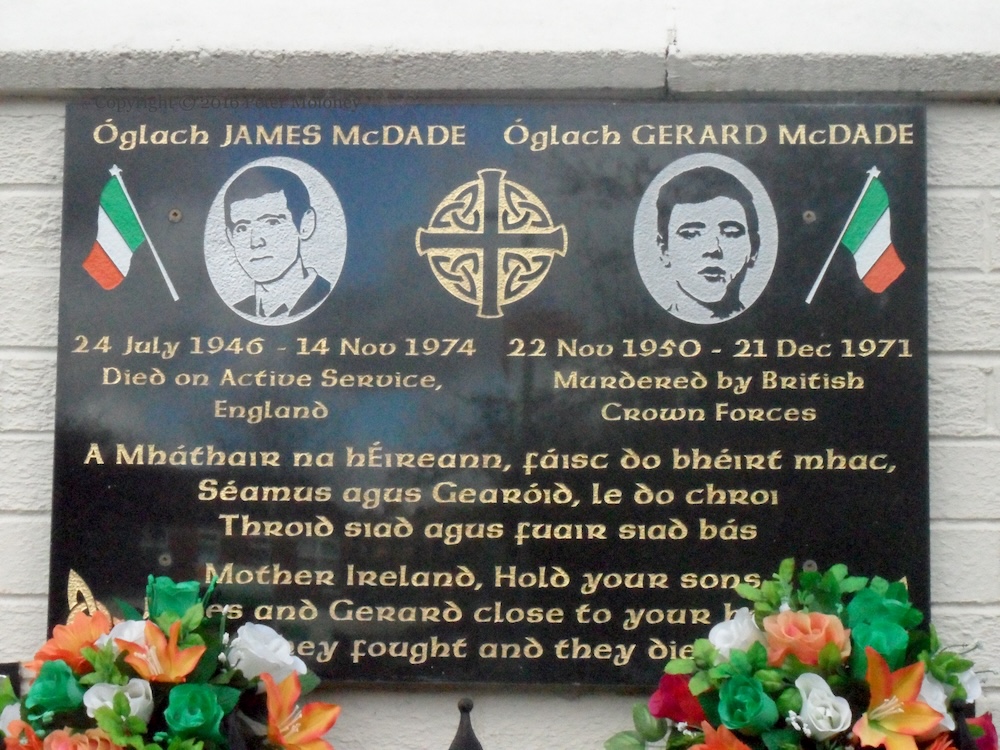
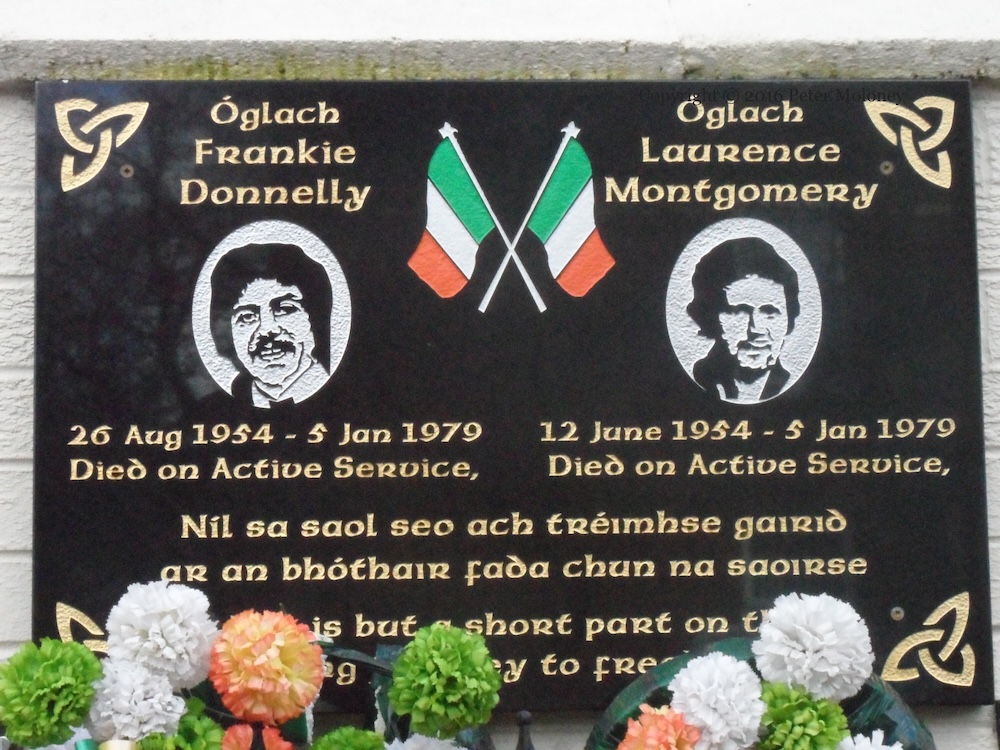
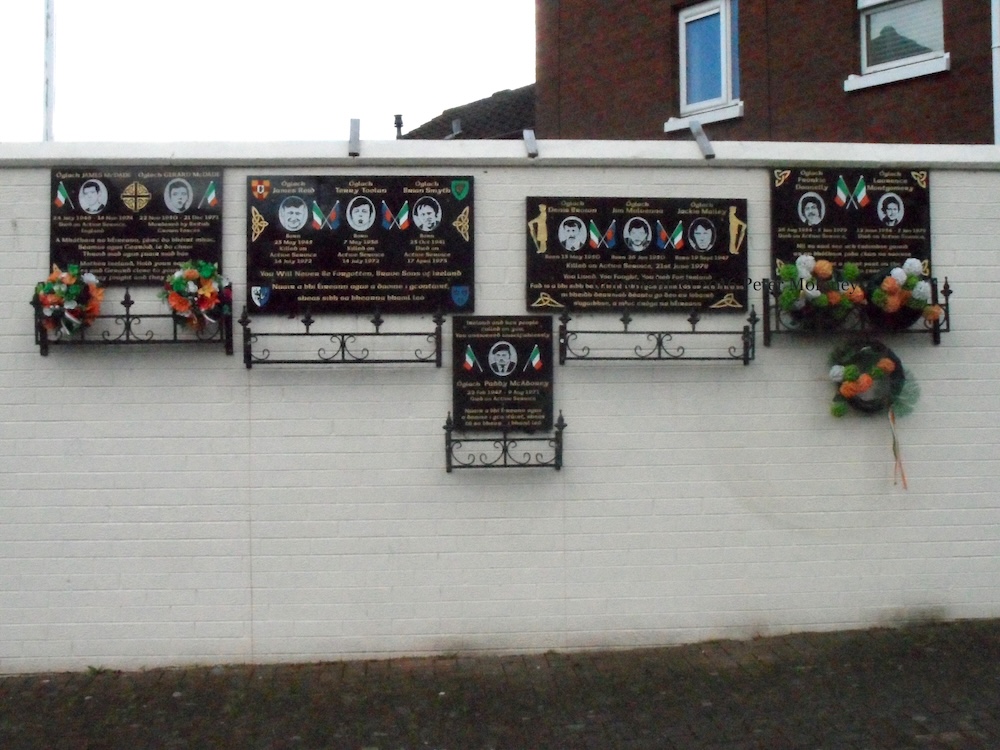
Three plaques have been added to the two seen previously, the McDade and Donnelly-Montgomery plaques.
“Óglach James McDade 24 July 1946 – 14 Nov 1974 died on active service, England; Óglach Gerard McDade 22 Nov 1950 – 21 Dec 1971 murdered by British Crown Forces. A Mháthaır na hÉıreann, fáısc do bhéırt mhac, Séamus agus Geraóıd, le do chroí. Throıd sıad agus fuaır sıad bás. Mother Ireland, hold your sons, James and Gerard, close to your heart. They fought and they died.”
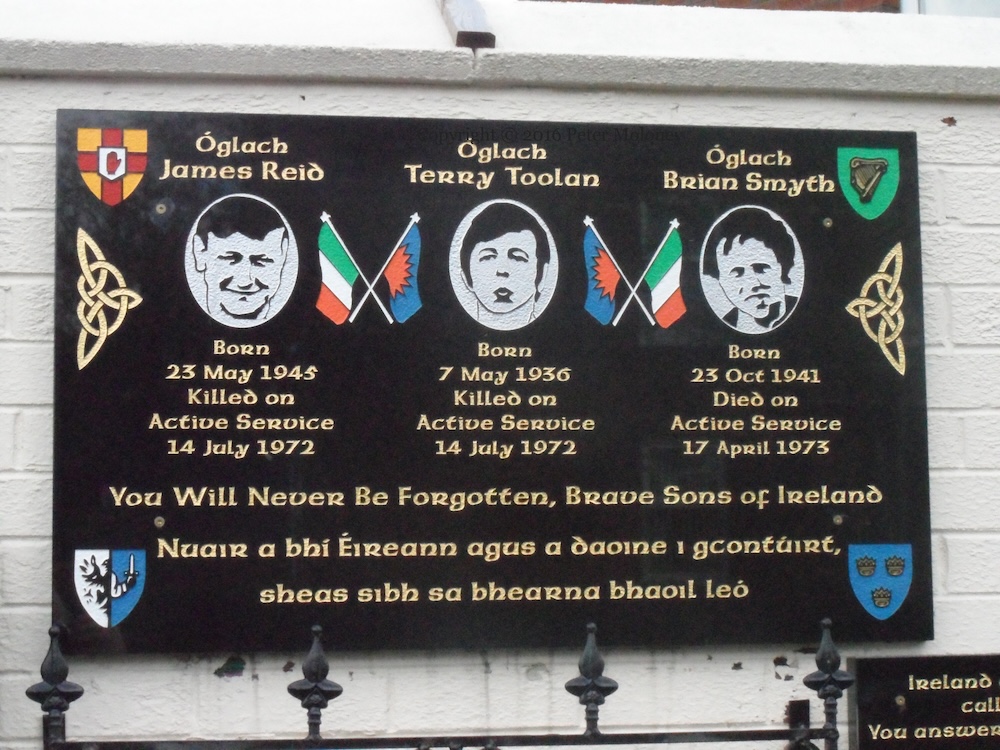
“Óglach James Reid born 23 May 1945 killed on active service 14 July 1972. Óglach Terry Toolan born 7 May 1936 killed on active service 14 July 1972. Óglach Brian Smyth born 23 Oct 1941 died on active service 17 April 1973. You will never be forgotten, brave sons of Ireland. Nuaır a bhí Éıreann agus a daoıne ı gcontúırt, sheas sıbh sa bhearna bhaoıl leó [sic leo].”
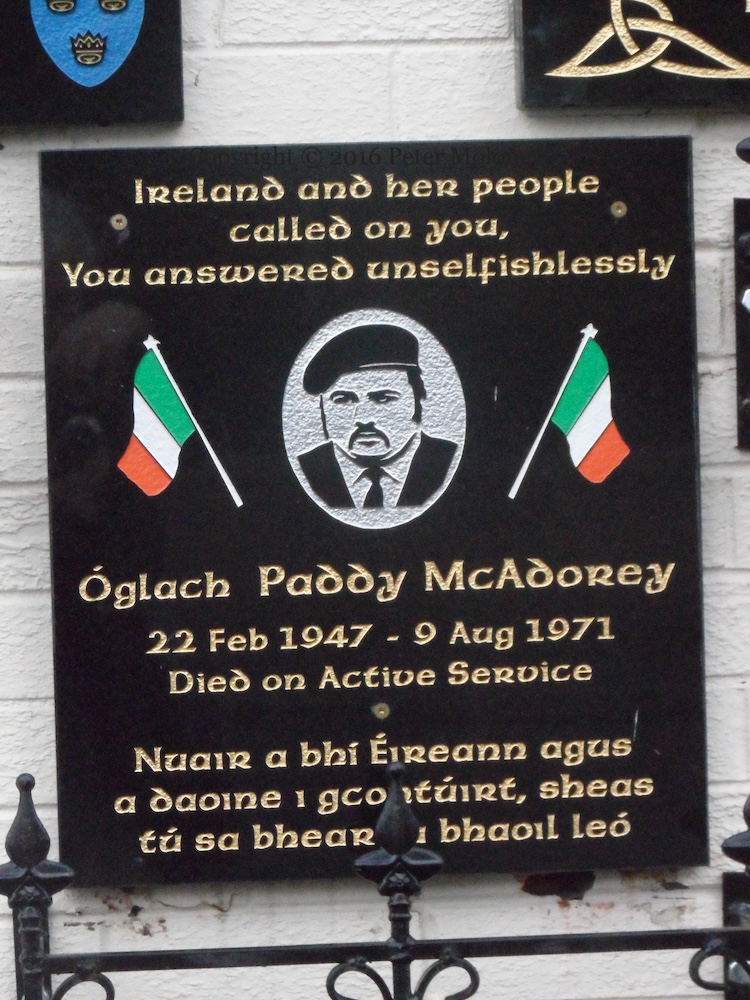
“Ireland and her people called on you, you answered unselfishlessly. Óglach Paddy McAdorey 22 Feb 1947 – 9 Aug 1971 died on active service. Nuaır a bhí Éıreann agus a daoıne ı gcontúırt, sheas sıbh sa bhearna bhaoıl leó.”
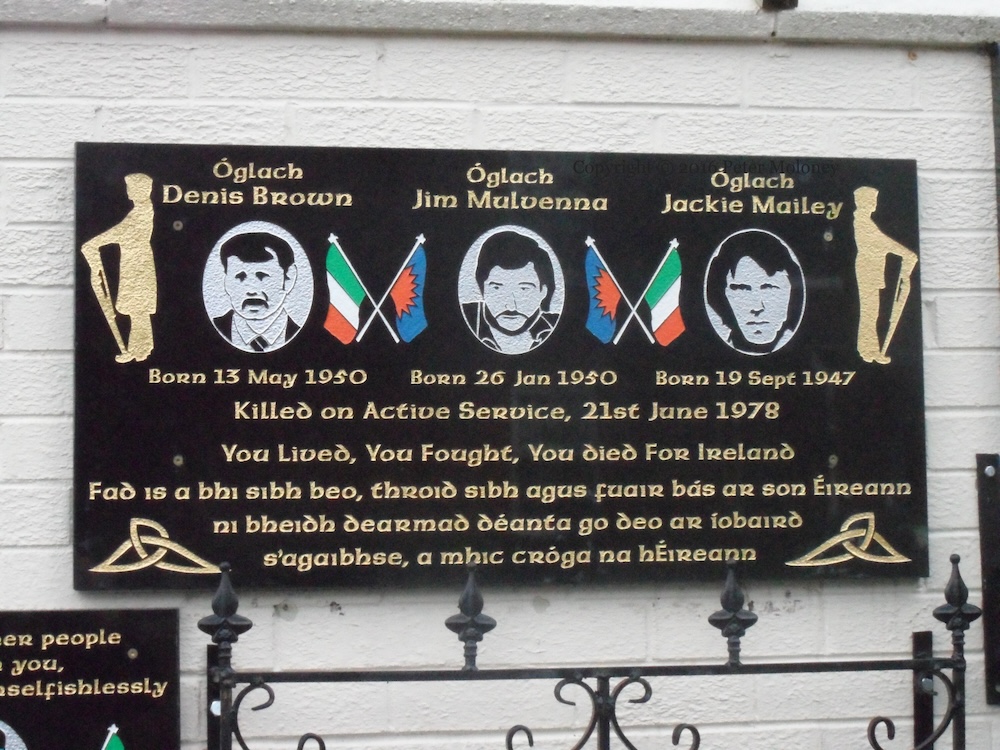
“Óglach Denis Brown born 13 May 1950, Óglach Jim Mulvenna born 26 Jan 1950, Óglach Jackie Mailey born 19 Sept 1947 – killed on active service, 21st June 1978. You lived, you fought, you died for Ireland. Fad ıs a bhí sibh beo, throıd sıbh agus fuaır bás ar son Éıreann ní bheidh dearmad déanta go deo ar íobaırd s’agaıbhse, a mhıc cróga na hÉıreann.”
“Óglach Frankie Donnelly 26 Aug 1954 – 5 Jan 1979 died on active service; Óglach Laurence Montgomery 12 June 1954 – 5 Jan 1979 died on active service. Níl sa saol seo ach tréımhse gaırıd ar an bhóthaır fada chun na saoırse – life is but a short part on the long journey to freedom.”
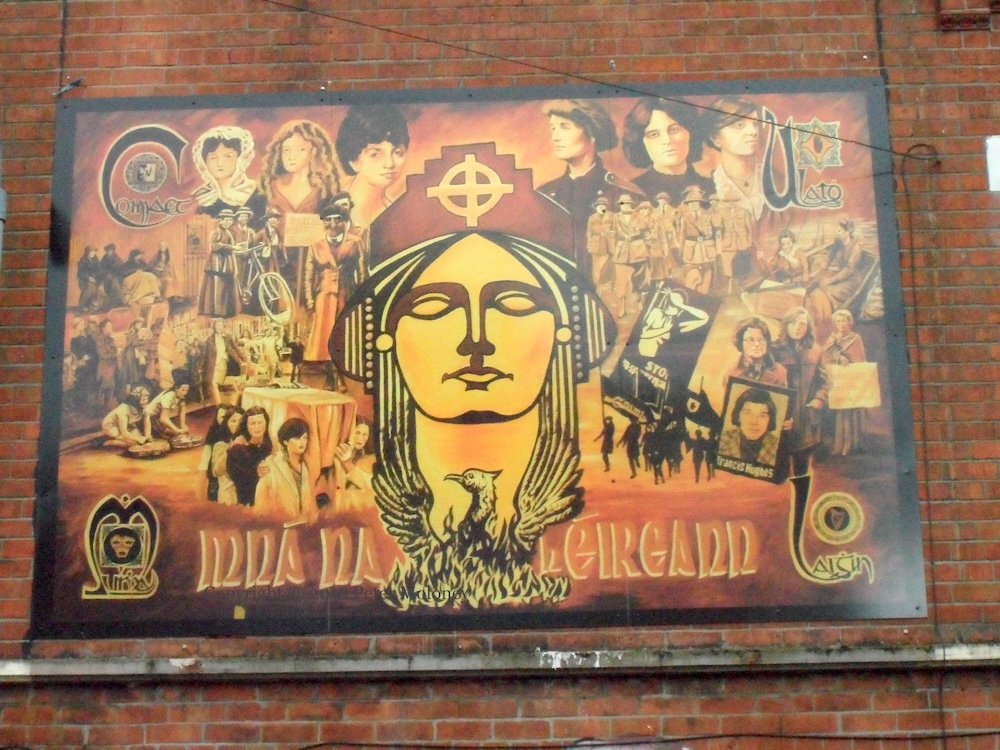
Érıu/Éıre of the Tuatha Dé Danann, queen of Ireland, (as depicted by Richard J King) is at the centre of various representations of republican women.
Along the top are Ann Devlin, Betsy Gray, Mary Ann McCracken, Countess Markievicz, Nora Connolly?, and Winifred Carney. Suffragettes, the modern IRA, and Cumman Na mBan are depicted, as are Máıre Drumm at the Falls Curfew, Tom McElwee’s sisters carrying his coffin, and Molly Childers and Mary Spring Rice running guns on the Asgard. There is also an unusual ‘four provinces’ in the corners.
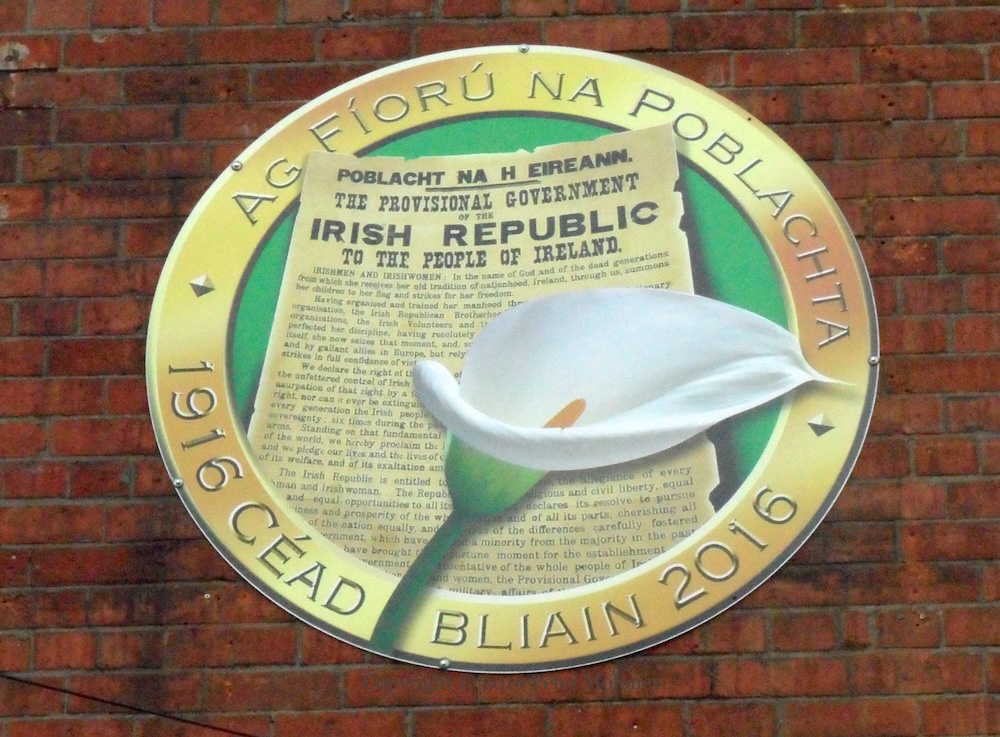
The wide shot (below) shows a 1916 centenary (“céad blıaın”) board: “Ag fíorú na poblachta”.
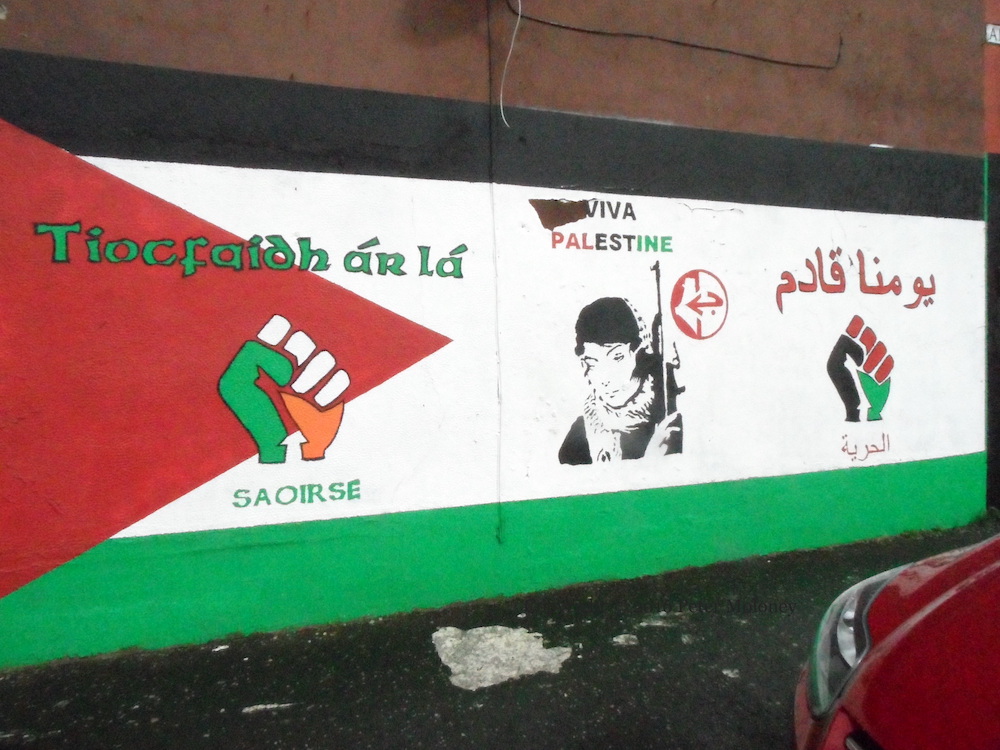
“Tıocfaıdh ár lá”, “يومنا قادم” [yeomna qadm, our day is coming] (and below, “Saoırse” and “حرية” [freedom].
The figure at the centre of the mural, with the PFLP emblem, is sky-jacker Leila Khaled – for background on her see the same stencil of her in Hugo Street.
Seen previously in better condition in 2015. AMCOMRI St (AMerican COMmittee [for] Relief [in] Ireland), Beechmount, west Belfast
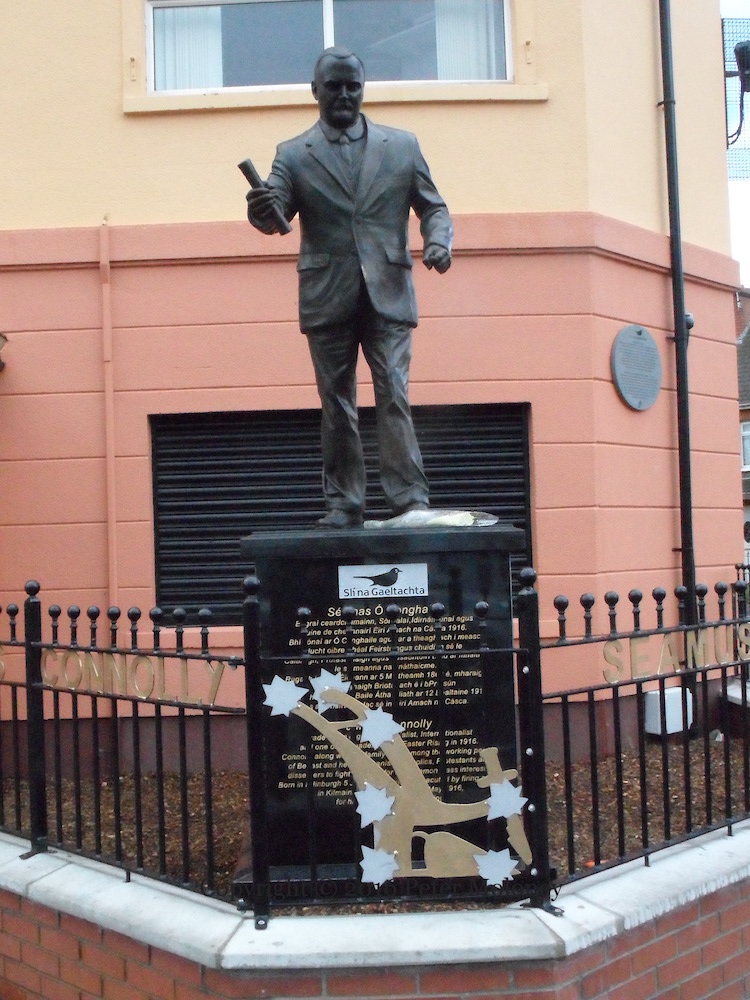
A statue of James Connolly was unveiled in the grounds of Comhaırle Phobaıl Na bhFál on March 25th (An Phoblacht). The statue is part of Slí Na Gaeltachta.
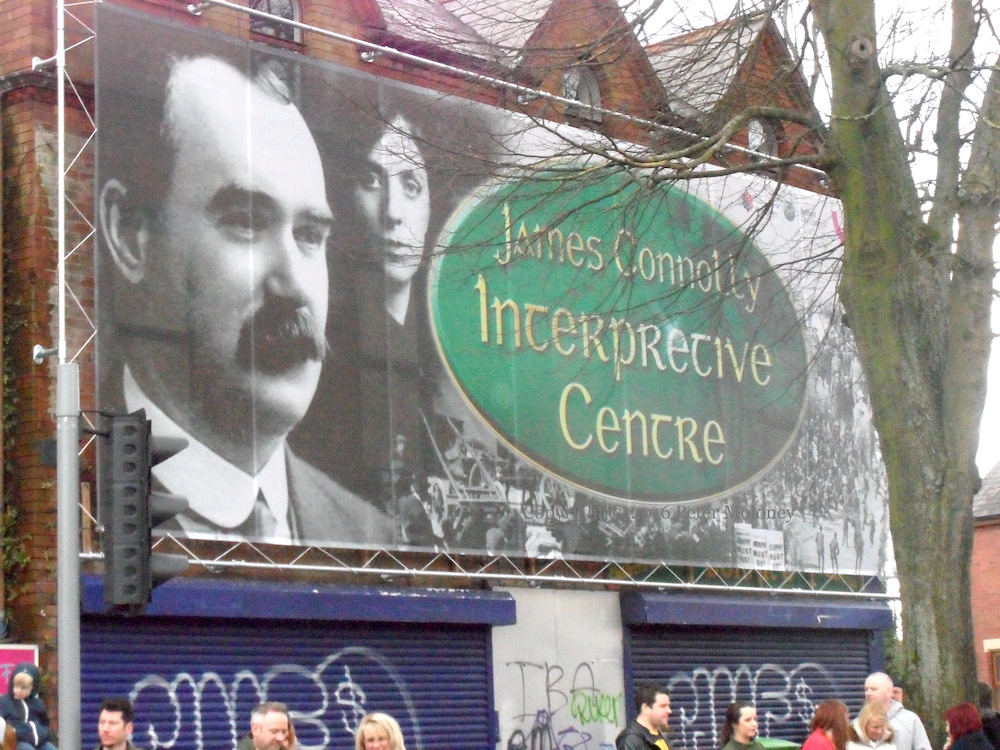
A little further long the road, tarps announce plans for a “James Connolly Interpretive Centre” (eventually opened in 2019 as “James Connolly Visitor Centre”).
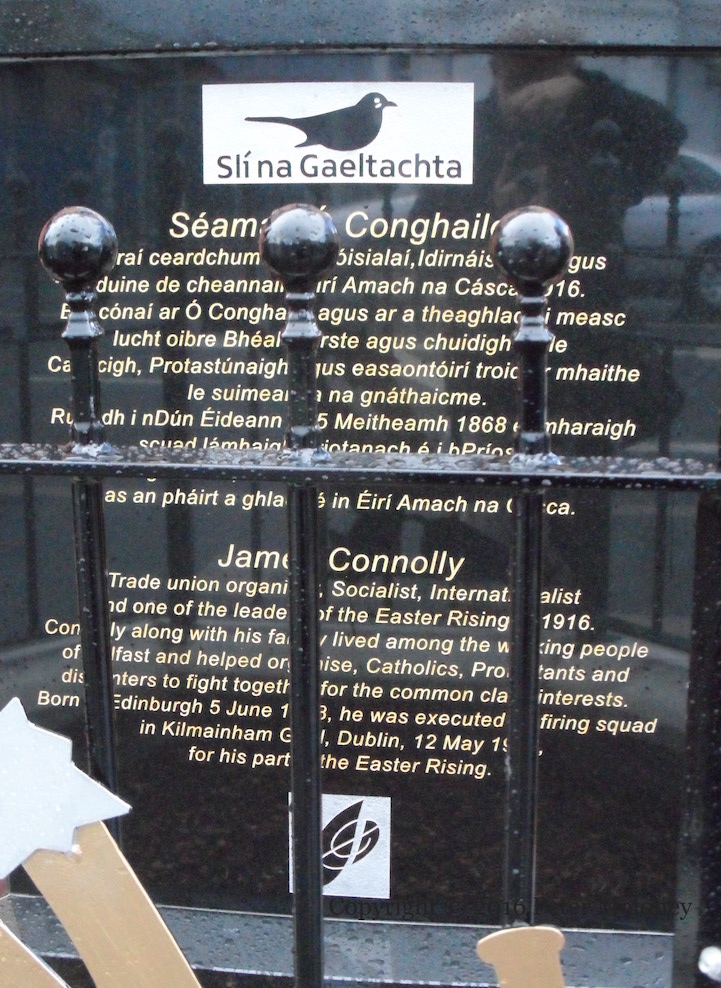
“Eagraí ceardchumaınn, Sóısıalaí, Idırnáısıúnaí agus duıne de cheannaırí Éırí Amach na Cásca 1916. Bhí cónaí ar Ó Conghaıle agus ar a theaghlach ı measc lucht oıbre Bhéal Feırste agus chuıdıgh sé le Caıtıicıgh, Protastúnaıgh agus easaontóırí troıd ar mhaıthe le suımeanna na gnáthaıcme. Rugadh ı nDún Éıdeann ar 5 Meıtheamh 1868 é, mharaıgh scuad lámhaıgh Brıotanach é ı bPríosún Chıll Mhaıghneann, Baıle Átha Clıath ar 12 Bealtaıne 1916 as an pháırt a ghlac sé ın Éırí Amach na Cásca. / Trade union organiser, Socialist, Internationalist and one of the leaders of the Easter Rising 1916. Connolly along with his family lived among the working people of Belfast and helped organise, Catholics, Protestants and dissenters to fight together for the common class interests. Born in Edinburgh 5 June 1868, he was executed by firing squad in Kilmainham Gaol, Dublin, 12 May 1916 for his part in the Easter Rising.”
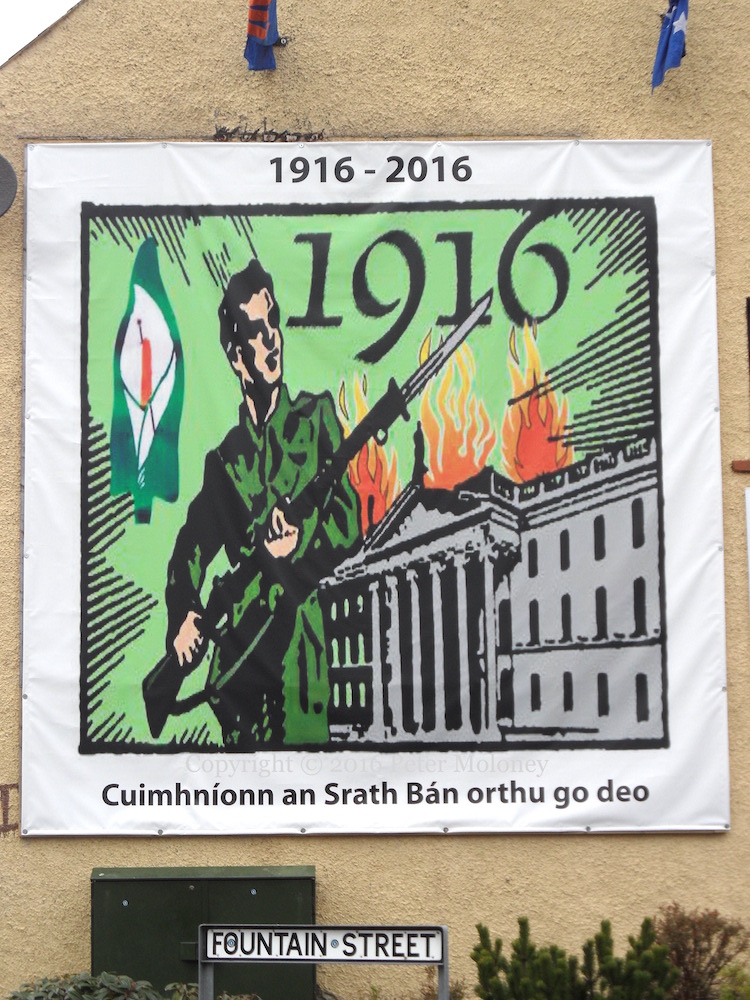
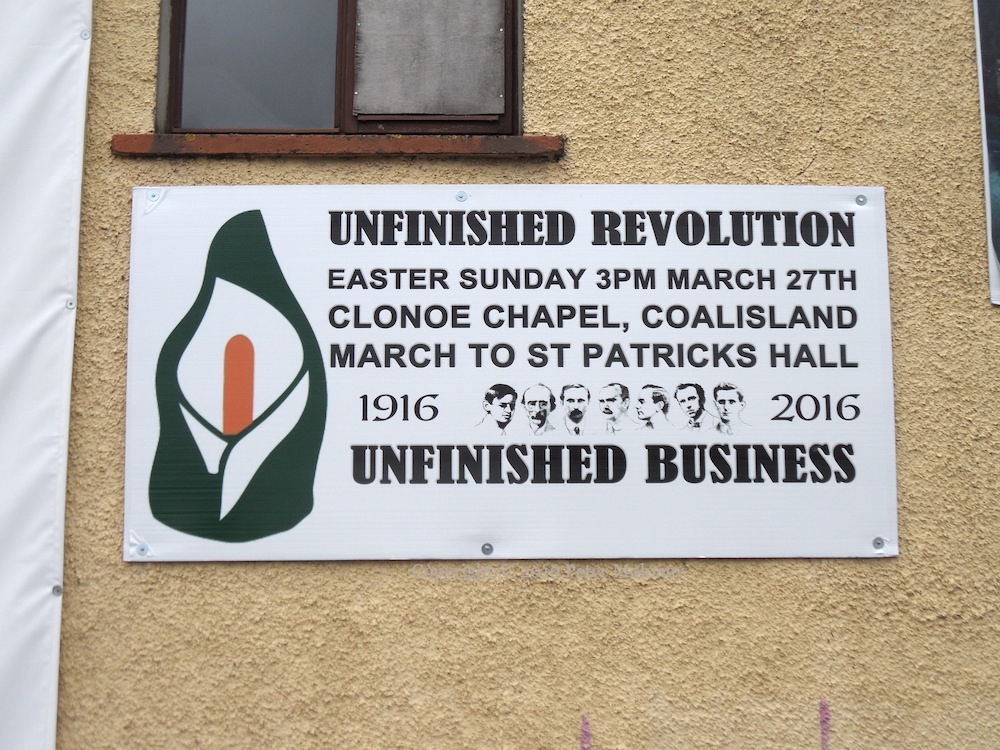
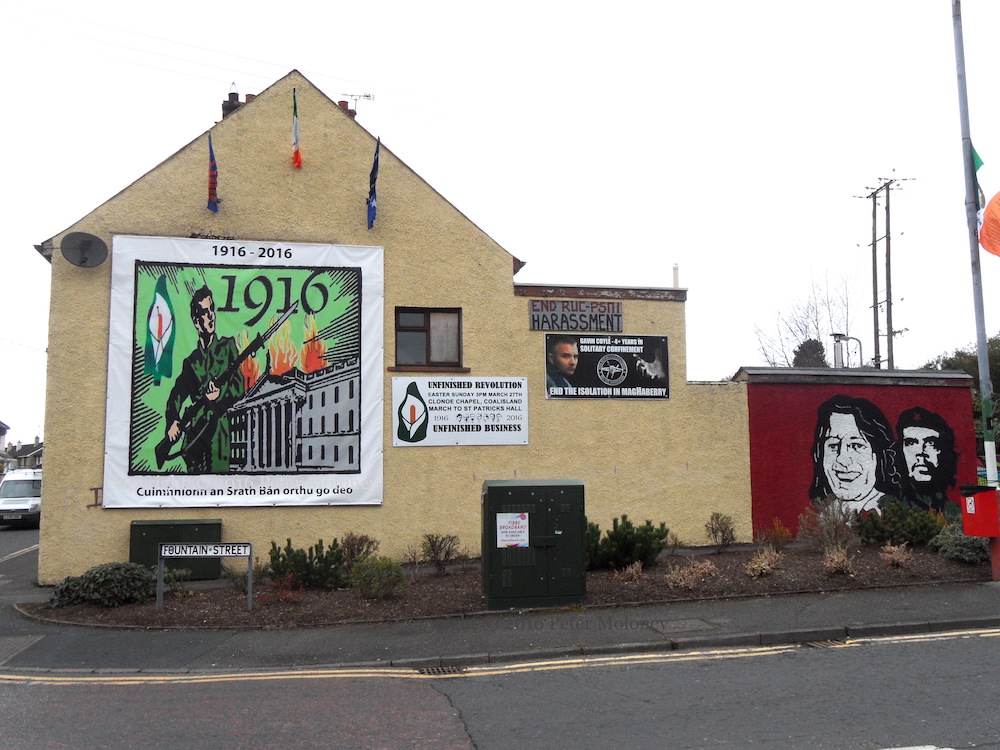
“Strabane remembers them forever” – the dead of the “unfinished revolution, unfinished business” of the 1916 Easter Rising. The central image on the large tarp is a modified version of the 1941 stamp designed by Victor Brown showing an armed volunteer outside the GPO (stampboards).
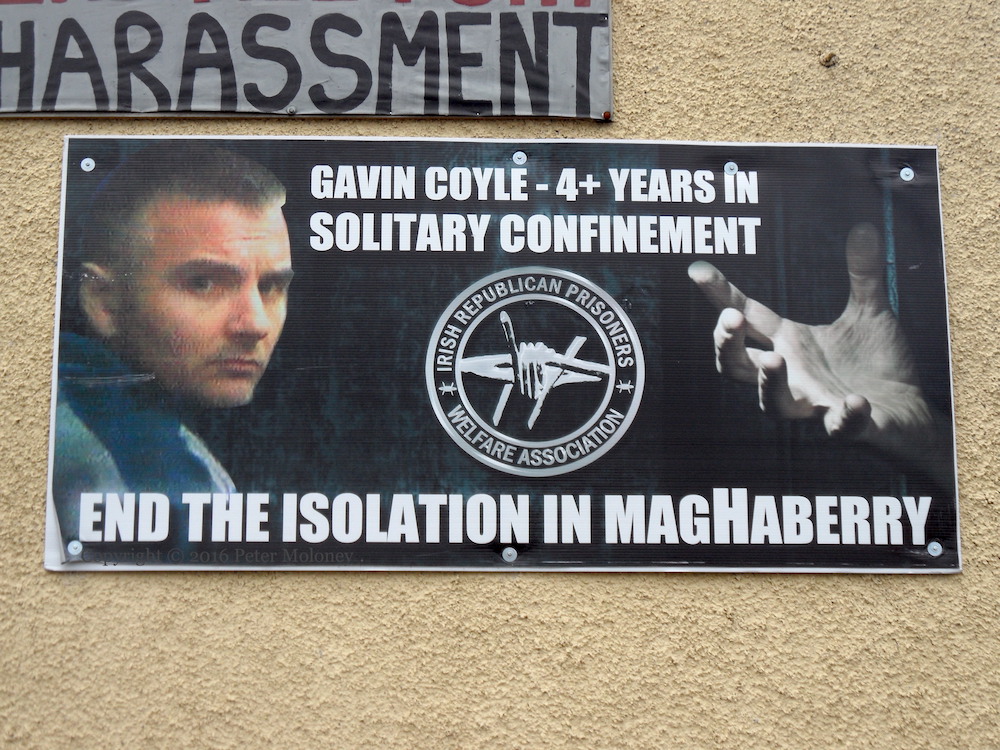
The IRPWA (web) board reads, “Gavin Coyle – 4+ years in solitary confinement. End the isolation in MagHaberry.” Coyle is serving ten years for possession of arms and explosives and is now charged with the 2008 death of off-duty PSNI officer (Guardian | BBC). (An identical board was also placed at the Melmount Road roundabout. See M12838.)
The hand-made board reads, “End RUC-PSNI harassment”. For the small mural to the right, see Bobby & Che.
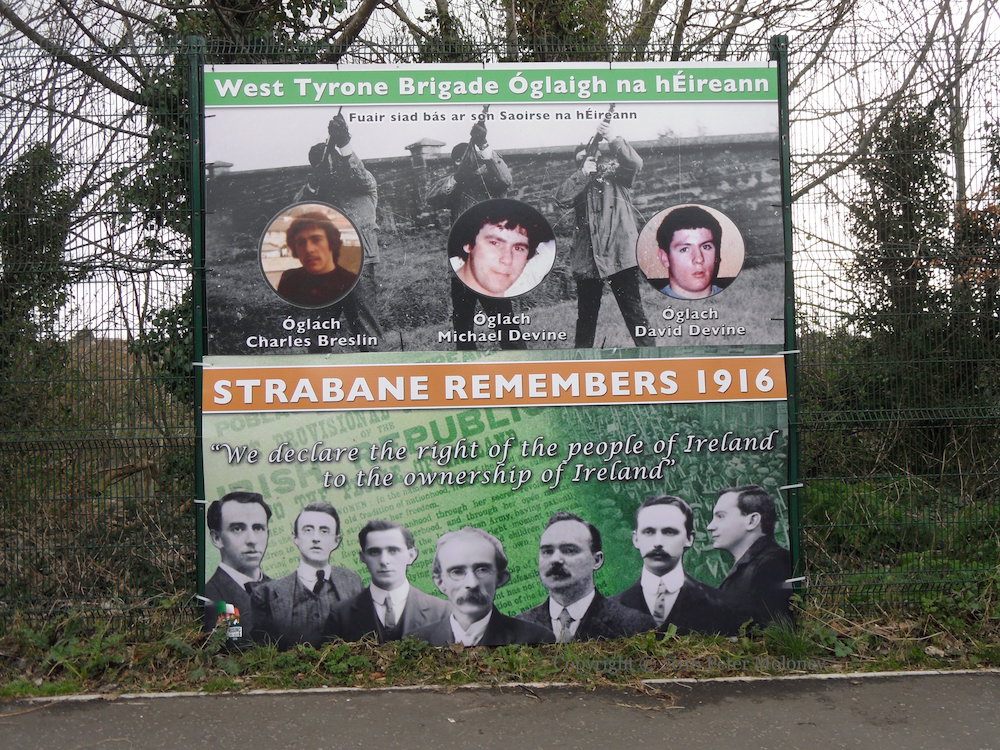
The board in the adjacent Townsend Street commemorates both the 1916 signatories – “We declare the right of the people of Ireland to the ownership of Ireland” – and Troubles-era volunteers Charles Breslin, Michael Devine, and David Devine.
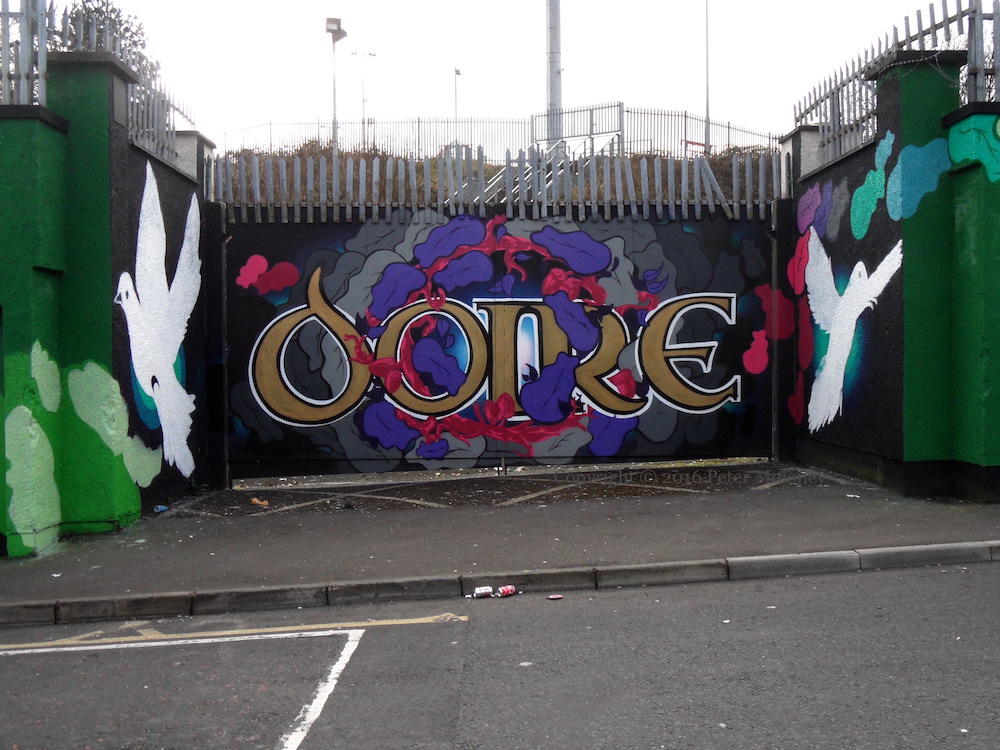
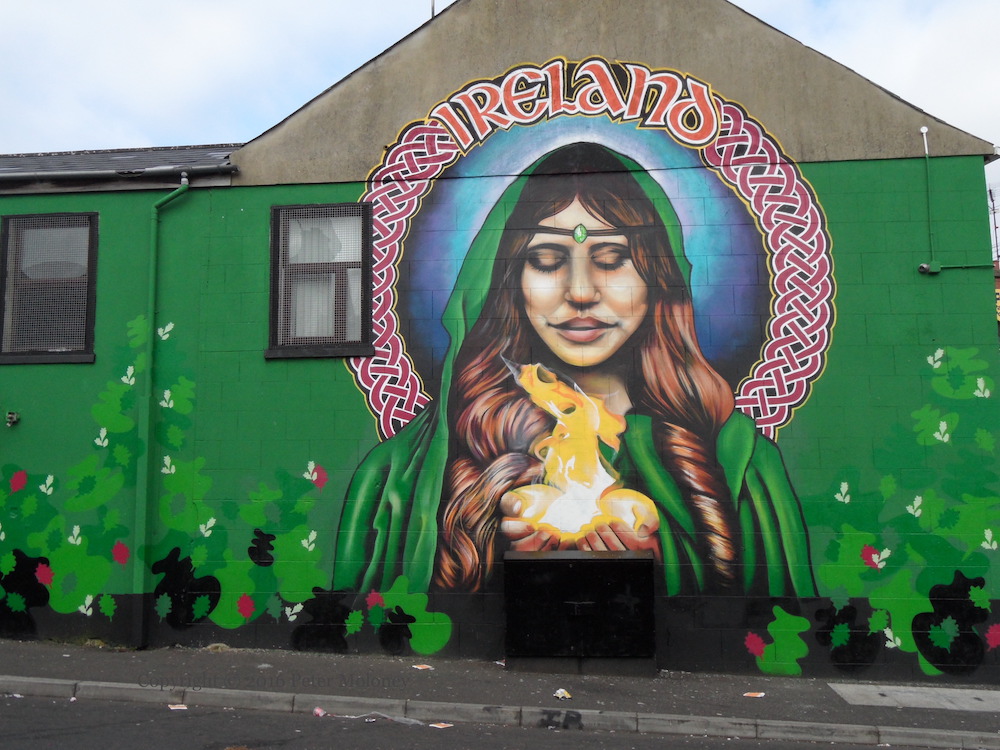
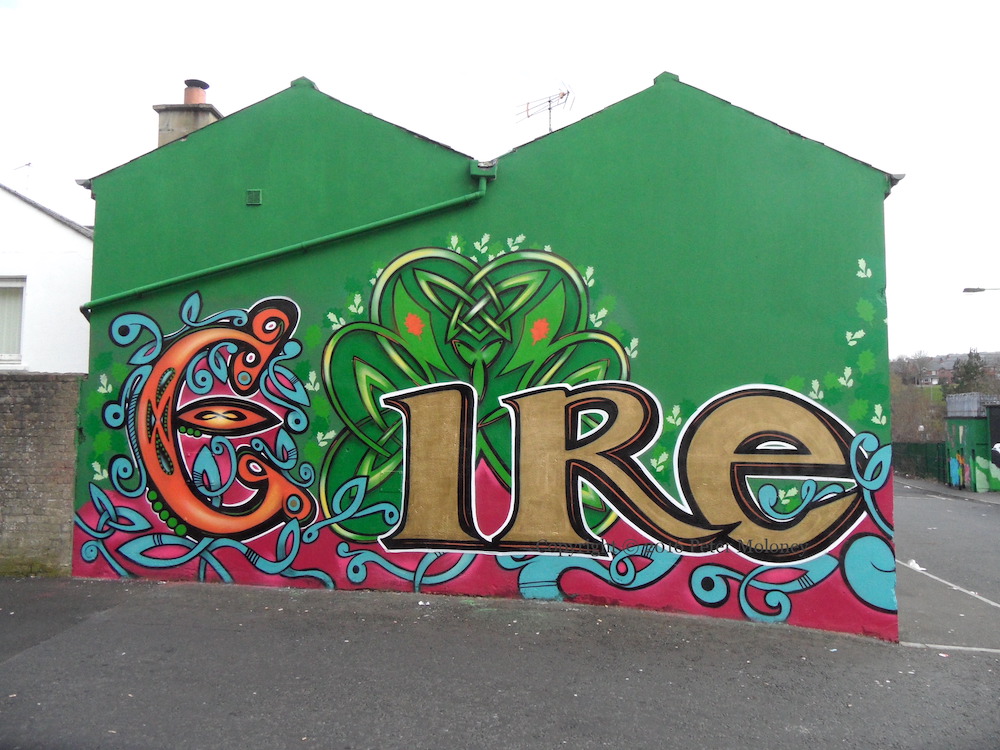
The “Éire” and “Ireland” pieces, and perhaps the Doıre piece, were painted by RAZER (ig). The three are perhaps part of a larger installation at Celtic Park – see Fáılte Go Paırc Na gCeılteach.
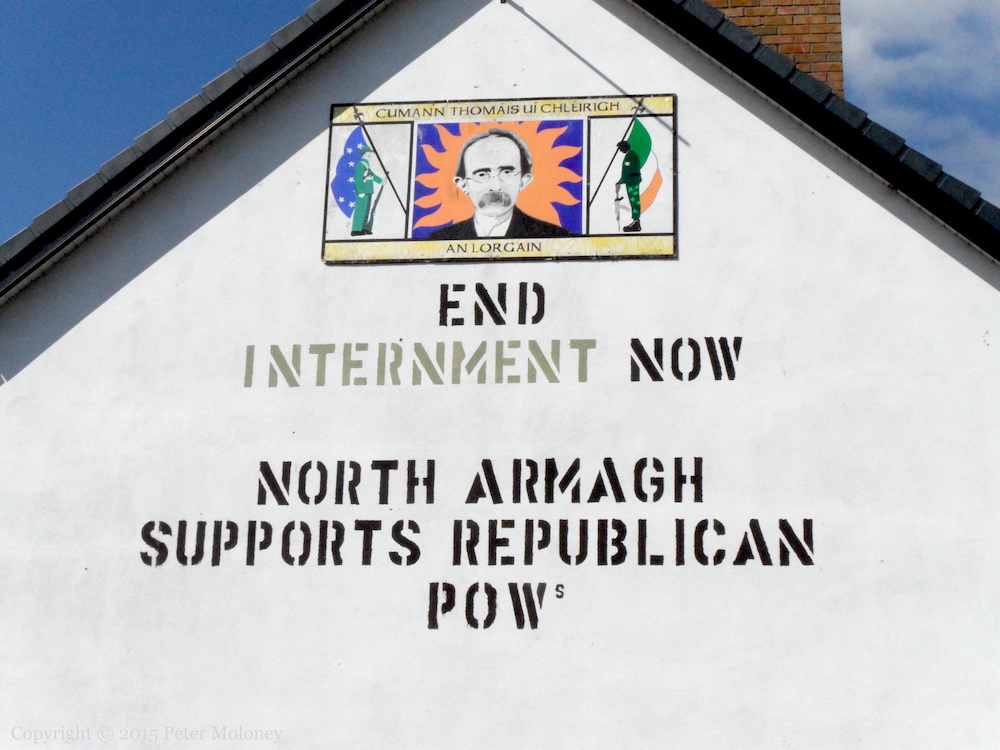
“Cumann Thomáıs Uí Chléırıgh, An Lorgaın. End internment now. North Armagh supports republican POWs”.
Clarke grew up in nearby Dungannon and there is a cumann of the 1916 Societies in Dungannon (Fb) and, according to this board, in Lurgan. (A statue to Clarke was later mounted in Dungannon – see Gaırdín Thomaıs Uí Chléırıgh.)
Lake Street, Lurgan. The board was perhaps previously in Levin Rd – see The Lurgan Ambush.
This is a new info board at the bottom of the steps leading up to the IRA memorial dolmen first seen in 1999. It features portraits of 16 volunteers from Derry’s 1st battalion and a quotation from Pearse at the funeral of O’Donovan Rossa in 1915: “Life springs from death, and from the graves of patriot men and women spring living nations. The Defenders of this Realm have worked well in secret and in the open. They think that they have pacified Ireland. They think that they have foreseen everything, think that they have provided against everything; but the fools, the fools, the fools! They have left us our Fenian dead, and while Ireland holds these graves, Ireland unfree shall never be at peace.”