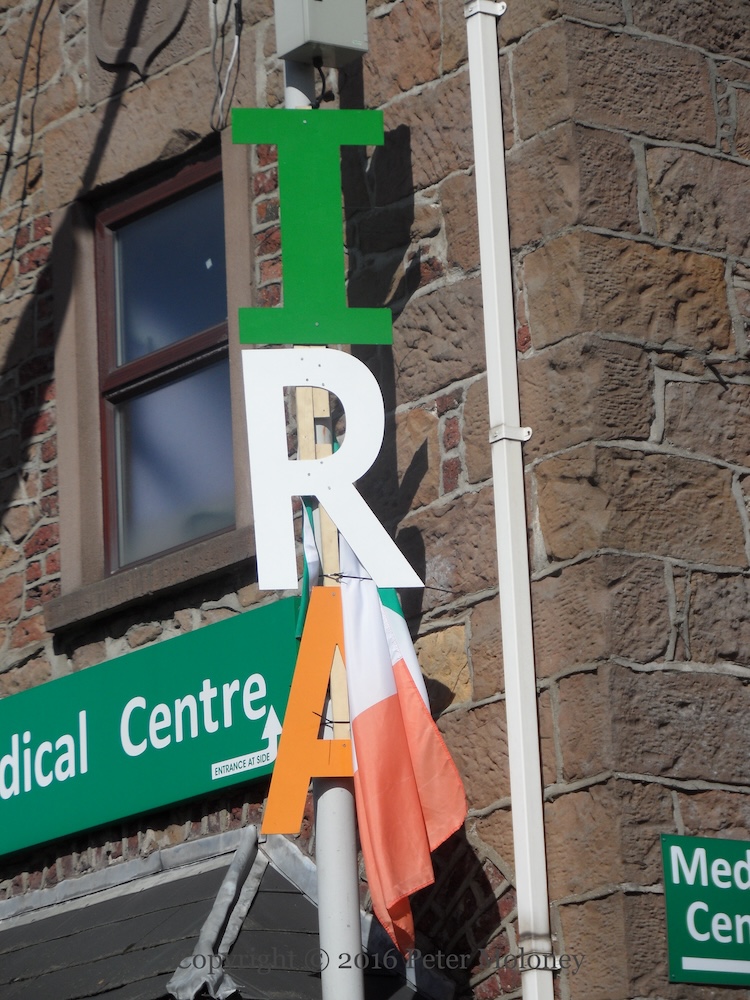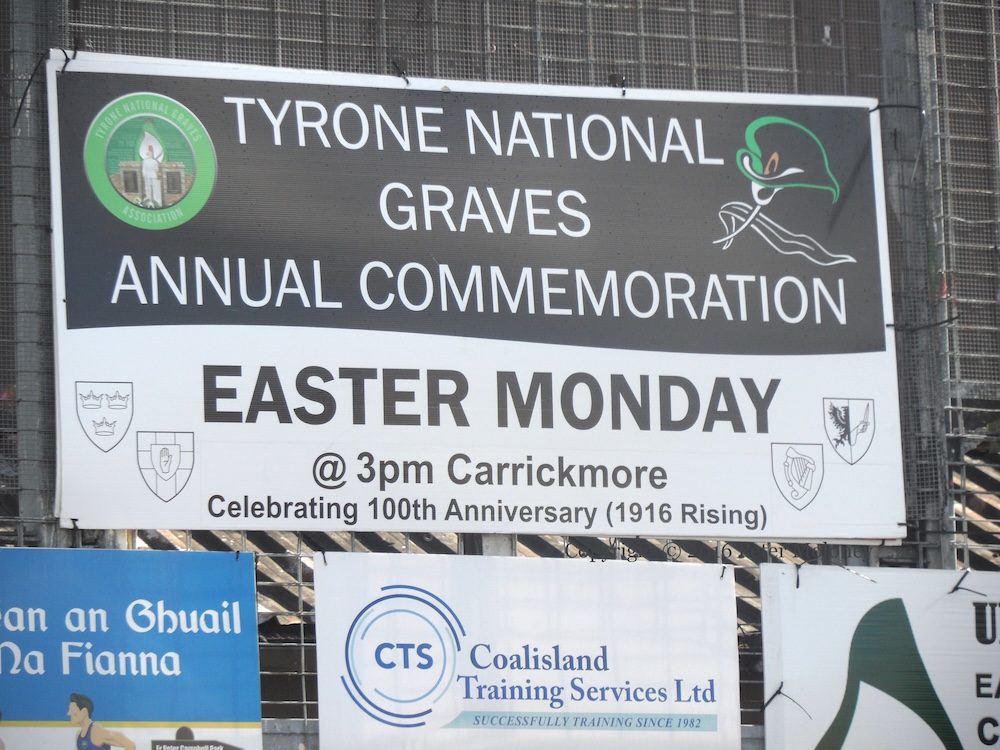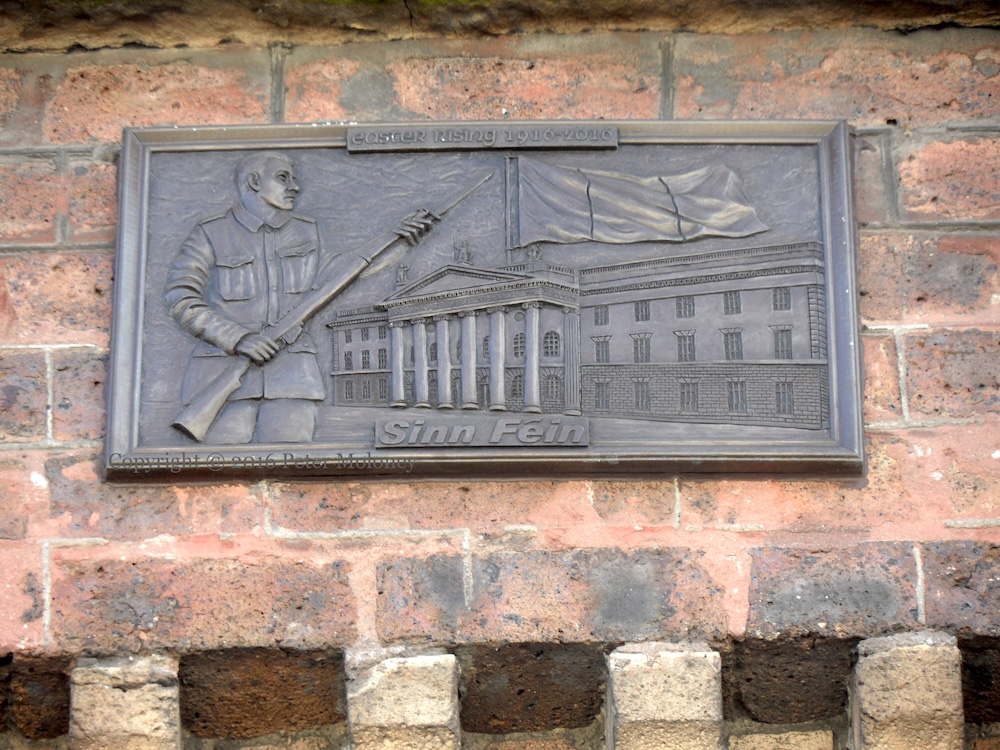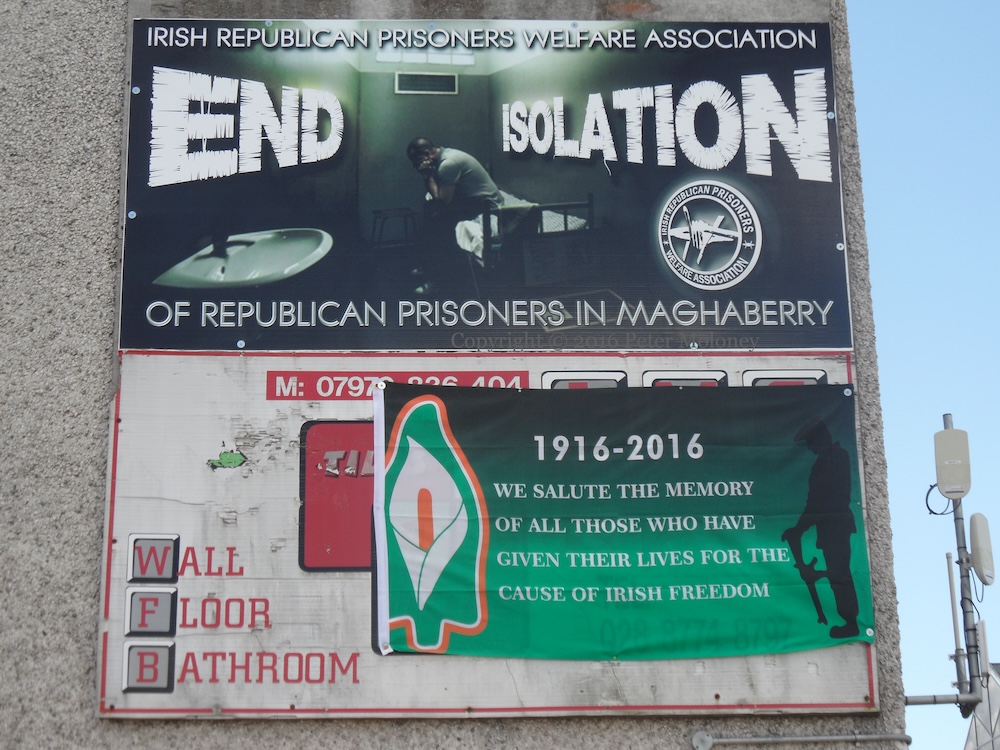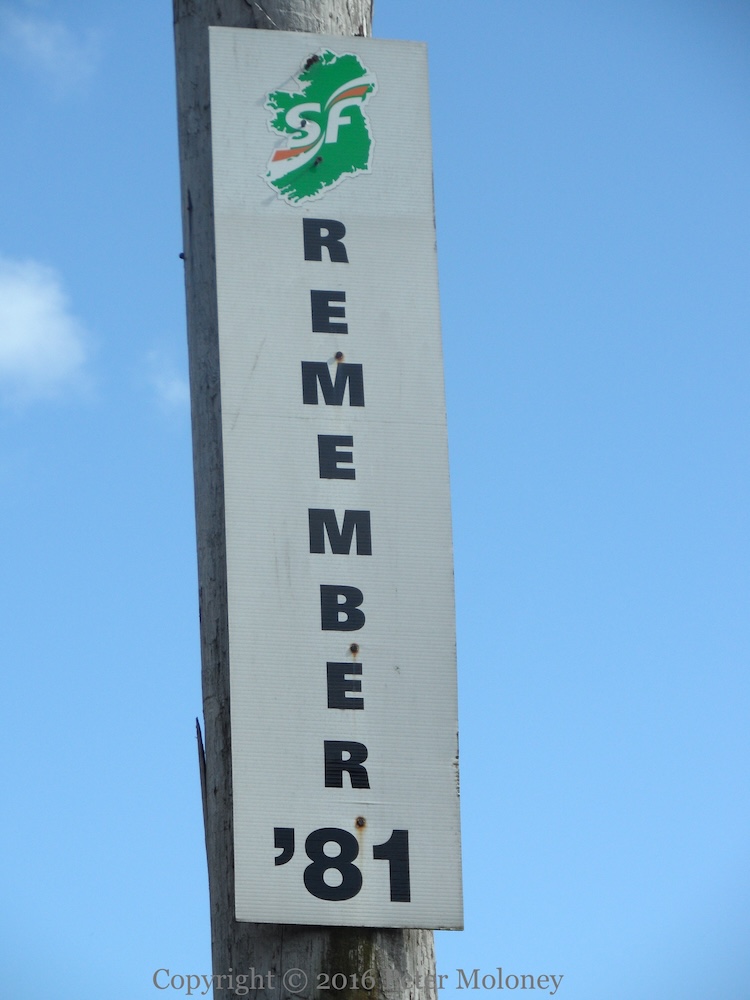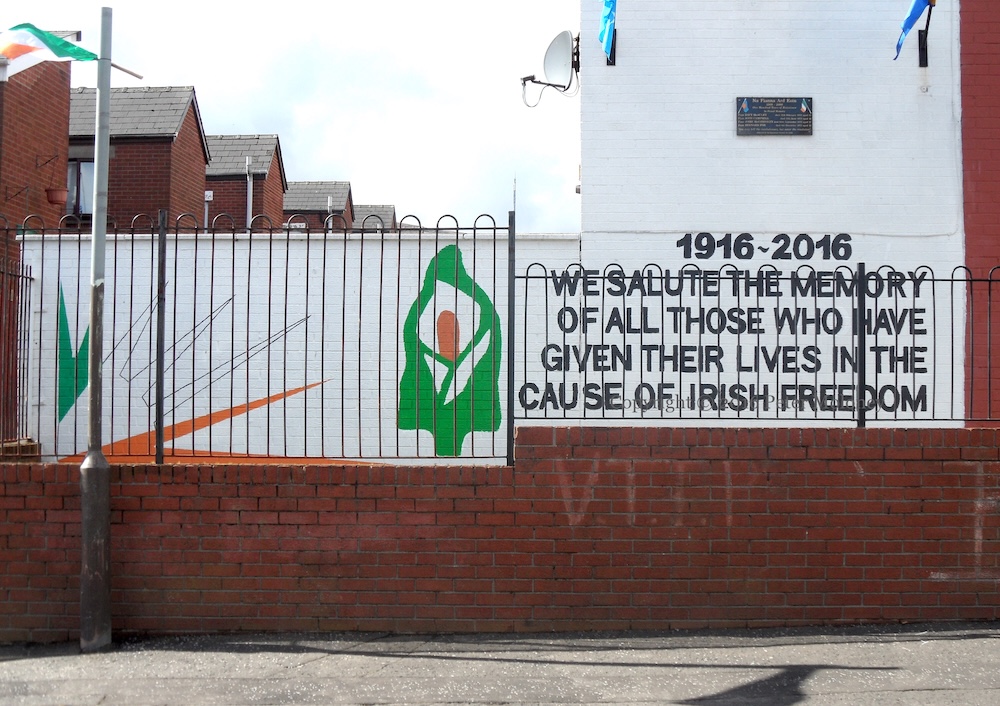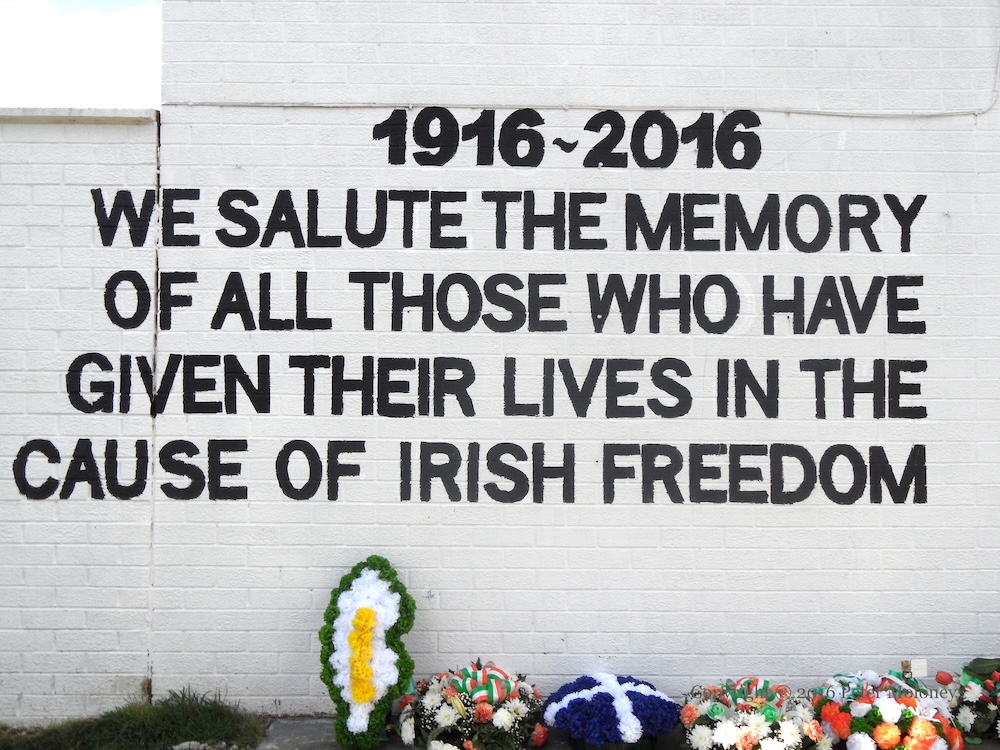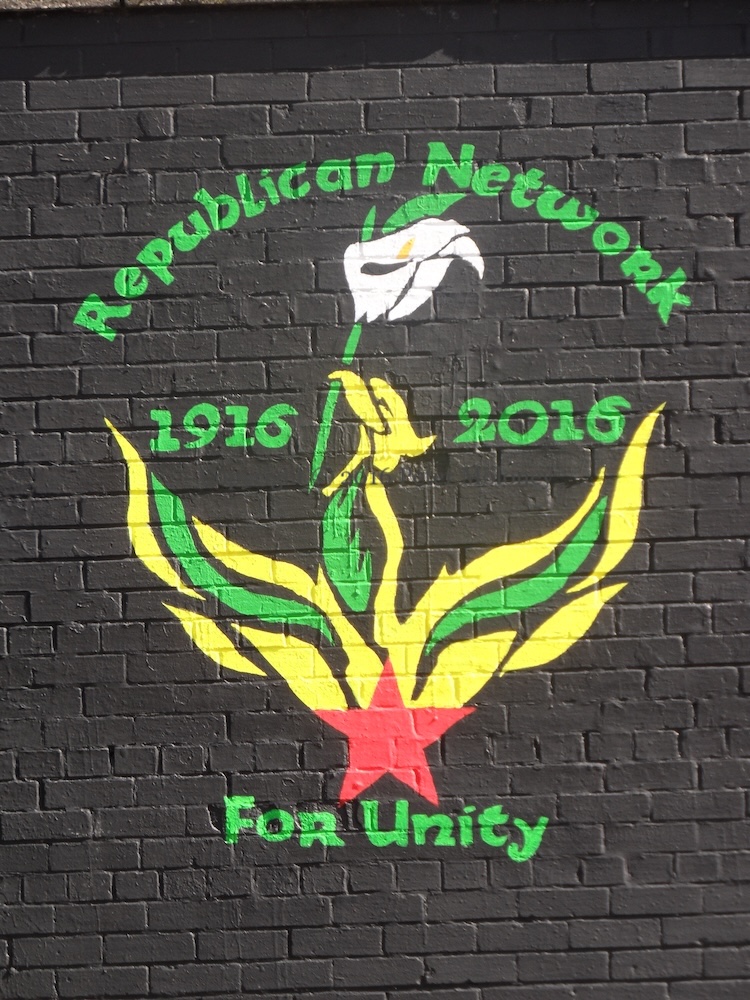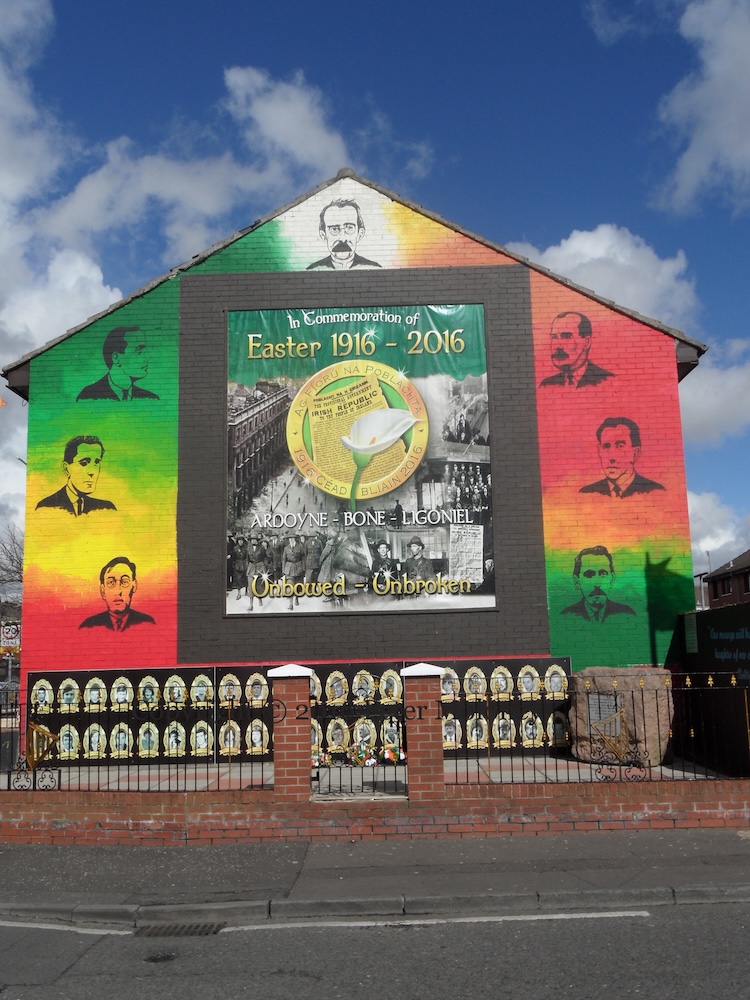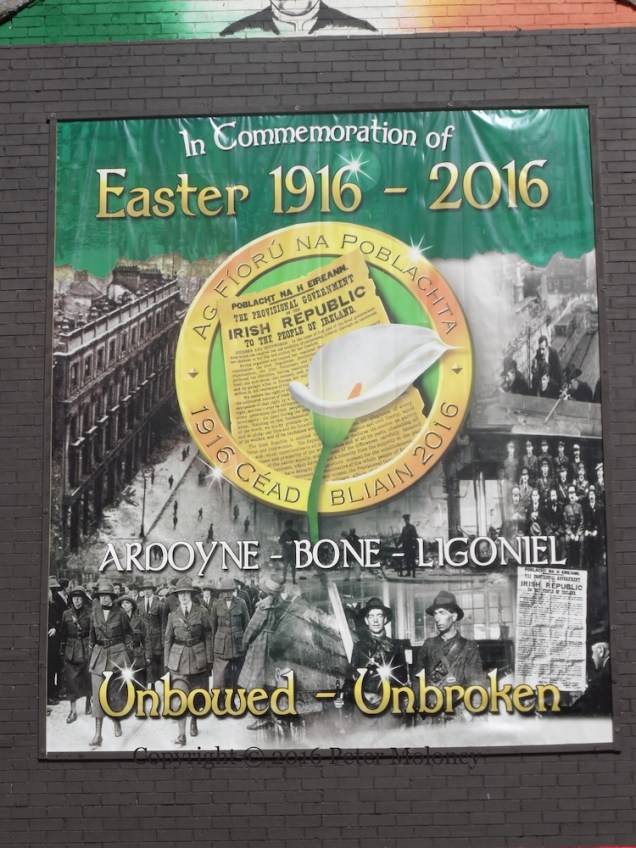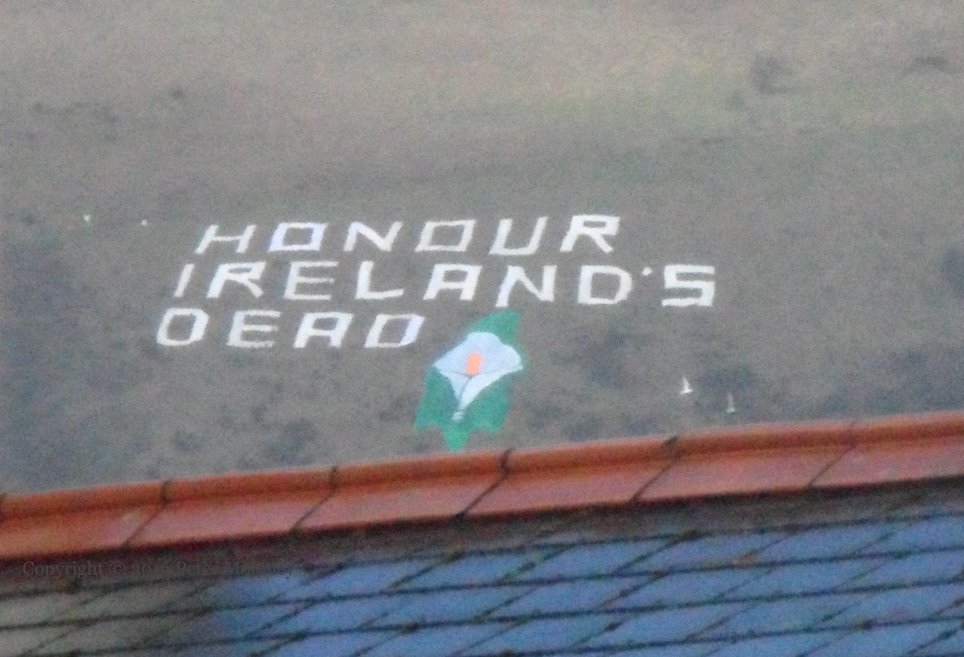
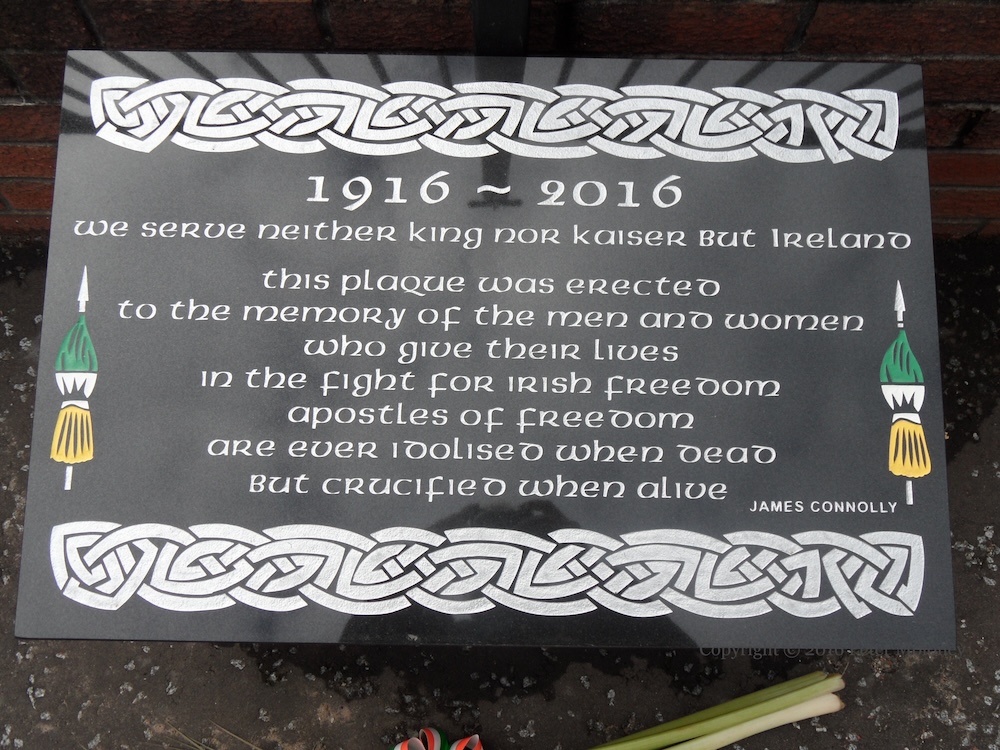
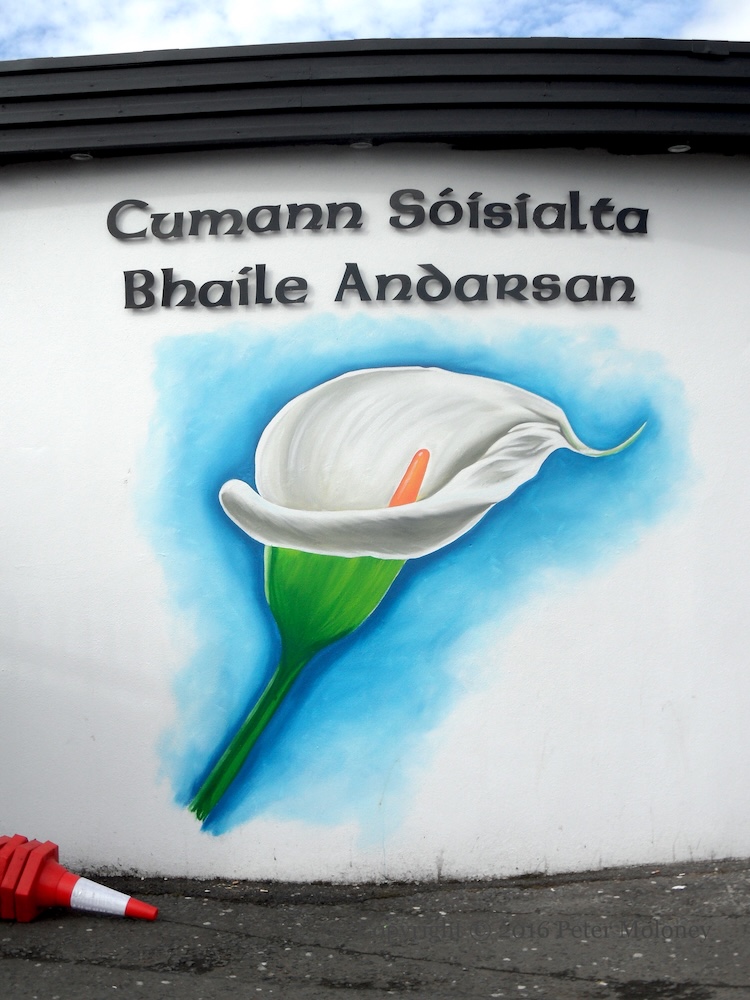
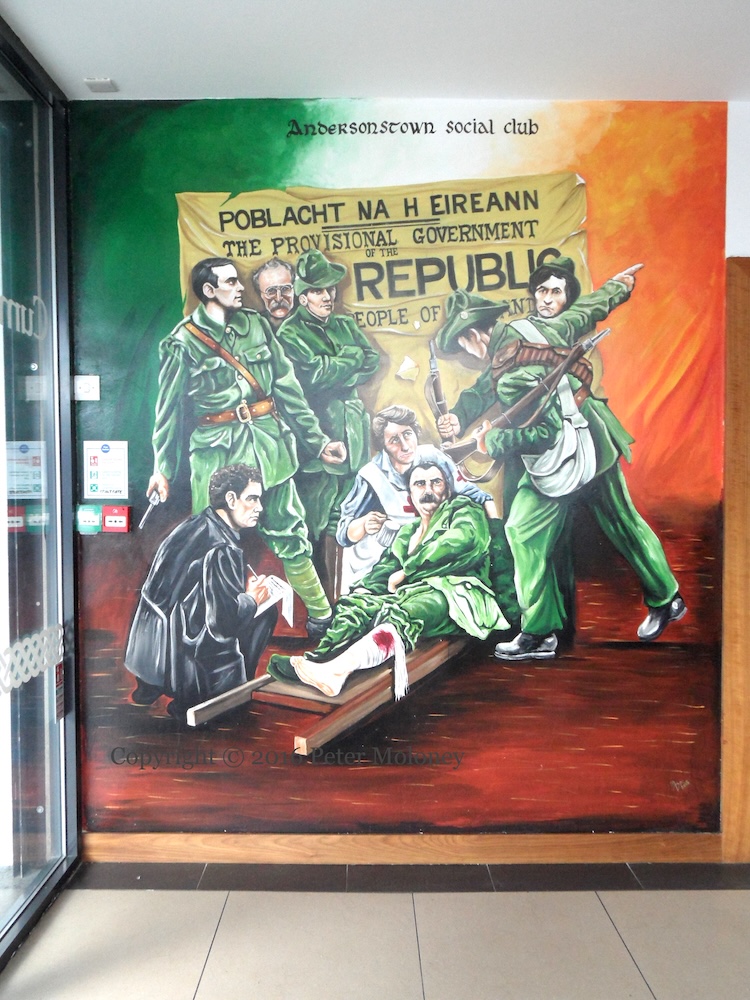
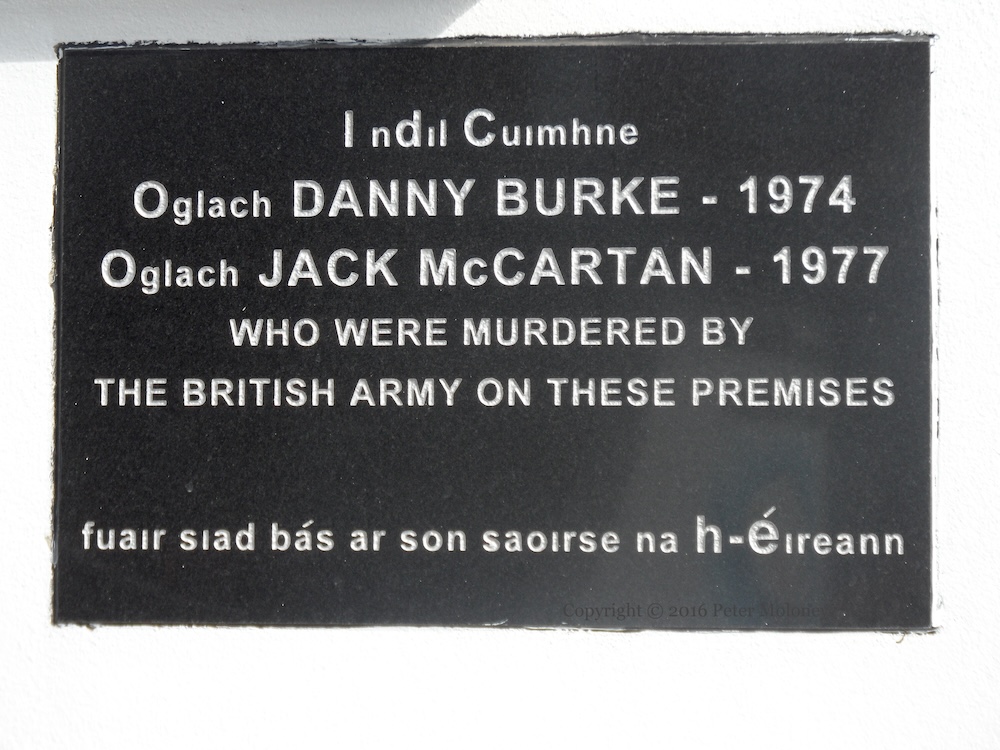
“1916 – 2016. We salute the memory of all those who have given their lives in the cause of Irish freedom.” This is an extension by the RNU (web), on the centenary of the Easter Rising, to the large tarp seen in Ardoyne’s Fallen Fıanna. The plaque was recorded in 2011.
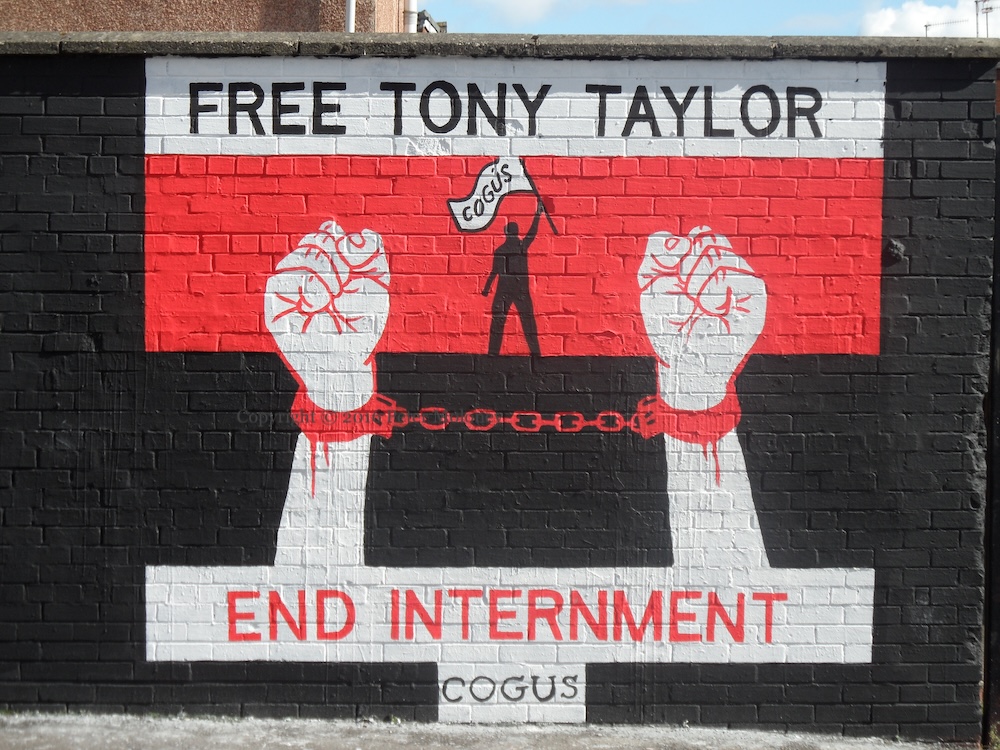
Derry republican and RNU (web) spokesperson Tony Taylor was released under the conditions of the Good Friday agreement. He was jailed for three years in 2011 for possession of a rifle. His license was revoked in March (2016) and he was returned to prison on the grounds that he poses a danger to the public. Both RNU/Cogús and Sınn Féın have called for his release. (Irish News)
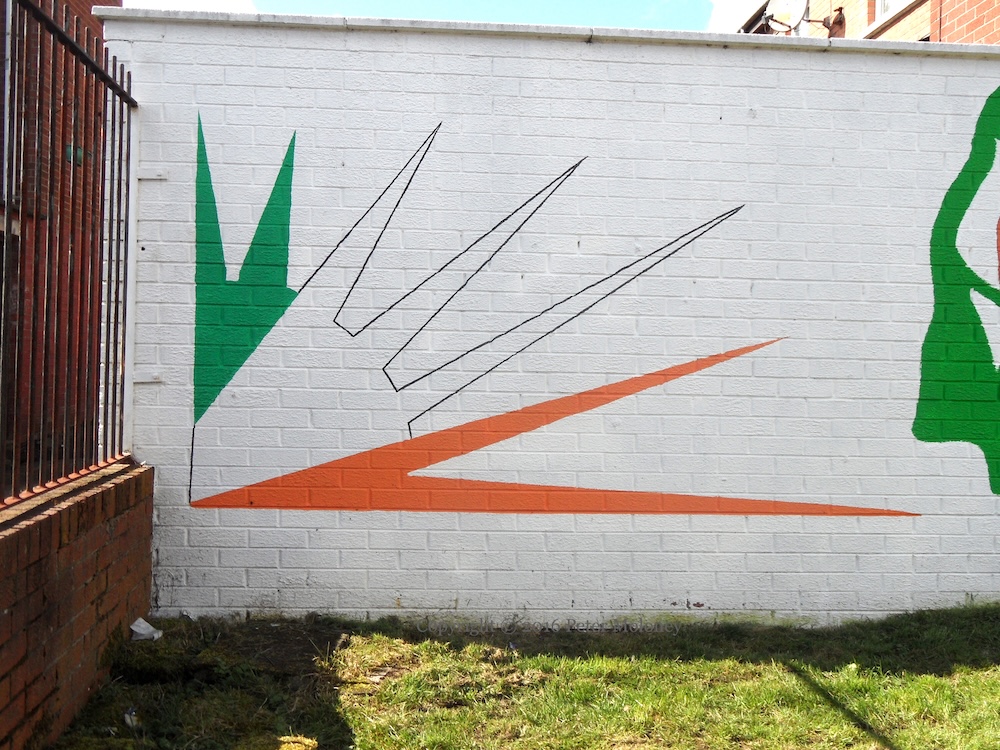
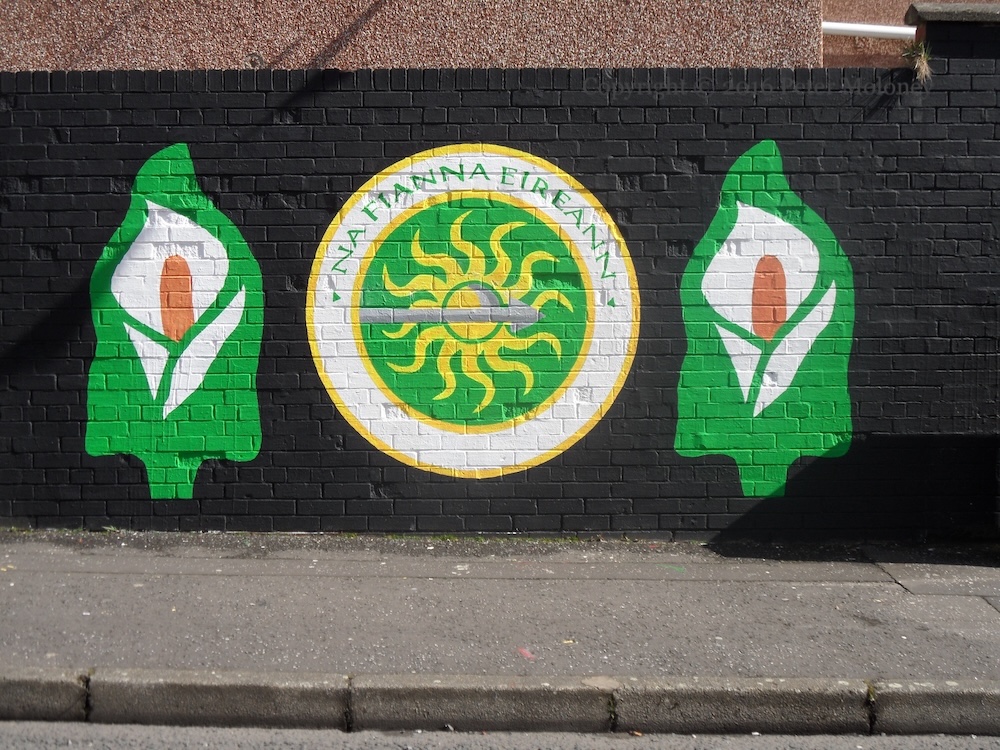
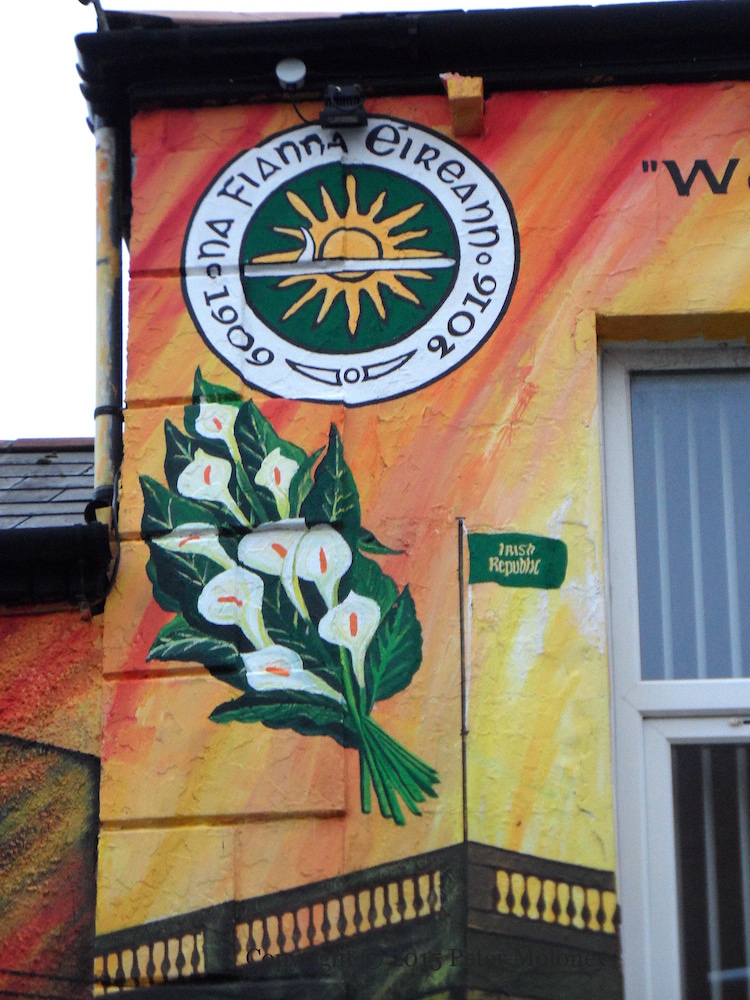
Here is a Na Fıanna Éıreann mural in Ardoyne with Easter lilies on each side of the Fıanna’s ‘sunburst’ (gal gréıne) emblem (which also includes a pike or bill).
For a history of sunburst flags, with lots of images, see An Sıonnach Fıonn. A banner sporting an early version of the emblem, owned by Countess Markievicz during the Rising, was recently returned from London to Dublin (Irish Times).
Like the name “Óglaıgh Na hÉıreann”, “Na Fıanna Éıreann” has been used by many organisations for their youth division; this one is associated with the RNU (web).
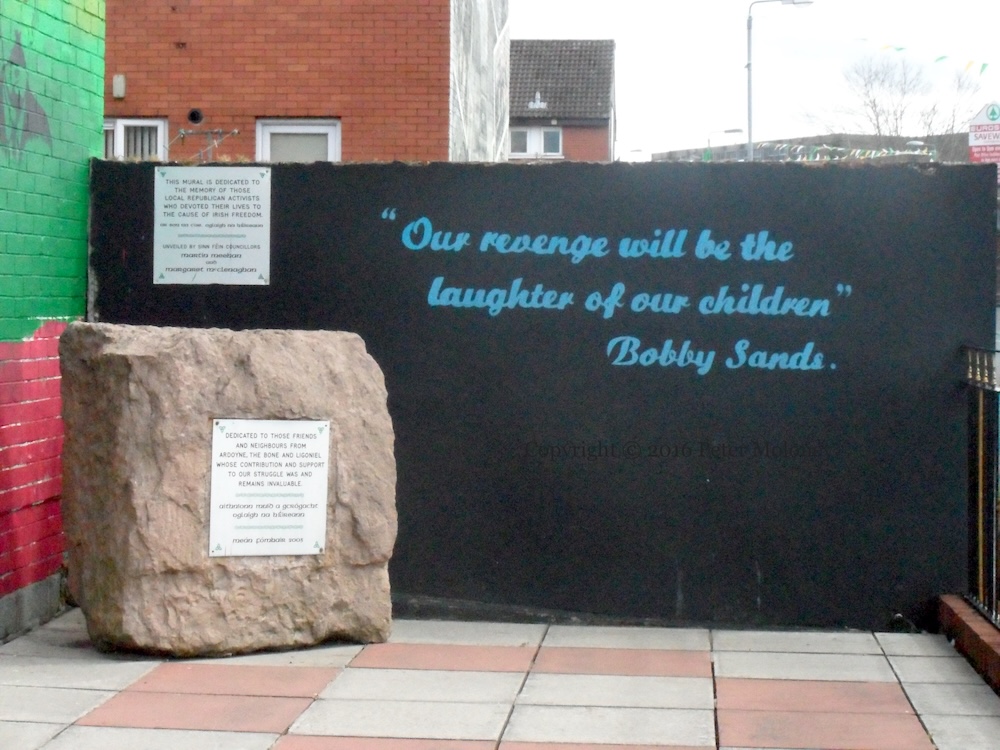
“In commemoration of Easter 1916 – 2016. Ardoyne – Bone – Ligoniel. Unbowed – unbroken.”
Tom Clarke is at the head of his fellow signatories as he looks down over a printed tarp reproducing photographs of events surrounding the Easter Rising of 1916, including soldiers from the Irish Citizen Army on a rooftop (see the original in this Spectator article) and members of Cumann Na mBan on parade. For the photo of the building in the top left, see this Irish Times article.
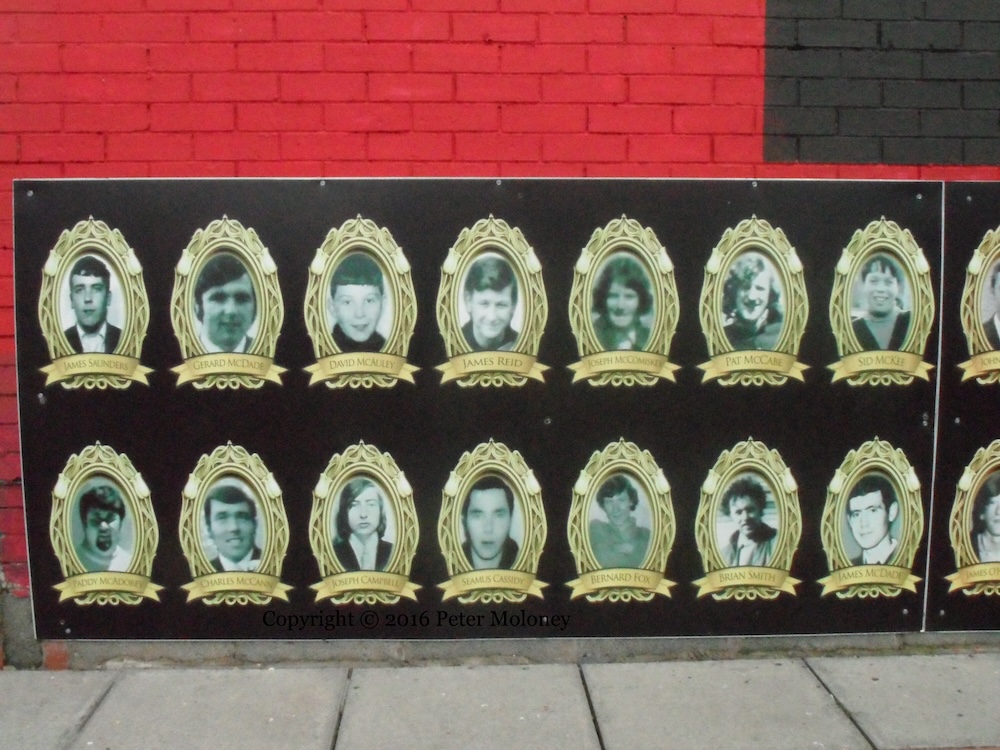
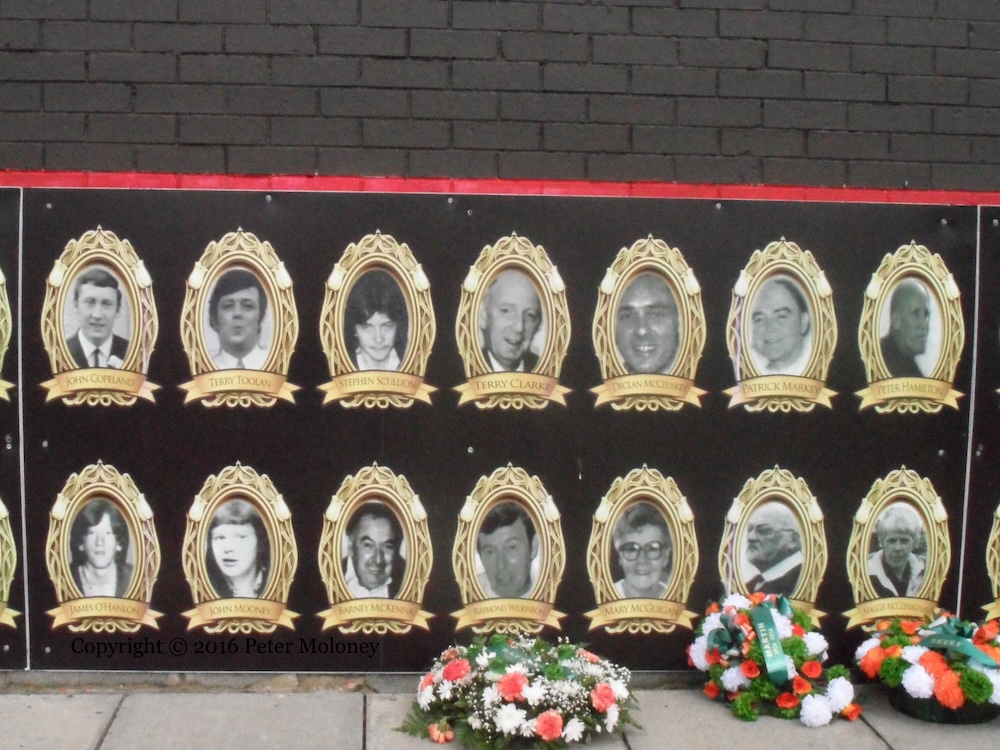
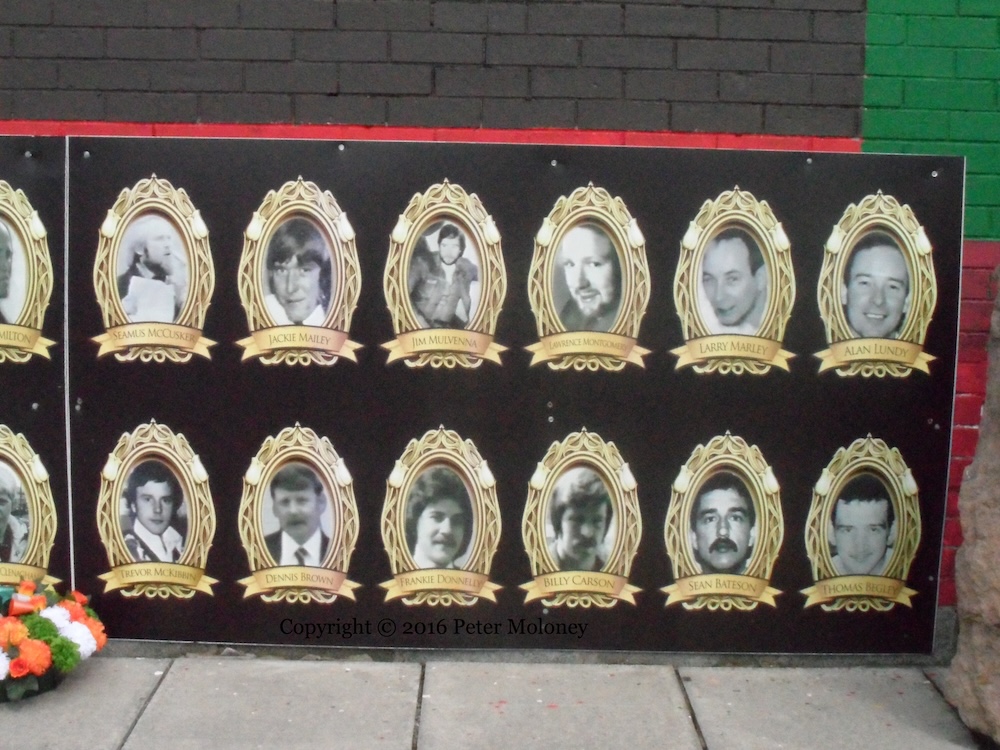
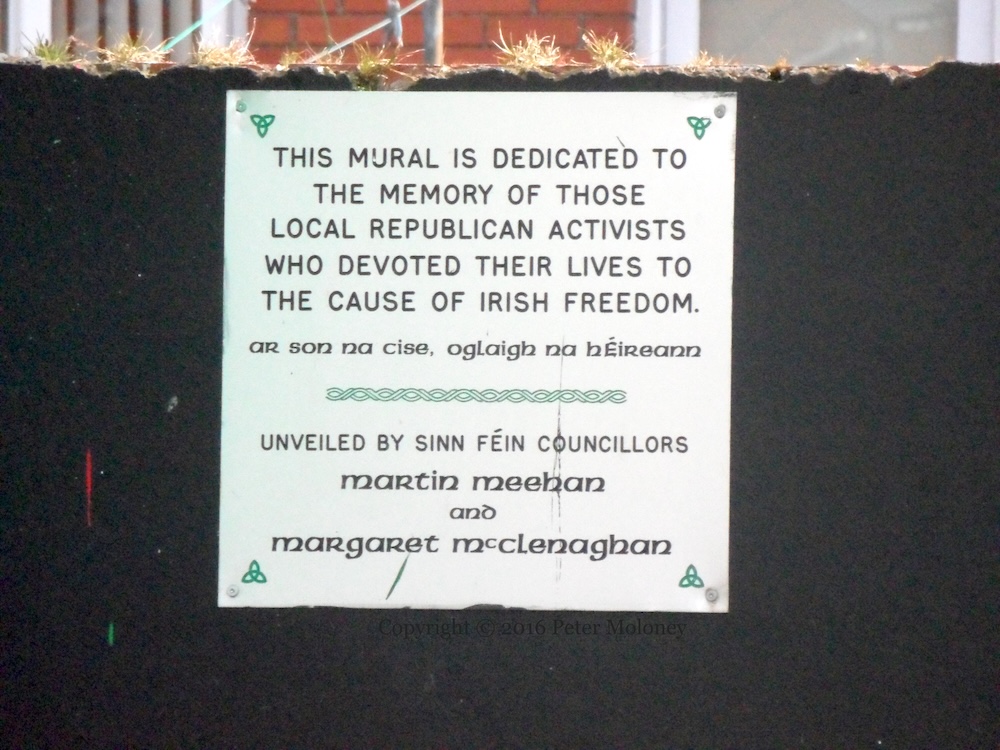
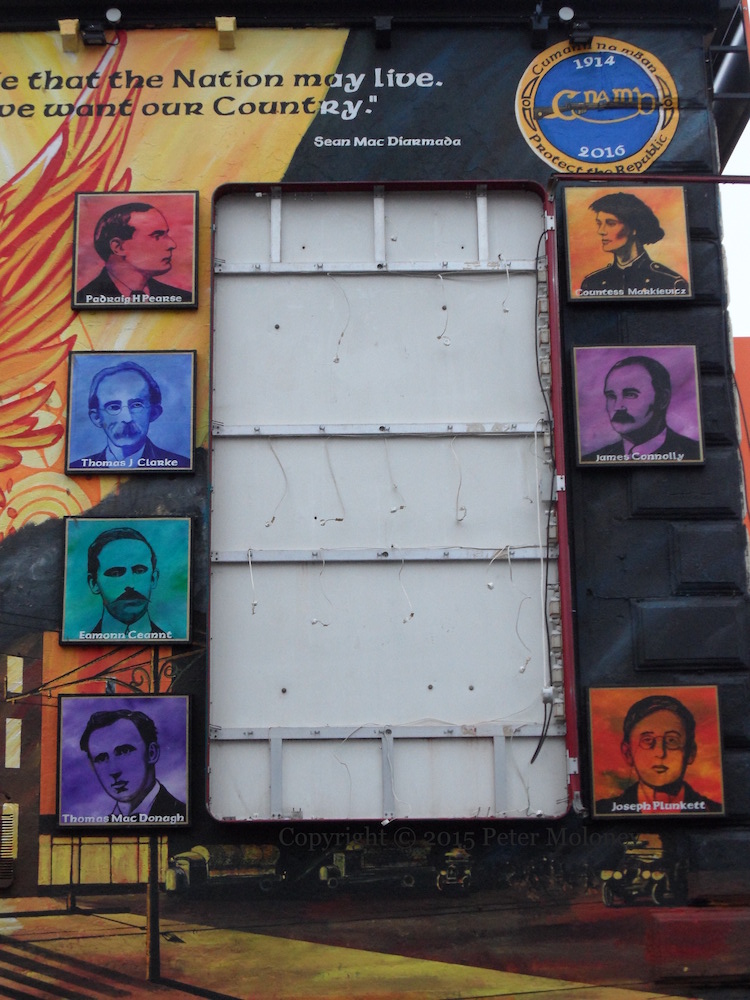
The previous Ardoyne – Bone – Ligoniel mural fell down almost as soon as it was completed, leaving only the boards with portraits of locals killed during the troubles. The stone and plaque (in the final images) go back to the mural before that.
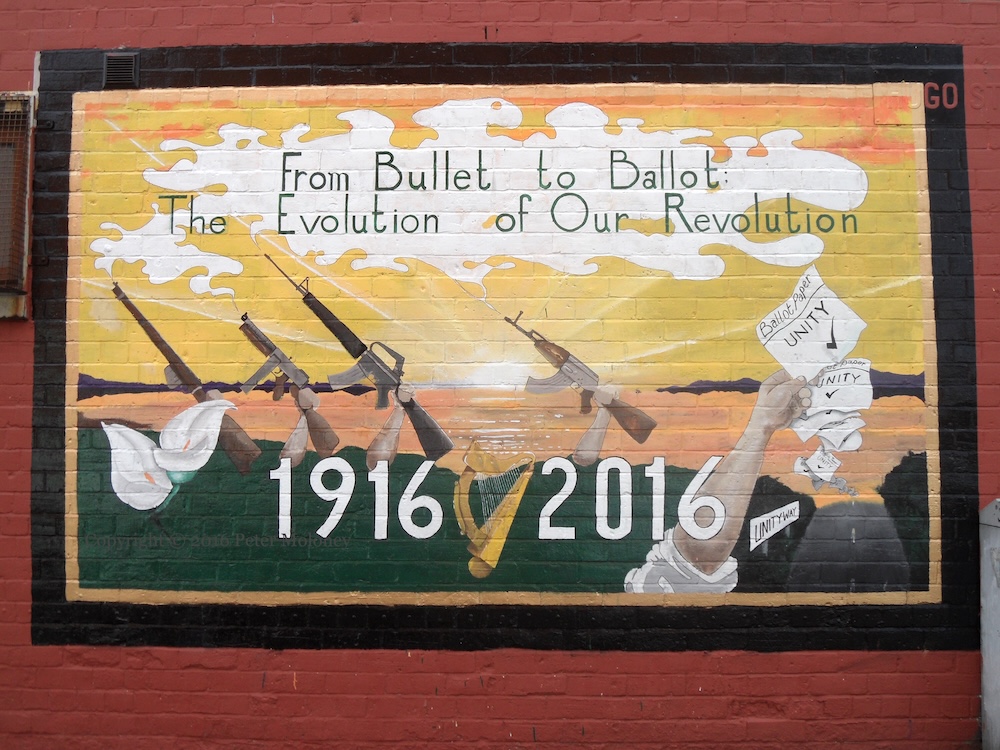
A history of nationalism/republicanism from left to right: a pair of Easter lilies, four generations of rifles, and then a switch to a ballot paper with a check in favour of “unity” and a road named “Unity Way”: “From bullet to ballot: the evolution of our revolution. 1916 – 2016”
The mural was painted by Con on the north side of Hugo Street – the south side remains exclusively éırígí.
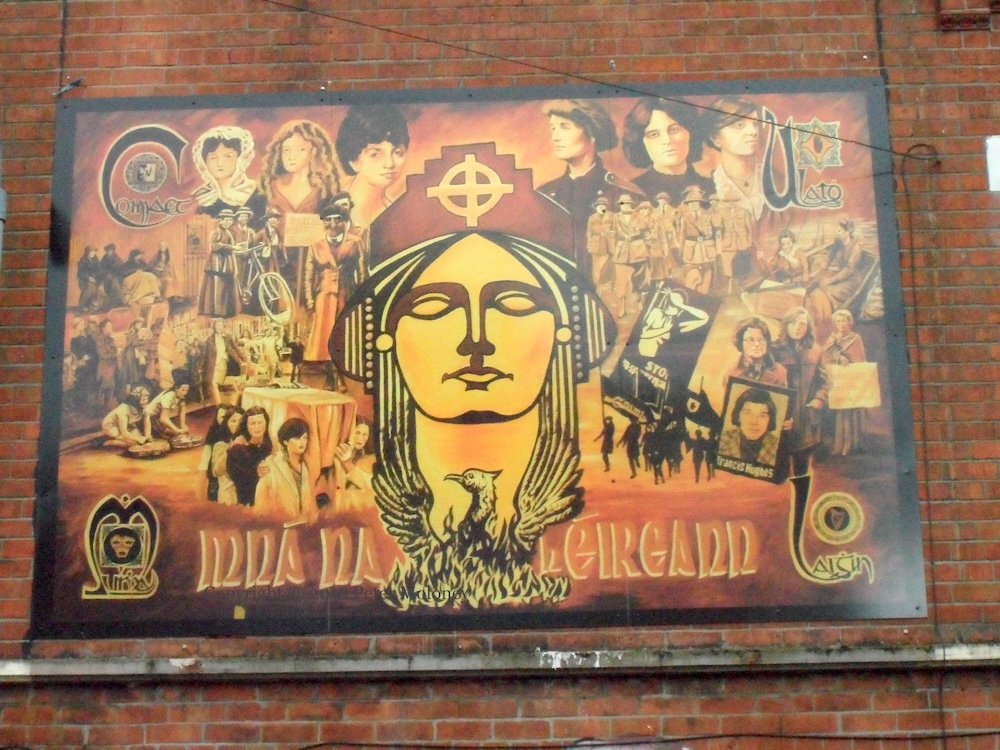
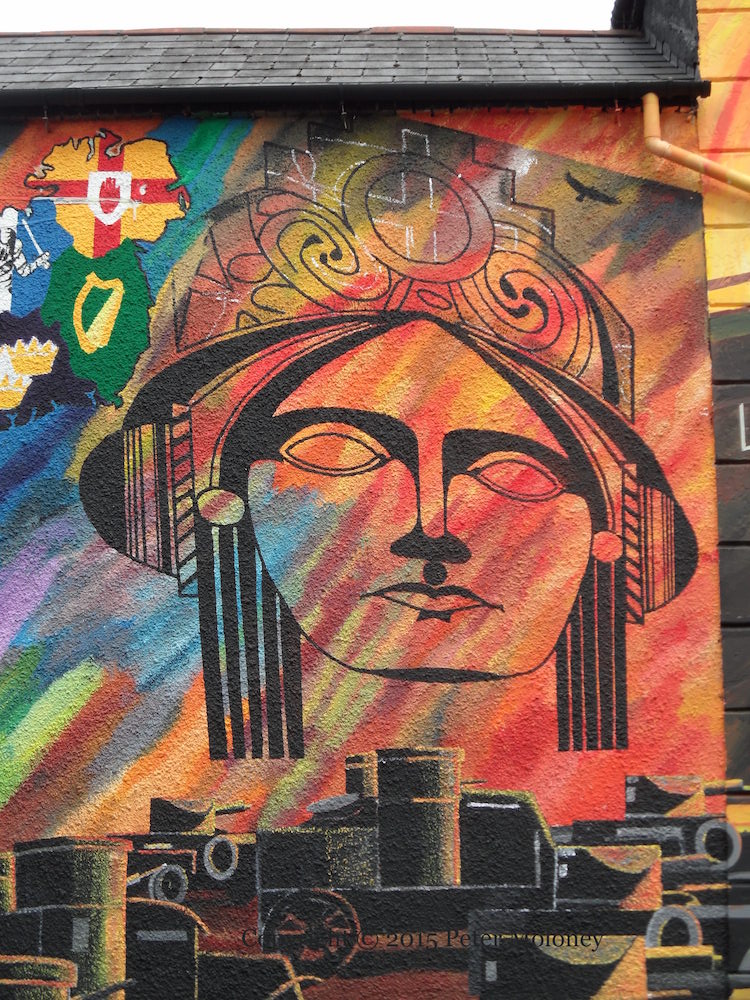
Érıu/Éıre of the Tuatha Dé Danann, queen of Ireland, (as depicted by Richard J King) is at the centre of various representations of republican women.
Along the top are Ann Devlin, Betsy Gray, Mary Ann McCracken, Countess Markievicz, Nora Connolly?, and Winifred Carney. Suffragettes, the modern IRA, and Cumman Na mBan are depicted, as are Máıre Drumm at the Falls Curfew, Tom McElwee’s sisters carrying his coffin, and Molly Childers and Mary Spring Rice running guns on the Asgard. There is also an unusual ‘four provinces’ in the corners.
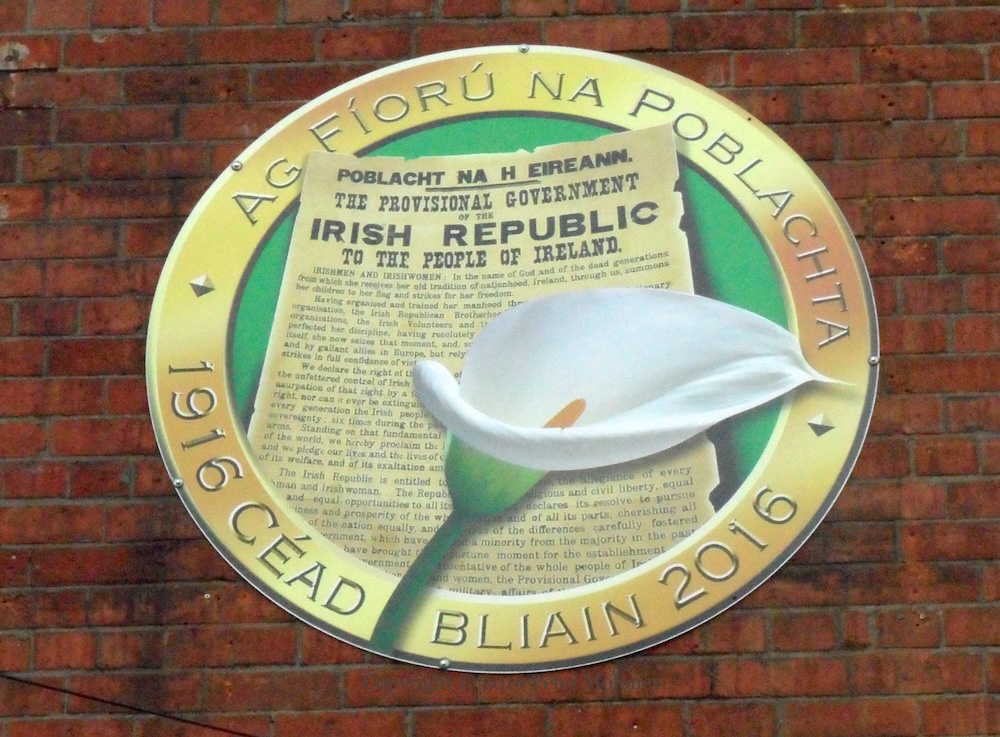
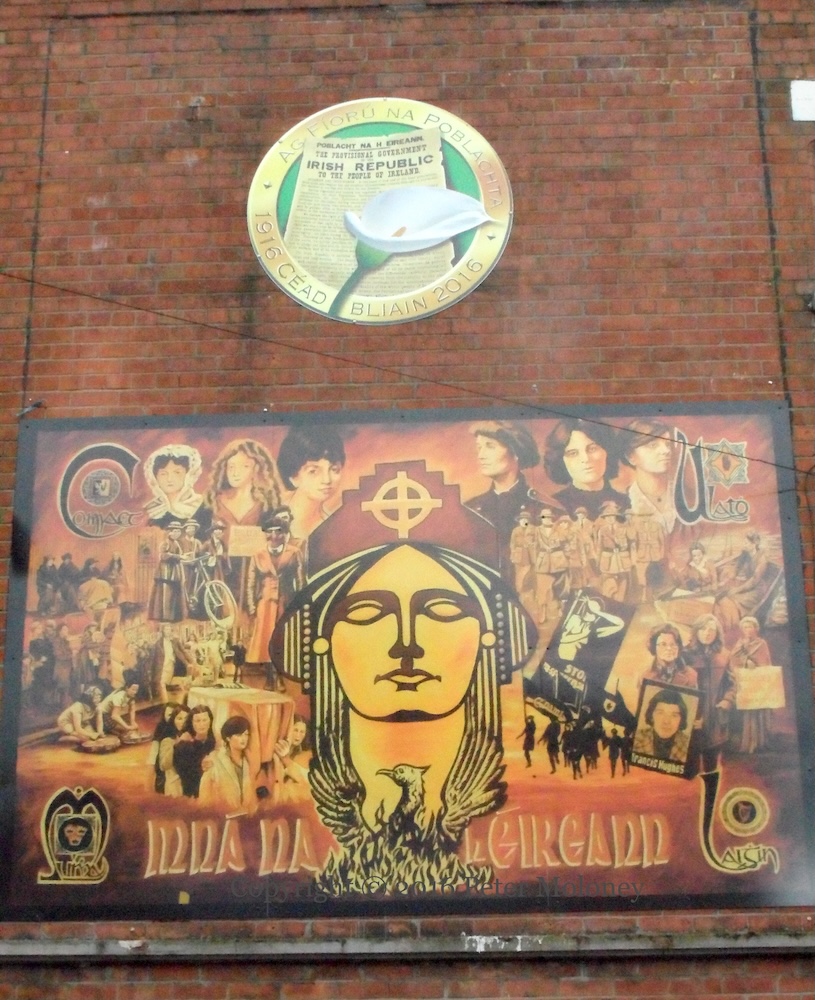
The wide shot (below) shows a 1916 centenary (“céad blıaın”) board: “Ag fíorú na poblachta”.
repainted knot-work on the right in front, form July 8th, 2016:
detail shots, from August 9th, 2025, December 15th, 2025, and March 26th, 2016:
December 15th, 2025, portraits on small boards being added to either side of the (temporarily removed) proclamation:
July 31st, 2025:
July 14th, 2025:
May 5th, 2025:
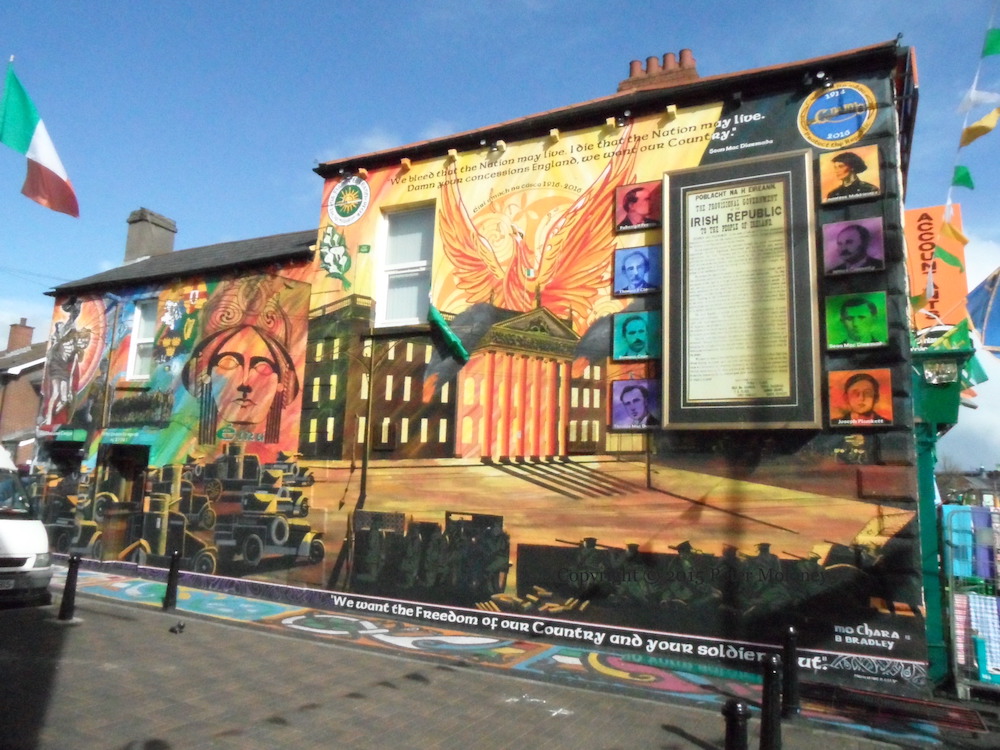
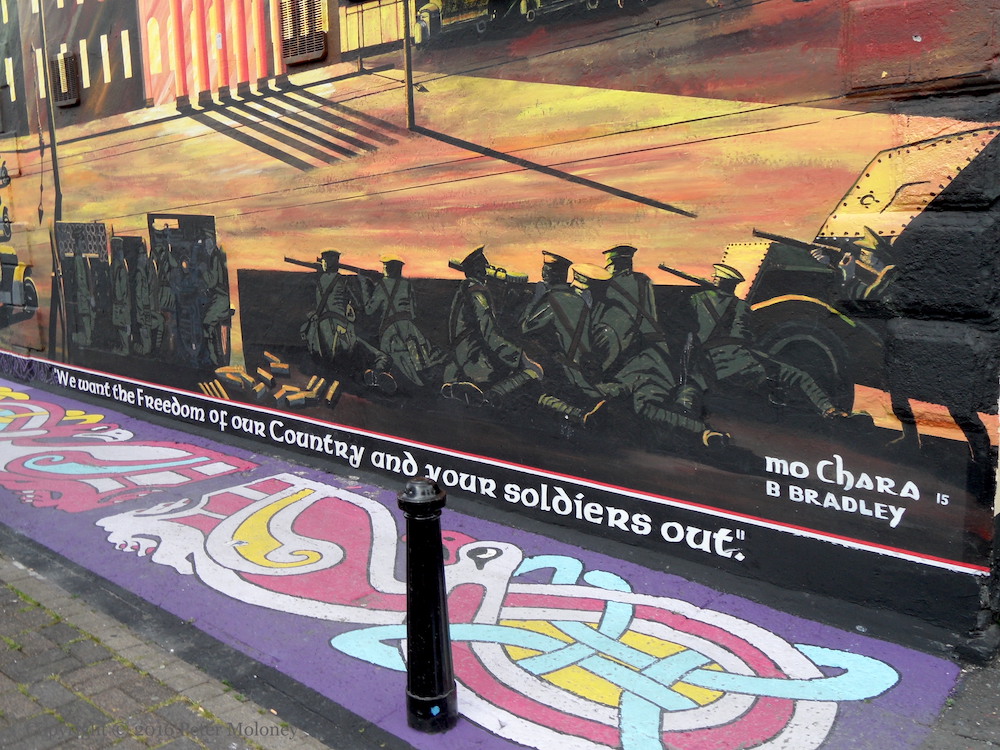
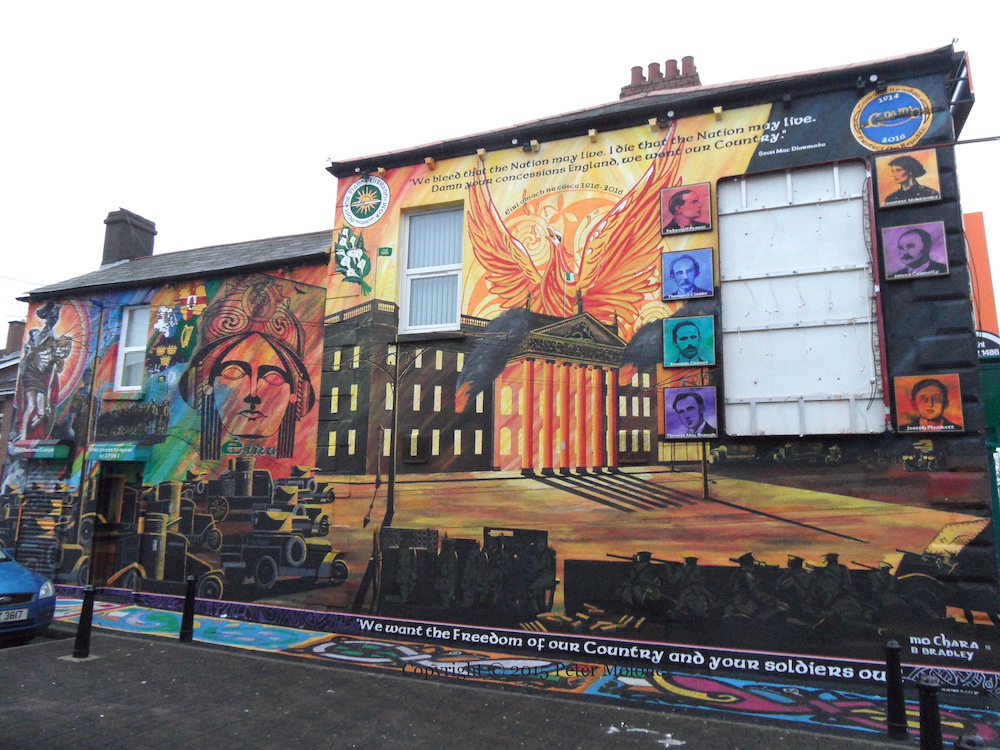
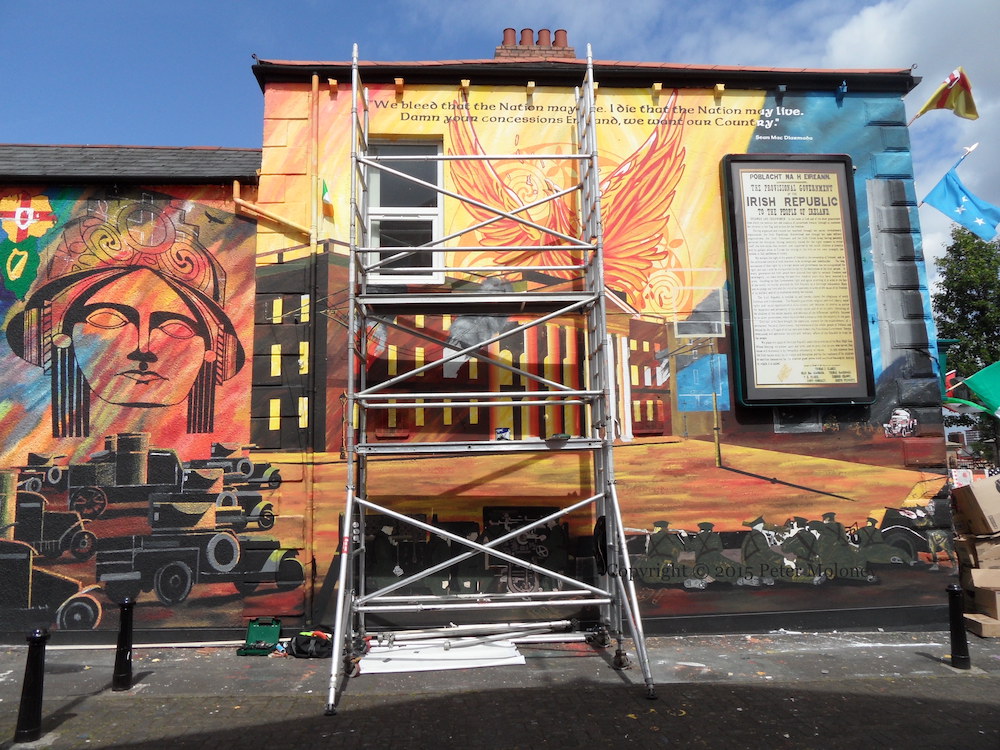
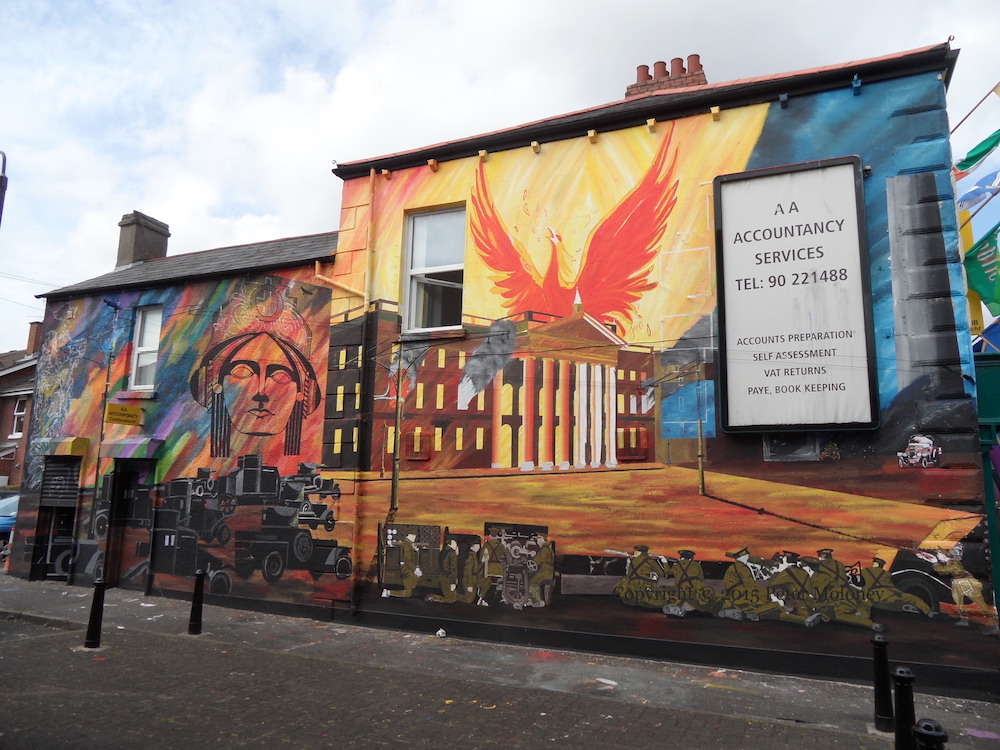
Arrayed against the forces of the British Army (which are shown laying siege to the Dublin GPO during the Easter Rising in armoured cars and in sniping positions in the foreground of the mural, along the whole length of the wall) are various symbols of Irish nationalism:
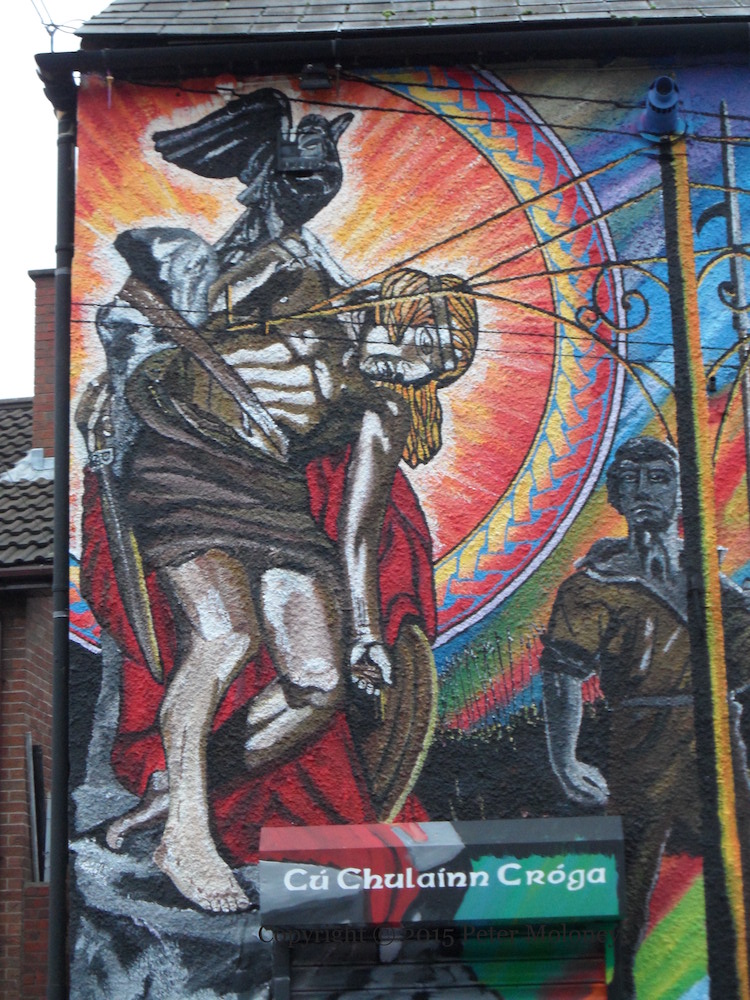
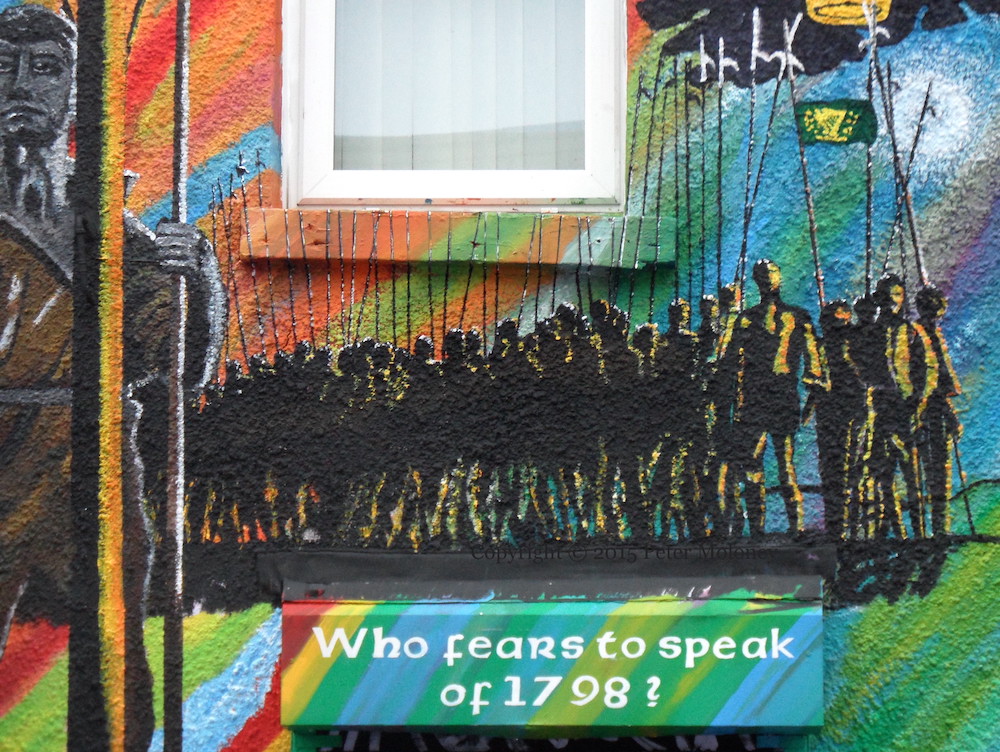
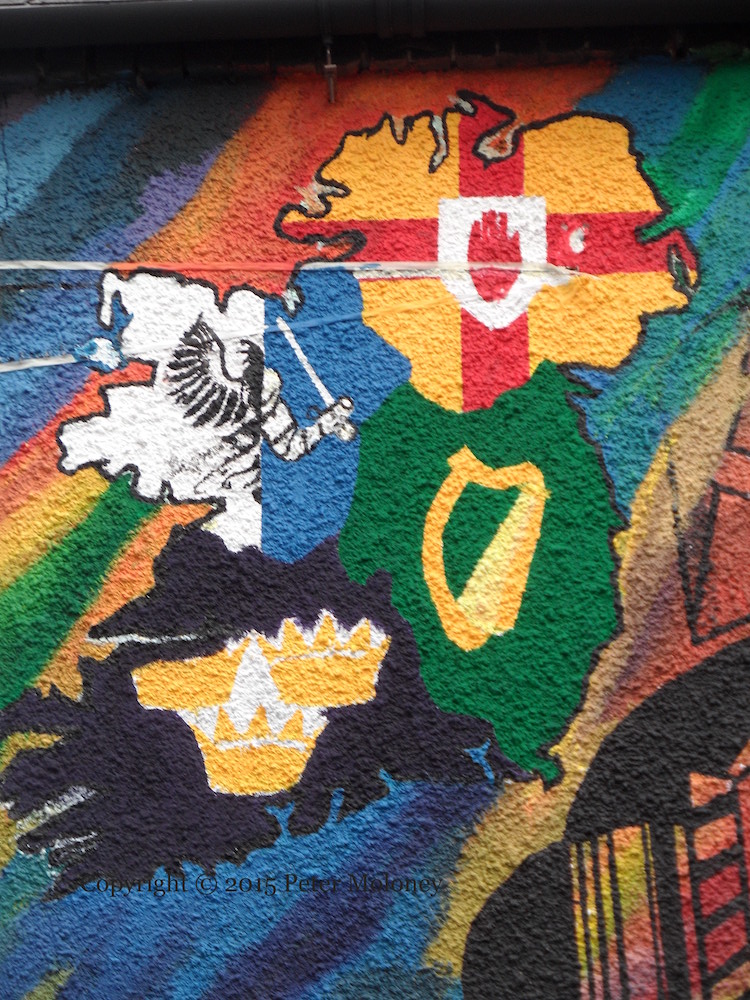
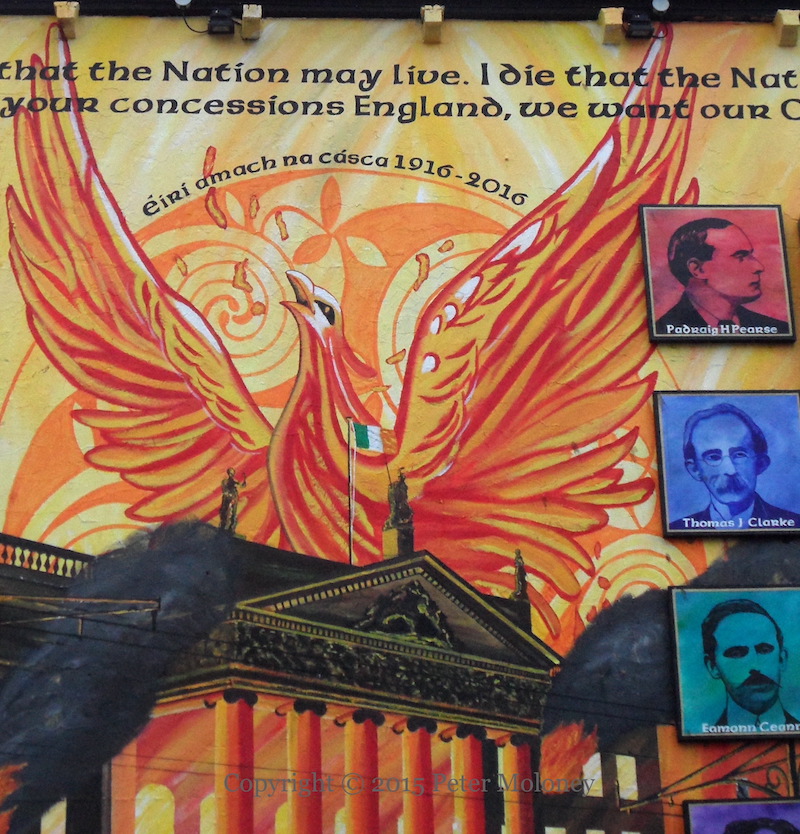
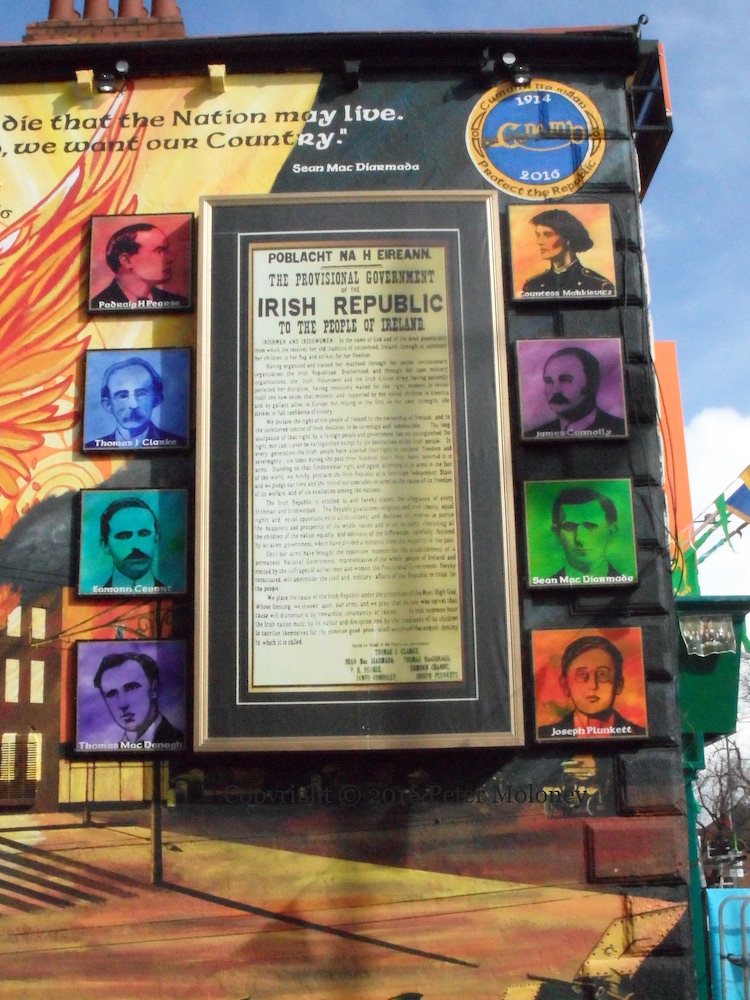
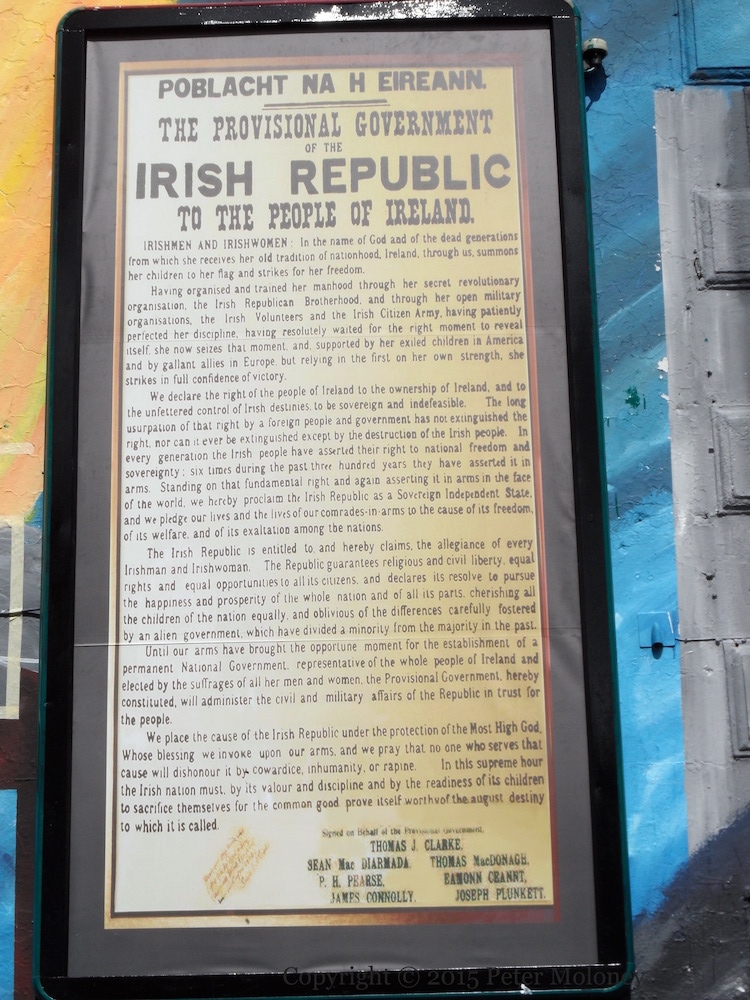
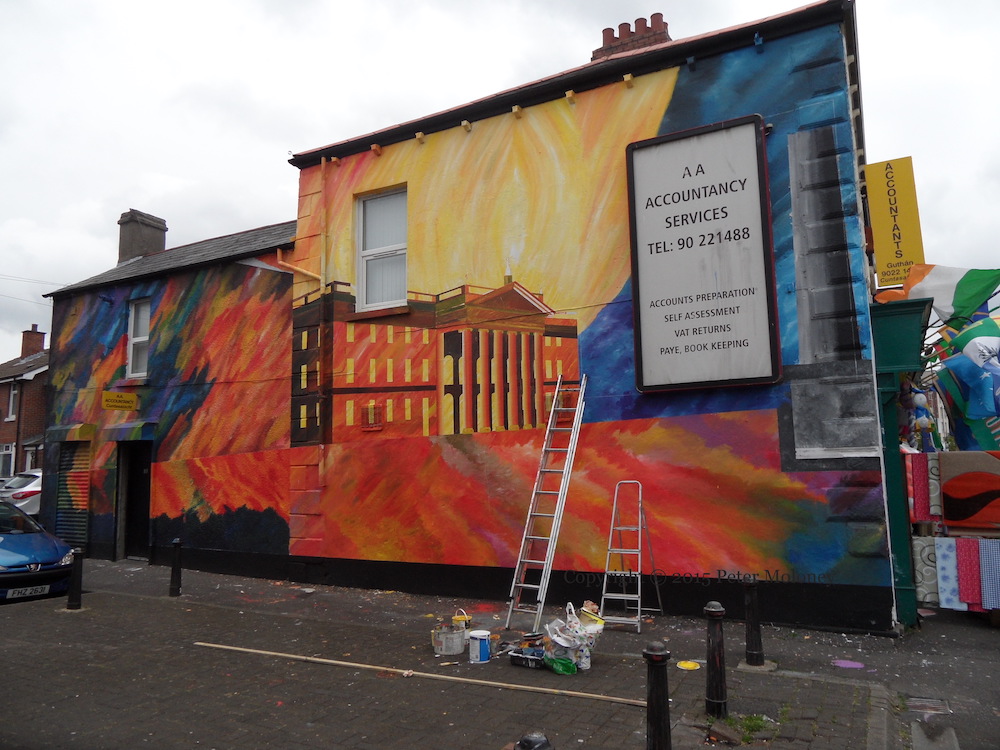
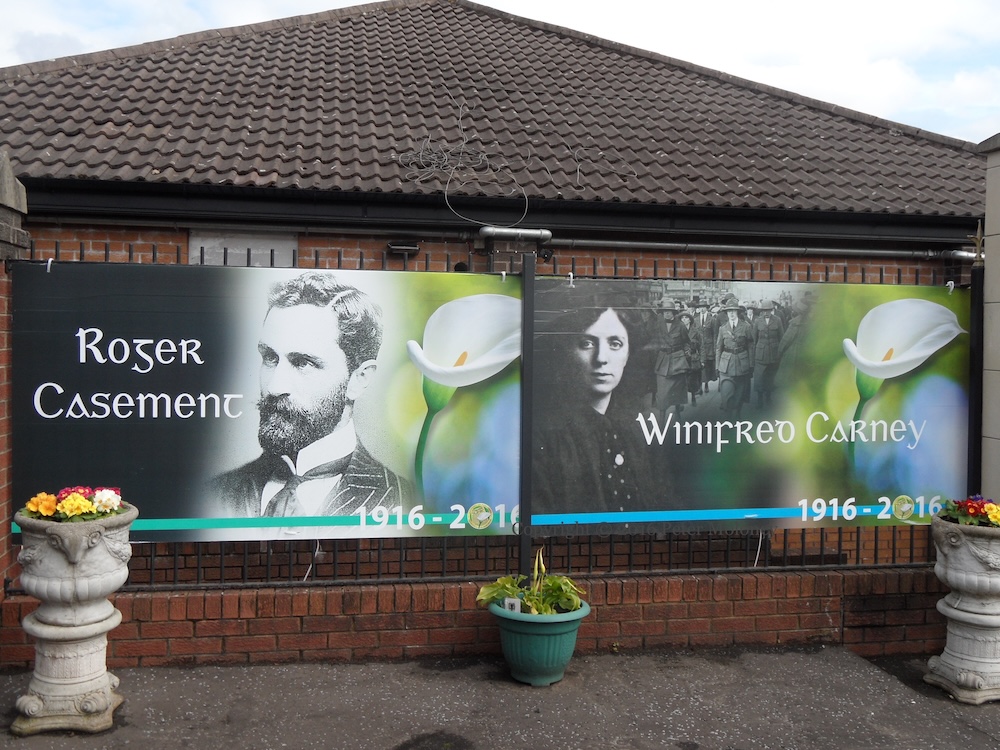
Oliver Sheppard‘s 1911 statue of Cú Chulaınn dying (see the Visual History page); the pikemen of the 1798 Rebellion; the four provinces of Ireland; Érıu the mythological queen of Ireland/Éıre as designed by Richard J King/Rísteard Ó Cíonga; Easter lilies; the emblems of Na Fıanna Éıreann and Cumann Na mBan on either side of a quote from (The Mainspring) Seán Mac Dıarmada, “We bleed that the nation may live; I die that the nation may live. Damn your concessions, England: we want our country”; a phoenix rising from the flames of the burning Dublin GPO (inspired by Norman Teeling’s 1998 painting The GPO Burns In Dublin); the GPO flying an ‘Irish Republic’ flag; portraits of signatories and other rebels — (left) Padraig H. Pearse, Thomas J Clarke, Eamonn Ceannt, Thomas MacDonagh, (right) Countess Markievicz, James Connolly, Sean MacDiarmada, Thomas Plunkett; the declaration of independence, placed over the advertising box of AA Accountants – see the in-progress shot below.
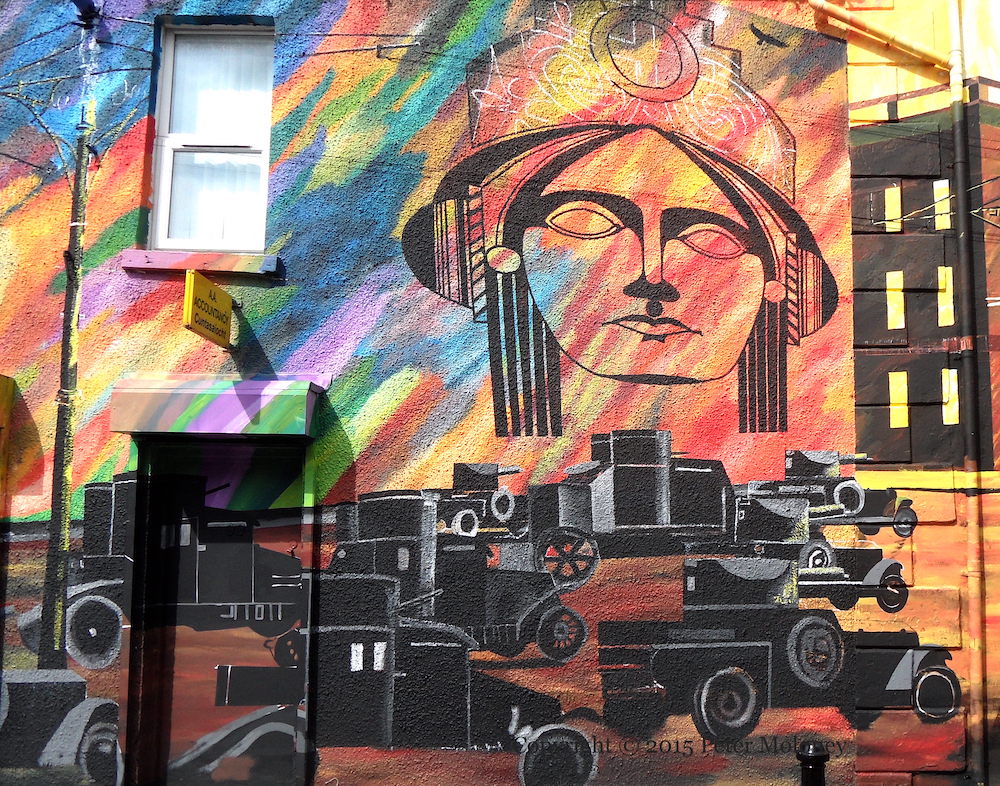
At the very bottom is a quote from the mother of painted Gerard ‘Mo Chara’ Kelly, Harriet Kelly: “We want the freedom of our country and your soldiers out.”
“Republican socialist movement, IRSP/INLA, remembers and salutes all those who gave their lives and liberty in the struggle for national liberation and socialism in Ireland 1916 – 2016.”
The Easter Lily on a red, five-pointed, star ties together the centenary of the Easter Rising with republican socialism. These are IRSP/INLA stencilled murals commemorating the centenary of the Rising. The first is in Beechmount, the second in Divis.
There are currently three uses of the “Unfinished revolution, unfinished business” slogan in Derry.
First, a new mural is currently in progress in Creggan. On the right, a soldier raises the Irish Tricolour while trampling on Britain’s Union Flag and the “unfinished revolution” of 1916’s Easter Rising (reproducing a postcard of the era). The modern-day figure on the left is wielding a home-made rocket-launcher used in a 2014 attack on police. It also appears in the board immediately above, and in 2015’s Resistance in Ardoyne, north Belfast.
(The finished piece can be seen in the Seosamh Mac Coılle collection, with verbiage above and below reading, “Unfinished revolution, unfinished business” and “Resistance!”)
Central Drive, Eastway, and Westland Street, Derry.