Stirling And District Campsie Club

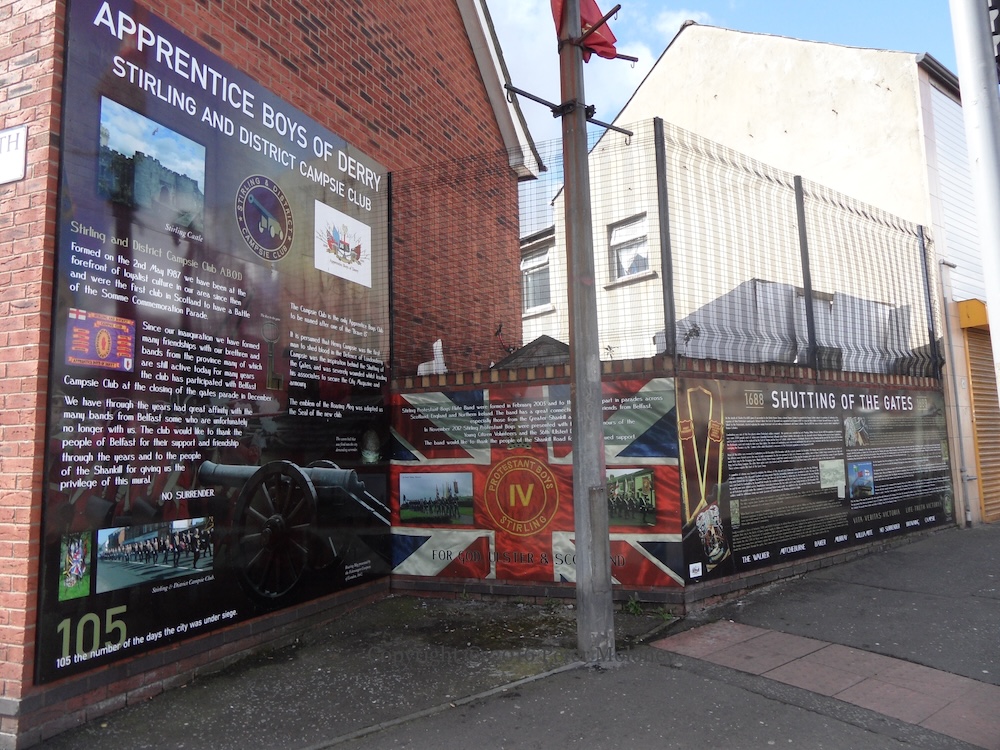
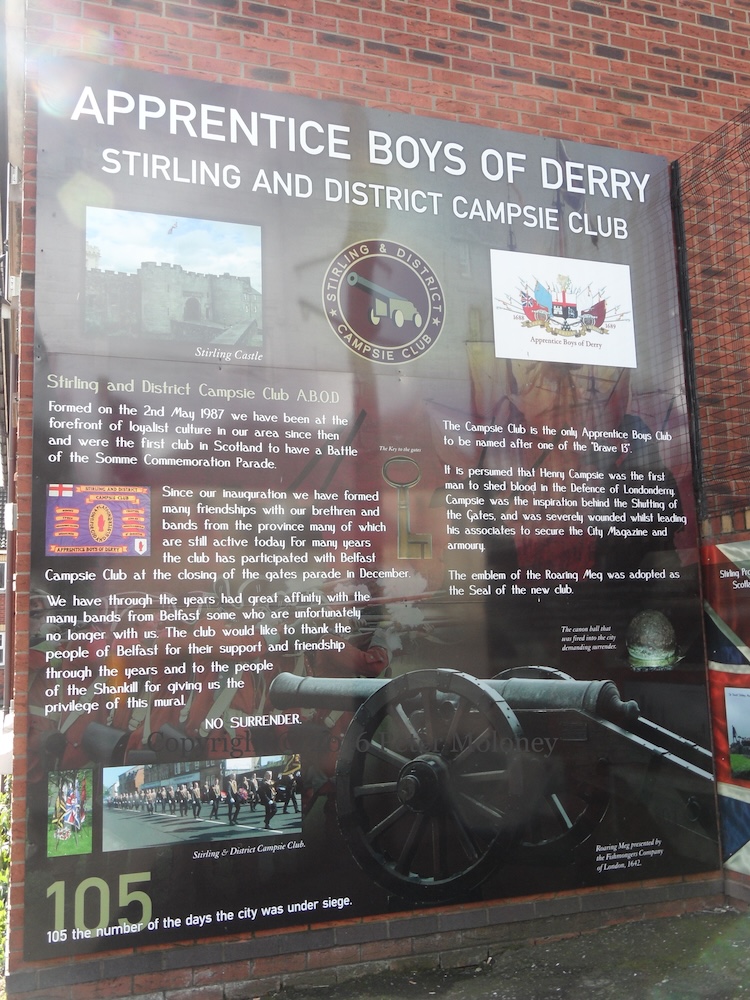
The first panel features the cannon “Roaring Meg” (“presented by the Fishmongers Company of London 1642″) which is used as the seal for the club, and includes the club’s flag, the key to the gates, and the emblem and coat of arms of the Apprentice Boys.

“Formed on the 2nd May 1987 we have been at the forefront of loyalist culture in our area since then and were the first club in Scotland to have a Battle of the Somme Commemoration Parade. Since our inauguration we have formed many friendships with our brethren and bands from the province many of which are still active today. For many years the club has participated with Belfast Campsie Club at the closing of the gates parade in December. We have through the years had great affinity with the many bands from Belfast some who are unfortunately no longer with us. The club would like to thank the people of Belfast for their support and friendship through the years and to the people of the Shankill for giving us the privilege of this murals. / No surrender. / The Campsie Club is the only Apprentice Boys Club to be named after one of the “Brave 13″. It is persumed [presumed] that Henry Campsie was the first man to shed blood in the Defence of Londonderry. Campsie was the inspiration behind the Shutting of the Gates and was severely wounded whilst leading his associates to secure the City Magazine and armoury. The emblem of the Roaring Meg was adopted as the Seal of the new club.”

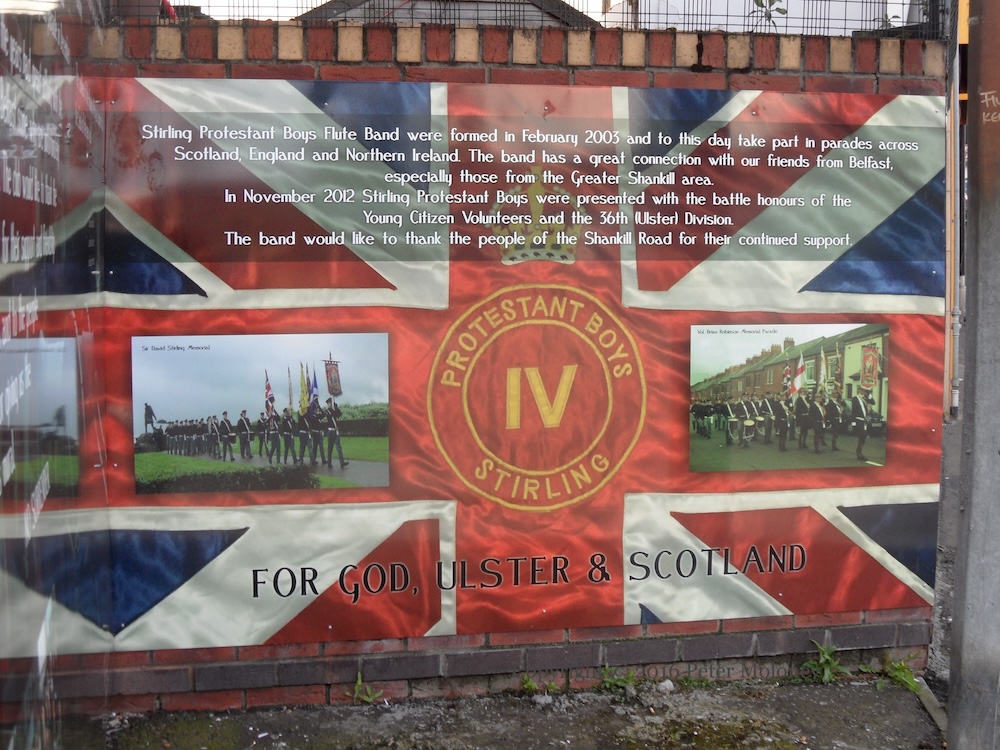
The middle panel celebrates the Stirling Protestant Boys Flute Band and its association with the Shankill Road: “Stirling Protestant Boys Flute Band [Fb] were formed in February 2003 and to this day take part in parades across Scotland, England and Northern Ireland. The band has a great connection with our friends from Belfast, especially those from the Greater Shankill area. In November 2012 Stirling Protestant Boys were presented with the battle honours of the Young Citizen Volunteers and the 36th (Ulster) Division. The band would like to thank the people of the Shankill Road for their continued support.”

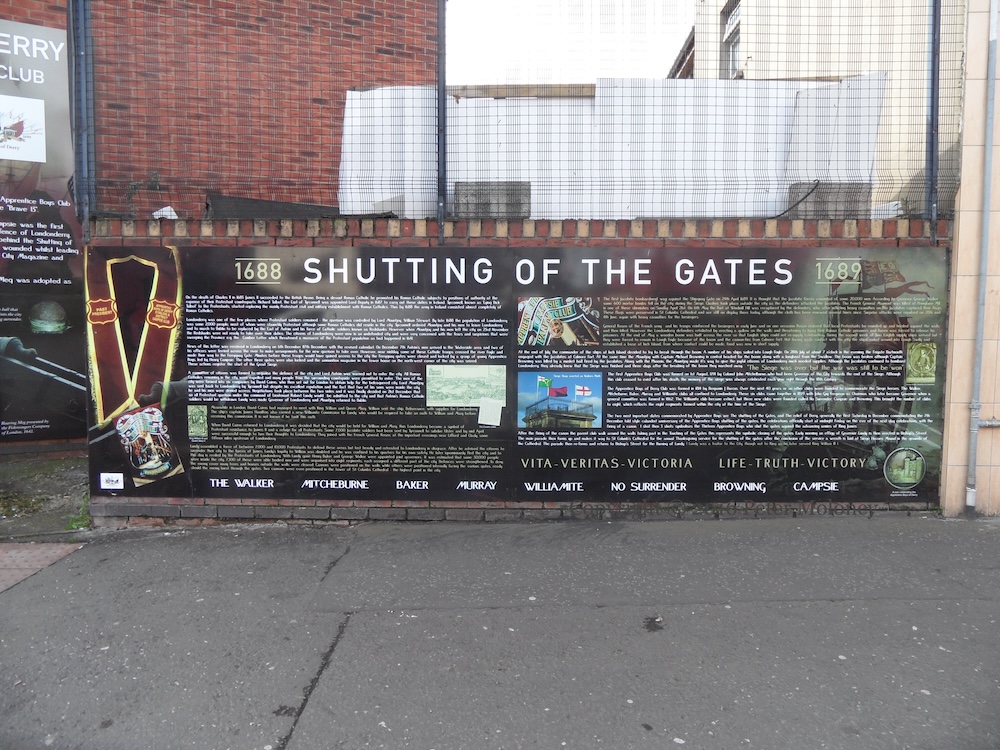
The third contains a long description of the Shutting Of The Gates in December 1688 and the Siege Of Derry, which was ended with the breaking of the boom across the river Foyle in July 1689.

Click image to enlarge
Copyright © 2016 Peter Moloney
M13085 M13090 M13091 M13086 [M13087] [M13088] [M13089]
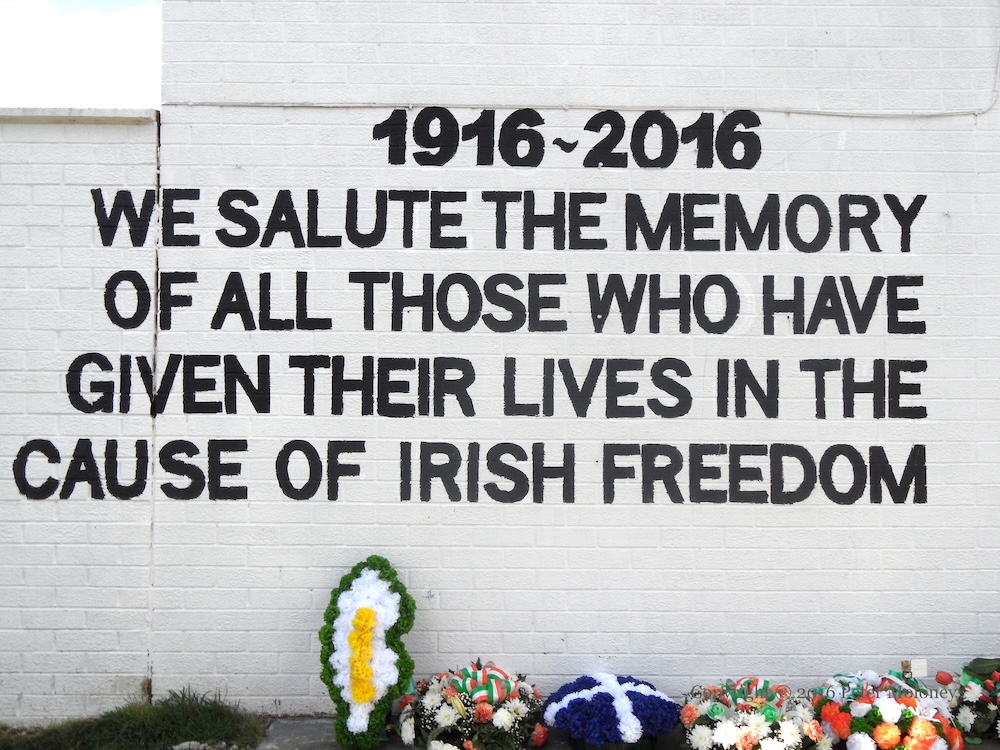
The Cause Of Irish Freedom

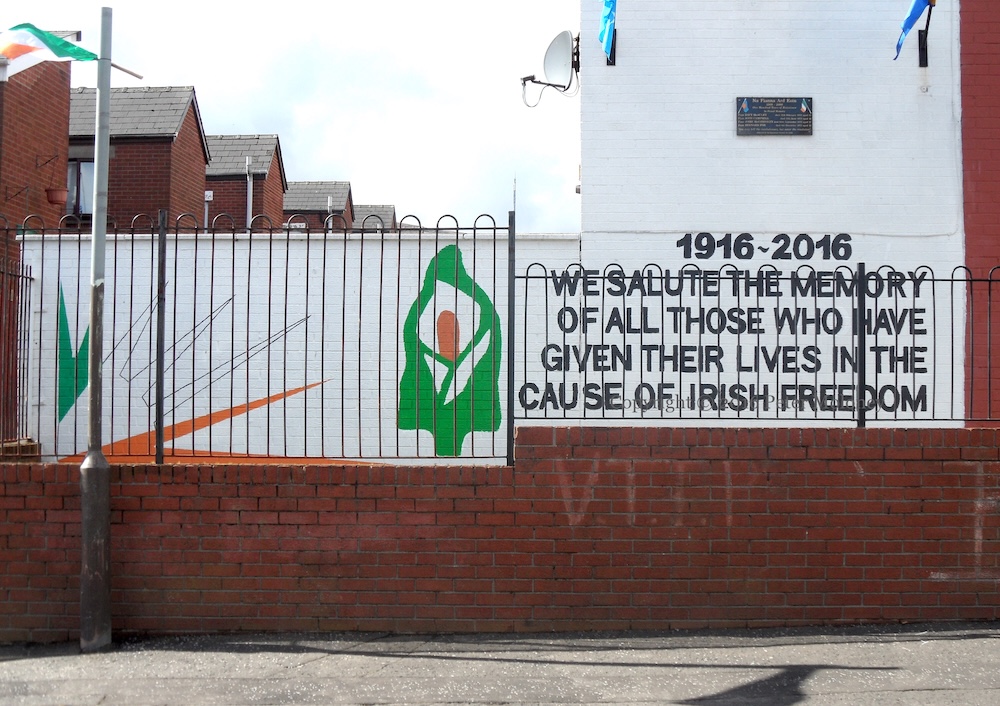
“1916 – 2016. We salute the memory of all those who have given their lives in the cause of Irish freedom.” This is an extension by the RNU (web), on the centenary of the Easter Rising, to the large tarp seen in Ardoyne’s Fallen Fıanna. The plaque was recorded in 2011.

Berwick Road, Ardoyne, north Belfast

Click image to enlarge
Copyright © 2016 Peter Moloney
M13081 M13083 M13082

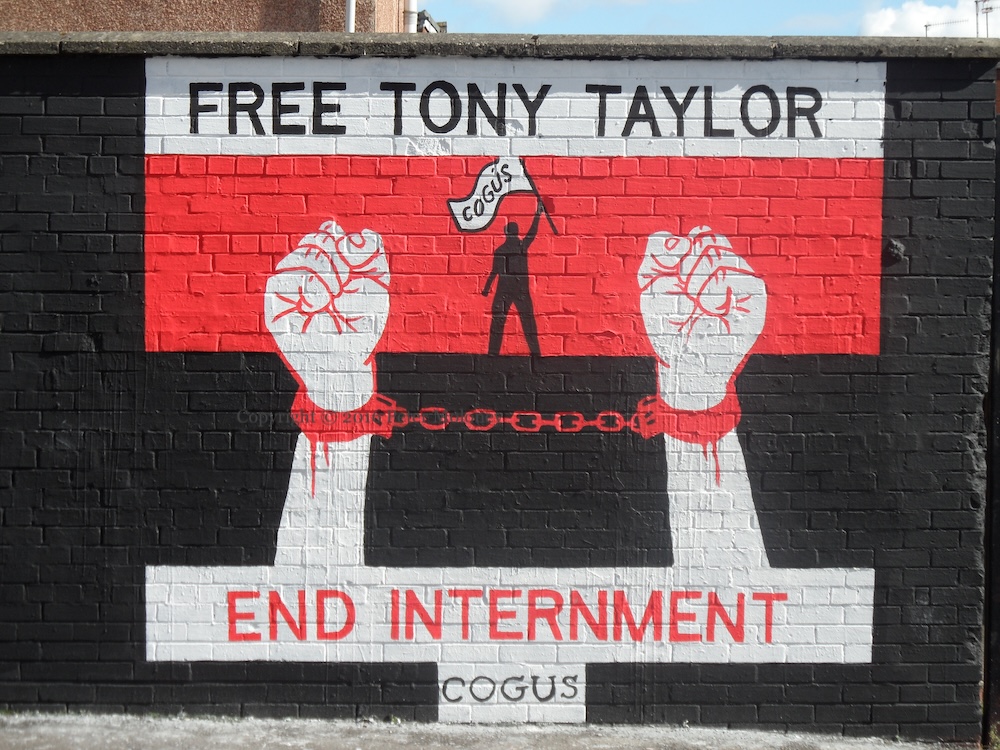
Free Tony Taylor

Derry republican and RNU (web) spokesperson Tony Taylor was released under the conditions of the Good Friday agreement. He was jailed for three years in 2011 for possession of a rifle. His license was revoked in March (2016) and he was returned to prison on the grounds that he poses a danger to the public. Both RNU/Cogús and Sınn Féın have called for his release. (Irish News)

Berwick Road, Ardoyne, north Belfast

Click image to enlarge
Copyright © 2016 Peter Moloney
M13079 M13080

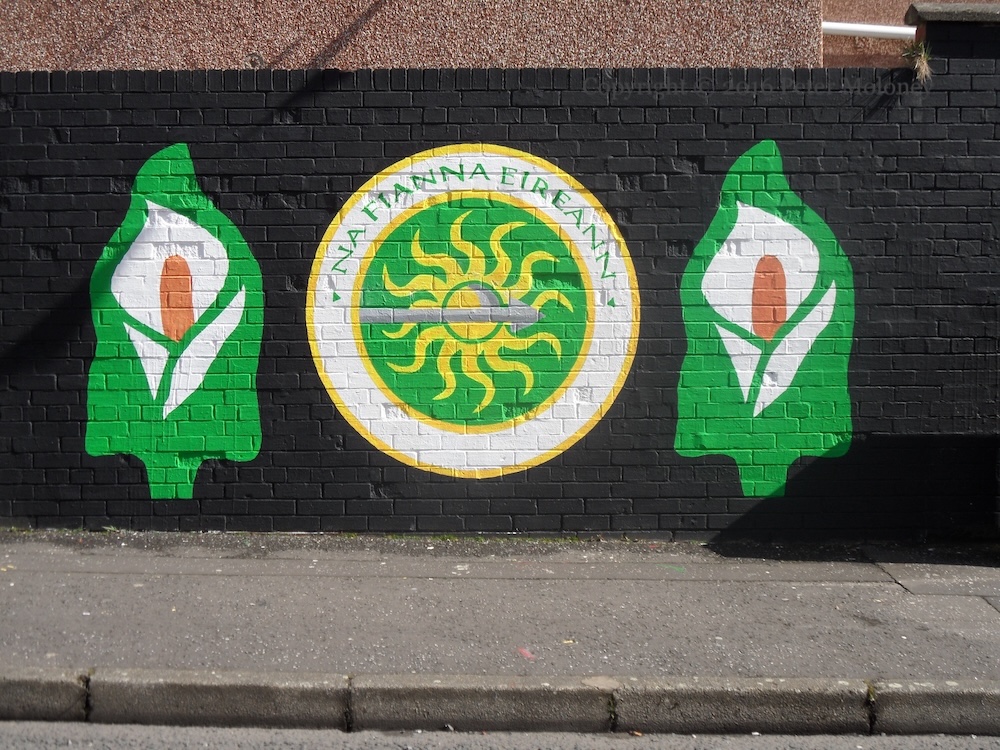
Na Fıanna Éıreann

Here is a Na Fıanna Éıreann mural in Ardoyne with Easter lilies on each side of the Fıanna’s ‘sunburst’ (gal gréıne) emblem (which also includes a pike or bill).

For a history of sunburst flags, with lots of images, see An Sıonnach Fıonn. A banner sporting an early version of the emblem, owned by Countess Markievicz during the Rising, was recently returned from London to Dublin (Irish Times).

Like the name “Óglaıgh Na hÉıreann”, “Na Fıanna Éıreann” has been used by many organisations for their youth division; this one is associated with the RNU (web).

Berwick Road, Ardoyne, across the street from Ardoyne’s Fallen Fıanna.

Click image to enlarge
Copyright © 2016 Peter Moloney
M13076 [M13077] [M13078]

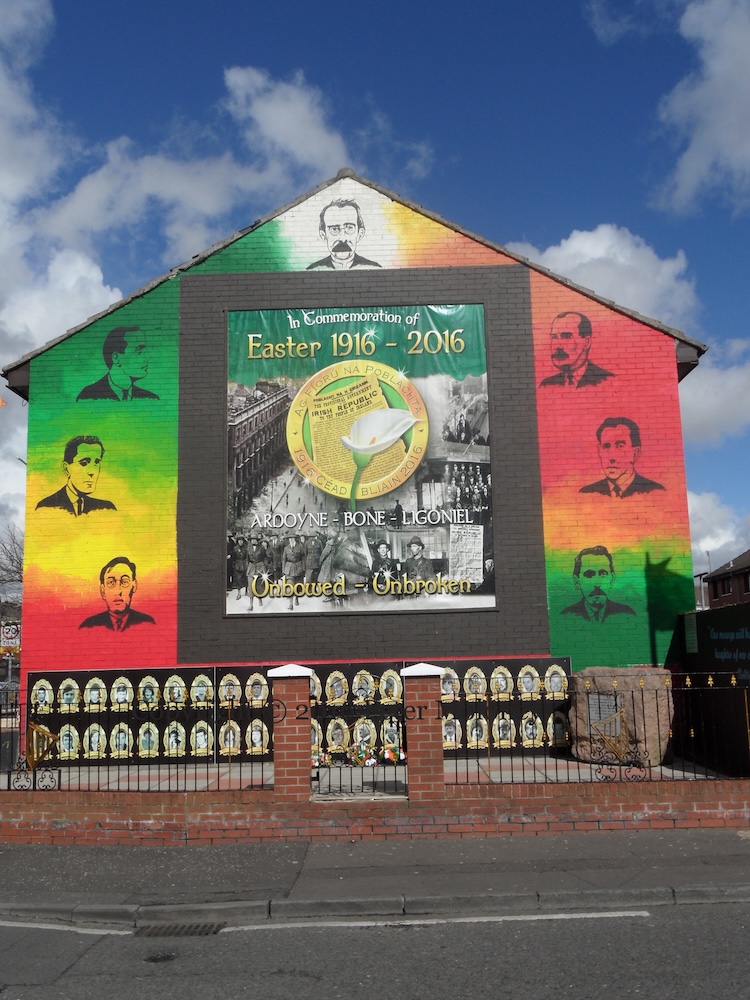
In Commemoration Of Easter 1916

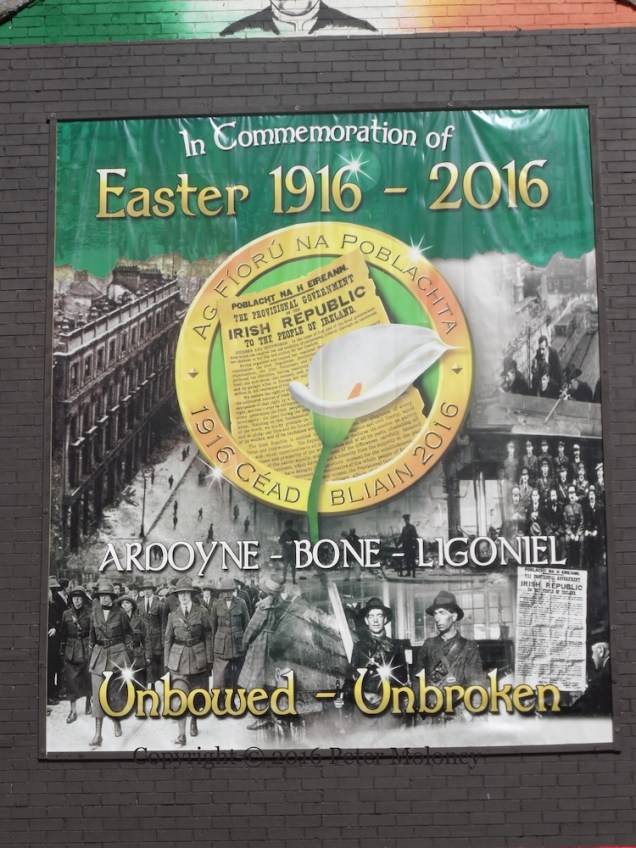
“In commemoration of Easter 1916 – 2016. Ardoyne – Bone – Ligoniel. Unbowed – unbroken.”

Tom Clarke is at the head of his fellow signatories as he looks down over a printed tarp reproducing photographs of events surrounding the Easter Rising of 1916, including soldiers from the Irish Citizen Army on a rooftop (see the original in this Spectator article) and members of Cumann Na mBan on parade. For the photo of the building in the top left, see this Irish Times article.

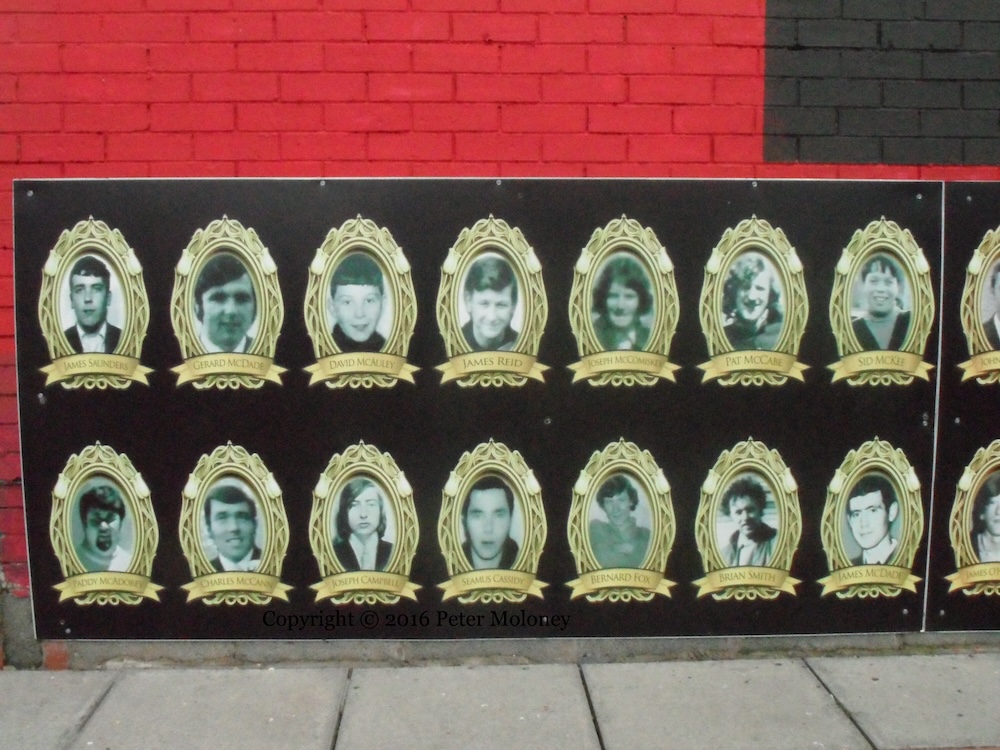
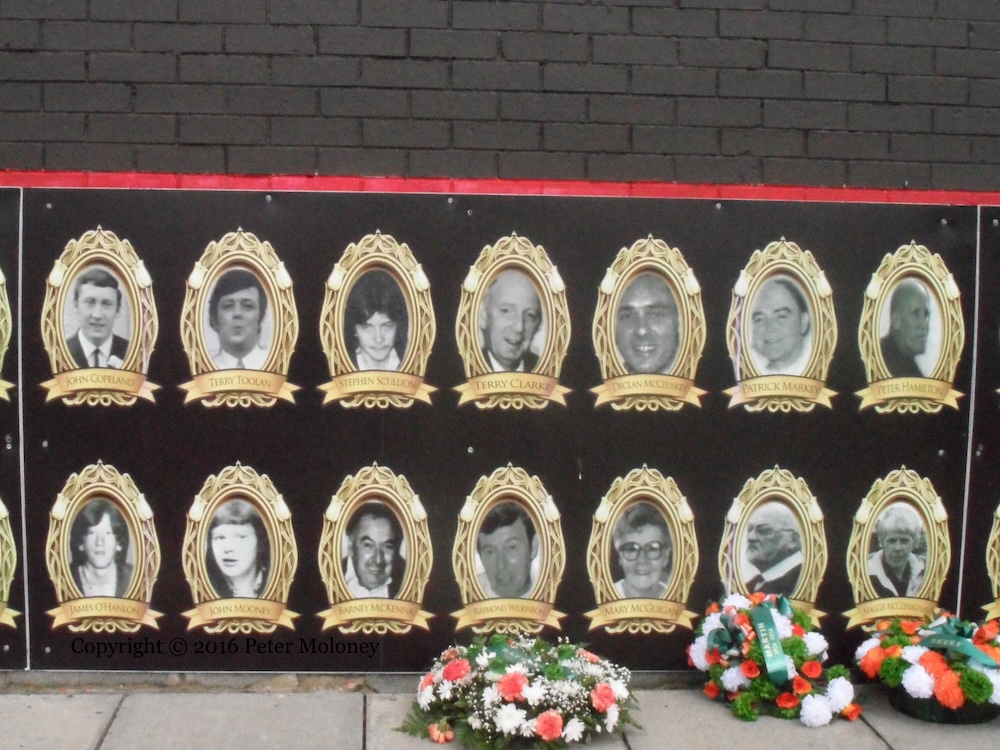
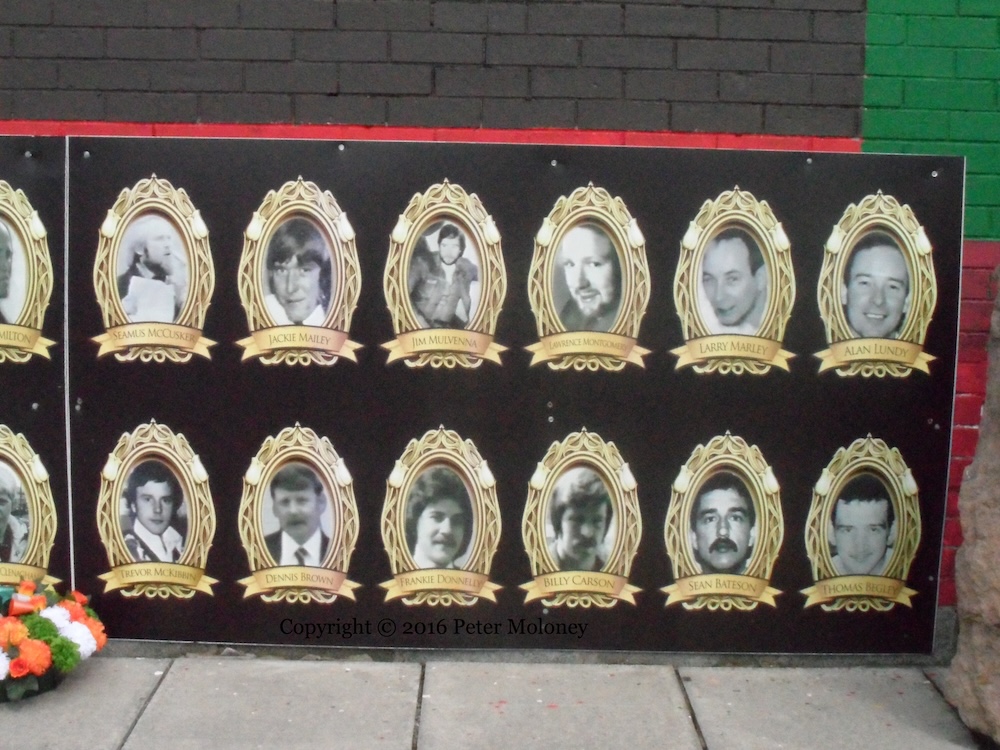
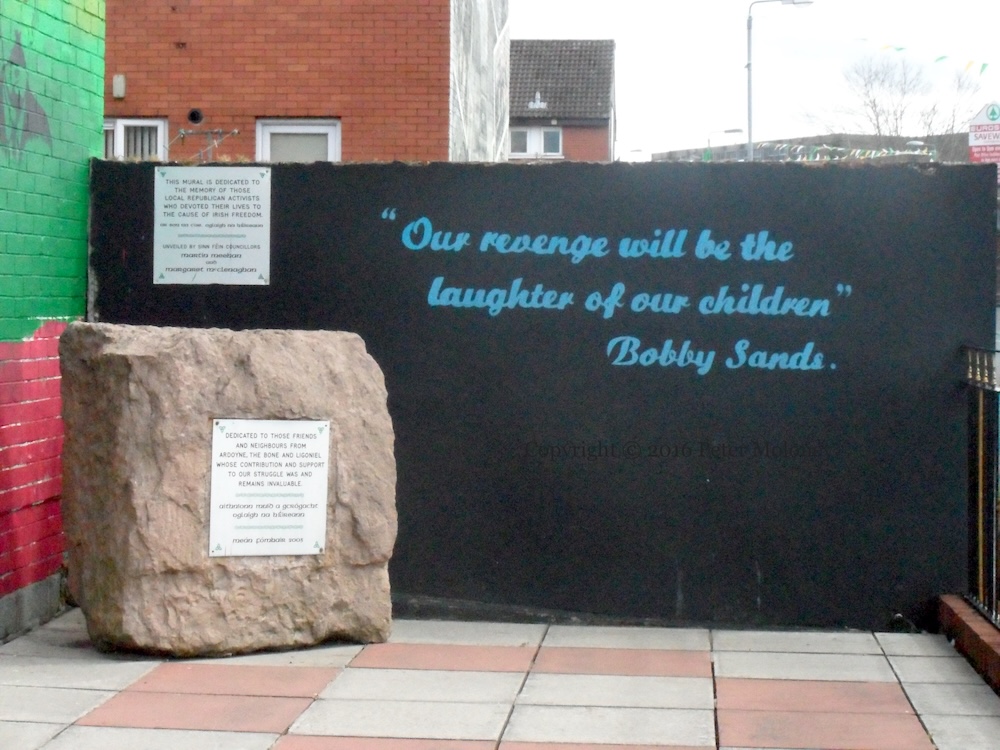
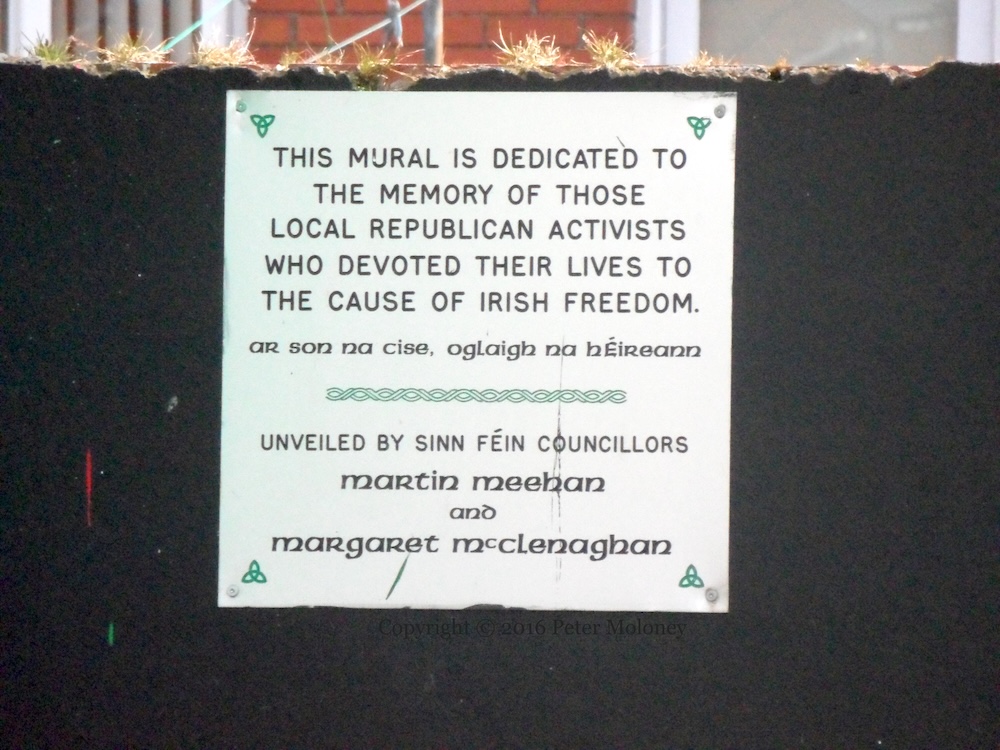
The previous Ardoyne – Bone – Ligoniel mural fell down almost as soon as it was completed, leaving only the boards with portraits of locals killed during the troubles. The stone and plaque (in the final images) go back to the mural before that.

Click image to enlarge
Copyright © 2016 Peter Moloney
M13057 M13058
[M13059] [M13060] [M13061] [M13062] [M13063] M13064] [M13065] [M13066]
M13067 M13068 M13069
M13070 [M13071] [M13072] [M13073]

Brave Sons Of Ireland

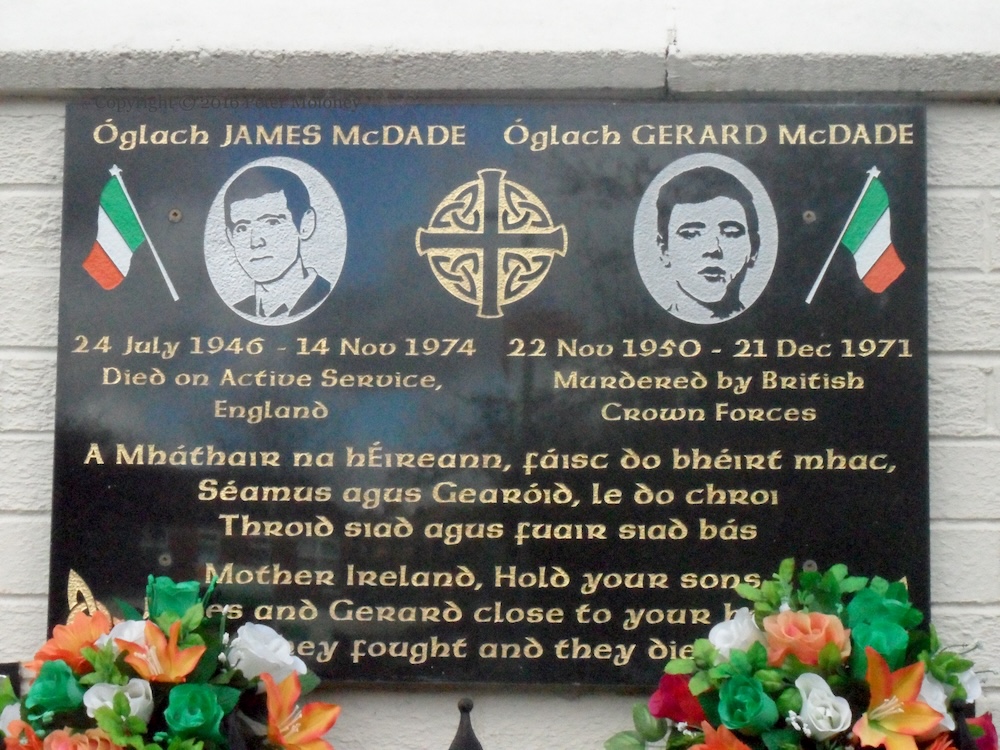
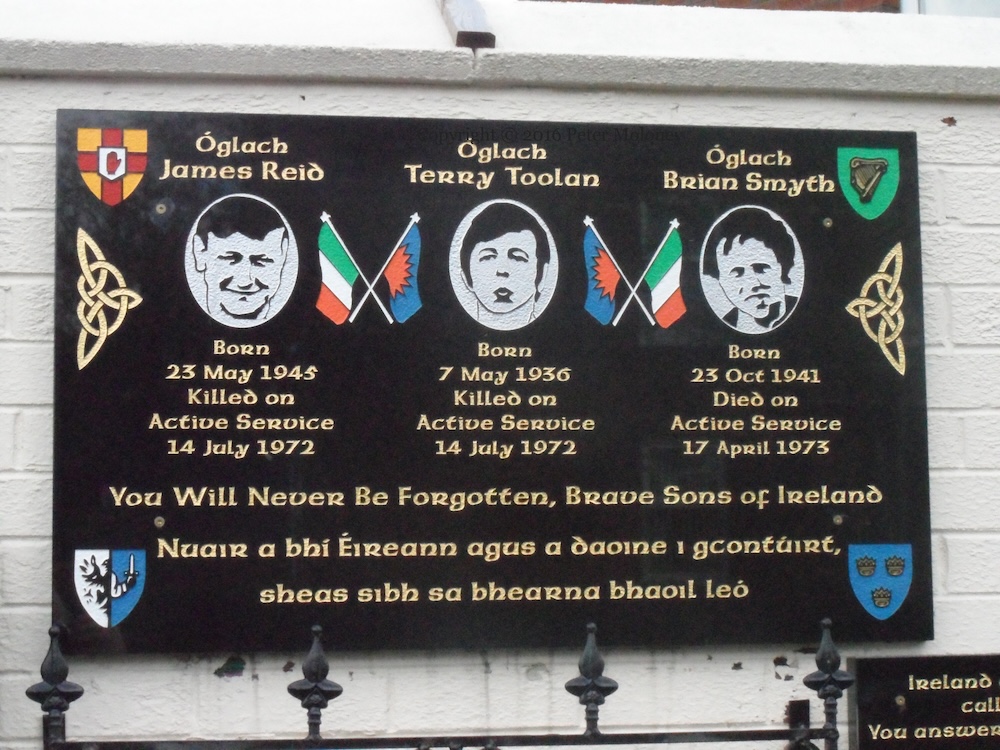
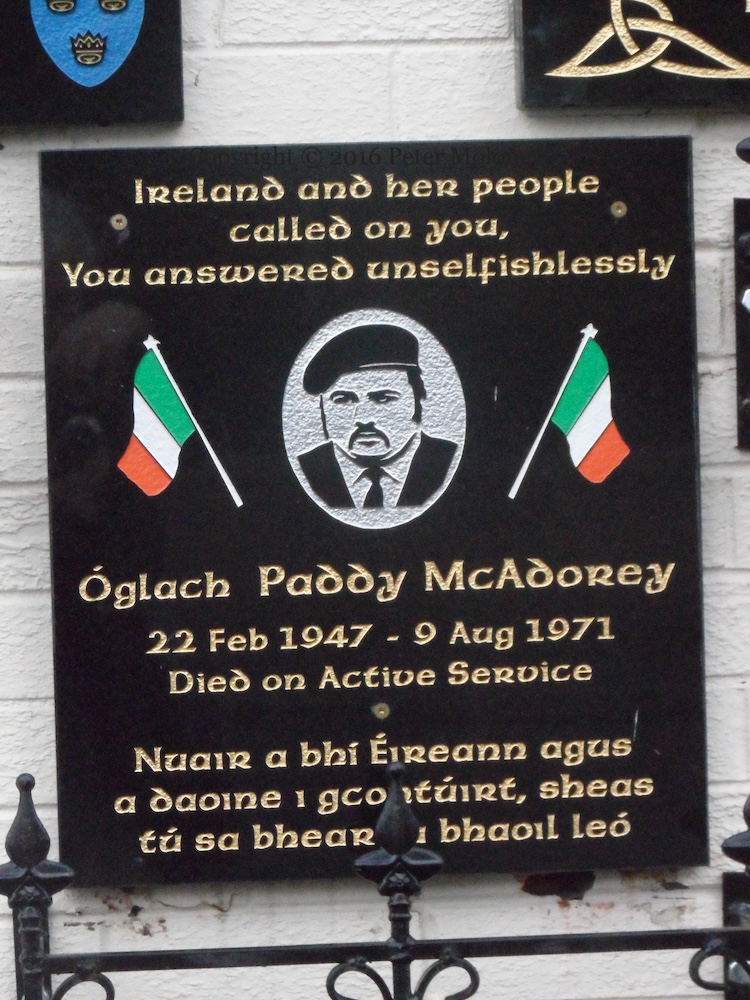
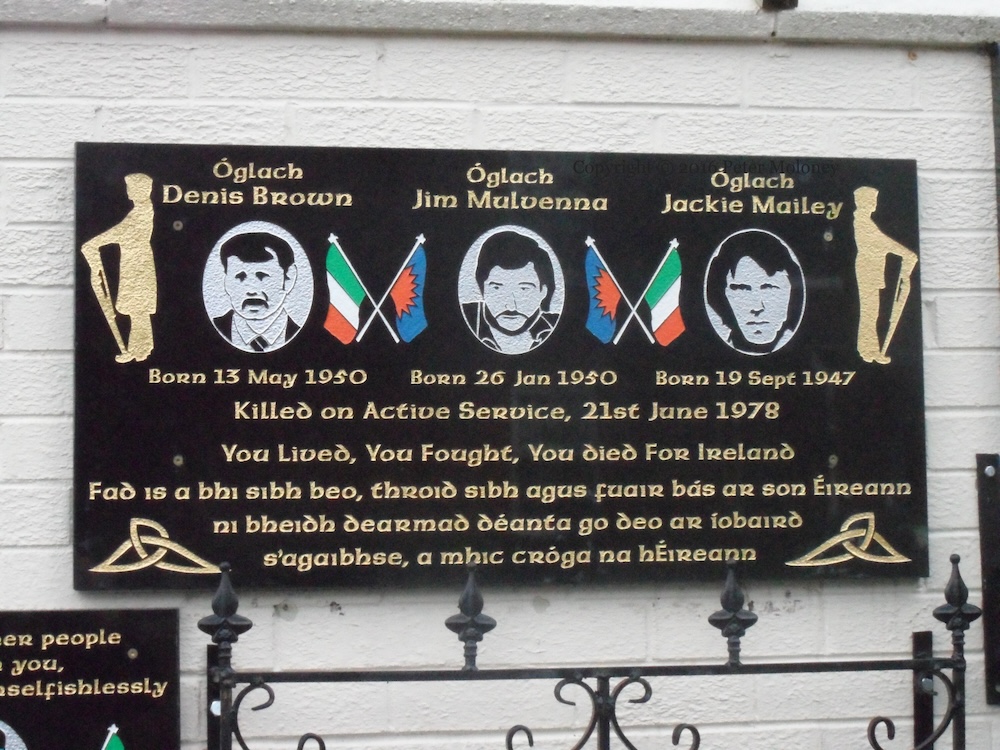
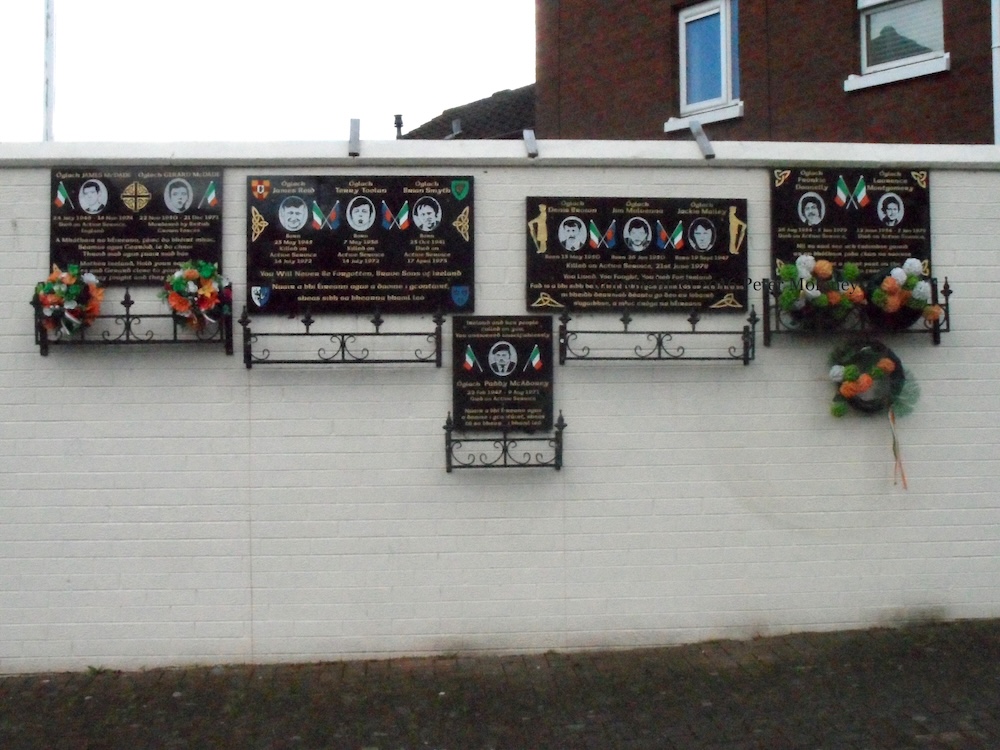
Three plaques have been added to the two seen previously, the McDade and Donnelly-Montgomery plaques.

“Óglach James McDade 24 July 1946 – 14 Nov 1974 died on active service, England; Óglach Gerard McDade 22 Nov 1950 – 21 Dec 1971 murdered by British Crown Forces. A Mháthaır na hÉıreann, fáısc do bhéırt mhac, Séamus agus Geraóıd, le do chroí. Throıd sıad agus fuaır sıad bás. Mother Ireland, hold your sons, James and Gerard, close to your heart. They fought and they died.”

“Óglach James Reid born 23 May 1945 killed on active service 14 July 1972. Óglach Terry Toolan born 7 May 1936 killed on active service 14 July 1972. Óglach Brian Smyth born 23 Oct 1941 died on active service 17 April 1973. You will never be forgotten, brave sons of Ireland. Nuaır a bhí Éıreann agus a daoıne ı gcontúırt, sheas sıbh sa bhearna bhaoıl leó [sic leo].”

“Ireland and her people called on you, you answered unselfishlessly. Óglach Paddy McAdorey 22 Feb 1947 – 9 Aug 1971 died on active service. Nuaır a bhí Éıreann agus a daoıne ı gcontúırt, sheas sıbh sa bhearna bhaoıl leó.”

“Óglach Denis Brown born 13 May 1950, Óglach Jim Mulvenna born 26 Jan 1950, Óglach Jackie Mailey born 19 Sept 1947 – killed on active service, 21st June 1978. You lived, you fought, you died for Ireland. Fad ıs a bhí sibh beo, throıd sıbh agus fuaır bás ar son Éıreann ní bheidh dearmad déanta go deo ar íobaırd s’agaıbhse, a mhıc cróga na hÉıreann.”

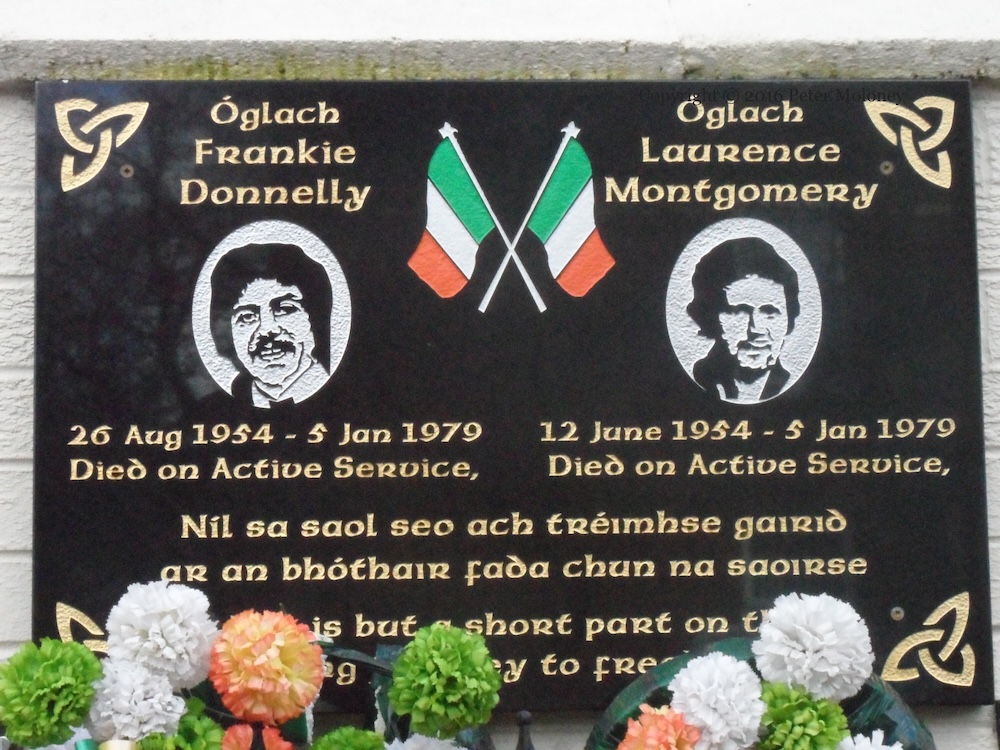
“Óglach Frankie Donnelly 26 Aug 1954 – 5 Jan 1979 died on active service; Óglach Laurence Montgomery 12 June 1954 – 5 Jan 1979 died on active service. Níl sa saol seo ach tréımhse gaırıd ar an bhóthaır fada chun na saoırse – life is but a short part on the long journey to freedom.”

Herbert Street, Ardoyne

Click image to enlarge
Copyright © 2016 Peter Moloney
M12450a M13055 [M13055a] M13054 M13056 [M13056a] M12451a
M13053

If You Remove The English Army Tomorrow

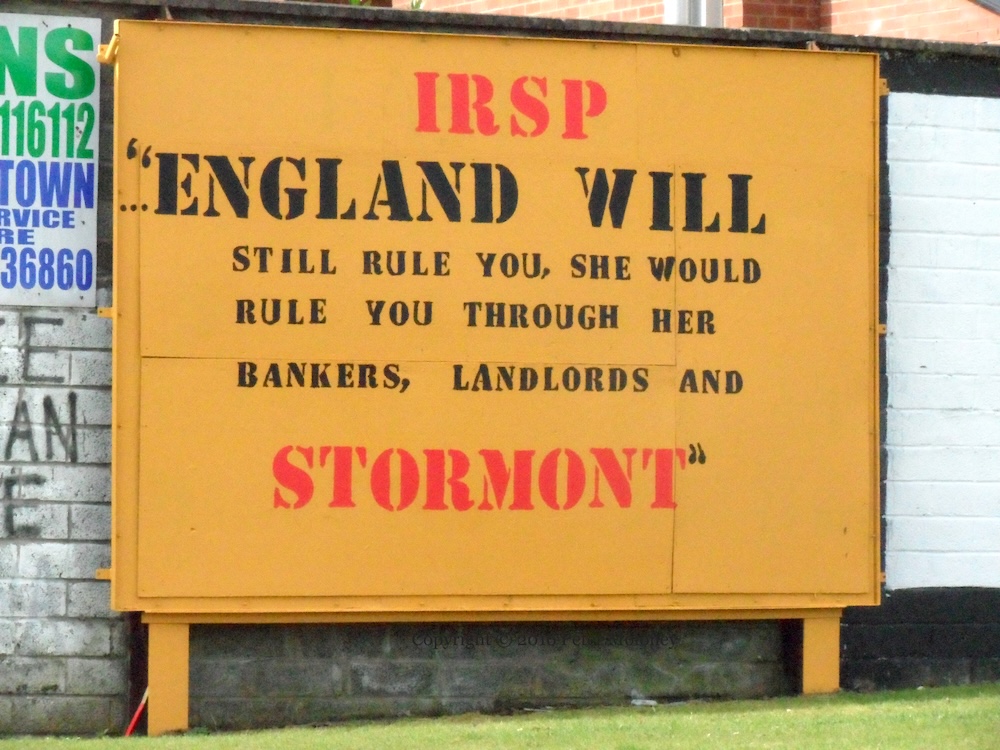
A line from James Connolly’s 1897 piece “Socialism And Nationalism” is adapted by the IRSP for the current post-partition situation: “England will still rule you, she would rule you through her bankers, landlords and Stormont”.

Connolly’s original thought is that – even in a self-governing republic – nationalism is not enough to establish an authentically Irish state: “If you remove the English army tomorrow and hoist the green flag over Dublin Castle, unless you set about the organization of the Socialist Republic your efforts would be in vain. England would still rule you. She would rule you through her capitalists, through her landlords, through her financiers, through the whole array of commercial and individualist institutions she has planted in this country and watered with the tears of our mothers and the blood of our martyrs.”

Click image to enlarge
Copyright © 2016 Peter Moloney
M13024

The Evolution Of Our Revolution

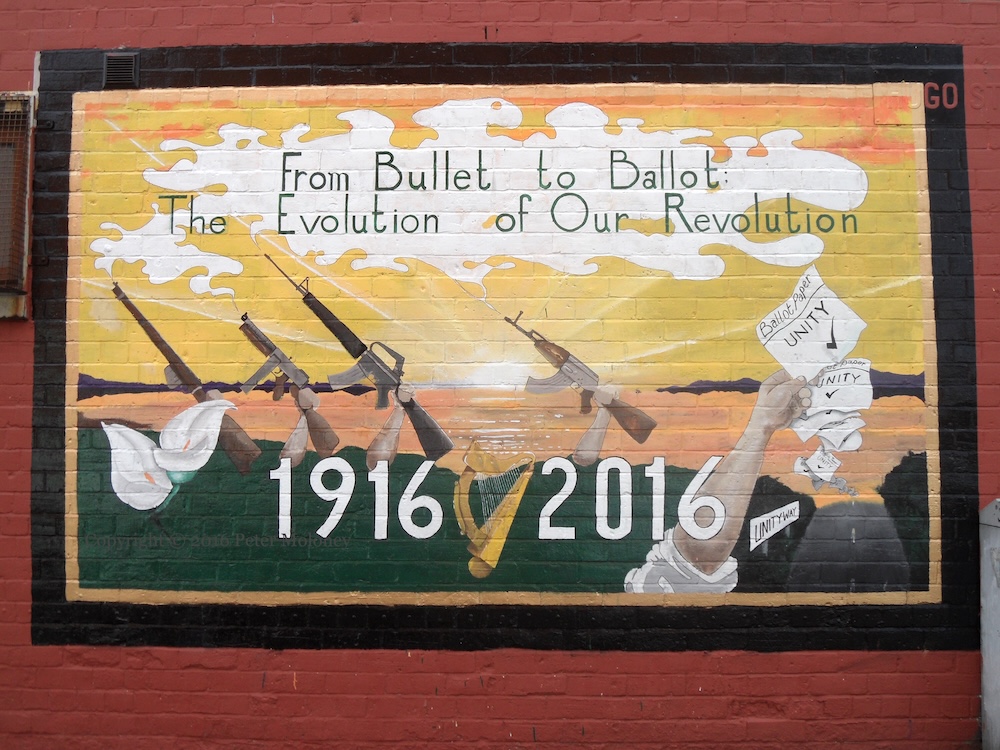
A history of nationalism/republicanism from left to right: a pair of Easter lilies, four generations of rifles, and then a switch to a ballot paper with a check in favour of “unity” and a road named “Unity Way”: “From bullet to ballot: the evolution of our revolution. 1916 – 2016”

The mural was painted by Con on the north side of Hugo Street – the south side remains exclusively éırígí.

Click image to enlarge
Copyright © 2016 Peter Moloney
M13022

Mná Na hÉıreann

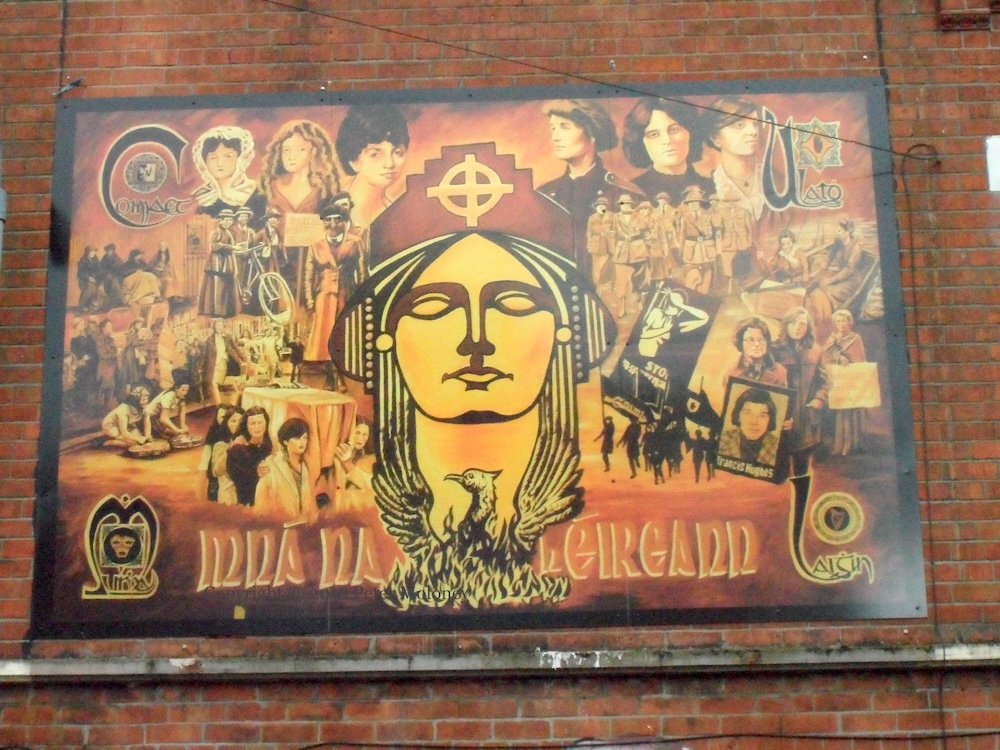
Érıu/Éıre of the Tuatha Dé Danann, queen of Ireland, (as depicted by Richard J King) is at the centre of various representations of republican women.

Along the top are Ann Devlin, Betsy Gray, Mary Ann McCracken, Countess Markievicz, Nora Connolly?, and Winifred Carney. Suffragettes, the modern IRA, and Cumman Na mBan are depicted, as are Máıre Drumm at the Falls Curfew, Tom McElwee’s sisters carrying his coffin, and Molly Childers and Mary Spring Rice running guns on the Asgard. There is also an unusual ‘four provinces’ in the corners.

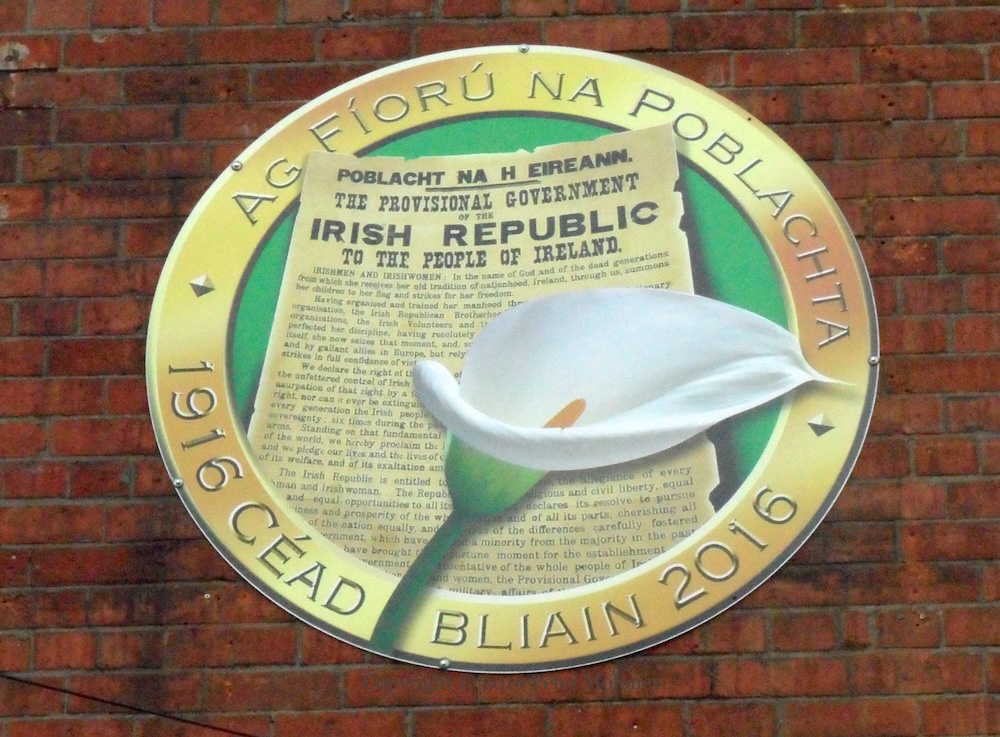
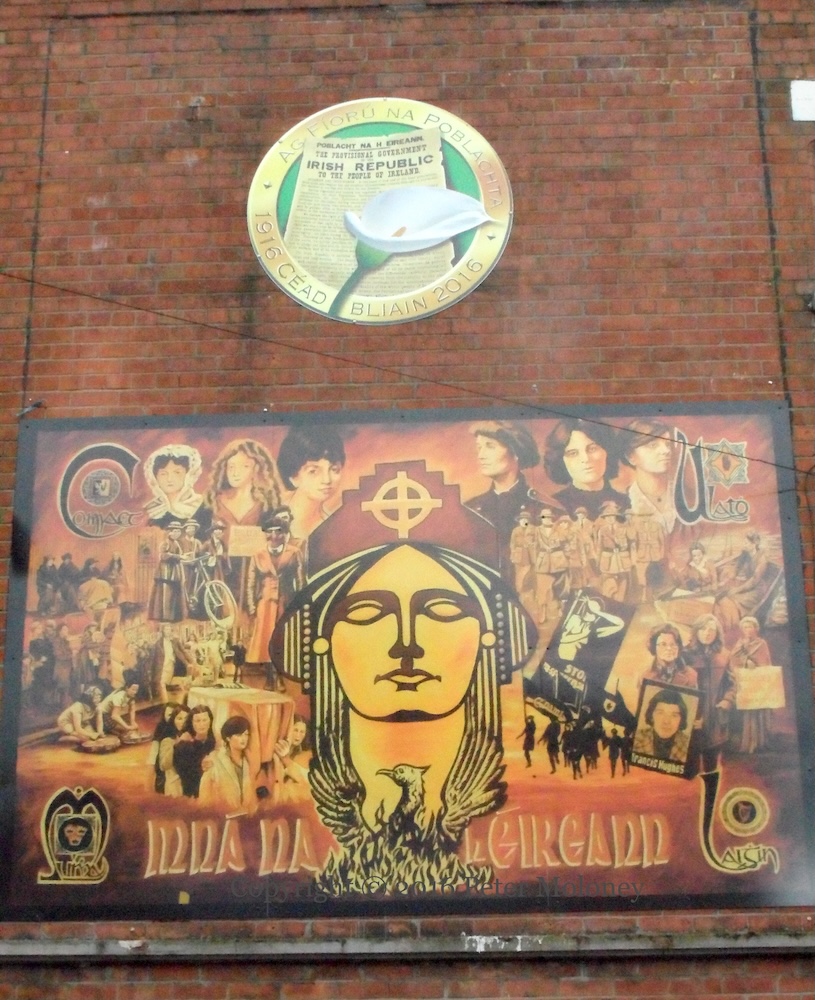
The wide shot (below) shows a 1916 centenary (“céad blıaın”) board: “Ag fíorú na poblachta”.

Rockmount Street, above the James Connolly trade-unions mural

Click image to enlarge
Copyright © 2016 Peter Moloney
M13020 M13021 M13019