Thank you visiting the Peter Moloney Collection – Murals. (See the About page for other parts of Peter’s collection of ephemera.) Use the search tools in the side-bar on the right to access images from specific dates or categories, or simply keep scrolling.
Revolution 1916
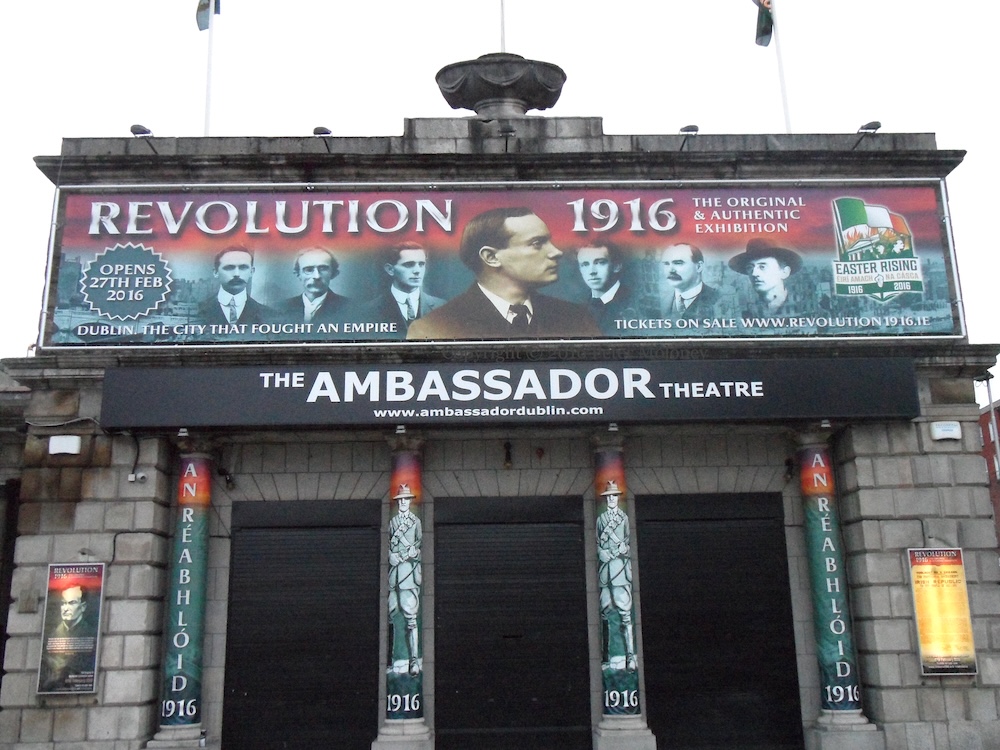
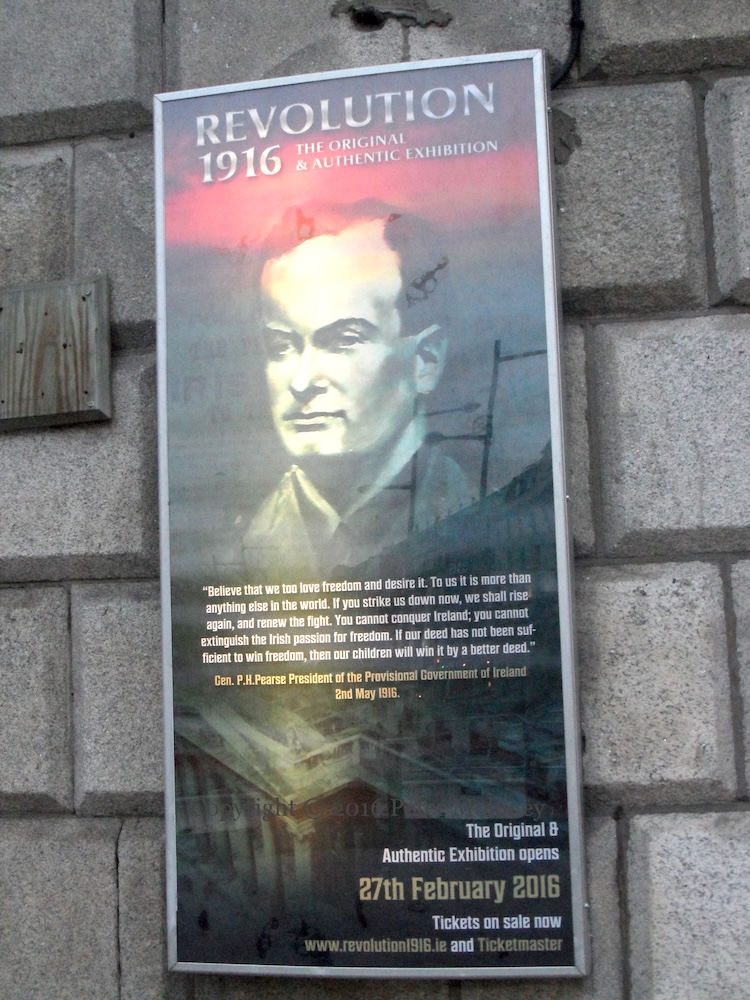
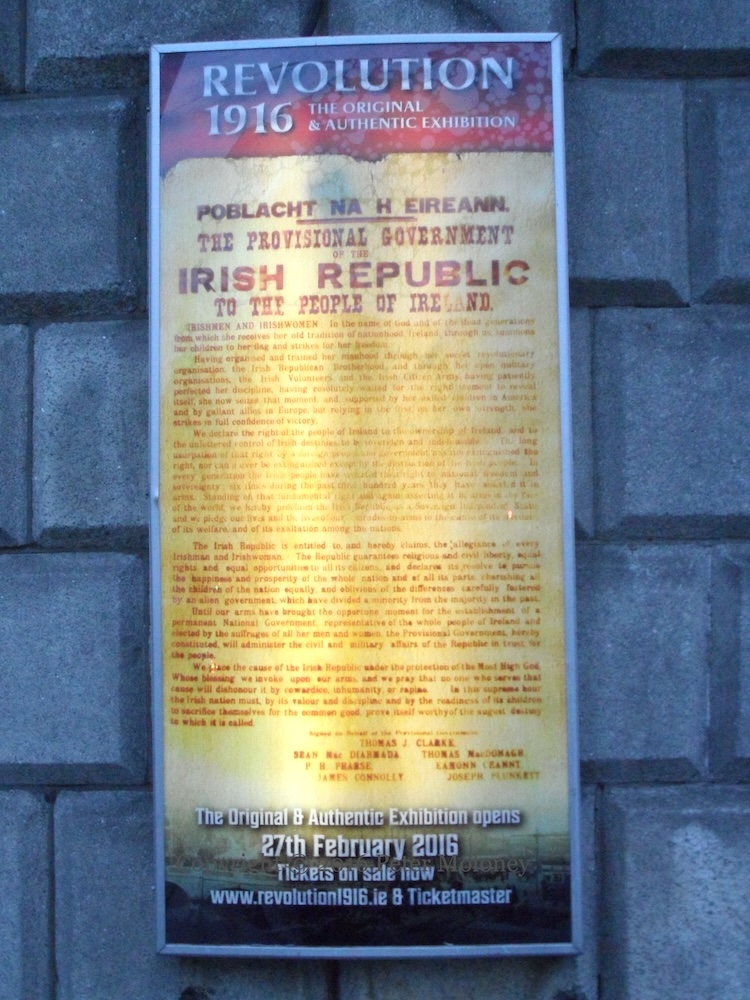
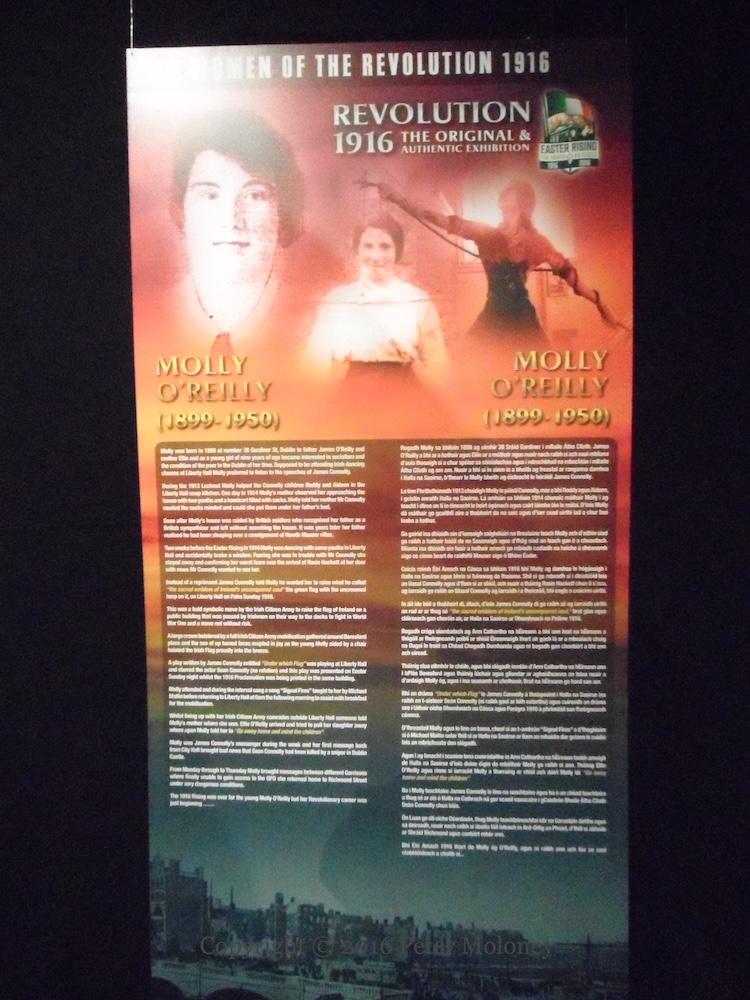
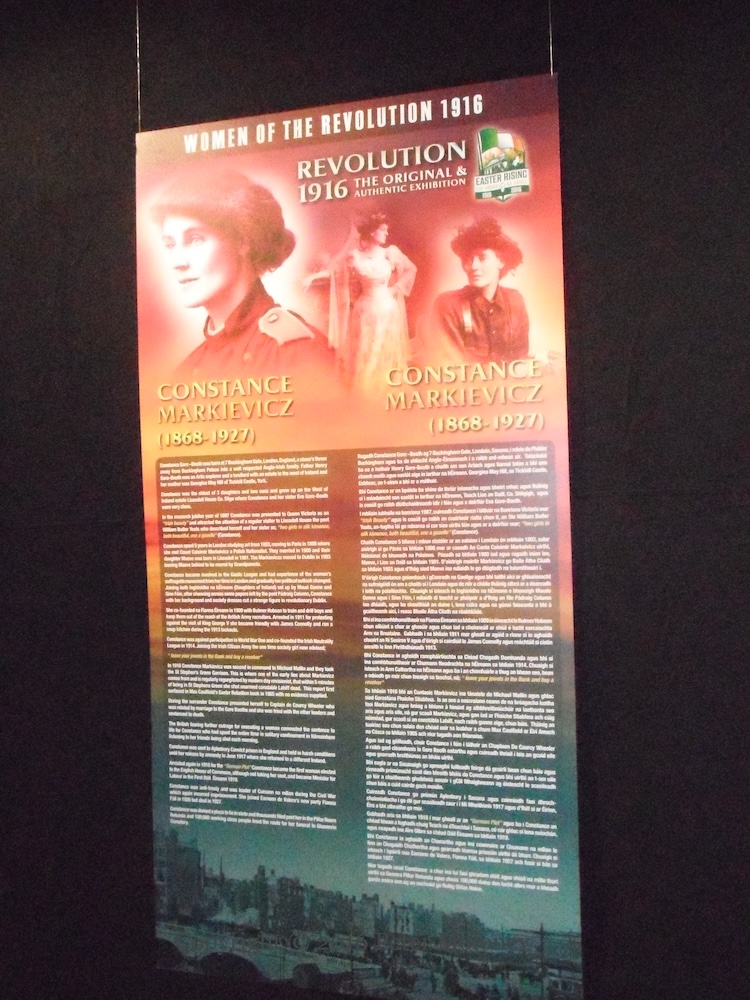
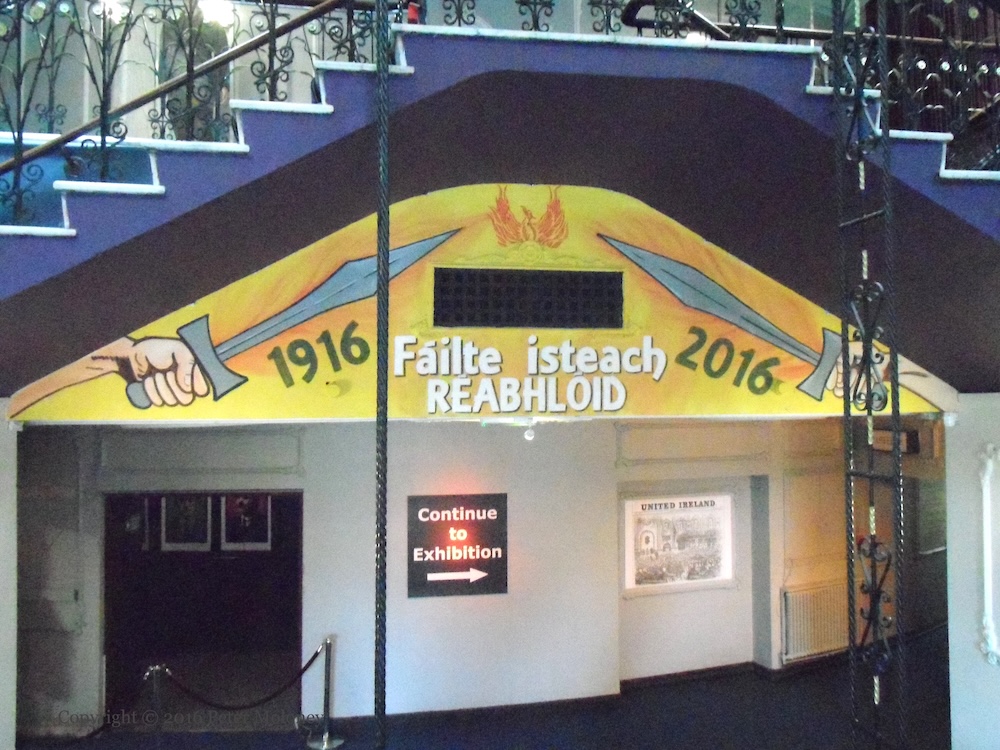
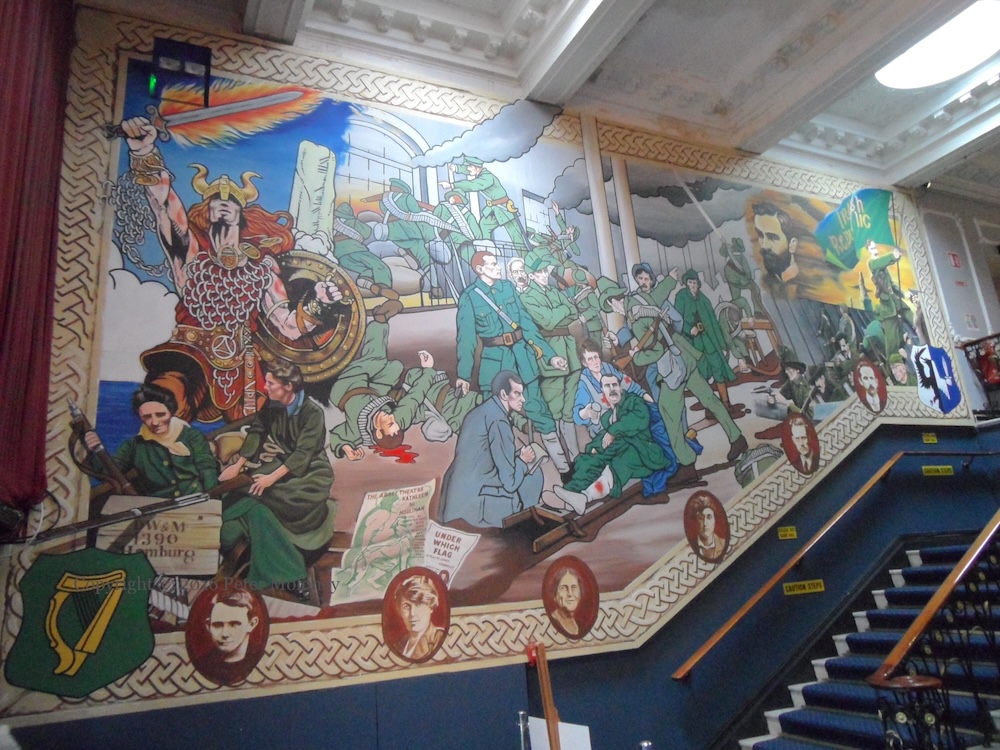
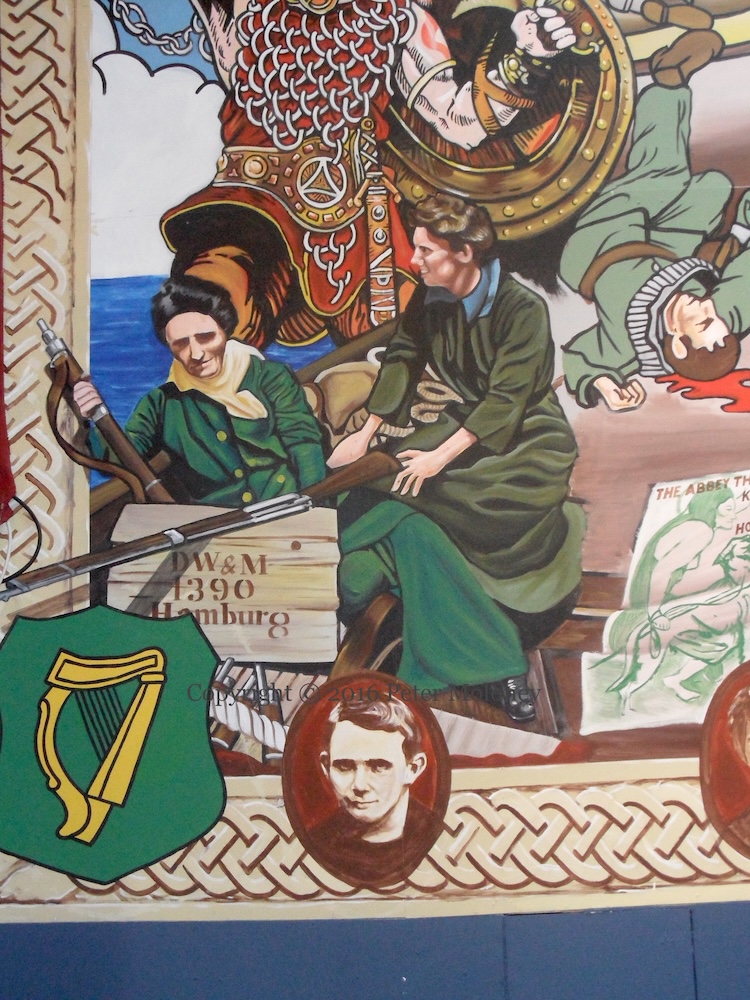
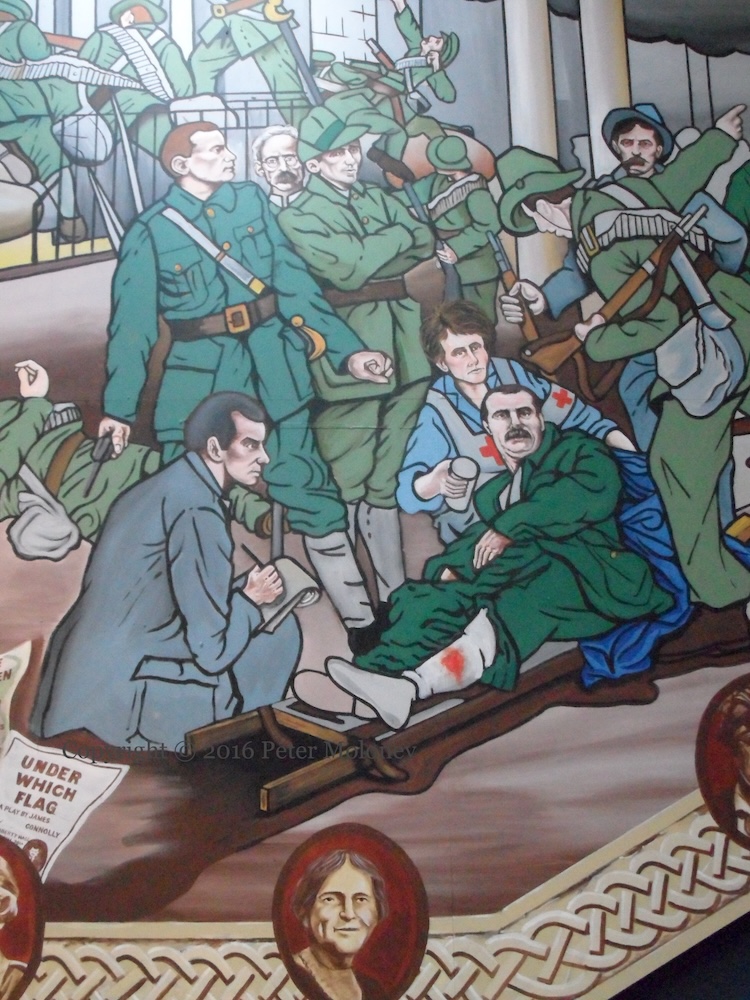
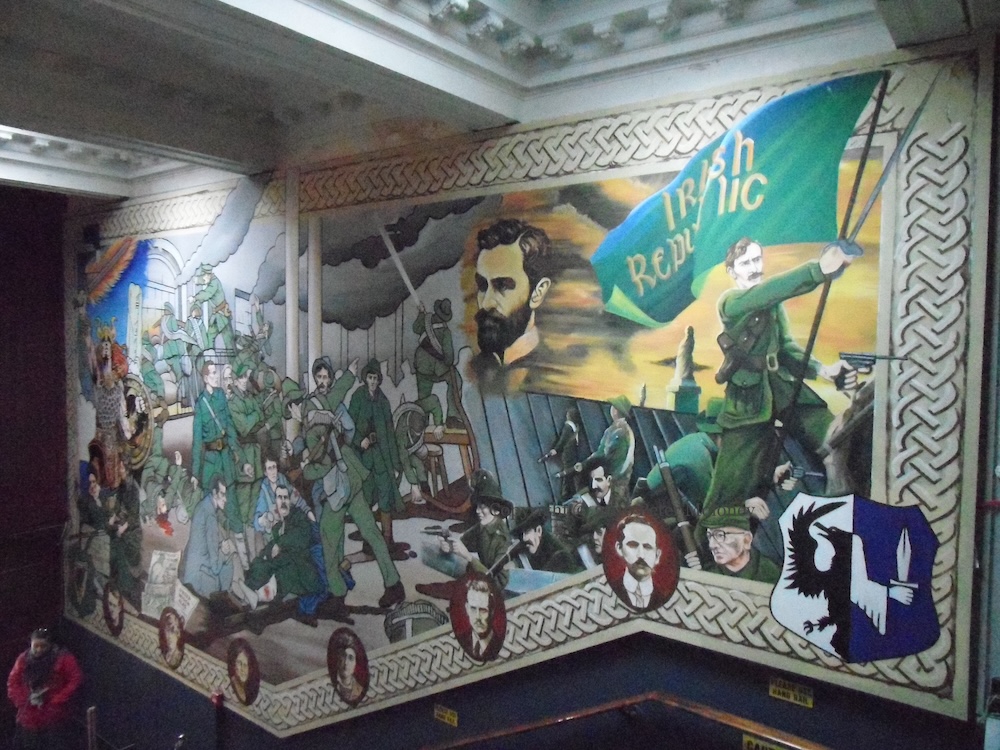
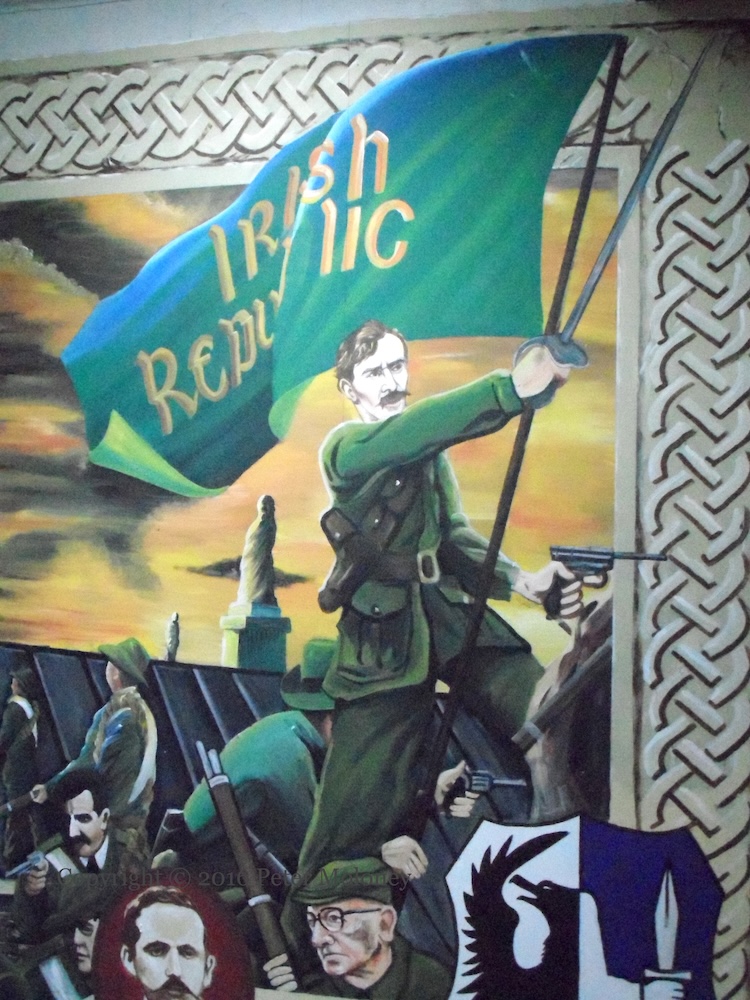
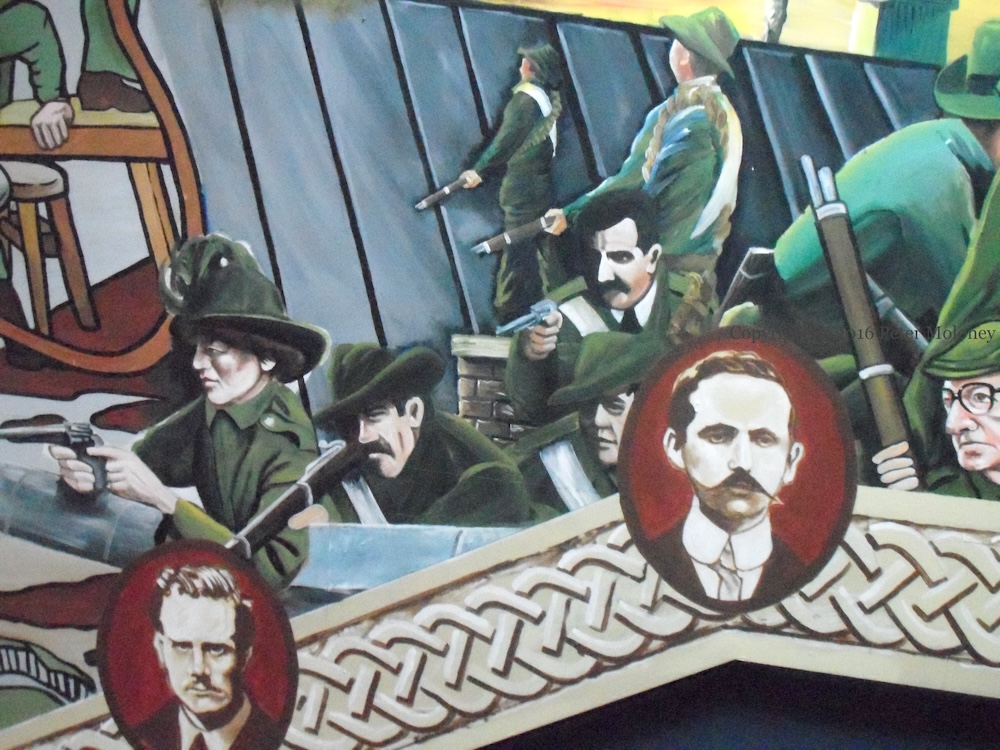
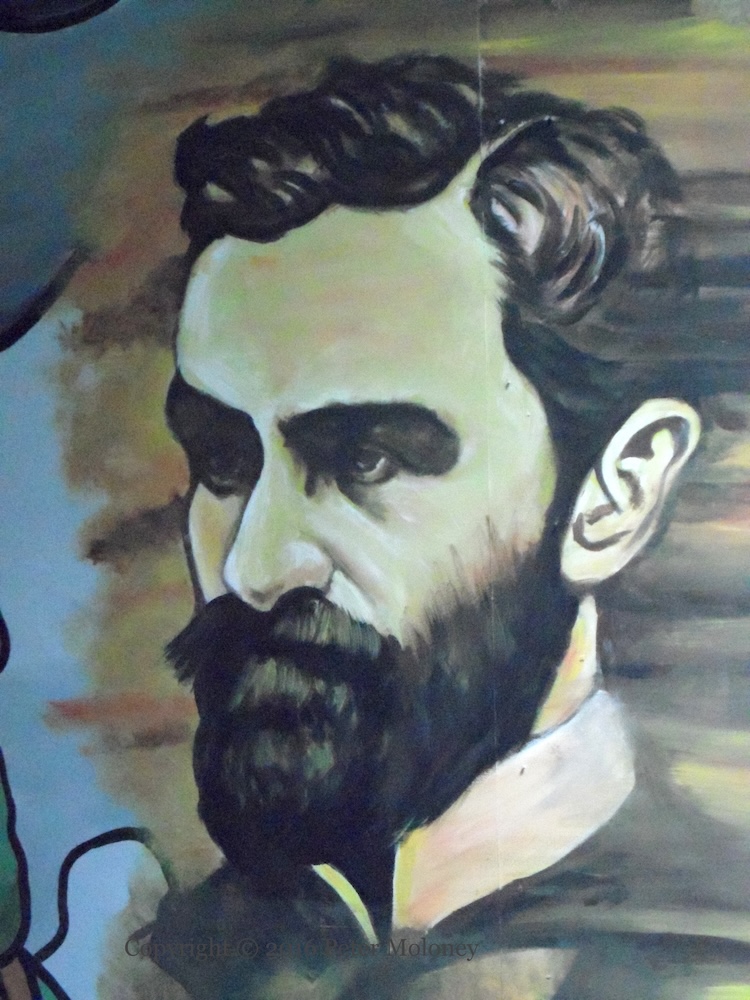
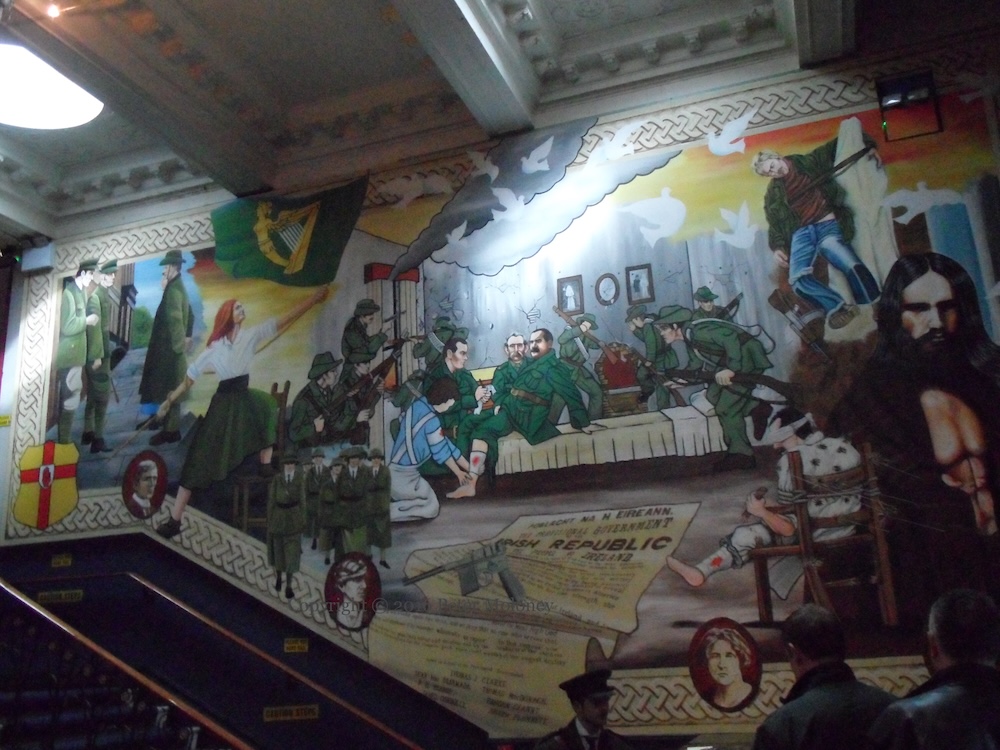
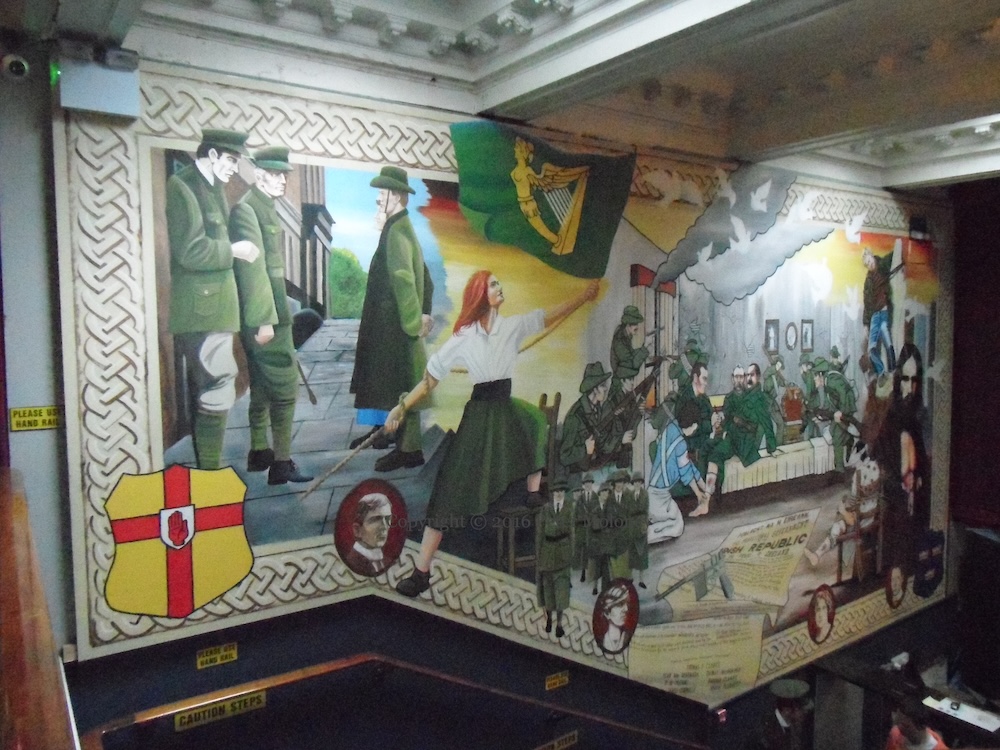
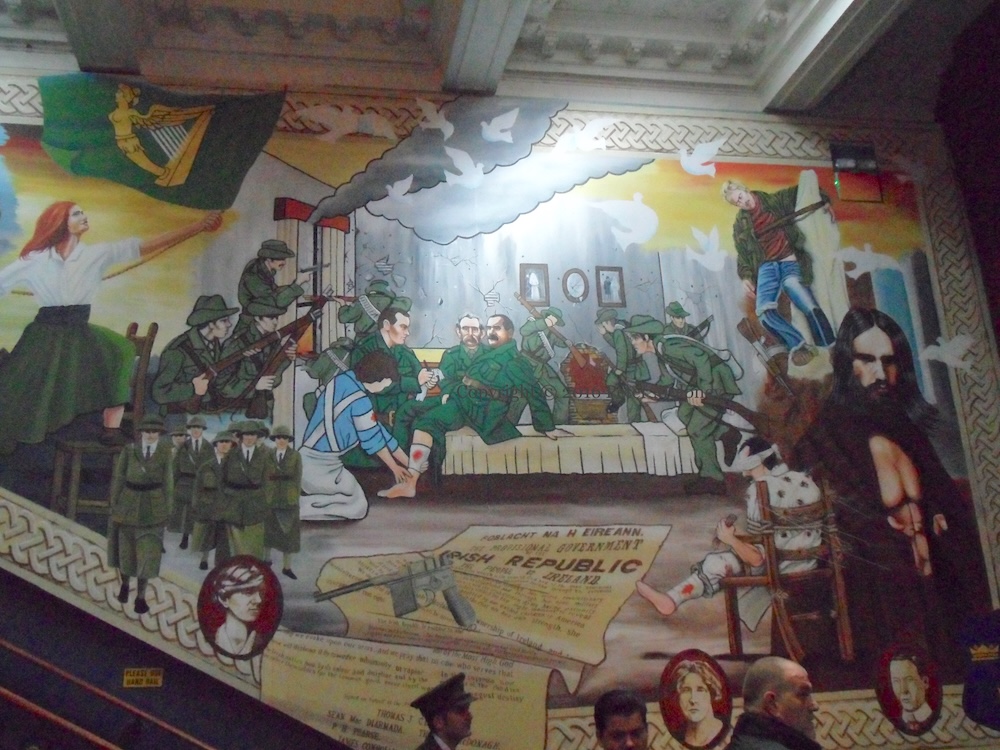
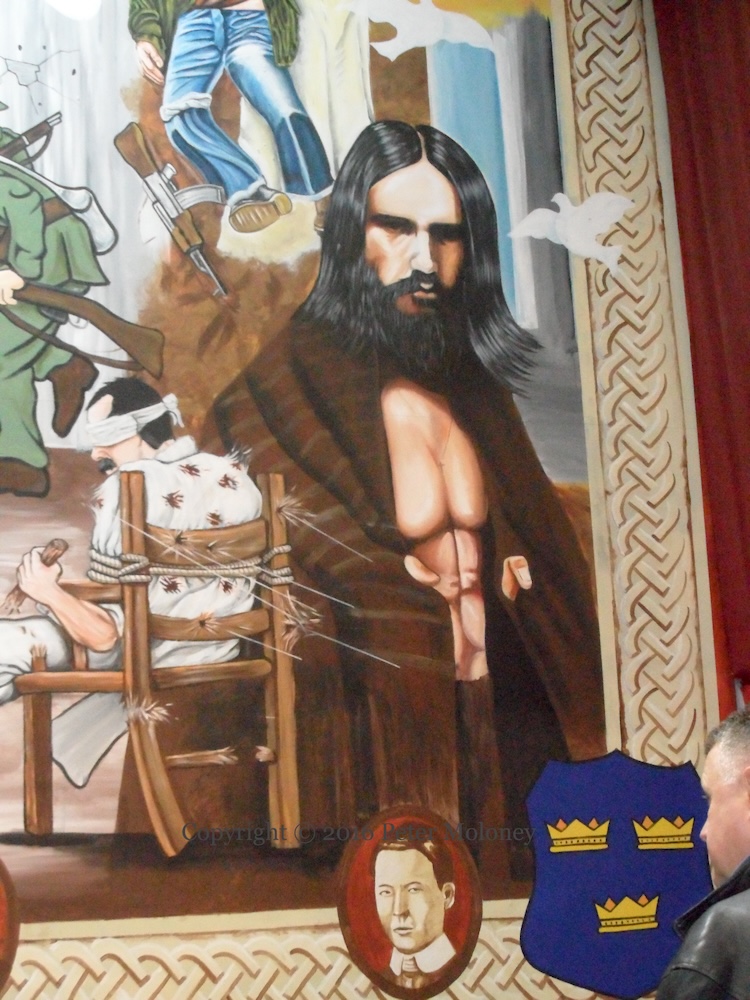
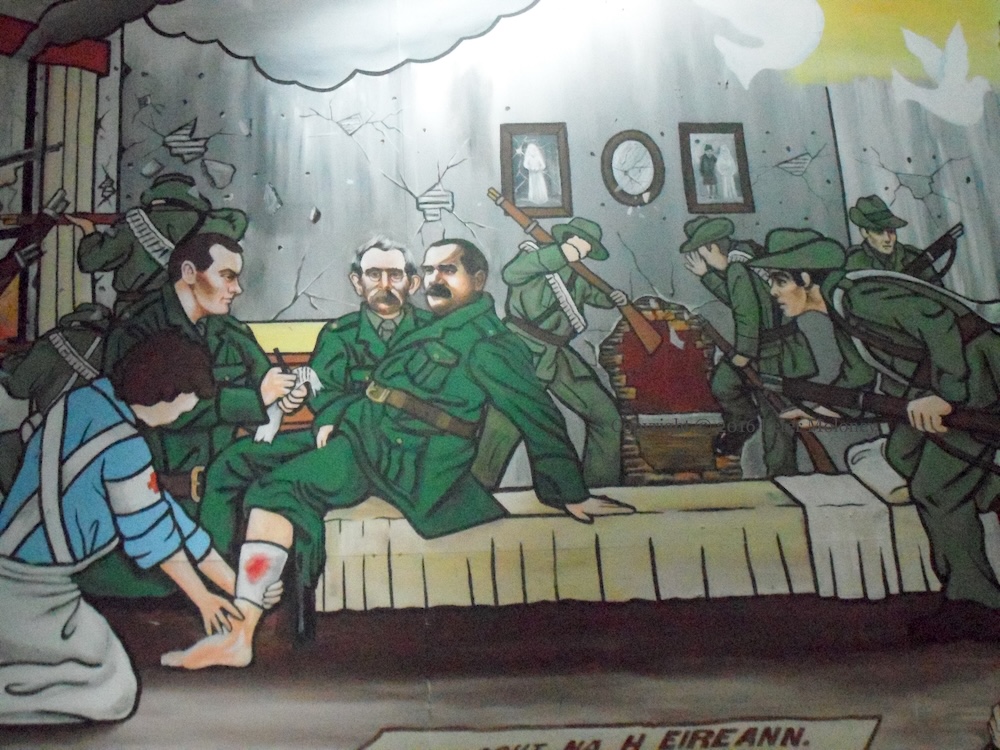
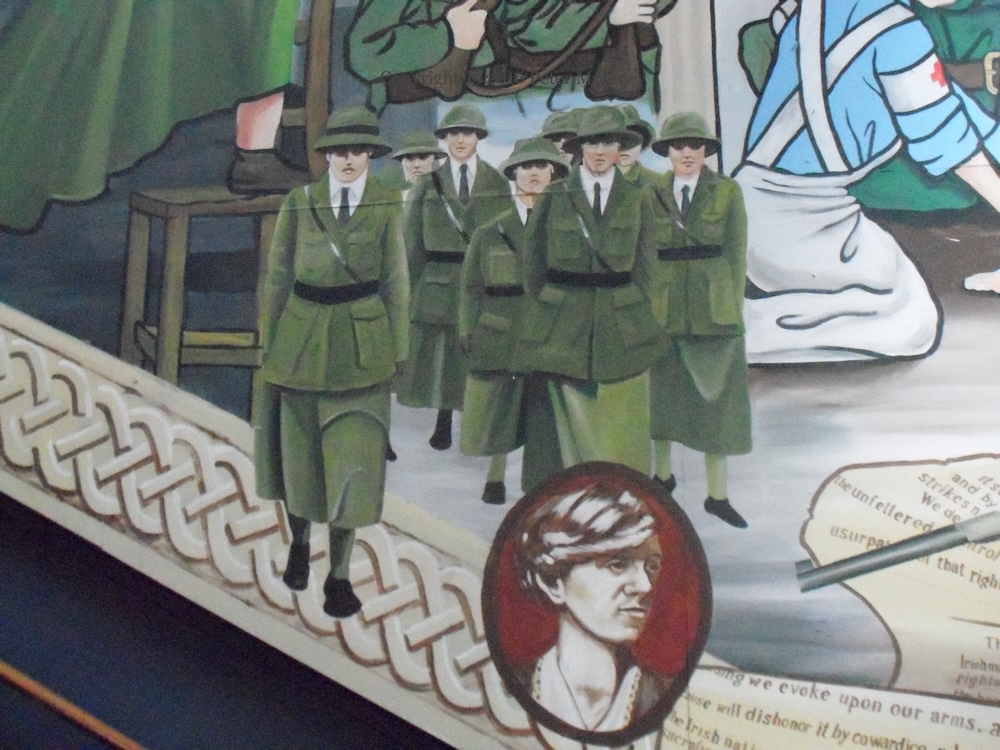
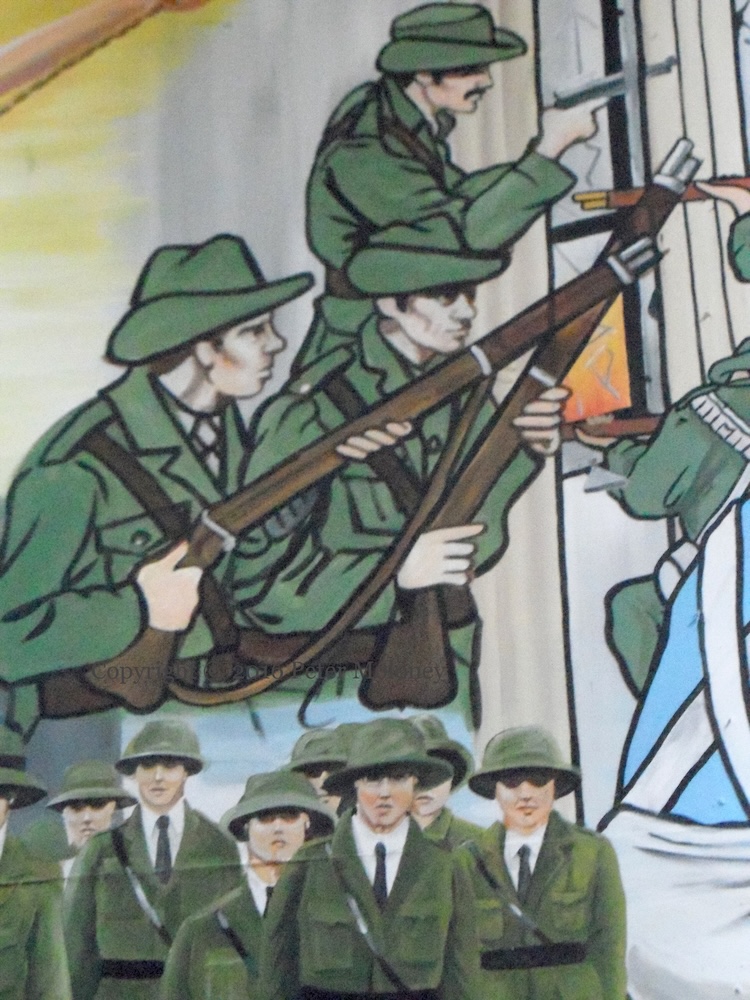
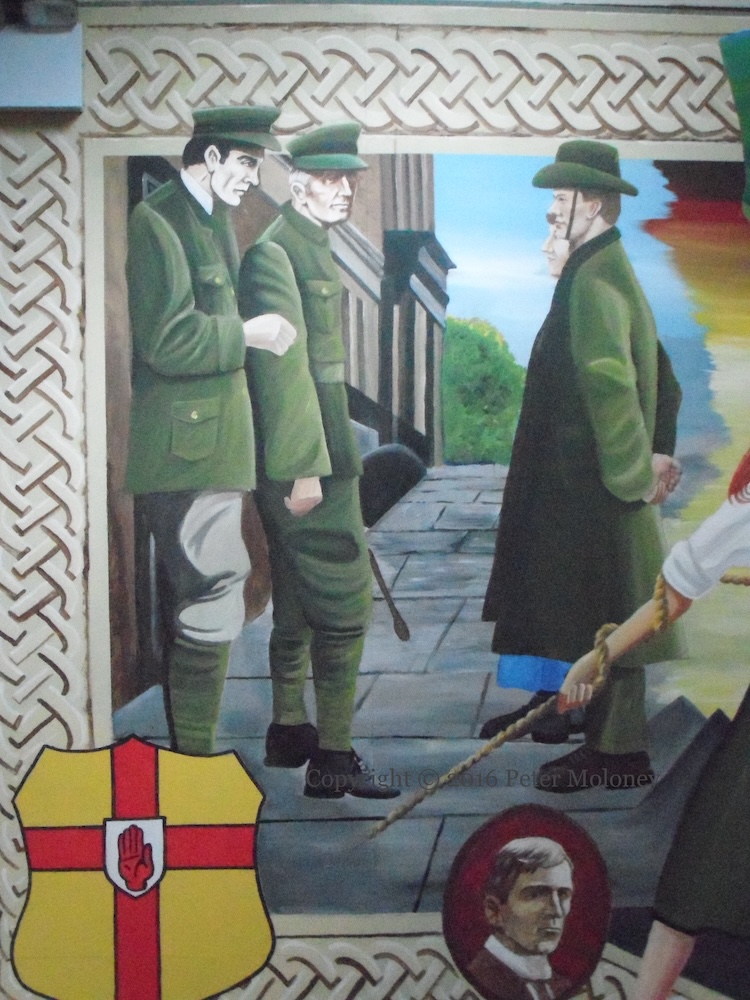
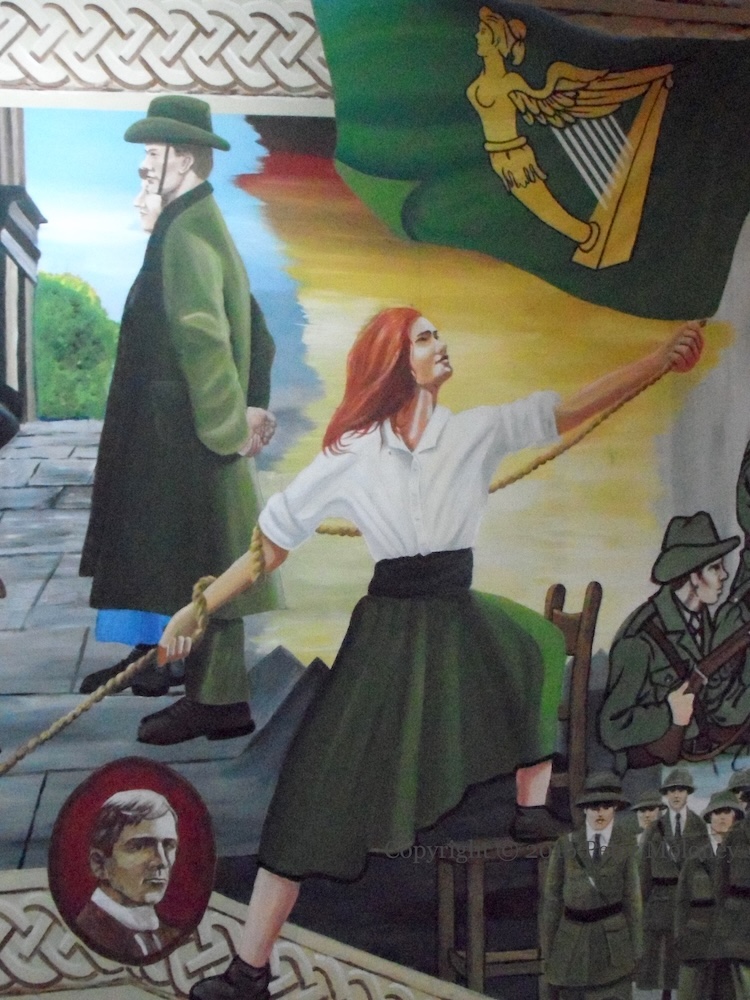
The ‘Revolution 1916’ exhibition commemorating the Easter Rising opened on February 27th at the Ambassador theatre in Dublin, “the city that fought an empire”. Images of some of the pieces on display can be seen in this An Phoblacht article.
In addition to the artefacts and recreated locations, two murals were painted by three Belfast artists depicting Irish culture and the republican struggle throughout the ages, from Nuada to the blanket protest. (Here is video of DD talking about the murals – youtube.)
A mural was also painted in the PD, west Belfast, for the travelling version of the exhibition.
Click image to enlarge
Copyright © 2016 Peter Moloney
[M13299] M13300 [M13301] [M13302] M13303 M13304
M13321 M13322 M13323 [M13324] [M13325]
M13305 M13306 M13307 M13308 M13309 M13310 M13311
The People’s Parade
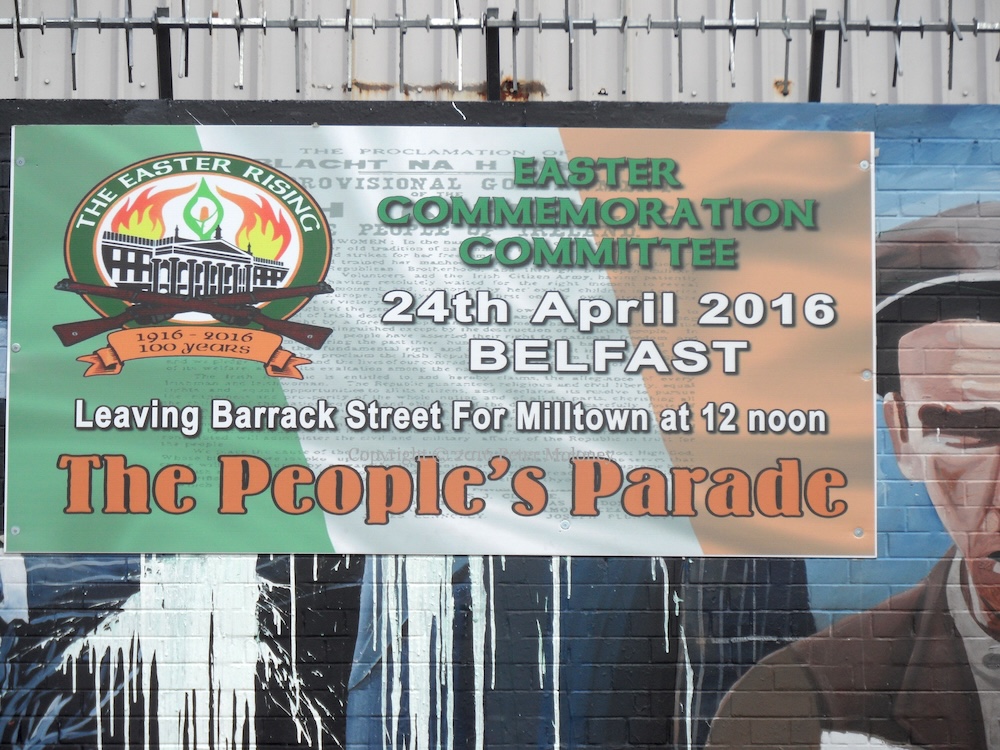
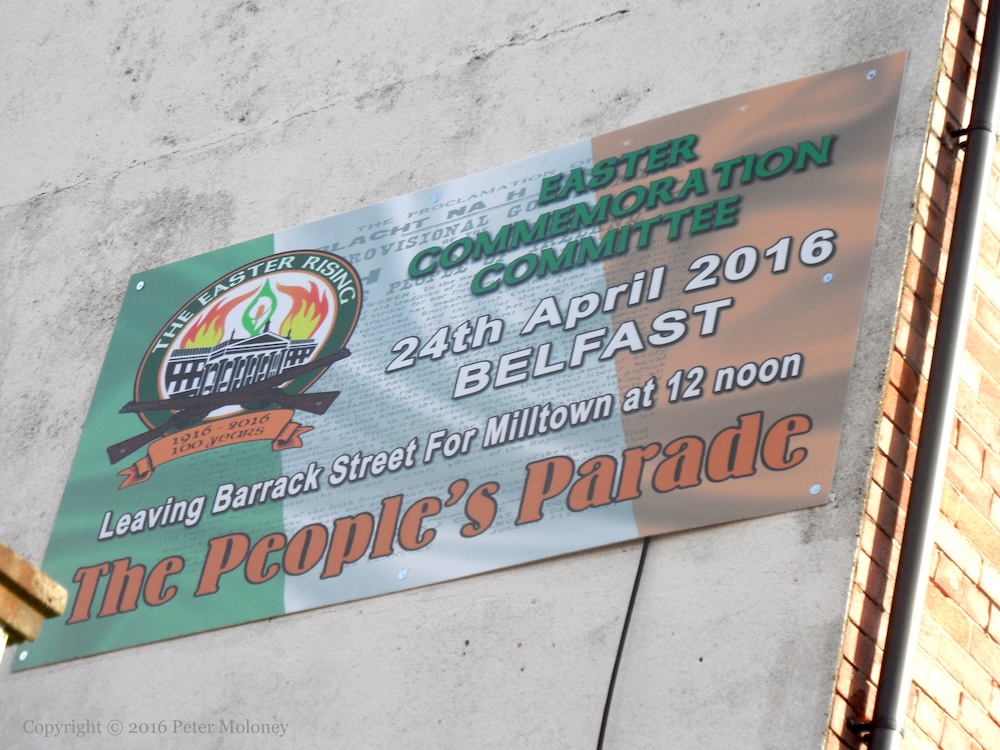
The People’s Parade (i.e. the parade supported by anti-Agreement groups) takes place April 24th, the date of the Rising in 1916; the other (Sınn Féın) parade was held on Easter Sunday, which this year was March 27th. The second board is above the RSF office/shop in the middle Falls; the upper image is on the International Wall, Divis Street, during the long time that it was being painted (and vandalised) for the centenary – it would eventually be launched on the anniversary of Casement’s execution, on August 3rd.
Click image to enlarge
Copyright © 2016 Peter Moloney
M13180 M13179
Neither King Nor Kaiser
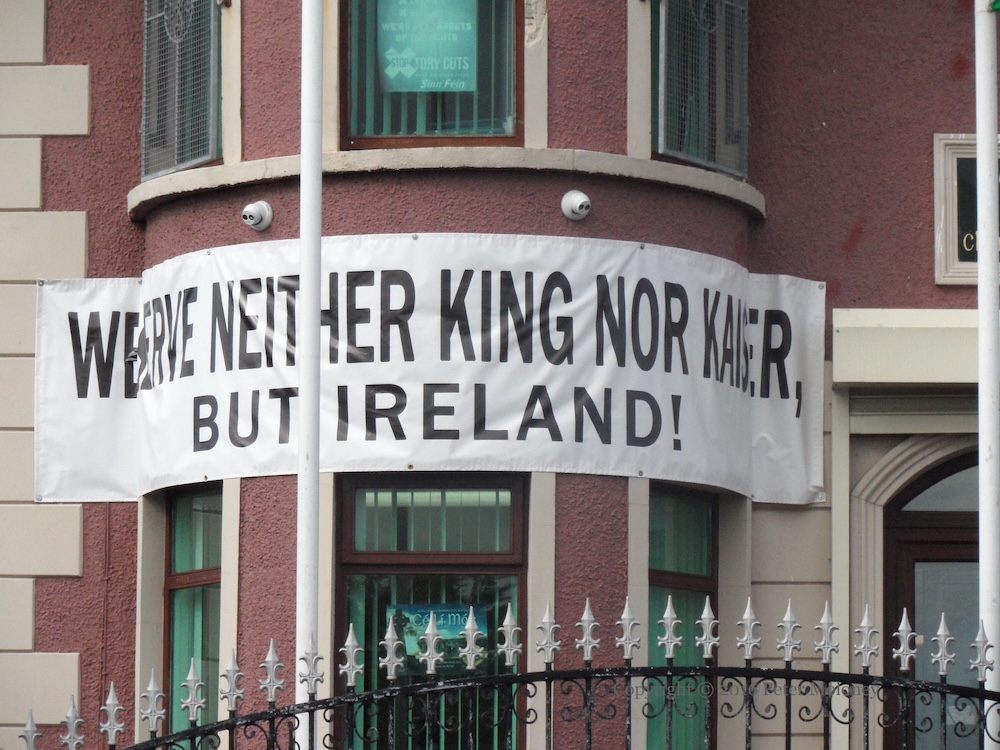
“We serve neither king nor kaiser, but Ireland!” For the centenary of the Easter Rising, Connolly House – Belfast headquarters of Sınn Féın – bears the same banner as flew on the ITGWU’s Liberty Hall (in Dublin) during the First World War, until the building was destroyed during the Rising. The house was purchased by Sınn Féın in 1983 and brought to its current condition in 2007 (Irish Times).
Andersonstown Road, west Belfast
Click image to enlarge
Copyright © 2016 Peter Moloney
M13177
Ever Idolised When Dead
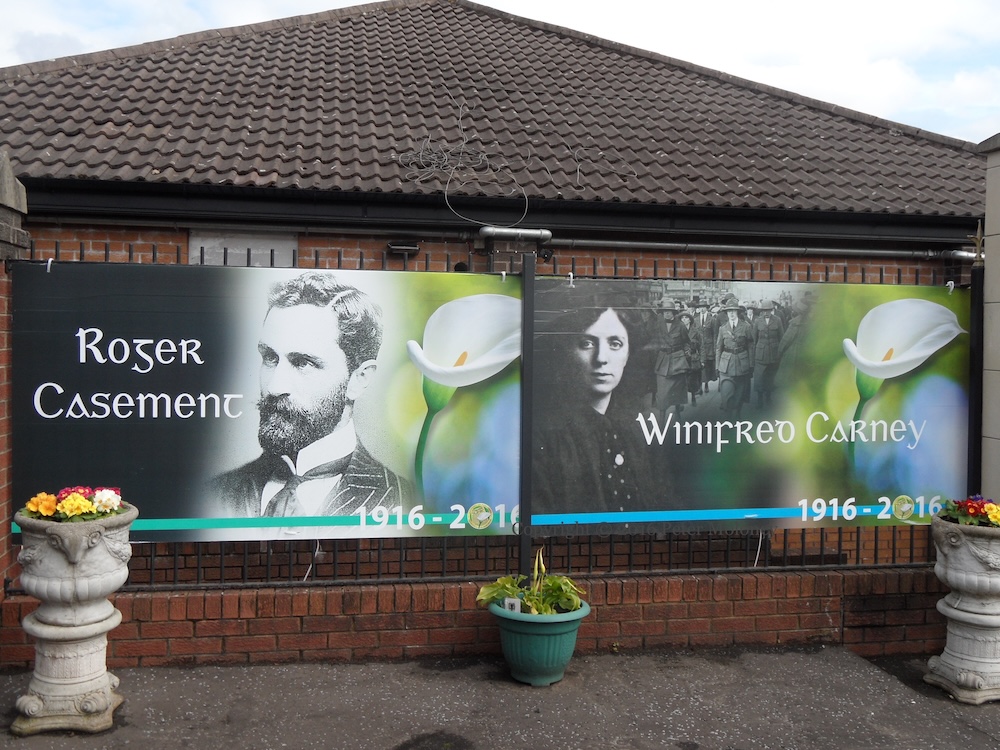
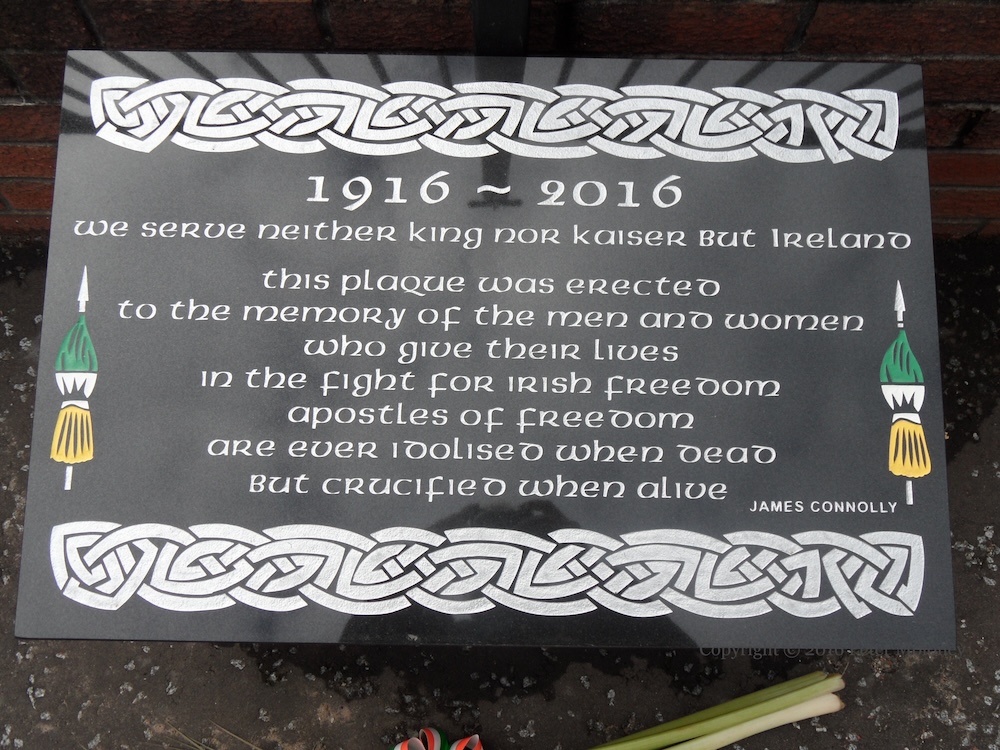
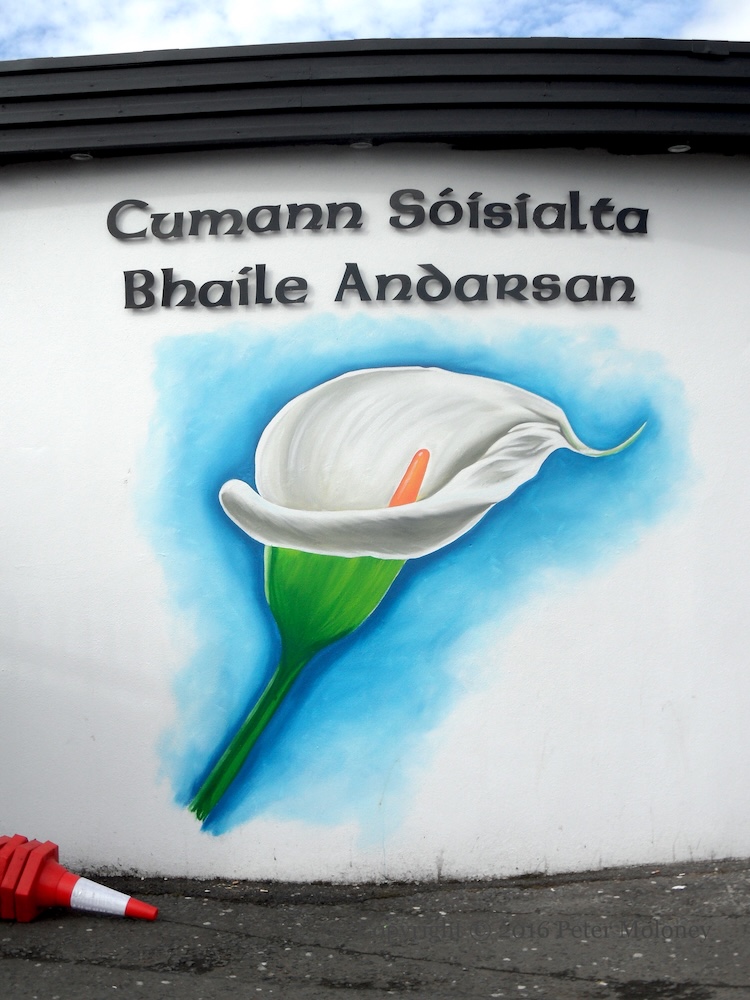
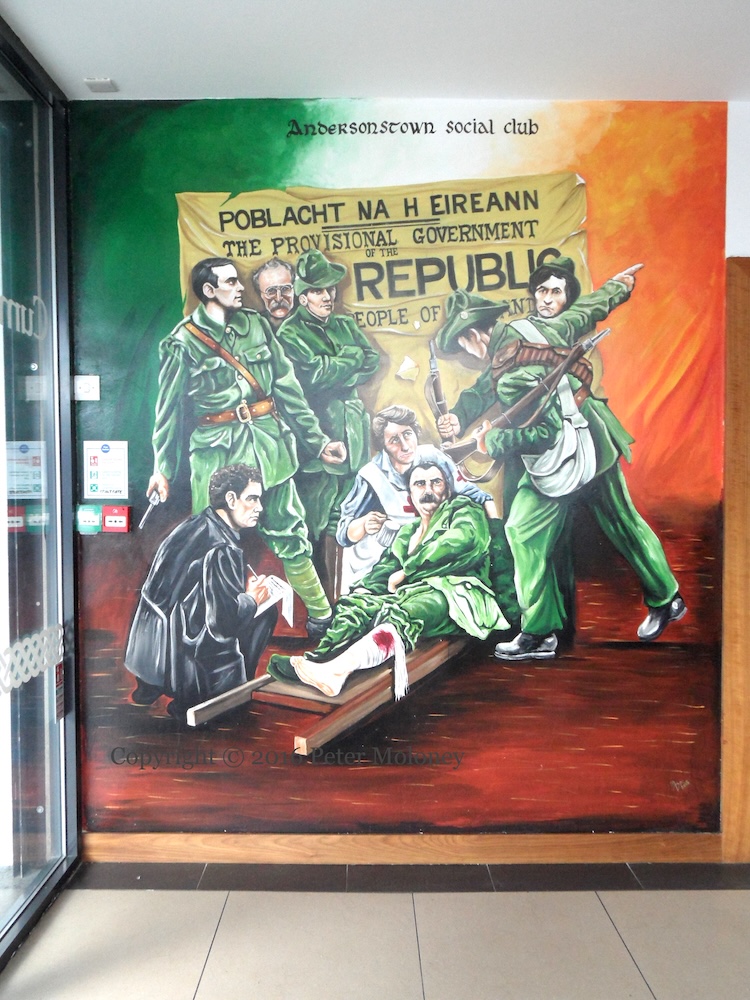
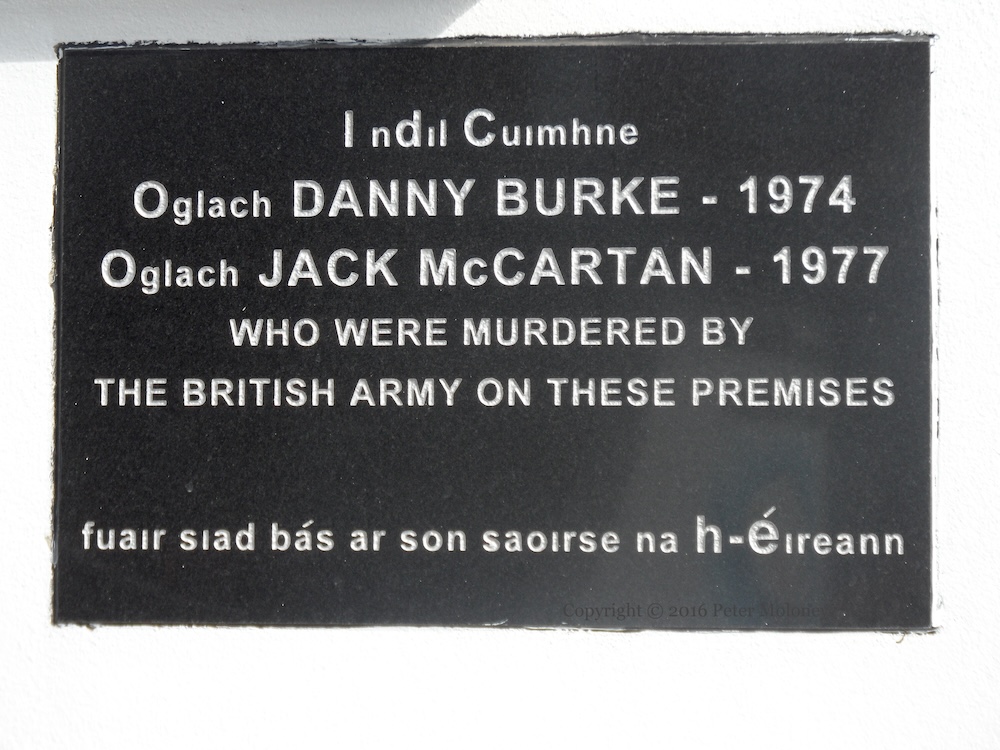
The PD/Cumann Sóısıalta Bhaıle Andarsan/Andersonstown Social Club was one of the early stops for the travelling version of the ‘Revolution 1916’ exhibition that was hosted by the Ambassador theatre – see Revolution 1916.
The mural immediately above was painted to accompany the exhibition, reproducing the left-hand grouping from Walter Paget’s Birth Of The Irish Republic and putting the proclamation in the background. For Paget’s original oil painting and other versions of it, see the painting’s Visual History page.
The new plaque (added to the memorial garden) reads, “1916 – 2026. We serve neither king nor kaiser, but Ireland. This plaque was erected to the memory of the men and women who give their lives in the fight for Irish freedom. “Apostles of freedom are ever idolised when dead but crucified when alive.” – James Connolly.” [from 1898’s The Men We Honour]
Also featured are Roger Casement and Winifred Carney, and a long-standing plaque to Danny Burke and Jack McCartan, former managers of the club who were “murdered by the British Army on these premises” (An Phoblacht).
PD, South Link, Andersonstown, west Belfast
Click image to enlarge
Copyright © 2016 Peter Moloney
M13170 [M13171] [M13172] M13173 M13174 M13175 [M13176] M13178
1916 Unbowed Unbroken
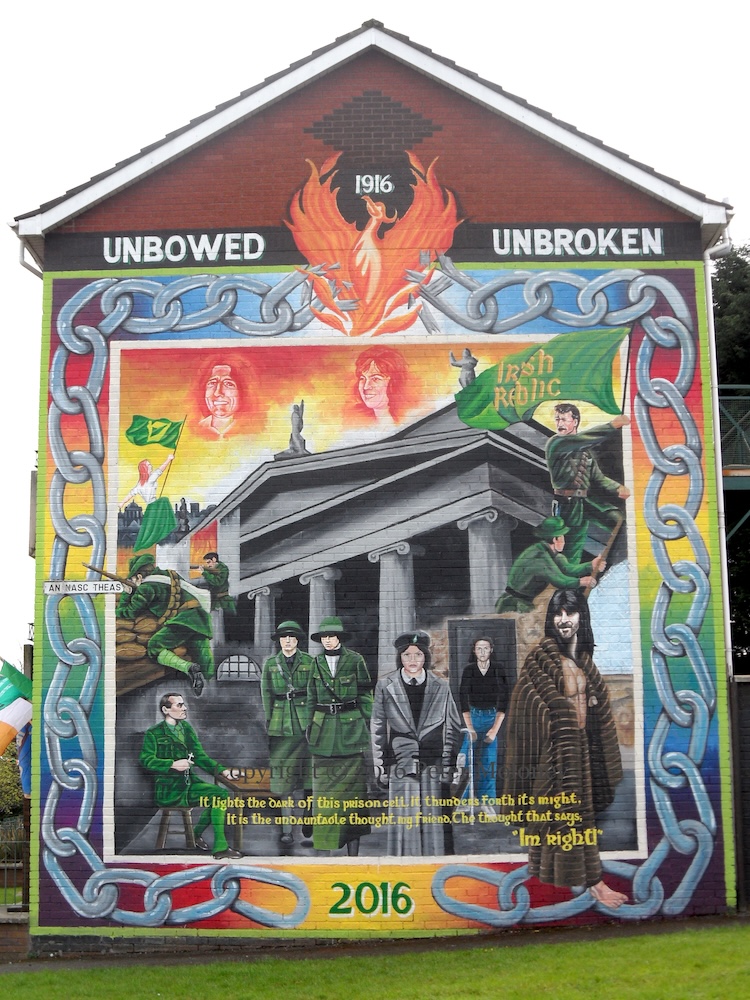
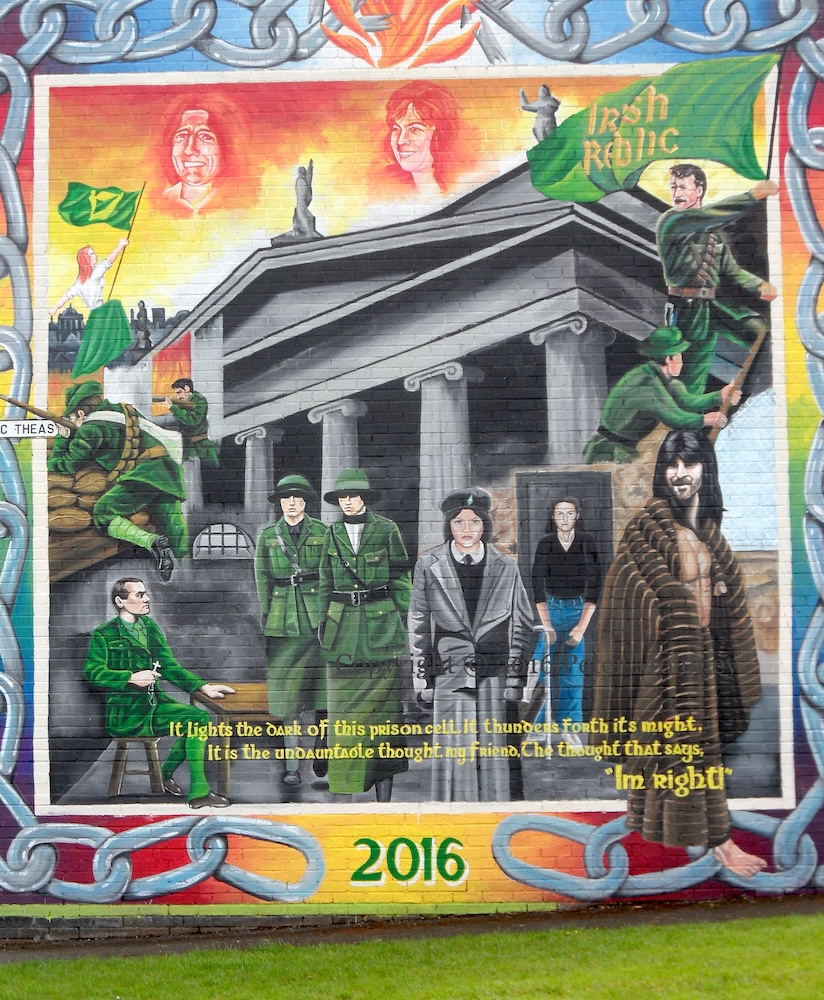
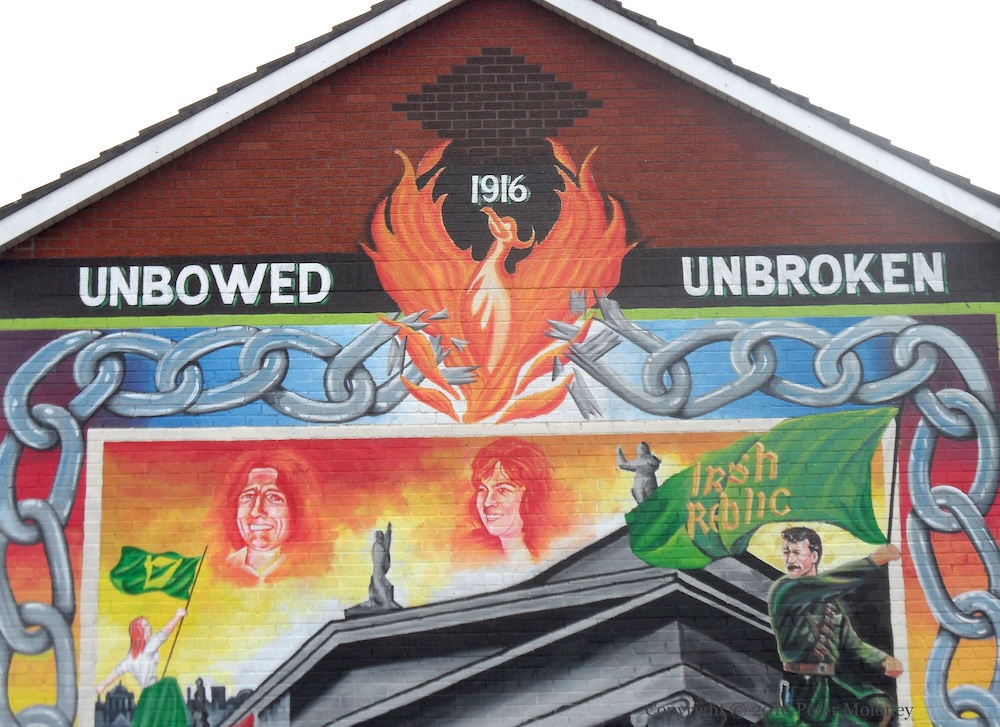
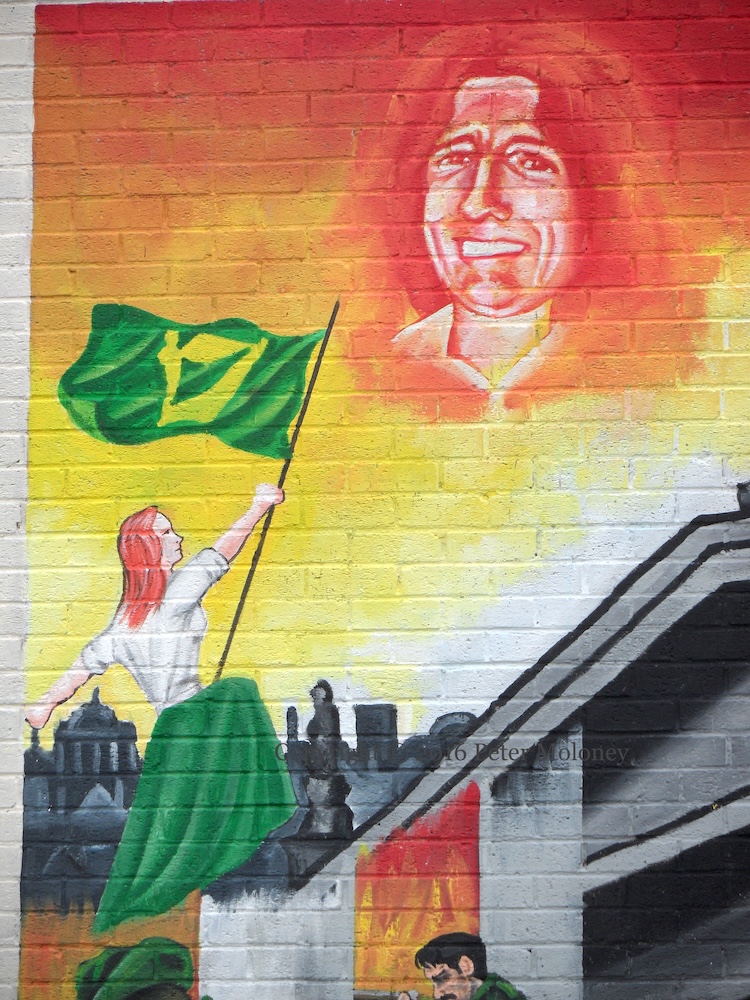
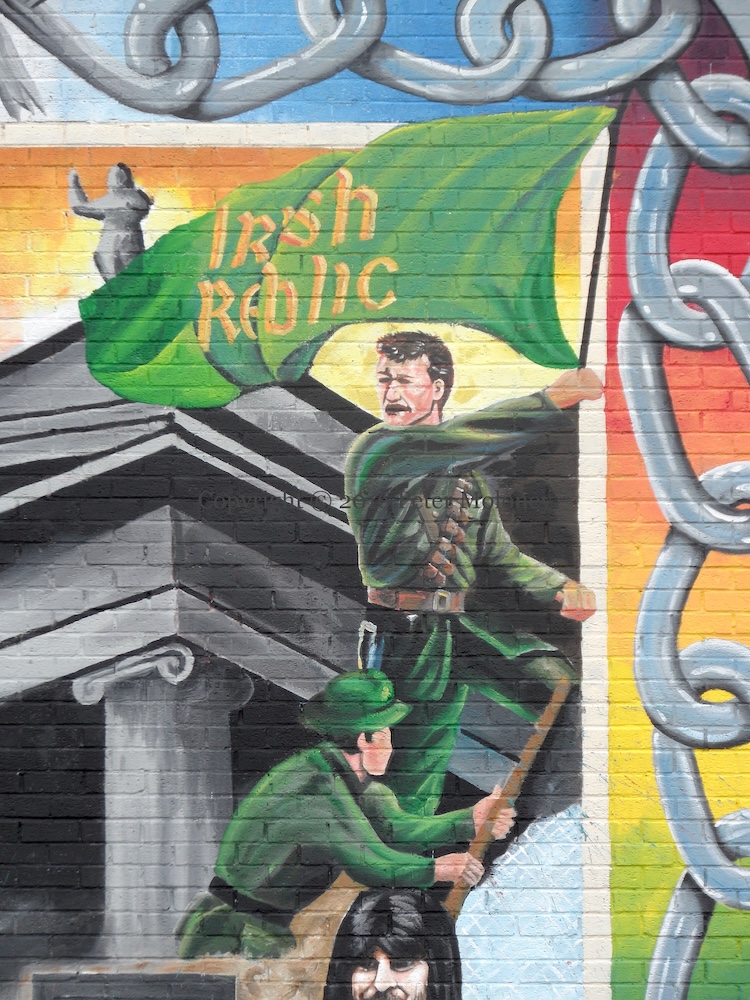
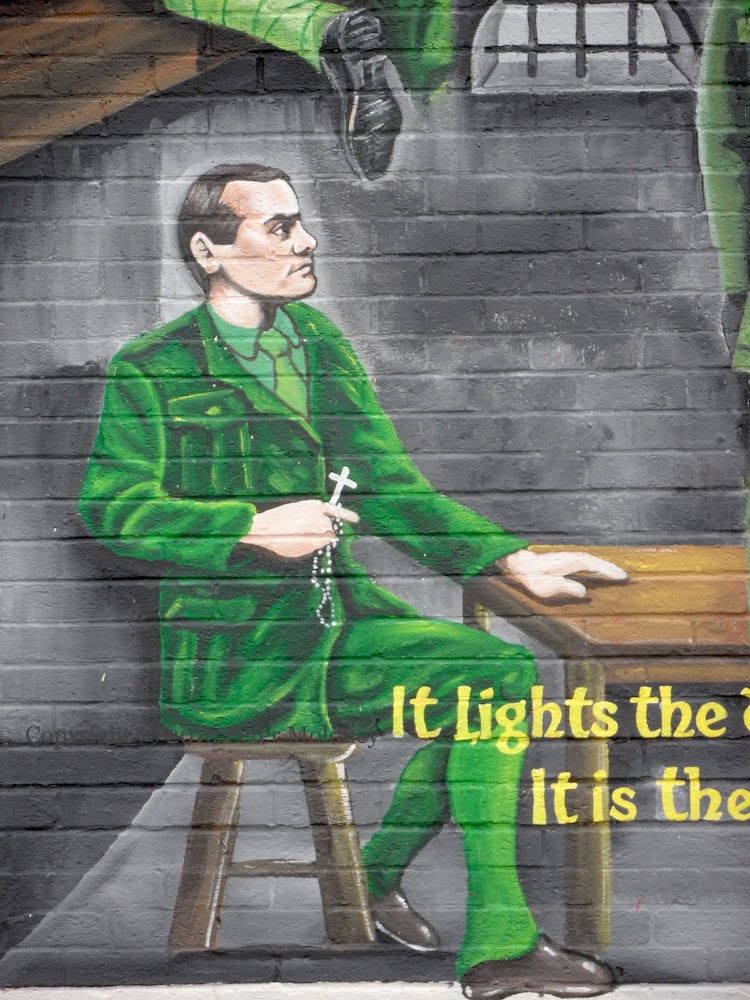
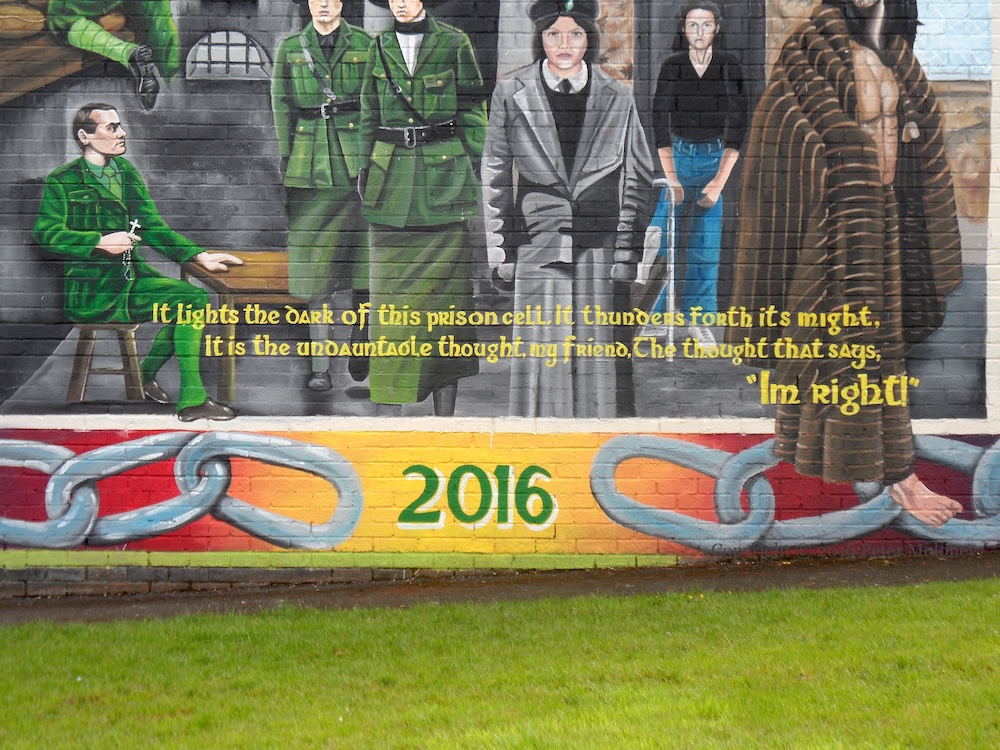
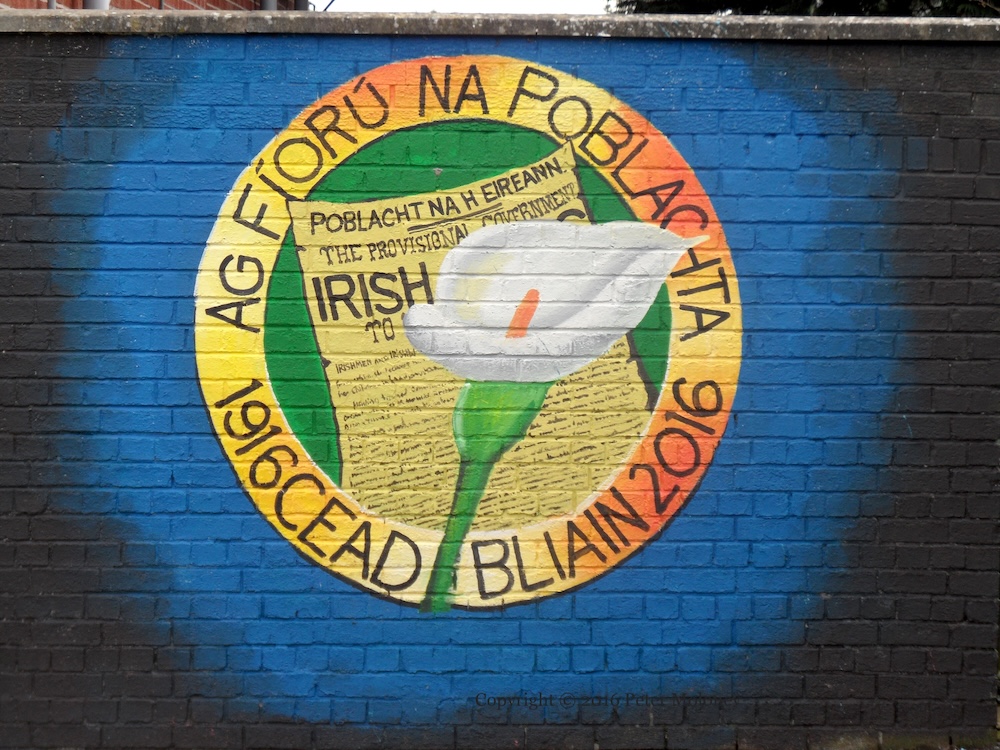
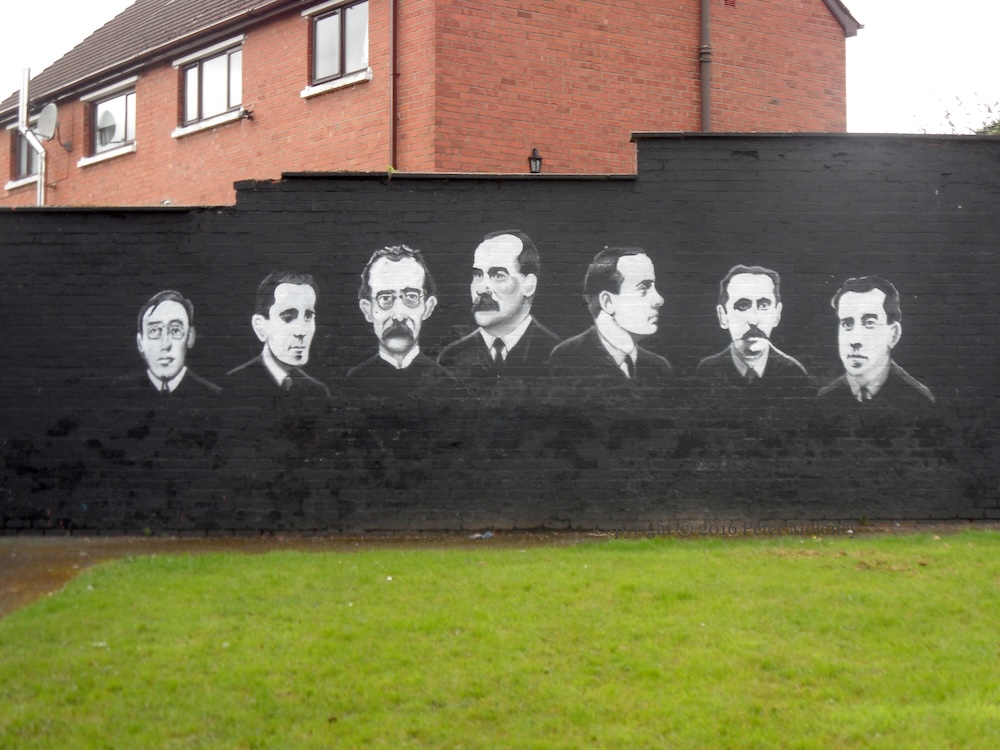
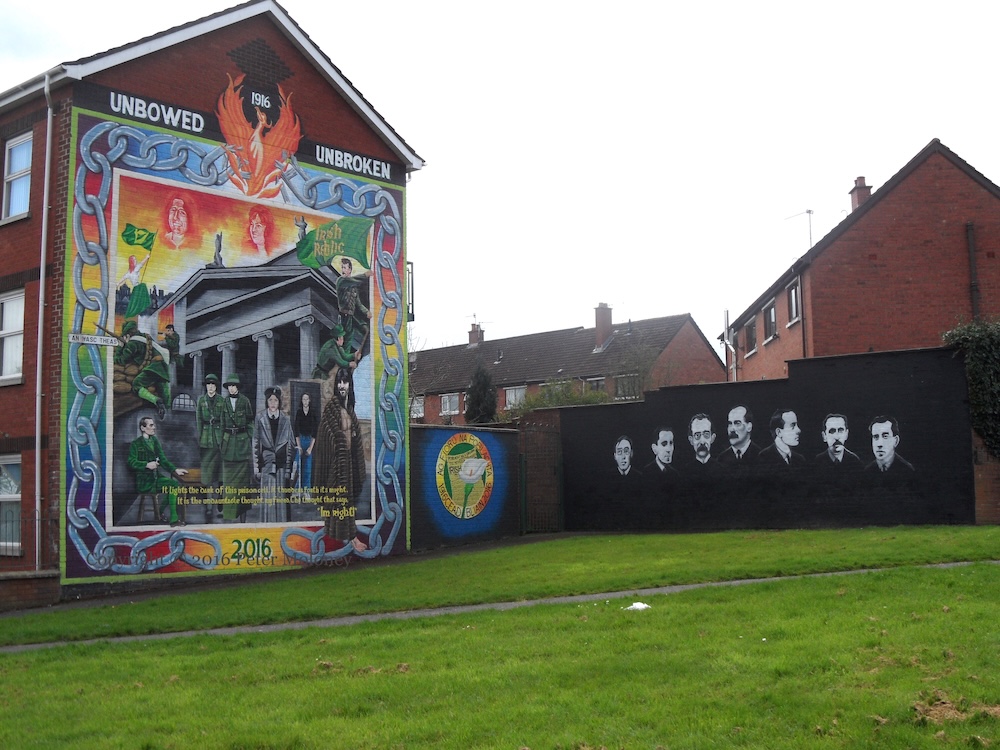
The walls at South Link, Andersonstown, have been painted with three new murals for the centenary of the Easter Rising.
The large piece shows a succession of Irish rebels. It begins (top left) with the rebellion of 1798 and then to the Easter Rising of 1916 at the GPO in Dublin. In the lower left, a pious Padraıg Pearse awaits his execution with rosary beads in hand. There are then shown female figures from Cumann Na mBán and the IRA (see previously: United Irishwomen and Cumann Na mBan Centenary), and then Maıréad Farrell in Armagh Women’s Prison. In the bottom right corner there is a blanketman. The busts of Bobby Sands and Joe McDonnell float above the GPO and the last verse of Sands’s The Rhythm Of Time form the epigraph: “It lights the dark of this prison cell, it thunders forth its might, it is the undauntable thought, my friend, the thought that says, “I’m right”.
In the corner, “realising the Republic” celebrates the centenary (“Céad Blıaın 1916 – 2016”) of the Easter Rising and shows a copy of the proclamation of the republic and an Easter lily.
The third wall shows the seven signatories of the 1916 Proclamation of the provisional government of the Irish Republic. From left to right: Joseph Plunkett, Sean MacDiarmada, Thomas Clarke, James Connolly, Padraıg Pearse, Éamonn Ceannt, Thomas MacDonagh.
South Link, Andersonstown, west Belfast
Click image to enlarge
Copyright © 2016 Peter Moloney
M13146 [M13147] M13149 M13148 M13152 [M13153] [M13154] [M13155] [M13156] [M13157] [M13158] [M13159] M13160 M13151 M13150
M13161
M13162 [M13163] [M13164] [M13165] [M13166] [M13167] [M13168] [M13169]
M13145
Athshealbhaígí An Phoblacht
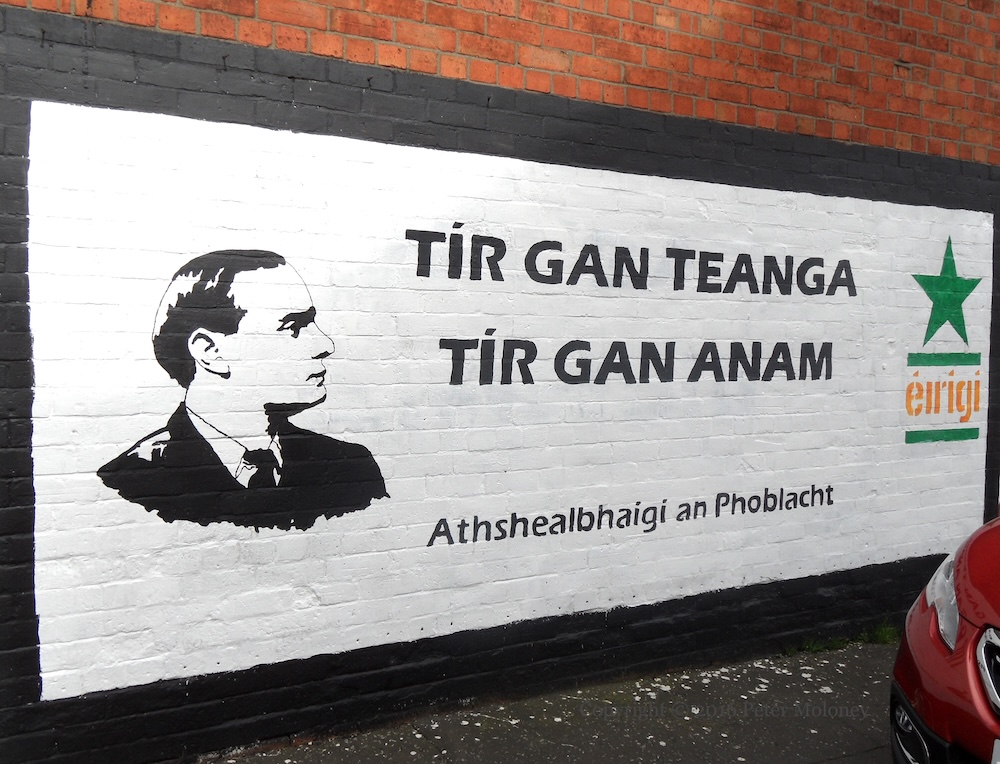
“A land without a language [is] a land without a soul” – Patrick Pearse, “Athshealbhaígí an phoblacht [reclaim the republic]”
This stencil continues éırígí’s Irish-language campaign, replacing Acht Na Gaeılge.
Hugo Street, west Belfast
Click image to enlarge
Copyright © 2016 Peter Moloney
M13144
Lord Street Remembers
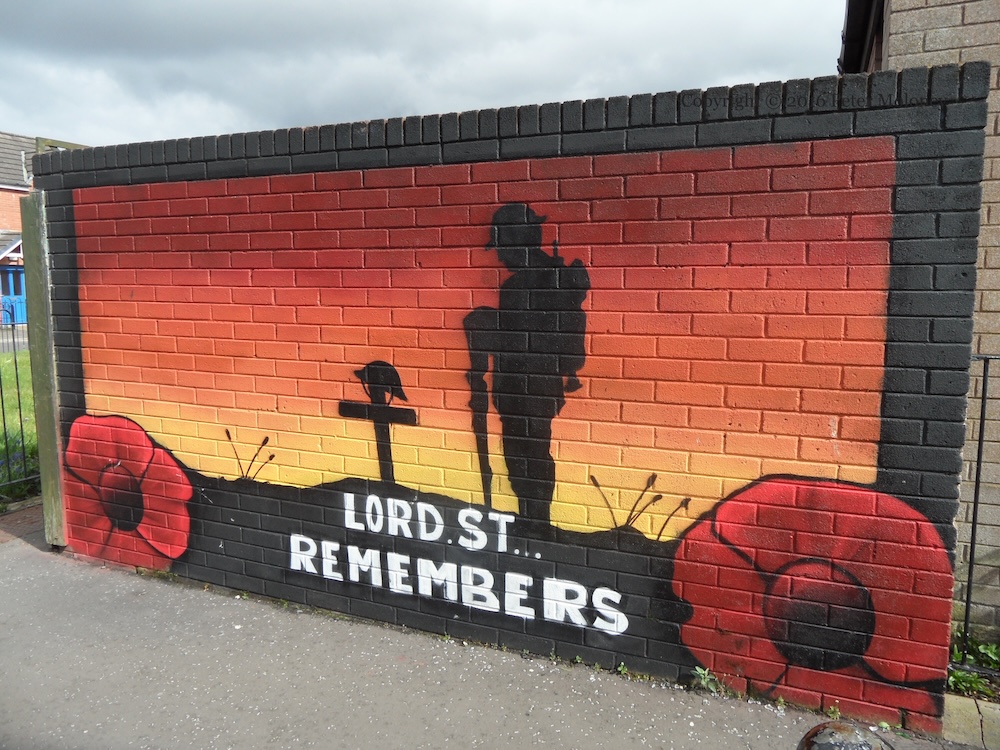
This commemorative WWI mural is from 2015, painted by Glenn Black and Ken Maze of Blaze FX (web) in Lord Street, replacing the Mill Workers mural.
Click image to enlarge
Copyright © 2016 Peter Moloney
M13137
Culture Threatens No One
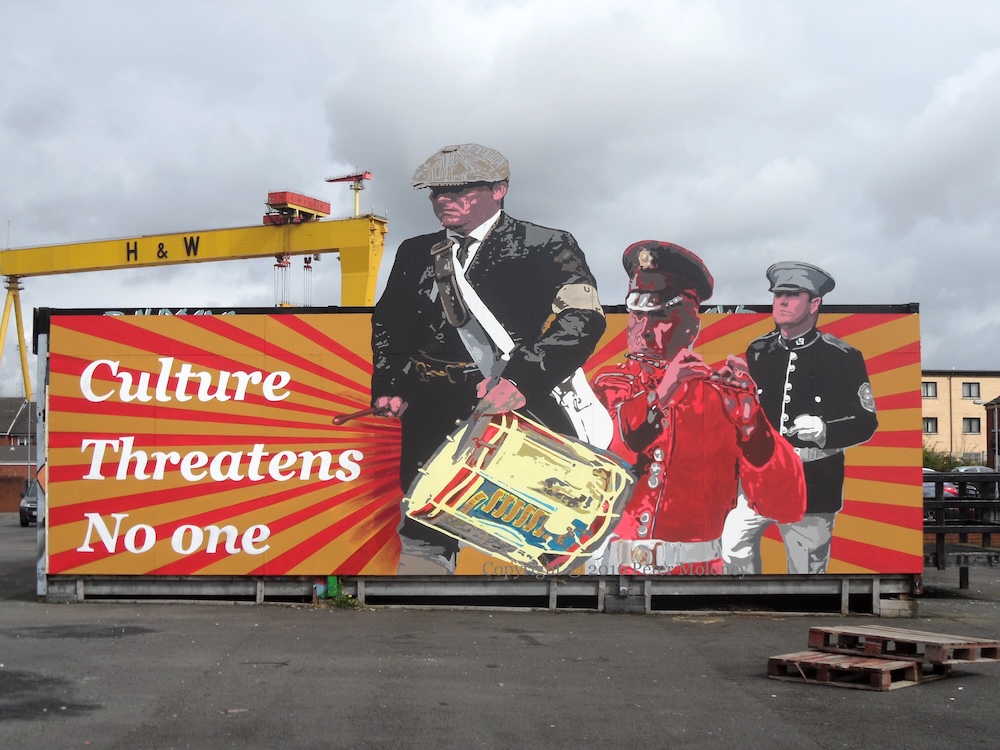
Three bandsmen – the first two of which, at least, are members of the UVF Regimental Flute Band, one in a vintage and another in a modern uniform – parade together in a new mural in Pitt Park. The UVF Regimental will be going to France for the centenary commemorations of the Battle of the Somme.
For images of the boards being painted see the Ballymac Friendship Centre Facebook page.
Pitt Square, east Belfast
Click image to enlarge
Copyright © 2016 Peter Moloney
M13129 [M13130] [M13131] [M13132]
Achieve!
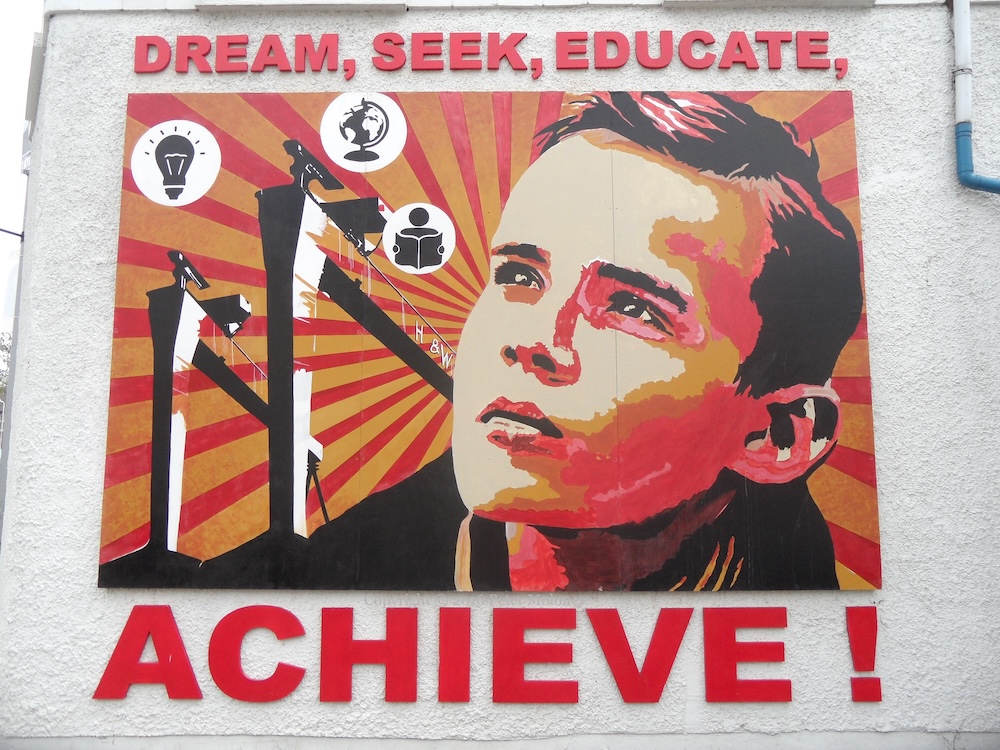
Shepard Fairey used Mannie Garcia’s AP photo of Barack Obama for his ‘Hope’ poster of the 2008 US Presidential election (WP). The three-quarter profile, faraway look and four-tone shading have been repurposed for the board, shown above, in east Belfast: a boy gazes beyond Samson and Goliath, the Harland & Wolff cranes, backgrounded by a sunburst: “Dream, Seek, Educate, Achieve!”
Painted by Dee Craig in Susan Street, east Belfast
Click image to enlarge
Copyright © 2016 Peter Moloney
M13128
Dream Another Dream
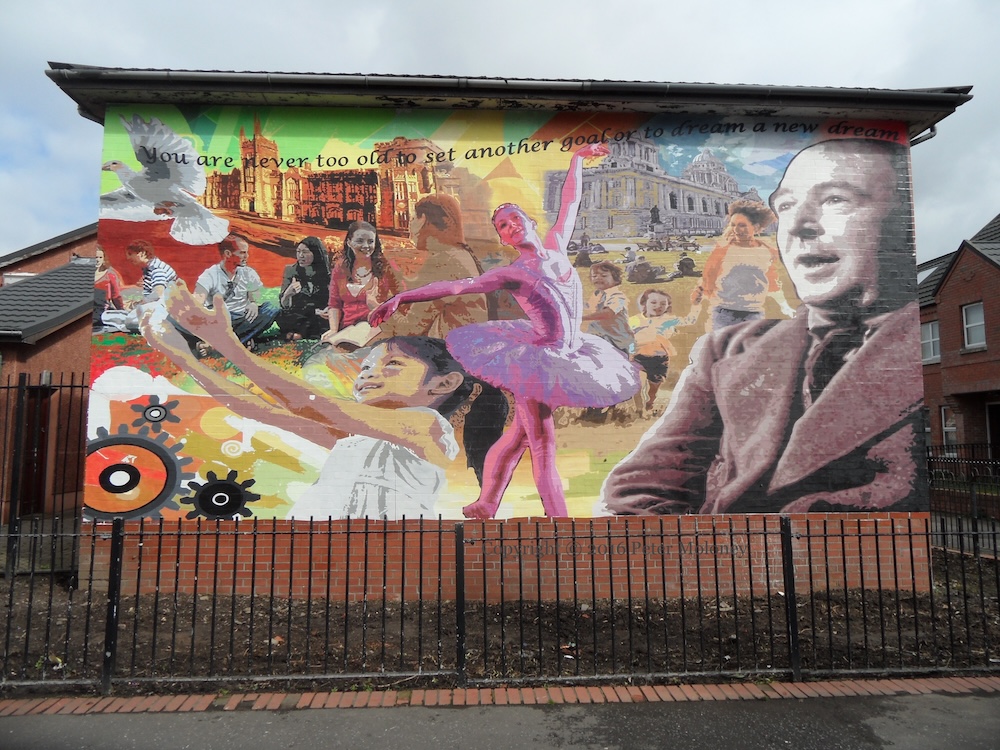
The saying “You’re never too old to set another goal or dream another dream” is attributed to east-Belfast-bred C.S. Lewis — shown here on the right — though we are unable to find any record of him saying or writing these words; instead it might be be a motivational speaker called Les Brown. In the rest of the piece, young people play in the grounds of Queen’s University and Belfast City Hall.
Newtownards Road, east Belfast
Click image to enlarge
Copyright © 2016 Peter Moloney
M13127

