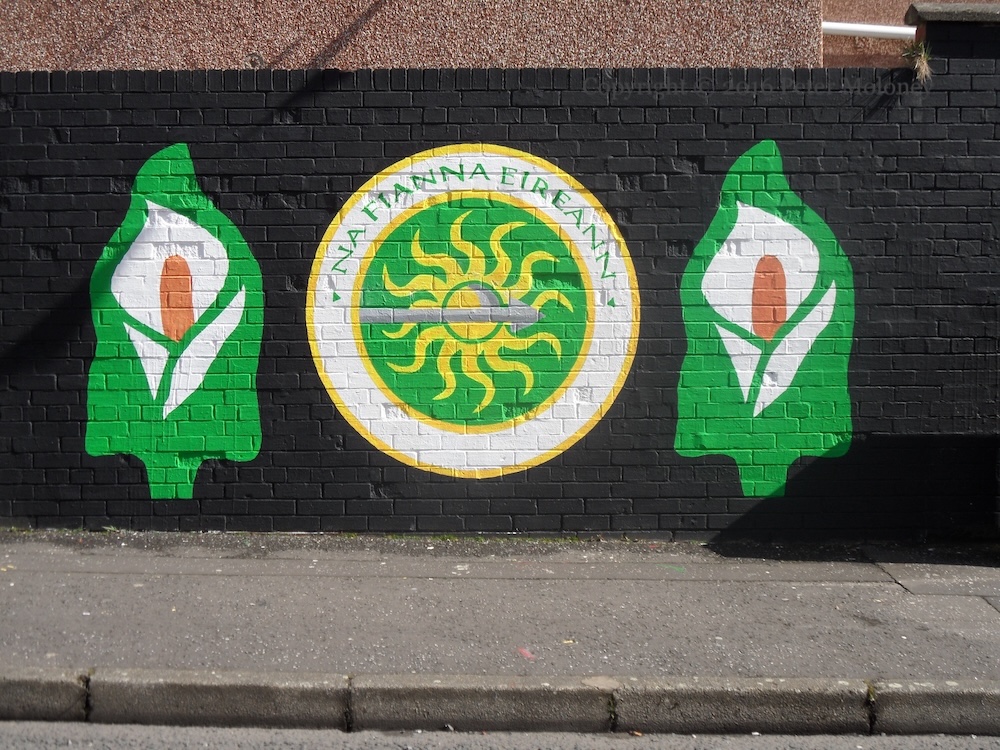
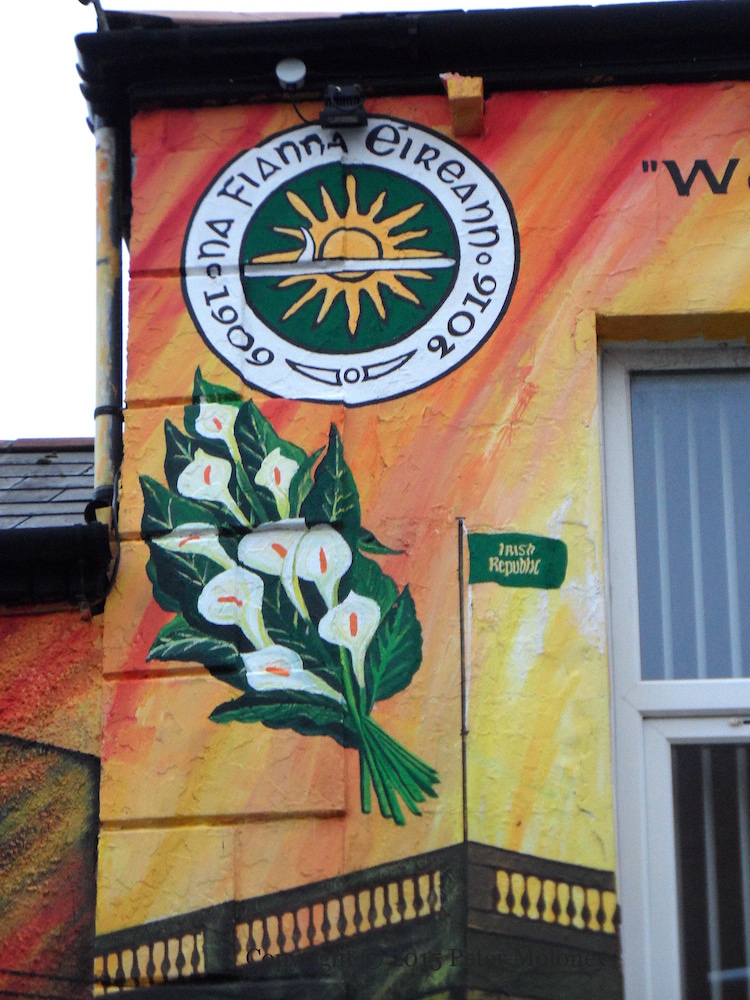
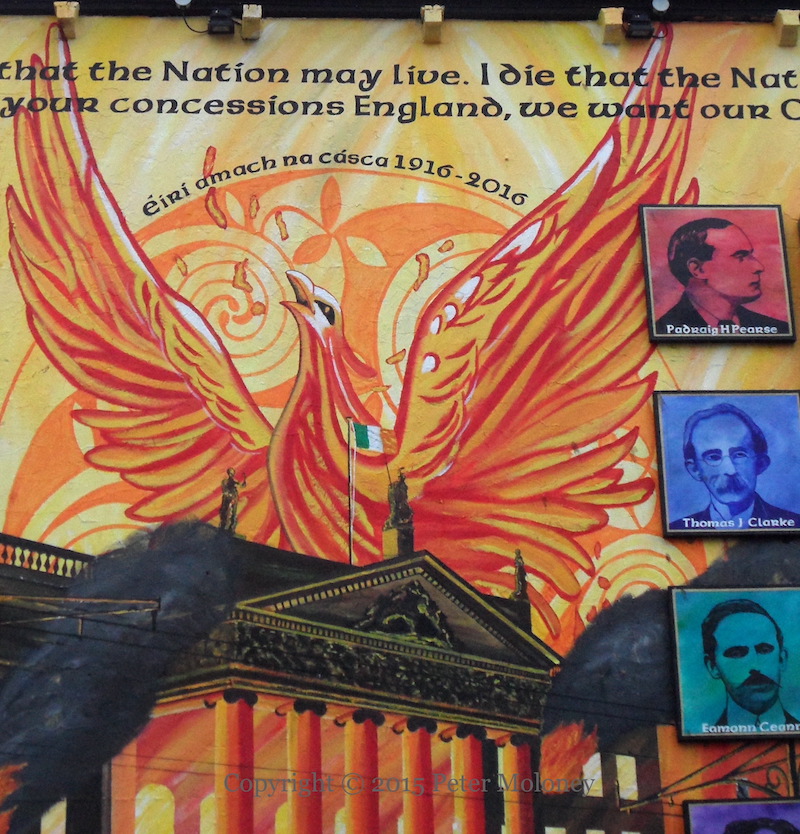
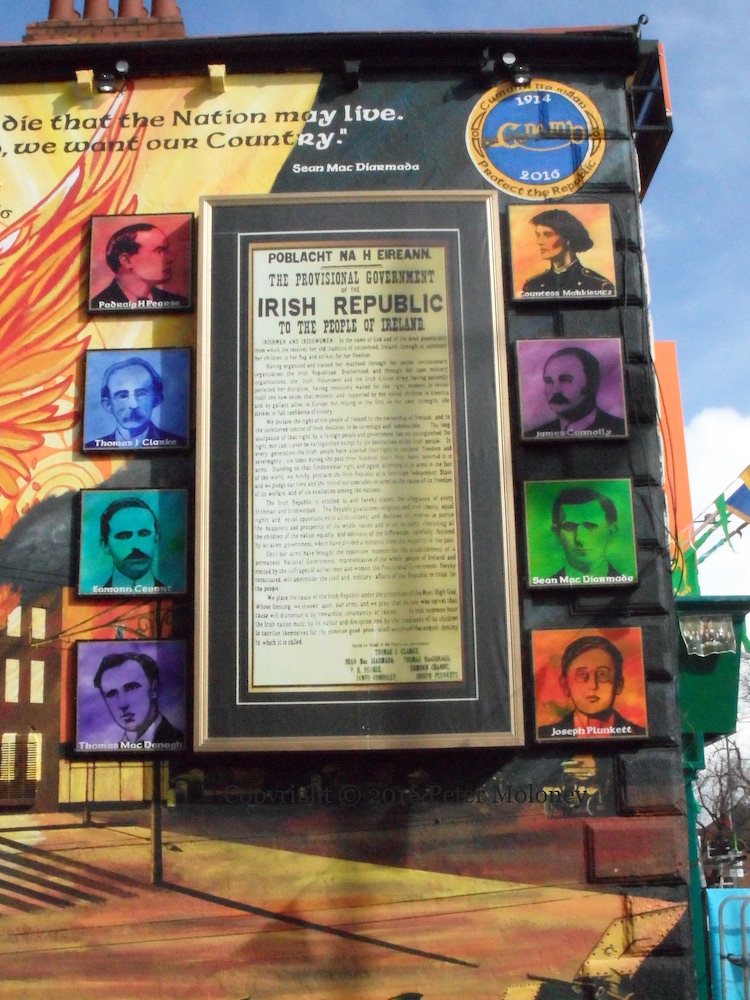
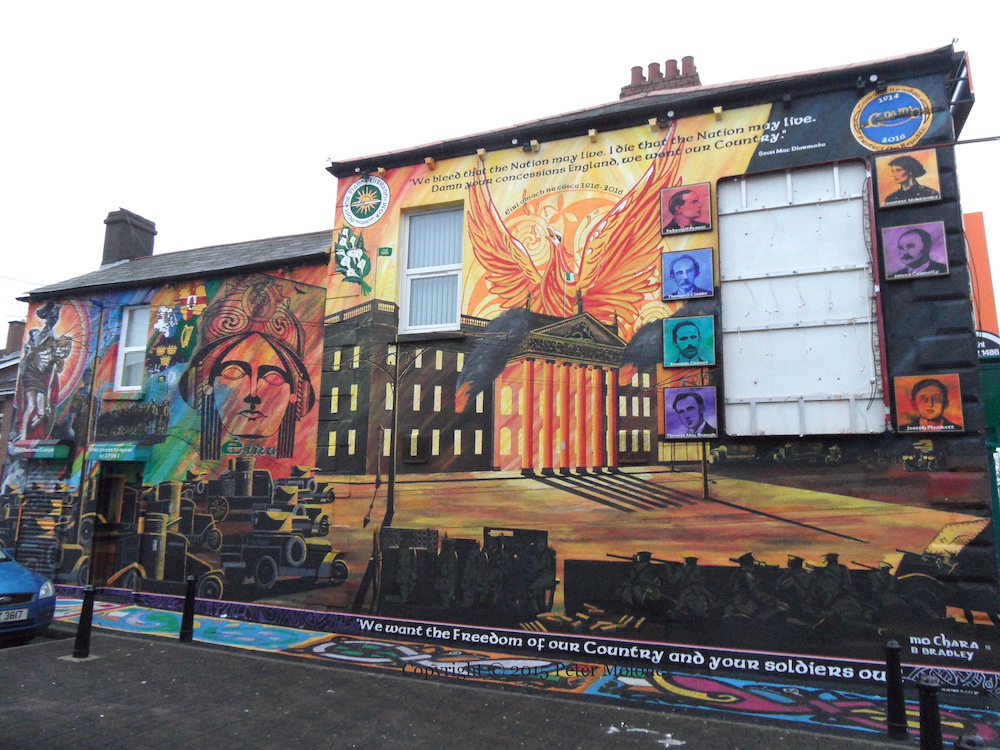
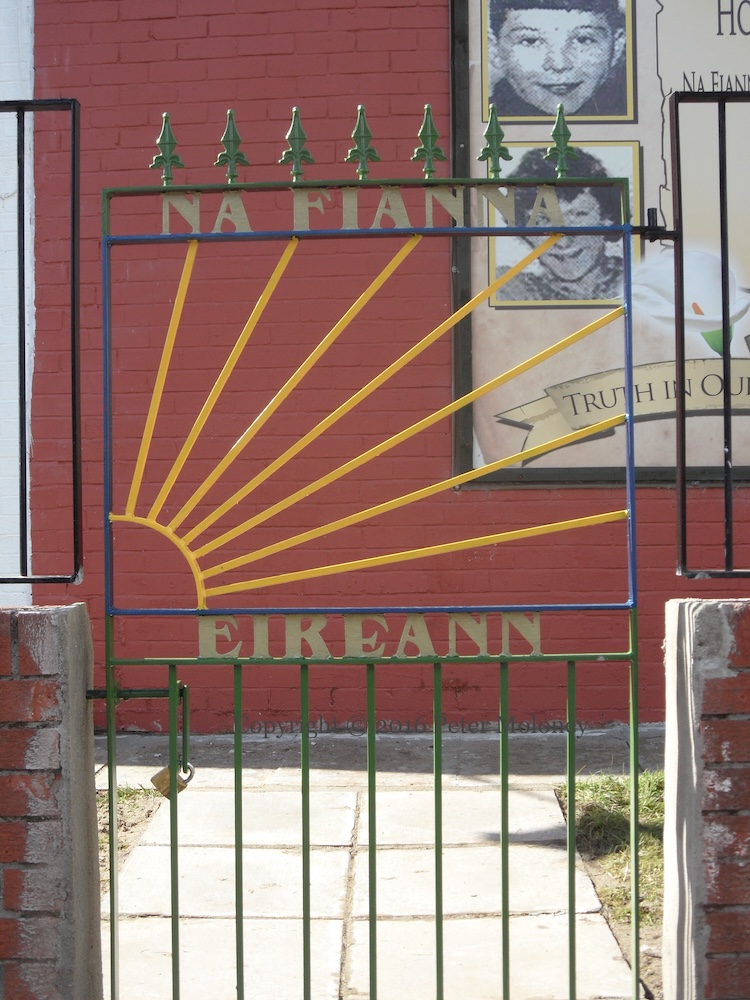
Here is a Na Fıanna Éıreann mural in Ardoyne with Easter lilies on each side of the Fıanna’s ‘sunburst’ (gal gréıne) emblem (which also includes a pike or bill).
For a history of sunburst flags, with lots of images, see An Sıonnach Fıonn. A banner sporting an early version of the emblem, owned by Countess Markievicz during the Rising, was recently returned from London to Dublin (Irish Times).
Like the name “Óglaıgh Na hÉıreann”, “Na Fıanna Éıreann” has been used by many organisations for their youth division; this one is associated with the RNU (web).
repainted knot-work on the right in front, form July 8th, 2016:
detail shots, from August 9th, 2025, December 15th, 2025, and March 26th, 2016:
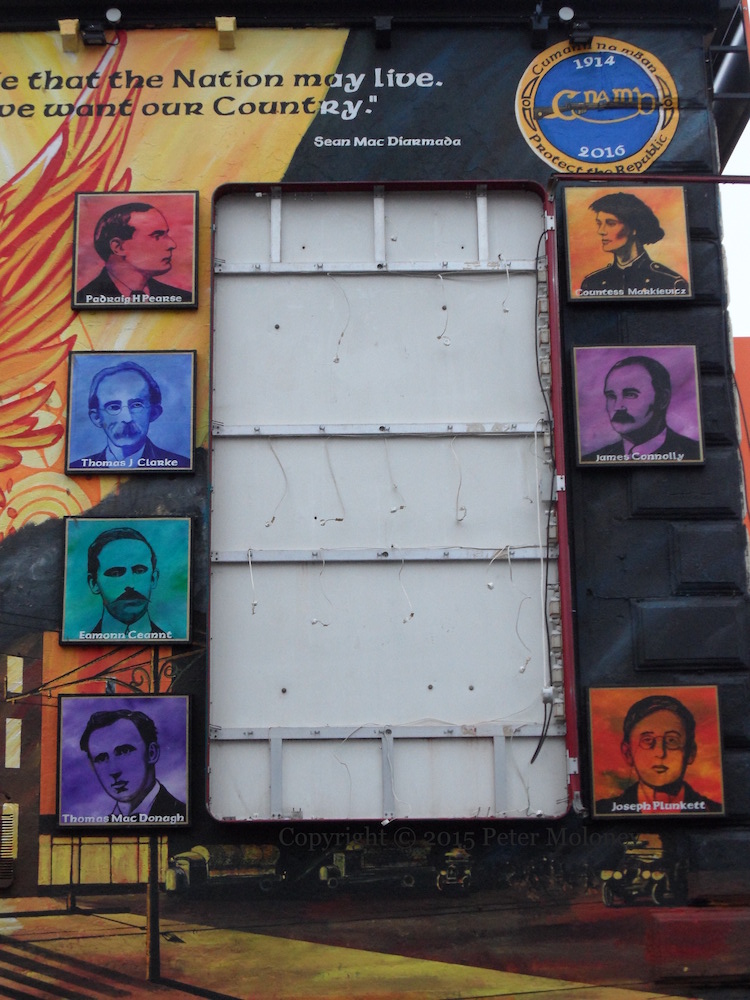
December 15th, 2025, portraits on small boards being added to either side of the (temporarily removed) proclamation:
July 31st, 2025:
July 14th, 2025:
May 5th, 2025:
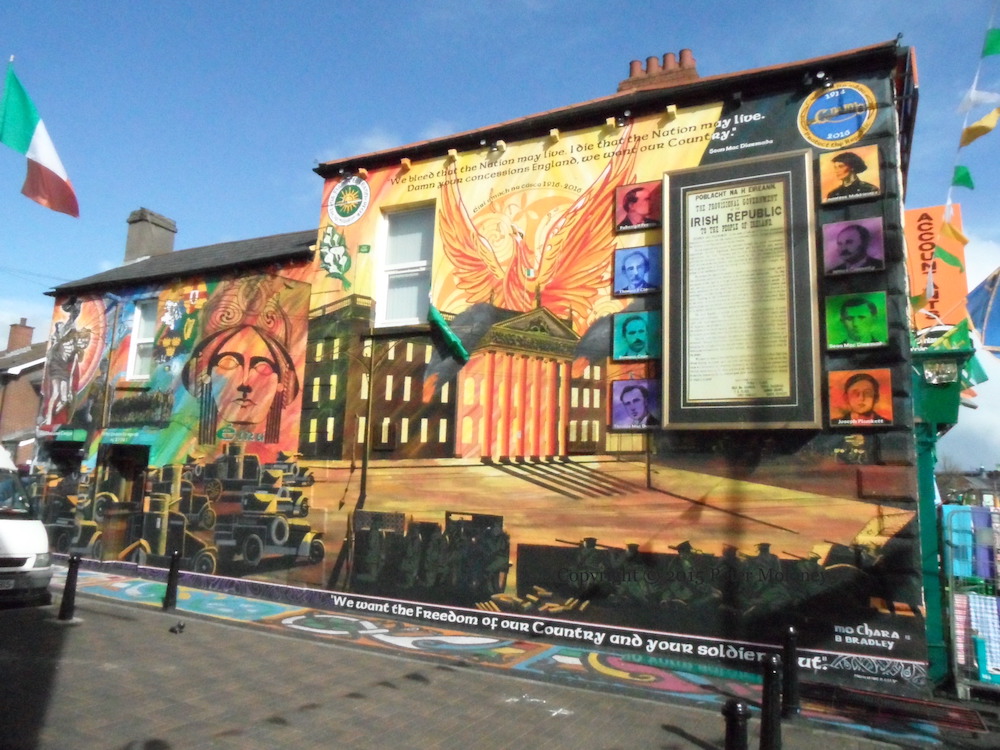
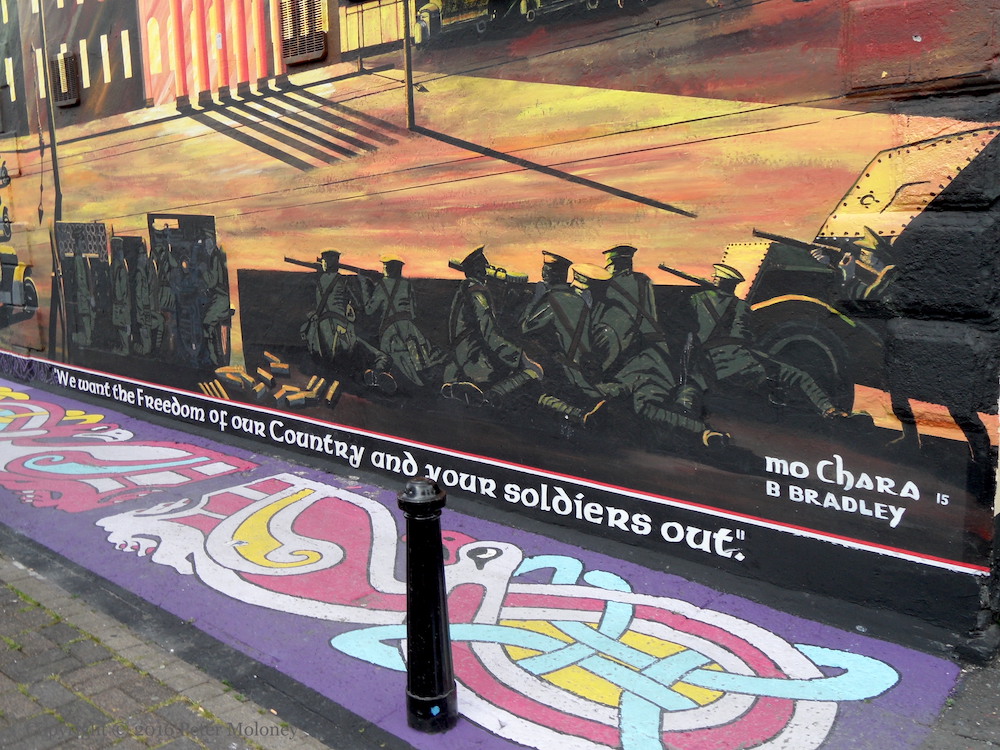
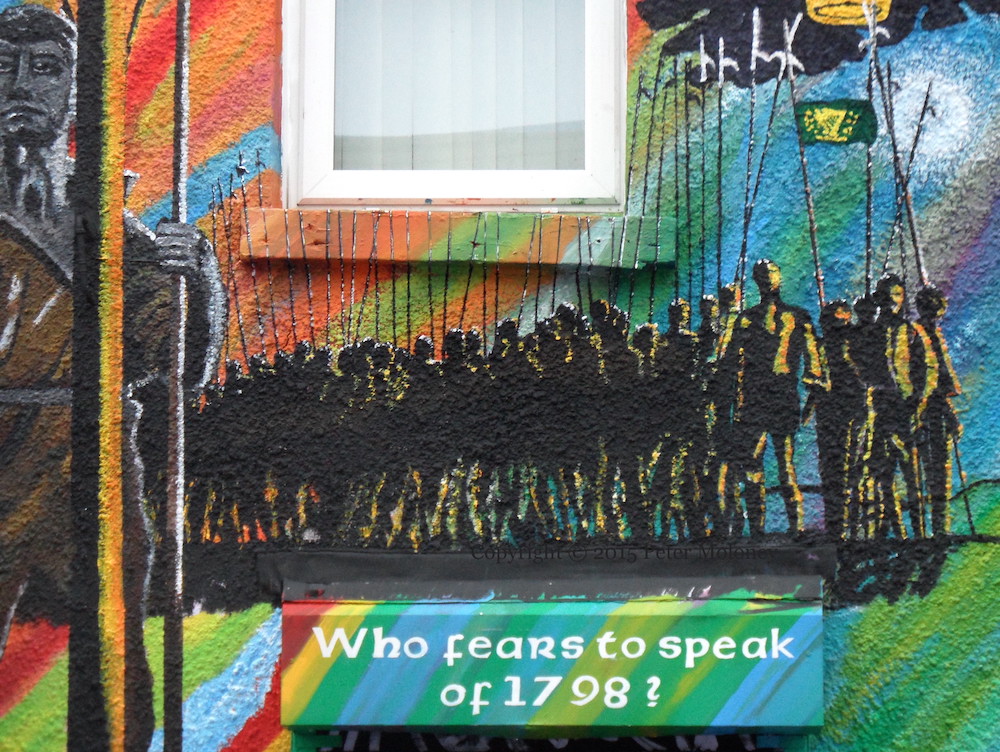
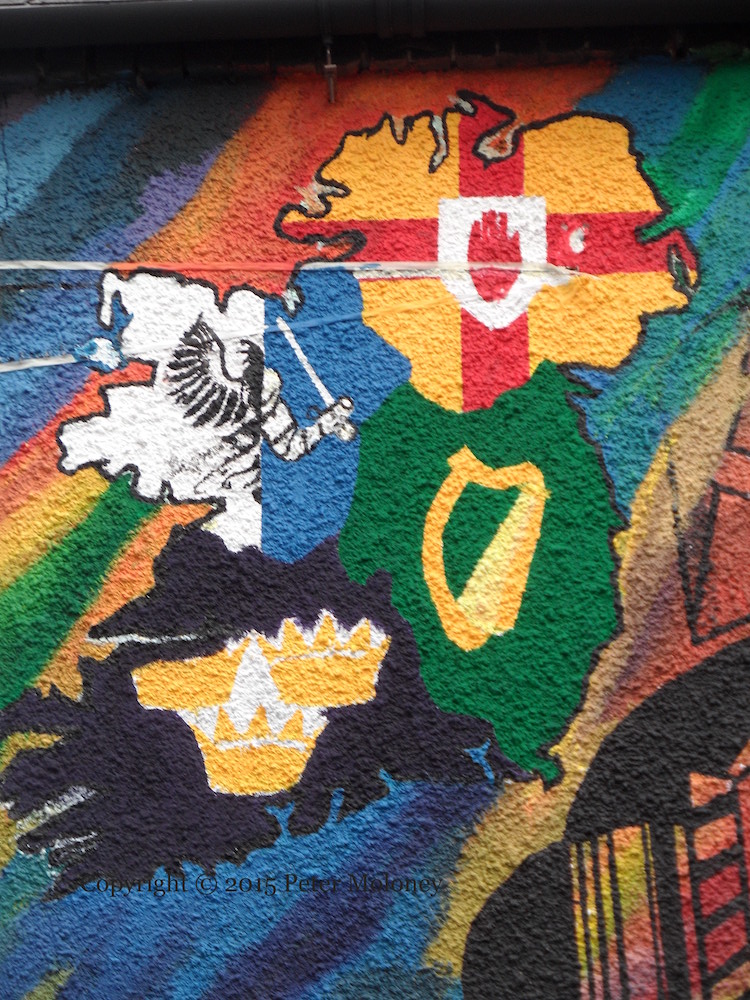
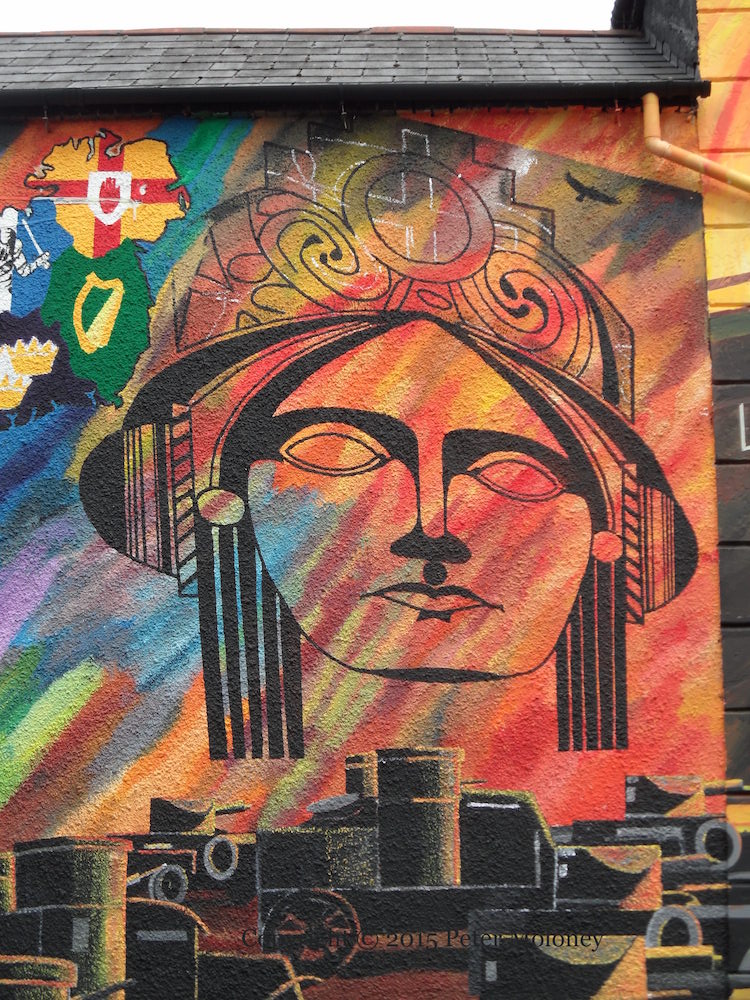
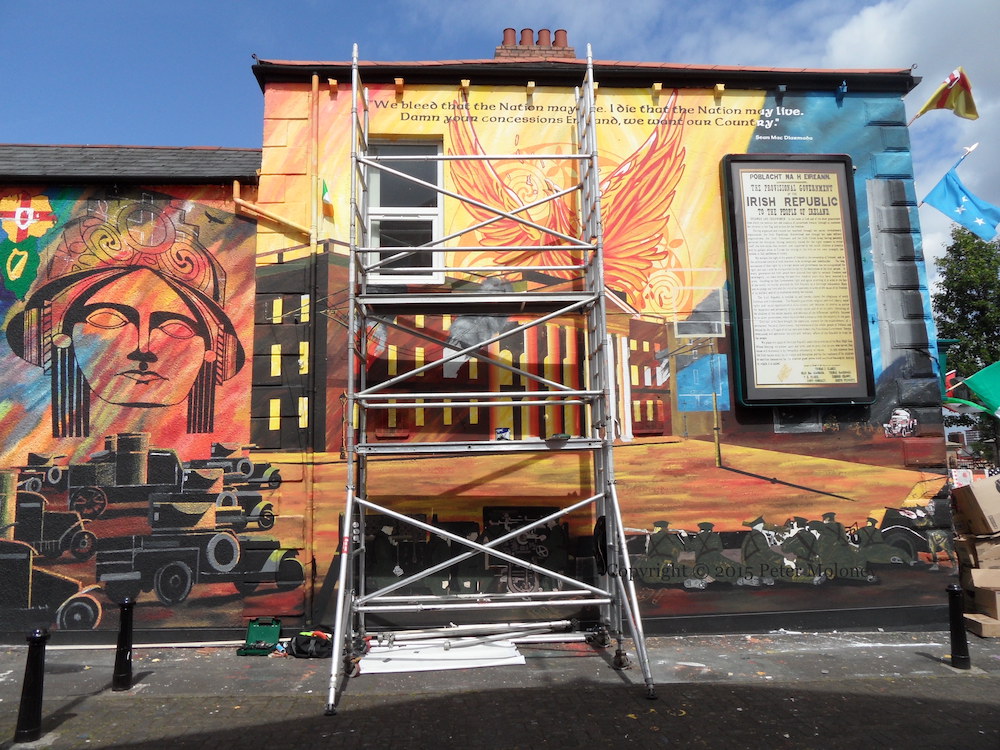
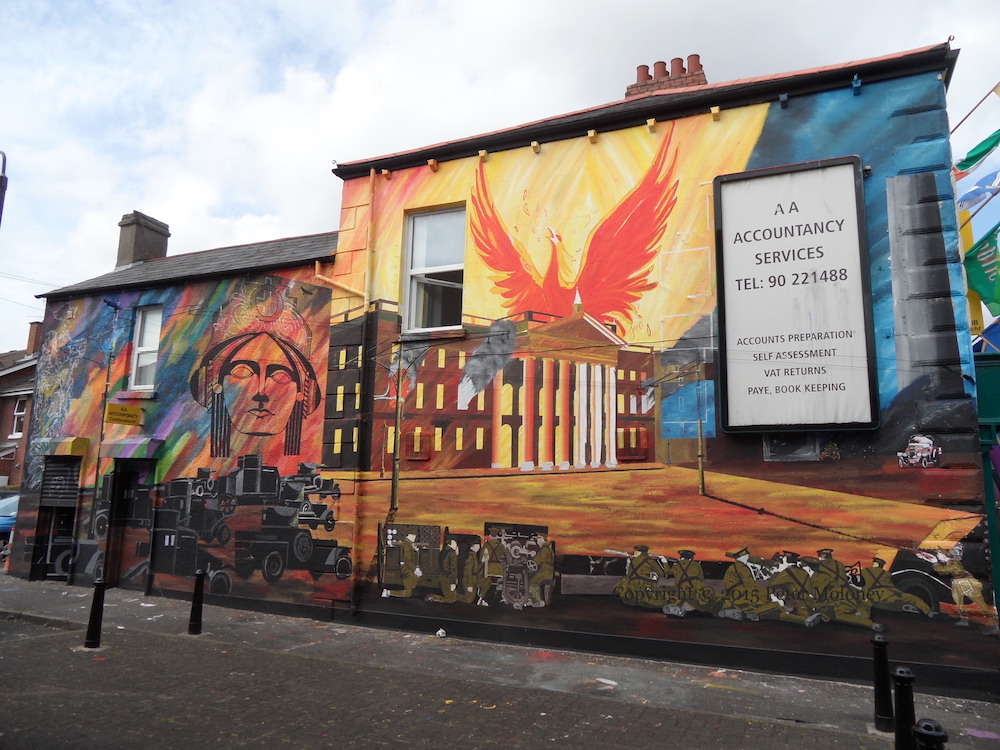
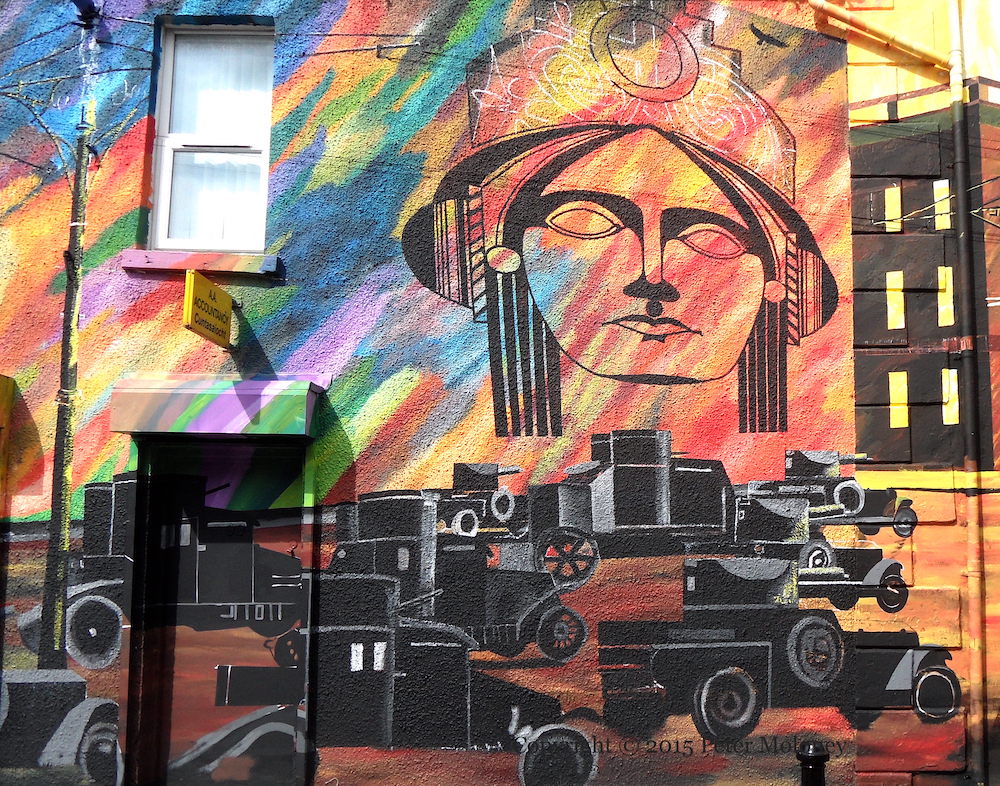
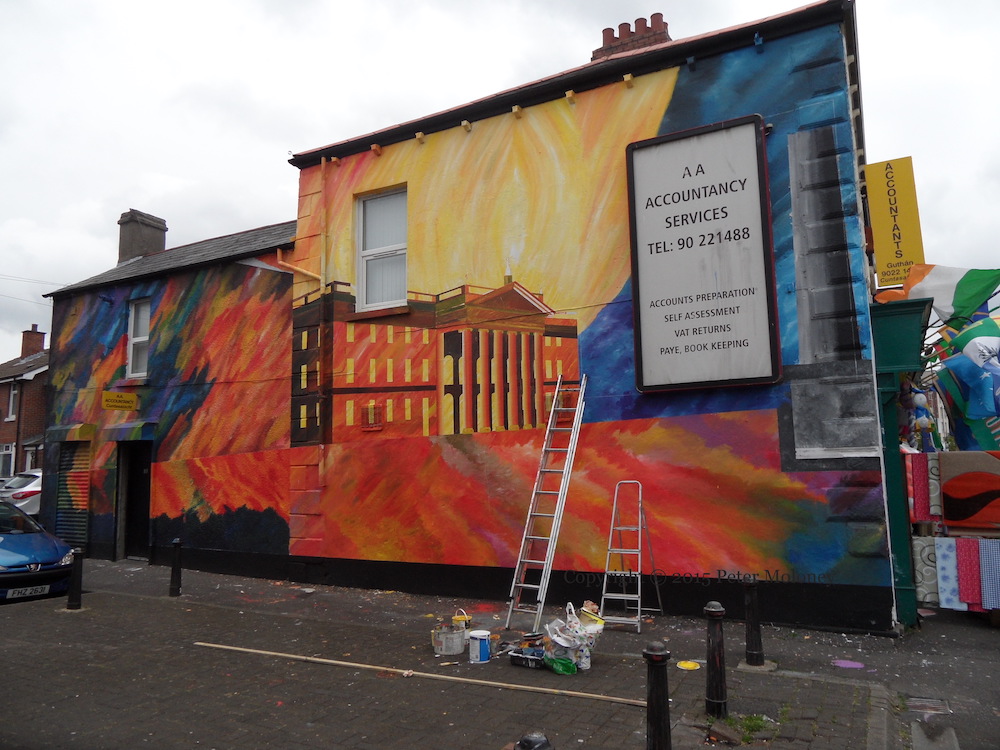
Arrayed against the forces of the British Army (which are shown laying siege to the Dublin GPO during the Easter Rising in armoured cars and in sniping positions in the foreground of the mural, along the whole length of the wall) are various symbols of Irish nationalism:
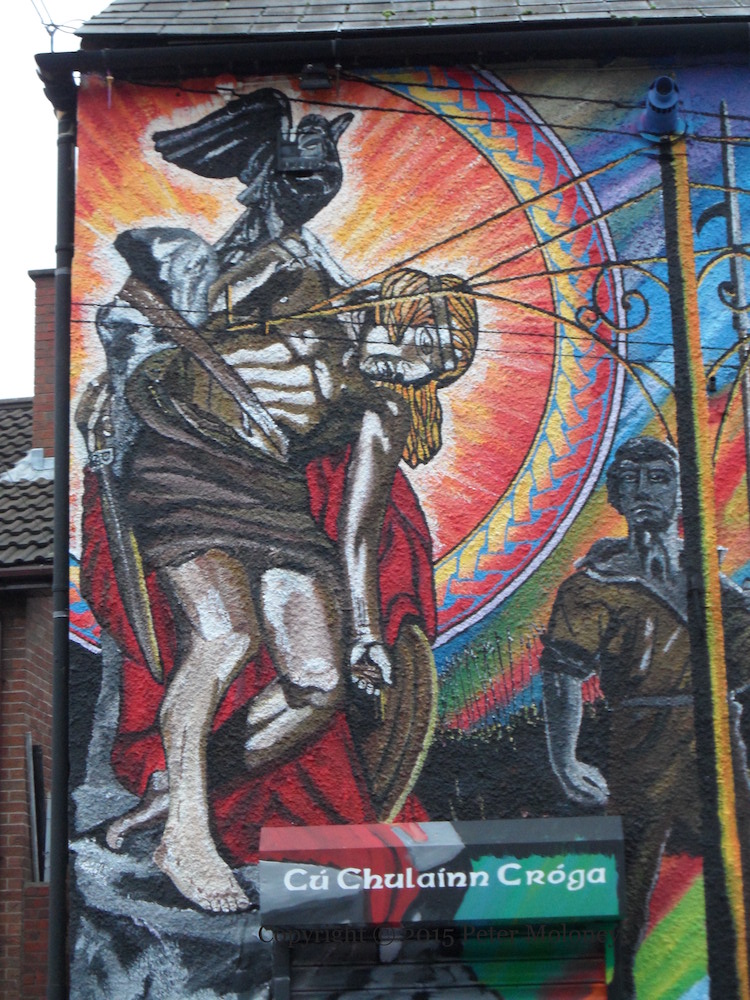
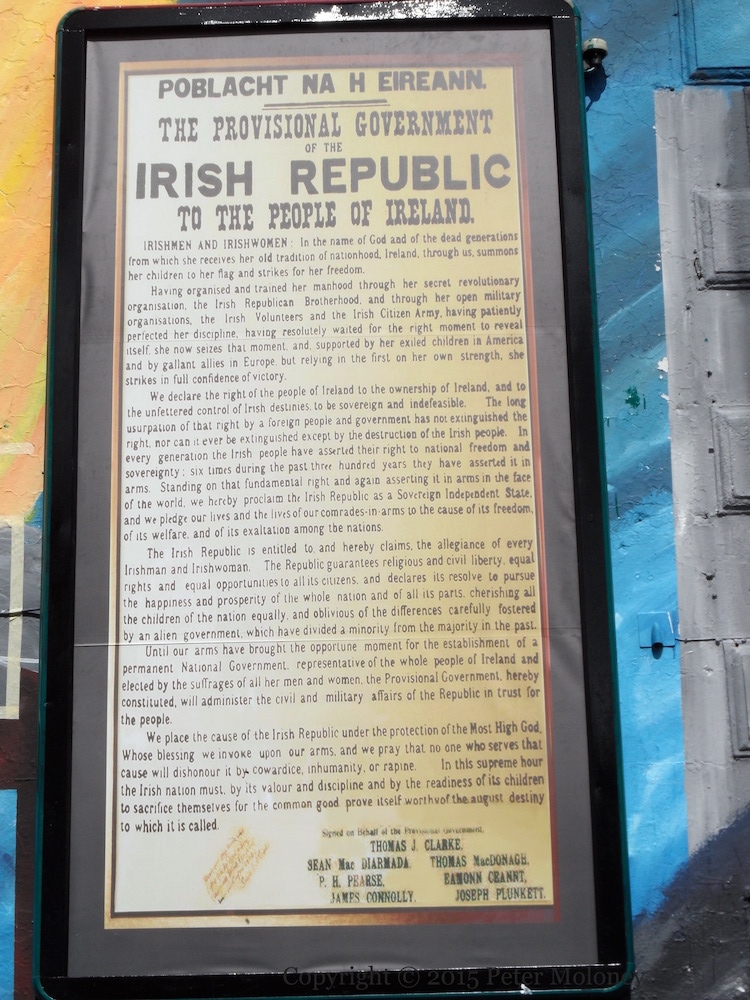
Oliver Sheppard‘s 1911 statue of Cú Chulaınn dying (see the Visual History page); the pikemen of the 1798 Rebellion; the four provinces of Ireland; Érıu the mythological queen of Ireland/Éıre as designed by Richard J King/Rísteard Ó Cíonga; Easter lilies; the emblems of Na Fıanna Éıreann and Cumann Na mBan on either side of a quote from (The Mainspring) Seán Mac Dıarmada, “We bleed that the nation may live; I die that the nation may live. Damn your concessions, England: we want our country”; a phoenix rising from the flames of the burning Dublin GPO (inspired by Norman Teeling’s 1998 painting The GPO Burns In Dublin); the GPO flying an ‘Irish Republic’ flag; portraits of signatories and other rebels — (left) Padraig H. Pearse, Thomas J Clarke, Eamonn Ceannt, Thomas MacDonagh, (right) Countess Markievicz, James Connolly, Sean MacDiarmada, Thomas Plunkett; the declaration of independence, placed over the advertising box of AA Accountants – see the in-progress shot below.
At the very bottom is a quote from the mother of painted Gerard ‘Mo Chara’ Kelly, Harriet Kelly: “We want the freedom of our country and your soldiers out.”
“Fıann [sic] Robert Allsopp lived at this address. Died on active service March 3rd 1975. Fuaır sé bás ar son na hÉıreann. 1959-1975” Allsopp died at the family home (on the New Lodge Road) from the accidental discharge of a gun. The O’Neill-Allsopp flute band is named in his honour (and in honour of Jim O’Neill) and the band has a mural in Donore Court.
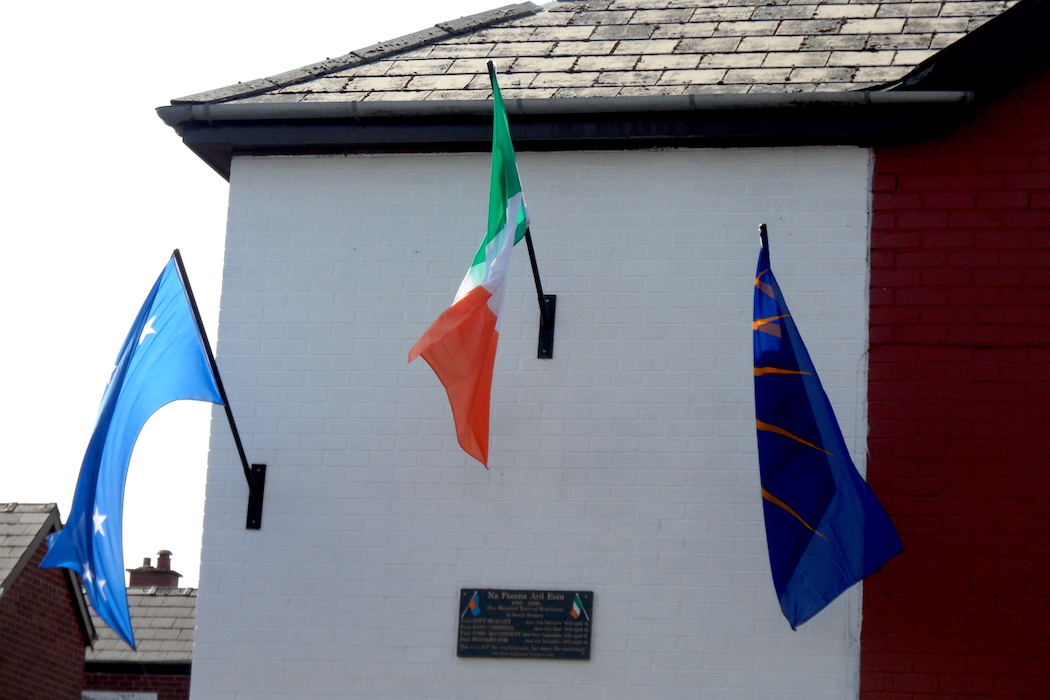
“Purity in our hearts, strength in our arms, truth in our lips.” Here are images from the launch of the new Fıanna tarp at the top of Berwick Road (Paráıd An Ardghleanna) on Easter Saturday (April 19th). The tarp is an RNU tribute to four teenaged members of Na Fıanna Éıreann who died in 1972: Davy McAuley, Josh Campbell, Josie McComiskey and Bernard Fox – all four from Ardoyne/Ard Eoın. McAuley died of a gunshot wound, perhaps at a Louth training camp (Nelson McCausland). Campbell was shot in Eksdale Street in a gun battle with the British Army; McComiskey was shot in Flax Street in a gun battle with the British Army; Fox was shot by the British Army in Brompton Street. (Close-up of the plaque.)
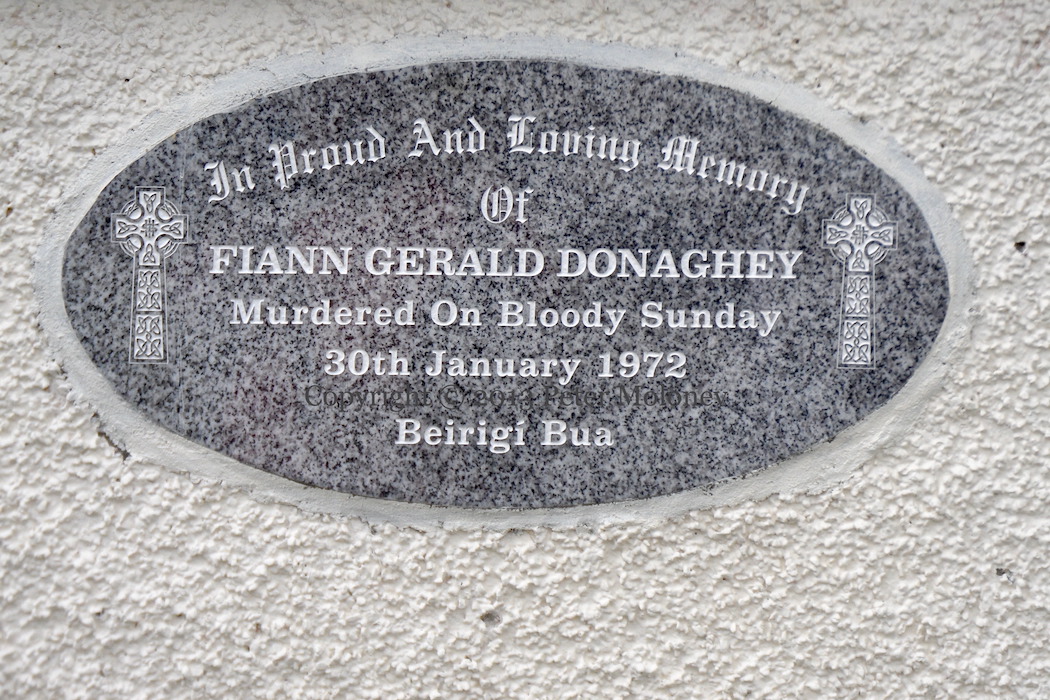
“In proud and loving memory of Fiann [sic] Gerald Donaghey, murdered on Bloody Sunday, 30th January 1972. Beirigí bua.” Donaghey was killed by the same bullet that also killed Gerard McKinney. The plaque is at the (modern-day) spot where he died, on the outside of Glenfada Park (south).
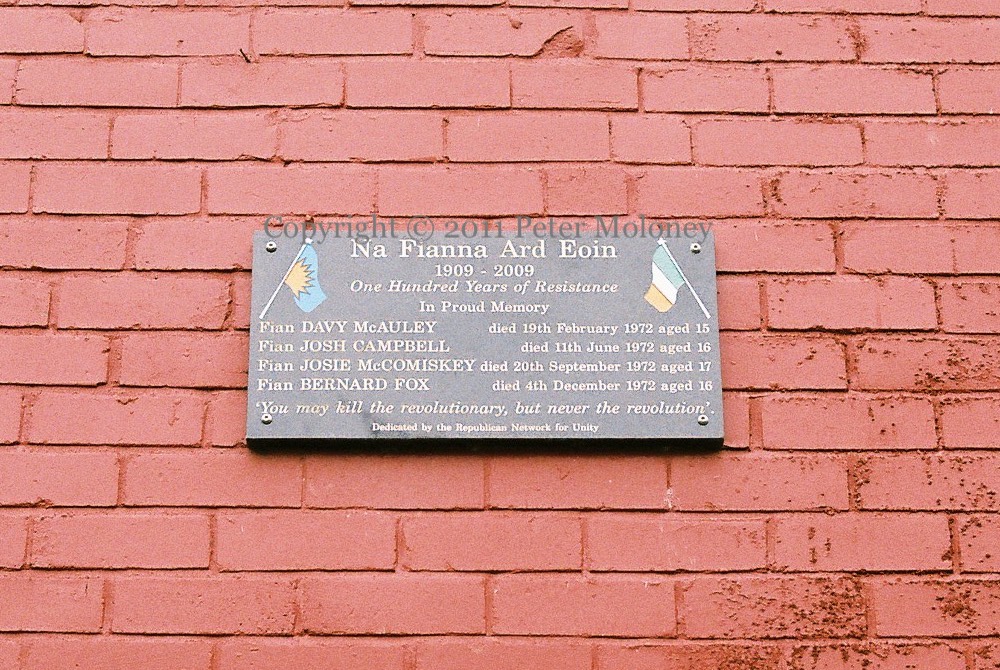
“Strength in our hearts, strength of our limbs, consistency of our tongues.” “Na Fıanna Ard Eoın 1909-2009 – one hundred years of resistance. In proud memory Fıan Davy McAuley … Josh Campbell … Josie McComiskey … Bernard Fox. ‘You may kill the revolutionary, but never the revolution.’ Dedicated by the Republican Network for Unity.” The four deceased are portrayed on four small boards, along with standing figures of Fianna from both centuries.
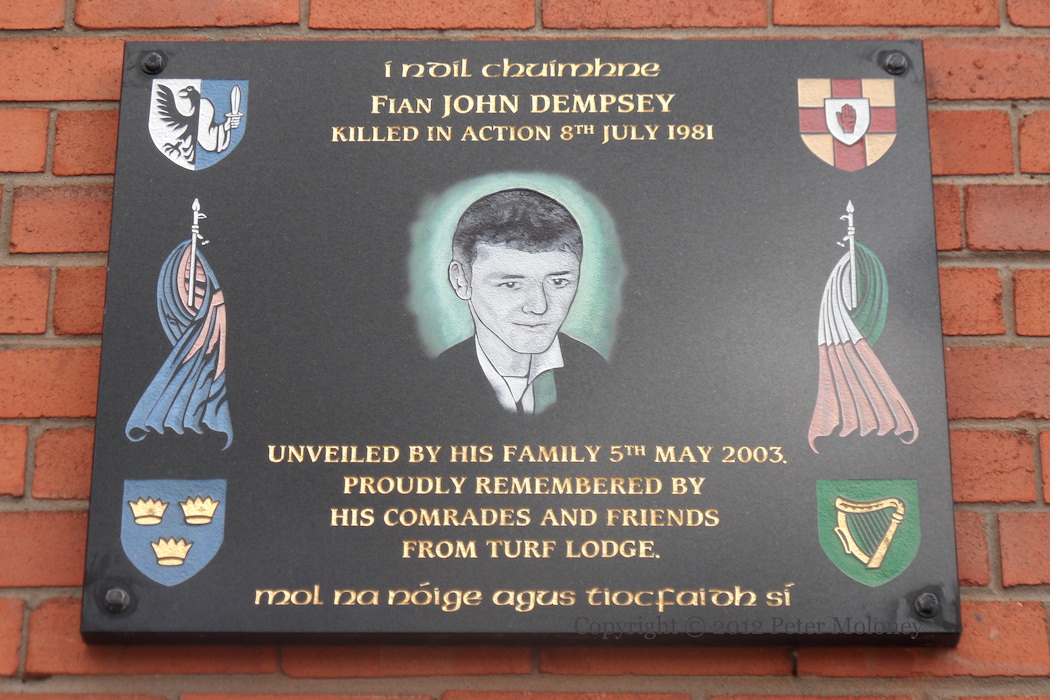
“I ndıl chuımhne Fıan John Dempsey killed in action 8th July 1981. Unveiled by his family 5th May 2003. Proudly remembered by his comrades and friends from Turf Lodge. Mol na nóıge [mol an óige] agus tıocfaıdh sí.” The sixteen-year-old Dempsey was shot by a British Army sniper during an attack on the Falls bus depot. Gerry Adams wrote a memorial in An Phoblacht.
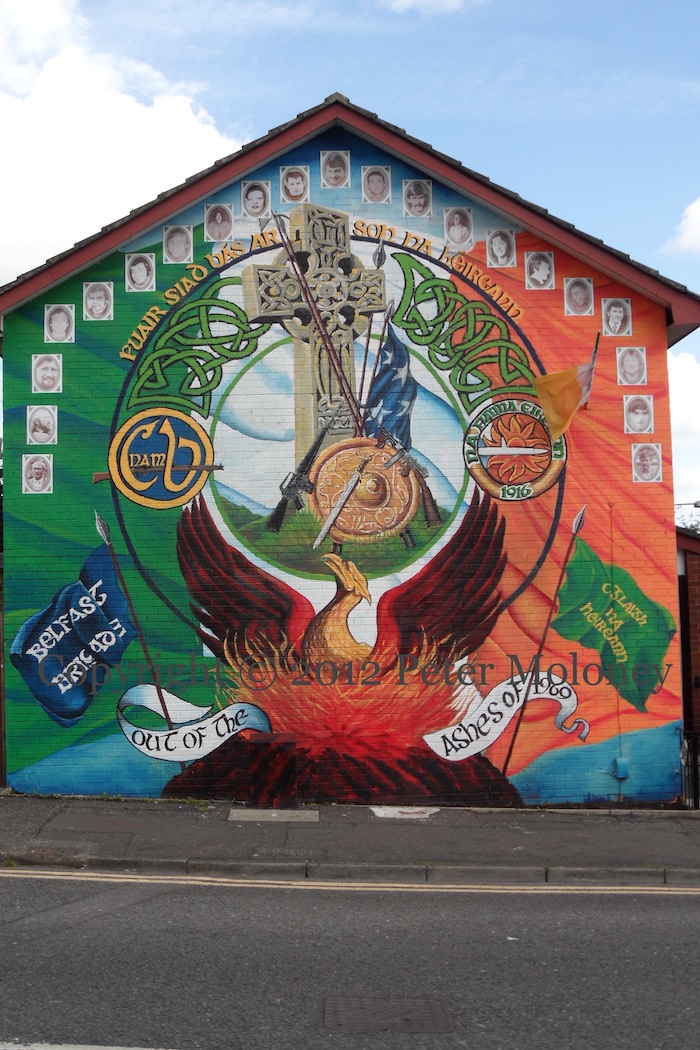
The scroll reads “Out of the ashes of 1969” arose the Provisional IRA, but the lineage is a long one and all but one of the organisations, events, and arms depicted here precede 1969: Cumann Na mBan, Na Fıanna Éıreann, Óglaıgh Na hÉıreann, a Celtic shield and sword, a pike (from the 1798 Rebellion), a Thompson gun, the Tricolour; only the assault rifle is modern and perhaps also is meant to indicate the Provisionals, Belfast Brigade. “Fuaır sıad bás as son saoırse na hÉıreann.”
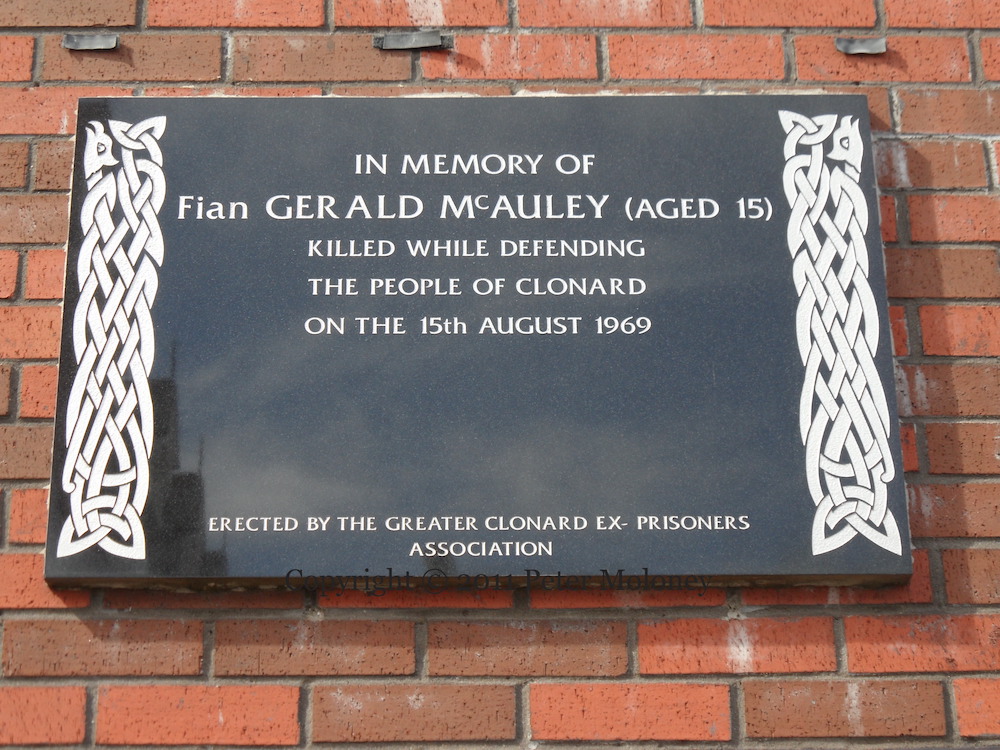
“In memory of Fıan Gerald McAuley (aged 15) killed while defending the people of Clonard on the 15th August 1969. Erected by the Greater Clonard Ex-Prisoners Association.” McAuley was killed during the riots in August 1969 that mark the start of “the Troubles” (An Phoblacht). The plaque is near the spot where he was killed. His portrait was above the No Decommision mural and then in the Never Again mural in Bombay Street.
Commemorating “one hundred years of resistance” (1909-2009) in Berwick Road, Ardoyne: a plaque to Fıanna Davy McAuley, Josh Campbell, Josie McComiskey, and Bernard Fox, all of whom died in 1972. “You may kill the revolutionary, but never the revolution.” “Dedicated by the Republican Network For Unity.”