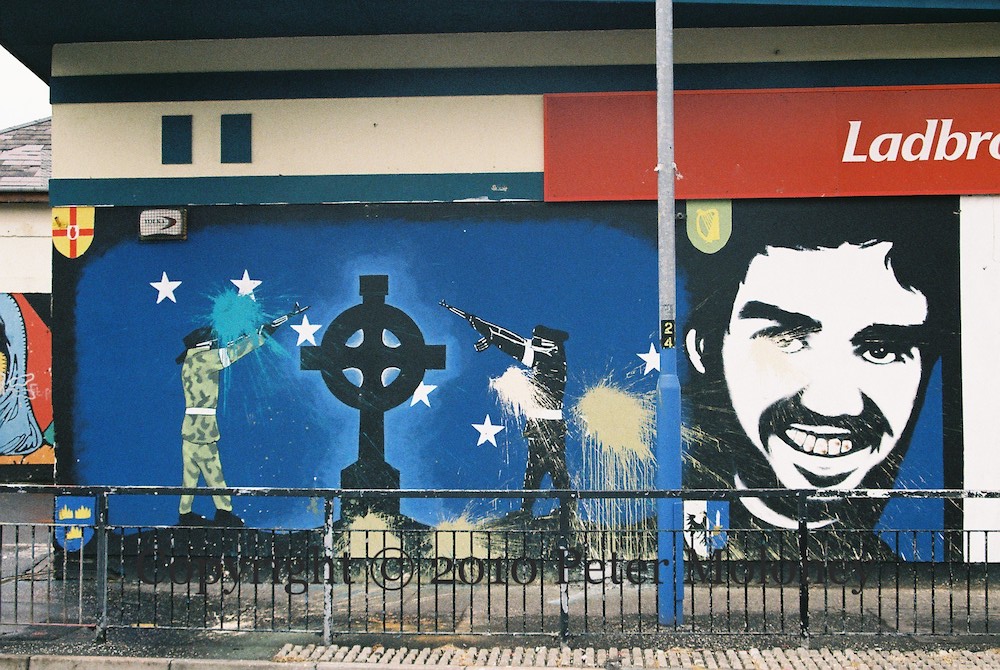
A funeral volley is fired over a Celtic cross representing the grave of INLA hunger striker Patsy O’Hara. Replaces the “Years From Now” version of the mural.
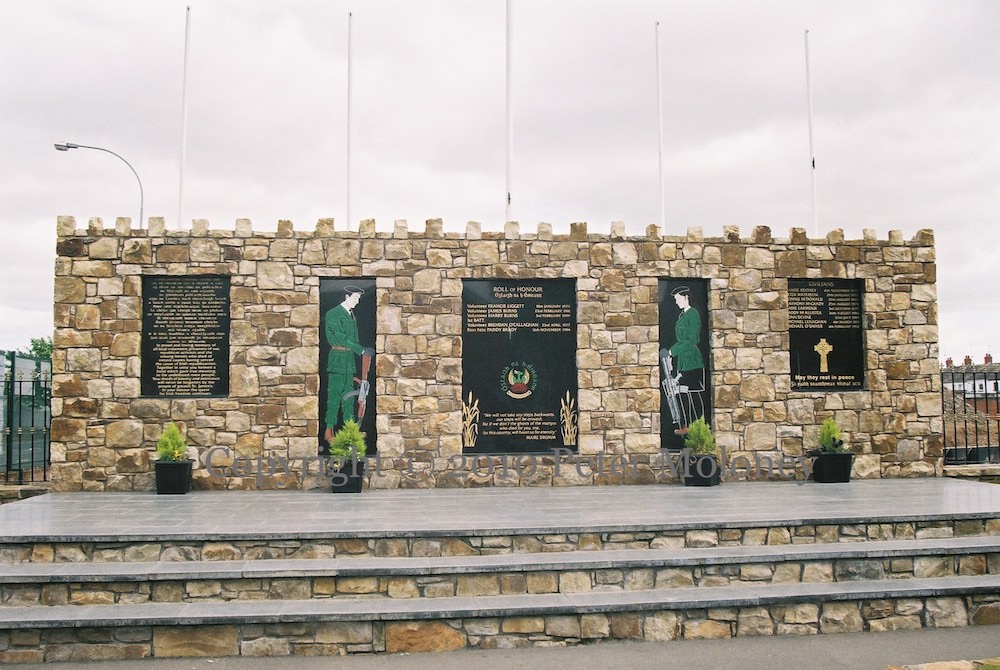
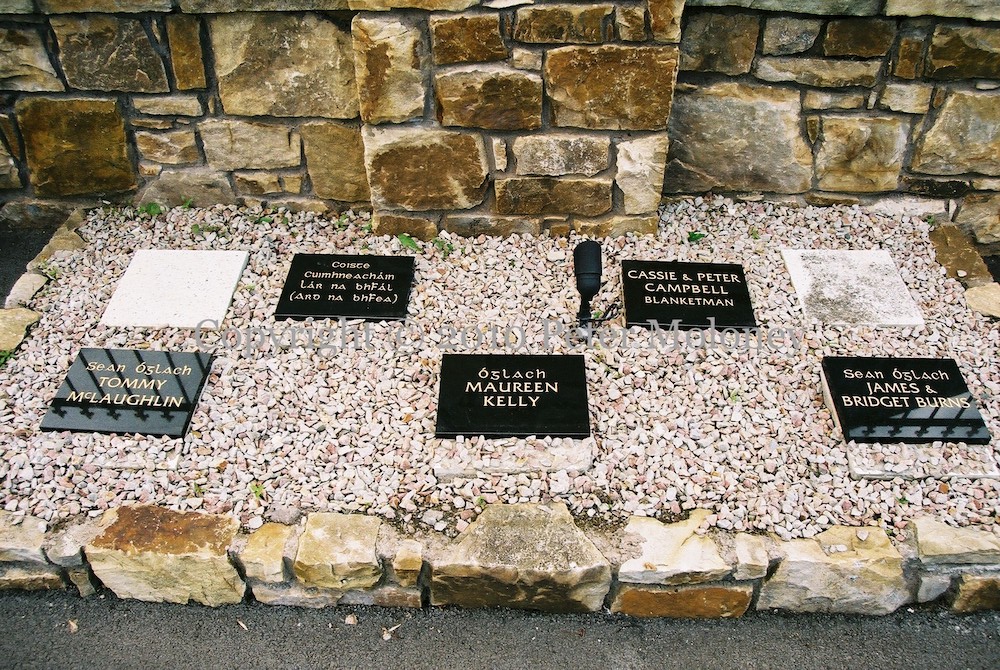
“In proud and loving memory of all local volunteers, prisoners of war, republican activists and the unsung heroes who died of natural causes having served the cause of Irish republicanism [“sean óglach” on the individual plaques]. Together in unity you formed a bond which gave true meaning to the undefeated risen people. Your deeds of bravery and resistance will never be forgotten by the people of greater St. James’s. In your honour the quest for Irish freedom continues.”
With the famous “our steps will be onward” quote from Máıre Drumm at an anti-internment rally in Dunville Park on 10th August, 1975 (RN).
Coıste Cuımhneacháın Lár Na bhFál/Ard Na bhFeá [Memorial committee of mid-Falls/Beechmount].
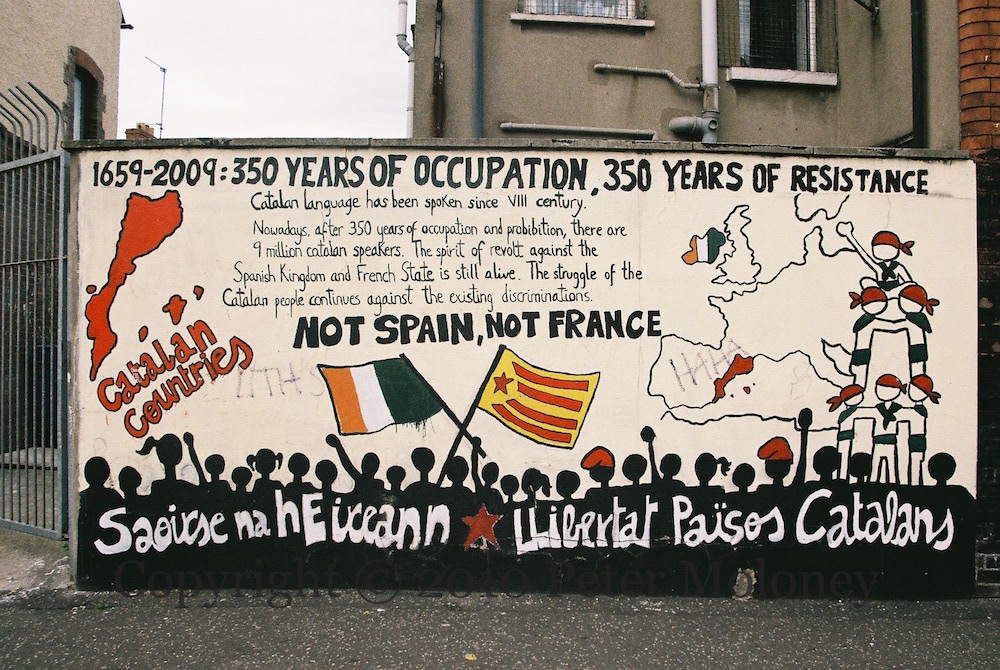
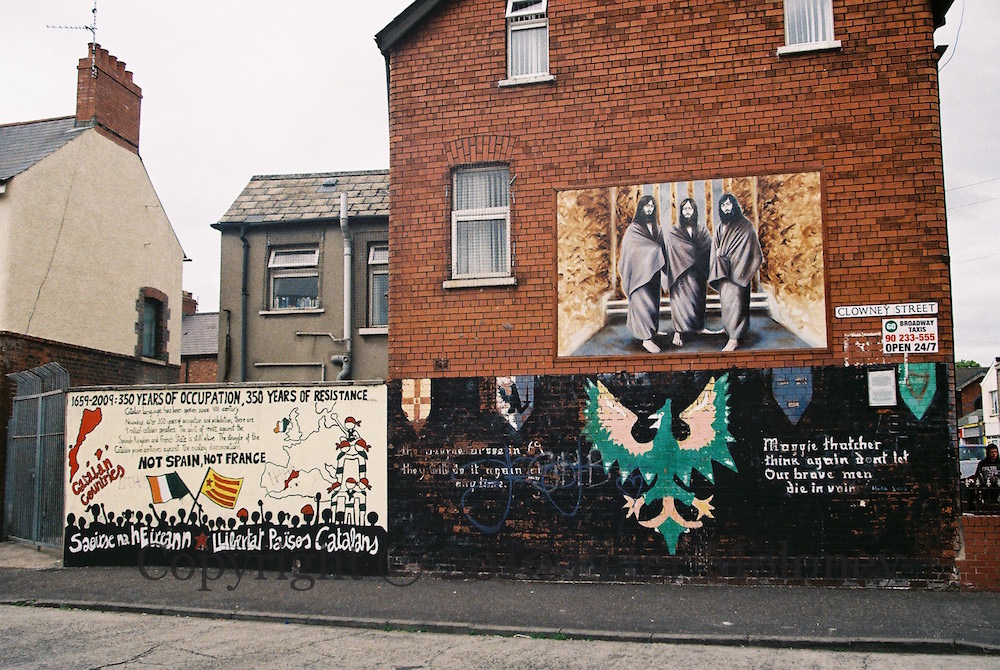
“1650-2009: 350 years of occupation, 350 years of resistance. Catalan language has been spoken since VIII century. Nowadays, after 350 years of occupation and prohibition, there are 9 million Catalan speakers. The spirit of revolt against the Spanish kingdom and French state is still alive. The struggle of the Catalan people continues against the existing discriminations. Not Spain, not France.” “Saoirse na hÉireann, Llibertat Països Catalans”. In Clowney Street next to the ‘1969 Phoenix’ mural which dates back to 1981.
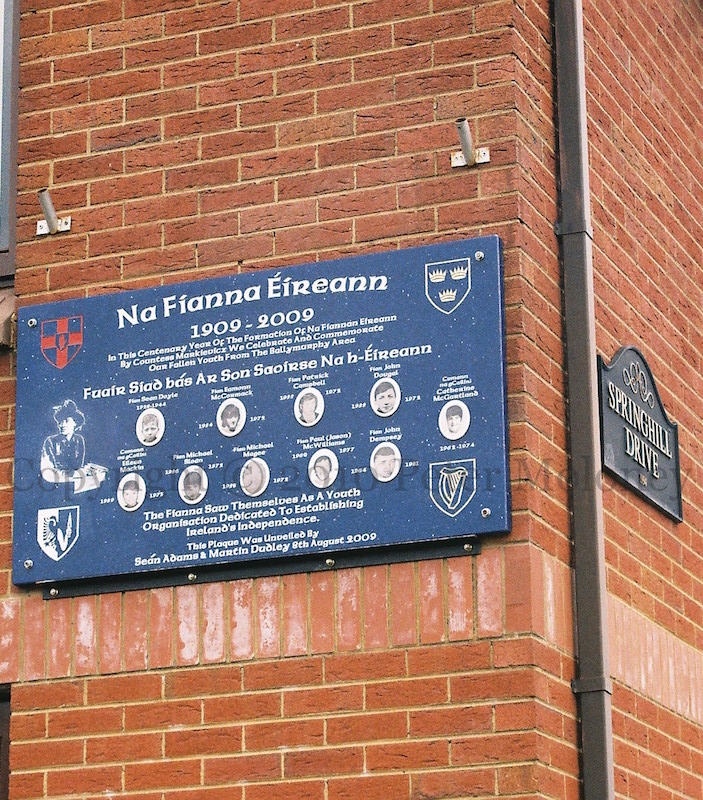
“Na Fıanna Éıreann. 1909-2009. In this centenary year of the formation of Na Fıannan [sic] Éıreann by Countess Markievicz we celebrate and commemorate our fallen youth from the Ballymurphy area. Fuaır sıad bás ar son saoırse na hÉıreann.” Doyle, McCormack. Campbell, Dougal, Sloand, Magee, McWilliams, Dempsey also Cumann Na gCaılíní Mackin and McGartland. “The Fianna saw themselves as a youth organsiation dedicated to establishing Ireland’s independence. This plaque was unveiled by Seán Adams & Martin Dudley 8th August 2009.”
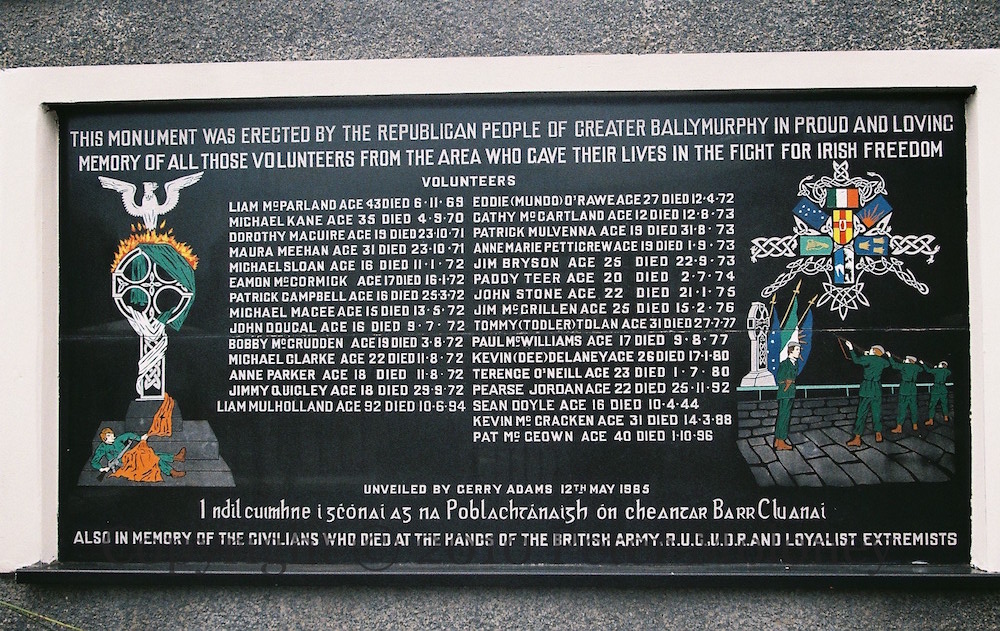
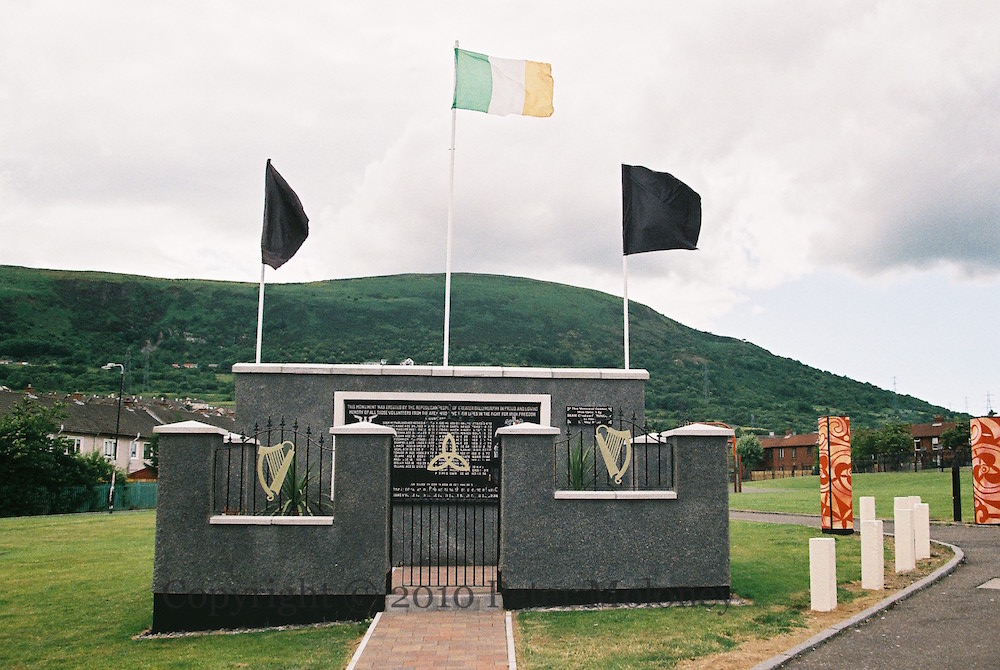
“This monument was erected by the republican people of greater Ballymurphy in proud and loving memory of all those volunteers from the area who gave their lives in the fight for Irish freedom.” Volunteers McParland, Kane, Maguire, Meehan, Sloan, McCormick, Campbell, Magee, Dougal, McCrudden, Clarke, Parker, Quigleey, Mulholland, O’Rawe, McGartland, Mulvenna, Pettigrew, Bryson, Teer, Stone, McGrillen, Tolan, McWilliams, Delaney, O’Neill, Jordan, Doyle, McCracken, McGeown. “Unveiled by Gerry Adams 12th May 1985. I ndıl cuımhne [chuımhne] i gcónaí ag na poblachtánaıgh ón cheantar Barr Cluanaí. Also in memory of the civilians who died at the hands of the British Army, RUC, UDR, and loyalist extremists.” The launch date of 1985 refers to the plaque’s former location in Glenalina Road (seen in 2001 and 2002).
Tá Ár gCultúr Beo (“Notre culture est vivante/La nostra cultura e viva/Our culture is alive”) was painted by Mo Chara Kelly with help from the local youth. The red parts of the mural use a translucent medium that Kelly had become acquainted with while painting in the United States (An Pobal A Phéınteáıl 10) that allow additional figures from modern Ireland (left) and Celtic Ireland (right) to be seen. The winged figure (repeated four times) is a heron that he found in a book of Celtic designs while serving time in Long Kesh.
The mural was the first of four projects in Springhill facilitated by the Upper Springfield Development Trust as part of a “West Belfast Arts & Heritage Trail” (as per the plaque just out of view to the right) or “Public Arts Trail”.
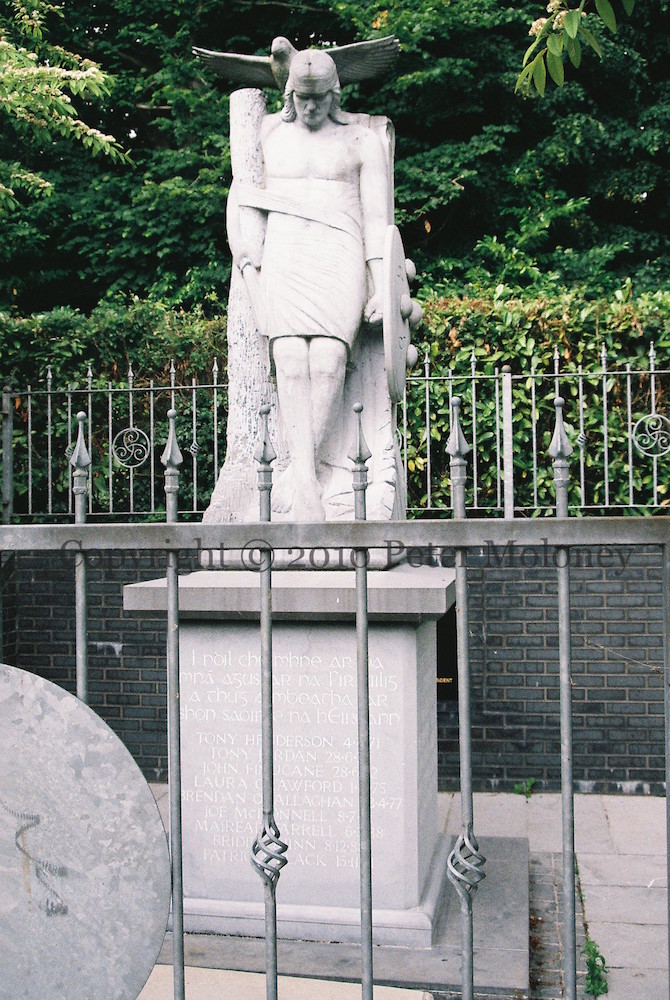
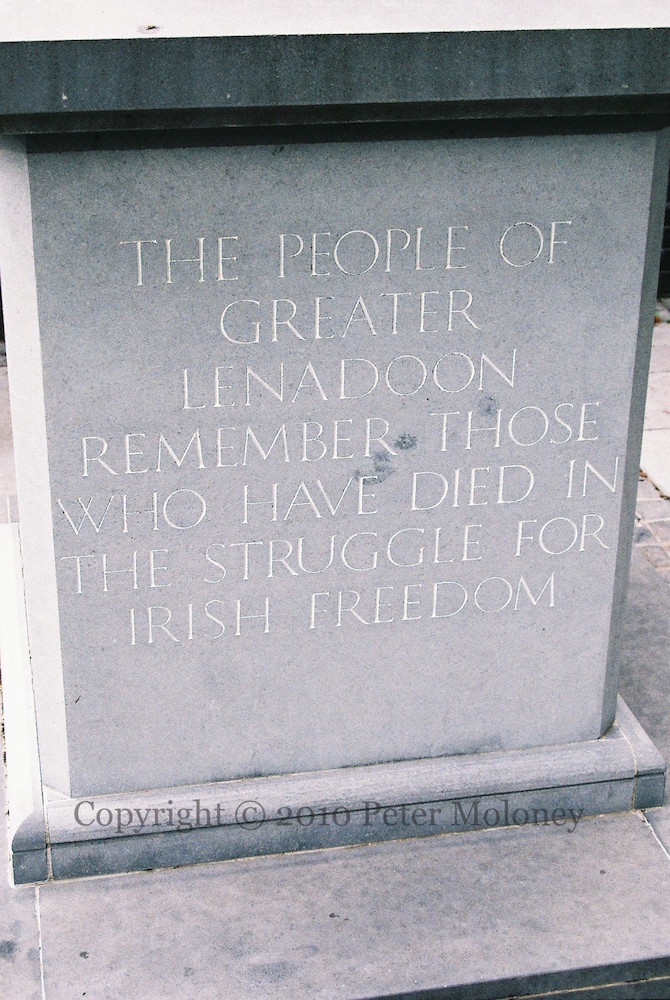
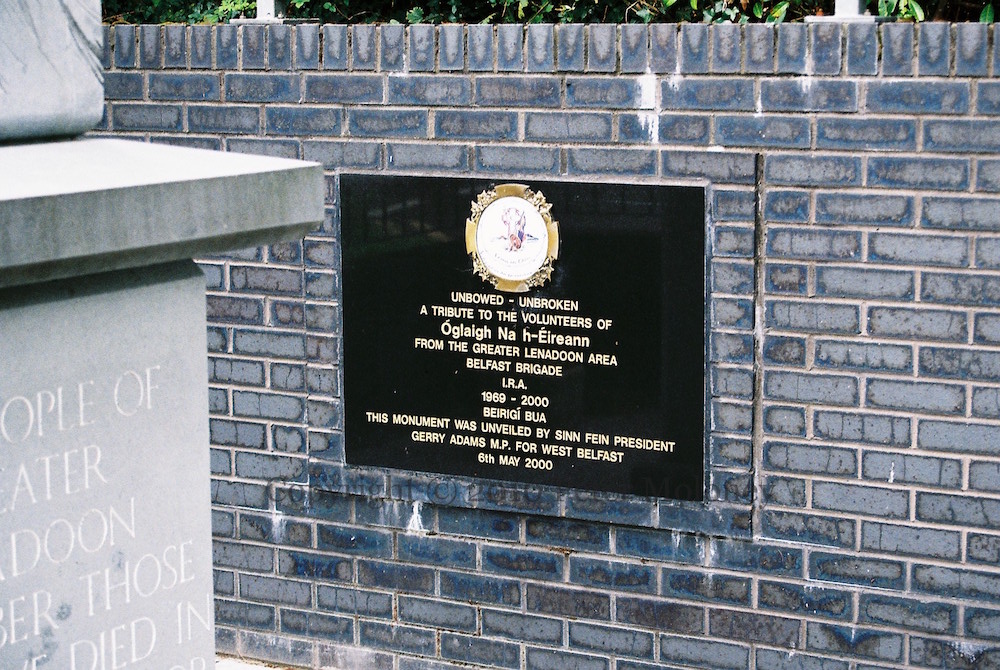
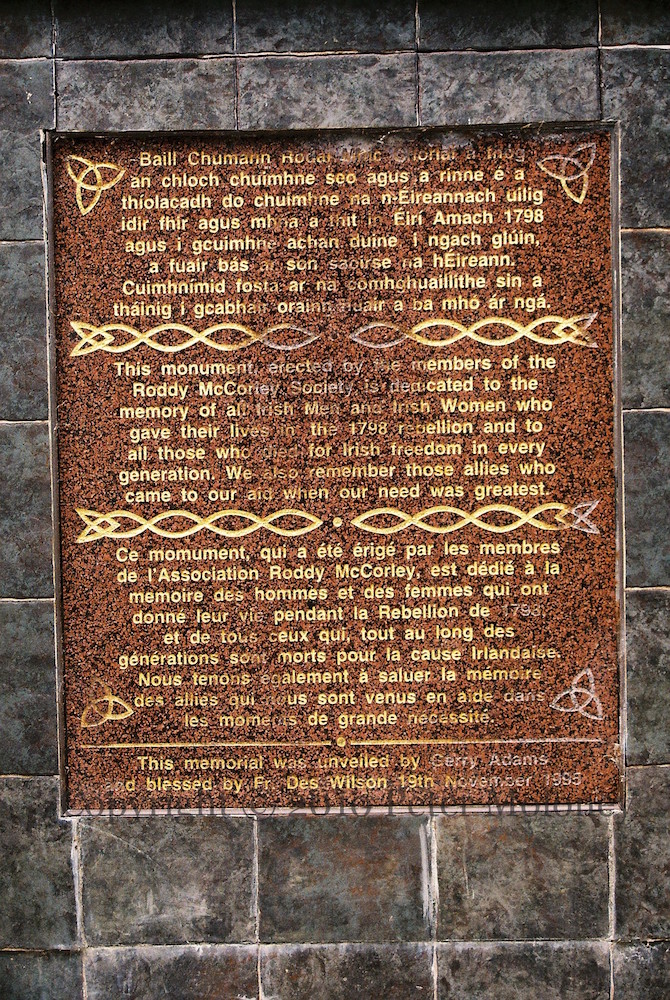
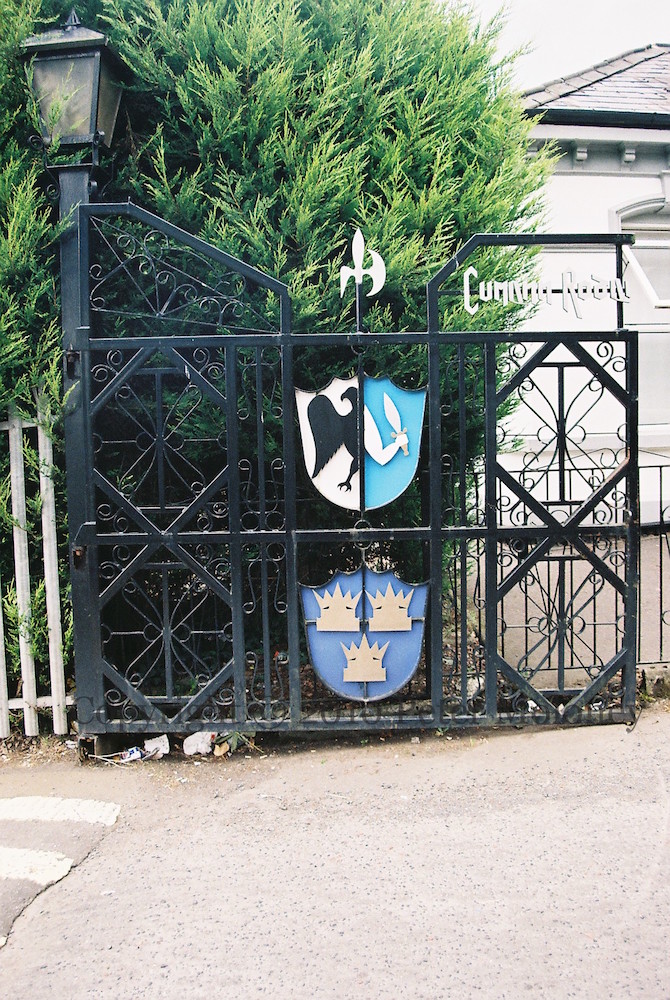
Images from the grounds of The Roddys club, Glen Road, Belfast, with memorials to McCorley (“In memory of Rody McCorley who was hanged here for his part in the rising of 1798 ‘The dead who died for Ireland, let not their memory die””), the deceased 1981 hunger strikers, the earlier 20th century hunger strikers (Thomas Ashe, Michael Fitzgerald, Terence MacSwiney, Joseph Murphy, Joseph Whitty, Denis Bary, Andrew Sullivan, Tony D’Arcy, Jack McNeela, Sean McCaughey, Michael Gaughan, Frank Stagg), Lenadoon deaths (Tony Henderson, Tony Jordan, John Finucane, Laura Crawford, Brendan O’Callaghan, Joe McDonnell, Mairead Farrell, Bridie Quinn, Patricia Black), Billy ‘Red’ Higgins founder member/president of the club, IRA volunteers from Lenadoon, “to the Irish men and Irish women who gave their lives in the rebellion of 1798”. Roddy McCorley, a Protestant member of the United Irishmen, is best known by the song written about his hanging at the bridge of Toome in 1800. (Here’s a version by Tommy Makem.)









 Peter Moloney Collection