Anti-Agreement stencilling in Meenan Square, Bogside, Derry: “Ireland unfree shall never be at peace – P. Pearse. PSNI-RUC not welcome. Tıocfaıdh Ár Lá” and “CIRA – RUC/PSNI scum beware”
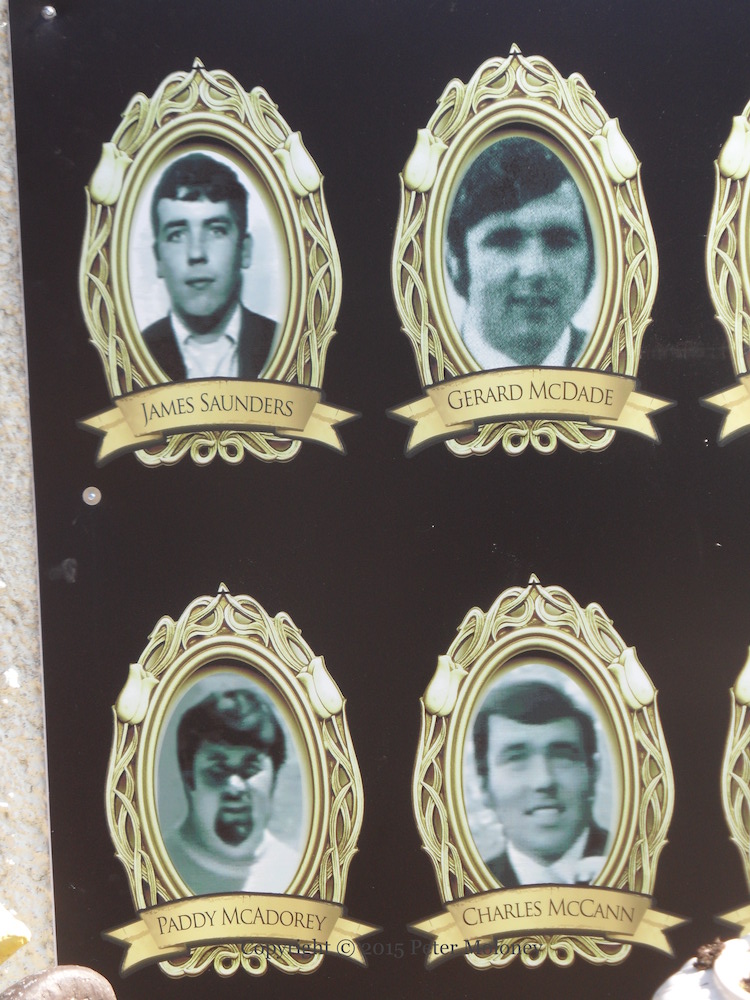
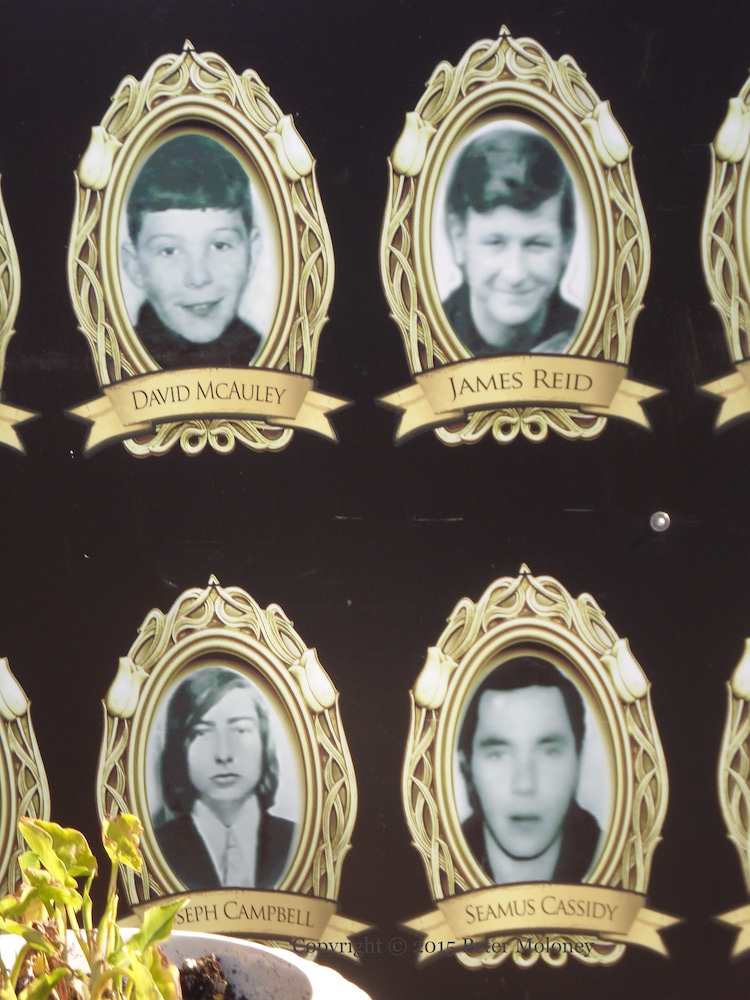
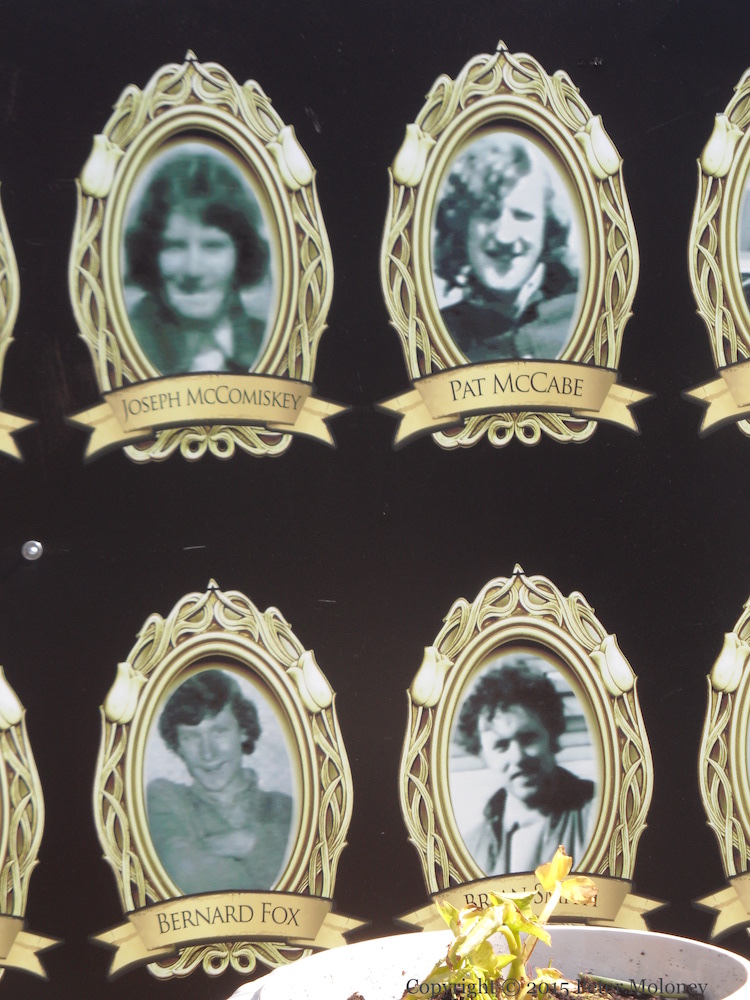
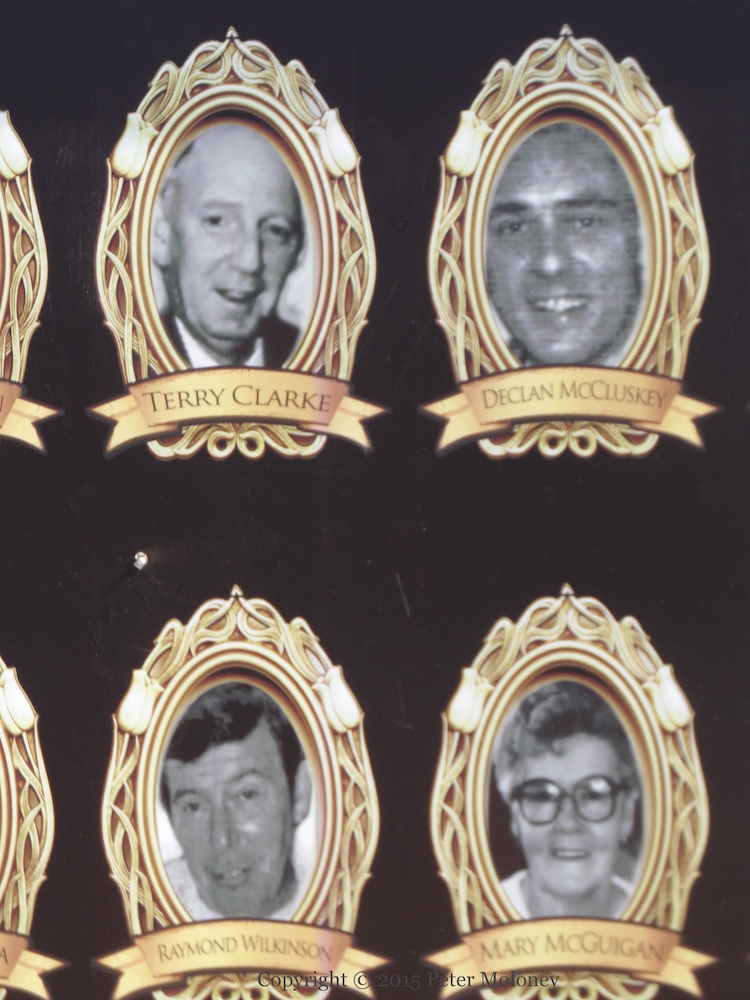
The forty portraits of local volunteers and activists have been moved over from the mural on Ardoyne Avenue after the plaster fell off (see Ardoyne, Bone, Ligoniel). For the (pre-existing) plaque and cross, see 2002 and 2015.
The portraits are of … above: James Saunders, Gerard McDade, David McAuley, James Reid, Joseph McComiskey, Pat McCabe, Sid McKee, John Copeland, Terry Toolan, Stephen Scullion, Terry Clarke, Declan McCluskey, Patrick Markey, Peter Hamilton, Seamus McCusker, Jim Mulvenna, Lawrence Montgomery, Larry Marley, Alan Lundy
below: Paddy McAdorey, Charles McCann, Joseph Campbell, Seamus Cassidy, Bernard Fox, Brian Smith, James McDade, James O’Hanlon, John Mooney, Barney McKenna, Raymond Wilkinson, Mary McGuigan, Martin Meehan, Maggie McClenaghan, Trevor McKibbin, Frankie Donnelly, Billy Carson, Sean Bateson, Thomas Begley
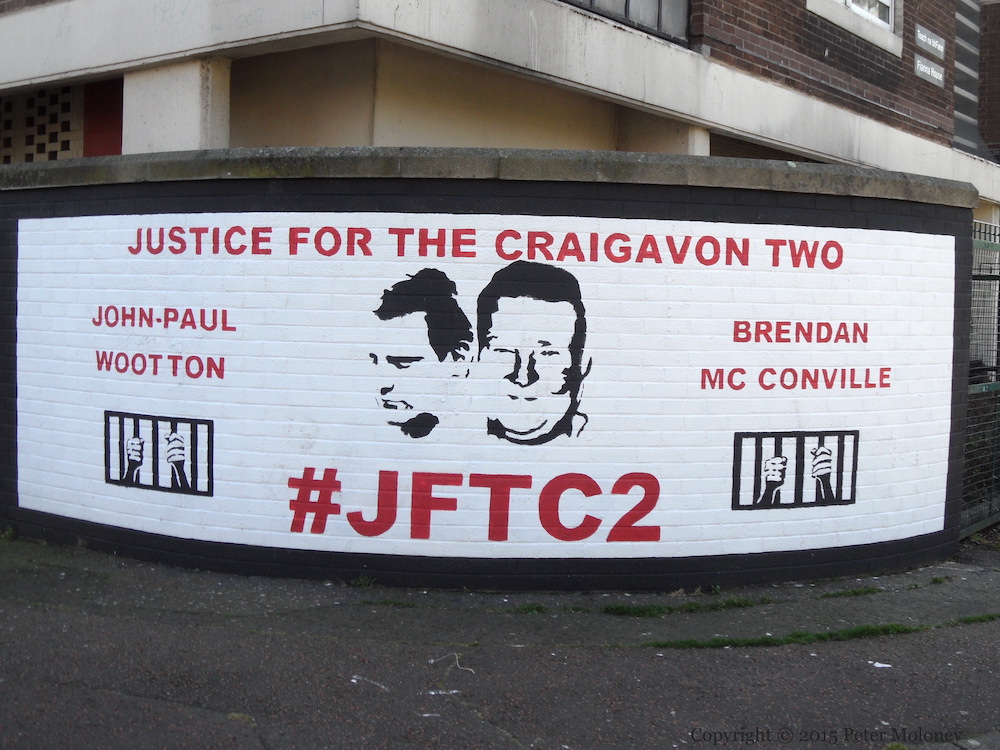
Brendan McConville and John Paul Wootton were convicted for their part in the 2009 killing of Stephen Carroll (BBC); campaigners on Facebook (one | two) continue to call for their release.
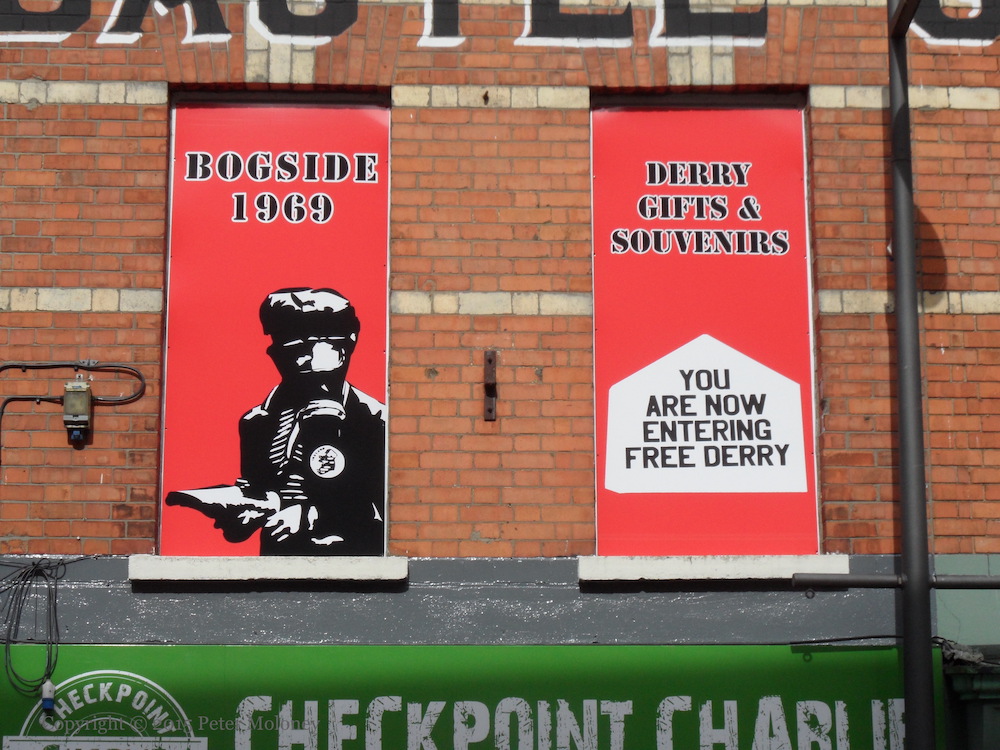
The Petrol Bomber and Free Derry Corner (Visual History) are the two touch-stone images representing “Bogside 1969” – some so-called “dark tourism” in Waterloo Street, Derry.
“Fáılte go dtí Brandywell” – this is a long mural about the welfare of children, citing rights 3, 6, 9, 23, 24, and 31 from the UN’s Convention On The Rights Of The Child, as rendered by Caroline Castle.
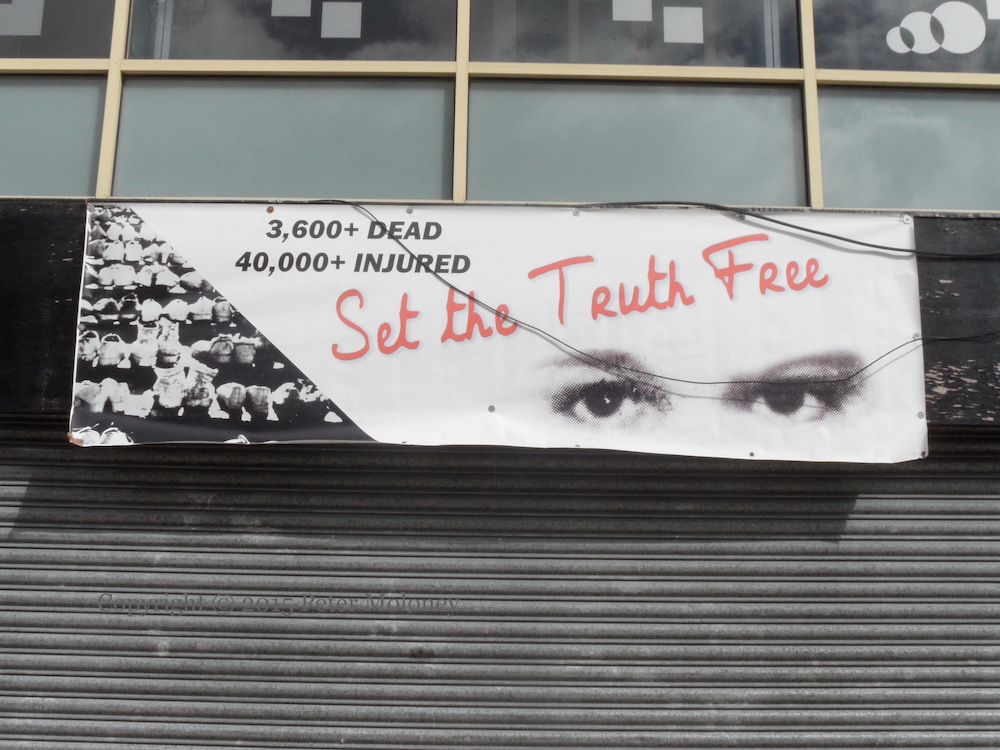
“Set The Truth Free” was the name of a campaign for justice and transparency concerning Bloody Sunday (see An Phoblacht | Pierce Youtube | Bell (2010)) but the numbers cited on this banner – “3,600 dead, 40,000 injured” – refer to the Troubles as a whole.
“Easter Sunday Commemoration 2015 – Sunday April 5th, Westland Street, 2pm sharp, main speakers Gearóıd Ó hEára. Cuımhnıgh ár maırbh thírghrácha [patriotic dead] le bród.”
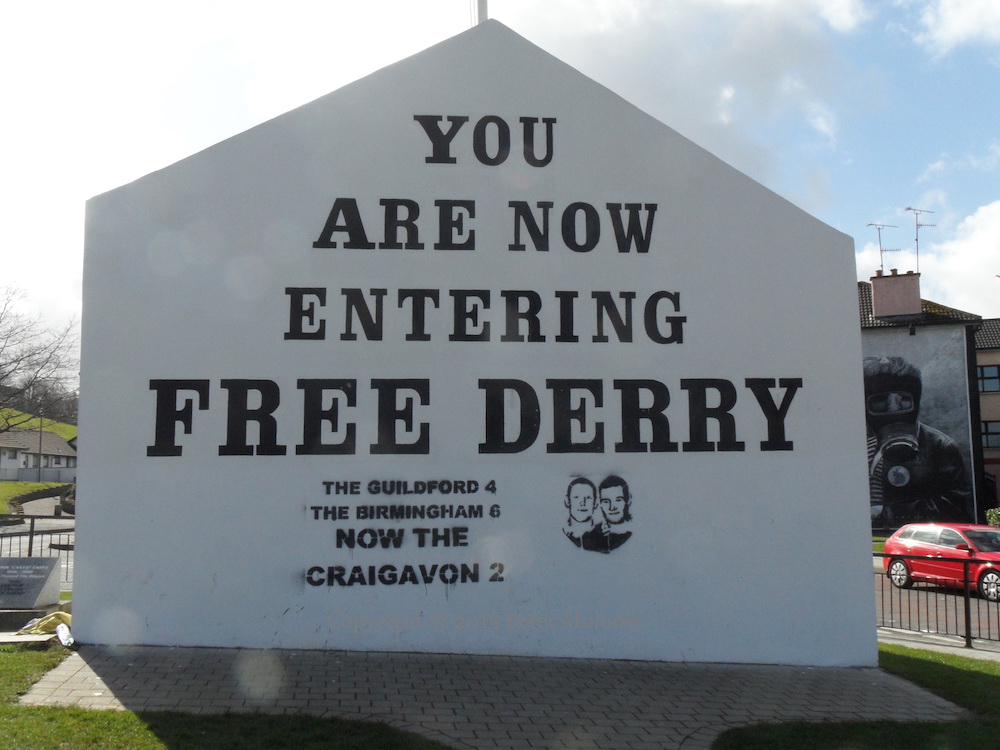
“The Guilford 4, the Birmingham 6, now the Craigavon 2”. “There may be times when we are powerless to prevent injustice, but there must never be a time when we fail to protest.”
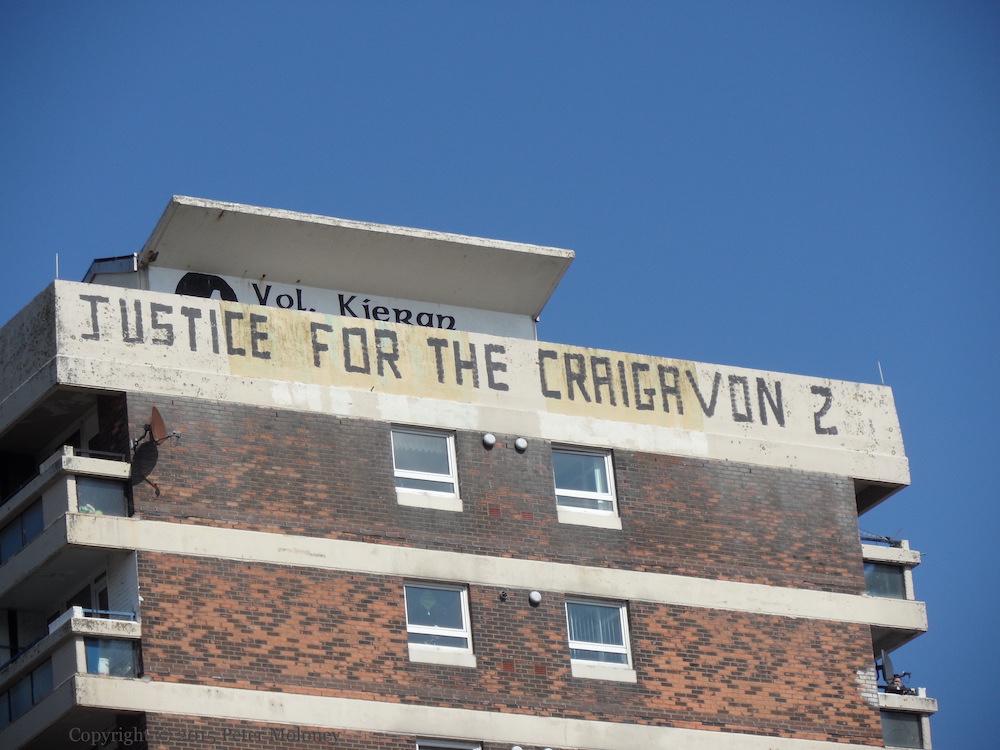
The Birmingham 6 were sentenced to life sentences in August, 1975, but their convictions were deemed unsafe in 1991. The Guilford 4 were sentenced in October, 1975, but their convictions were deemed unsafe in 1989. The Craigavon 2 – John-Paul Wootton and Brendan McConville – were sentenced in 2012 to terms of 18 and 25 years, respectively, for the murder of PSNI Constable Steven Carroll; their appeals so far have been thrown out (Hearty 2015 pdf).
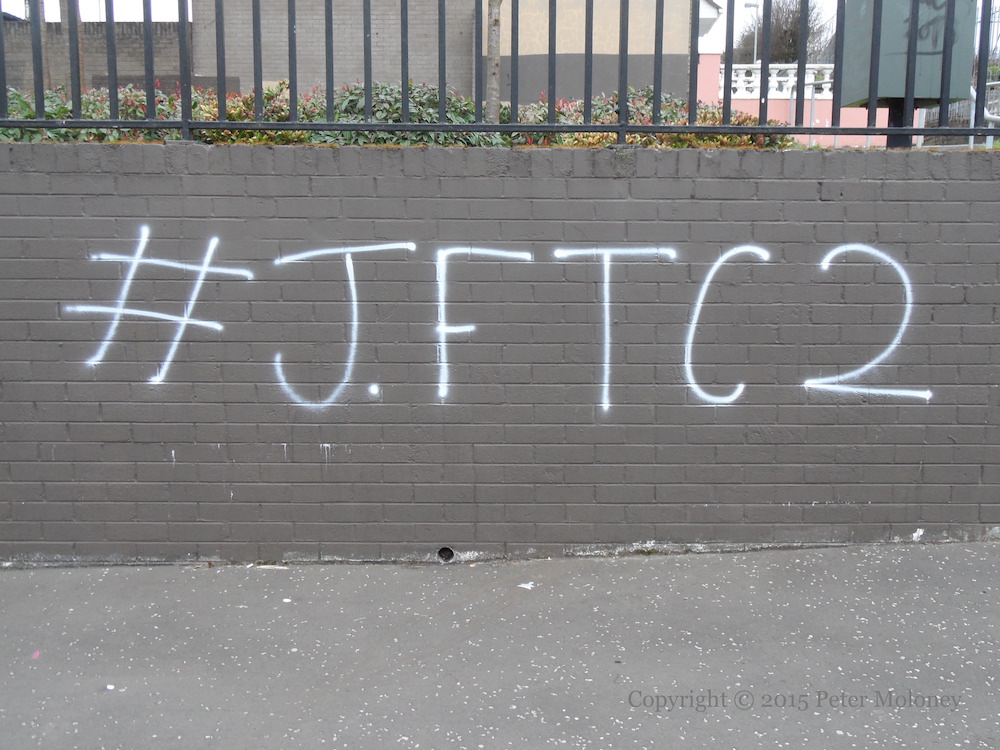
Free Derry Corner, Derry (Visual History). The simple graffiti is in Bishop Street; the other pieces are in the Brandywell.
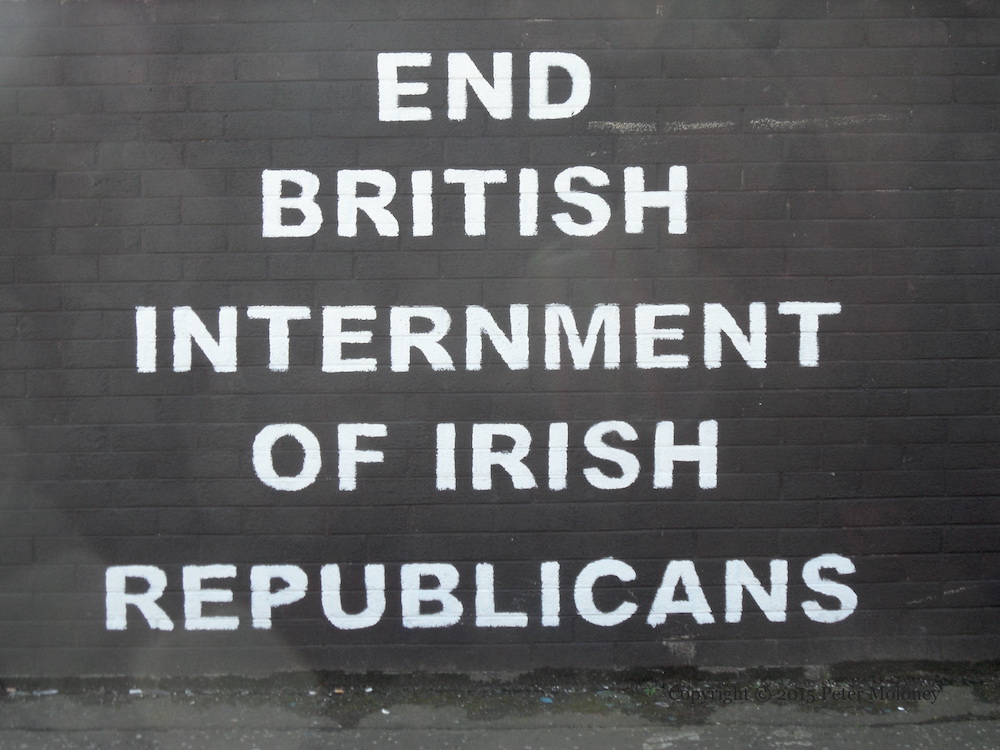
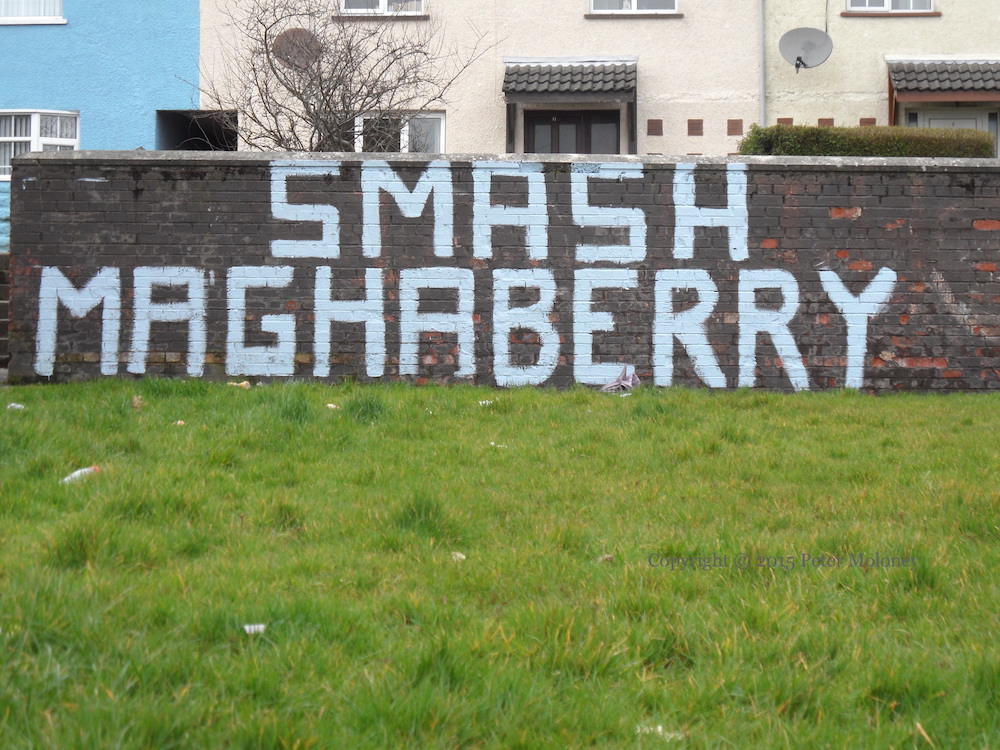
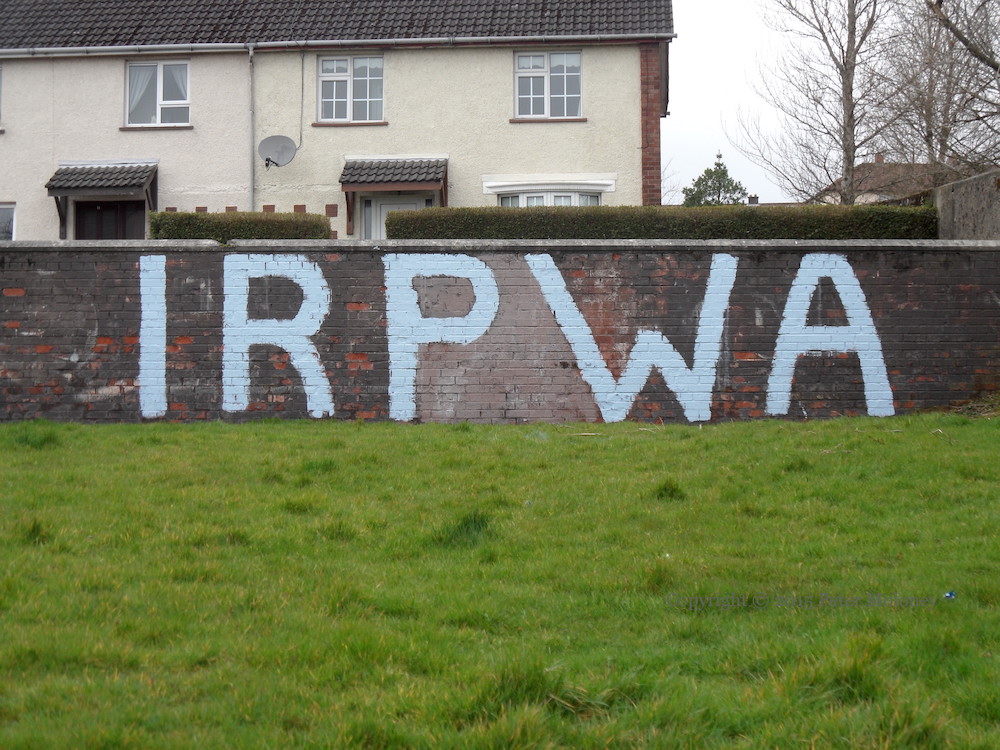
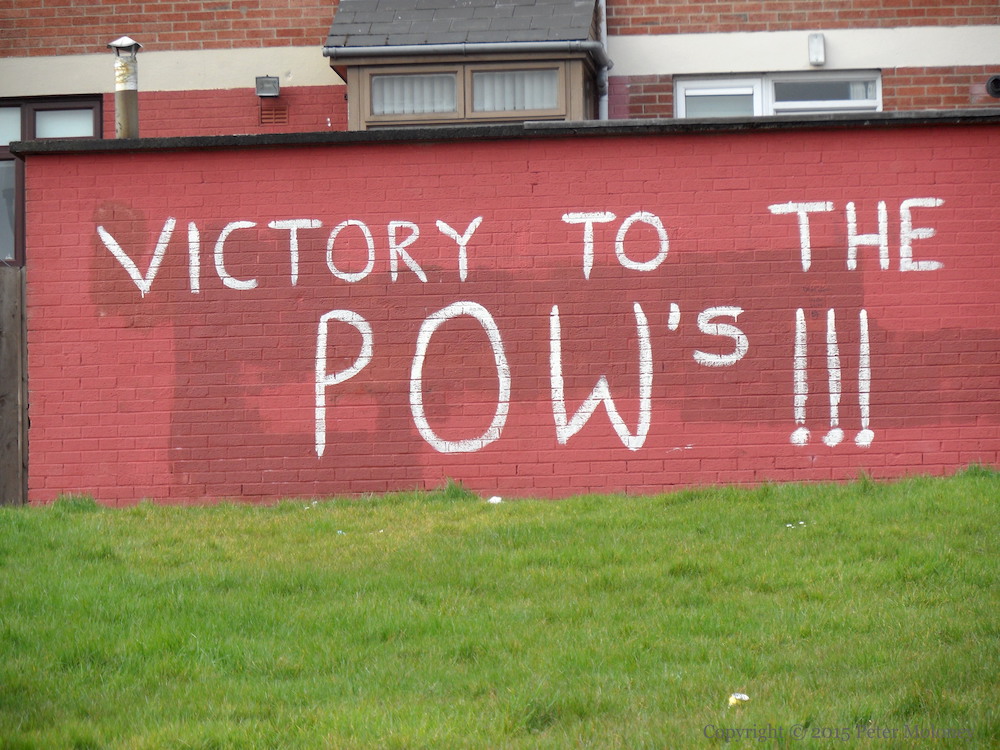
These anti-Agreement graffiti are in Foylehill (mostly Kildrum Gardens and Southway): “Smash Maghaberry”, “IRPWA”, “RUC not welcome in Foylehill”, “Victory to the POWs”, “End British internment”, Tıocfaıdh ár lá”.
The phrase “We only have to be lucky once” is from the IRA statement on the 1984 Brighton hotel bombing (WP).
The final piece dates back to 2009: “Internment 71-09. What has changed? Brits out, not sell out.”