The Women Of 1916

“They stand for the honour of Ireland/As their sisters in days that are gone/And they’ll march with their brothers to freedom/The soldiers of Cumann Na mBan.” “This mural is dedicated to the Women of Cumann Na mBan, Óglaıgh Na hÉıreann & Sınn Feın”. “From R[uth] Taillon’s book The Women Of 1916.” With portraits of two volunteers with Belfast associations: Winifred Carney and Nora Connolly. Hawthorn Street, Belfast. Seen previously in 2001 left | right.

Click image to enlarge
Copyright © 2004 Peter Moloney
M02207

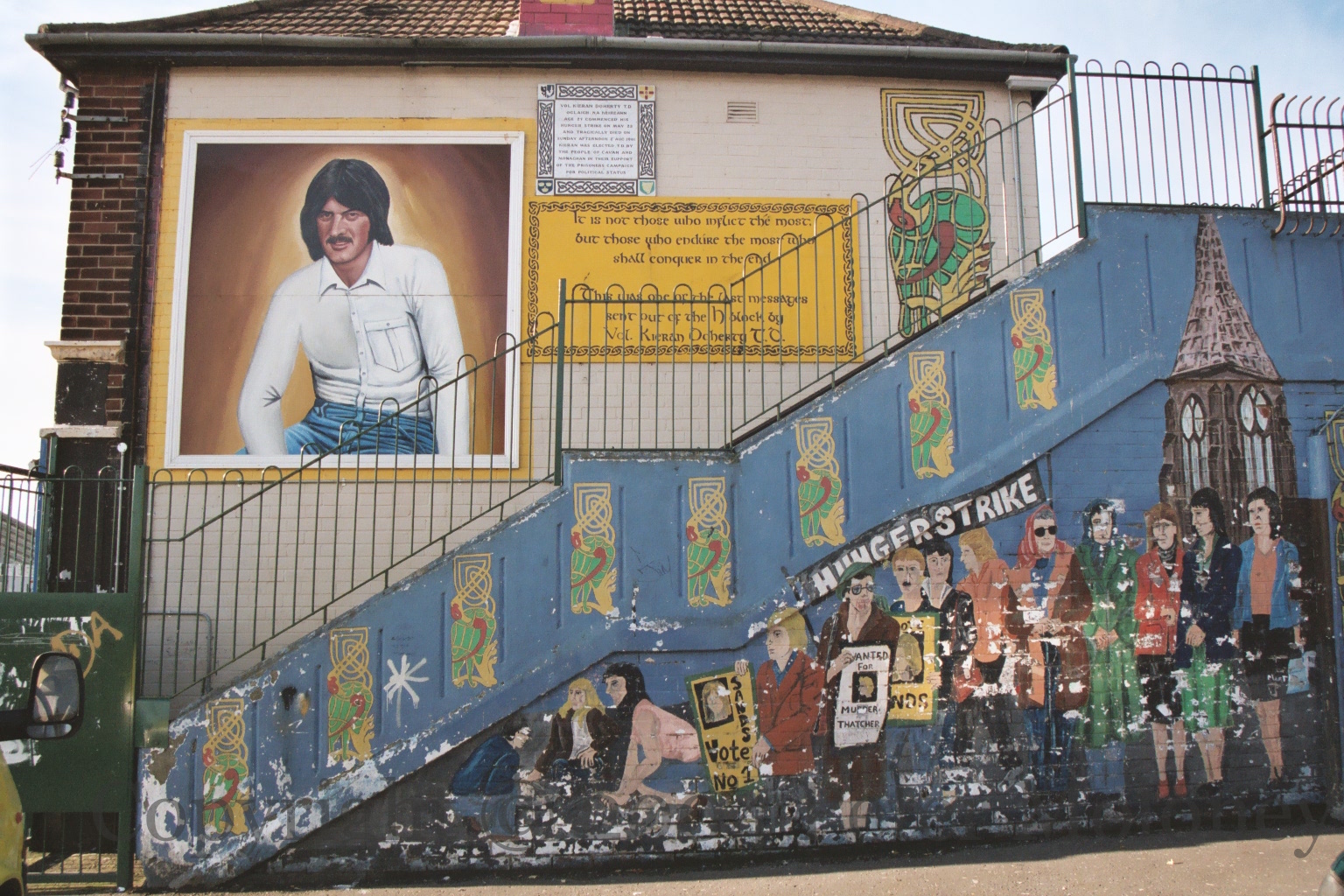
Vol. Kieran Doherty TD

Kieran Doherty was elected TD (Teachta Dála) for Cavan-Monaghan three weeks into his 1981 hunger strike. He held the position for two months, until he died on August 2nd. The portraits, plaques, and mural of marchers are in his home area of Andersonstown. The words “It is not those who inflict the most, but those that can endure who shall conquer in the end” are an echo of Terence MacSwiney, whose hunger strike in 1920 lasted 74 days, one more than Doherty’s.

(2004 images of 2001 M01476)

Slemish Way, Andersonstown, west Belfast

Click image to enlarge
Copyright © 2004 Peter Moloney
M02192

They Were Faithful And They Fought

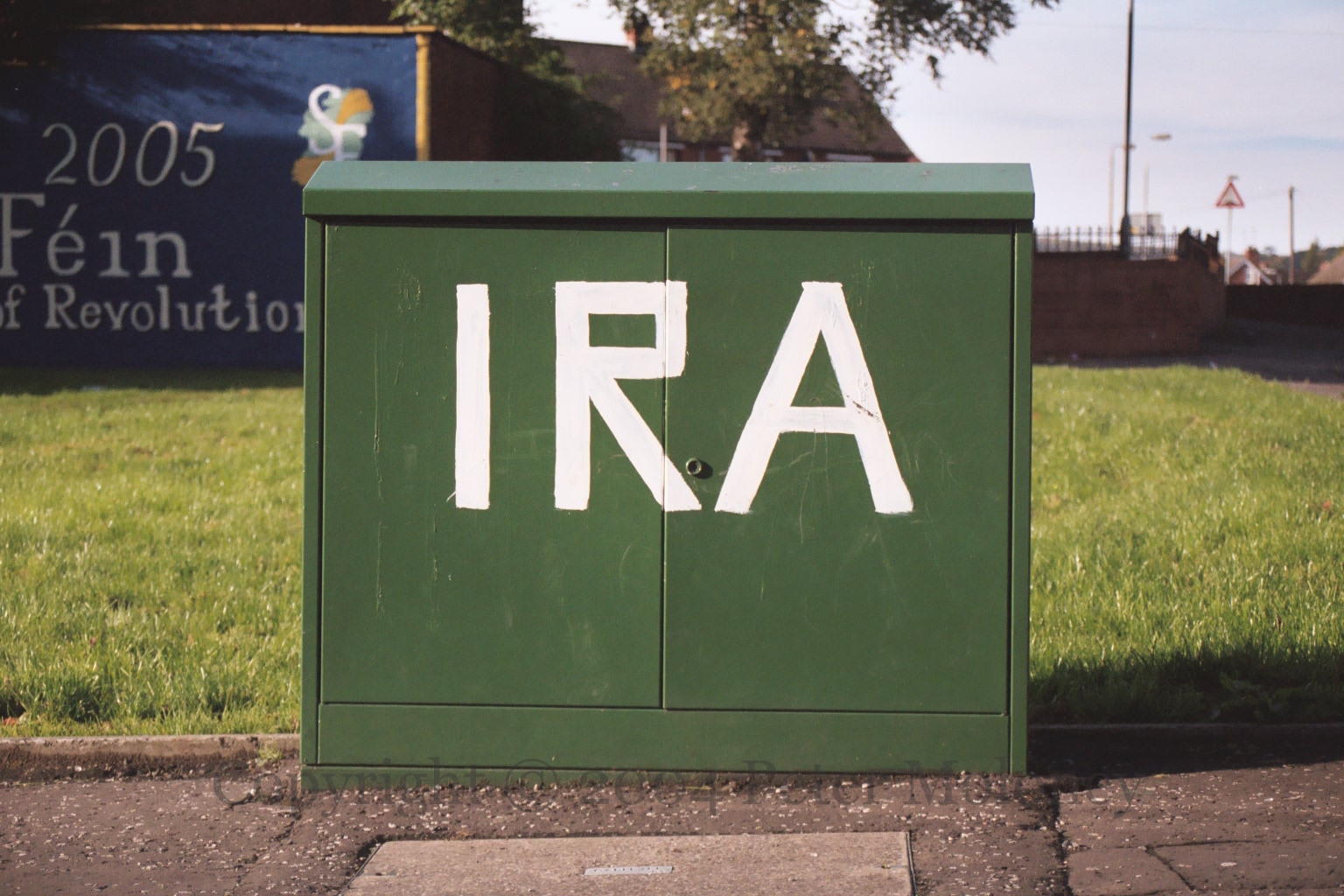
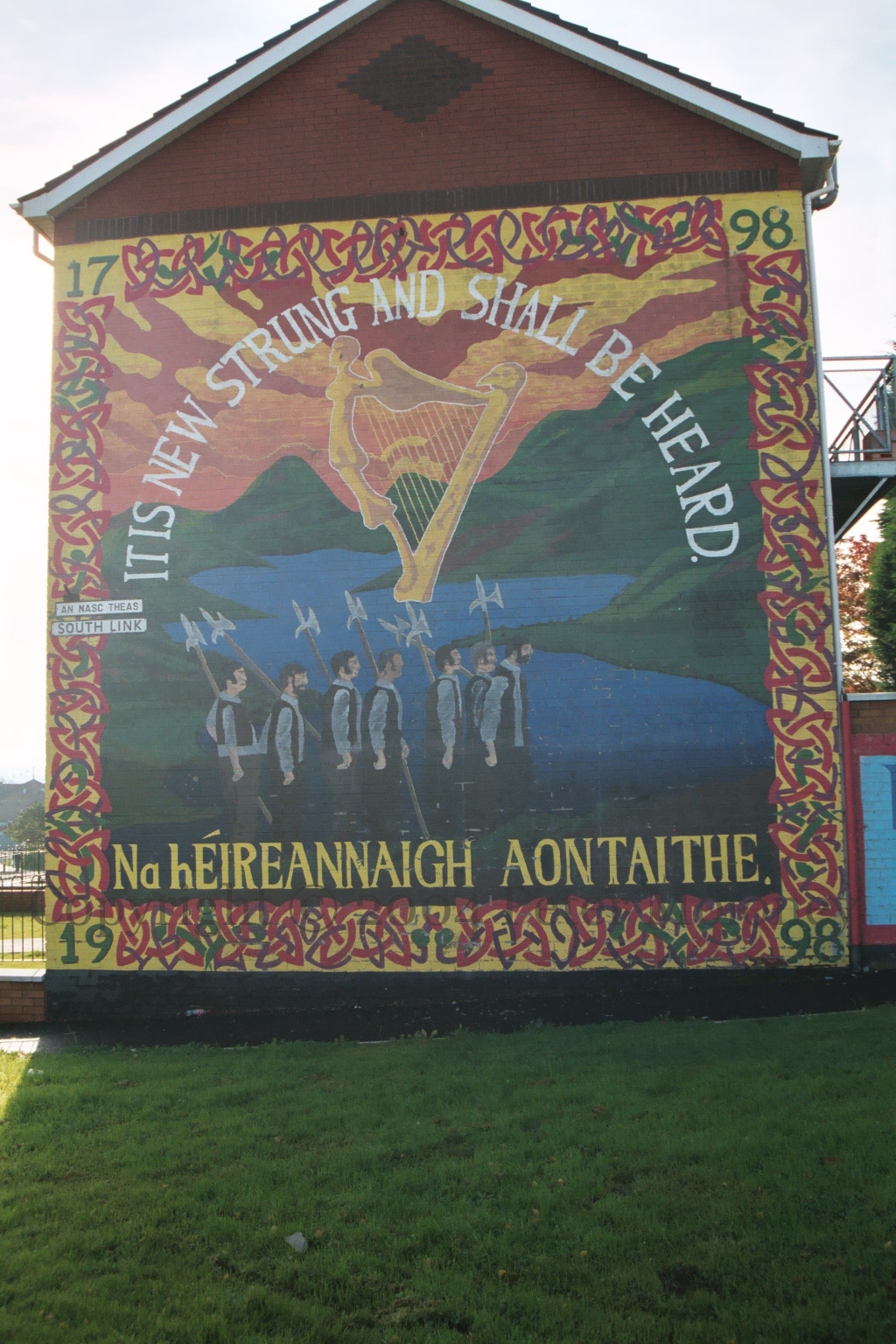
Two images from the memorial garden in South Link, Andersonstown, Belfast to volunteers from the First Belfast Brigade (céad cathlán den Briogáid Bheal Feirste), members of the “republican movement” and “the civilians who died at the hands of the British Army, RUC, UDR, and loyalist extremists”.

Click image to enlarge
Copyright © 2004 Peter Moloney
M02186 M02185

One Hundred Years Of Revolution

The defining objective of the Sınn Féın movement was expressed by Arthur Griffith, editor of the newspaper United Irishman, in 1905: to form a Dublin government “endowed with the moral authority of the Irish nation”. In 1907 three recently created parties united to form Sınn Féın, Cumann Na nGaedheal (1900), the Dungannon Clubs (1905), and the National Council (1903). In 2004, the organisation was looking forward to its centenary.

South Link, Andersonstown, Belfast

Click image to enlarge
Copyright © 2004 Peter Moloney
M02184

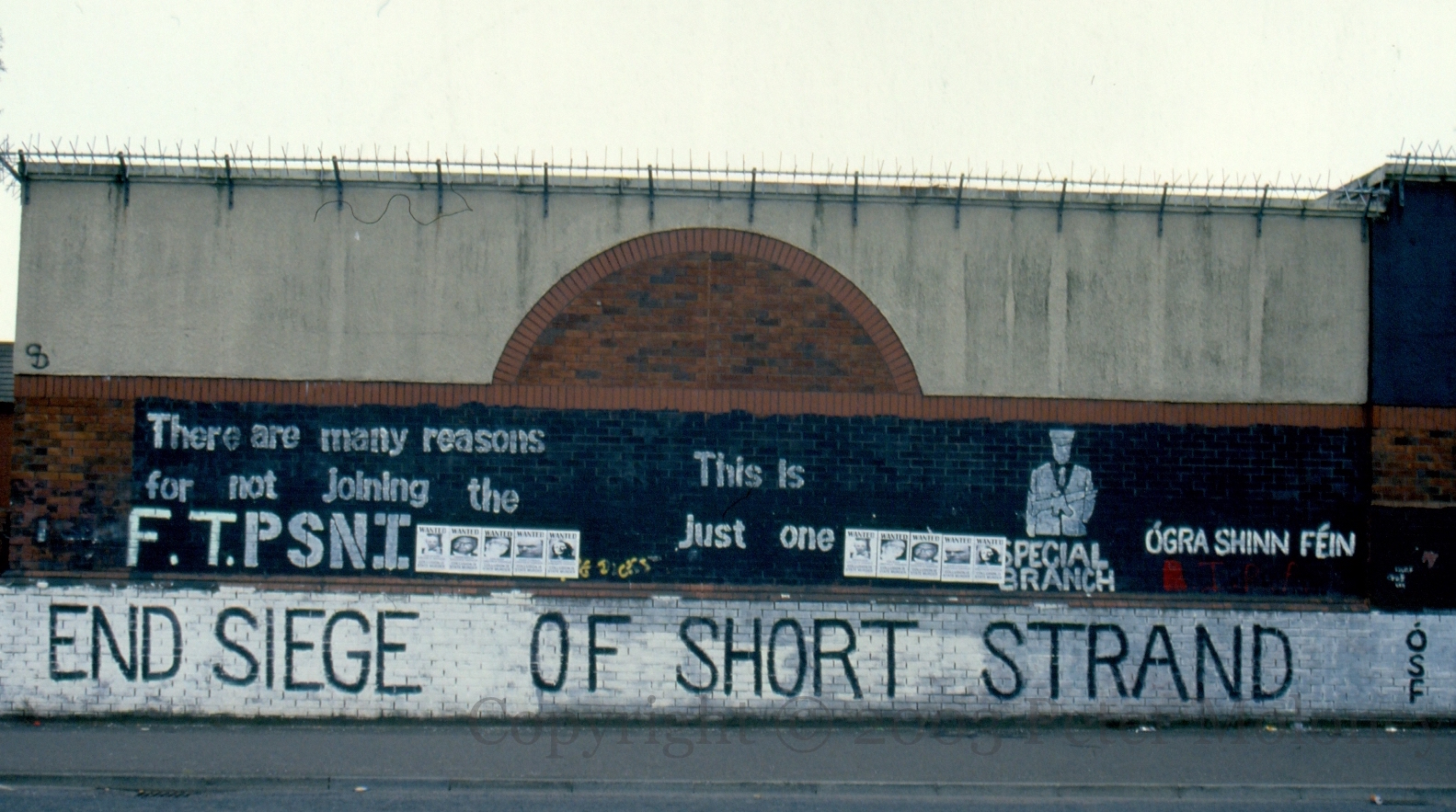
End Siege Of Short Strand

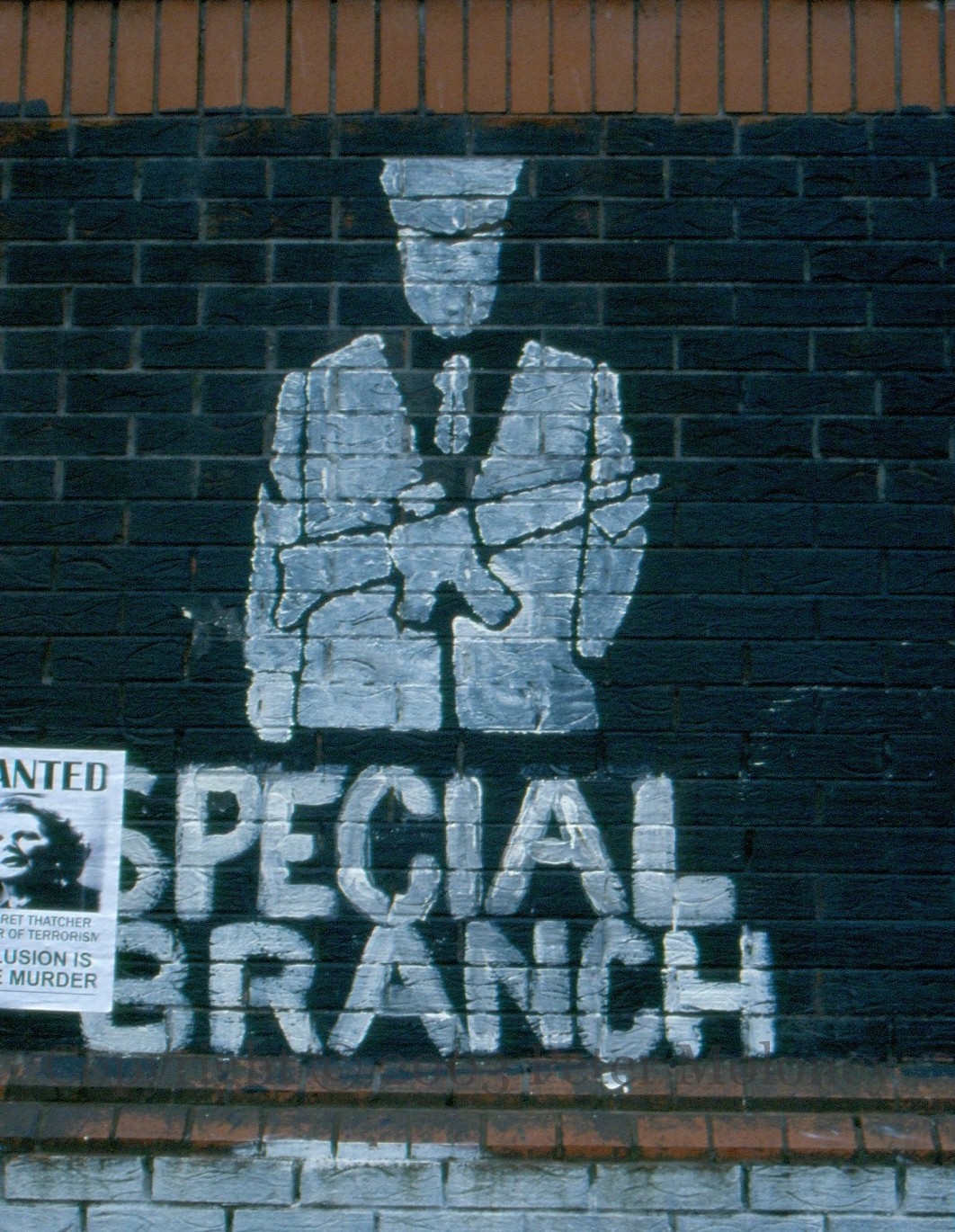
Short Strand is a Catholic enclave of about 1,000 people in Protestant east Belfast. Throughout 2001 and 2002, the interface saw gun battles and rioting between the two factions. Here is a Guardian account of events in 2002. Above is a rejection of the new PSNI “There are many reasons for not joining the PSNI – this is just one” with a series of wanted posters (seen Collusion! Collusion! and Collusion Is State Murder plus one of Patrick Mayhew). Both parts by Ógra Shınn Féın. Divis Street, Belfast.

Click image to enlarge
Copyright © 2003 Peter Moloney
M02011 M02010 [M02008 M02009]

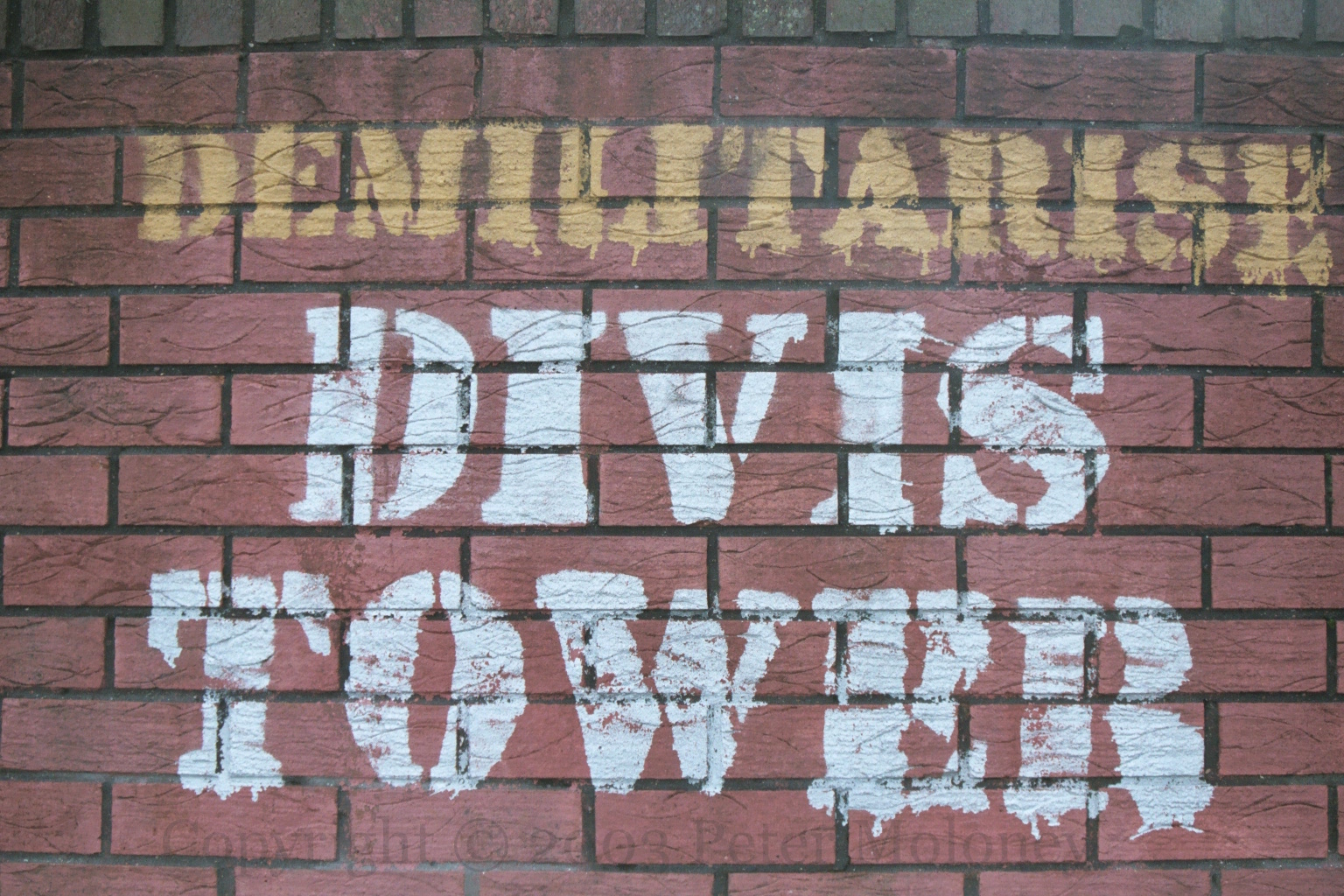
Demilitarise Divis Tower

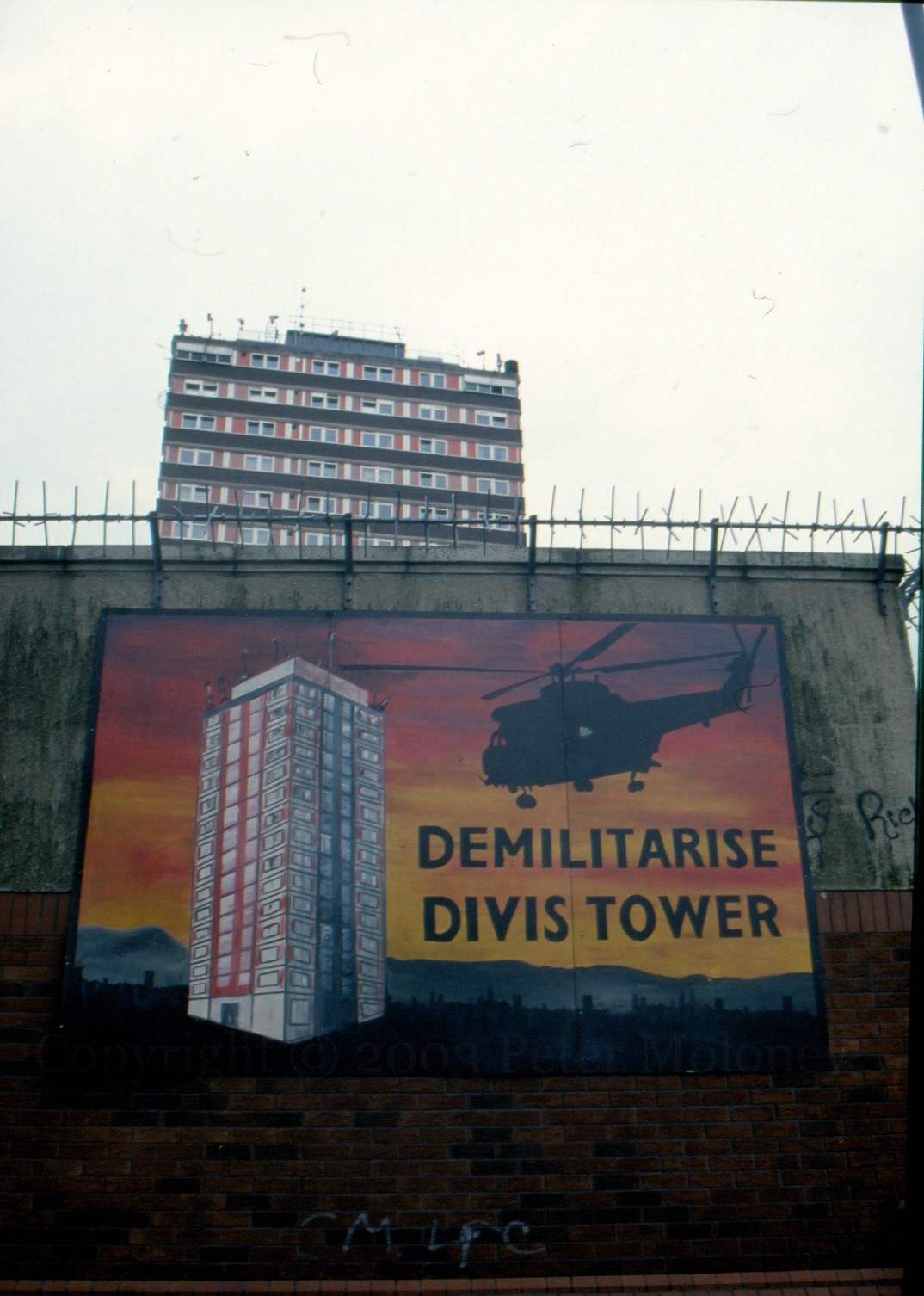
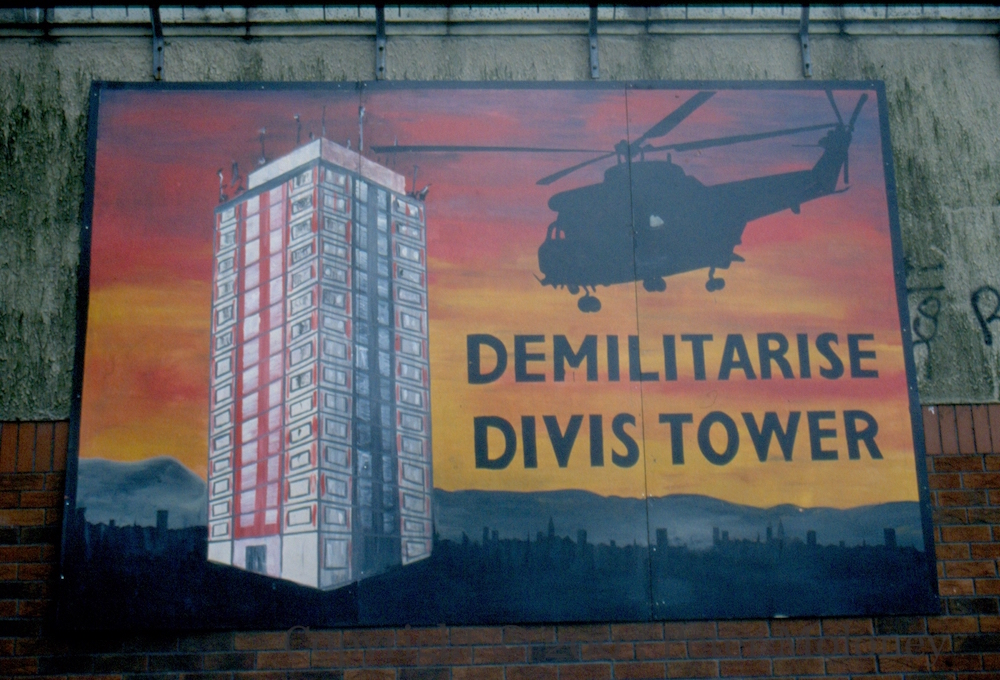
Following the unrest of 1969, the British Army took over the top two floors (18 and 19) of Divis Tower, for use as an observation post (notice all of the devices on poles in both the painting and reality) and was accessed by helicopter. The post would be dismantled in 2005 (BBC-NI has some images). Divis Street, Belfast.

Click image to enlarge
Copyright © 2003 Peter Moloney
M02013 M02012 M02006

Ban Plastic Bullets

The long wall on Divis Street, Belfast, was originally largely covered by a to-scale stencil, called ‘Ban Plastic Bullets‘, detailing the distances at which the victims of plastic bullets were shot. The addition of Spot The Difference and West Belfast Taxis Tours in 2003 meant that only about half of it remained. These two are the right-hand side of the remaining mural.

Click image to enlarge
Copyright © 2003 Peter Moloney
M02003 M02004