“Éamonn Ceannt quote, Kilmainham Jail 1916. “I leave for the guidance of other revolutionaries, who may tread the path which I have trod, this advice: never treat with the enemy, never to surrender to his mercy but to fight to a finish.” East Tyrone remembers.”
This is a 1916 Societies (.ie) placard on the disused barracks in Plater’s Hill/Lineside Coalisland Plater’s Hill, Coalisland. See previously: Never Treat With The Enemy.
“Important/Tábhachtach – Faıgh do vóta/Get your vote. Is everyone in your house on the electoral register? Gach vóta luachmhar…/Every single vote counts …” This is a generic electoral board encouraging voter registration (for Sınn Féın voters, at least) as there are elections scheduled until the local and European votes in May, 2014.
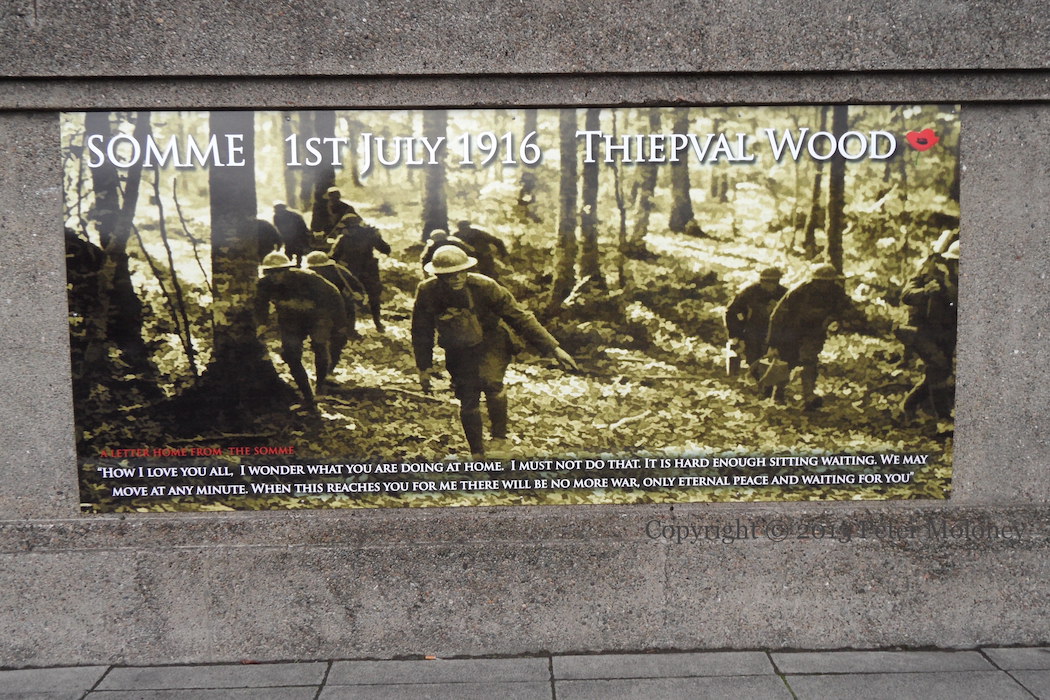
A letter home from the Somme: “How I love you all. I wonder what you are doing at home. I must not do that. It is hard enough sitting waiting. We may move at any minute. When this reaches you for me there will be no more war, only eternal peace and waiting for you.” July 1st, 1916 saw the start of the Battle Of The Somme. The 36th (Ulster) division lost over 5,000 men in an initial successful attack near Thiepval Wood, but were driven back that evening.
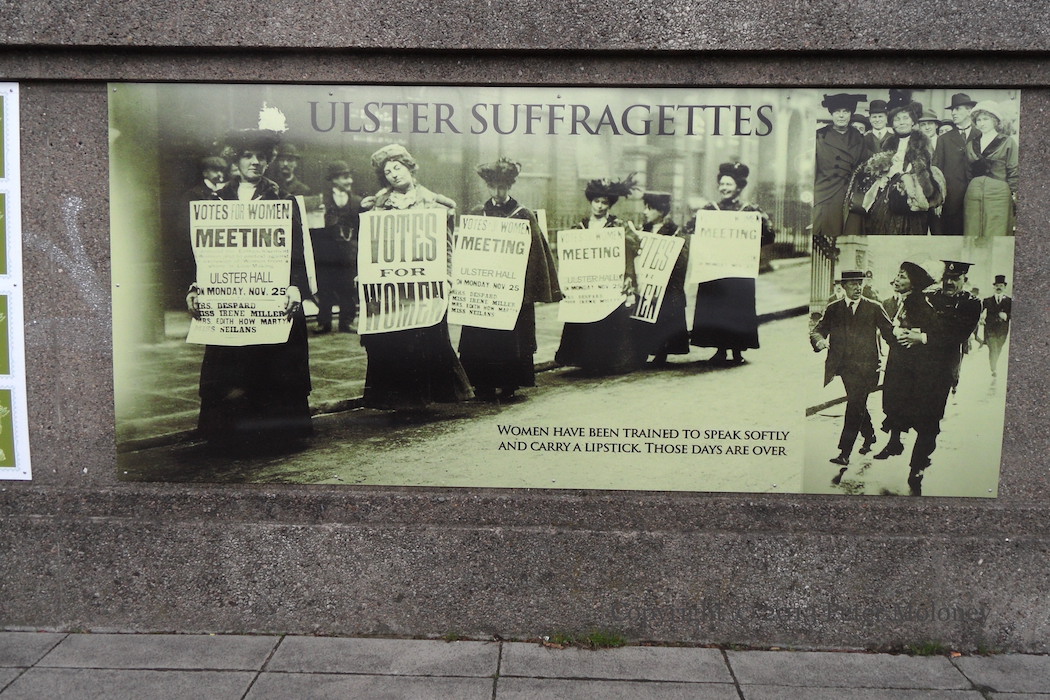
Ulster suffragettes: “Women have been trained to speak softly and carry a lipstick. Those days are over.” (Bella Abzug). The board shows a picture of women drumming up an audience for a suffragette meeting in the Ulster Hall in November 1912. The image in the bottom right is of Emmeline Pankhurst being arrested in London in 1914; the top image is of Pankhurst on tour in the US in 1913 (LoC; see Pieces Of History for a description of the tour; she gave a speech entitled ‘Freedom Or Death’). Pankhurst spoke in Belfast at the 1912 meeting, though the speakers advertised on the placards are “Mrs Charlotte Despard, Miss Irene Miller, Mrs Edith How-Martyn, Miss Alison Neilans“. The first suffrage group in Ireland was the North Of Ireland Women’s Suffrage Society, founded in Belfast in 1872 by Isabella Tod. See also Belfast’s Infamous Prison for information about suffragettes held in Crumlin Road Gaol.
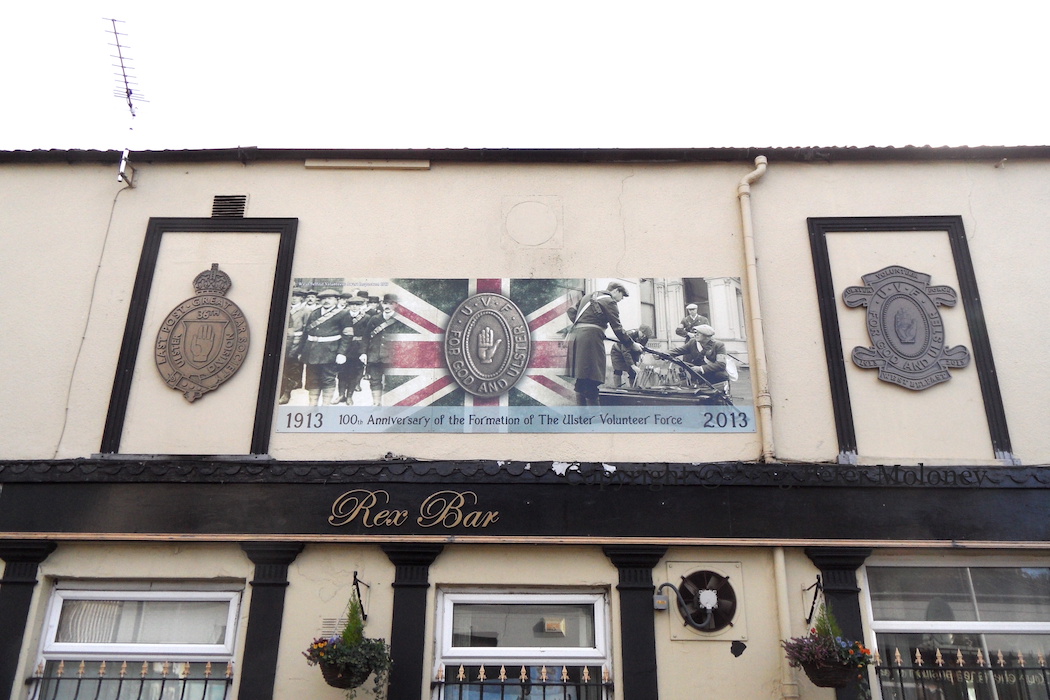
“100th Anniversary Of The Formation Of The Ulster Volunteer Force 1913-2013”, flanked by two large emblems, reading “Last Post Great War Society – 36th (Ulster) Division” and “Ulster Volunteer Force, west Belfast”.
Above the courtyard of the Rex Bar, Moscow Street, west Belfast.
These republican graffiti (and one 1916 Societies board) come from Creggan, Derry. From top to bottom: “UK no way”, “Join police, face death”, “PSNI/RUC not welcome”, “Join [New] IRA”.
South Belfast MP Robert Bradford was assassinated by the Provisional IRA in Finaghy at a meeting with constituents; the caretaker of the community centre, Ken Campbell, was also killed by the fleeing attackers. Taking place in late 1981, with the hunger strikes having ended only a month before, the killing was noted around the world and raised fears of broad civil unrest (BBC | NYTimes). The board immediately above replaces an earlier mural to Bradford on the gable wall that now hosts the large board shown above, commemorating the Siege Of Derry and specifically the “Apprentice Boys Of Derry No Surrender Club” of south Belfast.
This board on Rossville Street, Derry, originally named only “Colin Duffy”. It was then modified for Marian Price and again for Martin Corey. It now reads “End internment by remand and release the Duffy 3 now!” The “Duffy 3” are Colin’s brothers Paul and Damien and cousin Shane, who are charged with collecting information of use to terrorists (BelTel).
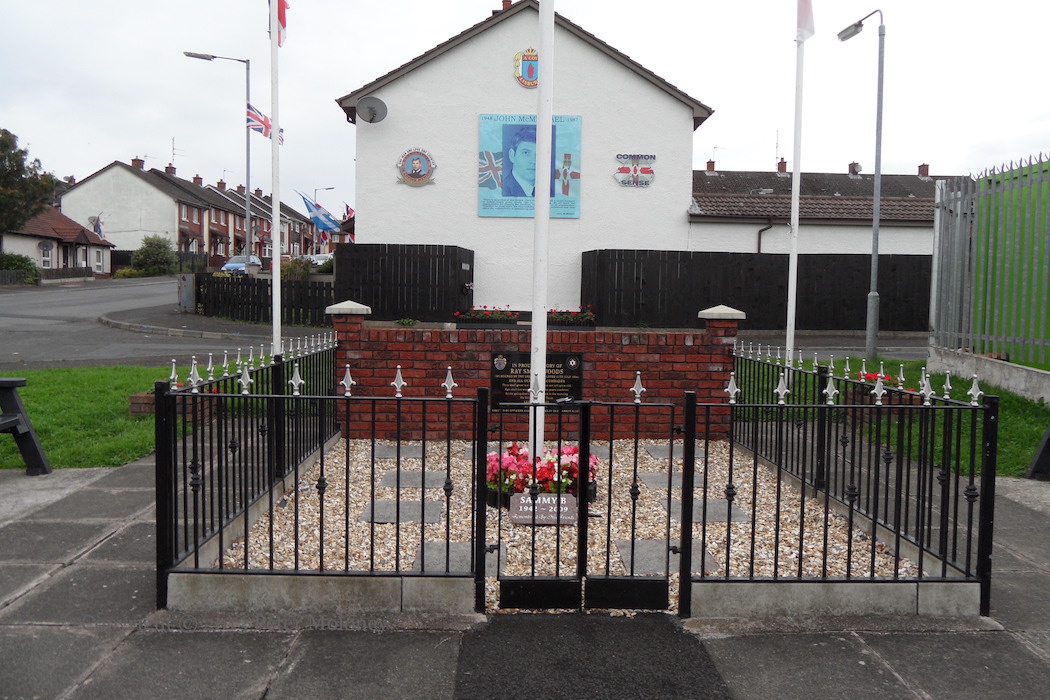
The South Belfast UDA/UFF commander John McMichael (1948-1987) was killed by an IRA car bomb. In addition to organising a team of assassins in the 70s and 80s, he founded a Political Research Group and wrote two documents proposing an independent Northern Ireland, 1979’s Beyond the Religious Divide and 1987’s Common Sense (available at CAIN), promoting the philosophy of ‘Ulster nationalism’. The quote on the board comes from the end of the Introduction to Common Sense:
“There is no section of this divided Ulster community which is totally innocent or indeed totally guilty, totally right or totally wrong. We all share the responsibility for creating the situation, either by deed or by acquiescence. Therefore we must share the responsibility for finding a settlement and then share the responsibility of maintaining good government.”
“One man, one love, one country. Commonsense. In loving memory. Quis separabit.” “A Coy” “Old Warren”
The Smallwoods plaque is the same but the trio of boards is new, as compared to 2010.
The 1916 Societies board is on top of a long-standing “H” (going back to 2009, if not before).
Perpendicular to the road are small boards calling for the release of Martin Corey and political status, and a large board commemorating the hunger strikers: “H-Block martyrs – remember them always – the struggle for political status – Republican Sınn Féın”
The small framed board to the left of “Free Kilwilkie” gives a line from James Connolly’s Last Statement prior to his execution in 1916: “The British government has no right in Ireland, never had any right in Ireland, never can have any right in Ireland”.
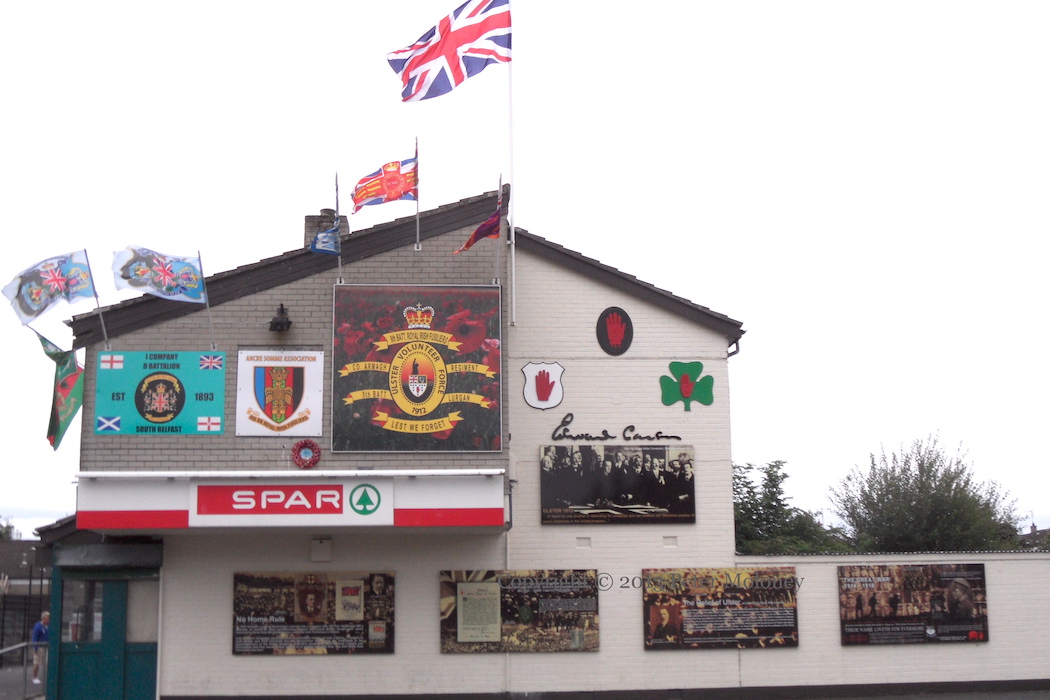
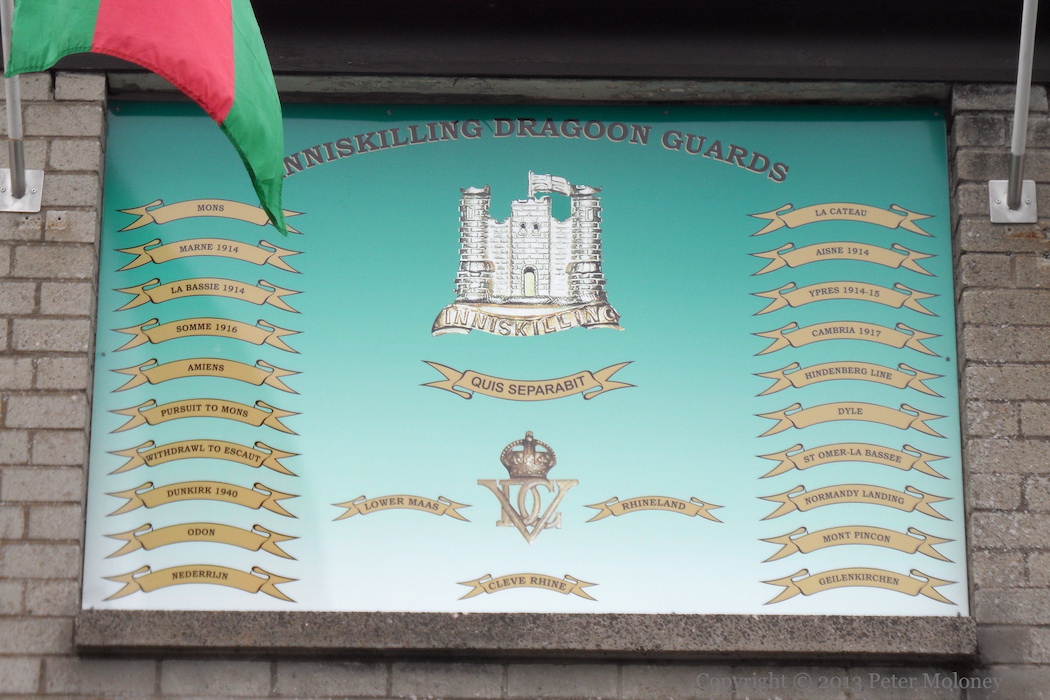
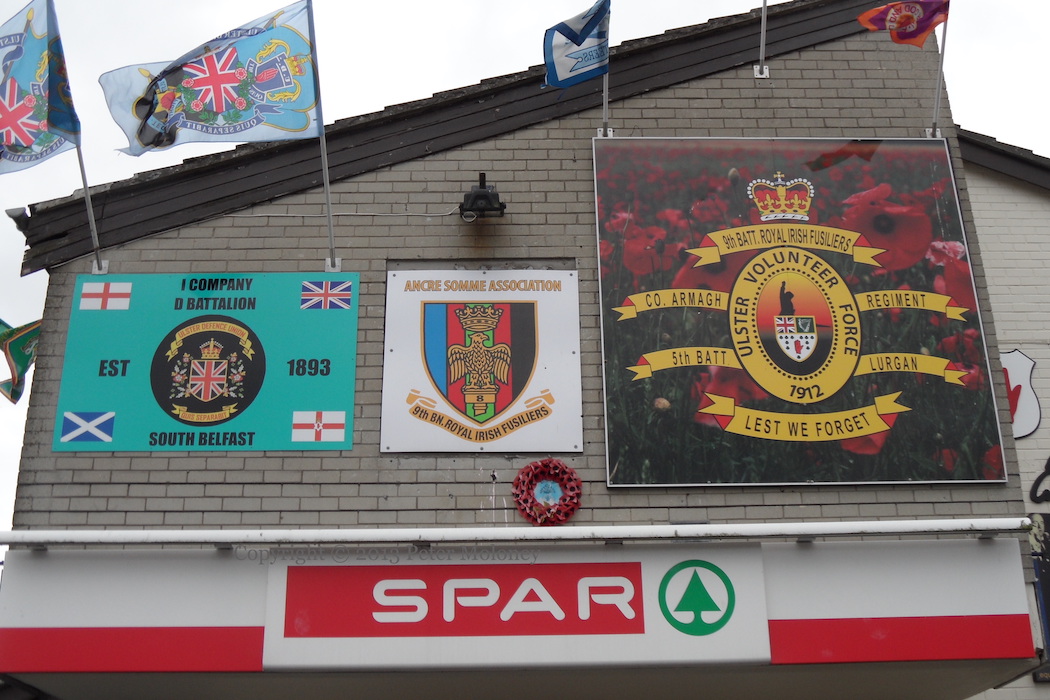
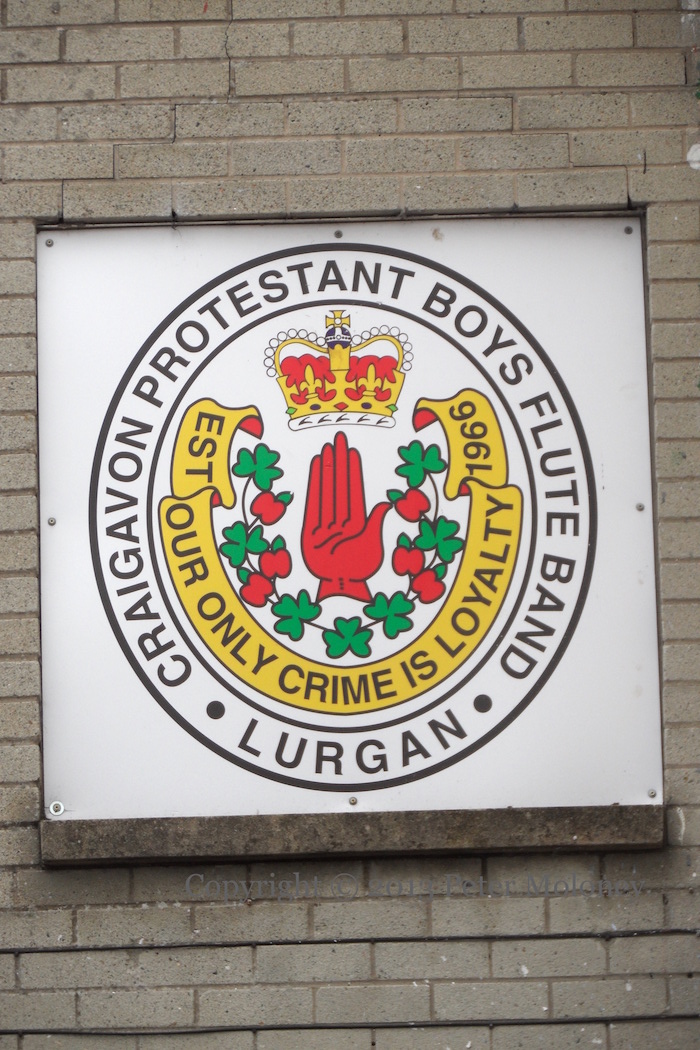
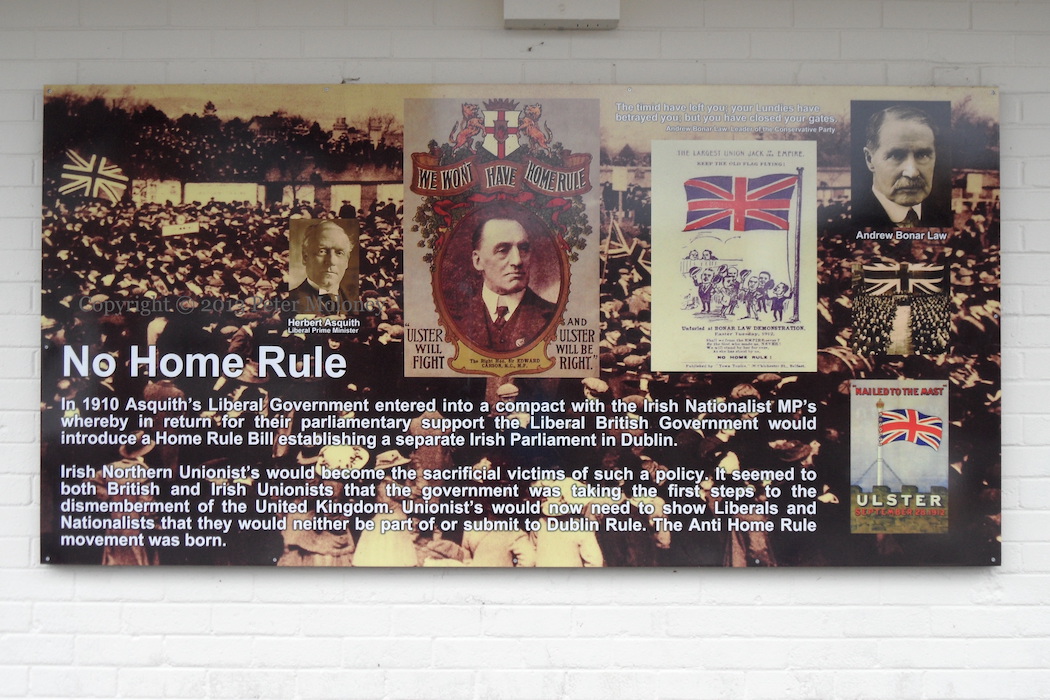
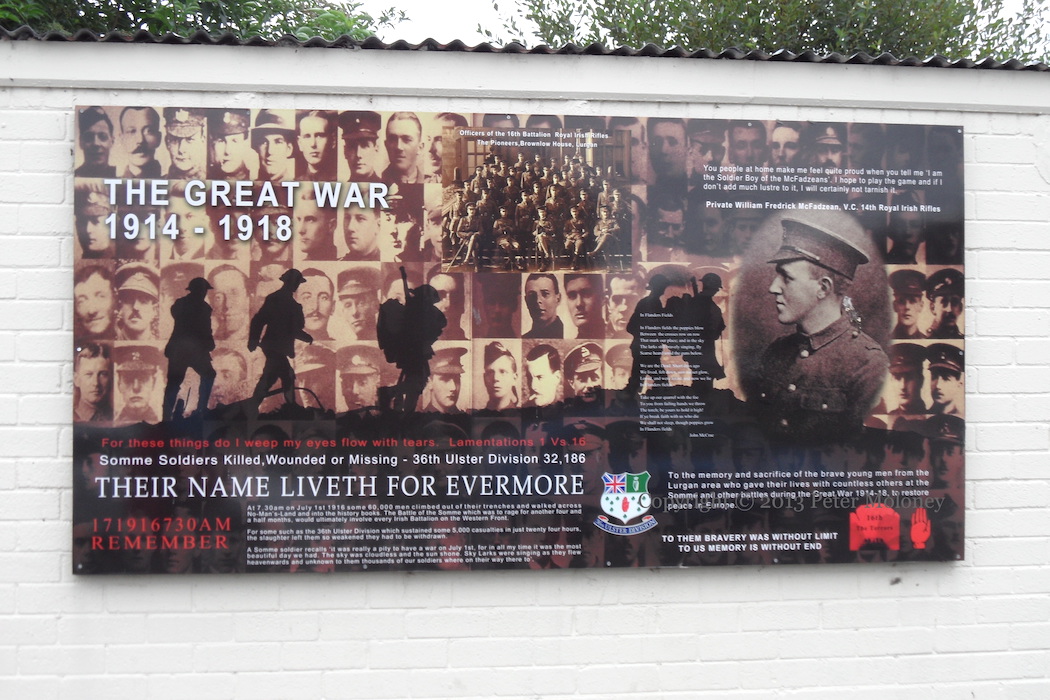
This is the scene at the junction of Pollock Drive and Mourne Road in Mourneview, Lurgan. The images, in order, show the top level of boards (including some on the sides of the building) and then the four along the bottom.
Top: (on side) Inniskilling Dragoon Guards | South Belfast UDA, B battalion, 1 company | Ancre Somme Association | 9th battalion Royal Irish Fusiliers | Craigavon Protestant Boys flute band (Fb) | Carson signing the Covenant in 1912 | (on side, above Mourneview Youth) Upper Bann Fusiliers flute band (Fb) | Upper Bann Fusiliers
Bottom: No Home Rule including the unfurling of “The Largest Union Jack In The Empire” | The Covenant | The Relief Of Ulster including the Ulster Volunteers and the Larne gun-running | The Great War including the VC won by William MacFadzean – “To them, bravery was without limit; to us, memory is without end”.