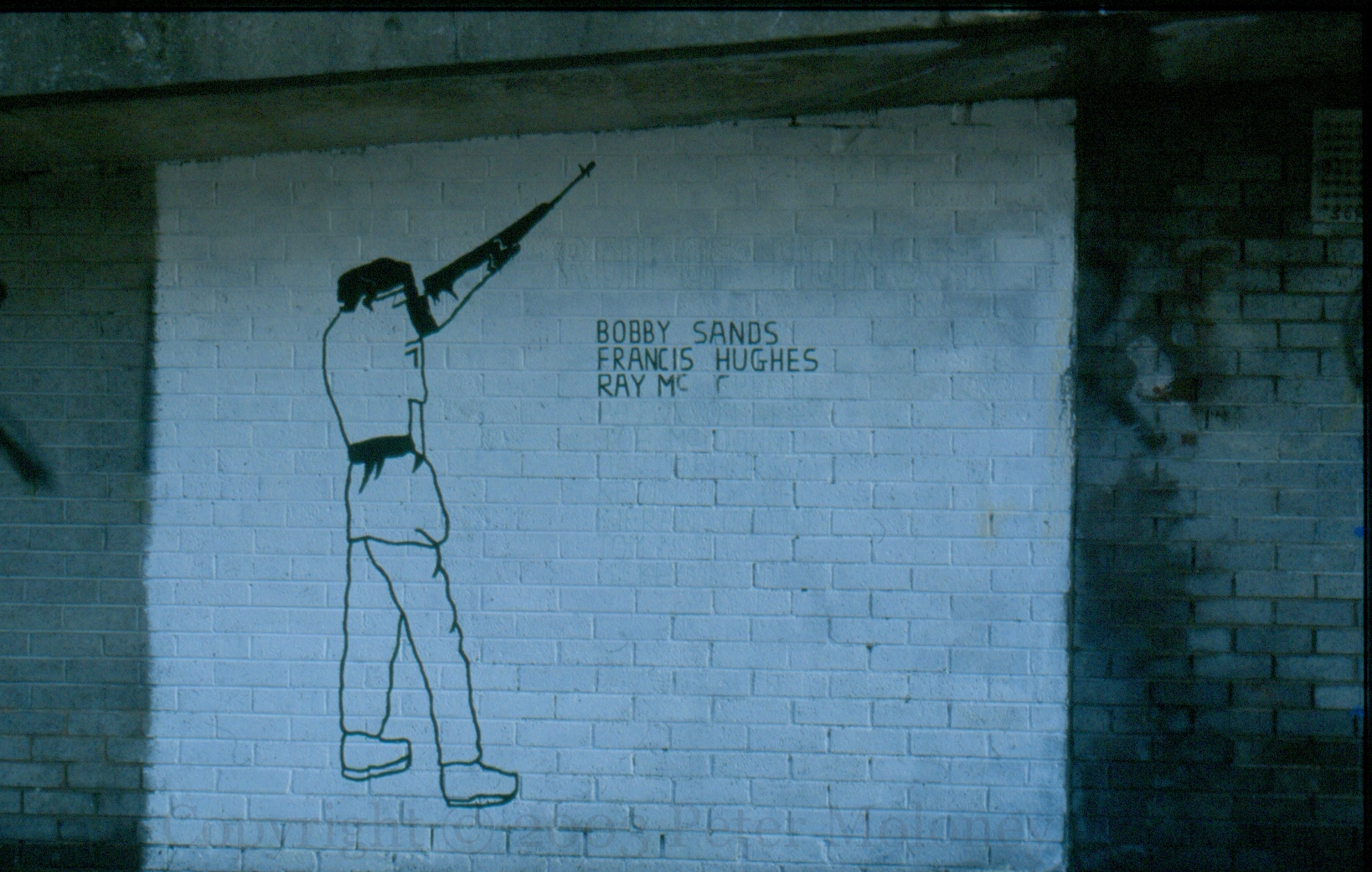
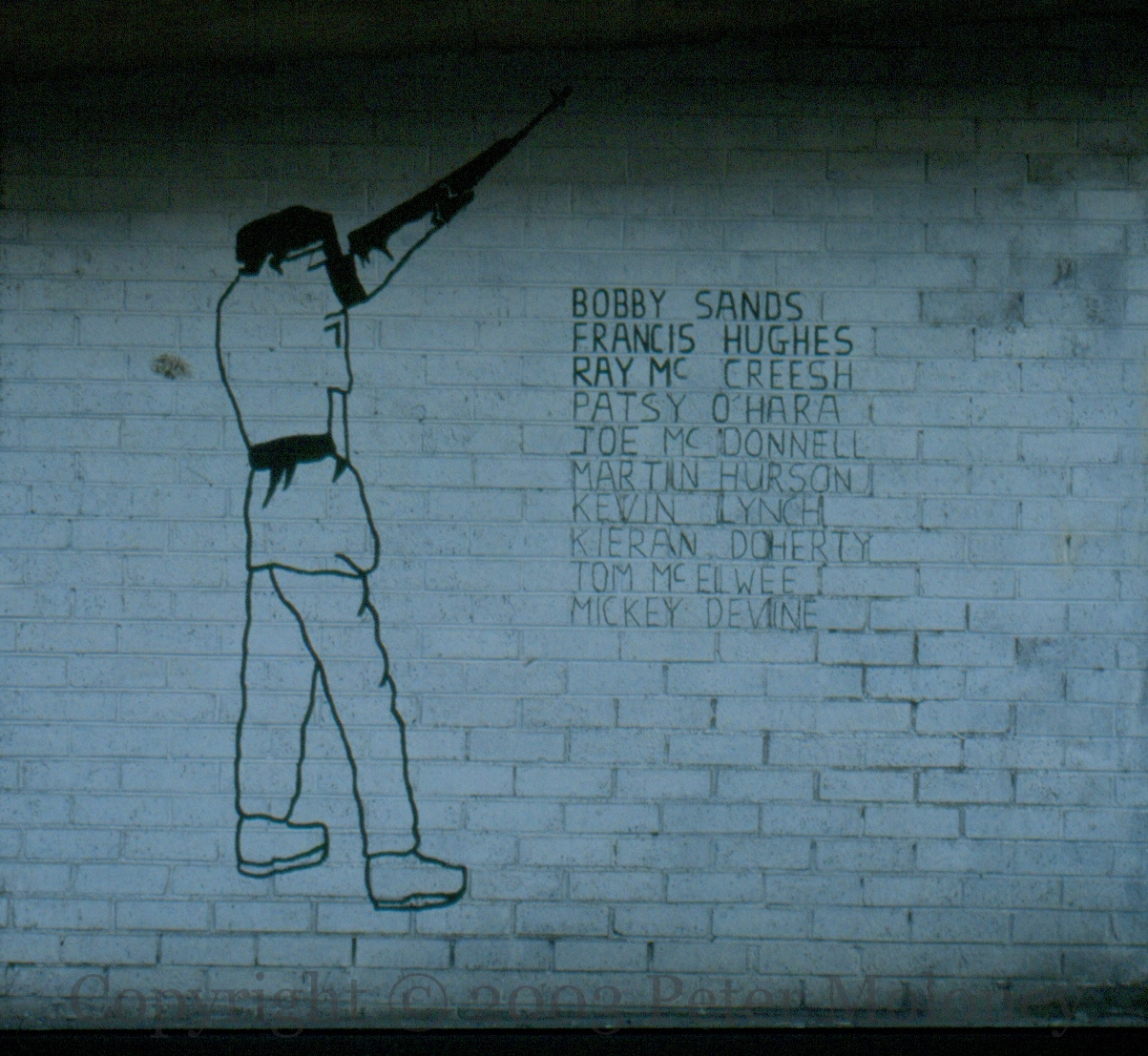
A “roll of honour” (faintly visible at the top) to the 1981 hunger strikers, with a volunteer firing a rifle, is unfinished in Lecky Road, Derry.
Click image to enlarge
Copyright © 2003 Peter Moloney
M01774 M01915
A “roll of honour” (faintly visible at the top) to the 1981 hunger strikers, with a volunteer firing a rifle, is unfinished in Lecky Road, Derry.
Click image to enlarge
Copyright © 2003 Peter Moloney
M01774 M01915

Graffiti below the Theodore Roosevelt mural in Wapping Lane, Fountain, Londonderry: “This is Londonderry! Not Derry. No Surrender. Here to stay. UDA.”
Click image to enlarge
Copyright © 2003 Peter Moloney
M01772
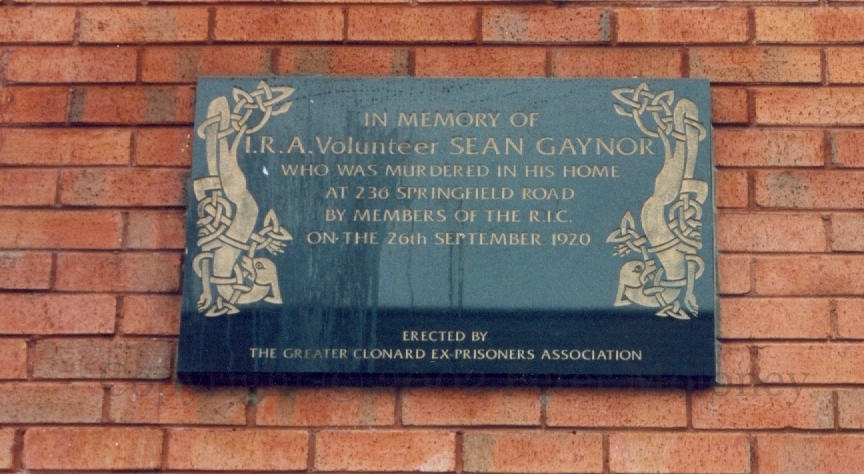
“In memory of IRA Volunteer Sean Gaynor who was murdered in his home at 236 Springfield Road by members of the RIC on the 26th September 1920. Erected by the greater Clonard ex-prisoners association.” Gaynor was one of three victims of an RIC murder gang that night (See ROM’s account.)
Colinview Street, Belfast
Click image to enlarge
Copyright © 2002 Peter Moloney
M03947
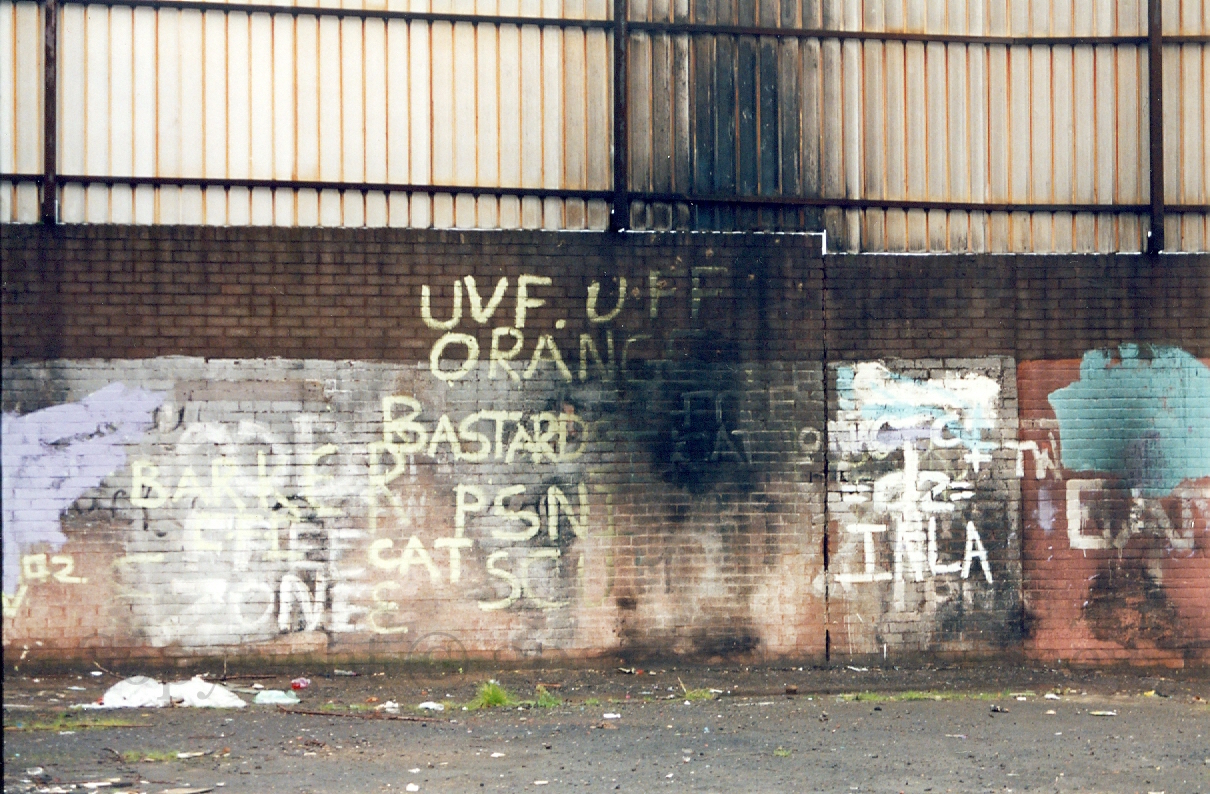
“UVF UFF Orange bastards”, “PSNI scum”, and other republican graffiti, somewhere on the Springfield Road, Belfast.
Click image to enlarge
Copyright © 2002 Peter Moloney
M03964

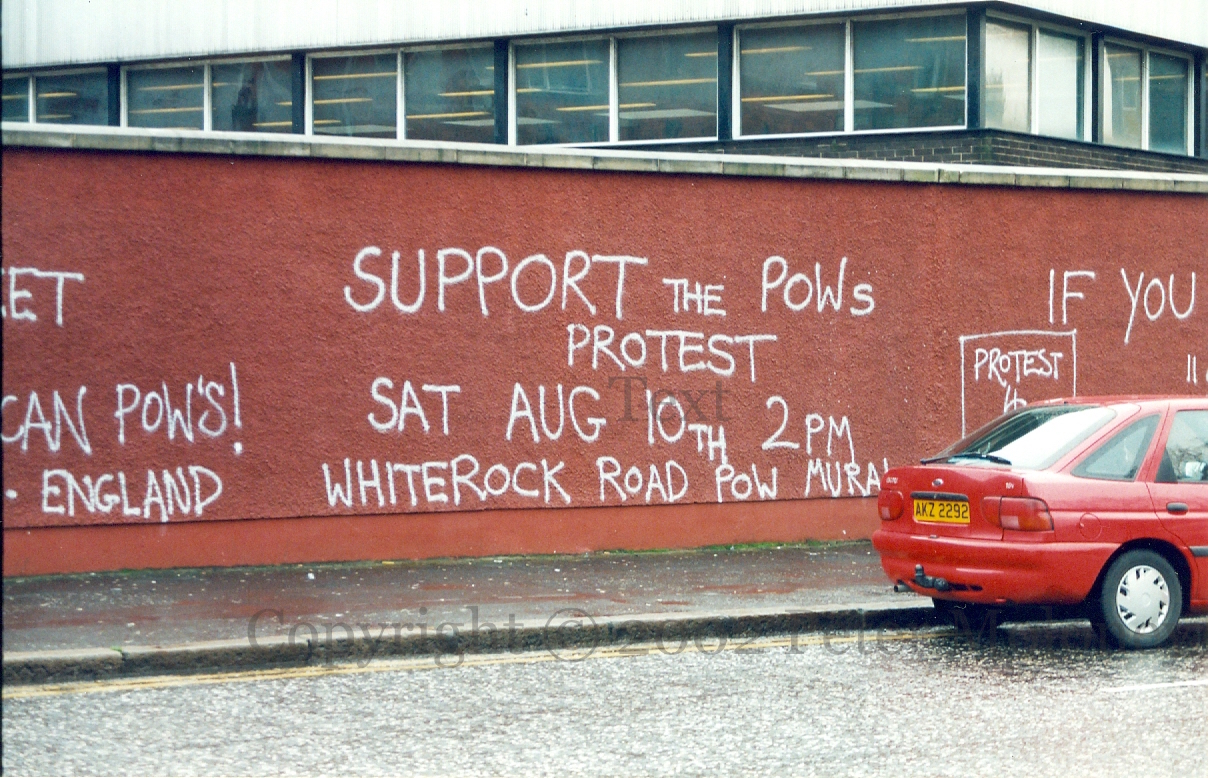
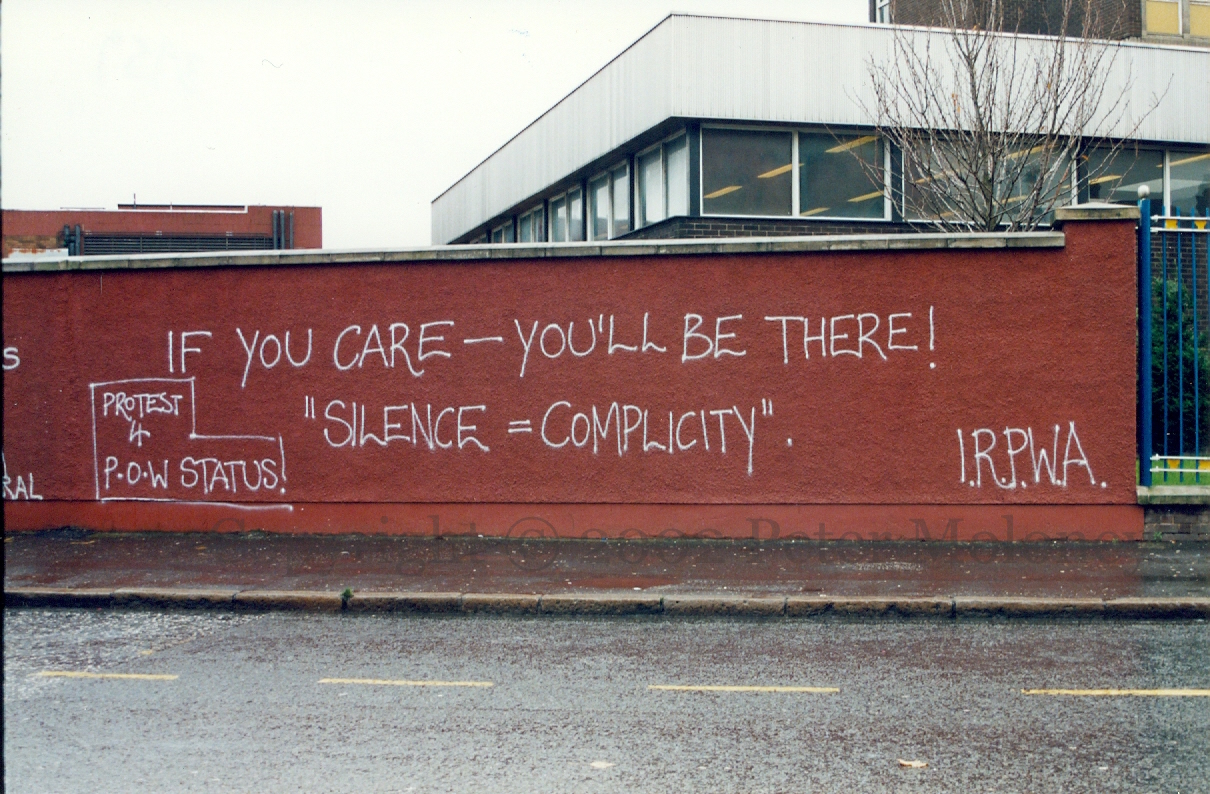
Three images of IRPWA graffiti outside the Royal Hospital on the Falls Road, Belfast: “End the blanket torture of republican POWs – Portlaoise * Maghaberry * England”, “Support the POWs protest Sat Aug 10th 2pm Whiterock Road POW mural”, and “Protest 4 POW status. If you care – you’ll be there “Silence = Complicity” IRPWA.”
Click image to enlarge
Copyright © 2002 Peter Moloney
M03958 M03963 M03959

The names of the ten deceased 1918 hunger strikers, and the lengths of their fasts and paramilitary affiliation (IRA or INLA), are recorded in tricoloured lettering on a board in Westland Street, Derry. (Just cut off above is an (R)IRA–Celtic board – see below X05516.)
Click image to enlarge
Copyright © 2002 Peter Moloney
M03961

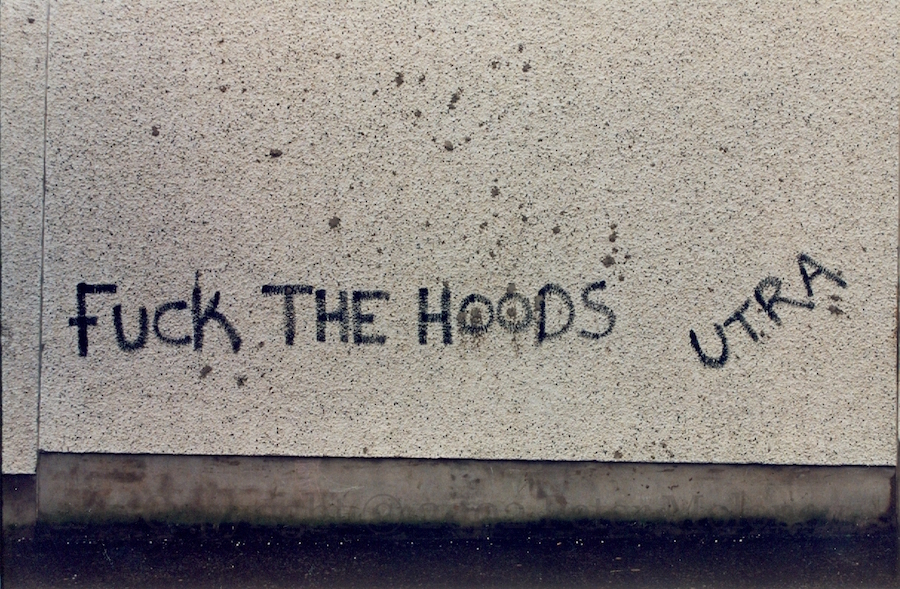
“Fuck the hoods” and “Up the [I]RA”. Republican graffiti in Lecky Road, Derry.
Click image to enlarge
Copyright © 2002 Peter Moloney
M03950
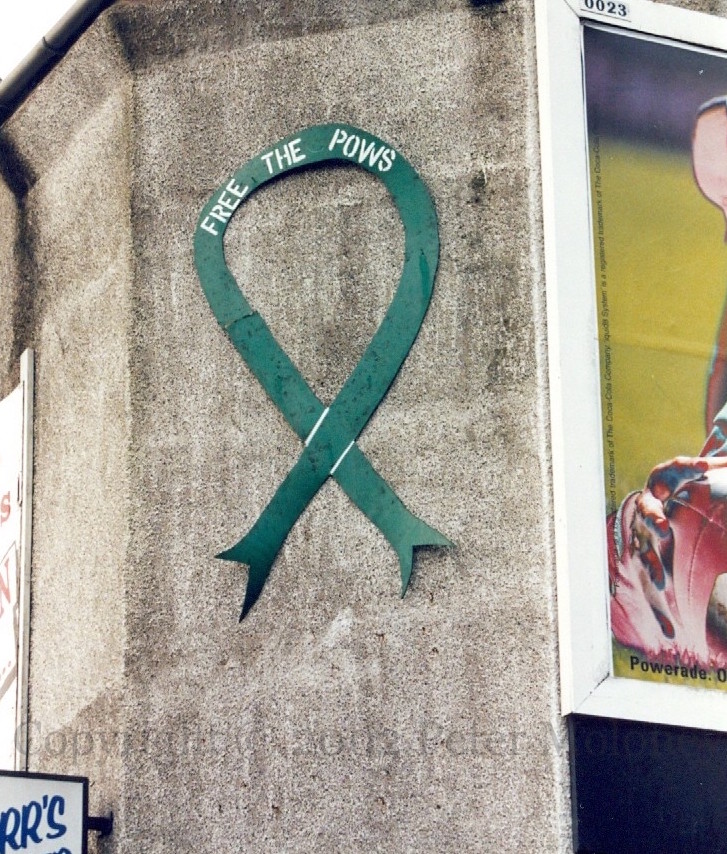
A vintage ‘green ribbon’ from the campaign (from the mid- to late-1990s) to release republican POWs, still high up on a Falls Road, Belfast, wall. Just out of shot to the left: The Wolf In Sheep’s Clothing.
Click image to enlarge
Copyright © 2002 Peter Moloney
M03956
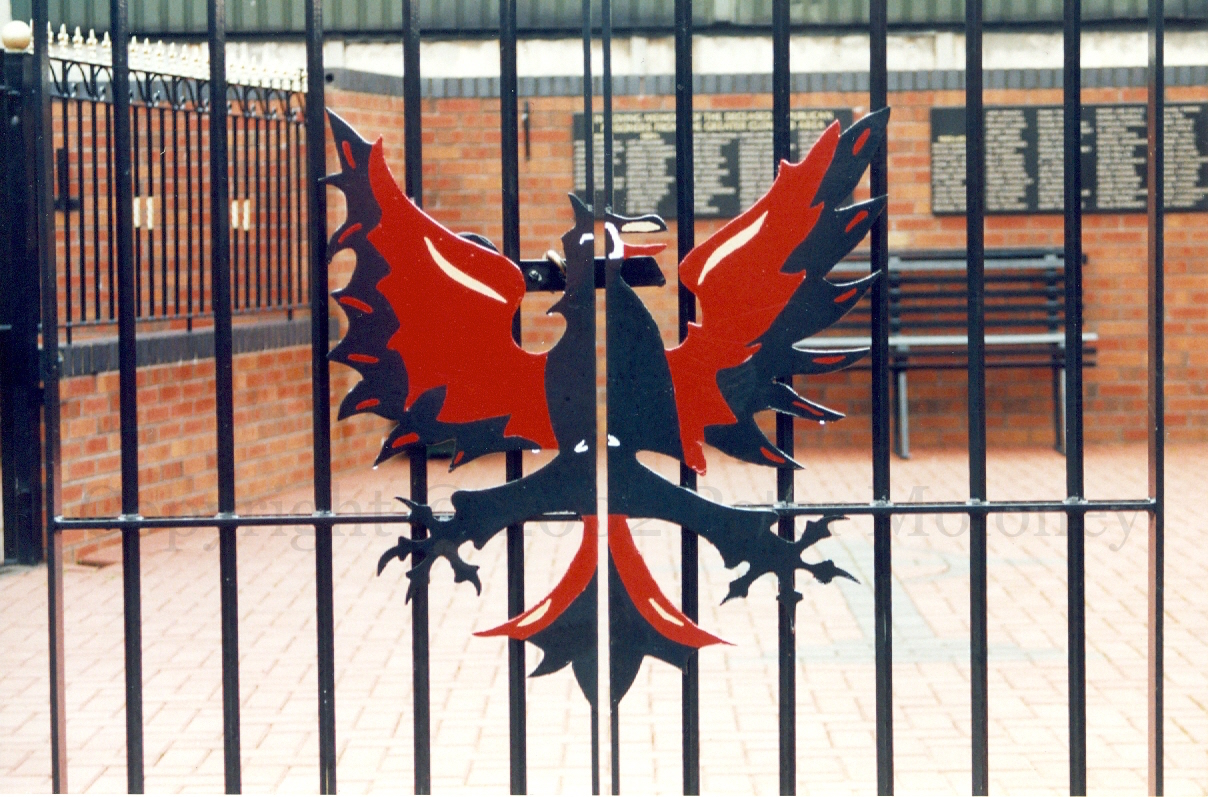


These Bombay Street plaques are “in loving memory of the deceased republican prisoners from the greater Clonard area.” In later years, an additional plaque would be added to the left of 1921-1922 prisoners.
Bombay Street, west Belfast
Click image to enlarge
Copyright © 2002 Peter Moloney
M03952 M03953 M03951 M03948
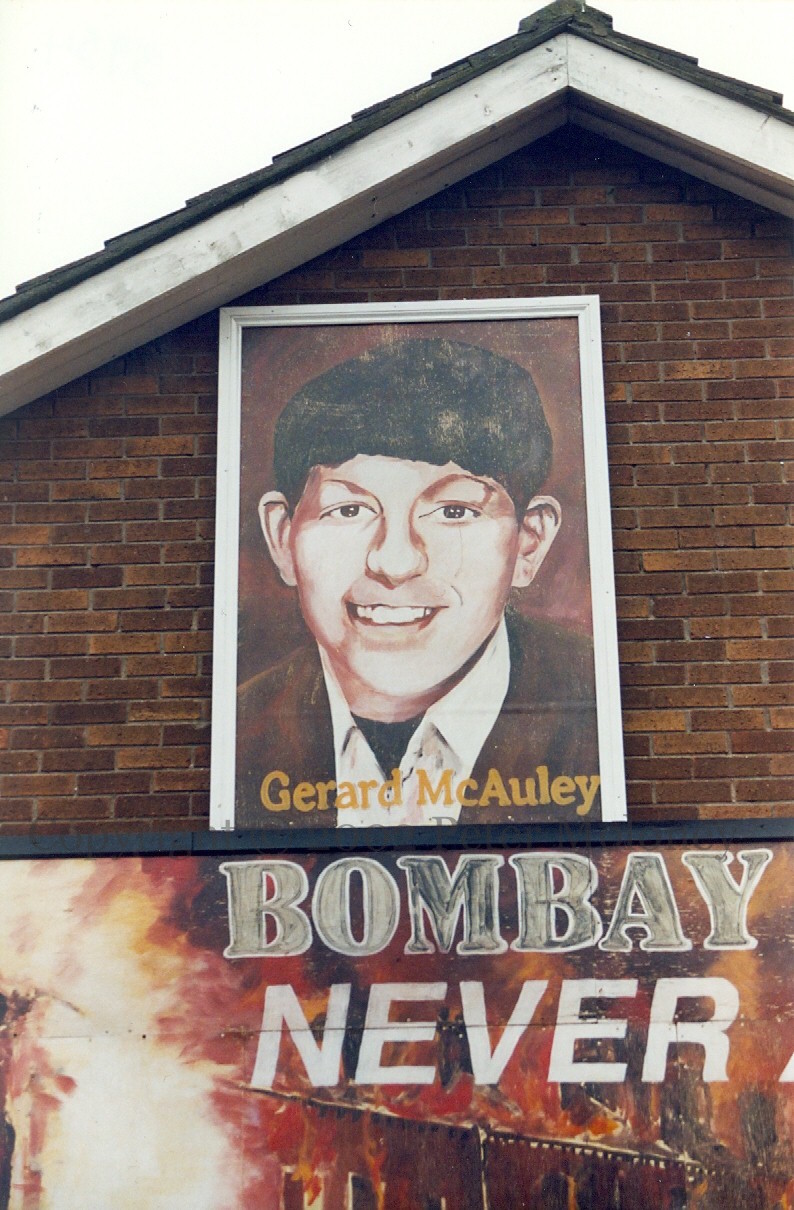
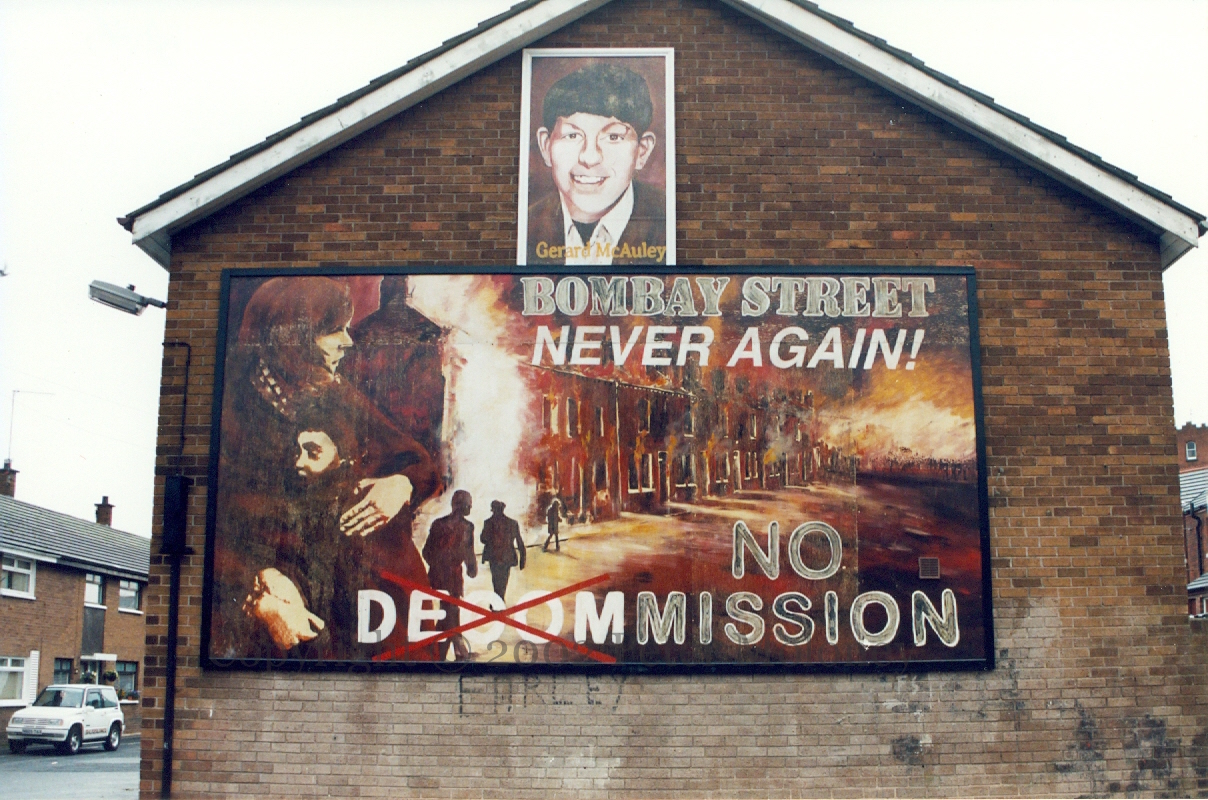
In August, 1969, families, mostly Catholic, were driven out and their homes burned in Bombay Street (and surrounding streets), between the Falls and Shankill. RTÉ news report | CultureNI on a Red Barn Gallery exhibition of photographs. The defenselessness of the community then is reflected in the urging for “No decommission” in the present. Fıan Gerard McAuley (aged 15) was shot in nearby Waterville Street.
Bombay Street, west Belfast
Click image to enlarge
Copyright © 2002 Peter Moloney
M03945 M03954 [M03955]

