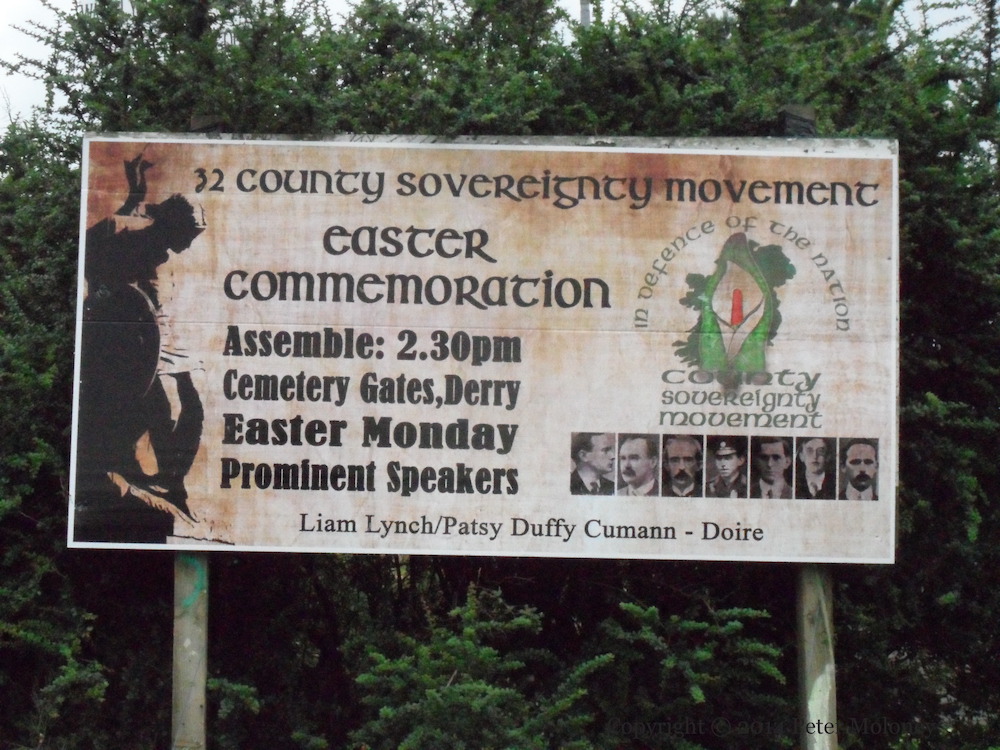
Top is a 1916 Societies board (in Rossville Street) announcing a commemoration for Richard Quigley on Easter Saturday; below is a 32 County Sovereignty Movement board (in Eastway) for an Easter Rising commemoration on Easter Monday.
Richie Quigley died on “active service” on April 21st, 1984 when he was hit by debris from a van-bomb that exploded prematurely (UPI). 2014 is the thirtieth anniversary of his death.
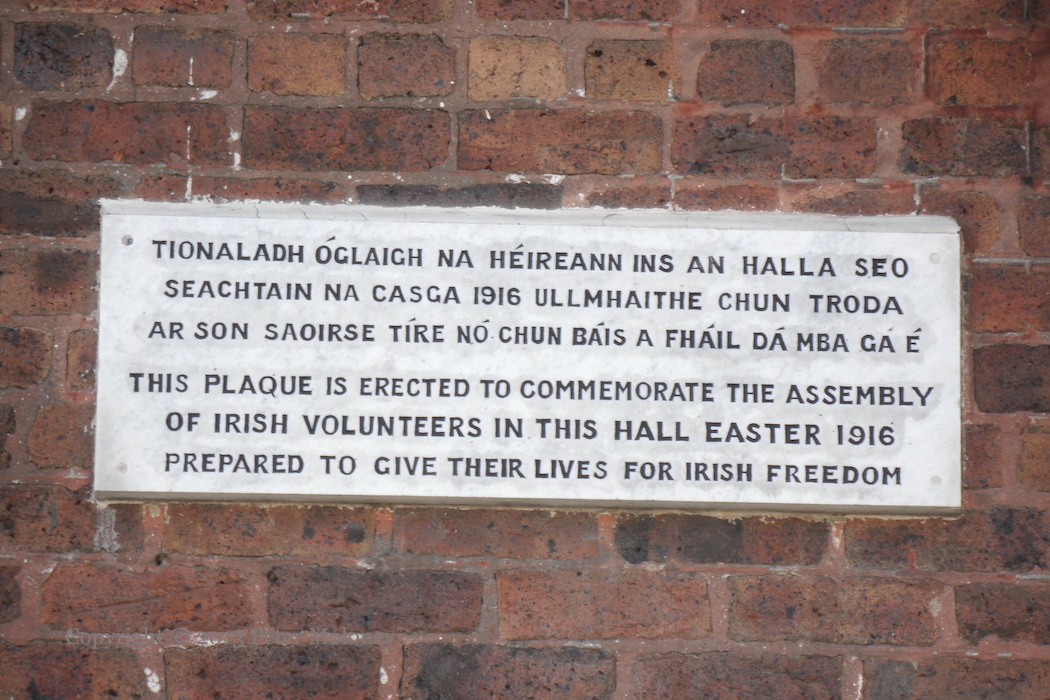
“Tıonaladh [tıonóladh] óglaıgh na hÉıreann ıns an halla seo seachtaın na Casca 1916 ullmhaıthe chun troda ar son saoırse tíre nó chun báıs a fháıl dá mba gá é. [Irish volunteers were assembled in this hall in Easter week 1916, and were readied for a fight for the country’s freedom, or to die, should it be necessary.] This plaque is erected to commemorate the assembly of Irish volunteers in this hall Easter 1916 prepared to give their lives for Irish freedom.”
For the story of the aborted role of the northern volunteers, see Treason Felony.
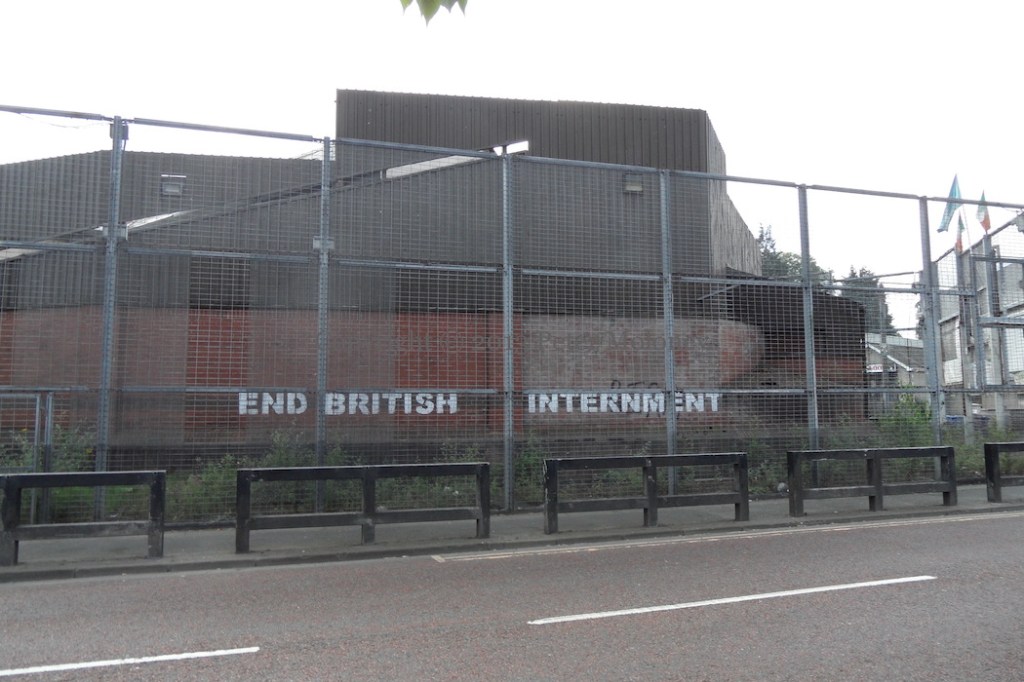
The fence of the disused barracks in Plater’s Hill/Lineside Coalisland, makes for an impromptu notice-board. Alongside ads for “youth day” and a “fitness club” we say an international women’s day placard featuring Marian Price and a 1916 Societies tarp using an Éamonn Ceannt quote from Kilmainham jail 1916: “I leave for the guidance of other revolutionaries, who may tread the path which I have trod, this advice, never treat with the enemy, never to surrender to his mercy, but to fight to a finish.”
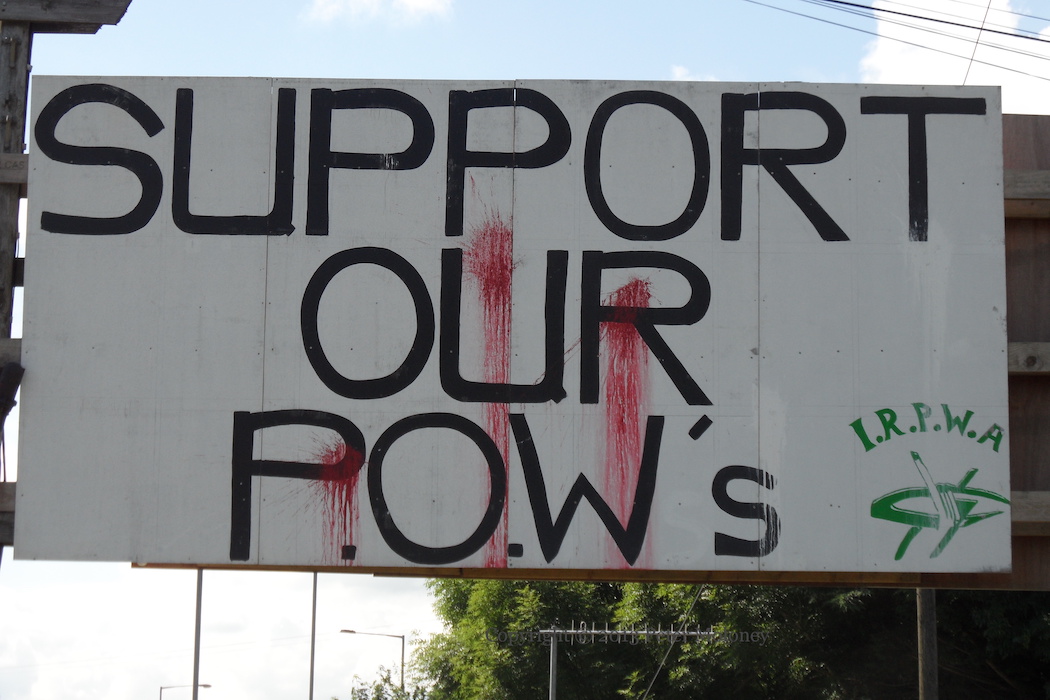
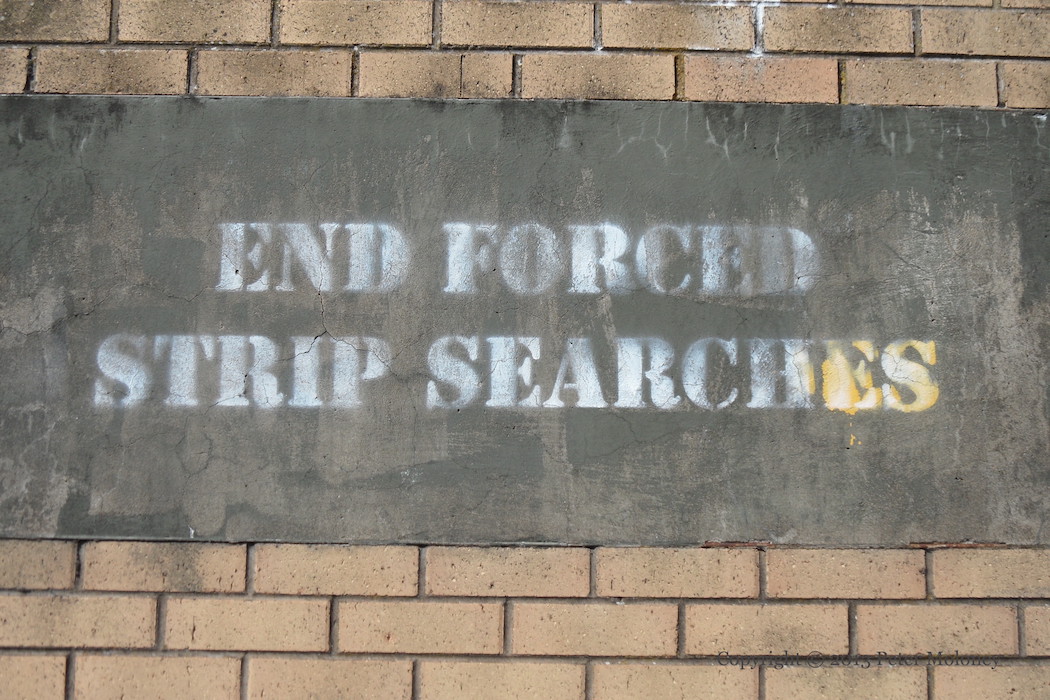
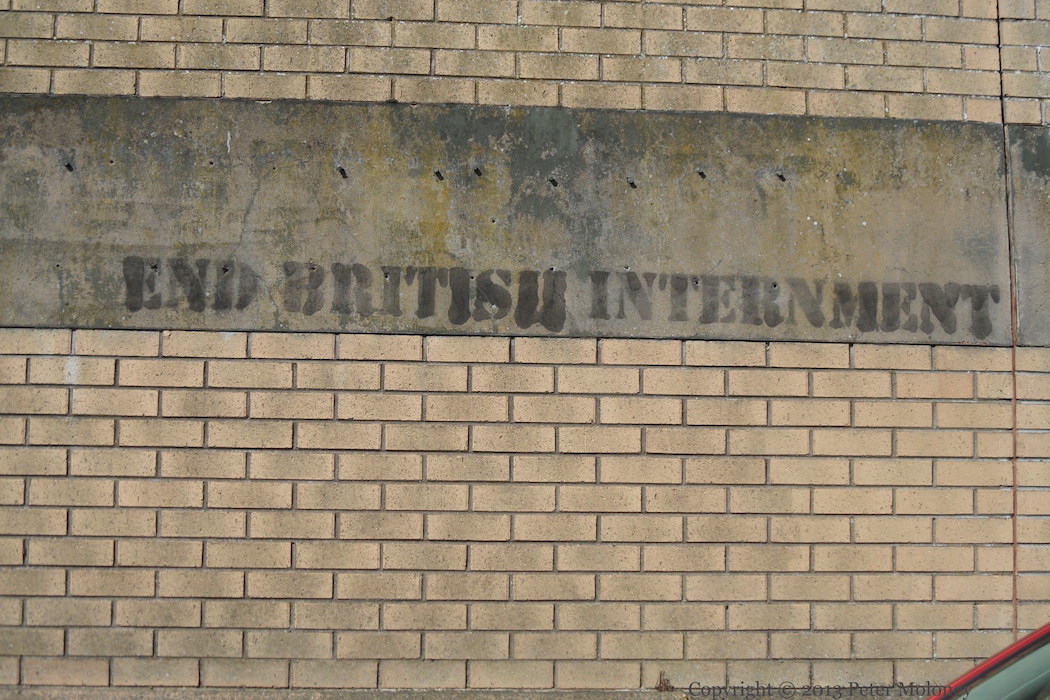
“Free Marian Price”, “End controlled movement”, “End forced strip searches”, “Support republican POWs” and “End British internment”.
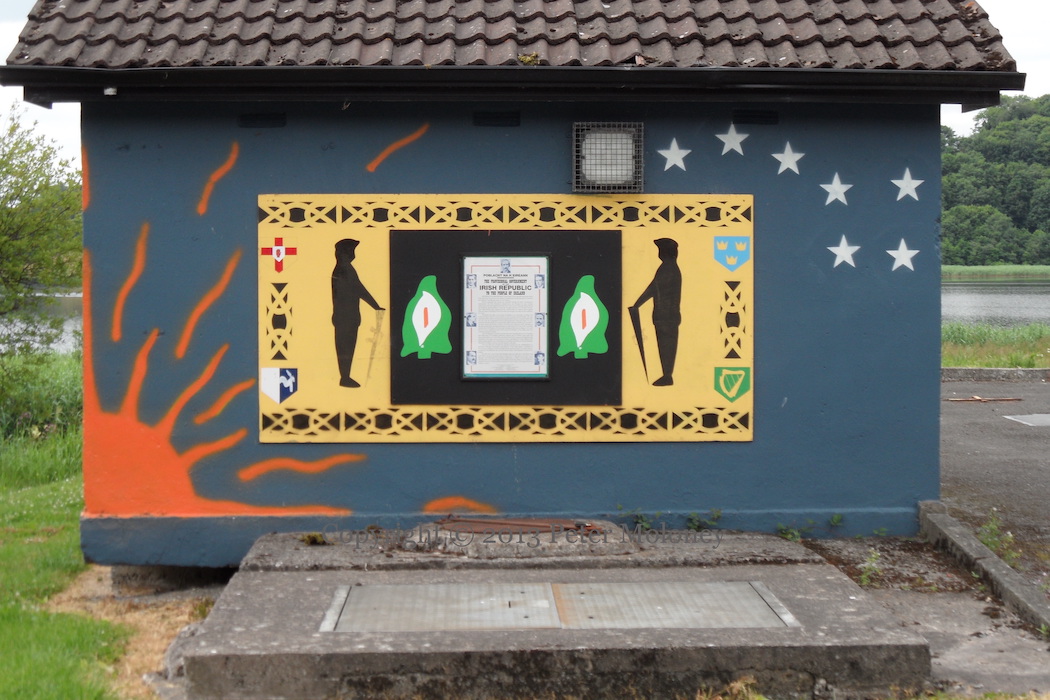
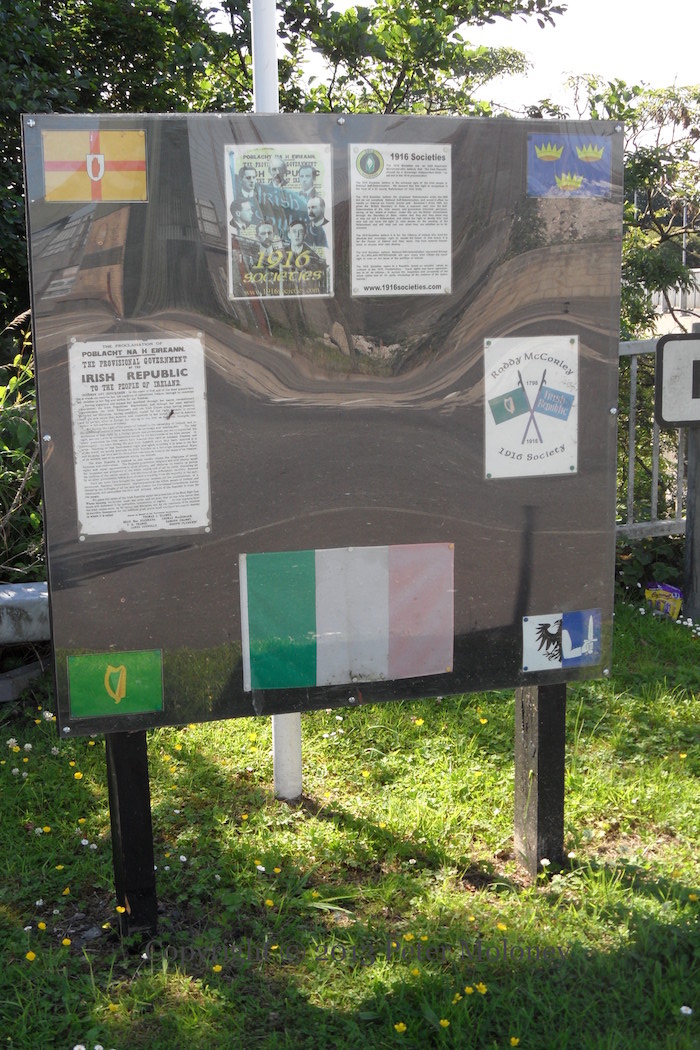
Bobby Sands has been replaced at the centre of this Enniskillen board by a copy of the 1916 Proclamation flanked by Easter lilies. (See the previous version.) The rest of the board remains the same: graveside mourners surrounded by the four provinces and Celtic knotwork. The sunburst and starry plough have been painted in the corners of the out-building.
Anti-Agreement board and stencils — “Support our POWs”, “End controlled movement”, etc. — and an Easter Rising billboard in Toome (Hillhead Road and Moneynick Road).
“Damn your concessions England, we want our country.” Board to Seán Mac Dıarmada in Ardoyne, detailing his exploits leading up to and including the 1916 uprising and his earlier connection with the local area. “Seán lived at 106 Butler Street, Ardoyne in 1906-08.”
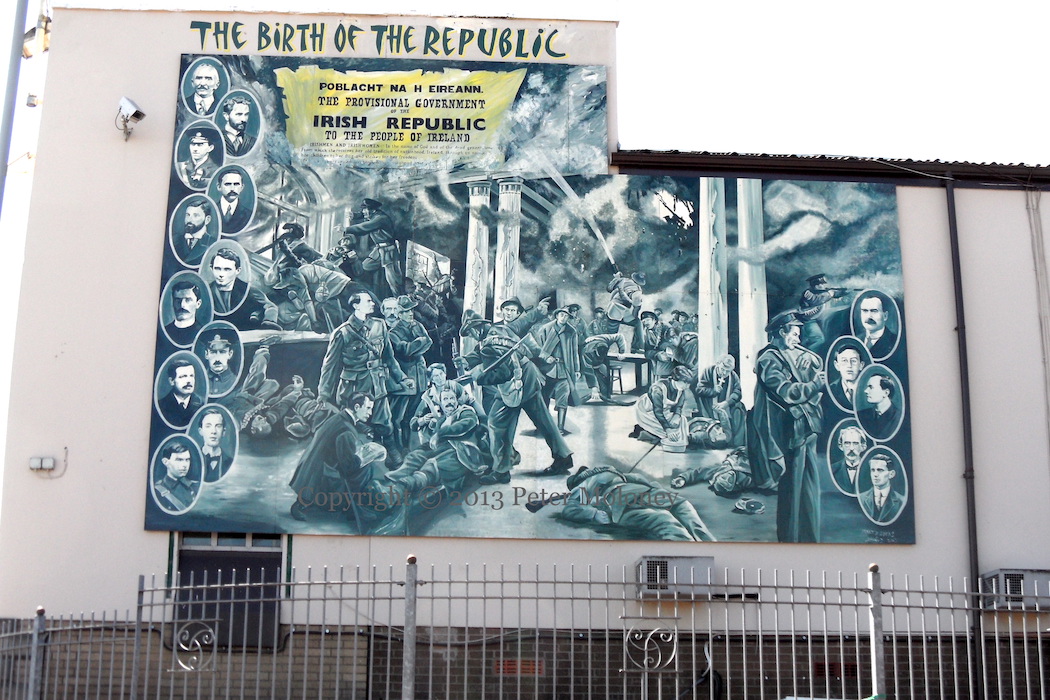
In addition to the seven signatories of the Proclamation of an Irish Republic, nine other leaders of the Easter Rising were executed in the wake of the rebellion. The portraits of all 16 are part of this new mural (on boards) of Walter Paget’s painting The Birth Of The Irish Republic. (For Paget’s painting, see the painting’s Visual History page.) In order of appearance, the 16 (with links to their WP pages) are …
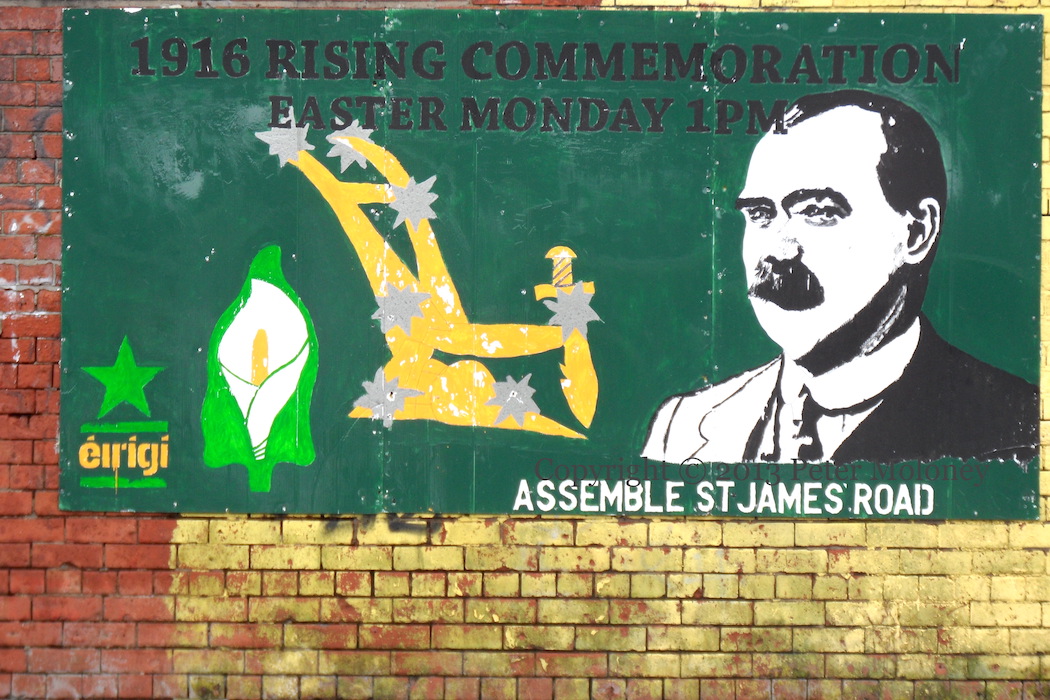
Competing Sinn Féin and IRSP Easter commemorations on the site of the former RUC barracks, and from éirígí in Beechmount Avenue, for Easter Monday.
“Belfast Easter Commemoration, Sunday 31st March. Assemble Beechmount Ave 1pm, parade leaves 1.30pm sharp. Speaker: Mary Lou McDonald, Vice President Sinn Féin/TD. Honour Ireland’s patriot dead – wear an Easter lily. Cumann Uaigheann na Laochra Gael – National Graves Association.”
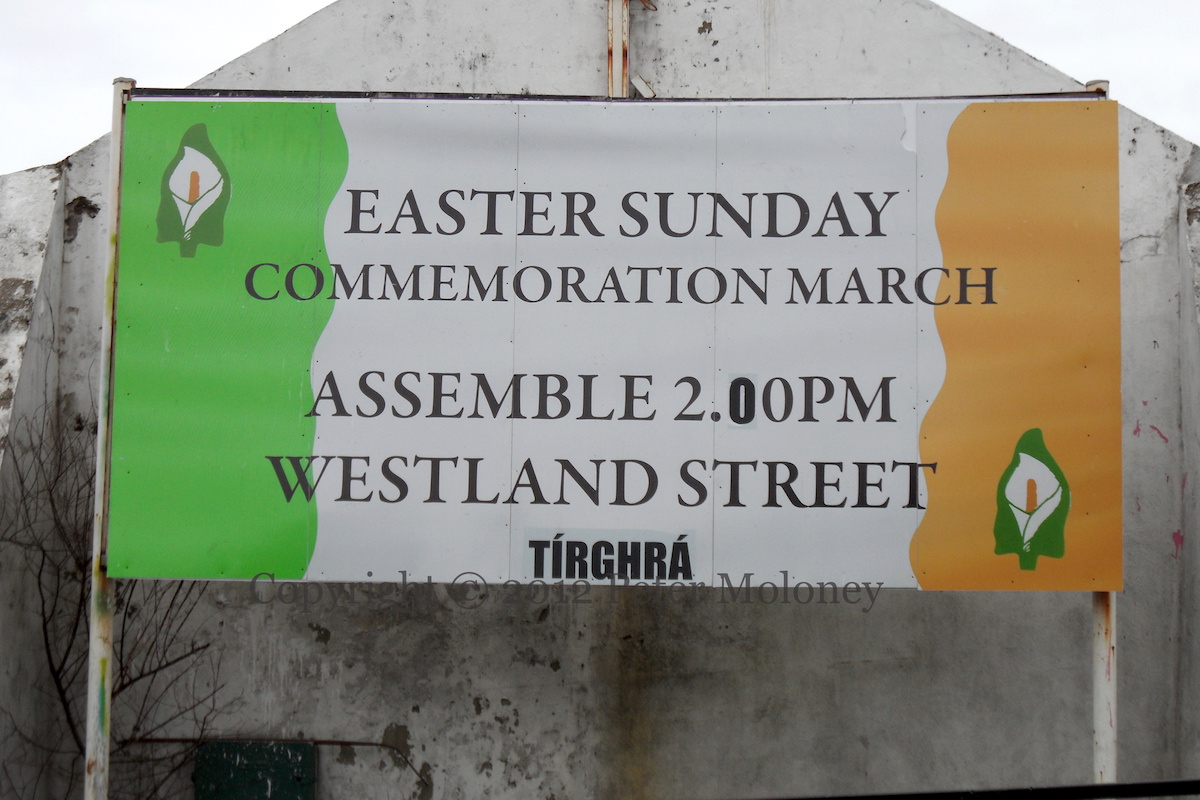
“Easter Sunday commemoration march – assemble 2.00 PM Westland Street. Tírghrá [commemoration committee].” The same boards were used in 2011, but the start time was 2:30 (M06631).












 Peter Moloney Collection