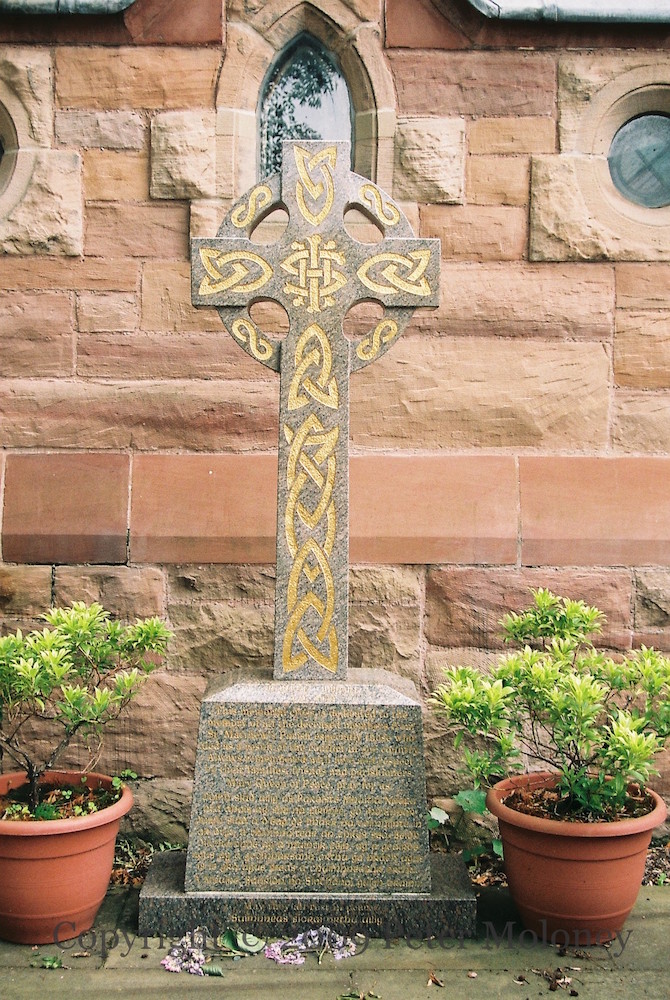
“This memorial cross is dedicated to the memory of all the deceased members from St Matthew’s Parish especially those who died as a result of the conflict in our country. Always remembered with love and respect by their families, friends and parishioners. Mary, queen of peace, pray for us. Dóıbh sıad uılıg as Paraıste Mhaıtıú Naofa atá anoıs ar shlí na fırınne go mórmhór dóıbh sıad a d’éag da bharr na comhlınte in ár dtír, a thıomnaıntear an chros seo. Beıdh dılchuımhne ag a muıntır féın, ag a gcaırde agus ag a gcomhrarsana orthu go brách agus is le grá agus meas a chuımhneofar orthu. A Mhuıre, banríon na Síochána, guıgh oraınn. May they all rest in peace. Suımhneas síoraí othru uılıg.”
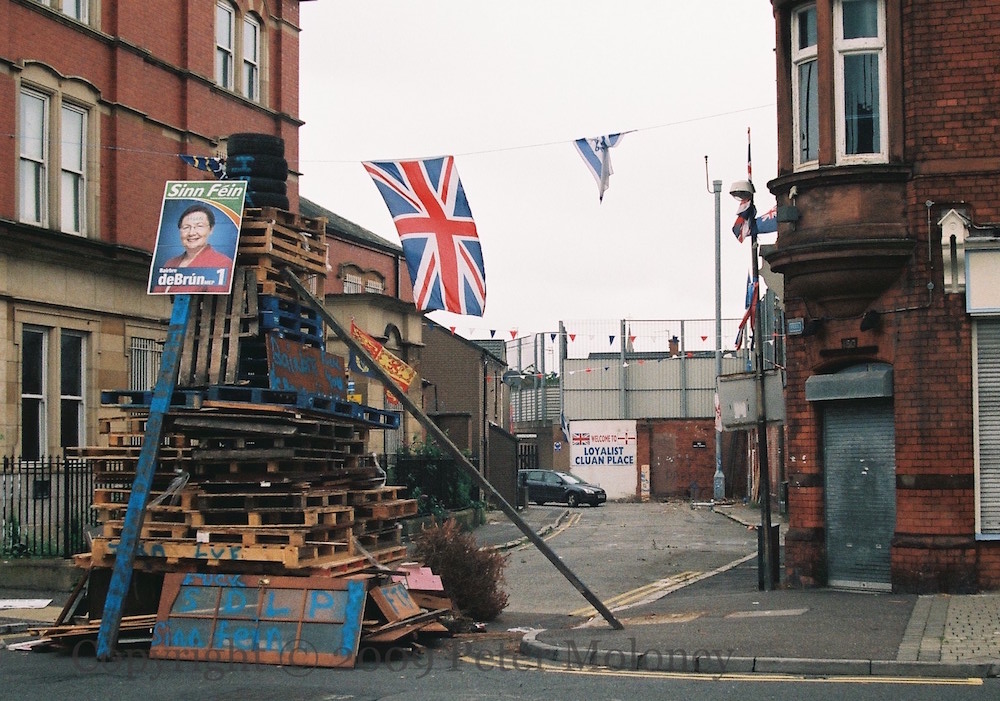
The Israeli flag flies beside the Union jack at the entrance to “Loyalist Cluan Place“. “Fuck SDLP, Sinn Fein” – specifically MEP candidate Bairbre De Brún. The LVF [Loyalist Volunteer Force] is included alongside IRA, CIRA, RIRA, INLA.
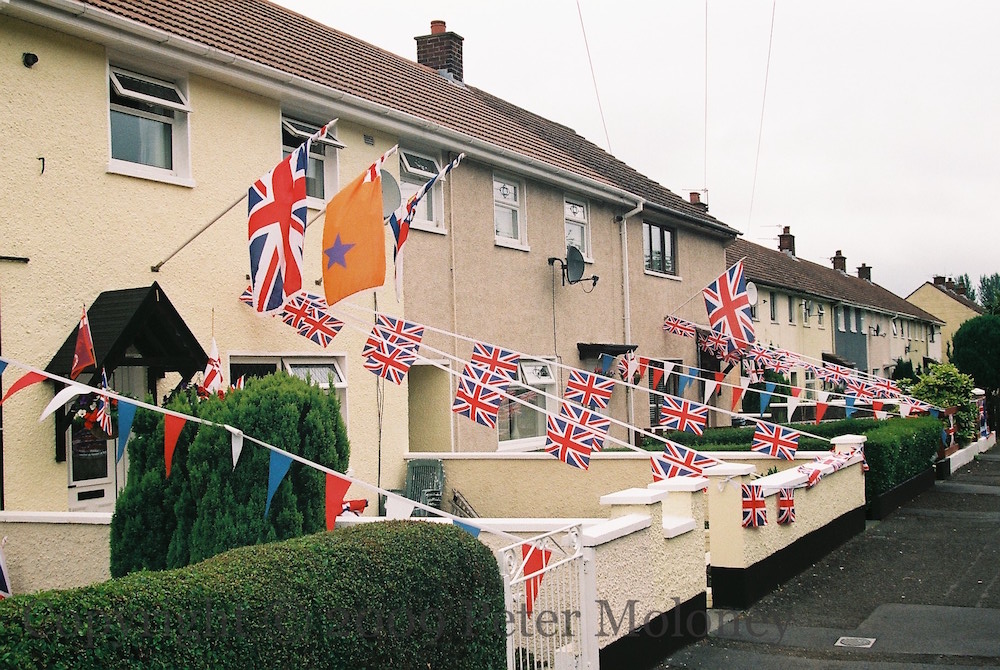
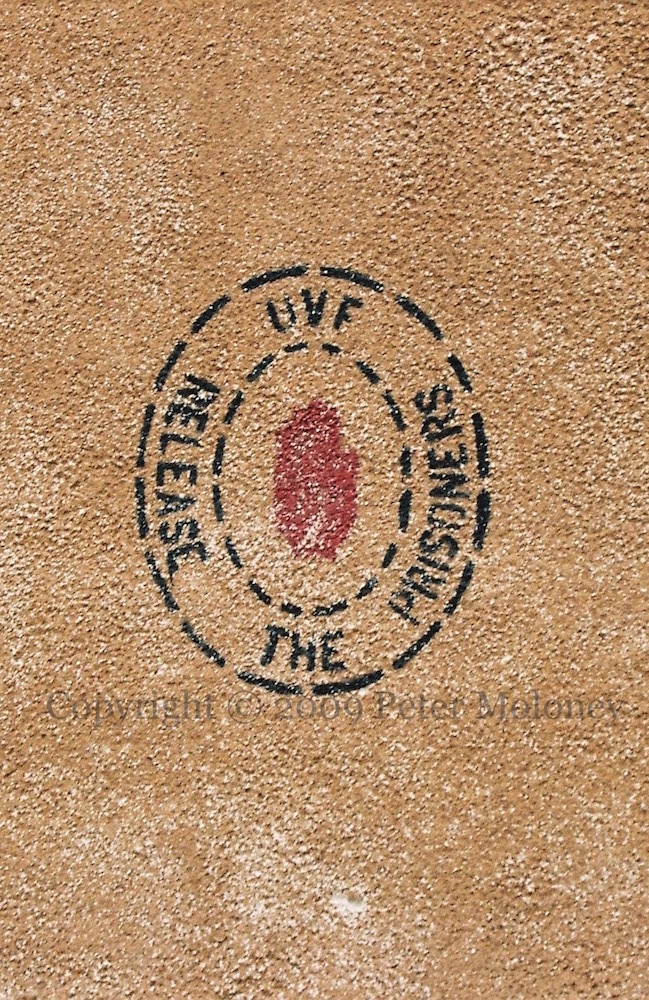
Clonduff prepares for Eleventh Night with a bonfire off Clonduff Drive and bunting in Tullyard Way. There are also nine (at least) vintage “UVF Release The Prisoners’ stencils in the area.
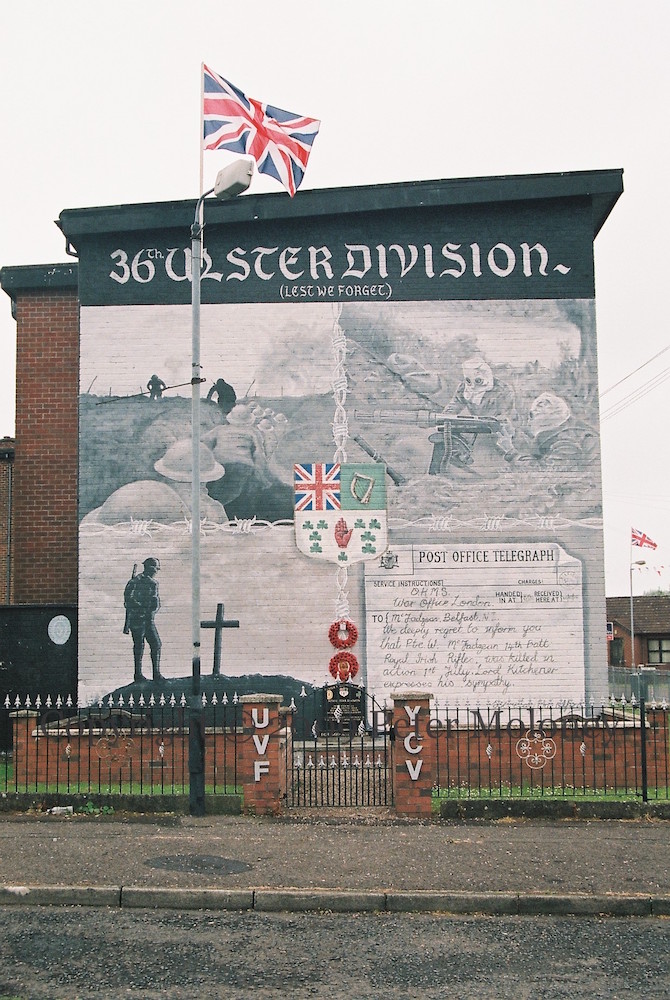
The plaques read “36th Ulster Division – dedicated to all our fallen comrades who made the ultimate sacrifice for their country. Greater love hath no man than to lay down his life for his friends. For God and Ulster.” and “From the officers and volunteers of East Belfast to commemorate the 90th anniversary of the Great War.” The quadrants of the mural show (clockwise) soldiers in the trenches, soldiers manning a machine-gun, the death telegraph for William MacFadzean, and a soldier reflecting on a grave. UVF YCV “Lest we forget”
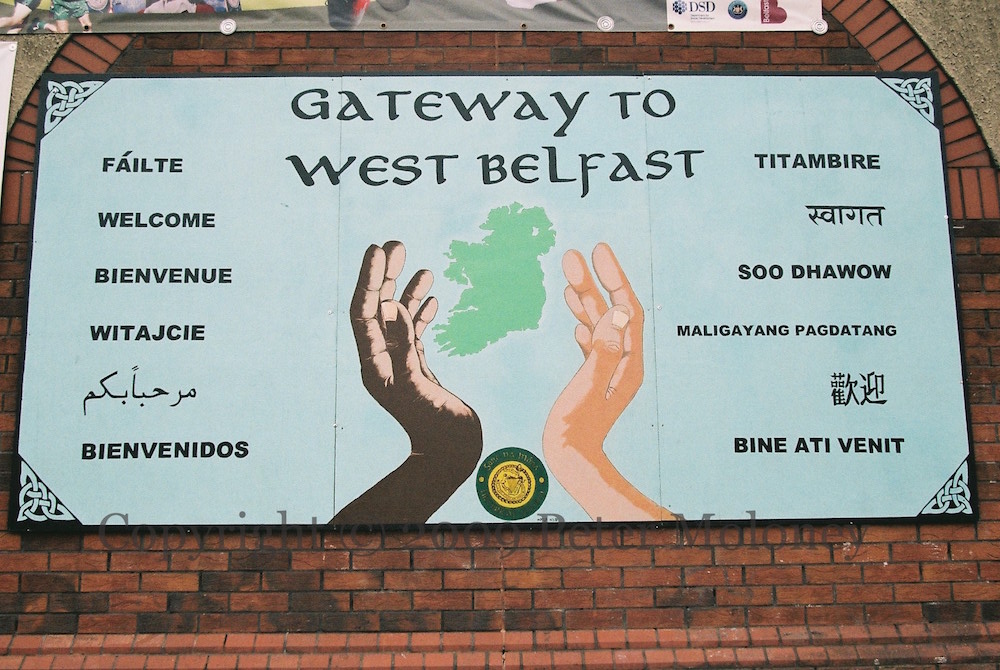
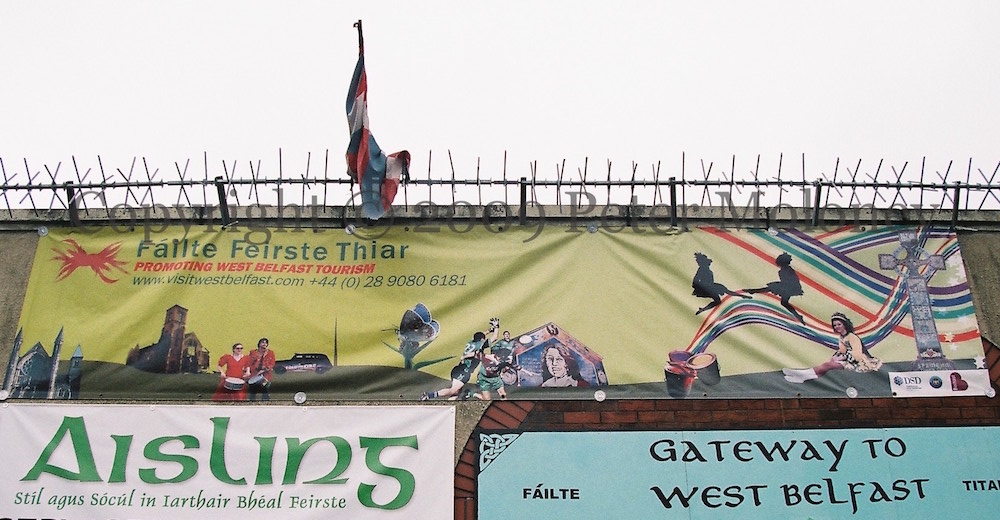
The power station below Divis tower, rather than the so-called International Wall a little further up the road, is becoming the starting point for (republican) west Belfast. Visitors from around the world are greeted in a variety of languages. The board is sponsored by Gort Na Móna Historical Society. Above it is a Fáılte Feırste Thıar [Welcome To West Belfast] tarp: “Promoting west Belfast tourism”.
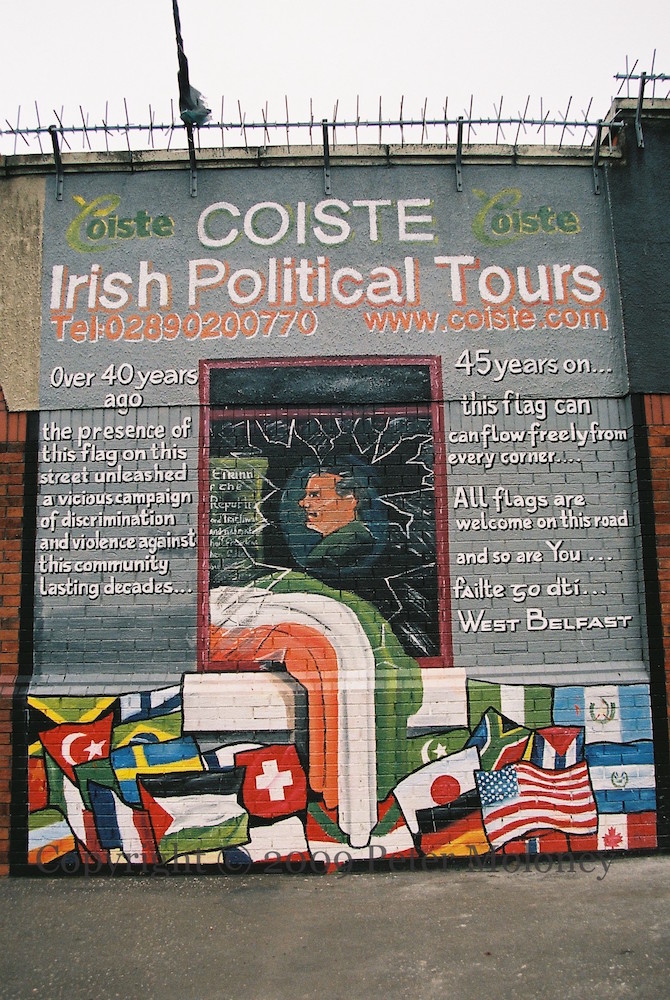
“Over 40 years ago, the presence of this flag on this street unleashed a vicious campaign of discrimination and violence against this community lasting decades … 45 years on this flag can flow freely from every corner… all flags are welcome on this road and so are you … fáılte go dtí west Belfast .” The incident referred to is the “Tricolour Riots” of the 1964 Westminster election campaign, in which the IRA’s Billy McMillen (shown in the middle) stood for office. Armed police raided his Divis Street headquarters and removed a Tricolour in the window. An Phoblacht has an account of the election and events. Here is news video from 1964 of charges subsequently brought against 70 people. The US Stars & Stripes is included prominently in the array of flags, but the Union Flag is absent. Coıste’s website is now coiste.ie rather than .com.
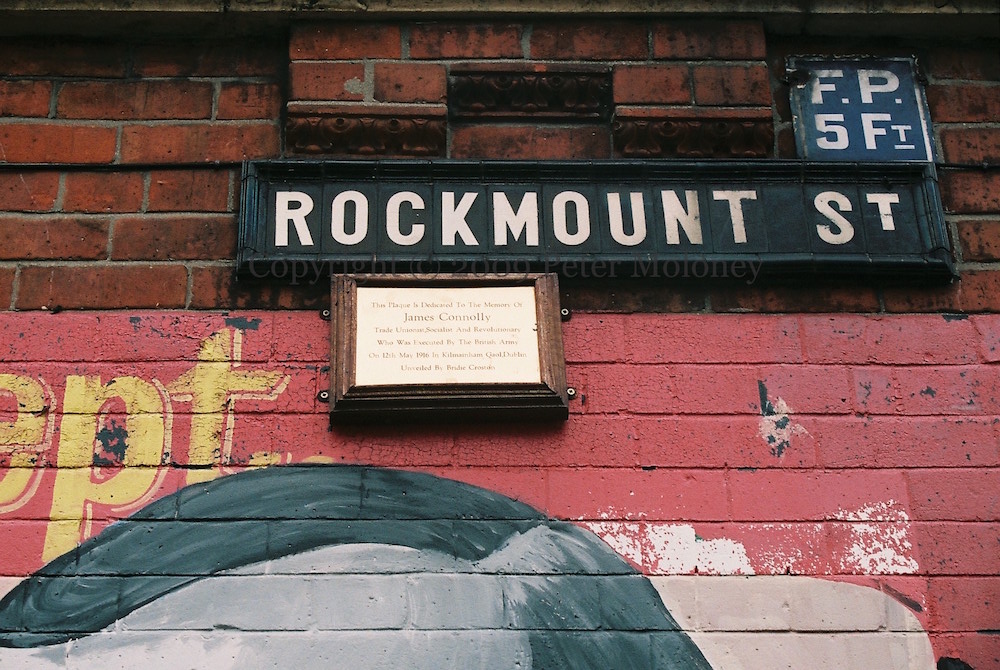
Here is a close-up of the plaque on the James Connolly mural in Rockmount Street, Belfast. “This plaque is dedicate to the memory of James Connolly, trade unionist, socialist and revolutionary who was executed by the British Army on 12th May 1916 in Kilmainham gaol, Dublin. Unveiled by Bridie Croston.” For background on the mural and a picture of it in better condition in 2006 see M03108.
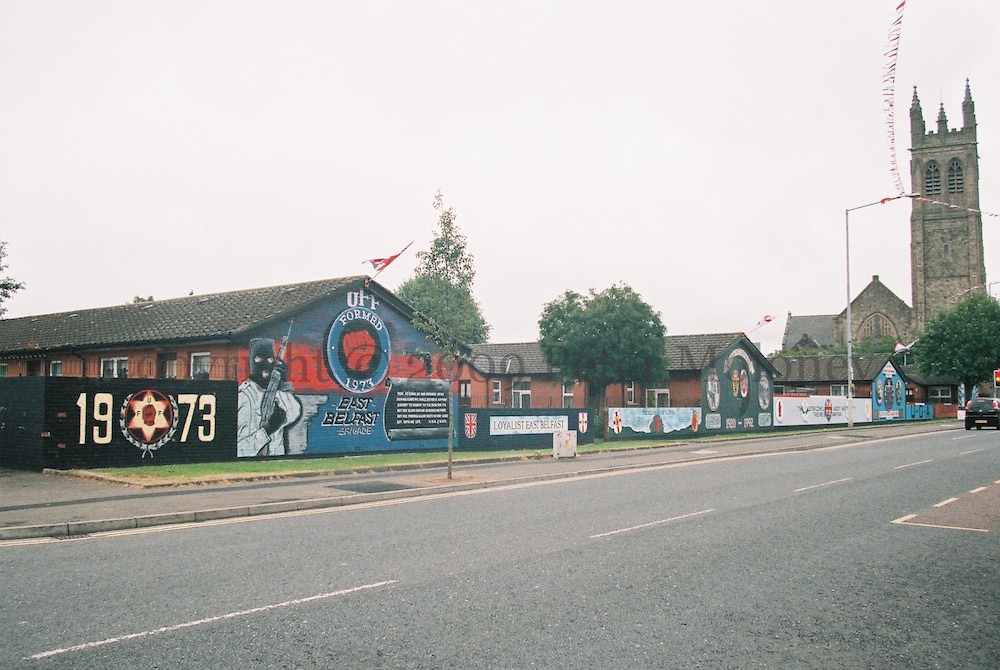
Here is a set of 2009 images of the left half of “Freedom Corner” on Newtownards Road.
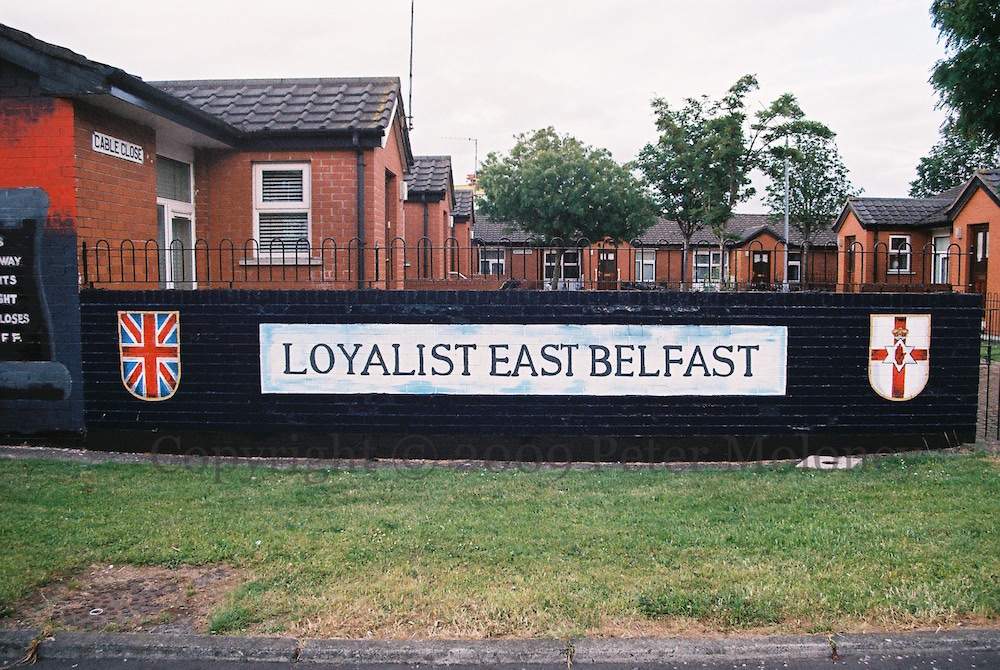
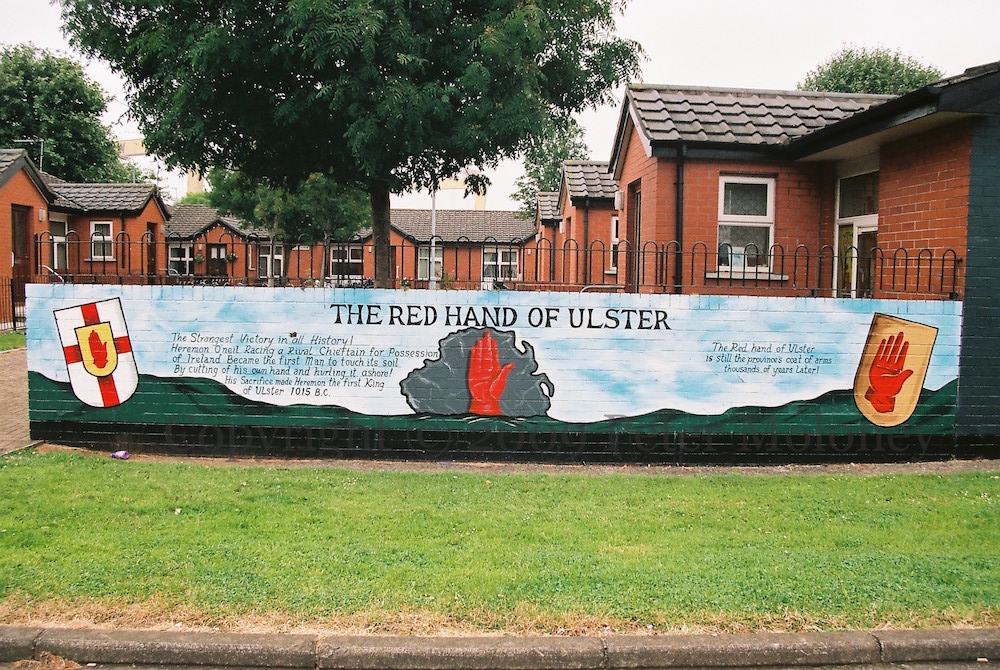
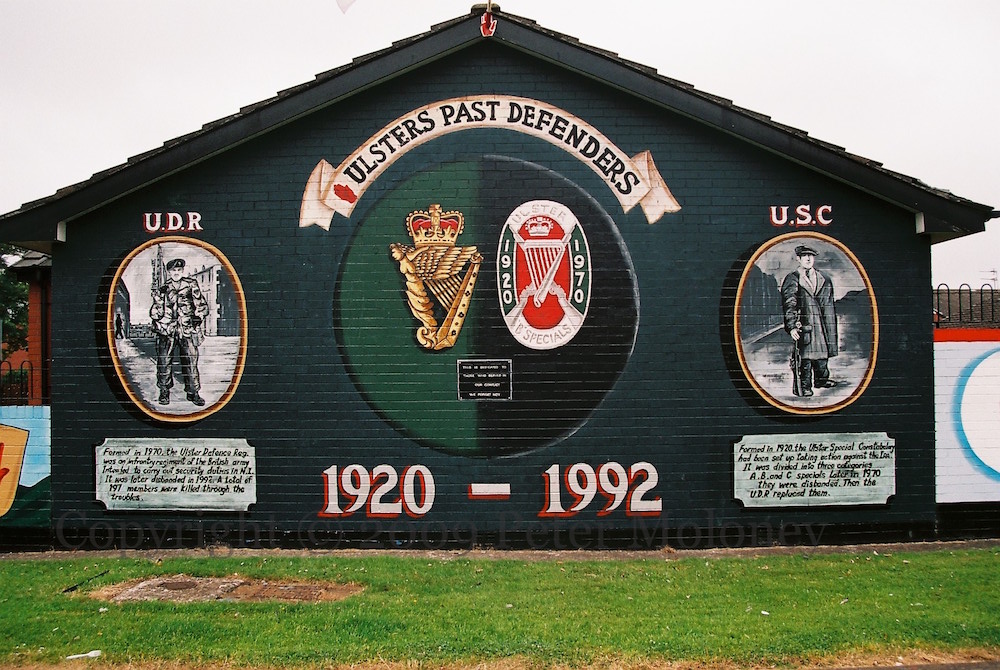
Compared to the 2005 images: the background of the UFF mural has been repainted; “Loyalist East Belfast” replaces the letters “UFF”; the Red Hand Of Ulster replaces “Feriens Tego” (From Ripley’s Believe It Or Not, 1953: “The strangest victory in all history: Heremon [Érımón] O’Neill racing a rival chieftain for possession of Ireland became the first man to touch its soil by cutting off his own hand and hurling it ashore! His sacrifice made Heremon the first king of Ulster, 1015 B.C. The red hand of Ulster is still the provinces coat of arms thousands of years later.” Most people believe it not.) Notice that outline is of the six-county Northern Ireland rather than of the historical Ulster; and the “Ulsters Past Defenders” mural has been completely repainted with the emblems of the UDR and B-Specials at the centre (“This is dedicated to those who served in our conflict – we forget not”, “Formed in 1970, the Ulster Defence Reg. was an infrantry [sic] regiment of the British army intended to carry out security duties in NI. It was later disbanded in 1992. A total of 197 members were killed through the troubles”, “Formed in 1920, the Ulster Special Constabulary had been set up taking action against the IRA. It was divided into three categories A, B, and C specials. Later in 1970 they were disbanded. Then the UDR replaced them.”)



 Peter Moloney Collection