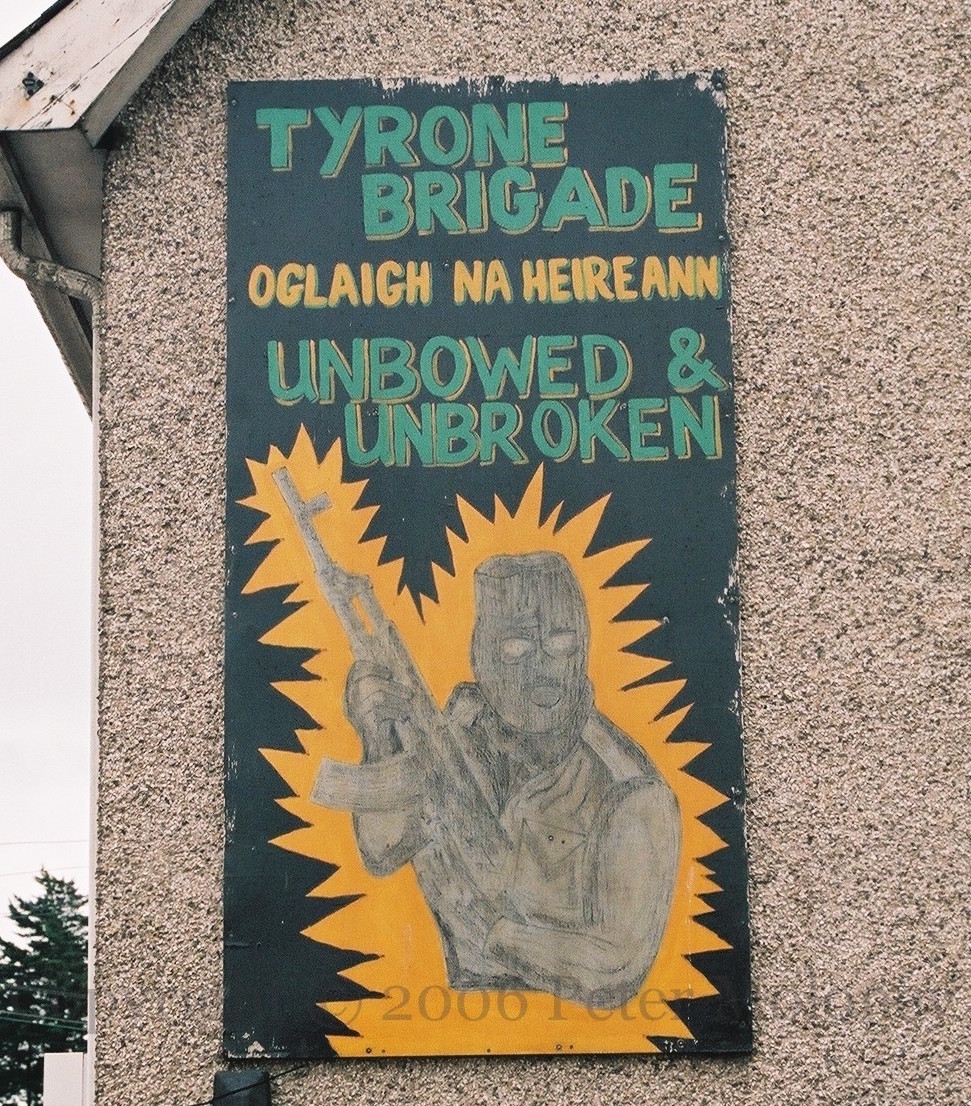
“Tyrone brigade, Óglaıgh Na hÉıreann – Unbowed & Unbroken”.
The Square, Coalisland
Click image to enlarge
Copyright © 2006 Peter Moloney
M03225
“Tyrone brigade, Óglaıgh Na hÉıreann – Unbowed & Unbroken”.
The Square, Coalisland
Click image to enlarge
Copyright © 2006 Peter Moloney
M03225
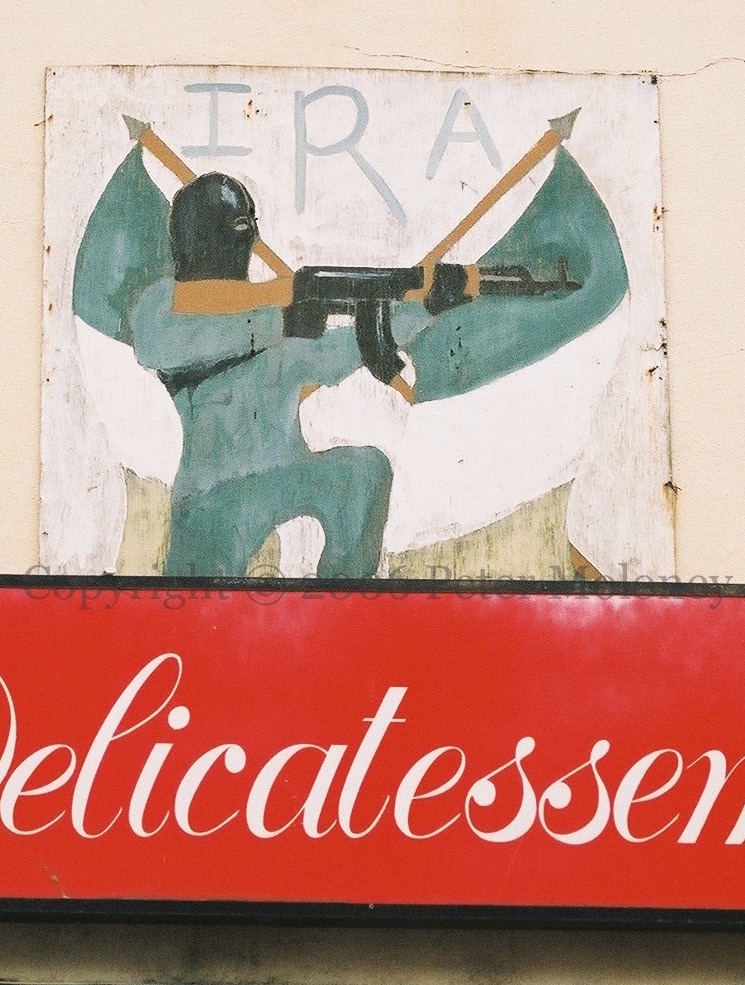
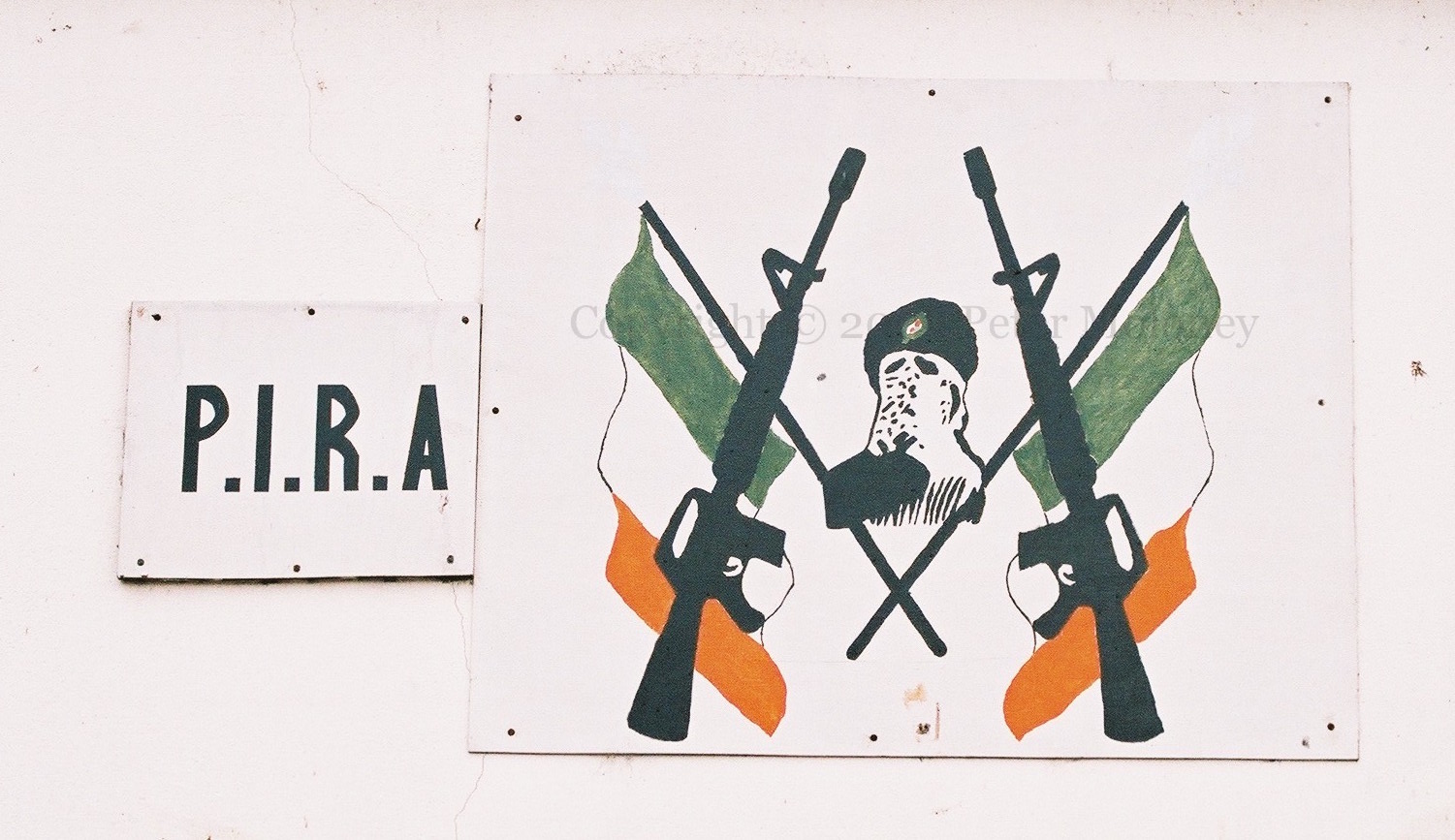
These two Provisional IRA boards – one memorial, one “active”, both with assault rifles – are almost facing each other in The Square, Coalisland.
Click image to enlarge
Copyright © 2006 Peter Moloney
M03217 M03216 [M03214] [M03215]


Here are two ‘ribbons’ from Coalisland (Lineside, Dungannon Rd), one green, for the release of political prisoners, the other black, for the deceased.
Click image to enlarge
Copyright © 2006 Peter Moloney
M03223 M03224
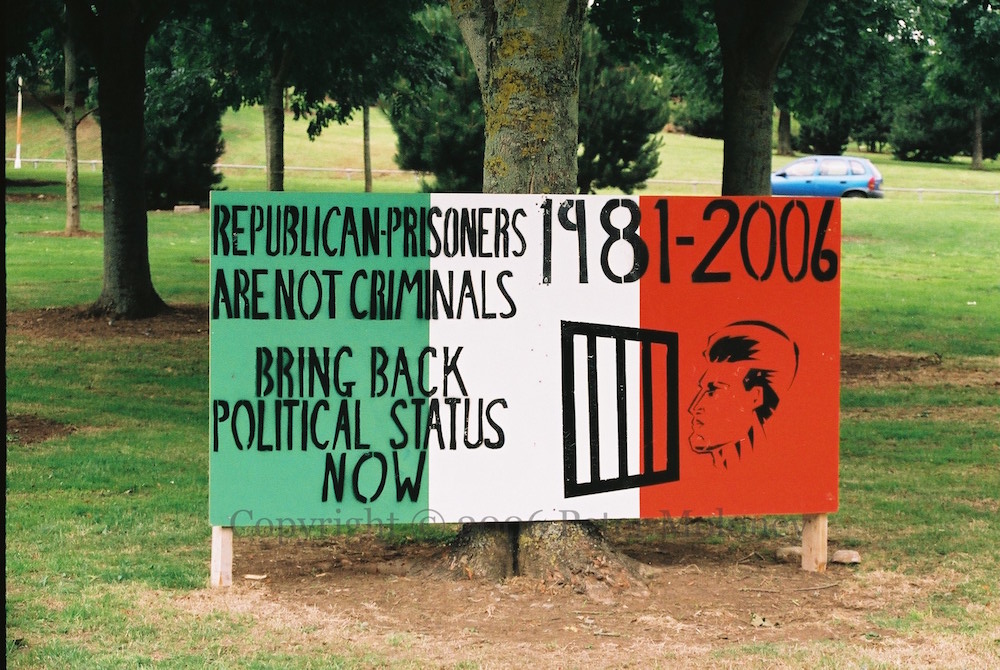
“Republican prisoners are not criminals – bring back political status now. 1981-2006”. The illustration on the right of a prisoner behind bars dates back to the 1908s – see Remember The Prisoners. Killylea Road, Armagh. (A black-and-white version existed in Keady – see J2959.)
Click image to enlarge
Copyright © 2006 Peter Moloney
M03207
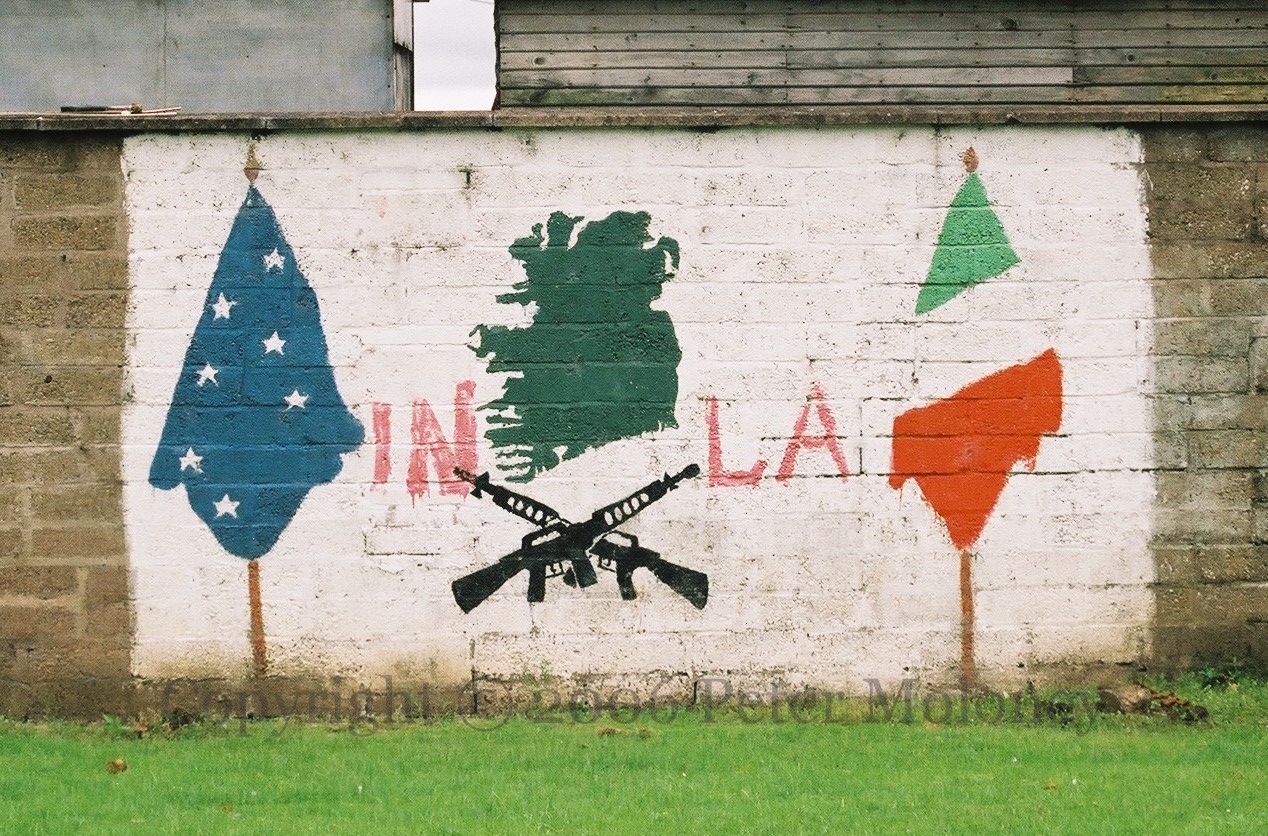
The island of Ireland (without border) floats above crossed rifles.
D’Alton Park, Armagh
Click image to enlarge
Copyright © 2006 Peter Moloney
M03206

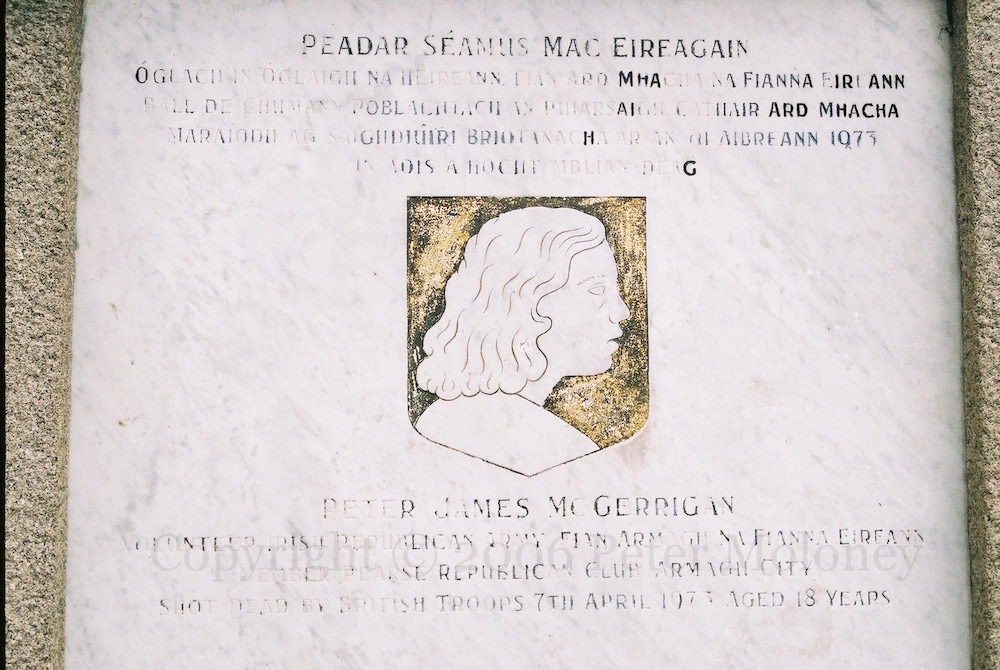
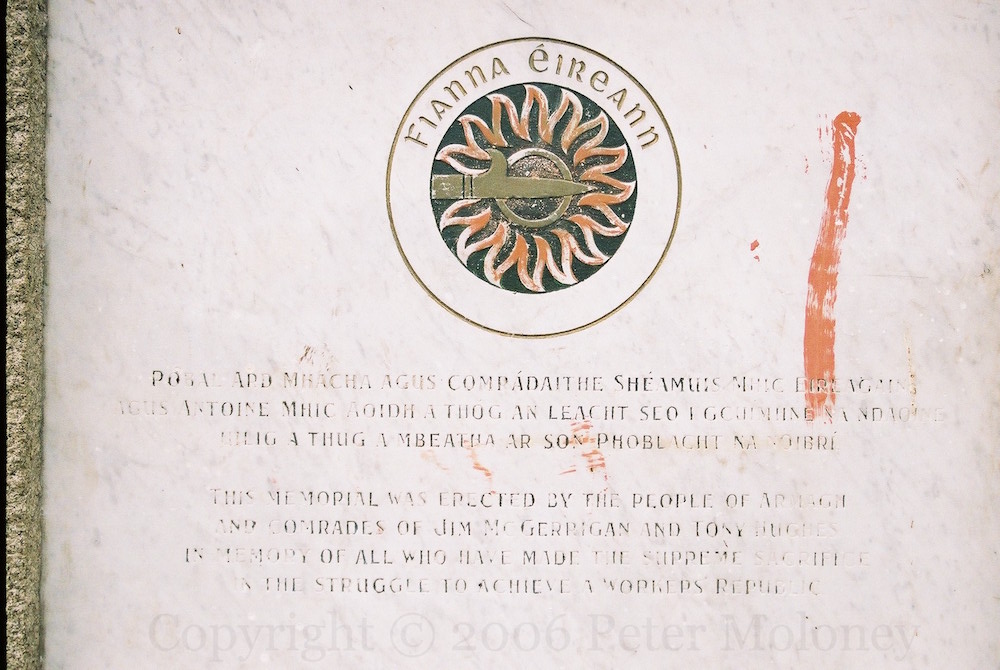
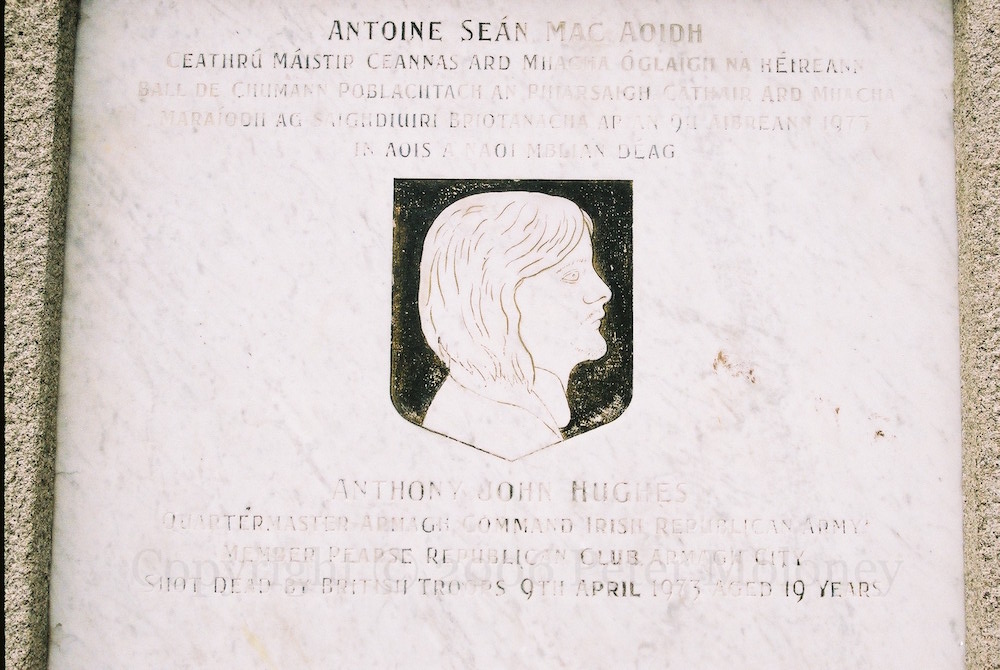
“Na bíodh amhras ar éınne cé bhéas ına mháıstır ar an tír seo nuaır a bhéas Éıre saor. ‘Sıad na daoıne féın a bhéas ı gceannas agus a rıalós [ = rıalú ?] an tír.” is a translation of a line from Padraig Pearse’s The Sovereign People: “Let no man be mistaken as to who will be lord in Ireland when Ireland is free. The people will be lord and master”. “Unveiled by Thomas McGleenan, OC Armagh Command, IRA, 7th April 1974” (close-up at CAIN).
The stone below reads: “In loving memory of all those from the greater Armagh area who gave their lives for the cause of Irish freedom. ‘While Ireland holds those graves, Ireland unfree shall never be at peace.’ [Pearse] Fuaır sıad bás ar son saoırse na hÉıreann.”
“Peadar Séamus Mac Eıreagaın, óglach in Óglaıgh Na hÉıreann, fıan Ard Mhacha Na Fıanna Éıreann, ball de Chumann Poblachtach An Phıarsaıgh cathaır Ard Mhacha. Maraíodh ag saıghdıúırí Brıotanacha ar an 7ú Aıbreann 1973 in aoıs a hocht mblıan deag.” “Peter James McGerrigan, volunteer Irish Republican Army, fian Armagh Na Fıanna Éıreann, member Pearse Republican Club Armagh City, shot dead by British troops 7th April 1973 aged 18 years.”
“Pobal Ard Mhacha agus comprádaithe Shéamus Mhic Eireagain agus Antoine Mhic Aoidh a thóg an leacht seo i gcuimhne na ndaoine uilig a thug a mbeatha ar son phoblacht na noibrí.” “This memorial was erected by the people of Armagh and comrades of Jim McGerrigan an Tony Hughes in memory of all who have made the supreme sacrifice in the struggle to achieve a workers republic.”
“Antoıne Seán Mac Aoıdh, ceathrú máıstır ceannas Ard Mhacha Óglaıgh Na hÉıreann, ball de Chumann Poblachtach An Phıarsaıgh cathaır Ard Mhacha. Maraíodh ag saıghdıúırí Brıotanacha ar an 9ú Aıbreann 1973 in aoıs a naoı mblıan déag.” “Anthony John Hughes, quartermaster Armagh command, Irish Republican Army, member Pearse Republican Club, Armagh city, shot dead by British troops 9th April 1973 aged 19 years.”
Jake McGerrigan and Tony Hughes were both shot in the Windmill Hill area of Armagh in a 48-hour period in April 1973. There is an individual plaque to Hughes in the same location (behind Culdee Terrace) and a stone to McGerrigan in Windmill Avenue. Video of Jake McGerrigan’s funeral.
Click image to enlarge
Copyright © 2006 Peter Moloney
M03198 [M03200] [M03199] M03201 M03202 M03203


King Billy takes centre stage in the Orange arch in Armagh, flanked a variety of Orange symbols such as crossed keys, compass and set square, cross and crown, an anchor, and a coffin. “FCH” (reading from the bottom up, as the ladder would be ascended) stands for “Faith, hope, charity” – I Corinthians 13:13 is read during initiation.
Click image to enlarge
Copyright © 2006 Peter Moloney
M03208 [M03209 ] [M03210] M03211 [M03212] [M03213] [M03236] [M03237]
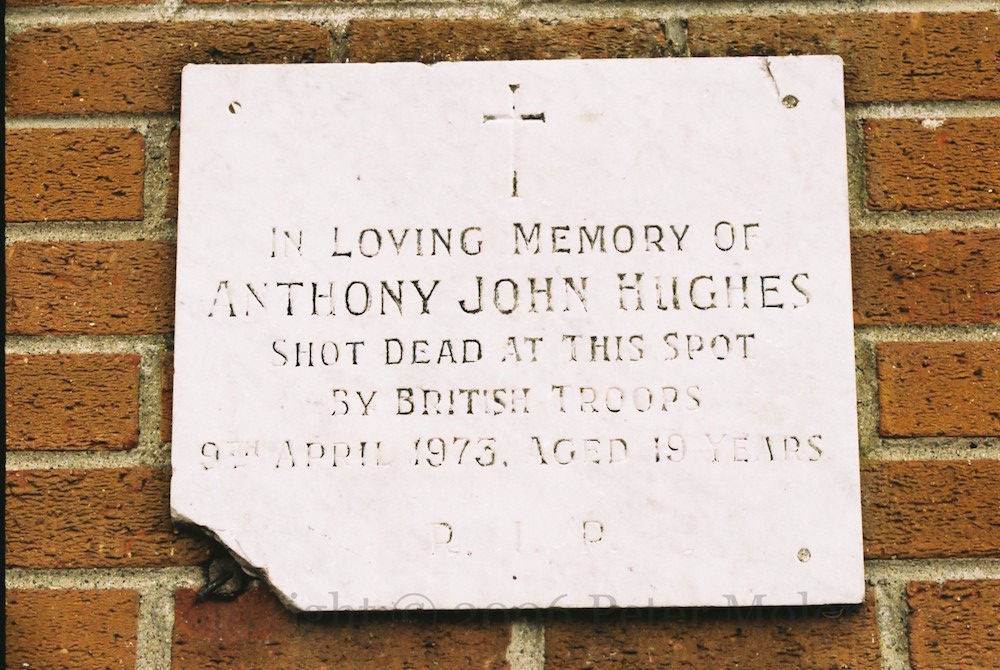
“In loving memory of Anthony John Hughes shot dead at this spot by British troops 9th April 1973, aged 19 years. RIP.” Sutton states that Hughes was shot while “moving arms from car outside house”. Behind Culdee Terrace, Armagh.
Click image to enlarge
Copyright © 2006 Peter Moloney
M03204 [M08370]
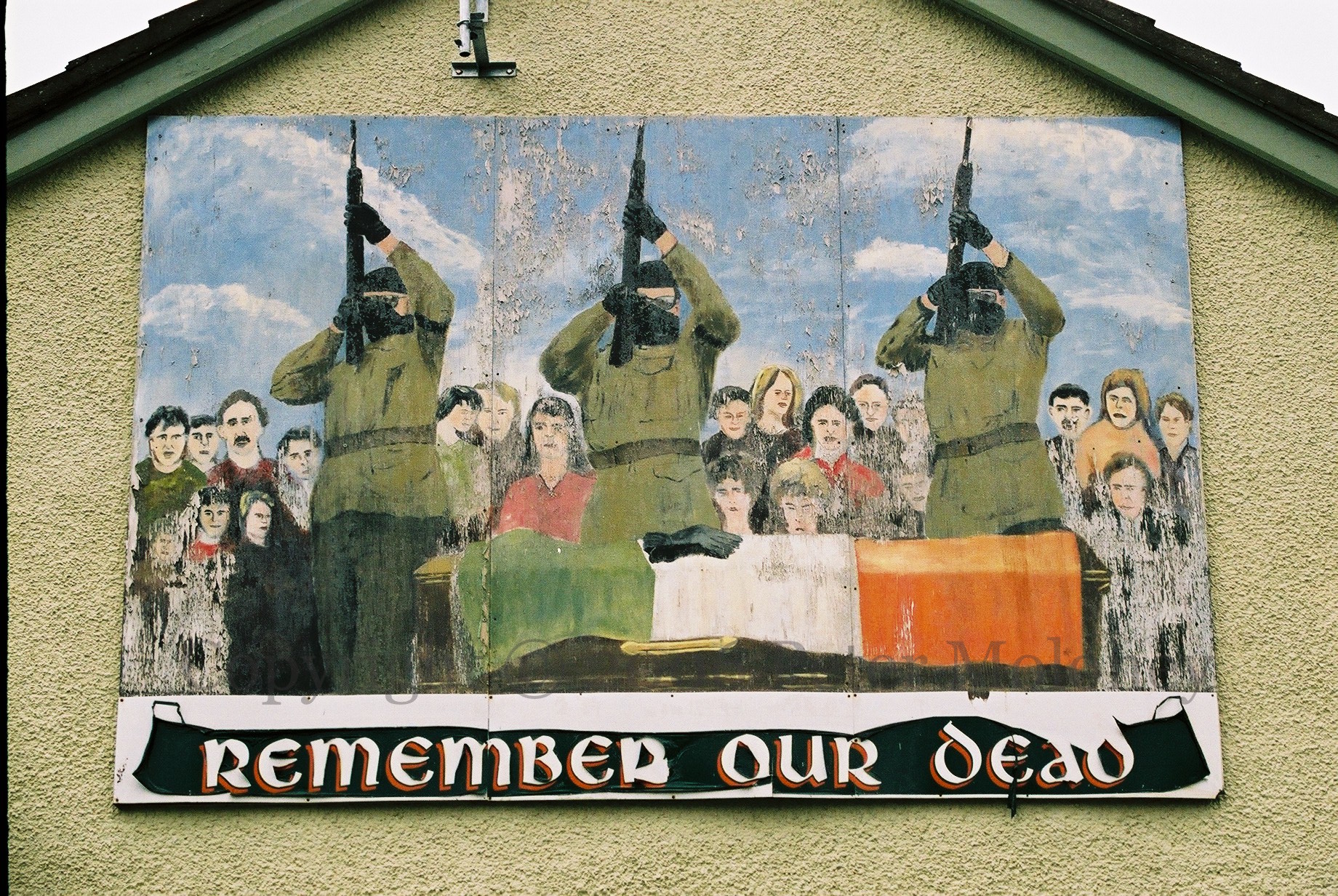
A crowd of people look on as a funeral volley is fired over a Tricolour-draped coffin.
Navan Street/Culdee Terrace, Armagh
Click image to enlarge
Copyright © 2006 Peter Moloney
M03197
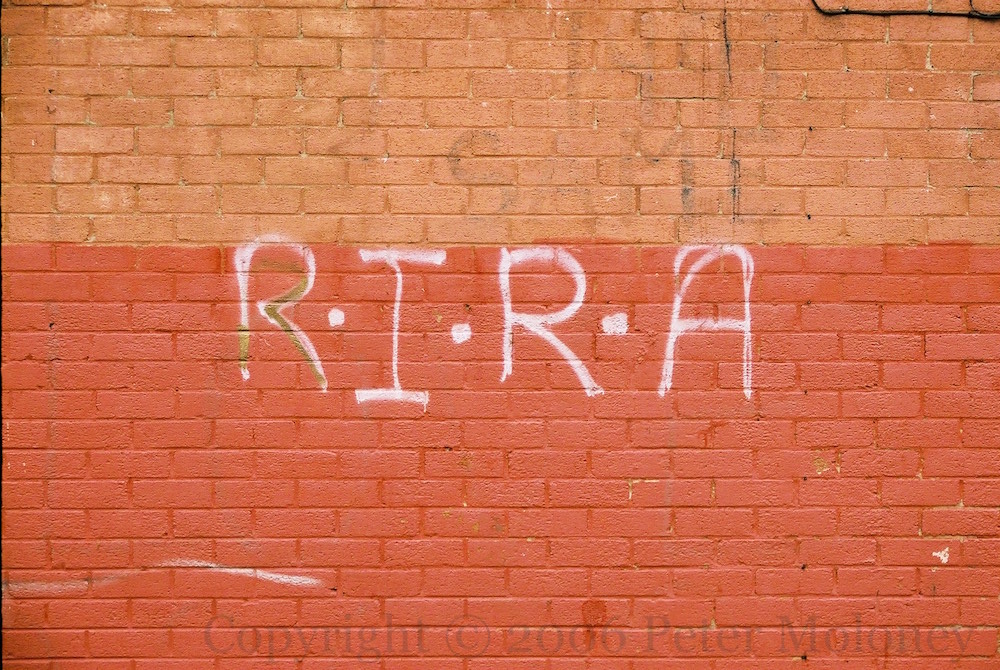
“RIRA” graffiti below In These Ancient Lands.
Navan Street, Armagh
Click image to enlarge
Copyright © 2006 Peter Moloney
M03194
2010 [M05896]

