Rangers were Scottish Premier League champions in 2008-2009. They also beat Falkirk 1–0 in the final of the 2009 Scottish Cup championship (WP). They rode to victory thanks to a nacho Novo goal.
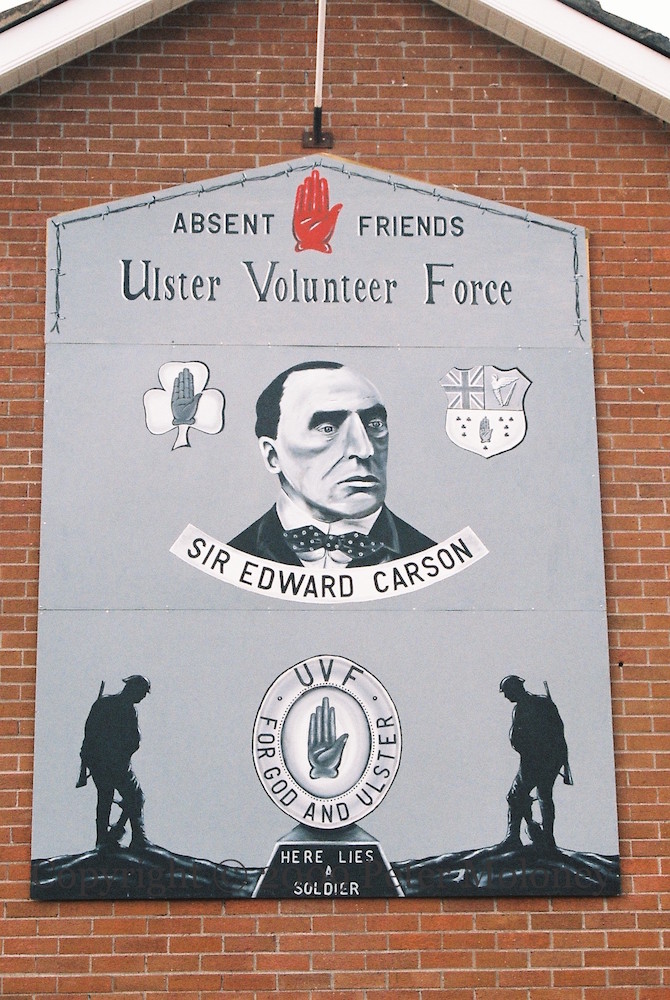
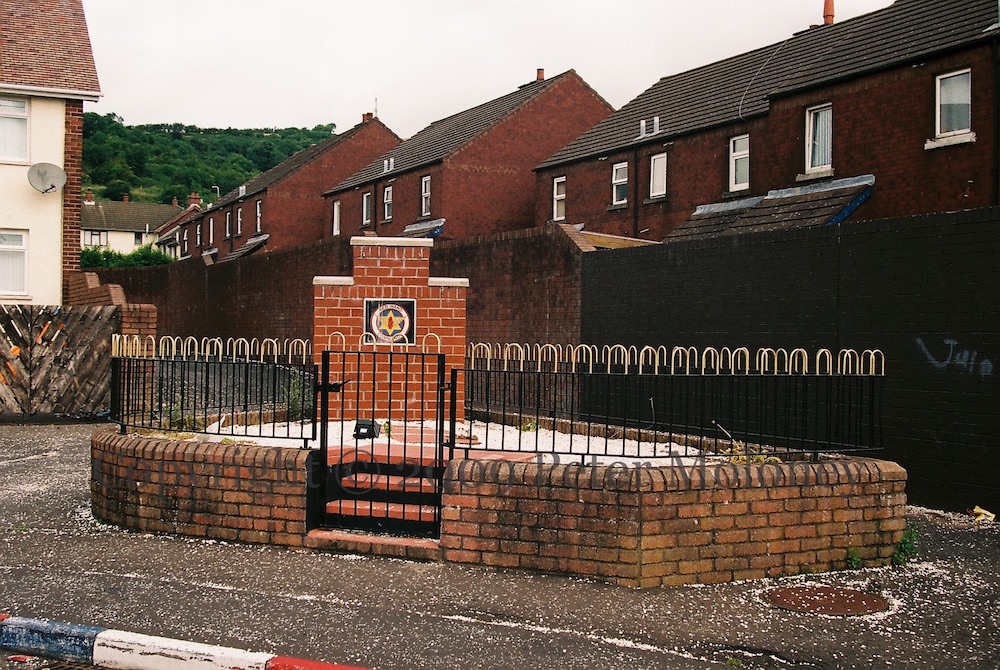
Sir Edward Carson founded the Ulster Volunteers with James Craig in 1912. At the outbreak of the Great War, its volunteers served in the British Army in the 36th (Ulster) Division and died on the fields of Flanders. “Here lies a soldier.”
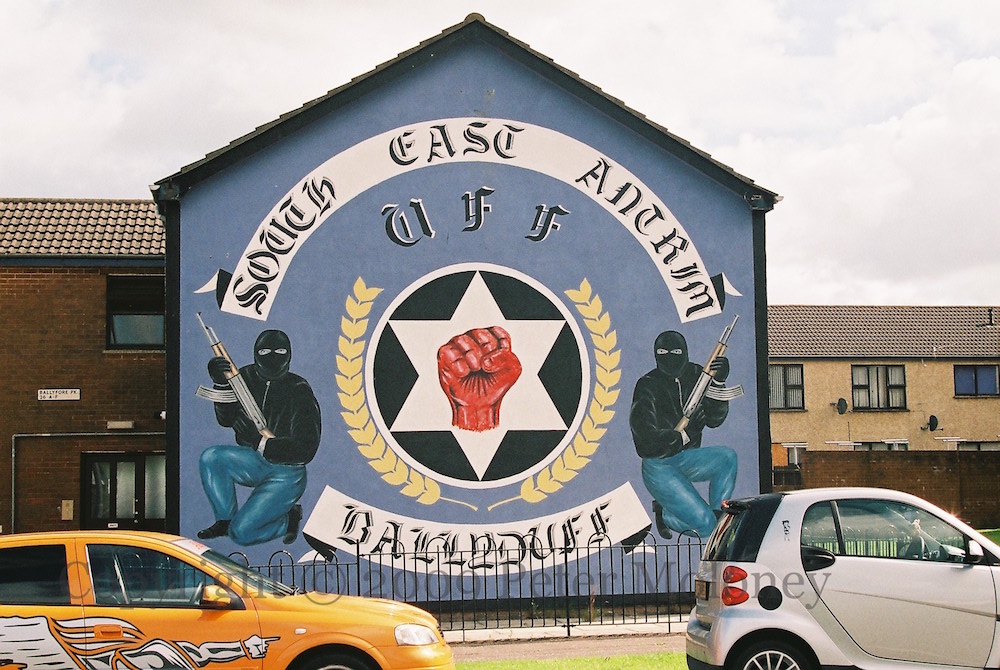
The South East Antrim UFF mural in Fairview Road, Ballyduff is repainted; the star changes from yellow to white and the background from blue to purple. (Compare to J1031.)
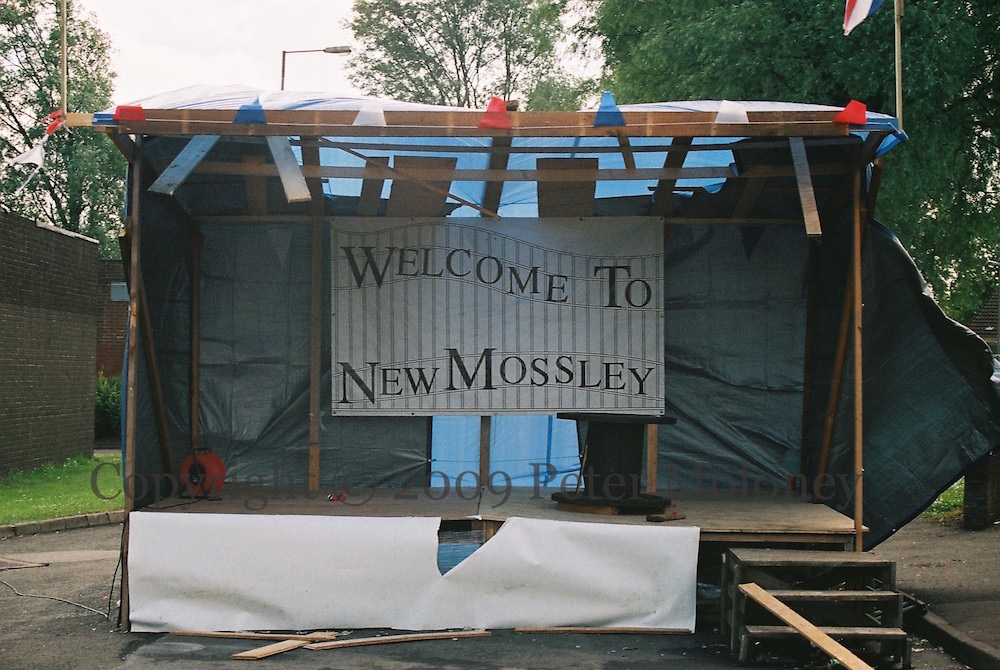
These are images from Ballyearl Drive around the Twelfth.
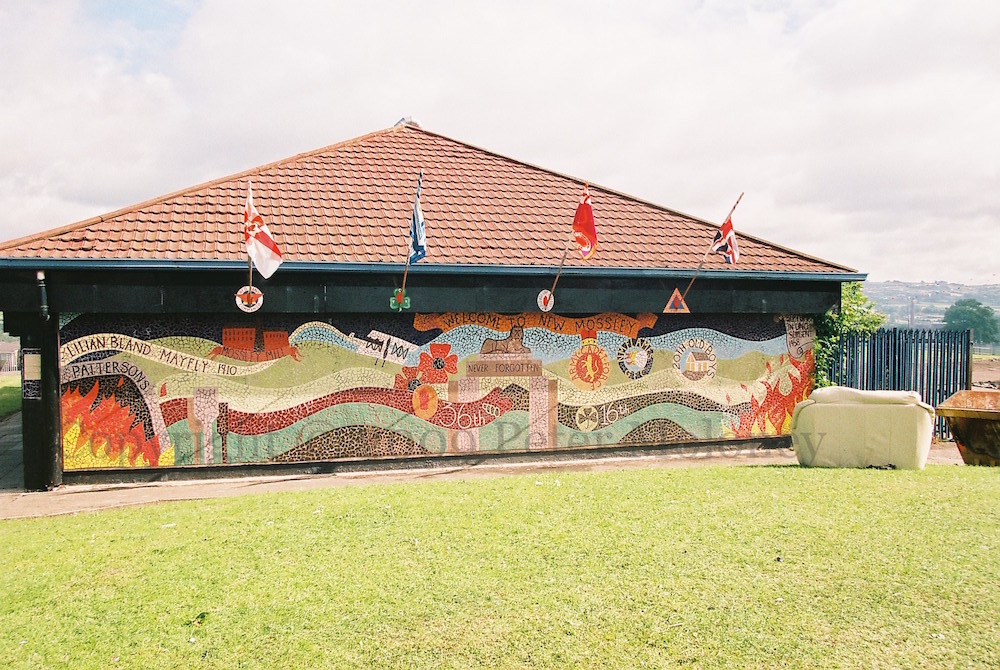
The new moasic includes both the 36th and 16th Divisions. “This mosaic reflects the cultural & industrial heritage of the area. New Mossley Community Group is proud to be part of this project and hope it gives pleasure to everyone. We would like to thank the Arts Council and Groundwork for their help and support. Unveiled by Jeanette Ervine, Dawn Purvis MLA, Mena Mitchell 17th January 2009.”
Included from left to right are Lilian Bland Mayfly 1910, Pattersons [Spade Mill], Mossley Mill, Army Cadet Force, New Mossley Flames and 20th Old Boys (local soccer teams), “Septem in uno surgent” [seven rise as one] is the motto of Newtownabbey, created in 1958 from “the seven ancient villages of Whitehouse, Whiteabbey, Jordanstown, Glengormley, Whitewell, Monkstown and Carnmoney” along with an additional 20 townlands (Belfast Forum).
The UVF/YCV/RHC emblems on the upper border remain from the previous UVF murals.
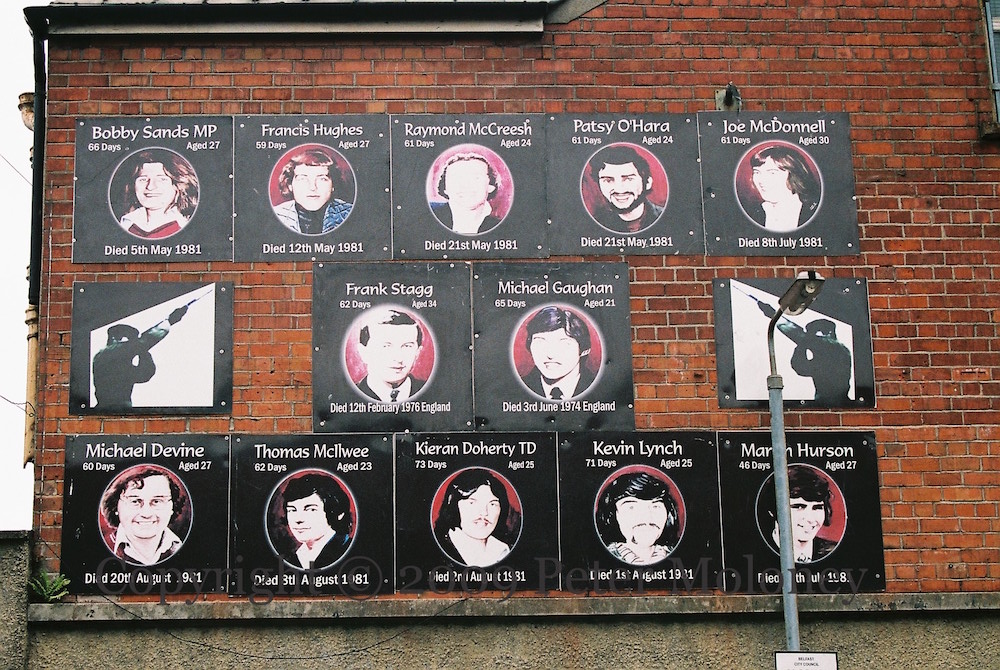
Hunger strikers of the modern era (including Frank Stagg and Michael Gaughan) in Rockmore Road, Belfast. This is the third such gallery of portraits – the first is here; the second can be seen in Google StreetView.
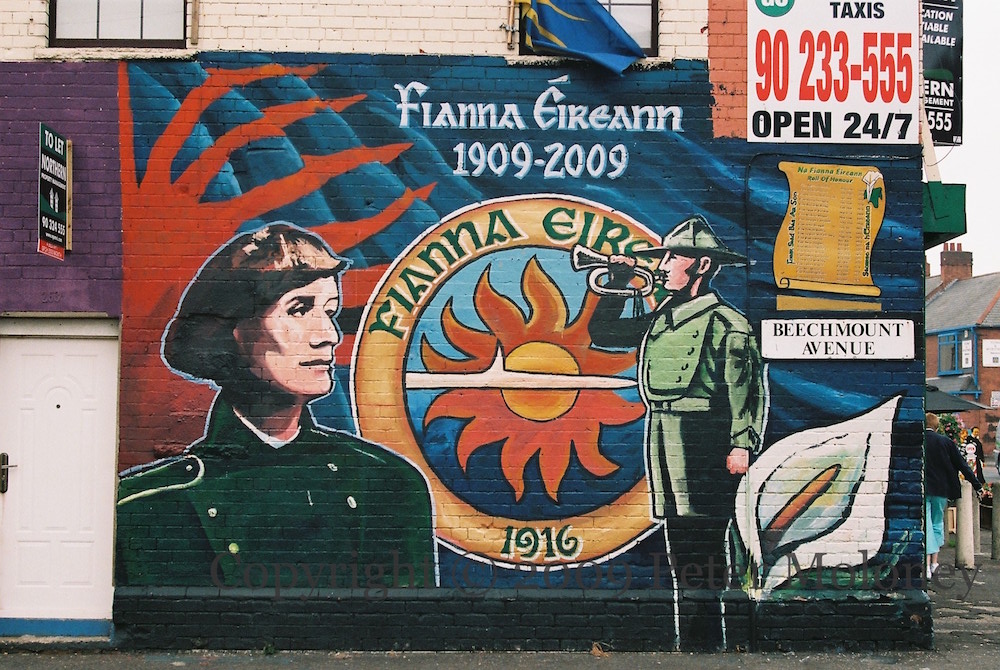
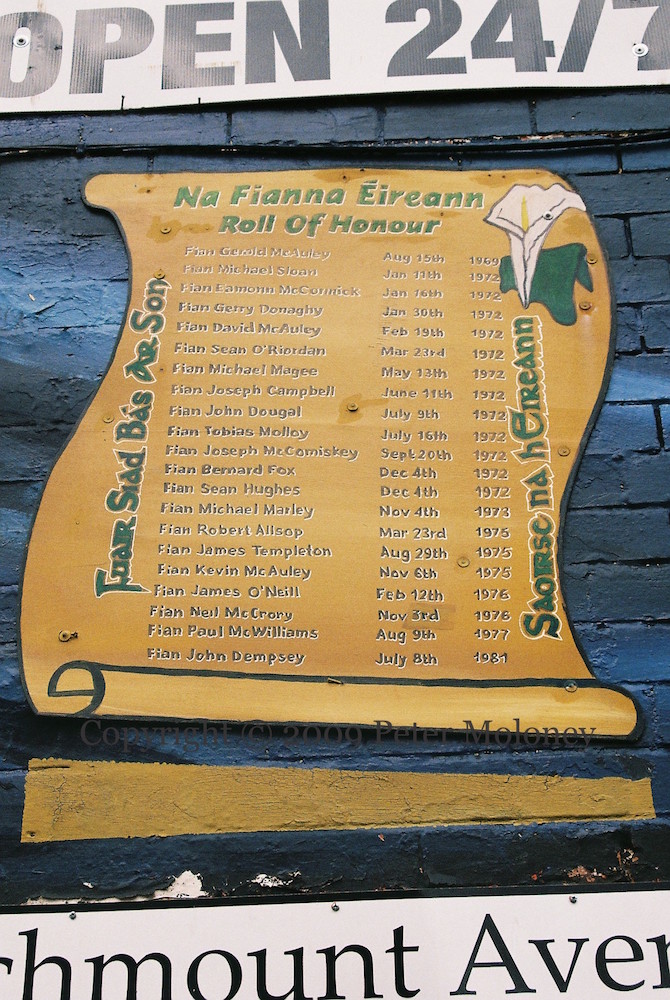
“Fuaır sıad bás ar son saoırse na hÉıreann” [they died for the freedom of Ireland]. Na Fıanna Éıreann [warriors of Ireland; IRA youth] were begun in 1909 by Countess Markievicz and Belfast man Bulmer Hobson (WP). They took part in the Easter Rising of 1916. The role of honour lists deaths from 1969 to 1984 – the Troubles. After the Agreement, the Fıanna are affiliated with Republican Sınn Féın and the Continuity IRA. At the corner of Beechmount Avenue and the Falls Road – see the Visual History of this wall.
The Éırí Amach Na Cásca 1916 [Easter Rising 1916] mural in Beechmount Avenue/Ascaıll Ard Na bhFeá/RPG Avenue is repainted (by DD and Seany McVeigh) due to the new doorway. Compare to the previous version. (See also the IRA plaque.)
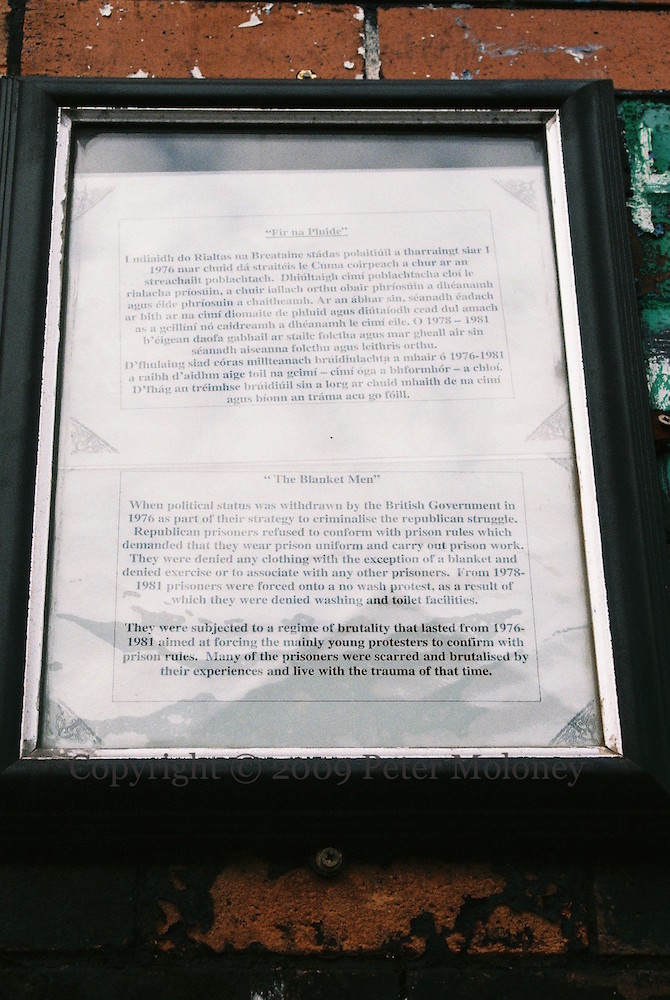
“Fır na Pluıde: ı ndıaıdh do Rıaltas na Breataıne stadás polaıtıúıl a tharraıngt sıar ı 1976 mar chuıd dá straıtéıs le Cuma coırpeach a chur ar an streachaılt poblachtach. Dhıúltaıgh cımí poblachtacha cloí de rıalacha príosıún, a chur ıallach orthu obaır phríosúın a dhéaneamh agus éıde phríosúın a chaıtheamh. Ar an ábhar sın, séanach éadach ar bıth ar na cımí dıomaıte de phluıd agus dıútaíodh cead dul amach as a gcıllıní nó caıdreamh a dhéanamh le cımí eıle. Ó 1978-1981 b’éıgean daofa gabhal ar staılc folchta agus mar gheall aır sın séanadh aıseanna folctha agus leıthreas orthu. D’fhulaıng sıad córas mıllteanach brúıdıulachta a mhaır ó 1976-1981 a raıbh d’aıdhm aıge toıl na gcımí – cımí óga a bhformhór – a chloí. D’fhag an tréımhse brúıdıúıl sın a lorg ar chuıd mhaıth de na cımí agus bíonn an tráma acu go fóıll.”
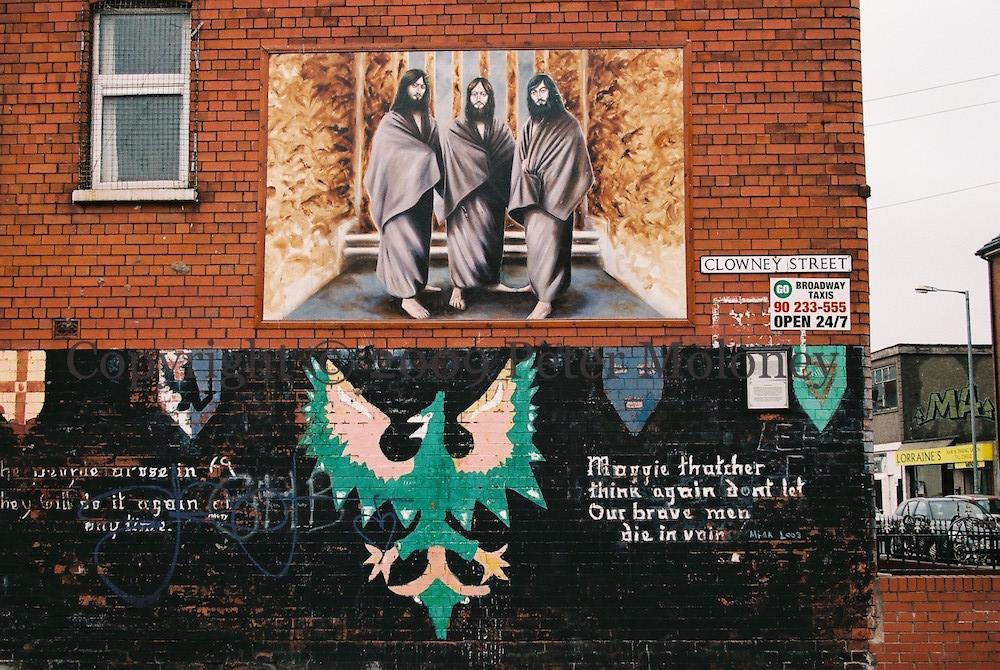
“The Blanket Men: When political status was withdrawn by the British Government in 1976 as part of their strategy to criminalise the republican struggle, Republican prisoners refused to conform with prison rules which demanded that they wear prison uniform and carry out prison work. They were denied any clothing with the exception of a blanket and denied exercise or to associate with any other prisoners. From 1978-1981 prisoners were forced onto a no wash protest, as a result of which they were denied washing and toilet facilities. They were subjected to a regime of brutality that lasted from 1976-1981 aimed at forcing the mainly young protesters to confirm [sic] with prison rules. Many of the prisoners were scarred and brutalised by their experiences and live with the trauma of that time.”




 Peter Moloney Collection