“Bietan jarrai” is the slogan of ETA (Euskadi Ta Askatasuna [Basque Country and Freedom]) and means “Keep on with both”, referring to the snake (politics) and the axe (armed struggle). “Borrokarako dei eginaz irrintzi bat dabil” means “the call to battle is a piercing one” from the song Batasuna. “Tıocfaıdh ár lá” is Irish for “Our day will come”.
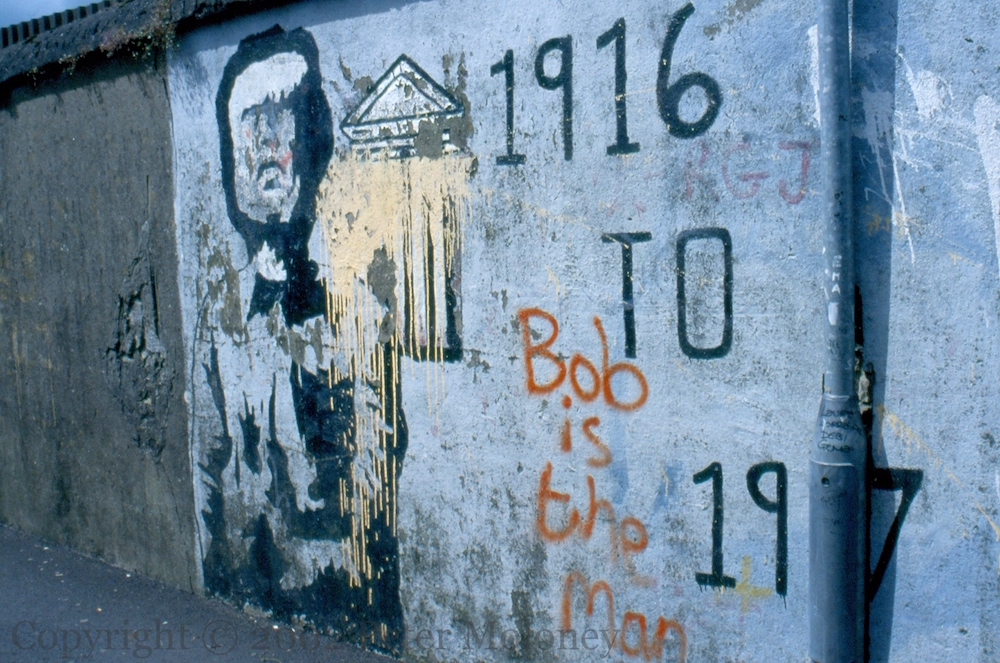
Two-colour mural of the GPO and an Irish rebel. The third digit of the date in the lower right-hand corner has been blocked out by the addition of a lamp-pole but is believed to be an “8”. Courtrai Park, Strabane.
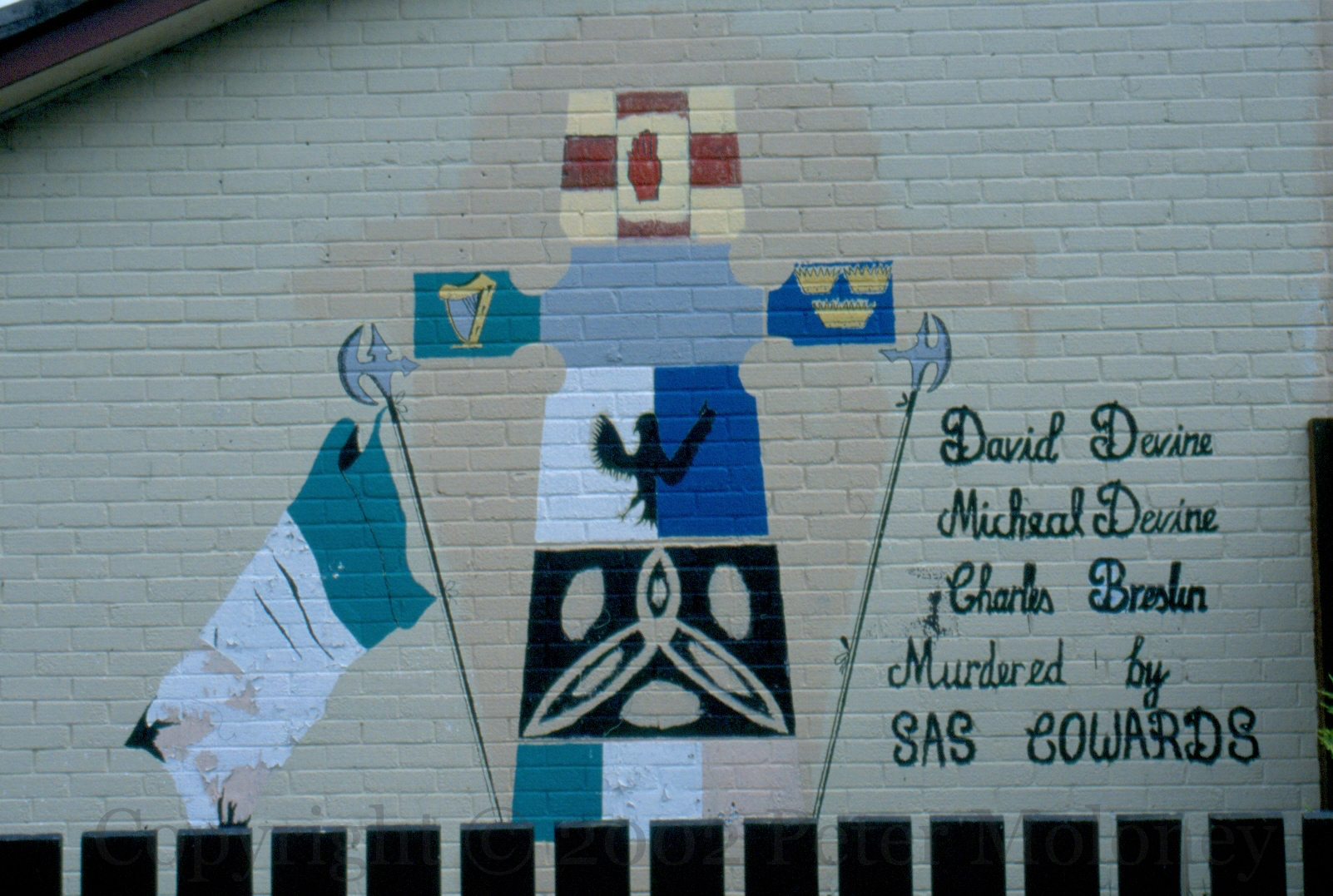
“David Devine, Michael Devine, Charles Breslin – murdered by SAS cowards.” The three IRA members, aged 16, 22, and 20, were shot by SAS soldiers while returning arms to a dump in a field outside Strabane on February 23rd, 1985. The incident prompted accusations of a ‘shoot-to-kill’ policy, as there was no attempt at arrest.
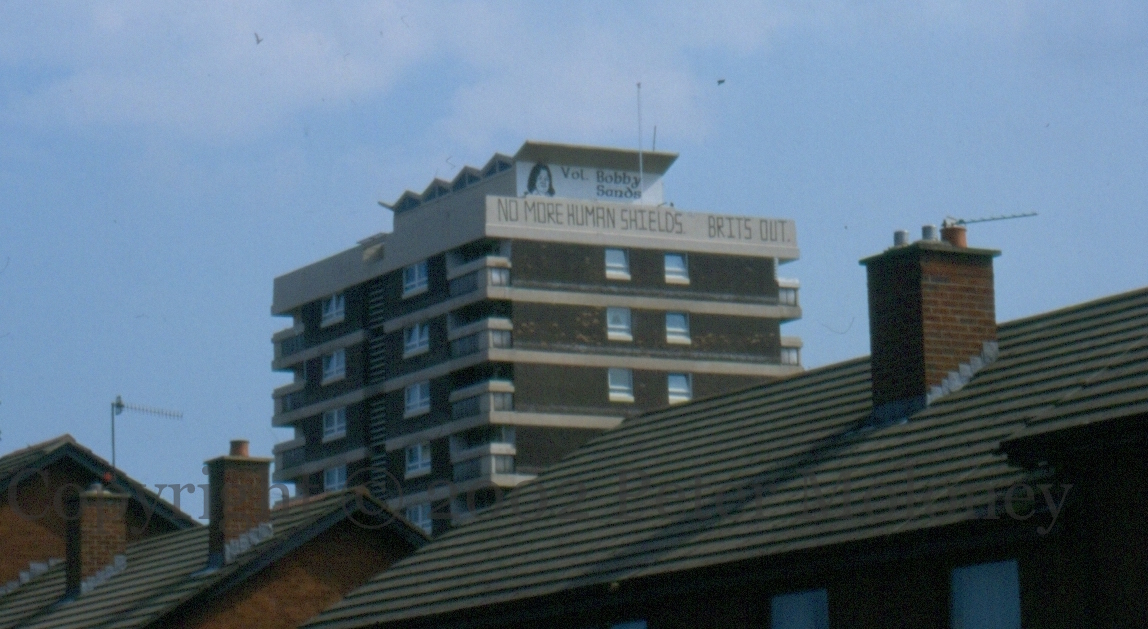
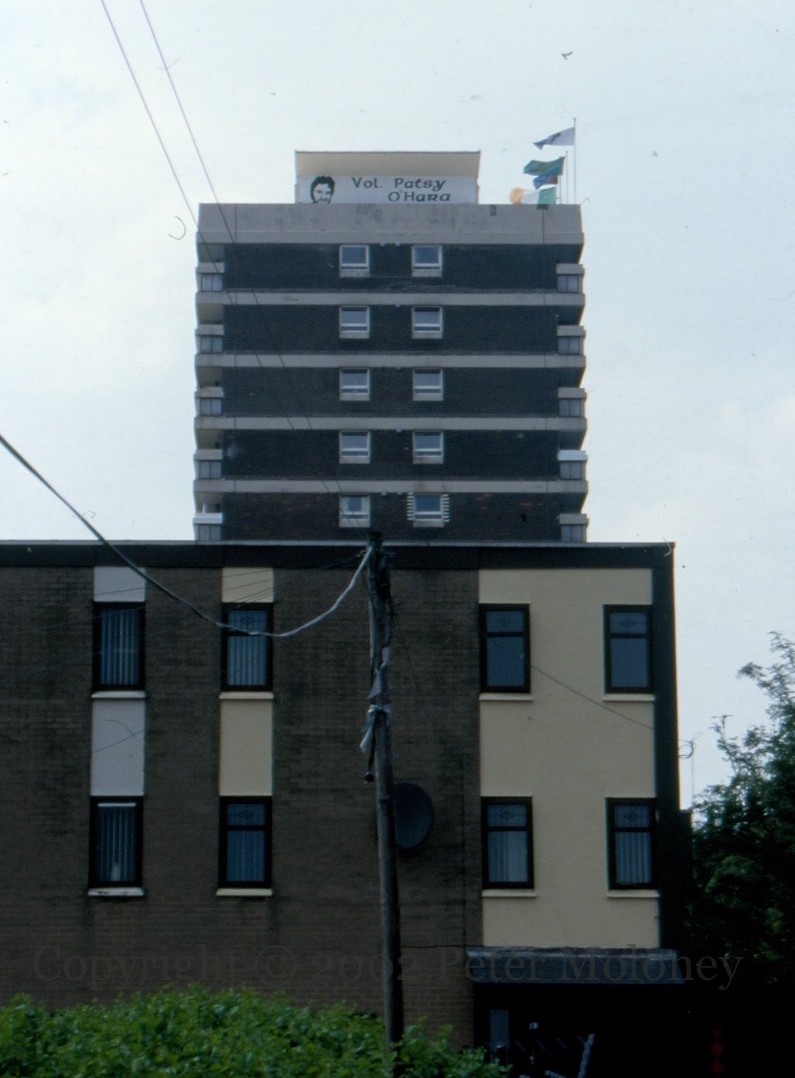
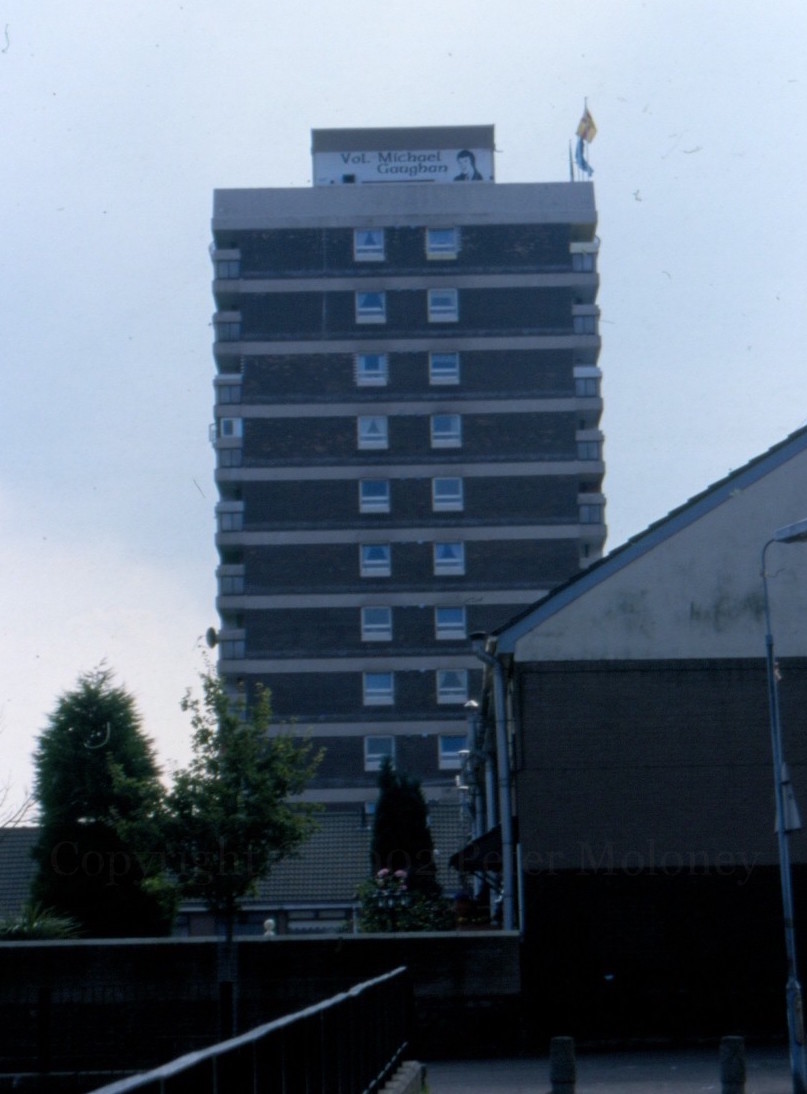
The names of portraits of the ten deceased 1981 hunger strikers, plus Frank Stagg and Michael Gaughan, are on six of the seven New Lodge “houses” (high-rise buildings), two per house. Other slogans have appeared just below them, such as the “No more human shields – Brits out” shown in the first image, below the portrait of Bobby Sands on Teach Eıthne (perhaps a reference to the Army positions on top of Teach Mhéabha (Maeve House) and Teach Gráınne?). There are some more images in the Seosamh Mac Coılle collection.
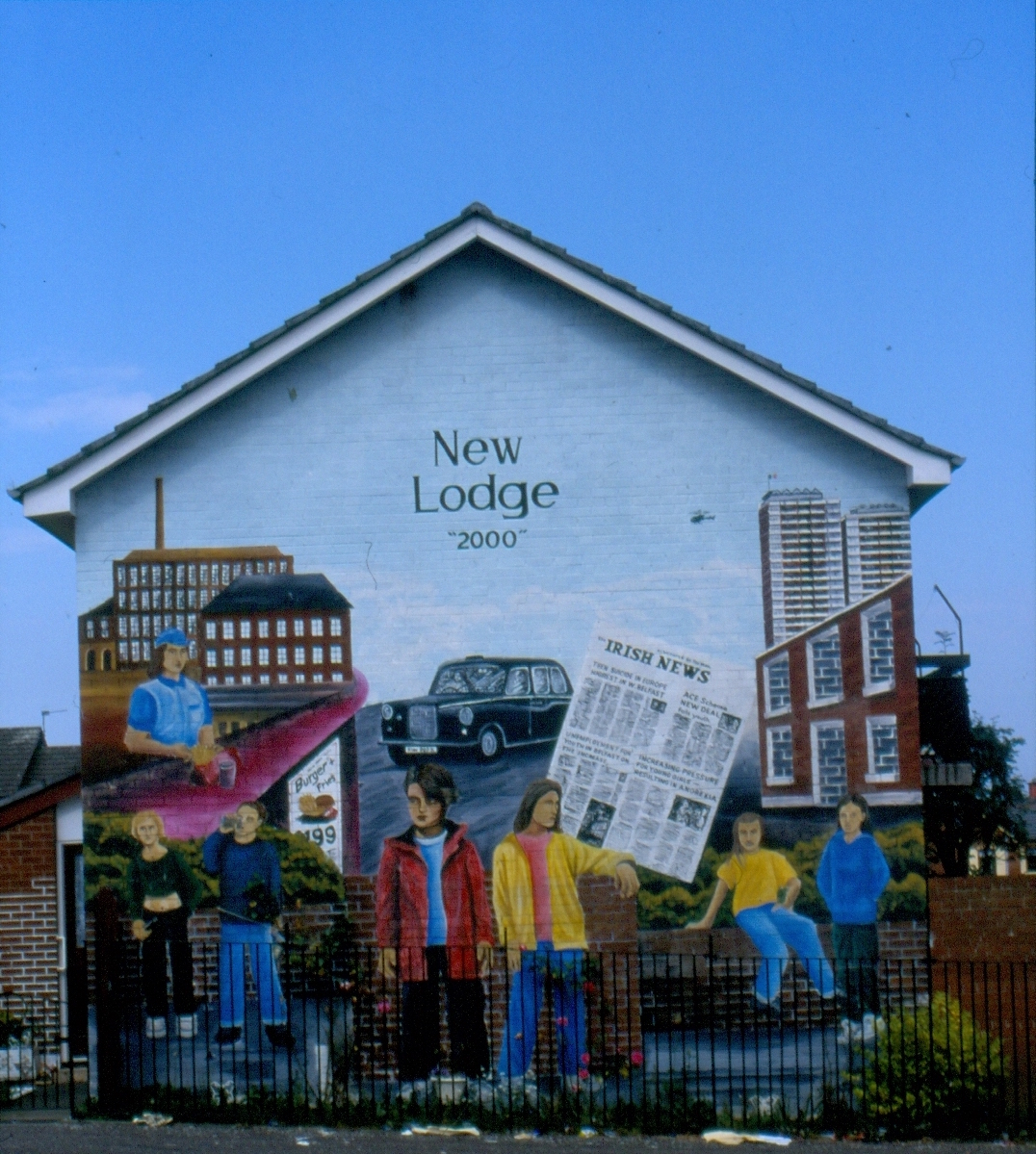
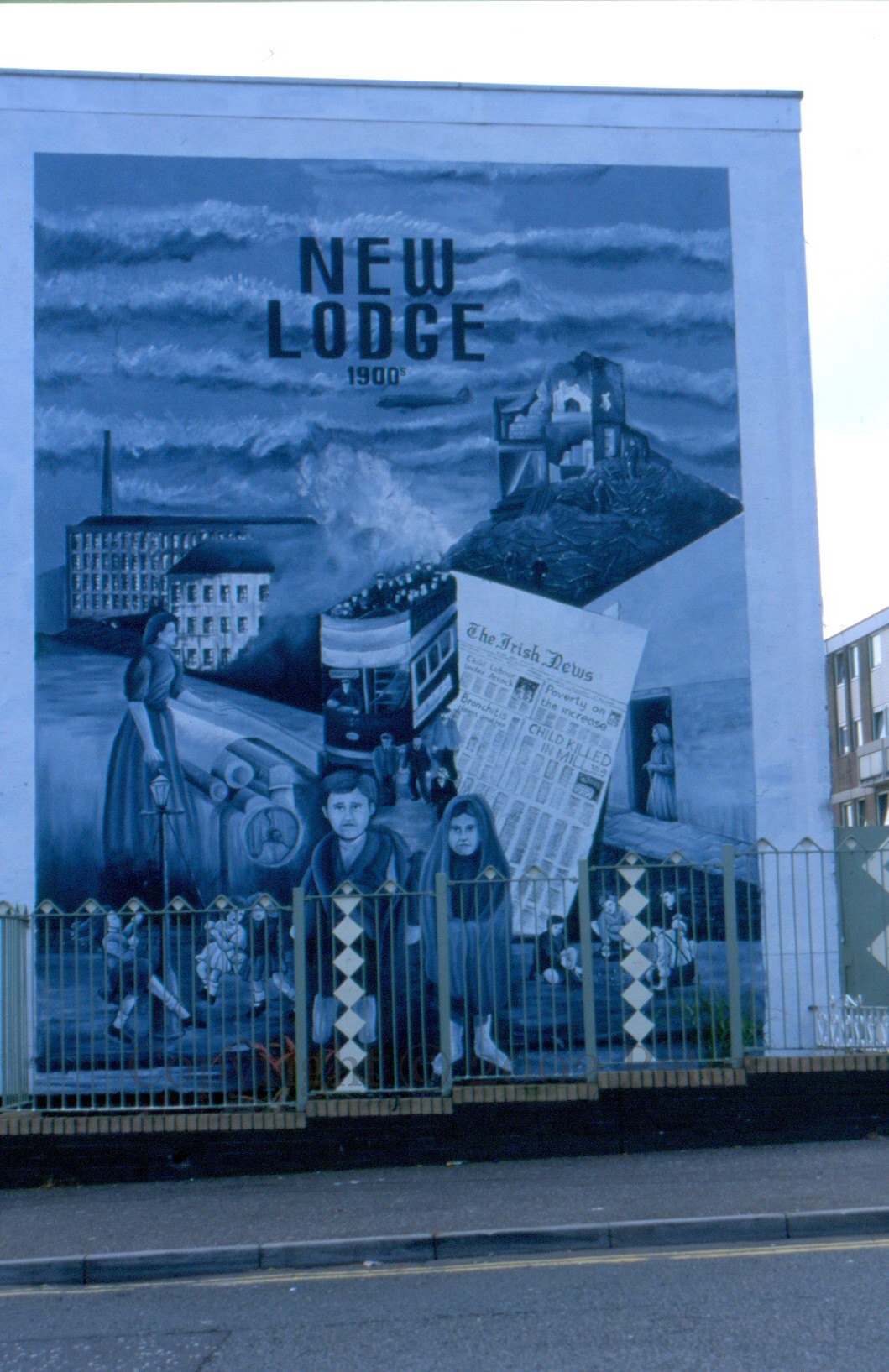
This pair of murals, on the New Lodge Road, Belfast, contrasts life for young people in the “1900s” to life in “2000”. Instead of working (and dying – in the headlines from the Irish News) in mills, they work in fast-food restaurants and drive black taxis (and suffer unemployment, suicide, and anorexia – again, in the newspaper), and instead of playing in the streets and wrapping themselves in blankets, they sit on walls and drink.
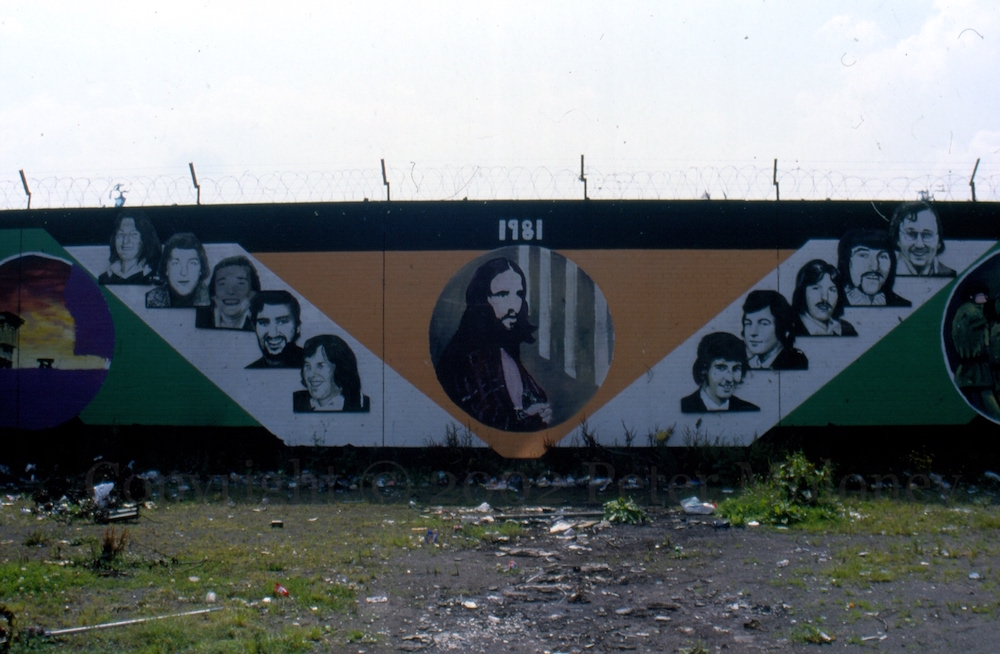
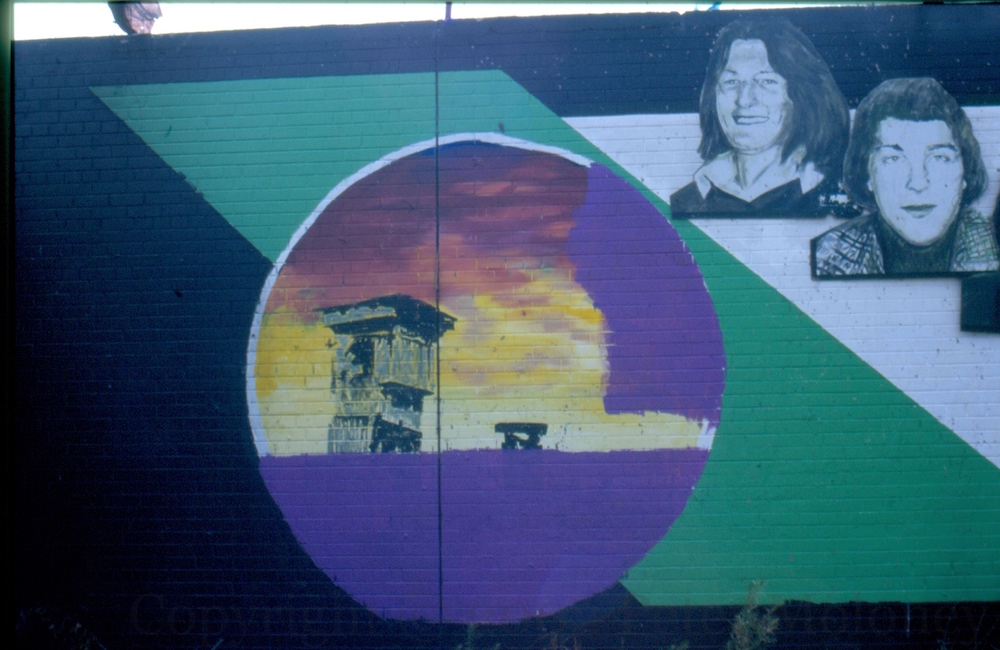
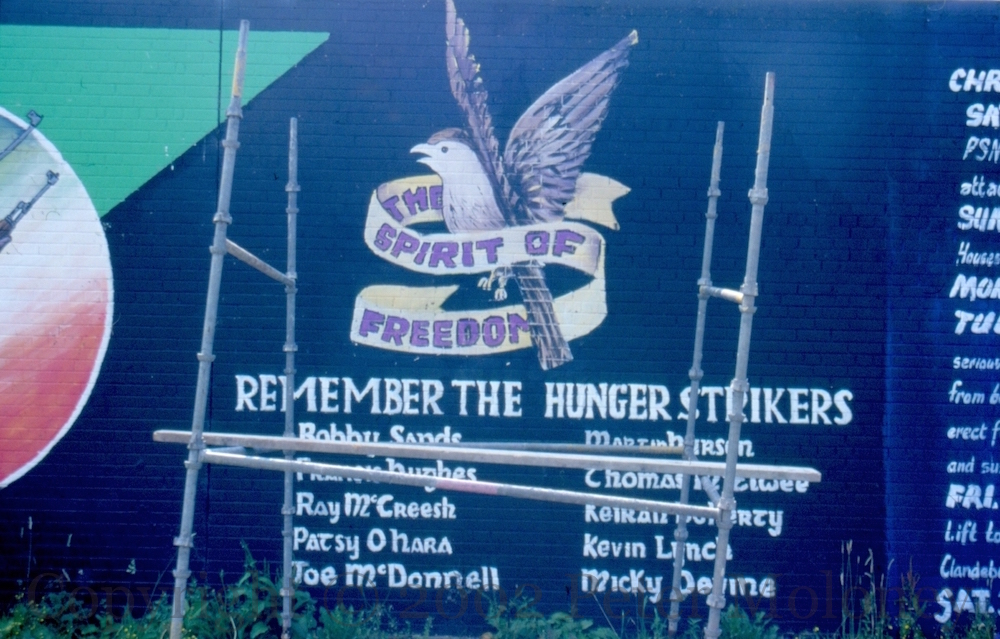
Here are six images of the hunger strikers mural in Mountpottinger Road, Belfast. The ten portraits are on cut wooden boards while the rest is painted. On the far right (image 5) is a “spirit of freedom” lark and the names of the ten deceased 1981 strikers. In the centre (image 3) is blanket man Hugh Rooney.
By 2002, the “Time for peace, time to go” mural in Beechfield Street, Belfast, painted in 1997, was beginning to show its age. The image is based on a photograph of British forces in the Falklands.
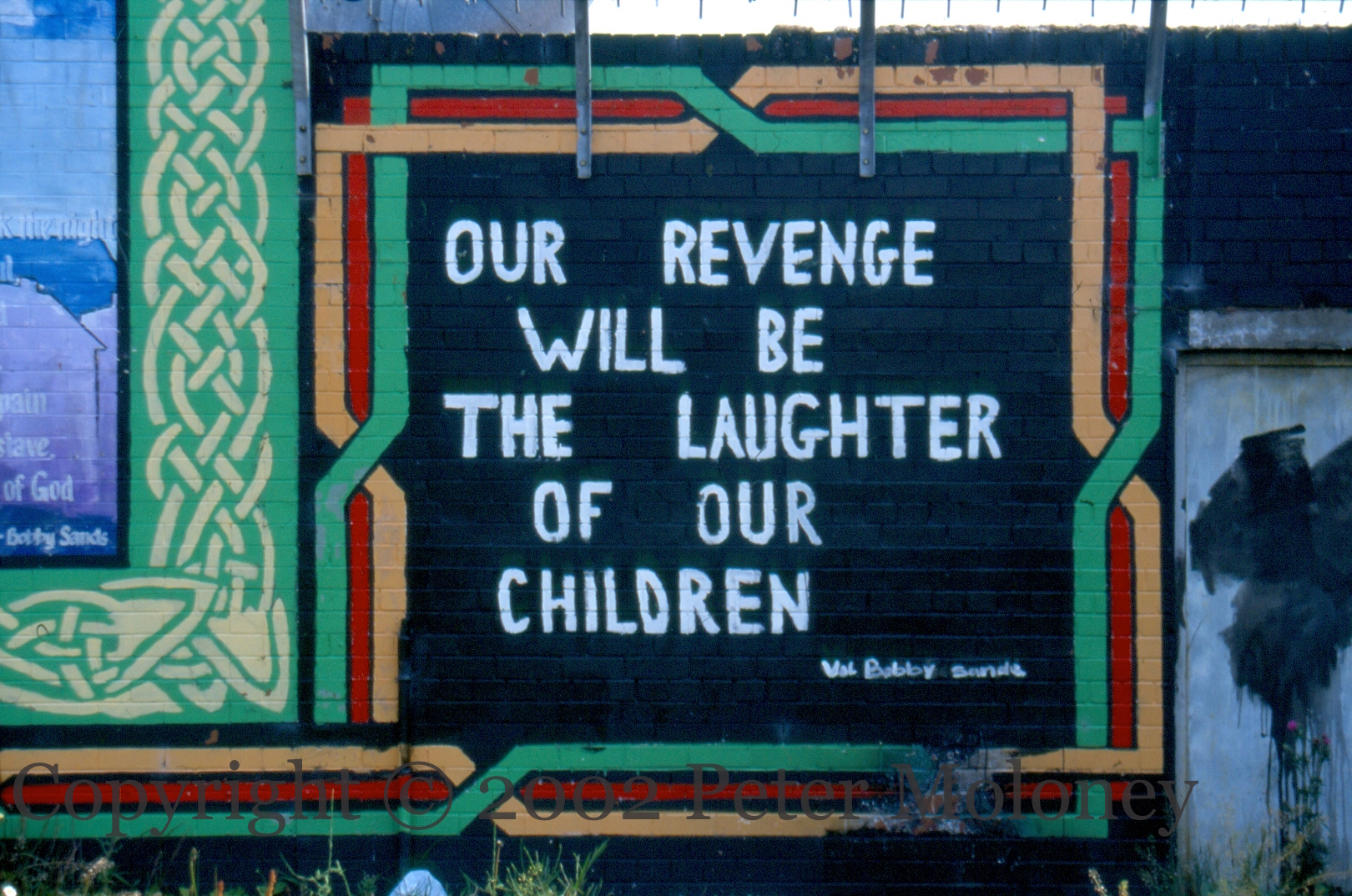
This Short Strand mural packs a lot in, beginning with both ancient Éıre and a celtic cross. Its main panels commemorate 25 years of resistance in east Belfast (probably dating to the Battle Of St Matthew’s in 1970) with portraits of 16 deceased locals (“I measc laochra na nGael go raıbh a naınmeacha”) and two verses from Bobby Sands’s poem Weeping Winds(see below). On the right (in the second image) is a quote from Bobby Sands: “Our revenge will be the laughter of our children”.
Oh, whistling winds why do you weep/When roaming free you are, Oh! Is it that your poor heart’s broke/And scattered off afar? Or is it that you bear the cries/Of people born unfree, Who like your way have no control/Or sovereign destiny?
Oh! Lonely winds that walk the night/To haunt the sinner’s soul/ Pray pity me a wretched lad/Who never will grow old. Pray pity those who lie in pain/The bondsman and the slave And whisper sweet the breath of God/Upon my humble grave.








 Peter Moloney Collection