Portraits of Seamus Costello (INLA/IRSP founder), Gino Gallagher (INLA chief of staff), Che, Patsy O’Hara, Miriam Daly, James Connolly on the Springfield Road turn-around.
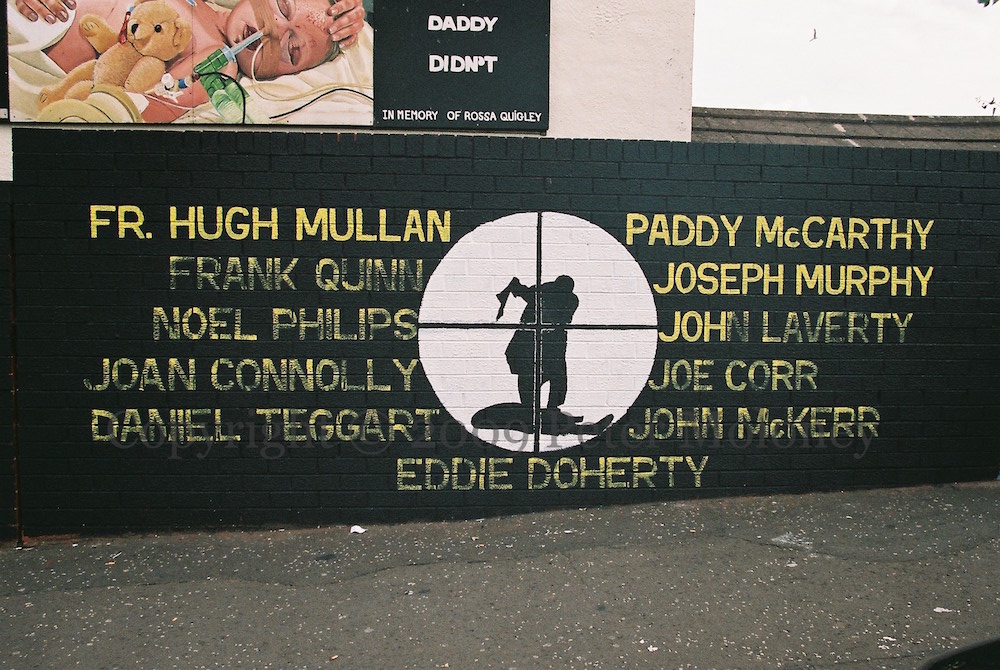
11 Catholic civilians from Ballymurphy were shot and killed by British Army paratroopers on August 9th-11th, during the initial wave of internment. Father Hugh Mullan, the second to be killed, is shown in the cross-hairs of a rifle’s sight, waving a baby’s onesie as he goes to the aid of a wounded man (Bobby Clarke). “Time for truth, time for justice. The families demand … an international independent investigation surrounding all of the deaths … the British government to issue a statement of innocence and a public apology.” “57 children left without a parent. Hundreds [of other children never got to meet their granny, granda, aunt or uncle.]” The blank panel is for “Family Messages”.
For the anti-joy-riding board on the gable, see Where’s The Joy?
“This cairn was erected in memory of Ranger Cyril Smith QGM 2nd battalion the Royal Irish Rangers 24th October 1990. Ranger Smith was killed rescuing a civilian driver who had been tied to a car bomb by terrorists. He succeeded in releasing the driver and helping him to safety. As he knowingly re-entered the danger area to warn his comrades the bomb detonated. For this action he was posthumously awarded the Queen’s Gallantry Medal.”
“In memory of the part-time members of A Coy. 9 UDR who were murdered by terrorists: 24289588 Pte. Russell HJ 12-13th July 1972, 24582042 Pte. Carlton SA 8th January 1982, ex. A Coy: serving 5 UDR Lieutenant Kerr WC 2nd November 1977.”
(The UDR was merged with the RIR to form the Royal Irish Regiment in 1992.) Both memorials are adjacent to the larger WWI war memorial along Marine Highway, Carrickfergus.
Armed and hooded UFA volunteers in jeans protect Carrickfergus castle, beneath the shields of the four nations of the UK. The UDA and UFF flags bear the names of the areas within South East Antrim. Vandalised (with “fuck you”) compared to 2008. The Birches, Carrickfergus.
In 2014, the side-walls were updated in advance of a new mural on the main gable (which can be seen in Alain Miossec’s collection). From left to right:
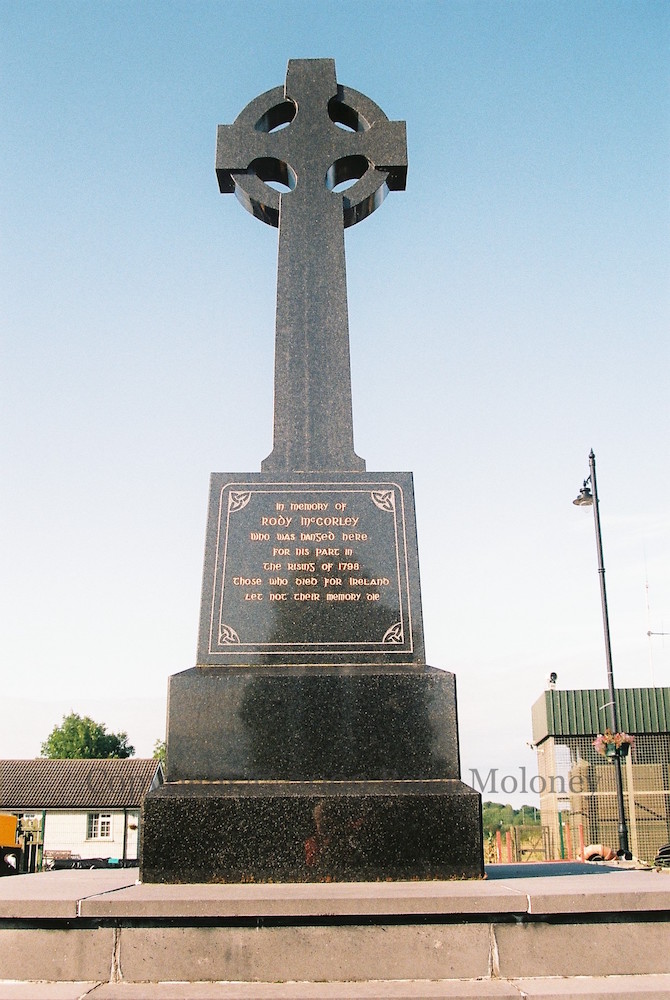
Presbyterian Roddy McCorley was executed on 28 February, 1800, and his name is famous due to a ballad written by Ethna Carbery (sung here by Tommy Makem).
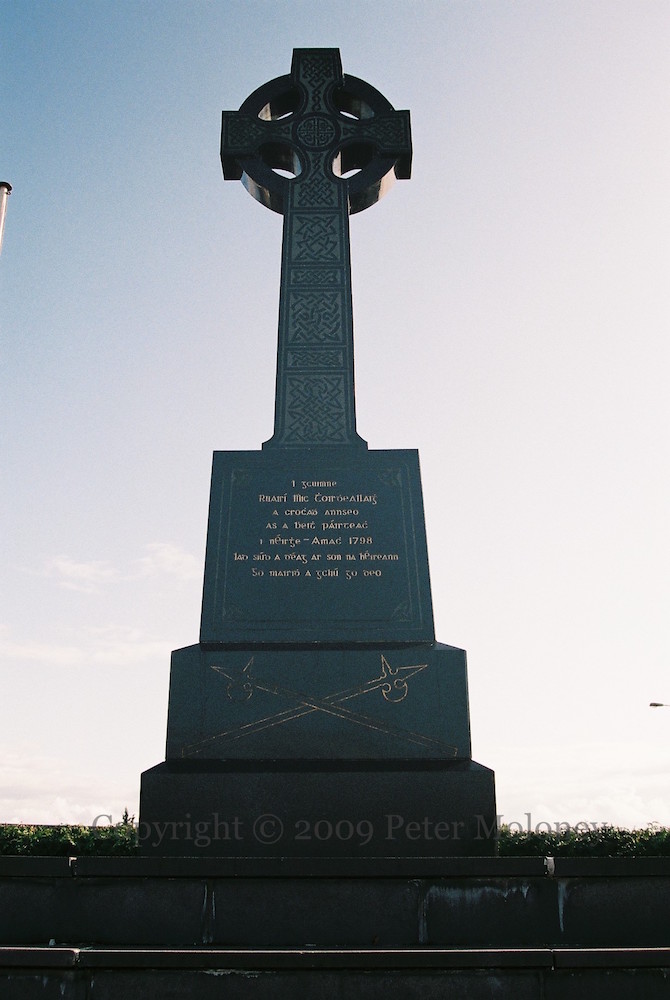
“In memory of Rody McCorley who was hanged here for his part in the Rising of 1798. Those who died for Ireland, let not their memory die.” “I gcuımhne Ruaırí Mhıc Thoırdheallıagh a crochadh annseo as a bheıth páırteach ı nÉırghe Amach 1798. Iad sıúd a dhéag ar son na hÉıreann go mhaırıdh a gchú go deo.”
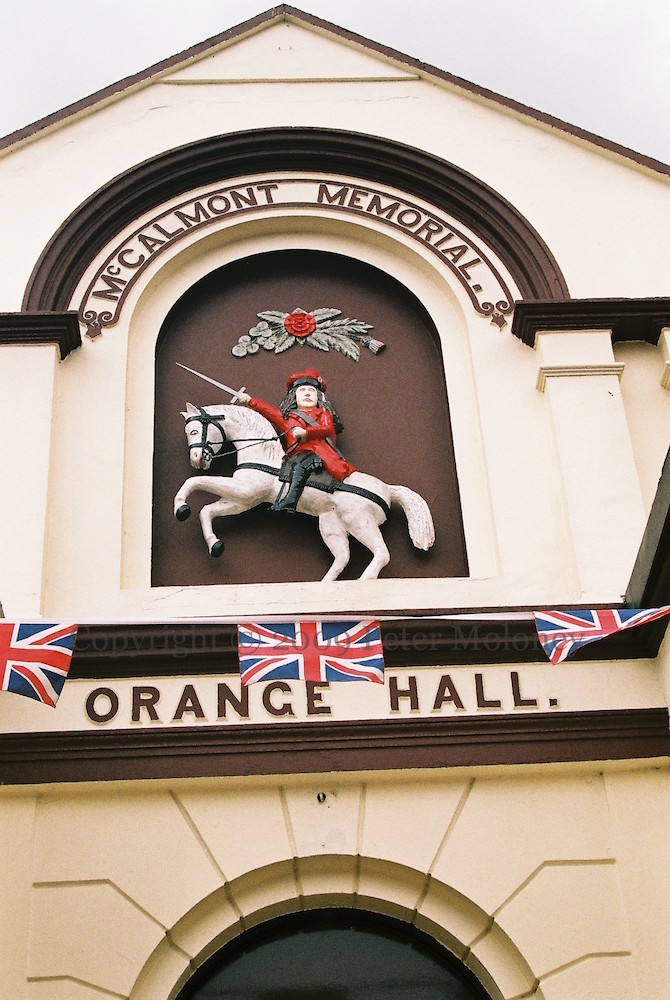
King Billy’s sword is tipped in blood, and he rides below a shamrock, rose, and thistle, uniting the kingdoms. Ballyclare Orange Hall is named after Hugh McCalmont, a major-general in the British Army Ulster Unionist MP for North Antrim in 1895. His Whiteabbey house was burned down by suffragettes in 1914 because it was used as a training ground by the UVF of the anti-franchise Carson.
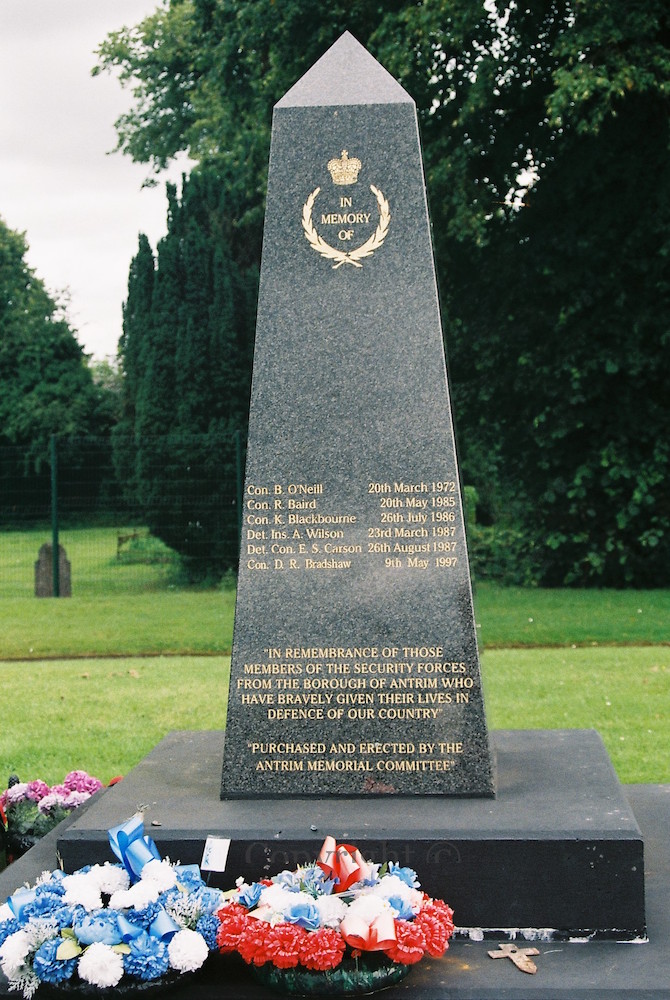
“In remembrance of those members of the security forces from the borough of Antrim who have bravely given their lives in defence of our country. Purchased and erected by the Antrim Memorial Committee”.