The second King Nuada mural took Mo Chara Kelly about two years (on and off) to paint. There are in-progress shots from 2009 and 2008. The original is by artist Jim Fitzpatrick.
Tá Ár gCultúr Beo (“Notre culture est vivante/La nostra cultura e viva/Our culture is alive”) was painted by Mo Chara Kelly with help from the local youth. The red parts of the mural use a translucent medium that Kelly had become acquainted with while painting in the United States (An Pobal A Phéınteáıl 10) that allow additional figures from modern Ireland (left) and Celtic Ireland (right) to be seen. The winged figure (repeated four times) is a heron that he found in a book of Celtic designs while serving time in Long Kesh.
The mural was the first of four projects in Springhill facilitated by the Upper Springfield Development Trust as part of a “West Belfast Arts & Heritage Trail” (as per the plaque just out of view to the right) or “Public Arts Trail”.
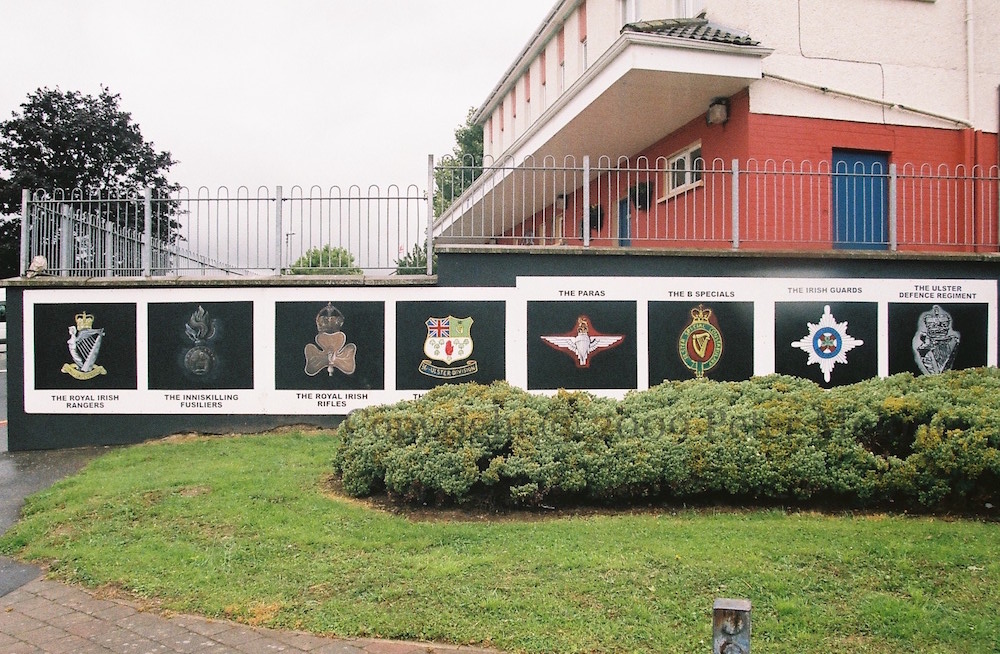
Insignia of the Royal Irish Rangers, the Inniskilling Fusiliers, the Royal Irish Rifles, the 36th (Ulster) Division, the Paras, the B Specials, the Irish Guards, and the Ulster Defence Regiment, outside the Cathedral Youth Club in the Fountain, Londonderry, perhaps as inspiration to the young people, as many of the regiments still exist. The ‘odd man out’ here is the Paras – they served in Northern Ireland but were not raised from Ireland.
“Gasyard Féıle 2009. 24th July – 2nd August.” Free Derry Corner is at the centre of outstretched hands around a globe. The back of Free Derry Corner has its own Visual History page.
In CS Lewis’s The Lion, The Witch, And The Wardrobe, the death of the lion Aslan ends an ice age in the kingdom of Narnia. Lewis grew up in Strandtown, east Belfast.
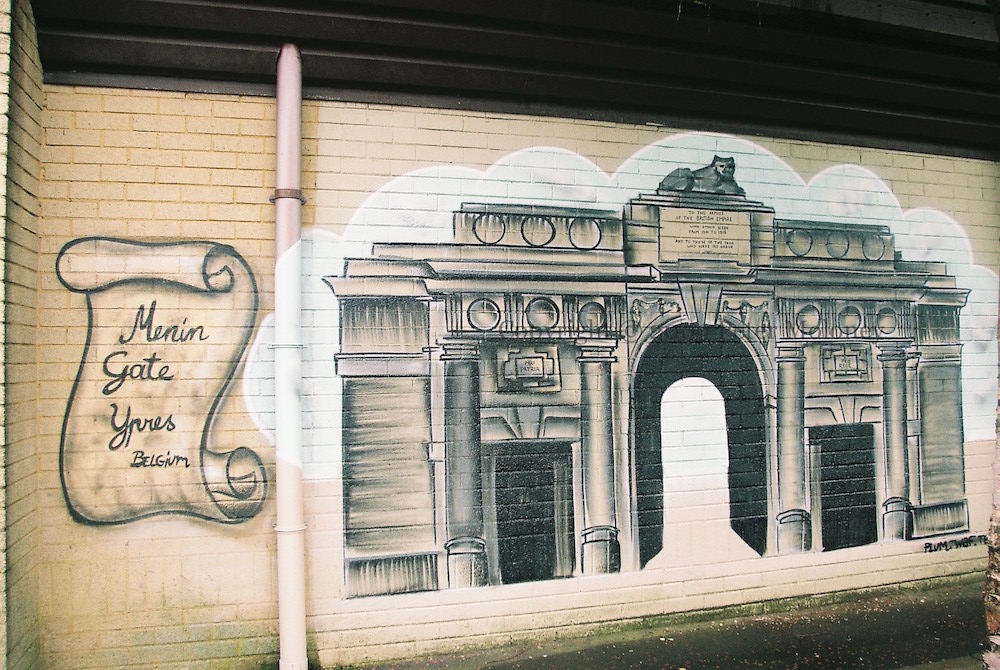
“Menin Gate, Ypres, Belgium.” “To the armies of the British empire who stood here from 1914 to 1918 and to those of the dead who have no grave.” “Pro patria, pro rege.” Almost 55,000 names are inscribed on the memorial.
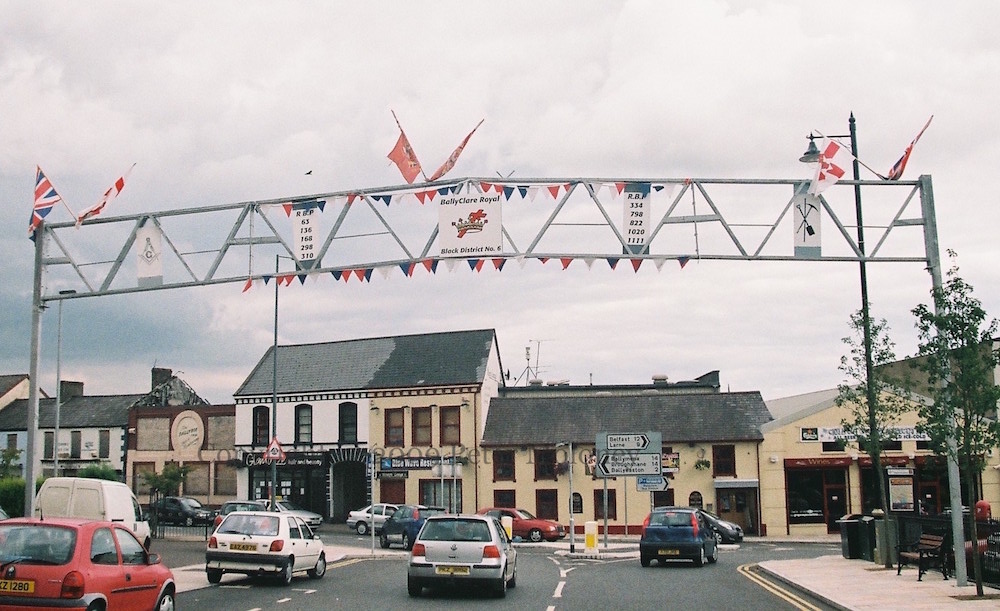
“Six Mile Water District No 10”, and “Ballyclare Royal Black District No 6″ with Orange and Royal Black symbols, including “2 1/2” in an arch and a trio of staff, pick, and spade.