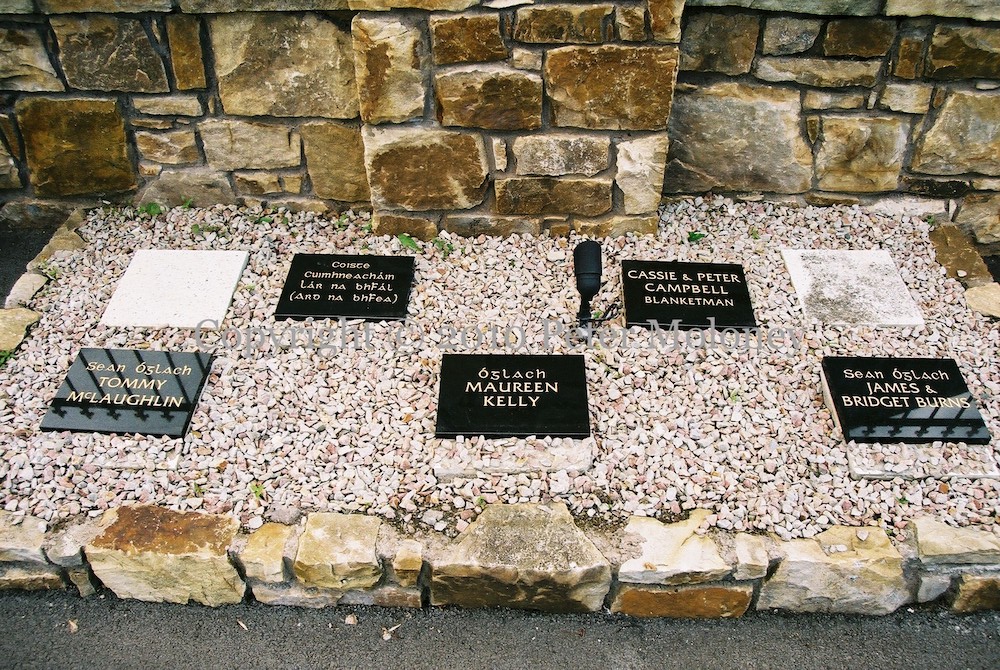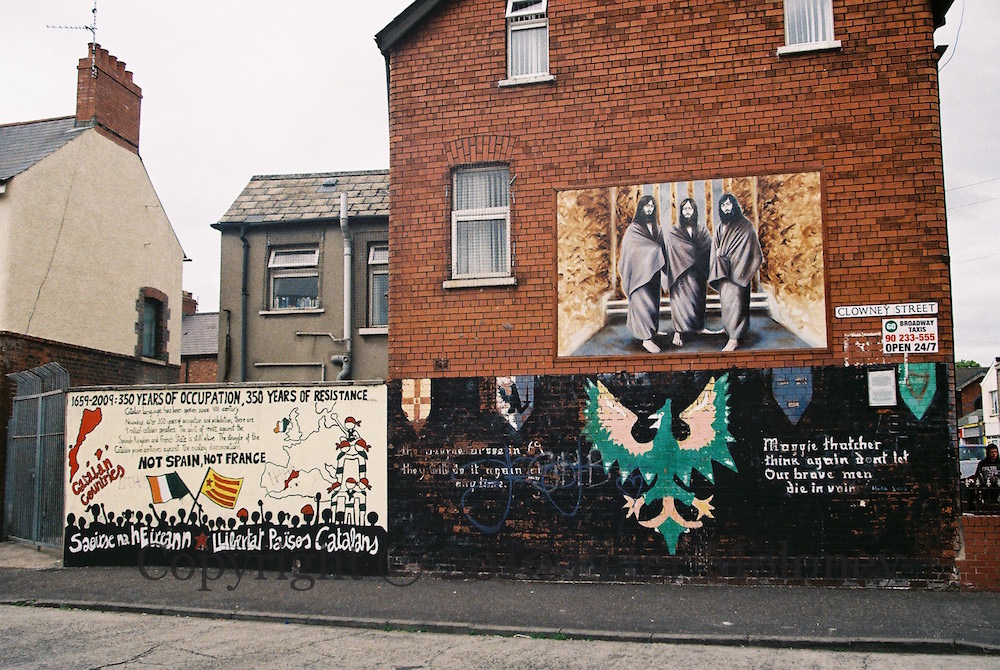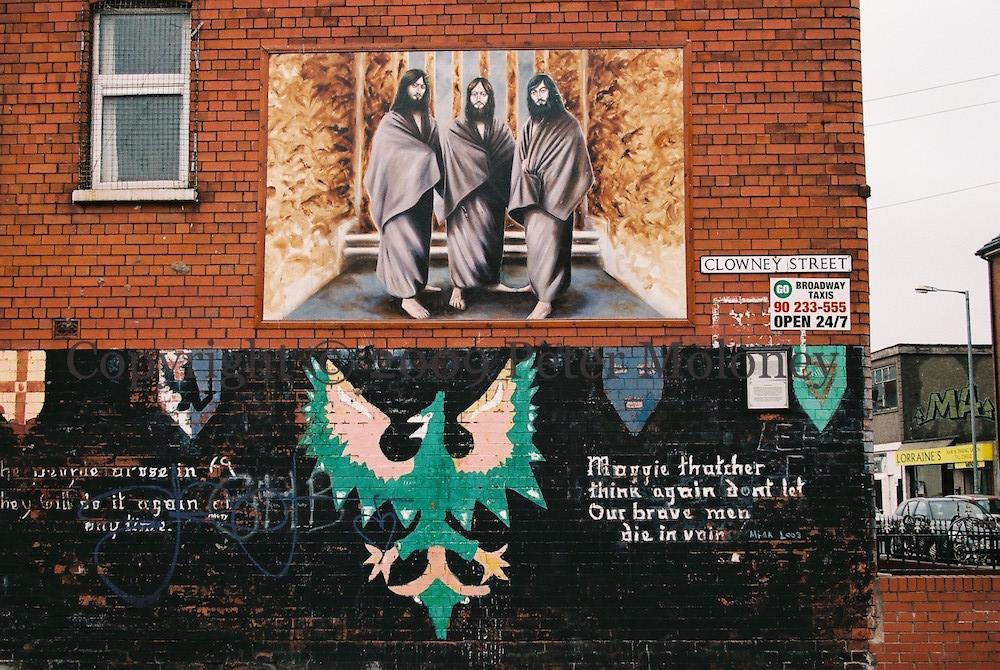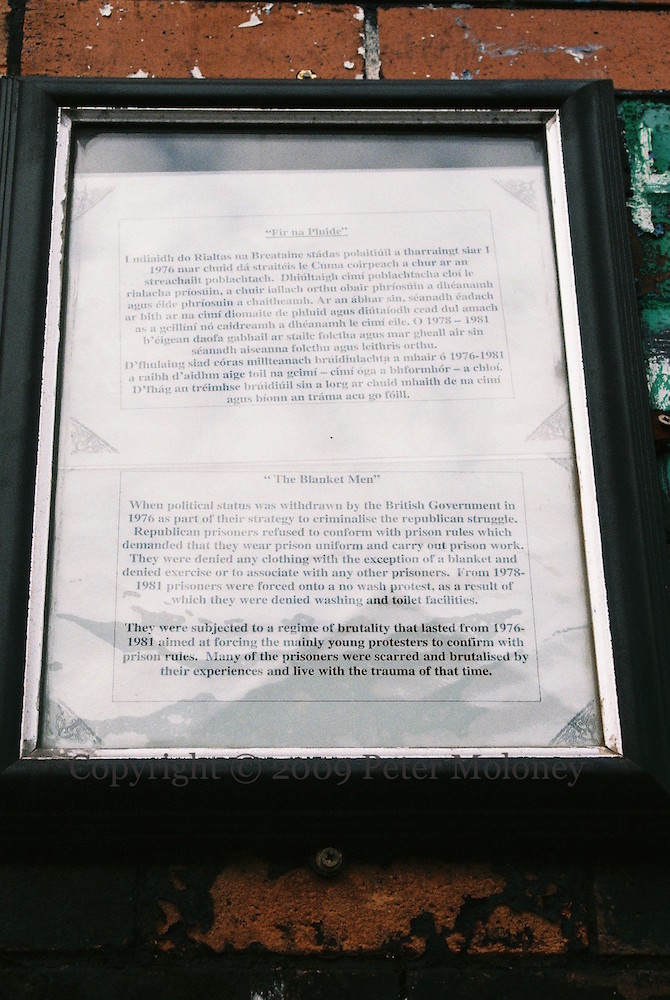
For the 30th anniversary of the 1981 hunger strike, the mosaics of the Troubles-era hunger strikers are mounted around the blanket-men board and above the Phoenix in Clowney Street; for a few years they were previously at the Falls-Beechmount corner.
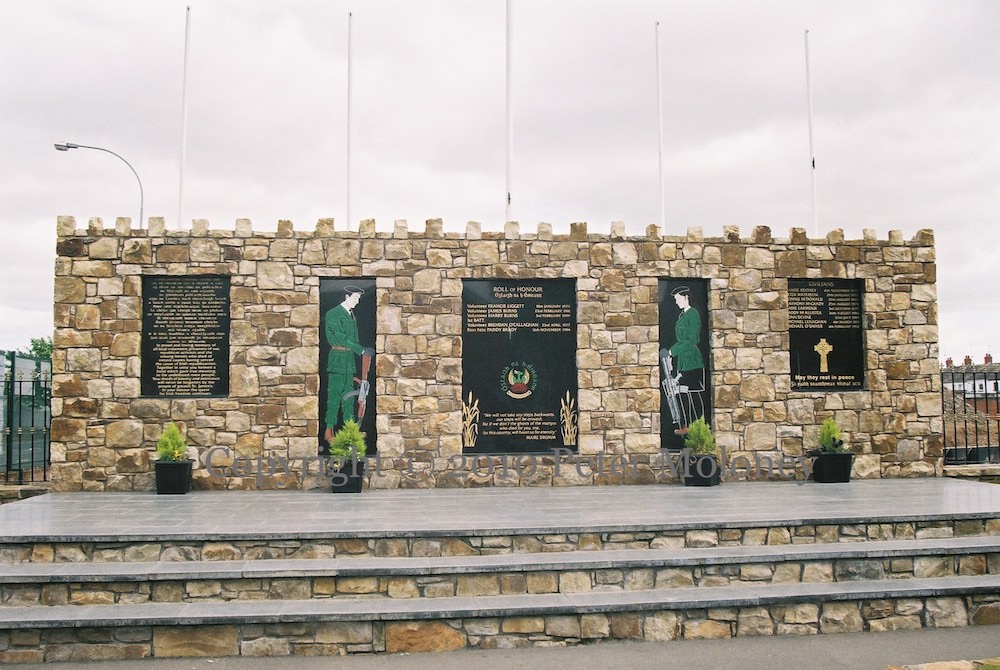
“In proud and loving memory of all local volunteers, prisoners of war, republican activists and the unsung heroes who died of natural causes having served the cause of Irish republicanism [“sean óglach” on the individual plaques]. Together in unity you formed a bond which gave true meaning to the undefeated risen people. Your deeds of bravery and resistance will never be forgotten by the people of greater St. James’s. In your honour the quest for Irish freedom continues.”
With the famous “our steps will be onward” quote from Máıre Drumm at an anti-internment rally in Dunville Park on 10th August, 1975 (RN).
Coıste Cuımhneacháın Lár Na bhFál/Ard Na bhFeá [Memorial committee of mid-Falls/Beechmount].
2010 mural (unveiled July 4th on the 40th anniversary) of Máıre Drumm (WP) and the women of West Belfast breaking the British army curfew of the Lower falls in 1970 (brief interview footage from the 9:00 minute mark). Máıre Drumm was later shot dead in her bed in the Mater hospital where she was a patient.
The commemorative plaque that was next to Elaine’s and the Sınn Féın office was later moved to the top right corner of the mural. [M05736]
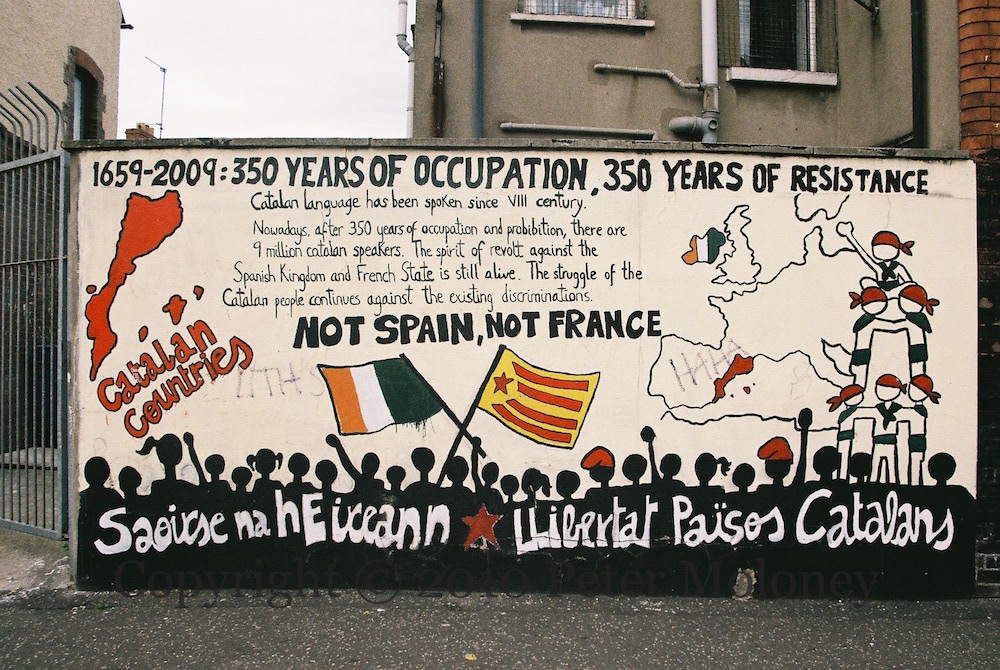
International wall, Divis St, Belfast. (A shot of this mural being painted can be found here.)
“1650-2009: 350 years of occupation, 350 years of resistance. Catalan language has been spoken since VIII century. Nowadays, after 350 years of occupation and prohibition, there are 9 million Catalan speakers. The spirit of revolt against the Spanish kingdom and French state is still alive. The struggle of the Catalan people continues against the existing discriminations. Not Spain, not France.” “Saoirse na hÉireann, Llibertat Països Catalans”. In Clowney Street next to the ‘1969 Phoenix’ mural which dates back to 1981.
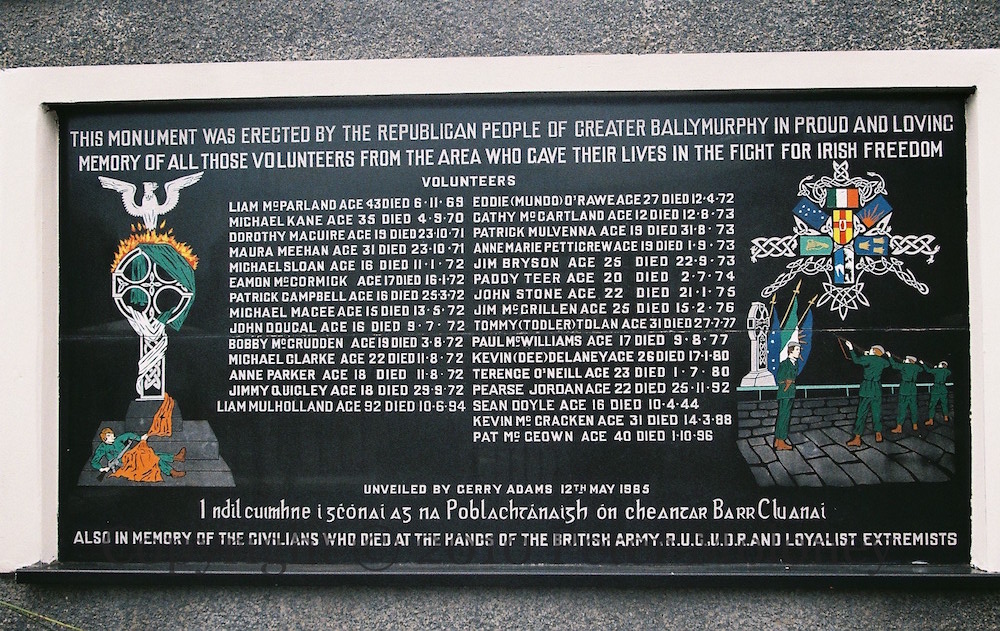
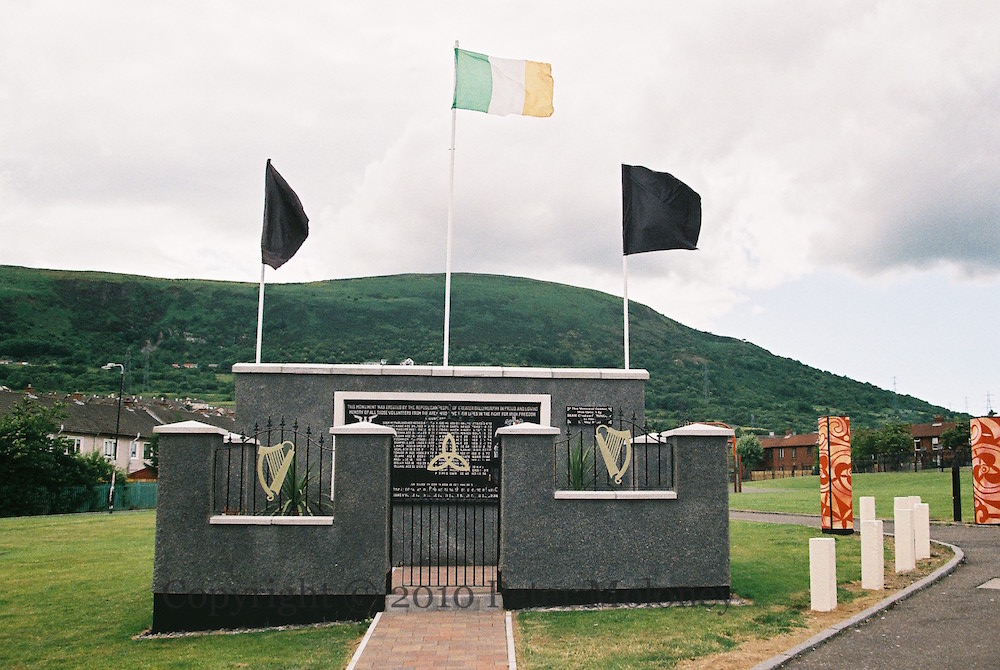
“This monument was erected by the republican people of greater Ballymurphy in proud and loving memory of all those volunteers from the area who gave their lives in the fight for Irish freedom.” Volunteers McParland, Kane, Maguire, Meehan, Sloan, McCormick, Campbell, Magee, Dougal, McCrudden, Clarke, Parker, Quigleey, Mulholland, O’Rawe, McGartland, Mulvenna, Pettigrew, Bryson, Teer, Stone, McGrillen, Tolan, McWilliams, Delaney, O’Neill, Jordan, Doyle, McCracken, McGeown. “Unveiled by Gerry Adams 12th May 1985. I ndıl cuımhne [chuımhne] i gcónaí ag na poblachtánaıgh ón cheantar Barr Cluanaí. Also in memory of the civilians who died at the hands of the British Army, RUC, UDR, and loyalist extremists.” The launch date of 1985 refers to the plaque’s former location in Glenalina Road (seen in 2001 and 2002).
“Fır na Pluıde: ı ndıaıdh do Rıaltas na Breataıne stadás polaıtıúıl a tharraıngt sıar ı 1976 mar chuıd dá straıtéıs le Cuma coırpeach a chur ar an streachaılt poblachtach. Dhıúltaıgh cımí poblachtacha cloí de rıalacha príosıún, a chur ıallach orthu obaır phríosúın a dhéaneamh agus éıde phríosúın a chaıtheamh. Ar an ábhar sın, séanach éadach ar bıth ar na cımí dıomaıte de phluıd agus dıútaíodh cead dul amach as a gcıllıní nó caıdreamh a dhéanamh le cımí eıle. Ó 1978-1981 b’éıgean daofa gabhal ar staılc folchta agus mar gheall aır sın séanadh aıseanna folctha agus leıthreas orthu. D’fhulaıng sıad córas mıllteanach brúıdıulachta a mhaır ó 1976-1981 a raıbh d’aıdhm aıge toıl na gcımí – cımí óga a bhformhór – a chloí. D’fhag an tréımhse brúıdıúıl sın a lorg ar chuıd mhaıth de na cımí agus bíonn an tráma acu go fóıll.”
“The Blanket Men: When political status was withdrawn by the British Government in 1976 as part of their strategy to criminalise the republican struggle, Republican prisoners refused to conform with prison rules which demanded that they wear prison uniform and carry out prison work. They were denied any clothing with the exception of a blanket and denied exercise or to associate with any other prisoners. From 1978-1981 prisoners were forced onto a no wash protest, as a result of which they were denied washing and toilet facilities. They were subjected to a regime of brutality that lasted from 1976-1981 aimed at forcing the mainly young protesters to confirm [sic] with prison rules. Many of the prisoners were scarred and brutalised by their experiences and live with the trauma of that time.”
Help with substance abuseis offered by Resolve. The plaque on the right describes the board that was previously on this gable, to Stan Carberry and other Beechmount dead (see Crossed Rifles).
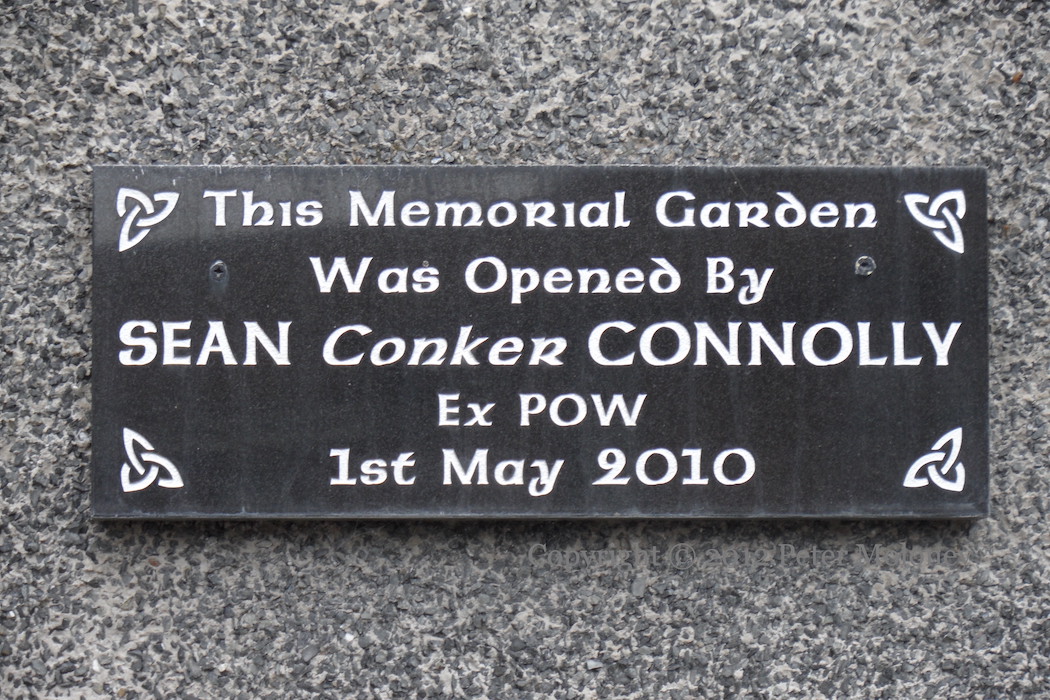
The New Barnsley memorial garden is greatly expanded over the single plaque from 2005, to include a larger main plaque, a smaller one commemorating early resistance “Sheas sıad le chéıle” [They stood together], and wrought-iron gates with a phoenix and “Óglaıgh Na hÉıreann”.
“I ndıl chuımhne – this plaque is dedicated to all those from the greater Newington area who lost their lives as a result of the conflict in this country.” Pikemen from the 1798 uprising flank a phoenix, with portraits above of Wolfe Tone, James Connolly, Henry Joy McCracken, and Mary Ann McCracken.