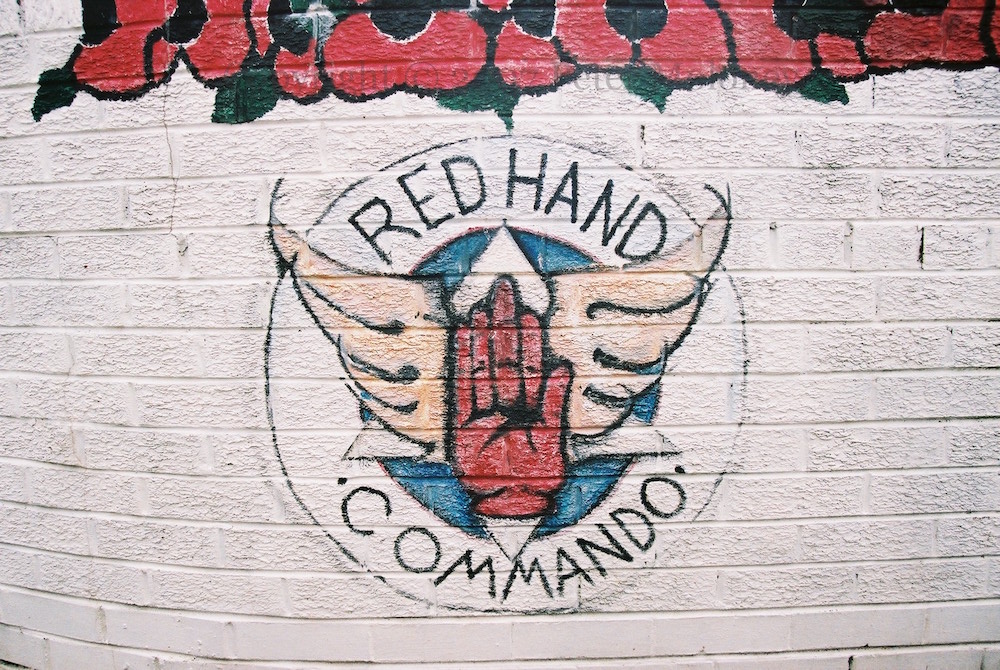
The frame of this mural in St James’s was originally painted in 1994 for a mural showing local pensioners remonstrating with a British Army soldier, under the title “The Spirit Of Freedom”. The central circle was repainted (again by Andrea Redmond) for the 1995 “green ribbon” campaign: the dove holds the keys that will set free the republican prisoners (symbolised by the barbed wire and a lark in the apex that cannot be seen).
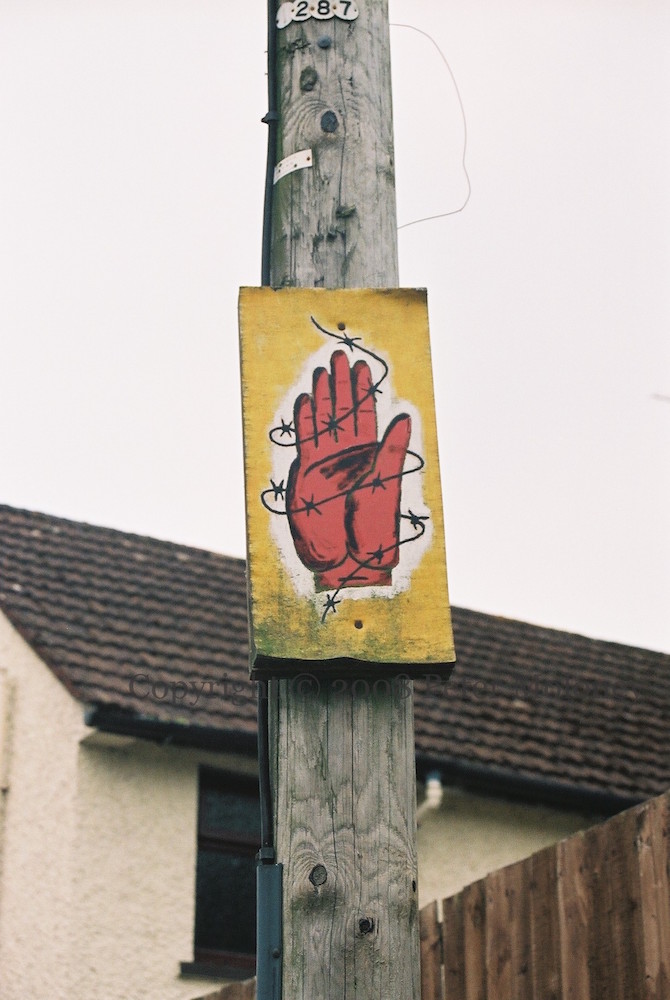
Small boards in the Killicomaine estate in Portadown, on Princess Way and Granville Road. The red hand in barbed wire symbolises loyalist prisoners. (There was another Union Flag board in Gilford Road.)
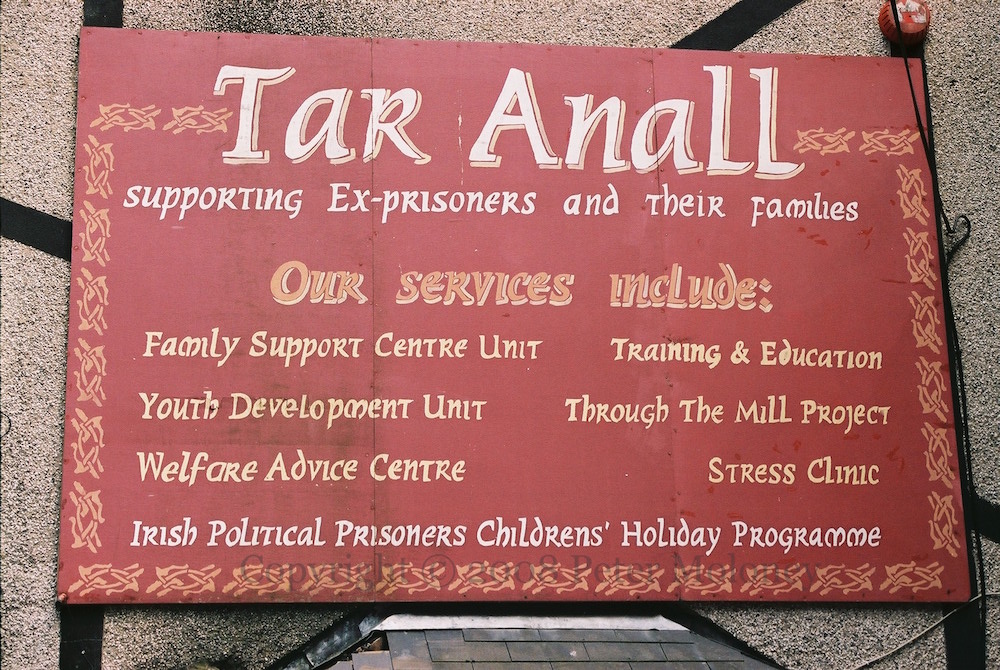
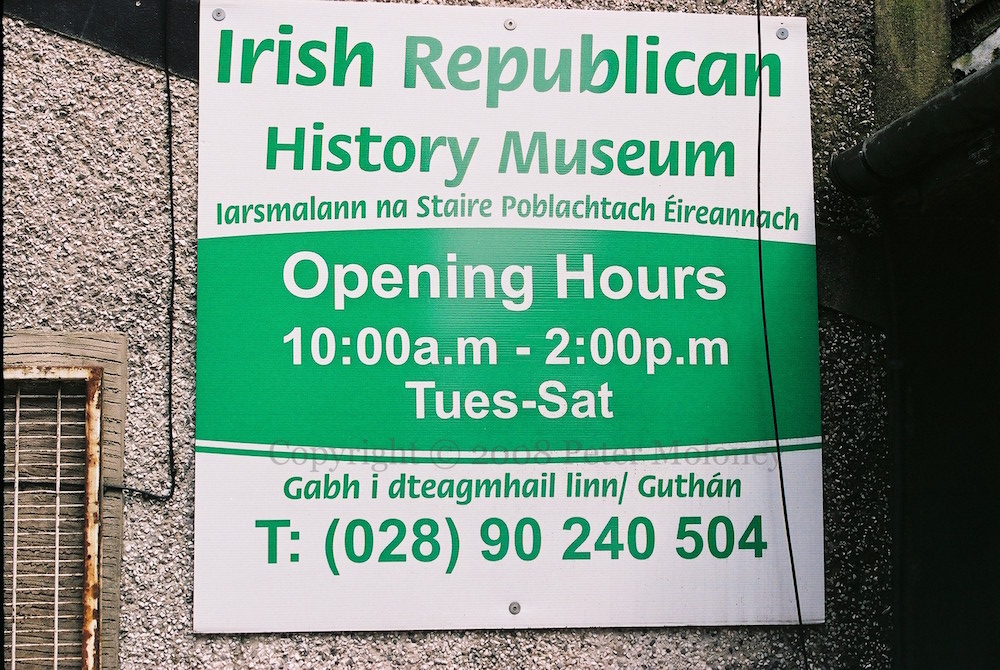
These three images from around Conway Mill are from 2008, before the mill was renovated. At the time, the mill was home to Tar Anall ex-prisoners’ centre and the Eileen Hickey Irish republican History Museum, as well as a print-shop and mattress store.
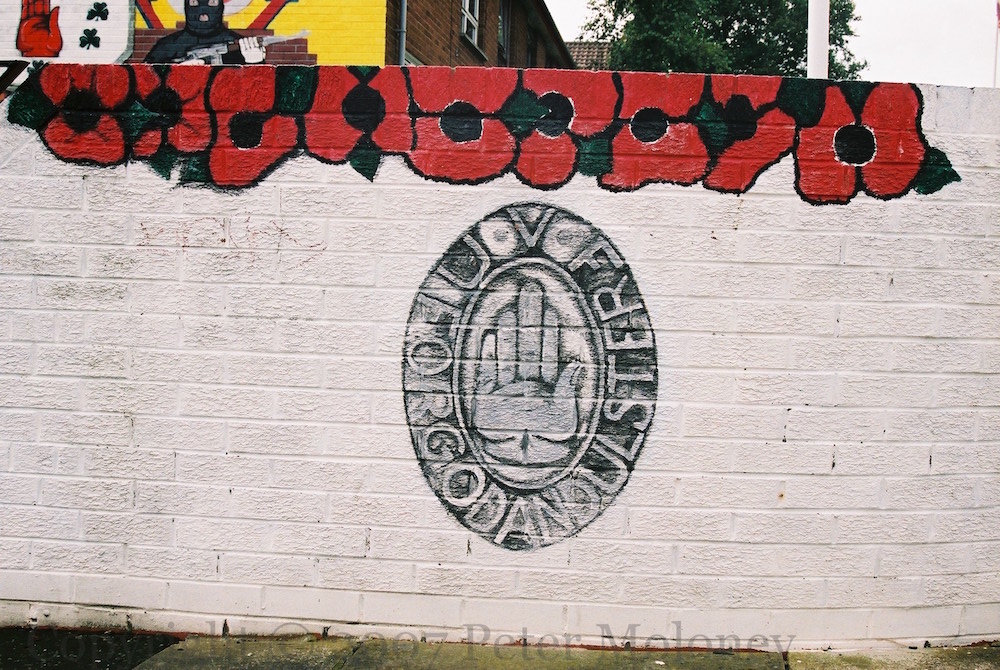
Barbed wire divides the quadrants, with poppies providing an upper border and Ulster Banner and Union Flag below. In the top left is the A company mural from across the street. The bottom right reproduced (or at least is based on) an 1990s mural of the same name in Dover Place (lower Shankill) in Belfast. The other quadrants and centre contain images relating to the 36th (Ulster) Division and WWI. The two other images are from the low wall to the front right.
A very different ‘Five Demands’ from Sınn Féın on the 25th anniversary of the hunger strike: “1. The Irish Government should produce a Green Paper on Irish Unity. 2. The work of the All Ireland Ministerial Council should be expanded and additional All Ireland Implementation Bodies created. Westminster MP’s elected in the 6 Counties should be accorded speaking rights in the Dail [sic]. 3. Voting rights for Presidential elections should be extended to citizens in the six counties. 5 The Irish Government should actively engage with the British Government and Unionism to promote and seek support for re-unification.”
The original ‘Five Demands’ are given as “1. The right to wear our own clothes. 2 The right to refrain from prison work. 3. The right to free association with fellow prisoners. 4. The right to organise recreation and leisure activity – with one letter, parcel and visit allowed per week. 5. To have remission lost, as a result of the blanket protest, restored.” For versions of the five demands from the period, see one | two | three.
The Andersonstown RUC station was demolished in 2005 and (according to this Irish Times article) was to be put up for sale. Instead, the area became a site for murals and this large metalwork, with portraits of the hunger strikers on either side of a lark in barbed wire.
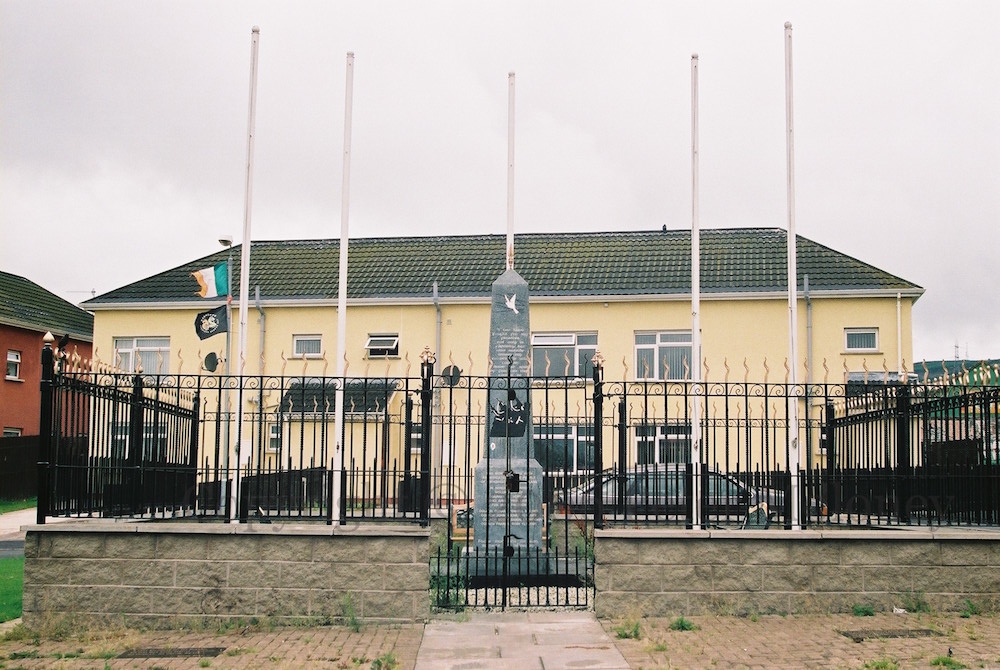
“This monument has been re-dedicated by the people of Twinbrook and Poleglass in honour of those volunteers of Óglaıgh Na hÉıreann who gave their lives for Irish freedom.” Gerard Fennell, John Rooney, Bobby Sands, Frankie Ryan. “Fuaır sıad bás ar son saoırse na hÉıreann”. “[Like the lark,] I too have fought for my freedom not only in captivity [where I now languish] but also [while on the] outside where my country is held captive … I have the spirit of freedom that cannot be quenched.” (Bobby Sands, The Lark And The Freedom Fighter, 1979)
The final image is of the adjacent hunger strikers stone. It will later be moved and repositioned inside the (extended) fencing.
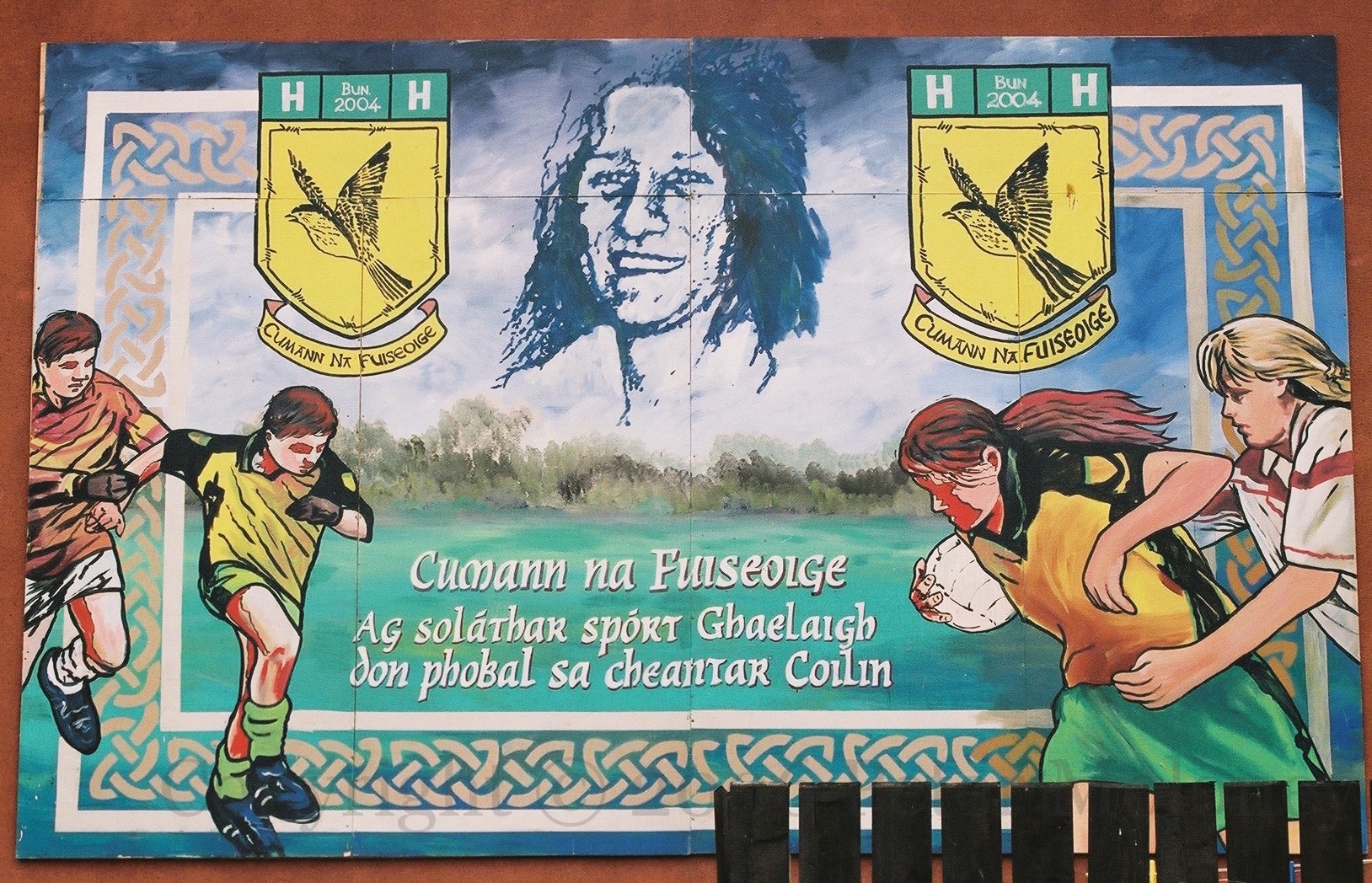
Established in 2004, Cumann Na Fuıseoıge (The Lark) is “ag soláthar spórt Ghaelaıgh don phobal sa cheantar Coılın” [providing Gaelic games to the people in the Colin area]. The club is named after the image of the lark (and barbed wire) used by Bobby Sands in his 1979 article The Lark And The Freedom Fighter. The choice of emblem proved controversial – Slugger.
For the 25th anniversary of the 1981 hunger strike, portraits of the ten deceased strikers are placed between the watchtowers of Long Kesh on a Cromac Street tarp. The quote is widely attributed to Bobby Sands.