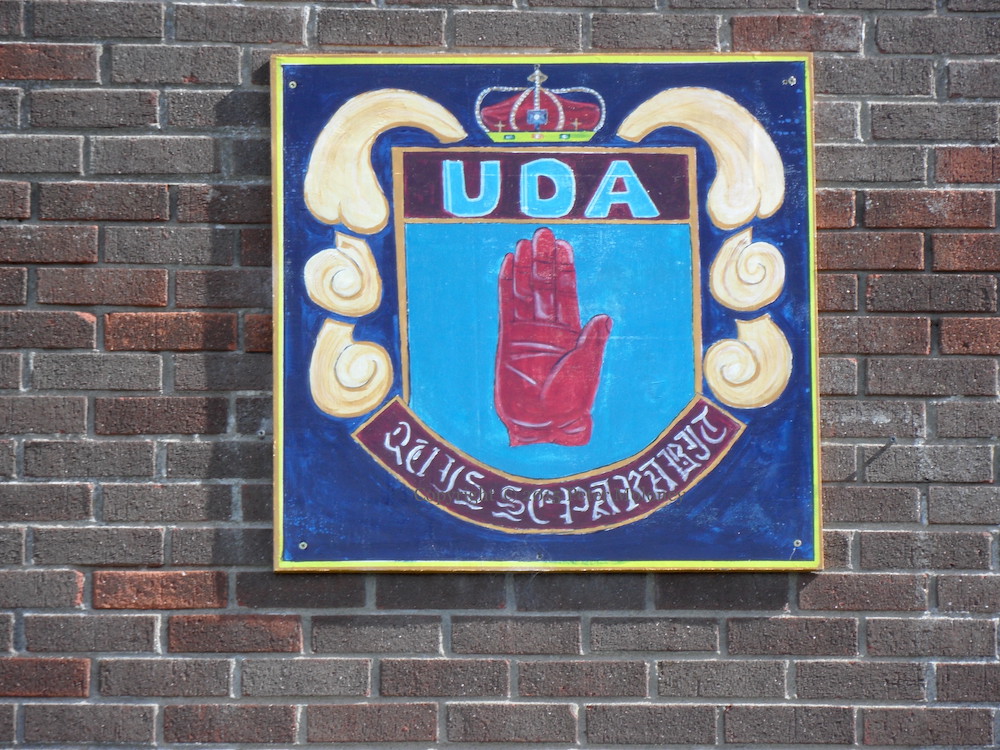
This small board is (probably) a successor to the two boards seen in 2005’s UFF/UYM both of which had disappeared by 2014 (or perhaps a temporary replacement for the UWC mural before the anti-drugs board).
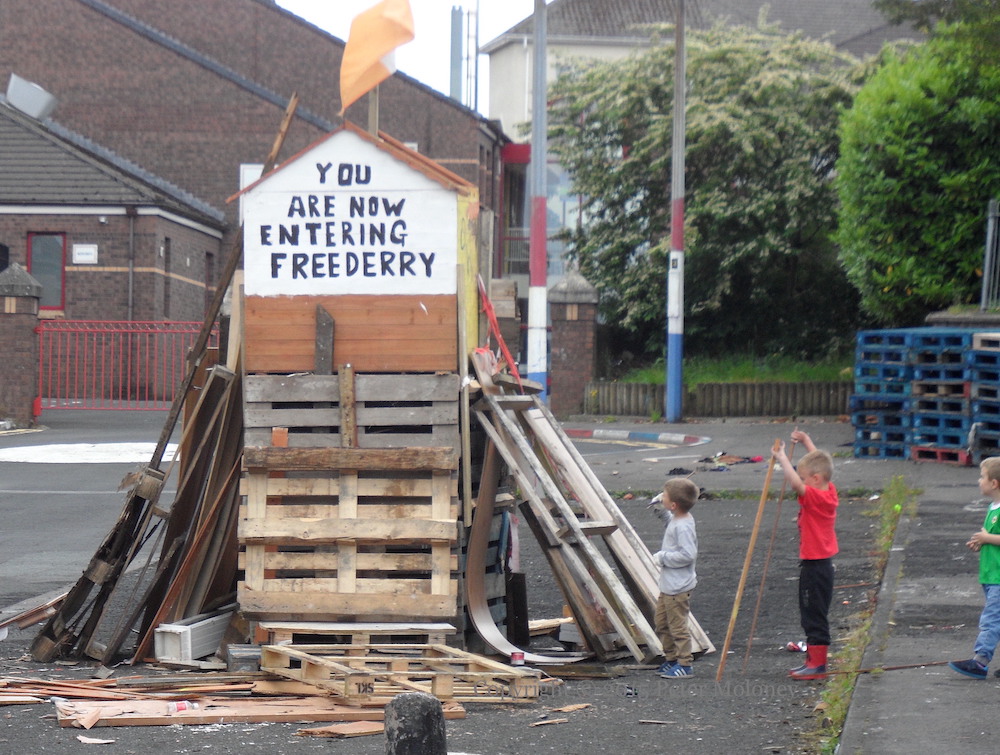
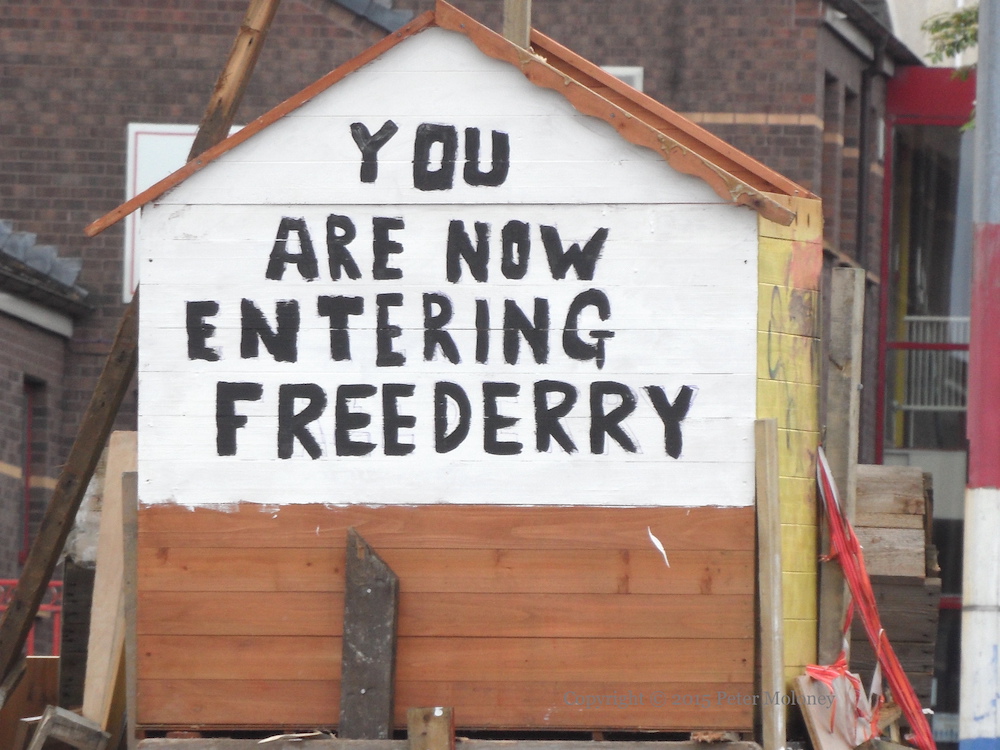
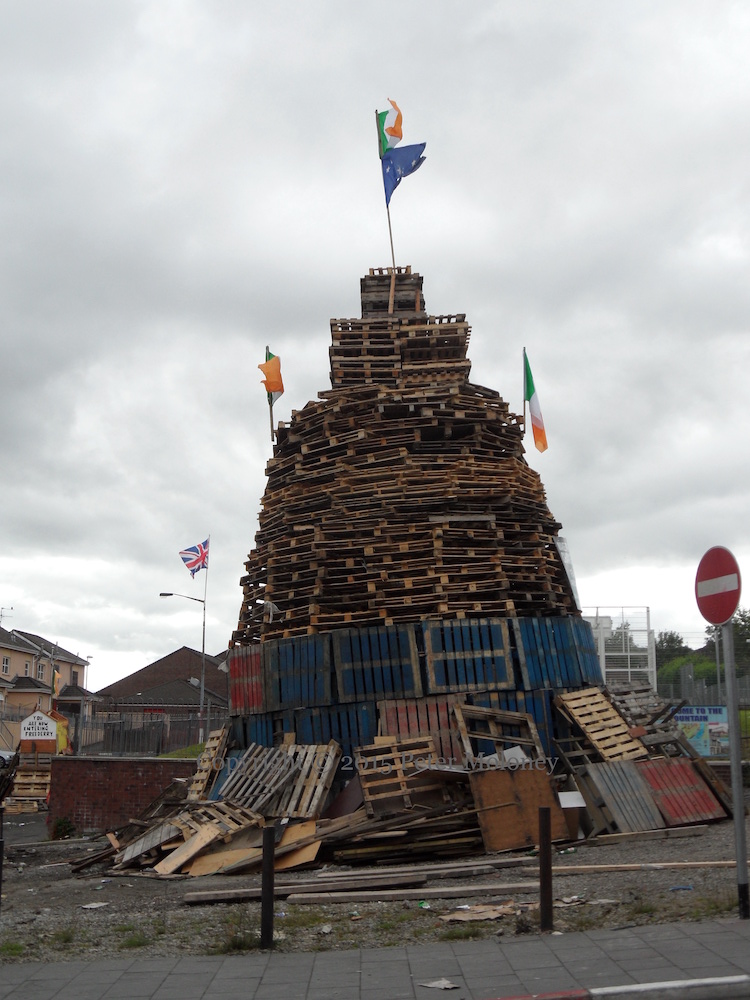
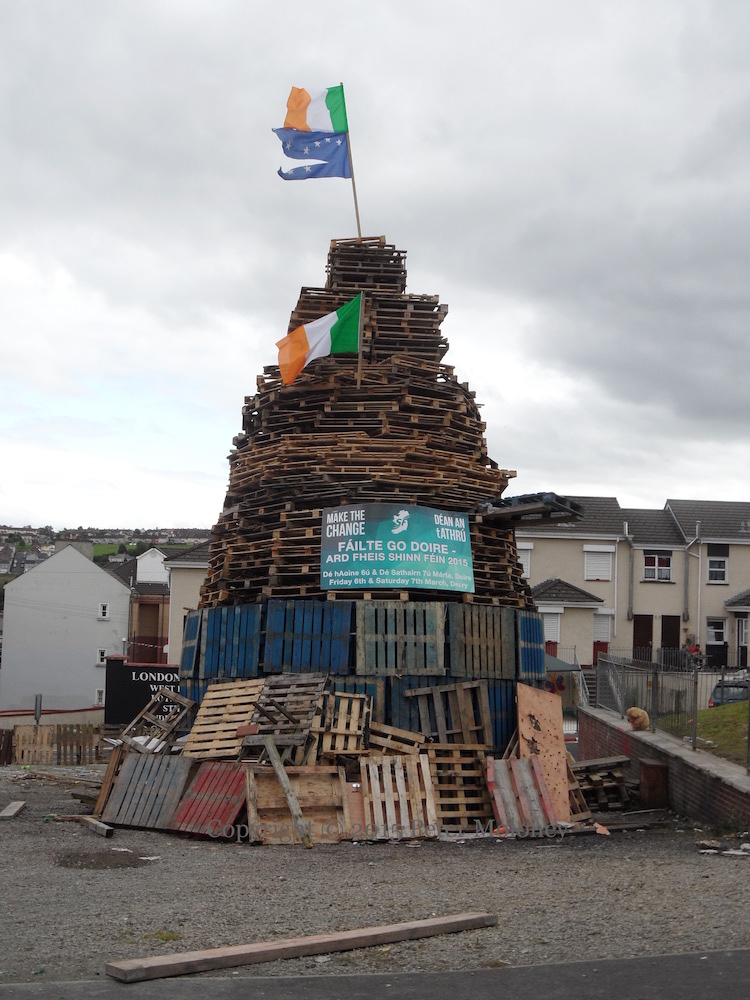
These are images of the 2015 Eleventh Night bonfires in the Fountain, Londonderry. In addition to the main bonfire there is a “children’s bonfire”, featuring a facsimile of Free Derry Corner.
The new Museum of Orange Heritage in Schomberg House opened at the end of June. It features a stained glass window with the words “faithful unto death”, commemorating the 330+ (countsdiffer) members of the Orange Order who were killed during the Troubles.
The museum is at the south end of Cregagh Road; the advertising hoarding is on the Upper Newtownards Road, east Belfast
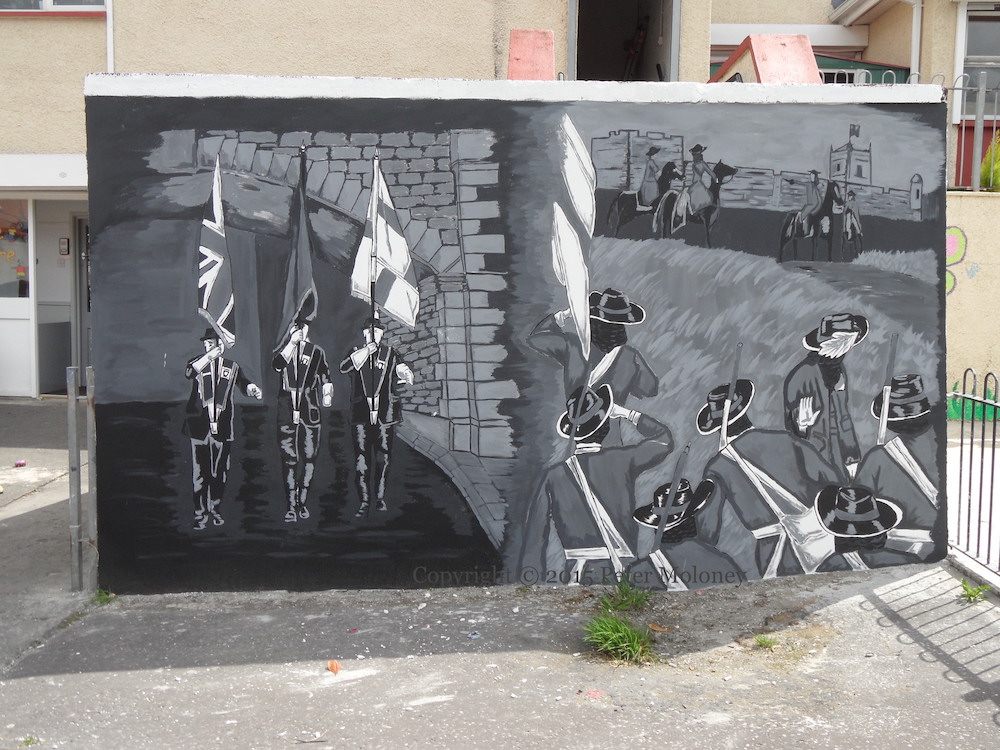
This two-part mural shows (left) Orange Order flag-bearers and (right) a scene from the Siege of Derry, perhaps of James II demanding the city and being rebuffed with cries of “No surrender”.
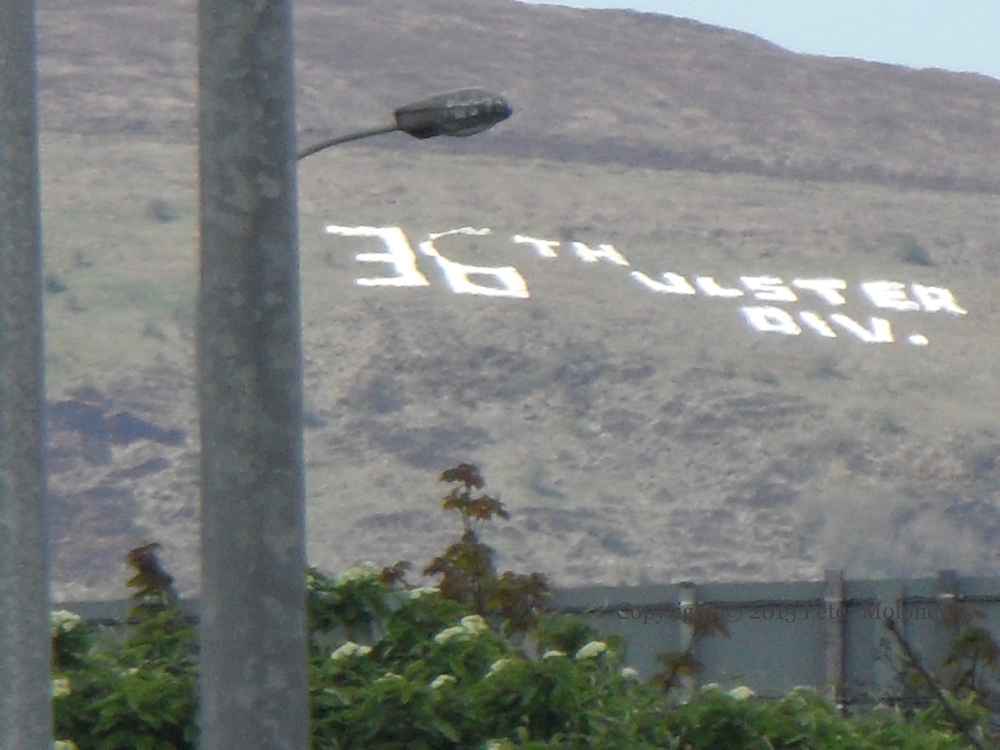
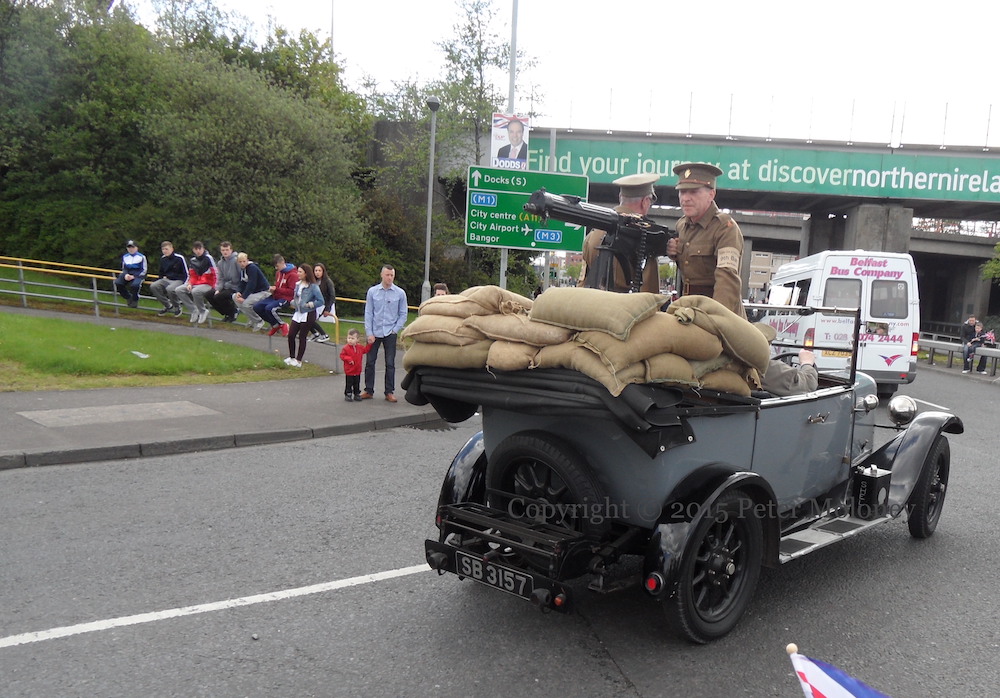
The part of Black Mountain used to display the lettering “36th Ulster [sic] Div.” is further north (and so around towards Highfield and Glencairn) than the site of republican “messages on the mountain“. The lettering was mounted ahead of a parade celebrating the 99th anniversary of the Somme (and the creation of the Ulster Volunteers in 1912).
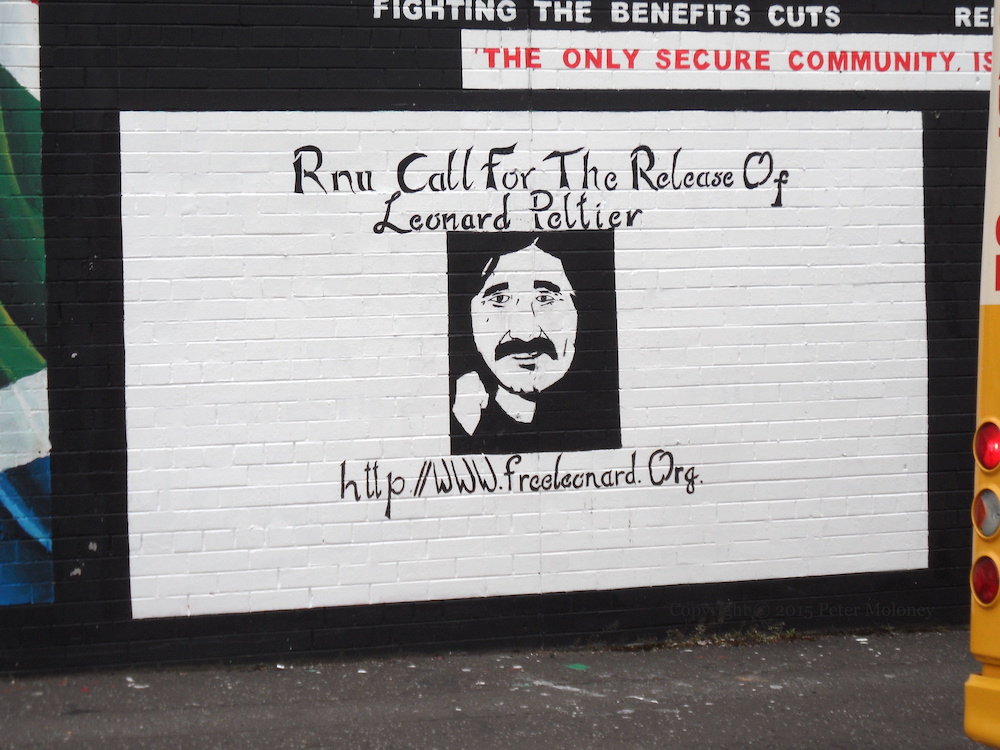
“RNU call for the release of Leonard Peltier – http://www.freeleonard.org“. The lower left-hand panel of the RNU spot on Northumberland Street is serving as a changeable notice-board – it was previously The Popular Front.
Peltier has been in jail since 1977, convicted of killing two FBI agents on the Pine Ridge Reservation in 1975 and sentenced to two life-sentences (WP).
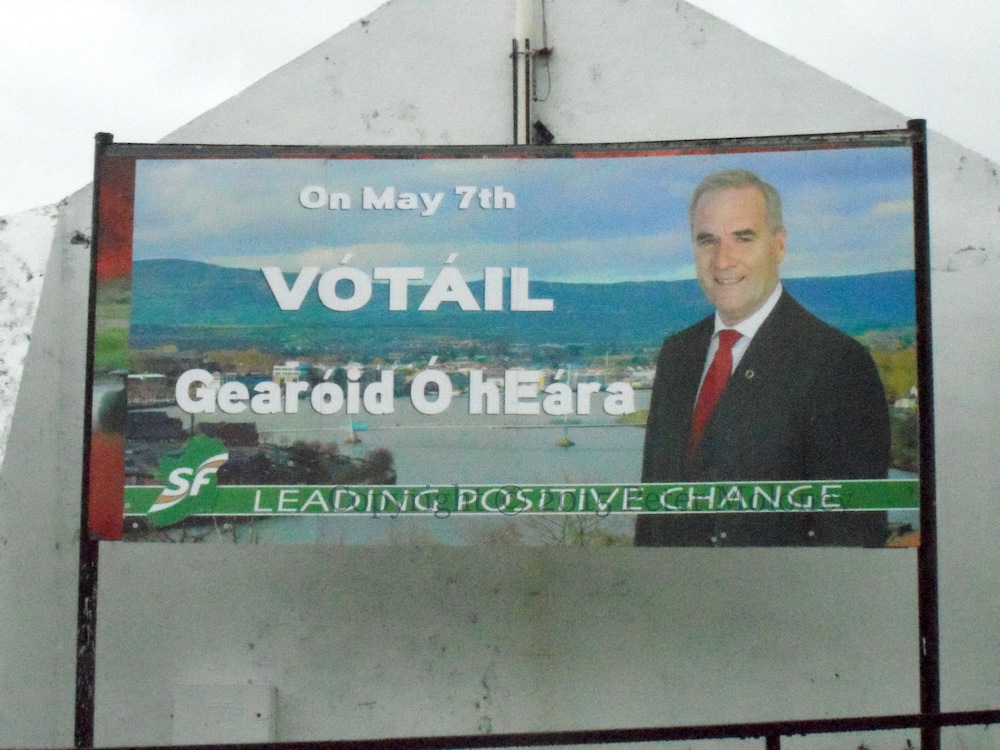
“On May 7th vótáıl Gearóıd Ó hEára. Leading positive change” – Sınn Féın electoral billboard for the 2015 UK elections, on the back of Free Derry Corner.
Ó hEára would go on to take second place, behind the SDLP’s Mark Durkan (WP).
A Christian cross was added (in early 2015?) to the dove and oak leaf on Rossville Street, Derry. For a 2013 image of the previous version, see Dove Of Peace.
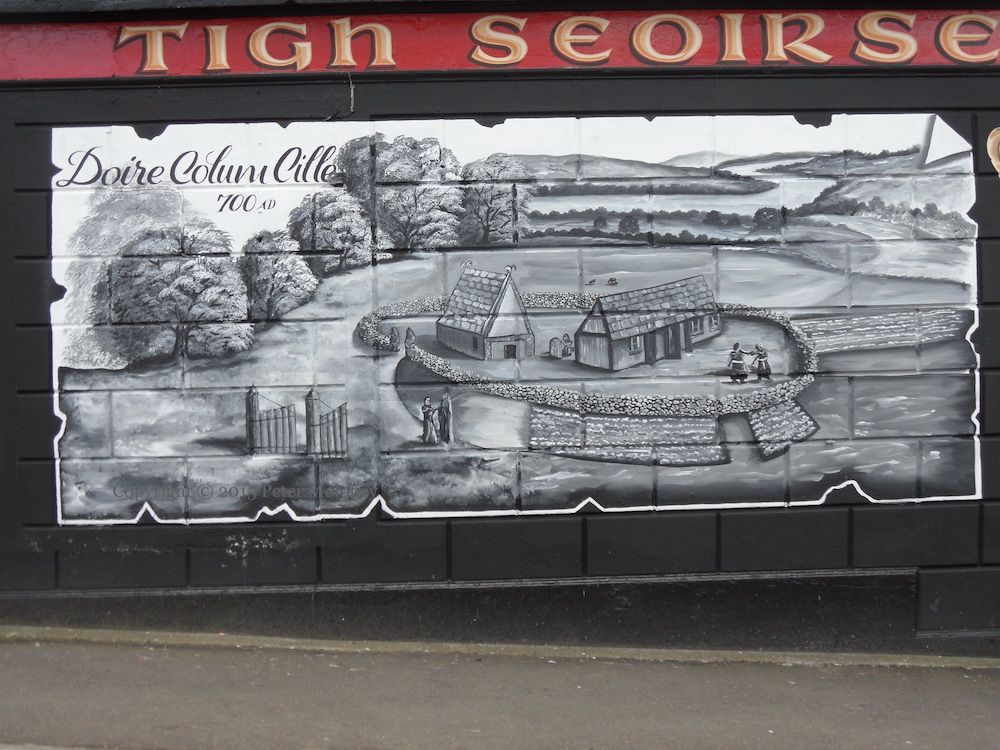
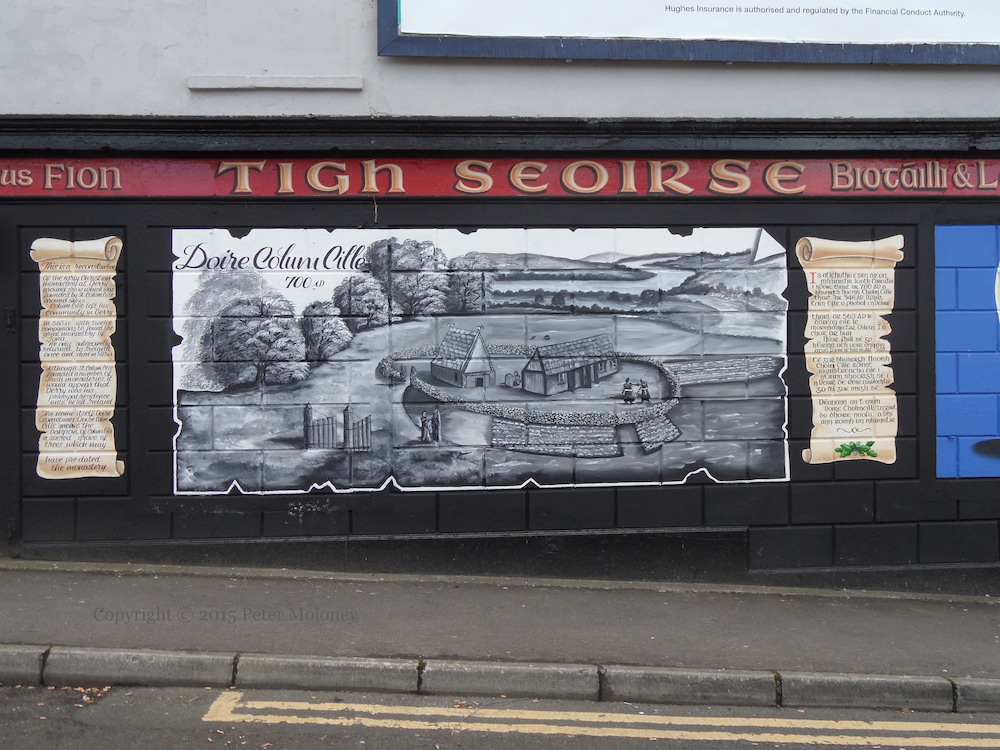
The Christian missionary Colm Cılle (in Latin, Columba), born in Donegal, founded a monastic settlement on the banks of the Foyle (then still part of Donegal) around 540 AD. The “Doıre” part of the name means “oak grove” and perhaps refers (as the information panel suggests) to “a sacred grove of trees, which may have pre-dated the monastery.” The mural above shows a reconstruction of the Derry monastery c. 700 AD. The name “Londonderry” dates to 1662.
Columba moved on to Scotland circa 563 and founded an abbey on the island of Iona. Among his reputed miracles is the banishment of a great water beast from the River Ness in 565.
“This is a reconstruction of the early Christian monastery at Derry around 700 AD which was founded by St Colum Cille around 546 AD. Colum Cille left his community in Derry in 563 AD with twelve companions to found the great monastery of Iona. He only subsequently returned to Ireland once and died in 593 AD. Although St Colum Cille founded a number of Irish monasteries, it would appear that Derry was his principal residence until he left Ireland. The name itself, Doıre, (sometimes Doıre Colum Cılle) means ‘the oakgrove of Colum Cille’ a sacred grove of trees, which may have pre-dated the monastery.”
“Is athchuthú é seo ar an mhainistir luath-Chríostaí i nDoıre thart ar 700 AD a bhunaigh Naomh Cholm Cıille thart ar 546 AD. D’fhág Colm Cille a phobal ı nDoıre thart ar 563 AD le dáréag eıle le mómhaınıstır oıleán Í a chur ar bun. Níor fhill sé go hÉıreann ach uaır amháın agus fuaır sé bás in AD 593. Cé gur bhunaigh Naomh Cholm Cille roınnt maınıstreacha eıle ı nÉırınn, shocrıgh sé ı nDoıre de réır cosúlachta go dtí gut ımıgh sé. Déanann an t-aınm ‘Doıre Cholmcılle’ tagaırt do dhoıre naofa, a bhí ann roımh an mhaınıstir.”
U Bennett Street, Derry, on the side wall of Tıgh Seoırse.











 Peter Moloney Collection