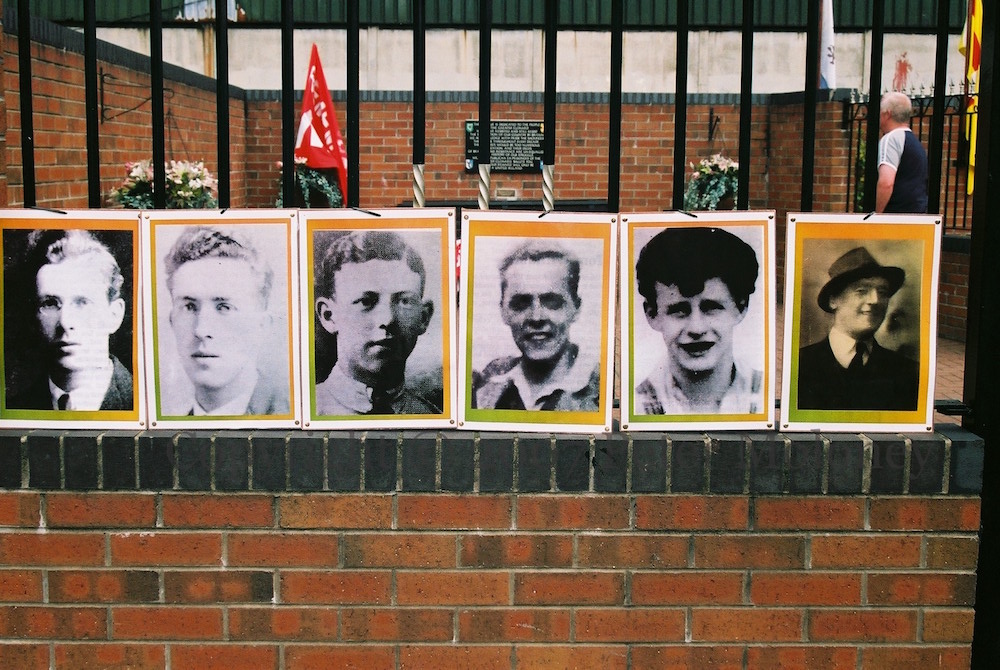
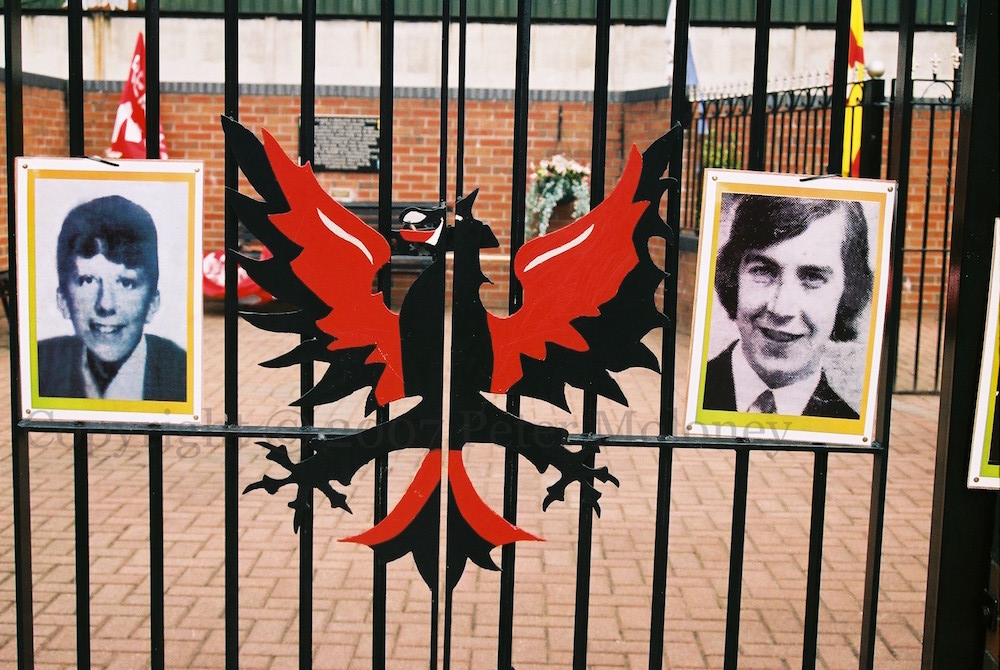
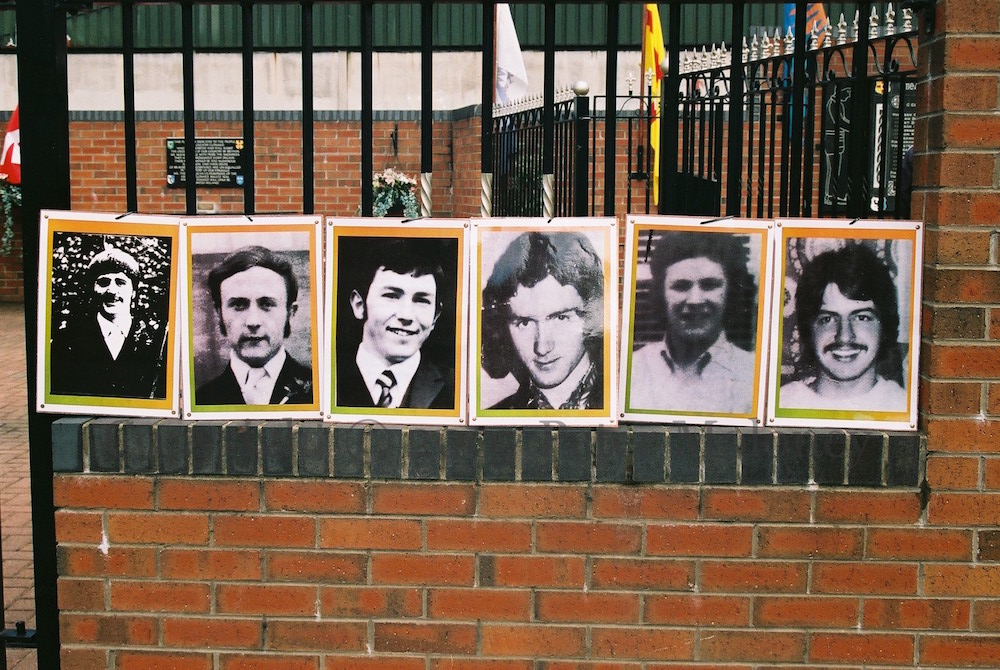
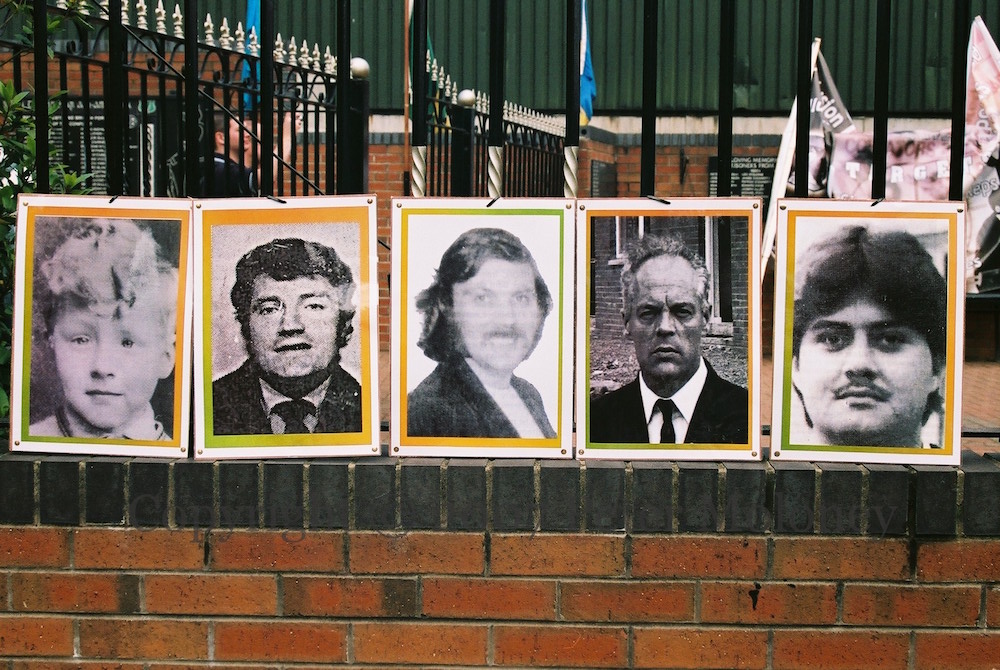

Portraits of the deceased are added to the left and right railings of the Clonard Memorial Garden for the March Of Truth.
Click image to enlarge
Copyright © 2007 Peter Moloney
M03768 M03769 M03770 M03771 [M03772] M03773
Portraits of the deceased are added to the left and right railings of the Clonard Memorial Garden for the March Of Truth.
Click image to enlarge
Copyright © 2007 Peter Moloney
M03768 M03769 M03770 M03771 [M03772] M03773

Fian Gerald McAuley was shot on Waterville Street by loyalists while helping residents move out of their burned-out homes on Bombay Street during the commencement of the Troubles in 1969 (An Phoblacht). This new board replaces a similar one on the other side of Bombay Street.
Click image to enlarge
Copyright © 2007 Peter Moloney
M03765 [M03766]
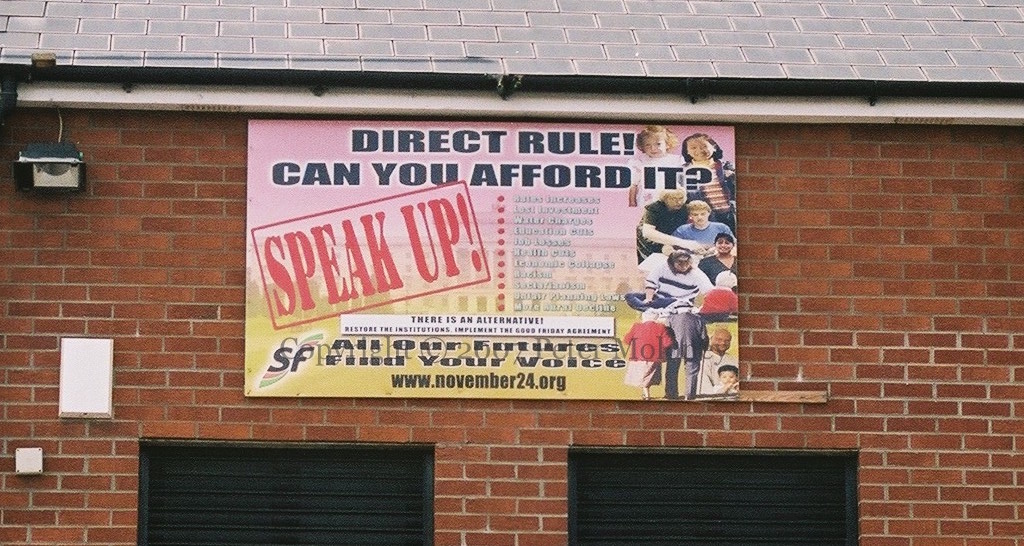
“Direct rule! Can you afford it? Rates increases; lost investment; water charges; education cuts; job losses; health cuts; economic collapse; racism; sectarianism; unfair planning laws; more rural decline. Speak up! There is an alternative. Restore the institutions; implement the Good Friday Agreement. All your futures. Find your voice. http://www.november24.org .” Sınn Féın board above the Falls Road office.
Click image to enlarge
Copyright © 2007 Peter Moloney
M03736
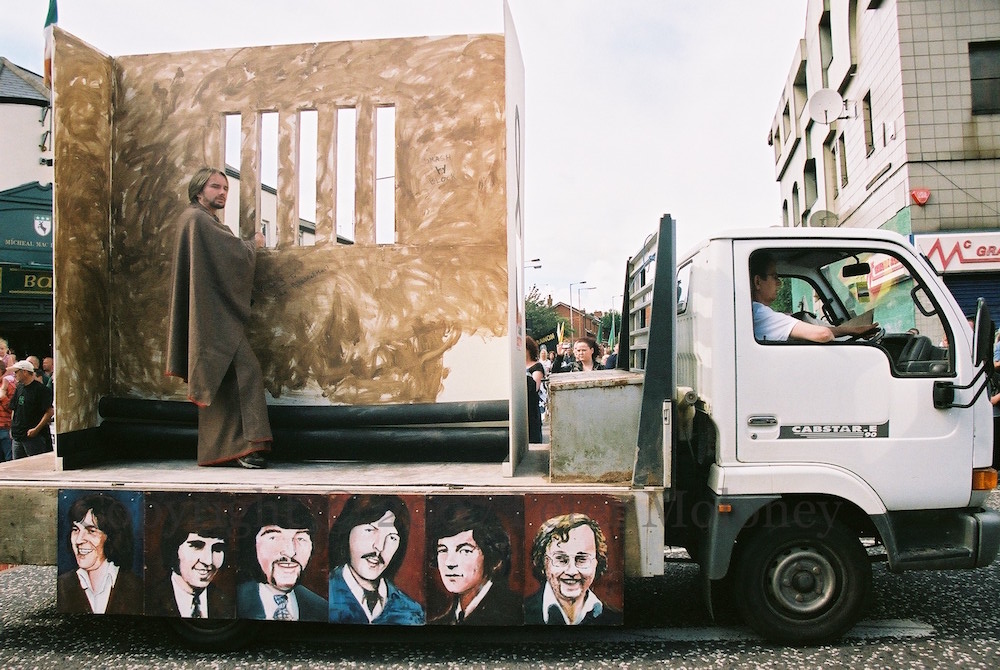
Here is a final float from the March For Truth, with a blanket man on the “dirty” or “no wash” protest. The last six of the deceased 1981 hunger strikers are portrayed along the skirting of the van.
Click image to enlarge
Copyright © 2007 Peter Moloney
M03761

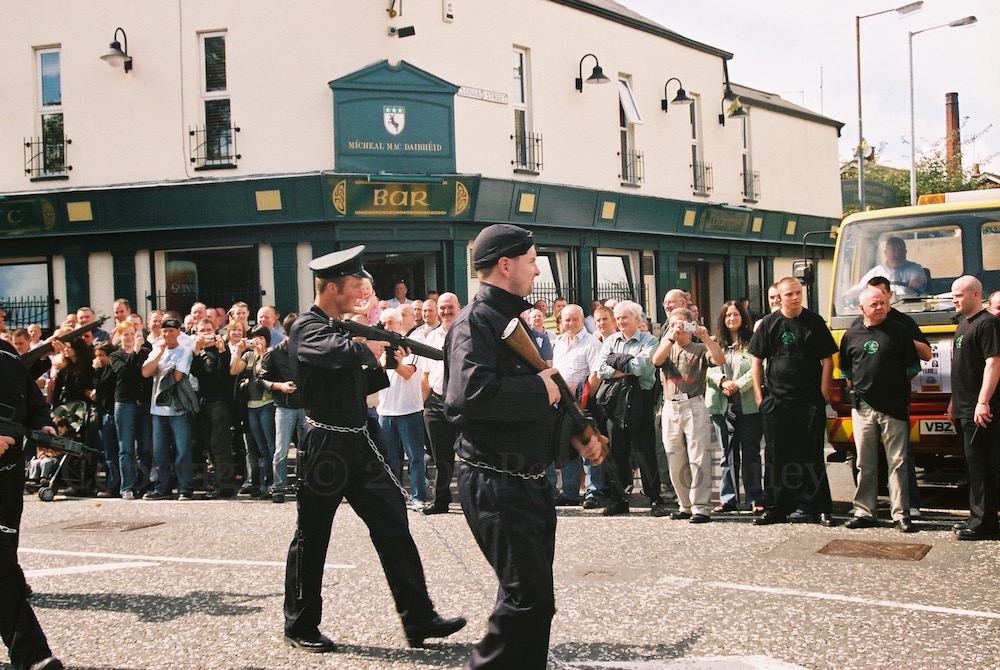
Two images of various “soldiers” from the March For Truth; in the second they are chained up but still carrying arms.
Click image to enlarge
Copyright © 2007 Peter Moloney
M03762 M03759
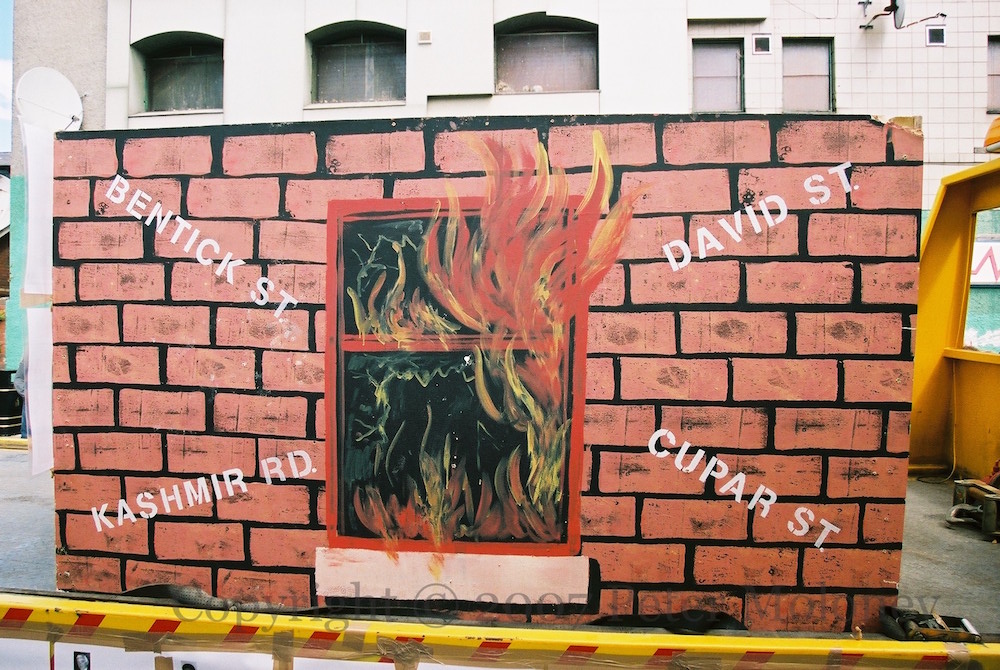
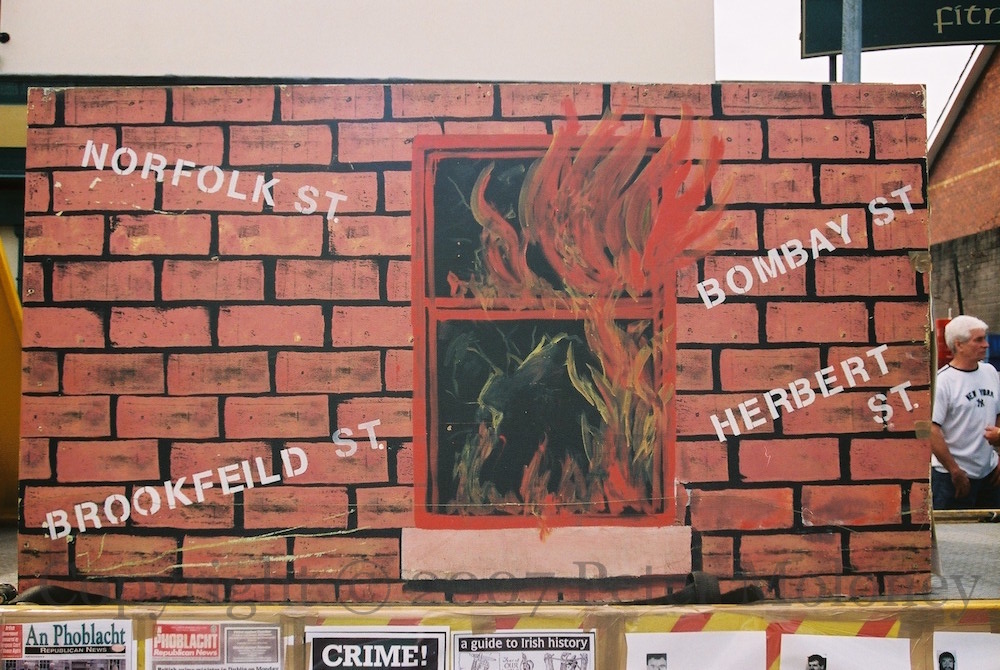
The Troubles in Belfast began with violence along the interface between the Falls and Shankill in Clonard. Houses in Bombay Street and others (listed in the images above) were burned out and their inhabitants displaced.
Click image to enlarge
Copyright © 2007 Peter Moloney
M03764 M03763

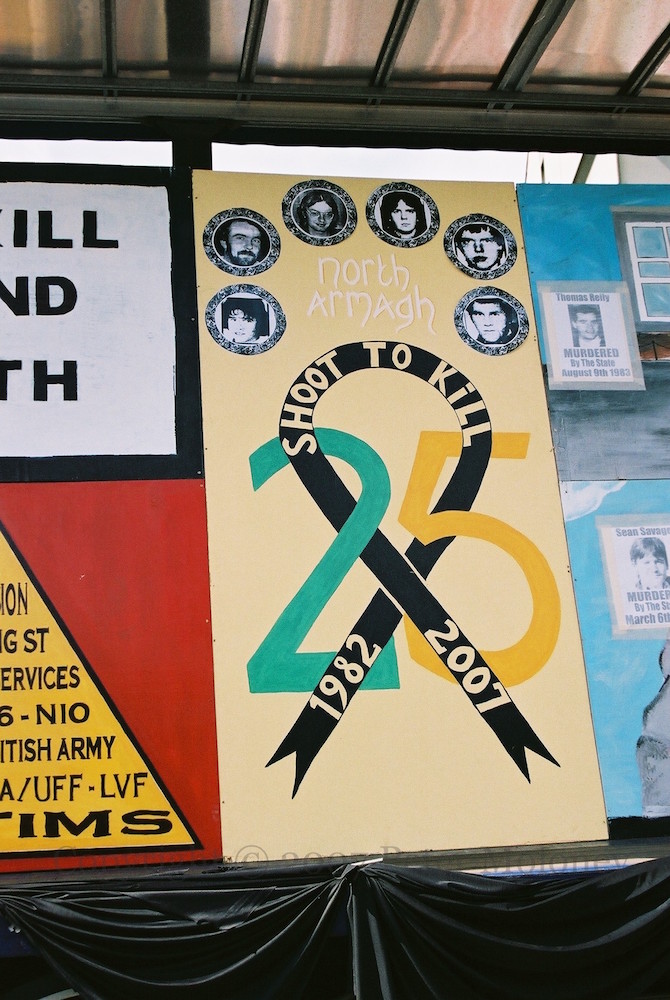


Here are four images of another float in the March For Truth, this one on the issue of Shoot To Kill. In the second panel are six people shot in Lurgan in three incidents in November and December of 1982: Seamus Grew, Roddy Carroll, Michael Tighe, Gervaise McKerr, Sean Burns, Eugene Toman. These would be investigated by the Stalker Inquiry. The third panel shows the killings of (Celtic supporter) Thomas ‘Kidso’ Reilly in St Aidan’s (Private Ian Thain of the Light Infantry Regiment would serve two years for the killing) and of Sean Savage on Gibraltar.
Click image to enlarge
Copyright © 2007 Peter Moloney
M03738 M03739 M03740 M03741


These two images from the March For Truth concern collusion (and plastic bullets). The large board in the first image (“Murdered by the British state”) gives a list of victims of and attacks (from 1974-1977) by the Glenanne Gang, which operated in Armagh and Tyrone with members from the UVF, RUC, and UDR (WP).
Click image to enlarge
Copyright © 2007 Peter Moloney
M03760 [M03755] M03737
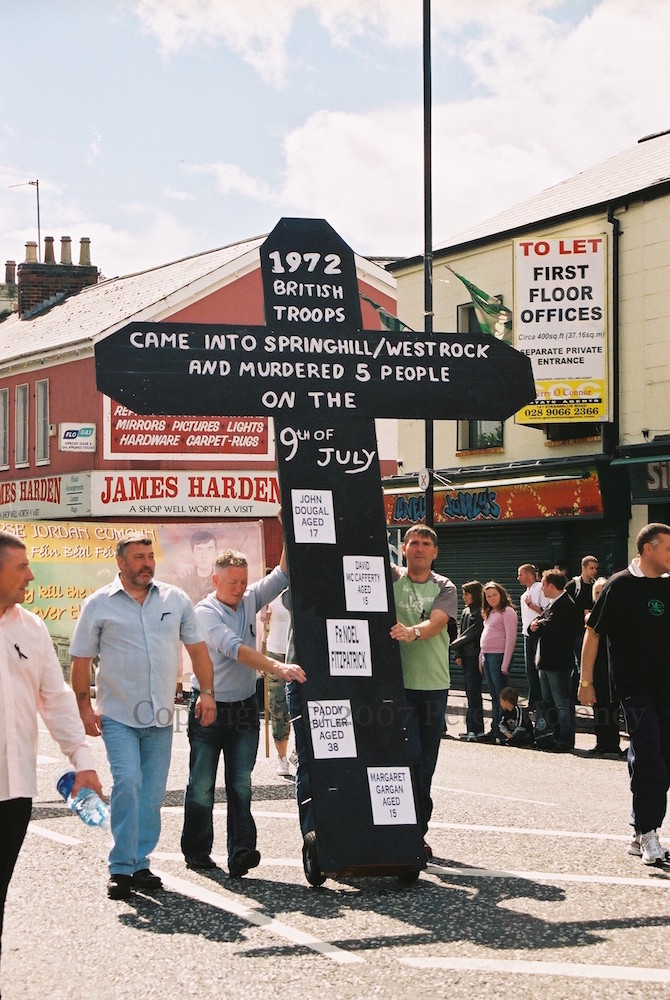
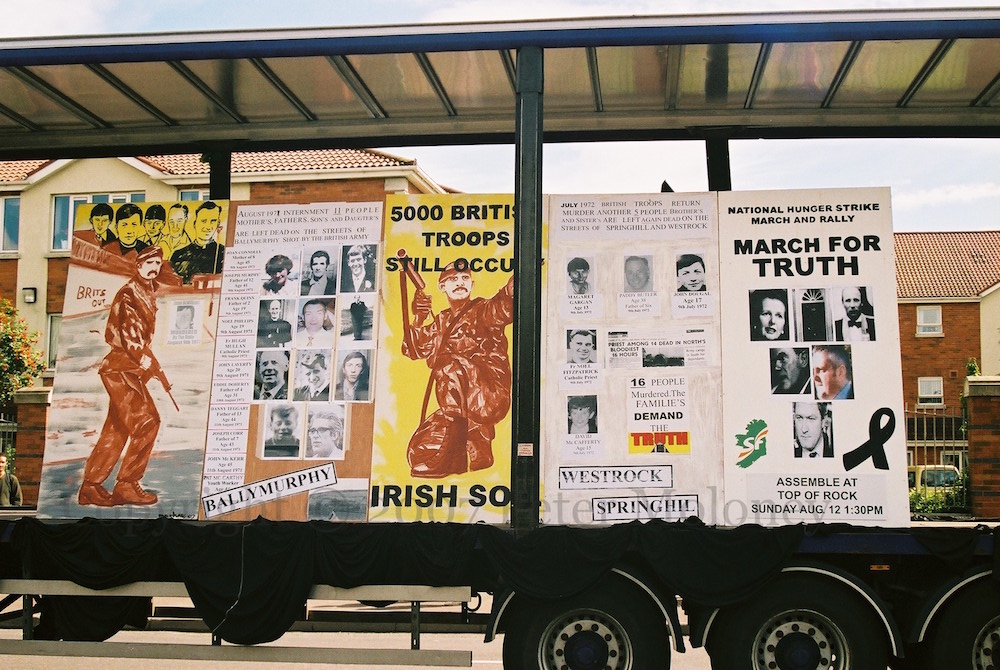
These images concern the 1971 Ballymurphy Massacre and the 1972 Springhill/Westrock Massacre. The demands for inquiries into the British Army killings were among the causes included in the March For Truth. The two painted boards on the lorry are by Mo Chara Kelly.
Click image to enlarge
Copyright © 2007 Peter Moloney
M03742 M03758 [M03735] [M03734] [M03733] [M03732]
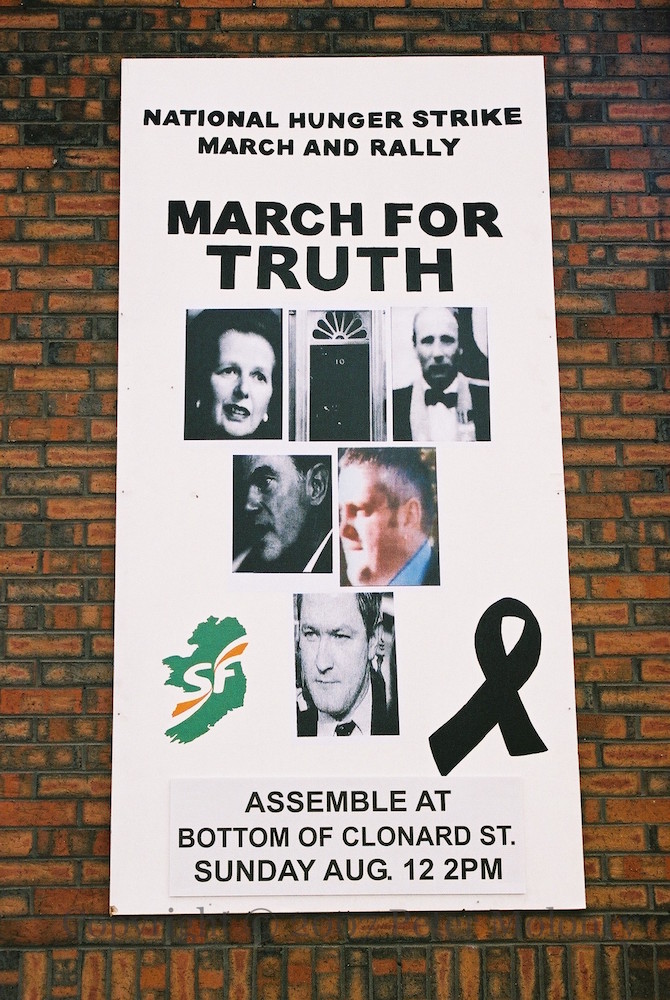
The March For Truth was a 2007 event in nationalist west Belfast highlighting a number of related issues: the Ballymurphy and Springhill/Westrock massacres, collusion, and shoot-to-kill; it also commemorated the 1981 hunger strike and the beginning of the Troubles.
Click image to enlarge
Copyright © 2007 Peter Moloney
M03777

