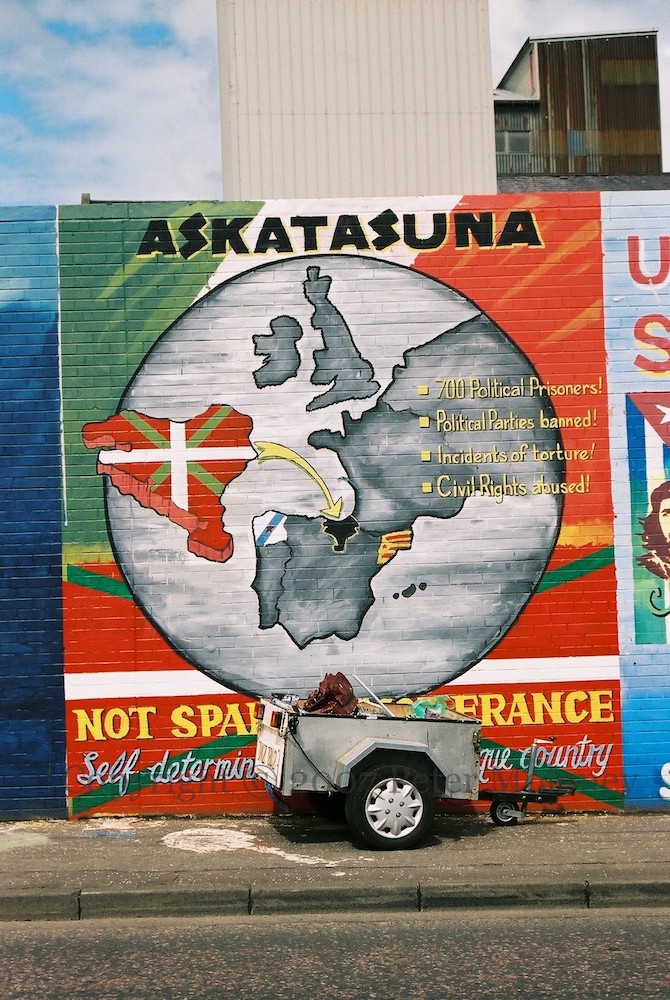
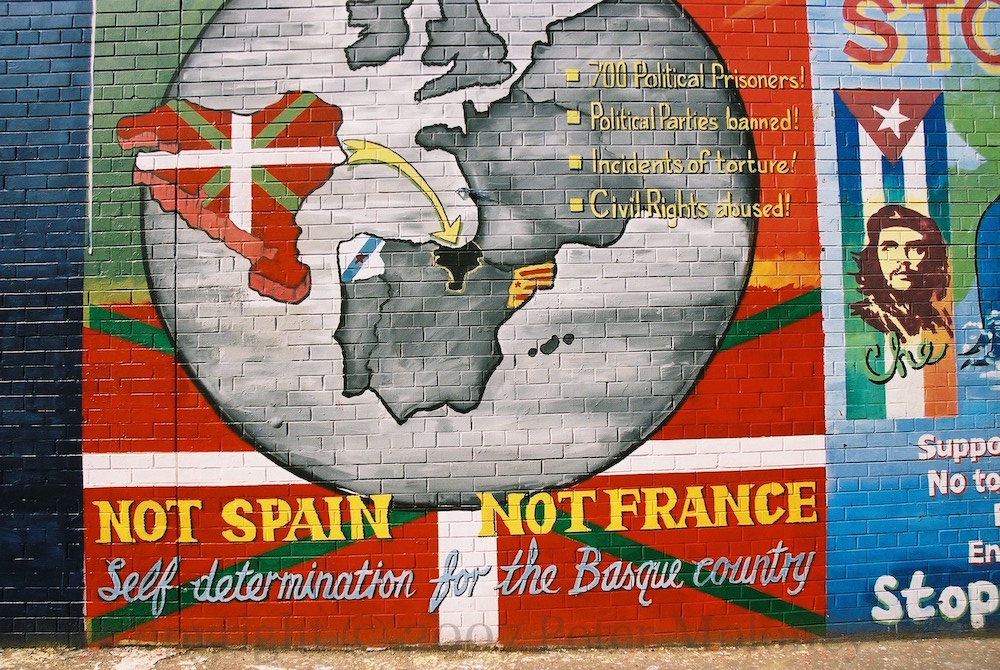
“Not Spain, not France – self-determination for the Basque country”, “700 political prisoners! Political parties banned! Incidents of torture! Civil rights abused!”
About 250 Communist brigadiers from Ireland went to Spain to fight for the Republicans against Franco’s Nationalists in the Spanish Civil War. “Por vuestra Libertad y la nuestra.”
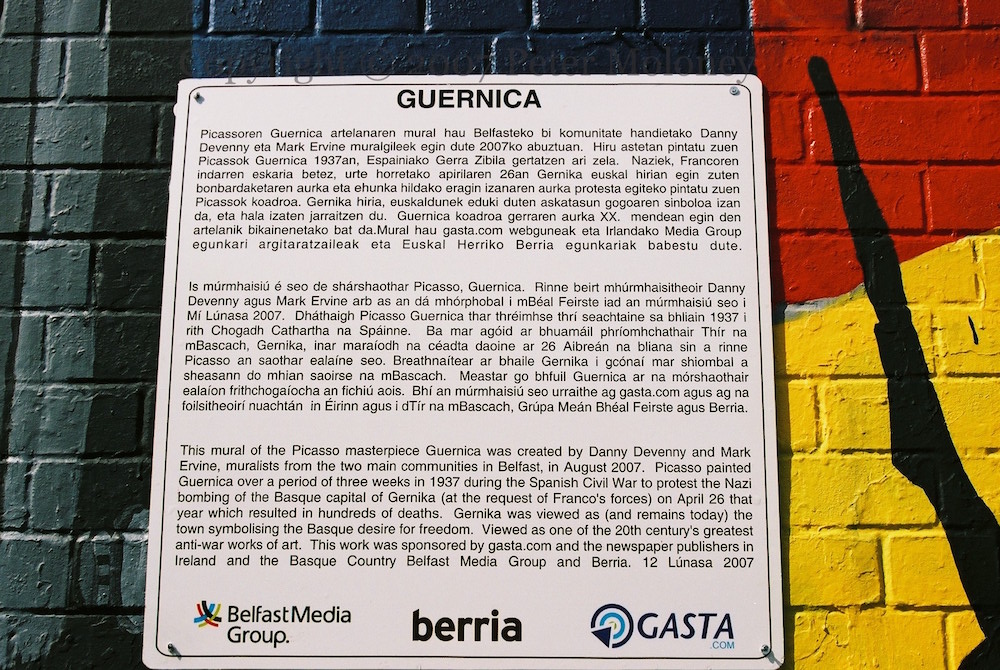
The information board for this reproduction of Guernica is in Basque, Irish, and (lastly) English: “This mural of Picasso masterpiece Guernica was created by Danny Devenny and Mark Ervine, muralists from the two main communities in Belfast, in August 2007. Picasso painted Guernica over a period of three weeks in 1937 during the Spanish Civil War to protest the Nazi bombing of the Basque capital of Gernika (at the request of Franco’s forces) on April 26 that year which resulted in hundreds of deaths. Gernika was viewed as (and remains today) the town symbolising the Basque desire for freedom. Viewed as one of the 20th century’s greatest anti-war works of art. This work was sponsored by gasta.com and the newspaper publishers in Ireland and the Basque Country Belfast Media Group and Berria. 12 Lúnasa 2007.”
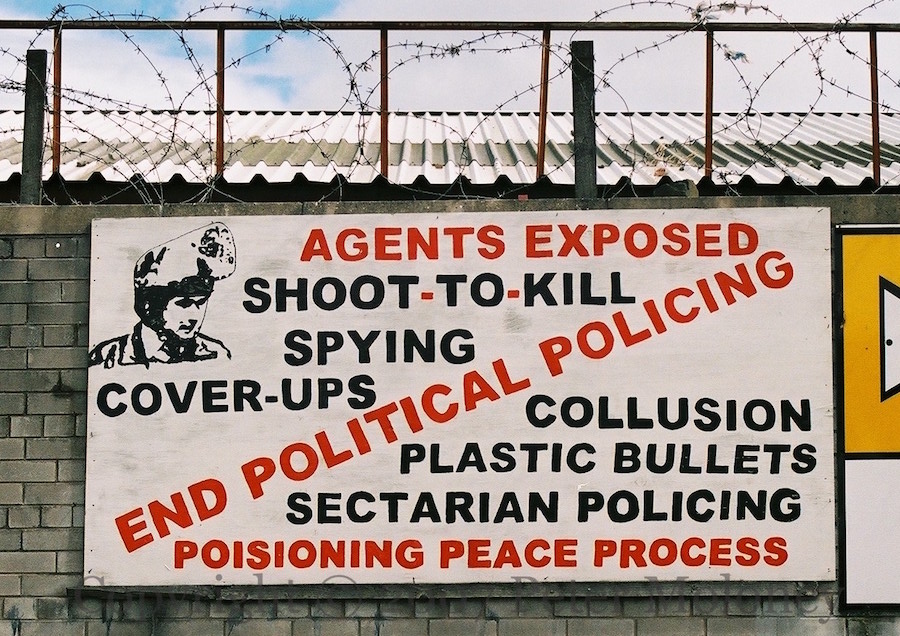
“End political policing: agents exposed – shoot-to-kill – spying – cover-ups –collusion – plastic bullets – sectarian policing – poisoning peace process”. Helmets with visors were used by the RUC during the 1980s, most memorably at the killing of Sean Downes (see Who Next?).
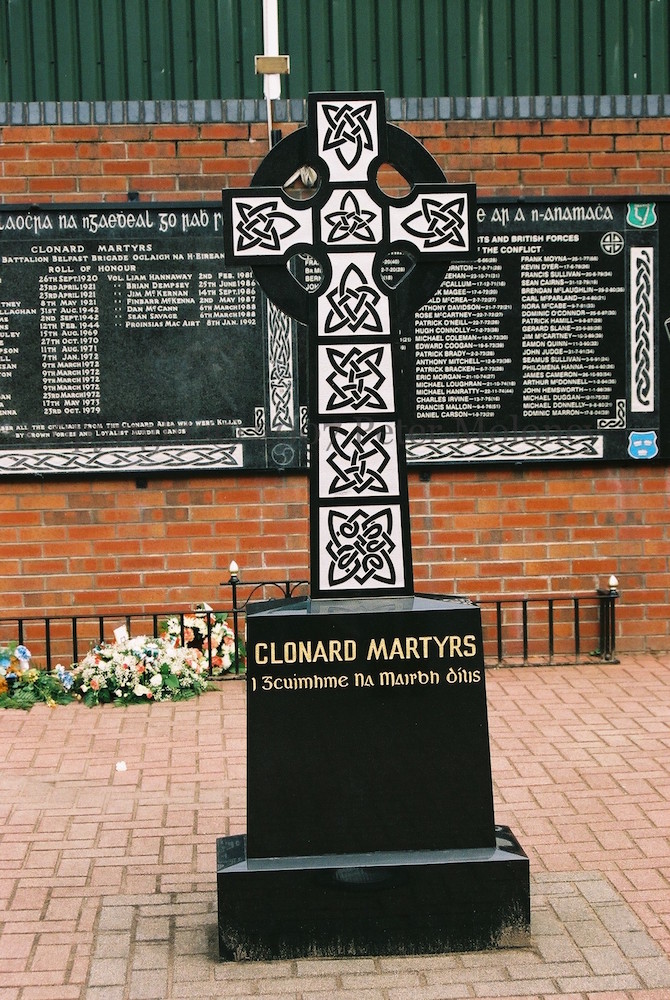
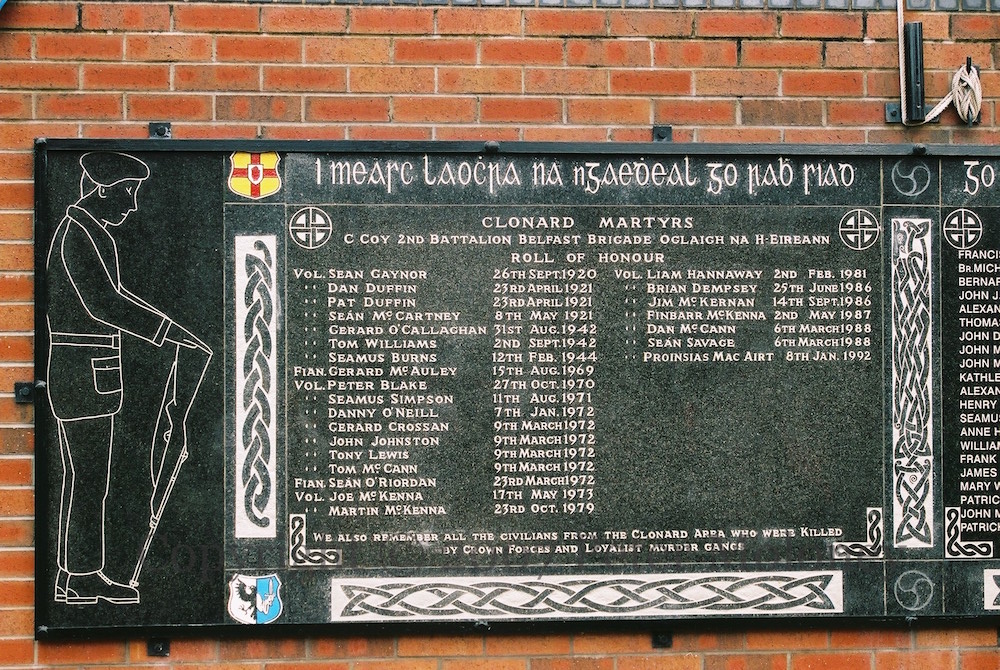
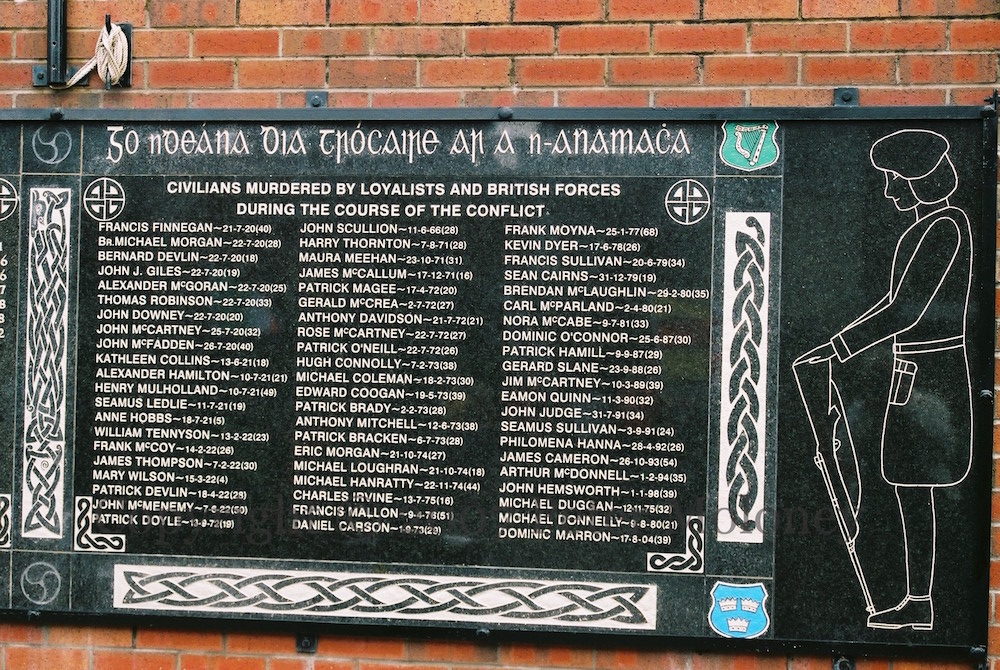
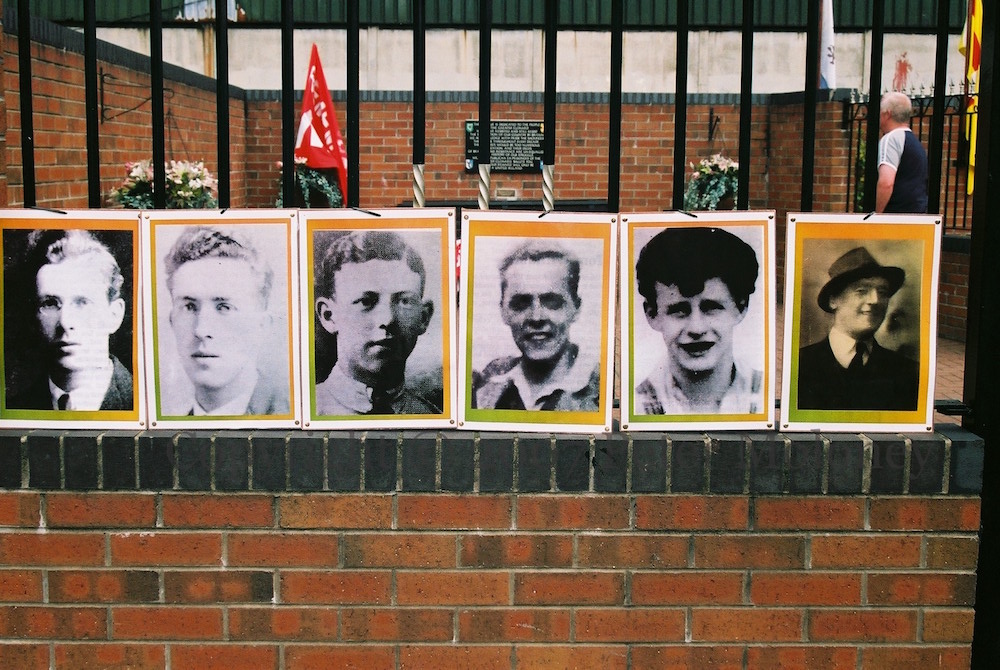
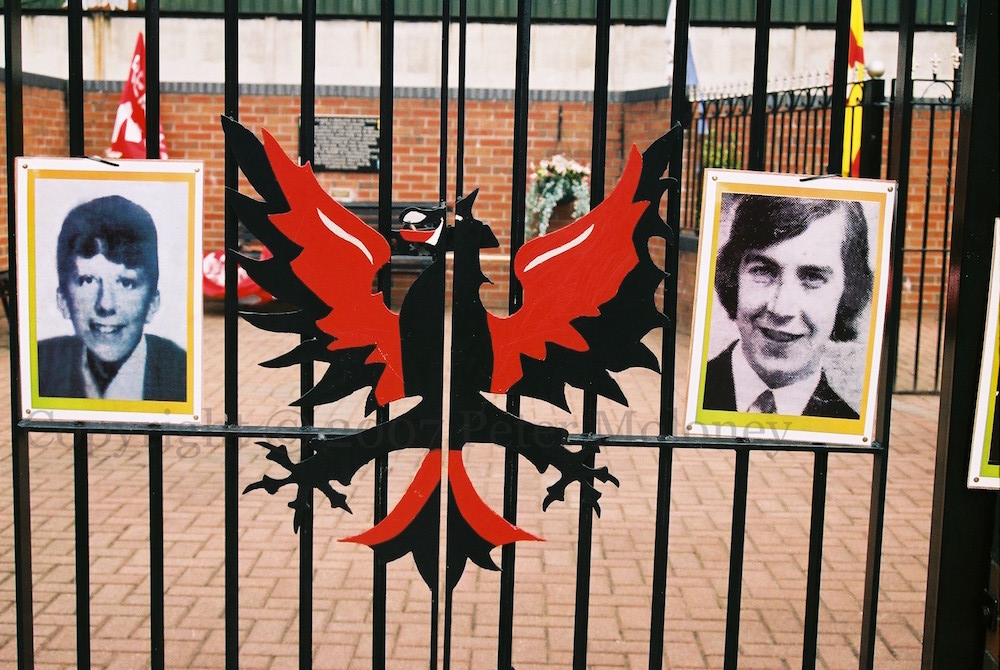
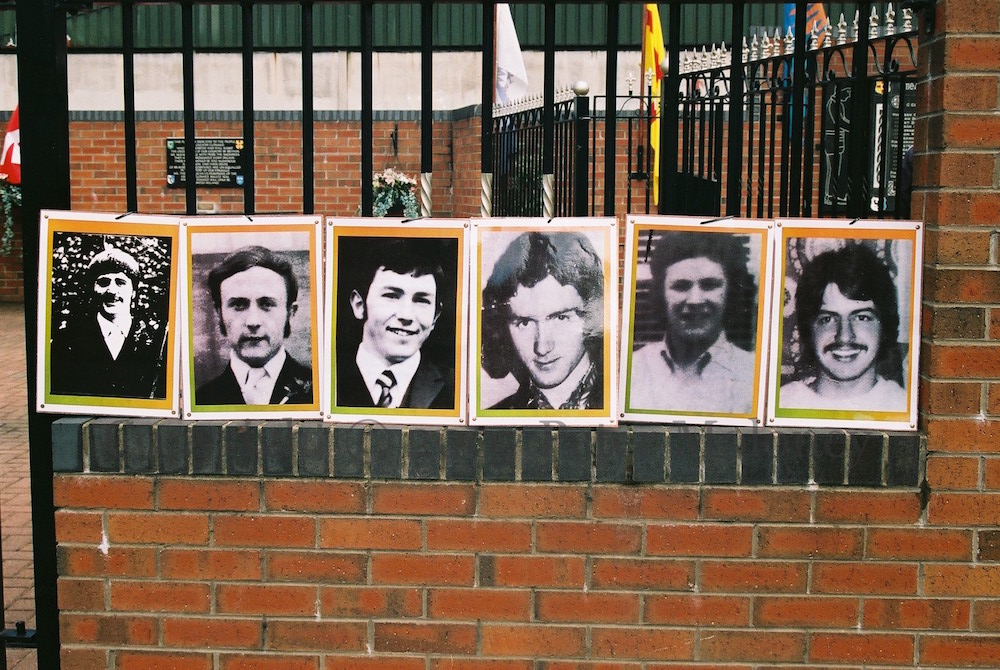
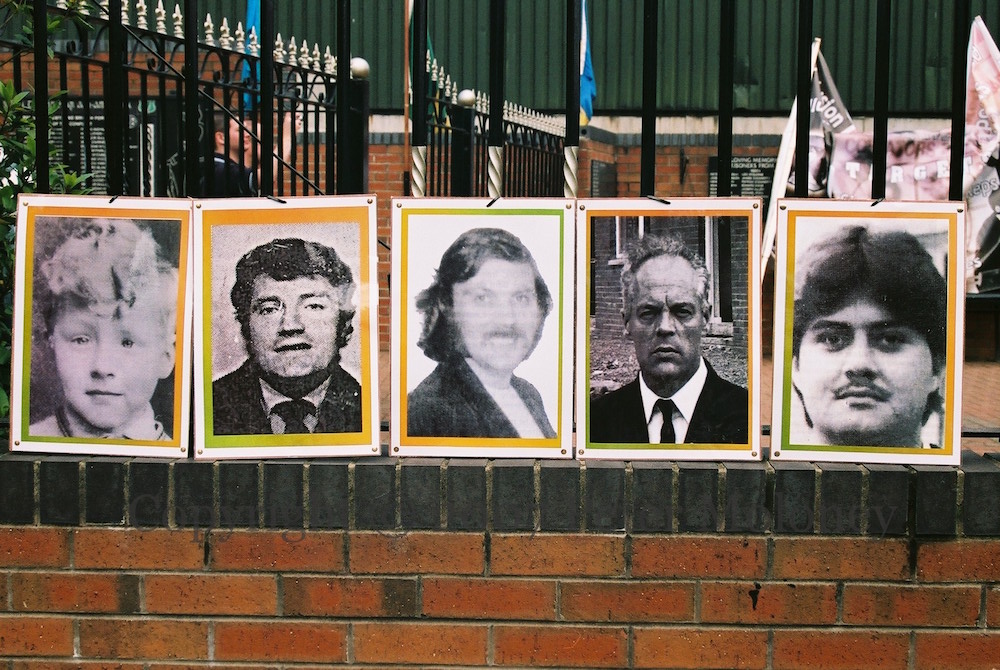
“I gcuımhne na maırbh dílıs” [“In memory of the faithful dead”] “Clonard martyrs C coy 2nd battalion Belfast Brigade Óglaıgh na hÉıreann roll of honour.” The right-hand plaque commemorates “civilians murdered by loyalists and British forces during the course of the conflict”. “I measc laochra na nGaedheal go raıbh sıad – go ndeana Dıa trócaıre ar a nanamacha”.
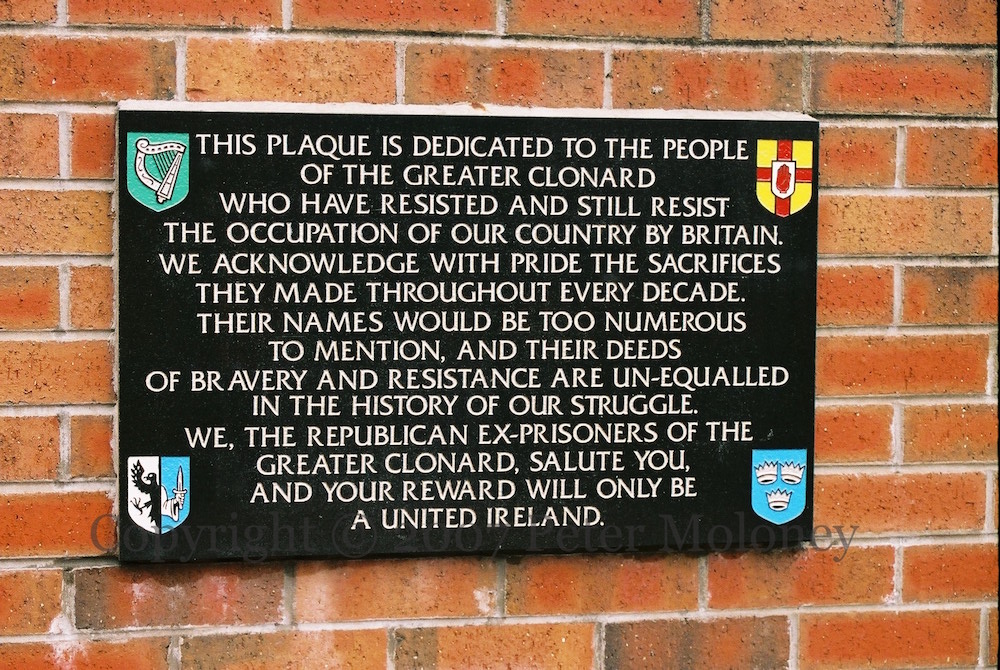
“This plaque is dedicated to the people of the greater Clonard who have resisted and still resist the occupation of our country by Britain. We acknowledge with pride the sacrifices they made throughout every decade. Their names would be too numerous to mention, and their deeds of bravery and resistance are un-equalled in the history of our struggle. We, the republican ex-prisoners of the greater Clonard, salute you, and your reward will only be a united Ireland.” This is the plaque in the left-hand third of the Clonard memorial garden.
Fian Gerald McAuley was shot on Waterville Street by loyalists while helping residents move out of their burned-out homes on Bombay Street during the commencement of the Troubles in 1969 (An Phoblacht). This new board replaces a similar one on the other side of Bombay Street.
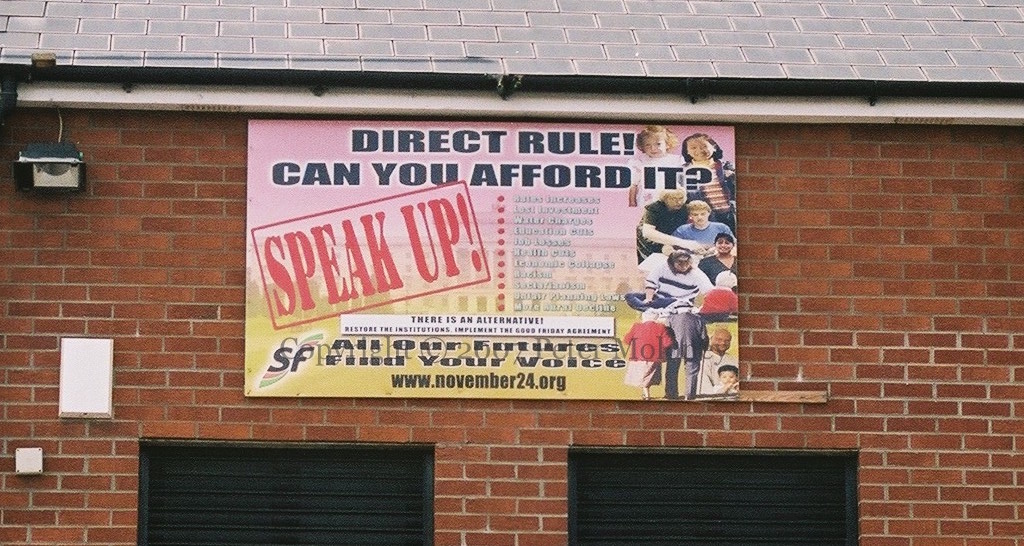
“Direct rule! Can you afford it? Rates increases; lost investment; water charges; education cuts; job losses; health cuts; economic collapse; racism; sectarianism; unfair planning laws; more rural decline. Speak up! There is an alternative. Restore the institutions; implement the Good Friday Agreement. All your futures. Find your voice. http://www.november24.org .” Sınn Féın board above the Falls Road office.
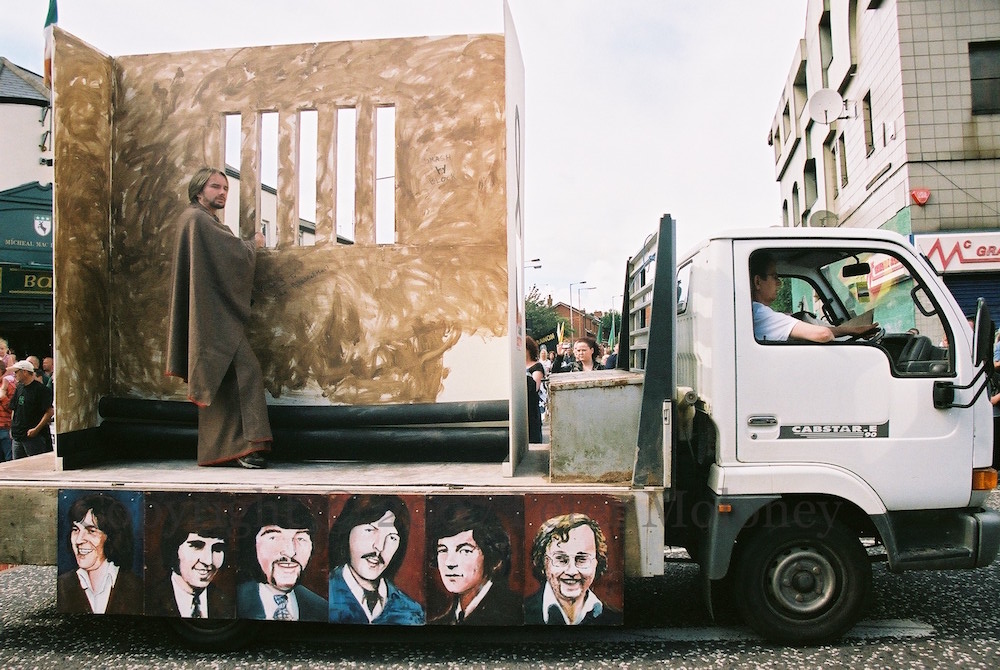
Here is a final float from the March For Truth, with a blanket man on the “dirty” or “no wash” protest. The last six of the deceased 1981 hunger strikers are portrayed along the skirting of the van.




 Peter Moloney Collection