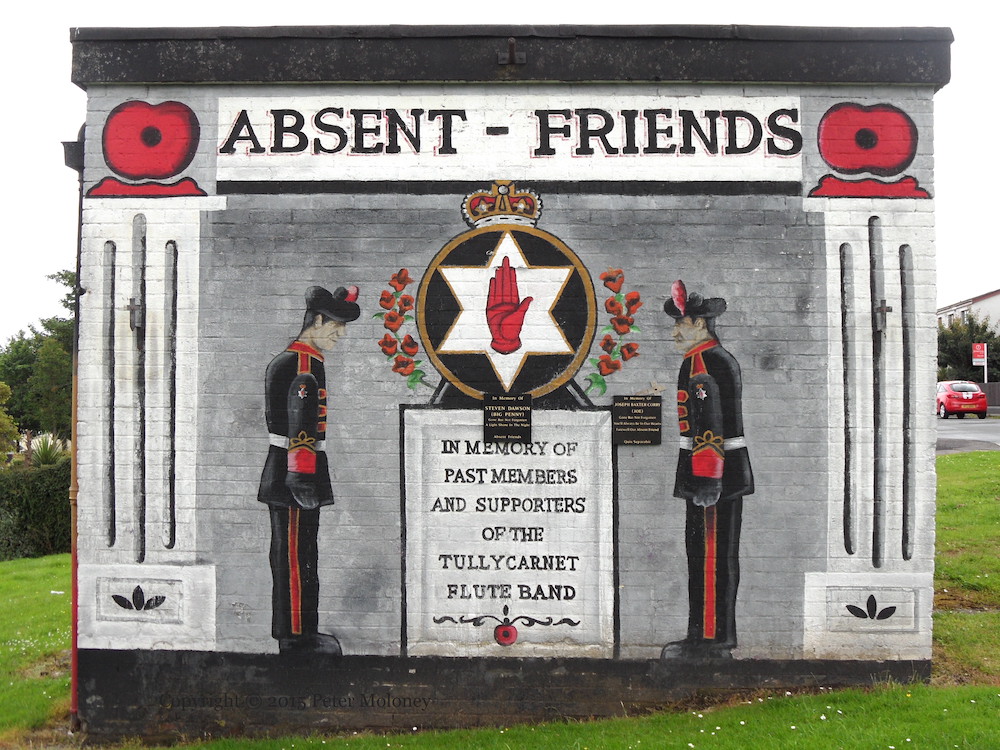
The Tullycarnet Flute Band mural on the electrical sub-station in Lochinver Drive, Tullycarnet, as been repainted/touched up (compare to 2013).
The plaques read: “In memory of Steven Dawson (Big Penny). Gone but not forgotten. A light shone in the night”, and “In memory of Joseph Baxter Corry (Joe). Gone but not forgotten. You’ll always be in our hearts. Farewell our absent friend.”
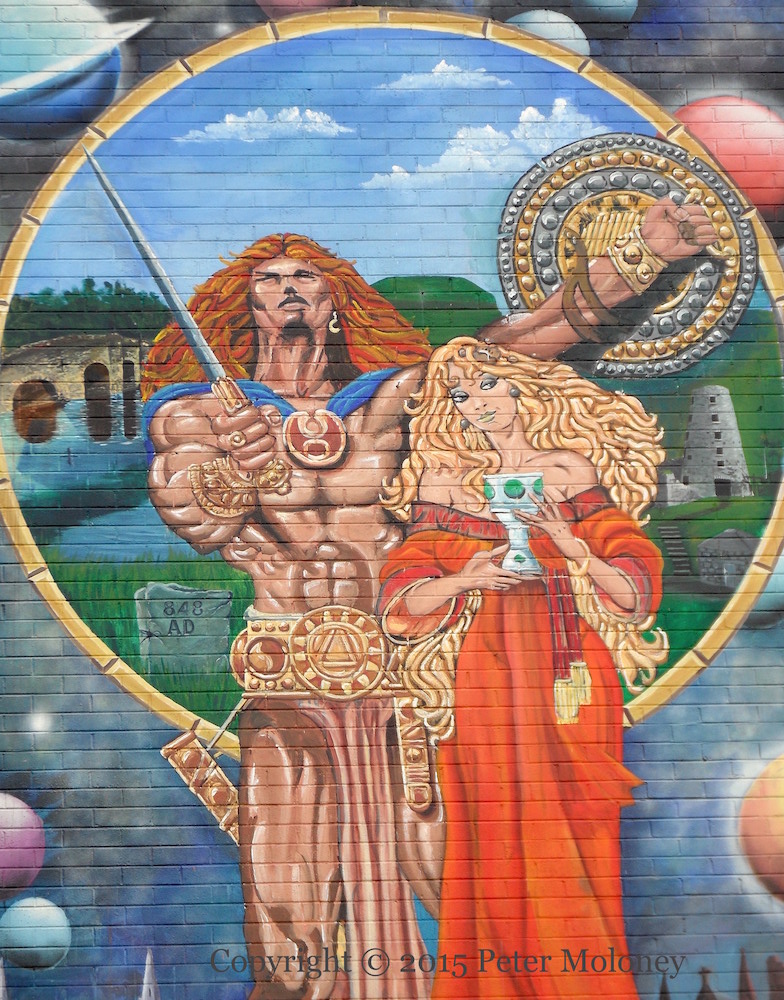
This is a mural of King Niall (Nıall Caılle, Niall of the Callan) and Queen Macha. Niall was high king of Ireland (in competition with Fedelmıd of Munster WP) who held off the Vikings in the late 800s (WP) and died in 846 by drowning in the Callan river. Macha is a much earlier and mythological queen, and gives her name to the town: Ard Mhacha.
The central figures reproduce paintings by Jim Fitzpatrick (Visual History). The Niall figure comes from Nemed The Great but the Macha figure comes from a label Fitzpatrick produced in 1988 for Rosc “mead”, even though Macha (one of them, at least) was the wife of Nemed and there is a female figure in Nemed The Great.
Below the planets and stars, St Patrick’s (Catholic) Cathedral is on the left (WP) and St Patrick’s (CofI) Cathedral is on the right (WP).
In the border, clockwise from left to right, we see: the Tandragee Idol (WP), Naomh Bríd/St Brigid’s, St Patrick preaching the trinity, Irish dancing, Gaelic football, Armagh Harps, “Ard Mhacha”, the Armagh county crest in colour in the apex (Club & County), “Armagh”, Na Pıarsaıgh Óga, hurling/camogie, Cú Chulaınn’s, mummers (perhaps specifically the Armagh Rhymers), Jonathan Swift, a steam locomotive (perhaps representing the Armagh rail disaster of 1889, in which 80 people died WP); a vintage image of Callan Street is depicted along the bottom (History Armagh).
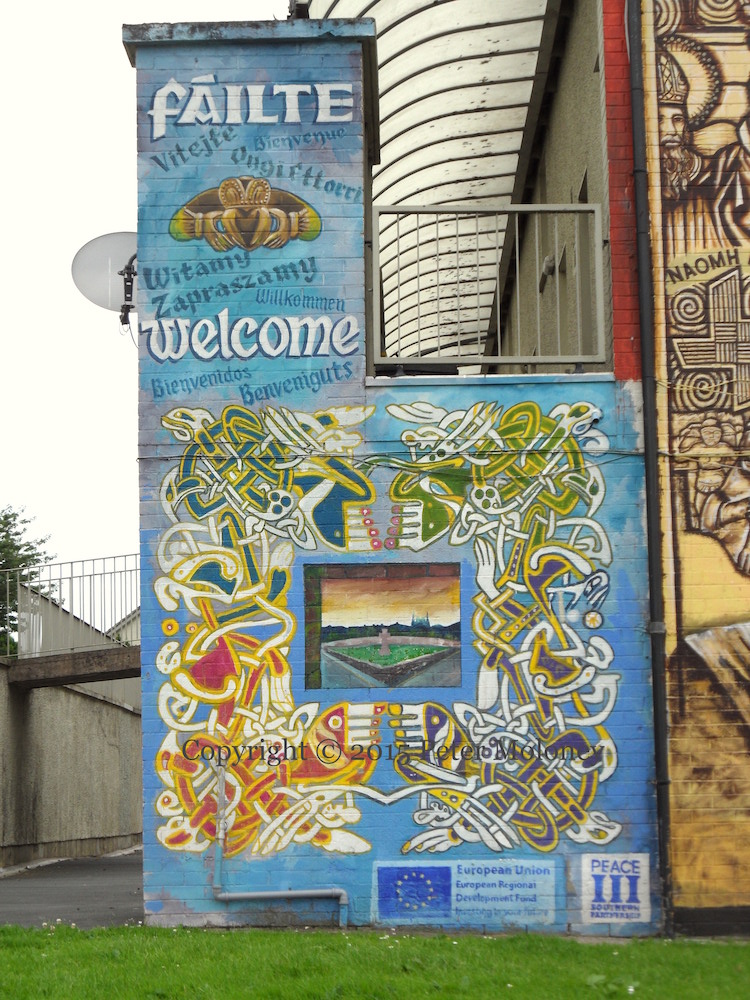
The side-wall features the word “welcome” in many languages, and Celtic knot-work surrounding an image of the Celtic Cross below St Patrick’s, perhaps inspired by this 1903 photograph (Flickr).
Painted by a crew of Belfast artists – Danny D and Mark Ervine, along with Lucas Quigley, Marty Lyons, Micky Doherty – organised by the Callan Street Residents’ Association, with funding from the European Union’s Peace III initiative.
Here is the new Patrick O’Connell, “Don Patricio”, mural at the bottom of the Whiterock. As a player, the Dublin-born O’Connell started with Belfast Celtic before moving on to various English and Scottish clubs, including a period at Manchester United at the time of WWI. He then went on to manage a string of Spanish clubs. As manager of Barcelona during the Spanish civil war, he accompanied the club on their tour of Mexico and the United States. The money from the tour saved the club from bankruptcy but 12 of the 16 players went into exile in Mexico and France. (WP) Barcelona returns to the US this month (2015-07) for games against the LA Galaxy, Manchester United, and Chelsea. (FCBarcelona)
The newspaper in the mural above crams all of this news onto one page: “Civil war erupts in Spain – Barcelona bombed”, “Football suspended – President [of FC Barcelona] Josep Sunyol assassinated” [by Franco’s troops] (WP); “Irishman O’Connell takes players on tour – FC Barcelona saved from extinction”; “Funds lodged in Switzerland”. In the bottom left-hand corner of the newspaper is Robert Capa’s famous photograph of ‘The Falling Soldier’, purporting to show a Republican soldier at the very moment he is struck by a bullet and dies. The image is now thought to have been staged (WP).
Next to O’Connell is Lionel Messi. The Argentinian forward is shown in front of the Spanish League cup, which Barcelona won this year (2014-2015) with a goal from “La Pulga” (“the flea”) – Messi is 5’7″ but four-time world player of the year.
The stands of three football stadiums are shown in the background of the mural: Belfast Celtic’s Celtic Park (“Paradise”), Manchester United’s Old Trafford, and Barcelona’s Camp Nou. The Old Trafford stands bear the emblems of the teams Patrick O’Connell played for and managed: Liffey Wanderers (whose shirt is also featured, on the left), Sheffield Wednesday, Hull City (The Tigers), Manchester United, Dumbarton, Real Racing Club de Santander, Real Oviedo, and Real Betis Balompié (also shirt on the right).
The Parades Commission (web) ruled in 2013 – and in 2014 and now again in 2015 – that the Orange Order could not parade past the Ardoyne shops. A legal bid to reverse the decision was rejected by.a High Court judge (BBC).
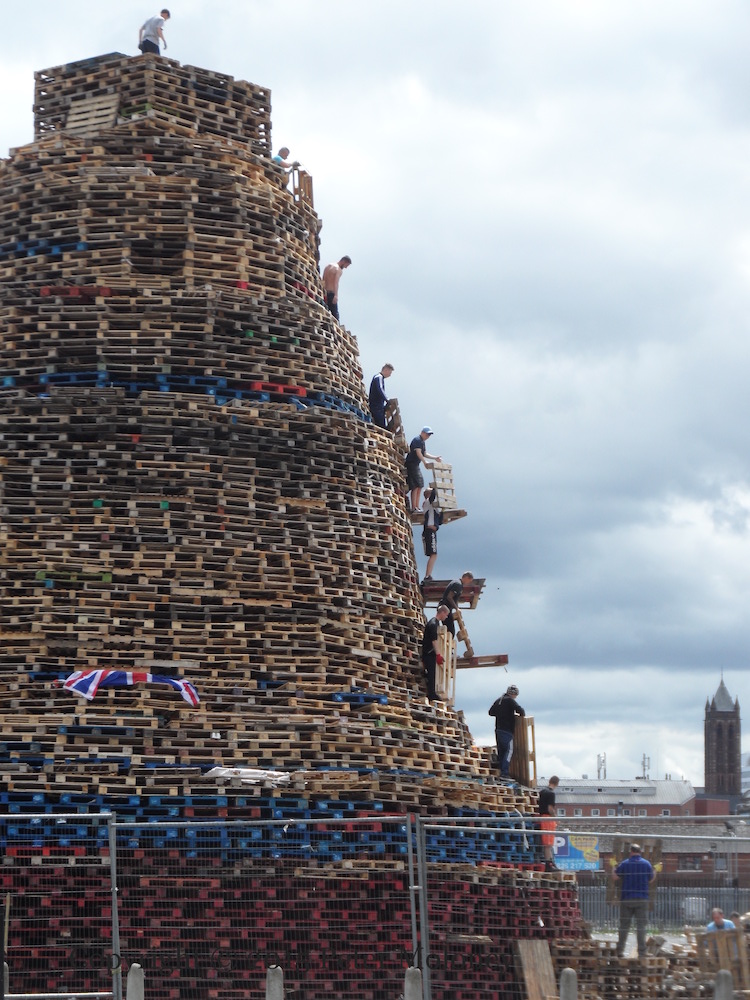
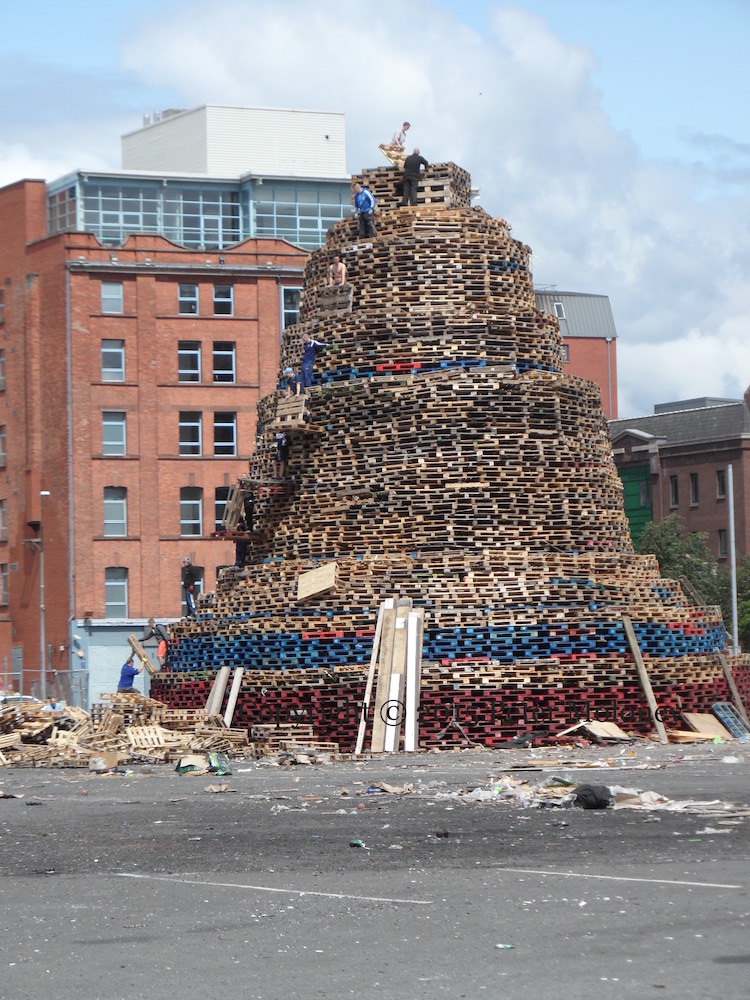
In protest, a giant Tricolour with the words “These are the colours of the Parades Commission” have been added to the side of the Sandy Row bonfire (in the Days Hotel car-park) that is due to be lit this evening – Eleventh Night.
The new Museum of Orange Heritage in Schomberg House opened at the end of June. It features a stained glass window with the words “faithful unto death”, commemorating the 330+ (countsdiffer) members of the Orange Order who were killed during the Troubles.
The museum is at the south end of Cregagh Road; the advertising hoarding is on the Upper Newtownards Road, east Belfast
The Pride Of Ballybeen is a flute band formed in 2014. Their band mural features the Union Flag and Ulster Banner flanking the red hand of Ulster on a six-pointed star against an orange field, surrounded by a crown and a garland pinned by a rose; the titular banner, below, is supported by shamrock and thistle.
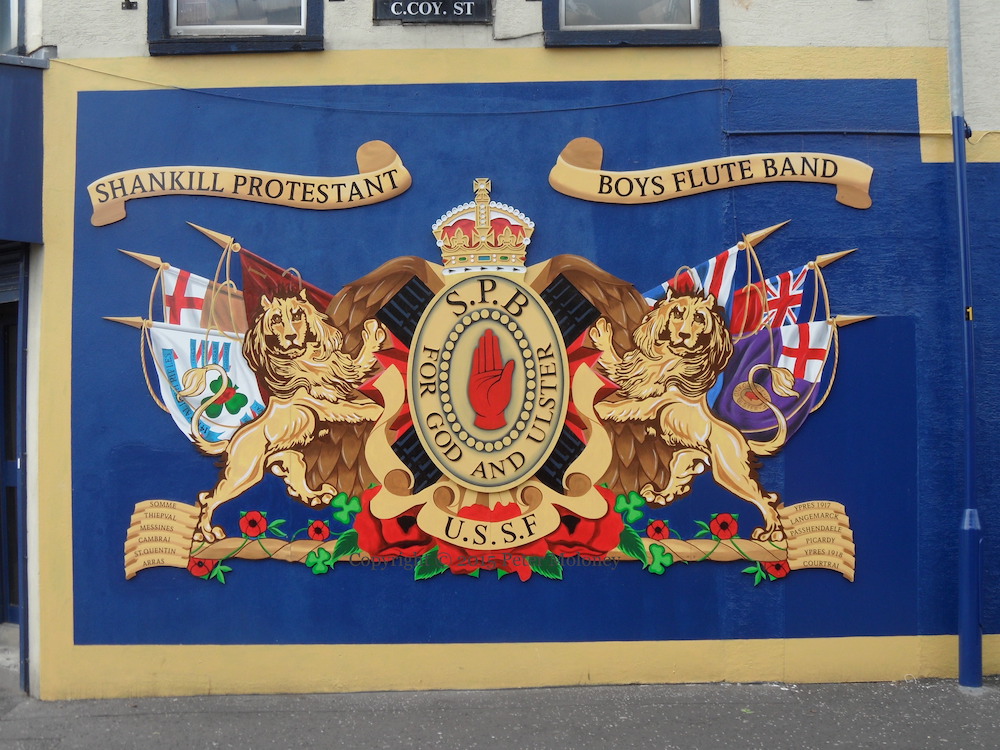
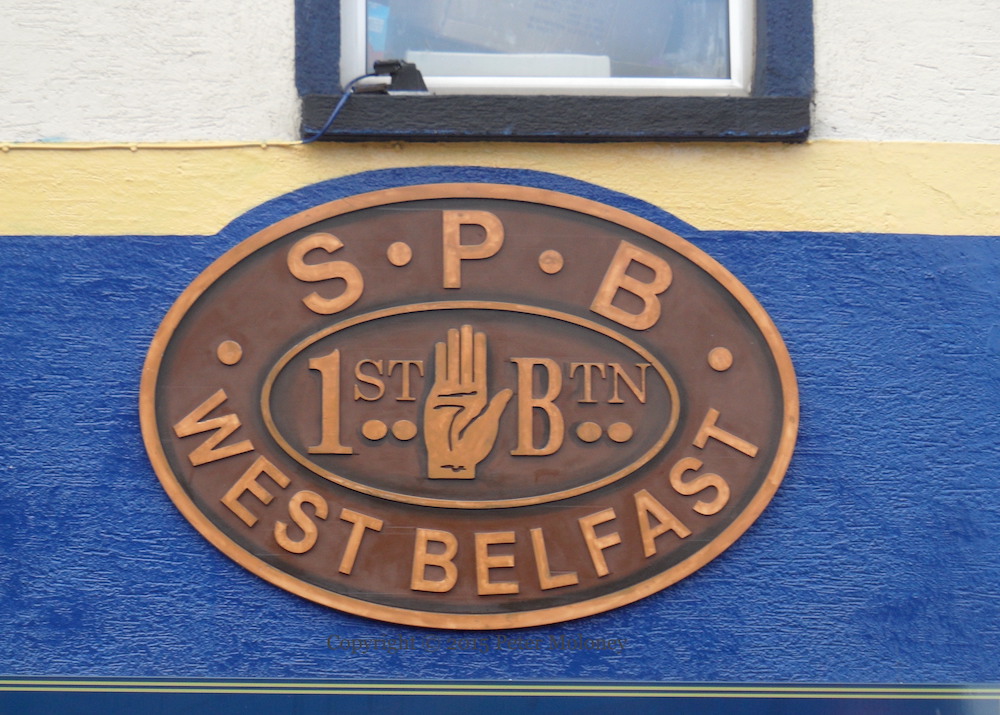
The main part of this installation is a large painted carving of lions rampant on either side of the emblem of the Shankill Protestant Boys flute band (Fb), named for the Shankill Boys of the original Ulster Volunteers and the Ulster Special Service Force unit within it which was designed to be a unit of “first responders”, ready to react at short notice to action by republicans or British forces anywhere in northern Ireland (historyireland).
With the outbreak of World War I, the Ulster Volunteers joined the RIR and the 36th (Ulster) Division and fought at the Battle Of The Somme in 1916: “’The Ulster Division has lost more than half the men who attacked and in doing so has sacrificed it for the Empire which has treated them none too well. The much derided Ulster Volunteer Force has won a name which equals any in history. Their devotion, which no doubt has helped the advance elsewhere, deserved the gratitude of the British Empire. It is due to the memory of these brave fellows that their beloved Province shall be fairly treated.’ Captain Wilfred [sic] Spender HQ staff 2nd July 1916″
This pair of boards is outside the Ulster Rangers Supporters Club (Fb) on the Shankill Road.
Above: The painting features a tram going under an Orange arch between the public baths on one side an Spin-A-Disc records on the other, surrounded by notable figures from the Shankill area. (Many thanks to Johnny Dougan of Shankill Area Social History (Fb) for the information below.)
Front, from left to right: Manchester United and Northern Ireland Soccer player Norman Whiteside (WP) and behind him boxer Davy Larmour and community worker Saidie Patterson (see WRDA), boxer Sammy (Cisco) Cosgrove, Senator Charlie McCullough (WP), Tommy Henderson, boxer Jimmy Warnock (original photograph here), Hugh Smyth (see previously Third Class Citizens), artist William Conor (see previously Conor’s Corner, Jack Henning (running), musician Belter Bell, writer Albert Haslett (Northern Visions interview).
Atop the tram: on the left is Jackie Redpath of the Save the Shankill Campaign (note other members of the group with placard on right; Northern Visions has a documentary about the Save The Shankill campaign) and Jack Higgins holding his book The Eagle Has Landed (WP). Up there too is Miss Sands, the music teacher in the Girls Model School, and historian Bobby Foster (Northern Visions interview). On the stairs are May Blood MBE and above her D.I. Nixon.
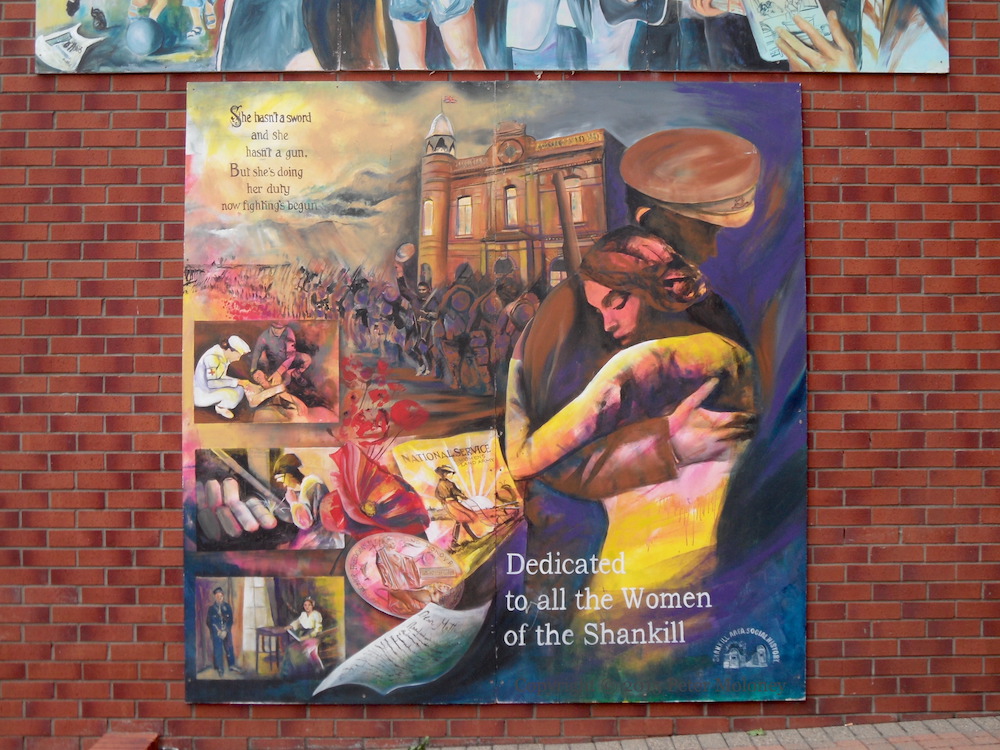
Below is a board highlighting the roles played by women during WWI as nurses and welders and in the Land Army. “She hasn’t a sword and she hasn’t a gun. But she’s doing her duty now fighting’s begun.”
A Somme/WWI soldier contemplates a grave next to a hill of poppies. The art is on the shutters of the Peppercorn café on the Woodstock Road, east Belfast.
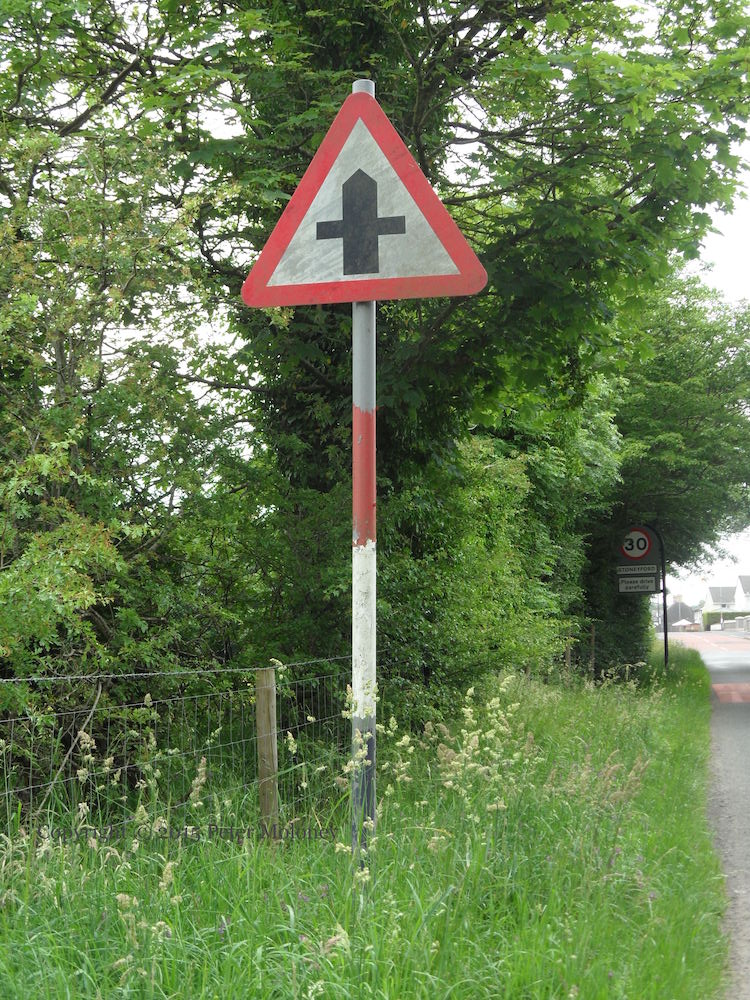
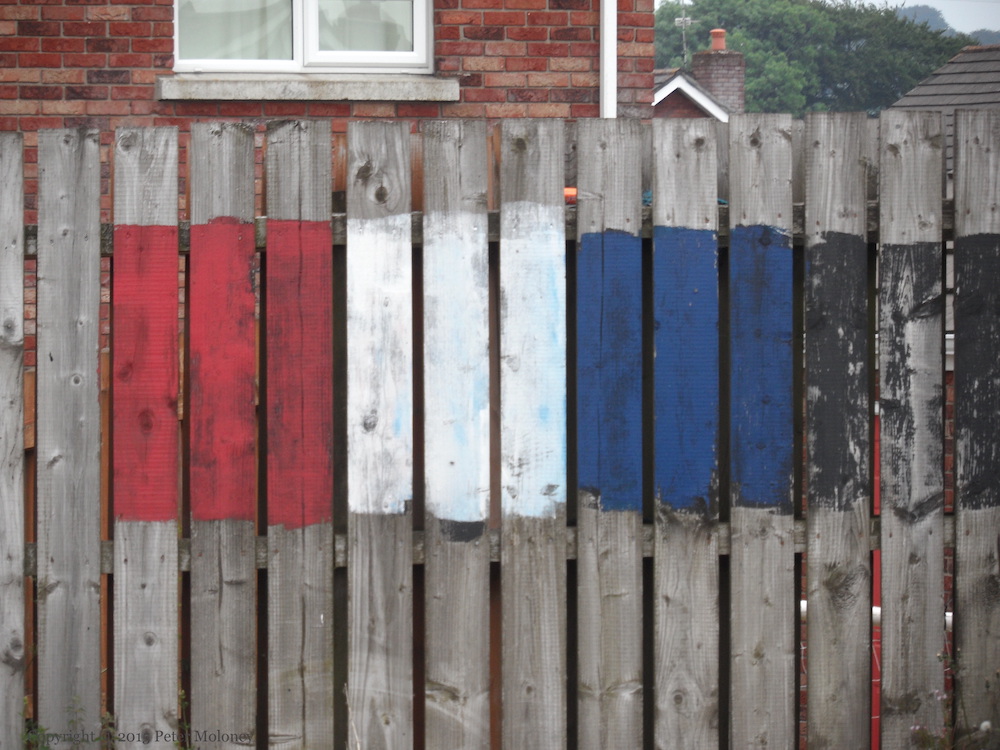
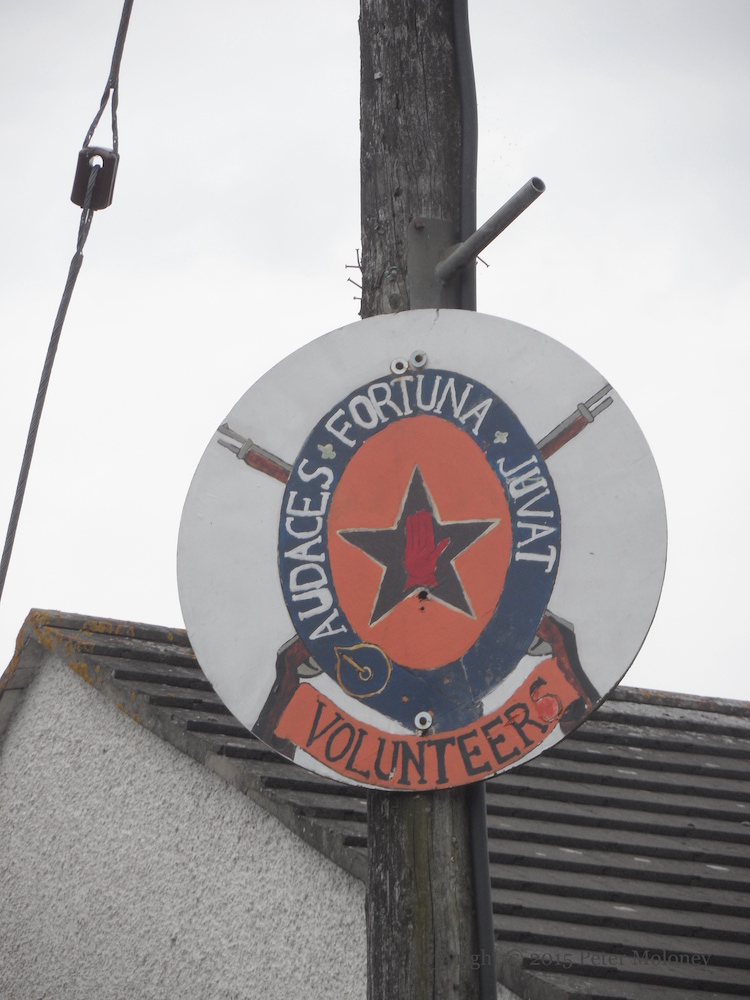
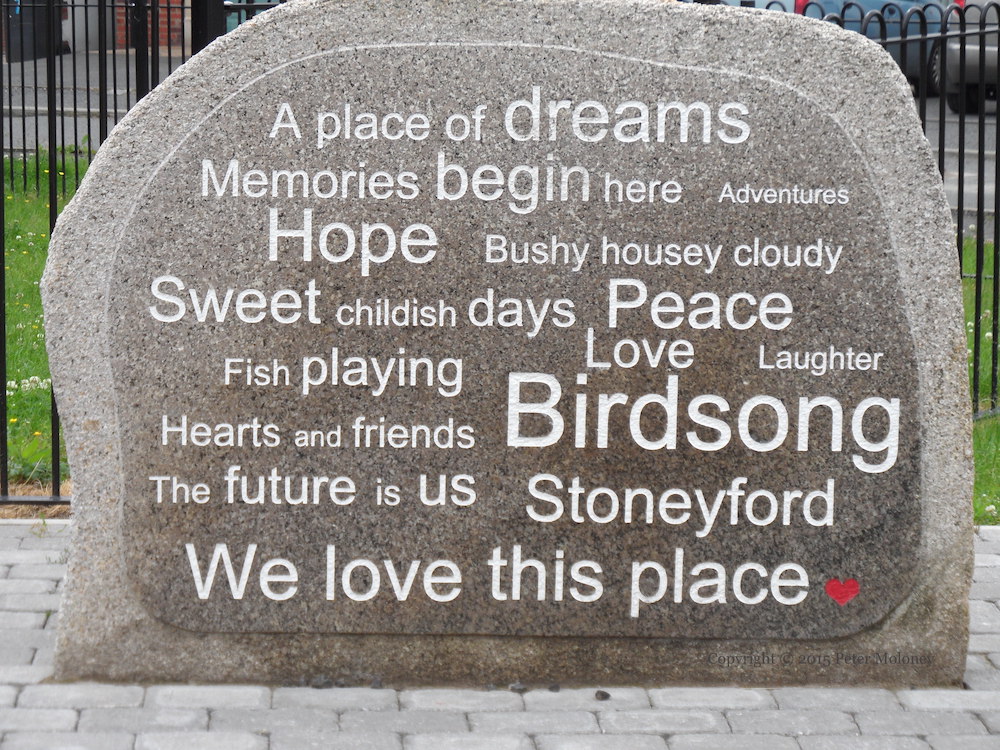
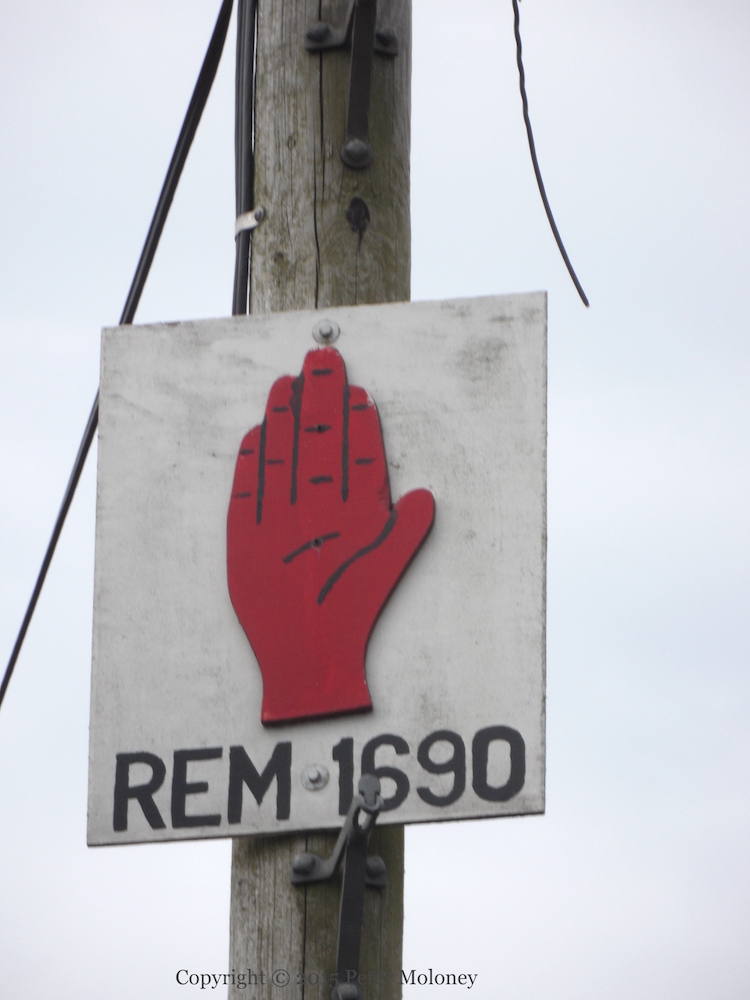
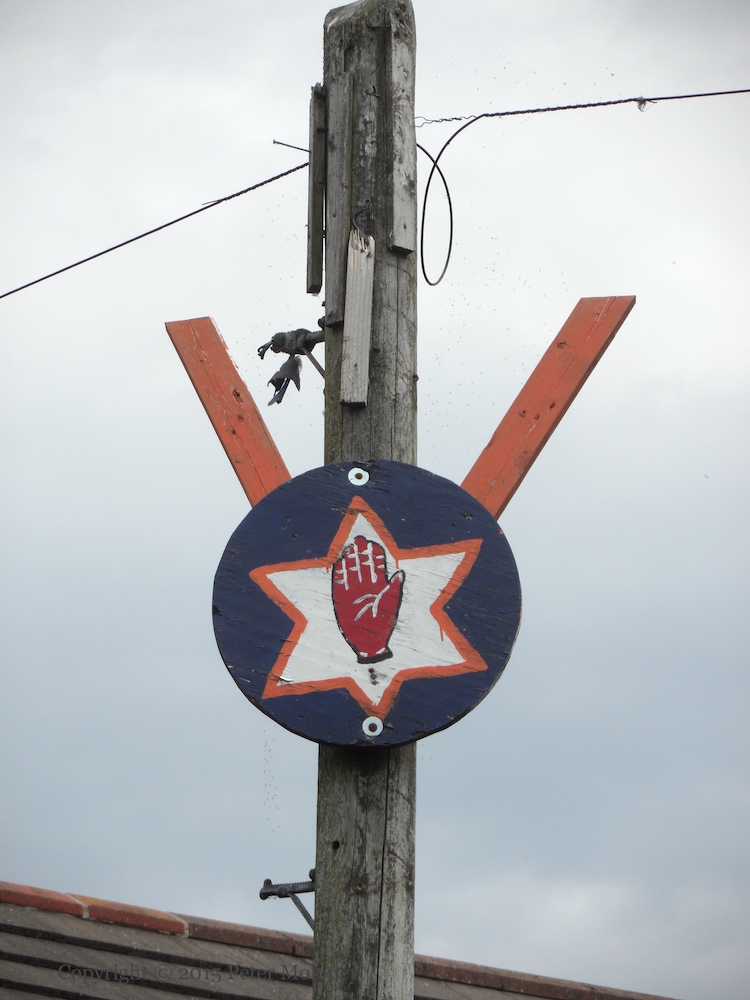
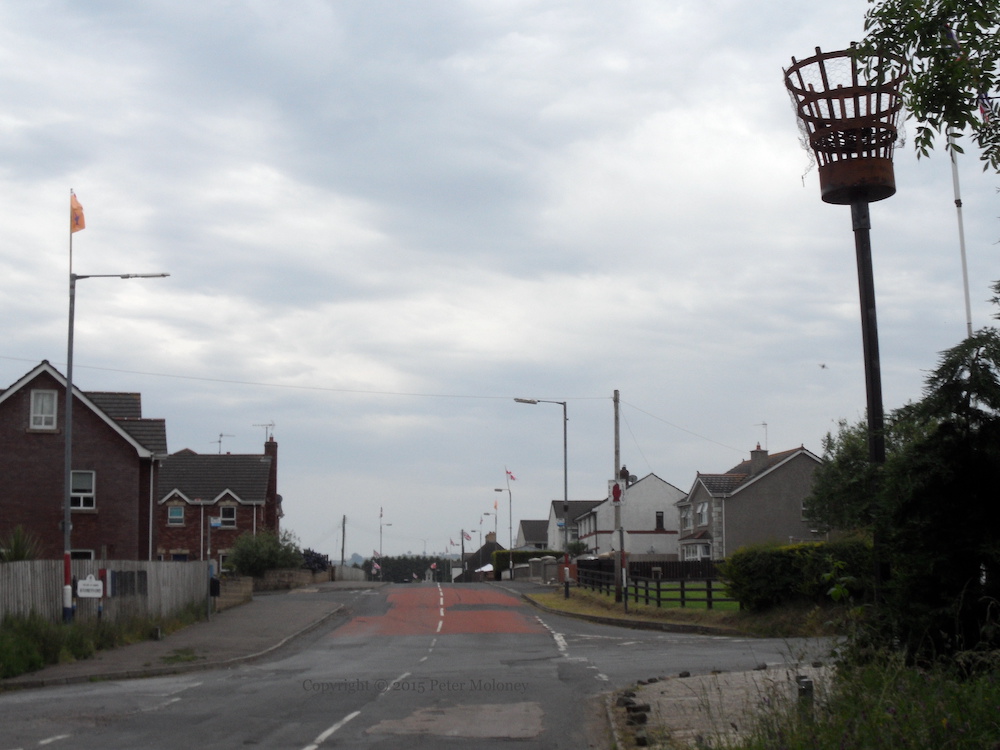
Here is a gallery of images from the village of Stoneyford, ten miles north of Lisburn. The view in the final image is from the cross-roads at north end of the village, with the brazier next to the WWI memorial visible on the right, and the nameplate on the fence on the left. The Orange Hall is in the middle of the village. The village was a centre for the small anti-Agreement organisation the “Orange Volunteers” (WP).