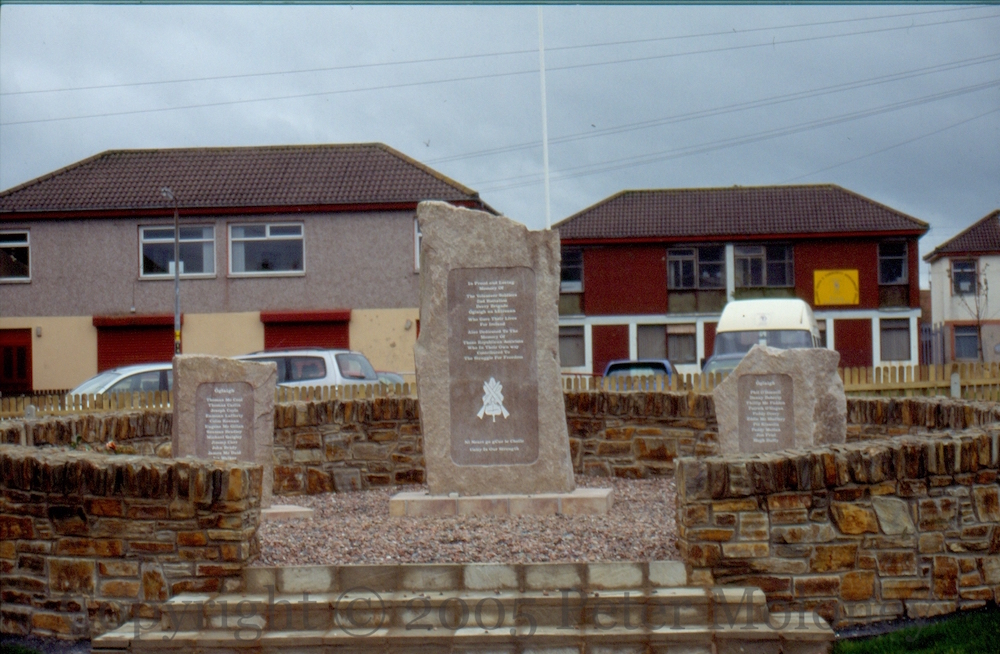
“There is no strength without unity”. “In proud and loving memory of the volunteer soldiers 2nd Battalion Derry Brigade Óglaıgh Na hÉıreann who gave their lives for Ireland. Also dedicated to the memory of those republican activists who in their own way contributed to the struggle for freedom.”
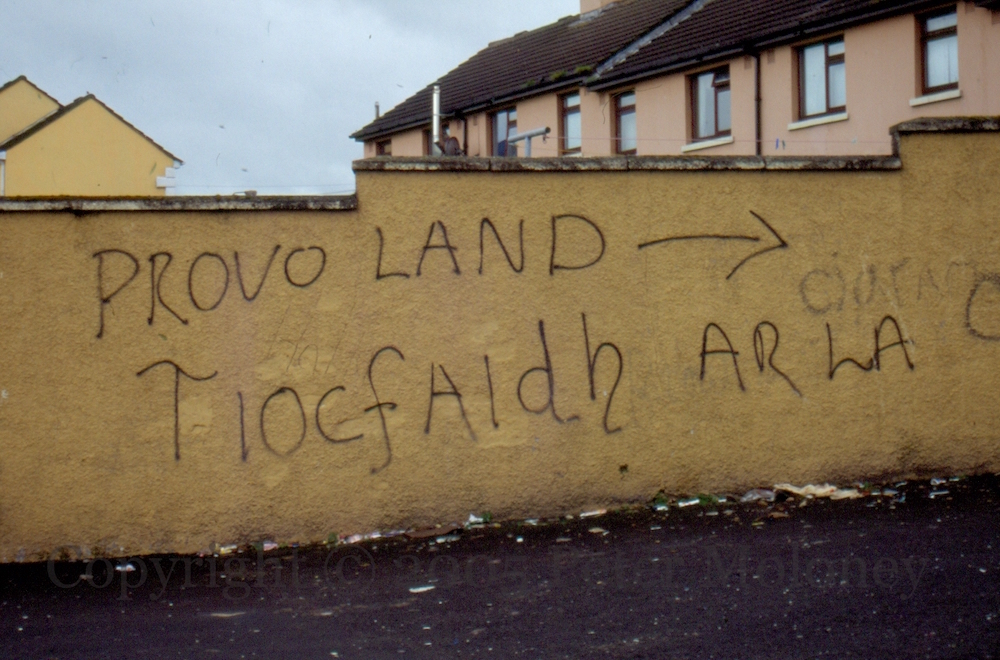
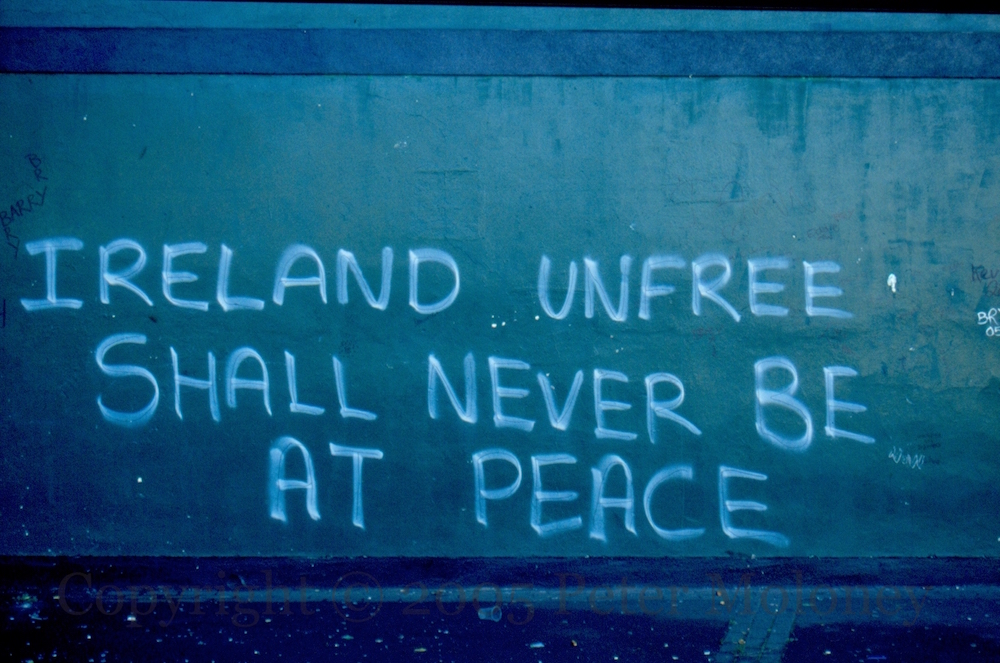
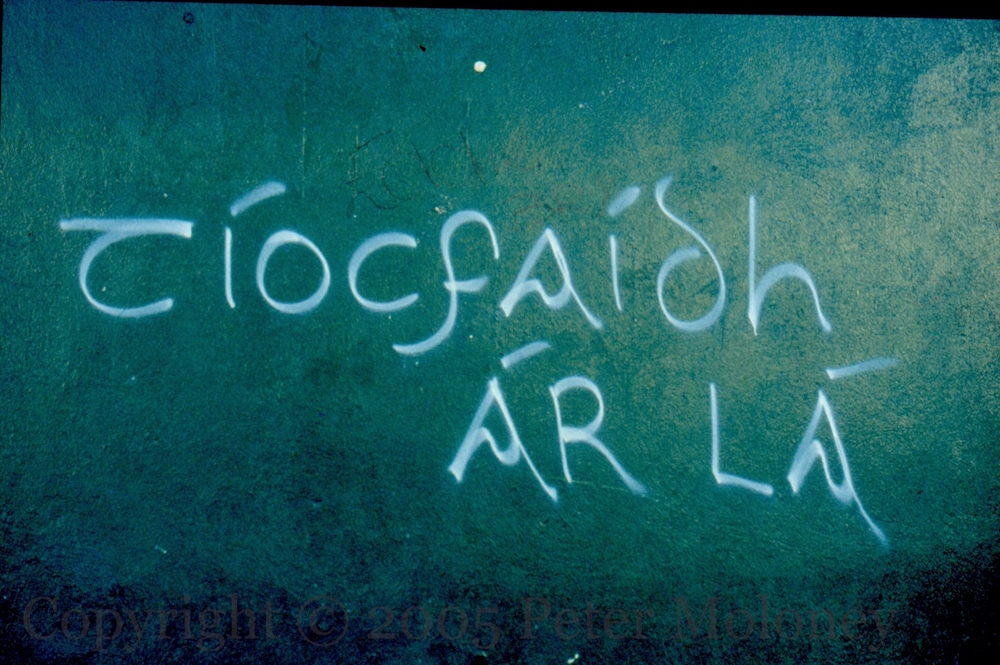
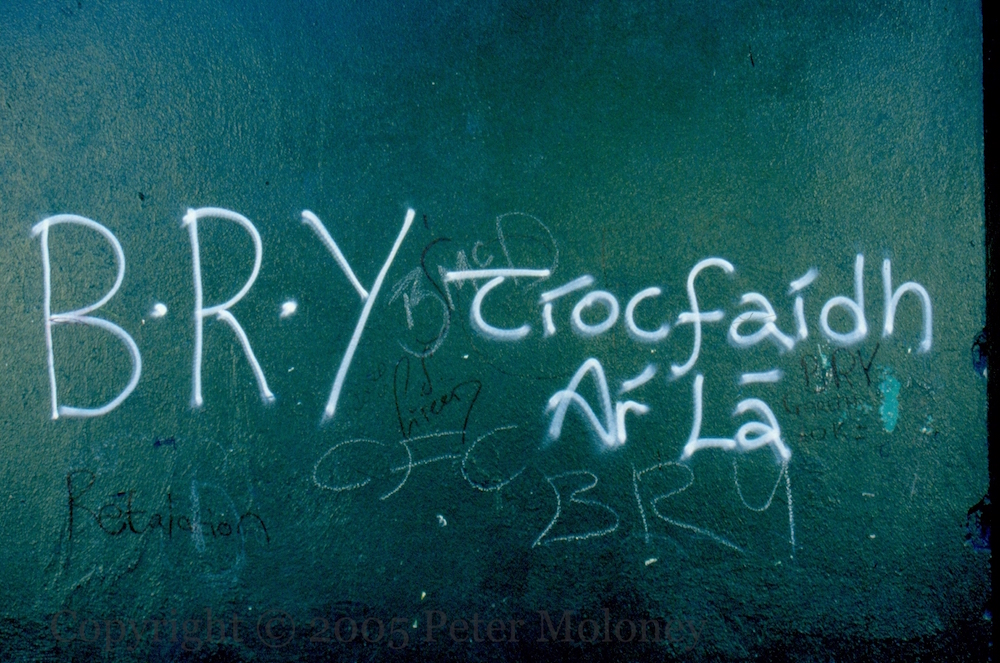
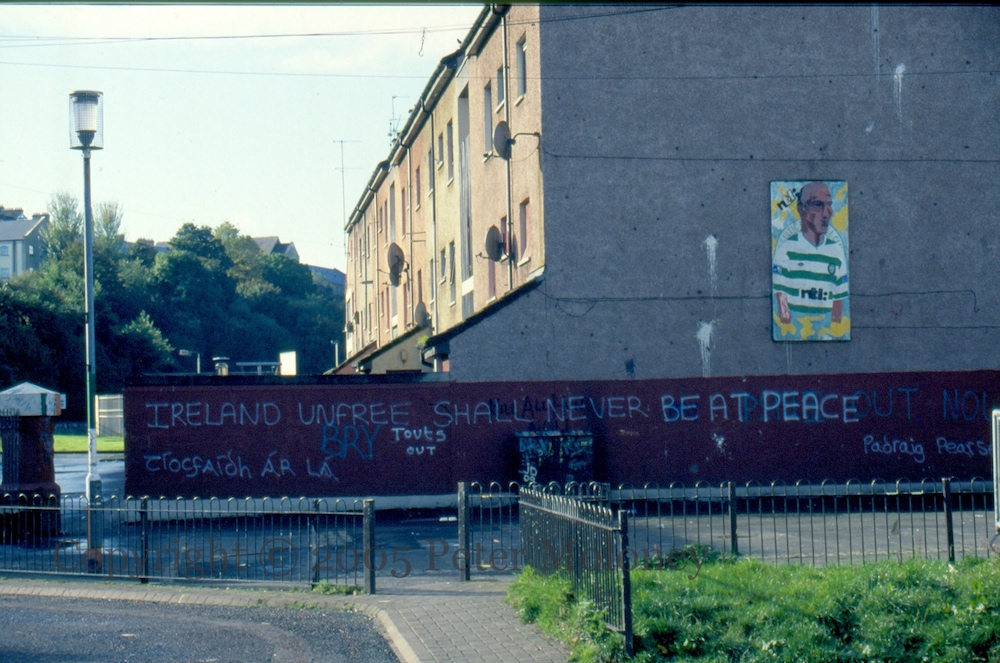
A variety of graffiti in Dove Gardens, Derry, below a Henrik Larsson board: Pearse’s ‘Ireland unfree’, “Tıocfaıdh ár lá”, and “touts out”. The previous 2002 graffiti.
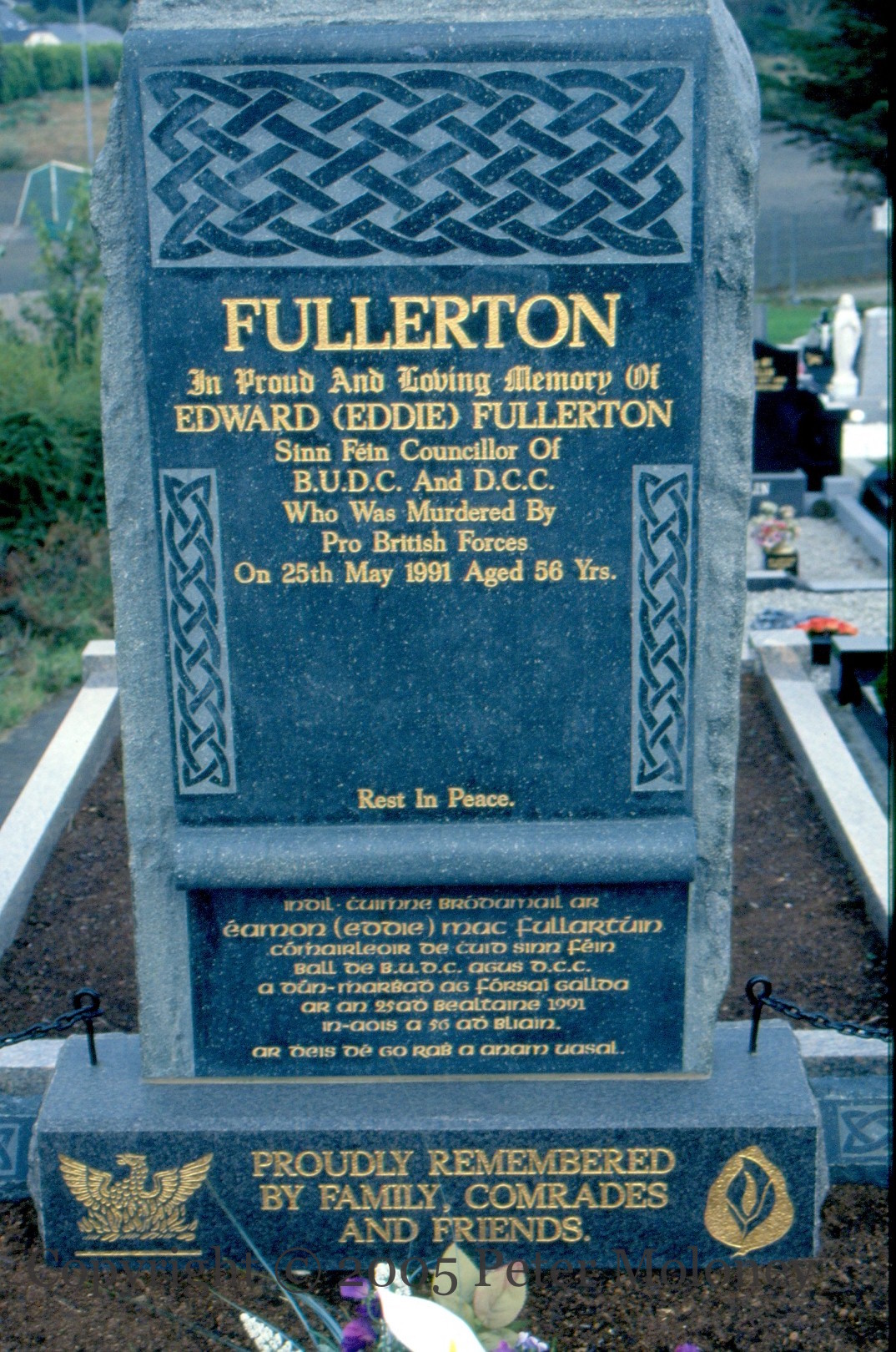
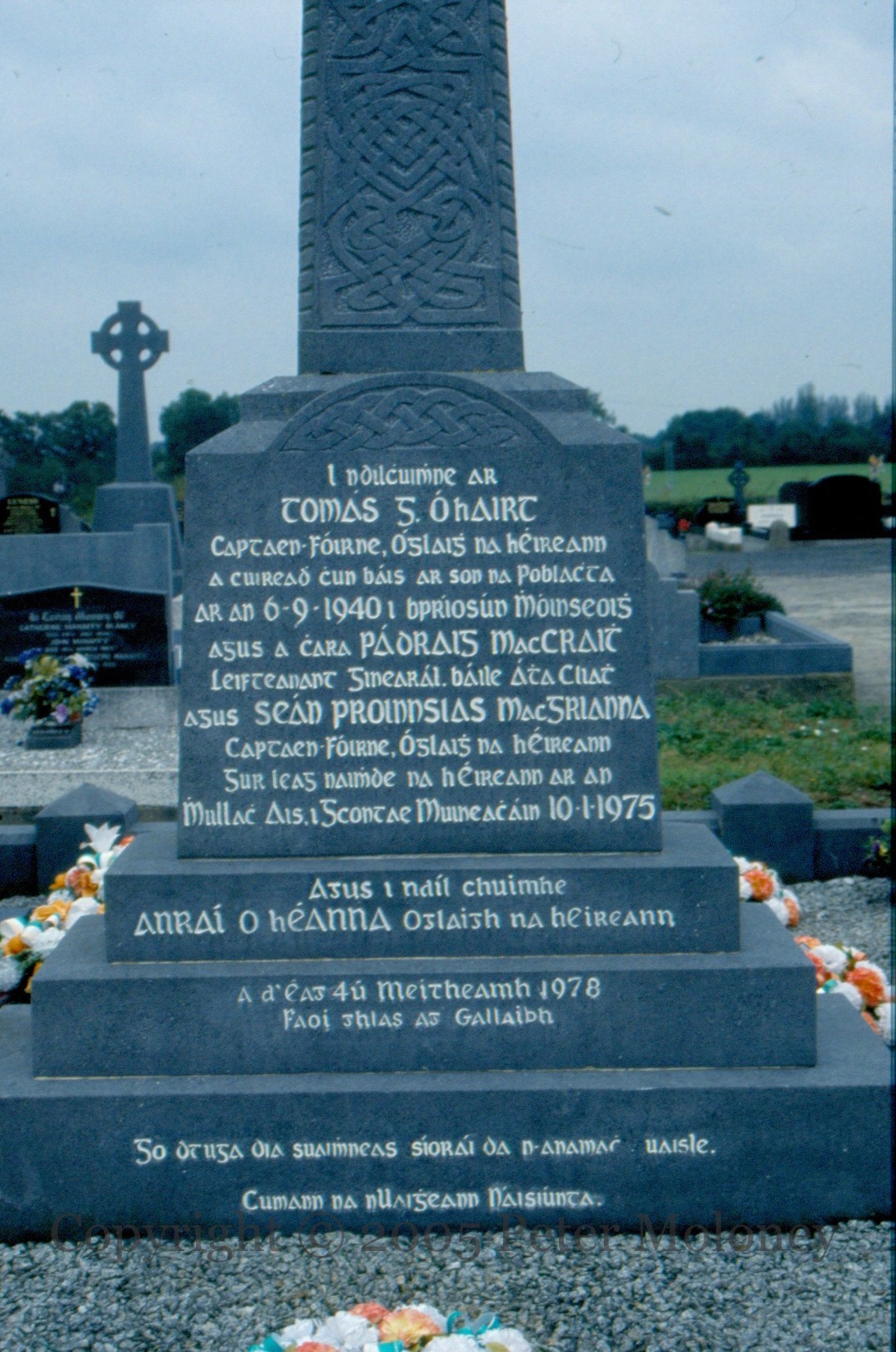
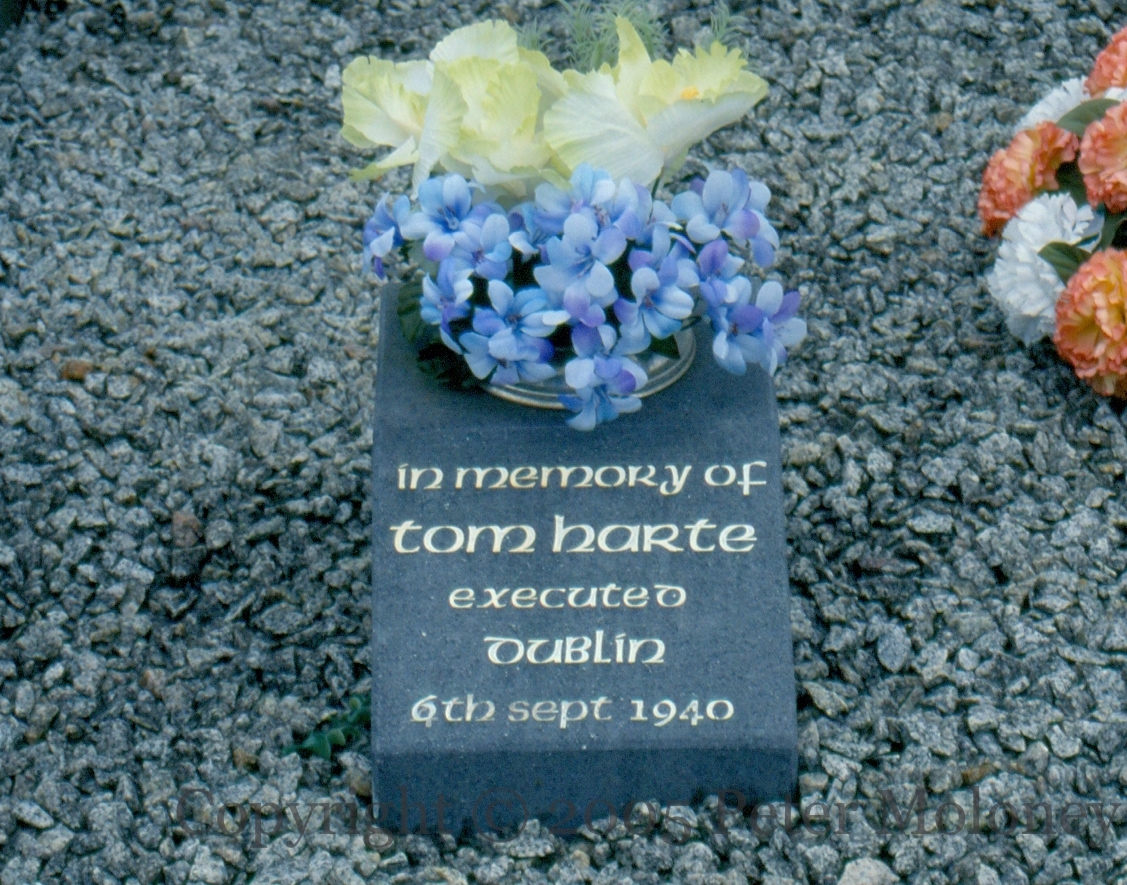
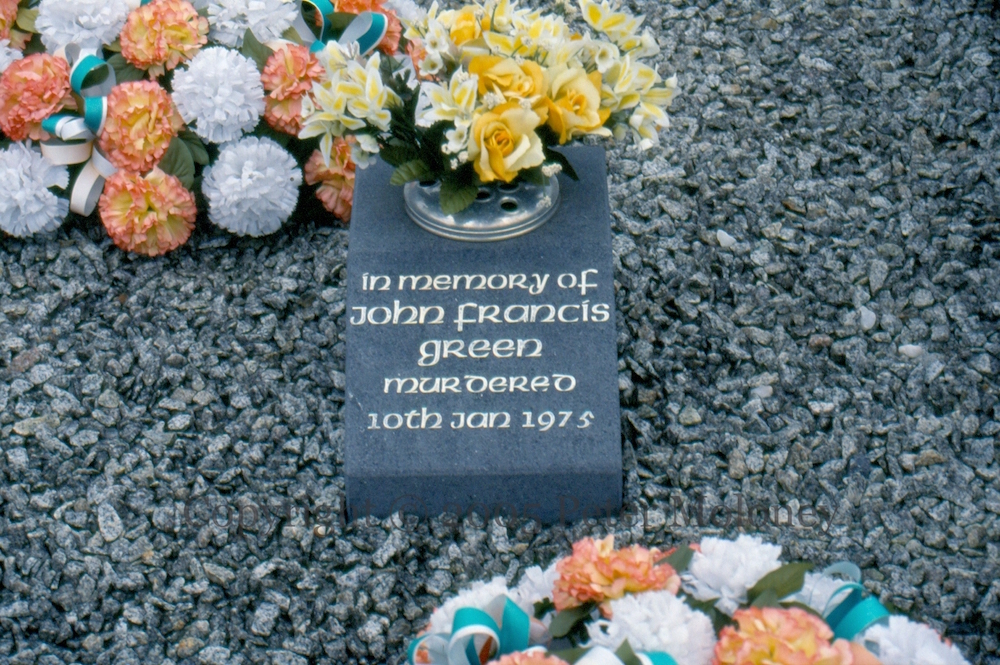
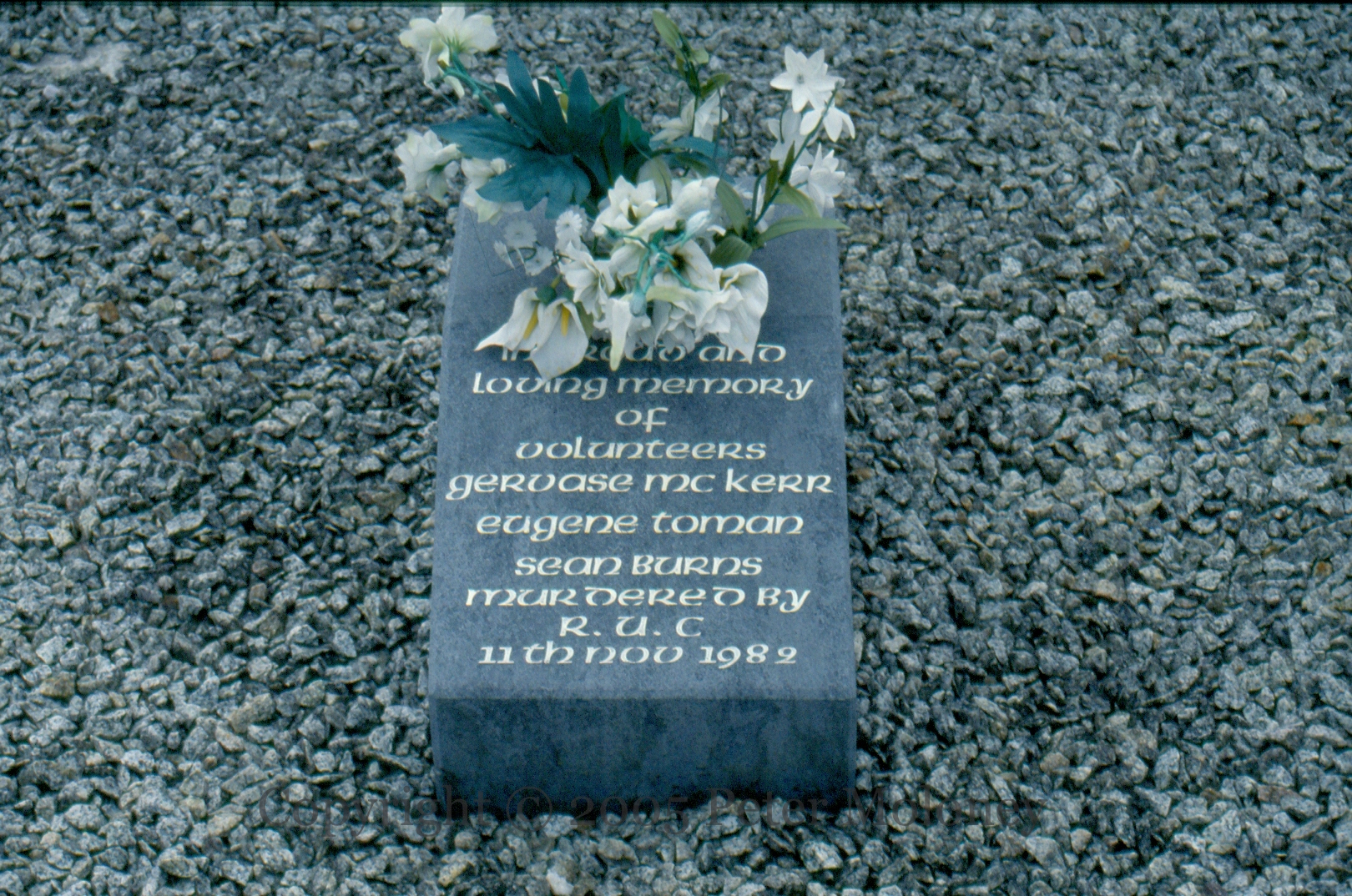
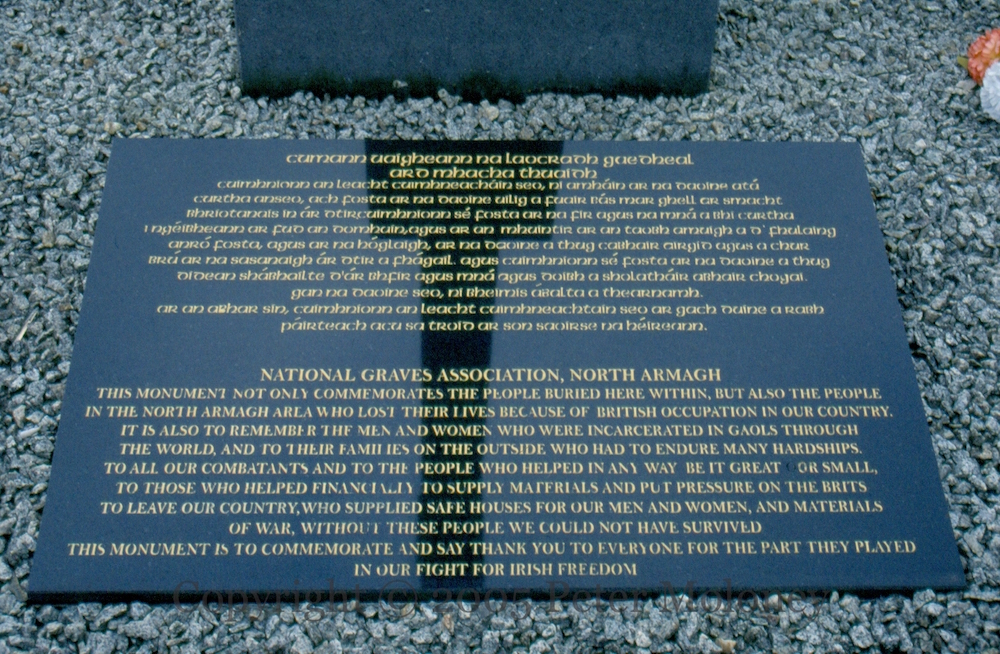
These plaques and headstones are from St Colman’s cemetery in Lurgan (on N. Circular Road). The most notable and the first and last: Thomas Harte and Paddy McGrath (a 1916 Rising participant) who were executed by De Valera in 1940 for the deaths of two (Irish) Special Branch officers who were among a party that stormed their house, though it was never established whose bullets had killed the pair (more at Treason Felony).
The car in which McKerr, Toman, and Burns were travelling was shot 109 times by a specially trained RUC squad (Headquarters Mobile Support Unit – HMSU), under the control of (UK) special branch in an apparent shoot-to-kill operation.
“Cur stad le cıníochas” [“put an end to racism”] – This WARN (West Against Racism Network) mural puts anti-Irish sentiment (in London 1966 – “No blacks, no dogs, no Irish“) in parallel with racism against modern-day immigrants to Belfast.
Wolfe Tone is buried in Bodenstown graveyard, Co Kildare, and every year republicans make a pilgrimage there to commemorate his role in the United Irishmen’s 1798 Rebellion and the beginning of Irish nationalism. In 1972, the address was given by Máıre Drumm, vice-president of Sınn Féın, a position she held until she was assassinated in the Mater Hospital by the Red Hand Commando in October 1976.
“Ní síocháın gan saoırse … thinker and doer, dreamer of the immortal dram and doer of the immortal deed. We owe to this dead man more than we can ever repay him. To his teaching we owe it that there is such a thing as Irish nationalism. And to the memory of the deed he nerved his generation to do. To the memory of 1798 we owe it that there is any manhood left in Ireland …”



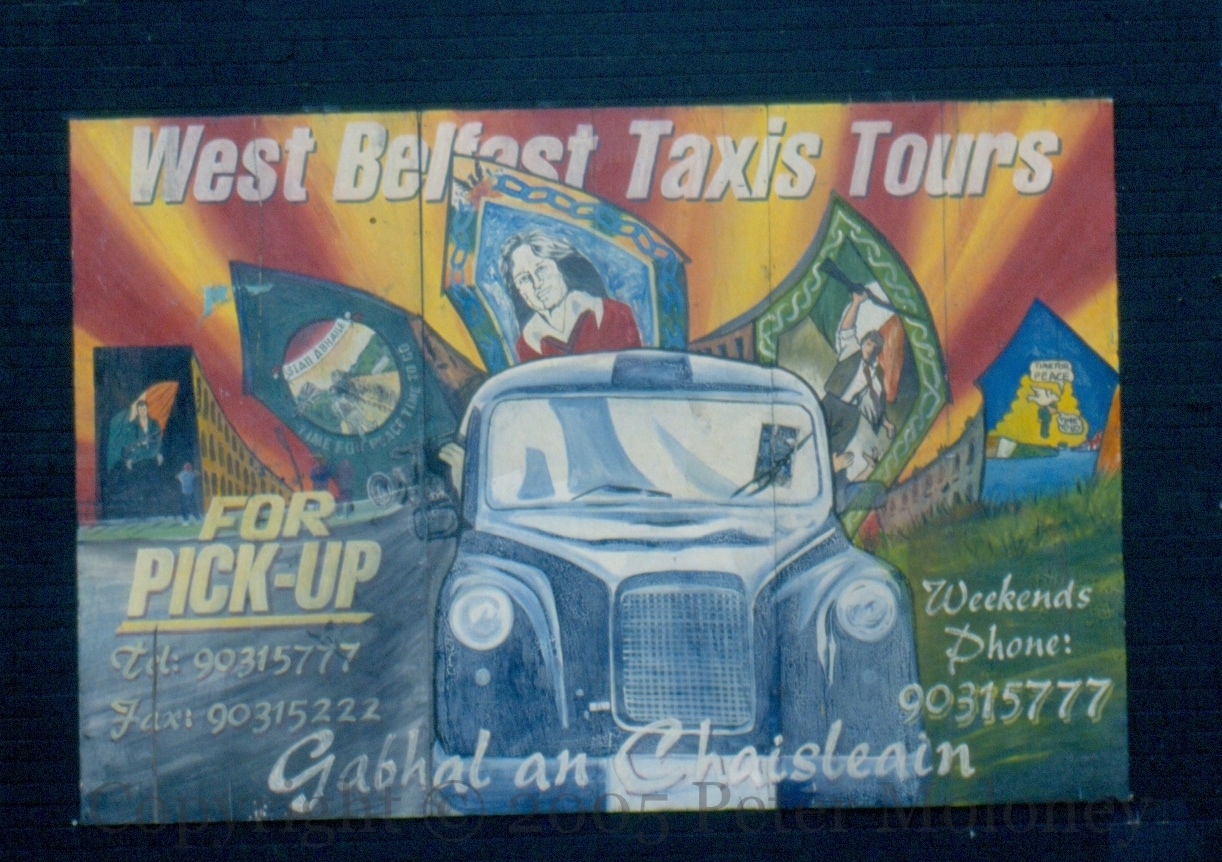
 Peter Moloney Collection