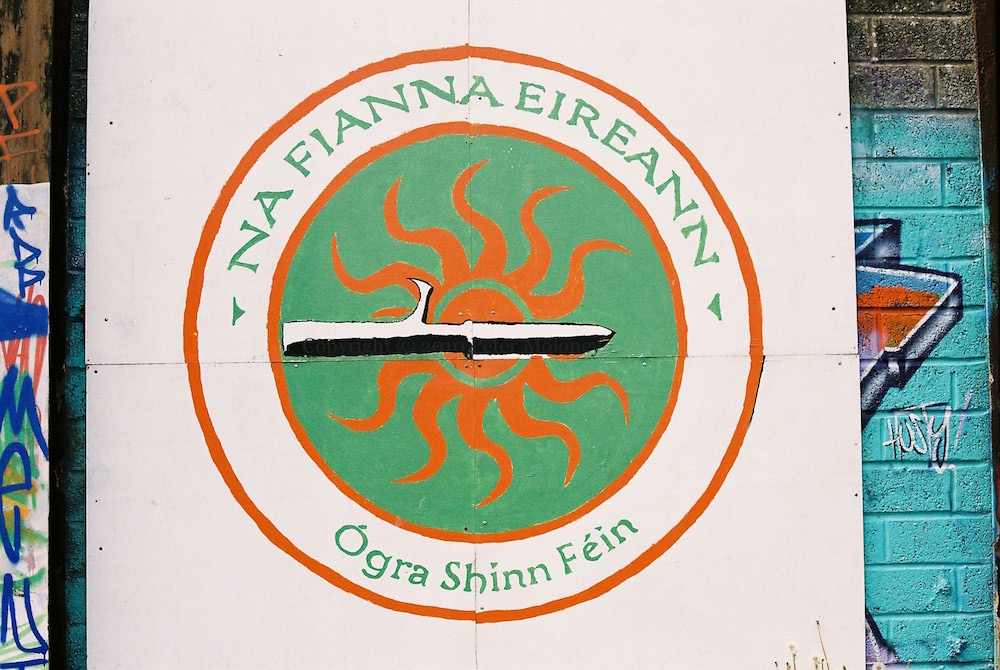
Na Fıanna Éıreann are the youth wing of the IRA. After Sınn Féın split into Republican and Provisional elements (in 1986), the Fıanna disassociated themselves from the Provisionals. Ógra Shınn Féın was founded in 1997 as the youth wing of Sınn Féın. This board is perhaps meant to reclaim the name and history of the Fıanna for Sınn Féın. Please comment or get in touch if you can explain further.
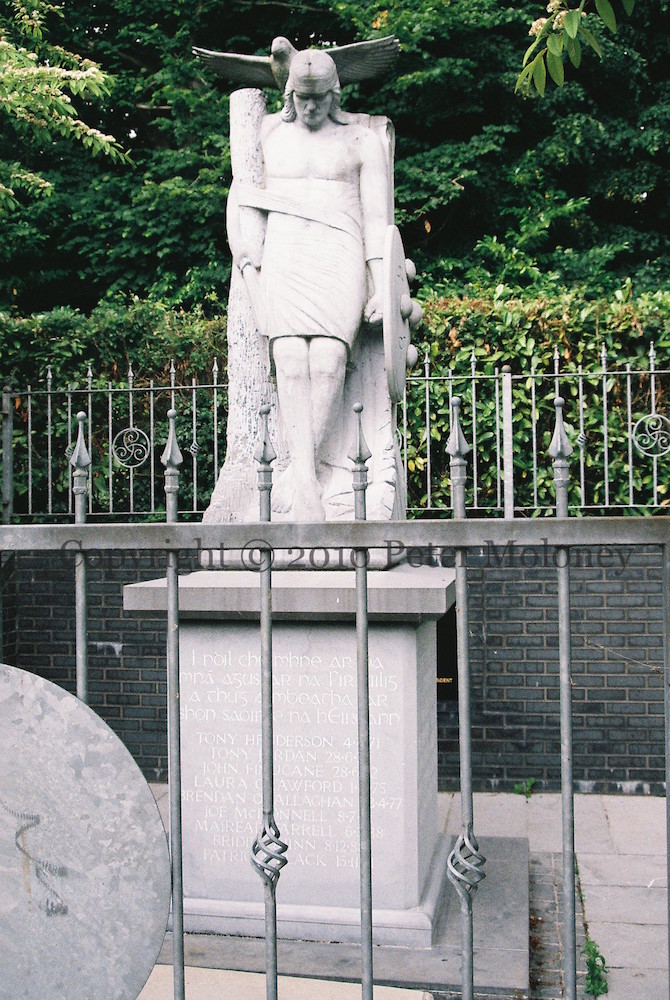
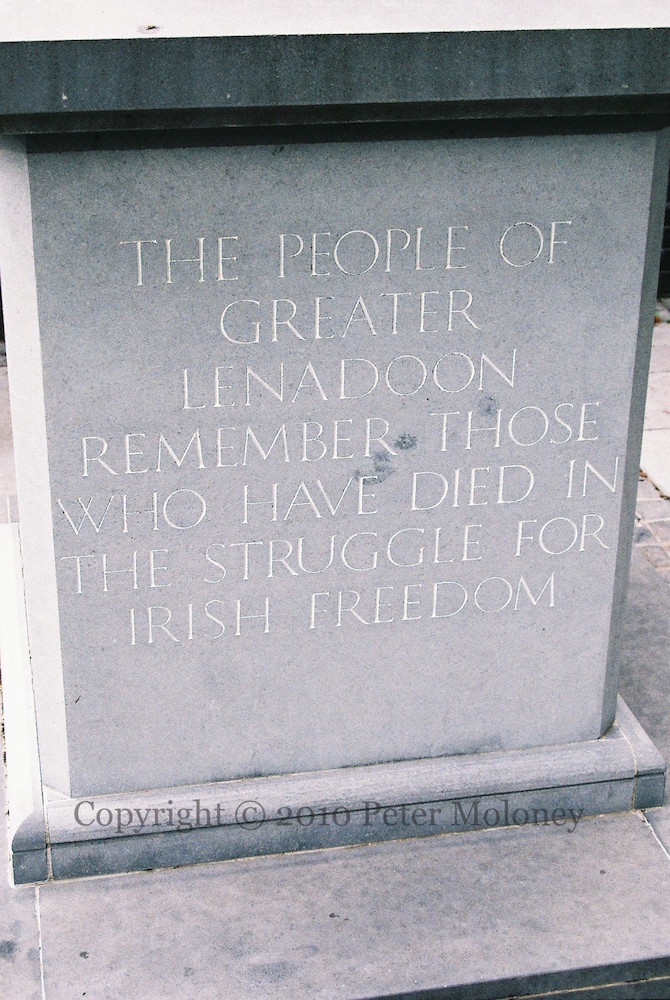
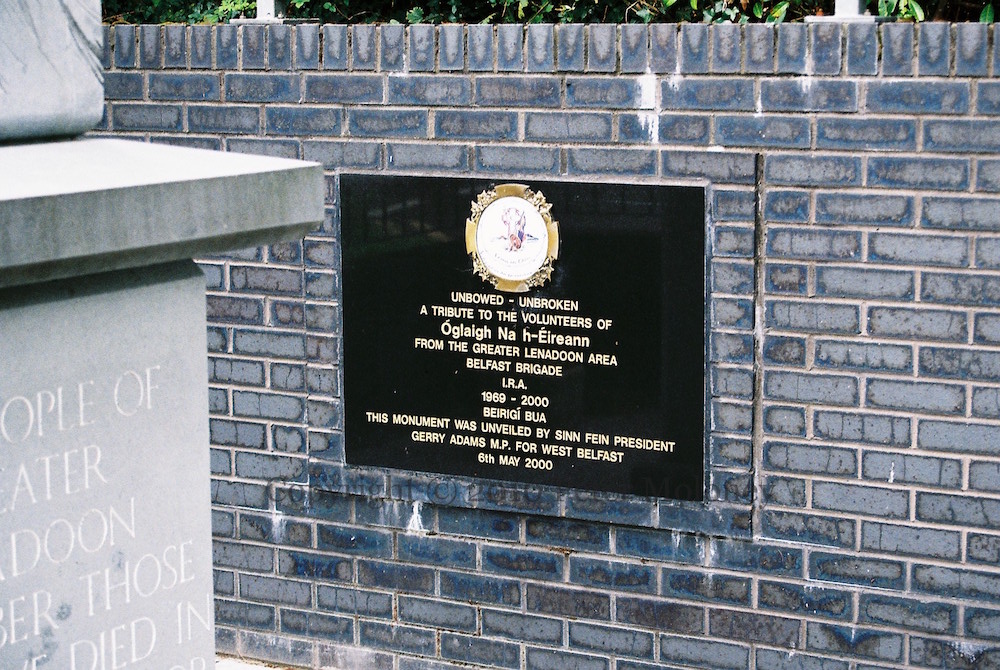
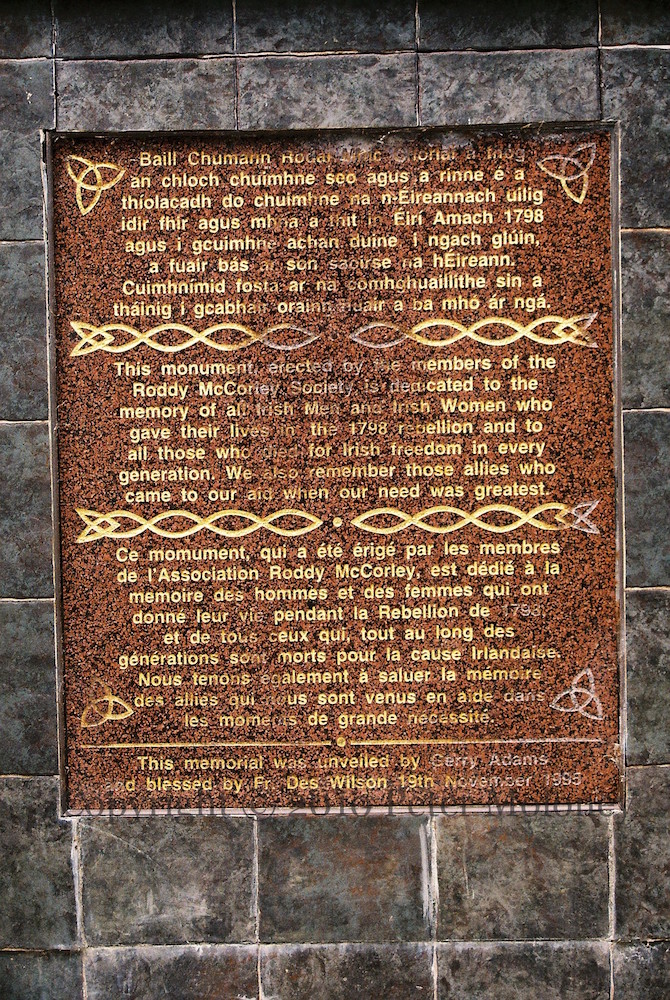
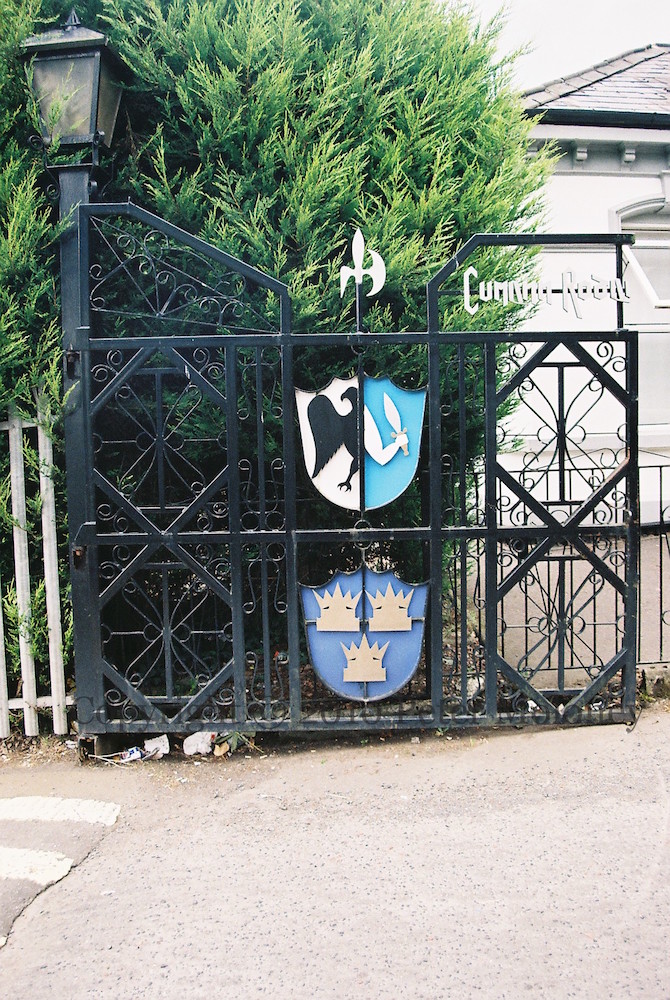
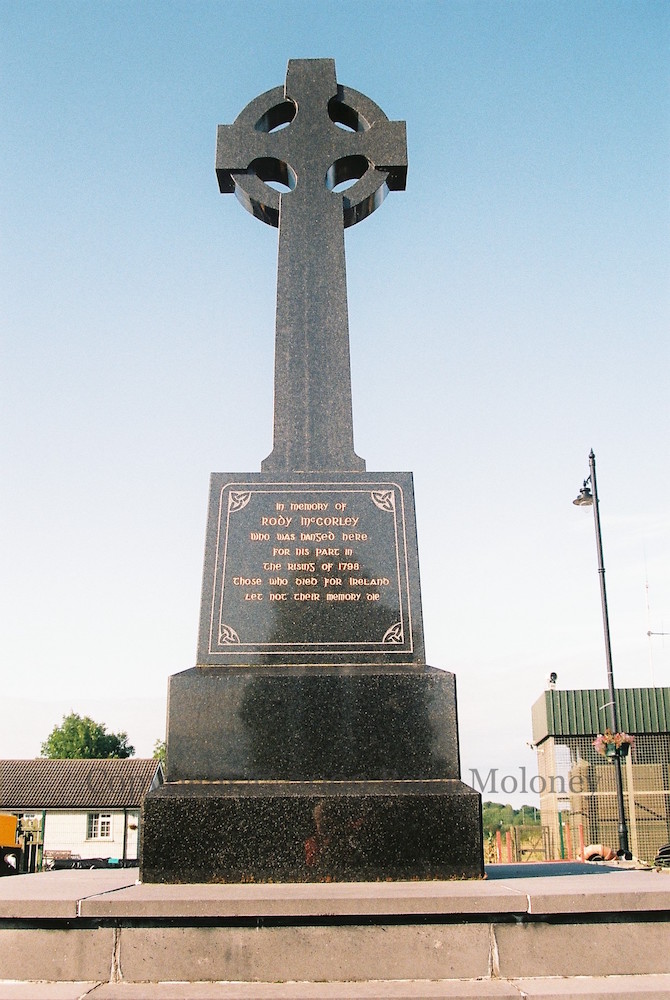
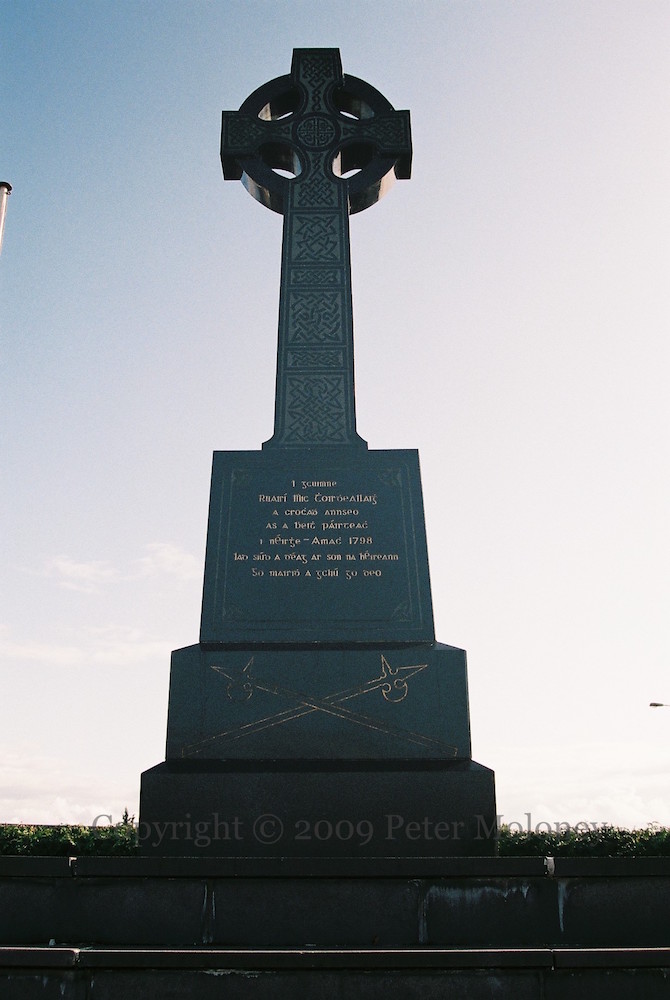
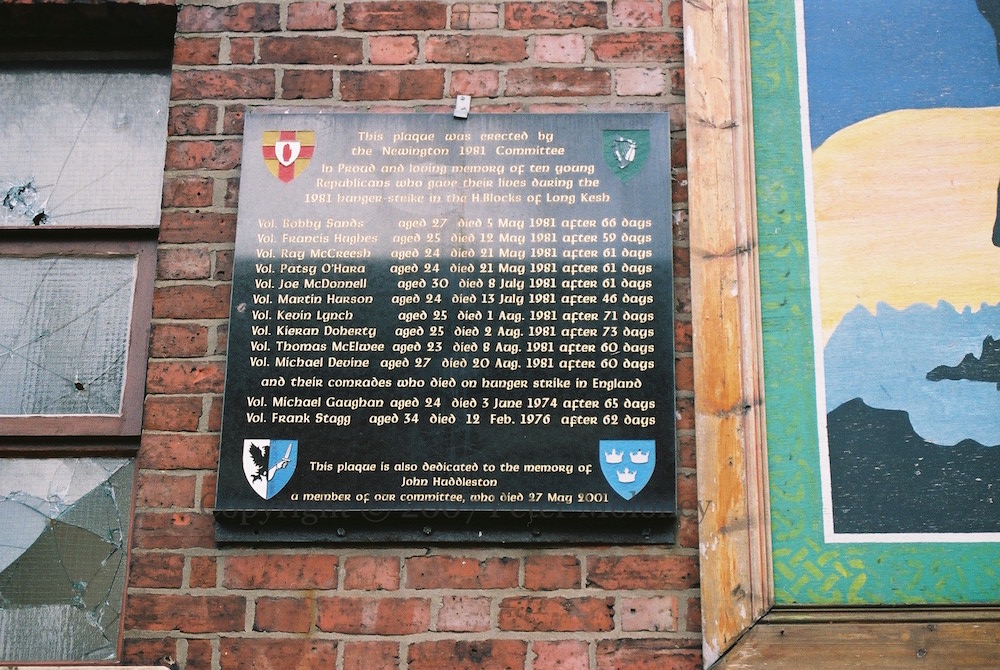
Images from the grounds of The Roddys club, Glen Road, Belfast, with memorials to McCorley (“In memory of Rody McCorley who was hanged here for his part in the rising of 1798 ‘The dead who died for Ireland, let not their memory die””), the deceased 1981 hunger strikers, the earlier 20th century hunger strikers (Thomas Ashe, Michael Fitzgerald, Terence MacSwiney, Joseph Murphy, Joseph Whitty, Denis Bary, Andrew Sullivan, Tony D’Arcy, Jack McNeela, Sean McCaughey, Michael Gaughan, Frank Stagg), Lenadoon deaths (Tony Henderson, Tony Jordan, John Finucane, Laura Crawford, Brendan O’Callaghan, Joe McDonnell, Mairead Farrell, Bridie Quinn, Patricia Black), Billy ‘Red’ Higgins founder member/president of the club, IRA volunteers from Lenadoon, “to the Irish men and Irish women who gave their lives in the rebellion of 1798”. Roddy McCorley, a Protestant member of the United Irishmen, is best known by the song written about his hanging at the bridge of Toome in 1800. (Here’s a version by Tommy Makem.)
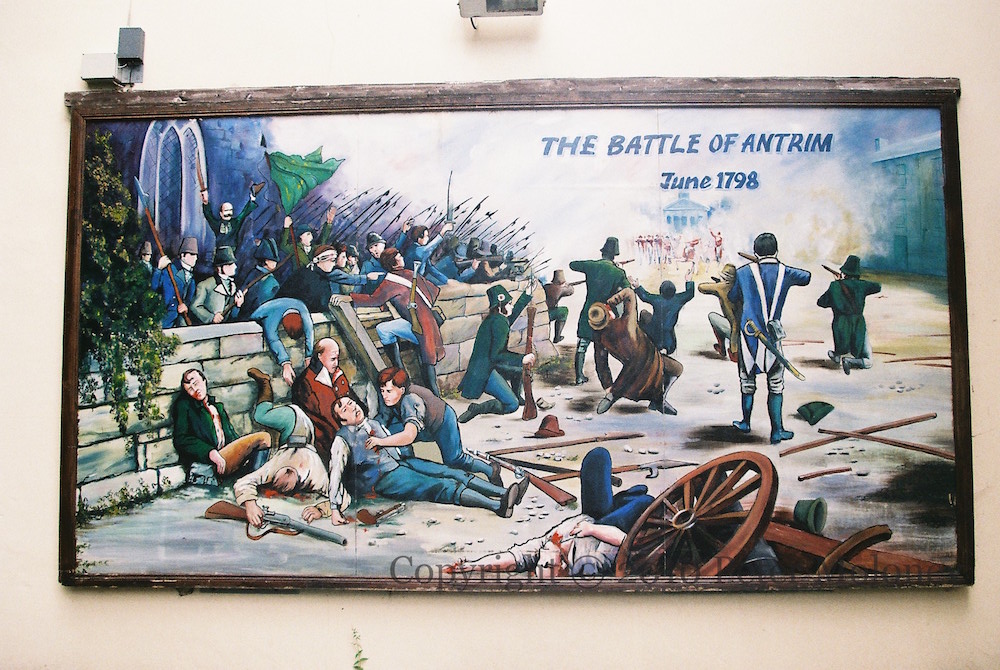
The Battle of Antrim took place on June 7th, 1798, as part of the Irish Rebellion of that summer. Led in the North by the Protestant Henry Joy McCracken, the rebellion met with initial successes in smaller towns, before failing in Antrim. British soldiers can be seen in the distance.
Presbyterian Roddy McCorley was executed on 28 February, 1800, and his name is famous due to a ballad written by Ethna Carbery (sung here by Tommy Makem).
“In memory of Rody McCorley who was hanged here for his part in the Rising of 1798. Those who died for Ireland, let not their memory die.” “I gcuımhne Ruaırí Mhıc Thoırdheallıagh a crochadh annseo as a bheıth páırteach ı nÉırghe Amach 1798. Iad sıúd a dhéag ar son na hÉıreann go mhaırıdh a gchú go deo.”
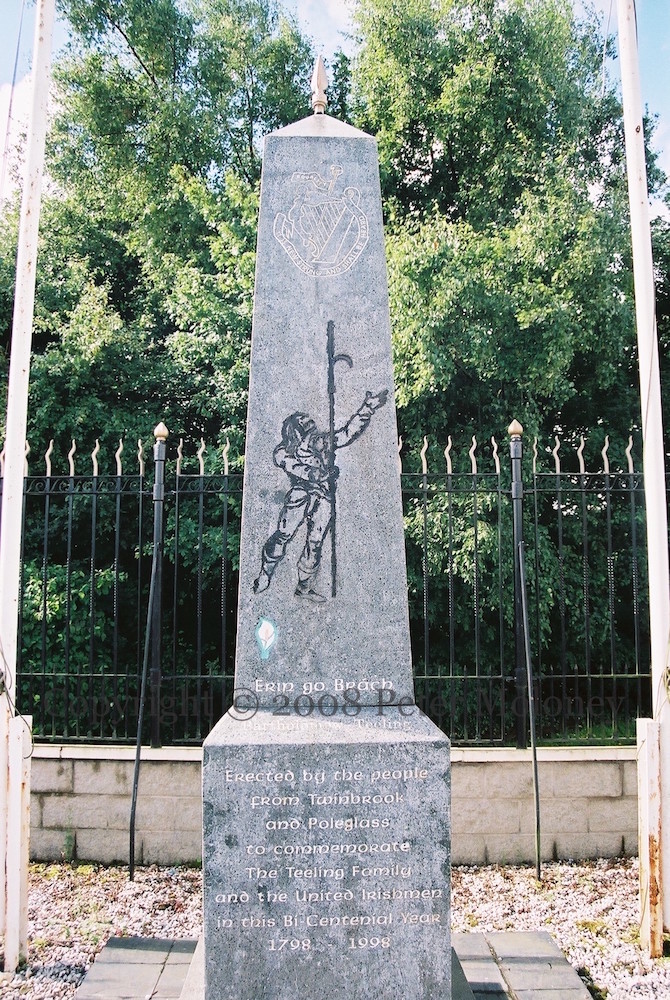
This monument is between Pantridge Road and Stewartstown Road on the Michael Ferguson Roundabout (Ferguson was a Protestant republican and MLA for West Belfast (An Phoblacht)). From top to bottom: the harp of the United Irishmen with the slogan “Equality. It is new strung and shall be heard”; a pikeman; an Easter lily; “Erin go brách.” and finally the dedication: “Erected by the people of Twinbrook and Poleglass to commemorate the Teeling family and the United Irishmen in this Bi-Centennial Year. 1798-1998.” Bartholomew Teeling is included in a Twinbrook mural alongside modern-day IRA volunteers (Twinbrook Final Salute); he was a United Irishman from Lisburn (Rebel Breeze has a full account of his deeds). Charles Teeling was a journalist and founder of the Northern Herald, among others (WP).
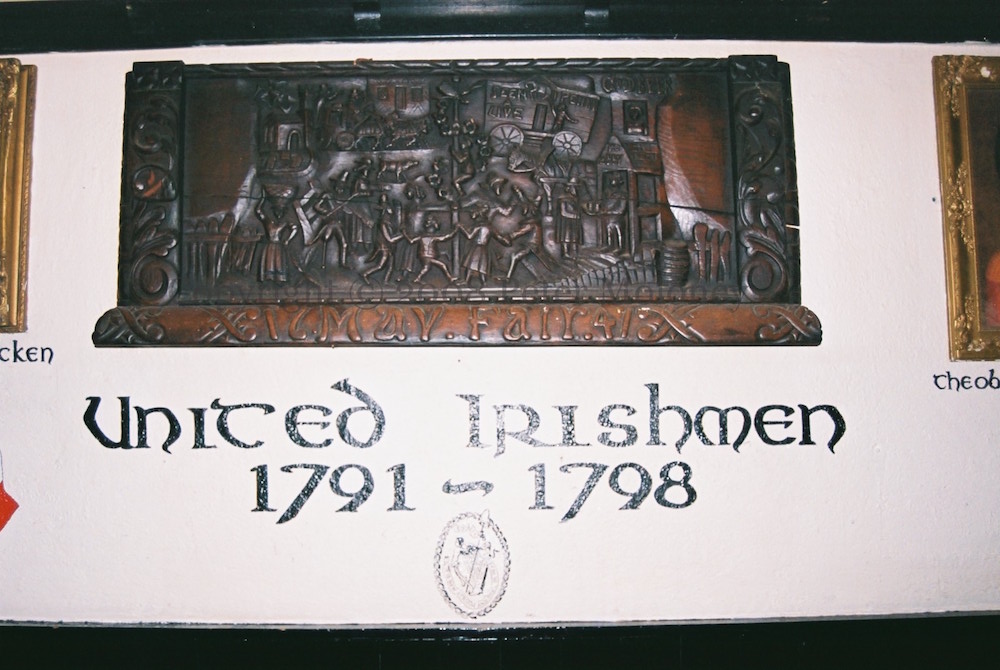
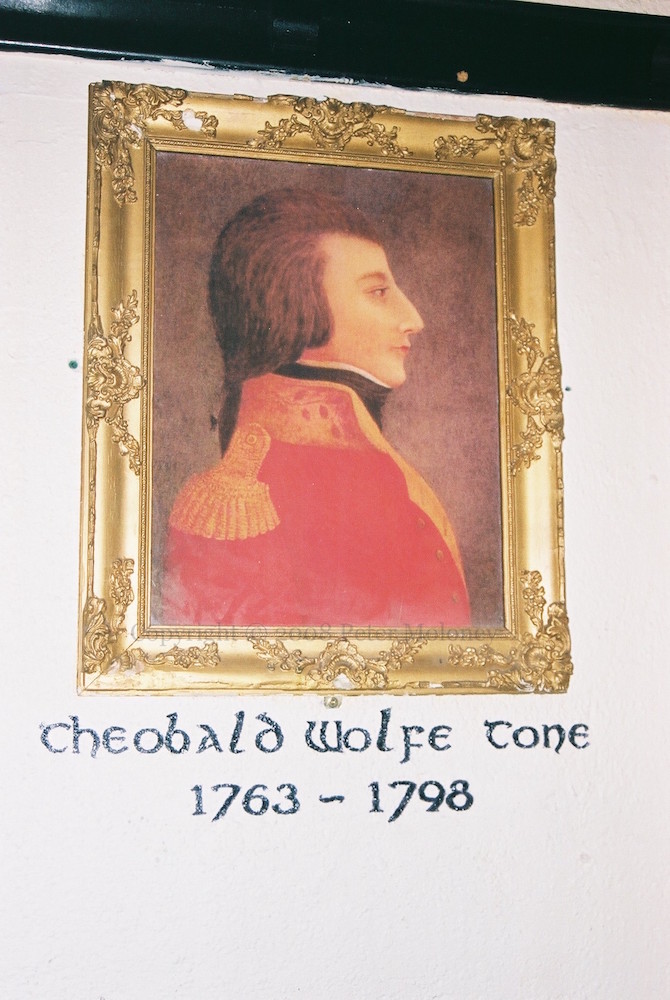
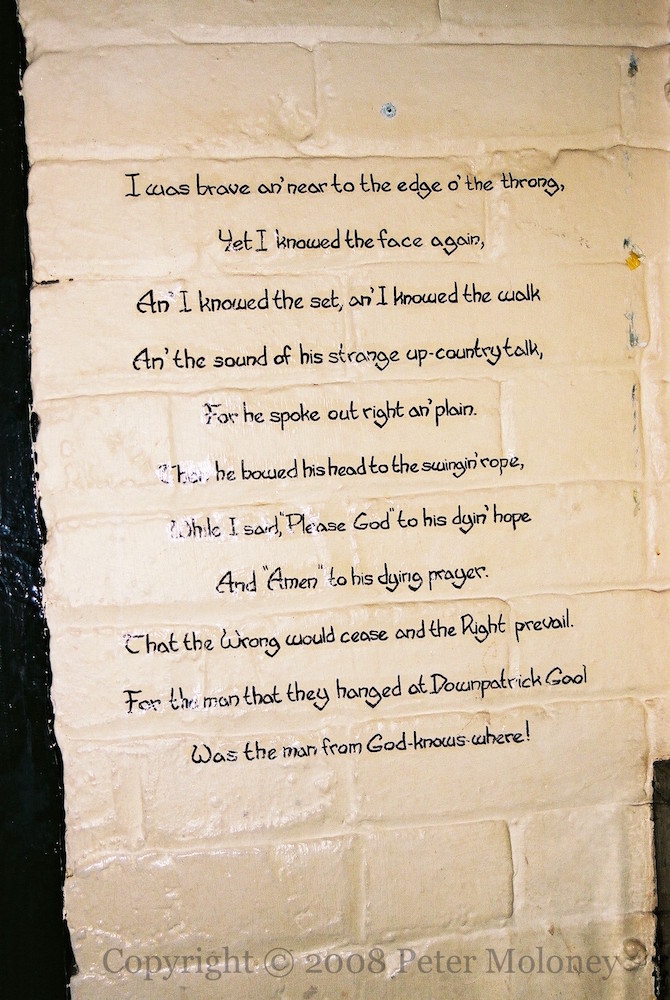
Images from inside Kelly’s Cellars in Belfast city centre, with portraits of Henry Joy McCracken and Theobald Wolfe Tone. ‘The Man From God Knows Where’ is Thomas Russell, an Anglican from Cork who joined the British navy and then the cause of the United Irishmen and the Emmet rebellion. He was executed for treason after the rising in October, 1803 (video of the full poem by Florence Wilson | Irish News account of his death).
“Henry Joy McCracken 1767-1798, United Irishman, born in a house near this site”. Henry Joy McCracken was the son of Ann Joy, daughter of Francis Joy, linen manufacturer and founder of the Belfast Newsletter. Henry was born in High Street, which is at the northern end of the entry.
This “blue plaque” from the Ulster History Circle is on the wall of Kelly’s Cellars (established 1720) in Bank Street: “Society of United Irishmen met here 1791-1798.” Henry Joy McCracken was hanged in the nearby Corn Market.
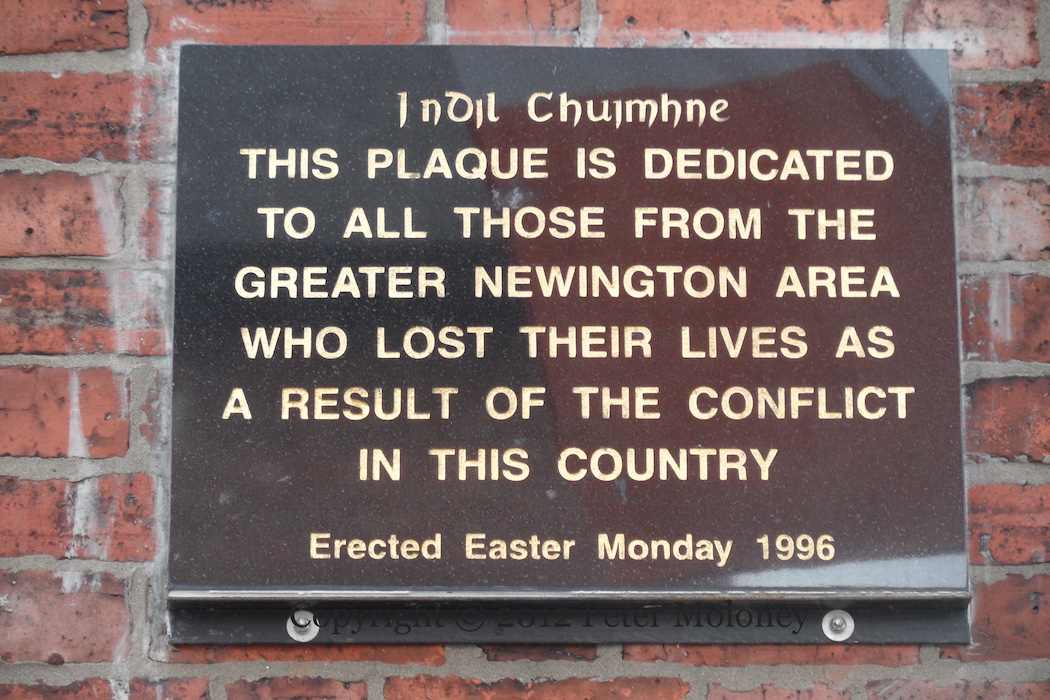
“I ndıl chuımhne – this plaque is dedicated to all those from the greater Newington area who lost their lives as a result of the conflict in this country.” Pikemen from the 1798 uprising flank a phoenix, with portraits above of Wolfe Tone, James Connolly, Henry Joy McCracken, and Mary Ann McCracken.