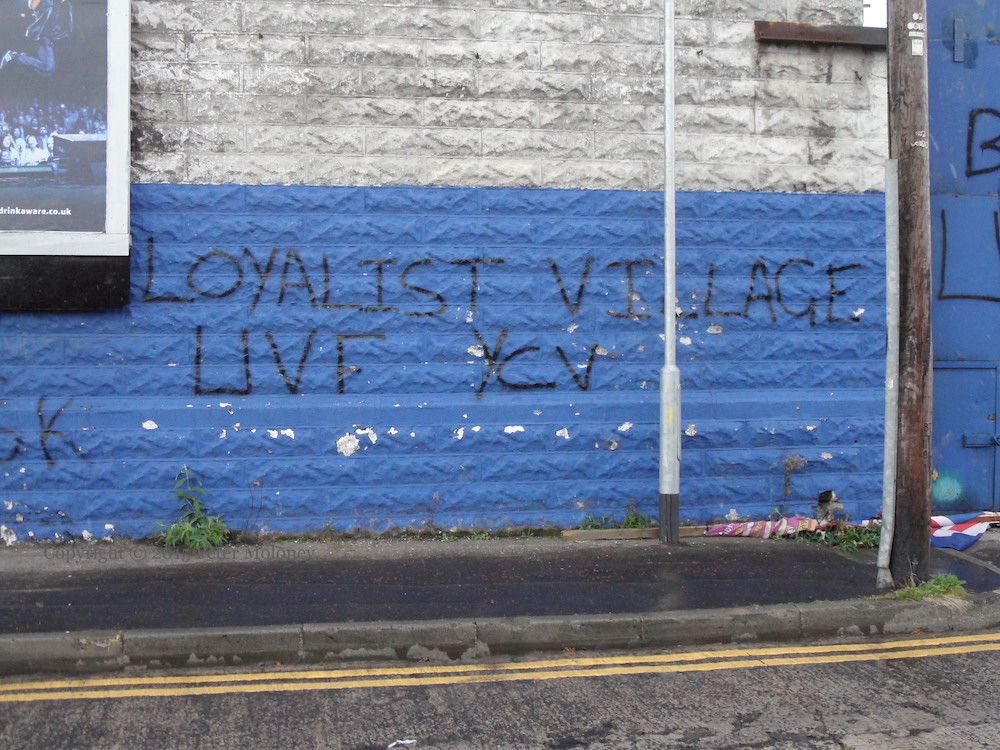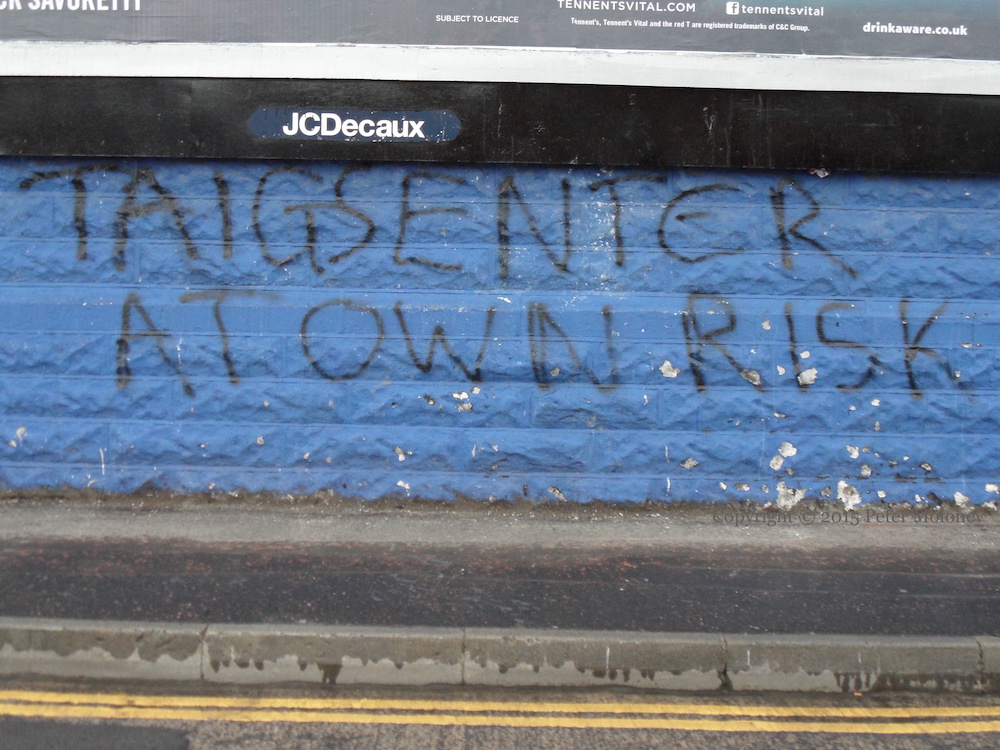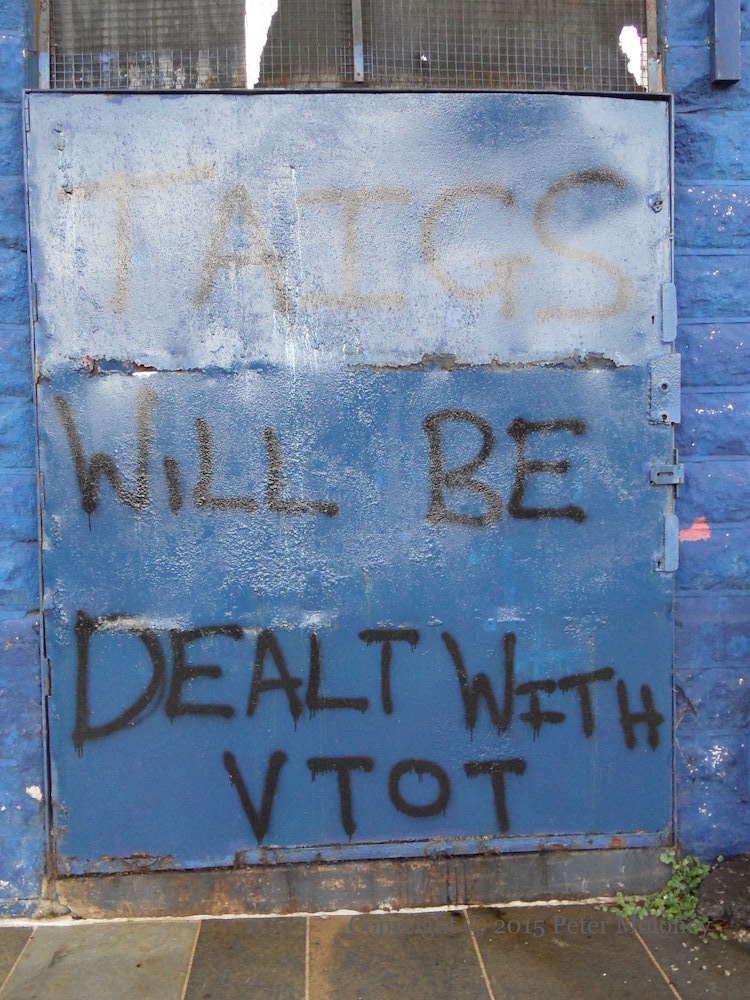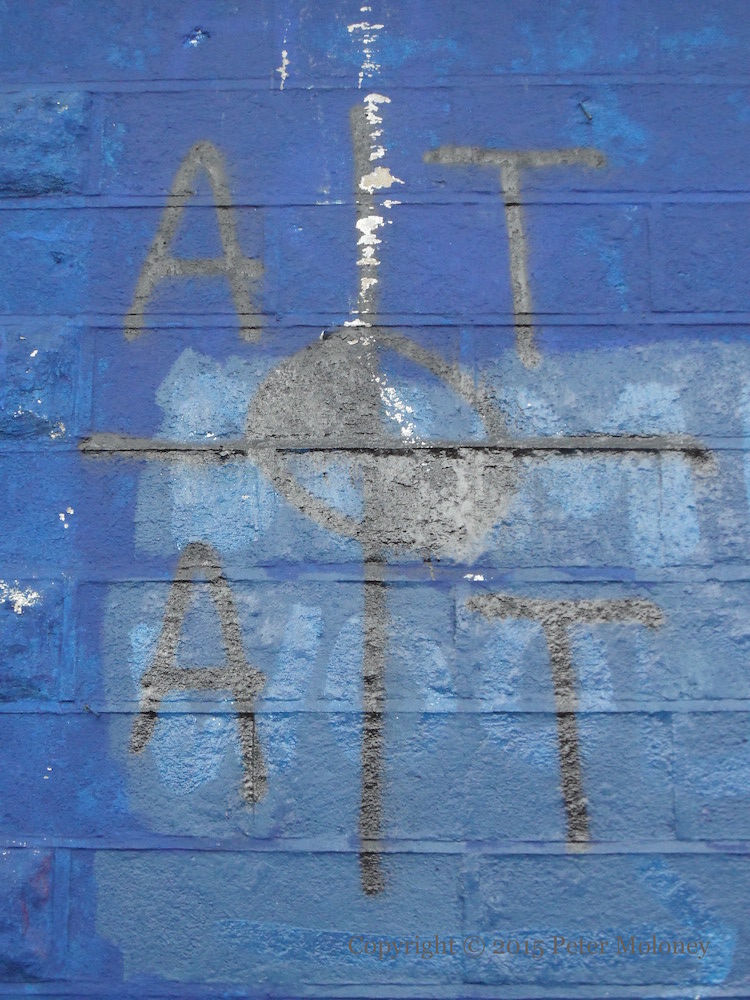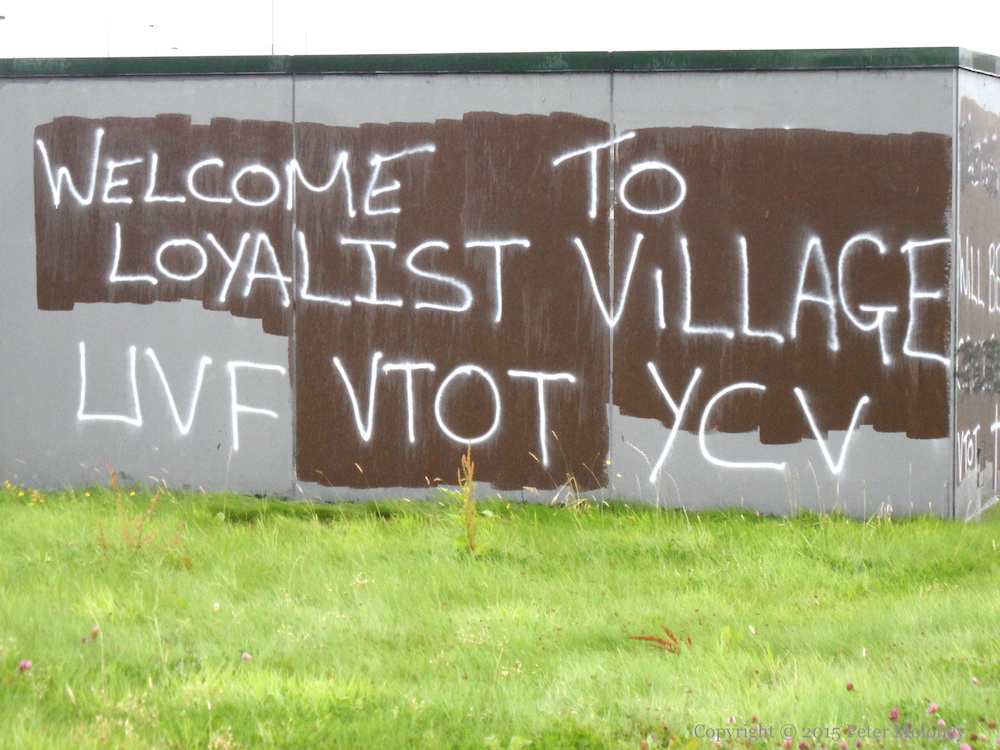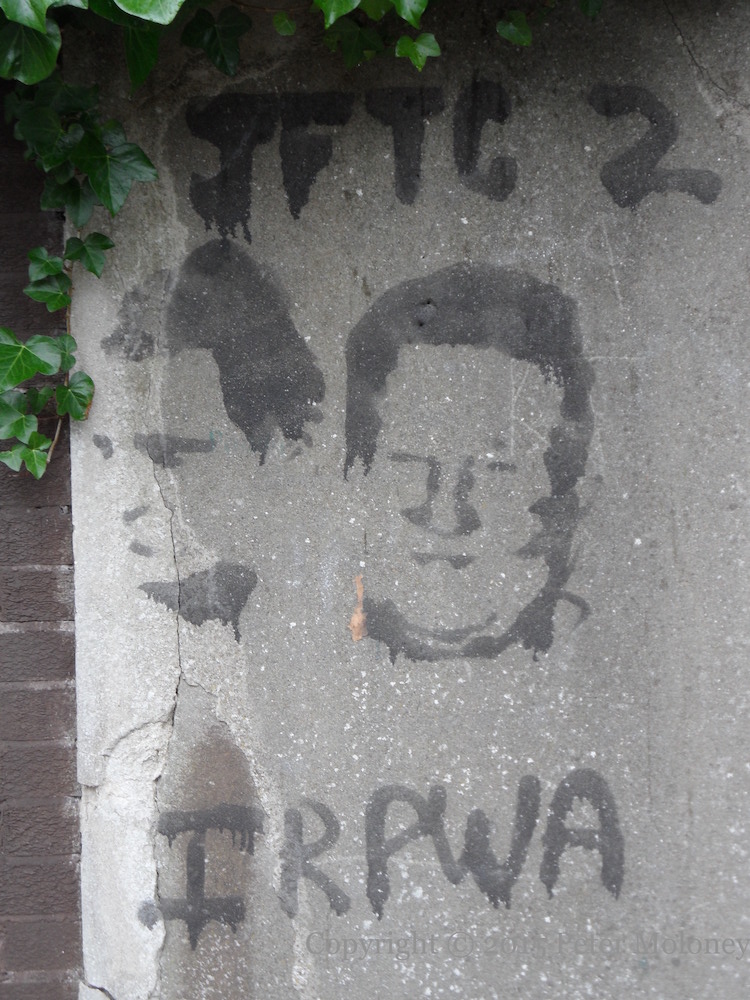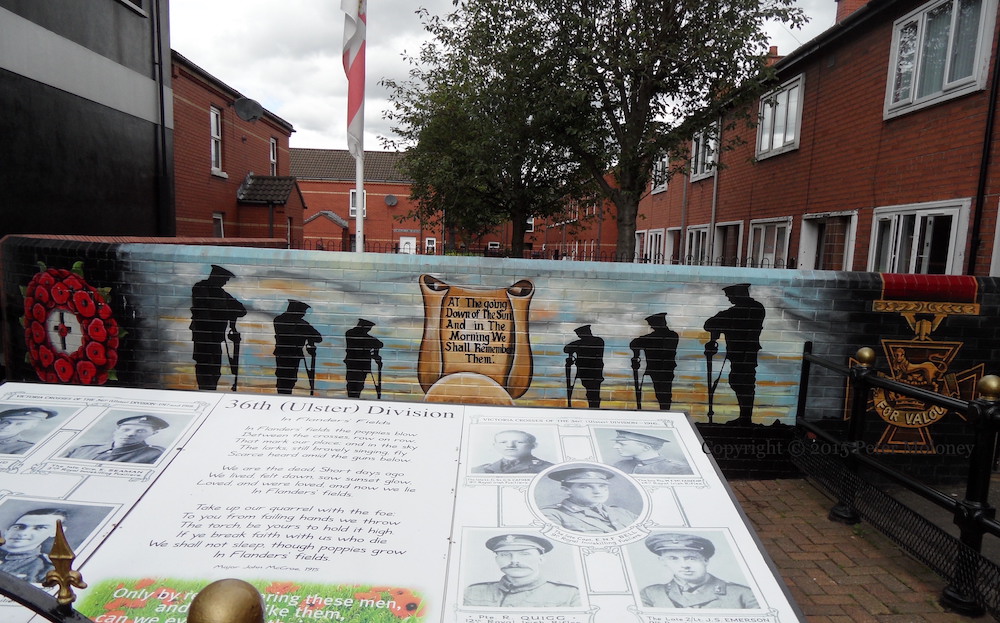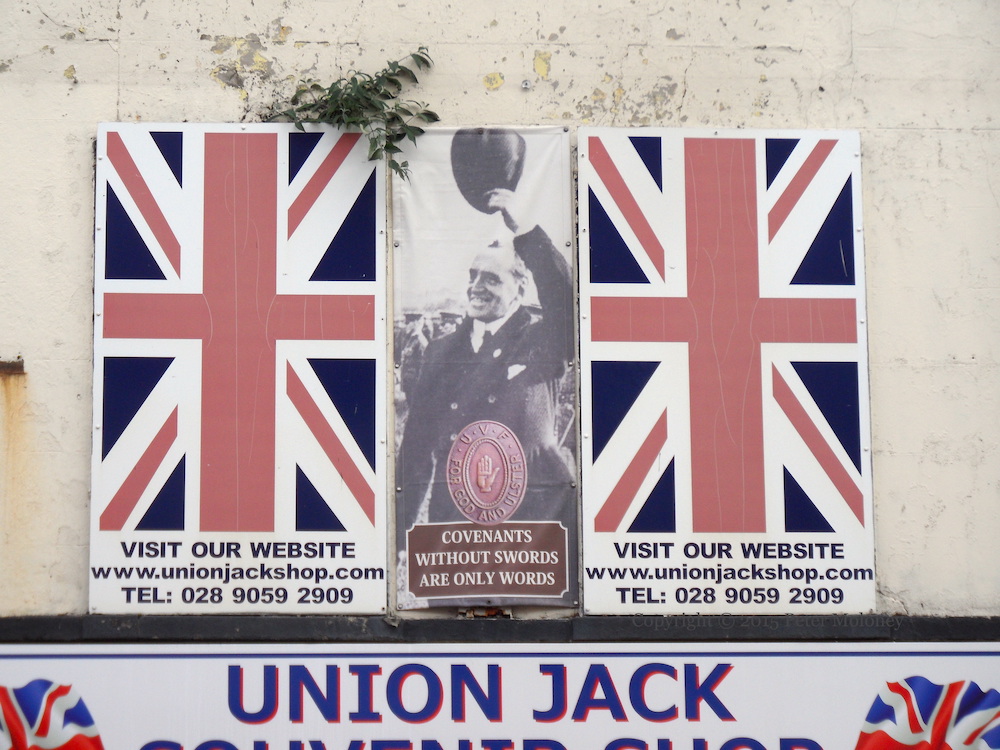
This is a new UDA mural in memory of John Gregg, “The Reaper”, who waged a campaign of terror against Catholics in south-east Antrim and was reputedly associated with British neo-Nazi groups. Gregg was gunned down in 2003, while returning from a Rangers match, as part of the power struggle with Johnny Adair.
Nearby red-white-and-blue poles on Knockenagh Ave, Newtownabbey, are also shown.
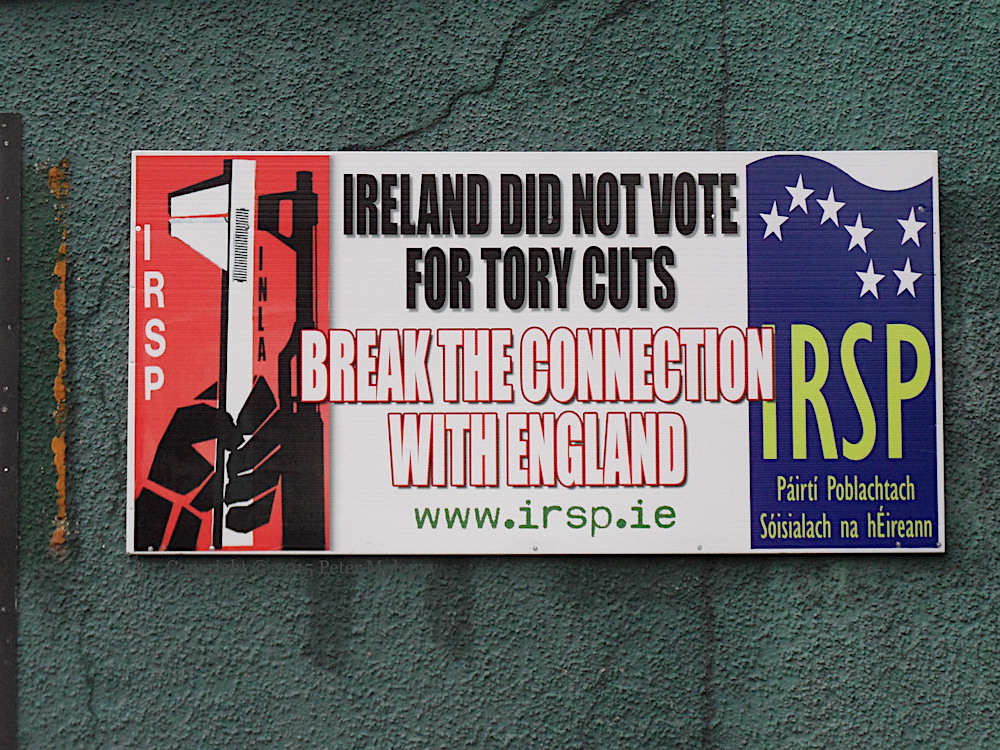
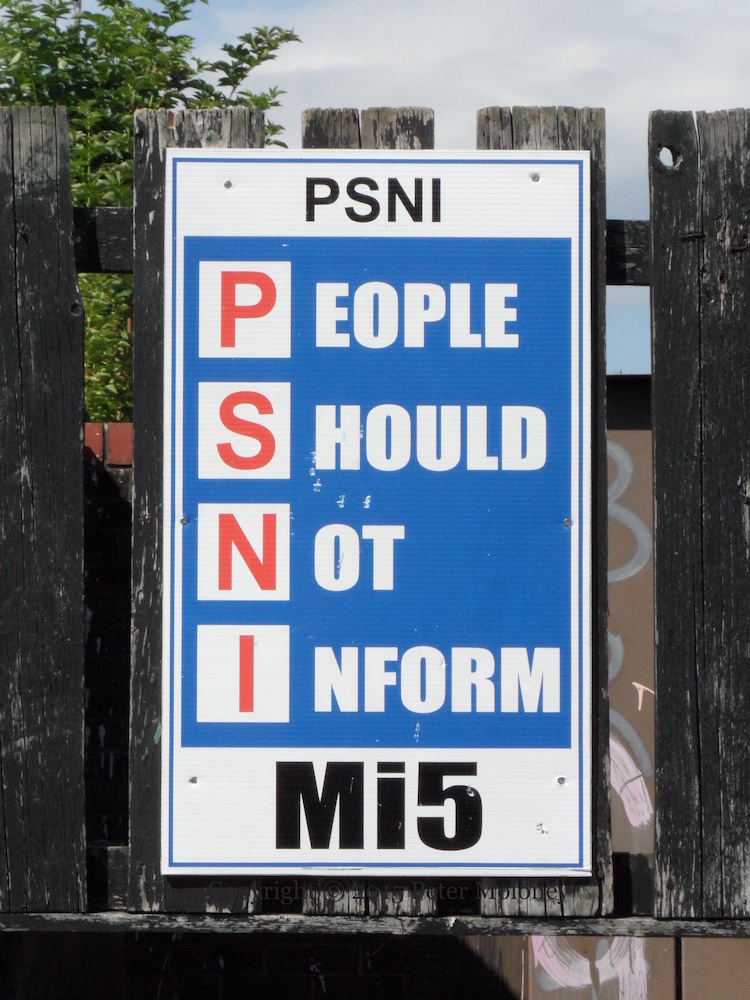
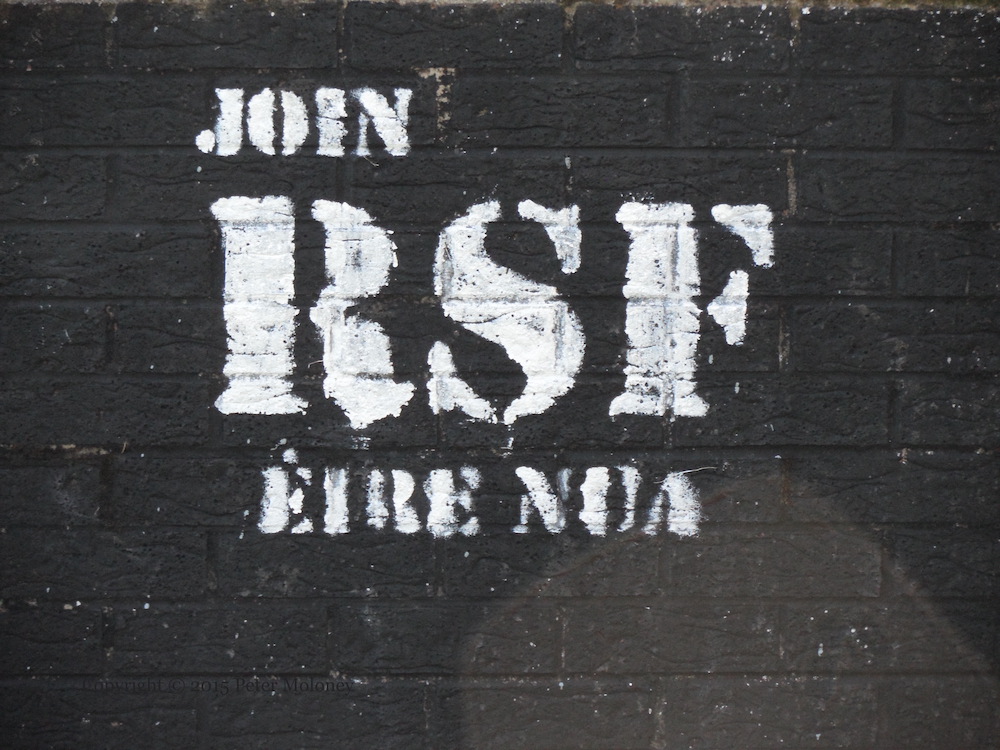
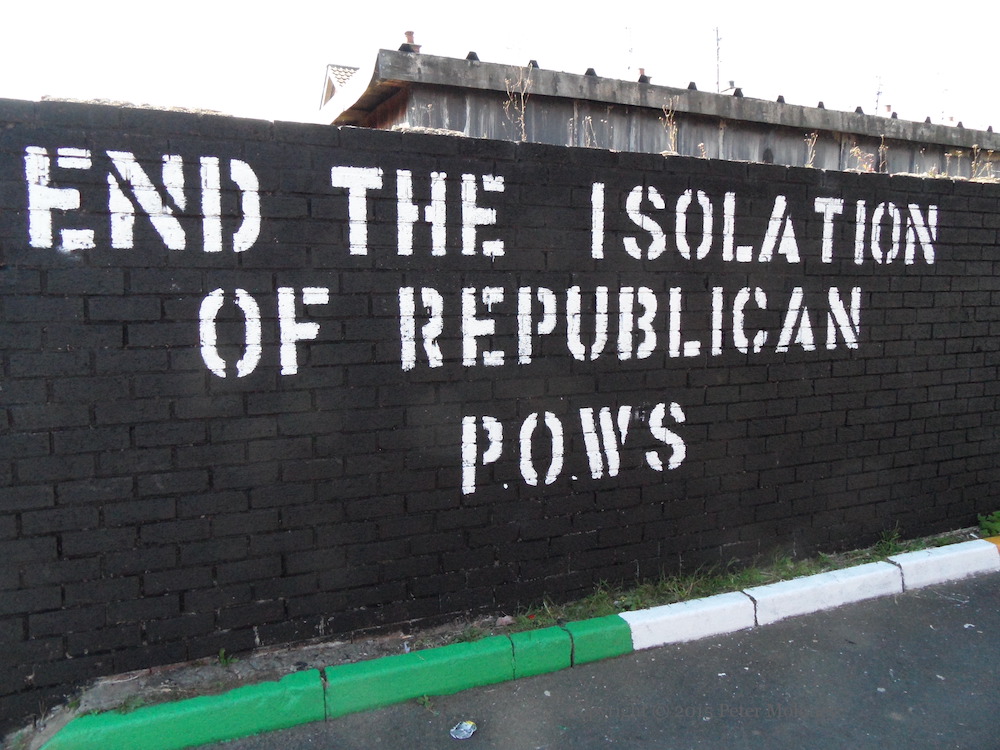
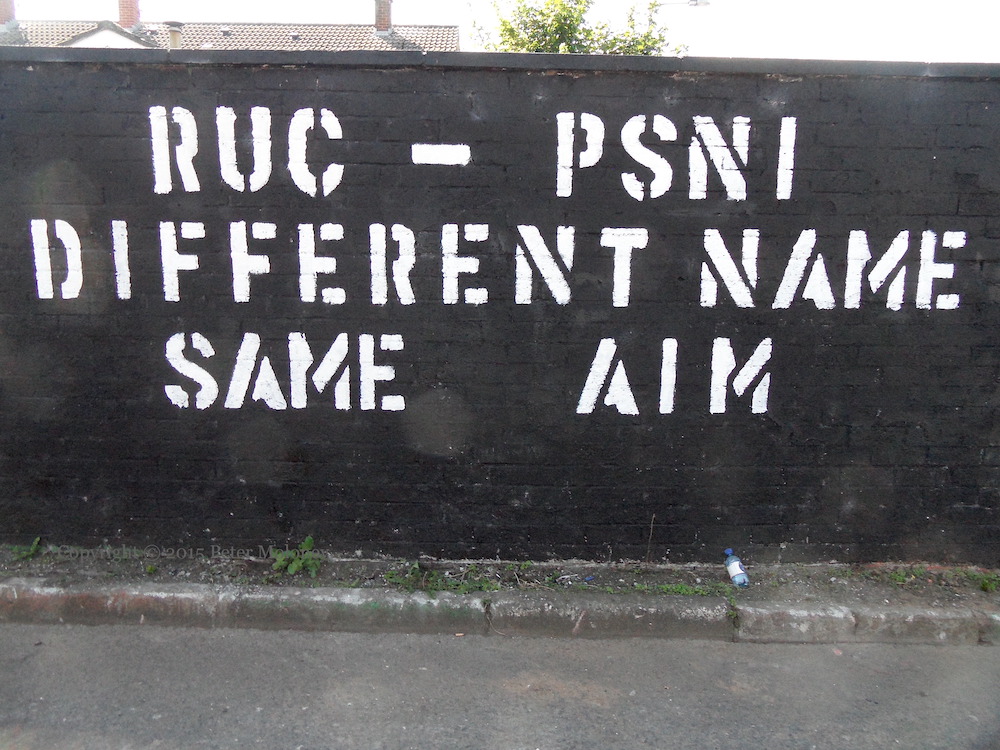
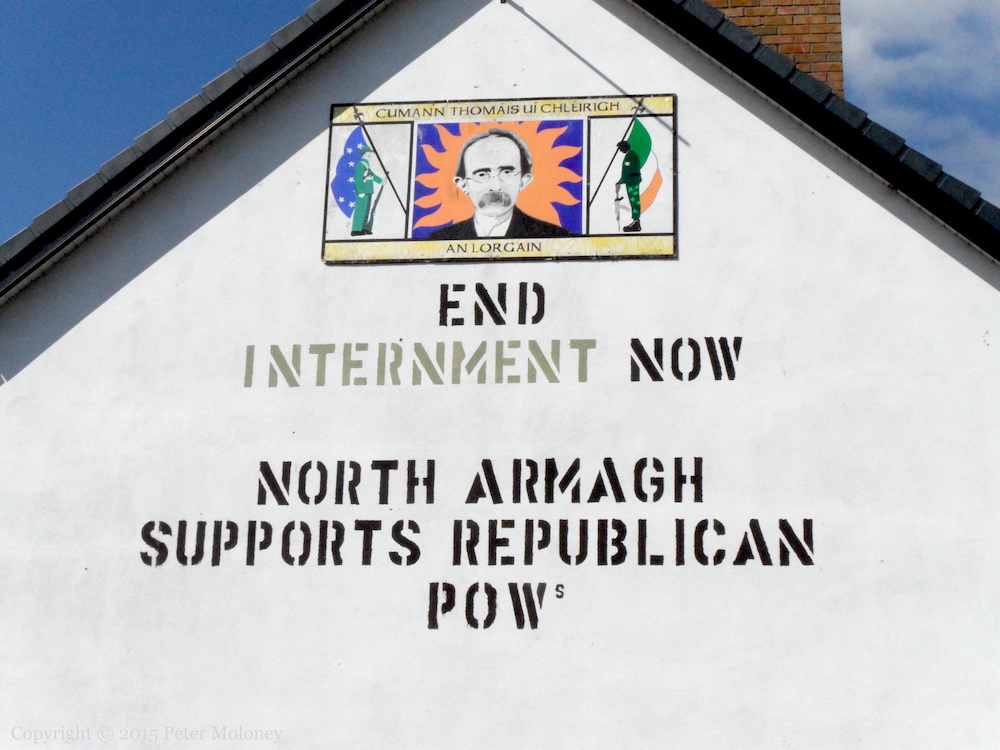
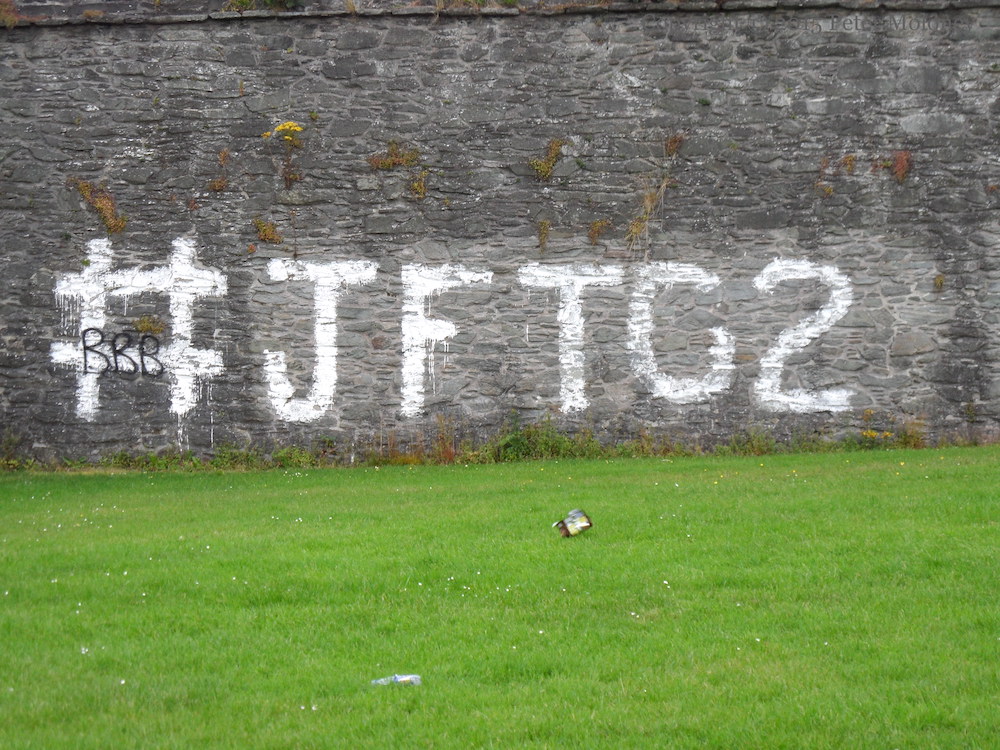
Here is a selection of stencils and small boards from anti-Agreement groups in Newry. “Stop strip searching of republican prisoners!”, “#JFTC2“, “Smash Stormont – Join RNU”, “End internment 1971-2013”, “Stop the Maghaberry strip searches”.
Camlough Road, Main Avenue, and Railway Avenue, Newry
Genesis 35:11 reads (NIV) “And God said to him, “I am God Almighty; be fruitful and increase in number. A nation and a community of nations will come from you, and kings will be among your descendants.” The flags of Northern Ireland, Scotland, Wales, and England are joined in the mural above by those of Australia and (a simplified version of) the Falkland Islands (on the left) and New Zealand and Canada (on the right). The flag flying in the centre is the Royal Standard, flown on the building or vehicle where the monarch is.
The adjacent mural of army badges around a burial scene from the first world war features some lesser-seen items. On the left, alongside the Royal Irish Rifles (top left) and the (modern-day) Royal Irish Regiment (at the time of WWI the harp was plain and there was no garland), we see the emblem of the North Irish Horse, a cavalry unit in the Territorial Army. On the right, the emblem of the Royal Irish Rangers (which was folded into the Royal Irish Regiment in 1992) is joined by the star of the Irish Guards (above) and the emblem of the Ulster Special Constabulary or B-Specials (below). Only the Royal Irish Regiment and the Irish Guards remain as regiments of the British Army; “The Horse” now forms squadrons of other units. Of the six, four served in WWI; the B-Specials were formed in 1920 and the Rangers in 1968.
Above is King William III at the Battle of the Boyne in 1690.
The murals along east Belfast’s “Freedom Corner” (on the Newtownards Road) were repainted over the course of several months in 2015. These images are from a variety of dates in July and August; the ‘red hand’ piece is incomplete – for the finished work, see The Strangest Victory In All History.
The new pieces reproduce the previous ones in terms of theme: UFF/Young Newton at the ends, with the Past (Specials and UDR) and Present Defenders (UDA) in the middle – compare with the 2009 entries Freedom Corner | Ulster’s Present Day Defenders | Young Newton.
This is a mural of King Niall (Nıall Caılle, Niall of the Callan) and Queen Macha. Niall was high king of Ireland (in competition with Fedelmıd of Munster WP) who held off the Vikings in the late 800s (WP) and died in 846 by drowning in the Callan river. Macha is a much earlier and mythological queen, and gives her name to the town: Ard Mhacha.
The central figures reproduce paintings by Jim Fitzpatrick (Visual History). The Niall figure comes from Nemed The Great but the Macha figure comes from a label Fitzpatrick produced in 1988 for Rosc “mead”, even though Macha (one of them, at least) was the wife of Nemed and there is a female figure in Nemed The Great.
Below the planets and stars, St Patrick’s (Catholic) Cathedral is on the left (WP) and St Patrick’s (CofI) Cathedral is on the right (WP).
In the border, clockwise from left to right, we see: the Tandragee Idol (WP), Naomh Bríd/St Brigid’s, St Patrick preaching the trinity, Irish dancing, Gaelic football, Armagh Harps, “Ard Mhacha”, the Armagh county crest in colour in the apex (Club & County), “Armagh”, Na Pıarsaıgh Óga, hurling/camogie, Cú Chulaınn’s, mummers (perhaps specifically the Armagh Rhymers), Jonathan Swift, a steam locomotive (perhaps representing the Armagh rail disaster of 1889, in which 80 people died WP); a vintage image of Callan Street is depicted along the bottom (History Armagh).
The side-wall features the word “welcome” in many languages, and Celtic knot-work surrounding an image of the Celtic Cross below St Patrick’s, perhaps inspired by this 1903 photograph (Flickr).
Painted by a crew of Belfast artists – Danny D and Mark Ervine, along with Lucas Quigley, Marty Lyons, Micky Doherty – organised by the Callan Street Residents’ Association, with funding from the European Union’s Peace III initiative.
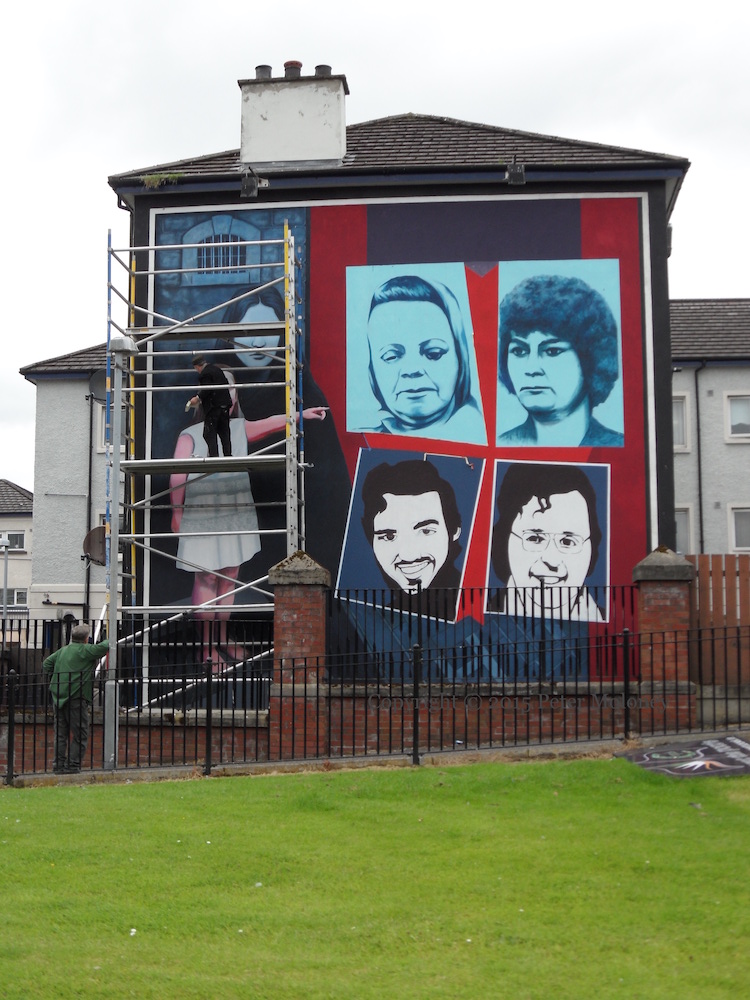
The QR code in the second image takes one to an interactive walking tour (“Walk Of Truth”) of sites associated with the Ballymurphy Massacre; the walk was launched on August 8th, one of a number of Féile 2015 events (web) which included a photographic exhibition in St Mary’s and the march announced in the first image, from Springfield Park to O’Donnell’s GAA club.
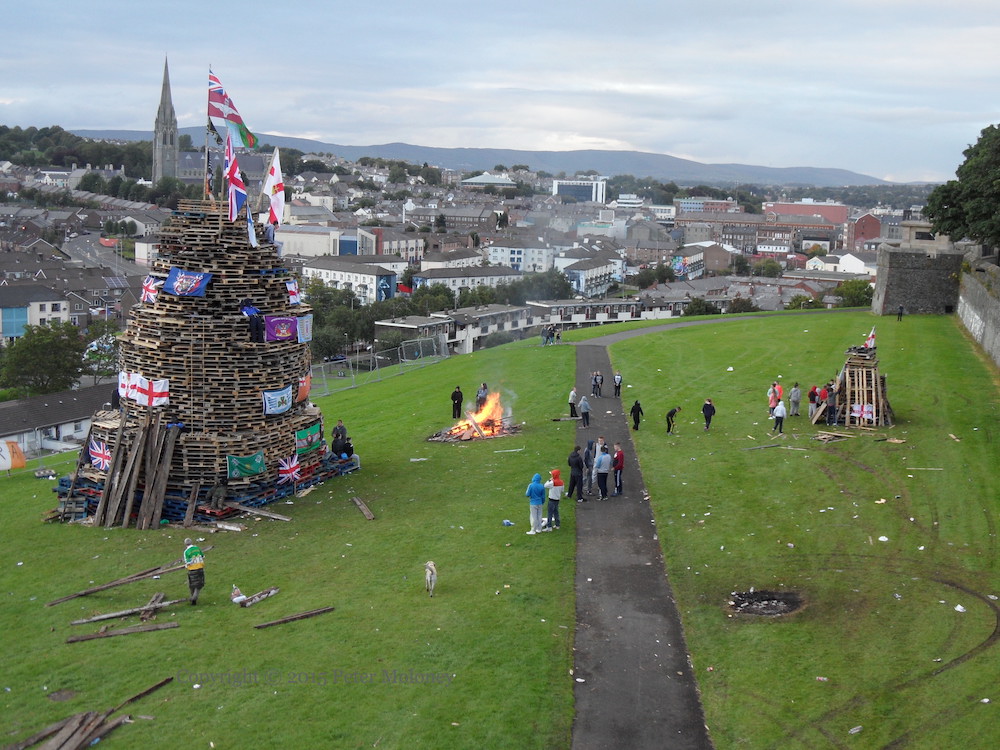
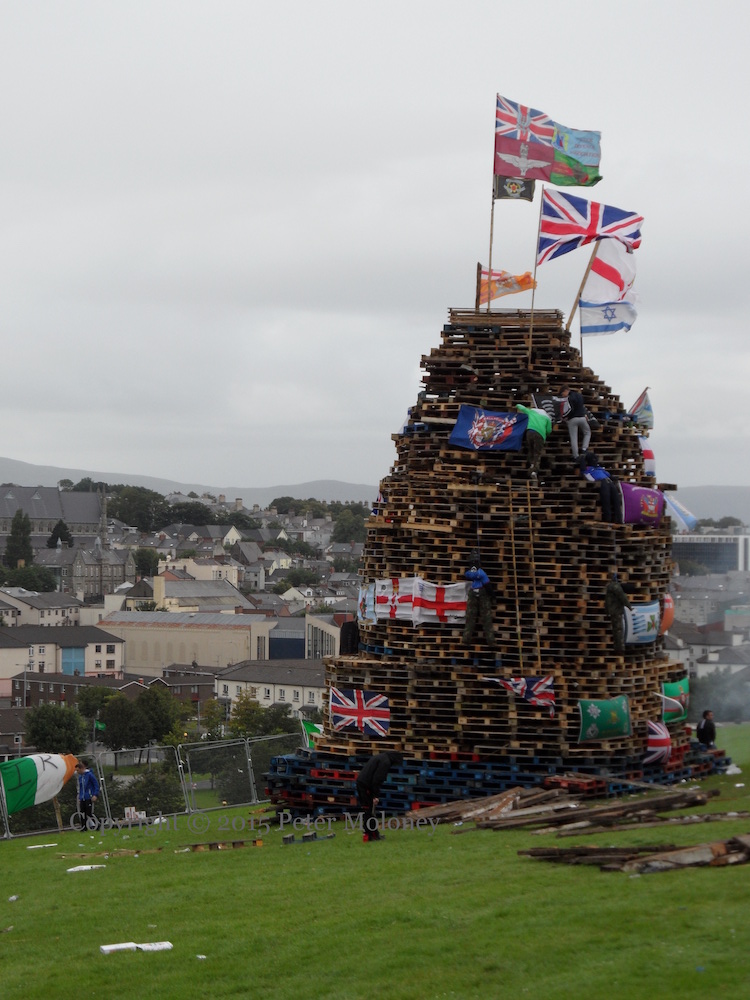
The ‘Relief Of Derry‘ bonfire stands ready for burning, flying Irish Tricolour and Starry Plough flags, and decked with an IRSP hunger strike board – perhaps stolen from Rossville Street.
This is a new info board at the bottom of the steps leading up to the IRA memorial dolmen first seen in 1999. It features portraits of 16 volunteers from Derry’s 1st battalion and a quotation from Pearse at the funeral of O’Donovan Rossa in 1915: “Life springs from death, and from the graves of patriot men and women spring living nations. The Defenders of this Realm have worked well in secret and in the open. They think that they have pacified Ireland. They think that they have foreseen everything, think that they have provided against everything; but the fools, the fools, the fools! They have left us our Fenian dead, and while Ireland holds these graves, Ireland unfree shall never be at peace.”
“In memory of volunteers Pat and Dan Duffin, murdered by the RIC in their home at 64 Clonard Gardens 23rd April 1921. Erected the by the Greater Clonard Ex-Prisoners Association.”
The IRA shot dead two members of the British Auxiliaries, Ernest Bolan and John Bales, in Donegall Street in Belfast city centre on April 23rd, 1921. Just before midnight, Pat and Dan Duffin were shot to death by men who entered their Clonard home.
Another brother, John, was upstairs and not harmed and when he approached the scene he found not only his dead brothers but the station dog of the Springfield Road RIC barracks (“GB Kenna“, real name Fr John Hassan).
DeValera led the funeral cortège along the Falls. Joe Devlin would include the Duffin murders in a Westminster speech in June, following the killings in a single night of Alexander McBride, Malachy Halfpenny, and William Kerr (Hansard). The RIC in west Belfast under CI Harrison, DI Nixon, and in this case DI Ferris (Aiken et al.), would continue their killings into 1922 – see The RIC Murder Gang.