


A Somme/WWI soldier contemplates a grave next to a hill of poppies. The art is on the shutters of the Peppercorn café on the Woodstock Road, east Belfast.
Click image to enlarge
Copyright © 2015 Peter Moloney
M11900 M11899 M11898
A Somme/WWI soldier contemplates a grave next to a hill of poppies. The art is on the shutters of the Peppercorn café on the Woodstock Road, east Belfast.
Click image to enlarge
Copyright © 2015 Peter Moloney
M11900 M11899 M11898

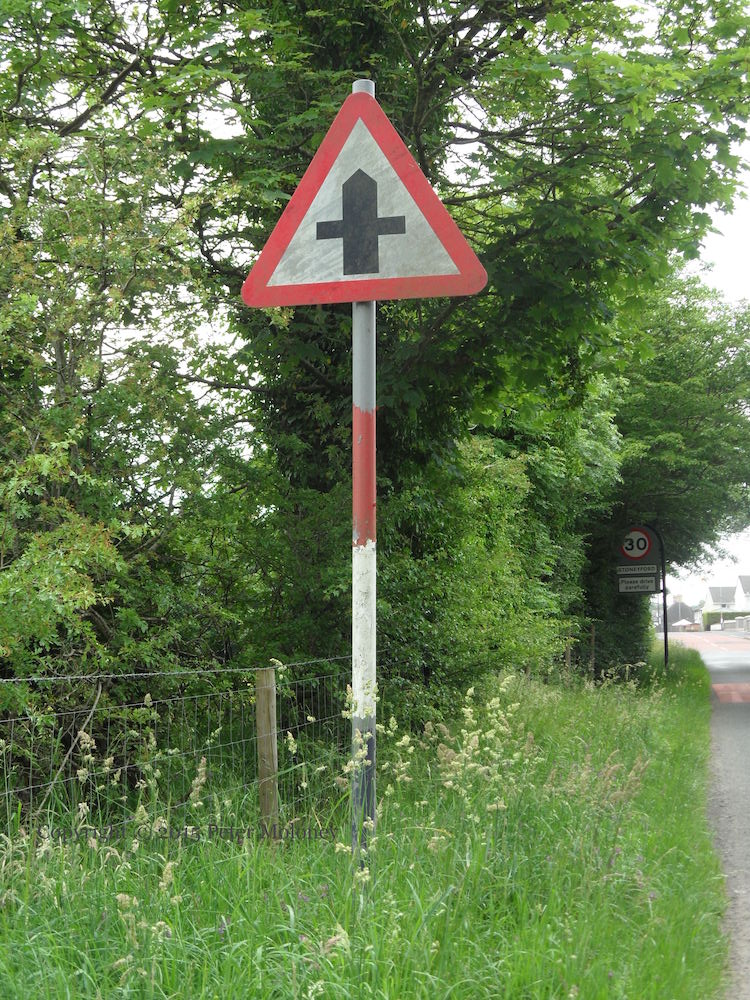


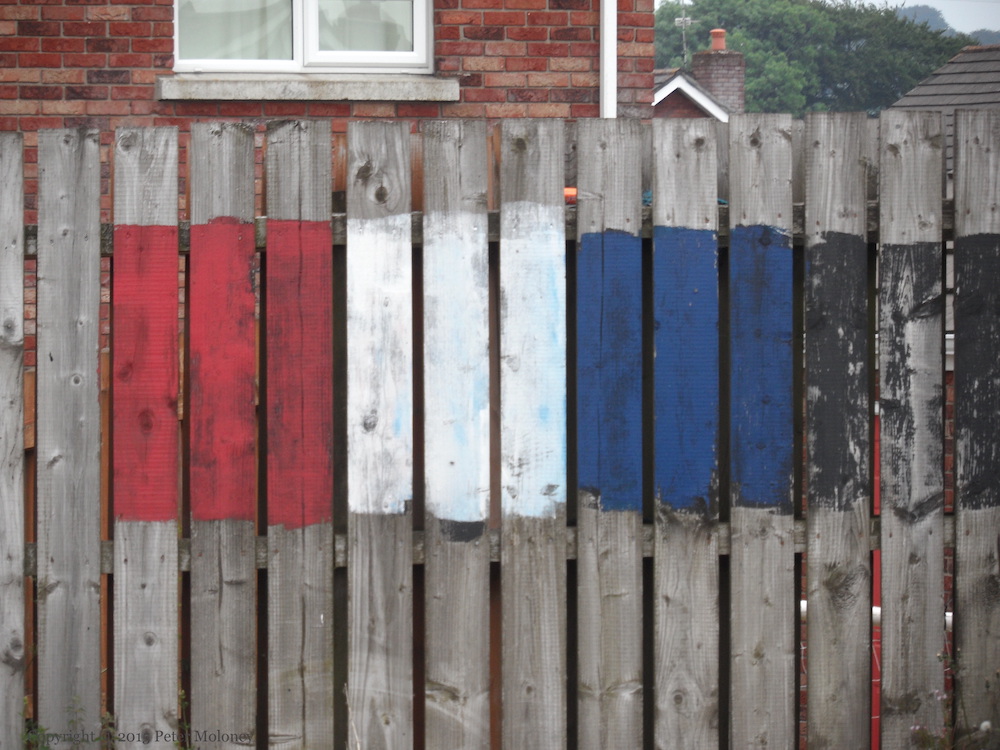
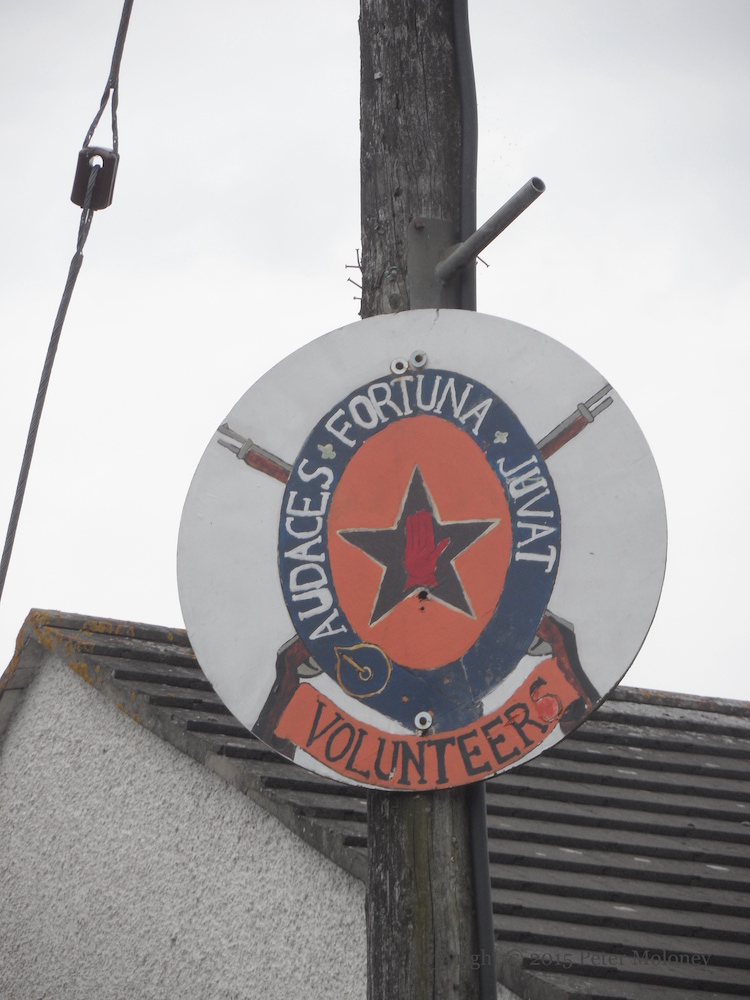


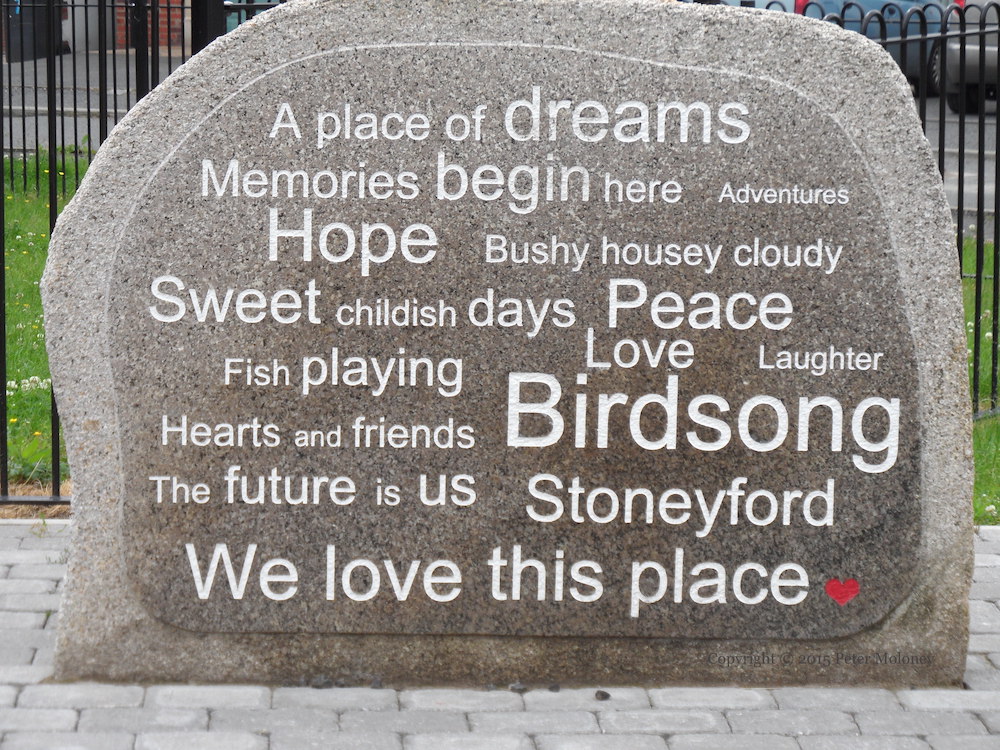

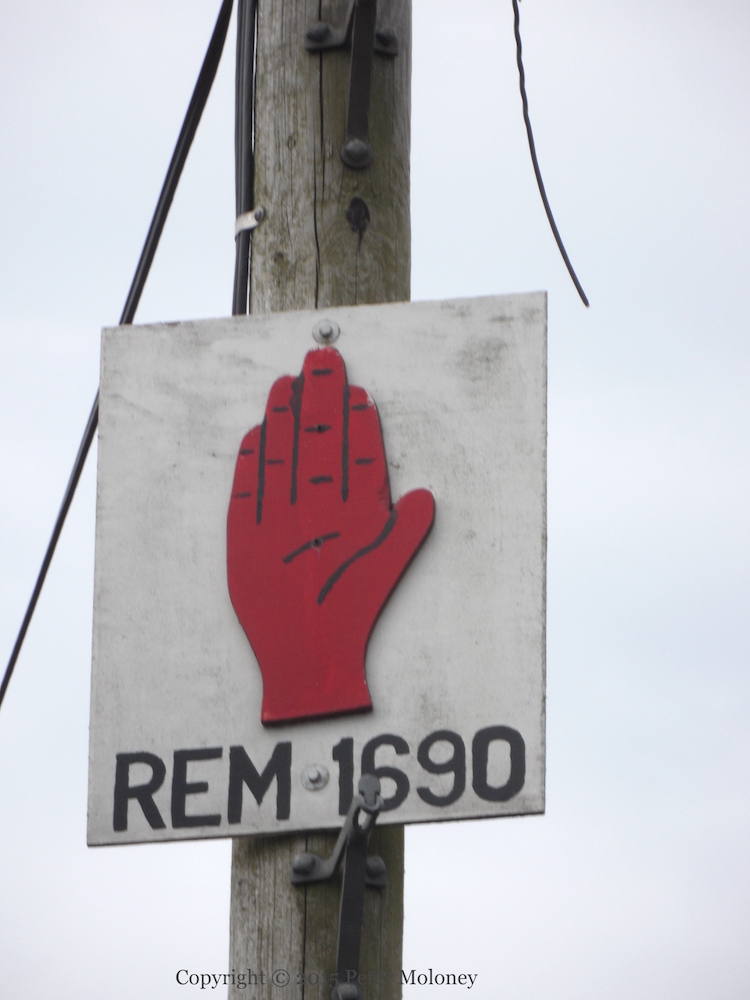
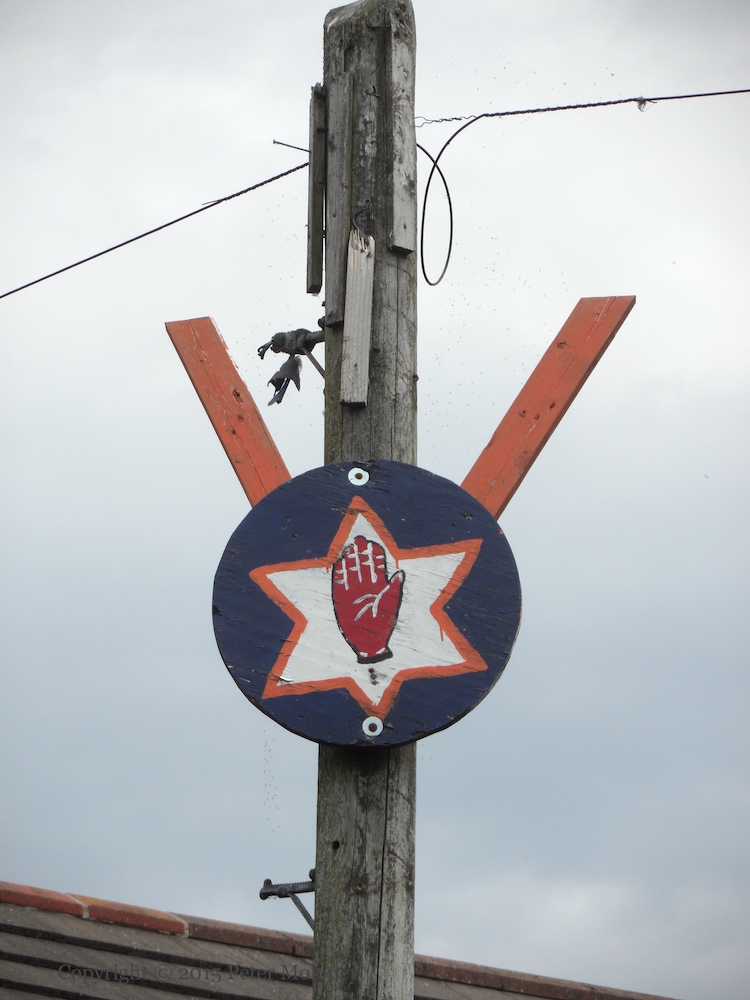
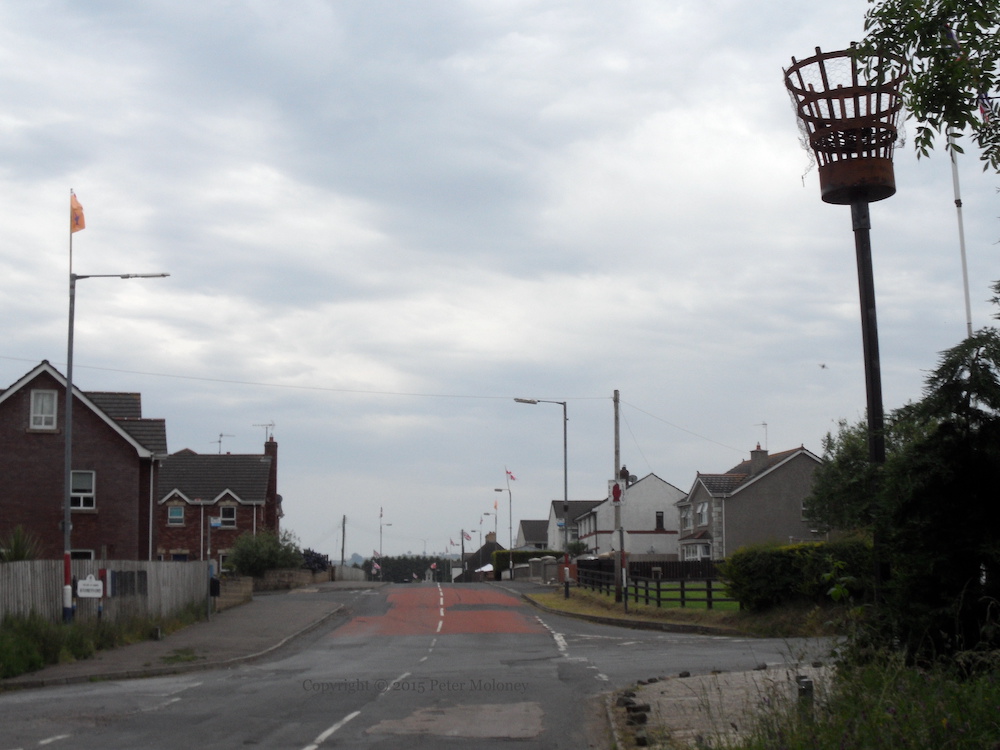
Here is a gallery of images from the village of Stoneyford, ten miles north of Lisburn. The view in the final image is from the cross-roads at north end of the village, with the brazier next to the WWI memorial visible on the right, and the nameplate on the fence on the left. The Orange Hall is in the middle of the village. The village was a centre for the small anti-Agreement organisation the “Orange Volunteers” (WP).
Click image to enlarge
Copyright © 2015 Peter Moloney
M11859
M11853 M11855 [M11856] M11857 M11858 M11860 M11861 M11862 [M11863] M11864 M11865 M11866 M11867 M11868 M11869
M11854
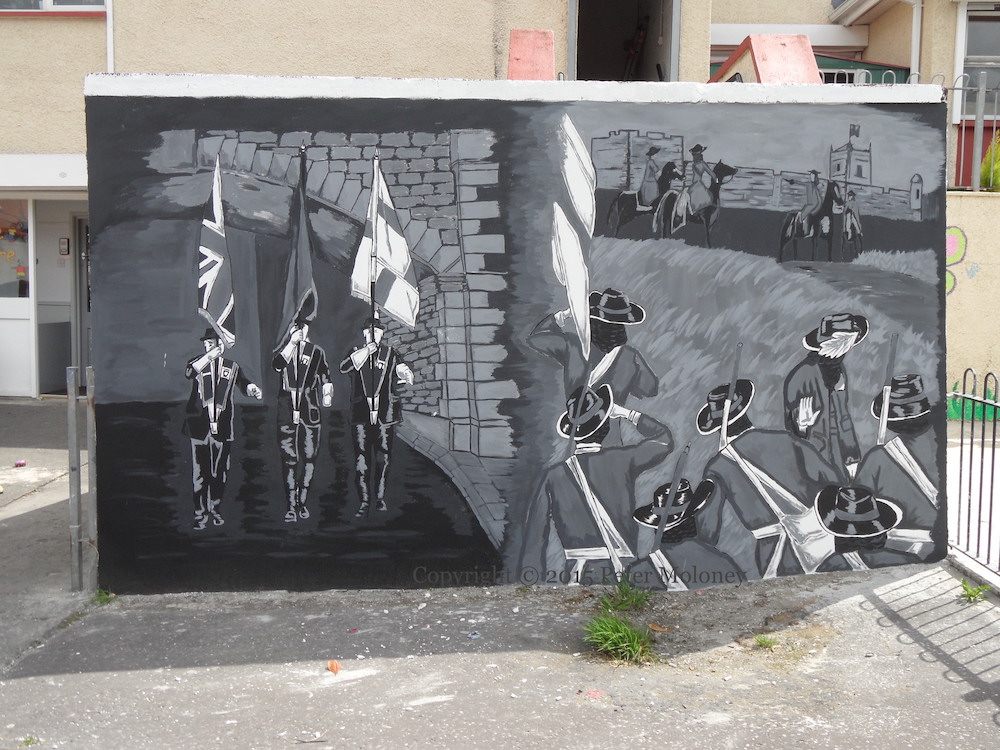
This two-part mural shows (left) Orange Order flag-bearers and (right) a scene from the Siege of Derry, perhaps of James II demanding the city and being rebuffed with cries of “No surrender”.
The Fountain, Londonderry, replacing Eddie Rides.
Click image to enlarge
Copyright © 2015 Peter Moloney
M11851 [M11851a]
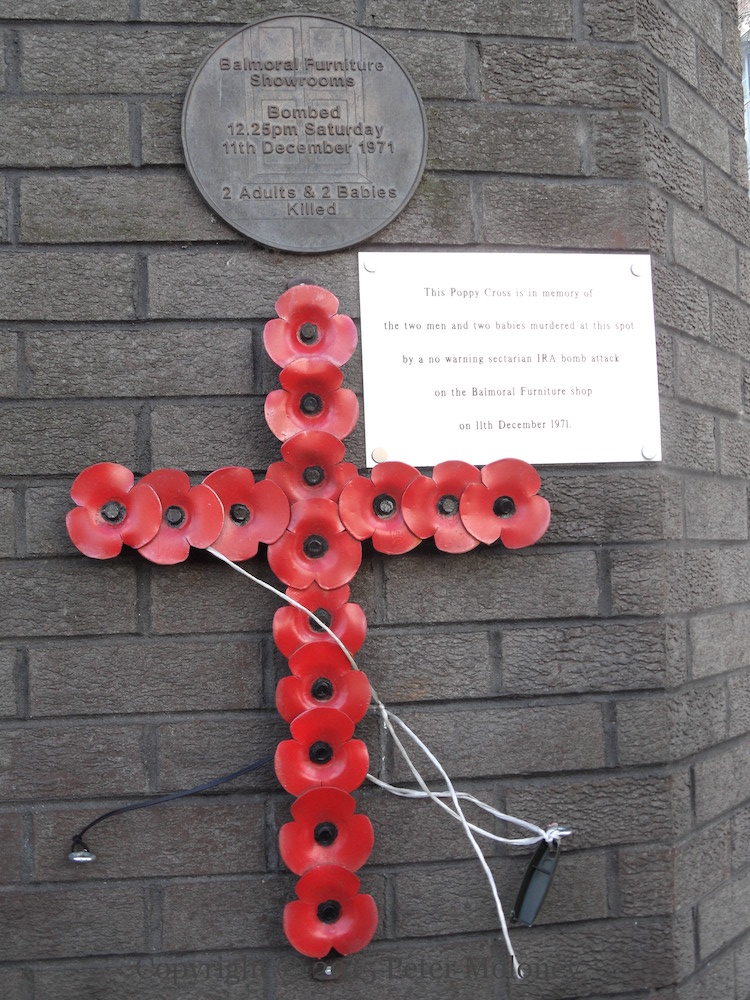
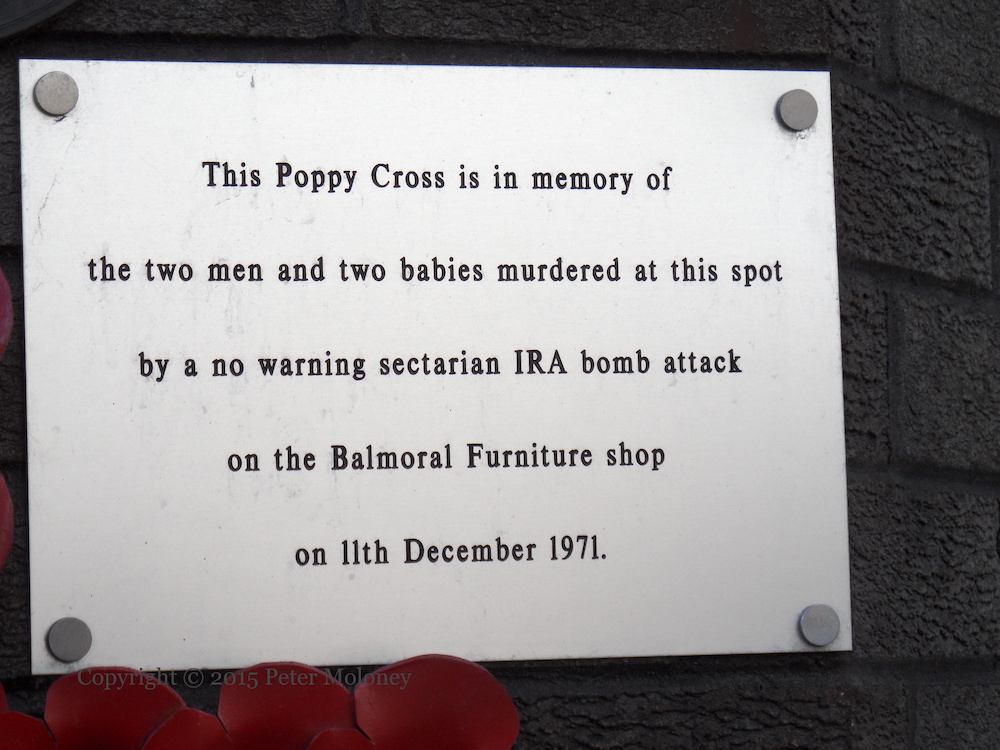
“This Poppy Cross is in memory of the two men and two babies murdered at this spot by a no-warning sectarian IRA bomb attack on the Balmoral Furniture shop on 11th December 1971”
The previous (circular) plaque reads, “Balmoral Furniture Showrooms, bombed 12.25 pm Saturday 11th December 1971, 2 adults & 2 babies killed”
Also augmented with poppy crosses: Frizzell’s Fish Shop 1993 | Mountainview Tavern 1975
Shankill Road, west Belfast – the plaque and cross are on the corner of the Shankill Leisure Centre

Click image to enlarge
Copyright © 2015 Peter Moloney
M11848 M11849 M11850
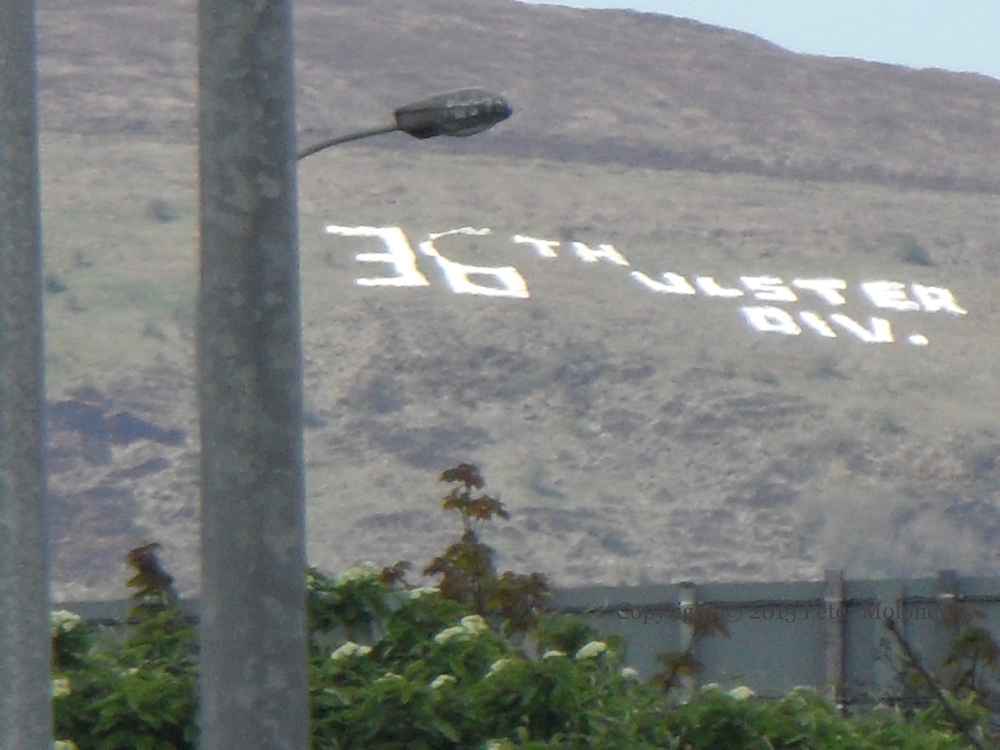


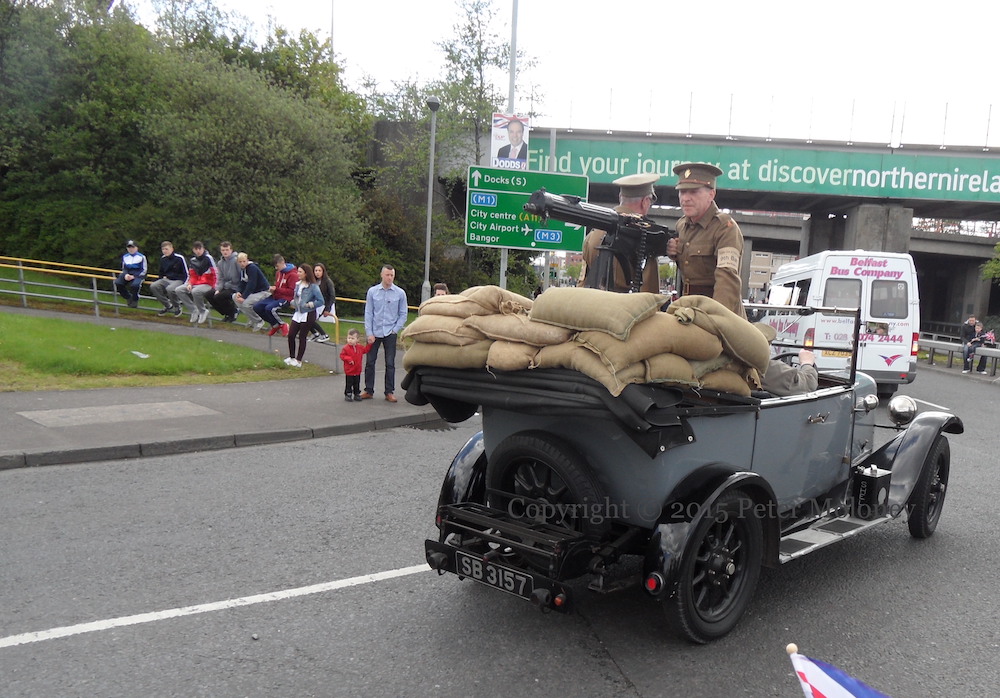

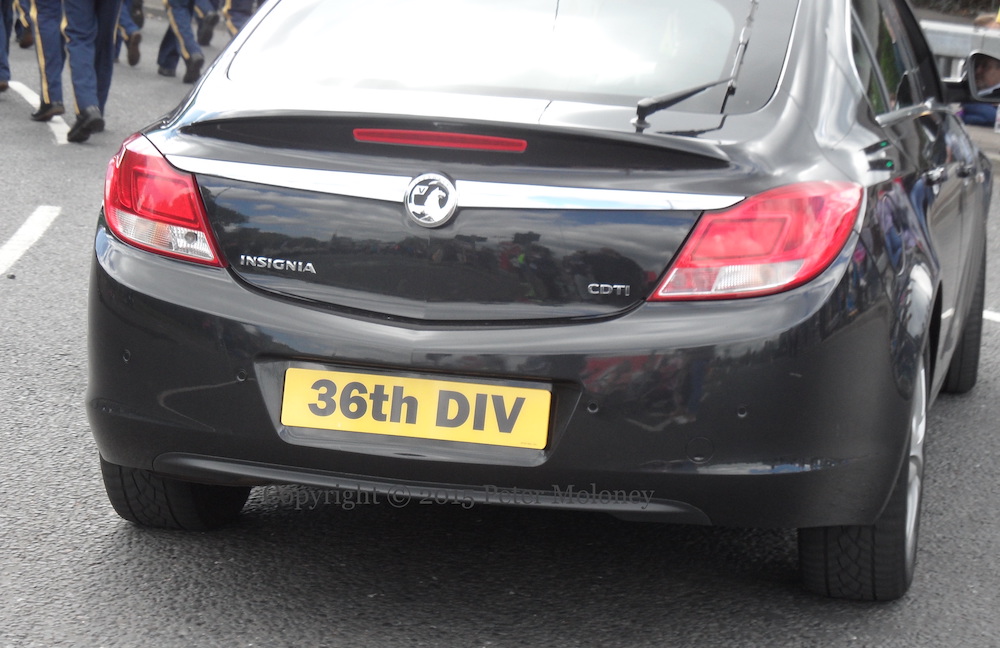


The part of Black Mountain used to display the lettering “36th Ulster [sic] Div.” is further north (and so around towards Highfield and Glencairn) than the site of republican “messages on the mountain“. The lettering was mounted ahead of a parade celebrating the 99th anniversary of the Somme (and the creation of the Ulster Volunteers in 1912).
Click image to enlarge
Copyright © 2015 Peter Moloney
M11847
M11840 M11841 M11842 M11843 M11844 M11845 M11846

This is the fourth iteration of the hunger-strikers board in Rockmore Road, which goes back (at least) to 1995. For two earlier versions, see third | first.
Michael Gaughan and Frank Stagg are included alongside the ten deceased men from the 1981 strike.
Rockmore Road, west Belfast
Click image to enlarge
Copyright © 2015 Peter Moloney
M12558 [M12559] [M12560] [M12561] [M12562]
bobby sands mp 5th may francis hughes 12th may raymond mccreesh 21st may patsy o’hara 21st may joe mcdonnell 8th july michael gaughan 3rd june 1974 frank stagg 12th february 1976 martin hurson 13th july kevin lynch 1st august kieran doherty 2nd august thomas mcelwee 8th august michael devine 20th august st james’s commemoration committee sınn féın

“Fıann [sic] Robert Allsopp lived at this address. Died on active service March 3rd 1975. Fuaır sé bás ar son na hÉıreann. 1959-1975” Allsopp died at the family home (on the New Lodge Road) from the accidental discharge of a gun. The O’Neill-Allsopp flute band is named in his honour (and in honour of Jim O’Neill) and the band has a mural in Donore Court.
Click image to enlarge
Copyright © 2015 Peter Moloney
M12557

“Don’t shout IRA, join IRA” – anti-Agreement graffiti on Divis Street, west Belfast
Click image to enlarge
Copyright © 2015 Peter Moloney
M12556
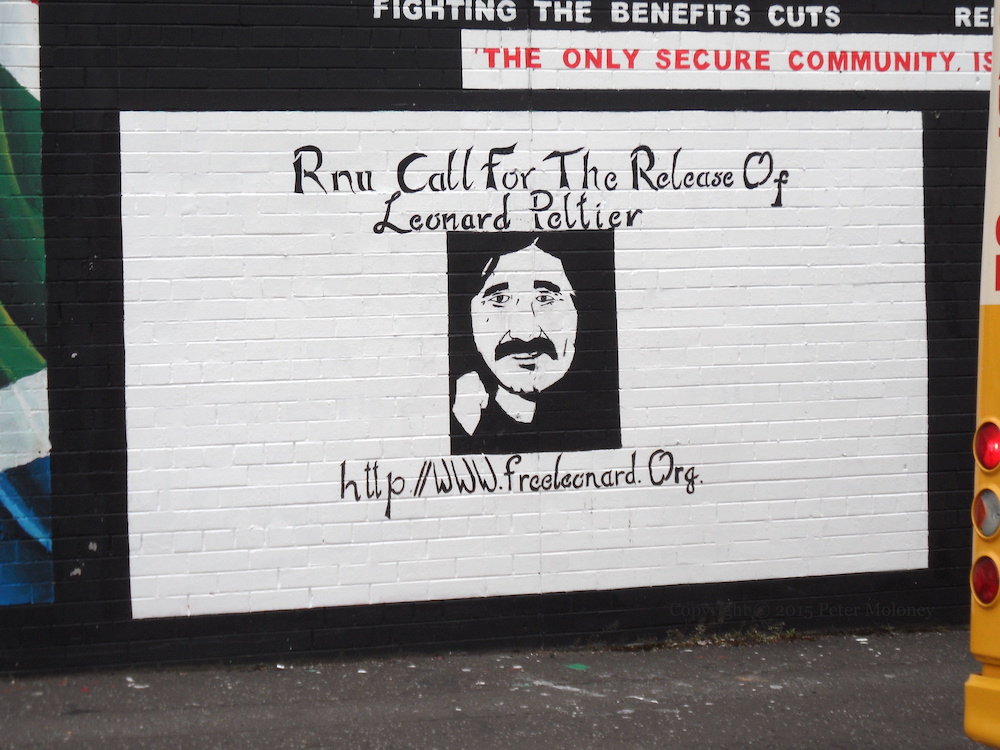
“RNU call for the release of Leonard Peltier – http://www.freeleonard.org“. The lower left-hand panel of the RNU spot on Northumberland Street is serving as a changeable notice-board – it was previously The Popular Front.
Peltier has been in jail since 1977, convicted of killing two FBI agents on the Pine Ridge Reservation in 1975 and sentenced to two life-sentences (WP).
Northumberland Street, west Belfast
Click image to enlarge
Copyright © 2015 Peter Moloney
M12555
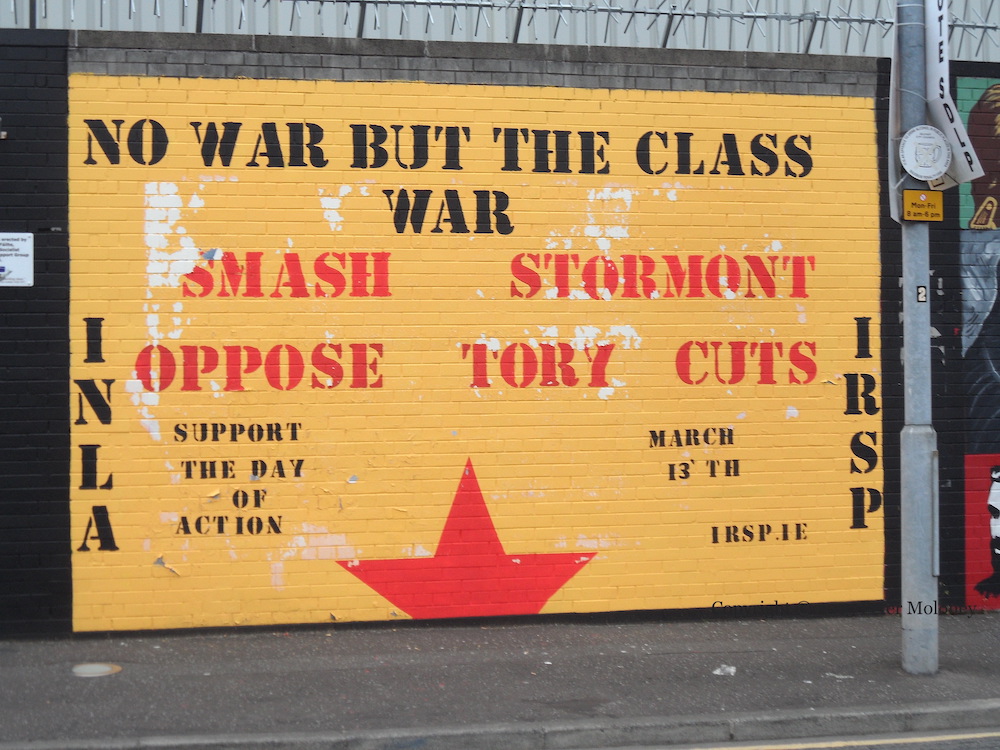
“No war but the class war – smash Stormont, oppose Tory cuts – support the day of actin, March 13th – IRSP.ie“.
Public-sector workers in many occupations conducted a one-day strike on the 13th (BBC | BBC).
Northumberland Street, west Belfast
Click image to enlarge
Copyright © 2015 Peter Moloney
M12554
 Peter Moloney Collection