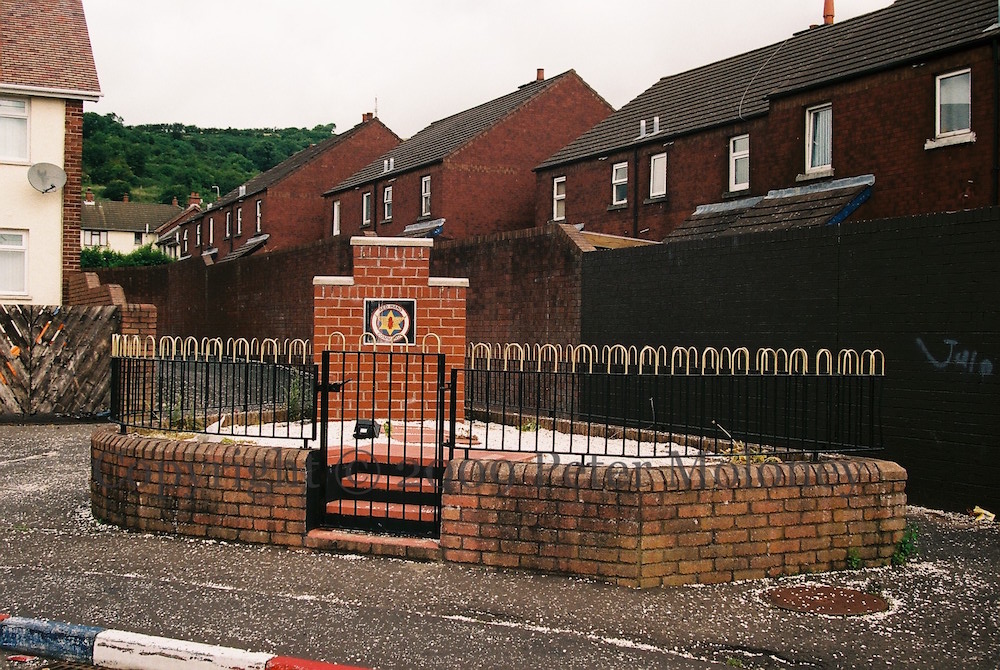
“In proud memory of our fallen comrades from the officers and members of South Belafst 2nd Battalion [‘A’ Company Donegall Pass] ‘Glorious on the graves of heroes, kindly upon all those who have suffered for the cause. Thus will shine the dawn. They gave their tomorrow for our today.'” UVF memorial garden in Walnut Street.
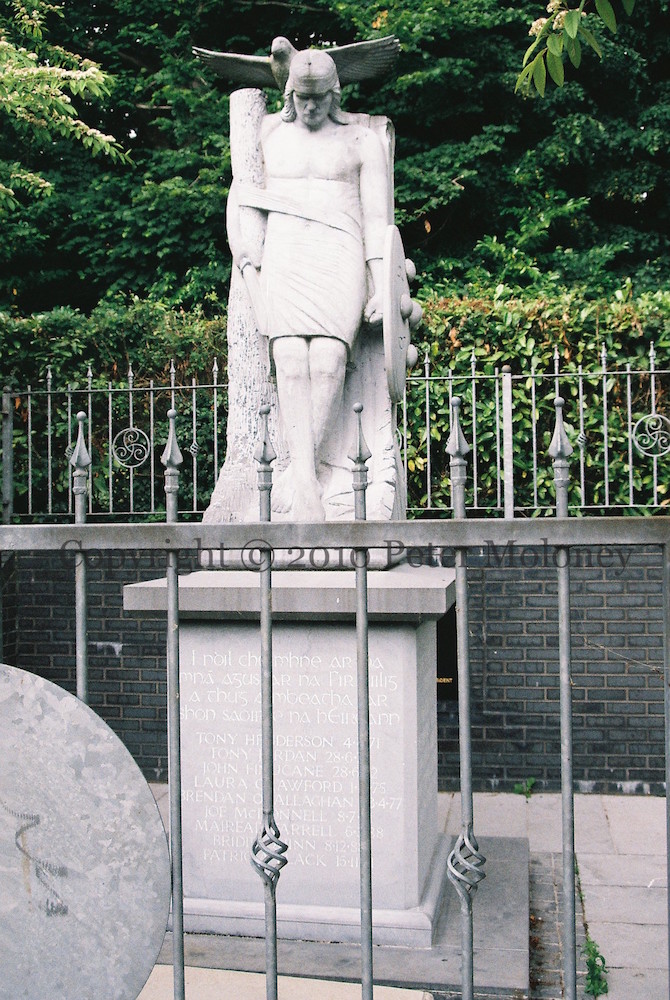
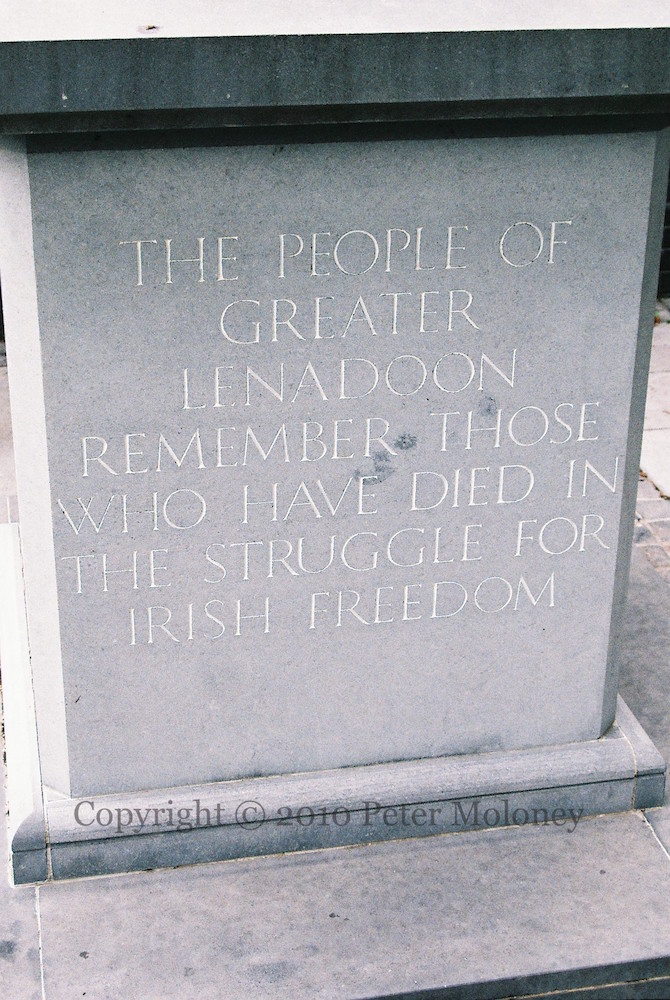
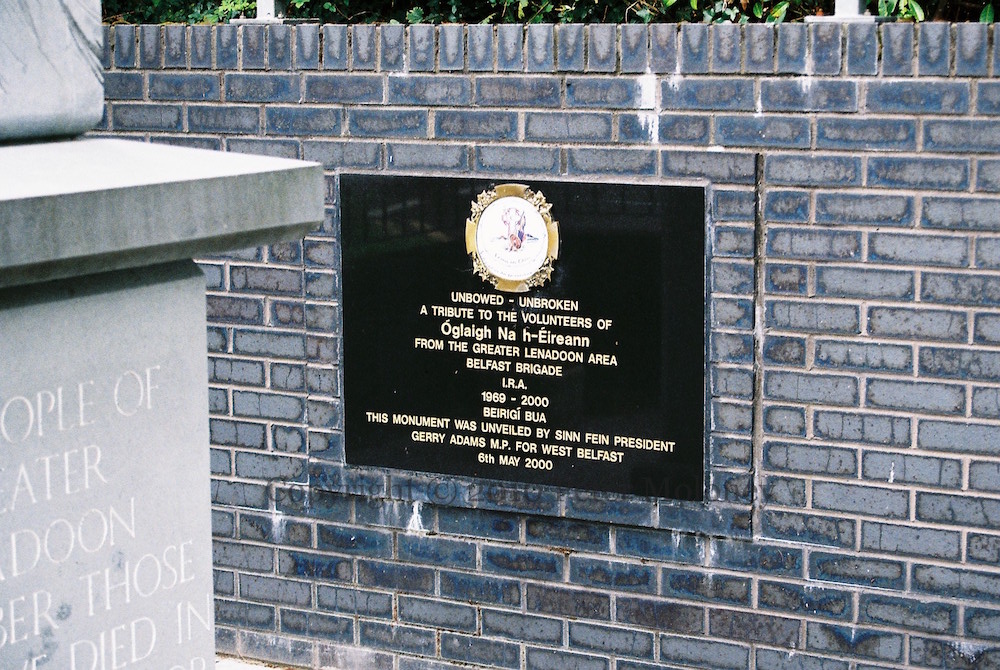
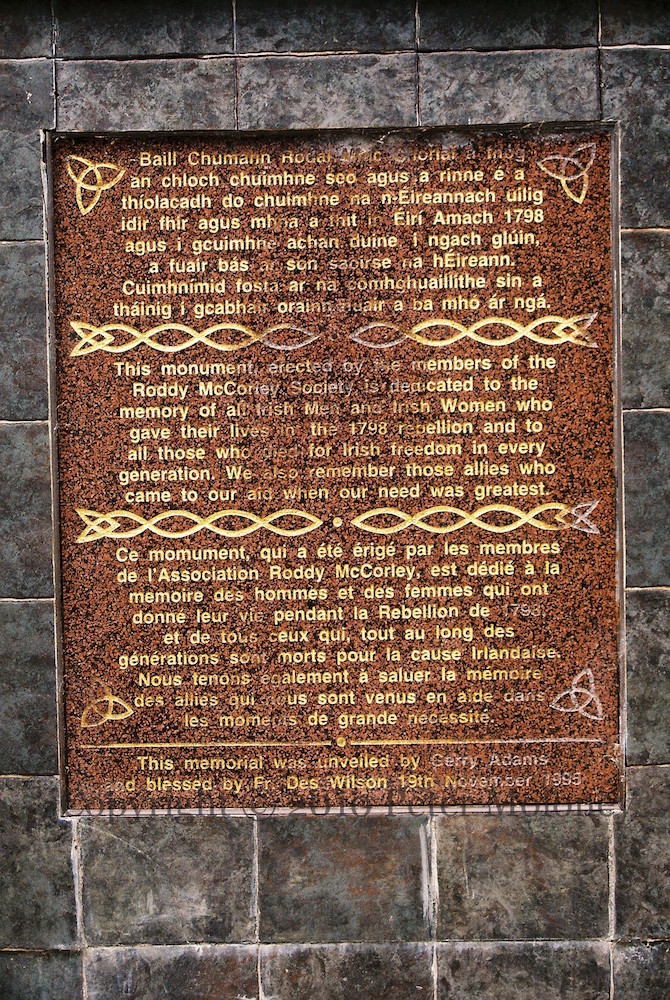
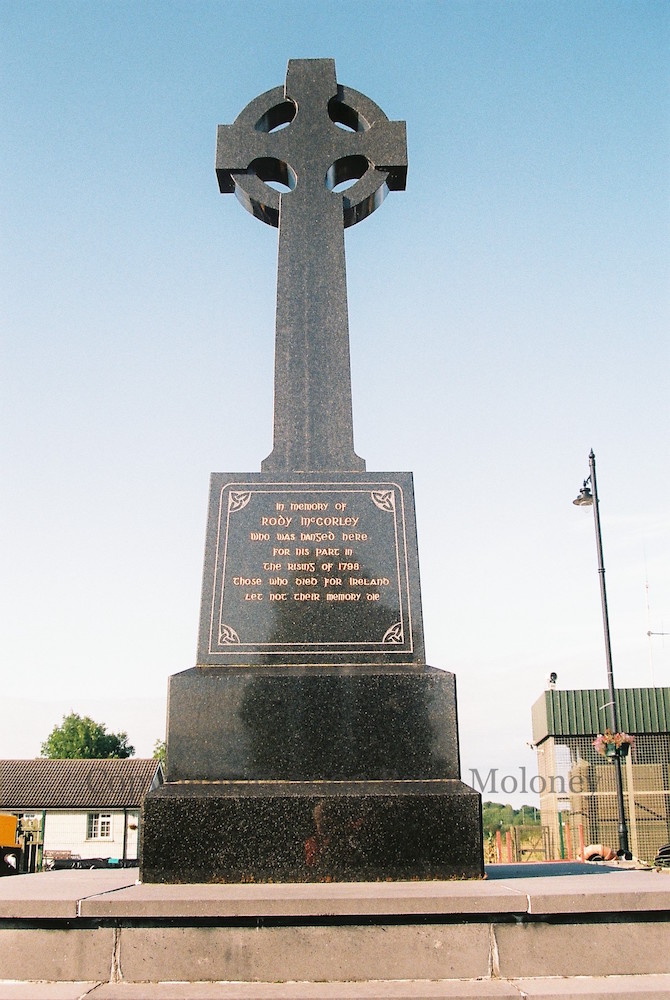
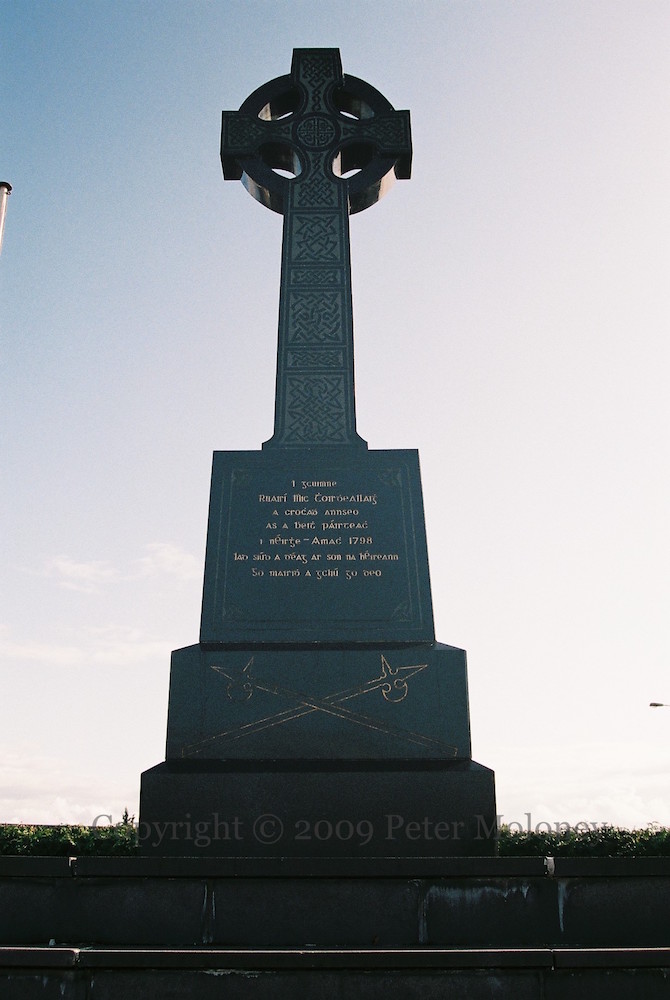
Images from the grounds of The Roddys club, Glen Road, Belfast, with memorials to McCorley (“In memory of Rody McCorley who was hanged here for his part in the rising of 1798 ‘The dead who died for Ireland, let not their memory die””), the deceased 1981 hunger strikers, the earlier 20th century hunger strikers (Thomas Ashe, Michael Fitzgerald, Terence MacSwiney, Joseph Murphy, Joseph Whitty, Denis Bary, Andrew Sullivan, Tony D’Arcy, Jack McNeela, Sean McCaughey, Michael Gaughan, Frank Stagg), Lenadoon deaths (Tony Henderson, Tony Jordan, John Finucane, Laura Crawford, Brendan O’Callaghan, Joe McDonnell, Mairead Farrell, Bridie Quinn, Patricia Black), Billy ‘Red’ Higgins founder member/president of the club, IRA volunteers from Lenadoon, “to the Irish men and Irish women who gave their lives in the rebellion of 1798”. Roddy McCorley, a Protestant member of the United Irishmen, is best known by the song written about his hanging at the bridge of Toome in 1800. (Here’s a version by Tommy Makem.)
“This dolmen was erected in memory of the fallen volunteers of the 1st Battalion Derry Brigade Óglaigh na hÉıreann. The dolmen was first erected in Ireland about 3000 BC. It is believed that they were erected to honour an esteemed chieftain or warrior. Tógadh an leacht cuımhneacháın ın ónóır agus ı gcuımhne ar Chéad Chathlán Bhrıogáıd Dhoıre Óglaıgh na hÉıreann. Tugtar ómós do mhısneach agus d’ıobaırt na nóglach a thug a raıbh acu ar son saoırse na hÉıreann. [Homage is paid to the courage and sacrifice of the volunteers who gave all they had for Irish freedom.] Ní dhéan[m]ar dearmad ar a gcrógacht agus ar a n’íobaırt agus beıdh bunú na poblachta a n-o[ı]dhreacht. [We will not forget their bravery and sacrifice and the foundation of the republic will be their legacy.]
The dove/lark on a fist (seen in 2007 but missing in 2008) is restored to the crossbar of the hunger strikers memorial in Rossville Street, Derry. Kevin Lynch’s portrait is displayed around the time of his death on August first, 1981.
“This memorial commemorates the men and women who served their country in the battalions of the Ulster Defence Regiment 1970 – 1992: 1st (County Antrim), 1st/9th (County Antrim), 2nd (County Armagh), 2nd/11th (County Armagh), 3rd (County Down), 4th (County Fermanagh), 4th/6th (County Fermanagh and County Tyrone), 5th (County Londonderry), 6th (County Tyrone), 7th (City of Belfast), 7th/10th (City of Belfast), 8th (County Tyrone), 9th (County Antrim), 10th (City of Belfast), 11th (Craigavon)”
For information about those listed on the Royal Irish Rangers (27th (Inniskilling) 83rd and 87th) roll of honor, see militaryimages.net.
Presbyterian Roddy McCorley was executed on 28 February, 1800, and his name is famous due to a ballad written by Ethna Carbery (sung here by Tommy Makem).
“In memory of Rody McCorley who was hanged here for his part in the Rising of 1798. Those who died for Ireland, let not their memory die.” “I gcuımhne Ruaırí Mhıc Thoırdheallıagh a crochadh annseo as a bheıth páırteach ı nÉırghe Amach 1798. Iad sıúd a dhéag ar son na hÉıreann go mhaırıdh a gchú go deo.”
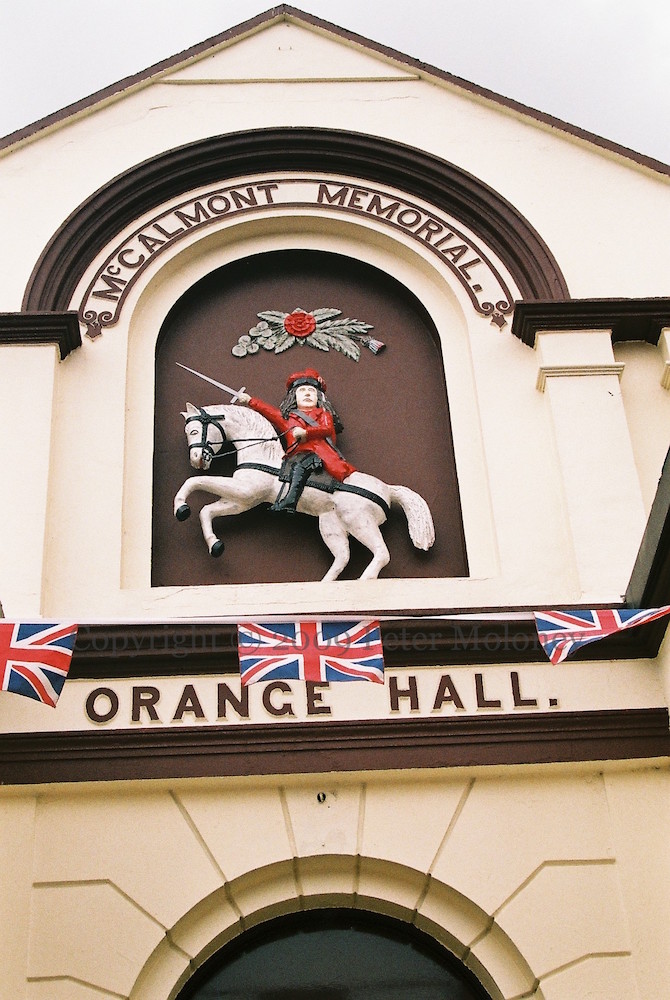
King Billy’s sword is tipped in blood, and he rides below a shamrock, rose, and thistle, uniting the kingdoms. Ballyclare Orange Hall is named after Hugh McCalmont, a major-general in the British Army Ulster Unionist MP for North Antrim in 1895. His Whiteabbey house was burned down by suffragettes in 1914 because it was used as a training ground by the UVF of the anti-franchise Carson.
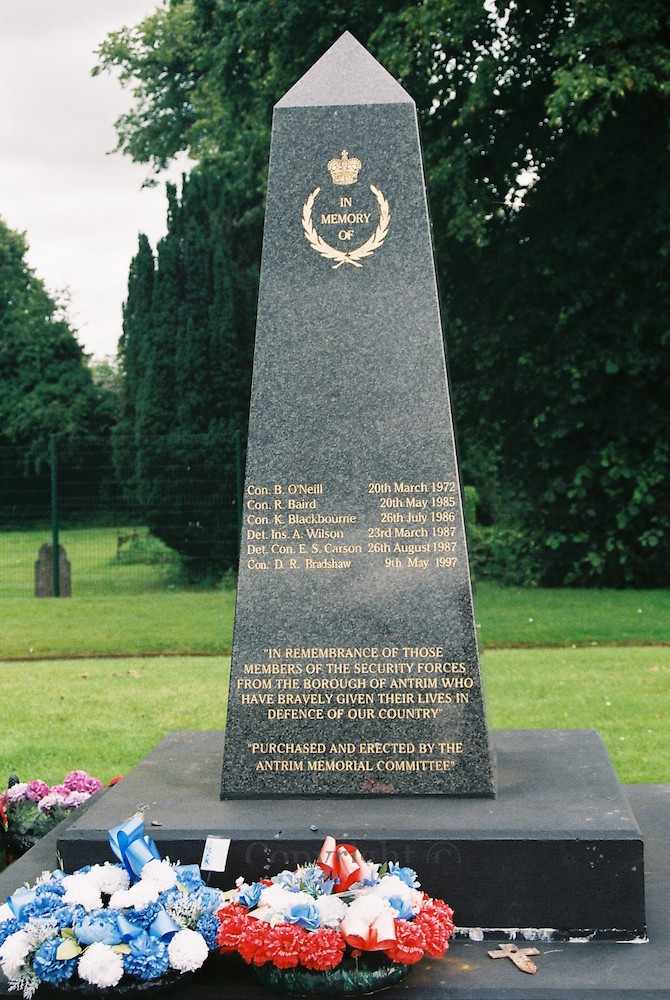
“In remembrance of those members of the security forces from the borough of Antrim who have bravely given their lives in defence of our country. Purchased and erected by the Antrim Memorial Committee”.
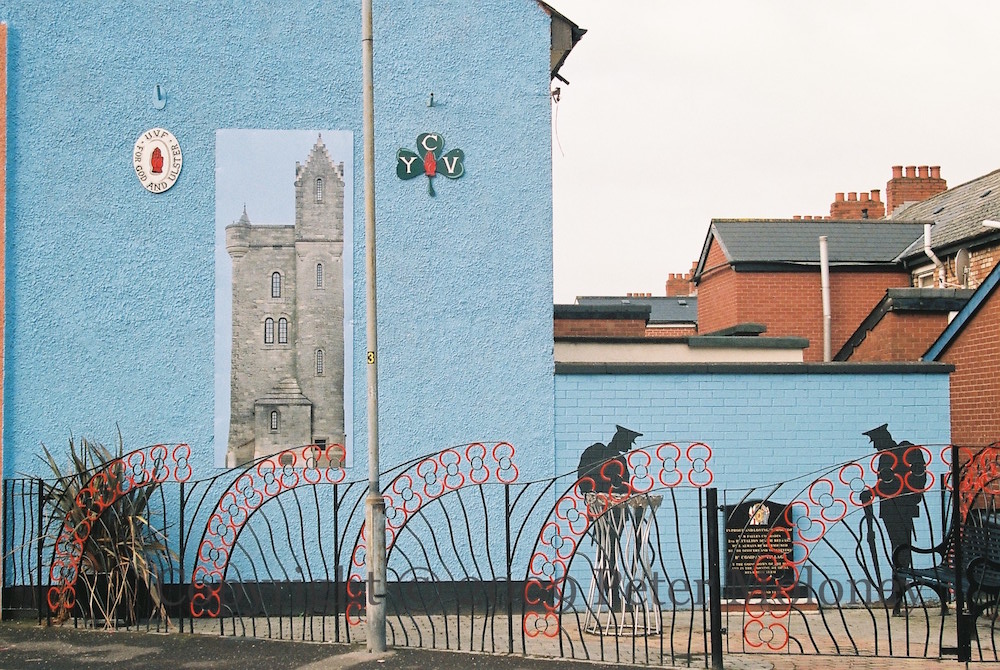
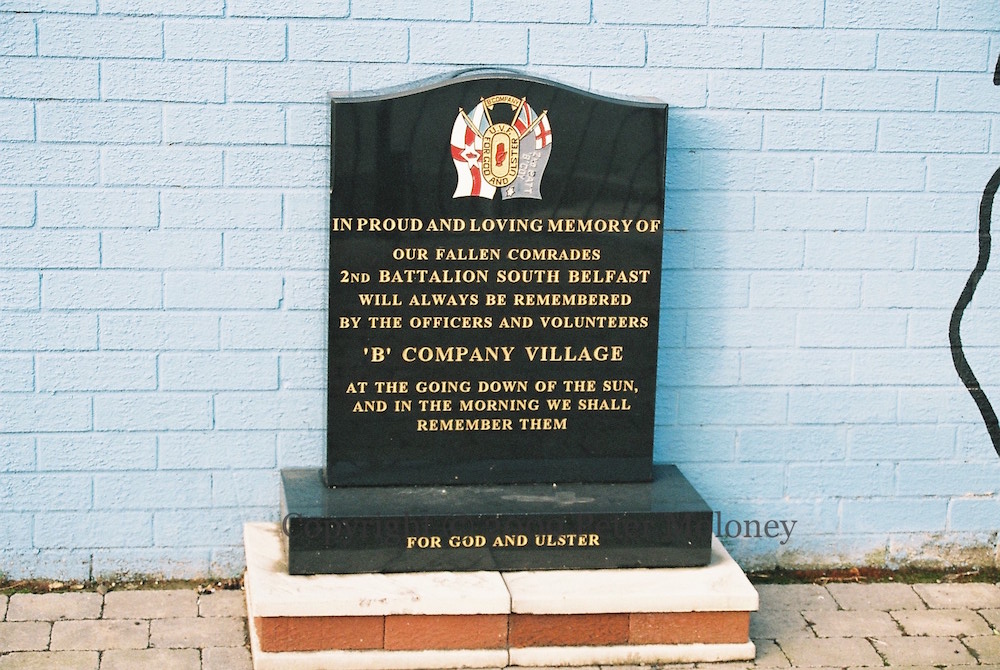
“In proud and loving memory of our fallen comrades 2nd battalion south Belfast will always be remembered by the officers and volunteers ‘B’ company Village. At the going down of the sun and in the morning we shall remember them. For God and Ulster.” Combined Ulster Volunteers (on the left, with Thiepval Tower and insignia) and UVF (on the right) memorial garden in Moltke Street, Belfast.