“I ndıl chuımhne orthu sıúd a bhaın le ceantar Bhaıle Bocht agus a throıd ar son saoırse na hÉıreann. Ar dheıs Dé go raıbh a n-anamacha. Erected in proud and loving memory of all those associated with the district of Ballybot who were part of Ireland’s struggle for freedom. Muıntır Bhaıle Bocht a thóg an leacht cuımhneacháın seo. Nochtadh é ar an 12ú lá de Mheán Fómhaır 1997.” Dorans Hill, Newry.
“I ndılchuımhne orthu sıúd ó pharóıste N. Muıre a thug a rıabh [raıbh] acu ar son saoırse na hÉıreann. Erected in proud and loving memory of all those from St Mary’s parish, Newry who have fought for Irish freeedom. Ar dheıs Dé go raıbh a n-anamacha. Pobal pharóıste N. Muire a thóg an leacht cuımhneacháın seo.” Pike-men are used on the base as a generic symbol of Irish nationalism, rather than mention of any particular group. In later years, stones to the Signatories and the hunger strikers will be added, along with graveside volunteers in modern garb.
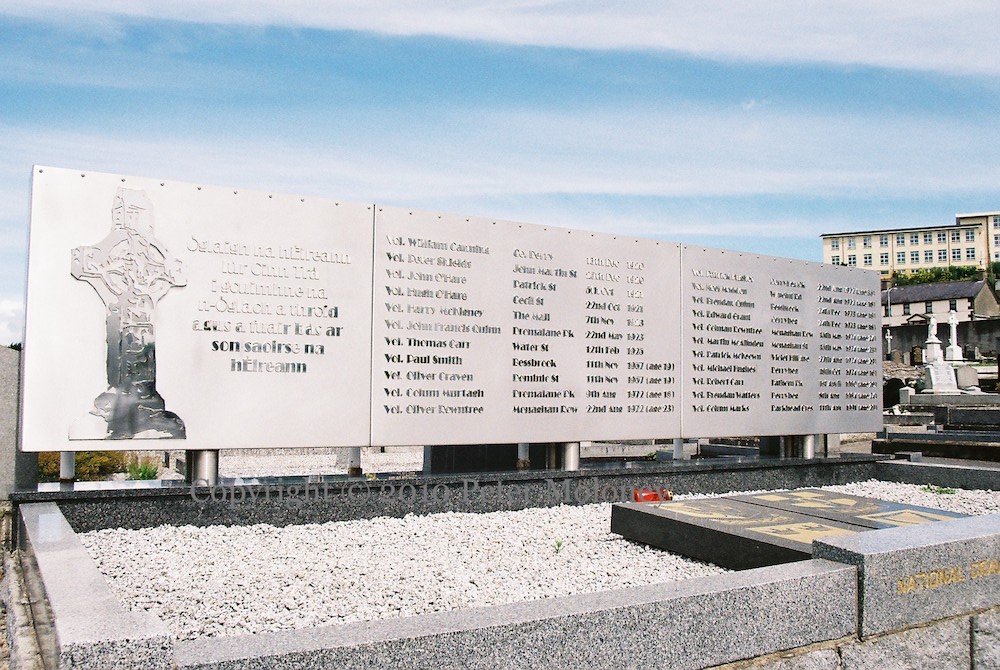
“Óglaıgh na hÉıreann Iúr Cınn Trá [Newry] ı gcuımhne na n-Óglaıgh a throıd agus a fuaır bás [who fought and died] ar son saoırse na hÉıreann”. National Graves Association headstone over the republican plot in St Mary’s cemetery. Old Warrenpoint Road, Newry.
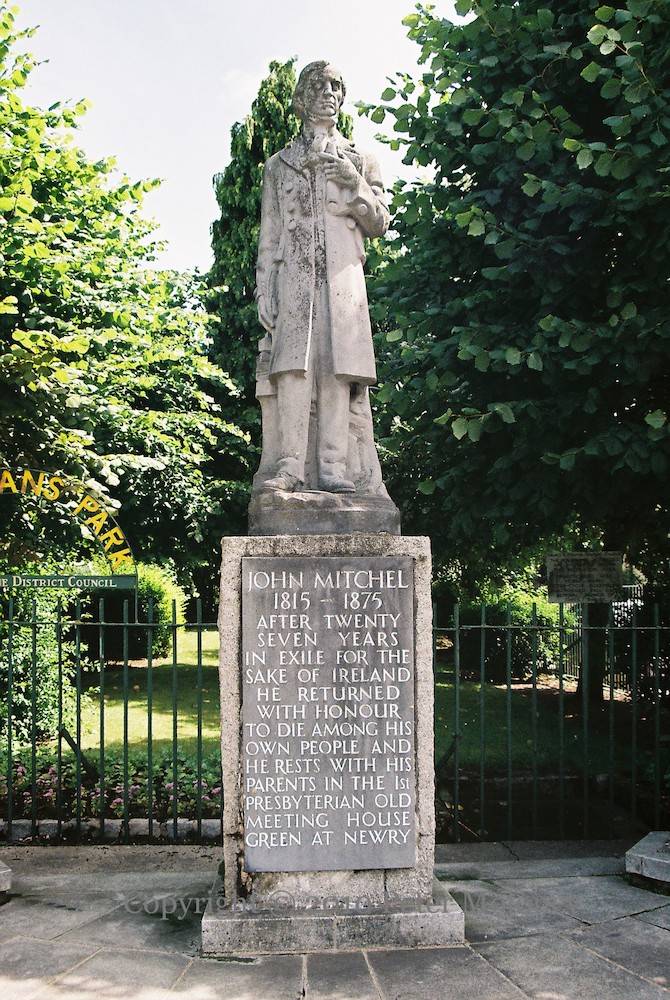
“John Mitchel 1815 – 1875 After twenty years in exile for the sake of Ireland he returned with honour to die among his own people and he rests with his parents in the 1st Presbyterian old meeting house green at Newry.” Mitchel graduated from Trinity at 19 and became an attorney in Newry and Banbridge before becoming a writer and editor for The Nation (the phrase “England’s difficulty is Ireland’s opportunity” comes from an 1845 article) and then The United Irishman. After 16 editions, he was arrested and convicted of treason and sent to penal colonies in Bermuda and Tasmania. He escaped to the USA, where he was an ardent supporter of slavery. When slavery was abolished, he again took up the cause of Ireland, returned to Ireland, won the Westminster seat for Tipperary but was barred, as a felon, from taking it, and died unexpectedly at age 59 (WP).
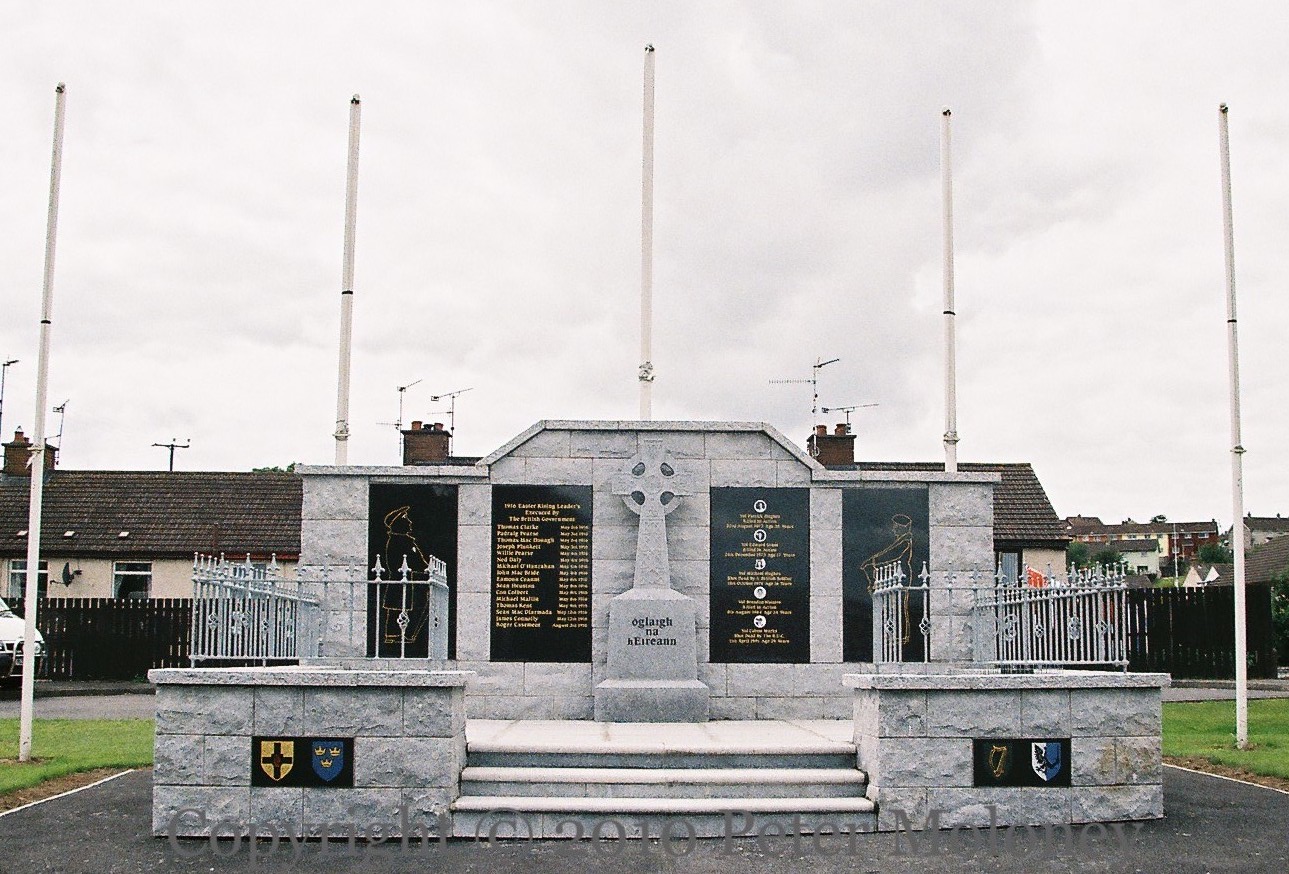
Monument in Newry’s Derrybeg estate. The central panels are to (left) the “1916 Easter Rising leader’s [sic] executed by the British government” and (right) Newry IRA volunteers Patrick Hughes, Edward Grant, Michael Hughes, Brendan Watters, and Colum Marks.
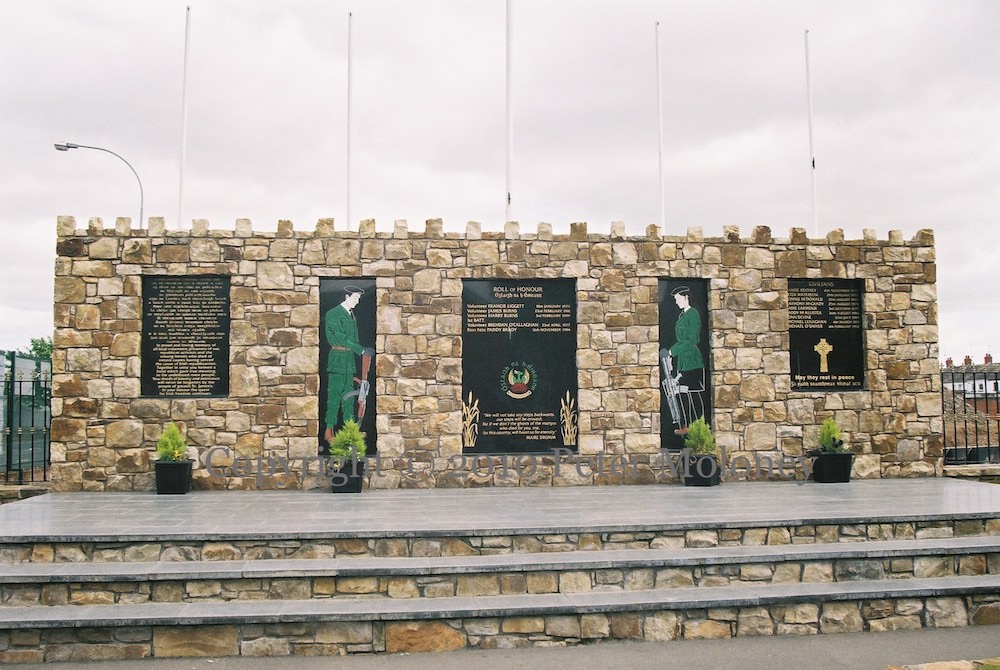
“In proud and loving memory of all local volunteers, prisoners of war, republican activists and the unsung heroes who died of natural causes having served the cause of Irish republicanism [“sean óglach” on the individual plaques]. Together in unity you formed a bond which gave true meaning to the undefeated risen people. Your deeds of bravery and resistance will never be forgotten by the people of greater St. James’s. In your honour the quest for Irish freedom continues.”
With the famous “our steps will be onward” quote from Máıre Drumm at an anti-internment rally in Dunville Park on 10th August, 1975 (RN).
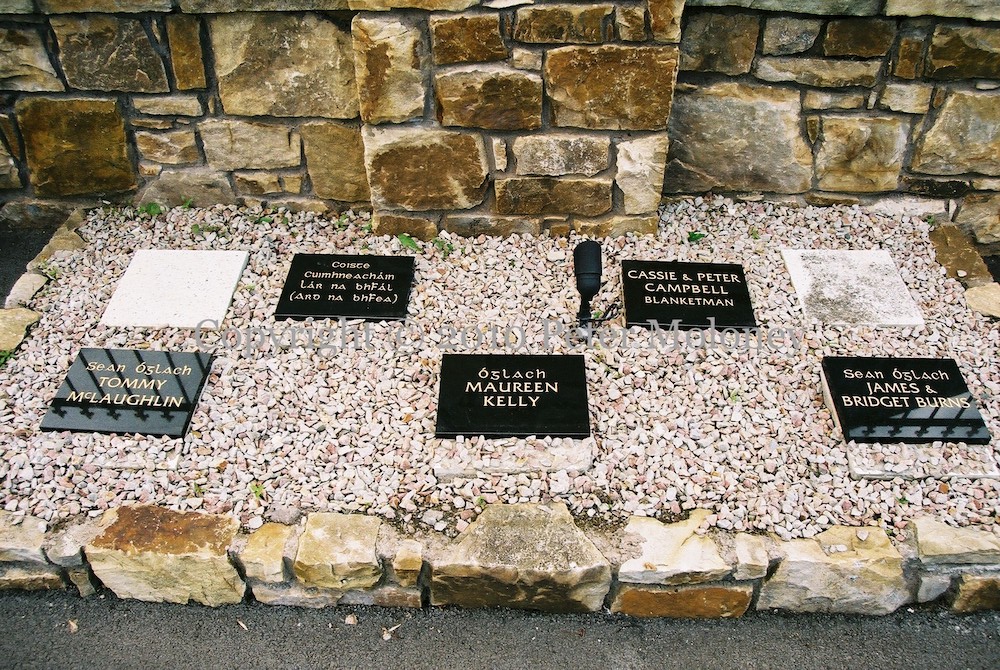
Coıste Cuımhneacháın Lár Na bhFál/Ard Na bhFeá [Memorial committee of mid-Falls/Beechmount].
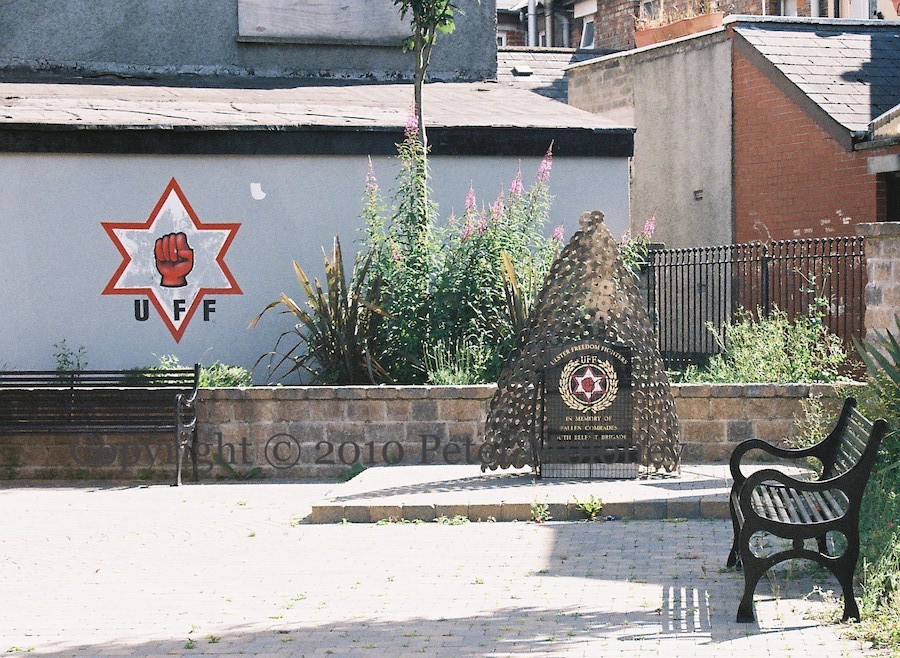
This UDA memorial garden is in Lemberg Street, at the top of (south Belfast) Roden Streeet. The plaque to John McMichael and eleven others would later be moved to Sandy Row. The stone on the right reads “In memory of fallen comrades south Belfast brigade”.
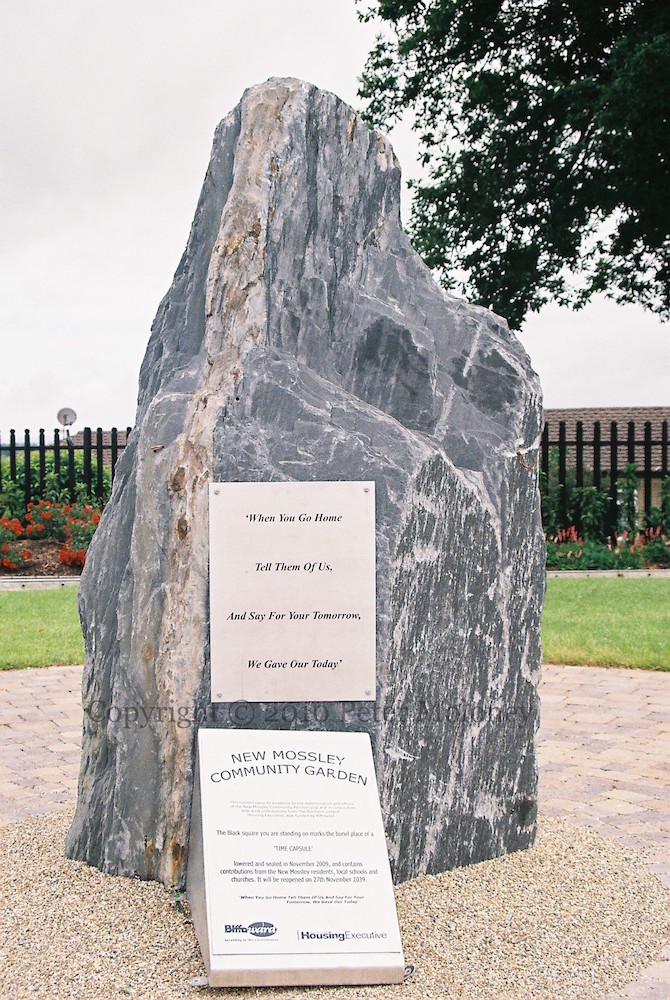
“When you go home/Tell them of us/And say for your tomorrow/We gave our today.” is a WWII epitaph by John Maxwell Edmonds in Kohima Cemetery. It is shown here on a plaque on a stone in New Mossley community garden (also the site of a time capsule).
“In proud memory of our fallen comrades from the officers and members of South Belafst 2nd Battalion [‘A’ Company Donegall Pass] ‘Glorious on the graves of heroes, kindly upon all those who have suffered for the cause. Thus will shine the dawn. They gave their tomorrow for our today.'” UVF memorial garden in Walnut Street.








 Peter Moloney Collection