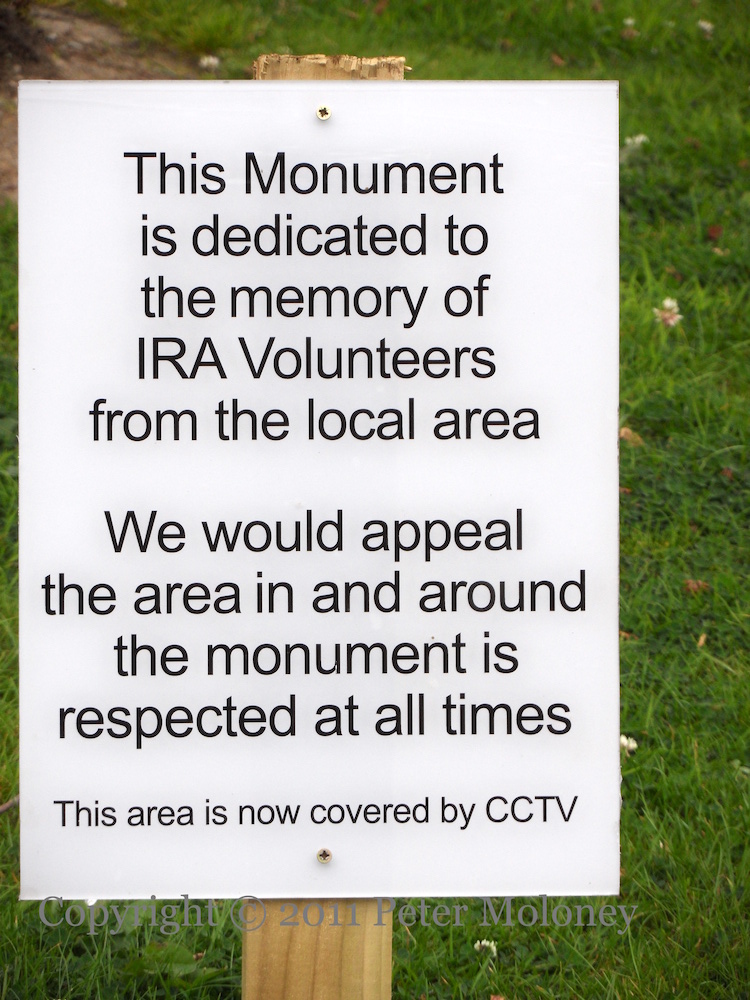
“This monument is dedicated to the memory of IRA Volunteers from the local area [1st Battalion, Derry Brigade]. We would appeal the area in and around the monument is respected at all times. This area is now covered by CCTV.”
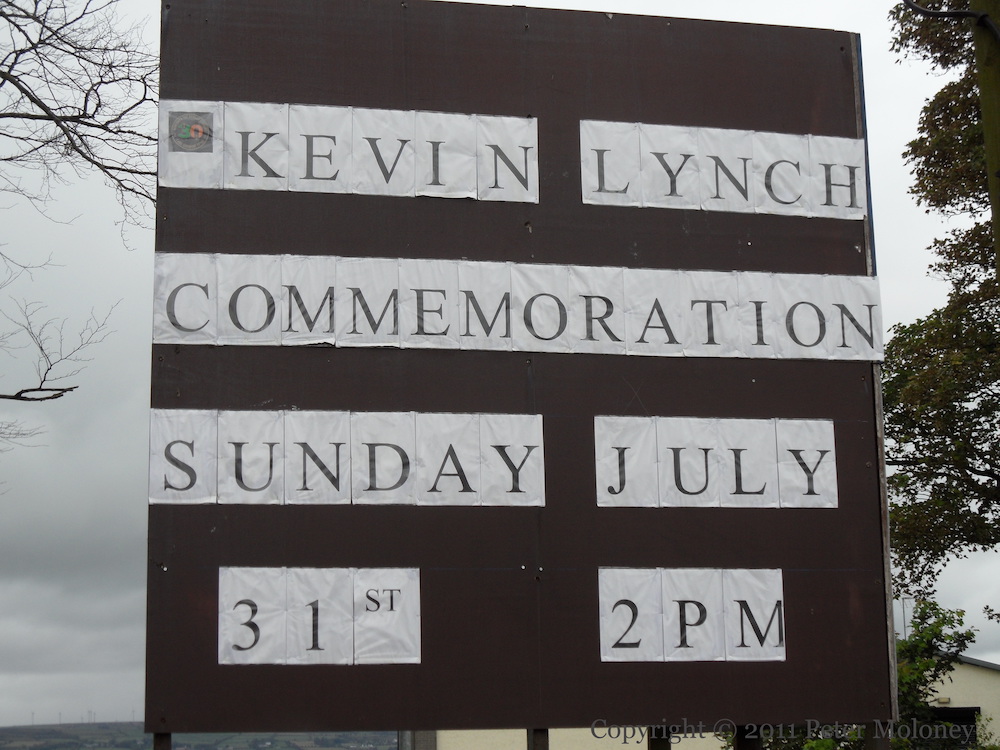
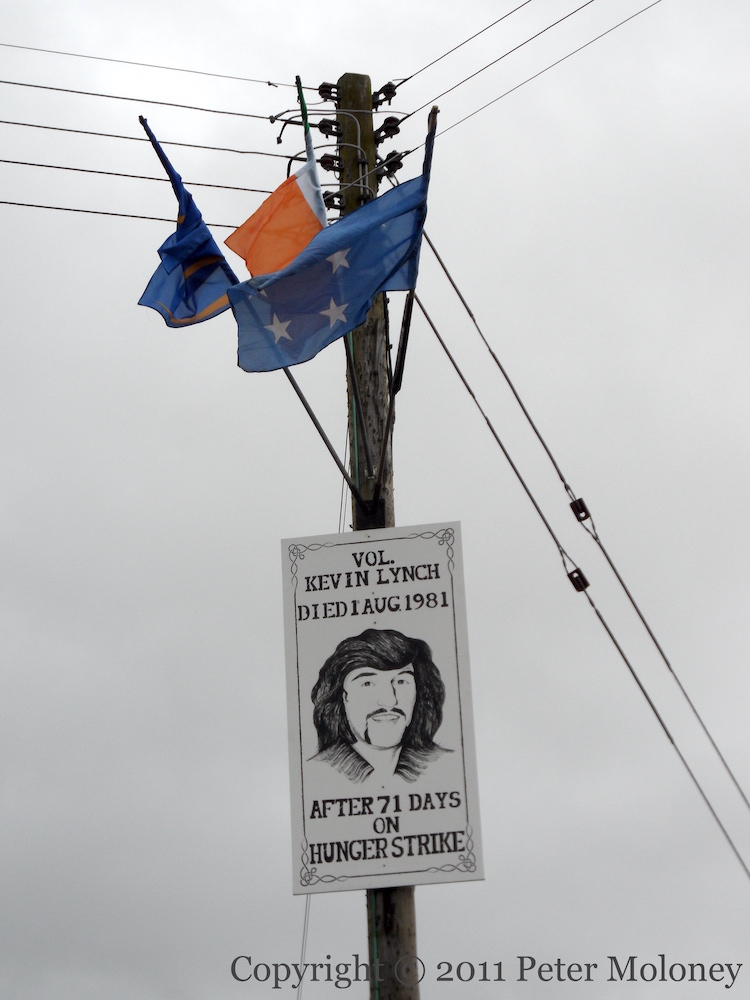
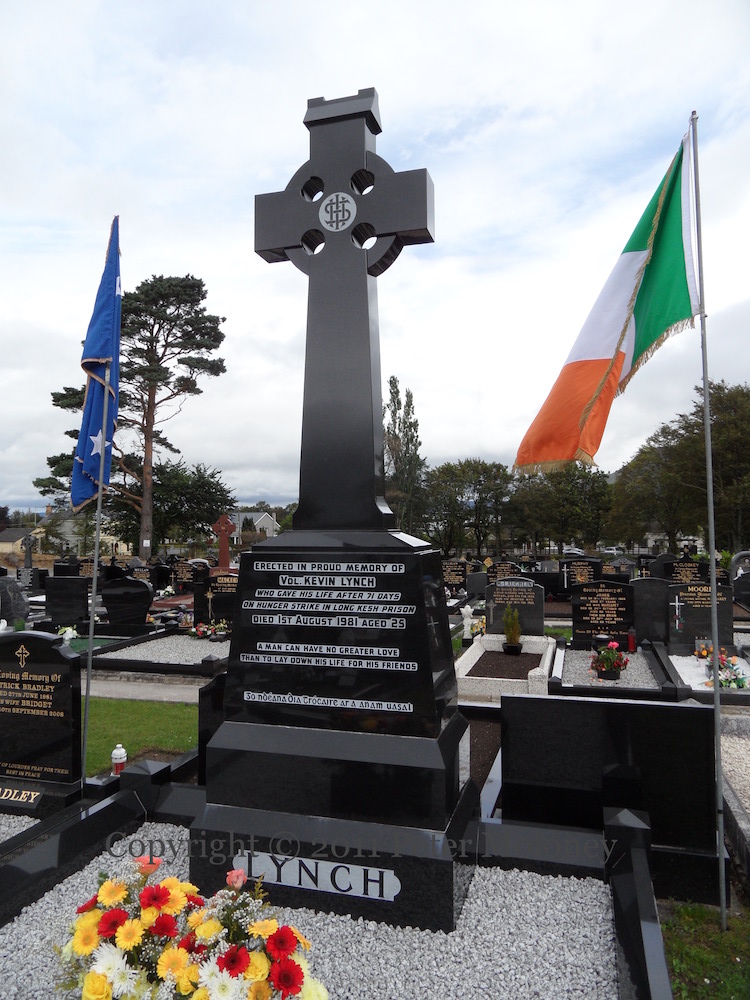
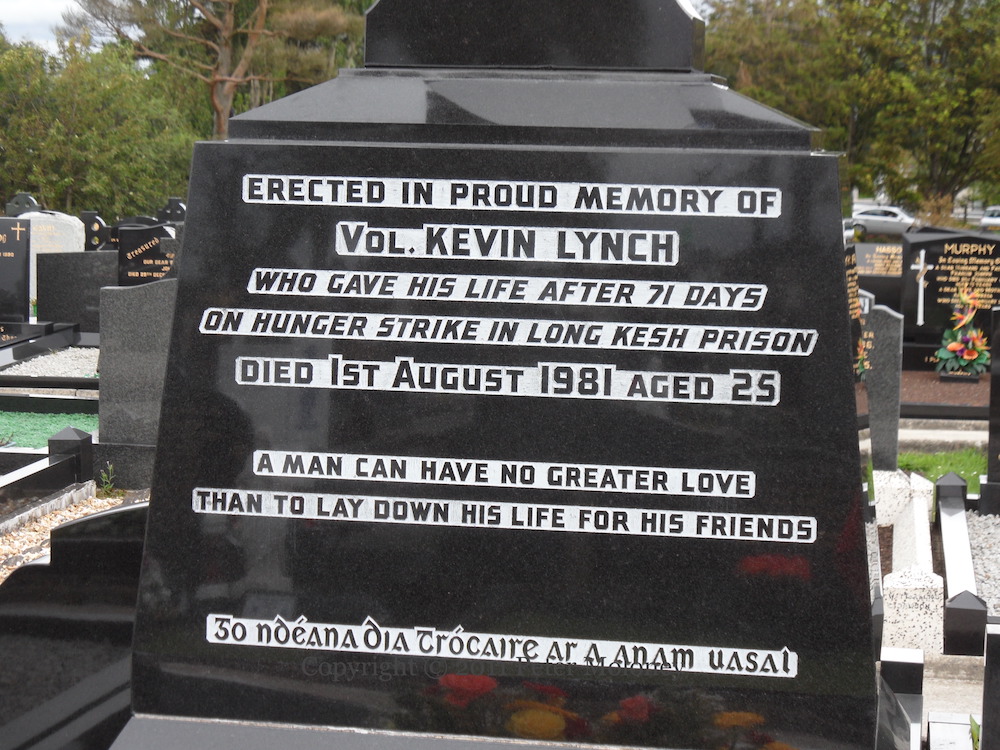
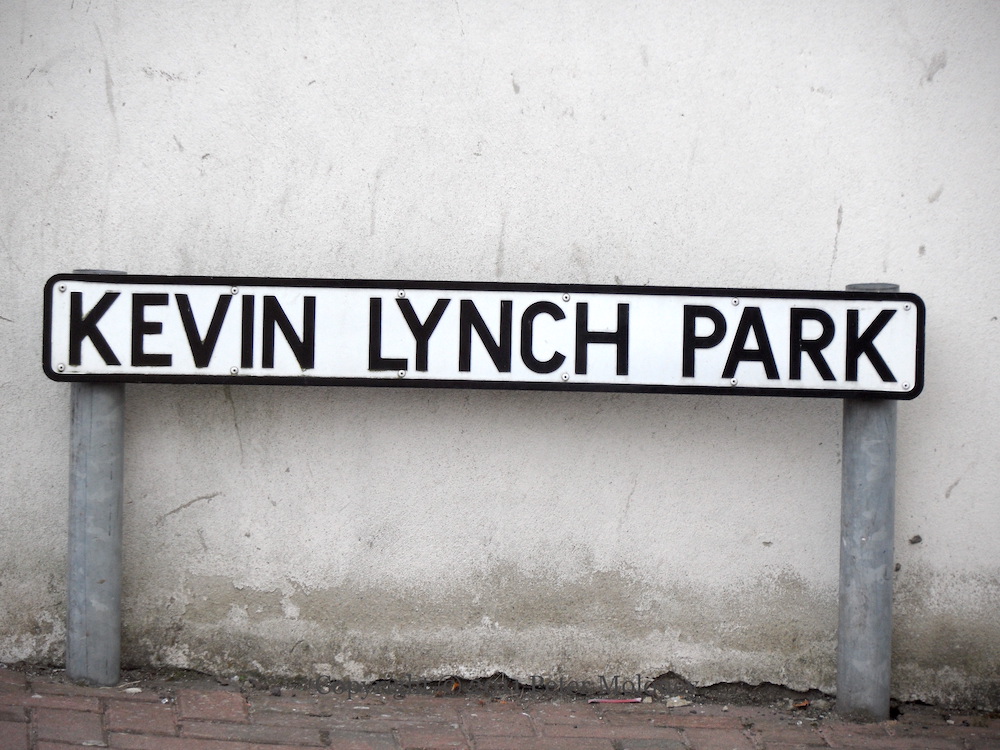
Kevin Lynch, the seventh of the 1981 hunger strikers to die, is buried in Dungiven Cemetery. He is commemorated annually in the town. These images were taken on the day of the 30th anniversary commemoration.
“Their sacrifice is our reward”. With the names of locals who served in the Great War 1914-1918, World War II 1939-1945, Korea 1950-1953, and Northern Ireland.
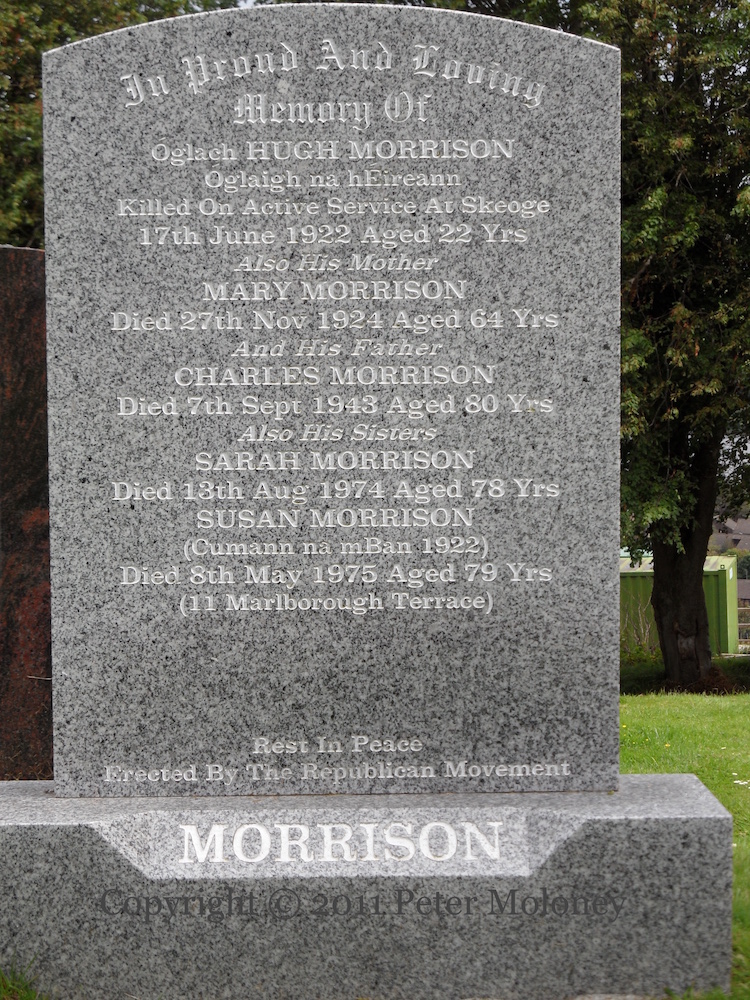
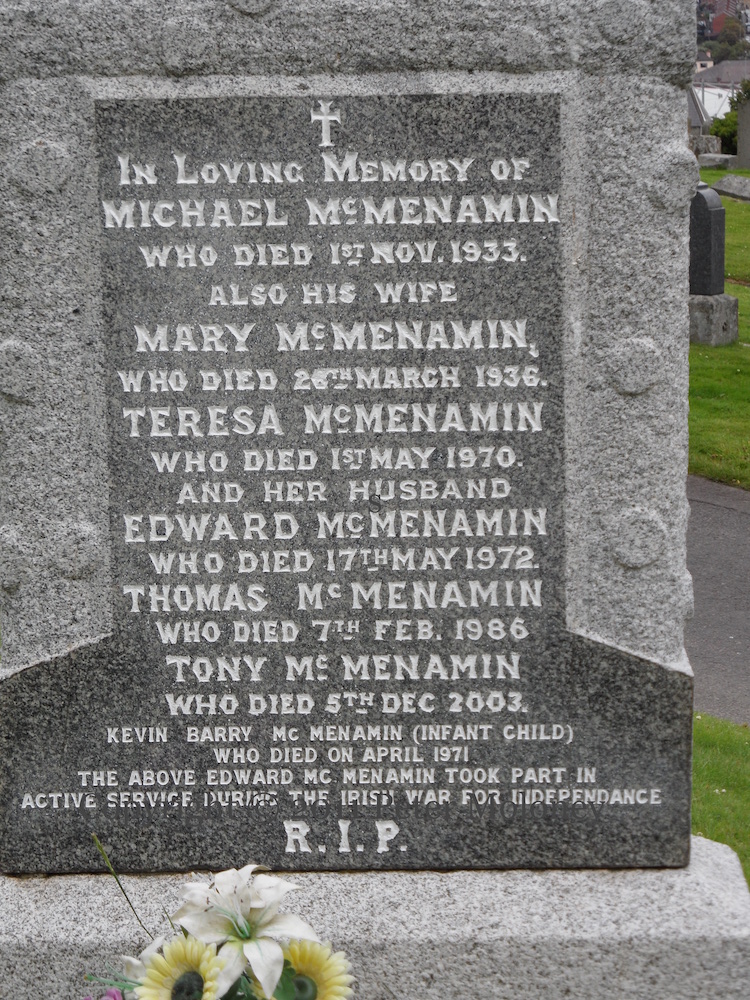
These are four headstones from City Cemetery, Derry, to Irish nationalists who served and/or were killed in the 1920s. In order, they are to “James McGlinchey was founder and commander of Irish National Volunteers in Derry c. 1912-1922”; “Óglach Hugh Morrison, killed on active service at Skeoge 17th June, 1922 [and] Susan Morrison, Cumann na mBan”; “John Gallagher died 21-6-1920 killed in June riots, Derry [and] Hugh Gallagher died 12-12-1922 shot by Free State soldiers at Drumboe Castle”; and, “Edward McMenamin active service during the Irish war for independence.”
The small plaque in the alcove behind the Eastway club is replaced by a much more substantial stone: “South-East Antrim Brigade. This memorial is dedicated to the memory of the officers and members of our organisation who were murdered by the enemies of Ulster and to those who paid the supreme sacrifice whilst on active service during the present conflict. Quis separabit. ‘They shall not grow old as we that are left grow old/Age shall not weary them nor the years condemn/At the going down of the sun and in the morning/We will remember them’.”
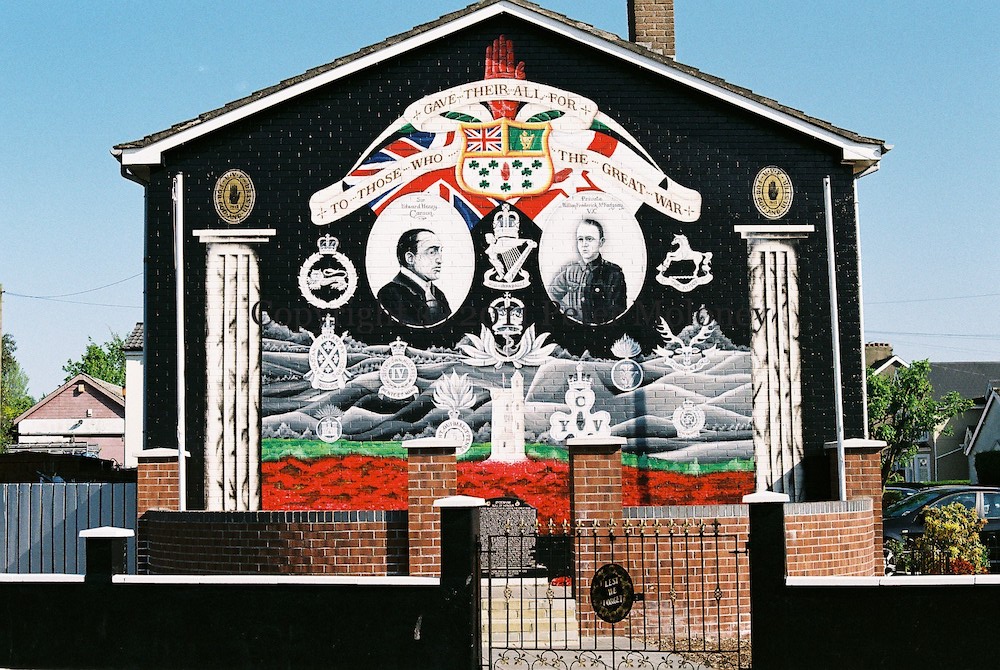
The portraits are of Edward Henry Carson and Private William McFadzean VC; the stone is a “Sydenham Roll Of Honour”. The insignia of various British Army units are shown over the hills around Thiepval and a sea of poppies. Seen previously from a distance in 2010.
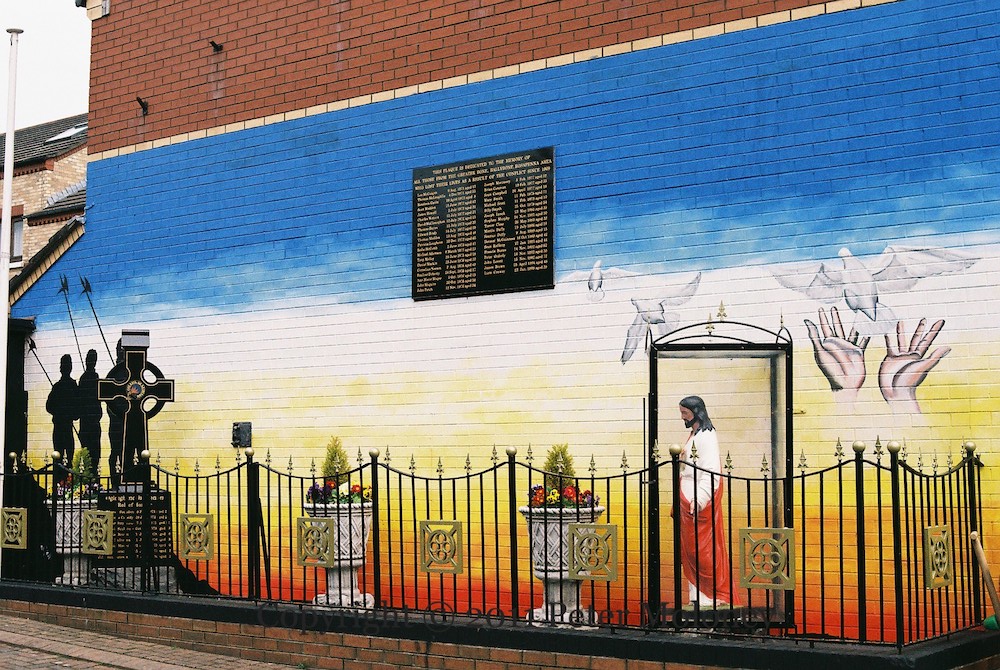
A mural of hands releasing doves is added to the memorial garden in Clós Ard An Lao, in Ardoyne (and a lower plaque is removed). In the middle is a plaque in remembrance of 38 local people (“from the greater Bone, Ballybone, Rosapenna area”) who died during the troubles, on the left, next to the pikemen, is a celtic cross with an Óglaıgh Na hÉıreann roll of honour; on the right is a statue of Jesus with a sacred heart.
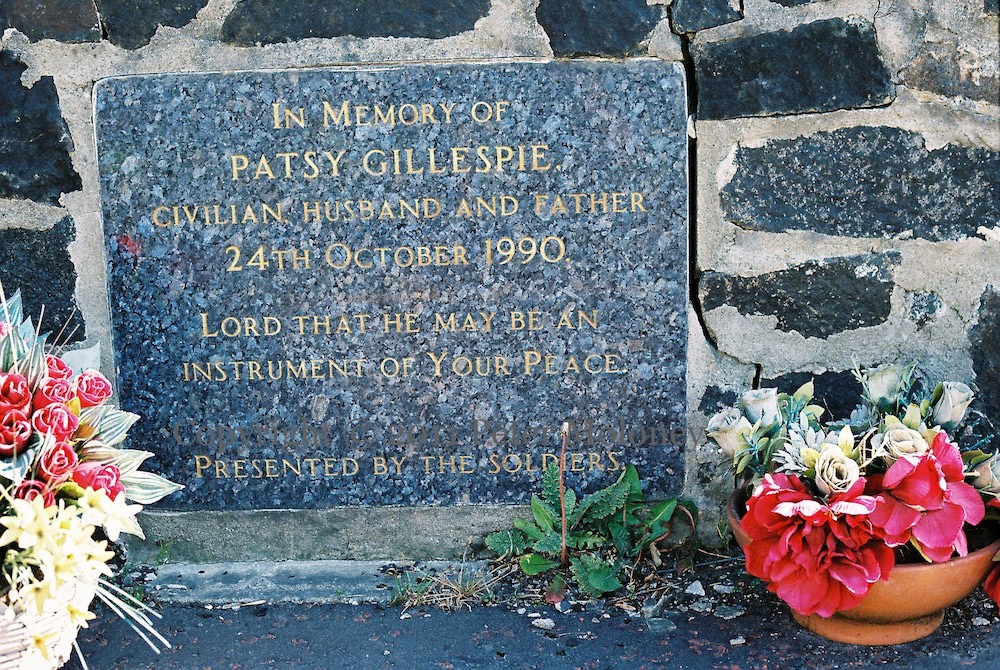
“Civilian, husband and father” Patsy Gillespie worked as a cook at a British Army base in Londonderry. On October 24th, 1990, he was abducted from his Shantallow home and forced to drive a van loaded with 1,000 pounds of explosives to the base at Coshquin, where it killed five British Army soldiers and Patsy himself (WP). The stone “presented by the soldiers” is opposite the bar on the Buncrana Road.
The mural replaces one to the UVF’s Platoon 5 , A Co., and the memorial stone is dedicated to it (and not to the WWI soldiers from the 36th (Ulster) Division who died in the charge from Thiepval Wood, July 1st, 1916): “This stone is dedicated to the memory of the fallen volunteers of No. 5 platoon A company 1st Belfast battalion Ulster Volunteer Force. ‘As poppy petals gently fall/Remember us who gave our all/Not in the mud of foreign lands/Nor buried in the desert sands//In Ulster field and farm and town/Fermanagh’s lanes and Drumlin’d Down/We died that violent death should cease/And Ulstermen might live in peace’ Lest we forget.” For the side walls, see Thiepval St.










 Peter Moloney Collection