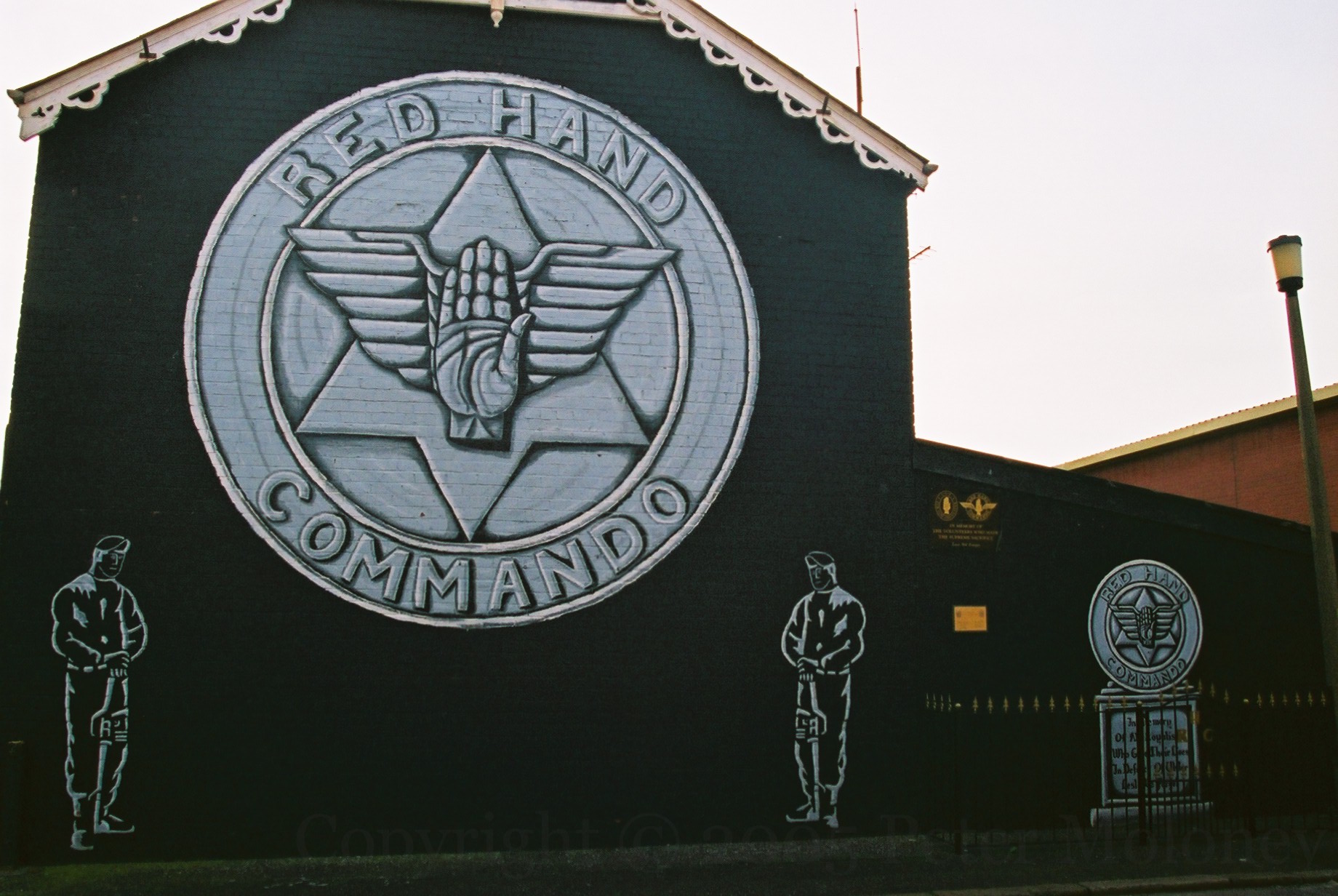
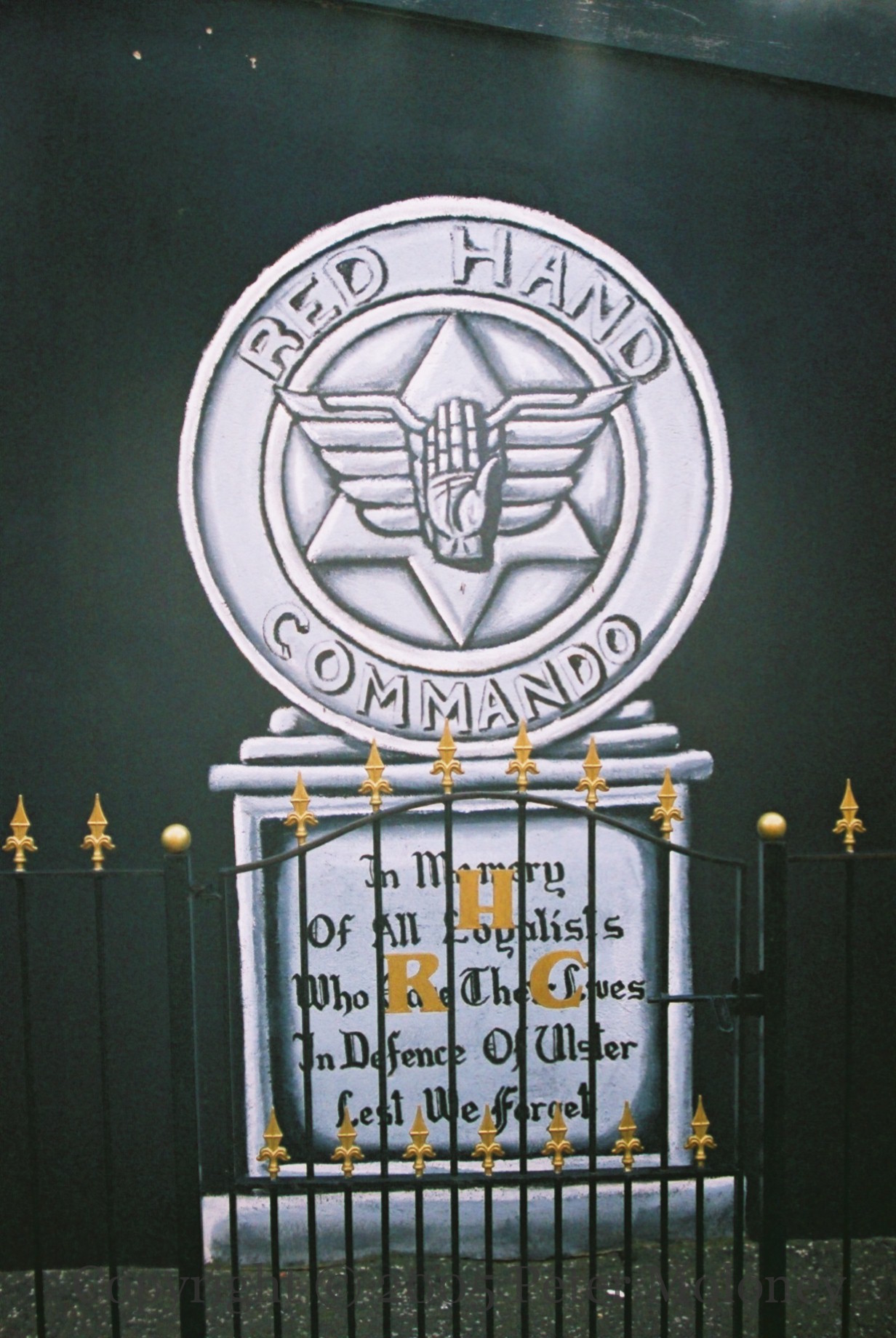
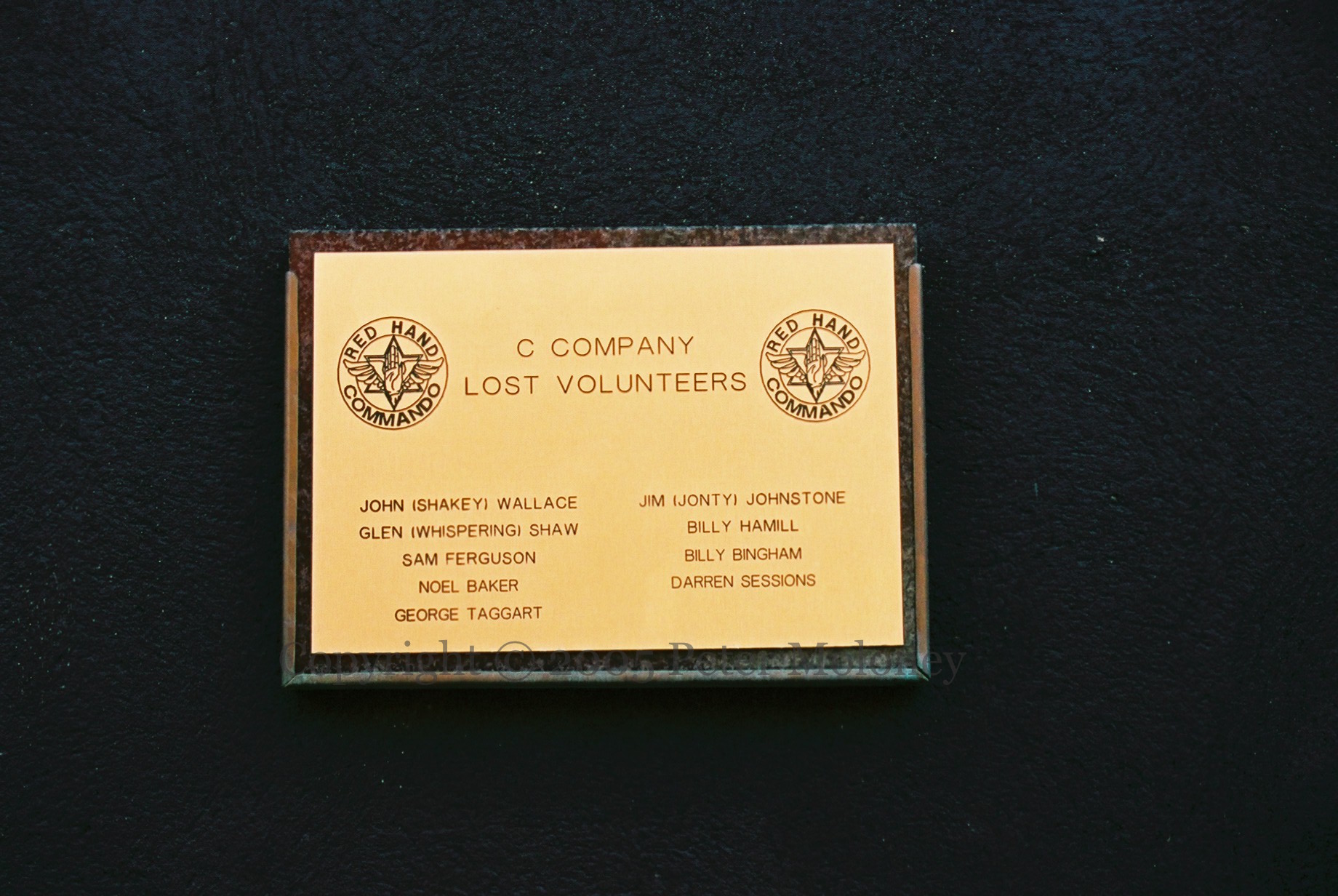
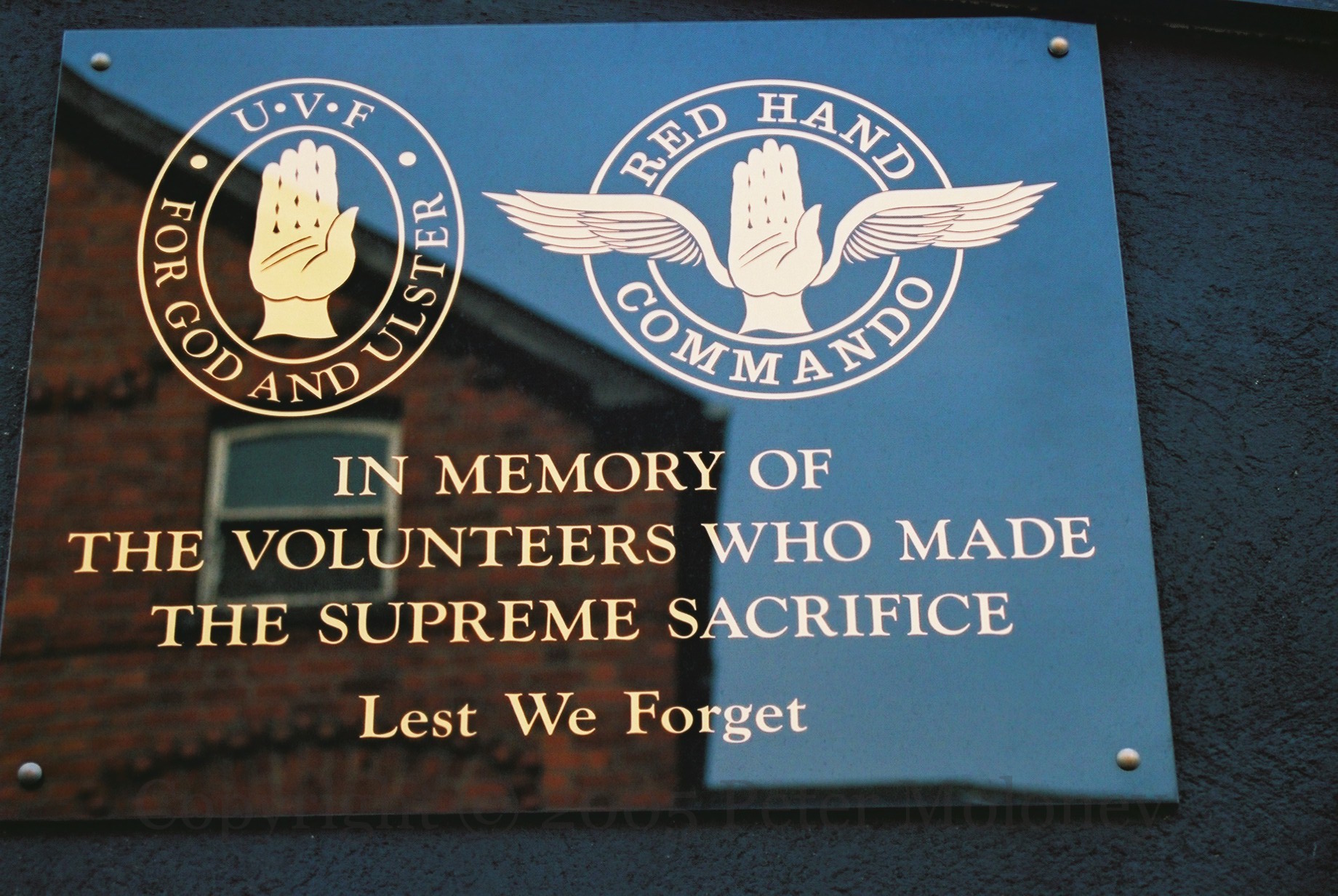
“C Coy lost volunteers,” “In memory of the volunteers who made the supreme sacrifice” and “In memory of all loyalists who gave their lives – lest we forget.” Red Hand Commando mural and plaques in Hunt Street, just off the Newtownards Road, Belfast.
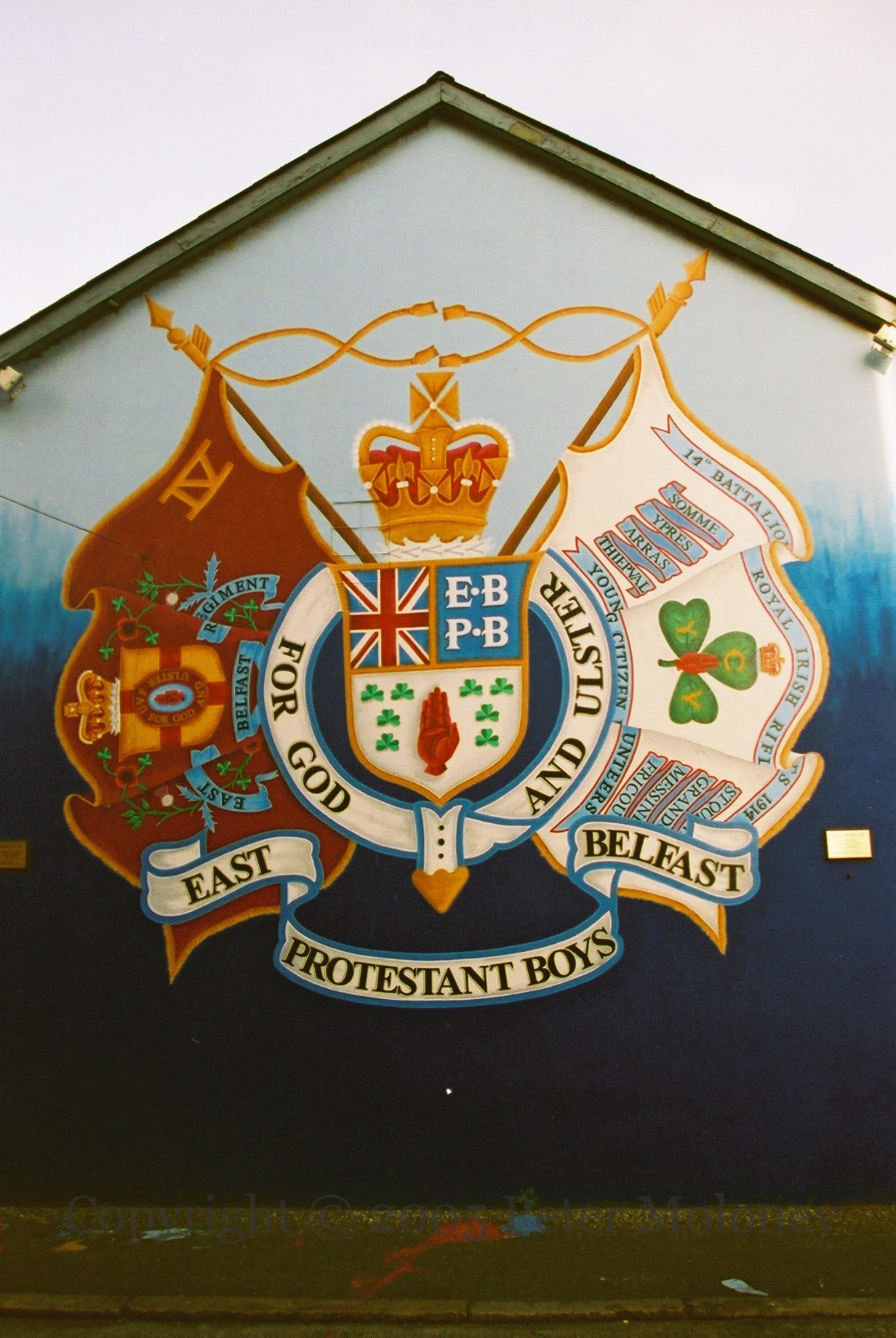
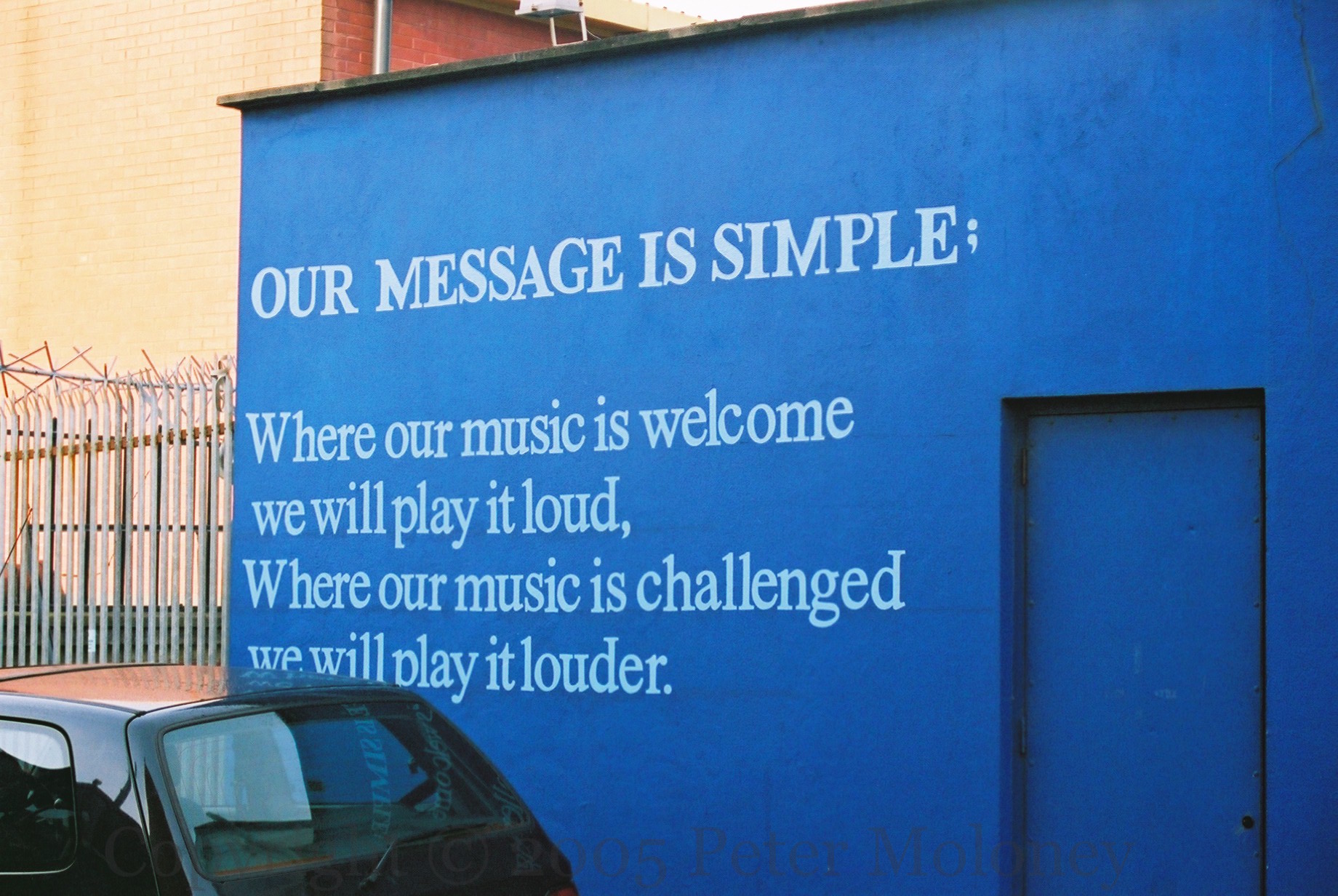
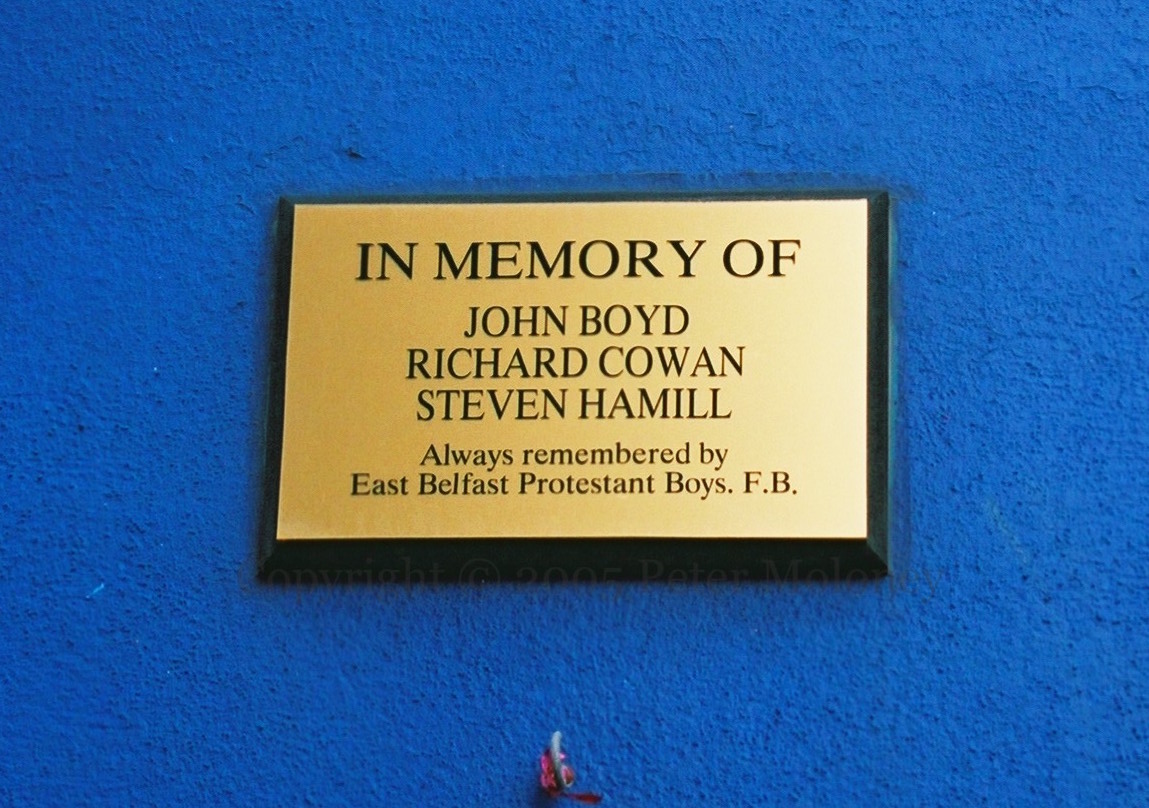
The 36th Division East Belfast regimental flag and the flag of the YCV, rather than of the Ulster Volunteers, flank a modified crest of the Division – the letters “EBPB” have replaced a harp and crown. “Our message is simple: Where our music is welcome we will play it loud; where our music is challenged we will play it louder.” “In memory of John Boyd Richard Cowan Steven Hamill. Always remembers by East Belfast Protestant Boys FB.” (Fb | tw)
Bouquets of tricoloured flowers are placed on the Free Ireland mural at the corner of Beechmount Avenue and Falls Road, Belfast. A hand clasping an Easter lily is manacled by bonds “Made in Britain”. The mural is now in its fifteenth year. For the plaque, see the original 1990 post.
Joe Cahill joined the Fianna in 1937 and was involved in the republican movement from then until his death in 2004, including being in Tom Williams’s company in 1942 and later a founder member and Chief of Staff of the Provisional IRA. In the centre of the image he is at the end of the table at the August 13, 1971, press conference to comment on the introduction of internment (CAIN). He is honoured in the mural above alongside his brothers Tom and Frank Cahill. (Pat O’Hare is painted between Tom and Frank.)
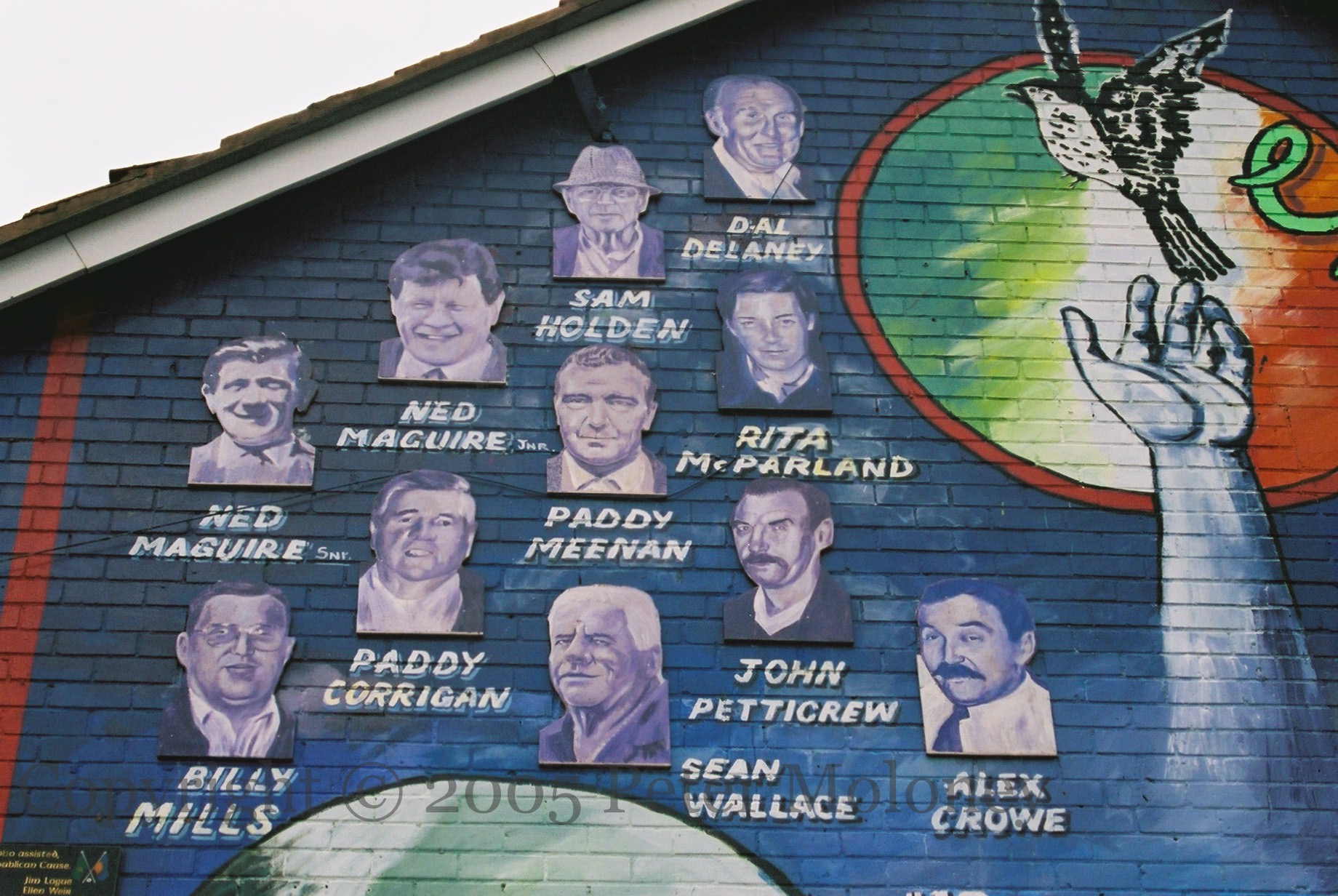
In the top left are small boards with portraits of Ned Maguire Snr, Ned Maguire Jnr, Sam Holden, Dal Delaney, Rita McParland, Paddy Meenan, Paddy Corrigan, Sean Wallace, John Petticrew, Alex Crowe.
“Never will they label our liberation struggle as criminal – Bobby Sands [March 6th Diary].”
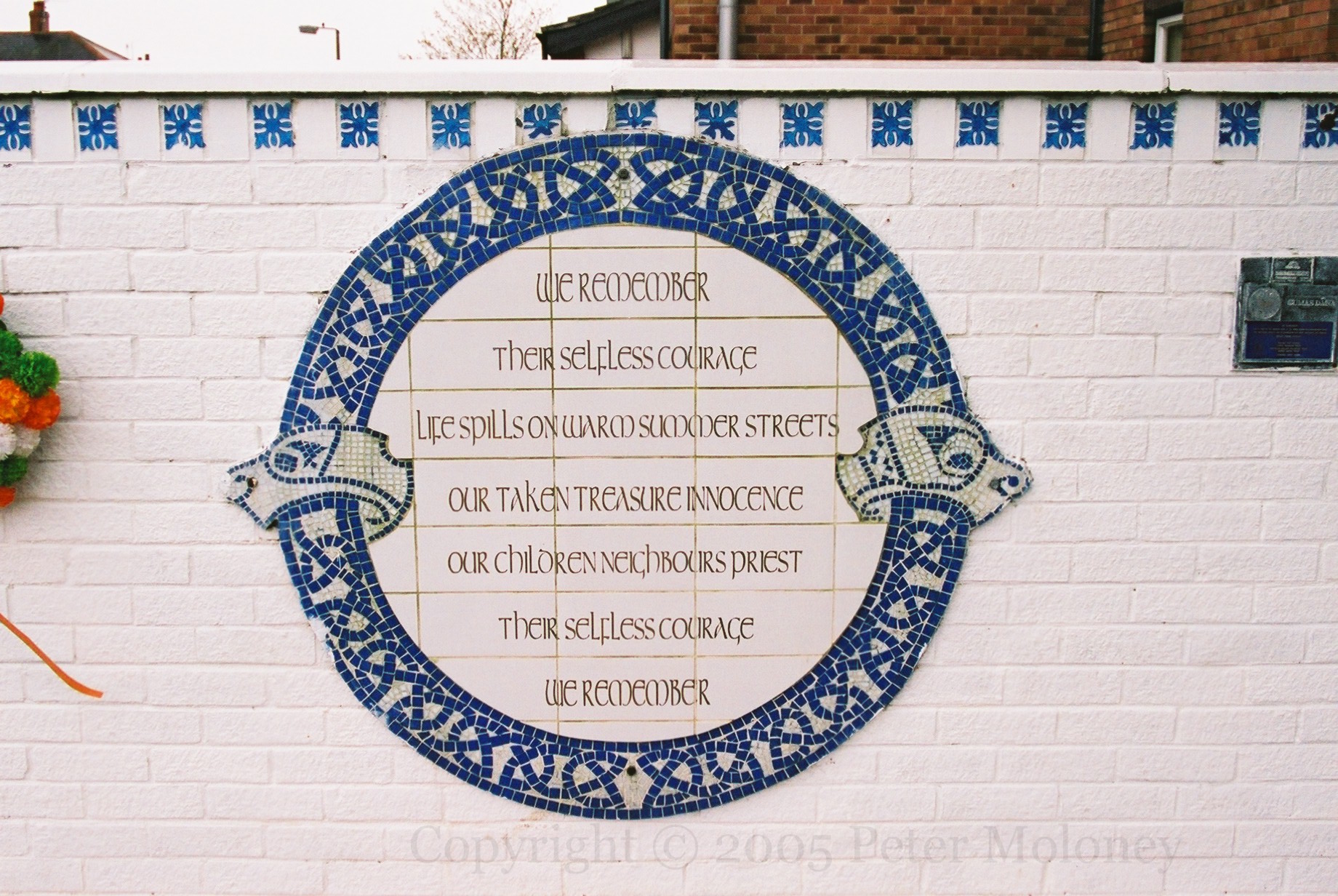
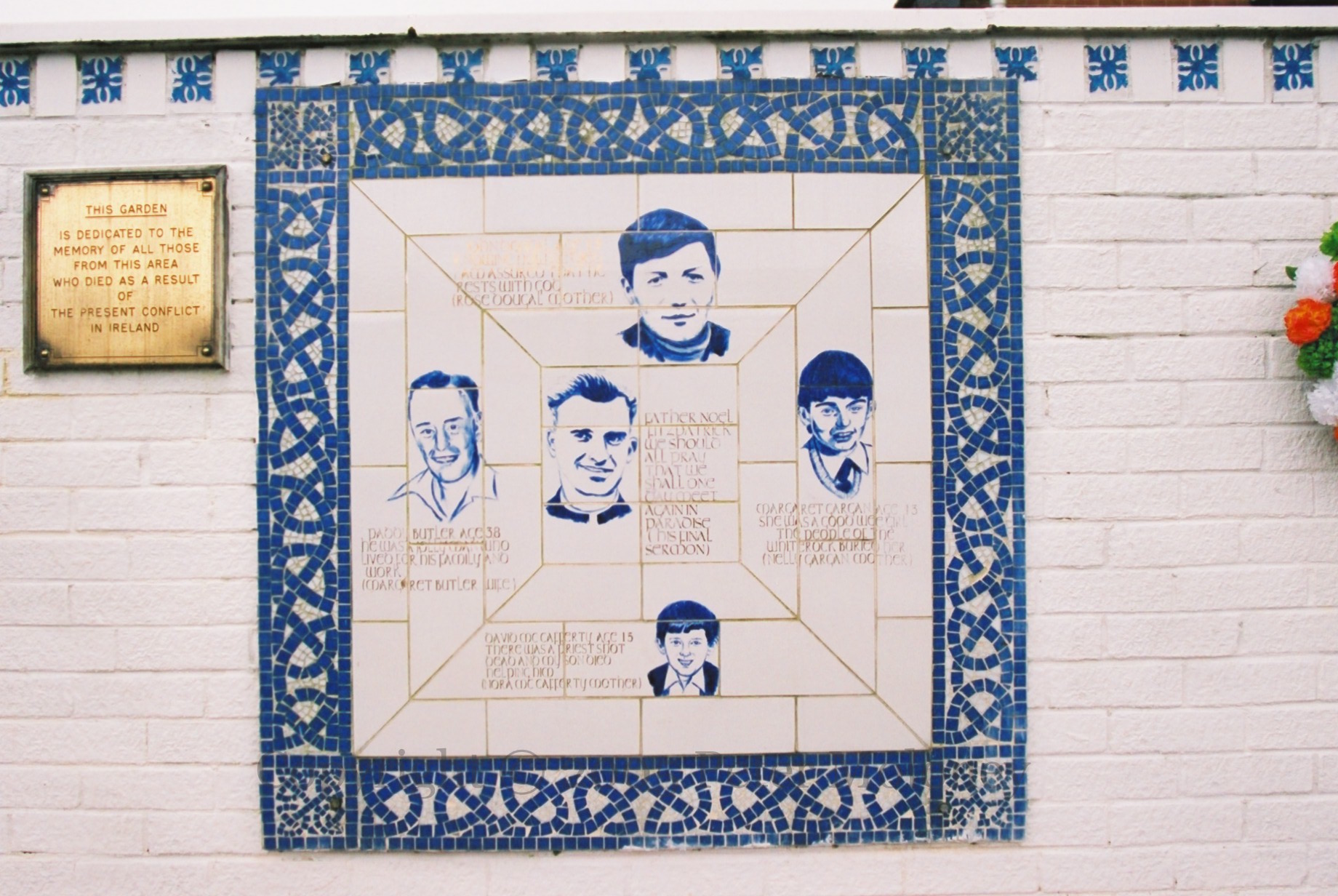
British Army snipers ensconced into Corry’s timber yard shot dead five people, including three teenagers, from Springhill and Westrock on the summer night of July 9th, 1972. All were unarmed. These images are from the Westrock-Whiterock memorial gardens (“gairdíní cuimhneacháin”) in Westrock Drive, west Belfast.
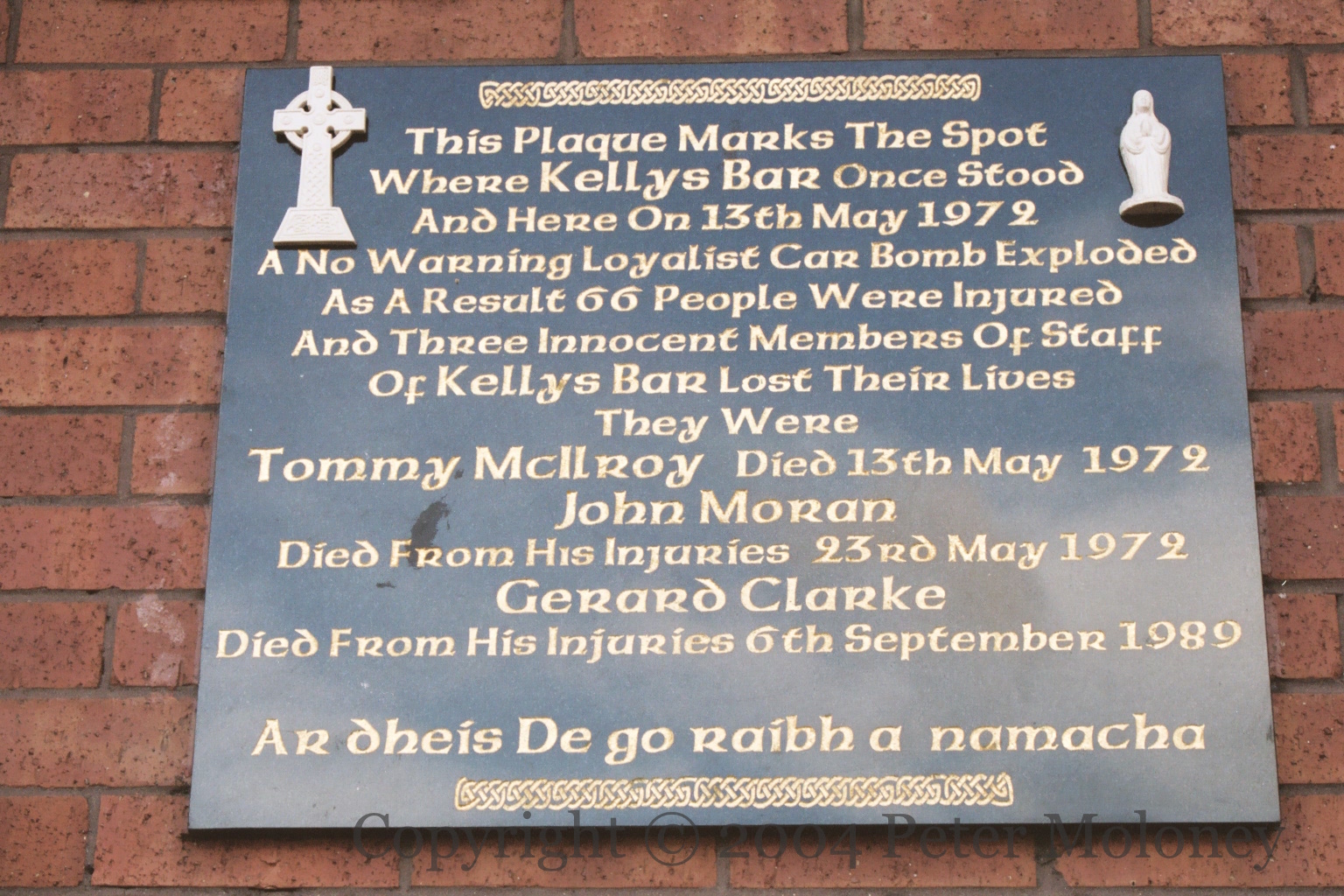
“This plaque marks the spot where Kellys Bar once stood and where on 13th May 1972 a no warning loyalist car bomb exploded. As a result 66 people were injured and three innocent members of staff of Kellys Bar lost their lives. They were Tommy McIlroy Died 13th May 1972; John Moran Died from his injuries 23rd May 1972; Gerard Clarke Died from his injuries 6th September 1989. Ar dheıs De [sic] go raıbh a namacha [sic].” Punters were watching a World Cup match between England and West Germany when the bomb went off. McIlroy was not killed in the explosion but in the gunfire from Springmartin which followed. More died in the gun battles that followed over the next two days – see the Battle At Springmartin (WP),
Thomas “Kidso” Reilly was brother of Jim Reilly of Stiff Little Fingers and working as road manager for Bananarama when killed on the Springfield Road on August 9, 1983. Ian Thain, of the Light Infantry regiment, was convicted of his murder. Thain served less than three years before being released and rejoining the army (like Lee Clegg). (Guardian) “Always remembered by his friends – Trinity Lodge Celtic Supporters Club.” “Our love is on the wing/We had dreams and songs to sing” is from the song The Fields Of Athenry. Ardmonagh Gardens, Belfast. Previously seen in 2001.
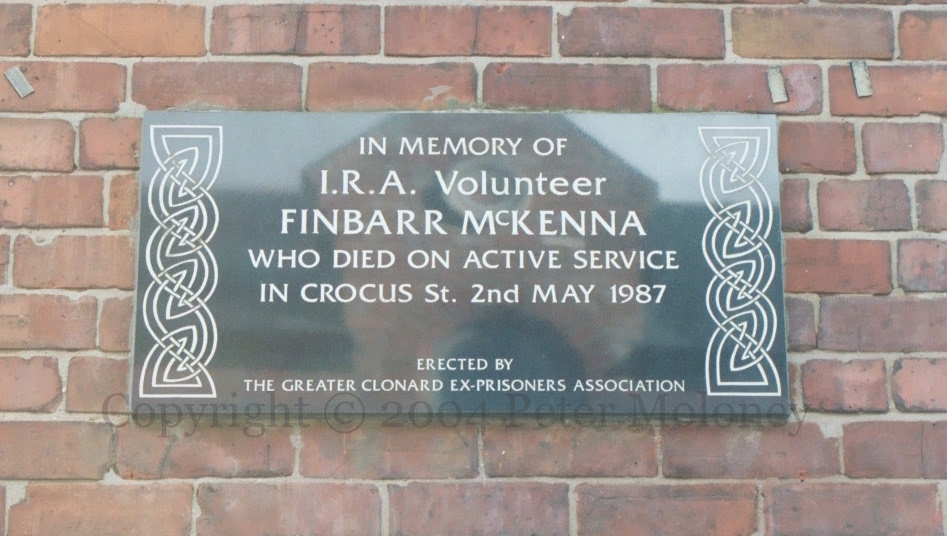
“In memory of IRA Volunteer Finbarr McKenna who died on active service in Crocus St. 2nd May 1987. Erected by the Greater Clonard Ex-Prisoners Association.” McKenna was killed by a bomb going off prematurely.
“I ndıl chuımhne – this plaque is dedicated to the memory of all those from the Falls and Clonard areas who lost their lives as a result of the conflict in our country – A Mhuıre banríon na nGael guıgh orthu.” There was previously a Tom Williams board just to the left of the plaque.
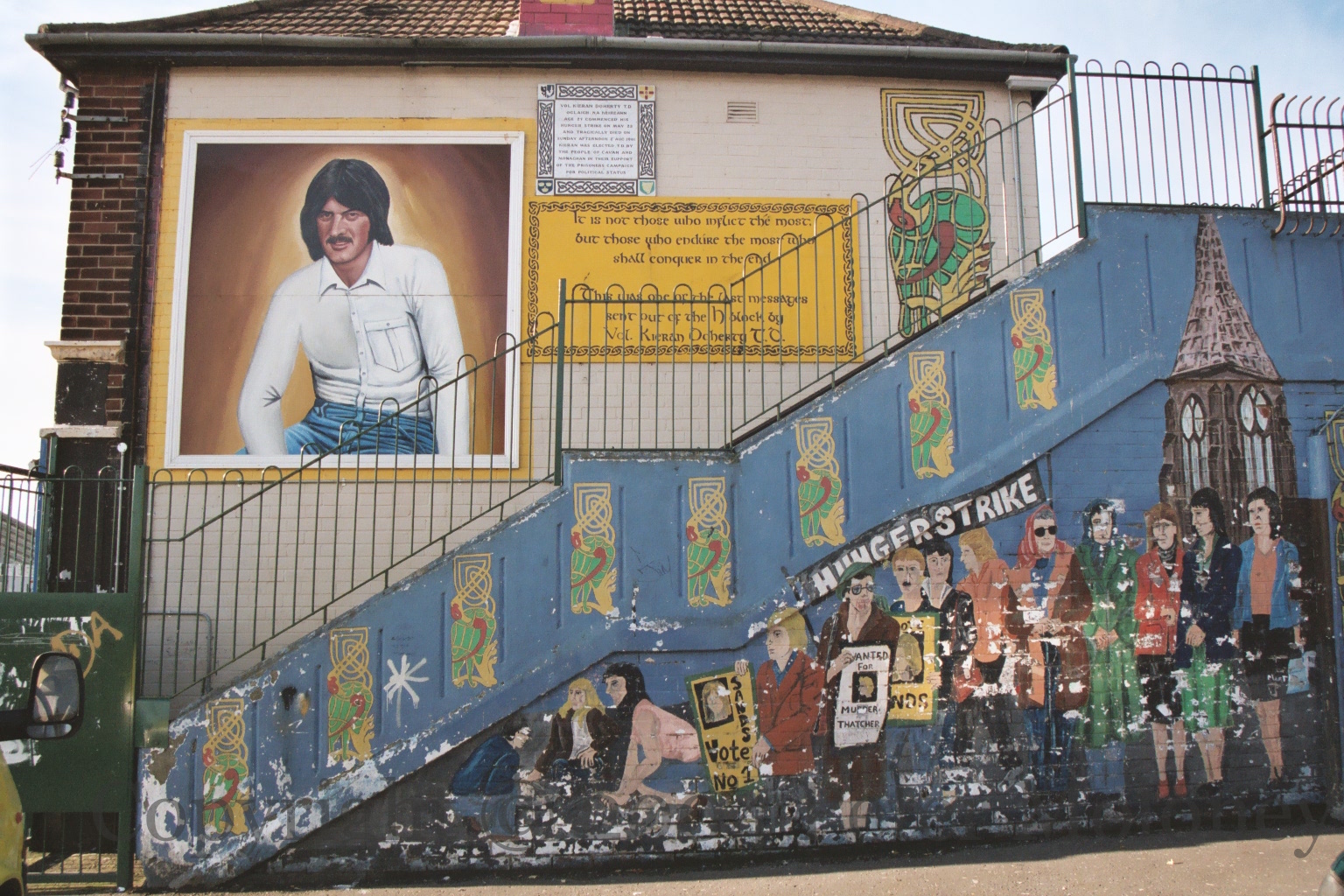
Kieran Doherty was elected TD (Teachta Dála) for Cavan-Monaghan three weeks into his 1981 hunger strike. He held the position for two months, until he died on August 2nd. The portraits, plaques, and mural of marchers are in his home area of Andersonstown. The words “It is not those who inflict the most, but those that can endure who shall conquer in the end” are an echo of Terence MacSwiney, whose hunger strike in 1920 lasted 74 days, one more than Doherty’s.









 Peter Moloney Collection