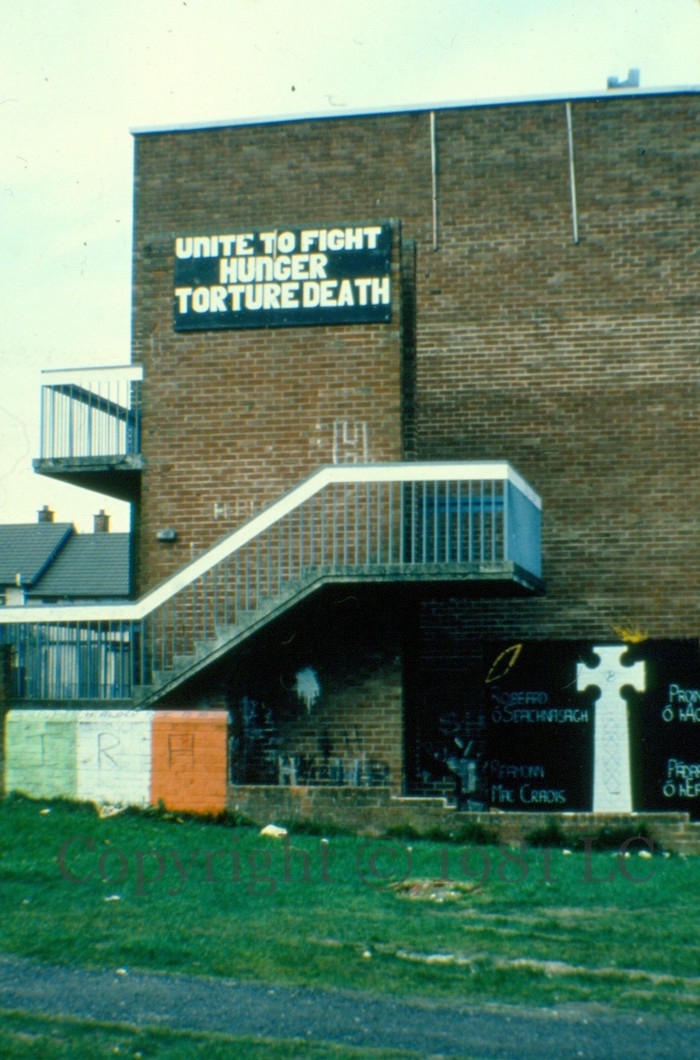
In addition to the board at the top of the stairs there is a tricolour with “IRA” on it (to the left) and (on the right) the names, in Irish, of the first four hunger-strikers on either side of a celtic cross: Roıbeard Ó Seachnasagh, Eamonn Mac Craoıs, Pronsıas Ó hAodha, and Pádraıg Ó hEadhra.
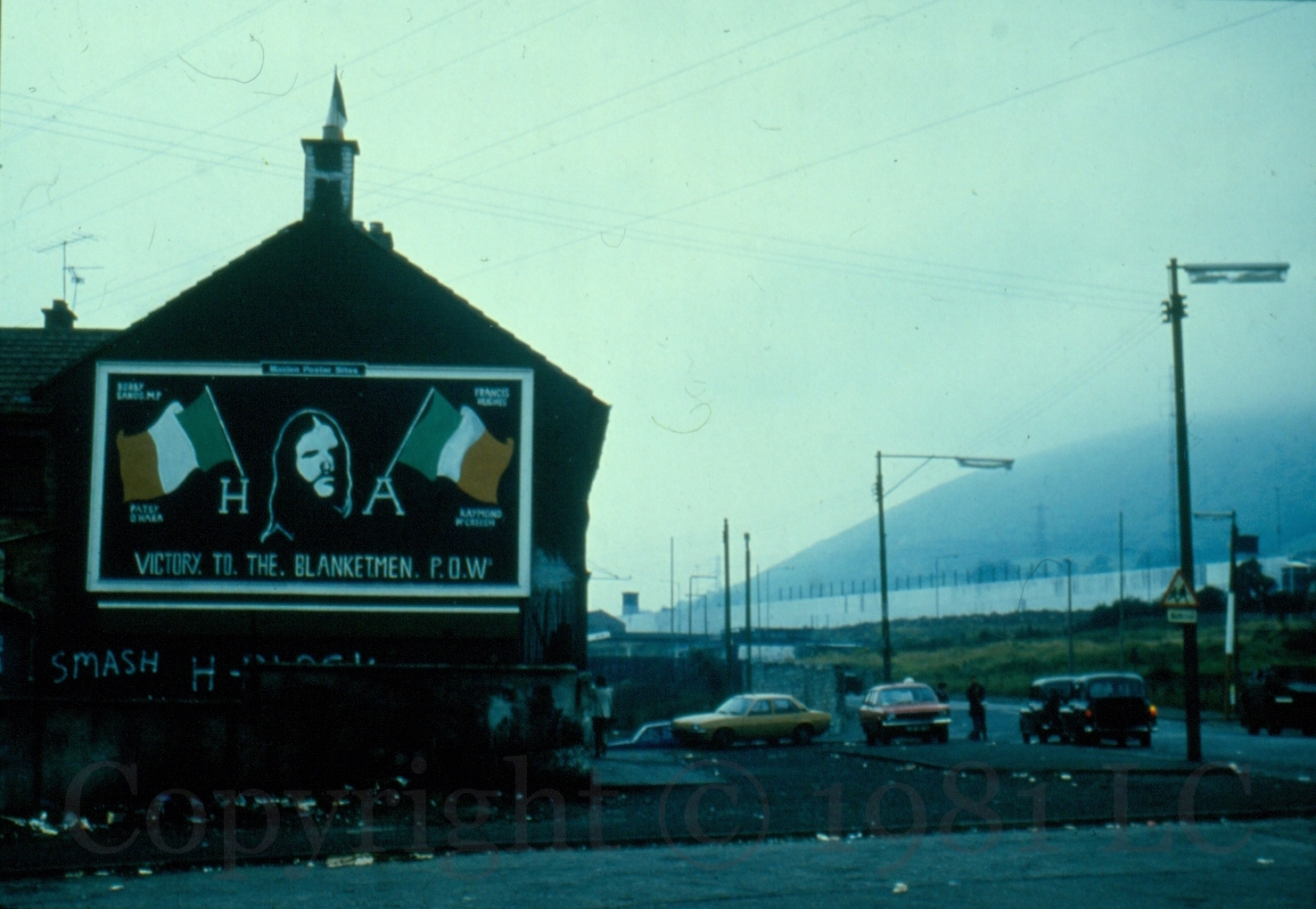
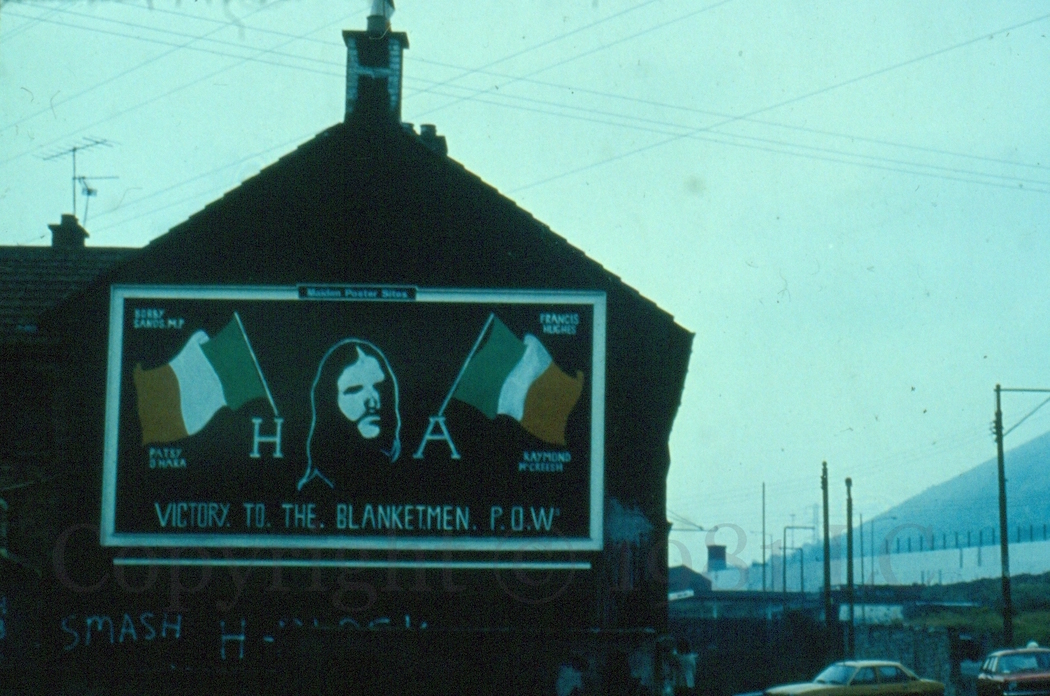
An advertising hoarding on the Springfield Road (just before the Whiterock Road), Belfast, is taken over by a republican artist: “H” and “A” for the H-Blocks and Armagh Women’s Prison, with the names of four hunger-strikers (Bobby Sands Patsy O’Hara, Francis Hughes, Raymond McCreesh) and two tricolours.
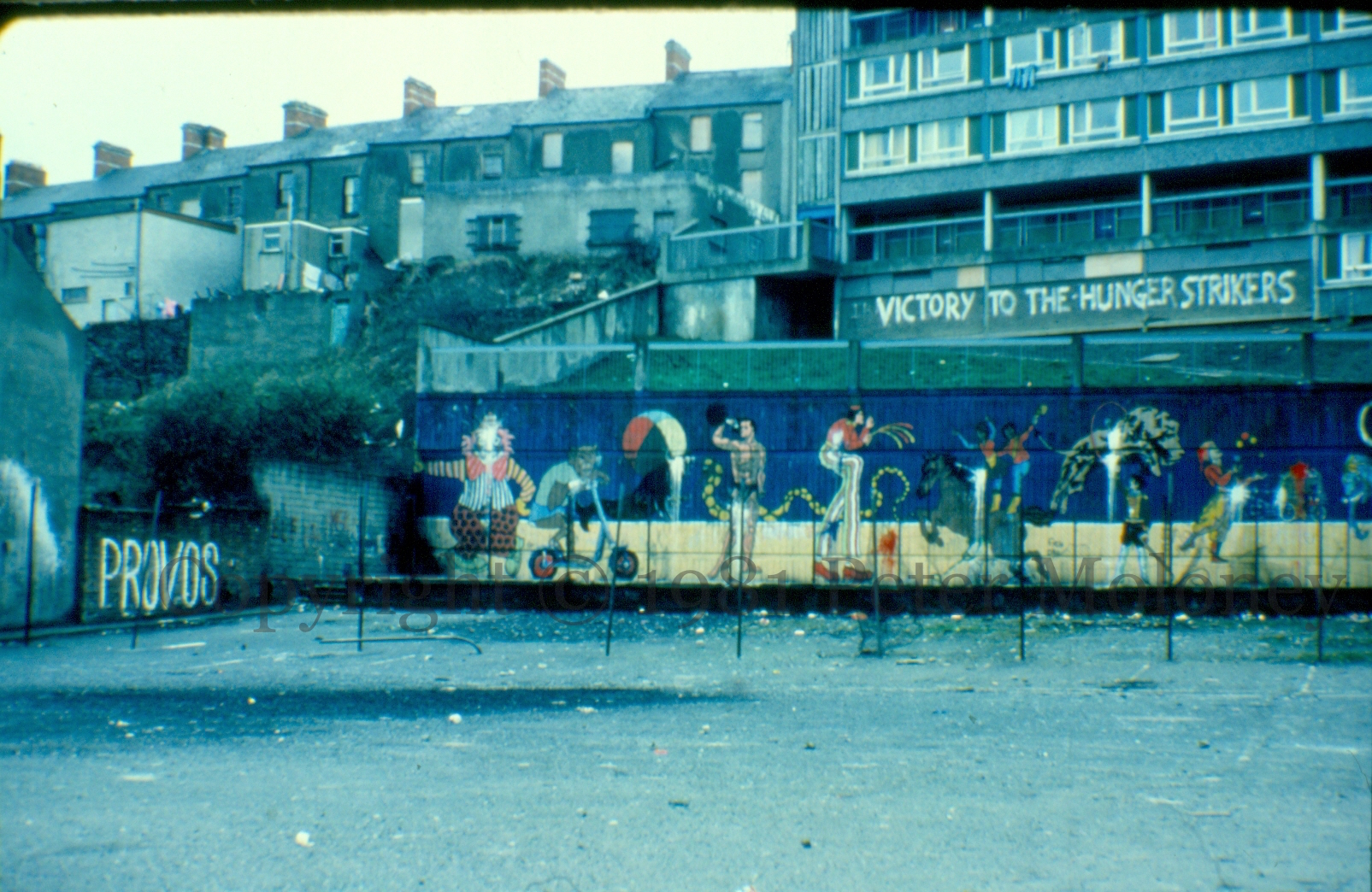
“Provos” and “victory to the hunger strikers” next to a circus mural at the rear of Rossville flats, with clowns, a monkey riding a bike, a strong man, people riding horses, a lion-tamer, and a juggler. It was painted by Joe Coyle, Noel Millar, Margo Harkin, and Tim Webster, with financial support from the Department Of Manpower Services (Watson in Circa 8.3, 1983). An anonymous painter is quoted of p.8 of Woods’s Seeing Is Believing? as saying: “The people felt absolutely no connection with it – it has to involve you or it just doesn’tmean anything.”
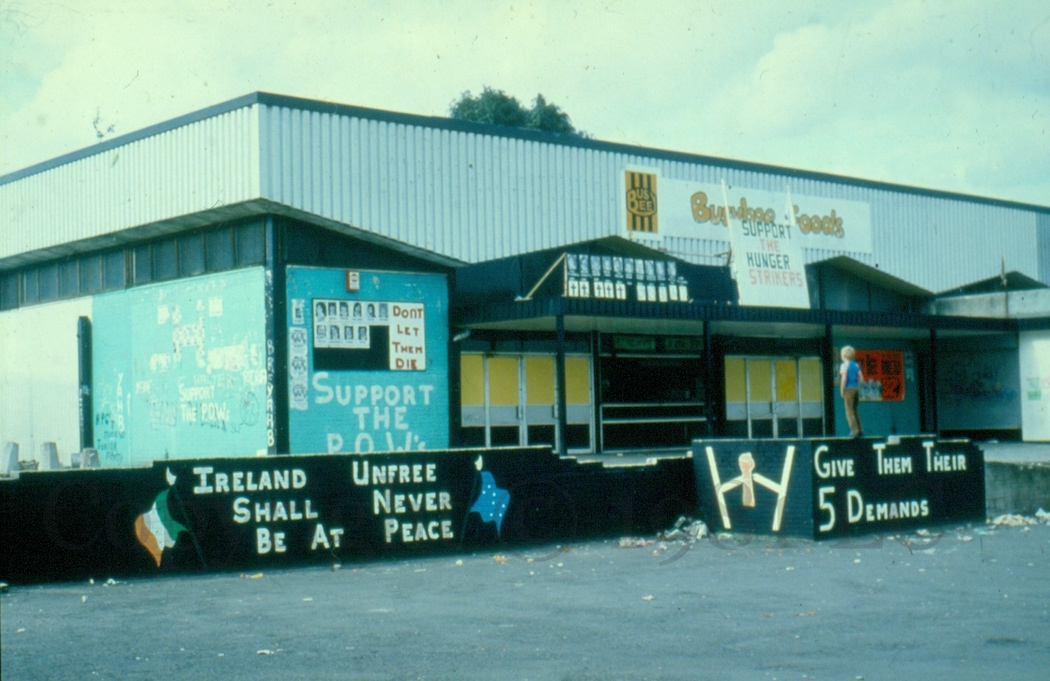
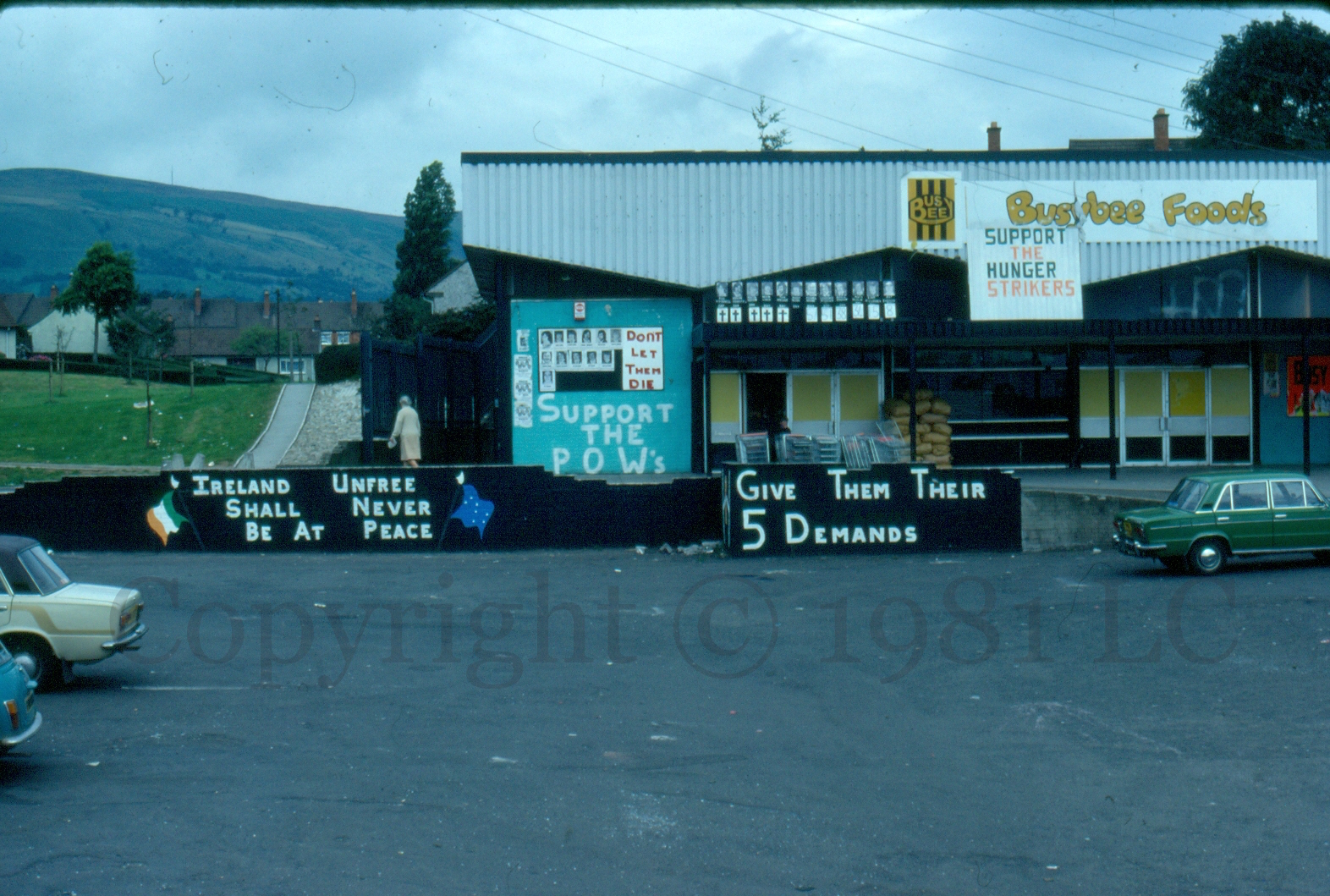
Two images of the Busy Bee supermarket in Andersonstown in August, 1981.
There are two galleries, at left and in centre. In the lower (later) image, the central gallery has 12 portraits – McDonnell, Doherty, Hurson, Lynch, McElwee (all with crosses, below, indicating death), Devine, Quinn (no days – he stopped his fast on July 31st), McKeown, McGeown, Devlin, McCloskey, Sheehan. The length of Sheehan’s strike is given as 8 days (in the lower image), which would mean that the (lower) image was taken on August 17th, 1981, the day Jackie McMullen joined the strike. The upper image was taken some time after McCloskey joined on August 3rd but before Sheehan joined on the 10th.
“Give them their 5 demands”, fist smashing H, “support the POWs”, “Ireland unfree shall never be at peace”, tricolour, starry plough, “Support the hunger strikers”.
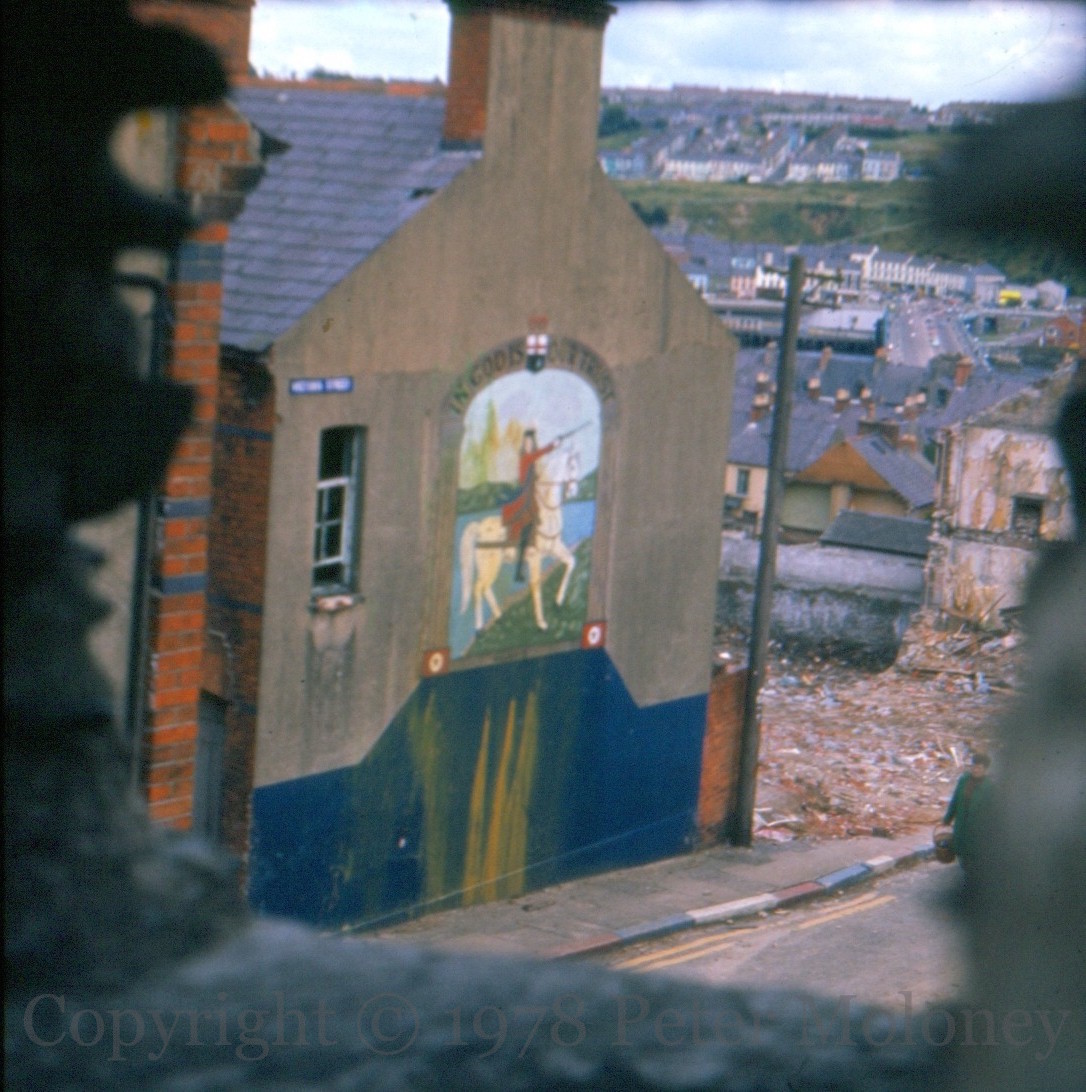
This “King Billy” mural is in Fountain Street, Londonderry, as seen through one of the cannon-holes in the city’s walls.
The central imagery is classic, with William III pointing the way with his sword, riding a white horse stepping onto the banks of the Boyne. The frame includes the coat of arms of Londonderry in the middle of the phrase “In God our trust”. And the whole thing takes up only a small part of the wall, with a mount painted in blue at the bottom to act as a stand.
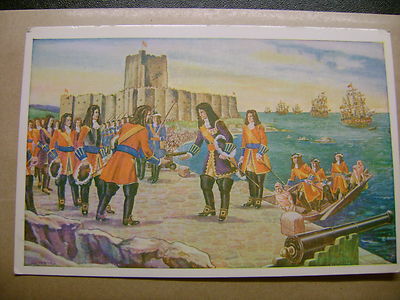
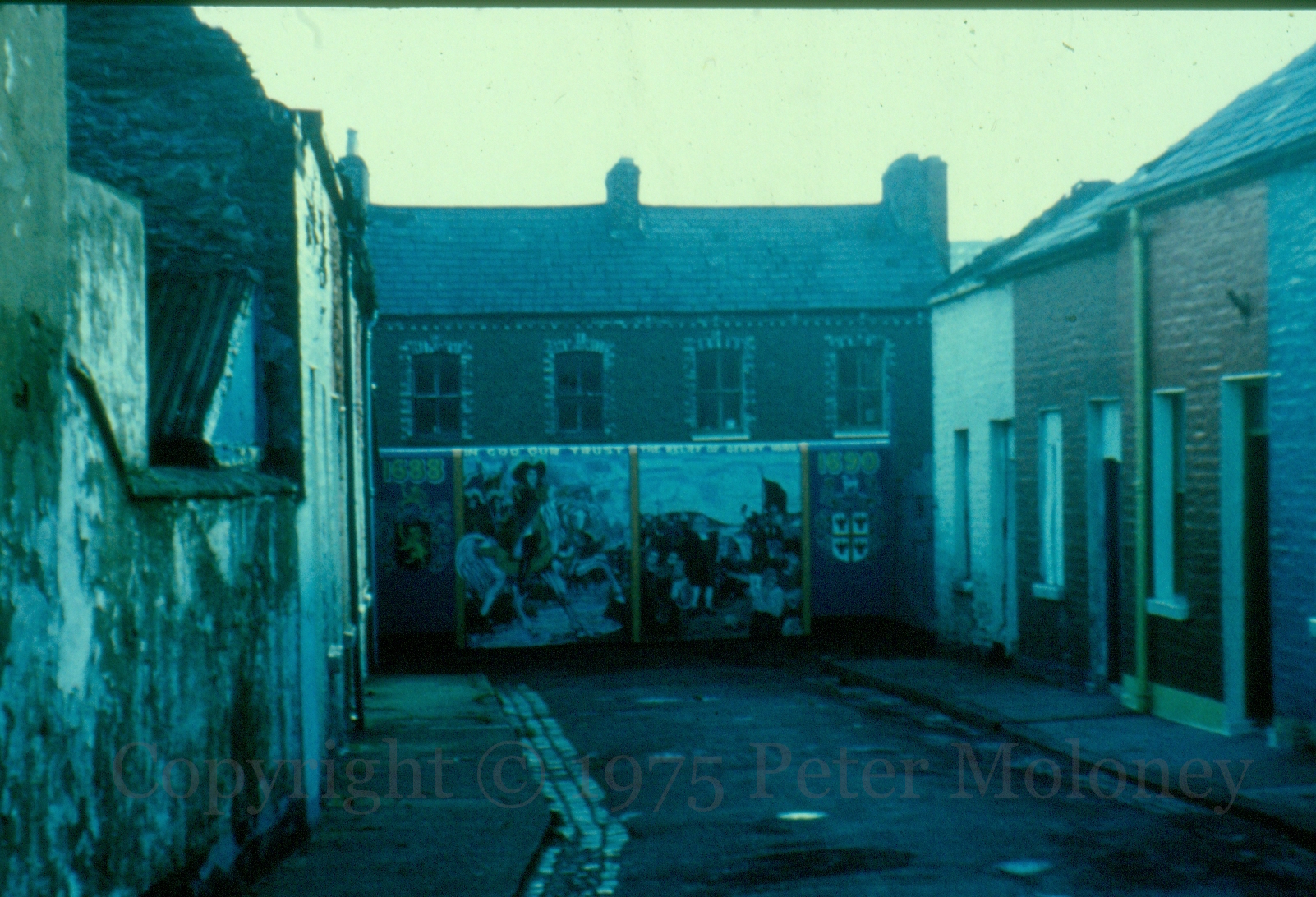
“In god our trust” 1688-1690. An early (1916?) painting by Bobby Jackson and perhaps the only rendition of this scene in a mural – it was a popular postcard (included below).



 Peter Moloney Collection