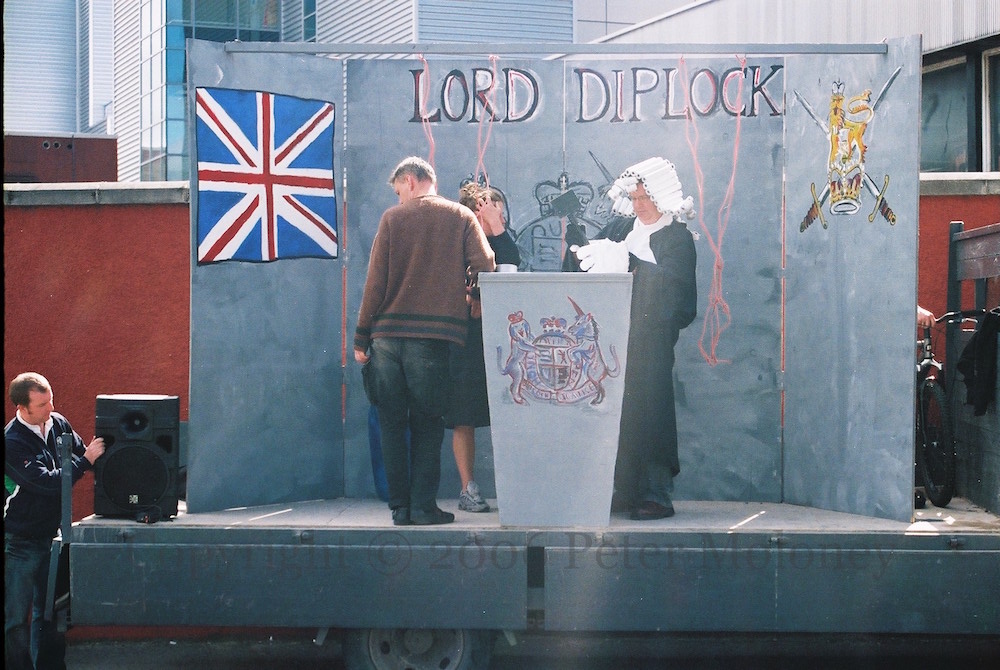
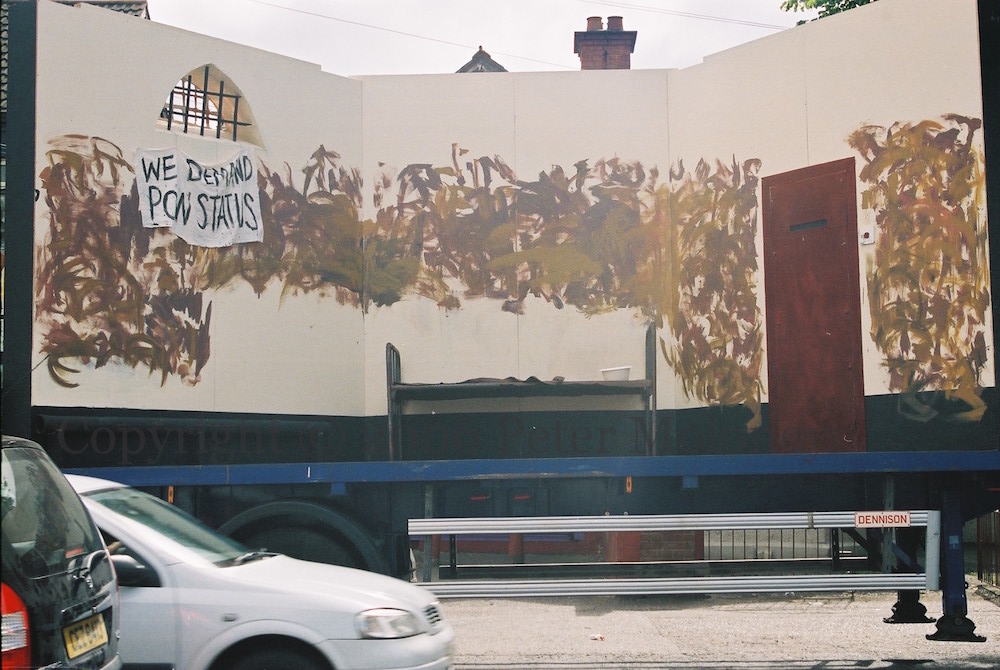
The Conveyor Belt

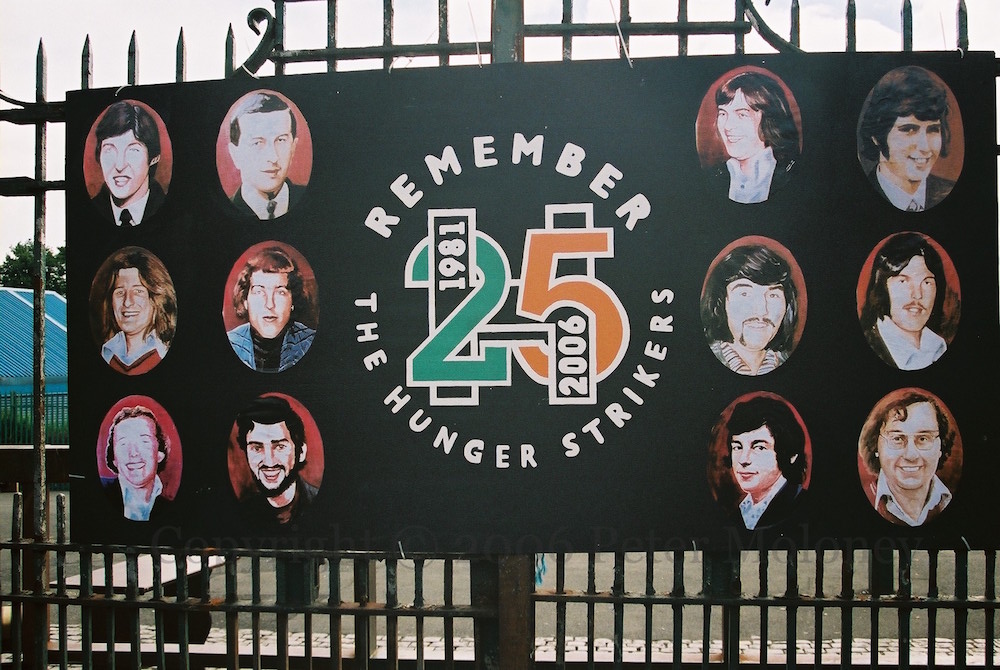
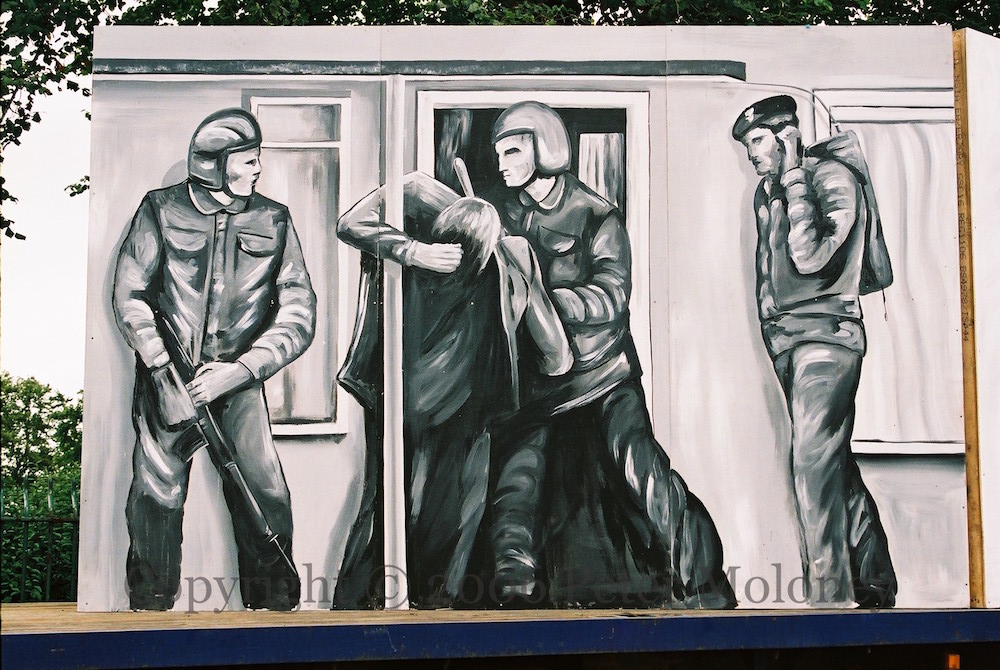
Stages of the “conveyor belt” – arrest by the Army, trial before a Diplock court, strip searches in Long Kesh and Armagh, the dirty protest, supported by an RAC [Relatives Action Committee], and finally, hunger strikes – are recreated in murals and reenactments on flat-bed lorries along the Falls Road for the 25th anniversary of the 1981 hunger strike.

Click image to enlarge
Copyright © 2006 Peter Moloney
M03284 M03273 M03293 M03283 M03286 [M03287] M03291
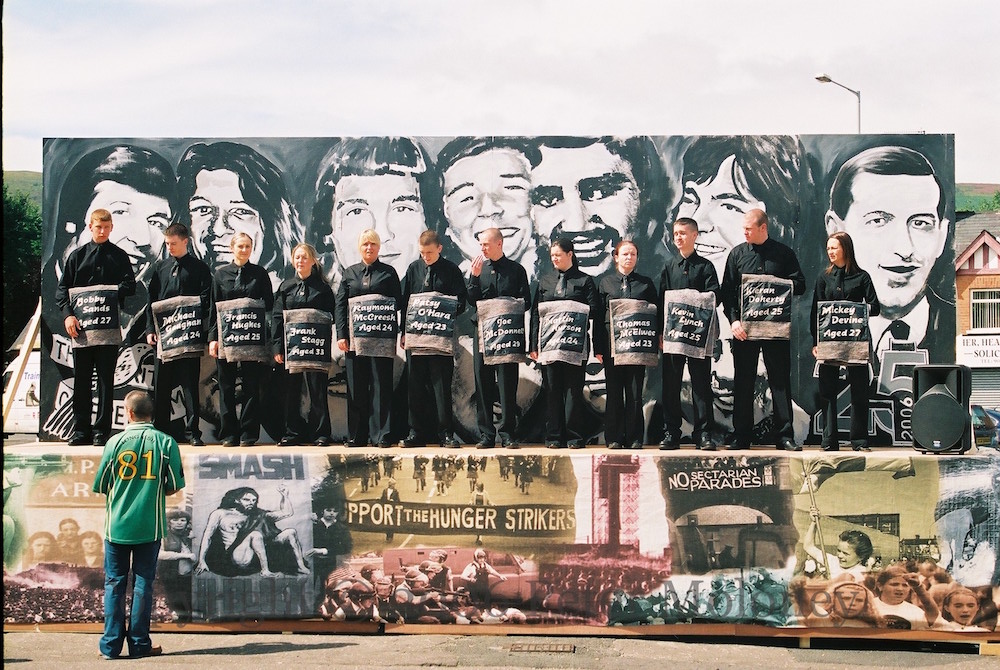
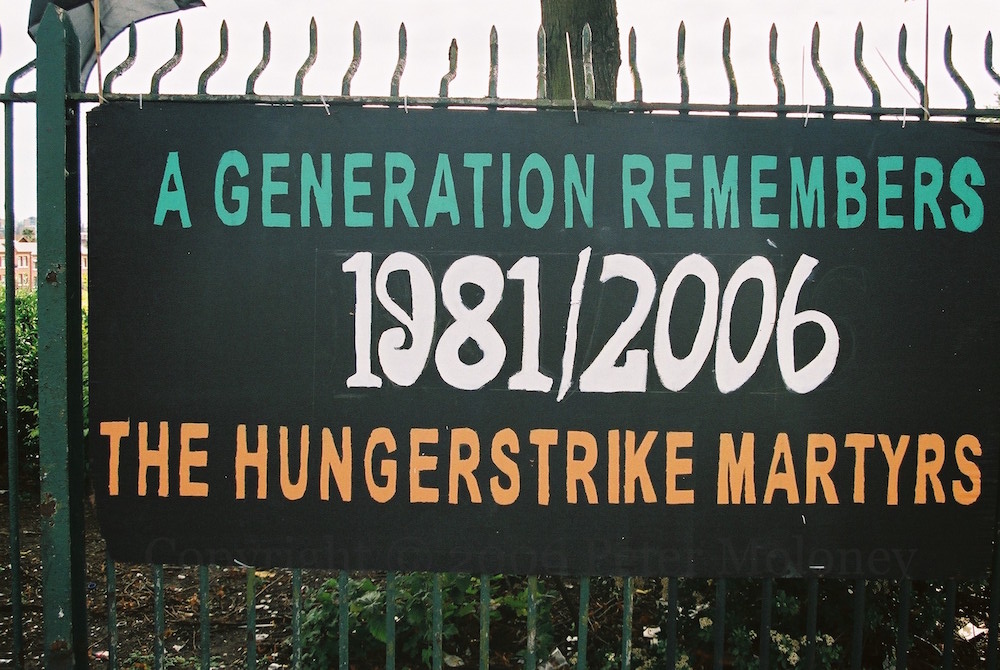
A Generation Remembers

“A generation remembers the hungerstrike martyrs.” On the 25th anniversary of the 1981 hunger strike, portraits of the strikers (including Gaughan and Stagg from the 70s) were displayed on the railings of Dunville Park, Falls Road, Belfast.

Click image to enlarge
Copyright © 2006 Peter Moloney
[M03260] [M03261] [M03262] [M03263] [M03264] M03265 [M03266] [M03267] [M03268] [M03269] [M03270] [M03271] M03272 [M03285]

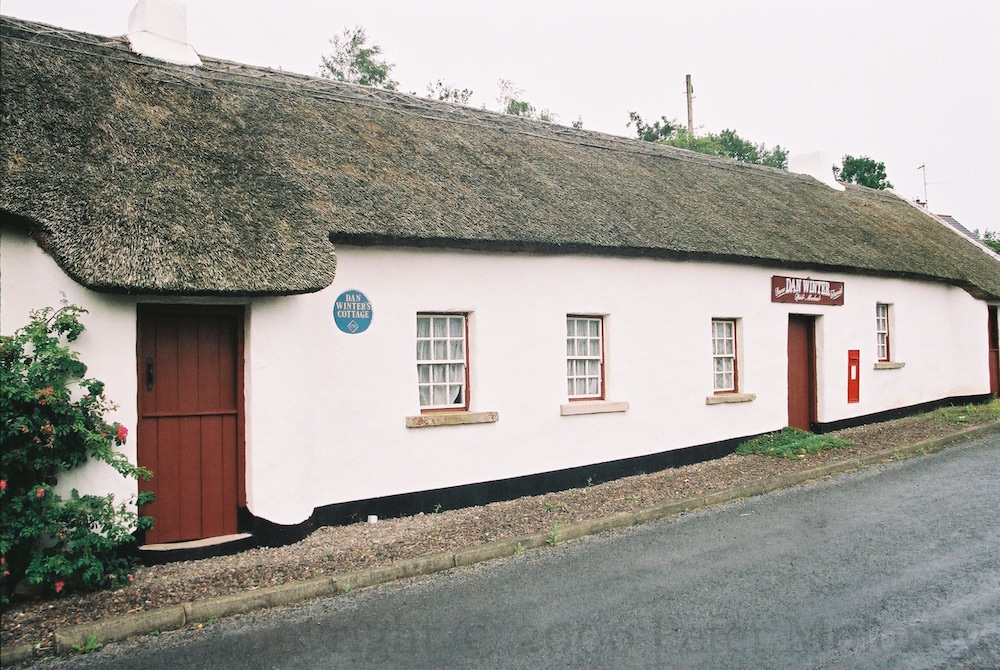
Dan Winter’s Cottage

“Dan Winter’s ancestral home – the focal point of the Battle Of The Diamond on 21st September 1795, which led to the formation of the Orange Order in Sloan’s house, Loughgall.”

Dan Winter’s cottage at “the Diamond” (the crossroad of Grange Road and Derryloughan Road) was occupied by (Catholic) Defenders as they marched towards the (Protestant) Peep-O-Day Boys on a nearby hill. 30 out of 300 Defenders would be killed while the Peep-O-Day Boys went unscathed. After the battle, the Protestant combatants met in Loughgall and formed the Orange Society. 10,000 Catholics would subsequently migrate from Armagh.

This is one of two buildings on Derryloughan Road with “Dan Winter’s Cottage” plaques.

Click image to enlarge
Copyright © 2006 Peter Moloney
[M03232] [M03233] M03234 M03235