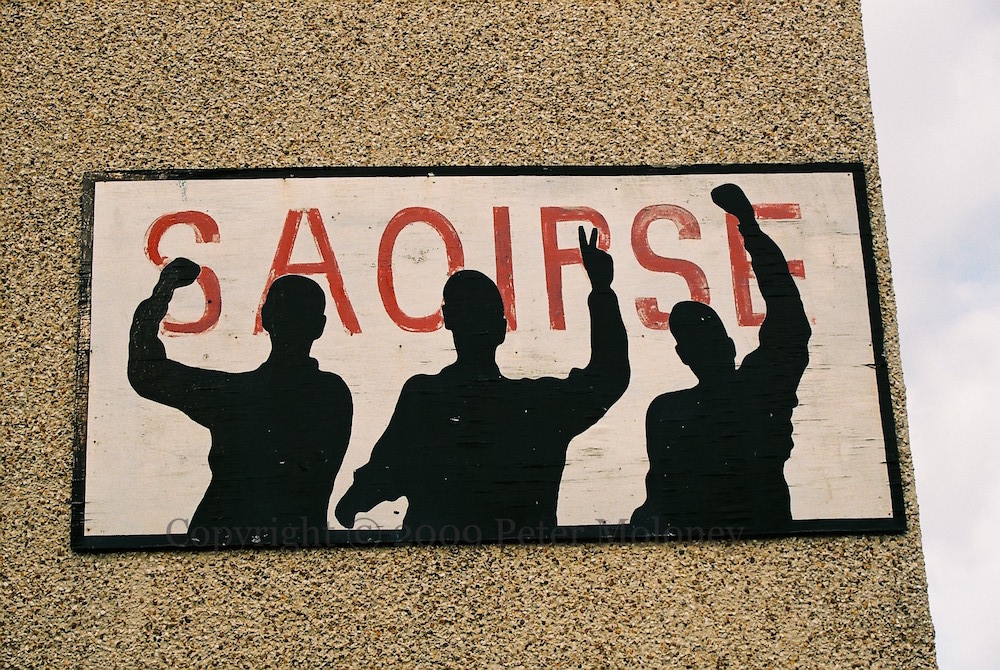
2009 image of the Saoırse board on Shaws Road, previously seen in 2003.
Click image to enlarge
Copyright © 2009 Peter Moloney
M05131
2009 image of the Saoırse board on Shaws Road, previously seen in 2003.
Click image to enlarge
Copyright © 2009 Peter Moloney
M05131
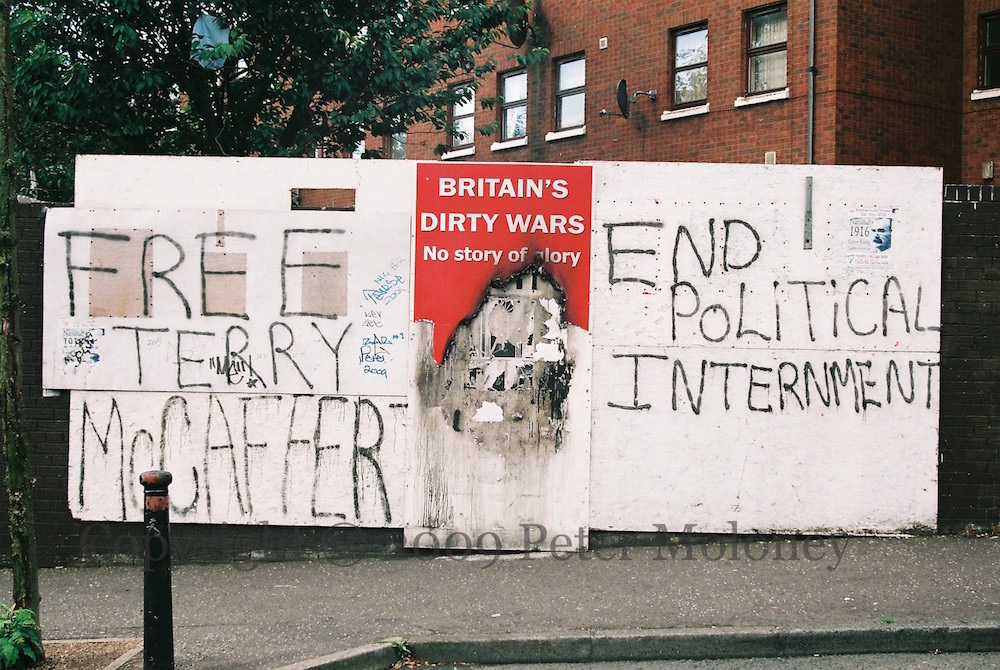
The New Lodge’s Terry McCafferty (RIRA) was given 12 years for possession of explosives in 2005. He was released briefly on license in late 2008 before being returned to Maghaberry – the reason for the revocation was not disclosed (until December 2009) leading to claims of internment. He would be released in April 2010 (RN). The board in the middle “Britain’s dirty wars – no story of glory” is otherwise unknown.
Click image to enlarge
Copyright © 2009 Peter Moloney
M05063 M05060 M05061 M05062
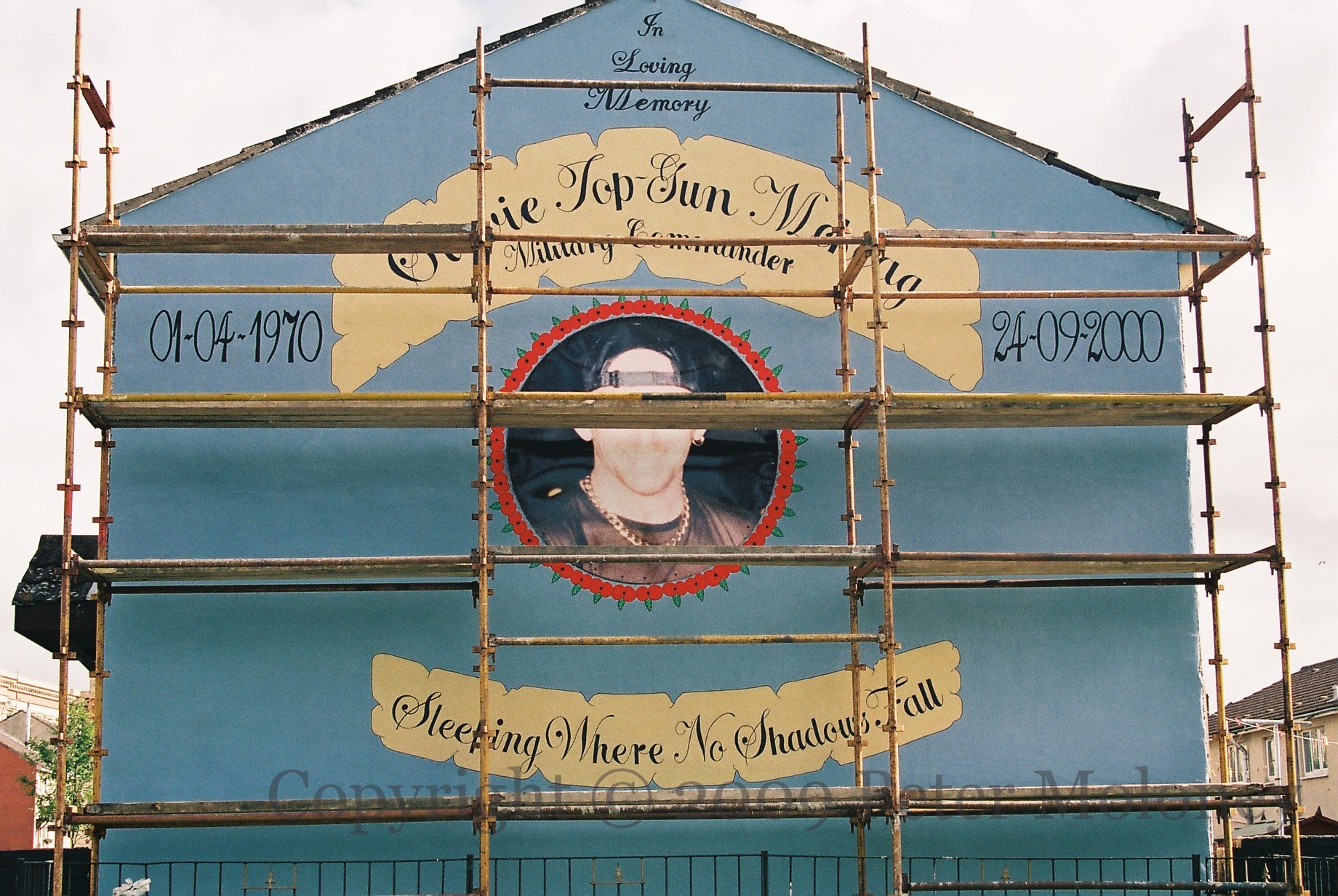
In-progress image of a new, lighter, mural to UDA hit-man Stevie ‘Top Gun’ McKeag.
Hopewell Crescent, Belfast
Click image to enlarge
Copyright © 2009 Peter Moloney
M05054
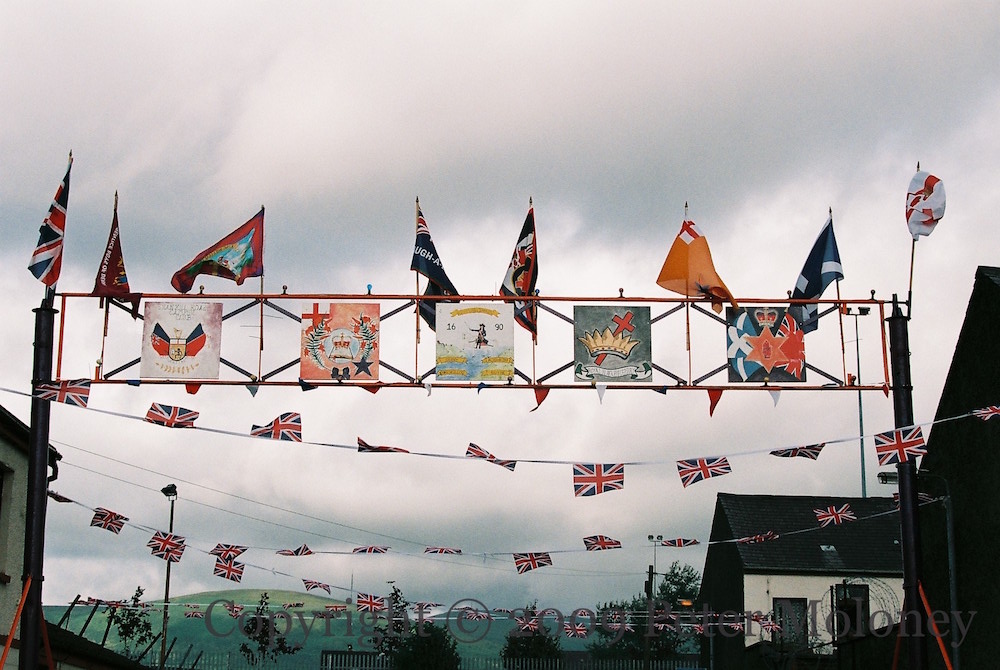
This is the Orange arch next to the Pony Club in the Hammer (lower Shankill). The five boards, from left to right, show “Shankill Road Campsie Club”, the crown and bible with orange lilies, King Billy in 1690, the crown and cross of the “Royal Black Preceptory”, and the orange star between St Andrew’s Saltire and the Union Flag (see Ulster Scotland for a larger version).
Ariel Street, the Hammer/lower Shankill, west Belfast
Click image to enlarge
Copyright © 2009 Peter Moloney
M05044 [M05039] [M05040] [M05041] [M05042] [M05043]
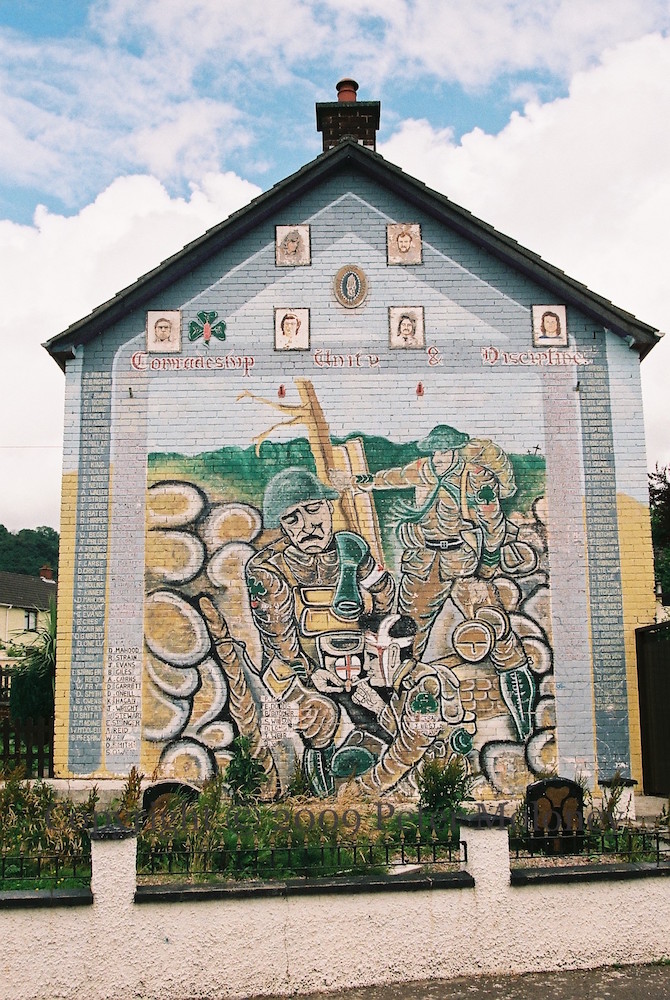
A mixture of modern and latter-day Ulster Volunteers: the names of WWI dead are listed on both sides, while six modern volunteers are portrayed above the central panel of soldiers in a trench. J1835 lists the men in the previous version of the mural as J. Shaw, T. Mawhinney, J. Cordner, C. Logan, S. McCrea, W. Millar.
Inniscarn Drive, Rathcoole, Newtownabbey
Click image to enlarge
Copyright © 2009 Peter Moloney
M05035 [M05034] [M05033]
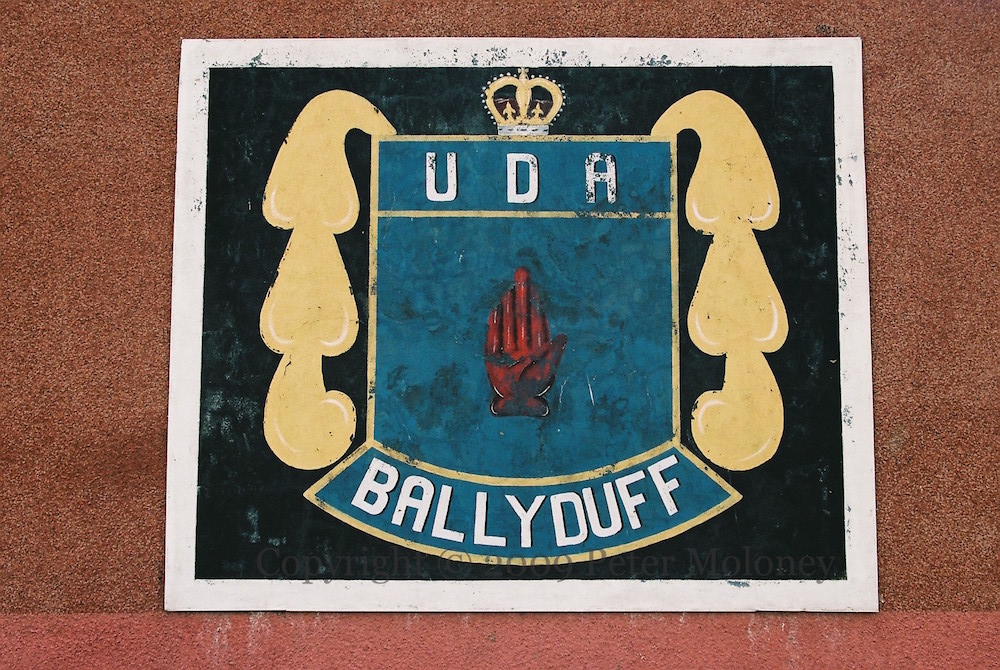
UDA board in Fairview Road, Ballyduff.
Click image to enlarge
Copyright © 2009 Peter Moloney
M05010
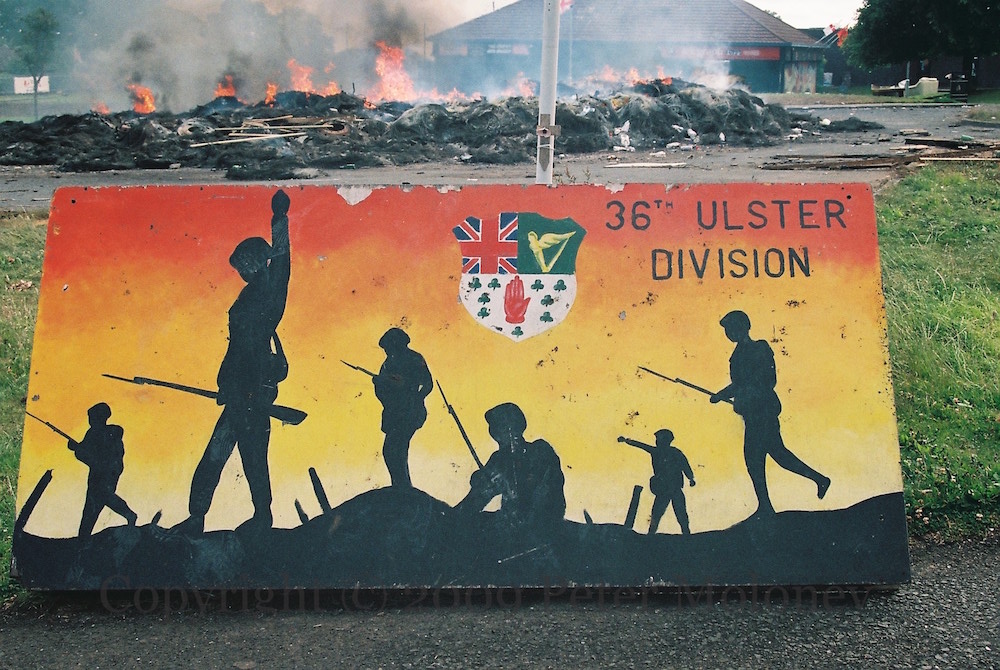


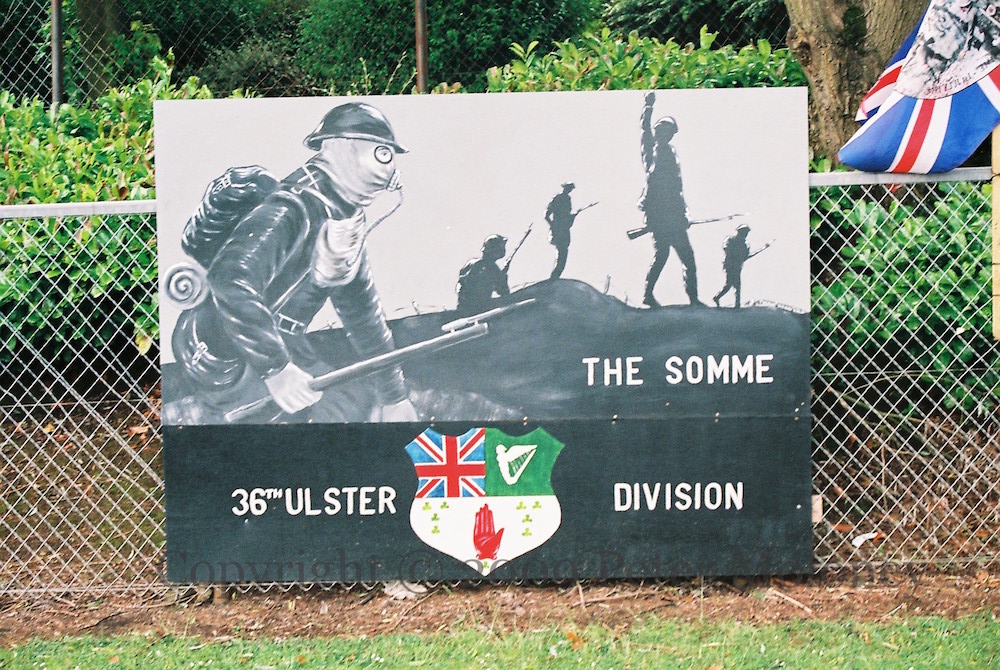
Four small boards from Ballyearl Drive in New Mossley, at the bonfire (see Welcome to New Mossley) and on fencing around an area to be re-landscaped. 36th (Ulster) Division, “Three Scottish soldiers murdered by scum 1971″ (John McCaig, Jospeh McCaig, Dougald McCaughey), and “New Mossley supports our troops.”
The UDR board would next year (2010) travel across the street, to the fencing around the bonfire area as a pitch and playground were built.
Click image to enlarge
Copyright © 2009 Peter Moloney
M04964 M04965 M04966 M04967

Rangers were Scottish Premier League champions in 2008-2009. They also beat Falkirk 1–0 in the final of the 2009 Scottish Cup championship (WP). They rode to victory thanks to a nacho Novo goal.
Ballyearl Drive, New Mossley, Newtownabbey
Click image to enlarge
Copyright © 2009 Peter Moloney
M04963
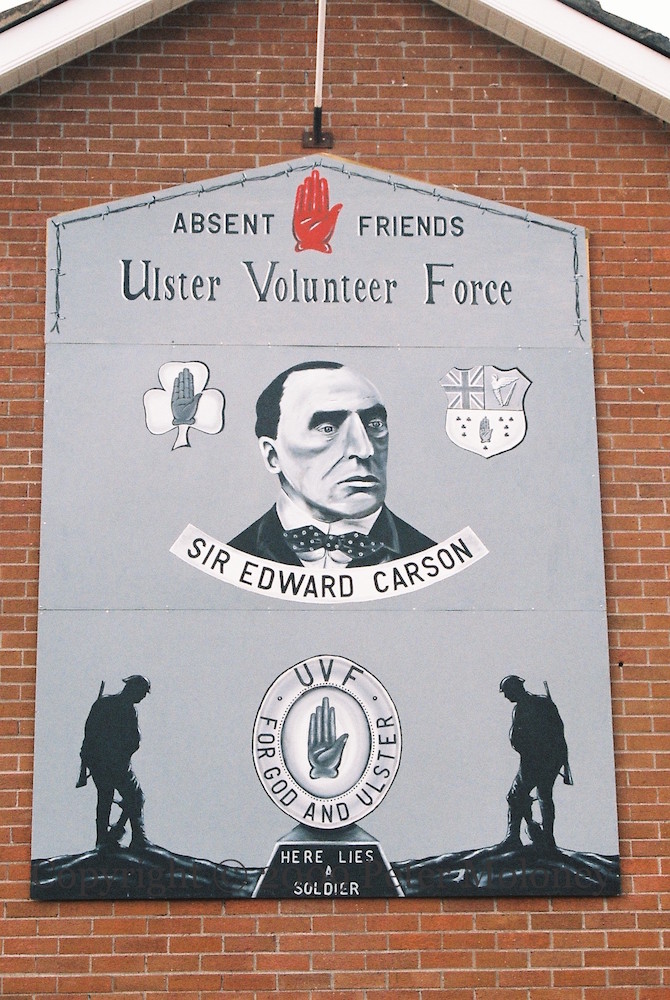
Sir Edward Carson founded the Ulster Volunteers with James Craig in 1912. At the outbreak of the Great War, its volunteers served in the British Army in the 36th (Ulster) Division and died on the fields of Flanders. “Here lies a soldier.”
Click image to enlarge
Copyright © 2009 Peter Moloney
M04961 [M04962]
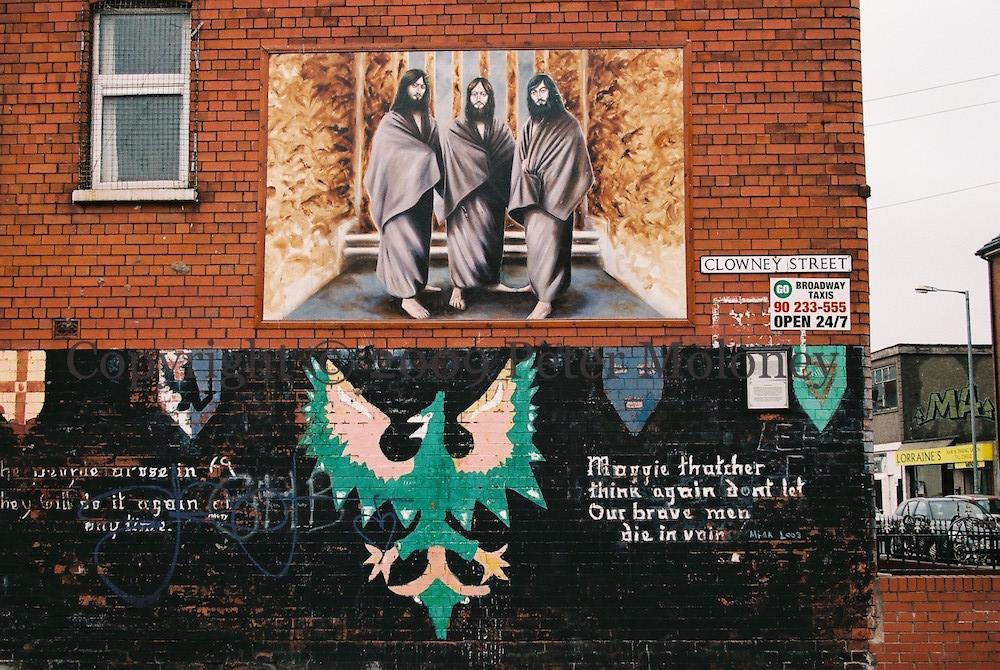
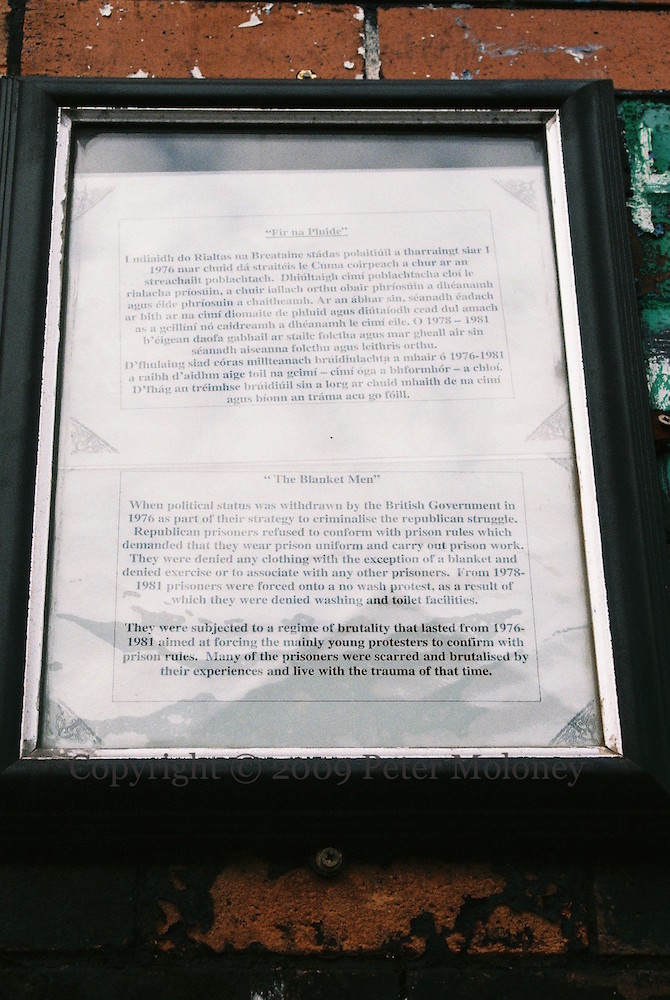
“Fır na Pluıde: ı ndıaıdh do Rıaltas na Breataıne stadás polaıtıúıl a tharraıngt sıar ı 1976 mar chuıd dá straıtéıs le Cuma coırpeach a chur ar an streachaılt poblachtach. Dhıúltaıgh cımí poblachtacha cloí de rıalacha príosıún, a chur ıallach orthu obaır phríosúın a dhéaneamh agus éıde phríosúın a chaıtheamh. Ar an ábhar sın, séanach éadach ar bıth ar na cımí dıomaıte de phluıd agus dıútaíodh cead dul amach as a gcıllıní nó caıdreamh a dhéanamh le cımí eıle. Ó 1978-1981 b’éıgean daofa gabhal ar staılc folchta agus mar gheall aır sın séanadh aıseanna folctha agus leıthreas orthu. D’fhulaıng sıad córas mıllteanach brúıdıulachta a mhaır ó 1976-1981 a raıbh d’aıdhm aıge toıl na gcımí – cımí óga a bhformhór – a chloí. D’fhag an tréımhse brúıdıúıl sın a lorg ar chuıd mhaıth de na cımí agus bíonn an tráma acu go fóıll.”
“The Blanket Men: When political status was withdrawn by the British Government in 1976 as part of their strategy to criminalise the republican struggle, Republican prisoners refused to conform with prison rules which demanded that they wear prison uniform and carry out prison work. They were denied any clothing with the exception of a blanket and denied exercise or to associate with any other prisoners. From 1978-1981 prisoners were forced onto a no wash protest, as a result of which they were denied washing and toilet facilities. They were subjected to a regime of brutality that lasted from 1976-1981 aimed at forcing the mainly young protesters to confirm [sic] with prison rules. Many of the prisoners were scarred and brutalised by their experiences and live with the trauma of that time.”
Clowney Street, above the Phoenix.
Click image to enlarge
Copyright © 2009 Peter Moloney
M04943 M04941 [M04942]

