Bogside internment bonfire on Lecky Road, Derry, with Union Flags, Ulster Banners, Rangers flag, top and scarf, England top, OO flag, UFF flag, a cut-out PSNI landrover, and portrait of the CoI “Earl Bishop” Frederick Hervey which was stolen from outside St Columb’s (BBC-NI). “Free Colin Duffy”, “Rebels 3, Brits 0”.
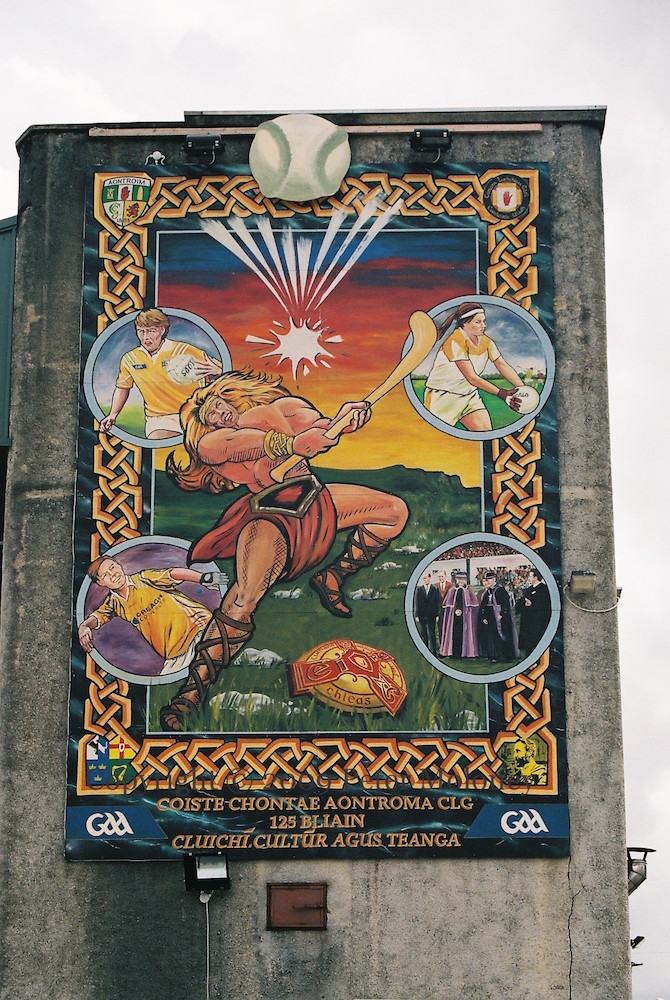
Casement Park, named after Roger Casement (depicted in the lower right knotwork WP), was opened in 1953, blessed by Cardinal D’Alton, the Roman Catholic Archbishop of Armagh and Primate of All Ireland (shown in the medallion towards the bottom right). The central figure is from Jim Fitzpatrick’s ‘Hurling Match‘ and is presumably intended to show Setanta, who became Cú Chulaınn by (in one version) killing Culann’s hound with a slıotar.
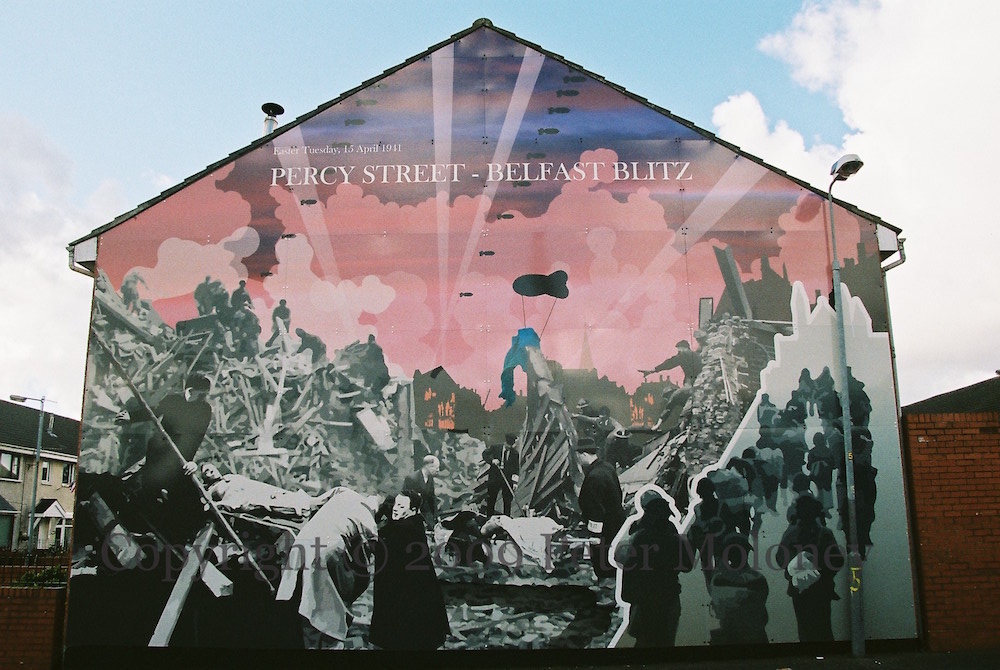
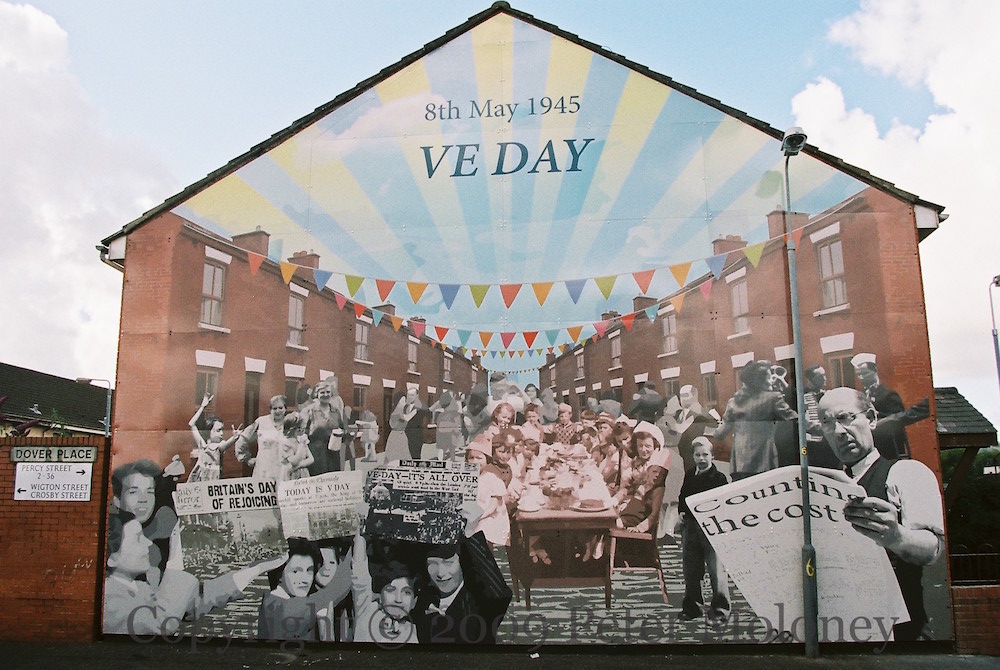
“The area suffered immense loss of life during the Blitz of the Second World War. Having given so much in the fight for liberty during World Wars I and II, these digital artworks by Steven Tunley commemorate experience and history from enlistment in World War I to the Blitz and to the celebration of VE Day. The project was funded by the Re-Imaging Communities programme of the Arts Council of Northern Ireland and delivered by Belfast City Council with the support of the Lower Shankill Community Association. This project would not have been possible without the support and participation of the local community.”
“Hier stehe ich, Ich kann nich anders, Gott helfe mir.” Martin Luther 1483-1546. Unhappy with many of the Catholic church’s practices, Martin Luther, a monk, wrote what became know as ‘the 95 theses’. These challenged the authority of the church and were spread quickly around Europe via a new invention, the printing press. Keen to get luther to recant, the general assembly of the Holy Roman Empire summoned Luther to the town of Worms on the Rhine in 1521. An unapologetic Luther is said to have uttered this famous phrase which, translated means ‘Here I stand, I can do no other. God help me. Amen’. Thus began the Protestant Reformation.
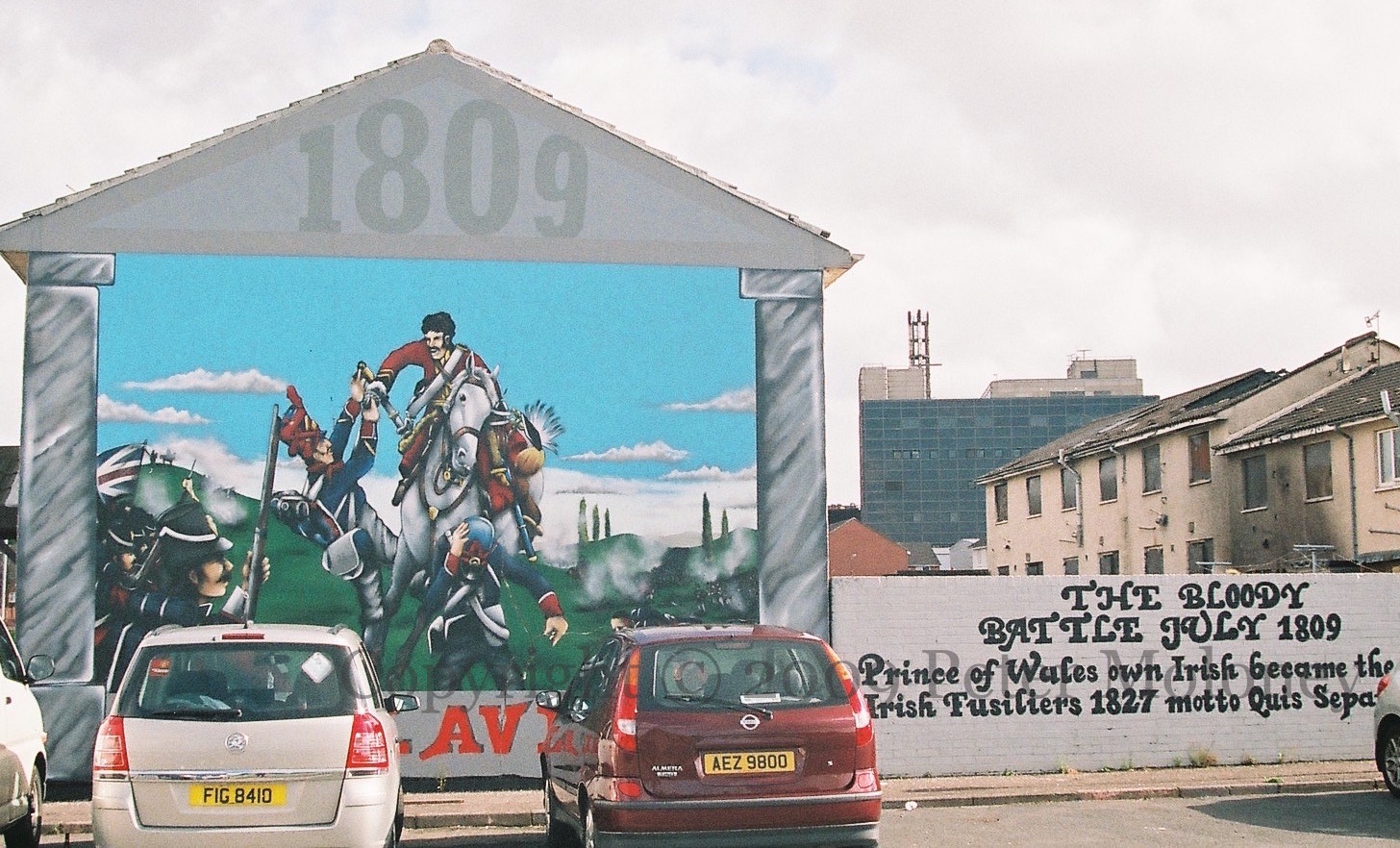
“The Bloody Battle, July 1809. Prince of Wales own Irish became the Royal Irish Fusiliers 1827 motto Quis Separabit.” Completed version of the 2008 in-progress The Battle Of Talavera. Hopewell Crescent, Belfast.
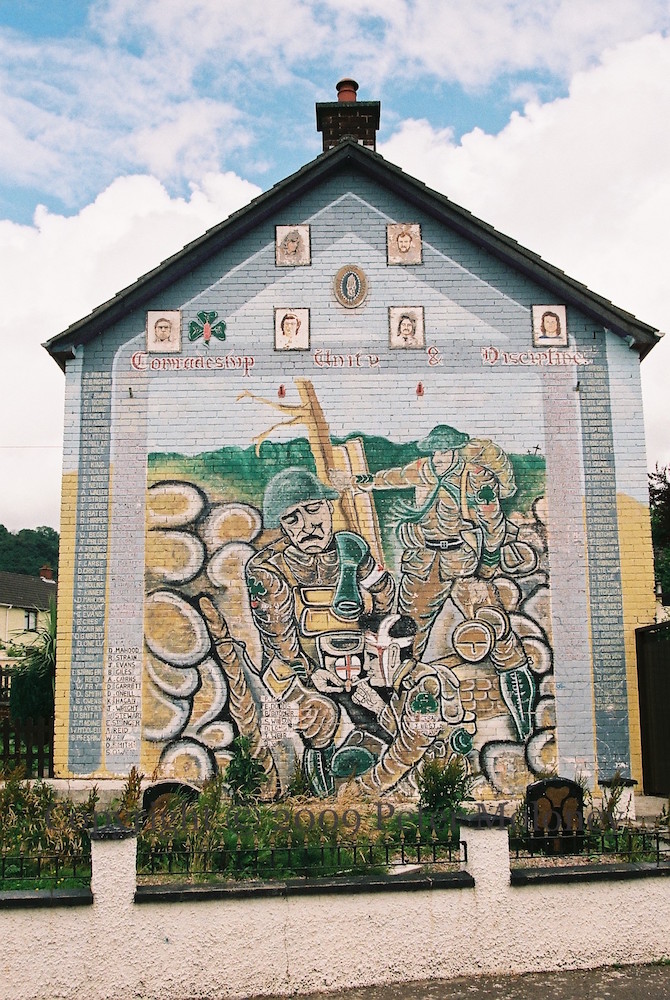
A mixture of modern and latter-day Ulster Volunteers: the names of WWI dead are listed on both sides, while six modern volunteers are portrayed above the central panel of soldiers in a trench. J1835 lists the men in the previous version of the mural as J. Shaw, T. Mawhinney, J. Cordner, C. Logan, S. McCrea, W. Millar.
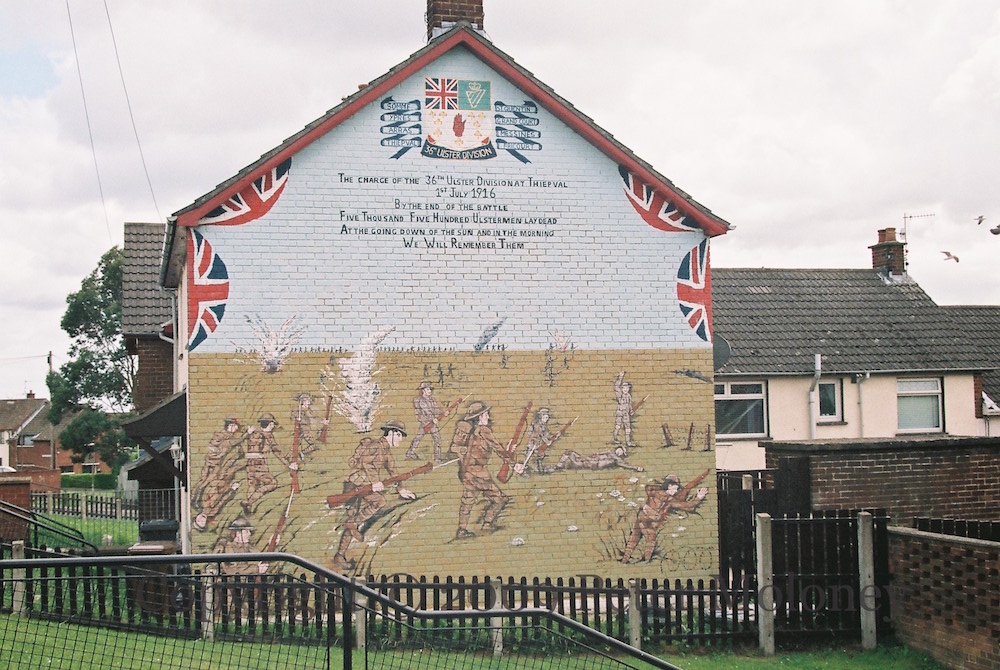
“The charge of the 36th (Ulster) Division at Thiepval, 1st July 1916. By the end of the battle, five thousand five hundred Ulstermen lay dead. ‘At the going down of the sun and in the morning we will remember them.'”
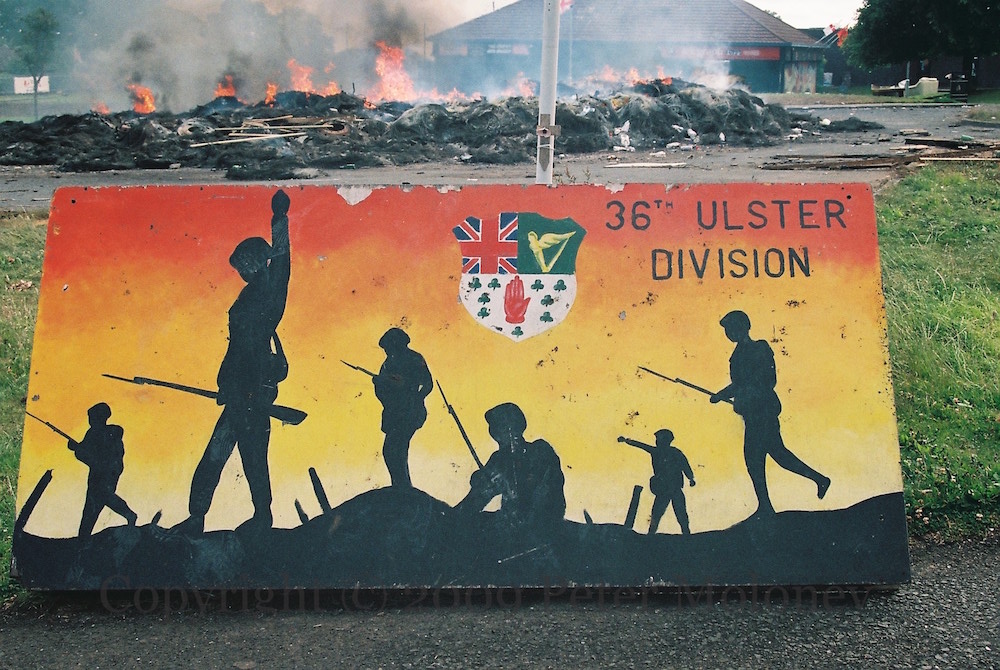
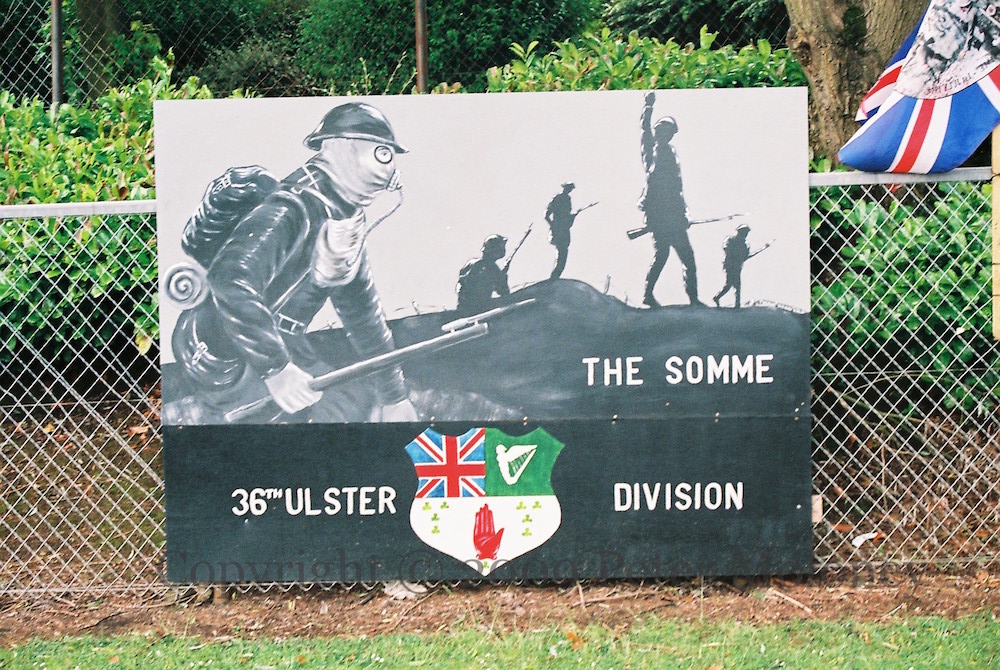
Four small boards from Ballyearl Drive in New Mossley, at the bonfire (see Welcome to New Mossley) and on fencing around an area to be re-landscaped. 36th (Ulster) Division, “Three Scottish soldiers murdered by scum 1971″ (John McCaig, Jospeh McCaig, Dougald McCaughey), and “New Mossley supports our troops.”
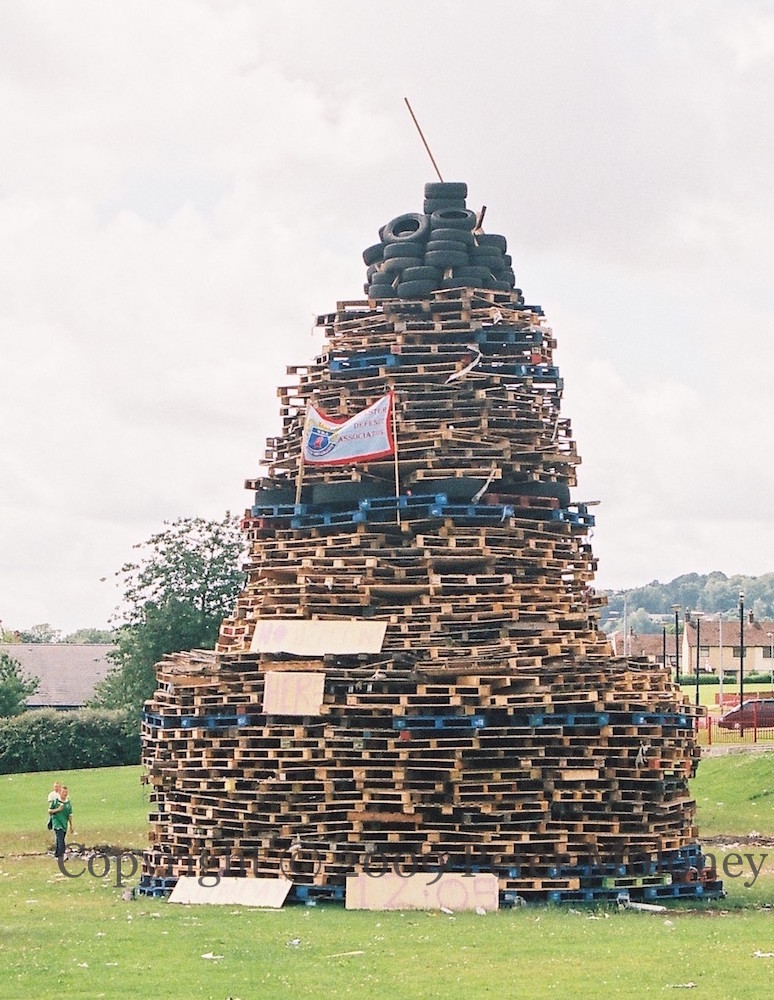
The UDR board would next year (2010) travel across the street, to the fencing around the bonfire area as a pitch and playground were built.








 Peter Moloney Collection