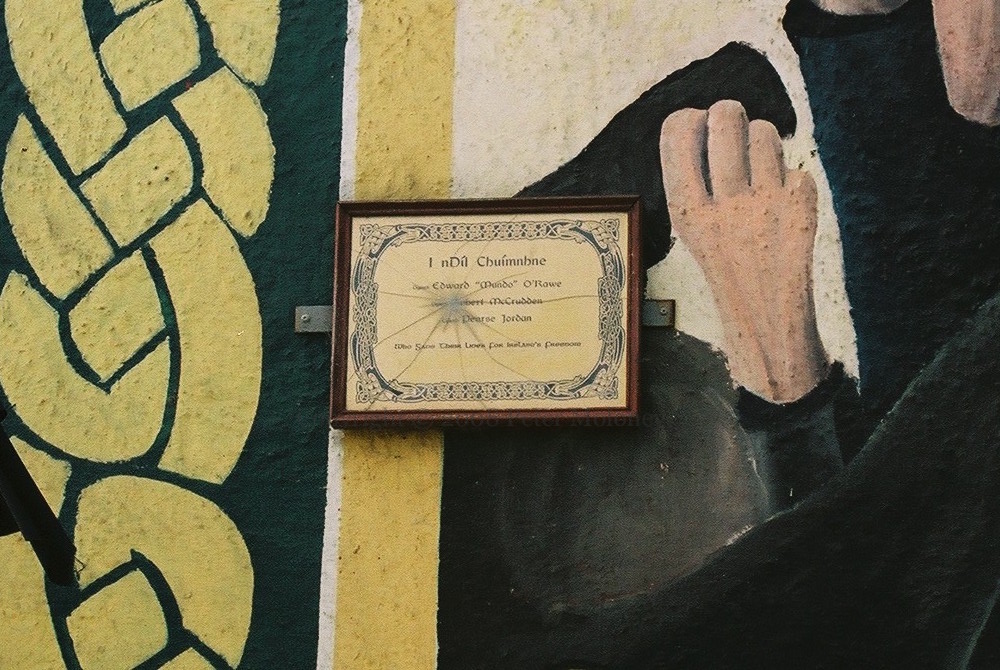
Mural (perhaps repainted) “Dedicated to Vols Bobby McCrudden, Mundo O’Rawe, Pearse Jordan. In passing this mural pause a little while, pray for us and erin, then smile.” Previously seen in 2004 and 2005.
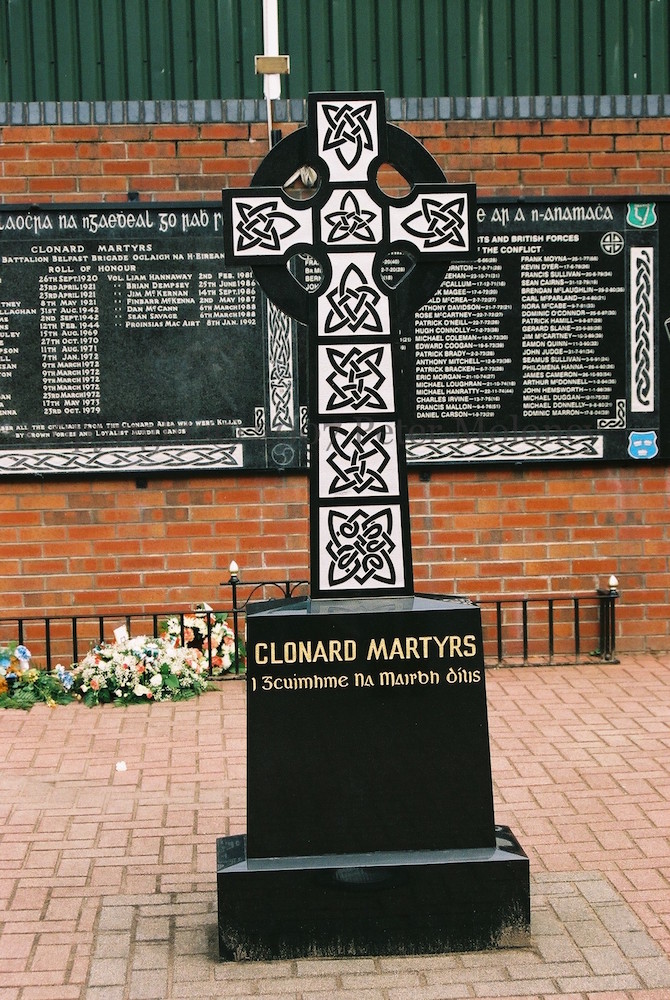
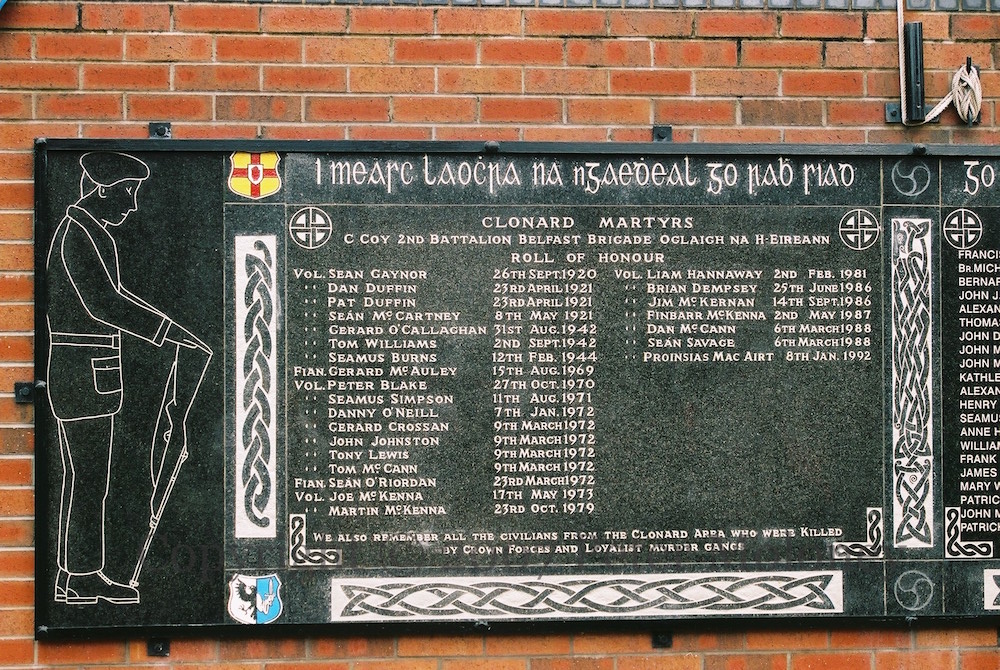
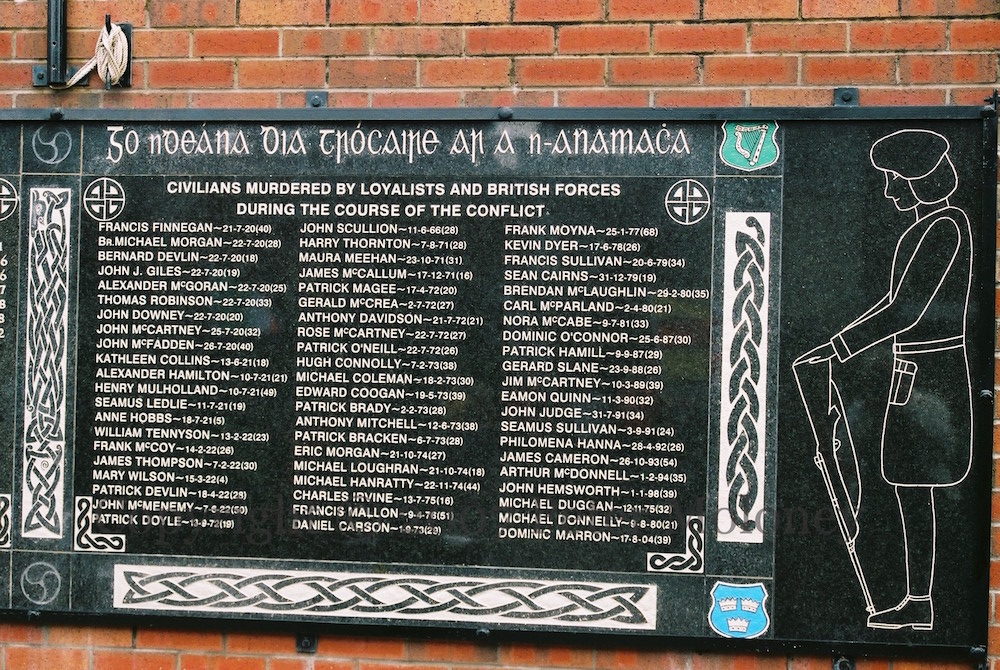
“I gcuımhne na maırbh dílıs” [“In memory of the faithful dead”] “Clonard martyrs C coy 2nd battalion Belfast Brigade Óglaıgh na hÉıreann roll of honour.” The right-hand plaque commemorates “civilians murdered by loyalists and British forces during the course of the conflict”. “I measc laochra na nGaedheal go raıbh sıad – go ndeana Dıa trócaıre ar a nanamacha”.
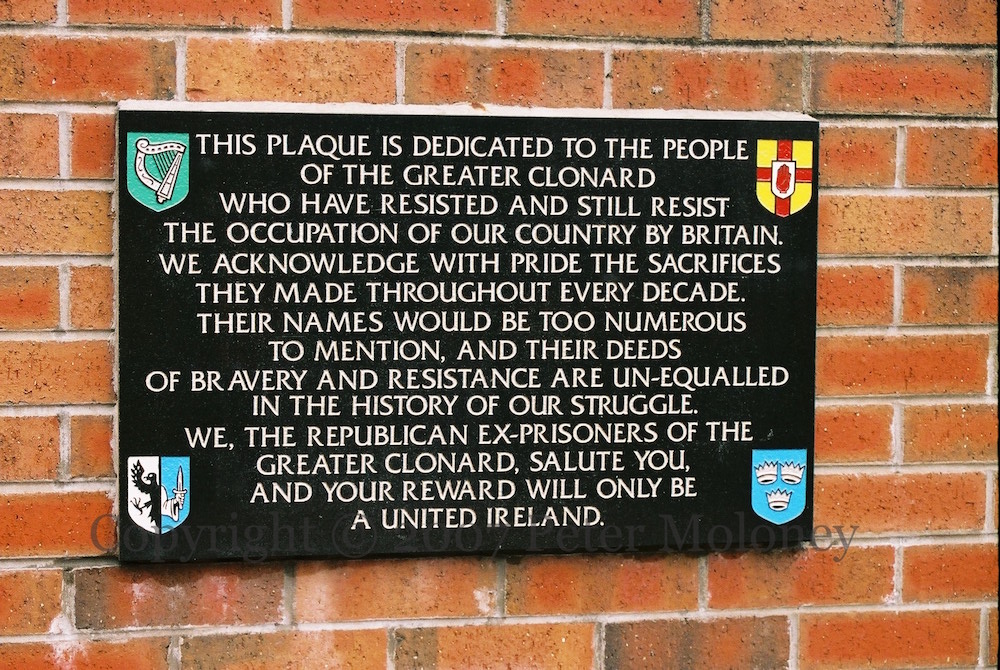
“This plaque is dedicated to the people of the greater Clonard who have resisted and still resist the occupation of our country by Britain. We acknowledge with pride the sacrifices they made throughout every decade. Their names would be too numerous to mention, and their deeds of bravery and resistance are un-equalled in the history of our struggle. We, the republican ex-prisoners of the greater Clonard, salute you, and your reward will only be a united Ireland.” This is the plaque in the left-hand third of the Clonard memorial garden.
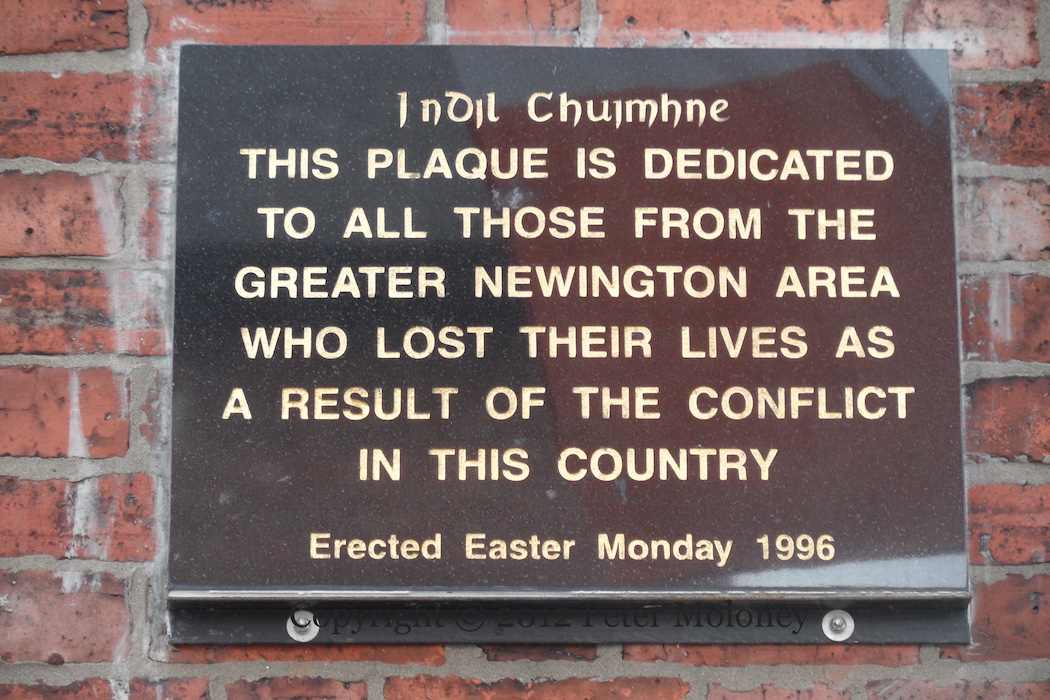
“I ndıl chuımhne – this plaque is dedicated to all those from the greater Newington area who lost their lives as a result of the conflict in this country.” Pikemen from the 1798 uprising flank a phoenix, with portraits above of Wolfe Tone, James Connolly, Henry Joy McCracken, and Mary Ann McCracken.
“In proud and loving memory of Tyrone’s republican dead. “A Patriot: The glamour of the battle calls to boyhood/The martial music trills the youthful heart/And lads go out and give their all for freedom/content to know that they have done their part//But when the first proud wave of glory passes/And nought is left but duty stark and clear/When no pipes skirl and drums have ceased their beating/And the way to freedom stretches dark and drear//’Ttis then we know the Patriot from the Soldier/The Patriot keeps marching, marching on” – Henry O’Kane [?Colonel Henry O’Kane, interpreter for the French Army in 1798?] Suaımhneas dá n-anamacha ar dheıs laımh Dé ıns na flaıthıs. | Gó ndéana Muıre, banríon na nGael, ıdırghuí ar a son. Erected by Tyrone National Graves Association.”
“I ndıl chuımhne. In proud and loving memory of Óglach Dermot Crowley, Óglach Patrick Carty, Óglach Sean Loughran, Tyrone Brigade Óglaıgh Na hÉıreann who died on active service outside Omagh 25th June 1973. Fuaır sıad bás ar son shaoırse na hÉıreann. ‘If you strike at, or imprison, or kill us, out of our prisons or graves we will still evoke a spirit that will thwart you, and perhaps, raise a force that will destroy you! We defy you! Do your worst’ – James Connolly.” The three died from a premature bomb explosion. For brief biographies, see An Phoblacht.
“No unauthorised persons allowed on this area” (“this area” is probably the building site for the redevelopment of Stanley’s Walk) modified to read “PSNI”, below the four provinces and the ‘sniper at work‘.
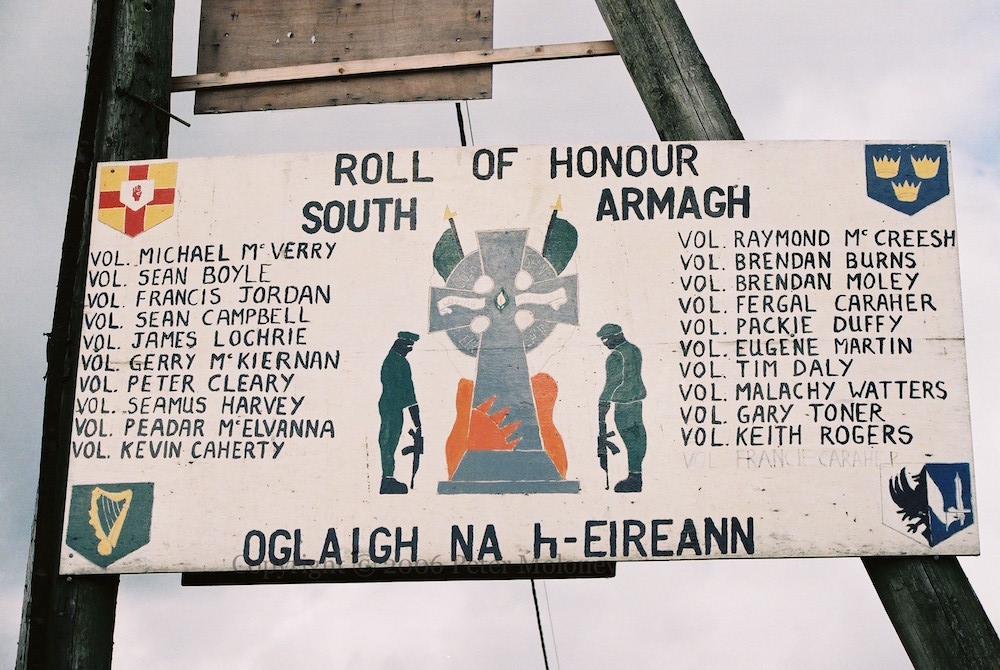
These three images are from the electricity pole at the edge of the graveyard on Newry Road, Crossmaglen. First is a south Armagh IRA roll of honour, listing 20 volunteers’ names: McVerry, Boyle, Jordan, Campbell, Lochrie, McKiernan, Cleary, Harvey, McElvenna, Caherty, McCreesh, Moley, Caraher (Fergal and Francie), Duffy, Martin, Daly, Watters, Toner, and Rogers.
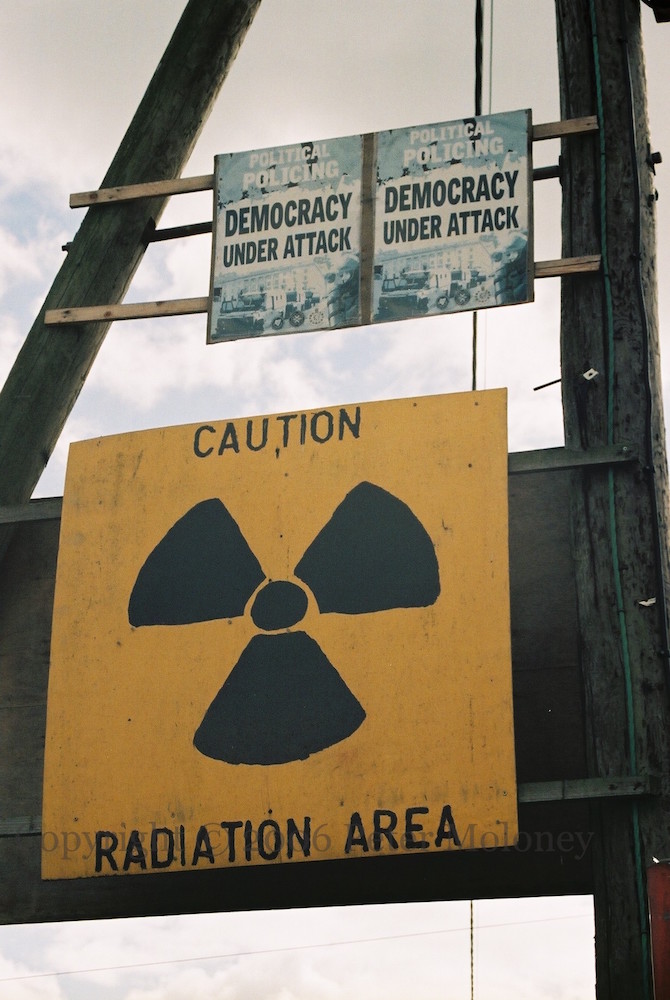
Second, on the back of the poles, “Caution – radiation area” refers to anomalies in animal births, allegedly due to radiation from British Army towers (An Phoblacht | Daily Ireland). There’s also a flyer protesting “political policing – democracy under attack”.
Finally, a Calor gas is modified with republican graffiti: “Built by robots, flown by dummies, taken out by 2nd Batt. barrack-busters.” The incident celebrated is a 1994 IRA mortar attack on a British Army helicopter at the Crossmaglen barracks (CAIN | WP page on the incident). The mortar used a Calor Gas tube, though not the one shown here (WP page on the mortar).
“This stone was erected by the republican movement , south Armagh, in proud and loving memory of the twelve hunger strikers who laid down their lives during this phase of the struggle for Irish freedom.” “Fuaır sıad bás ar staılc ocraıs ar son saoırse na hÉıreann. Go ndeana Dıa trócaıre ar a nanamacha.” “Beıdh an bua agaınn go fóıll [We will win yet] – Raymond McCreesh – two days before he died.”