This is a new version of the Derry brigade board in Westland Street – everything remains as before (see 2010) except for a new picture of the dolmen memorial in Lecky Road.
The scroll in the bottom right reads “I gcuımhne dhíl orthu sıud a fuaır bás ar son saoırse na hÉıreann – In fond & loving memory of those who died in the cause for Ireland’s freedom”.
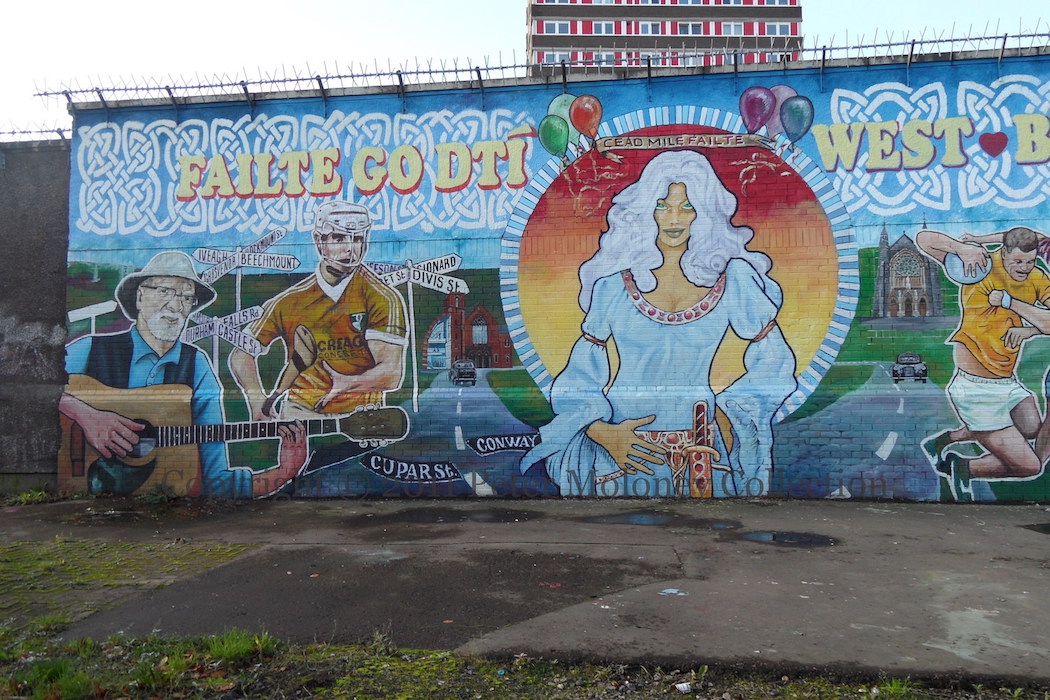
“Welcome to west Belfast”. West Belfast is portrayed as a place of music, sport, and dancing, whose landmark buildings and streets are under the watchful eye (and sword) of the goddess Érıu.
The image of the little boy with the “I [heart] Belfast” stickers and a bag of sweets, standing in the waste ground of Divis flats, is a photograph from the early days of Féıle An Phobaıl/West Belfast Festival.
On the Divis Street side, characters in the style of cartoonist Cormac (see e.g. Notes) are “Promoting west Belfast tourism” for “Fáılte Feırste Thıar”, “www.visitwestbelfast.com“. The attractions touted are: “Bop at the August “fleadh”. “Craıc agus ceol” (for Robert Ballagh’s dove coming out of the concrete block, see Féile An Phobail 2008), “The only thing you have here is “choice”. Tar ısteach agus (lıg do scíth)”. “Baın sult as. Tá mé ag éısteacht le Raıdıó Fáilte 107.1 FM”, “For more ideas on things to do, visit Oıfıg Fáılte at An Chultúrlann. There’s really nice food there too! at Caıfe Feırste”, “If it’s history you want go on a cemetery tour “City or Milltown””, “Enjoy a walk on ‘Slıabh Dubh’ (The black … … mountain)”, “Make sure you visit the “Irish republican history museum” at Conway Mill” (with ‘Long Kesh University Of Freedom’ sweater; “Sinn Féin touts” is not a sweater but graffiti.)
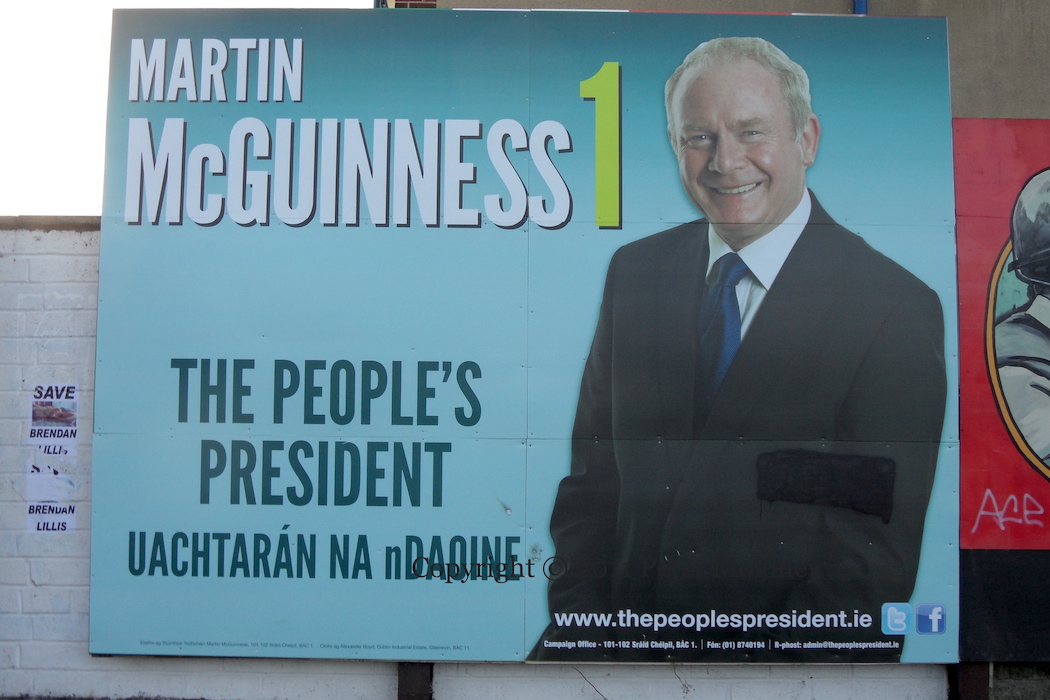
Sınn Féın hoardings in Andersonstown, first at the former Andersonstown RUC barracks supporting Martin McGuinness as Sınn Féın candidate for “The people’s president” and then two at Connolly House, again supporting McGuinness and announcing the (now passed) Sınn Féın Ard Fheıs: ı dtreo poblacht nua – towards a new republic.
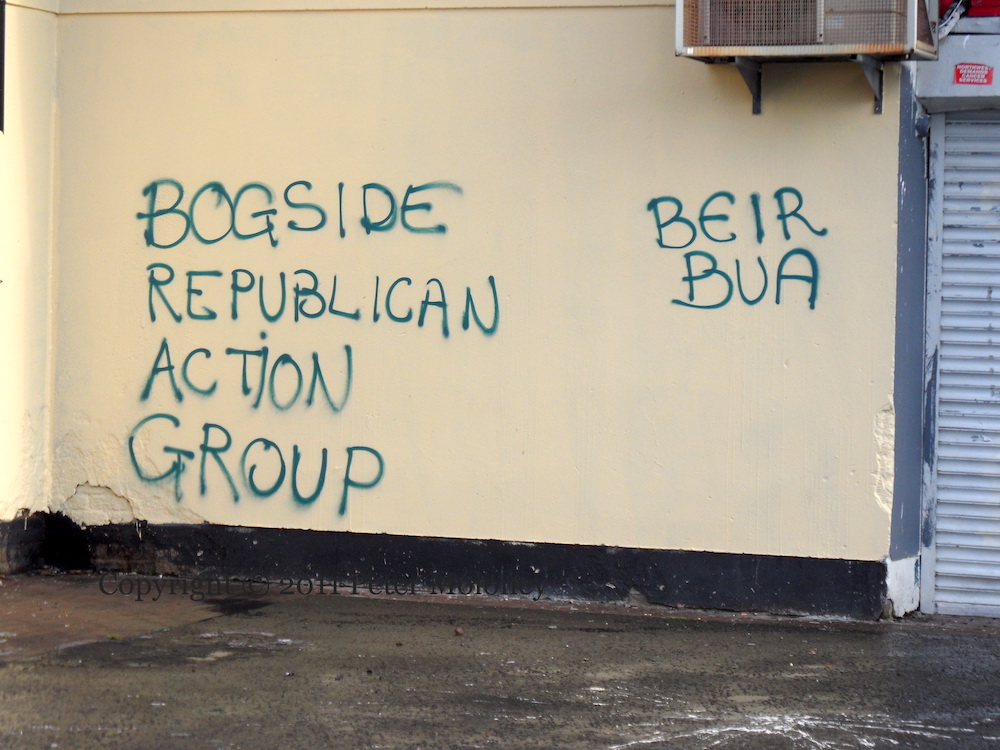
Mention of BRAG dates back to a 2009 threat made against traffic wardens and TV license inspectors (RN | BBC). The graffiti read “Bogside Republican Action Group”, “Beır bua”, “End sectarian marches now!” (with a petrol bomb “PB”). The last is perhaps a reference to the on-going contention over marches past the Ardoyne shops in Belfast (Guardian).
“Tógadh an leacht cuımhneacháın seo ag muıntır an cheantar ı gcuımhne an Óglaıgh [Óglach] Réamonn Mac Raoıs a fuaır bás ar an 21 Bealtaıne 1981 ı ndıaıdh lá agus seasca ar staılc ocraıs sna H-Blocanna. Rugadh Réamonn ar an 15 Feabhra 1957 ag Páırc Naomh Maolmhaodhóg. … Seasann an deıch gcrann atá curtha taobh thıar den leacht chuımhneacháın do na fıréın [fíréın].”
“This monument was erected by the people of the area in memory of IRA Volunteer Raymond McCreesh who died on May 21st 1981 after 61 days on hunger strike in the British H-Block prison at Long Kesh. Raymond McCreesh was born on February 25th 1957 at St Malachy’s Park, Camloch. … The ten trees planted behind the monument represent the ten men who died in the H-Blocks in 1981.”
There is a mural to McCreesh on the gable of Teach Réamoınn Mhıc Raoıs – see Keep On Marching.
“In loving memory of Vol. Tom Williams “C. Coy” 2nd Battalion Belfast Brigade IRA who lived here [46 Bombay Street, where Williams lived with his grandmother Fay] and was executed in Belfast Gaol [Crumlin Road] 2nd Sept 1942, aged 19 years. Ar dheıs Dé go ra[ı]bh a anam. Erected by National Graves Association, Belfast 1992.”
Williams, the unit’s leader, took sole responsibility for the killing of RUC Constable Patrick Murphy, hoping that it would save the lives of the other seven (including two women) who had taken part in the ambush. The six men were jointly convicted of the killing but only Williams was ultimately hanged, after appeals from Ireland (not yet officially ‘The Republic Of’), the Vatican, and the US State Department (RN).
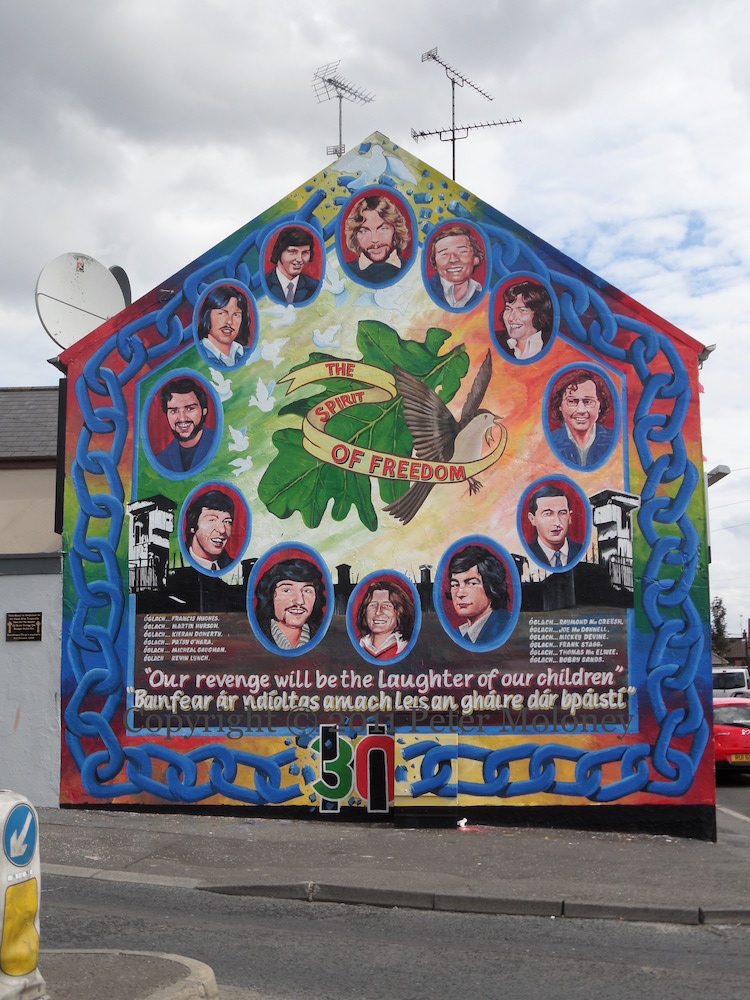
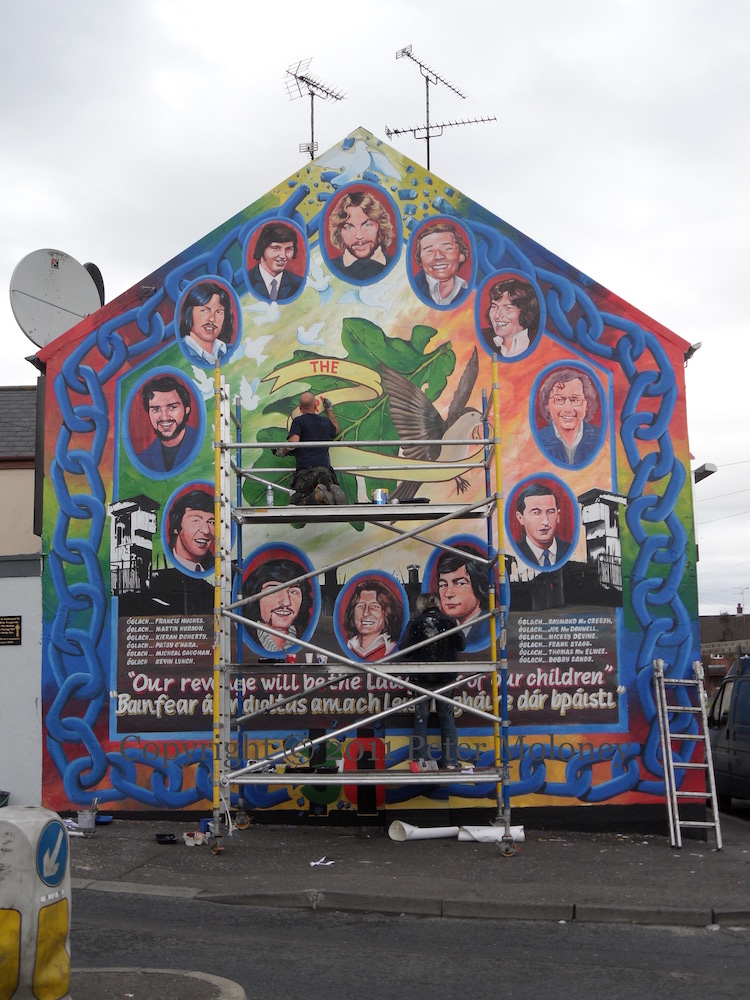
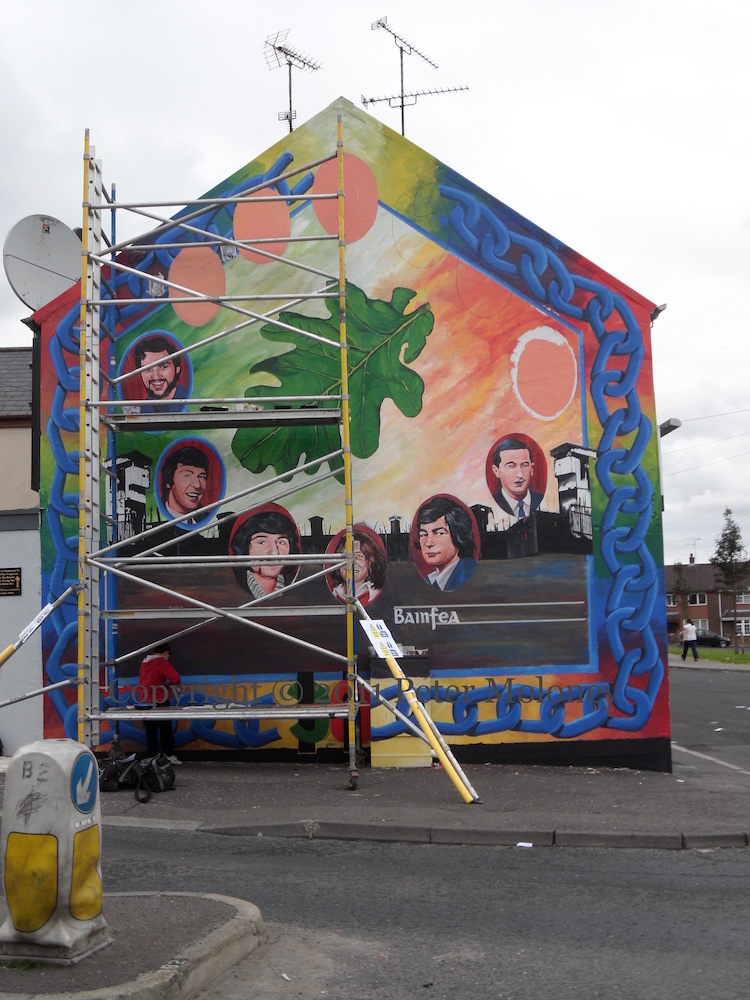
There are a couple of interesting elements in this 30th anniversary hunger strikers mural in the Bogside. The frame is formed by chains (as seen previously on the Bobby Sands mural in Belfast) rather than knot-work, the names of Frank Stagg and Michael Gaughan are mixed into the list (rather than appearing together at the beginning or end), both the lark and the dove are included, and – most unusual and possibly unique – is the Irish translation of Bobby Sands’s saying “Our revenge will be the laughter of our children”: Baınfear ár ndíoltas amach leıs an gháıre dár bpáıstí. (And, as a super-extra bonus, the Irish has been – correctly – painted without tittles.)
“Derry remembers 1980-1981 hunger strikes. Re-dedication of mural 20th August 2011 on the 30th anniversary of Óglach Mickey Devine.”
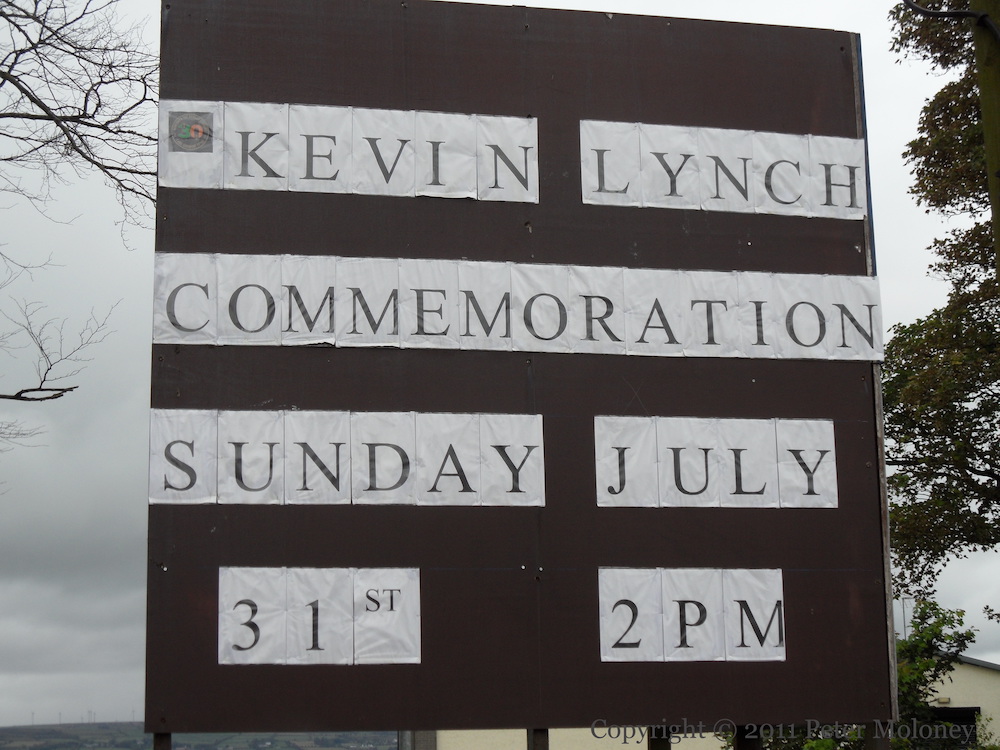
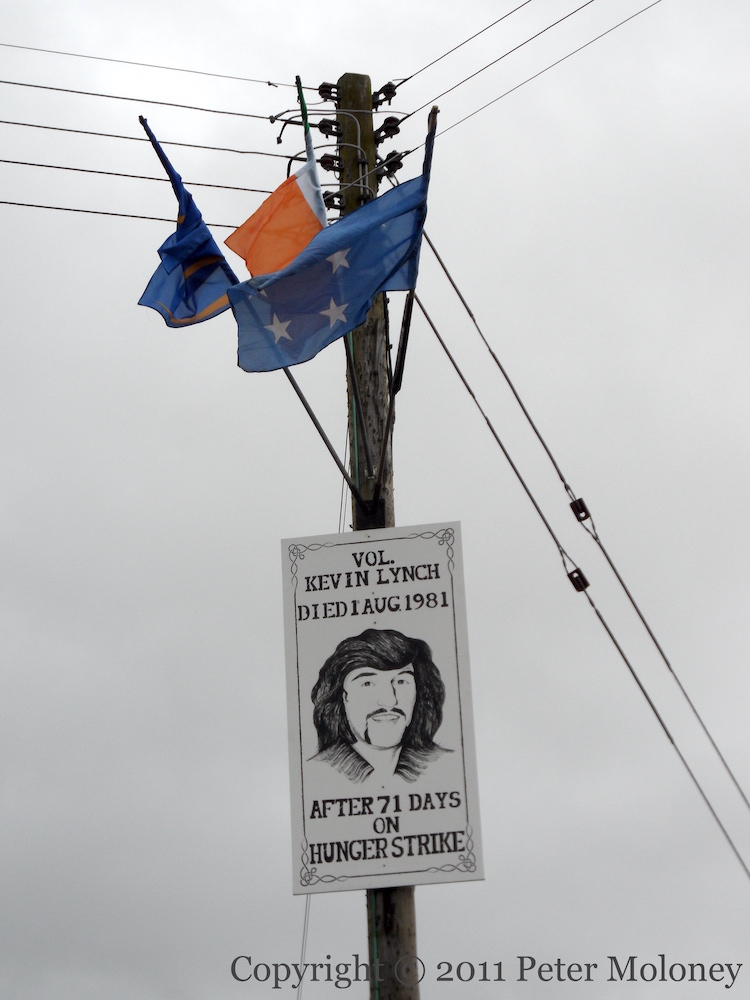
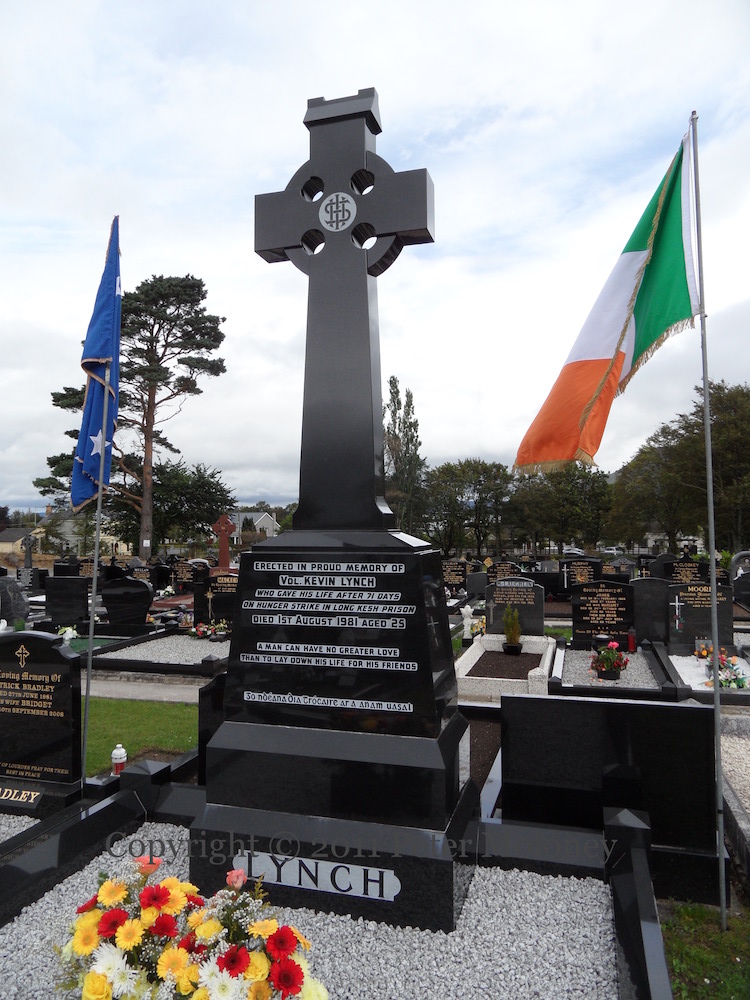
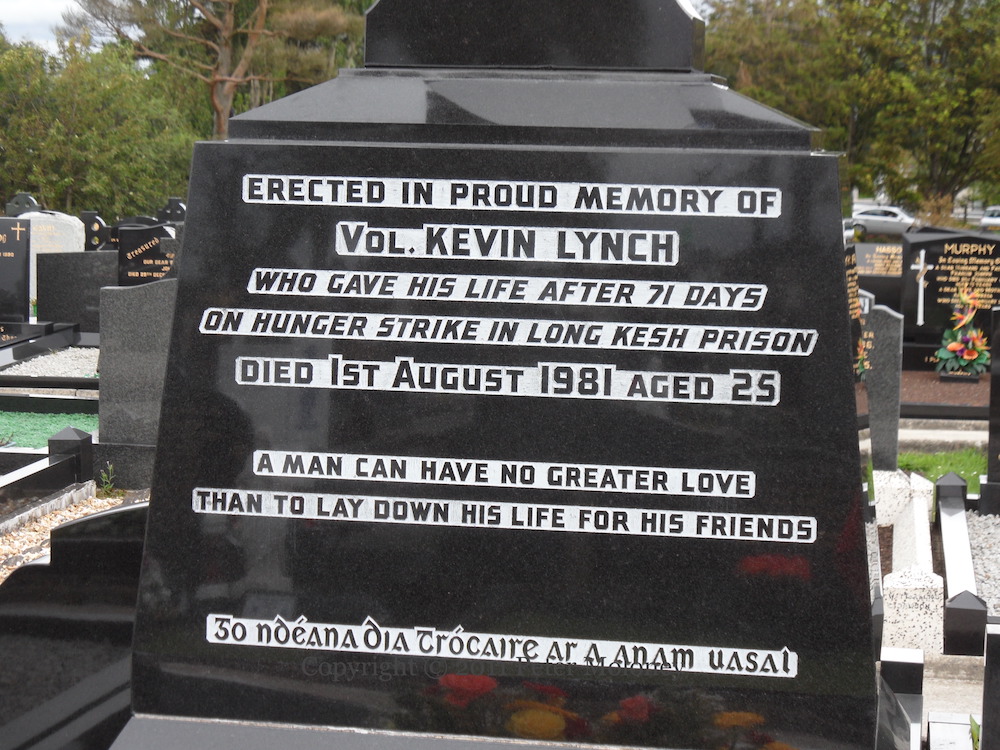
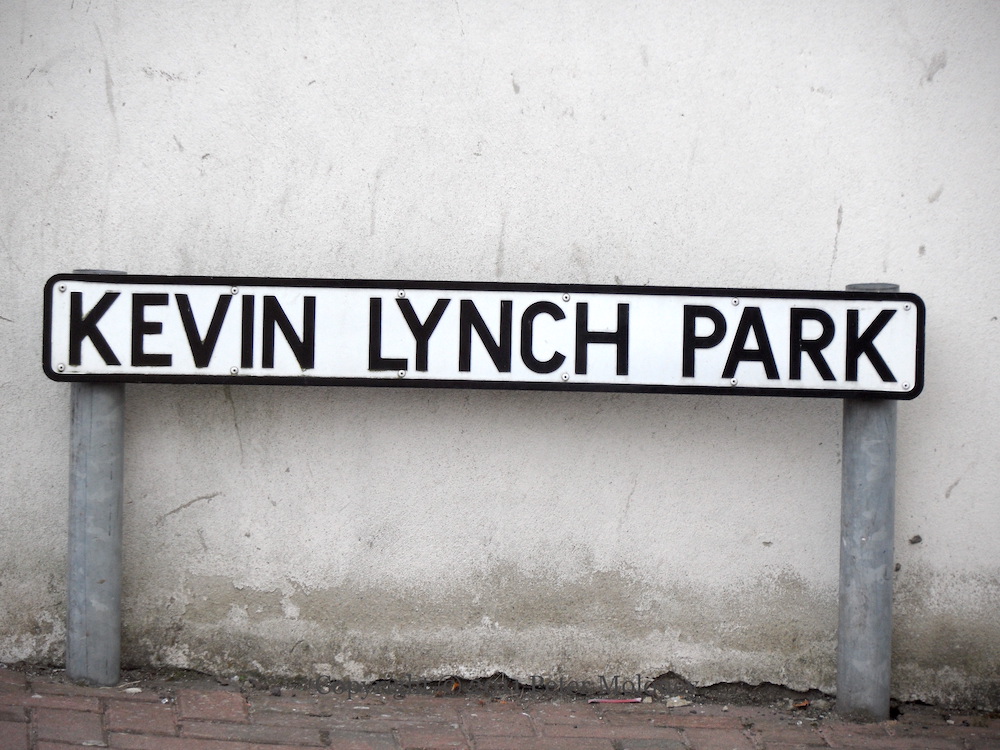
Kevin Lynch, the seventh of the 1981 hunger strikers to die, is buried in Dungiven Cemetery. He is commemorated annually in the town. These images were taken on the day of the 30th anniversary commemoration.