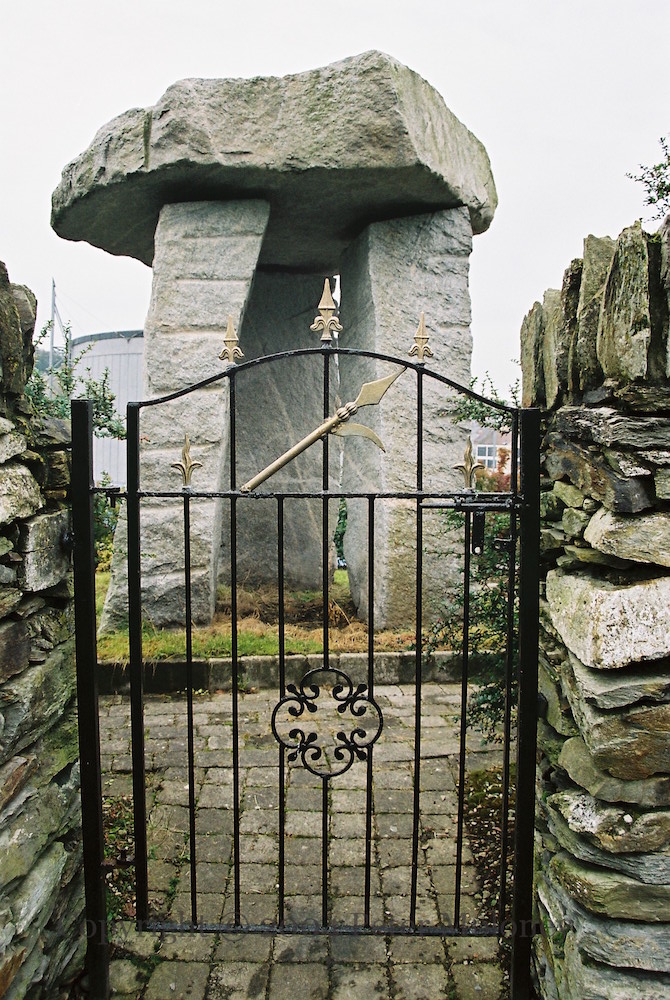
At the top and bottom of the same hill, the dolmen is off St Columba’s Walk while the ogham stone is on Lecky Road. Both serve as monuments to Derry Brigade IRA 1st battalion dead. The lettering on the standing stone has worn away significantly – compare with 1999.
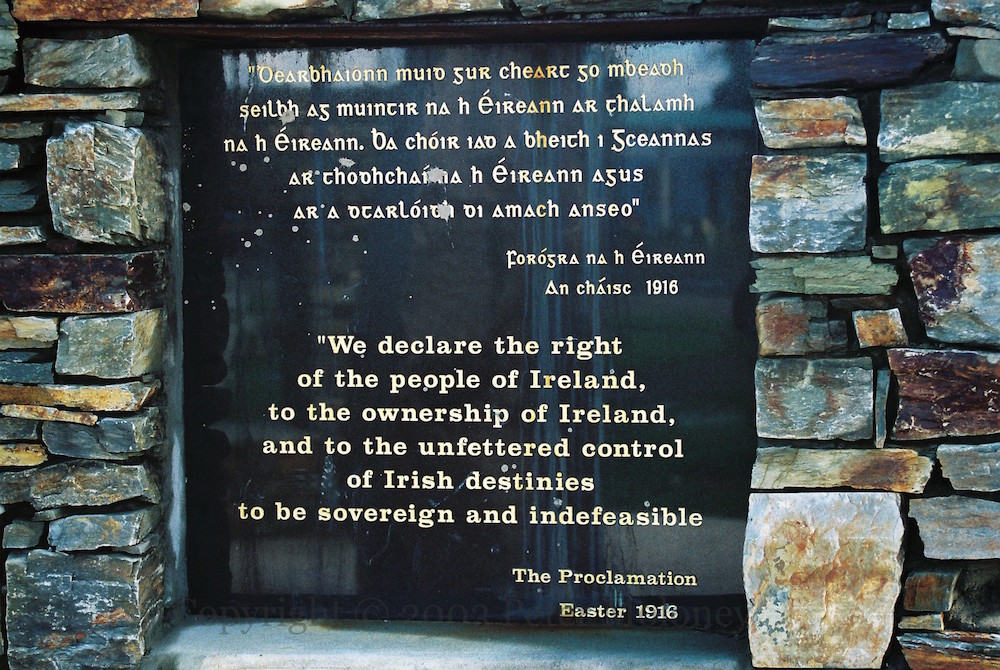
The IRA Derry Brigade memorial at the shops on Racecourse Road, Derry, includes quotes from Robert Emmet (not: Emmett) – When my country takes her place among the nations of the Earth, then and not until then let my epitaph be written – and the Easter Rising proclamation – We declare the right of the people of Ireland, and to the unfettered control of Irish destinies to be sovereign and indefeasible – in both English and Irish.
“Nuaır a ghlacfaıdh mo thír dhúchaıs a háıt cheart ı measc náısıún uıle an domhaın, ansın, agus chan go dtí sın, déanaıgí feartlaoı s’agamsa a scríobh amach. – Roıbéard Eıméıd 1803” – “When my country takes her place among the nations of the earth, then and not until then let my epitaph be written – Robert Emmett 1778-1803”
“Dearbhaıonn muıd gur cheart go mbeadh seılbh ag muıntır na hÉıreann ar thalamh na hÉıreann. Ba chóır ıad a bheıth ı gceannas ar thodhchaí na hÉıreann agus ar a dtarlóıdh dı amach anseo – Forógra na hÉıreann, An Cháısc 1916” – “We declare the right of the people of Ireland, to the ownership of Ireland, and to the unfettered control of Irish destinies to be sovereign and indefeasible – The Proclamation, Easter 1916”
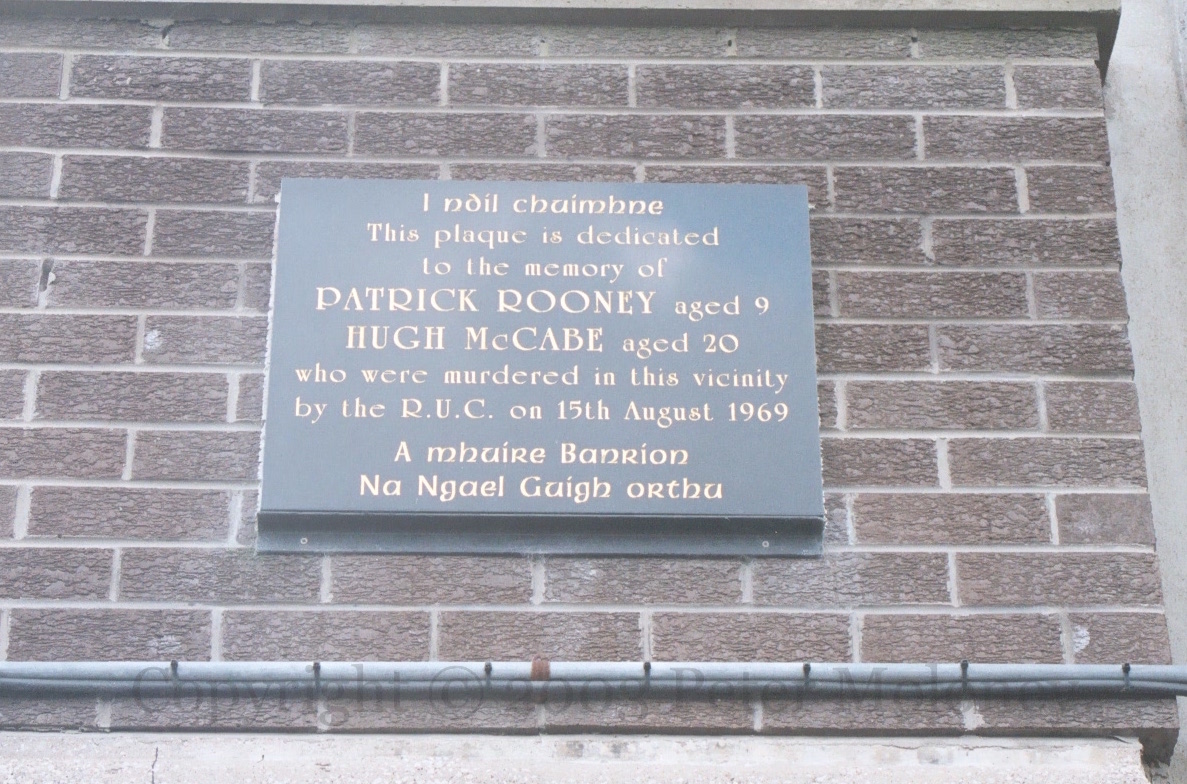
The Troubles in Belfast started in August 1969 with sustained rioting around Divis flats. On the night of August 14-15, nine year-old Patrick Rooney was hit in his home in the Divis flats by a bullet from an RUC machine-gun; he was the first child killed in the Troubles. A little later, 20 year-old Hugh McCabe, a (Catholic) British soldier on leave, was hit while dragging an injured person to safety on the roof of another flat (WP).
Although visitors have been touring the murals for years, this Divis Street, Belfast, this board advertising black taxi tours is an early indicator of what is sometimes called “troubles tourism”, five years after the ratification of the Good Friday Agreement. Pickup is in Castle Junction/Gabhal An Chaısleaın.
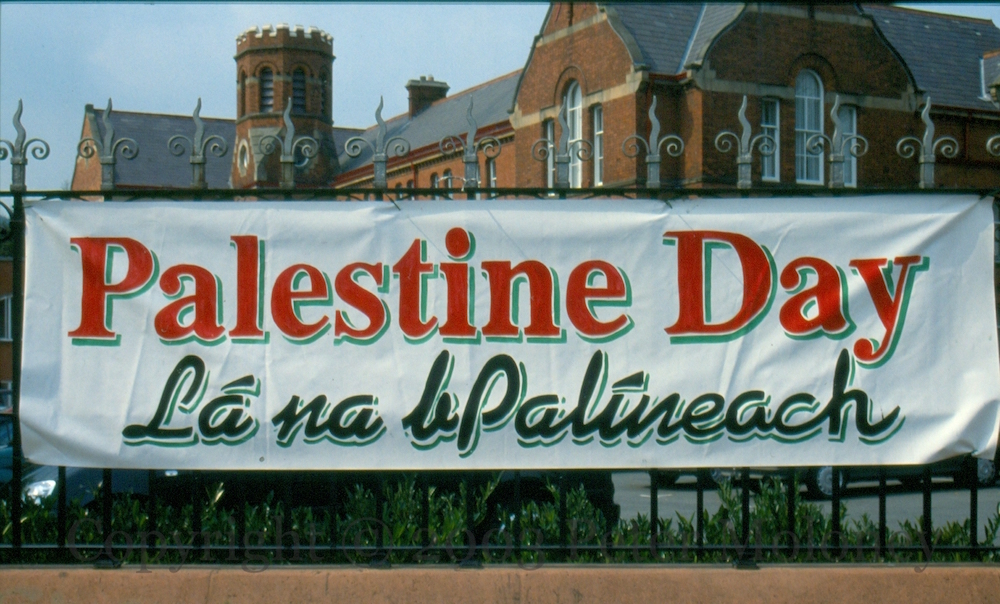
August 6th, 2003, was “Palestine day/Lá na bPalíneach” on the Falls Road in Belfast, involving “a panel of Irish and Palestinian women; a live video link-up with Palestinian women in Bethlehem; showing of the films “Caoımhe”, “The Return”; and “Jenin”; a photo exhibit entitled “55 Years of Endurance”; and a television show “West Belfast Talks Back””. (UNISPAL)
Pobal is a non-profit community development organisation. The mural above is in support of Irish-language rights. “Cearta teanga, cearta daonna – Language rights are human rights”, “An Ghaeılge thart tımpeall oraınn – Irish is all arond us”, “Ní mór an Bılle Ceart tosca saınıúla na Gaeılge a chur san áıreamh – The Bill of Human Rights must reflect the unique circumstances of the Irish language.” Brighton Street, Belfast
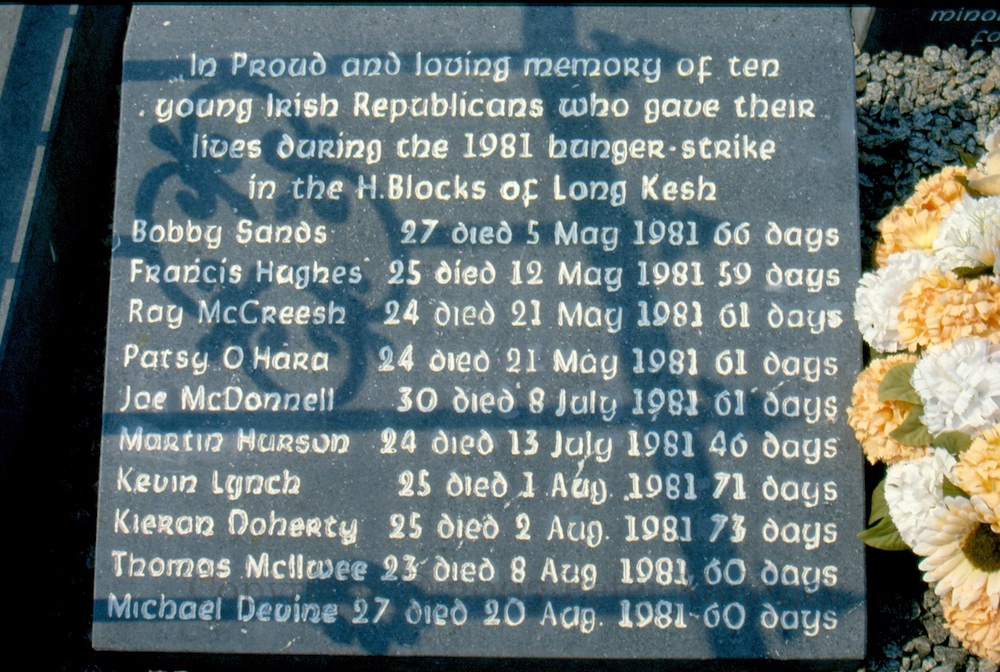
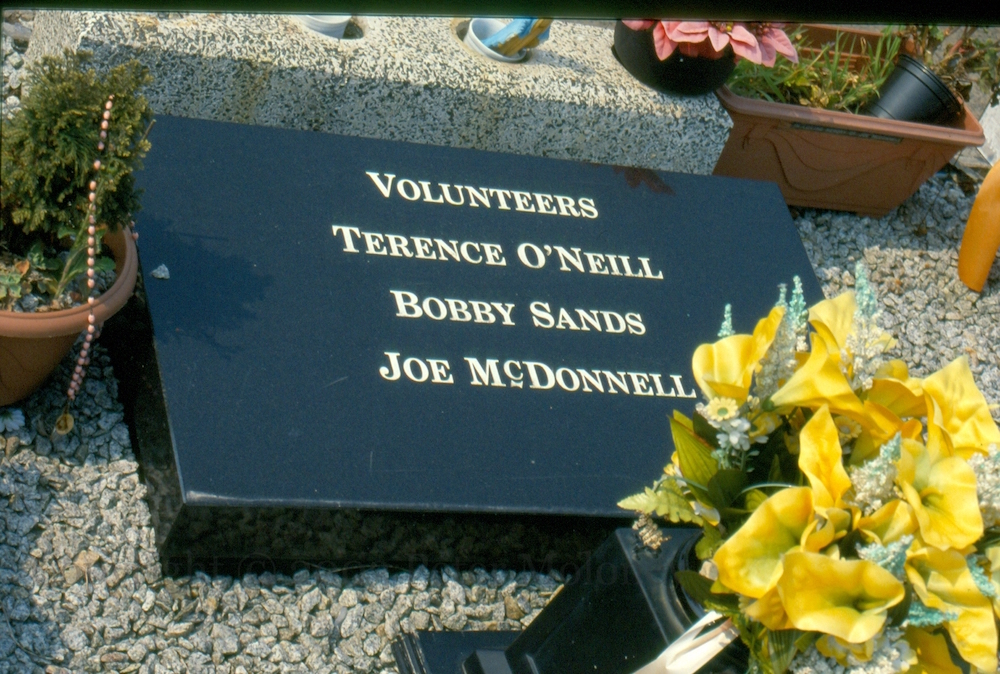
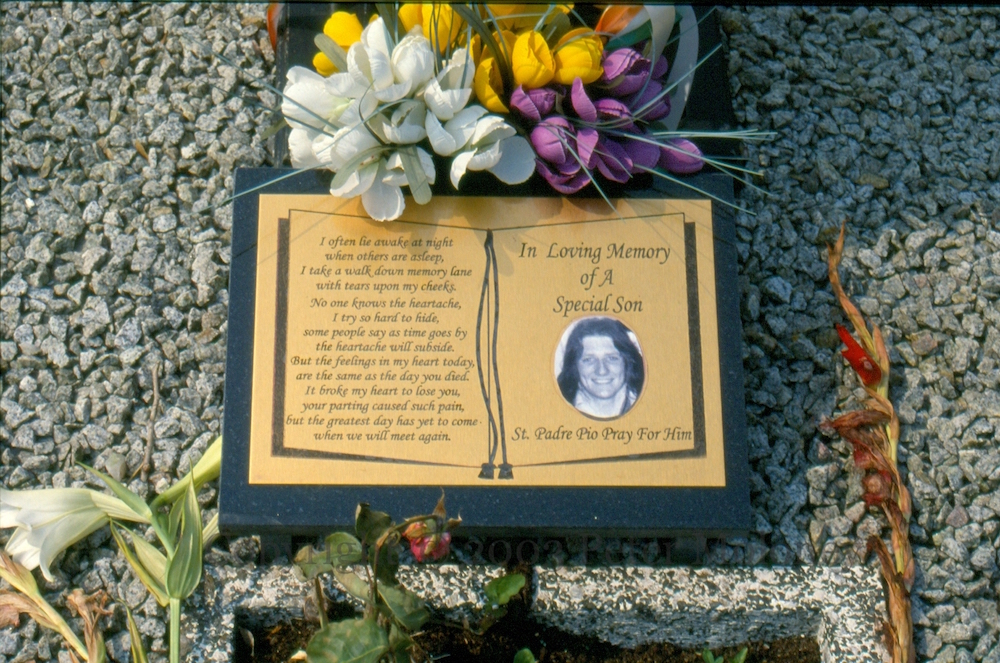
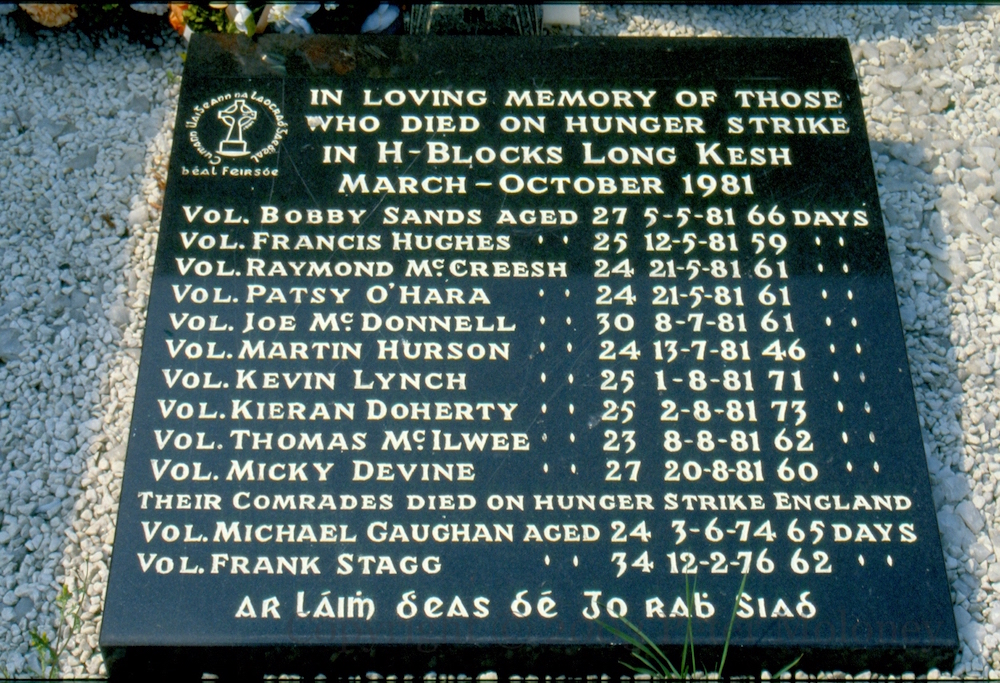
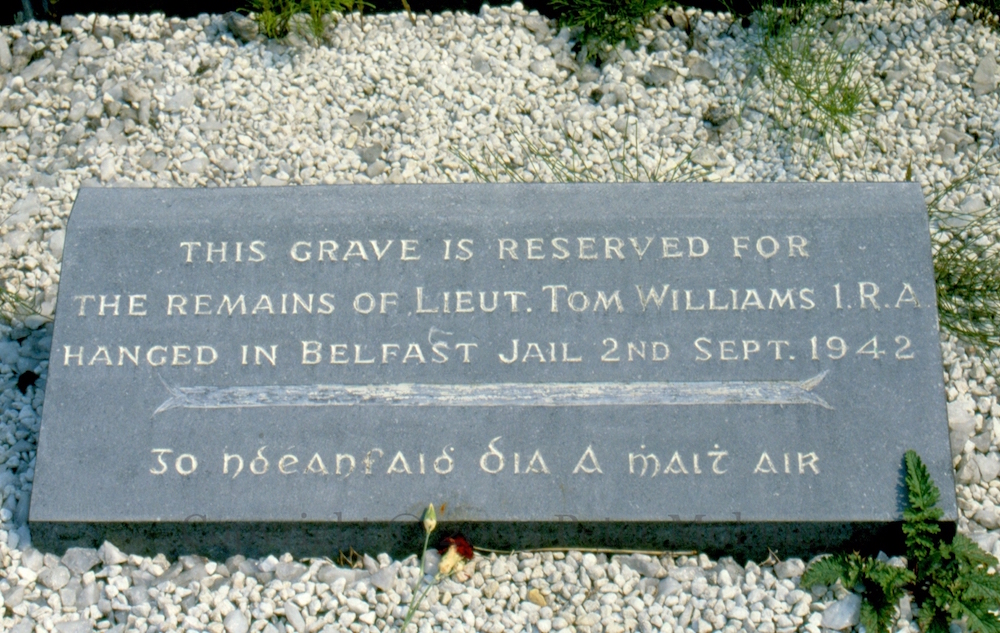
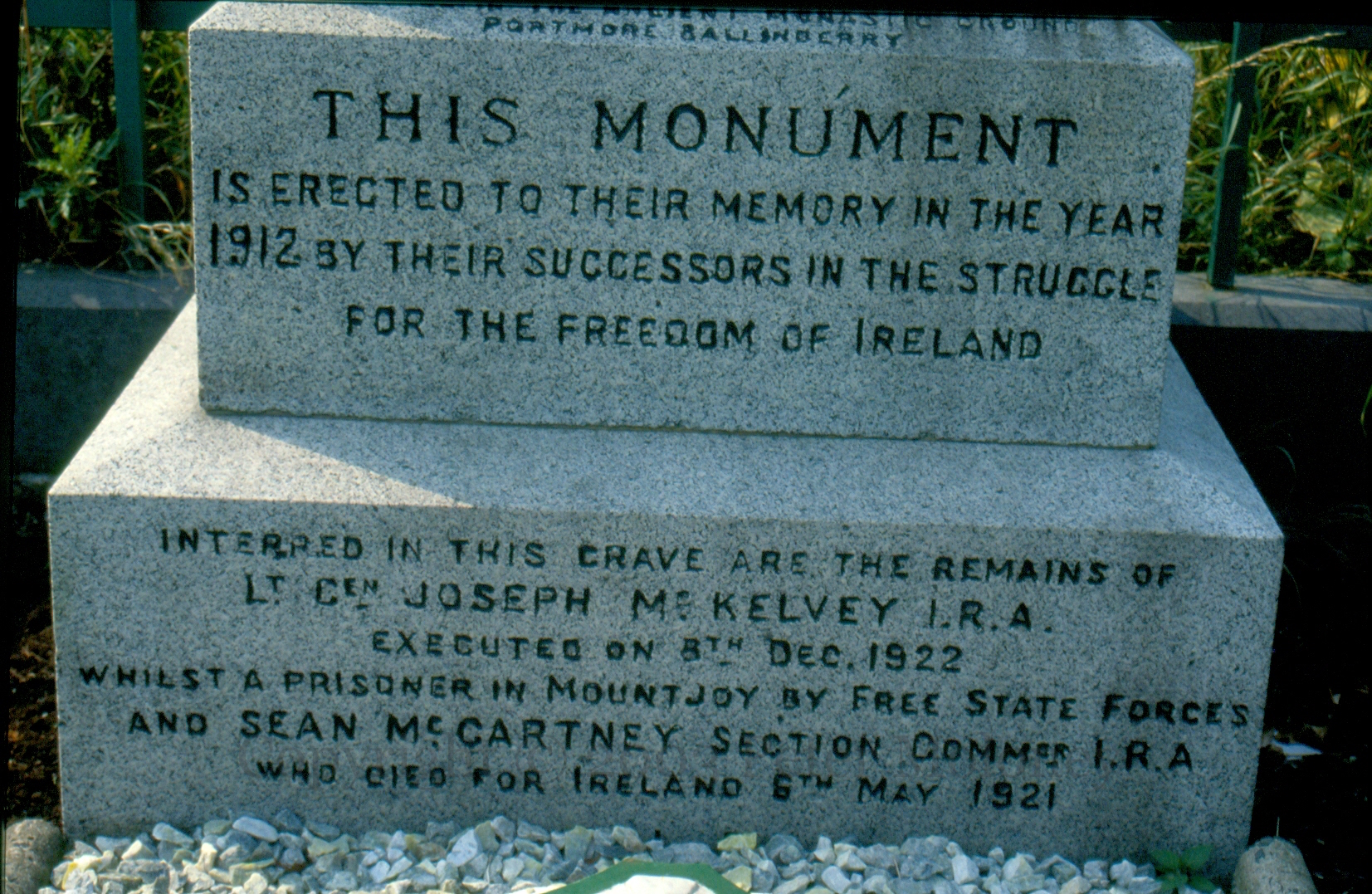
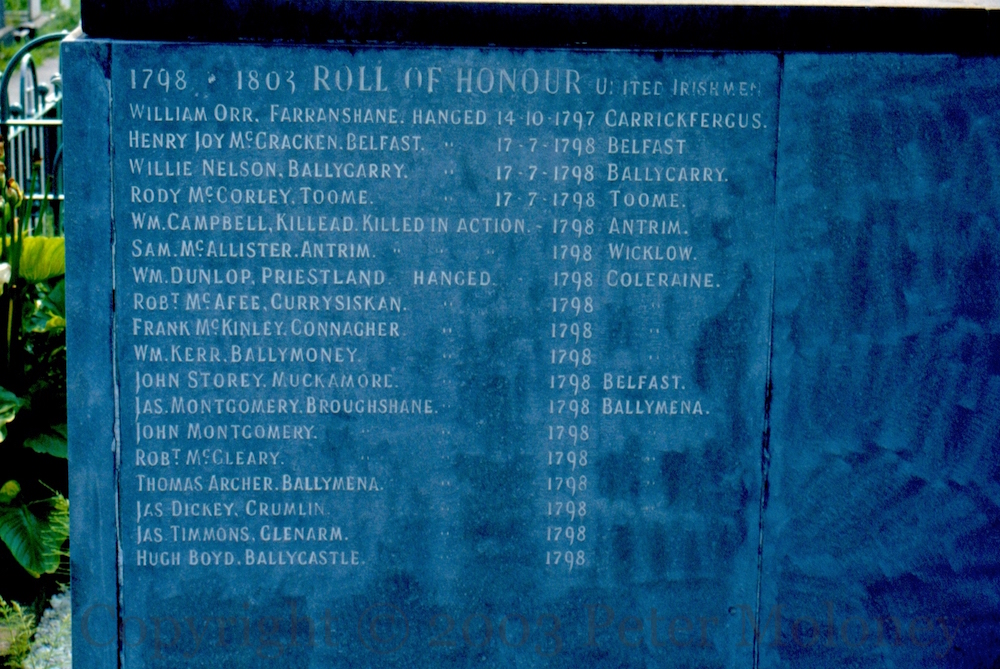
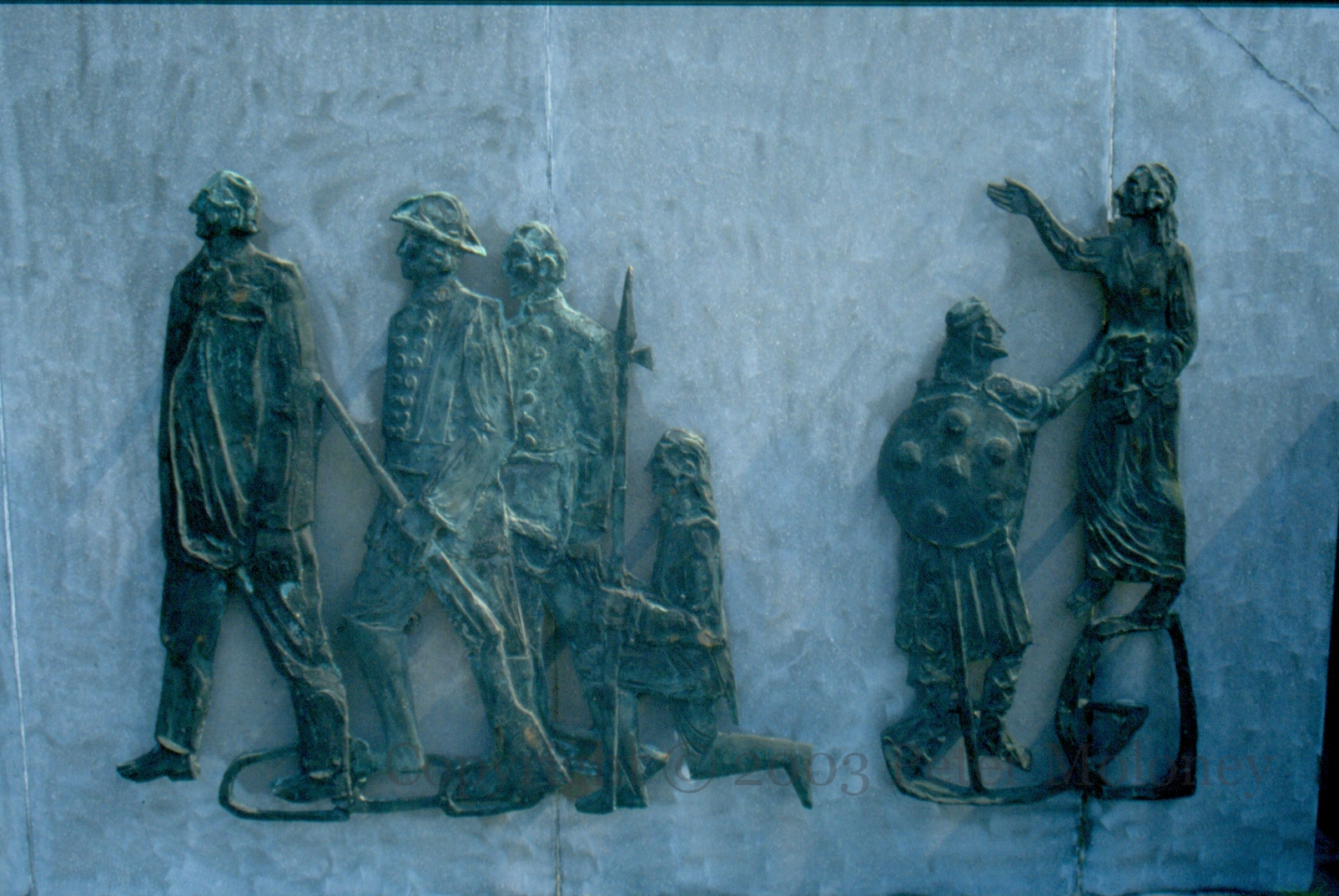
Headstones in (roughly) reverse order: the Gibraltar Three (1988); the 1981 Hunger Strikers; Terence O’Neill (July 1, 1980); Gaughan and Stagg (1970s); the Antrim cross; Caffney, Perry, Burns (1940s); Tom Williams; McKelvery and McCartney (1920s); volunteers 1867-1922 (including “Roger Casement, Ballymena”); the United Irishmen of 1798 and 1803.
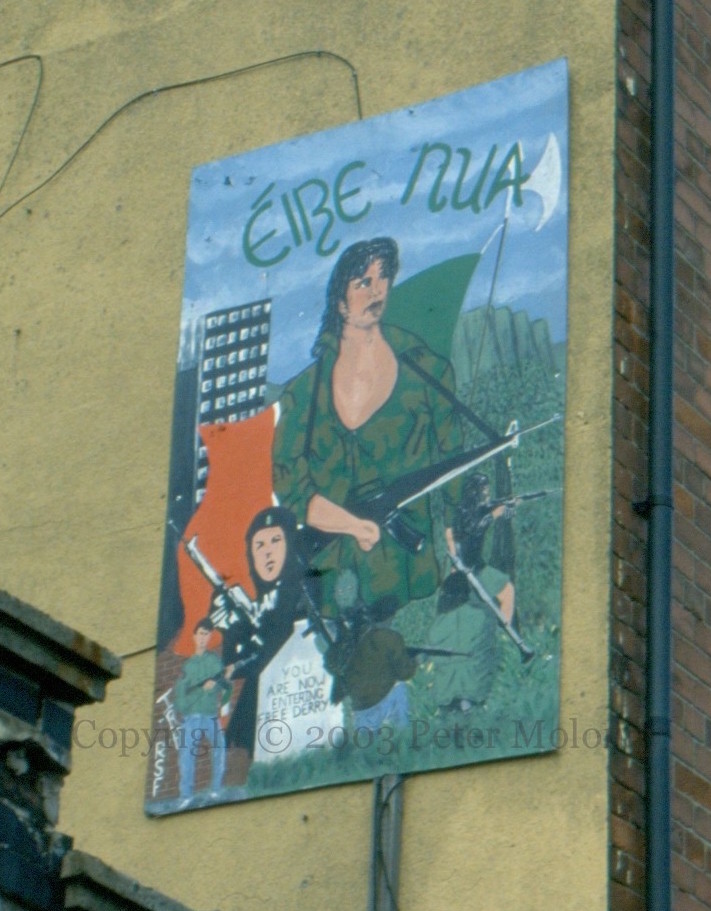
“Éıre Nua” was the Provisional Sınn Féın and (after the 1986 split) Republican Sınn Féın (RSF) plan (pdf | also a social and economic plan pdf) for a federal Ireland, with a semi-independent Ulster parliament.













 Peter Moloney Collection