Ibrox Stadium is the home ground of Scottish club Glasgow Rangers, which has a large following among Protestants in Northern Ireland. The bar was formerly the Bunch Of Grapes (owned by the UDA’s Jim Gray). It’s initial attempt to rebrand itself using Rangers’ logo and the name “Ibrox” drew threat from the club (Irish Independent), and it changed its livery to the Eye-brox bar shown above.
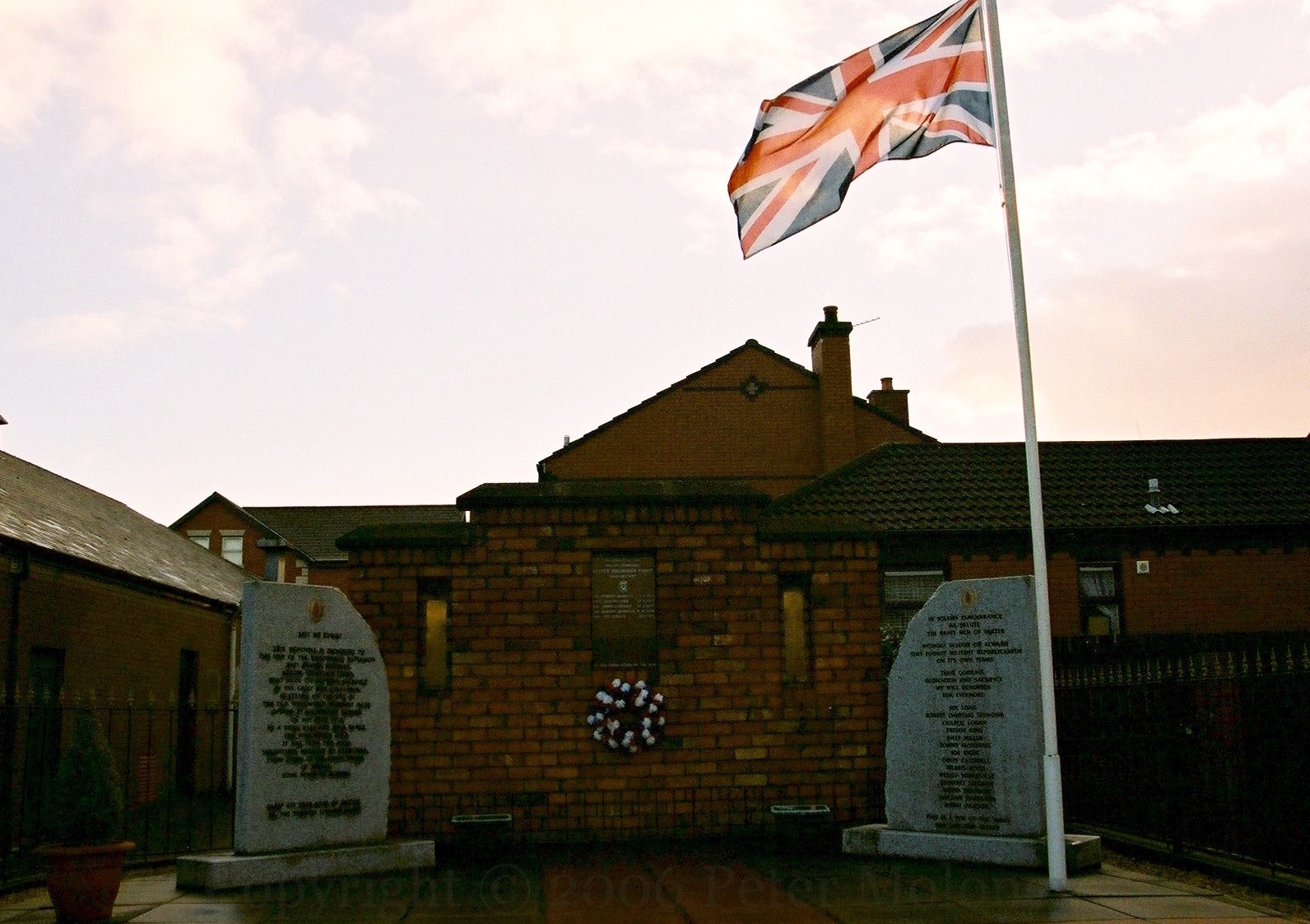
“Lest we forget. This memorial is dedicated to the men of the Willowfield Battalion, East Belfast regiment, Ulster Volunteer Force, who made the supreme sacrifice in the Great War 1914-1918. It stands on the site of the old Willowfield unionist hall, opened by Sir Edward Carson on May 16th 1913, as a drill hall and rifle range for Willowfield UVF. It was from this hall volunteers marched to Balmoral, from there to the green fields of France, some never to return. Sleep on, dear sons of Ulster, ’til the trumpet sounds again.”
“In memory of our fallen comrades Ulster Volunteer Force East Belfast.”
“In solemn remembrance we salute the brave men of Ulster. Without favour or reward they fought militant republicanism on its own terms. Their courage, dedication and sacrifice we will remember for evermore. Joe Long, Robert (Squeak) Seymour, Charlie Logan, Trevor King, Billy Miller, Tommy McDowell, Joe Shaw, Colin Caldwell, Harris Boyle, Wesley Somerville, Geoffrey Freeman, David Swanson, Sinclair Jonhston, Robin Jackson. This is a few of the many. For God and Ulster.”
“Come follow me” (or as on the mural, “Come along with me”) shows kids playing ring a ring o’ rosie. The sponsors in the bottom right corner are New Belfast, the City Council, Housing Executive, Brighter Belfast, and “Pulse”.
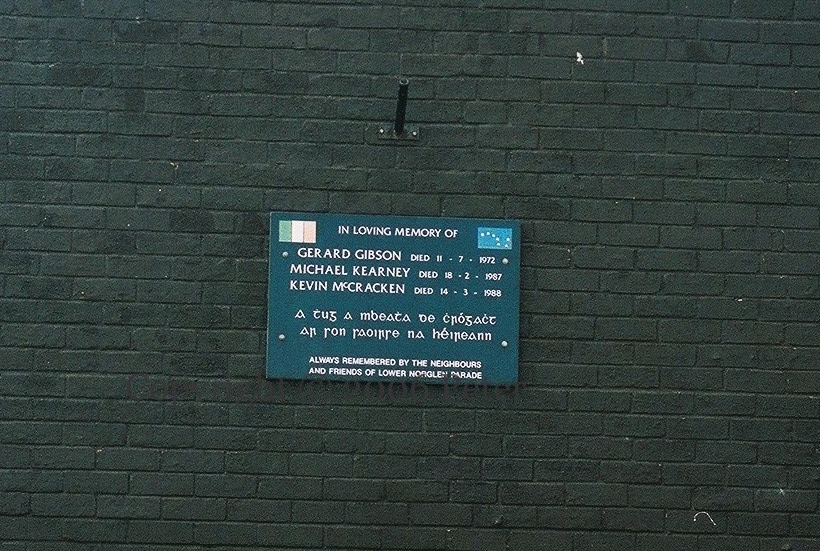
“In loving memory of Gerard Gibson, died 11-7-1972 [aged 16 years, OIRA], Michael Kearney, died 18-2-1987 [aged 21 years, IRA], Kevin McCracken, died 14-3-1988 [aged 31 years, IRA, shot in Norglen Crescent]. A thug a mbeatha de chrógacht ar son saoırse na hÉıreann [who bravely gave their lives for Irish freedom] Always remembered by the neighbours and friends of Lower Norglen Parade.”
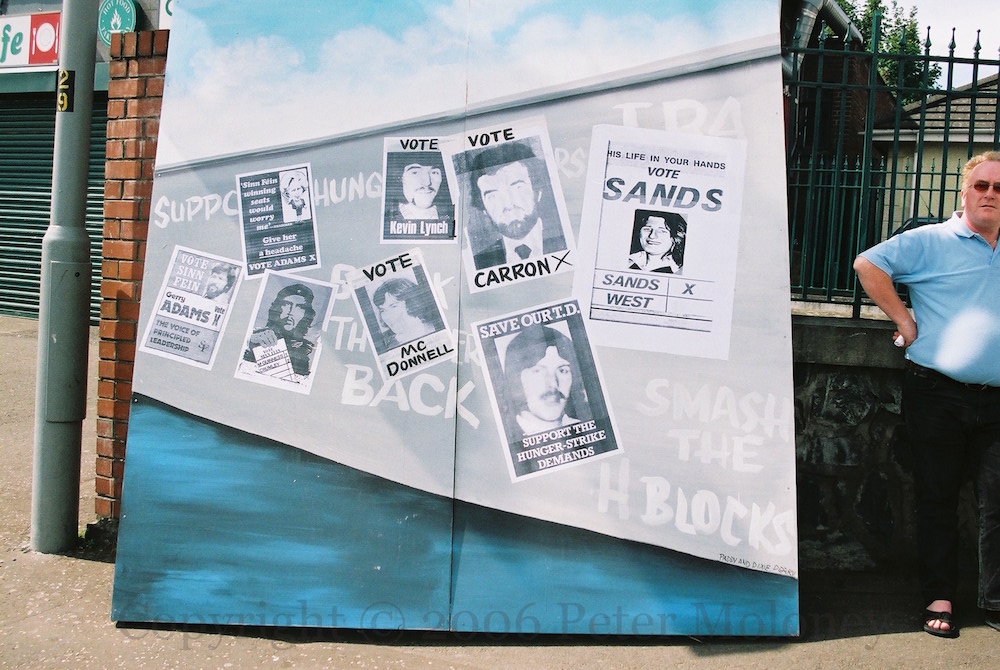
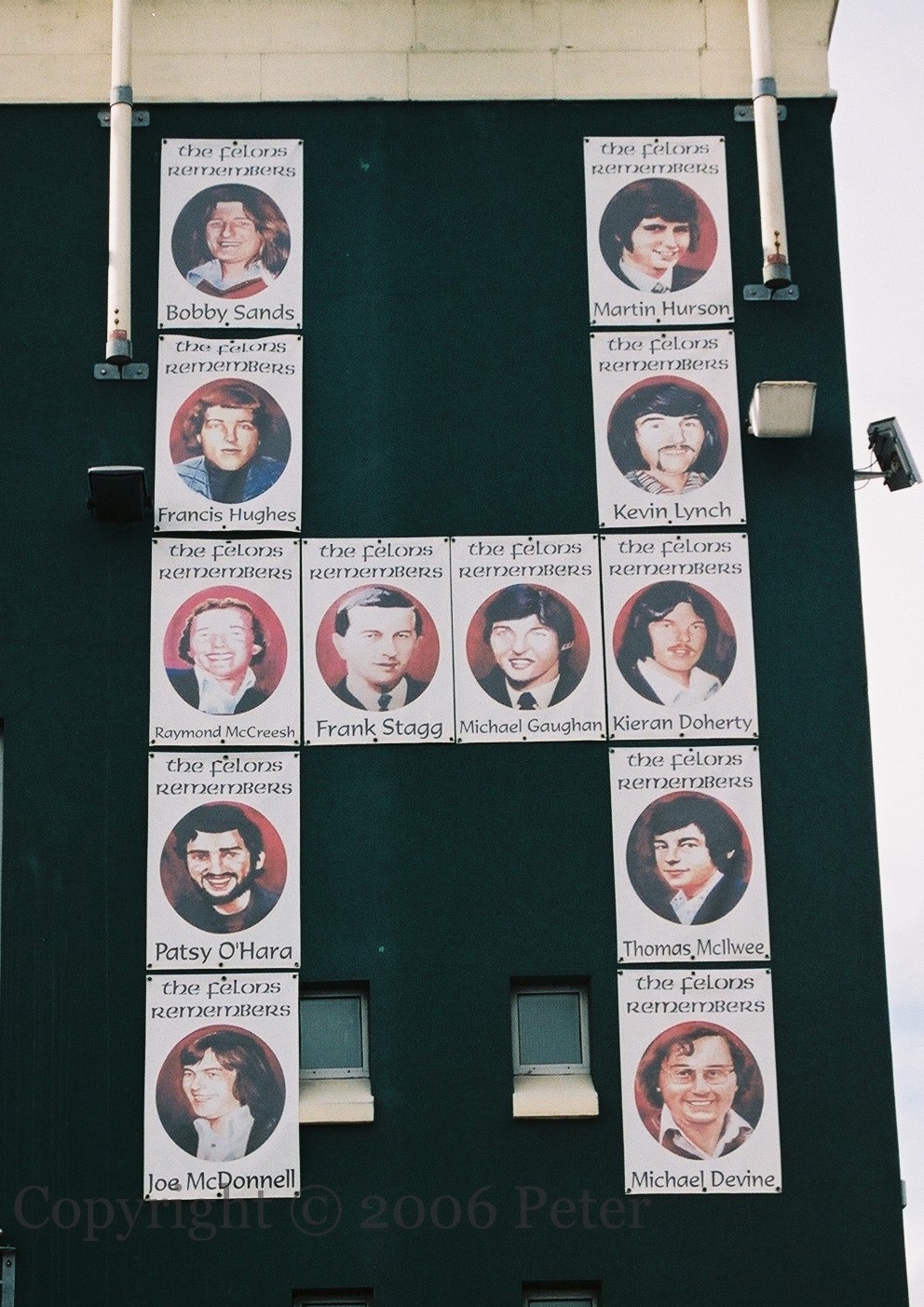
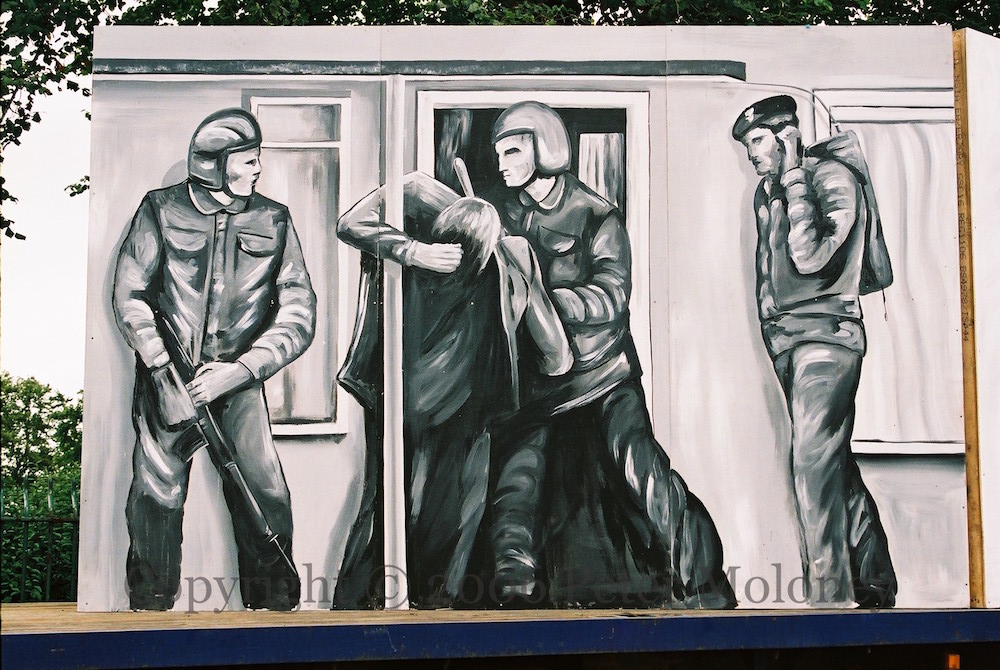
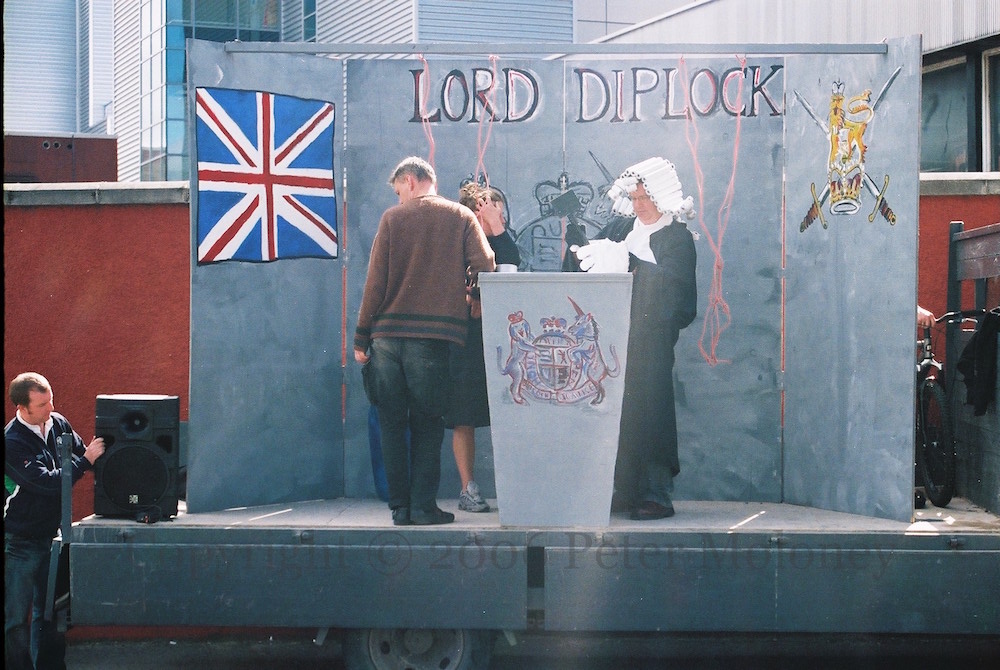
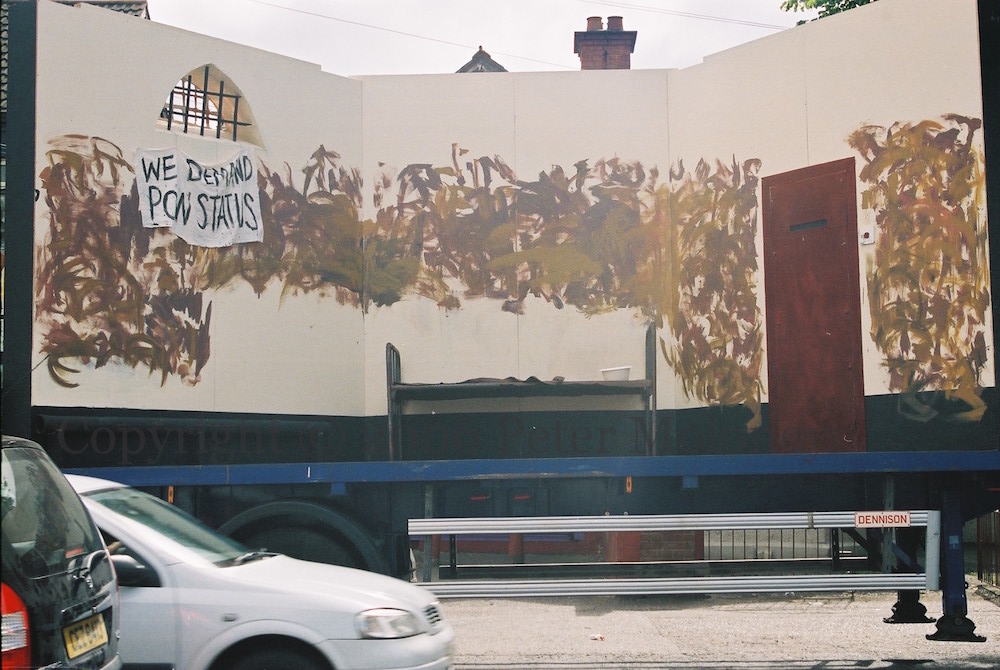
Stages of the “conveyor belt” – arrest by the Army, trial before a Diplock court, strip searches in Long Kesh and Armagh, the dirty protest, supported by an RAC [Relatives Action Committee], and finally, hunger strikes – are recreated in murals and reenactments on flat-bed lorries along the Falls Road for the 25th anniversary of the 1981 hunger strike.









 Peter Moloney Collection