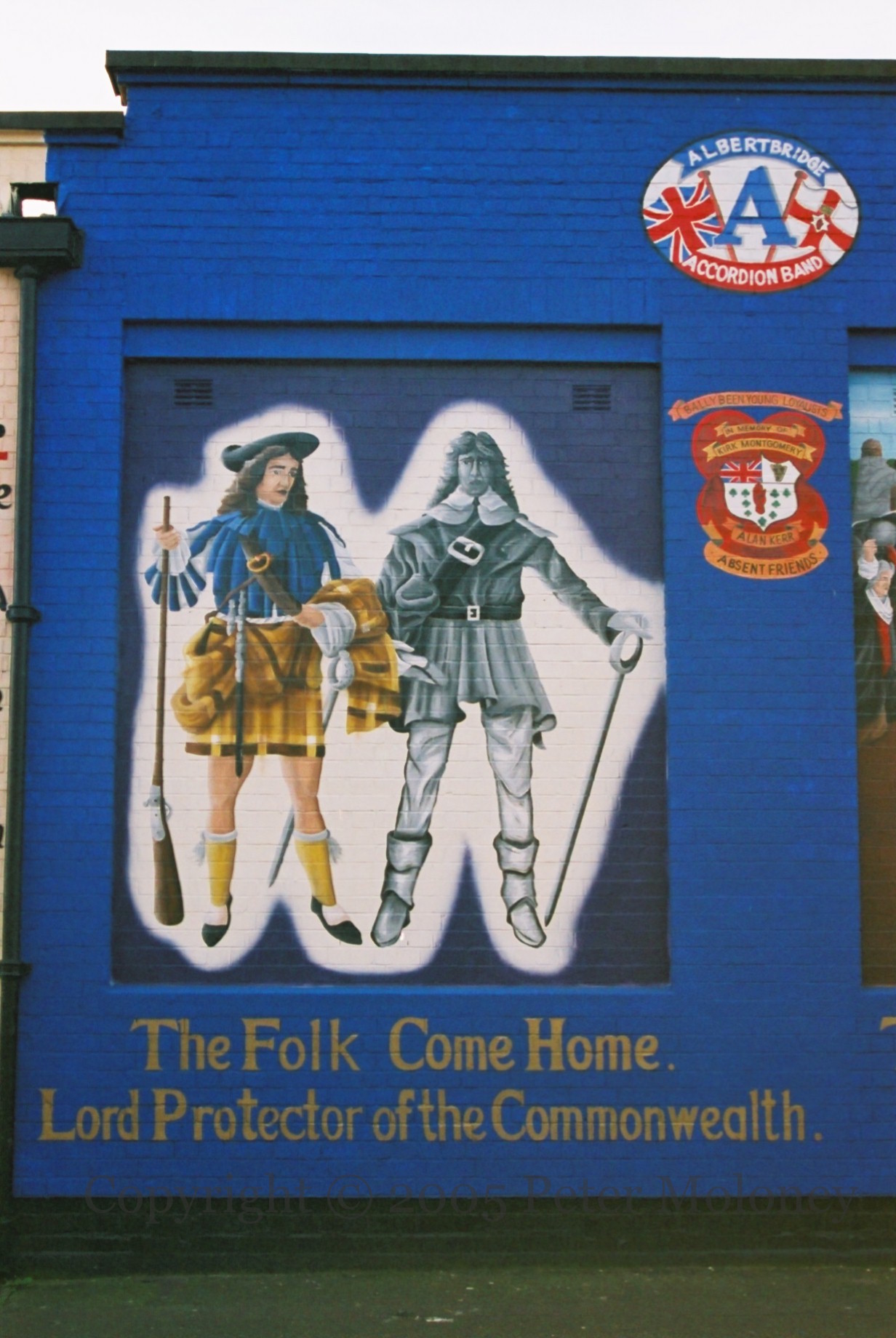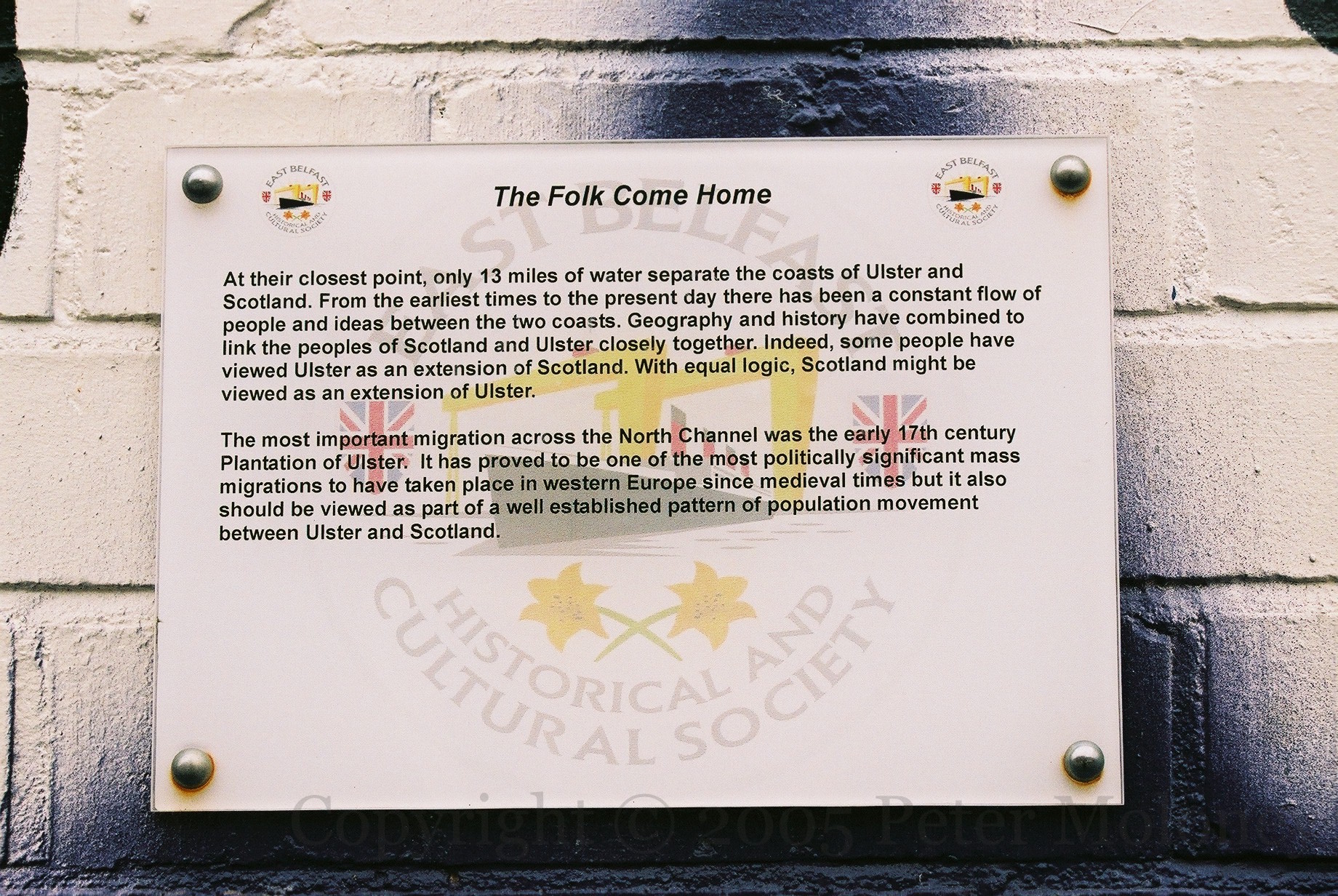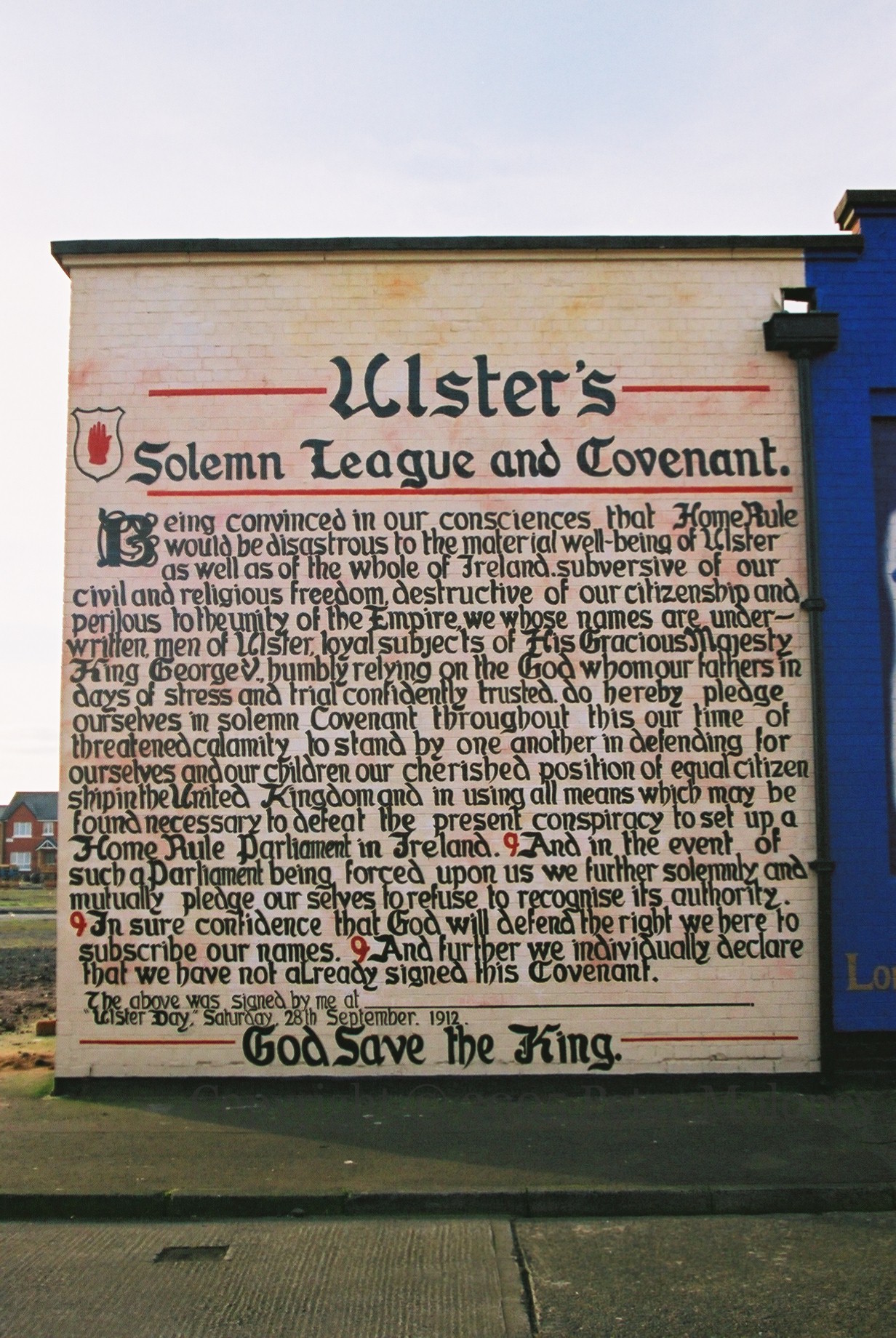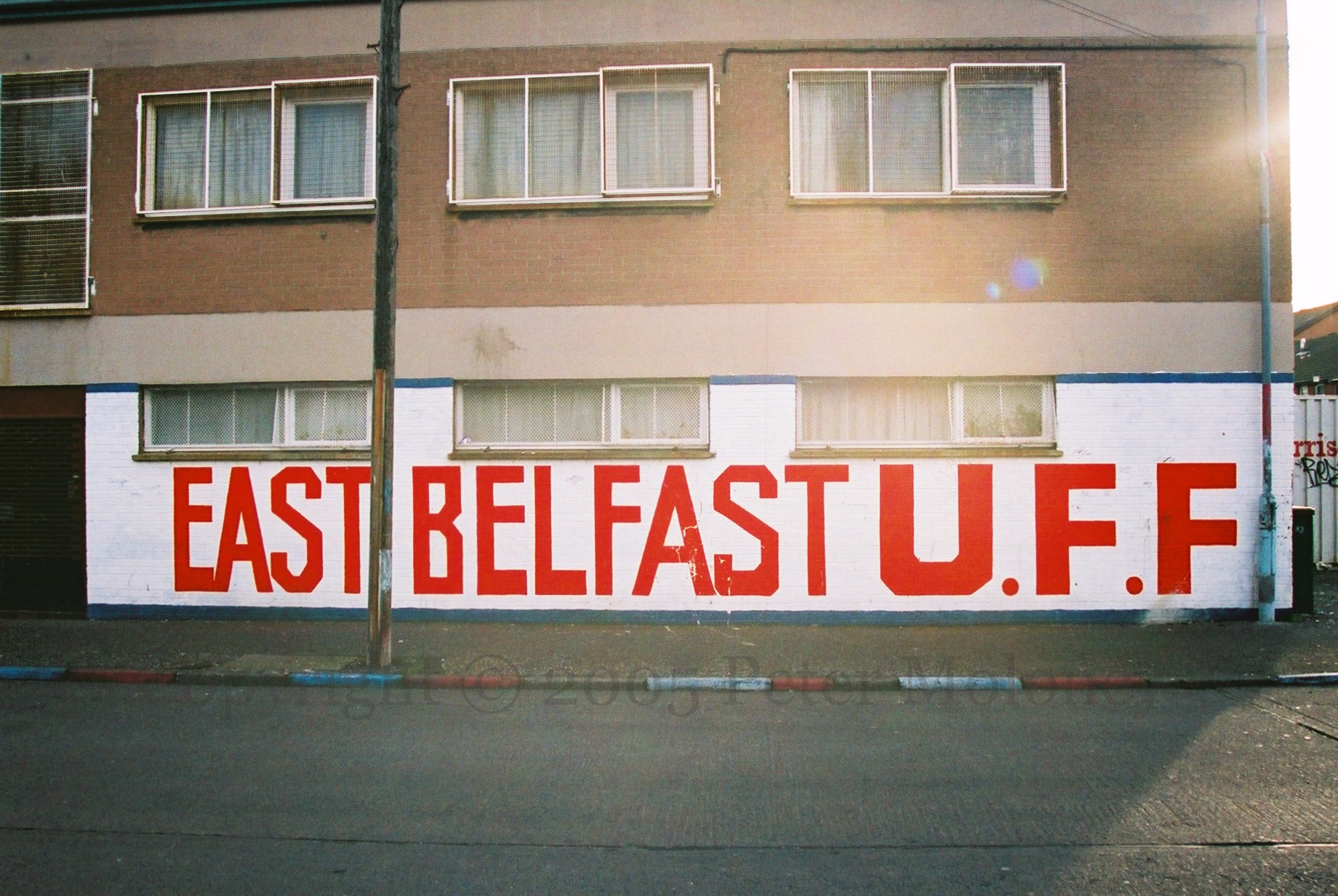
Feriens Tego

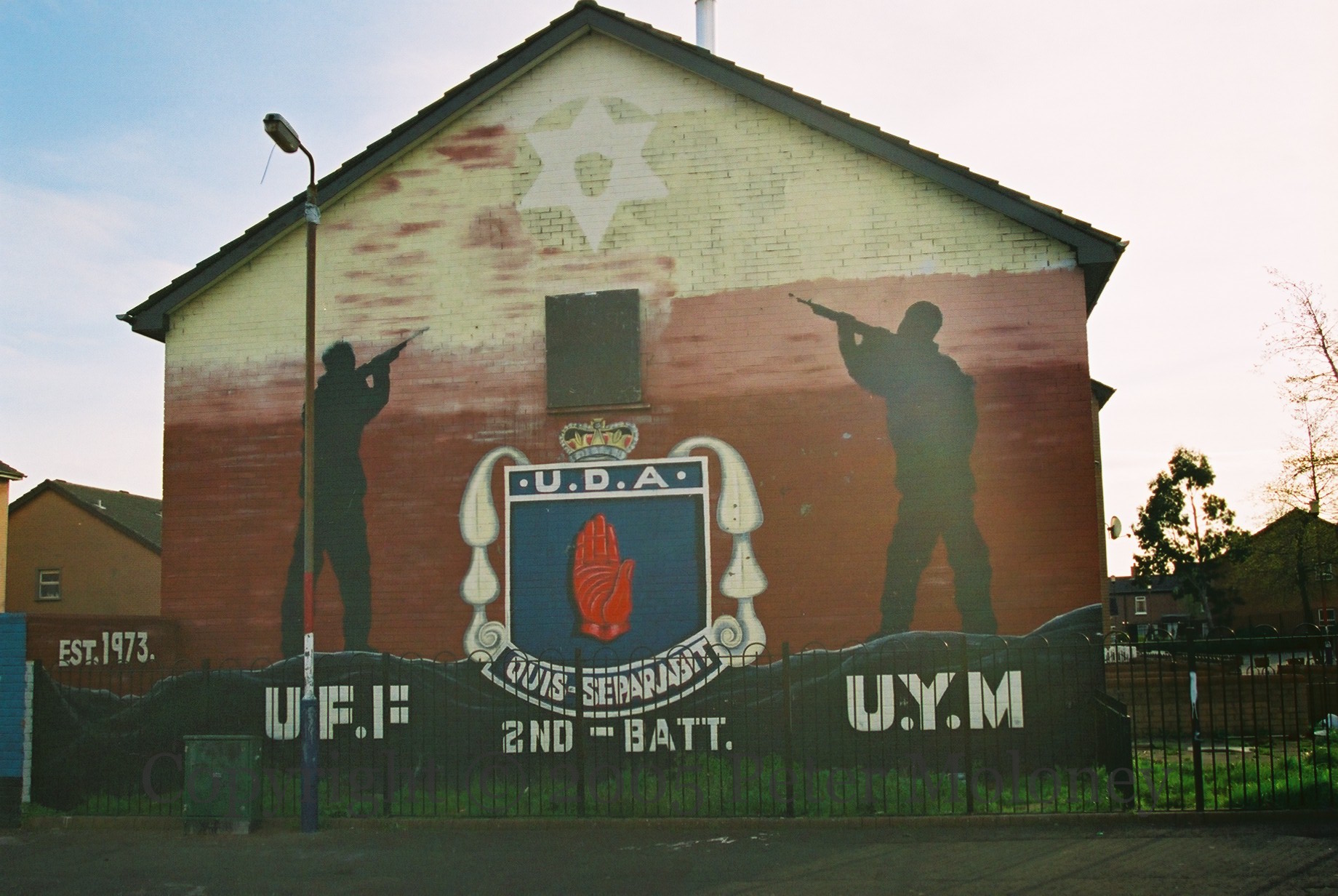
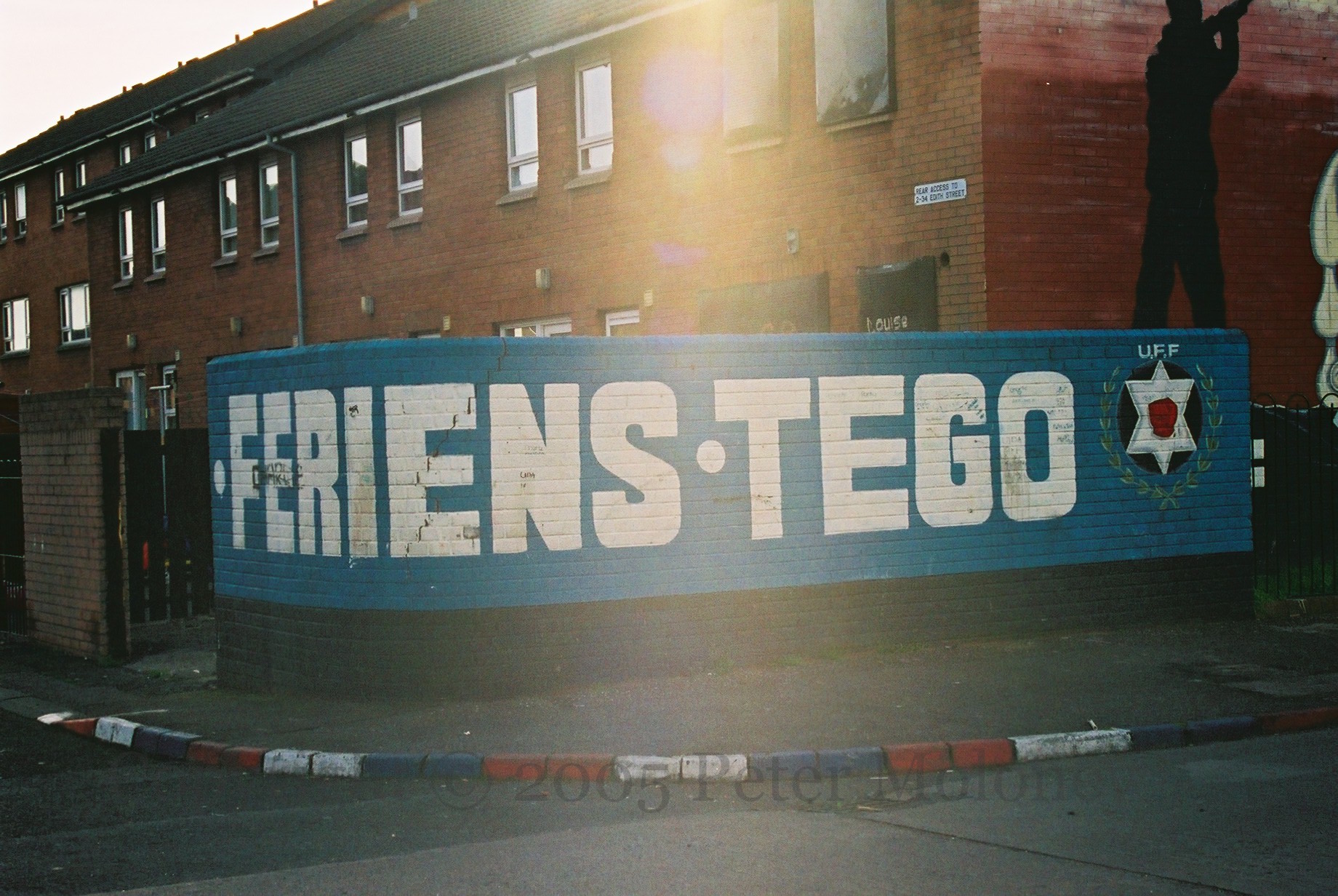
“Feriens, tego” or “Striking, I Defend” is the motto of the Ulster Freedom Fighters, the cover name used by the Ulster Defence Association, whose motto is in the main mural: “Quis separabit” or “Who will separate [us]?”.

Lord Street, east Belfast

Click image to enlarge
Copyright © 2005 Peter Moloney
M02294 M02293

Some Gave All, All Gave Some

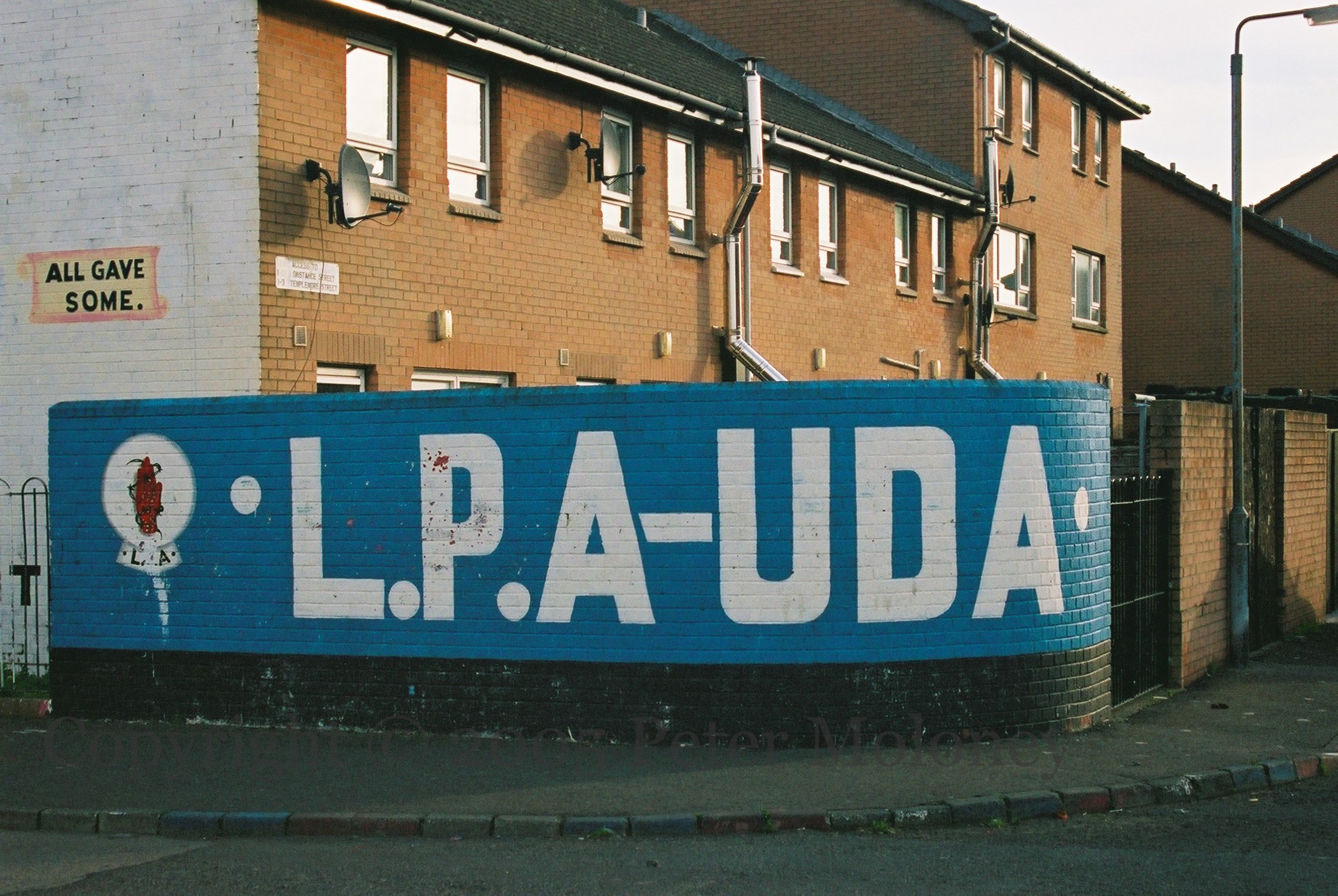
“Free our prisoners.” “LPA” is the “Loyalist Prisoners Association”. Its symbol (in the second image) is a red hand in barbed wire. In the main mural, a pair of red hands are in shackles and the fences of the Maze are superimposed on an outline of Northern Ireland filled in with the walls of the Maze/Long Kesh.

Lord Street, east Belfast

Click image to enlarge
Copyright © 2005 Peter Moloney
M02291 M02292

4000 Years Of Ulster Scots

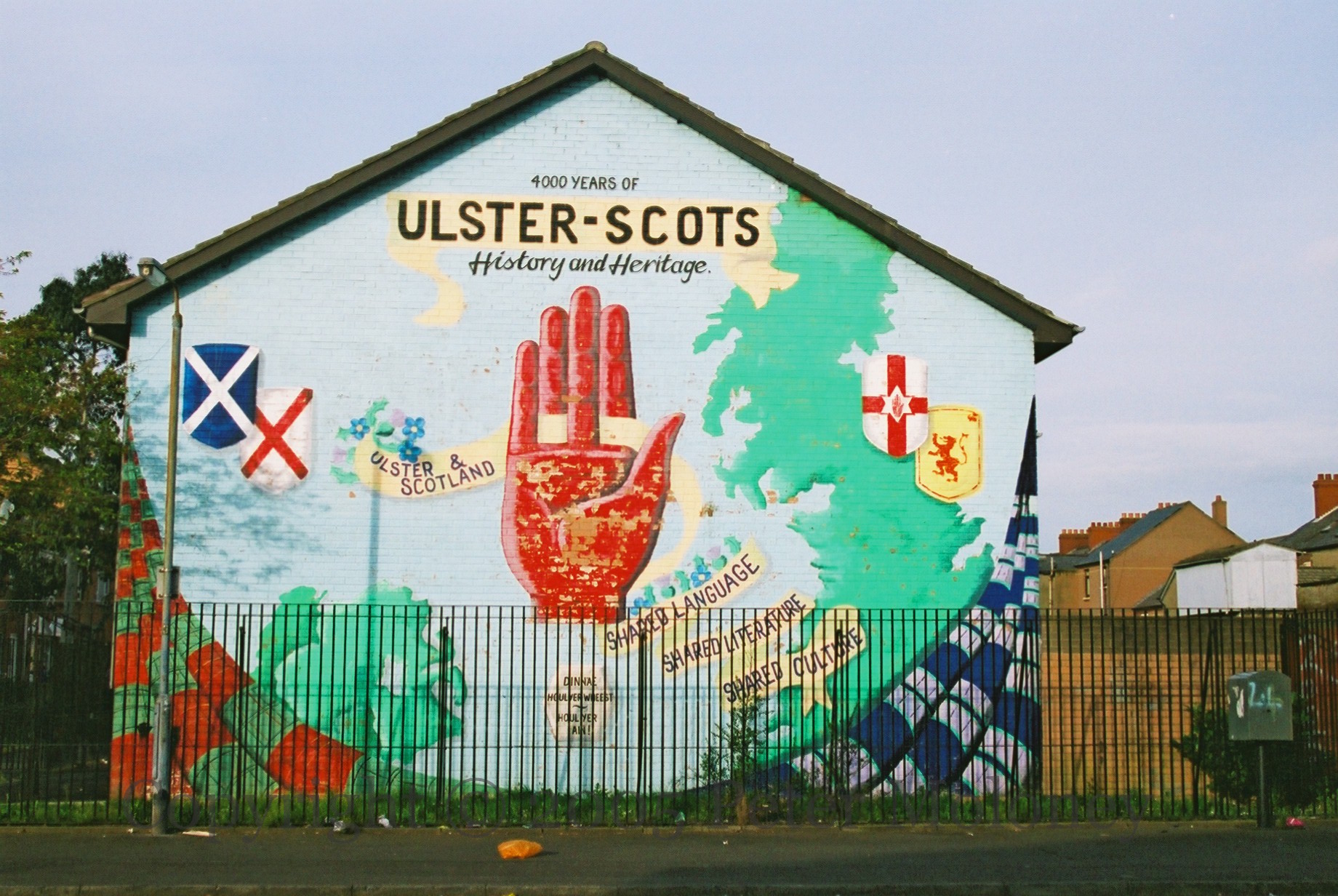
“4000 years of Ulster-Scots history and heritage. Ulster & Scotland – shared language, shared literature, shared culture.” 400 years takes us back to the plantation; 4000 years suggests an even deeper connection.

Ulster-Scots was included in the 1998 Good Friday Agreement under the principle of support for “linguistic diversity”. This mural celebrating Ulster-Scots and ties between Northern Ireland and Scotland dates to 1999, with the crests of St Andrew and St Patrick on the left, and an Ulster Banner and Scottish lion rampant on the right.

“Dinnae houl yer wheest, houl yer ain!” [Don’t hold your tongue, hold your own!]

Templemore Street, east Belfast

Click image to enlarge
Copyright © 2005 Peter Moloney
M02321

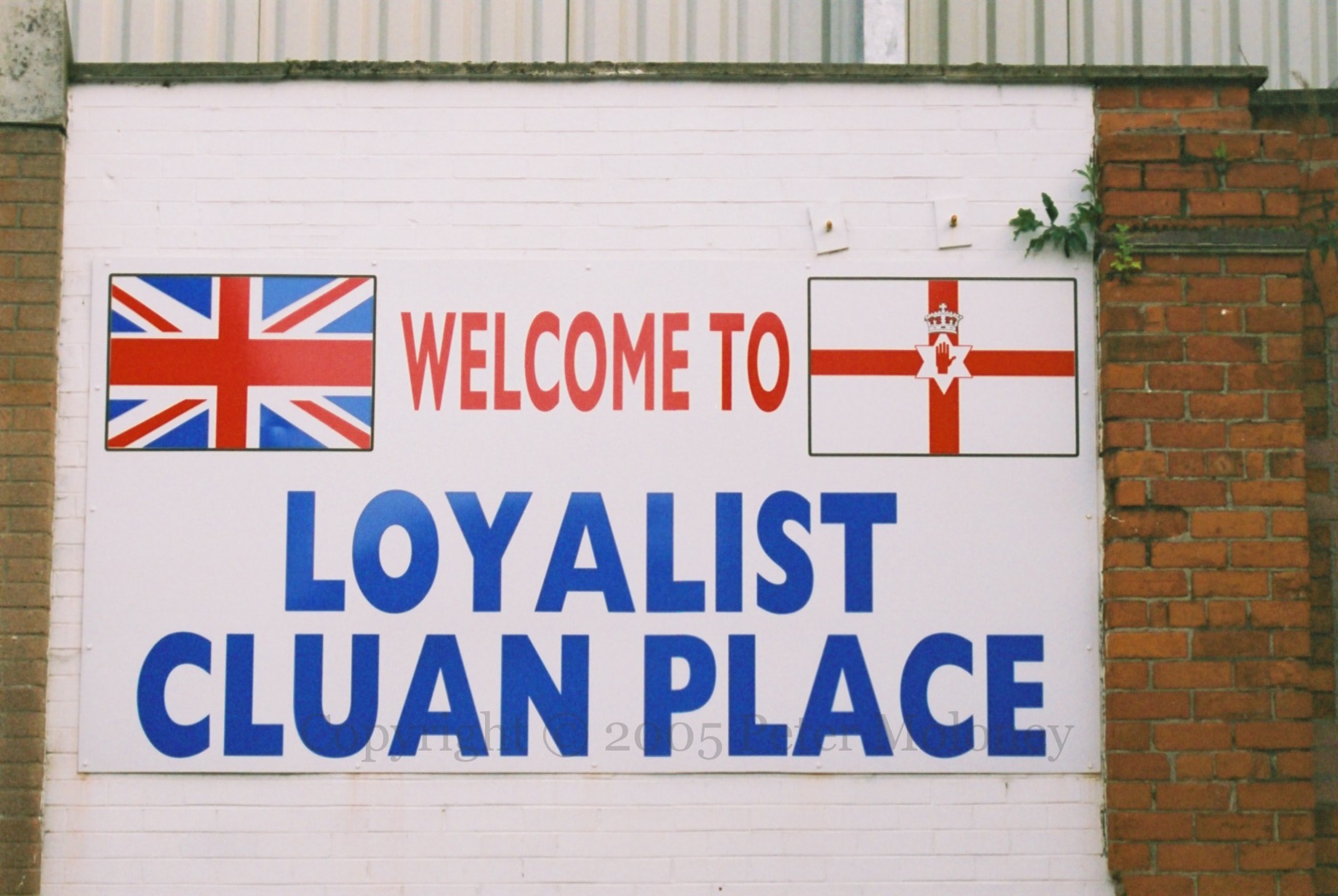
Welcome To Loyalist Cluan Place

Cluan Place is a single street of 25 houses in east Belfast, hemmed in by the shops on the Albertbridge Road and by a “peace” line separating it from the (nationalist) Short Strand. Tensions between the two areas were particularly high in the early 2000s – see this Guardian article from 2002.

Click image to enlarge
Copyright © 2005 Peter Moloney
M02289

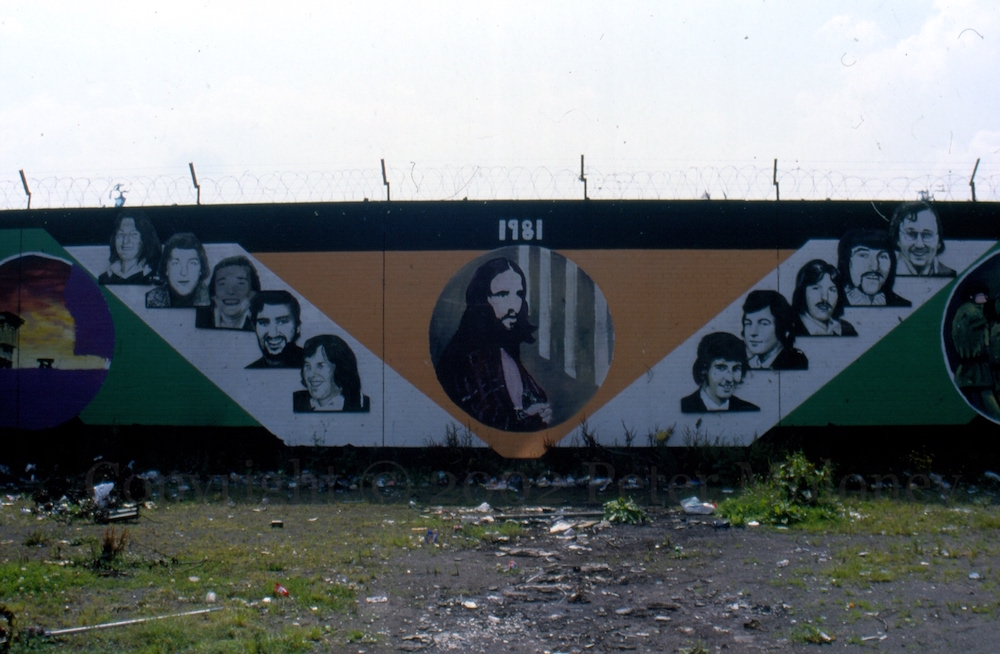
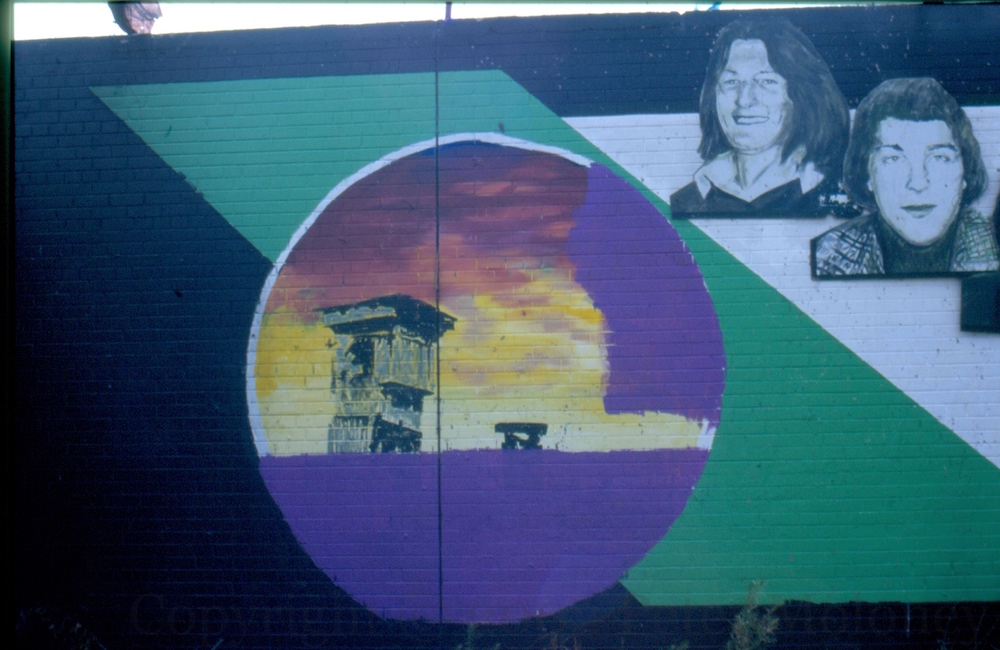
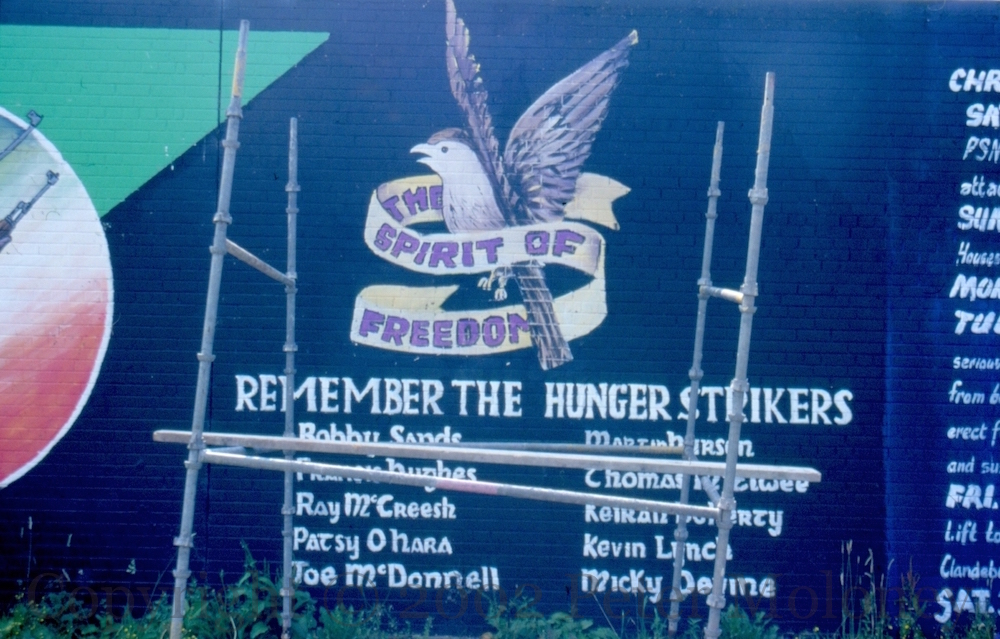
Remember The Hunger Strikers

Here are six images of the hunger strikers mural in Mountpottinger Road, Belfast. The ten portraits are on cut wooden boards while the rest is painted. On the far right (image 5) is a “spirit of freedom” lark and the names of the ten deceased 1981 strikers. In the centre (image 3) is blanket man Hugh Rooney.

Click image to enlarge
Copyright © 2002 Peter Moloney
M01688 M01685 M01686 M01687 M01682 M01689

Slán Abhaıle

By 2002, the “Time for peace, time to go” mural in Beechfield Street, Belfast, painted in 1997, was beginning to show its age. The image is based on a photograph of British forces in the Falklands.

The image was also produced in Ardoyne (north Belfast), above the Sınn Féın offices/Sıopa Na hEalaíne (west Belfast), on Free Derry Corner, in Shantallow (Derry), and in Letterkenny.

Click image to enlarge
Copyright © 2002 Peter Moloney
M01691

Éıre

This Short Strand mural packs a lot in, beginning with both ancient Éıre and a celtic cross. Its main panels commemorate 25 years of resistance in east Belfast (probably dating to the Battle Of St Matthew’s in 1970) with portraits of 16 deceased locals (“I measc laochra na nGael go raıbh a naınmeacha”) and two verses from Bobby Sands’s poem Weeping Winds (see below). On the right (in the second image) is a quote from Bobby Sands: “Our revenge will be the laughter of our children”.

Oh, whistling winds why do you weep/When roaming free you are,
Oh! Is it that your poor heart’s broke/And scattered off afar?
Or is it that you bear the cries/Of people born unfree,
Who like your way have no control/Or sovereign destiny?

Oh! Lonely winds that walk the night/To haunt the sinner’s soul/
Pray pity me a wretched lad/Who never will grow old.
Pray pity those who lie in pain/The bondsman and the slave
And whisper sweet the breath of God/Upon my humble grave.

These verses are also used on a board in St James’s.

Click image to enlarge
Copyright © 2002 Peter Moloney
M01683 M01684

David And Goliath

“End the siege of Short Strand. Denied access to essential services including: doctors, chemist, dentist, health centre, post office, supermarket, Department of Social Services …… sectarianism is a cancer! The people of this area are not sectarian. We want to live in peace with our neighbours. People have nothing to fear from this community. People of all religions and none live, work and travel thru daily and will continue to do so!”

On the other side of the main panel is a list of events from May 2002, describing attacks on nationalist residents and homes in the small nationalist enclave, with “ball bearings, golf balls, bricks and bottles” and “blast bombs, pipe bombs, petrol bombs”. The Andersonstown News gives an account of the initial disturbances and beating of Patrick ‘Pod’ Devenny. The Guardian called the area “Riot City“.

Mountpottinger Road, east Belfast

Click image to enlarge
Copyright © 2002 Peter Moloney
M01680 M01681 M01679 M01690

REM 1690

In 1690, William III defeated James II at the Battle Of The Boyne, securing Ireland for England. And in legend, Ulster was won in a race by an O’Neill tossing his severed hand ahead of his competitor. Similar battle is needed to preserve Northern Ireland, the mural suggests. “Quis separabit” is the motto of the UDA, and “Terrae filius” (“Son of the land”) is the motto of the Ulster Young Militants, its youth branch. Lord Street, Belfast.

Click image to enlarge
Copyright © 2000 Peter Moloney
M02295 M02296 M02297