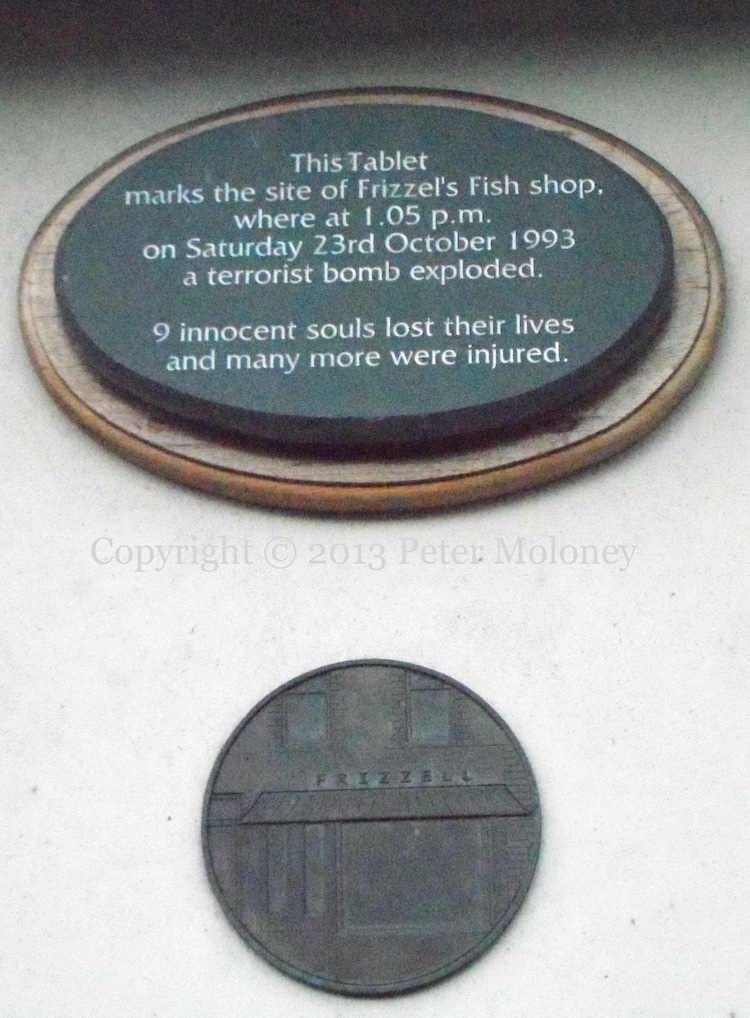
A small engraved plaque showing the shop-front of Frizzell’s fish shop has been added to the memorial on the Shankill Road. The upper tablet was seen previously in Frizzell’s.
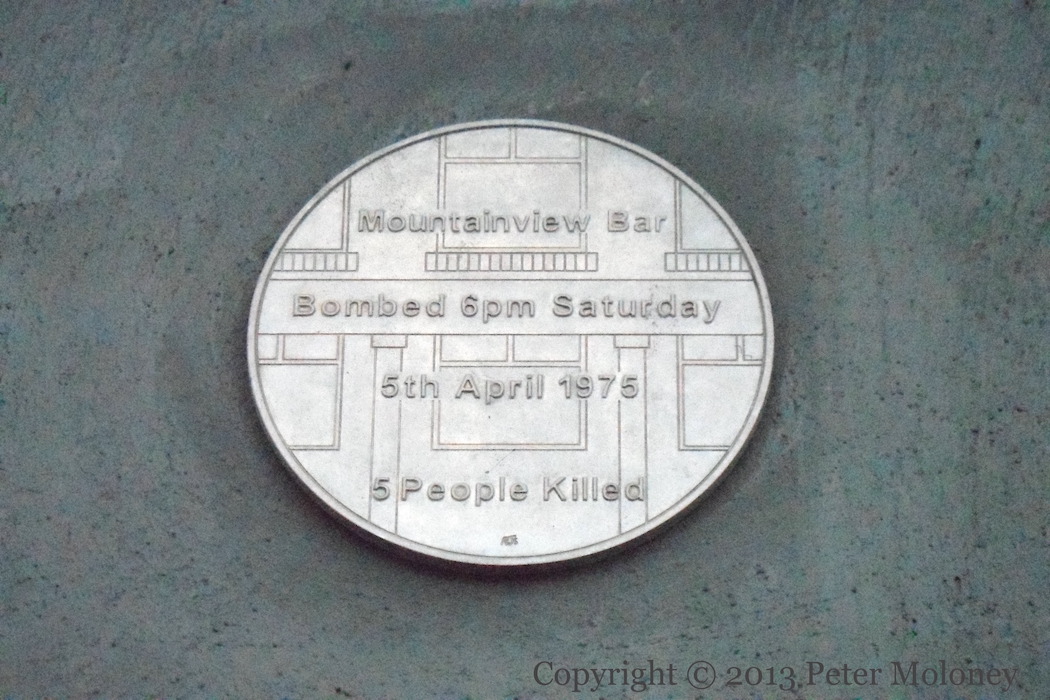
Another such engraving can be found on the Mountainview Bar/Tavern, commemorating the 1975 bombing and gun attack there in which five people were killed and 60 injured (WP).
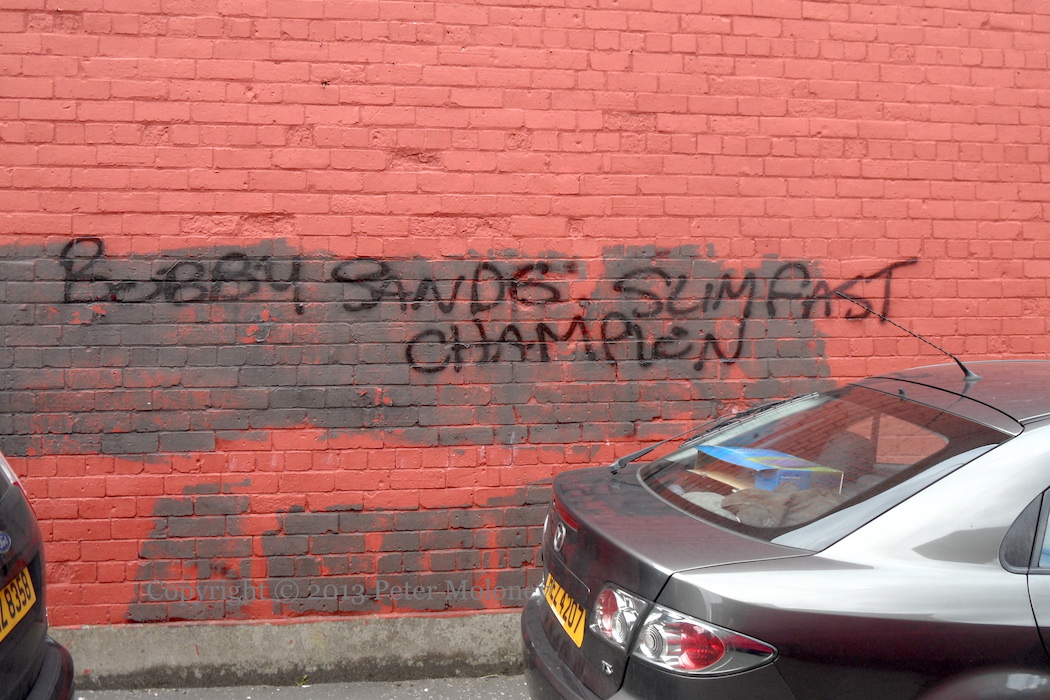
Commentary on the hunger strike of IRA volunteers Bobby Sands in 1981, in south Belfast: “Slimfast champion”, “Mr Sands was a convic[t]ed criminal – he chose to take his own life.”
Dorchester Street (x2) and Daphne Street, off Donegall Road, Belfast
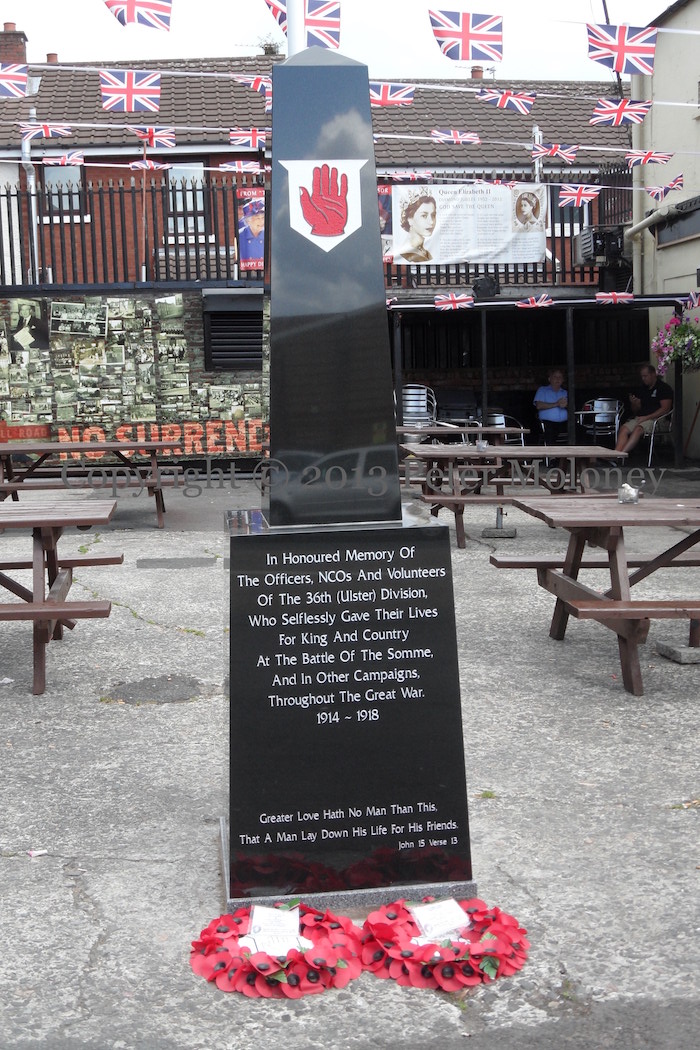
“In honoured memory of the offices, NCOs and volunteers of the 36th (Ulster) Division, who selflessly gave their lives for King and country at the battle of the Somme, and other campaigns, throughout the Great War 1914-1918. ‘Greater love hath no man than this, that a man lay down his life for his friends. John 15 Verse 13′”
The ‘No surrender’ photograph montage shows images of life on the Shankill, from the Home-Rule period onward. It includes various old murals (see Visual History 01) and a photo of Hugh Smyth (see Third-Class Citizens).
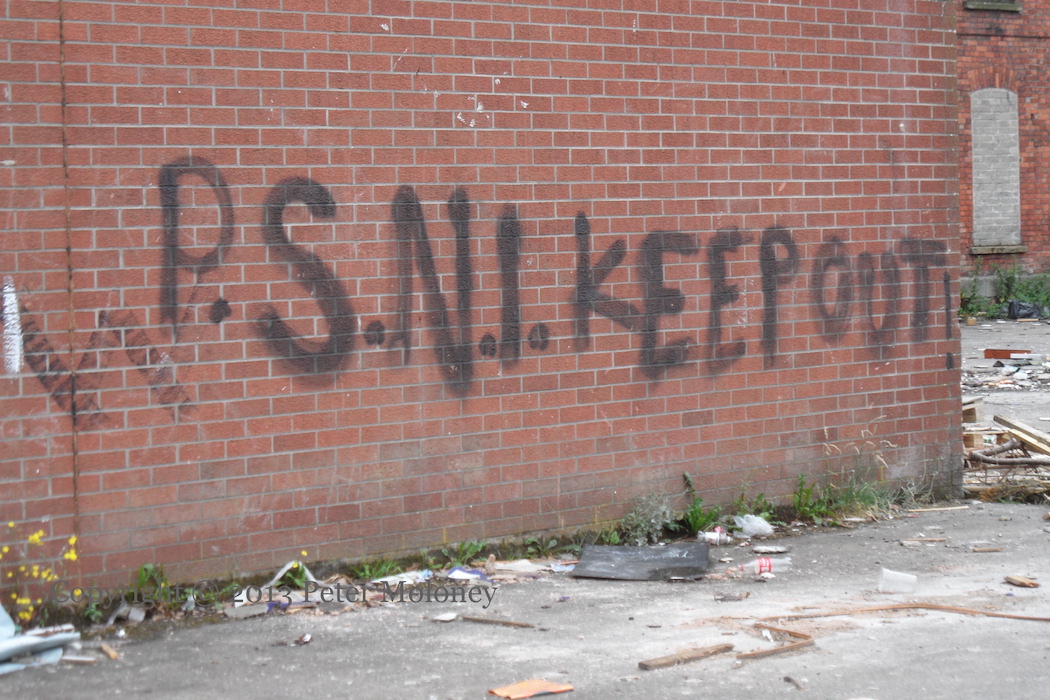
Loyalists on Sandy Row are not friends of Sinn Féin, the IRA, the PSNI, and all taigs. “We will always walk Ardoyne” is a reference to parading past the Ardoyne shops – the Parades’ Commission banned the march along that part of the route, and rioting took place (BBC).
Here are three images – two ‘before’ and one ‘after’ — of the Eleventh Night bonfire in the Fountain area of Londonderry. The stolen board is from the Derry Volunteers Annual Commemoration on June 30th.
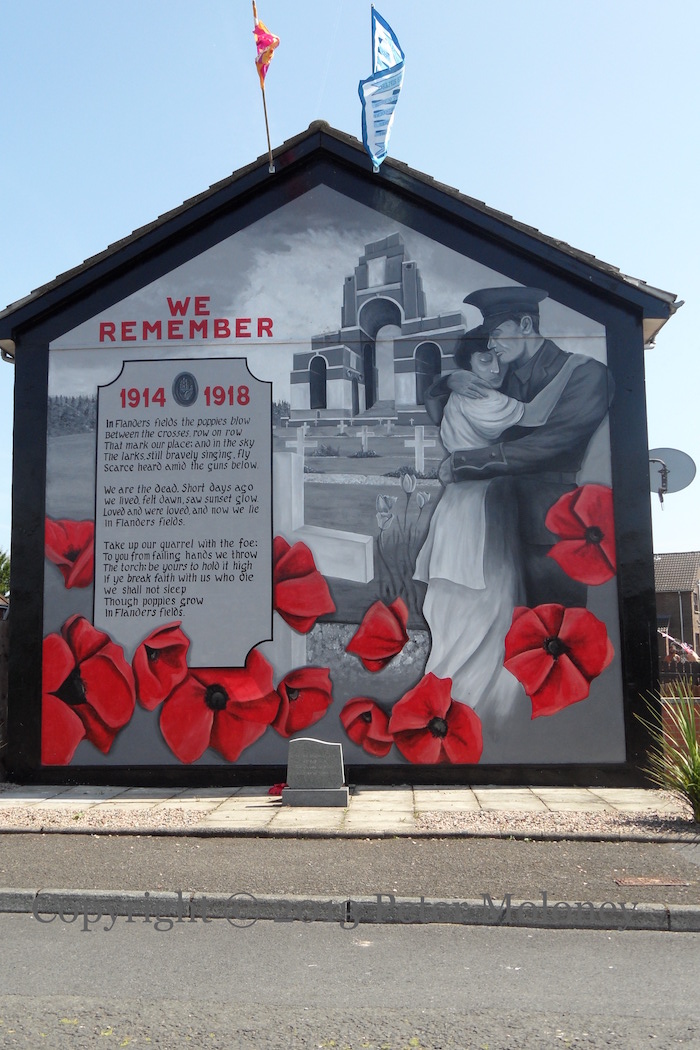
Canadian physician John McCrae’s poem In Flanders Fields and the triple arches of the Thiepval memorial to the missing are featured in this Monkstown mural. It is McCrae’s poem that is thought to have given rise to the use of the poppy as a symbol of military remembrance (WP). The names of over 72,000 dead are inscribed on the memorial (WP| travelfranceonline).
“In Flanders fields the poppies blow/Between the crosses, row on row/That mark our place; and in the sky/The larks, still bravely singing, fly/Scarce heard amid the guns below.//We are the Dead. Short days ago/We lived, felt dawn, saw sunset glow,/Loved and were loved, and now we lie/In Flanders fields//Take up our quarrel with the foe:/To you from failing hands we throw/The torch; be yours to hold it high./If ye break faith with us who die/We shall not sleep/Though poppies grow/In Flanders fields.”