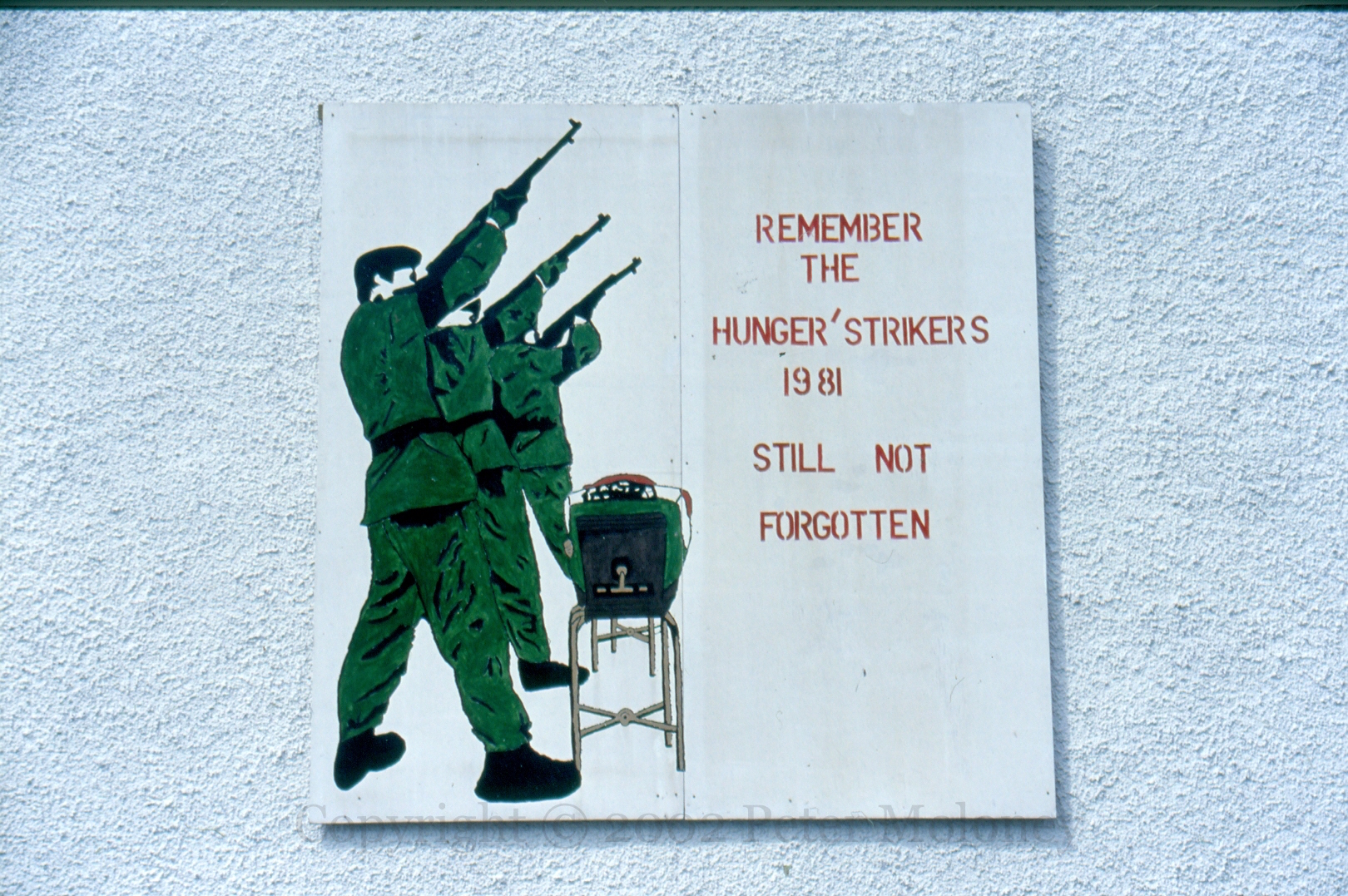
“Remember the hunger strikers 1981 – still not forgotten.”
Springhill Park, Strabane
Click image to enlarge
Copyright © 2002 Peter Moloney
M01721
“Remember the hunger strikers 1981 – still not forgotten.”
Springhill Park, Strabane
Click image to enlarge
Copyright © 2002 Peter Moloney
M01721
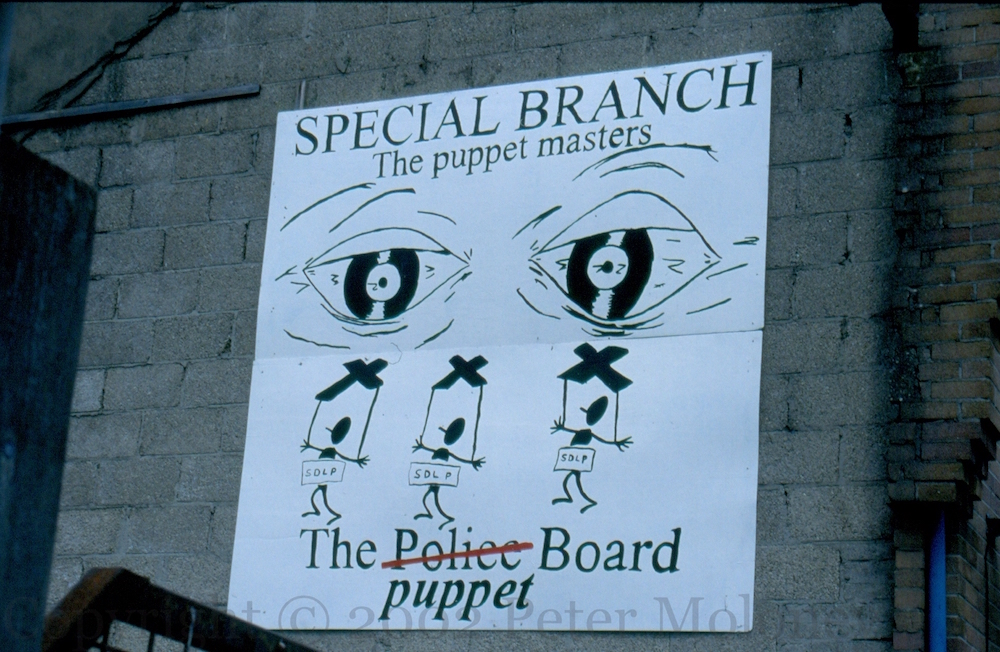
The Northern Ireland Policing Board was founded in 2001 to oversee the PSNI. It was initially constituted with three SDLP members, depicted here as puppets of the Special Branch. Sinn Féin would not take seats on the board until 2007.
Bridge Street, Strabane
Click image to enlarge
Copyright © 2002 Peter Moloney
M01720 [M01719]


Here are two nail-ups from Ballycolman Avenue, Strabane: “Fuck the queen” and “RIRA” on one pole, and a “sniper at work” road sign on the other.
Click image to enlarge
Copyright © 2002 Peter Moloney
M01717 M01718
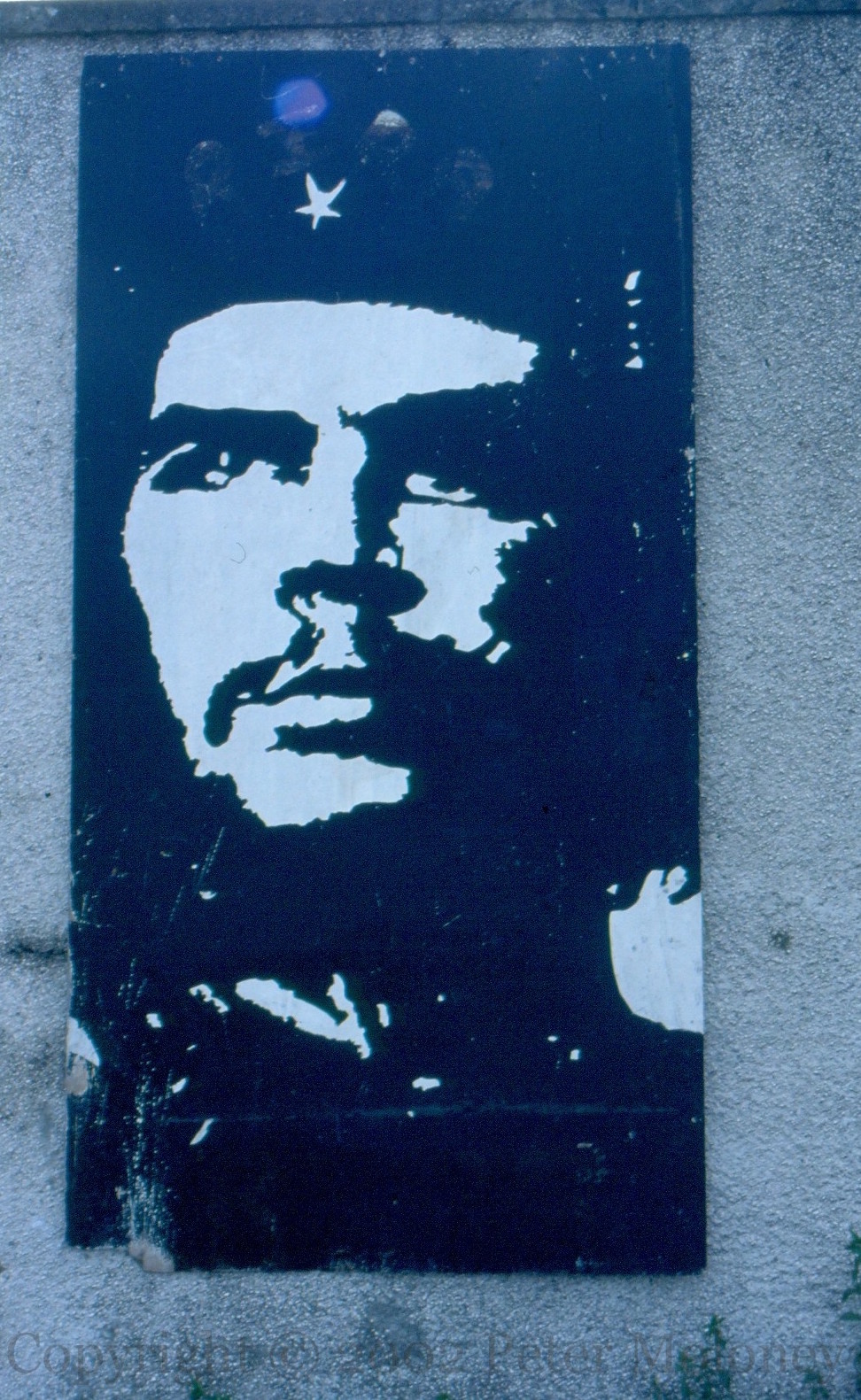
Cuban revolutionary Che Guevara inspiring republicans in Ballycolman, Strabane.
Click image to enlarge
Copyright © 2002 Peter Moloney
M01716

“In proud and loving memory of all those republican from the west Tyrone area who suffered, fought or died in the cause of Irish freedom – ní dhéanfar dearmad ar bhur níobaırtí choíche”.
Ballycolman Avenue, Strabane
Click image to enlarge
Copyright © 2002 Peter Moloney
M01711
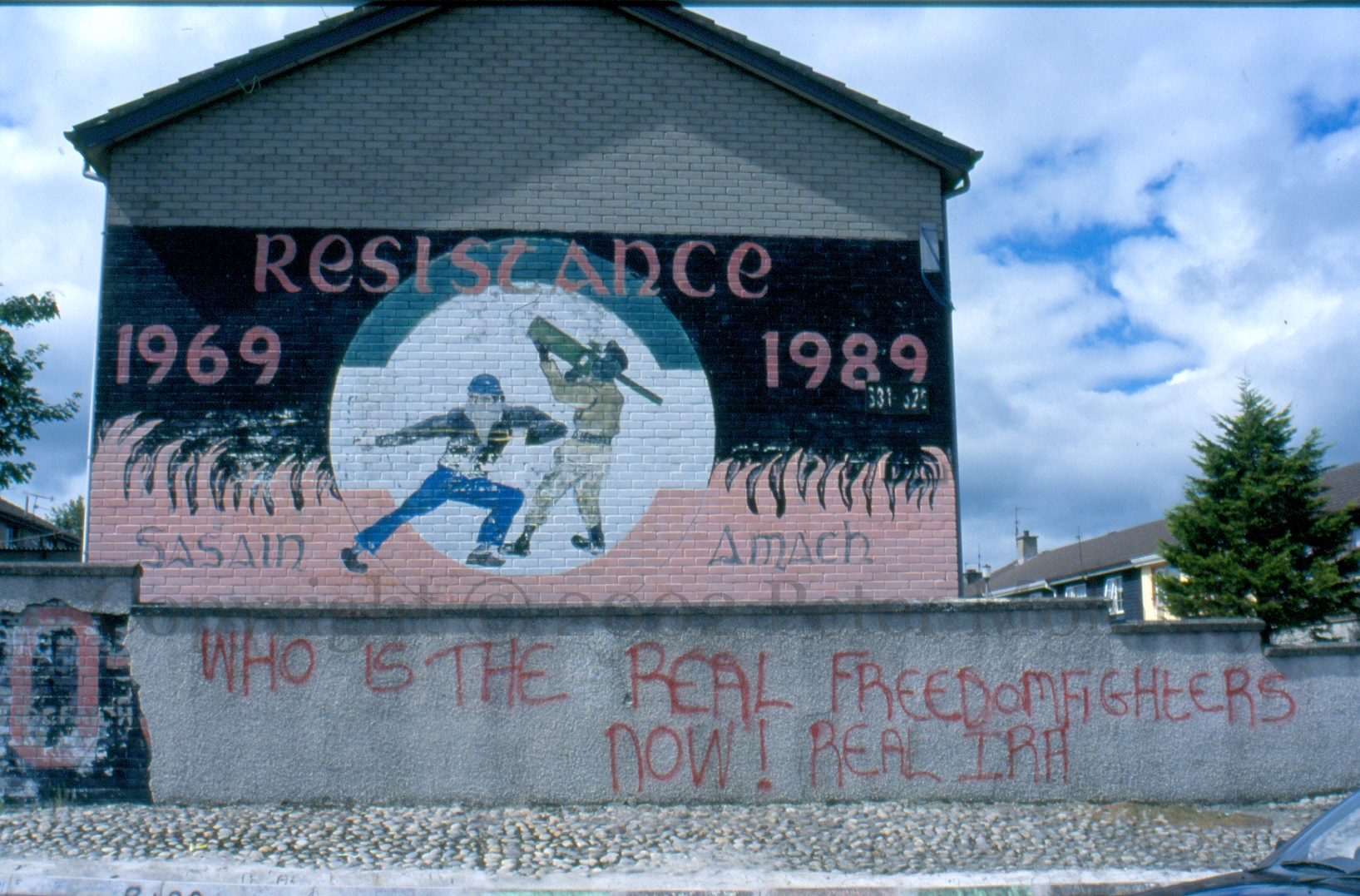


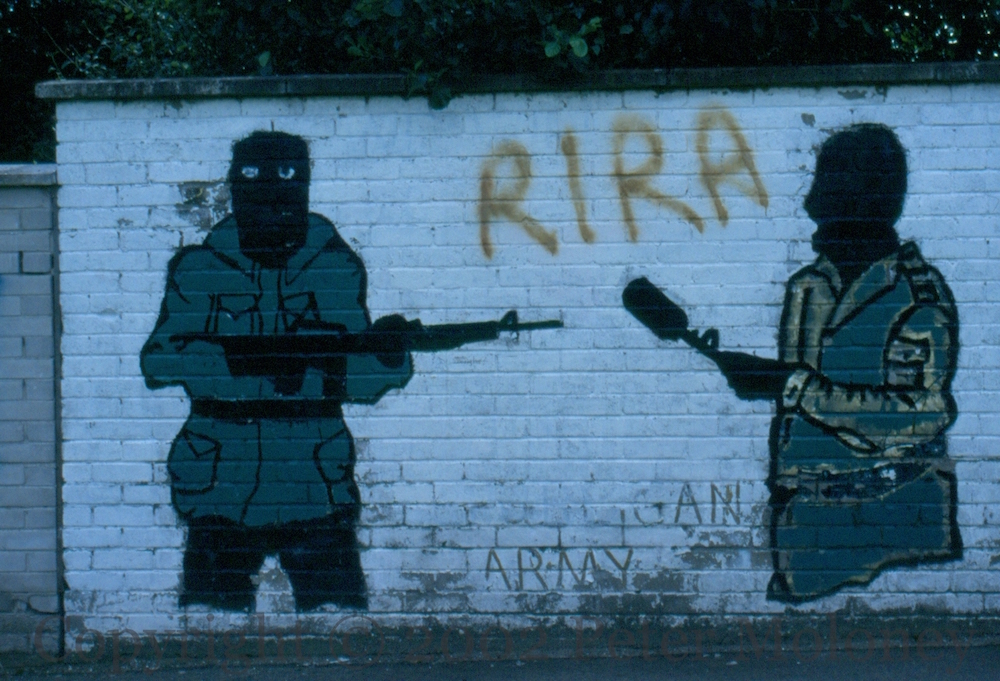


Here is a collection of six murals from Ballycolman, Strabane, all seen previously in 1989 and showing their age, and with some RIRA graffiti “Who is the real freedomfighters now! Real IRA” and “Strabane RUC station – 2001 RIRA”.
Click image to enlarge
Copyright © 2002 Peter Moloney
M01714 M01708 M01709 M01710 M01712 M01713


The PUP is the Progressive Unionist Party, a left-wing party associated with the UVF. Notable leaders have included Hugh Smyth and David Ervine. Below and on the other side are two “road signs”: No Watchtowers and ‘No RUC’.
Bridge Street, Strabane
Click image to enlarge
Copyright © 2002 Peter Moloney
M01706 M01707
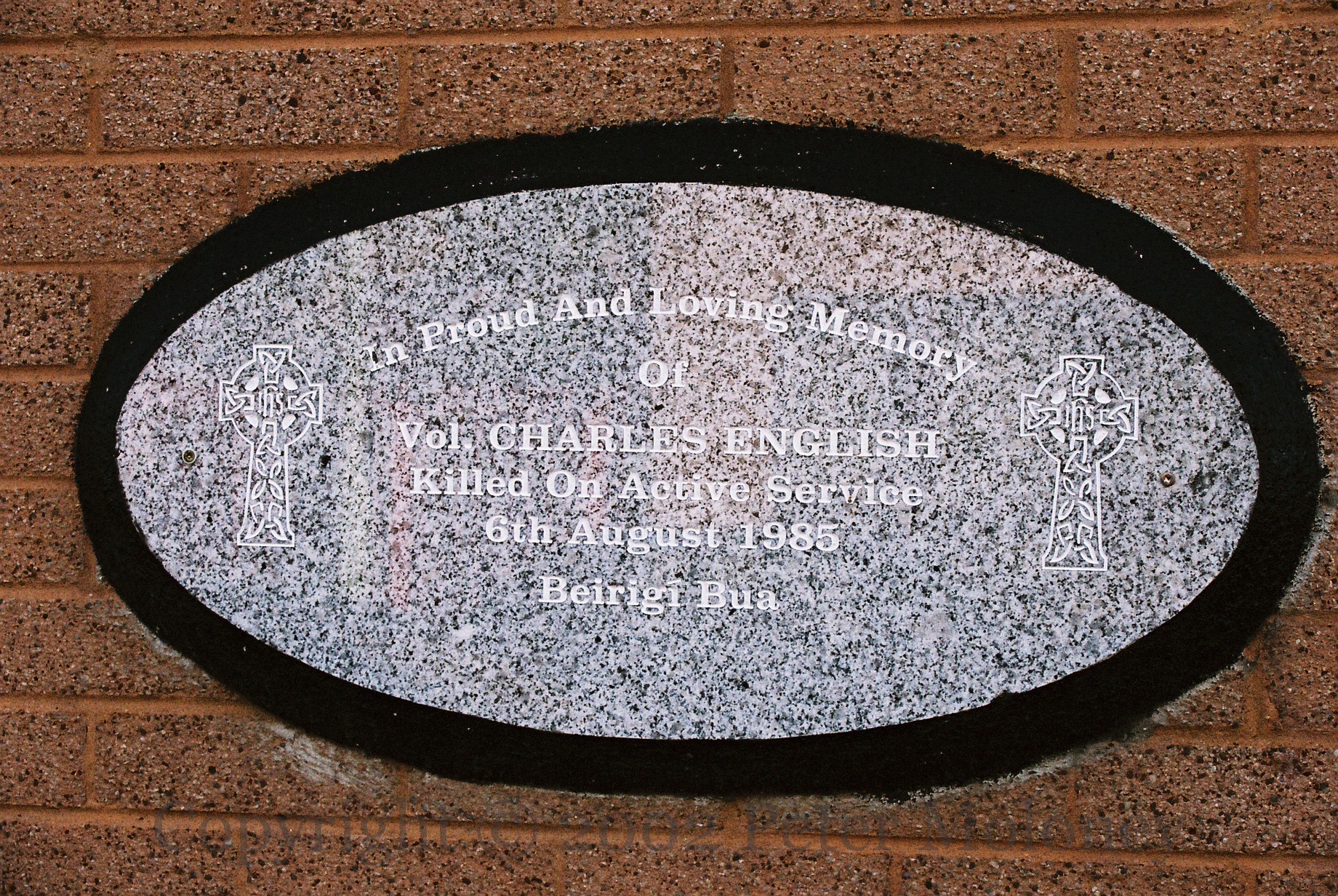
Volunteer Charles English was a member of the IRA’s Derry Brigade (1st battalion). He died on August 6th, 1985, at age 21, when a grenade launcher exploded. His brother, Gary, had been killed four years earlier when an Army land rover hit and then reversed over him (Derry Journal). Images from the funeral are collected in this video.
Abbey Street, Derry
Click image to enlarge
Copyright © 2002 Peter Moloney
M01703
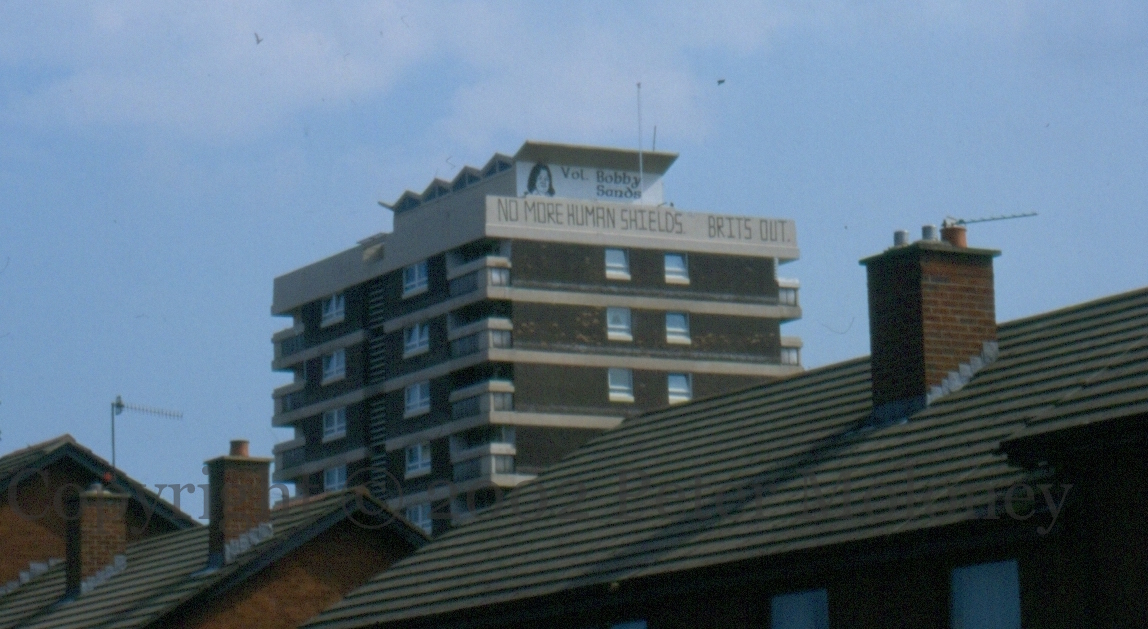
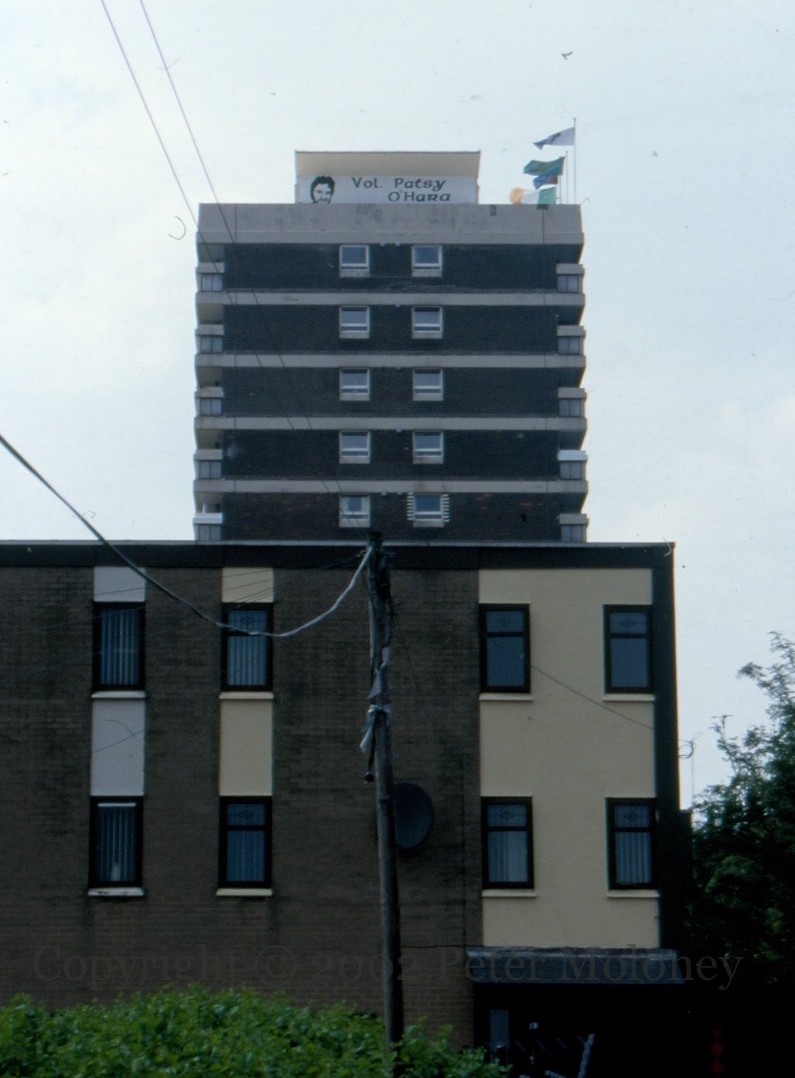

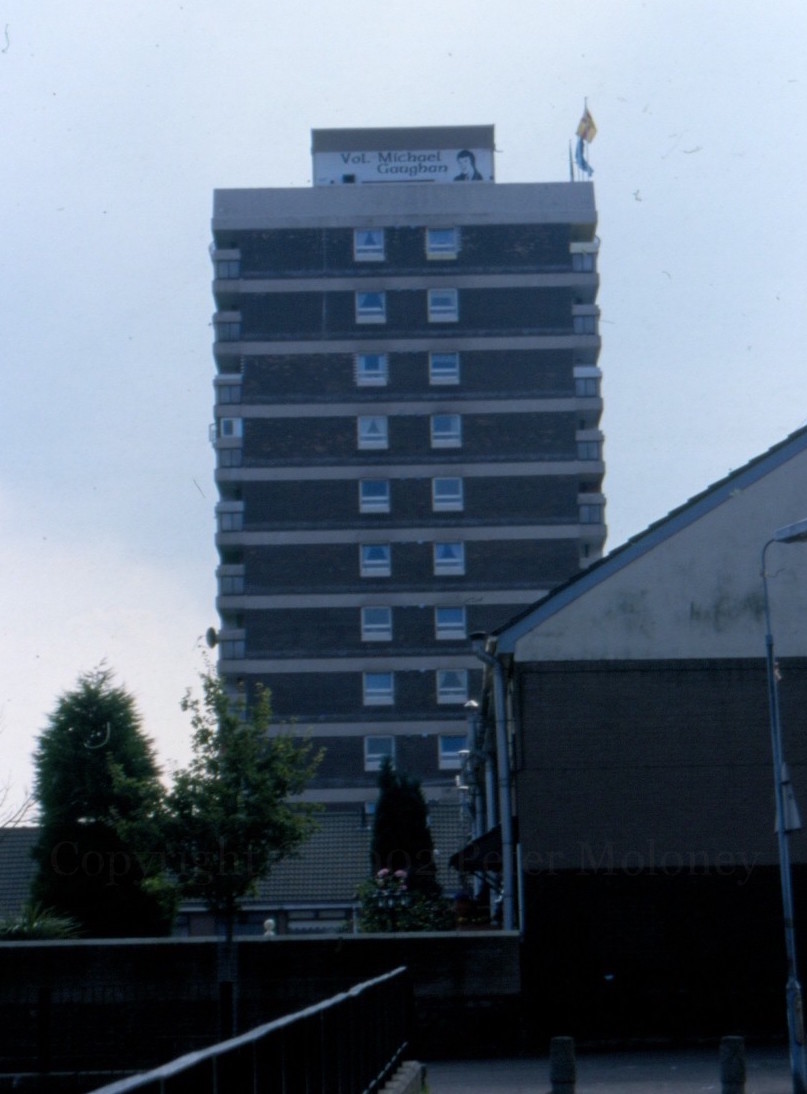
The names of portraits of the ten deceased 1981 hunger strikers, plus Frank Stagg and Michael Gaughan, are on six of the seven New Lodge “houses” (high-rise buildings), two per house. Other slogans have appeared just below them, such as the “No more human shields – Brits out” shown in the first image, below the portrait of Bobby Sands on Teach Eıthne (perhaps a reference to the Army positions on top of Teach Mhéabha (Maeve House) and Teach Gráınne?). There are some more images in the Seosamh Mac Coılle collection.
Click image to enlarge
Copyright © 2002 Peter Moloney
M01697 M01692 M01698 M01699
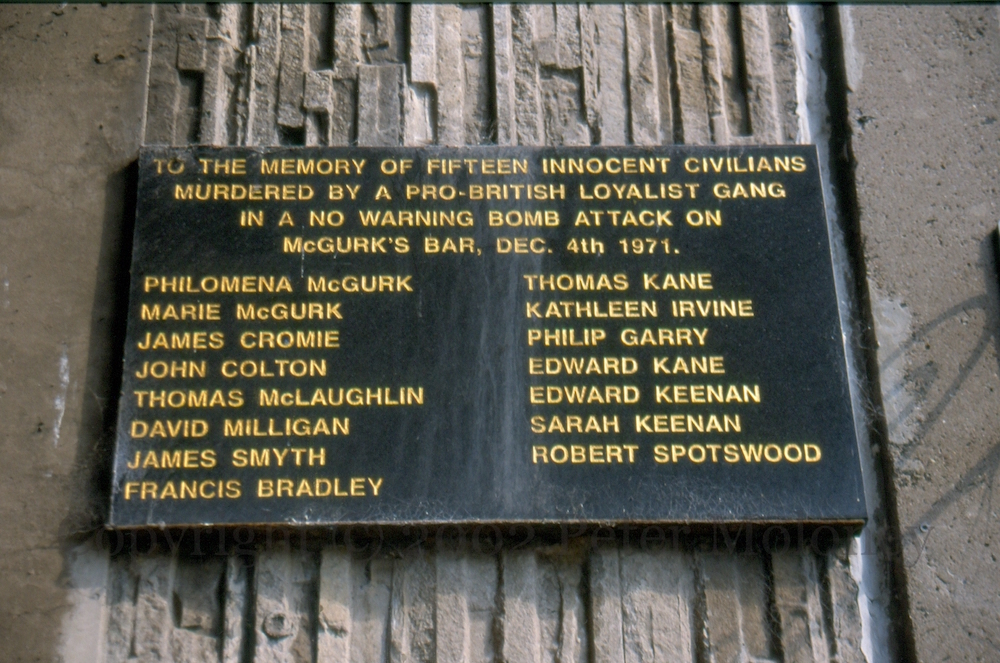

“In memory of the fifteen innocent civilians murdered by a pro-British loyalist gang in a no-warning bomb attack on McGurk’s Bar, Dec. 4th, 1971.” “In memory of those who tragically lost their lives and all those who were injured as a result of the explosion.” These are two memorials at North Queen Street and St George’s Street, Belfast, the site of the former bar, now a Westlink underpass. The “pro-British loyalist group” is thought to be the UVF, though at the time, it was claimed by a little-known group the “Empire Loyalists” (WP).
Click image to enlarge
Copyright © 2002 Peter Moloney
M01700 M01701

