
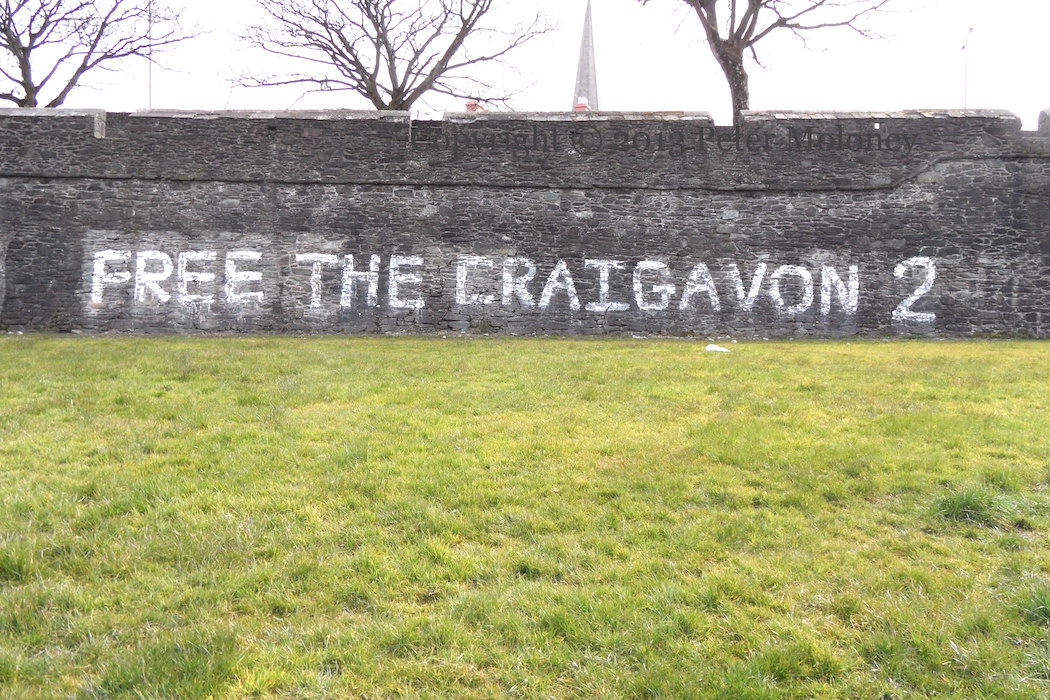
“UK no way – IRA” and “Free the Craigavon 2” – anti-Agreement graffiti on the walls of the old Derry city/Nailor’s Row.
Click image to enlarge
Copyright © 2013 Peter Moloney
M09423 M0422
“UK no way – IRA” and “Free the Craigavon 2” – anti-Agreement graffiti on the walls of the old Derry city/Nailor’s Row.
Click image to enlarge
Copyright © 2013 Peter Moloney
M09423 M0422

“PSNI-IRA Keep out!!!”
Wellwood Street, Sandy Row, south Belfast
Click image to enlarge
Copyright © 2013 Peter Moloney
M09421

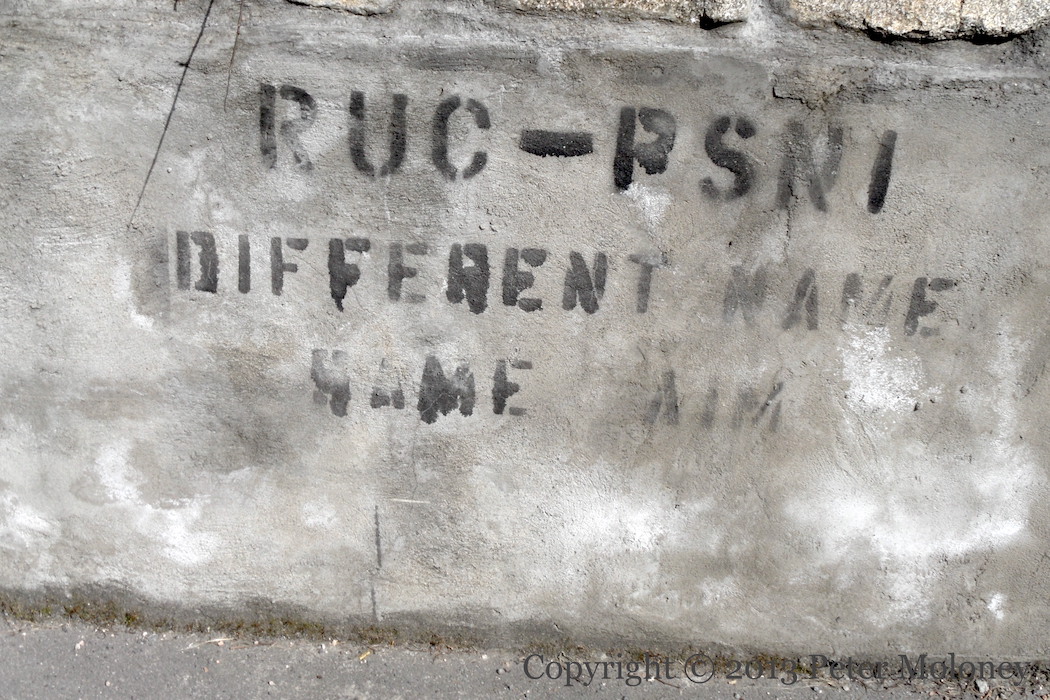
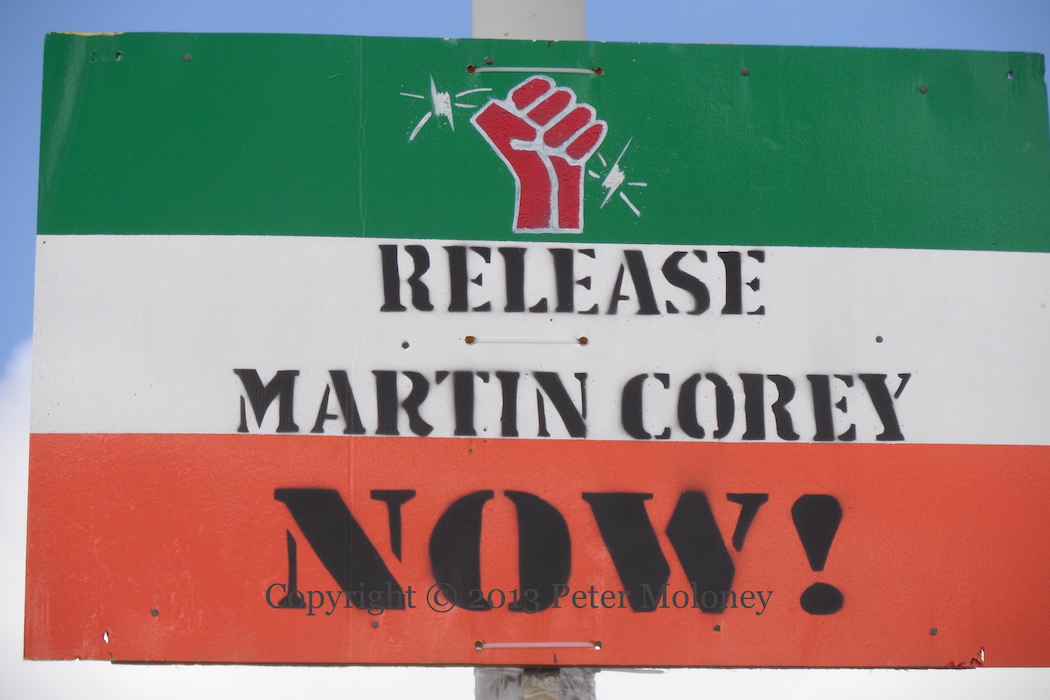
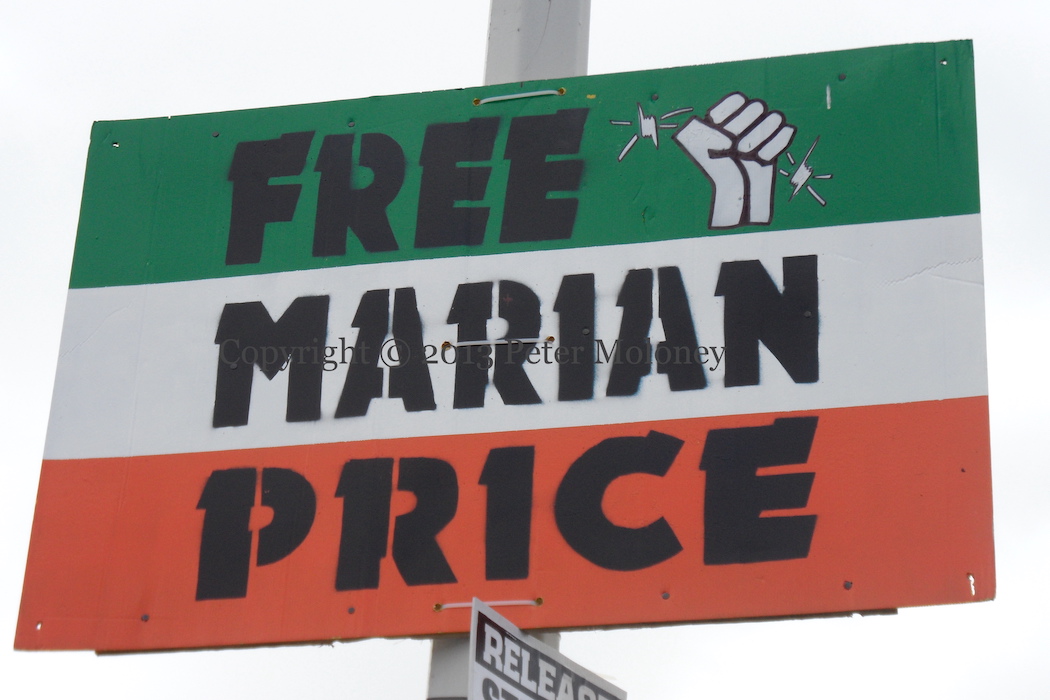
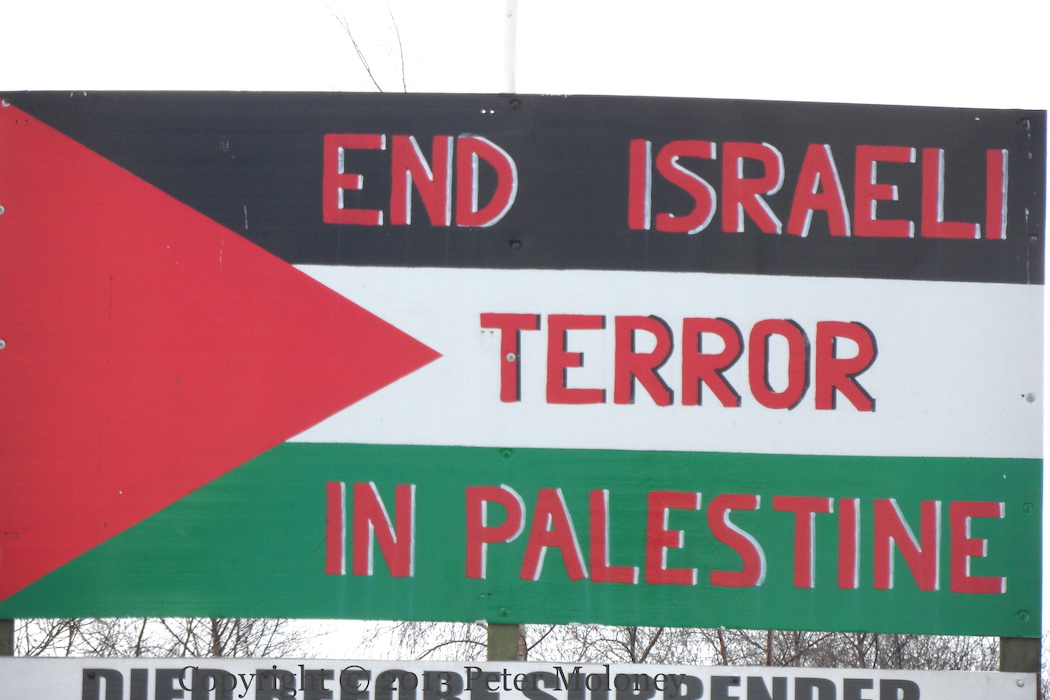

Here is a collection of small boards from anti-Agreement republicans (probably Éırígí web) in Derrybeg and central Newry. “Stop strip searching of republican prisoners”, “RUC-PSNI Different name, same aim”, “Release Martin Corey now!”, “Free Marian Price”, “End Israeli terror in Palestine”, “End internment 1871-2013”.
Camlough Road, Carnagat Road, Second Avenue, Patrick Street
Click image to enlarge
Copyright © 2013 Peter Moloney
M09412 M09413 M09414 M09415 M09416 M09417 [M09418] [M09419] [M09420]

“Tógtha ar an 90ú comóradh de luíochán na hÁırse Éıgıptıgh/Erected on the 90th anniversary of the Epytian Arch Ambush. I gcuımhne [ar] Óglaıgh/In memory of Óglaıgh William Canning, John Francis O’Hare, Peter Shields, Óglaıgh Na hÉıreann. A maríodh iad, agus ıad sa tóır ar Phoblacht na hÉıreann, ag Forsaí Choróın na Breataıne/Who were killed by the British Crown Forces in the pursuit of an Irish Republic. “The republic stands for truth and honour. For that is the noblest in our race. By truth and honour, principle and sacrifice alone will Ireland be free.” – Liam Mellows.”
The ambush was on the night of December 12/13th, 1920; Canning died at that time, Shields on the 25th, and O’Hare the following July. Here is an account from Republican News; testimony can be found in the Military Archives.
Click image to enlarge
Copyright © 2013 Peter Moloney
[M09410] M09411


“Strength in our hearts, strength of our limbs, consistency of our tongues.” “Na Fıanna Ard Eoın 1909-2009 – one hundred years of resistance. In proud memory Fıan Davy McAuley … Josh Campbell … Josie McComiskey … Bernard Fox. ‘You may kill the revolutionary, but never the revolution.’ Dedicated by the Republican Network for Unity.” The four deceased are portrayed on four small boards, along with standing figures of Fianna from both centuries.
The plaque (alone) was seen in 2011.
Berwick Road, Belfast
Click image to enlarge
Copyright © 2013 Peter Moloney
M09401 M09402 [M09403] [M09404] [M09405] [M09406] [M09407] [M09408] [M09409]

Cogús [conscience] is the POW-support organisation of the RNU (tw). On the left is a blanketman, on the right is a contemporary POW being beaten by a prison guard in riot gear. “Make a difference – Join RNU – Be committed, stand as one – Implement 12th August Agreement – End strip searches – End controlled movement.”
Berwick Road, Ard Eoın
Click image to enlarge
Copyright © 2013 Peter Moloney
M09400
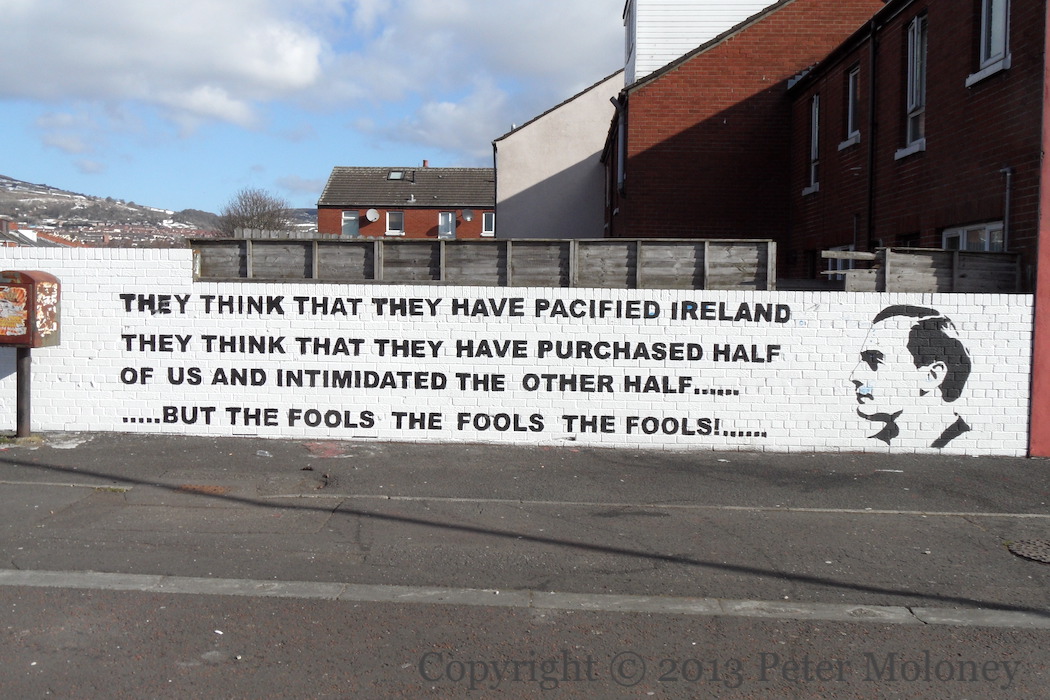
“They think that they have pacified Ireland, they think they have purchased half of us and intimidated the other half … [They think that they have foreseen everything, think that they have provided against everything;] but the fools, the fools, the fools! …. [they have left us our Fenian dead, and while Ireland holds these graves, Ireland unfree shall never be at peace]” The closing words of Patrick Pearse’s oration at the Dublin graveside of Jeremiah O’Donavan Rossa in 1915. His remains had been repatriated from the United States to Ireland.
Brompton Park, Belfast
Click image to enlarge
Copyright © 2013 Peter Moloney
M09396 [M09397]

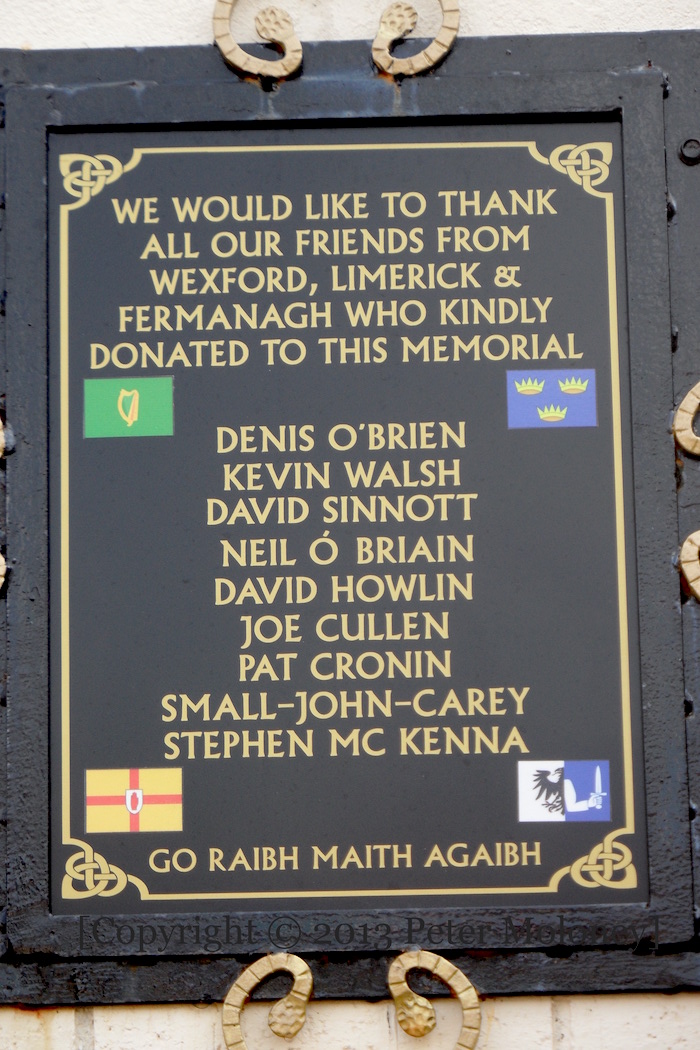
“In memory of our friends and comrades. This Memorial is dedicated to all those Irish Republicans who fought in the Struggle for Irish Freedom, and in the defence of this community in our Time of Need. This Memorial honours their Courage and Dedication to the cause of Irish Freedom. Ar dheıs Dé go raıbh a n-anam.” Hugo Wilkinson, Terry Murphy, Paul Watson, Jim McLaughlin, Richard McIlkenny, Jake McGowan, Patsy Quinn, Liam Mulholland, Francis O’Neill, Sean Delaney, Carmel Cahoon, Christine Beattie, Geraldine Rice, Anthony McIlkenny, Joey Saunders, Danny Mullan, Tony Molloy, Seamus Rice, Eamon McAllister, Gerry McAllister, John Bateson, John Barnes, Jim Floyd. With images of the prisons Armagh, Long Kesh H-Blocks, Magilligan, Long Kesh cages, HMS Maidstone, Portlaoise, Wormwood Scubs, Crumlin Road.
“We would like to thank all our friends from Wexford, Limerick & Fermanagh who kindly donated to this memorial. Go raıbh maıth agaıbh.”
Ardilea Close, Belfast
Click image to enlarge
Copyright © 2013 Peter Moloney
[M09389] M09390 [M09391] [M09392] [M09393] M09394
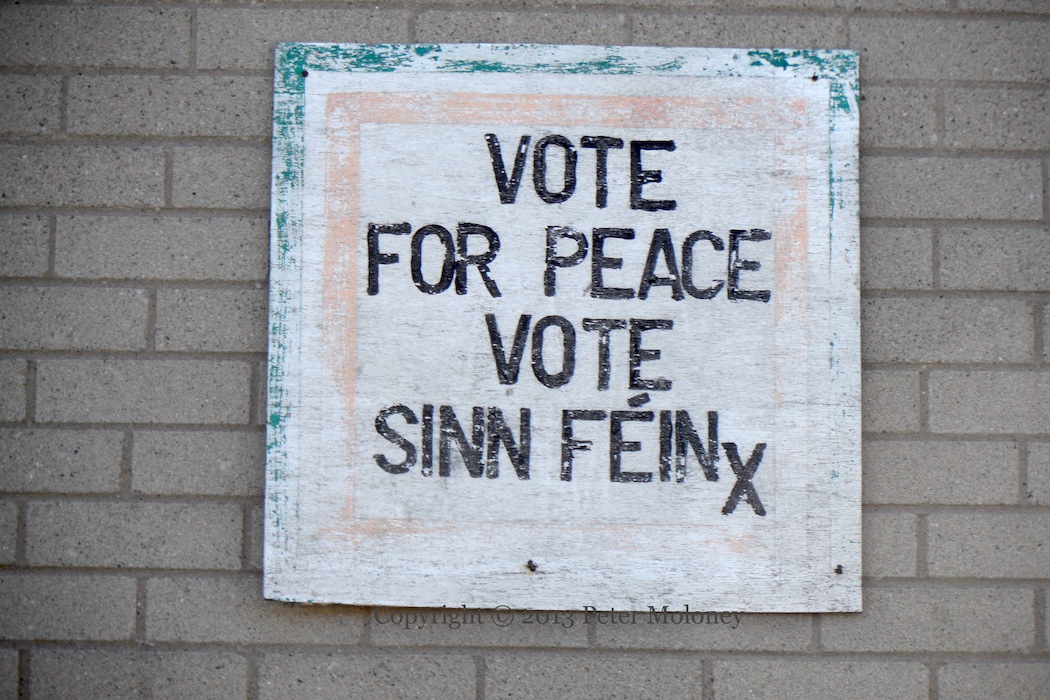
“… vote for Sınn Féın.” This vintage board in Juniper Park, Belfast/Dunmurry, goes back to at least 1998 (compare D00788 around the corner in Juniper Rise).
Click image to enlarge
Copyright © 2013 Peter Moloney
M09388

“Remember the tragic events surrounding the unlawful execution of IRA volunteers [Vols. Sean Savage, Maıréad Farrell, Dan McCann] in Gibraltar by the SAS on the 6th March 1988, the shooting of Vol. Keven McCracken in the defence of the community, the murderous attack on the Gibraltar funeral by a British sponsored assassin and killing of mourners [John Murray, Thomas McErlean, Vol. Caoımhín Mac Brádaıgh]. I ndíl [sic] chuımhne. Always remembered with pride by the people of the Colin area. Béırıgí [sic] bua.”
Twinbrook Road, Dunmurry
Click image to enlarge
Copyright © 2013 Peter Moloney
M09378 [M09379] [M09380] [M09381] [M09382] [M09383] [M09384] [M09385] [M09386] [M09387]
 Peter Moloney Collection