“This monument is dedicated to the memory of Sammy Devenny who, along with several members of his family was savagely beaten by the RUC at this site, 69 William Street – the Devenny family home – on April 19th 1969. Sammy Devenny died as a result of injuries from this assault on July 17th 1969.”
Devenny – one of the first people to die in the Troubles – had a heart attack immediately after the beating and died of another one three months later. The police files on the case have been locked until 2022 (Derry Journal).
Documentary video including testimony from the family about Devenny’s beating.
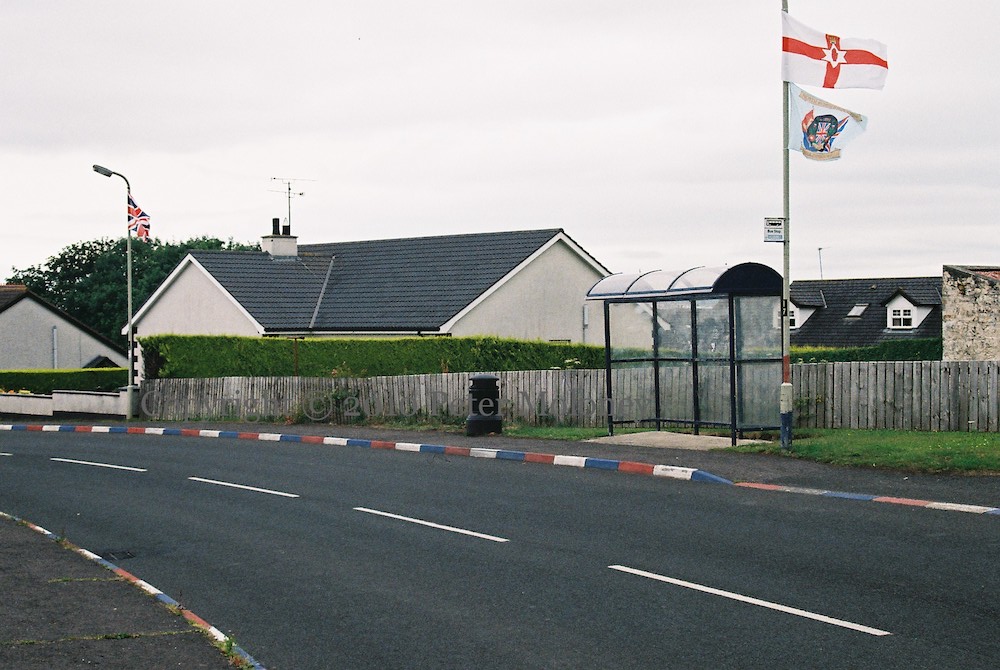
Wide shot of two Castlemara murals – one UDA, one UVF – previously seen in 2008. The fourth flag in the UFF mural is the flag of Ulster Nationalism (WP). Similarly, on the lamp-post fly both the UDA emblem and a flag commemorating the Ulster Volunteers in the 36th Division.
The King Billy mural in Ballycarry is updated (see J1608): the King looks left (towards ‘Scotland’), his horse walks on water, and the background changes from red to black.
Here is the junction of Newington Avenue and Greenland Drive in Larne. There is typically a mural on the gable to the left of final image but after the ‘Larne UFF’ mural it was fallow for a few years.
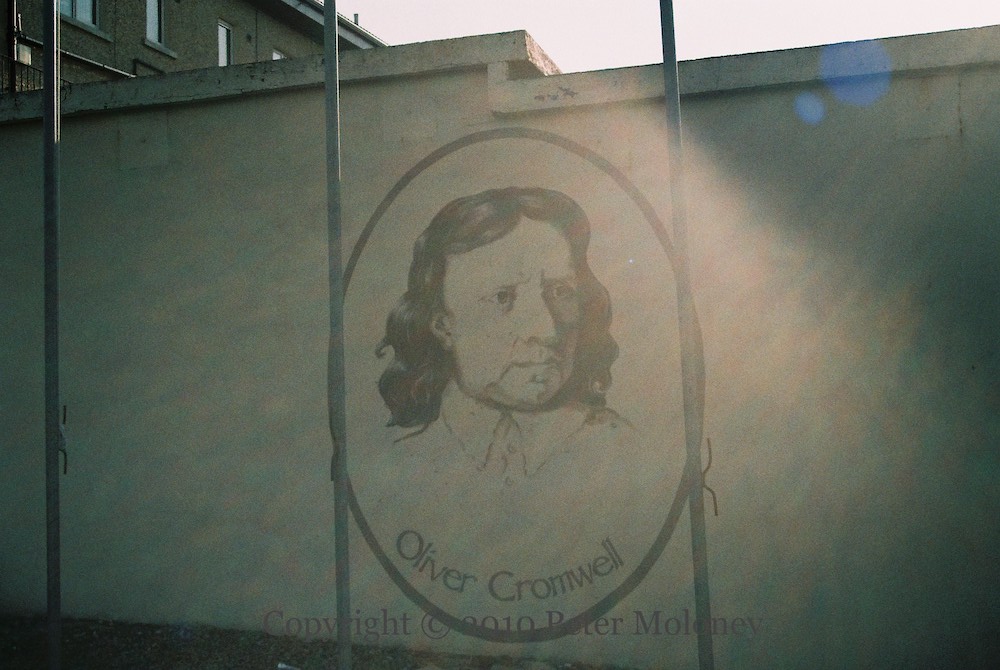
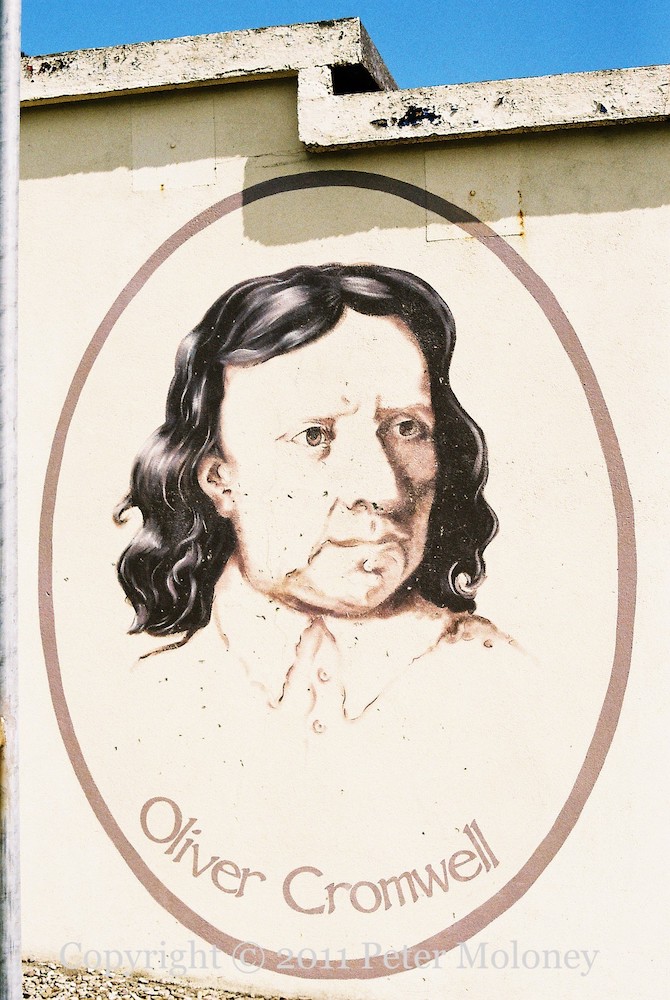
Cromwell led the New Model Army in Ireland from 1649-1650 and by 1652 the victory was complete: Catholicism was banned and all Catholic land-owners were displaced (WP). He is celebrated here with a portrait on Linn Road, Larne.
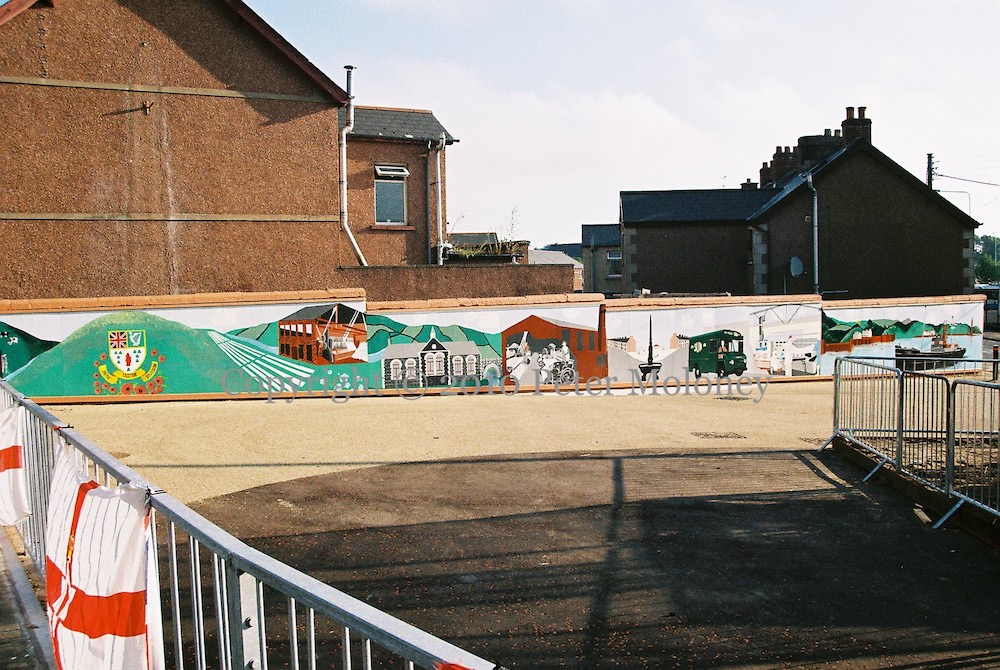
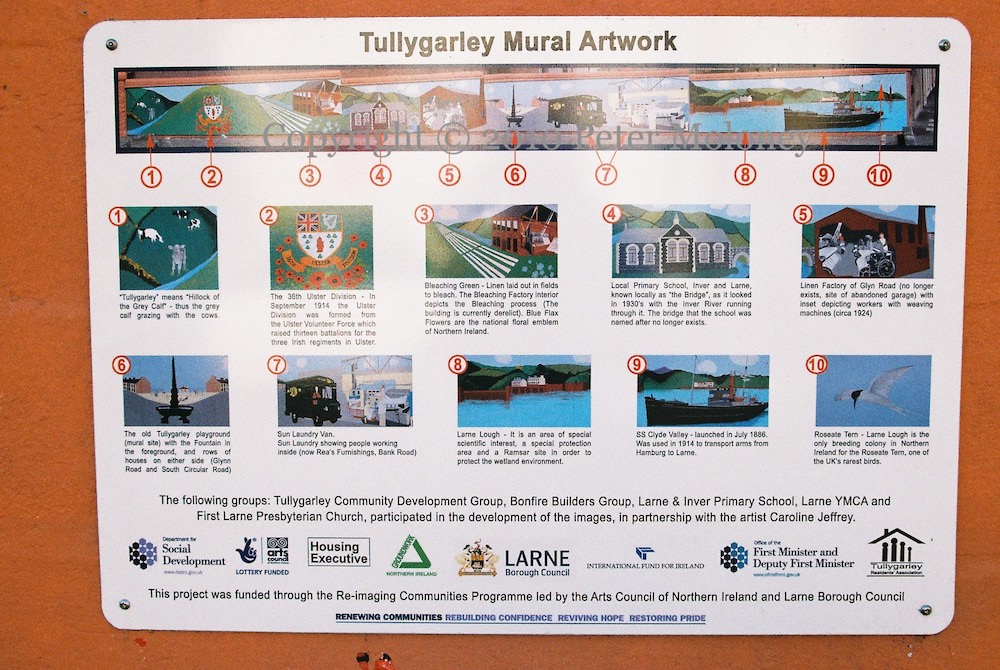
This series of boards, painted by Caroline Jeffrey, presents life in Larne from the early 20th century. As part of the 2009 Re-Imaging Project, it replaced an Ulster Volunteers mural. It is largely non-sectarian, and begins with the derivation of the name “Tullygarley” from the Irish for “Hillock of the Grey Calf”, but includes the emblem of the 36th (Ulster) Division and the gunrunning ship Clyde Valley. Info board: “Tullygarley” means “Hillock of the Grey Calf” – thus the grey calf grazing with the cows. The 36th Ulster Division – In September 1914 the Ulster Division was formed from the Ulster Volunteer Force which raised thirteen battalions for the three Irish regiments in Ulster. Bleaching Green – Linen laid out in fields to bleach. The Bleaching Factory interior depicts the Bleaching process. (The building is currently derelict.) Blue Flax Flowers are the national floral emblem of Northern Ireland. Local Primary School, Inver and Larne, known locally as “the Bridge”, as it looked in the 1930’s with the Inver River running through it. The bridge that the school was named after no longer exists. Linen Factory of Glyn [Glynn] Road (no longer exists, site of abandoned garage) with inset depicting workers with weaving machines (circa 1924). The old Tullygarley playground (mural site) with the Fountain in the foreground, and rows of houses on either side (Glynn Road and South Circular Road). Sun Laundry Van. Sun Laundry showing people working inside (now Rea’s Furnishings, Bank Road). Larne Lough – it is an area of special interest, a special protection area and a Ramsar site in order to protect the wetland environment. SS Clyde Valley – launched in July 1886. Was used in 1914 to transport arms from Hamburg to Larne. Roseate Tern – Larne Lough is the only breeding colony in Northern Ireland for the Roseate Tern, one of the UK’s rarest birds.
The six counties of Northern Ireland are presented in the style of military battles or regiments against a Union flag with an Ulster Banner in the middle.






 Peter Moloney Collection