The image above from Belfast’s Northumberland Street imitates one of Banksy’s pieces in the West Bank. In the Bethlehem piece, the hole in the wall reveals a tropical paradise; here, it reveals the hills around Belfast. There is a shot of the artists painting the piece at the beginning of the documentary about them, “Paint For Peace“.
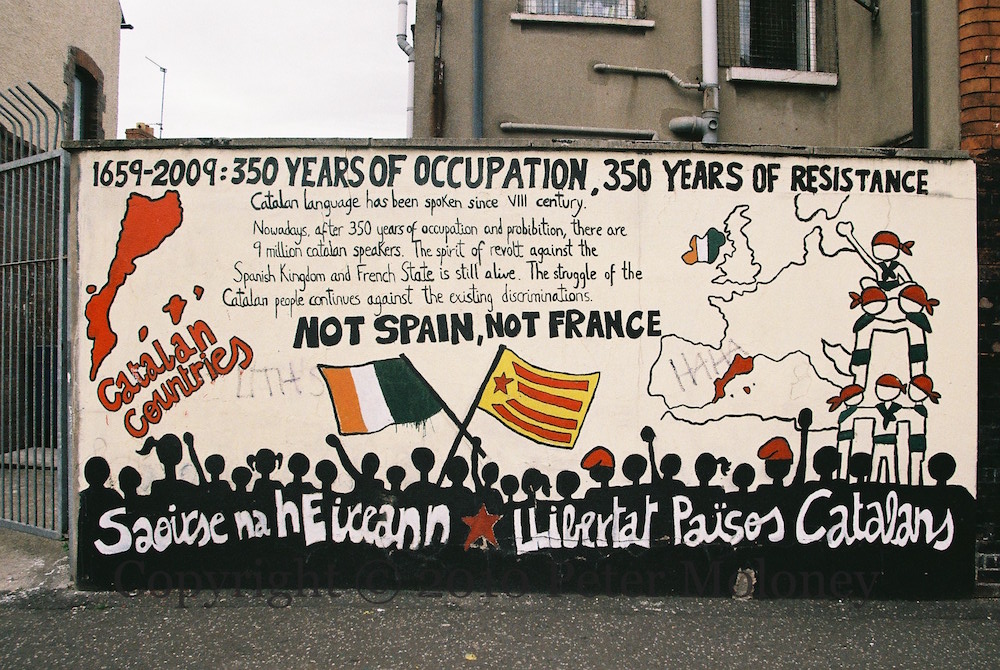
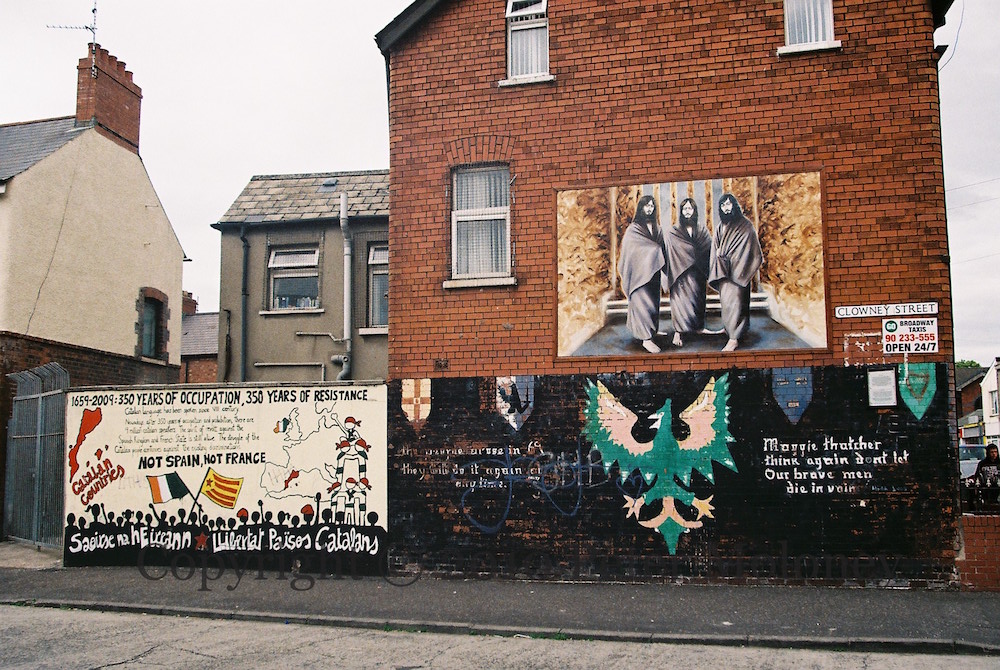
“1650-2009: 350 years of occupation, 350 years of resistance. Catalan language has been spoken since VIII century. Nowadays, after 350 years of occupation and prohibition, there are 9 million Catalan speakers. The spirit of revolt against the Spanish kingdom and French state is still alive. The struggle of the Catalan people continues against the existing discriminations. Not Spain, not France.” “Saoirse na hÉireann, Llibertat Països Catalans”. In Clowney Street next to the ‘1969 Phoenix’ mural which dates back to 1981.
The second King Nuada mural took Mo Chara Kelly about two years (on and off) to paint. There are in-progress shots from 2009 and 2008. The original is by artist Jim Fitzpatrick.
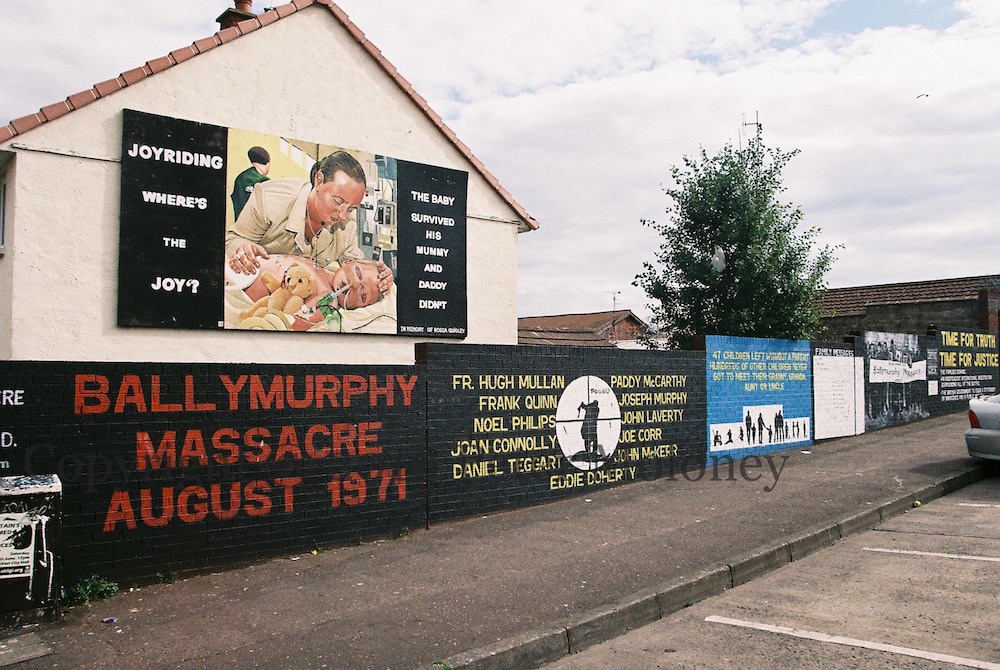
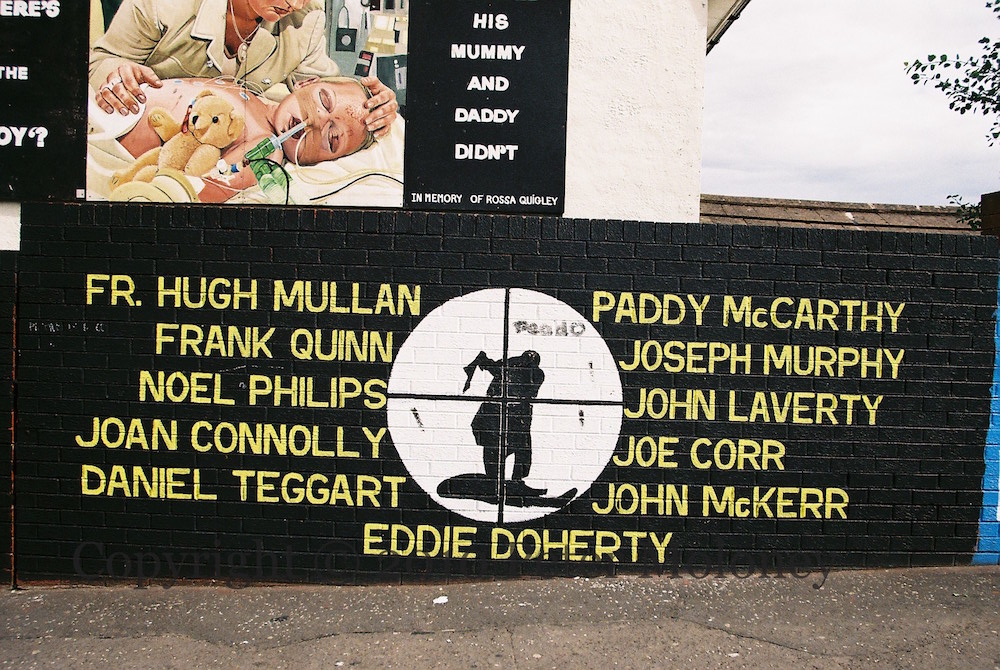
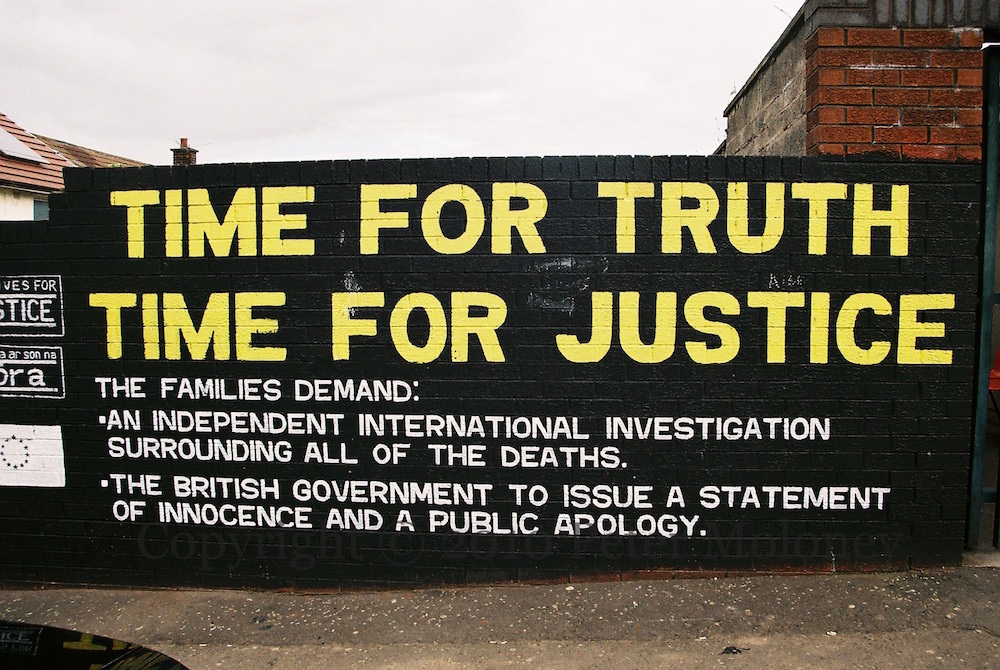
Memorial plaque to Danny Teggart, Noel Phillips, Joan Connolly “Murdered by British paratroopers 9 August 1971” and Joseph Murray “Shot 9 August, died 22 August”, victims of the Ballymurphy Massacre. The plaque is in Springmadden, near the spot where they were shot, opposite the army barracks.
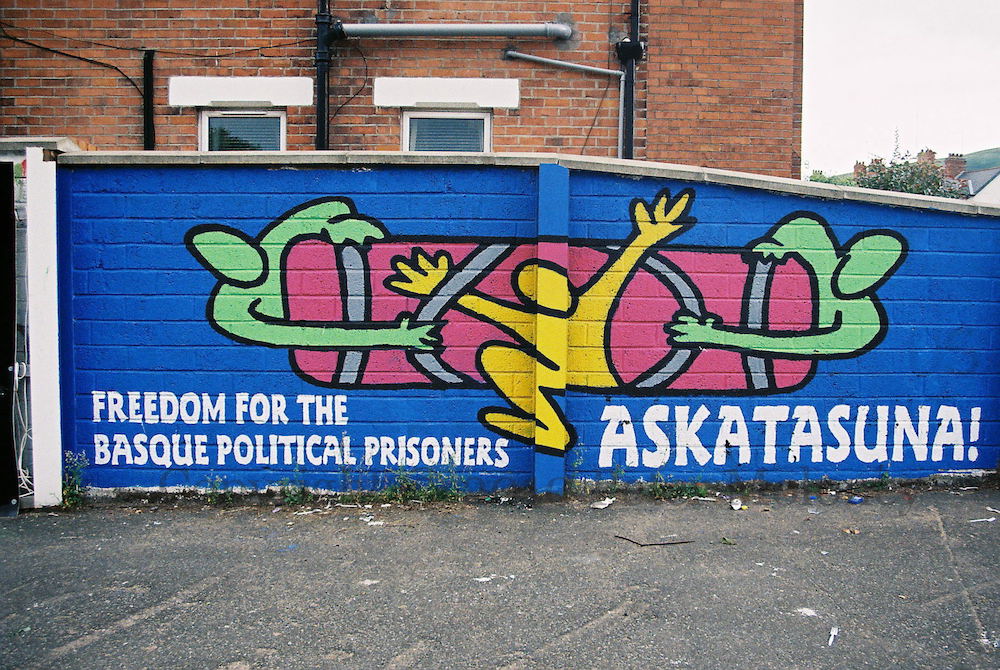
“Freedom for the Basque political prisoners – Askatasuna [Freedom]”. In January 2010, all 742 Basque political prisoners went on hunger strike to protest the policy of dispersing them to prisons all over Spain and France. Glen Road, Belfast.
Tá Ár gCultúr Beo (“Notre culture est vivante/La nostra cultura e viva/Our culture is alive”) was painted by Mo Chara Kelly with help from the local youth. The red parts of the mural use a translucent medium that Kelly had become acquainted with while painting in the United States (An Pobal A Phéınteáıl 10) that allow additional figures from modern Ireland (left) and Celtic Ireland (right) to be seen. The winged figure (repeated four times) is a heron that he found in a book of Celtic designs while serving time in Long Kesh.
The mural was the first of four projects in Springhill facilitated by the Upper Springfield Development Trust as part of a “West Belfast Arts & Heritage Trail” (as per the plaque just out of view to the right) or “Public Arts Trail”.
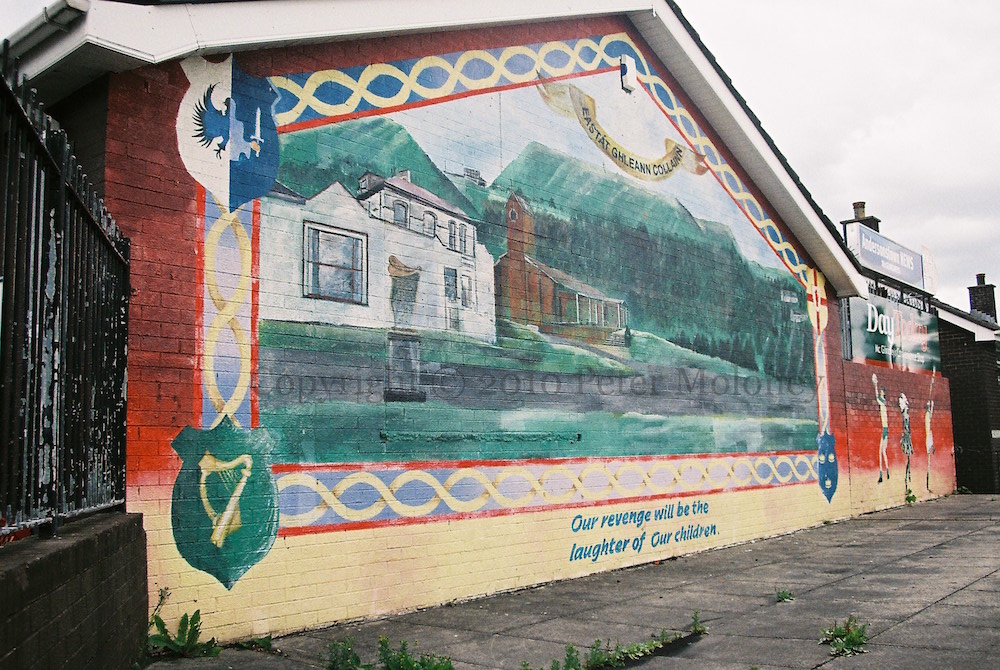
Mural in the Glen Colin estate, just off the Glen Road showing The Roddy’s club (in white) with the hunger striker memorial in the shape of a harp in front and the St. Oliver Plunkett church, which is in fact on the other (southern) side of the Glen Road, with the twin peaks of Divis and Black Mountain in the background. The Bobby Sands quote “Our revenge will be the laughter of our children” is at the bottom and three Gaelic games players on the right.
“Julie Livingstone aged 14 yrs. Murdered by the British Army 13th May 1981.” “The Stolen Child – Come away, O human child/To the waters and the wild/With a faery hand in hand/For the world’s more full of weeping/Than you can understand! – WB Yeats.” Livingstone was killed by a plastic bullet. The mural is in Glenveagh Drive. There is also a stone and plaque near the spot she was struck, on the Stewartstown Road.