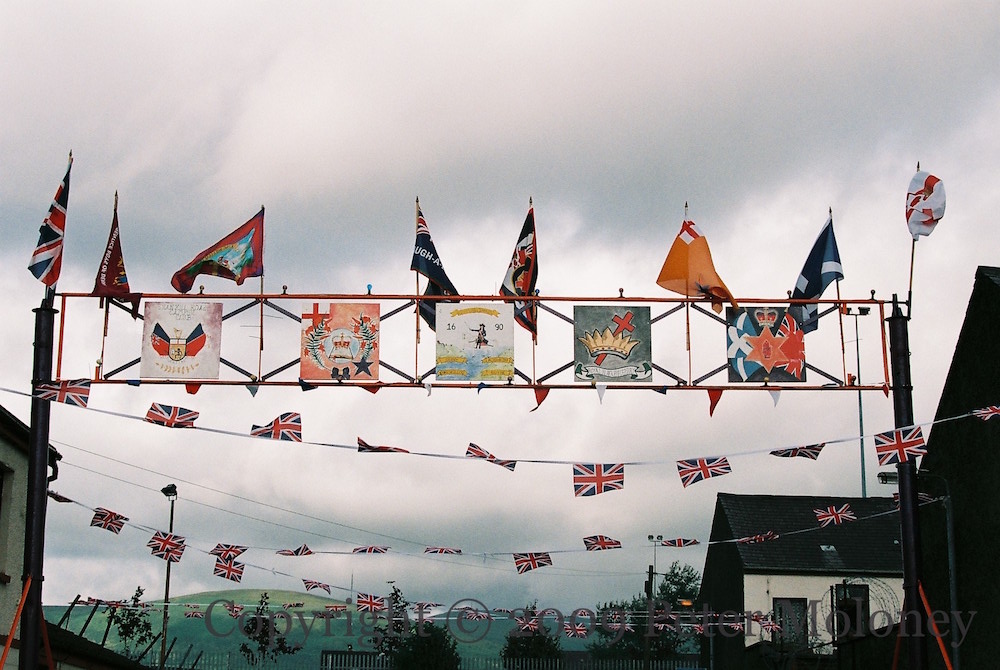
This is the Orange arch next to the Pony Club in the Hammer (lower Shankill). The five boards, from left to right, show “Shankill Road Campsie Club”, the crown and bible with orange lilies, King Billy in 1690, the crown and cross of the “Royal Black Preceptory”, and the orange star between St Andrew’s Saltire and the Union Flag (see Ulster Scotland for a larger version).
Ariel Street, the Hammer/lower Shankill, west Belfast
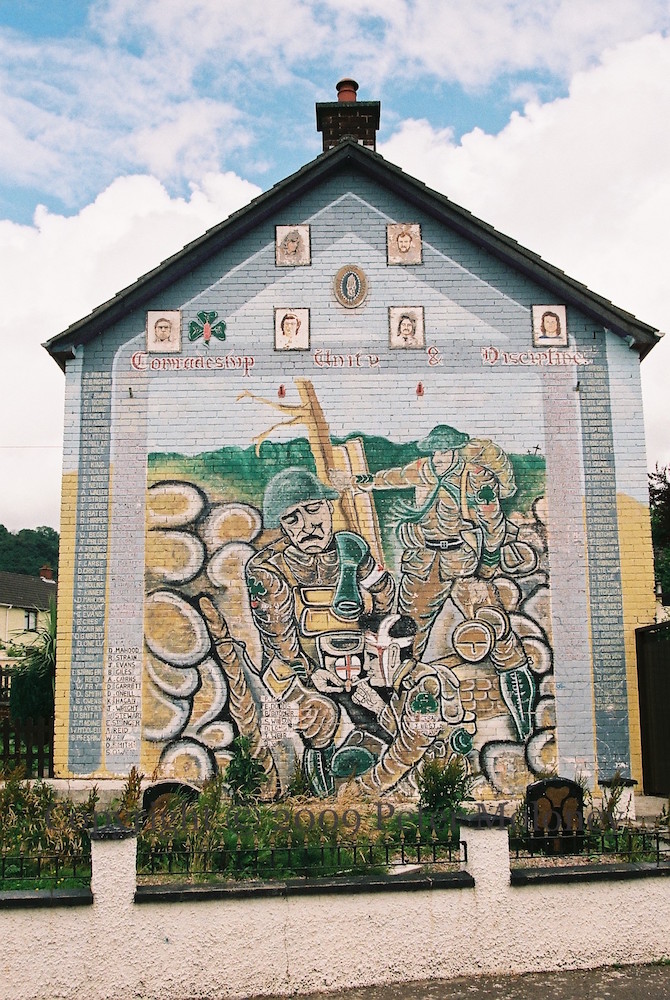
A mixture of modern and latter-day Ulster Volunteers: the names of WWI dead are listed on both sides, while six modern volunteers are portrayed above the central panel of soldiers in a trench. J1835 lists the men in the previous version of the mural as J. Shaw, T. Mawhinney, J. Cordner, C. Logan, S. McCrea, W. Millar.
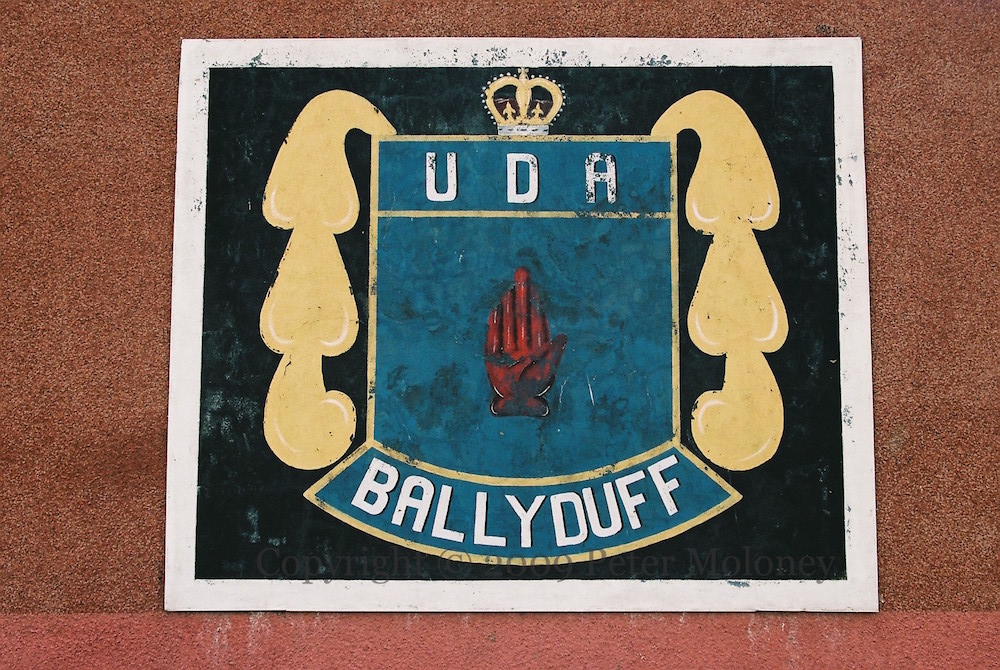
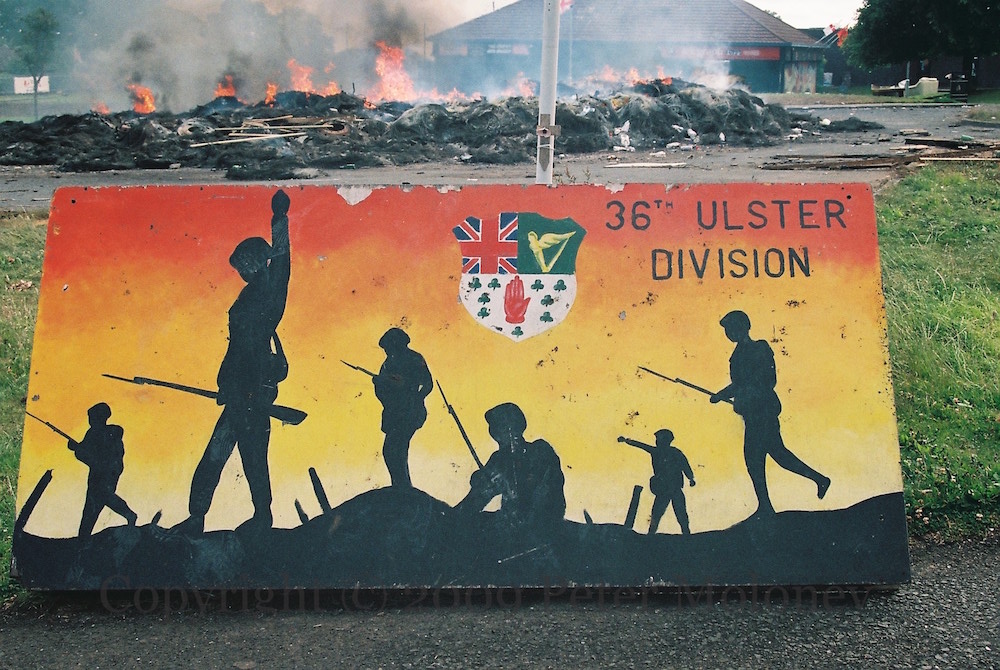
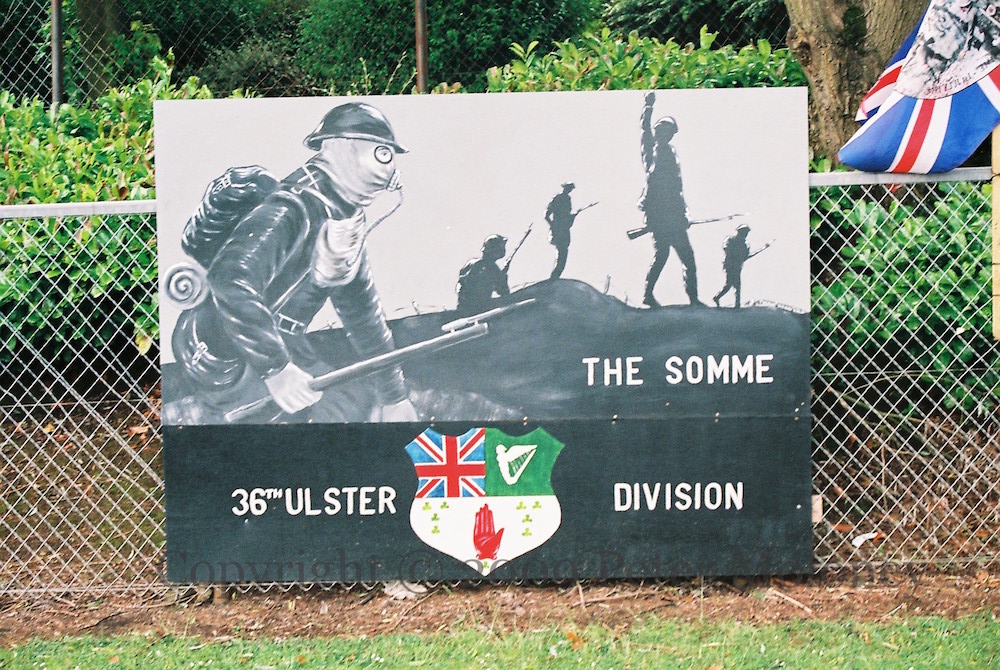
Four small boards from Ballyearl Drive in New Mossley, at the bonfire (see Welcome to New Mossley) and on fencing around an area to be re-landscaped. 36th (Ulster) Division, “Three Scottish soldiers murdered by scum 1971″ (John McCaig, Jospeh McCaig, Dougald McCaughey), and “New Mossley supports our troops.”
The UDR board would next year (2010) travel across the street, to the fencing around the bonfire area as a pitch and playground were built.
Rangers were Scottish Premier League champions in 2008-2009. They also beat Falkirk 1–0 in the final of the 2009 Scottish Cup championship (WP). They rode to victory thanks to a nacho Novo goal.
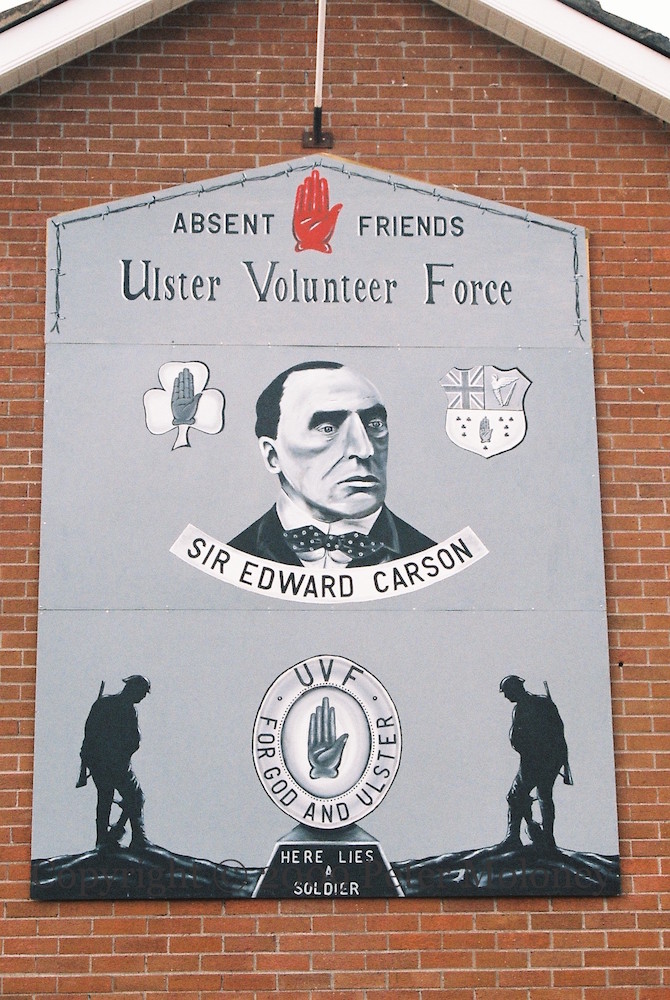
Sir Edward Carson founded the Ulster Volunteers with James Craig in 1912. At the outbreak of the Great War, its volunteers served in the British Army in the 36th (Ulster) Division and died on the fields of Flanders. “Here lies a soldier.”
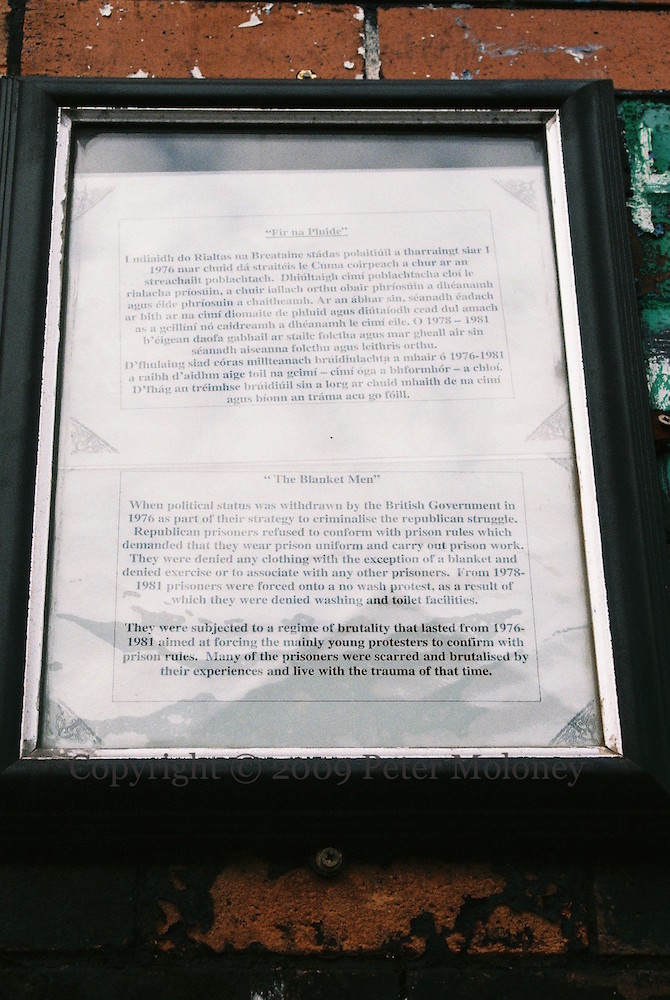
“Fır na Pluıde: ı ndıaıdh do Rıaltas na Breataıne stadás polaıtıúıl a tharraıngt sıar ı 1976 mar chuıd dá straıtéıs le Cuma coırpeach a chur ar an streachaılt poblachtach. Dhıúltaıgh cımí poblachtacha cloí de rıalacha príosıún, a chur ıallach orthu obaır phríosúın a dhéaneamh agus éıde phríosúın a chaıtheamh. Ar an ábhar sın, séanach éadach ar bıth ar na cımí dıomaıte de phluıd agus dıútaíodh cead dul amach as a gcıllıní nó caıdreamh a dhéanamh le cımí eıle. Ó 1978-1981 b’éıgean daofa gabhal ar staılc folchta agus mar gheall aır sın séanadh aıseanna folctha agus leıthreas orthu. D’fhulaıng sıad córas mıllteanach brúıdıulachta a mhaır ó 1976-1981 a raıbh d’aıdhm aıge toıl na gcımí – cımí óga a bhformhór – a chloí. D’fhag an tréımhse brúıdıúıl sın a lorg ar chuıd mhaıth de na cımí agus bíonn an tráma acu go fóıll.”
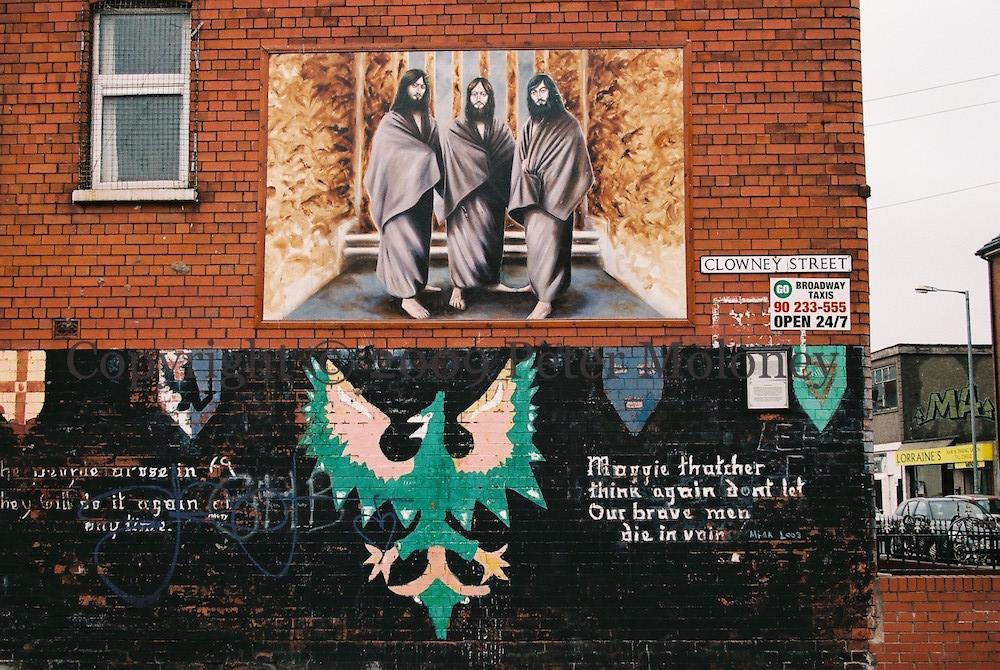
“The Blanket Men: When political status was withdrawn by the British Government in 1976 as part of their strategy to criminalise the republican struggle, Republican prisoners refused to conform with prison rules which demanded that they wear prison uniform and carry out prison work. They were denied any clothing with the exception of a blanket and denied exercise or to associate with any other prisoners. From 1978-1981 prisoners were forced onto a no wash protest, as a result of which they were denied washing and toilet facilities. They were subjected to a regime of brutality that lasted from 1976-1981 aimed at forcing the mainly young protesters to confirm [sic] with prison rules. Many of the prisoners were scarred and brutalised by their experiences and live with the trauma of that time.”
Help with substance abuseis offered by Resolve. The plaque on the right describes the board that was previously on this gable, to Stan Carberry and other Beechmount dead (see Crossed Rifles).
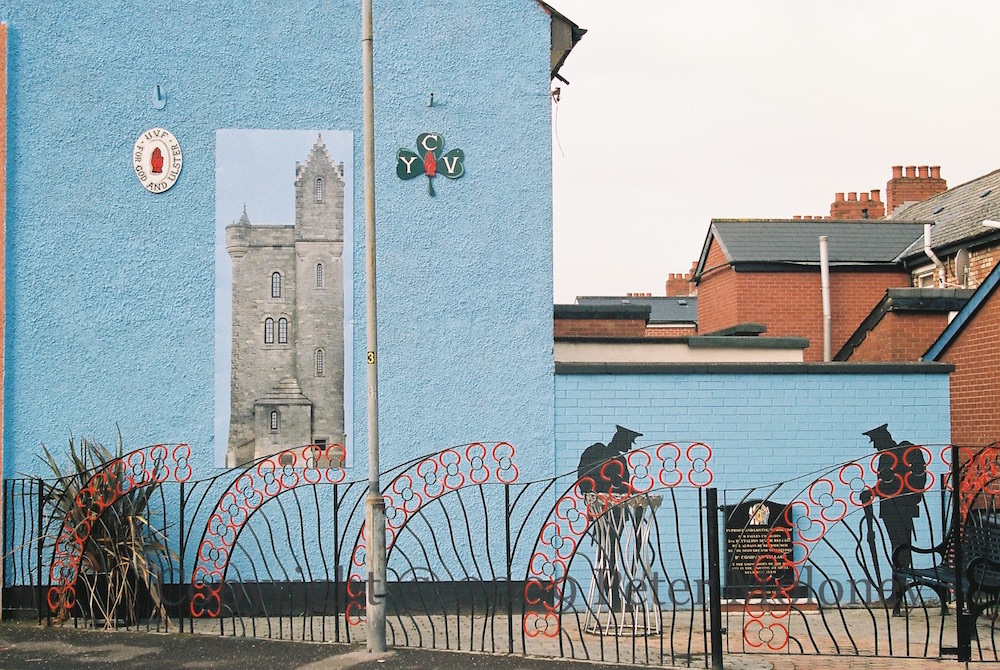
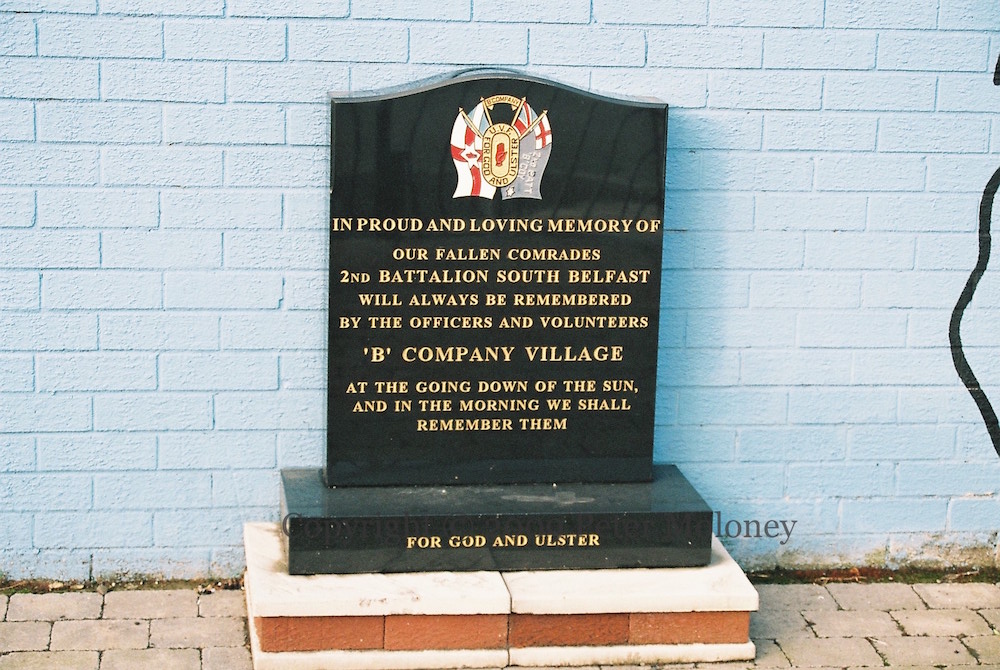
“In proud and loving memory of our fallen comrades 2nd battalion south Belfast will always be remembered by the officers and volunteers ‘B’ company Village. At the going down of the sun and in the morning we shall remember them. For God and Ulster.” Combined Ulster Volunteers (on the left, with Thiepval Tower and insignia) and UVF (on the right) memorial garden in Moltke Street, Belfast.
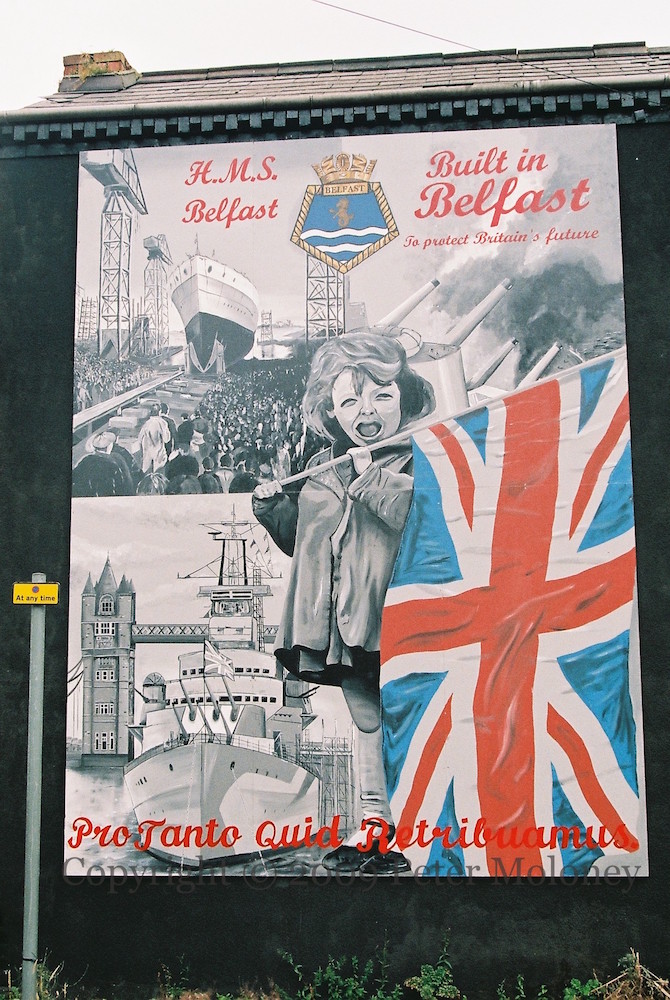
“HMS Belfast – built in Belfast to protect Britain’s future. Pro tanto quid retribuamus. [What shall we give in return for so much? – the motto of Belfast city]”. The mural shows HMS Belfast being launched on March 17, 1938. Tower Street, Belfast. After serving in WWI and Korea, the ship is now a tourist attraction in London.




 Peter Moloney Collection