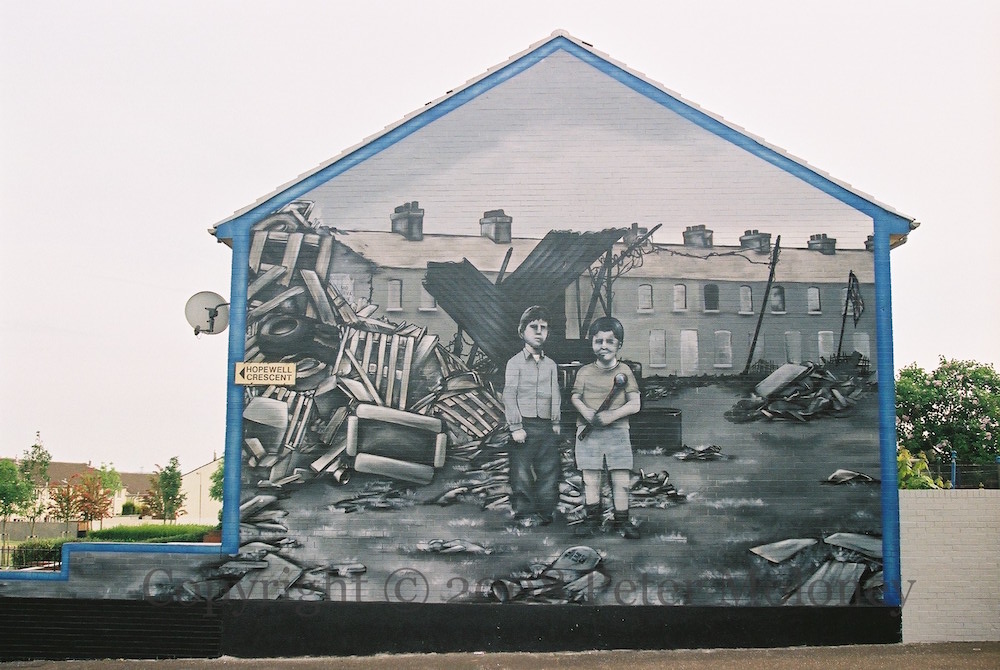
This is a mostly-complete version of the Summer Of 69 mural in the lower Shankill, depicting the beginning of the Troubles in Belfast. The title is still to be added, and the boy on the left will be given a tricoloured drum.
The mural is based on a Frankie Quinn photograph “Belfast 1984” (BBC).
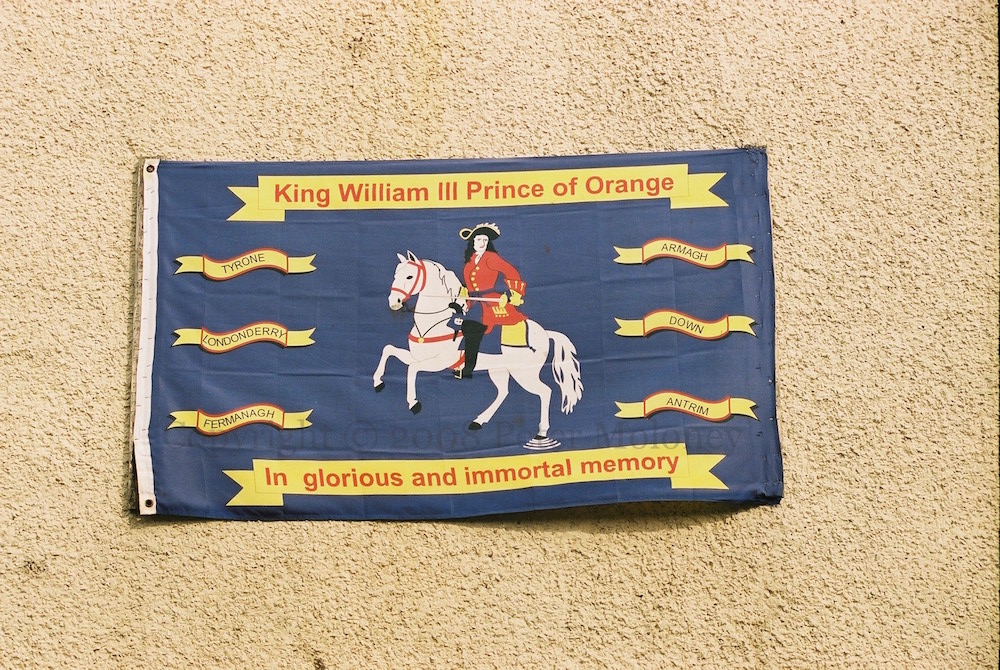
“King William III Prince Of Orange”. King Billy on his horse, with a list of the six counties. A flag is used as a mural in Hopewell ?Avenue?, Belfast.
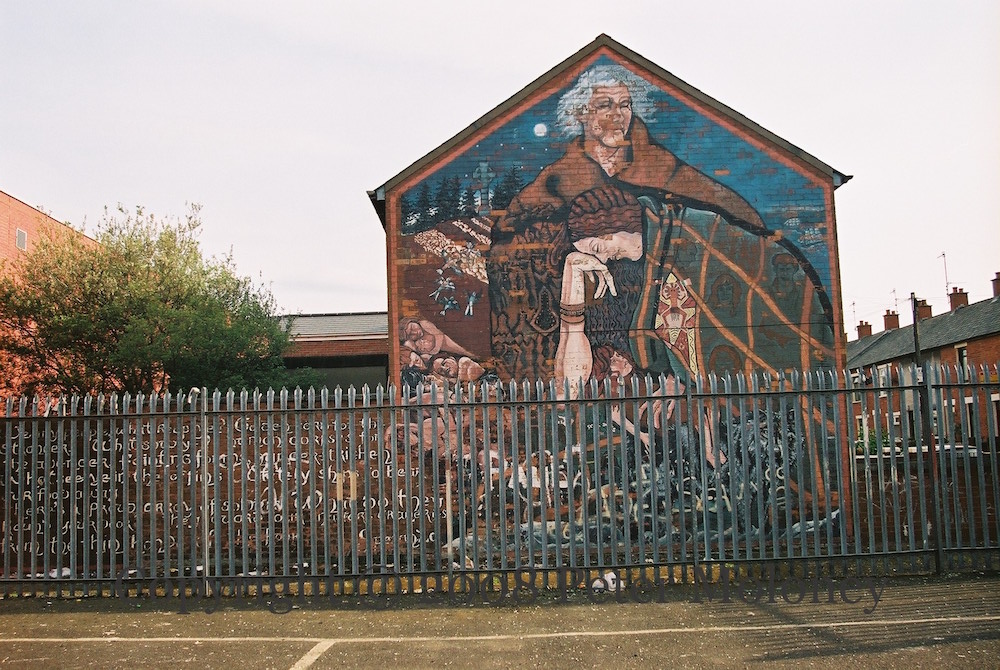
“Weary people, what reap ye? Golden corn for the stranger. What sow ye? human corpses that wait for the avenger. Fainting forms, hunger–stricken, what see you in the offing? Stately ships to bear our food away, [amid the stranger’s scoffing]. There’s a proud array of soldiers — what do they round your door? They guard our masters’ granaries from the thin hands of the poor. – Speranza”
The poetry is the first few lines of The Famine Year by “Speranza”, i.e. Lady Jane Wilde, mother of Oscar.
The frame of this mural in St James’s was originally painted in 1994 for a mural showing local pensioners remonstrating with a British Army soldier, under the title “The Spirit Of Freedom”. The central circle was repainted (again by Andrea Redmond) for the 1995 “green ribbon” campaign: the dove holds the keys that will set free the republican prisoners (symbolised by the barbed wire and a lark in the apex that cannot be seen).
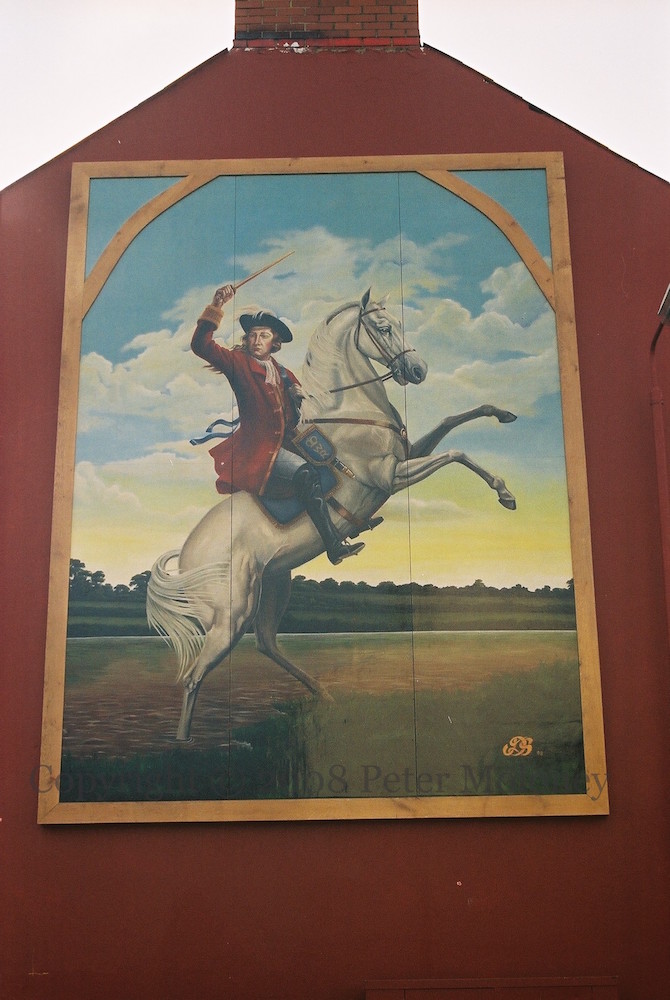
The Village Eddie is re-imaged with a painting of King Billy at the Boyne by John Darren Sutton in Tavanagh Street, Belfast.
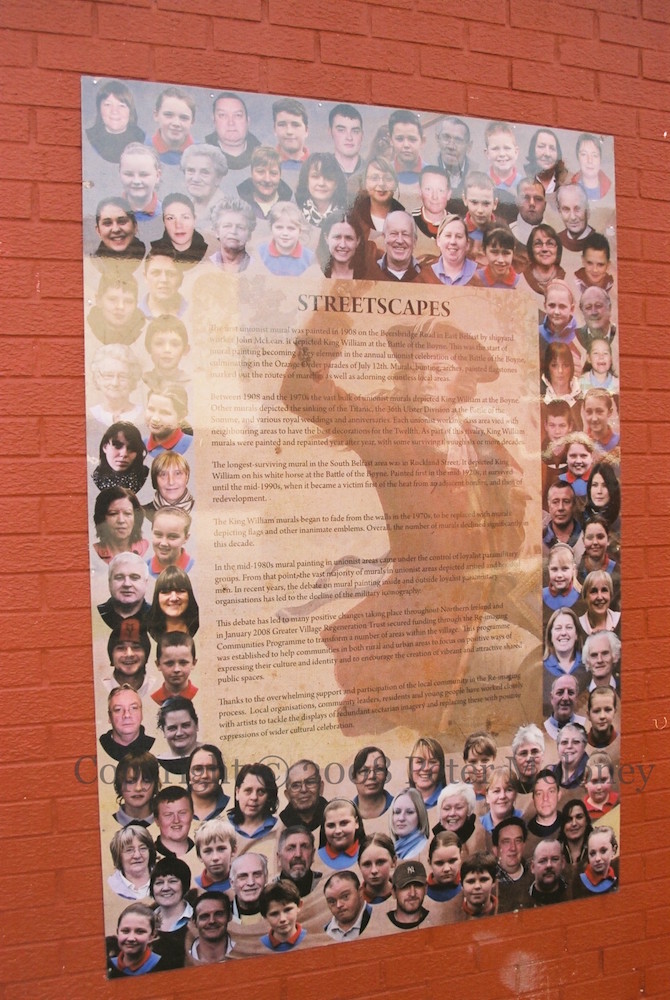
“The first unionist mural was painted in 1908 on the Beersbridge Road in East Belfast by shipyard worker John McLean. It depicted King William at the Battle of the Boyne. This was the start of mural painting becoming a key element in the annual unionist celebration of the Battle of the Boyne, culminating in the Orange Order parades of July 12th. Murals, bunting, arches, painted flagstones, marked out the route of marches as well as adorning countless local areas. Between 1908 and the 1970s the vast bulk of unionist murals depicted King William at the Boyne. Other murals depicted the sinking of the Titanic, the 36th Ulster [sic] Division at the Battle of the Somme, and various royal weddings and anniversaries. Each unionist working class area vied with the neighbouring areas to have the best decorations for the Twelfth. As part of this rivalry, King William murals were painted and repainted year after year, with some surviving through six or more decades. The longest-surviving mural in the South Belfast area was in Rockland Street. It depicted King William on his white horse at the Battle of the Boyne. Painted first in the mid-1920s, it survived until the mid-1990s, when it became a victim first of the heat from an adjacent bonfire, and then of redevelopment. The King William murals began to fade from the walls in the 1970s, to be replaced with murals depicting flags and other inanimate emblems. Overall, the number of murals declined significantly in this decade. In the mid-1980s mural painting in unionist areas came under the control of loyalist paramilitary groups. From that point, the vast majority of murals in unionist areas depicted armed and hooded men. In recent years, the debate on mural painting inside and outside loyalist paramilitary organisations has led to the decline of the military iconography. This debate has led to many positive changes taking place throughout Northern Ireland and in January 2008 Greater Village Regeneration Trust secured funding through the Re-imaging Communities Programme to transform a number of areas within the village. This programme was established to help communities in both rural and urban areas to focus on positive ways of expressing their culture and identity and to encourage the creation of vibrant and attractive shared spaces. Thanks to the overwhelming support and participation of the local community in the Re-imaging process. Local organisations, community leaders, residents and young people have worked closely with artists to tackle the displays of redundant sectarian imagery and replacing these with positive expressions of wider cultural celebration.
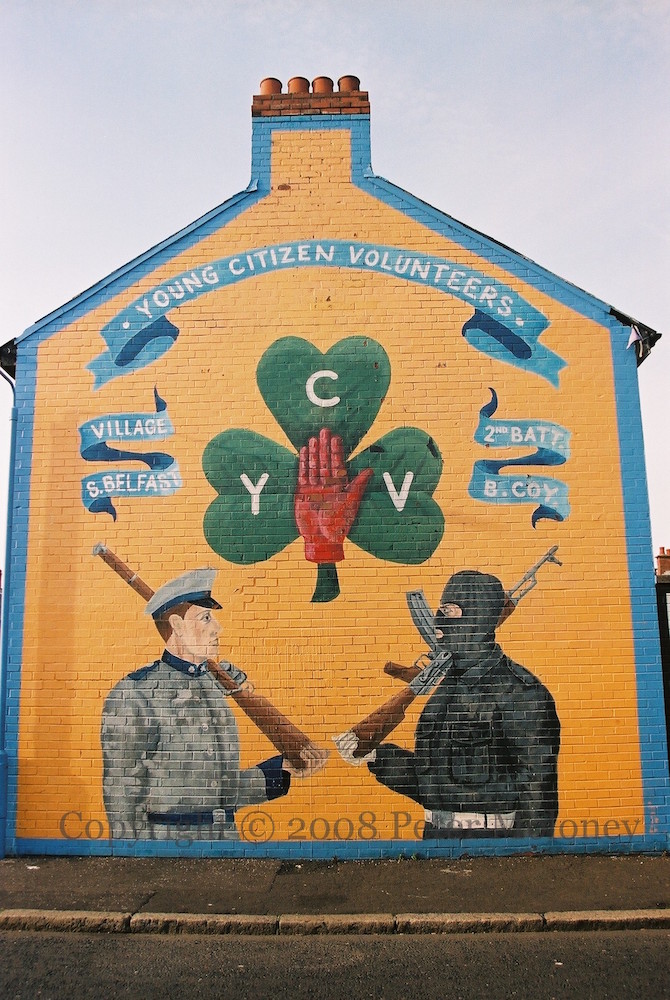
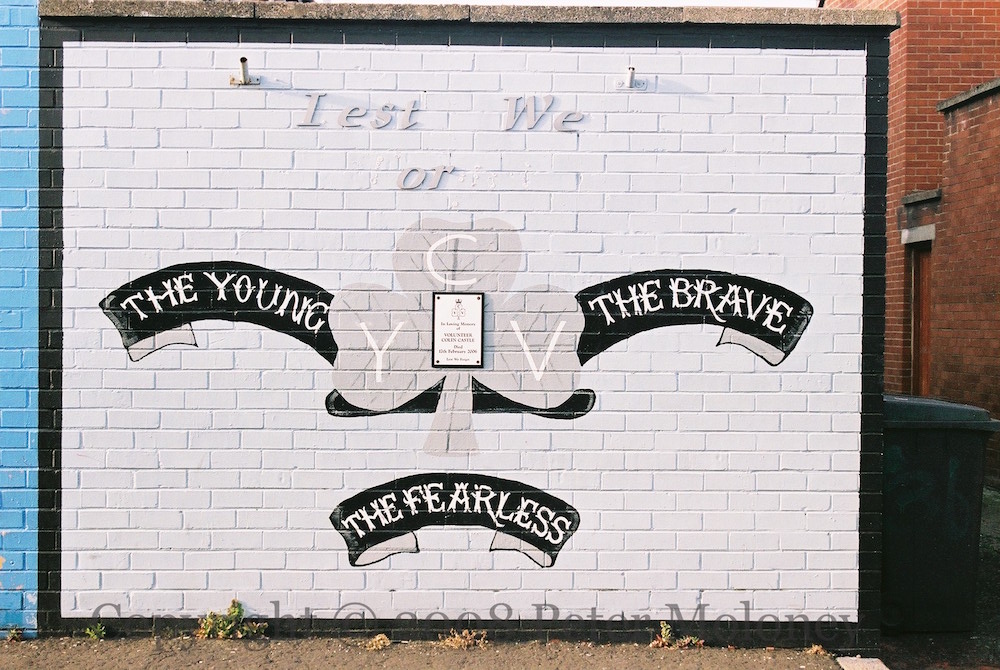
Young Citizen Volunteers of both the Home Rule (1912) and Troubles periods are shown shouldering rifles. On the side wall: “In loving memory of Volunteer Colin Castle, died 17th February 2006. Lest we forget.”
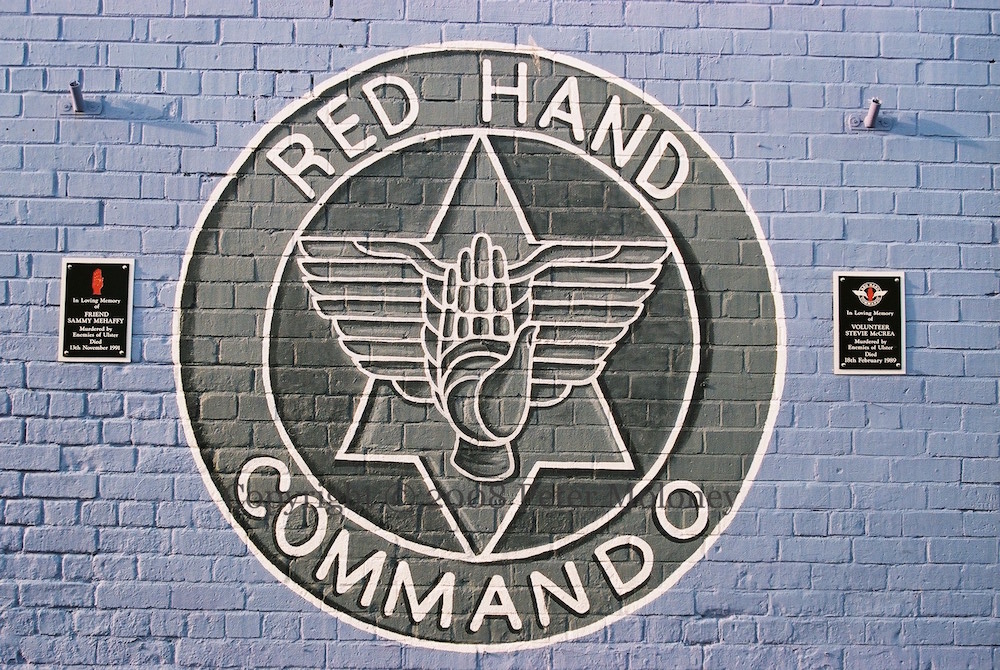
“In loving memory of Vol. John Hanna, murdered by the enemies of Ulster 10th September 1991. Always remembered by the offices and volunteers of 2nd Batt. “B” Coy Village. Its [sic] not for riches nor for glory but the love of one’s country which [we] are prepared to die for. Here lies a soldier. Gone but not forgotten. FGAU.” The two smaller plaques on either side of the RHC wings on the left are to “Friend Sammy Mehaffy 13th November 1991” and “Volunteer Stevie McCrea 18th February 1989”, both “murdered by the enemies of Ulster”.
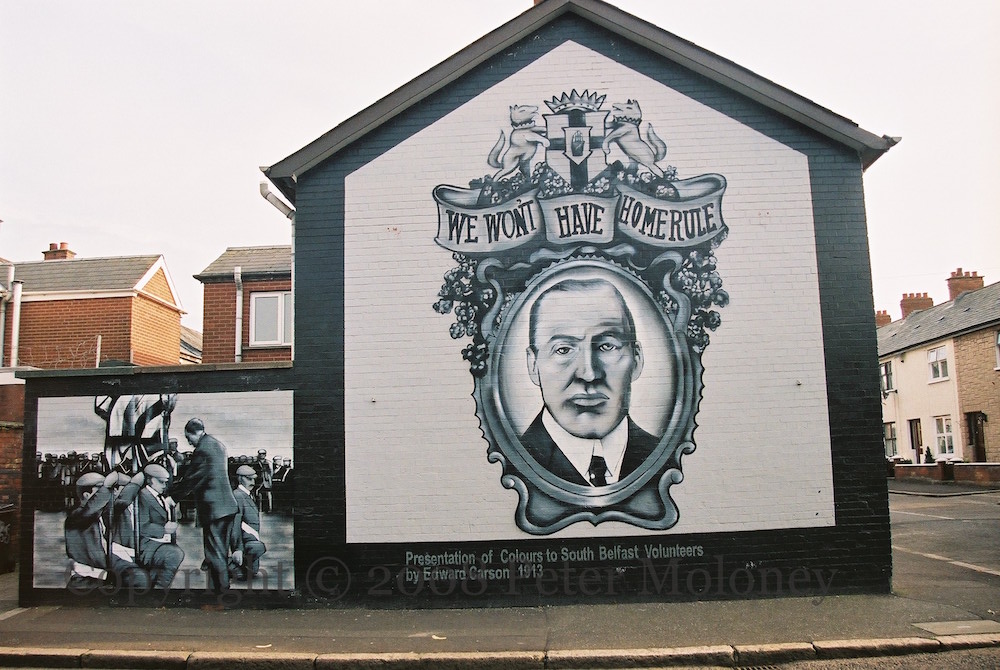
“Presentation of colours to South Belfast Volunteers by Edward Carson 1913.” According to the Digital Repository Of Ireland, however, the scene depicted is Carson and the Central Antrim Volunteers in 1914.
The orange lily makes a rare appearance in a paramilitary mural. The hooded gunmen are from the UFF/UDA. Volunteer Stephen “Benson” Kingsberry is remembered in the panel towards the back of the house. He died from consuming tainted ecstasy (perhaps distributed by the UVF). He was included in the roll of honour in Lemberg Street. Kilburn Street, Belfast. Seen previously in 2005.







 Peter Moloney Collection